Musicians

J Balvin tattoos: tigers, “Mi Gente,” family and a covered first piece

J Balvin’s collection is extensive, but his own explanations make it easier to distinguish tattoos with a clear story from designs he simply liked. In GQ’s Tattoo Tour, he talks about his first tattoo at 12, the cover-up, the large arm collage, and his choices of tigers, words, music references and family portraits. He also says tattoos are another way to express yourself, alongside fashion and music.

That does not make every tattoo a secret message. Balvin is open about choosing some designs because they look good. A useful inventory stays literal: name the image, note its location when he gives it, and keep his explanation close to it.

His first tribal tattoo was covered by a woman, dollar, cards and microphone collage

J Balvin showing the large arm tattoo collage from his GQ Tattoo Tour

Balvin says his first tattoo came when he was 12. He asked his mother for permission, expecting her to realise he was joking. When she agreed, he followed through and got a tribal design. He later covered it, so it belongs in the history of his collection rather than as a design that remains plainly visible today.

The first large replacement was a dense arm composition made up of a woman, a dollar sign, poker cards and a microphone. Balvin jokes that people with one tattoo can seem heavily tattooed to him, before remembering that his own arms and body are covered too. The collage does not need one theme; its interest is in how the images sit together and in its place as one of the earliest major pieces.

The woman and microphone connect naturally with Balvin’s creative life, but he does not say every element was designed as a formal career emblem. The dollar sign and cards are visible details, not a reason to invent a story about money or gambling. Staying close to what he actually names makes the large tattoo more interesting, not less.

Tigers, the Mickey skull and Nirvana mark the bolder visual side

J Balvin showing the tiger, Mickey skull and Nirvana tattoo area

Balvin says tigers are his favourite animals and that he has several across his body. His interest grew after a trip to Thailand, where watching tigers left him fascinated by their power, intelligence and beauty. His explanation is direct: the repeated animal comes from admiration, not a generic claim that tigers always mean strength.

He also shows the inside of Mickey Mouse’s head as a skull. The design turns a familiar cartoon into something darker, creating a playful but unsettling contrast found elsewhere in the collection. Balvin presents it as a creative choice rather than attaching a private confession to it.

A Nirvana tattoo is one of the designs he says hurt badly. His reason is straightforward: he loves the band. The reference is a documented music tattoo, while the pain is about its placement and the thin skin in that area. Those two details should not be confused.

“Vida,” “real,” “lealtad” and “Mi Gente” turn words into anchors

J Balvin showing his hand lettering tattoos including loyalty

Balvin points out several text tattoos: “vida”, meaning life; “real”; and “lealtad,” meaning loyalty. He says his closest friends share the loyalty design, giving the word a specific social context. It is more than a translation included for search terms; it is a matching tattoo connected to the people nearest to him.

“Mi Gente” is another notable entry. Balvin says he got the tattoo roughly 12 years before the song became a major hit. He describes its later success as a strange, happy coincidence, as though the phrase was already waiting for the song. The tattoo came first, so it should not be treated as merchandise or a promotional tie-in.

The lettering also shows why the collection cannot be mapped by body area alone. Words can work as personal reminders, shared designs or unexpected echoes of later work. The writing is visible, but the meaning depends on the date and the account attached to each tattoo.

Women’s profiles, the Virgin Mary and Carolina keep family close

J Balvin showing family and woman portrait tattoos

Balvin says he likes the look of women’s faces and has several female figures across his body. One profile came from an image he found through Google because he liked the face. He does not identify her as a partner or say the portrait represents a particular person, so it should stay a design choice rather than be given a fictional identity.

He also points out more women’s eyes, a Virgin Mary and another female figure. These belong in the visual inventory, but the GQ conversation does not give a separate explanation for every portrait. The accurate approach is to describe what appears and leave the personal context open where it has not been confirmed.

One portrait is more specific because Balvin names the subject: his sister, Carolina. He jokes that she is not especially expressive but thinks she loves the tattoo. Her portrait gives a clear family detail to a group that could otherwise be described too broadly as women’s faces.

The ribs hurt, while family and “familia” widen the collection

J Balvin showing the Familia rib tattoo

Balvin calls the ribs the most painful place he has been tattooed. The skin is thin, he says, and he cried during the process. That comment is about the location and sensation, not a hidden meaning in the design. It helps explain why an image may show the tattoo clearly even though the session was difficult.

He also uses “familia” broadly. For Balvin, family includes not only relatives but fans, friends and people who support him. The word therefore carries a wider social meaning in his account and should not automatically be reduced to one household member.

Balvin’s summary gives a useful frame for the collection: he sees tattoos as part of personality and believes people should choose them because they want them, not because someone else says they are cool. His first tribal mark, the large arm collage, tigers, Mickey skull, Nirvana, Spanish words, “Mi Gente,” portraits and family pieces each reflect a different side of that idea.

There is no need to find one master meaning for J Balvin’s tattoos. Some celebrate animals or music, others mark loyalty and family, and some are simply images he liked. Together, they read as a timeline of taste, relationships and creative instincts, built around the designs he has actually named.

Travis Scott tattoos: the temple piece, moon and bat, butterfly and more

Travis Scott’s tattoos make more sense as a changing map than as a numbered checklist. Public photographs show ink on his head, arms, hands, ankles, neck, chest and torso. Some designs have a reported story, such as the matching butterfly with Kylie Jenner or the Portland landscape he has discussed. Others have been named in tattoo references without a first-person explanation.

This guide keeps those kinds of evidence distinct. A photograph can show that a design is there and where it sits; an interview or direct statement can explain why it was chosen. Both are useful, but one cannot stand in for the other.

The large temple tattoo changed the shape of Travis Scott’s face

One of Scott’s most recognisable later additions is the large geometric, tribal-style tattoo on the left side of his head near the temple. Reports link the work to tattoo artist Scott Campbell and place it around the time Scott was getting ready for the Astroworld tour. Its scale is striking: this is a major piece across the temple and scalp, not a small mark by the ear.

Some coverage framed the tattoo as part of getting “tour ready,” but that does not explain what each line means to Scott. The reliable details are its location, size, approximate timing and reported artist. Ideas about strength, unity or transformation should be treated as interpretation unless Scott has said that himself.

Photos from different years help put the head tattoo in context. An earlier portrait can make Scott’s collection look quite different from a later concert image, even if the arm and chest pieces are unchanged. If the temple tattoo is missing from an older picture, that helps date the image; it does not mean the design was removed.

The moon above a bat is one of the clearest arm compositions

Travis Scott full moon over bat tattoo on his upper arm

A full moon over a bat is one of the most recognisable compositions on Scott’s upper left arm. The moon and bat are usually shown together, so they make more sense as one design than as two unrelated tattoos. Their placement gives the image a nighttime feel, alongside the darker motifs elsewhere in his collection.

The design is easy to identify in photographs, but the sources used here do not establish its personal meaning. It might invite ideas about night life or the night sky, but those are a viewer’s readings. The grounded description is a full moon above a bat on his upper arm.

Other arm designs reported in photographs include a monkey wearing headphones, a rose, cactus imagery and cartoon-style faces. When an image is clear, their subjects can be described. The photos come from different times and angles, though, so they do not prove that all these pieces were planned as one sleeve or done in a single session.

Hand and wrist lettering is easy to see but harder to interpret

Travis Scott showing his hand and wrist tattoos

Scott’s hands and wrists carry smaller designs that show up in close-up photos and performance shots. Tattoo references identify lettering such as “Mercy”, the number 713, characters on his knuckles and a small “Free” tattoo below his eye. The marks are visible, but a clear personal explanation is not available for each one.

A landscape on the back of his hand has been associated with Portland, a city Scott has described as important to him. That context is more useful than assigning a broad idea like freedom to any landscape tattoo. Unless the source directly calls it a Portland tribute, it is best to describe the association carefully.

Hand tattoos can be difficult to photograph. A ring, microphone or bent finger may cover part of a word, and stage lighting can flatten fine lines. One clear picture may confirm that a mark is there without making every letter readable, so transcriptions should stay limited to what the image supports.

The matching butterfly connects Scott, Kylie Jenner and Stormi

Travis Scott matching butterfly ankle tattoo

Scott and Kylie Jenner got matching butterfly tattoos on their ankles early in their relationship. Jenner later said the butterfly represented their relationship and their daughter, Stormi. Her explanation gives the design a documented personal meaning beyond the common assumption that it refers only to Scott’s song “Butterfly Effect.”

The song is still relevant context: reports connected the tattoos with the period around its release. It helps explain why the butterfly drew attention, but it should not replace Jenner’s own account. The shared motif, matching placement and family connection are what make the tattoos meaningful in the public record.

The butterfly is small and sits at the ankle, where socks, shoes or trouser hems can hide it. That is why it appears in some photographs and disappears in others. A picture without a clear ankle view does not tell us much about whether the tattoo is visible.

Neck and chest tattoos add lettering, symbols and animal imagery

Travis Scott showing neck and chest tattoo areas

Tattoo references identify a tiger, a cross, a bee and the word “PUKE” around Scott’s neck and upper body. The tiger adds to the animal imagery in his collection, while the smaller symbols sit in the surrounding spaces. Necklaces, collars and camera angles often change what can be seen.

A story that “PUKE” refers to an unpleasant night is repeated in some coverage, but the available sources do not support it as strongly as the butterfly account. It is safer to report the lettering and describe that explanation as something secondary sources have suggested, rather than present it as a direct quote from Scott.

Other photos show a flying bird, a woman, broken-heart imagery and more lettering around his chest and waist. These details belong in a dated visual record. The pictures were taken at different times and show different amounts of skin, so they should not be combined into one supposedly current view.

His wider arm and torso collection grew around the named pieces

Travis Scott showing his arm and torso tattoo collection

Scott’s tattoo collection extends well beyond the designs that tend to appear in search headlines. His arms and torso include smaller symbols, illustrated faces, lettering and pieces that only appear when his clothes or pose reveal them. A photograph may show a tattoo clearly without telling us who made it or why he chose it.

The collection also grew as his career changed. Early performance shots show arm and hand tattoos before the later temple piece appeared. Newer portraits reveal more connected ink across his upper body, but they are still just one view from one date. Clothing, angles and lighting all affect how much is visible.

There is no reliable official count that turns the collection into a fixed number. A useful guide records where each design sits, what can be seen, when it appeared and how strong the explanation is. The temple tattoo and moon-and-bat image are clear visual anchors; Jenner gave a personal account of the butterfly. Smaller lettering and torso motifs can be included when photos support them, with uncertain readings labelled as such.

That mix of clear details and open questions is part of what makes Scott’s tattoos interesting. The temple design marks a visible change, the moon and bat make a distinct arm scene, the hands carry hard-to-read lettering, and the butterfly keeps a family moment in view. The photographs give a substantial record, but they do not tell us the meaning of every mark.

GloRilla tattoos: the red gorilla, family names and hard-earned cover-ups

In GQ’s Tattoo Tour, GloRilla talks through tattoos from high school, pieces she chose during difficult periods, and lettering tied to family, faith, friends and important dates. She is frank about cover-ups and mistakes, too, including designs she would like to change.

That candour makes her collection easier to document. The red gorilla is the most recognisable piece, but it covers an earlier “Big Glo” tattoo, and the designs around it each have their own story. The details here follow GloRilla’s explanations and leave visible facts separate from outside guesses.

The red gorilla covers GloRilla’s badly placed “Big Glo” tattoo

GloRilla showing the red gorilla cover-up tattoo on her chest

GloRilla says she got her first tattoo in 12th grade. She paid about $20 after asking on Facebook if anyone knew a tattoo artist. The design read “Big Glo” with a crown, but the letters were spaced badly: the L and O sat far from the rest, so the name looked more like “Big 6.” She still calls the tattoo ugly and says she chose to cover it.

That cover-up is the large red gorilla face across her chest. GloRilla says it took around five or six hours, and the earlier lettering can still show faintly if you look closely. The gorilla was a deliberate replacement for a lettering job she disliked, not a symbol invented by someone trying to decode her stage name.

She chose red because red is her favourite colour. GloRilla says plenty of women might pick a heart for that spot, but she wanted a gorilla. People criticise the design, yet she calls it one of her favourites and says she has no plans to cover it. Her own explanation carries more weight than guesses that it must stand for aggression, Memphis or fame.

The hand, leg and snake tattoos record pain and impulse

GloRilla showing her hand and chest tattoos during the GQ Tattoo Tour

GloRilla says a hand tattoo is among her most painful pieces. She was at the tattoo artist’s apartment after her career had taken off, smoking and drinking while wearing a waist trainer. Near the end of the session she felt woozy, got up to use the bathroom, took two steps and passed out. When she came to, only half the tattoo was done. It remains memorable as a rough session, not just another small design.

The large leg piece shows someone saying “Shh” beside a clock. GloRilla says it took about eight hours, maybe longer, and was the biggest tattoo she had at the time. Numbing cream helped, but the placement near the bone still hurt. She says she could barely walk and spent about a week in a wheelchair afterward.

She feels differently about the snake tattoo. GloRilla says she got it while angry and going through a hard time, when tattoos had become a kind of therapy. She calls the snake ugly, says there was no clear reason for choosing it, and has talked about covering it with something she likes more. In her account, it was an impulsive choice rather than a symbol planned for the long term.

Her comments are also a reminder that photographs capture a moment, not a permanent opinion. A tattoo can still be there after its owner falls out of love with it. And saying she hopes to cover a design does not mean the cover-up has already happened.

Leo, Saint, Olivia and Glo Gang fill the smaller lettering map

GloRilla showing her hand and leg tattoos

Several small tattoos point to GloRilla’s astrology, faith, family and music circle. She identifies the Leo sign on a finger and the word “saint”, joking that she is not actually a saint while still liking the label. Both are easy to record because she names them herself; there is no need to invent a deeper explanation.

Her mother’s name, Olivia, is another confirmed tattoo. GloRilla also points to “Glo Gang,” connecting it to her own name and saying she is a big Chief Keef fan. She let her friend Teez practise the tattooing, describing that choice as a way to support a friend learning the craft. The piece carries both the lettering and the story of who put it there.

There is also a small “faith” tattoo. GloRilla says she got it in the trenches of Memphis, describing the apartment where it was done in blunt terms, and mentions wanting a butterfly on her thigh. The butterfly is a separate design; the two details came up in the same conversation about early tattoos and local experiences.

She and her best friend Gloss have matching tattoos on their thighs. The line reads “Told you I’ll be here forever.” GloRilla says it comes from Rihanna’s “Love on the Brain,” with each friend carrying part of the phrase. That makes it a shared friendship tattoo, rather than a general inspirational quote.

Family names, Chinese lettering and dates add the personal detail

GloRilla showing family, faith and date tattoos across her arms

GloRilla’s family tattoos include her father’s name, Edwin, and the word “woods.” She says her father had seven children at the time, and later eight, with her as number five. The names and wording connect the ink to how she sees her place in the family.

Another design uses Chinese characters to express the idea that she would become a star. GloRilla says a friend who died in 2020 used to praise her music and tell her she would be a superstar, back when she still had what she calls her “baby voice.” She got the phrase to hold onto that encouragement and hopes her friend can see how things turned out. Its meaning comes from her account, not from guessing at the characters.

She also points out “hallelujah” in Arabic, her birth year 1999, the date 7/28/1999 and an AK-47. She says the gun and date tattoos are red because she likes that colour. These small details fill in more of the story than a single chest photograph can show.

One tattoo for a cousin reads “A cousin is a sister destiny forgot to give you.” GloRilla says she no longer speaks to that cousin and wants the design covered. That change is part of this tattoo’s history, but it should not be taken as a statement about all of her family relationships.

GloRilla’s collection holds choices she still loves, choices she regrets and designs connected to people she wants to remember. The red gorilla replaced a badly spaced high-school tattoo; the hand and leg pieces bring back painful sessions; the snake reflects an angry period; and the names, dates, faith words, friendship quote and Chinese lettering keep specific people and milestones close. The collection makes the most sense when those differences stay visible.

Jacquees’s tattoos, from Fear God to the family pieces

Jacquees does not describe his tattoos as one perfectly planned sleeve. In GQ’s Tattoo Tour, he moves from ink he chose as a teenager to family names, symbols and small jokes that came later. Together, they mark different ages, loyalties and turning points.

Some designs are clear in photographs, while others make most sense through Jacquees’s own account. The guide keeps those kinds of evidence apart so a visible symbol does not get a made-up meaning just because it looks dramatic.

Fear God was the hand tattoo he got at 15

Jacquees showing his Fear God hand tattoo during a tattoo tour

The hand lettering is the most recognisable tattoo in Jacquees’s public record. He says he got “Fear God” at about 15, after being influenced by Lil Wayne’s visible tattoos. The words sit across his hand where they can be read from a distance, but they are one part of a much larger collection.

Jacquees’s explanation is direct. He does not present the phrase as a code or a complicated private philosophy; it is a visible statement he chose young and kept. That timing puts it before the later family portraits, body symbols and career references. It is also one of the tattoos that shows how quickly he moved from experimenting with ink to making it part of his look.

The first neck tattoo was Que with notes and stars

Jacquees showing neck and arm tattoos in a side-profile portrait

Jacquees says he got his first neck tattoo at 13 because he did not want to be the only kid at school without one. The original design was his nickname, “Que,” with music notes and stars around it. It connected his name with music, though the tattoo was later covered.

The cover-up belongs in the story, not just in a footnote. A tattoo chosen at 13 can feel like a permanent decision, but changing it later shows how his taste and public image developed. The neck is hard to hide, so putting his nickname there made an early experiment unusually visible. Photos show the location and later layers; Jacquees’s account explains why he got it.

Confidence, Jesus, the rose and doves built the neck sequence

Jacquees with visible neck, hand and arm tattoos

At 17, Jacquees added “Confidence is a stain they can’t wipe off” to his neck. He says the line stayed with him, and its length gives the area a different look from the compact nickname it replaced. The quote is worth keeping intact because it explains the tattoo; it explains the tattoo more clearly than a general claim about confidence would.

The neck later became home to several different ideas. Jacquees names a Jesus tattoo, a rose, the original Atlanta Braves sign, a heart at the back of his neck and doves associated with peace and love. They do not need to fit a single invented theme: the religious image, sports reference, flower and birds can simply sit alongside one another.

The way the neck looks changes across photographs. Hair, camera angle and lighting can hide part of a design or make lettering look heavier. The images establish placement and scale; Jacquees’s interview is what confirms which tattoos he identifies.

FYB, roses, the spaceship and the three wise monkeys fill out the arms

Jacquees showing multiple arm tattoos including lettering and traditional designs

The arms carry more of the collection’s group identity. Jacquees says FYB, short for Fresh Young Boyz, appears more than once, including near his elbow. He also points to three roses on the East side, a spaceship that fits the phrase “I’m outta here,” and the see-no-evil, hear-no-evil and speak-no-evil monkeys.

Those designs do not all carry the same kind of meaning. FYB connects to the people around him, and the roses have a location reference. The spaceship turns a playful phrase into an image. Jacquees says he got the three monkeys around 18, but there is no need to assign a separate private confession to each one.

He also talks about the idea that no one sin is greater than another. That wording belongs with the design he describes; it does not mean every nearby religious or darker image represents the same idea. Keeping the statement tied to its source makes the tattoo record clearer.

Family names, portraits and the symbols on his face

Jacquees with visible family-name and facial tattoos

The family tattoos are among the most personal pieces. Jacquees names his grandmother Daisy, his mother Rosy, his sisters and his nephew Little Ray. He also mentions a cartoon version of himself on the back of his arm, a guardian angel and two angels with wings. Together they make the collection feel like a way of keeping people close, not simply a catalogue of fashionable designs.

When asked which tattoos matter most, Jacquees returns to the ones for his grandmother and mother, as well as FYB, long life and family names. That does not mean the mean the other tattoos are unimportant; it tells us which ones he chose to name as favourites. An inventory can identify a portrait or lettering, but the preference comes from his own answer.

Smaller details on his face and ears belong in the record too. Jacquees mentions a star on his ear from ninth grade, a diamond, a cheek tattoo linked to strength and courage, and other small marks. Small facial tattoos can be hard to read in a soft photograph, so it is safest to stick with designs he names instead of guessing at every line near his eye or cheek.

The collection also reaches his legs and torso. Jacquees identifies a king symbol on his leg, which he got at 18, along with CM for Cash Money and Rodriguez, his first name. He describes a triquetra as representing three things that cannot be untied, a design shared with his sisters.

Those pieces add another layer: the king is a statement about self-image, the Cash Money initials connect to his music world, and Rodriguez is direct family identity. The triquetra is the clearest example of a tattoo with a specific reported meaning: he says it stands for the bond between his siblings.

Jacquees says he wants room to grow and does not want to cover his body in ink. That helps explain why the collection can hold many separate designs without turning into one solid field of tattoos. The open skin is part of the look, leaving space for each piece to remain readable and for a future memory to be added.

What the tattoo tour confirms

The tattoo tour follows several stages of Jacquees’s life: a nickname at 13, a hand phrase at 15, a confidence quote at 17, then family names, music references and symbols added as his career developed. The strongest descriptions pair a close photograph with the explanation he gives himself.

His collection is best read as a changing record. Some tattoos remain clearly visible, some have been covered, and some meanings belong to the people who were there when the ink was chosen. That balance keeps the guide specific without filling in stories the photographs and interview do not tell.

Jelly Roll’s tattoos, from Music Man to Mama V

Jelly Roll’s tattoos make the most sense when the face, neck, hands and arms are considered as different parts of a long record. His collection is large, but there is no official count that turns it into a neat catalogue. Some designs are named during his GQ tattoo tour, others can be seen in close portraits, and later coverage sometimes describes pieces without enough detail to confirm every feature.

The GQ conversation is his strongest guide because Jelly Roll points to the tattoos: he names designs, explains several personal connections and admits when a tattoo was excessive or poorly planned. Those comments belong beside the designs they describe. When a photograph shows placement but not meaning, the account should stay with what is actually visible.

His tattoo tour shows how concentrated the collection is

Jelly Roll showing the tattoos across his face, hands and upper arm during a tattoo tour

Many of Jelly Roll’s most recognisable tattoos sit high on his body. His forehead, cheeks, neck and hands are visible when he performs, while the larger arm pieces show whenever he wears short sleeves. The close photos reveal many separate designs rather than one continuous tattoo, even though the group shapes how people read his appearance.

The photos also differ in clarity. Some lettering can be read immediately; other marks have softened with age or sit beside newer ink. Stage lights can make black tattoos look heavier than they do in a neutral portrait. A careful inventory records the design, its location and where the identification comes from before assigning meaning.

That care matters because Jelly Roll is open about his past. The fact that a tattoo can be connected to his family or recovery does not mean every nearby symbol has the same explanation. The tattoos are personal, but what can be confirmed publicly still has limits.

Music Man, the cheek cross and the smaller face symbols

Close portrait showing Jelly Roll’s forehead lettering, cheek cross and smaller face tattoos

The most noticeable facial lettering is “Music Man” across Jelly Roll’s forehead. It is written in a large, old-style script above the smaller marks around his eyes and cheeks. The words describe his profession plainly, but their placement makes them one of the first things a viewer sees. They are not hidden in a sleeve or visible only in a private photo.

Below the forehead lettering, portraits show a large cross on the cheek, smaller marks near the eyes, a teardrop and compact symbols around his hairline. In the tattoo-tour conversation, Jelly Roll connects the larger cross with a turning point in his life. That comment speaks to the cross’s importance to him; it does not automatically explain every mark nearby.

The face also carries lettering associated with his mother and other small symbols that come into focus when he is photographed straight on. Some edges have softened, so a blurry shape should not be turned into a confidently named object. The portrait is good evidence of placement and general form; his words are the stronger source for meaning.

The Nashville skyline covers an earlier neck mistake

Side profile showing Jelly Roll’s Nashville skyline neck tattoo and nearby face ink

At the back of Jelly Roll’s neck is a dark Nashville skyline, shaped to sit beneath his hairline. It fits his connection to the city, but the story behind the cover-up is even more revealing.

Before the skyline, he had the phrase “Surviving the Sruggle.” The spelling was wrong because the second T in “struggle” was missing. Jelly Roll discusses that mistake as part of the tattoo’s history, so it should not be listed as a second design that remains visible. It is what the skyline replaced.

The side photo makes the change easier to see. The skyline follows the area where the old lettering sat and forms a deliberate horizontal shape on the neck. His face and hand tattoos make it look like one part of a larger group, but the city outline has its own placement and correction story.

Mama V’s cross is an early memorial tattoo

Jelly Roll’s shoulder cross and Mama V memorial lettering

Jelly Roll identifies the cross on his upper arm as a memorial to Veda Newcomb, known around his neighbourhood as Mama V. He says he was 14 when she died and that the tattoo became his first arm piece. In the photograph, the shoulder cross and surrounding lettering give the tribute a clear visual anchor rather than leaving it as a vague reference to faith.

The memorial predates much of his highly visible face work. It comes from an earlier period of his life and honours someone important in his neighbourhood. The cross is a familiar shape, but the name and age give this tattoo a specific story.

In photographs, the shoulder piece sits among newer arm tattoos, so its edges can blend into the larger collection. It is still useful to describe it on its own. The memorial explains why he chose this design; other tattoos on the arm do not automatically share that meaning.

The smoking baby is the tattoo he calls excessive

Close-up of Jelly Roll’s smoking baby tattoo on his arm

One of the collection’s stranger designs is a baby smoking a blunt on Jelly Roll’s arm. In the tattoo tour, he calls it excessive and treats it as an idea that went too far. That reaction tells us more than an invented symbolic reading would: the tattoo is real, he knows how extreme it looks, and he is not presenting it as a solemn emblem.

A close photo shows the baby’s face, the smoke and enough of the linework to distinguish it from the surrounding arm tattoos. Some reports have suggested it was covered, but the public record does not confirm a finished cover-up. It is accurate to say that he regrets or questions the design, not that it has definitely disappeared.

Tattoos can change in stages. A cover-up may be planned, partially done or shown only in later images. Without a clear before-and-after record, his comment and the photograph are the available evidence.

The quokka tattoo is another design he names. Jelly Roll says he got it with a group in Florida and connects the animal with keeping cheerful when life is difficult. The interview does not make its exact placement clear enough to assign it to his arm based on a distant image, so the location should remain unspecified.

Other arm photos show lettering, numbers, religious designs and family references. It is better to read them one by one than call the whole area an anonymous sleeve. A visible name or word can be recorded, but an unconfirmed story should not be attached just because the tattoo sits near Mama V’s cross or the smoking baby.

The GQ tour also documents The Jesus-on-the-cross tattoo on his back. Jelly Roll calls it a rough pick-and-poke piece and jokes that his wife first thought the face looked like Elvis. The public material used here does not offer a sharp, reliably matched photo of the back design, so the description stays cautious. A generic religious tattoo image would mislead readers about the actual piece.

What the close photographs can and cannot prove

The strongest parts of Jelly Roll’s tattoo record are the ones supported by a clear photo, a specific design and a comment from him. That combination helps describe the forehead “Music Man”, cheek cross, Nashville skyline cover-up, Mama V memorial and smoking baby. It also gives the quokka a reported meaning while leaving its placement open.

The smaller marks around his eyes, fingers and hands need more care. They are real visible tattoos, but a soft concert image is not enough to identify every symbol or claim a private reason for it. The article gets more useful when confirmed details can stand without filler.

Read this way, Jelly Roll’s tattoos form a record of family, place, mistakes, faith and humour. The designs are not all polished or solemn: some honour people, some correct earlier choices, and some are tattoos he now looks back on with regret. That mix is what makes the tattoo tour more revealing than a generic list.

The Kid LAROI tattoos: Saik, “MUM,” Juice WRLD and tour memories

The Kid LAROI’s tattoos make the most sense through the stories he shared on GQ’s Tattoo Tour. He talks about a friend he lost, his mother, Juice WRLD, Post Malone, tour mates and a few impulsive designs that simply looked good at the time. That mix gives the collection its character.

He also makes clear that not every piece has a precise explanation. Some tattoos have a specific story; others came from a drawing on tour, a birthday-party experiment or a picture someone sent him. This guide keeps the designs separate and uses LAROI’s own account for the meaning instead of trying to assign a symbol to every small mark.

The Saik memorial and the sailor-style “MUM” tattoo start the collection

The Kid LAROI showing the Saik memorial tattoo

LAROI says he was 18 when he got his first tattoo, a memorial to his friend Saik, who had died. He wanted his first design to be something he would not regret a few months later, and says he could never regret putting Saik’s name on his skin. That is a much clearer explanation than simply identifying a shape in a fan photo.

He remembers being more nervous about the wait than the needle. People had told him tattoos hurt, so he was surprised to realise the session was already underway while he was still waiting for pain. It is a light story around a serious tattoo: the first piece began his collection and marks a friendship he wanted to keep close.

Beside that memorial story is a sailor-style design that reads “MUM”. LAROI explains the U: he grew up in Australia saying “mum,” while classic American tattoo lettering often reads “MOM.” He picked the Australian spelling without expecting it to become a running joke, then found people noticed it straight away. The word is simple, but the spelling gives the family tattoo an Australian detail.

The Saik memorial and the “MUM” tattoo are separate pieces with different meanings. One honours a friend who died; the other is a direct reference to his mother. They should not be blended into one general family-and-friends tattoo story.

The alien with a cookie, the spider girl and the world for Juice WRLD

The Kid LAROI showing the spider tattoo on his hand

One of LAROI’s more unusual designs shows an alien returning a chocolate-chip cookie to its UFO. He says his family has long been interested in aliens, conspiracies and similar subjects. His version of the story is playful: the alien visits Earth, decides it is a terrible place, but finds one good thing—the chocolate-chip cookie—and takes it home.

That explanation keeps the tattoo light rather than solemn. It is a family in-joke built around a short science-fiction scene. The UFO, alien and cookie all belong to the same visual gag; calling it just an “alien tattoo” loses the detail that makes it recognisable.

He also shows a girl holding a spider. LAROI says it is the only tattoo on his arm that has no particular meaning. An ex-girlfriend sent him the picture, he thought it looked cool and chose to put it on his hand. That is the whole story. There is no need to add a hidden meaning, and his lack of a deeper explanation is useful context in itself.

The world symbol connected with Juice WRLD has a different role. LAROI says the world shape gives him a way to keep Juice with him without covering his body in portraits of friends. He calls it a symbolic connection to Juice and says it hurt more than tattoos on his hands, knees or ribs. It is both a memorial shorthand and one of the most painful sessions he recalls.

Together, these three designs show the range of his tattoos: a family joke, an image he liked without attaching a particular meaning, and a considered tribute to a mentor and friend. Treating them as if they all carried the same message would flatten their very different stories.

Post Malone’s cowboy and the tour tattoos preserve friendships

The Kid LAROI showing the Post Malone cowboy tattoo

One of the most memorable collaborations is a stick-figure cowboy with angel wings, a cowboy hat and clogs. LAROI says Post Malone drew it while the two were hanging out and decided to tattoo each other. Post made it up as he went, adding the hat and clogs to a simple figure. LAROI liked it and asked for an arrow and wording to identify Post as the artist.

That credit is part of the tattoo, not a small afterthought. LAROI says Post was a major inspiration and he wanted the piece to preserve the night as a permanent memory. Its rough look is part of the appeal: it is a freehand drawing between friends, not a polished studio illustration.

LAROI also tattooed Post Malone, but that mark is on Post’s body, not part of LAROI’s inventory. He says Post was in a hurry to use the bathroom, so LAROI drew a sad face on Post’s kneecap with “I have to shit” underneath. It is a funny story, but attributing that tattoo to LAROI would be a factual mistake.

Several other pieces came from touring. Callie drew a design on paper from LAROI’s End of the World Tour merchandise, and he put it on his knee. He says the group then got matching versions. Central Cee tattooed another design during a music-video shoot. LAROI describes both as records of specific friendships and work moments, not symbols that need to be decoded.

His smaller experiments include a thorn-like design found by his friend Dev and a small love heart he got at a birthday party. LAROI says the heart was partly an experiment to find out what a rib tattoo felt like. It is an unusually direct explanation: curiosity and wanting to try the placement were enough of a reason.

On his ribs, LAROI shows a kitten holding a mushroom. He says it came from his first Europe tour, when people in the group got kittens holding different objects. His kitten has the mushroom; another held clothing, and two kittens were shown playing ping pong. The shared format connects the designs, while each object keeps the person’s version distinct.

Finally, LAROI points out the word “towers”, drawn by Callie, which he says reminds him of home. He does not give a longer private explanation, so the clearest account is the one he provides: it is a home reference in lettering made by a friend.

The Kid LAROI’s tattoo record is most useful when it stays this specific. Saik’s memorial, the Australian “MUM,” the alien and cookie, the girl with a spider, the Juice WRLD world, Post Malone’s cowboy, the tour drawings, the mushroom kitten and the word “towers” all have different origins. Some are memorials, some are jokes and others keep a moment with a friend. Keeping those differences intact makes the collection more interesting than a generic list of ink.

JoJo’s tattoos trace a life in music, family and New Hampshire

JoJo’s tattoos read less like a planned sleeve than a record of different points in her life. Music, family, New Hampshire, travel and a favourite line from a poem all have a place in the collection. She has explained the stories behind several designs herself.

There isn’t a complete public inventory. Some tiny designs are easy to spot in close-ups, then disappear in performance photos. Several tattoo catalogues list others with little explanation from JoJo. Her own comments are the best source for a confirmed meaning; photographs show placement and appearance, not what a tattoo means to her.

The music clef on her finger was JoJo’s first tattoo

JoJo showing the small music-related tattoo on her hand and her wrist tattoos

JoJo says her first tattoo was a small music clef on her finger. At 17, she slipped out of a hotel with a makeup artist she worked with and got it. The choice was an act of teenage independence, not a grand statement about a career she was still building. She came back knowing her mother would object, and her mother made her feelings clear.

Years later, she called tattoos “permanent accessories”. The tiny clef fits that description: visible, but closer to a piece of jewellery than a declaration. It is also a straightforward nod to music, the work she loved.

In tight photos, rings around her finger can make the clef look like jewellery. Listings vary on some small details, but they agree on the basics: this was a music clef, her first tattoo, done when she was a teenager.

Her father’s signature is kept on her wrist

JoJo Levesque showing the script tattoos and ink on her forearm

One of the most personal designs in JoJo’s collection is her father’s signature. Before a Los Angeles show, she brought a written statement from him to a tattoo artist, who copied his handwriting onto her wrist. The result keeps the shape of his writing, rather than just his surname.

She has talked about the family name in connection with the tattoo. JoJo is a Levesque; she has said her father was the only boy among his siblings and she was his only child. The signature holds his memory and her concern that the family name might end with her. It is a small tattoo, with a story few designs can match.

A bracelet or sleeve can hide the tattoo. It reappears when JoJo reaches for a microphone, signs her name or works with music. Unlike a portrait, the tattoo does not turn the memorial into a public display; her father’s handwriting keeps it intimate.

Music notes sit among the piercings in her ear

Close portrait of JoJo showing the small music notes tattooed near her ear

The music notes near her ear sit alongside several piercings. JoJo told iHeartRadio she got them at Shamrock Social Club on Sunset in Los Angeles. In the same interview, she joked that the extra piercings might make her ear “fall off.”

With her hair down, the small notes disappear. When JoJo tucks it back, they show beside the piercings. They are much less prominent than the script on her neck and wrist.

JoJo has described them as music notes; she hasn’t tied them to a particular song or offered a longer explanation. In some portraits, the nearby piercings draw the eye first.

“Live free or die” and Levesque cover the back of her neck

JoJo’s back-neck tattoos reading Levesque and Live Free or Die

Two lines sit across the back of JoJo’s neck: “Levesque” and “Live Free or Die”. The lower line is New Hampshire’s state motto, a reference to where she grew up. Her surname sits above it, both lines fitted to the curve of her neck.

JoJo once considered “Live Free or Die” for an album title, but dropped it because it felt too intense. The phrase had been on her mind as she thought about home and identity, even if it never became a record title.

JoJo has also connected Levesque to her father and said she worried that the name might not continue through her after marriage. Together, the two lines bring place and family into one small design: New Hampshire below, and her father’s surname above. It also keeps her father’s family name visible.

Her right-hand script and small symbols are easy to miss

JoJo in a portrait with the small hand and wrist tattoos visible

A cursive “Truth” appears on JoJo’s right hand, as The FADER noted. She hasn’t discussed every small script mark in depth. The word is clear in photos; beyond that, she hasn’t given a detailed explanation.

Other tattoo lists include arrows, a small shamrock, a turquoise bracelet-style piece and a world map on the underside of her wrist. The map is described as deliberately imperfect and connected to travel and an open outlook, not to a particular country. The mix of script, small symbols and bracelet-like lines gives her hand and wrist a layered look.

Hands are difficult to read in a single photo. Rings, nails and camera angles obscure details; soft focus can make a small mark look floral or leave it impossible to identify. JoJo’s comments explain a design when she has shared its meaning.

The “ever to excel” lettering is a separate piece on her side.

Her tattoo listings also record “ever to excel” in red on the right side of her stomach. JoJo has identified the phrase as a line from Homer’s Iliad, one of her favourite poems. Unlike the clef or neck motto, it is a literary line placed on a part of her body usually covered by clothing.

It is less visible than the neck script and rarely appears in red-carpet photos. The available listings place the red lettering on her right side and trace it to the poem JoJo has named.

JoJo’s wrist collection also includes a Serenity Prayer.

A longer green script associated with the Serenity Prayer wraps around JoJo’s wrist. Several lines follow the arm’s curve, making it a larger piece of writing than the clef or ear notes. Photos often cut off part of the wording.

Public photos and listings identify it as a wrist tattoo of the Serenity Prayer, but they don’t establish when JoJo got it or how she feels about it. The long, curved lines put the text at the centre of the design.

What the photographs can and cannot establish

Interviews and photo catalogues list more than twenty tattoos, though no public list will stay complete: new work may be added, old ink fades, and small designs hide beneath hair, jewellery or clothes. JoJo has personally explained the first finger clef, her father’s signature, the ear notes and the lettering tied to New Hampshire.

Photos still give a useful record of the rest: where a map or small symbol sits, or the colour and placement of a phrase. Their meaning is harder to establish unless JoJo has talked about it.

Kelly Osbourne’s tattoos tell stories in ink

Kelly Osbourne’s tattoos range from words on her shaved scalp to small marks on her hands, a colourful anchor on her forearm and older skull designs. Some pieces have a clear public story. Others are visible without a reliable explanation, so designs whose private meaning she hasn’t shared are best described by what can be seen.

She has changed her hair and added tattoos over the years, making older designs difficult to track. Hair can cover the scalp lettering; rings, nail art and camera angles hide marks on her hands. A close-up is more useful than a distant red-carpet photo for details this small.

Stories was written across Kelly Osbourne’s shaved scalp

Kelly Osbourne tattoos: Stories head tattoo on Kelly Osbourne’s shaved scalp

In 2014, the word “Stories” appeared on the shaved side of Osbourne’s head. Extra identified it as a Dr Woo tattoo from Shamrock Social Club. The lettering is simple, but its placement makes it striking: with one side of her head exposed, the word becomes part of the haircut as well as her tattoo collection.

Osbourne has described the word as personal but has not given a fuller explanation. The available coverage doesn’t turn the tattoo into a story about her childhood or family; it confirms the wording, the artist and the location. The meaning she has shared is enough without building a biography around it.

Hair can hide the scalp tattoo again as it grows back. A red-carpet photo may show her face without revealing the ink; a closer side profile offers a better look at the tattoo than a general portrait. That is why the shaved-side images are easier to read than an ordinary premiere shot.

Solidarity turned the head tattoo into a public tribute

Kelly Osbourne tattoos: Solidarity head tattoo honouring Orlando victims

In 2016, Osbourne showed another scalp tattoo reading “Solidarity”. Digital Spy reported that she chose the word in honour of victims of the Pulse nightclub shooting in Orlando. The plain black letters above her ear make the word and its exposed placement the focus.

Osbourne tied the word to the Orlando shooting, giving it a meaning that is unusually clear in her collection. Solidarity is a public tribute to the victims and an expression of grief. The event supplies its context; no further symbolic reading is needed.

Together, the two scalp tattoos show different sides of her. Stories is personal and open to interpretation; Solidarity refers to a specific tragedy. They share a placement, but the words and dates give each a different tone.

The small hand tattoos sit beside rings and nail art

Kelly Osbourne tattoos: Kelly Osbourne’s hand tattoos including the pink heart

Close-up photos show a pink heart on one of Osbourne’s pinkies, along with other small marks near her fingers. The heart can disappear when she turns her hand, wears jewellery or poses against dark clothing. A hand-specific image is the easiest way to see it.

Osbourne has spoken about adding hand tattoos over time. Reports on her Without You lettering also mention an older pink heart, a small cross and a teardrop. Each is a separate mark, not one continuous hand design. Small tattoos can be added, altered or obscured; a later photo doesn’t date every mark it shows.
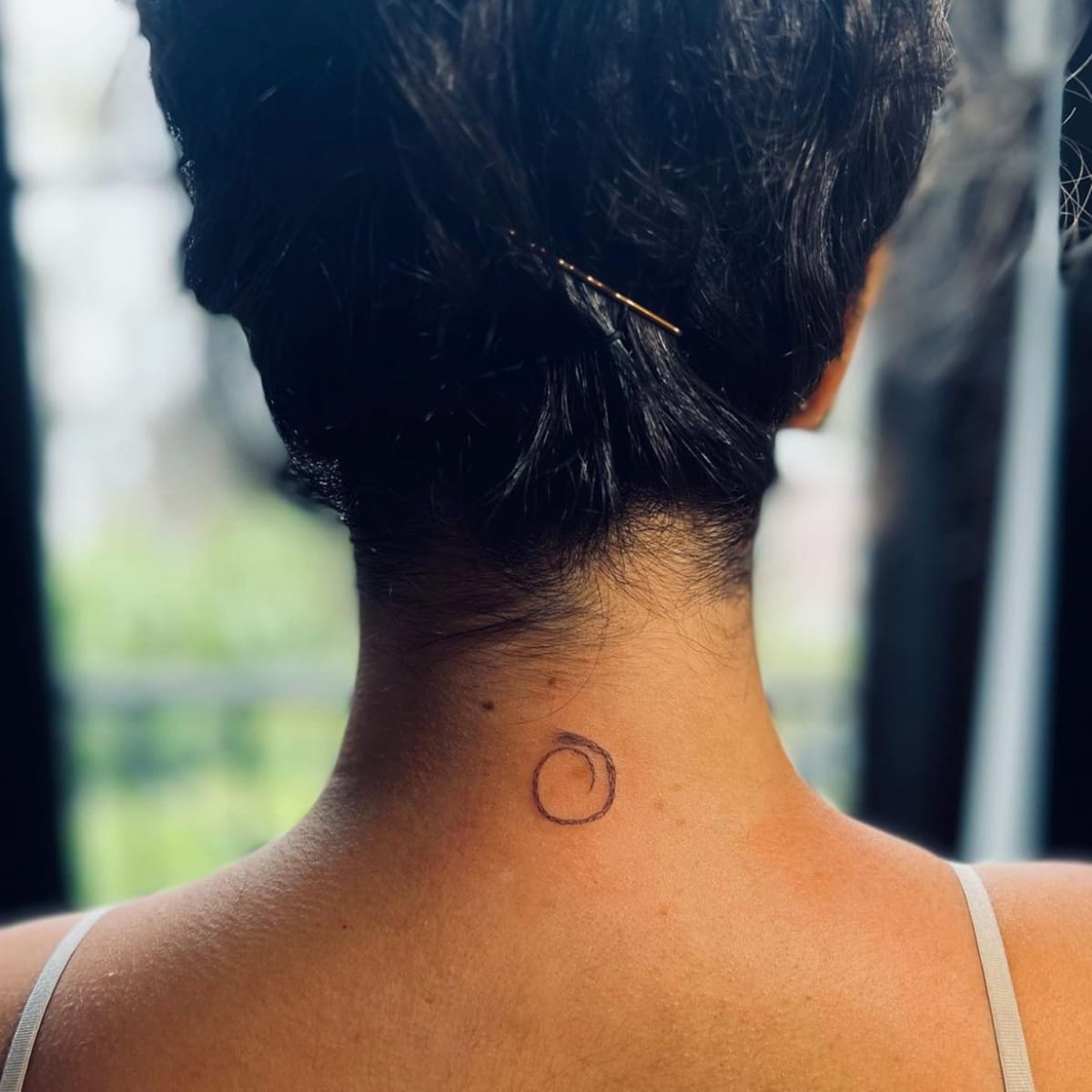
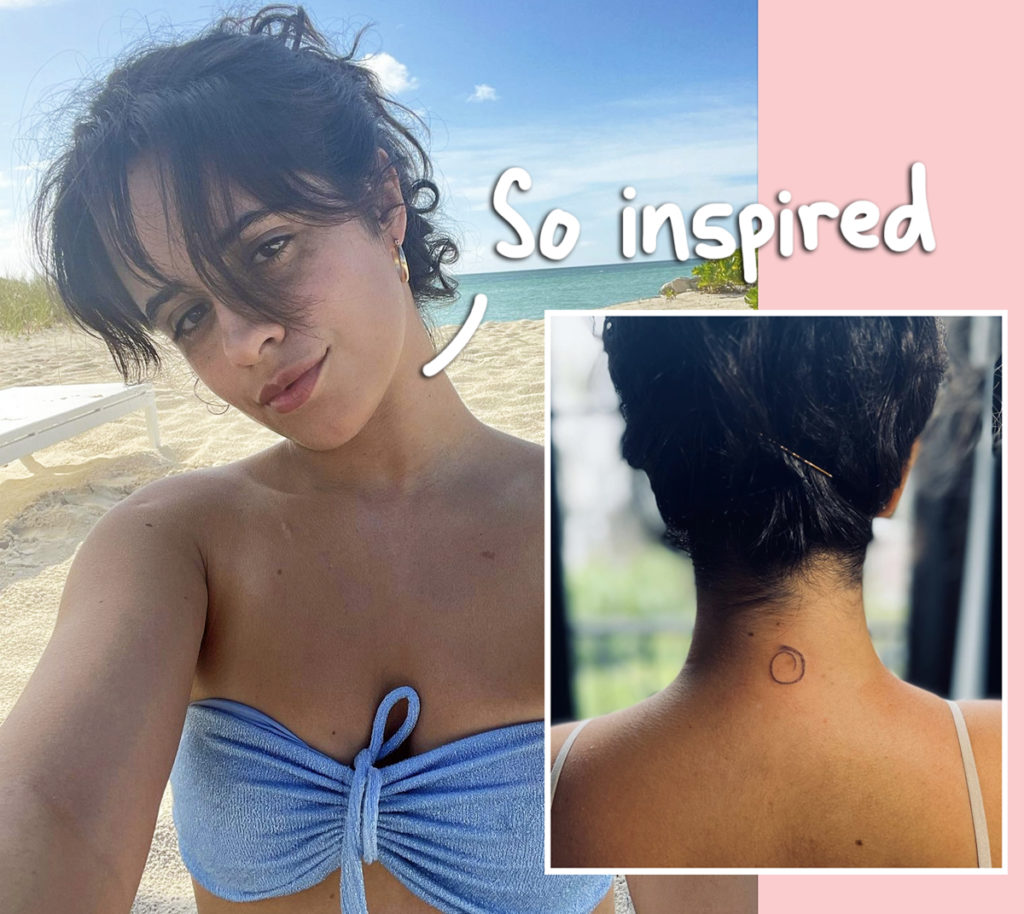
Scalp lettering reads from a distance; a pinky heart is easy to see only in a close-up or a particular pose. Rings and nail art can hide the smaller marks, while a hand held toward the camera brings them into view. Osbourne can choose how much of the ink appears in a photo.

The anchor and arm lettering add a traditional tattoo note

Kelly Osbourne tattoos: Kelly Osbourne’s colourful anchor and arm lettering

PopSugar and Nylon photographs show a colourful anchor on Osbourne’s forearm, beside script and a small clover-like mark. Its compact shape, bold outlines and colour follow traditional tattoo style and stay easy to read in a busy image. It looks very different from her fine scalp lettering or the tiny heart.

The photo shows where the anchor sits and what it looks like; it doesn’t show why Osbourne chose it. Anchors often stand for travel, stability or family, but she hasn’t given this one that explanation. The design can be described simply: a colourful forearm anchor with smaller tattoos around it.

Osbourne’s tattoos do not form one matching sleeve built in a single sitting. They bring together designs from different moods and periods: script next to a traditional picture, with a tiny clover or cross nearby. The variety gives the collection a personal feel, even when photos leave the story behind each shape unclear.

Older inventories also list skull and crossbones on Osbourne’s feet, plus small pieces linked to family, fashion work and changes in her appearance. The dates and visibility of these tattoos vary. Her scalp and hand pieces are easier to place because they appeared in close-up photos and contemporary coverage. The broader collection is a record across time, not one official checklist.

Stories began on her shaved scalp, while Solidarity honours the victims of the Orlando shooting. The pink heart and other hand marks, forearm anchor, script and older skulls round out the collection. Osbourne has shared the story behind some pieces; the rest can be described without assigning meanings she hasn’t given.

J.I.D’s first tattoo was Routeboy, but the collection grew far beyond it

In GQ’s Tattoo Tour, J.I.D says he got his first tattoo at 13. He had watched his older brothers and sisters get tattooed and wanted one too. He picked a spot his mother wouldn’t notice right away.

Across his lower stomach, he had the word “Routeboy”, framed by flames. Route is his family name, so the lettering links the tattoo to both family identity and the name he was building as a young artist.

After Routeboy, the record gets patchier. Photos show dense ink across his chest, stomach, arms and hands, but only some designs can be named with confidence. A close shot can show where a mark sits; it can’t supply an explanation J.I.D hasn’t shared.

The Routeboy stomach tattoo came first

J.I.D showing the Routeboy lettering and flame design on his stomach

The flames sit above and below the Routeboy lettering, framing it as one broad design. J.I.D chose the lower stomach, where a shirt or jacket could keep it hidden. An early photo that doesn’t show the tattoo can’t establish whether it was already there.

Route is his family name, and Routeboy gave J.I.D a personal label tied to it. The GQ interview confirms that connection; readings about destiny or ambition would go beyond what he said.

The tattoo arrived before his public career, albums and tours. At 13, he was making a decision that felt grown-up; now he says it looks childish. His change in taste doesn’t undo the tattoo’s place in his story.

The flames belong to the same first composition

J.I.D in a GQ portrait with the lower-stomach and chest tattoos visible

Flames are a familiar tattoo motif, but J.I.D’s own account treats them as part of the original Routeboy design. There’s no reliable explanation that they stand for anger, rebirth, danger or a particular event. The tattoo meanings other people attach to fire don’t tell us what he meant. Visually, the flames simply frame the word.

In the GQ close-up, the flames make a border around the lettering and widen the design. Its linework looks rougher than the detailed chest and arm tattoos visible in later photos, fitting a tattoo made at 13. The first piece feels like a young person’s statement of identity, rather than an attempt to match a later sleeve.

Routeboy’s appeal is its simplicity: one word, a family reference and flames. His later tattoos are denser and more varied, but this first piece is straightforward to describe on its own. The rest of the collection is harder to map mark by mark.

Later photographs show a much larger chest and arm collection

J.I.D showing the dense tattoo work across his chest, arms and stomach

Later work spreads from his chest to his shoulders and arms. Photos show dense linework, script, small figures, abstract shapes and religious imagery close together. Some lines overlap, but differences in scale and weight make the tattoos look like separate designs added over time rather than one sleeve.

The chest is hard to document from one photo. Dreadlocks, necklaces and the angle of the torso can hide the upper edge; clothing may cover the lower stomach. A portrait can reveal the extent of the work without enough detail to name every mark. That’s why the Routeboy tattoo should not be merged with the later chest pieces just because both occupy the same broad area.

His arms carry black-and-grey linework, lettering and small illustrations. No published source gives a complete official list. The photos show extensive work, but they don’t support borrowing a meaning from another rapper’s tattoo collection or naming every shape.

The arm tattoos are visible, but not all are individually named

J.I.D with the tattooed arms and hands visible in a portrait

Public portraits show tattoos from J.I.D’s shoulders down his forearms and onto his hands. Some sections have repeated curves and flame-like outlines; others use lettering or small illustrations. The work is extensive, though a wide shot rarely shows where one tattoo ends and another begins.

The hand tattoos are easy to misread: fingers bend, jewellery covers skin and shadows gather around the knuckles. A mark that looks like a letter in one photo may be a small symbol from another angle. If a word isn’t legible and J.I.D hasn’t identified it, the rest is best described as linework.

Routeboy began as a tattoo J.I.D could hide under a shirt. The later work on his arms and hands is visible in photos, performances and fashion portraits. That shift puts more of the collection into public view, though no precise date is available for every addition.

Chest lettering and religious motifs form separate visual groups

J.I.D showing the chest and torso tattoos in a close portrait

Close torso photos reveal lettering near the shoulders, smaller symbols around the chest’s centre and larger decorative designs reaching toward the stomach. Some portraits also show cross pendants. Those are jewellery, even when they sit close to the tattooed chest.

J.I.D hasn’t given a public meaning for every cross, figure or ornamental mark. When a design is clear, it can be described as religious or symbolic; beyond that, the photographs don’t tell us the personal story.

The first tattoo is a word framed by flames; the later chest work layers many smaller designs across the torso. The photographs show the collection growing over time, and J.I.D has described that gradual buildup himself.

The clearest part of J.I.D’s tattoo story is still where it began.

What the tattoo photographs can and cannot prove

The first tattoo is the best documented: J.I.D has described getting Routeboy at 13, choosing the lower stomach for privacy and taking inspiration from older siblings. Later images clearly show his chest and arm work, but published accounts are thinner on individual names and meanings.

J.I.D’s first-person account anchors the Routeboy story; later photos show how the collection grew. That keeps a useful distinction between a documented tattoo and a guess. Readers can follow the design from age 13 without being told that every line has a private meaning.

Lil Peep tattoos: “Crybaby,” Hellboy, family ink and a restless face

Lil Peep’s tattoos were never a carefully planned image. In GQ’s 2017 Tattoo Tour, he names family pieces, spooky images, music references, a broken heart, a horseshoe and the word “crybaby.” He tells stories about some designs; others were spontaneous or chosen for the joke.

In the footage, Peep often explains the tattoos himself. A photograph shows where the ink sits; his comments tell us whether it was a family reminder, a joke or an impulse. Some designs only make sense once he tells the story.

“Get cake, die young” and the Halloween details made the face a record

Lil Peep showing his face tattoos during the GQ Tattoo Tour

Peep says he sometimes woke with face tattoos and no memory of getting them. One phrase reads “get cake, die young.” After a night of heavy drinking, he woke to find it on his face and accepted it. It’s an absurd story, and shows how some of his face tattoos happened without a plan.

He says “11 1” marks his birthday, November 1, around Halloween. Around that theme are bats and a pumpkin. He also got a centipede after noticing how often they seemed to turn up around him. It bothered him so much that he put one on his body.

The bats and pumpkin point to Halloween. The centipede has its own story: Peep said they kept turning up around him and bothering him, so he put one on his body. The images don’t all belong to one vague “dark” theme.

Family names, Lisa, Meep and Hellboy sit beside the early work

Lil Peep showing his family and face tattoos

At 14, Peep got a large tattoo connected to his mother’s birthday and initials. He said he wanted something that wouldn’t make her angry about his first tattoo. He also mentions tattoos of his grandfather, his mother and a friend, and says family meant more to him than a traditional family tree.

The Lisa shouting “Mom” tattoo captures one of their habits. When Peep felt overwhelmed or things were going wrong, he says, he called his mother and stressed her out. The tattoo is therefore a visual joke about a real family dynamic, not just her name or a portrait.

His leg tattoo of Meep recalls a doll he bought with a former girlfriend. He called the doll his son and wanted the character on his body. It’s playful, but the attachment made it personal to him.

Below Meep, he points out “Hellboy,” the name of his first mixtape to attract wider attention. He also loved the comics and their main character, so the lettering nods to both music and comics.

The broken heart and “crybaby” tattoos turned pain into identity

Lil Peep showing the broken heart and other face tattoos

Peep got the broken heart beneath his eye in 2015 during a period when he wasn’t feeling well. He said he had to succeed in music because visible face tattoos could make ordinary jobs harder to get. The placement was emotional, but it also pointed him toward a career.

The large “crybaby” tattoo came from something Peep noticed about himself. He said he complained often and felt ungrateful despite having opportunities many people wanted. He chose the word to remind himself to appreciate what he had and remember that other people faced harder circumstances. He called it one of his favourites, even knowing some people would regret such visible ink.

He described “mood” as his eternal mood and joked that the image was low quality because his mood was, too. The tattoo does not need a grand explanation; the joke already says a lot about how he viewed the imperfect piece.

The “homesick.” tattoo on his fingers reflected touring while he was young and missing his mother. He carried the word with him whenever he was away from home.

Pink Panther, anarchy, horseshoe and Ed Hardy pieces show his restless style

Lil Peep showing the Crybaby tattoo collection

Peep says he got the Pink Panther after staying awake on mushrooms, taking an Uber to Venice Beach and deciding he should make the night memorable. He walked into a random shop and had the character tattooed. It was an impulsive choice tied to the story of that night.

The red anarchy symbol came from his urge to change his look whenever he felt punk or rebellious. He said his style was hard to pin down and recalled growing frustrated when people copied what he wore in high school on Long Island. The mark fits a shifting visual identity, but the interview gives no reason to read it as a fixed political statement.

Peep called the horseshoe a lucky charm, then joked it worked only sometimes. He also said Ed Hardy drew a design for a London exhibition; after shaving his head, Peep had it tattooed. Together, the artist, place and timing make the design identifiable without requiring a speculative meaning.

Arm and body tattoos complete the Long Island collection

Lil Peep showing his arm and body tattoo collection

Peep described the collection as a work in progress and planned to cover as much of his body as he could tolerate. He talked about how different placements felt, including the back of his head. Over time, the ink became part of his face rather than an accessory he kept evaluating.

Close portraits reveal designs that a performance photo can hide under hair, clothes or a camera angle. Peep’s own list gives names to some of them: Hellboy, Crybaby, homesick, the broken heart, anarchy, horseshoe, bats, pumpkin, centipede and Pink Panther. Some had a story; others were chosen for the image or the moment.

Peep’s tattoo language mixes family, humour, music, horror and deliberate discomfort. The face ink could make conventional work harder to get; other pieces tied him to Hellboy and Crybaby or turned private jokes into words on his skin. He never said every tattoo carried a noble explanation.

Some pieces remembered family. Others reminded him to appreciate what he had; still others came from jokes, sudden ideas or intoxicated nights. Together they chart a young artist who treated tattooing as biography, armour and experiment.