codex

Barry Keoghan Tattoos: The Temporary Ink Behind Bird and Peaky Blinders

Barry Keoghan’s inked-up look in Bird belongs to Bug, the character he plays. Keoghan wore fake tattoos across his body for the film and said summer sun could leave pale marks after they were removed, including the shape of a scorpion or cross. That isn’t the same as a record of his own tattoos.

Duke Shelby has a separate set of designs in Peaky Blinders: The Immortal Man. Duke Shelby has a separate set of tattoos in Peaky Blinders: The Immortal Man. Here, I stick to what appears on screen instead of guessing what each symbol means.

Bird’s insect-heavy chest
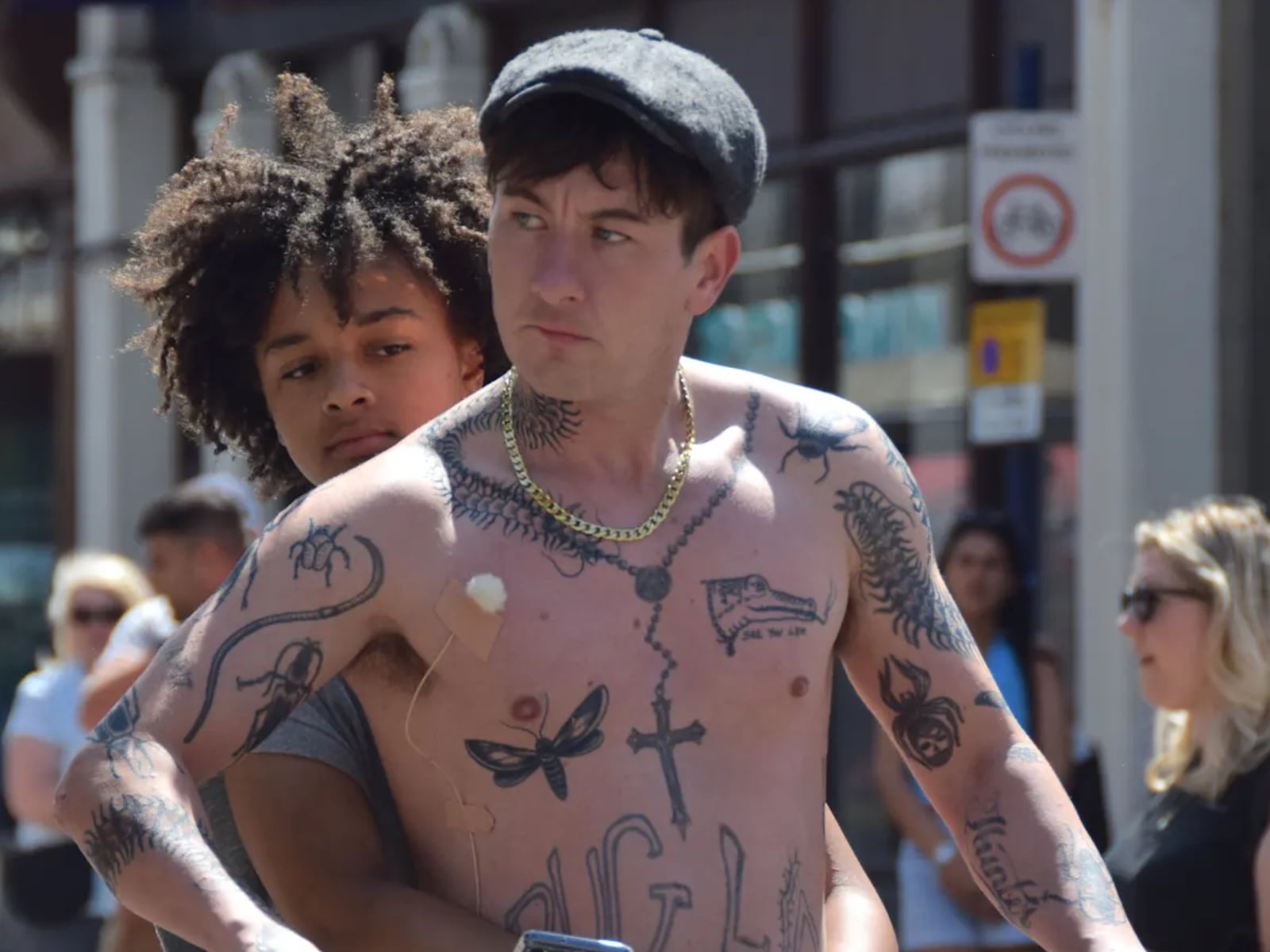
Barry Keoghan tattoos: inline tattoo reference

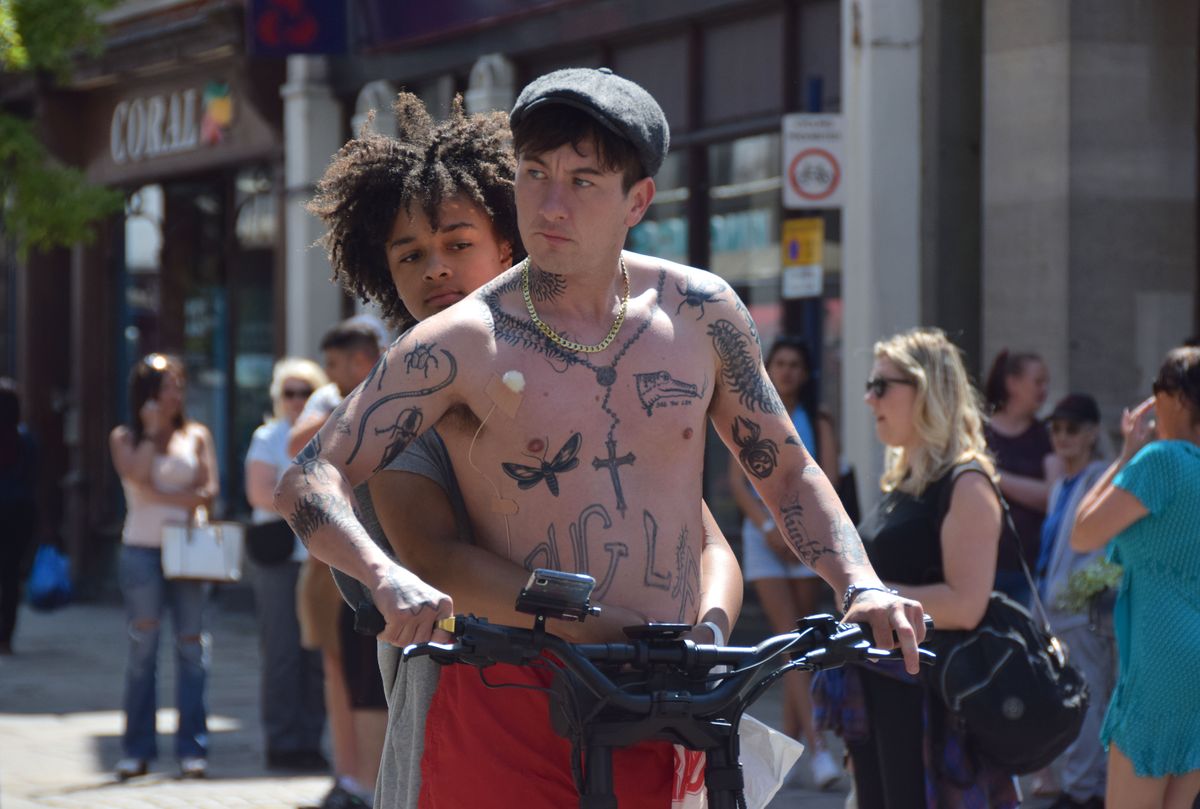
The Bird still shows insect-like marks across Bug’s chest and neck. A large, dragonfly-shaped design sits low on the chest, with a cross down the centre and smaller marks around the collarbone. The pieces vary in size and angle, which gives the makeup a scattered look instead of a planned, matching set.

If you want to borrow that feel, try one detailed insect beside a darker, simpler symbol. Leave some skin between them so each shape can be read. The reference is useful for its loose spacing; the subject can come from your own life.

Composition matters more than copying the images. A few pieces with room around them can feel just as informal, whether you choose insects, flowers, tools or something else.

Loose arm tattoos and uneven linework
Barry Keoghan tattoos: inline tattoo reference

The arm and shoulder shots mix insect shapes, curved marks, small symbols and bits of lettering. Some are clear; others read as texture. That loose arrangement is part of the character design.

For a patchwork sleeve, choose one or two things that tie the pieces together, such as black ink and a similar line weight. Have the tattooer plan the gaps before adding more. Tiny legs, antennae and distressed lettering may need more space than they seem to in a screenshot if you want them to stay legible as they age.

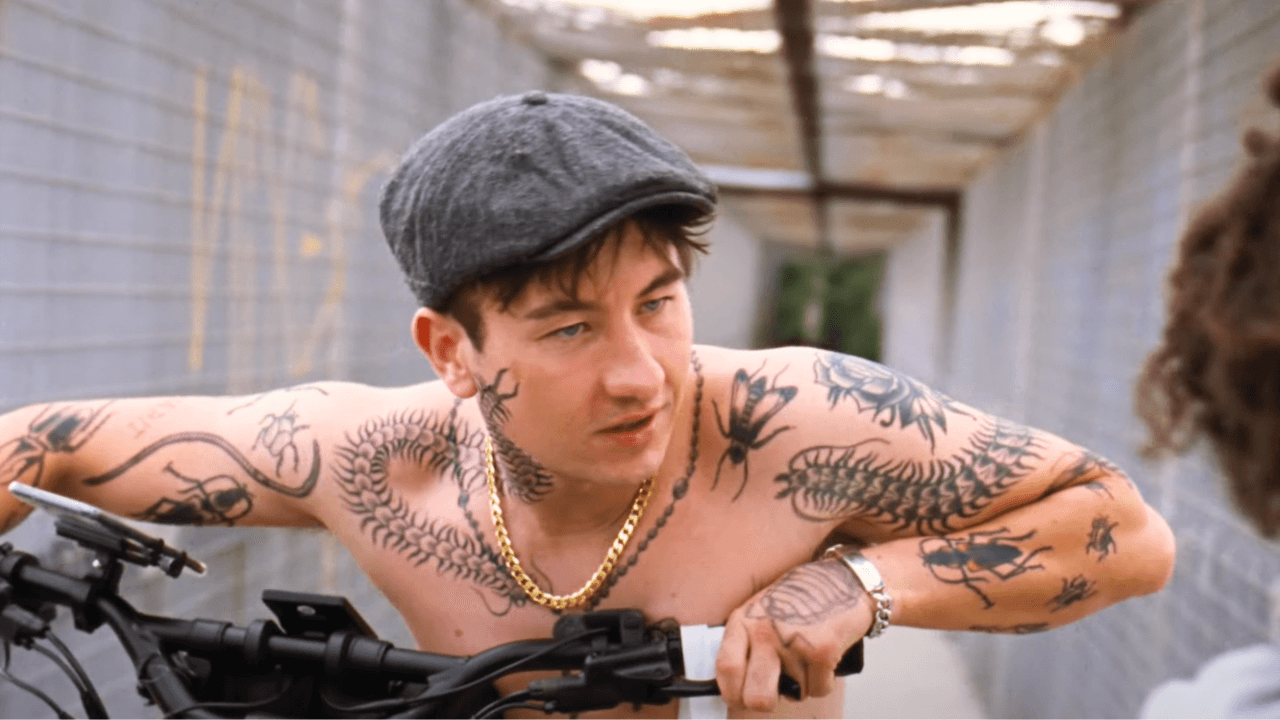
The face and neck details
Barry Keoghan tattoos: inline tattoo reference

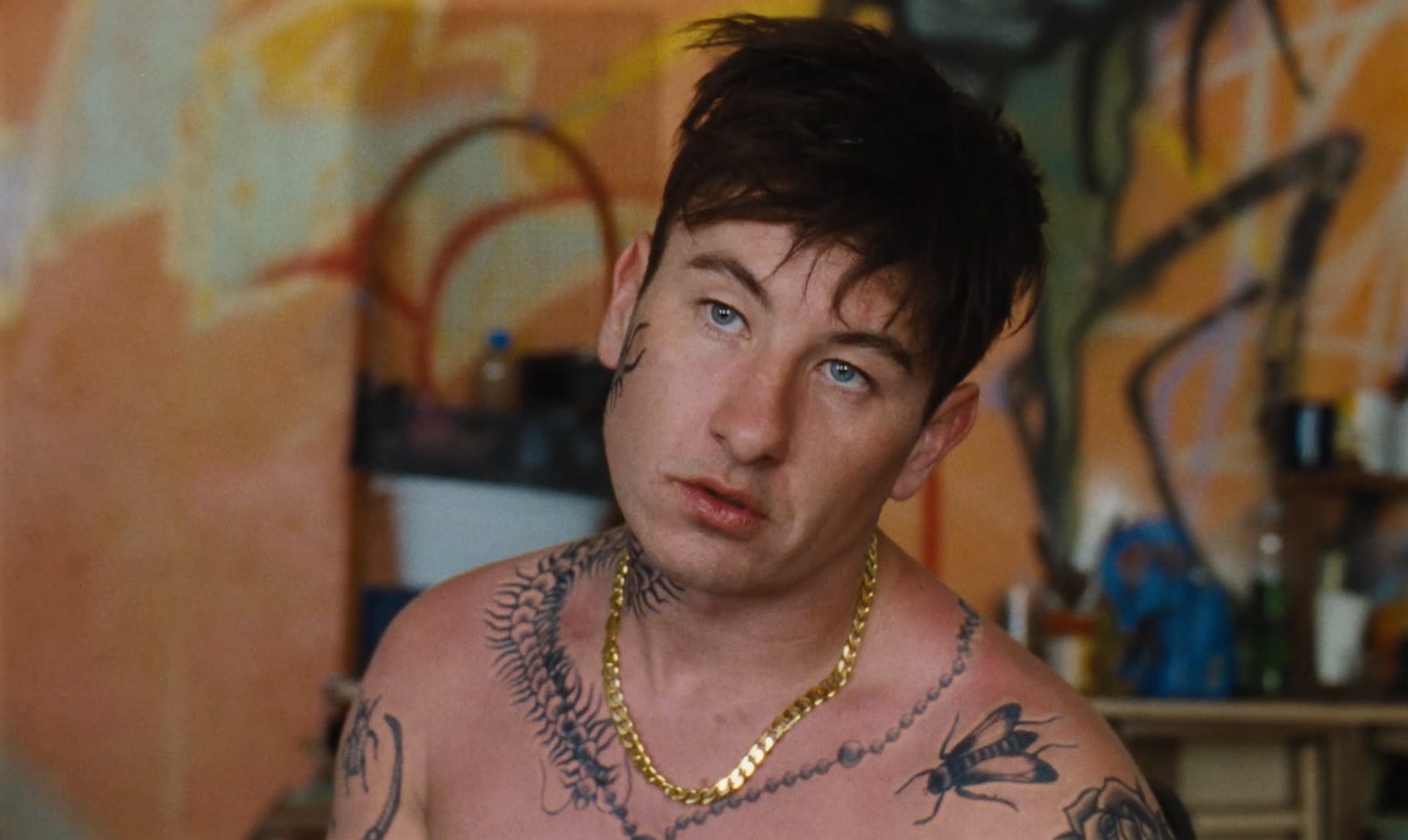
A dark, plant-like or insect-like mark runs from Bug’s cheek toward his temple in several frames, and the neck has denser lines. The exact shape is hard to make out, but the placement gives the character a strong outline on screen.

Face and neck tattoos stay visible in most settings. If you like the shape but aren’t sure about that level of visibility, try a temporary version first or move it to an upper arm or rib. For a permanent neck piece, take the stencil seriously and check how it sits beside any chest or shoulder work.

You can keep the reference without taking on the same placement. A small mark behind the ear or under the jaw gives you room to test the idea before choosing a more visible spot.

Lettering, crosses and the rough religious symbols
Barry Keoghan tattoos: inline tattoo reference

The chest cross is easy to pick out in the Bird stills. The lettering nearby is blunt and uneven, rather than set in a polished typeface. Together, they give the makeup a direct, hand-drawn look.

Lettering often needs to be larger on skin than it looks on a screen. Bring references for the style, then ask the artist to draw the words at their final size. If you want a symbol with personal meaning, choose one that connects to your own beliefs or experience; the film’s cross is a visual detail, not a reason to copy it.

Black outlines and a little texture can keep the design rough without filling every small gap with detail. Ask the artist which parts will still read clearly once the tattoo has healed.

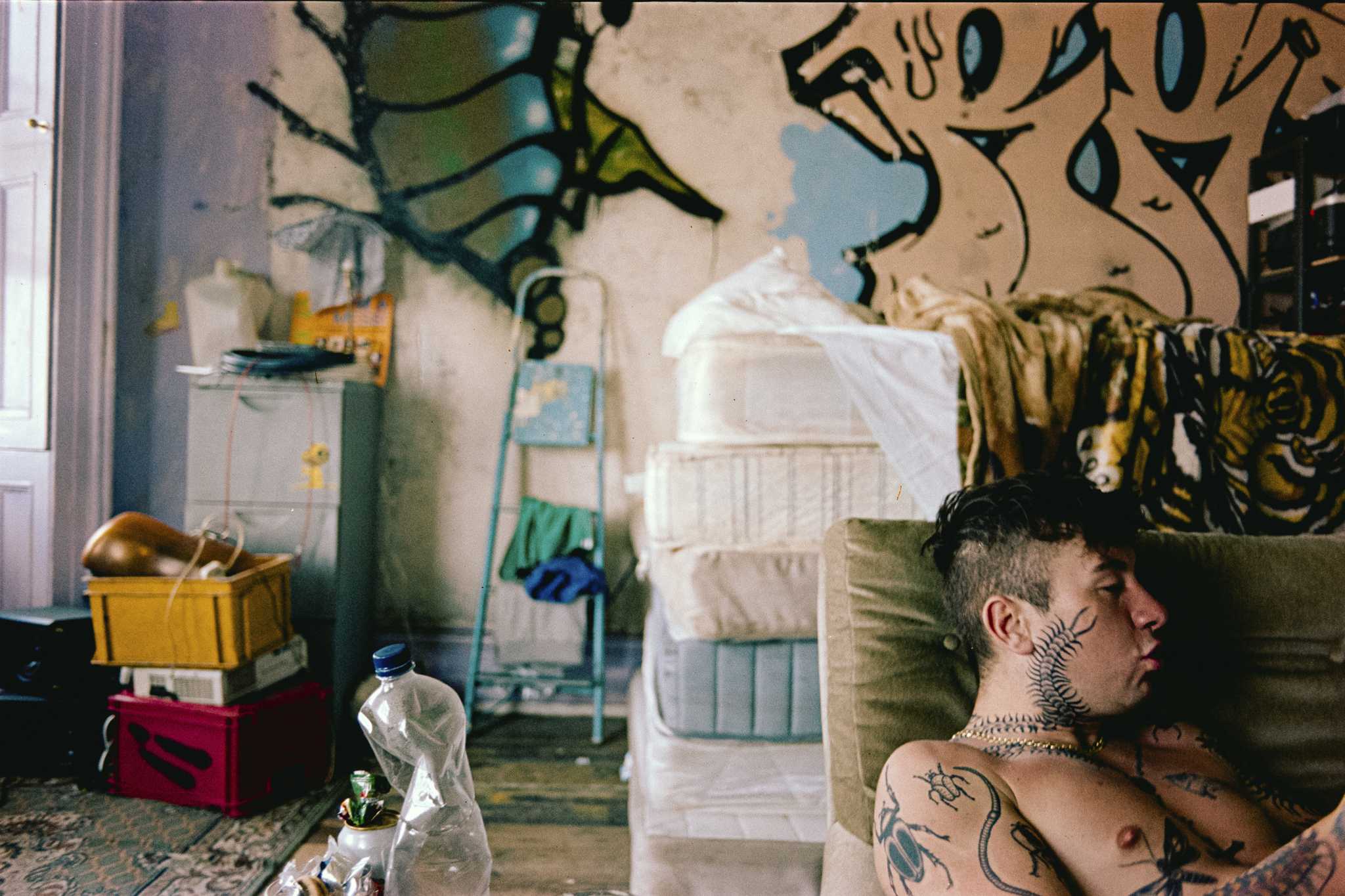
What the Duke Shelby tattoos add
Barry Keoghan tattoos: inline tattoo reference

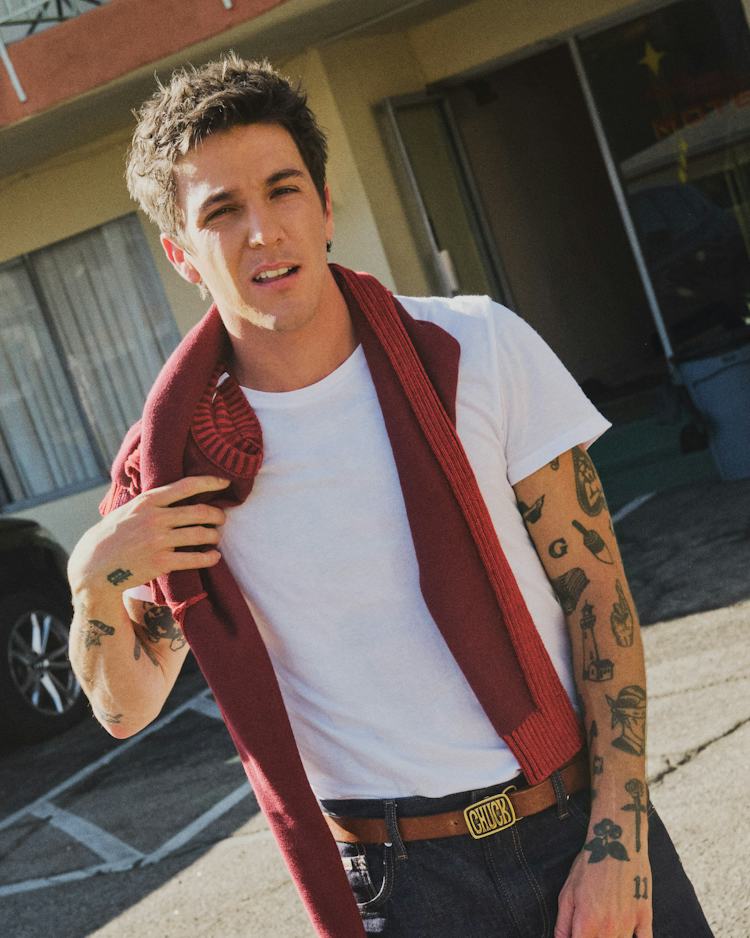
Duke’s tattoos are separate from Bug’s insect-heavy makeup. In the available shots, you can make out a small figure with its legs spread and the words “self-made” on his right bicep, dice on the right shoulder, a tiger on the chest, a wagon wheel on the left hand, intersecting lines on an arm, and praying hands beside crosses. A film breakdown counts seven designs, though some are only briefly visible.

The words are the easiest detail to adapt: use a phrase that still feels like yours after you’ve lived with it for a while. The dice and tiger also work as images on their own, without borrowing a meaning from the character. The film breakdown connects the wagon wheel with Romani identity, so don’t treat it as a generic decorative motif. The same care applies to religious imagery such as praying hands and crosses.

How to turn the look into your own

Gather a few references from both roles, then decide what you actually like: the insect shapes, loose spacing, rough lettering or a single bold symbol. You don’t need to copy a full screen look. Leave out anything that only appeals because Keoghan wore it.

Pick one element to start with and show the tattooer where you might place it. They can adjust its scale and spacing for your body, keeping the rough reference while making the lines clear enough to last.
More actor tattoo guides

Role Model Tattoos: Maine Roots, Hand Ink and Small Illustrations

Tucker Pillsbury, who performs as Role Model, grew up in Cape Elizabeth, Maine. Several tattoos point back to home: the Portland Press Herald’s script P on his right hand, a sack of potatoes, strawberries and a lobster trap. Photos also show loose arm drawings, a chest whale and the words “may women rule the world.”

The Maine-inspired hand tattoos

Role Model tattoos: Maine-inspired hand tattoo and local-logo reference

The script P on Pillsbury’s right hand copies the Portland Press Herald logo. He told the paper he wanted a reminder of home, but not an obvious lighthouse or outline of Maine. It’s a small local reference that people familiar with the paper can recognize.

The potato, strawberry and lobster trap tattoos

Role Model tattoos: Maine object tattoos

The Press Herald lists a sack of potatoes, a box of strawberries and a lobster trap among the tattoos Pillsbury got to remind him of Maine. They’re ordinary objects tied to home, rather than a state outline or a generic coastal symbol; the reporting doesn’t assign a separate story to each one.

The loose arm and forearm designs

Role Model tattoos: Loose illustrative arm and forearm tattoos

Photos show small black-ink drawings scattered across Pillsbury’s arms and forearms. The pieces vary in size and line weight, but the available images don’t identify every design or explain its meaning. I’ve left the unnamed marks as visual details.

The chest whale tattoo

Role Model tattoos: Whale and chest tattoos

Esquire’s May 2026 profile showed the whale on Pillsbury’s chest while he talked about taking up fishing again, a hobby from his childhood in Maine. The article doesn’t say the tattoo represents fishing or home, so the image and the interview detail should stay separate.

The lettering and the “may women rule the world” tattoo

Role Model tattoos: Lettering and statement tattoo

A 2024 Vanity Fair profile noted the words “may women rule the world” among the tattoos visible on his arms. It’s a plain, direct phrase, distinct from the smaller local references elsewhere in the collection; the profile doesn’t explain when he got it or why.

Why the collection feels connected

Several tattoos connect Pillsbury to Maine, and the rest of the visible work broadens the collection without needing one shared theme. The local references are supported by his own comments and reporting; the photos alone don’t tell us what every other mark means.

Role Model tattoo ideas to borrow

Start with a place or object that belongs to your own life. A local logo or familiar piece of food can carry more meaning than a state outline when it points to a place you know.

For a loose collection, decide on scale and placement before adding more pieces. Ask your artist how small lettering and hand or chest tattoos may change as they heal, and leave room if you expect the collection to grow.

More musician tattoo guides

156

Fletcher Tattoos: Arm Ink, Smaller Pieces and Stage Photos

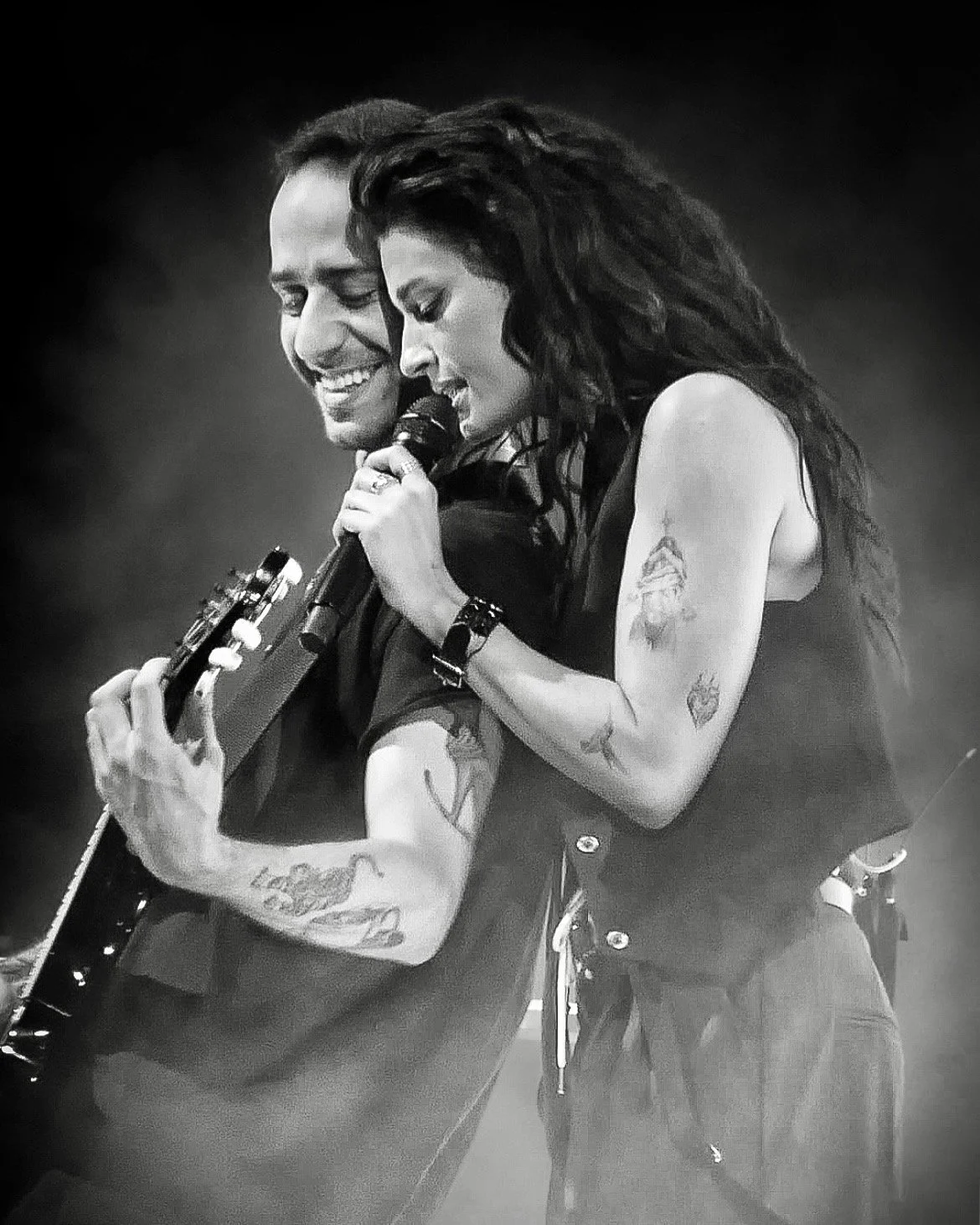
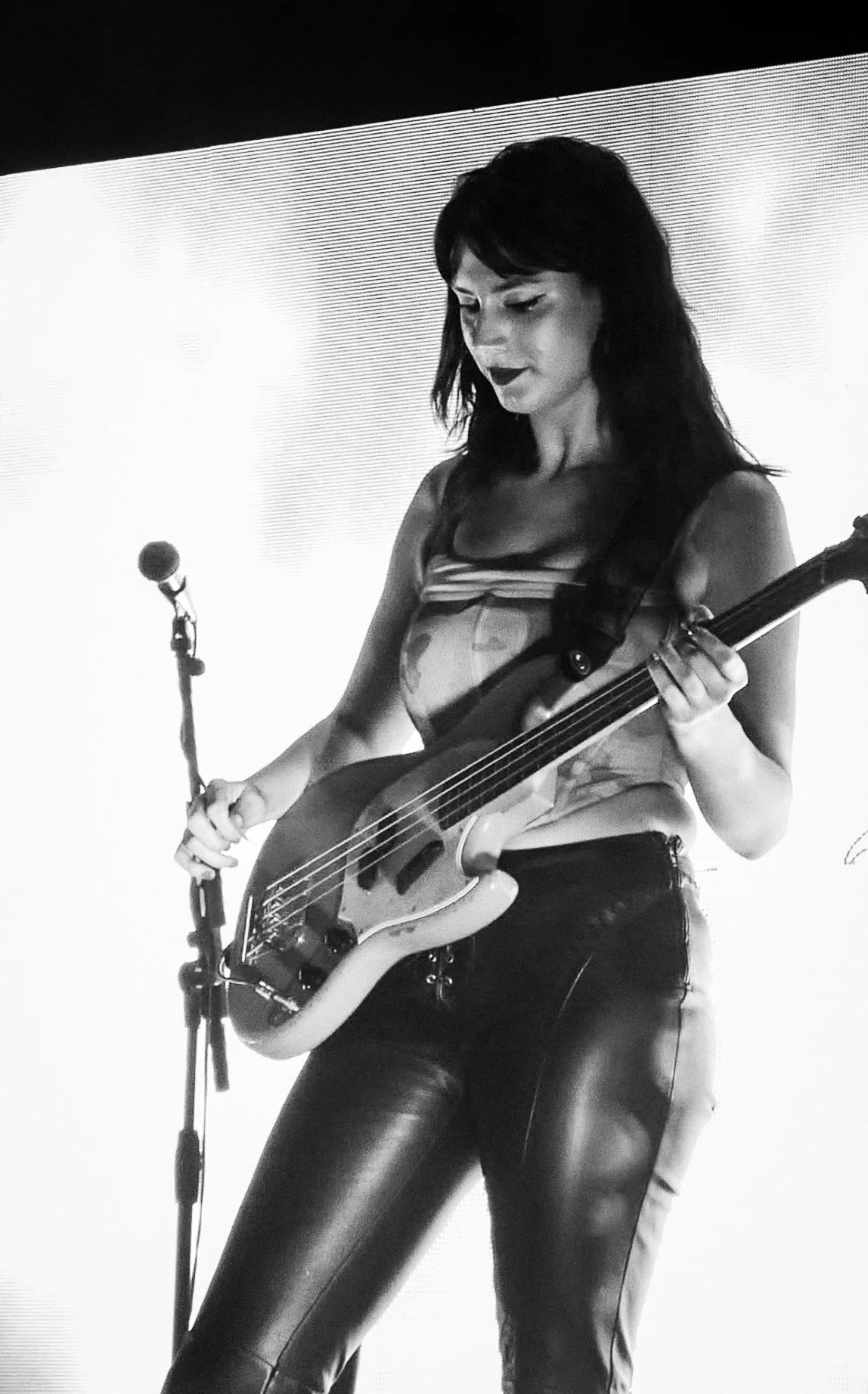
FLETCHER’s tattoos are easiest to see in photos from the stage. The clothes, hair and lighting change from one show to the next; the ink appears in flashes as Cari Fletcher sings and plays.

There isn’t a public list explaining each piece. Concert photos show her arms well enough to describe the placement and style, but not always enough to identify every small design or its meaning. I’ll stick with what the images show.

FLETCHER’s Arm Tattoos Are the Main Event

Fletcher tattoos: inline

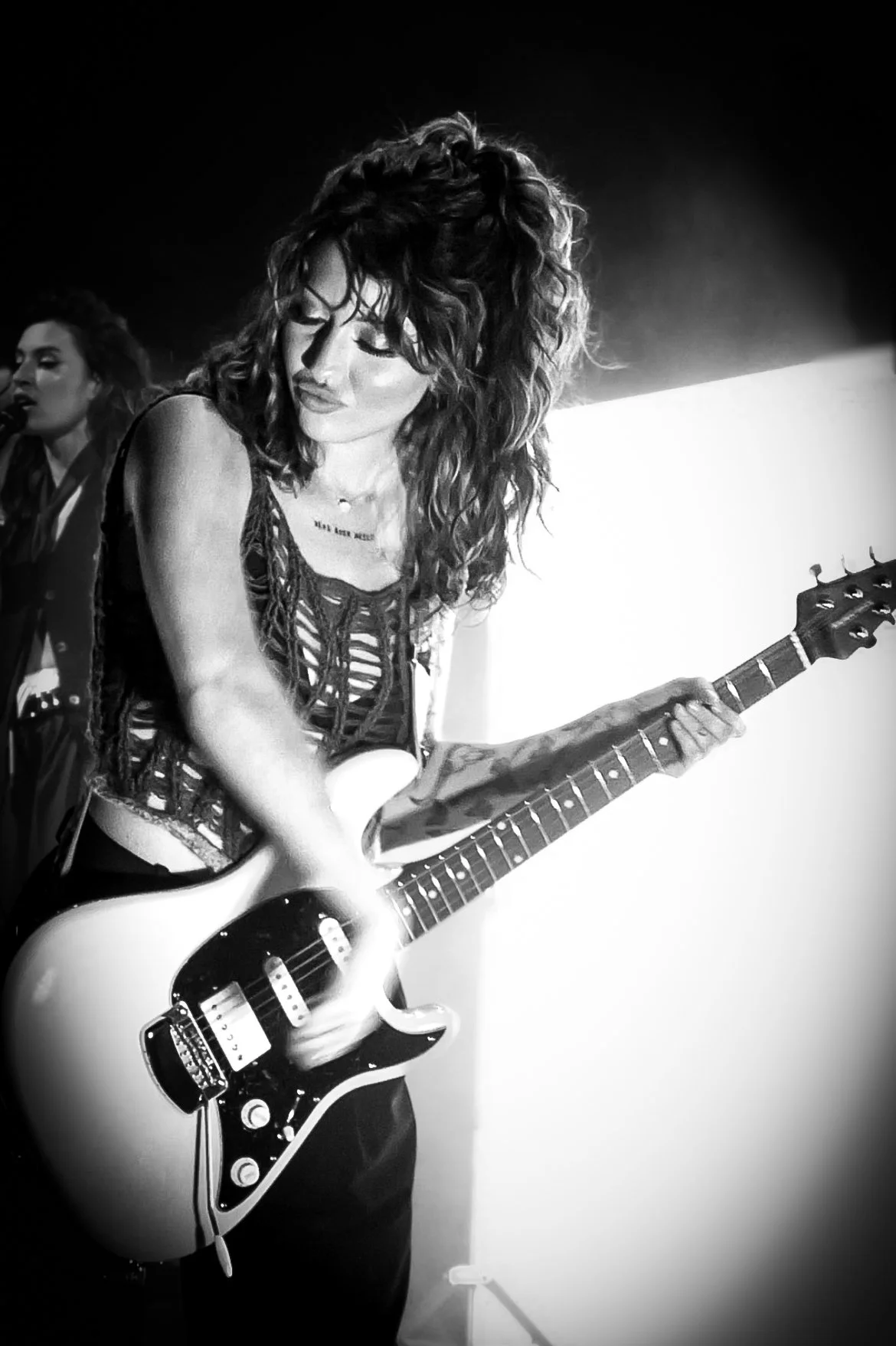
Several separate designs show across FLETCHER’s arms: a larger upper-arm tattoo, darker work lower down and smaller marks between. The gaps leave skin visible, so the collection reads more like pieces added over time than one continuous sleeve. As she reaches for a mic or guitar, the designs bend with her arm and show from different angles.

The concert shots are grainy, but the larger shapes remain clear. Smaller details are harder to separate from the stage lighting.

Fletcher tattoos: inline

In this second shot, the upper-arm piece is easier to make out; smaller shapes and linework sit lower on the arm. The live lighting hides some detail, but the tattoos still read without a studio close-up.

The pieces vary in size and line weight; they don’t form one solid panel.

Close Views of FLETCHER’s Upper-Arm Ink

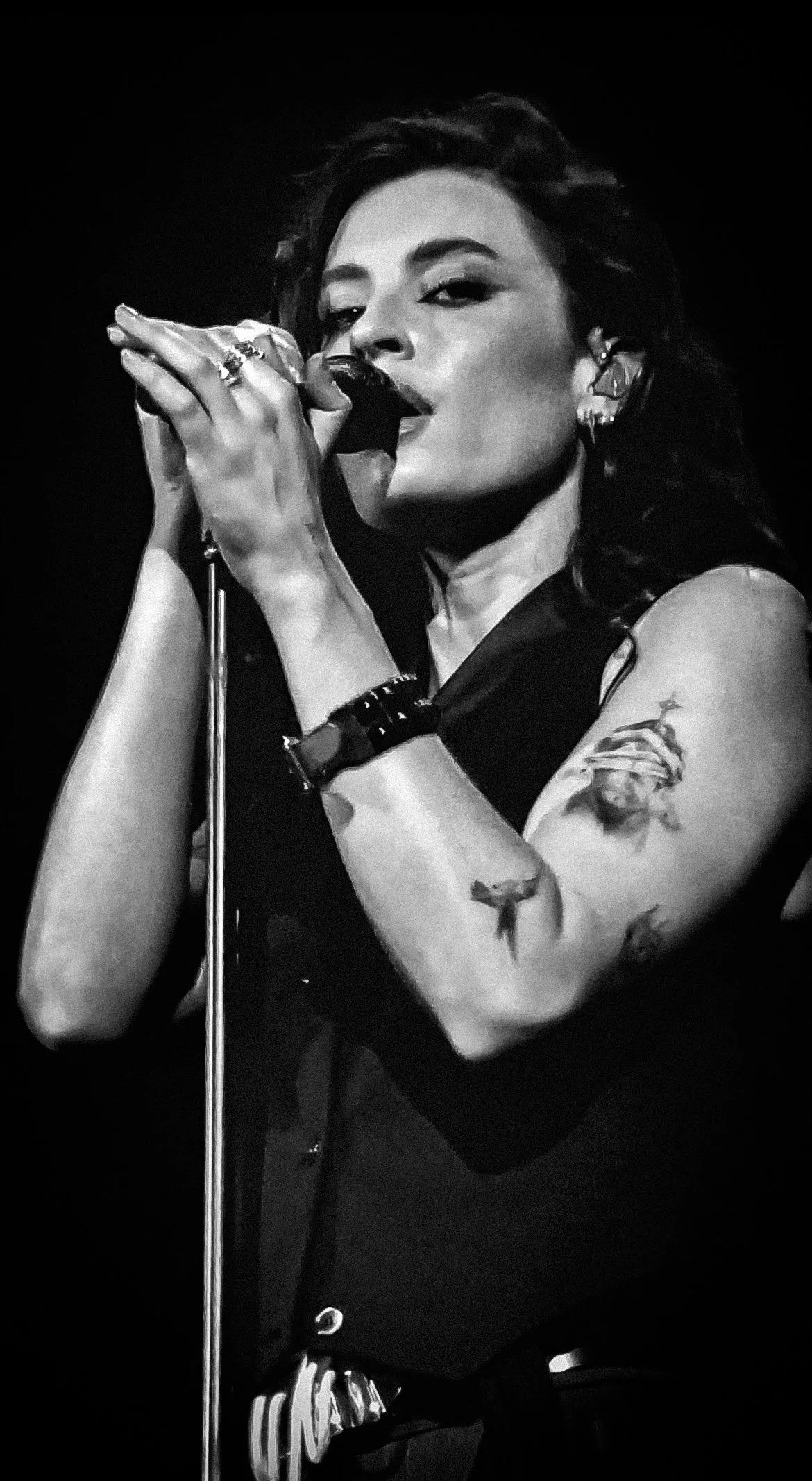
Fletcher tattoos: inline

A closer photo shows an illustrative-looking tattoo on the upper arm. Dark shading sits inside a broader outline, and the shape follows the curve of her arm with skin left open around it.

The upper arm gives a design room to breathe and can be covered by a short sleeve. The photo shows its appearance, though, not what it means. FLETCHER hasn’t publicly explained this piece, so there’s no reliable basis for assigning it a story.

The Smaller Pieces Around Her Forearm

Fletcher tattoos: inline

Other photos show smaller marks along the forearm, with designs near the elbow and wrist. Some are dark and easy to spot; fine lines fade into the stage light.
Because the forearm turns as she moves, a tattoo that faces the room while she holds a microphone can disappear when she turns her hand. The photos don’t offer a full inventory of the smaller pieces.
Why FLETCHER’s Tattoos Work on Stage

Fletcher tattoos: inline

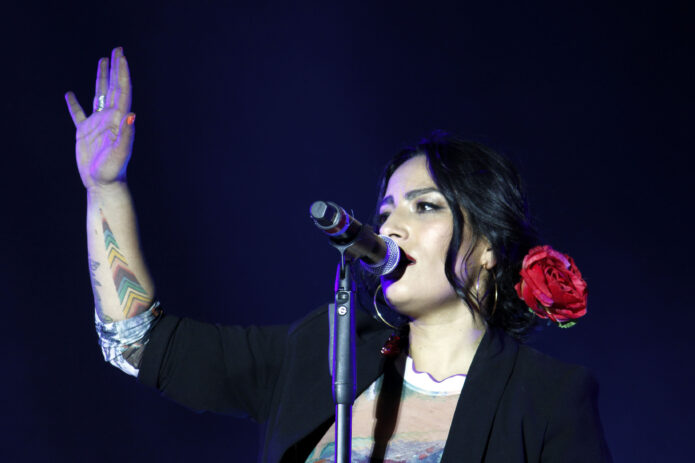
Here, she has one arm raised while singing, so the upper-arm tattoo faces the camera in a natural movement rather than a posed close-up. You can see how the design wraps toward the back of the arm and where it disappears under clothing.

Vests, sleeveless tops and open jackets make the ink visible while leaving the performance in view. Rings, bracelets, dark clothes and instruments share the frame; the tattoos sit among those details instead of taking over every look. Lighting shifts their appearance too: in a monochrome shot the lines feel sharper, while brighter portraits soften them.

There’s No Need to Force a Meaning Onto Every Piece

FLETCHER’s songs and interviews often draw on relationships, identity and touring, so fans may connect a tattoo to a lyric or a moment. Those readings can be personal, but a public photo doesn’t confirm them. It shows where the designs are and what their lines look like, not why she chose them.

A tattoo can have a private meaning, a passing one or no story its owner wants to share. When planning your own design, think about whether its size will leave the lines clear over time instead of shrinking it just to match a screenshot.

How to Borrow the Feel Without Copying FLETCHER

Use the images as placement references, not templates. Show an artist how an upper-arm design curves or how much space sits between forearm pieces, then ask for an original drawing suited to your arm.

Before settling on a spot, bend your elbow, turn your wrist and lift your arm. The stage photos show how a tattoo can look different as the body moves. You don’t have to fill the whole arm at once; leaving space lets the pieces stay distinct and gives you options later.

The Bigger Picture

Her photos show how the tattoos sit on her arms; the reasons behind most of them remain private.

More musician tattoo guides

Jean Silva Tattoos: The Chest Lock for His Mother

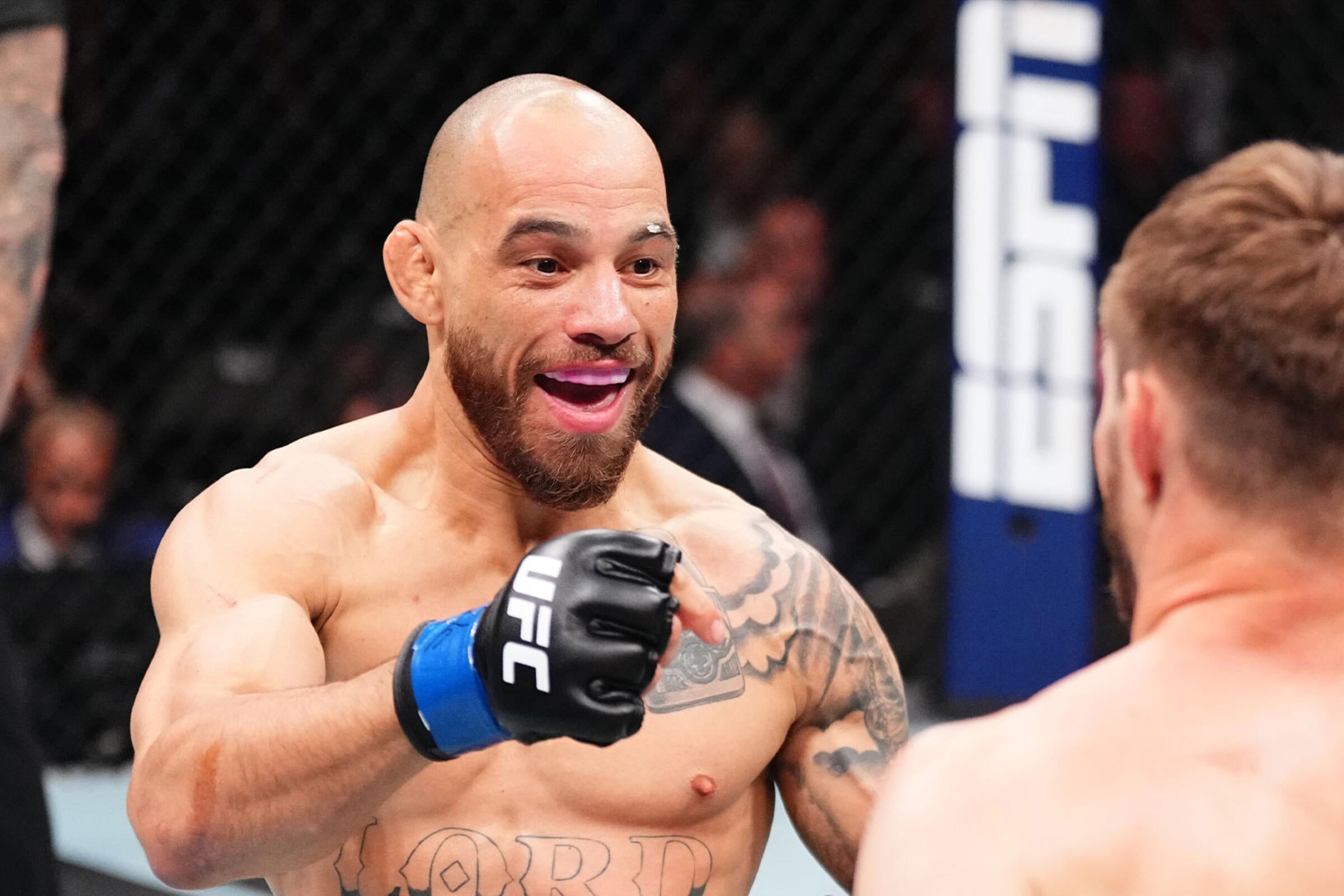
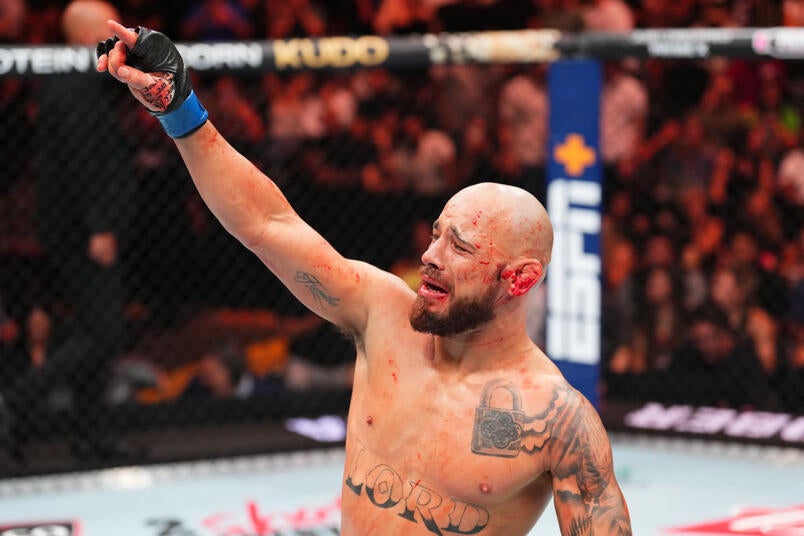
Jean Silva has a large lock tattoo high on his chest, with a diamond at its centre and his mother’s name underneath. He has described it as an old Nordic-era lock.

Other tattoos are visible in his fight photos, but the lock has the clearest public explanation.

The lock on Jean Silva’s chest

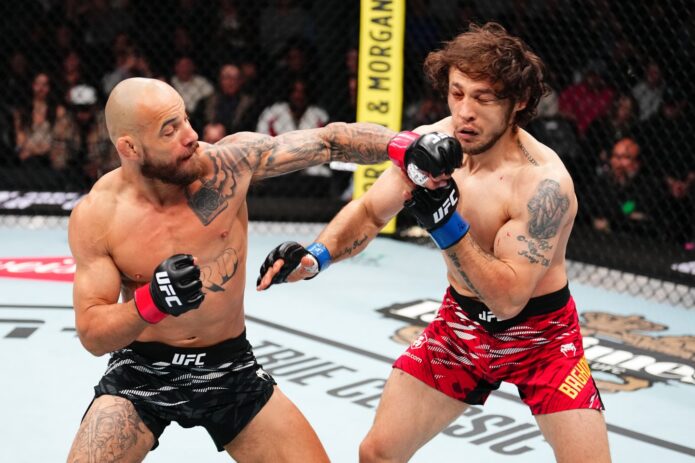
In clear fight photos, the lock sits above large outlined lettering on the lower chest. The central design is easy to recognise even when the surrounding work is partly obscured.

Jean Silva tattoos: Chest lock and surrounding lettering, genuine tattoo evidence

Speaking with MMA Fighting, Silva said that only real emotions and real people can open the lock. He connected the idea to his mother and his difficult childhood. He did not name a particular Nordic artifact, deity or hidden code.

The lock tattoo’s diamond

Silva has explained the lock as a whole, not given the diamond a separate meaning. It sits at the centre of the design; the public account doesn’t assign a story to each shape.

Jean Silva tattoos: Second clear view of Jean Silva’s chest lock, genuine tattoo evidence

Family context

UFC reporting describes painful parts of Silva’s childhood, including the loss of his brother and seeing his mother assaulted. That is background to his comments about the lock, not evidence that every other tattoo refers to those events.

The chest piece appears in fights, weigh-ins and post-fight interviews, but ordinary clothes cover it. It is visible in one part of his life and private in another.

Jean Silva in a contextual photograph: Distinct fight-context photograph, contextual only and not tattoo evidence; not tattoo evidence

The work around the centre

Outlined lettering crosses the lower chest, with more tattoos across Silva’s shoulders and arms. Some are only partly visible in fight photos.

Jean Silva in a contextual photograph: Distinct punch photograph, contextual only and not tattoo evidence; not tattoo evidence

MMA Fighting’s account explains the lock, not the surrounding letters or arm designs. The photos show additional ink, but the wording and meanings of those pieces haven’t been established in the reporting used here.

One clear idea

A lock can suggest privacy or protection, but those broad associations aren’t Silva’s full story. His explanation centres on who can get through: people and emotions that are real to him.

Jean Silva in a contextual photograph: Distinct post-fight interview photograph, contextual only and not tattoo evidence; not tattoo evidence

In a post-fight photo, the lock can look like armour. Silva’s own explanation shifts the focus to trust and family.

Fight-night context

Silva competes with his upper body uncovered, so the lock and surrounding ink appear in walkouts, exchanges, celebrations and interviews. They are part of his public look, but they don’t explain his fighting style or results. UFC coverage also follows his finishes, his Fighting Nerds team and his path into the spotlight.

Lighting, movement and gloves can hide details from one frame to the next. The clearer chest photos help identify the lock, but they don’t show every part of his collection.

What the reporting confirms

Silva has described a diamond-centred chest lock as an old Nordic-era design that real people and real emotions can open. He has connected it to his mother and difficult childhood; her name appears underneath. Photos show more chest, shoulder and arm tattoos, but the available reporting doesn’t explain all of them.

One clear idea

If you like the image, start with what you want a lock to mean in your own life instead of copying Silva’s design. Think about the person, boundary or feeling you want it to represent, then choose a symbol that fits your reason.

The chest gives a central design room and can be covered by everyday clothing. If you add lettering, plan for enough space to keep it readable as the tattoo settles.

More athlete tattoo guides

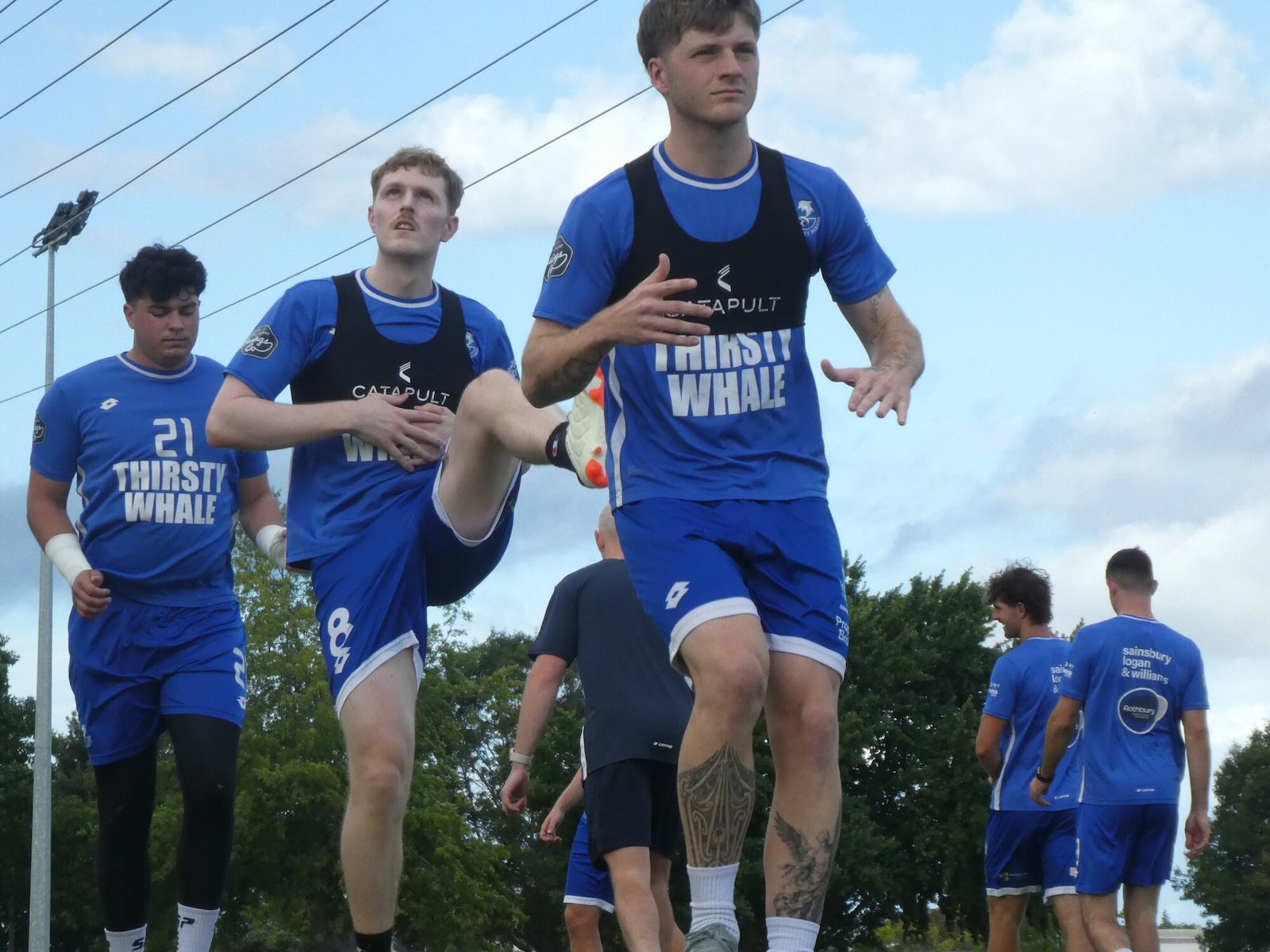
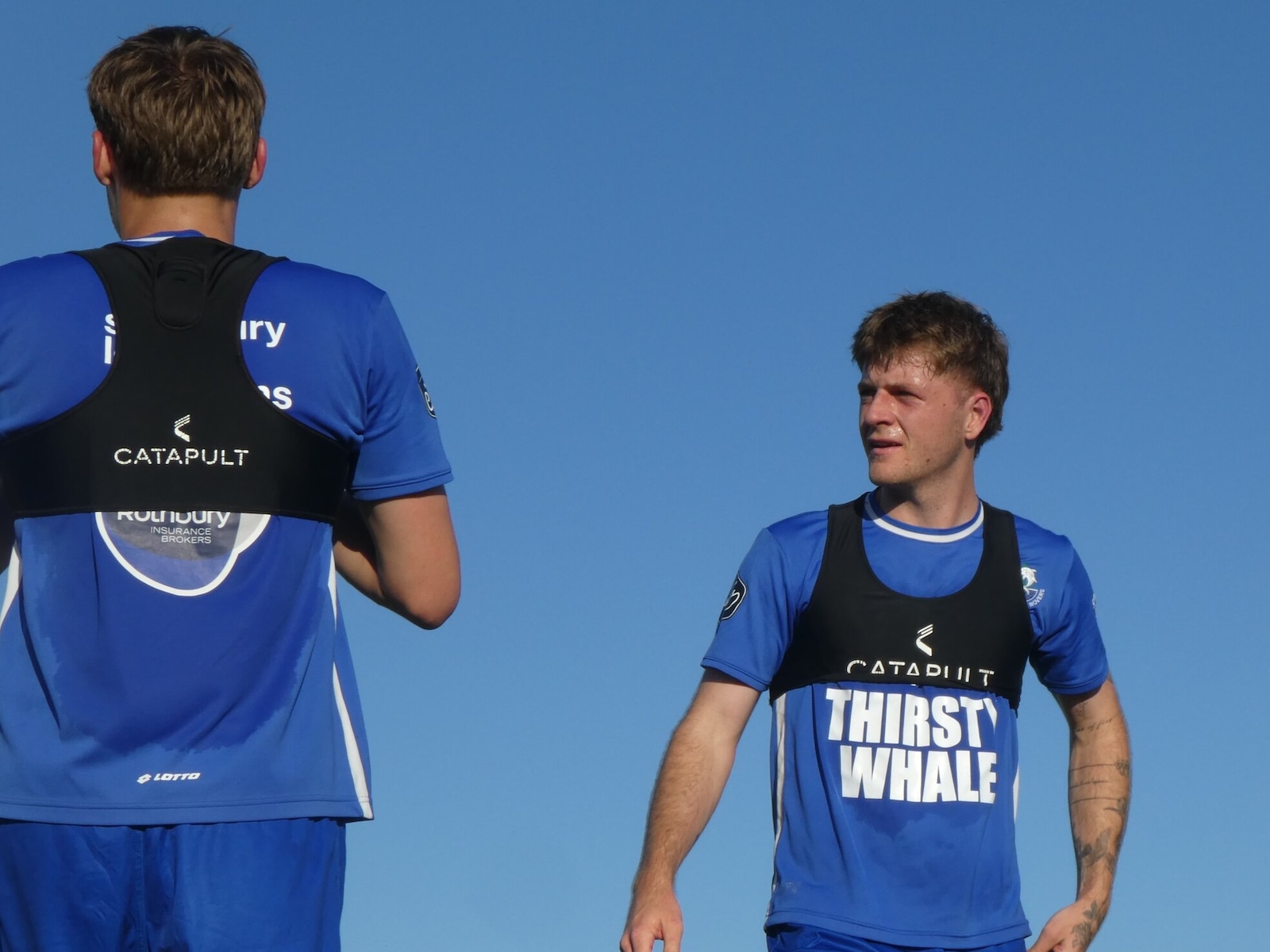
Aston Hurd Tattoos: His Family Ta Moko and North Star

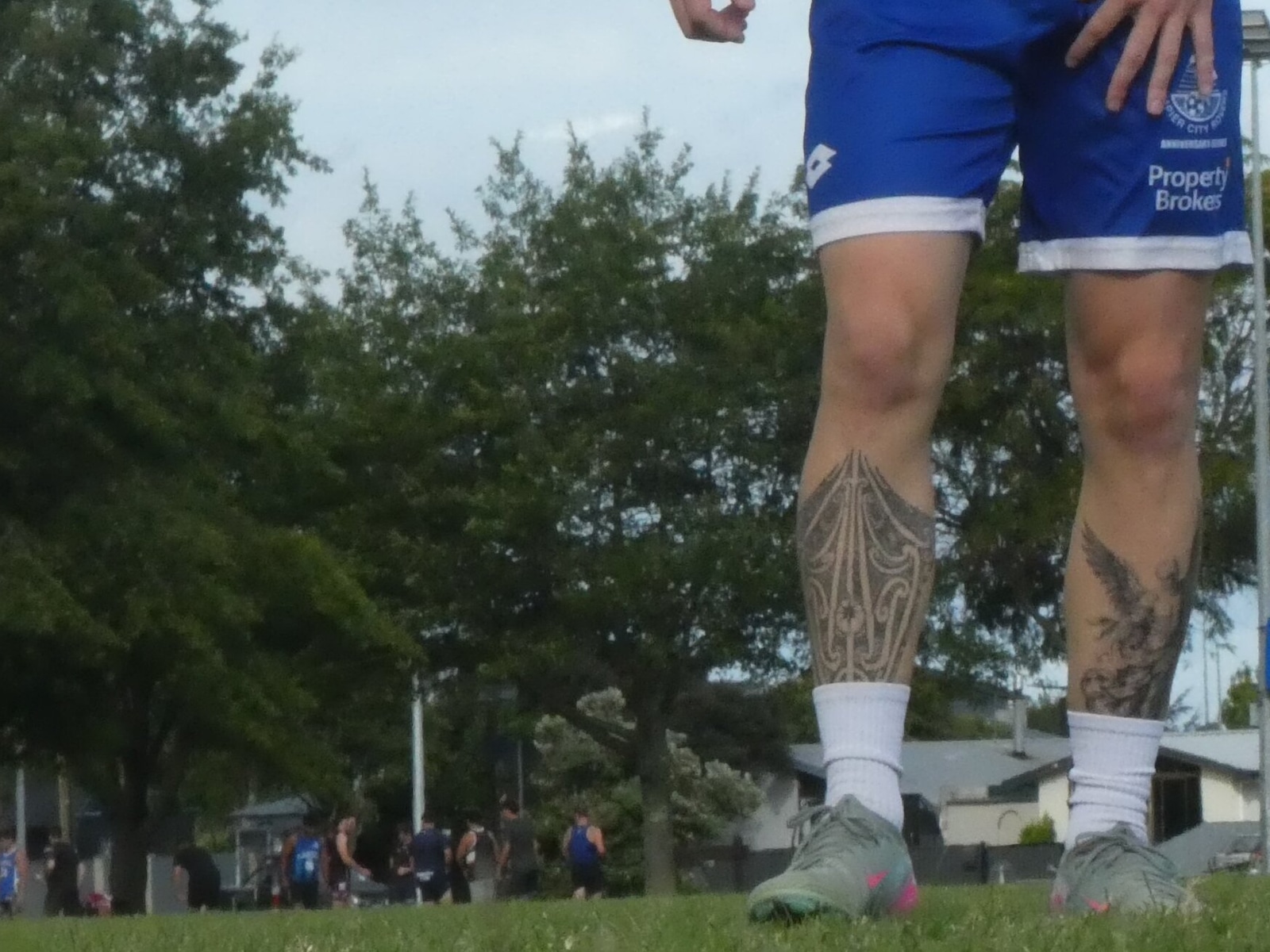
Aston Hurd’s largest tattoo is a shield-shaped ta moko design running down his right shin. He told the NZ Herald that its patterns tie together family, life so far and the direction he wants to go. Waves, fish scales and a North Star sit within the design.

Who Aston Hurd Is

When the NZ Herald profiled him, Hurd was a 22-year-old New Zealand forward working toward a full-time professional career. He had joined Napier City Rovers for the 2026 season after playing for Cambridge FC, Melville United, Hamilton Wanderers, Miramar Rangers, Birkenhead United and Northern Rovers.

He was also holding down a sales job while training several nights a week and travelling for Central League matches. Hurd said he likes doing the hard work on the pitch: making runs, tracking back and helping the team even when he isn’t scoring. He also described himself as hard on himself, often picking over small details.

A Shield Tattoo for Family

The main Aston Hurd tattoo covers his right shin in a tall pattern built around a shield shape. Hurd said the shield represents protection. The frame follows the length of the leg, with smaller patterns filling the space inside it.

Aston Hurd tattoos: verified tattoo photograph

Waves, Scales and the North Star

Hurd said the waves represent the waves of life. The fish scales represent his mum and dad as providers. He described the North Star as a reminder not to look back, but to keep moving in the right direction toward his end goal.

Aston Hurd tattoos: verified tattoo photograph

The Ink in Motion

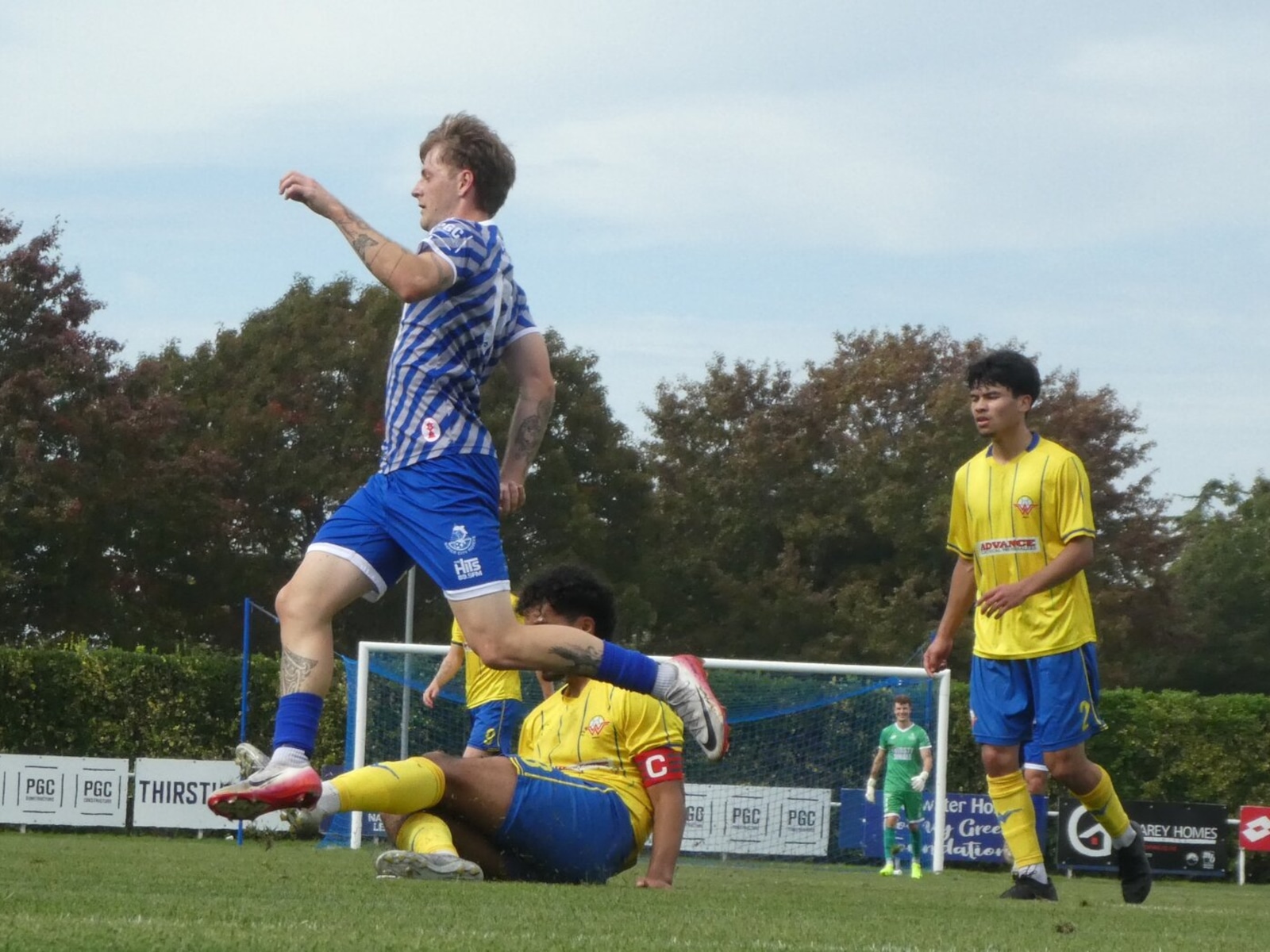
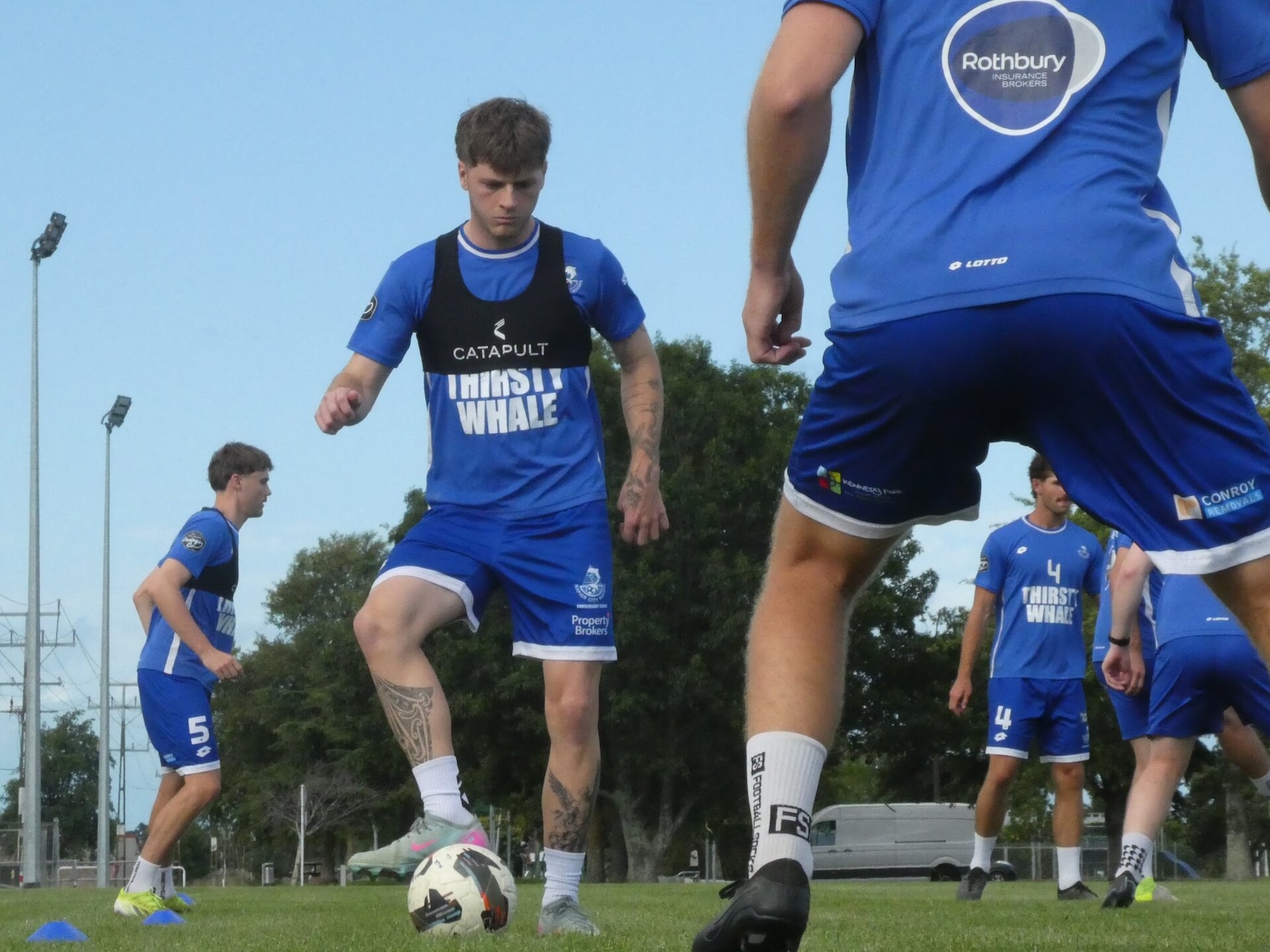
Match and training photographs show the shin tattoo from different angles as Hurd runs, stretches and changes direction. A sock can cover the design; when it comes down, the ink is visible again.

Aston Hurd tattoos: verified tattoo photograph

The training images also show tattoos on his arm, but those smaller pieces weren’t discussed in the NZ Herald interview. Their meanings aren’t established in the reporting, so there’s no basis for assigning them one.

A Young Player’s Tattoo Direction

Hurd said he moved to Napier for a new adventure and a chance to push himself. He wanted to win silverware with the club, help it qualify for the National League and keep working toward a full-time professional career. The tattoo isn’t a literal football design: there’s no club crest or football at its centre. Its connection to the sport is personal, through the shield, family symbols and North Star.

Aston Hurd tattoos: verified tattoo photograph

Hurd grew up in Te Aroha. He played rugby when there weren’t enough local football teams and said sport helped build his work ethic. He also spoke about staying grounded. Those details sit alongside the tattoo’s family focus and his plans for a career that was still in progress.

The Shin Tattoo Detail

Close photographs show repeated curves, pointed sections and tightly packed lines from below the knee toward the ankle. The pattern keeps a clear outline along the shin, even in match photos.

Aston Hurd tattoos: verified tattoo photograph

Hurd said the session lasted nine hours, with a break only when the artist needed to use the bathroom. The two-hour conversation beforehand was part of the process too: Hurd discussed the family references with the artist before they were worked into the pattern.

Why It Works

Hurd explained the shield, waves, fish scales and North Star, but not every line. His account gives the main motifs a personal context without assigning a separate story to each mark. At the time of the interview, he was still working toward a full-time professional football career.

Final Take

If you’re considering a culturally meaningful design, Hurd’s account shows the value of discussing its references with an artist before the session. Take time to understand the symbols and pattern, rather than copying a design whose meaning belongs to someone else.

More athlete tattoo guides

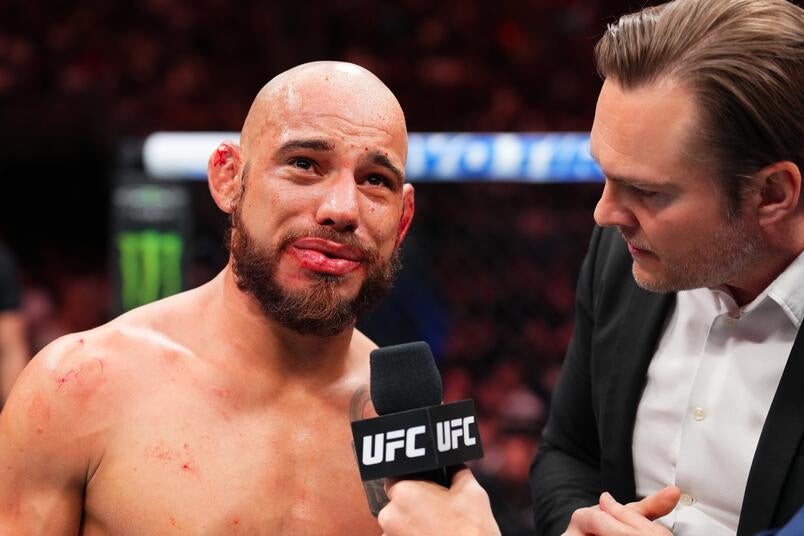
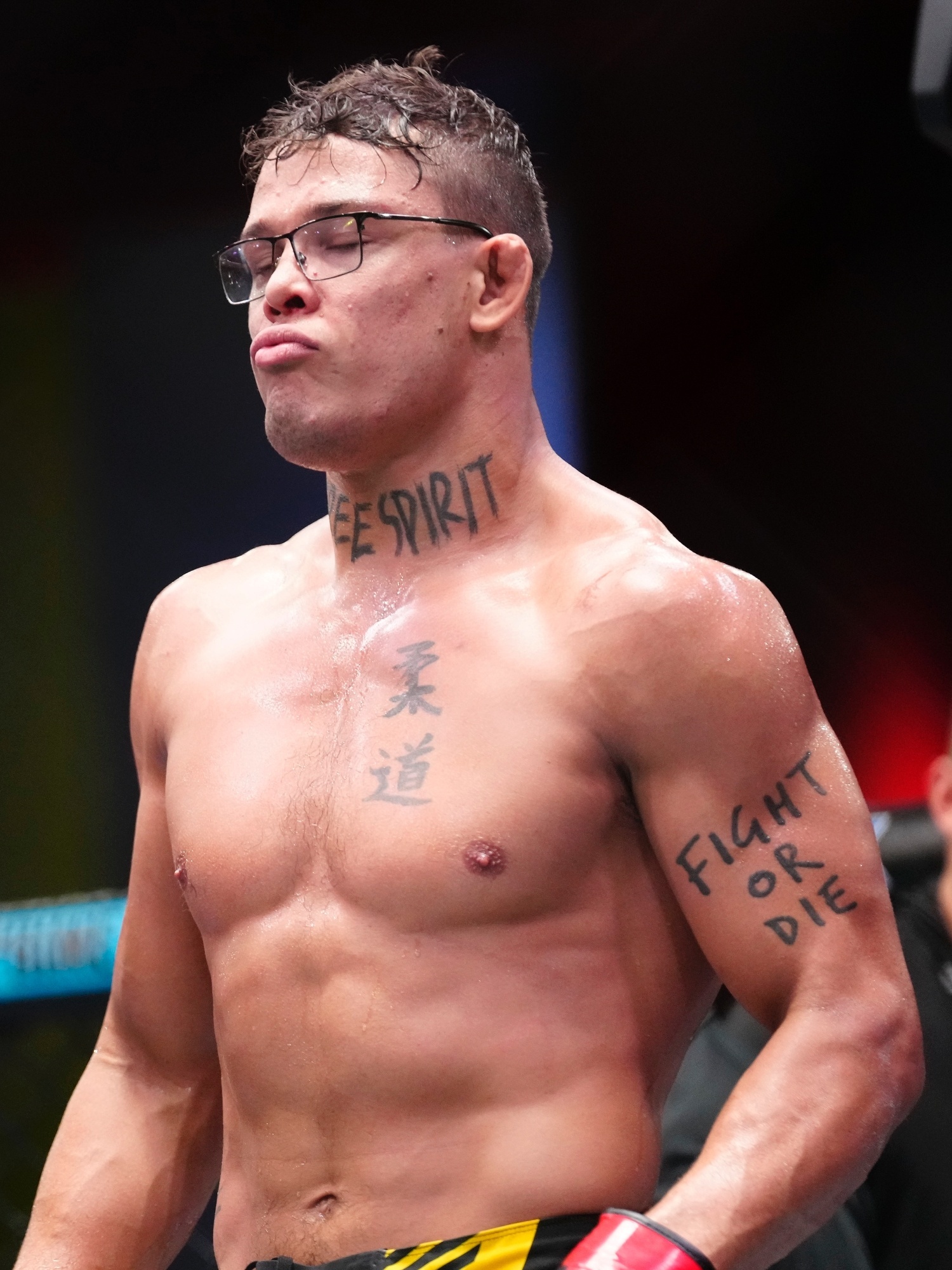
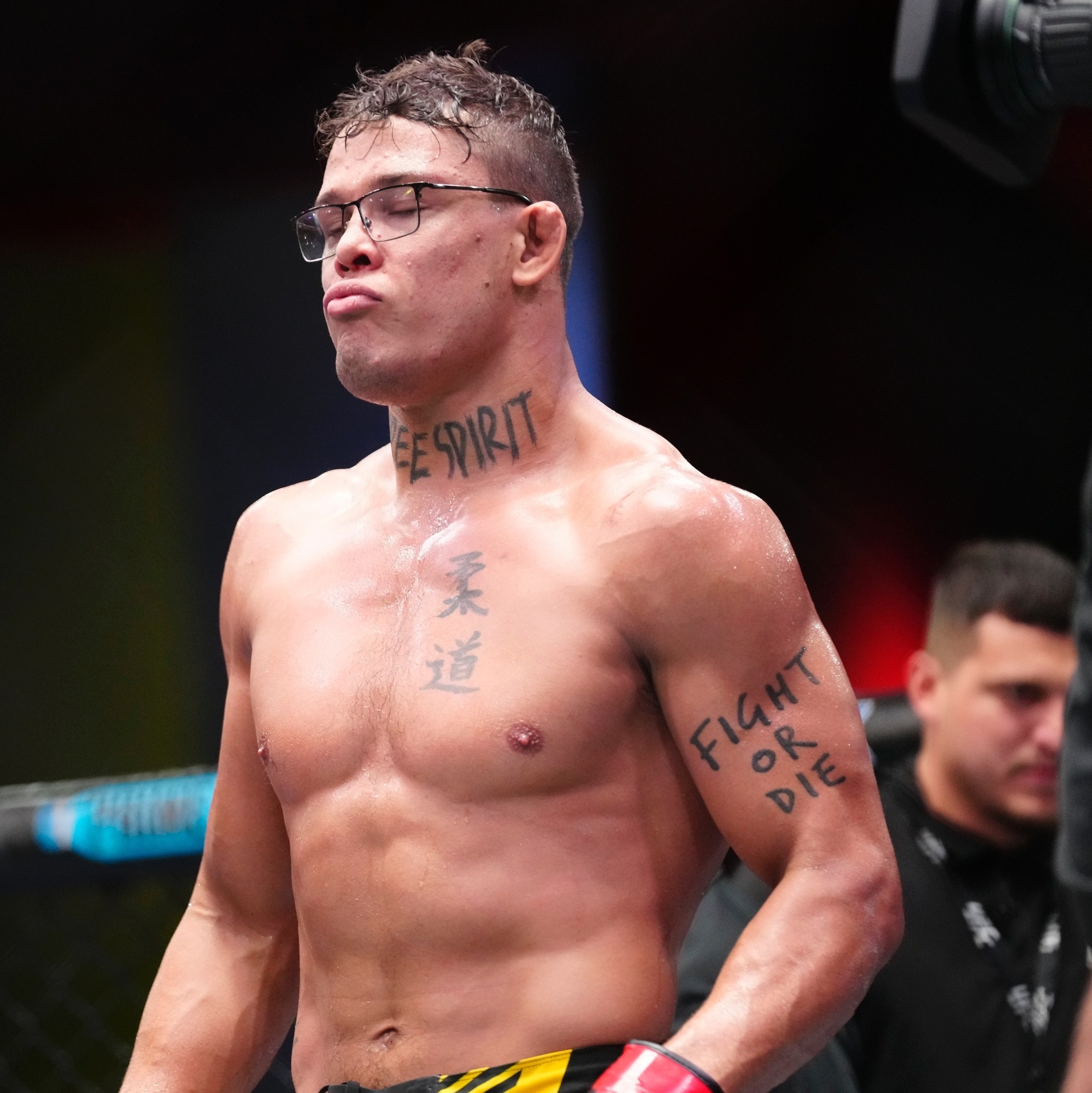
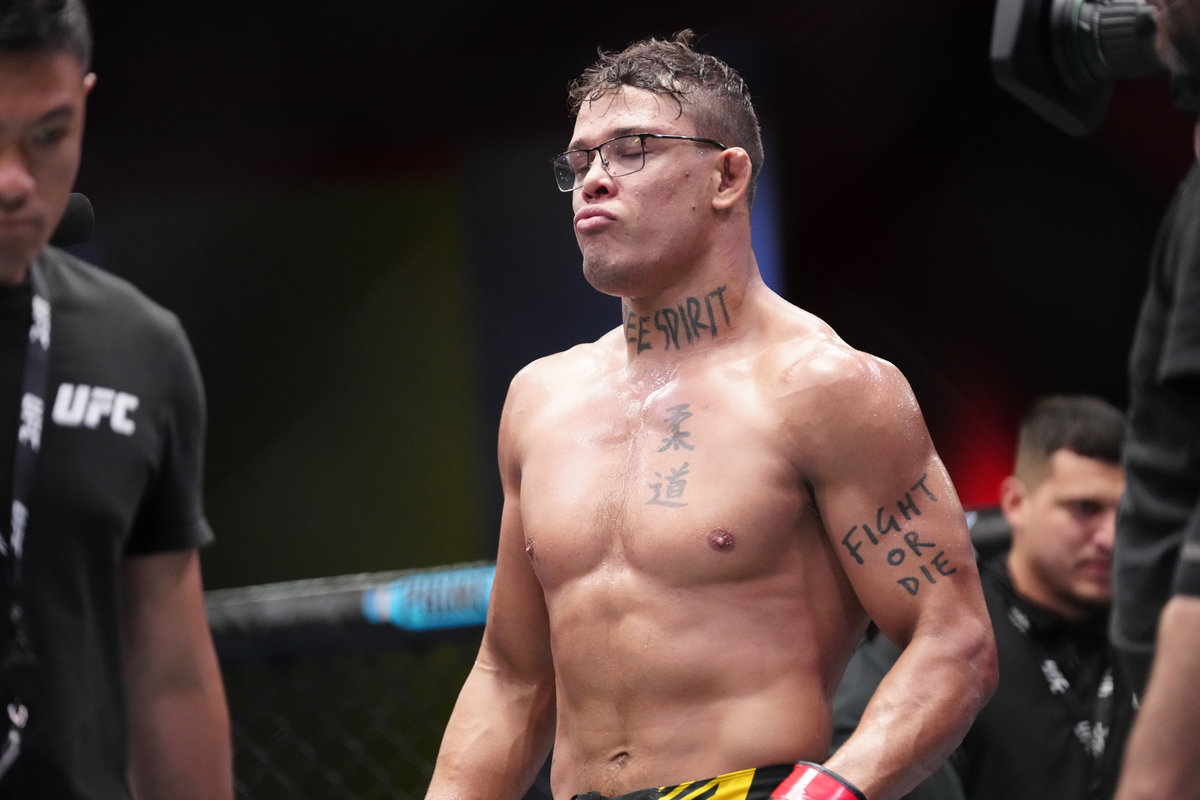
Caio Borralho Tattoos: Free Spirit, Judo and Fight or Die

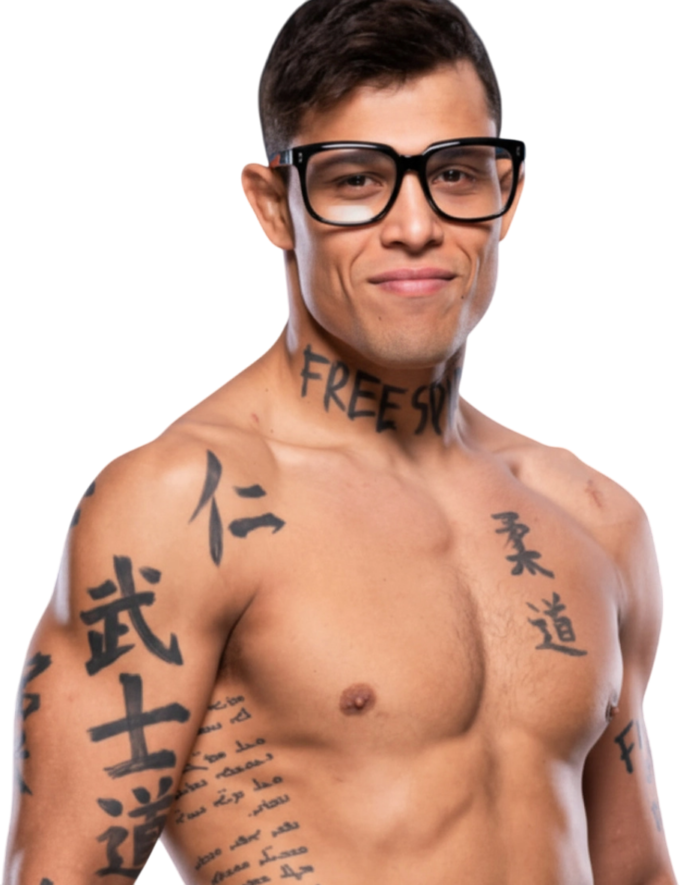
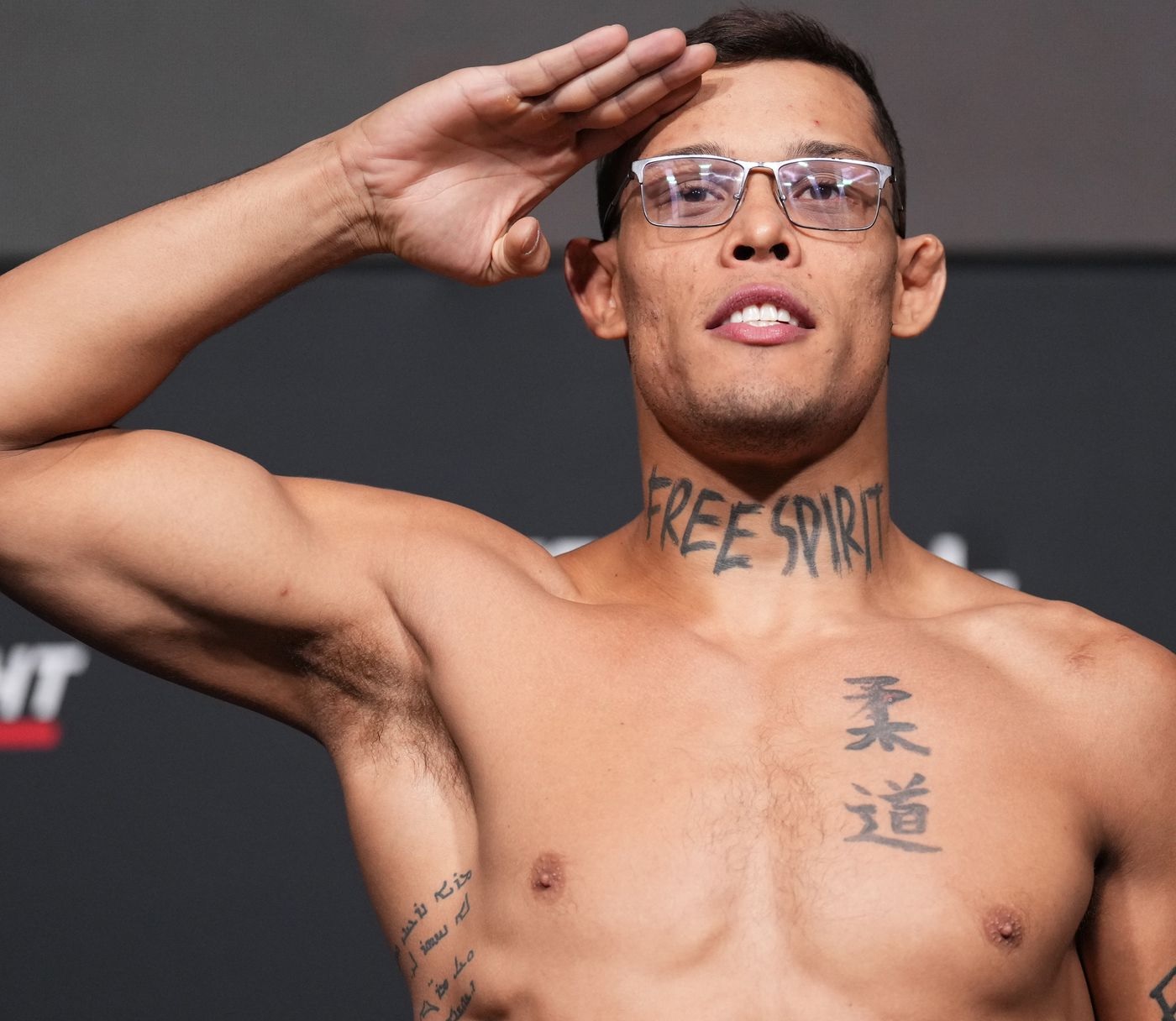
Caio Borralho’s most visible tattoo is the phrase FREE SPIRIT across his neck. Japanese characters cover part of his chest, and FIGHT OR DIE appears on his arm. He has explained what the neck phrase means to him in the Octagon; the other designs are easier to place than to interpret. Photos show where the ink sits, but not every meaning is documented.

Borralho, a Brazilian middleweight from Maranhão, is known as “The Natural.” He came through the UFC Contender Series and helped build Fighting Nerds. The glasses he wears at media events have become part of his public look, alongside the visible tattoos.

Who Is Caio Borralho?

Borralho’s career is built around physical pressure and an interest in the details of training. He has spoken about science, preparation and the technical choices that shape a fight. That gives a fuller picture than the all-action fighter image alone.

The lettering and Japanese script appear in interviews, weigh-ins and fight photographs, but they don’t explain his record or preparation. They’re part of the way people recognise him, not a substitute for what he says about his work.

FREE SPIRIT Across His Neck

The large black FREE SPIRIT lettering runs across the front of Borralho’s neck. It’s visible when he speaks at media events, weighs in or walks to the cage.

Caio Borralho tattoos: verified tattoo photograph

Borralho has said the phrase describes how he wants to feel in the Octagon: free to choose what he does and fight in his own way. That’s his explanation of the words, rather than a claim that he does without preparation or coaching.

Judo and Bushido in Japanese Script

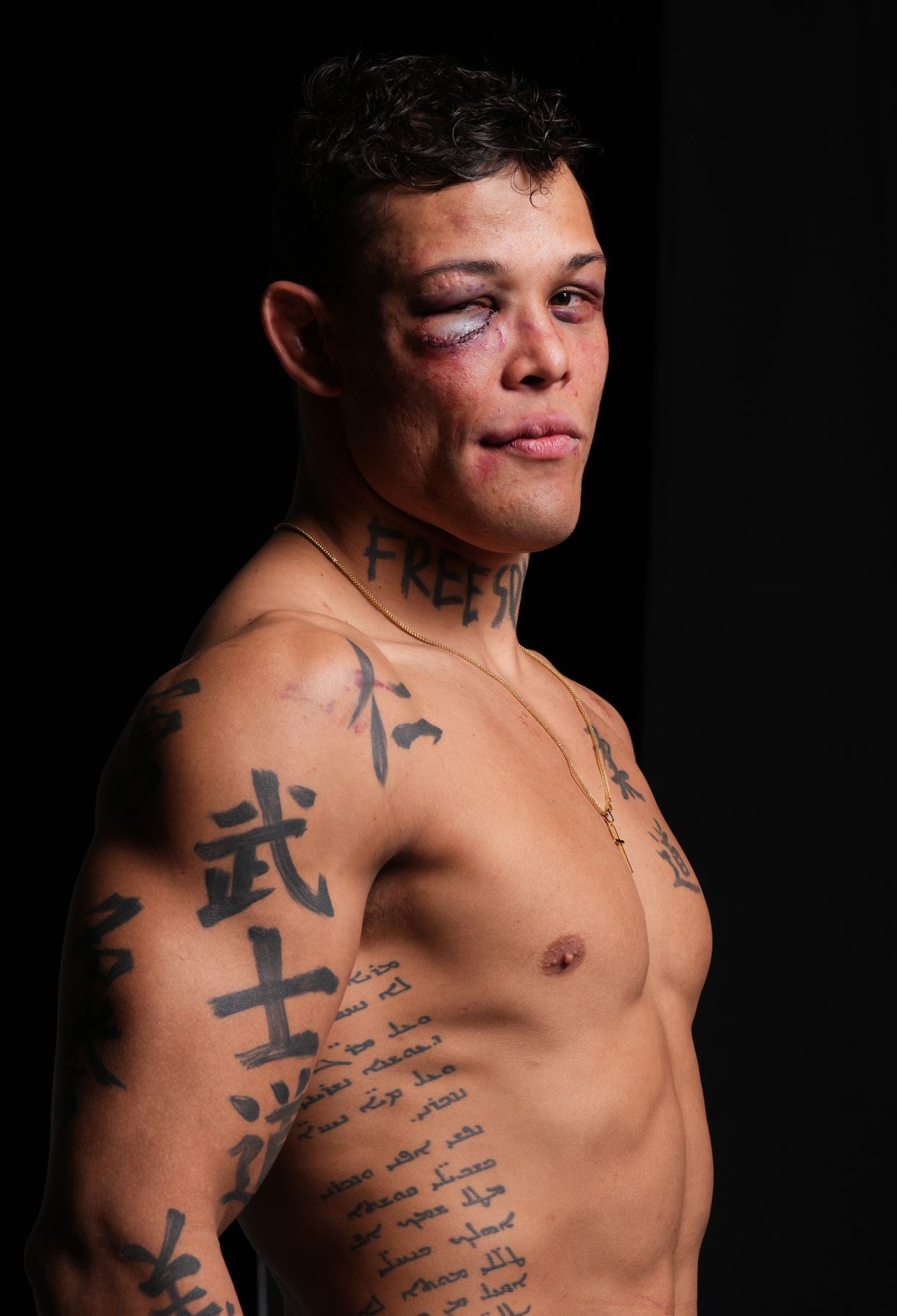
Japanese characters appear across Borralho’s chest and upper body. The visible script includes references to judo and bushido. Official UFC imagery also associates some characters with ideas such as benevolence and justice, though a photograph alone isn’t enough to confirm every translation.

Caio Borralho tattoos: verified tattoo photograph

The chest lettering is less immediately readable than FREE SPIRIT. It refers to martial arts, while the neck phrase is a short statement across the throat. The full translation of each mark isn’t established in the reporting here.

Fight or Die on His Arm

The phrase FIGHT OR DIE is visible on Borralho’s arm in fight photos. It is blunt, fight-focused wording, but the sources cited in the original article don’t say when he got it, who designed it or what personal story he connects to it.

Caio Borralho tattoos: verified tattoo photograph

The lettering moves with his arm during striking and grappling. That makes its placement clear in action shots, even when a single frame doesn’t show all of the other tattoos.

Ink in His Fight Photos

Portraits and weigh-in photographs show more of Borralho’s collection: Japanese writing down his chest, smaller script at his side and additional ink on both arms. The designs are spread across his body rather than gathered around one centerpiece.

Caio Borralho tattoos: verified tattoo photograph

Different angles make different pieces easier to see. The images show the collection under arena lights and during fights, but don’t add a meaning to the marks that Borralho hasn’t explained.

Why the Ink Fits His Fighting Nerds Identity

Borralho’s tattoos sit alongside the public identity of Fighting Nerds, a team known for its serious training and more distinctive image. His glasses and interest in science and technical detail are part of that picture; the Japanese script points to martial-arts traditions, while the neck and arm phrases use more direct language.

Caio Borralho tattoos: verified tattoo photograph

If you’re planning several tattoos, the different placements can help you think about which idea you want people to notice first and how other pieces might sit around it. Borralho’s choices aren’t a template to copy; the phrases and symbols carry meaning that belongs to him.

Final Take

The neck lettering is the easiest part of Borralho’s collection to read, and he has explained what FREE SPIRIT means to him in a fight. The Japanese script and FIGHT OR DIE are visible too, but the reporting here doesn’t establish a personal story for every mark. That distinction leaves the photos useful without turning them into guesses.

More athlete tattoo guides

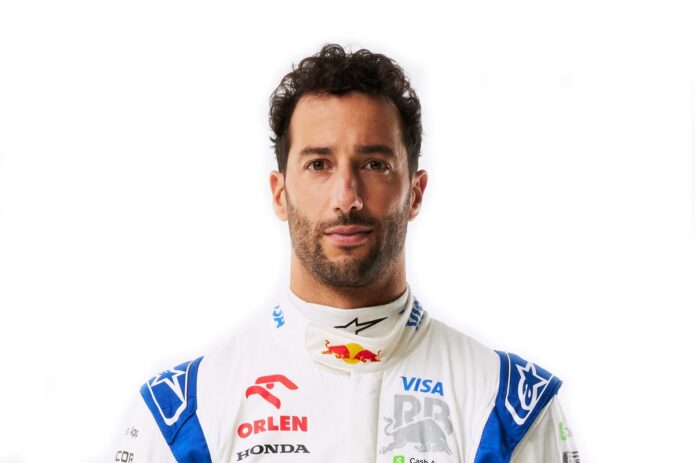
Daniel Ricciardo Tattoos: Racing Number, Family Ink and Classic Thigh Pieces

Daniel Ricciardo’s tattoos include a small racing number on his finger, traditional pieces across his thigh, family lettering, a ship and lighthouse, and other ink visible in different photos. Some have a public explanation; others are simply part of the collection without a confirmed story.

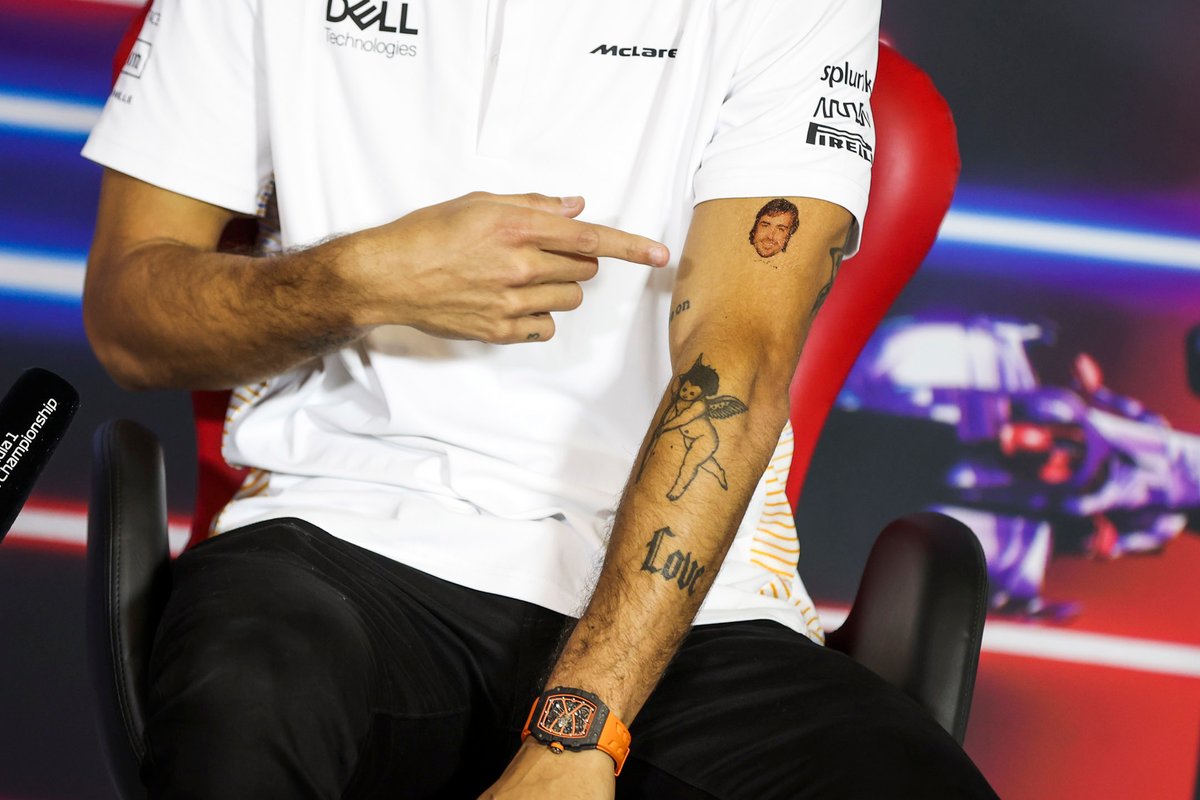
The photographs show different views of the tattoos: at the track, in a media interview and off duty. Ricciardo has also made tattoo culture part of his humour, including a temporary portrait of Fernando Alonso that he wore to a press conference.

Who Is Daniel Ricciardo?

Ricciardo is an Australian Formula 1 driver known for his overtakes, podium celebrations and easygoing personality. He raced for Red Bull, Renault, McLaren and AlphaTauri. His career took him through different teams and countries, and he has spoken about tattoos connected to cities, memories and family in AFP interview coverage.

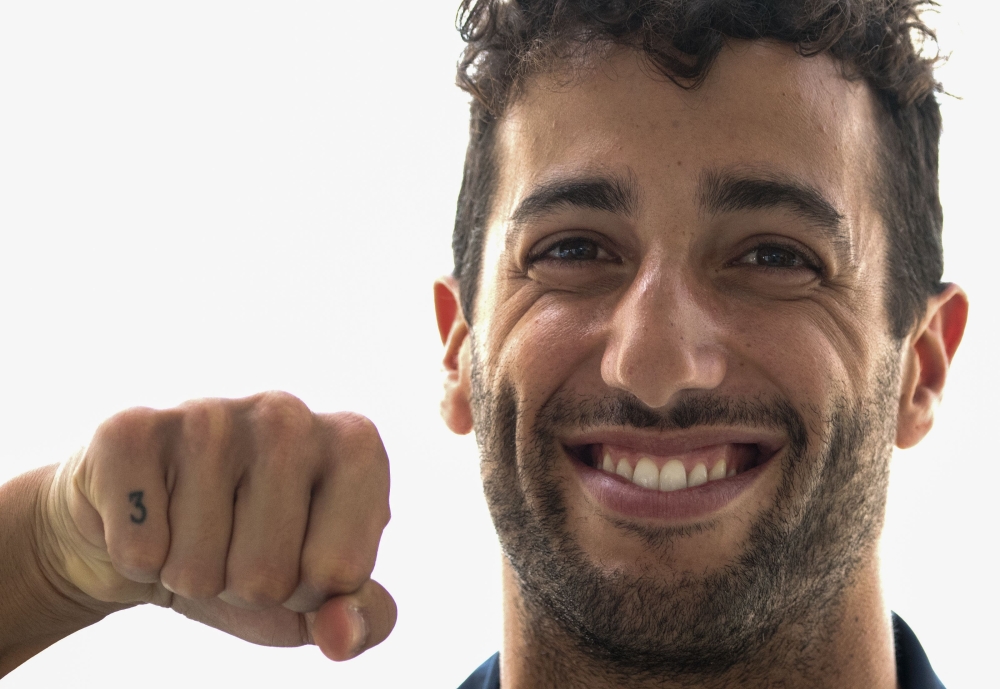
The Small Number 3 Tattoo

A small black 3 on Ricciardo’s finger is an easy-to-spot reference to his racing number. It appears in photos when he raises a fist or points at other tattoos.

Daniel Ricciardo tattoos: verified tattoo photograph

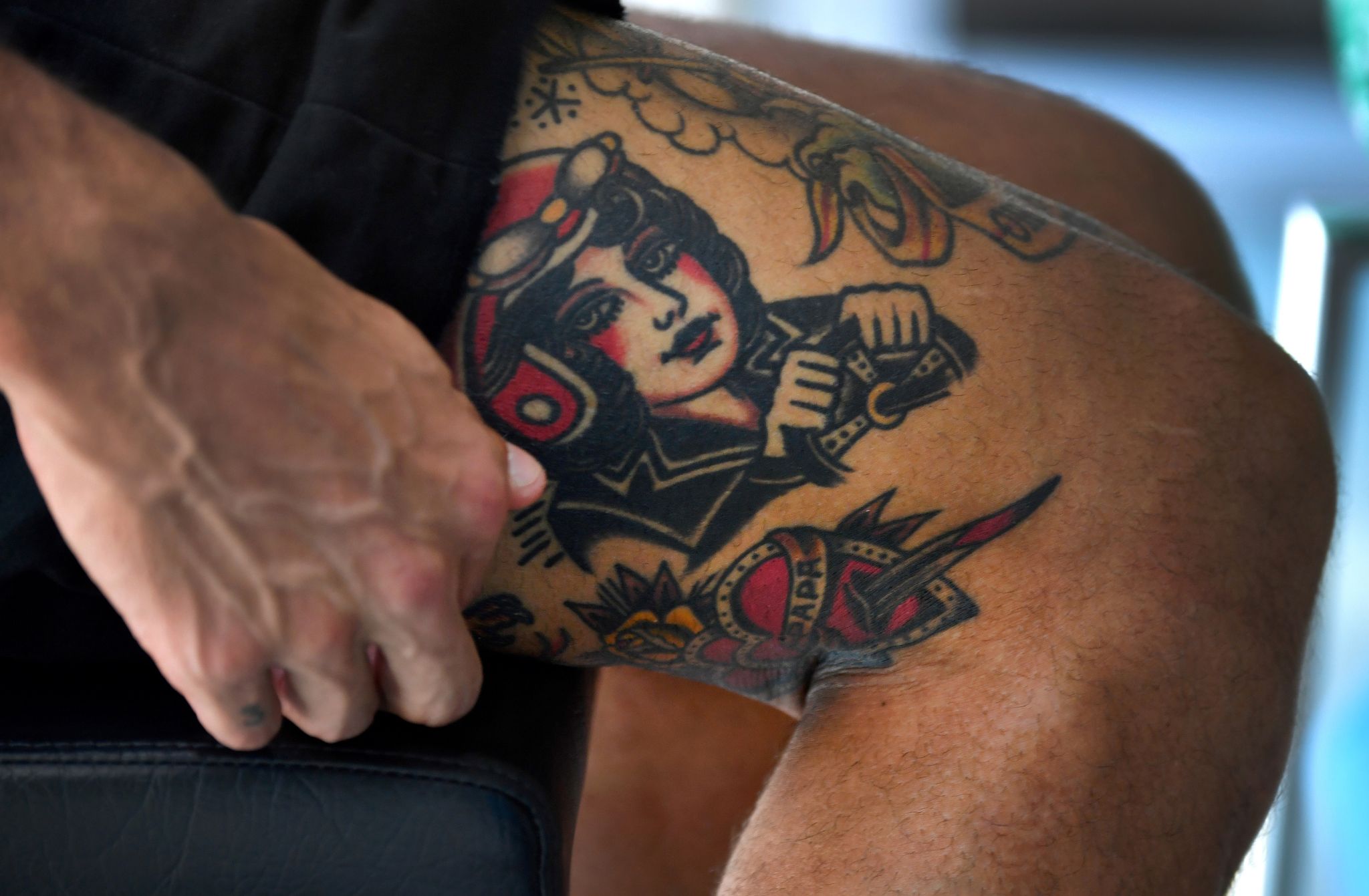
The Big Traditional Thigh Tattoo

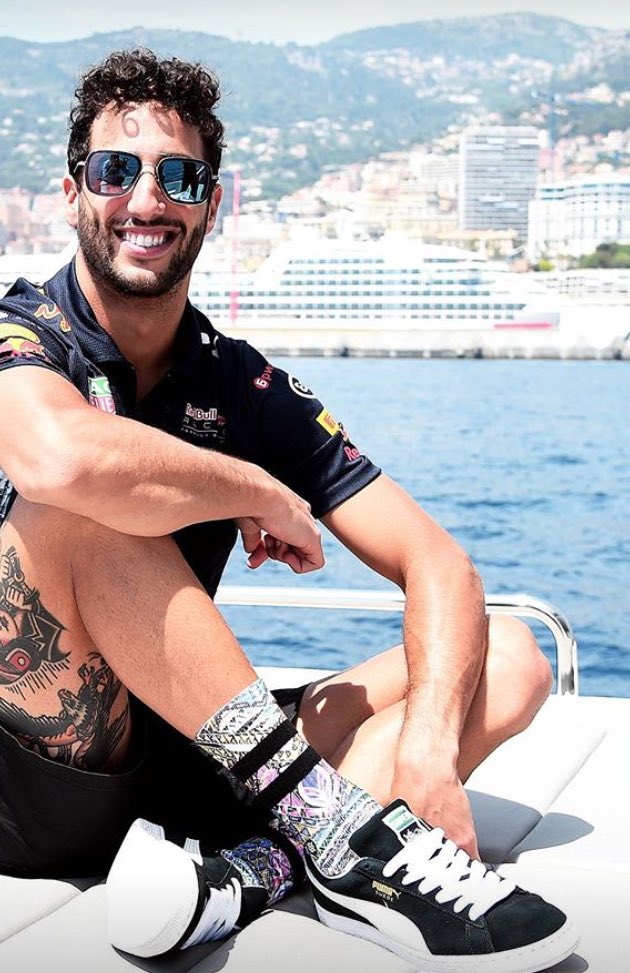
One clear thigh photograph shows a traditional American-style pilot gripping the controls. Heavy outlines, red shading and surrounding details give the piece a bold shape that remains readable in race-day photos.

Daniel Ricciardo tattoos: verified tattoo photograph

Mum and Papa Across the Thigh

Another view of Ricciardo’s thigh shows a red heart, a dagger and a banner reading “Mum and Papa”. AFP coverage connects the lettering to his parents. The words are clear; there’s no need to add a more elaborate story to the image.

Daniel Ricciardo tattoos: verified tattoo photograph

The banner and traditional motifs make this a large family tribute, rather than a small name or date tucked away on its own.

Ship, Lighthouse and Travel Memories

Ricciardo has described a ship and lighthouse as an early meaningful tattoo. AFP reporting links the images to home, travel and memories. They draw on familiar traditional imagery, but his comments give them a personal context.

The Temporary Fernando Alonso Tattoo

At a 2021 press conference in Abu Dhabi, Ricciardo showed a temporary tattoo of Fernando Alonso’s face on his forearm. It was a Secret Santa gift and a joke between the two drivers, not a permanent addition to his collection.

Daniel Ricciardo tattoos: verified tattoo photograph

The same photograph shows existing Love script lower on his forearm, along with other ink. The distinction matters: Alonso’s face was temporary; the script belongs to Ricciardo’s collection.

Tattoo Collection in Real Photos

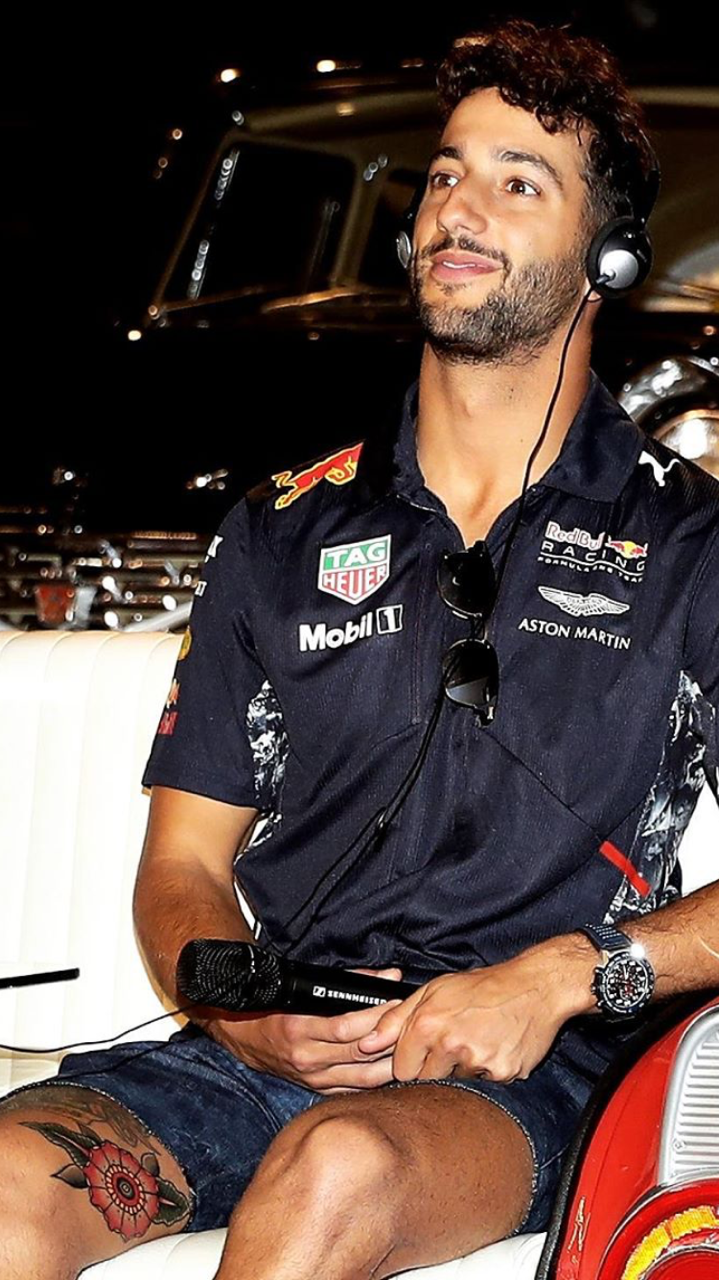
The photographs show Ricciardo’s tattoos in different settings: at the track, in interviews and on a boat. One off-duty image catches the thigh design while he is sitting casually, rather than posing for a tattoo feature. A racing suit can cover parts of the collection, so no single photograph shows everything.

Daniel Ricciardo tattoos: verified tattoo photograph

Why Ricciardo’s Collection Works

Traditional tattoo imagery is a thread through the collection: heavy outlines, banners, hearts, blades and ships. The subjects still vary. Some pieces point to racing or family, while others have a connection to travel and memories. They look collected over time rather than designed as one matching set.

The Cyril Abiteboul Bet

Ricciardo’s tattoo stories also include a bet with Renault boss Cyril Abiteboul, tied to a podium. Ricciardo would choose the design and Abiteboul the placement. Formula 1 covered the story as a paddock bet that could carry on after the race.

The story reflects the playful side of Ricciardo’s relationship with tattoo culture. The bet doesn’t add another confirmed tattoo to Ricciardo’s own collection.

Final Take

Ricciardo’s collection brings together racing, family, travel and humour, with traditional imagery running through several pieces. The small number 3 and the “Mum and Papa” banner have clear references; other images are connected to memories he has discussed, while some details remain unexplained.

If you’re planning a collection, you can let its subjects change over time while keeping a visual style in common. Ricciardo’s mix shows that every tattoo doesn’t need to tell the same story.

More athlete tattoo guides

Ana Tijoux Tattoos: The 1977 Ink, Whipala Colours and More

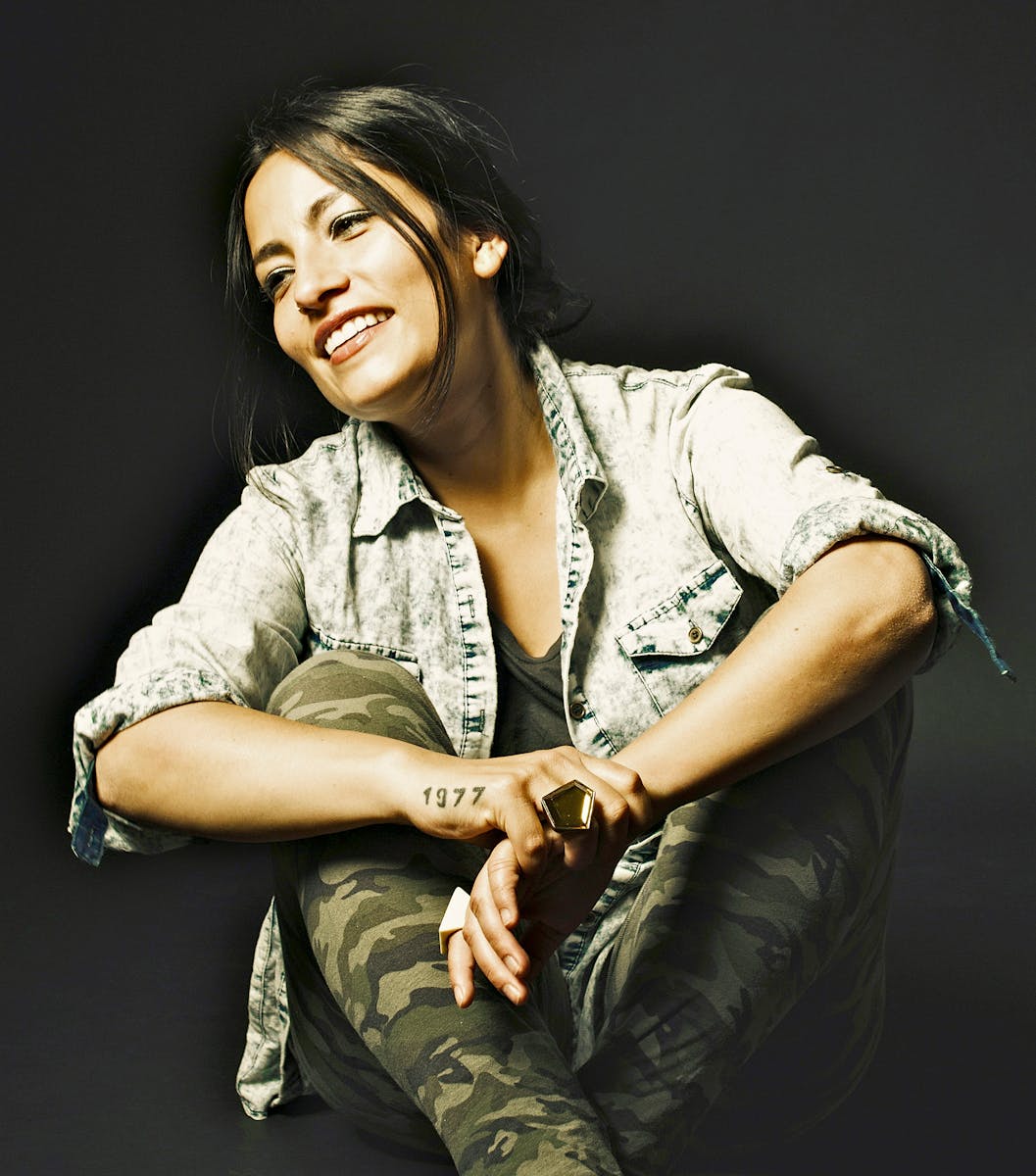
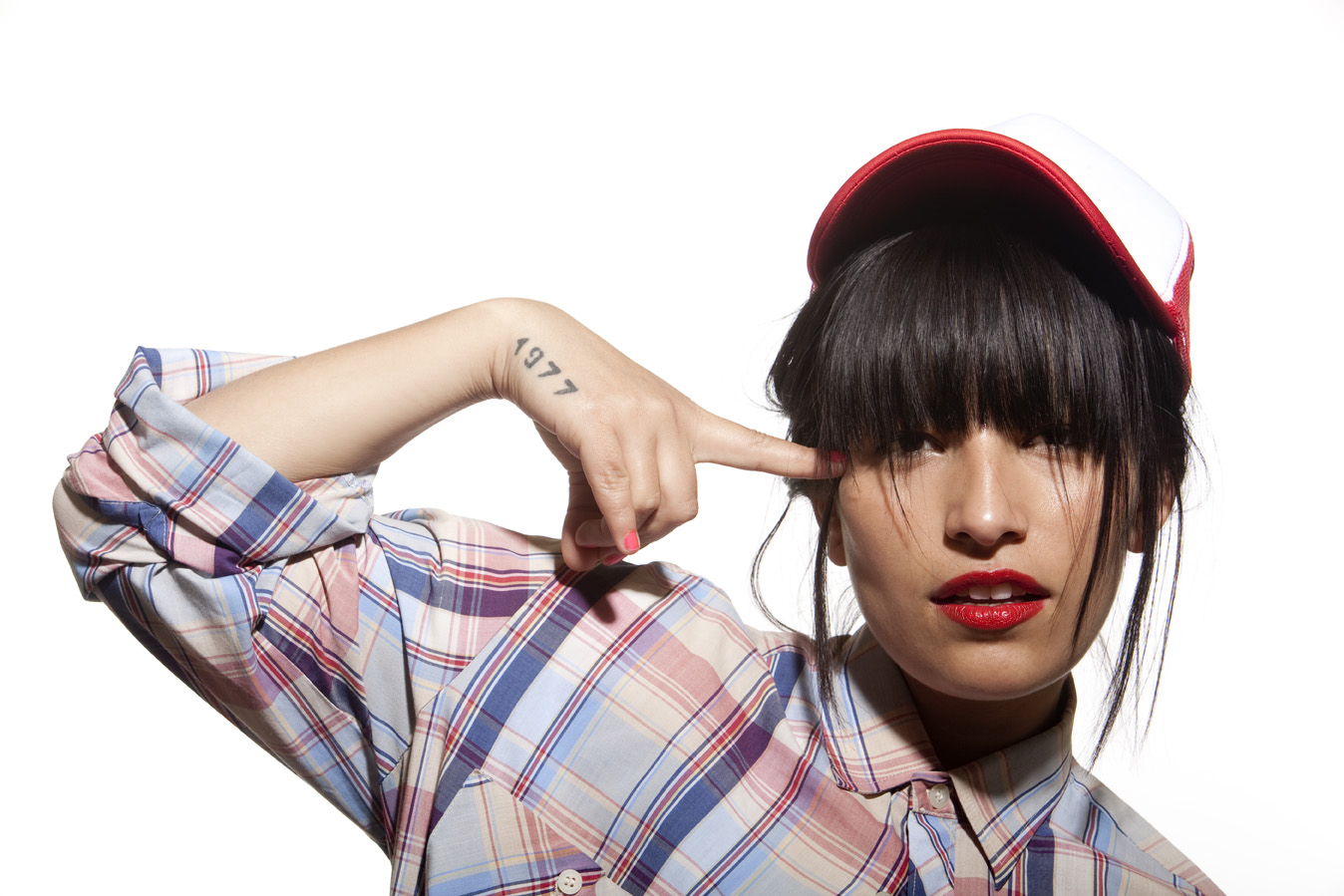
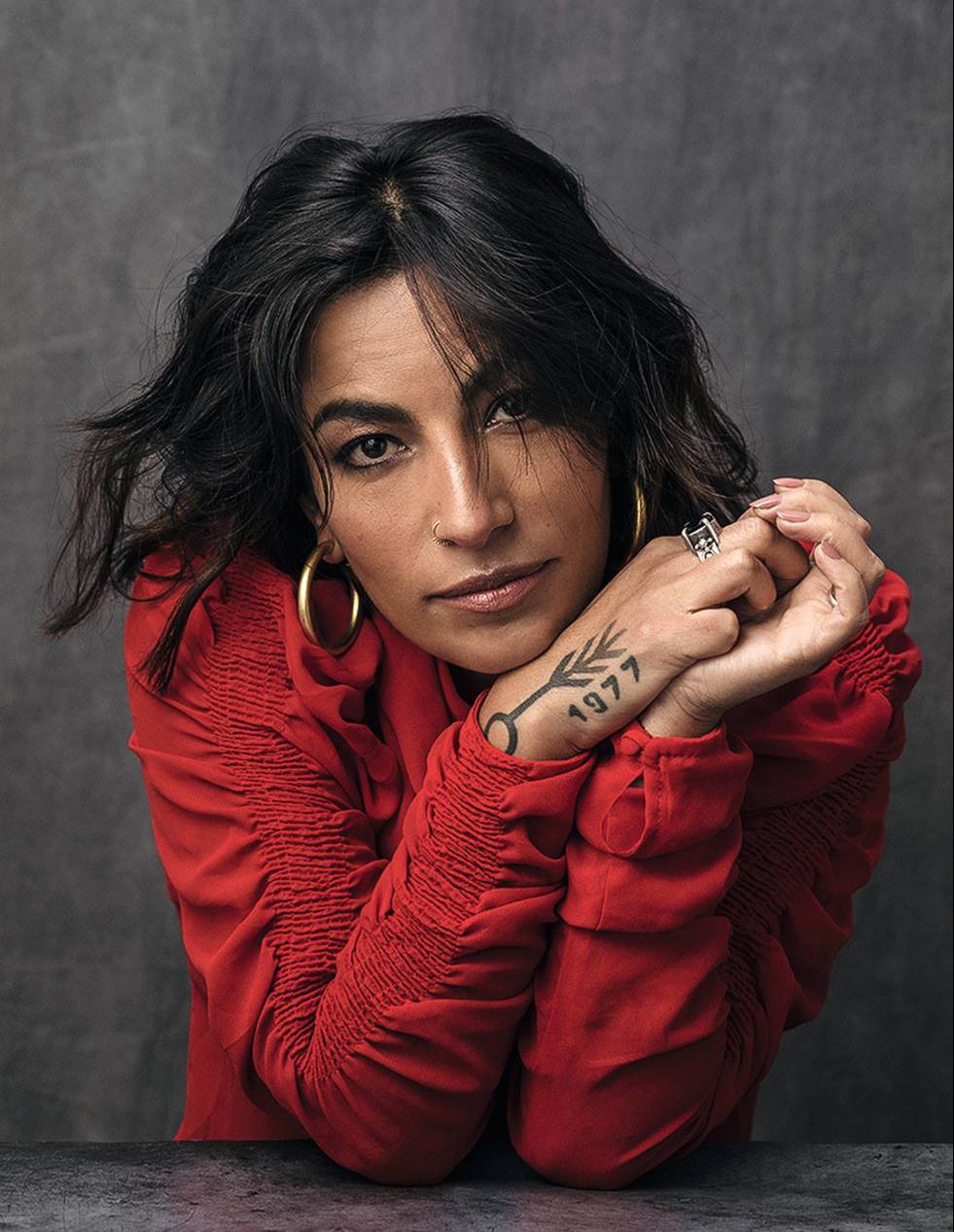
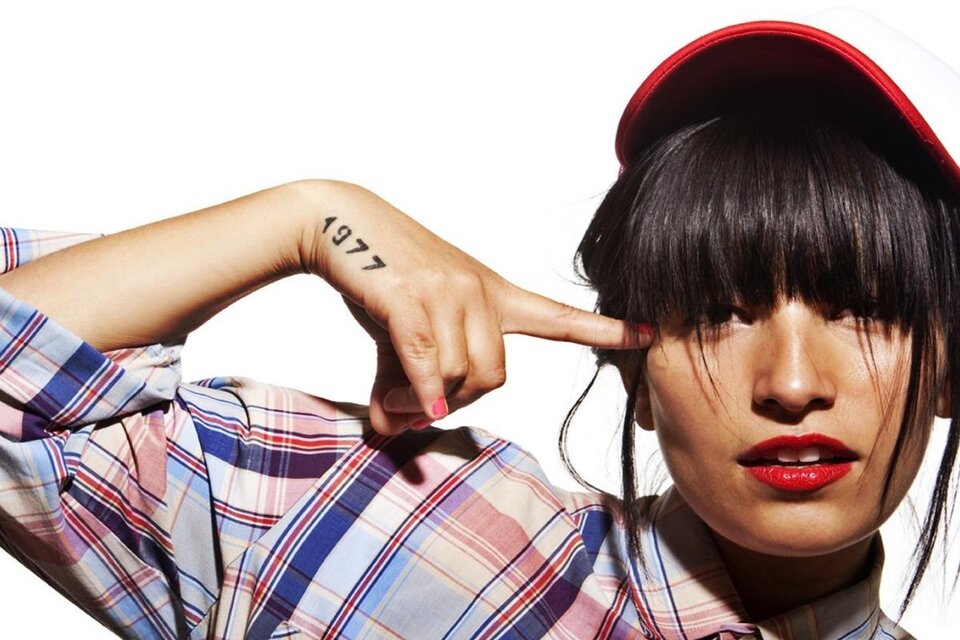
Ana Tijoux’s most recognizable tattoo is 1977 on her wrist or lower forearm. It marks her birth year and is also the title of her 2010 album and one of her best-known songs. A colourful geometric design on her other forearm has been linked in reporting to the Whipala. Photos also show smaller marks on her hands, though not every detail is clear enough to identify.

Who Is Ana Tijoux?

Tijoux is a French-born Chilean rapper and singer. She first became known through the hip-hop group Makiza, then built a solo career with music that moves between rap, Latin American rhythms and electronic production. Her songs also address power and inequality.

That background helps explain why the year tattoo and the reported Whipala reference get attention. Interviews provide context for those pieces; photographs show their placement and appearance. The smaller hand marks remain less certain.

The 1977 Wrist Tattoo

Ana Tijoux tattoos: verified tattoo photograph

The simple number sits across Tijoux’s wrist or lower forearm. She was born in 1977; it is also the title of her 2010 solo album and a song that helped bring her music to a wider audience. One short inscription connects a personal date with two parts of her career.

The lettering is plain and easy to read in close photographs. Its meaning comes from the references behind the number, not from an elaborate design.

The Colourful Whipala-Style Forearm Tattoo

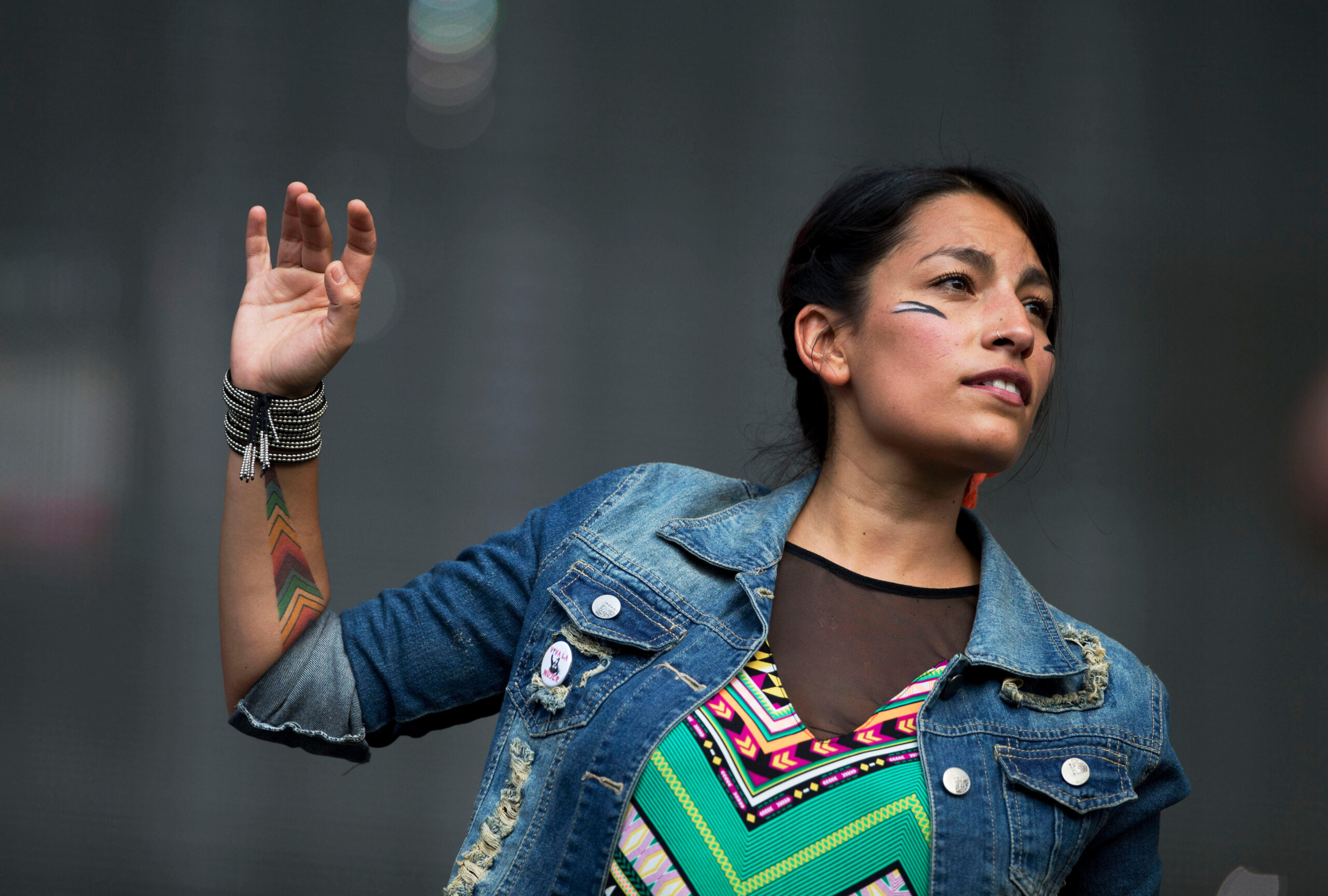
A geometric pattern of stacked chevrons and coloured blocks runs along Tijoux’s forearm. Reds, greens and yellows sit between dark lines. Some photographs show it partly covered by a sleeve; others give a clearer view of the full design.

Ana Tijoux tattoos: verified tattoo photograph

Rolling Stone Canada connected the tattoo with the Whipala, the multicoloured flag associated with Indigenous peoples of the Andes. That reporting places the design in a wider Latin American context; it’s more than a description of its colours and shape.

Hand Tattoos and Smaller Symbols

Profiles mention tattoos on Tijoux’s hands, and photographs show small marks around her hands and arms. Concert shots can be blurred or shadowed, so not every symbol can be identified.

Ana Tijoux tattoos: verified tattoo photograph

Microphones, jewellery, sleeves and hand movements can hide details in one frame and reveal them in another. Without a direct explanation from Tijoux, the smaller pieces are best left undescribed beyond what the photos show.

A Reported Future Project

An AFP report said Tijoux planned a large tattoo of Latin America on her leg. The report records an intention, not proof that the tattoo was completed. The available photographs here don’t confirm a finished leg piece.

There is no need to fill in what the report leaves open. If a later interview or clear photograph confirms the design, its details can be described then.

Tattoo Details to Notice

Ana Tijoux tattoos: verified tattoo photograph

The collection mixes plain number lettering, bright geometric colour and smaller hand designs. The 1977 tattoo is easy to read; the forearm pattern makes more of a visual statement, while the tiny marks are harder to see clearly.

Using These Ideas

If a year tattoo appeals to you, start with a date that has a real connection to your life rather than copying Tijoux’s numbers. A birth year, a record or a personal milestone can work in a clean, simple style.

For a geometric forearm design, consider how the pattern will wrap when your wrist turns. Repeated chevrons and stepped blocks need to follow the body’s curves. If you’re drawn to the Whipala, take time to understand the flag and think about your own connection to it before using the reference.

Final Take

The 1977 tattoo links Tijoux’s birth year with her music, and Rolling Stone Canada connects the colourful forearm design to the Whipala. The smaller marks are visible but not fully identified. The reported Latin America leg tattoo was a plan, not a confirmed piece in the reporting used here.

More musician tattoo guides

Lauren Jauregui Tattoos: The Stories Behind Her Most Personal Ink

Lauren Jauregui’s tattoos include small tributes to family, a date tied to her first solo performance, a lucky number and a phrase about faith. Six pieces have been documented. Some meanings come from Jauregui’s own comments; the bee on her wrist remains unexplained.

Lauren Jauregui’s dragonfly neck tattoo

Lauren Jauregui tattoos: inline

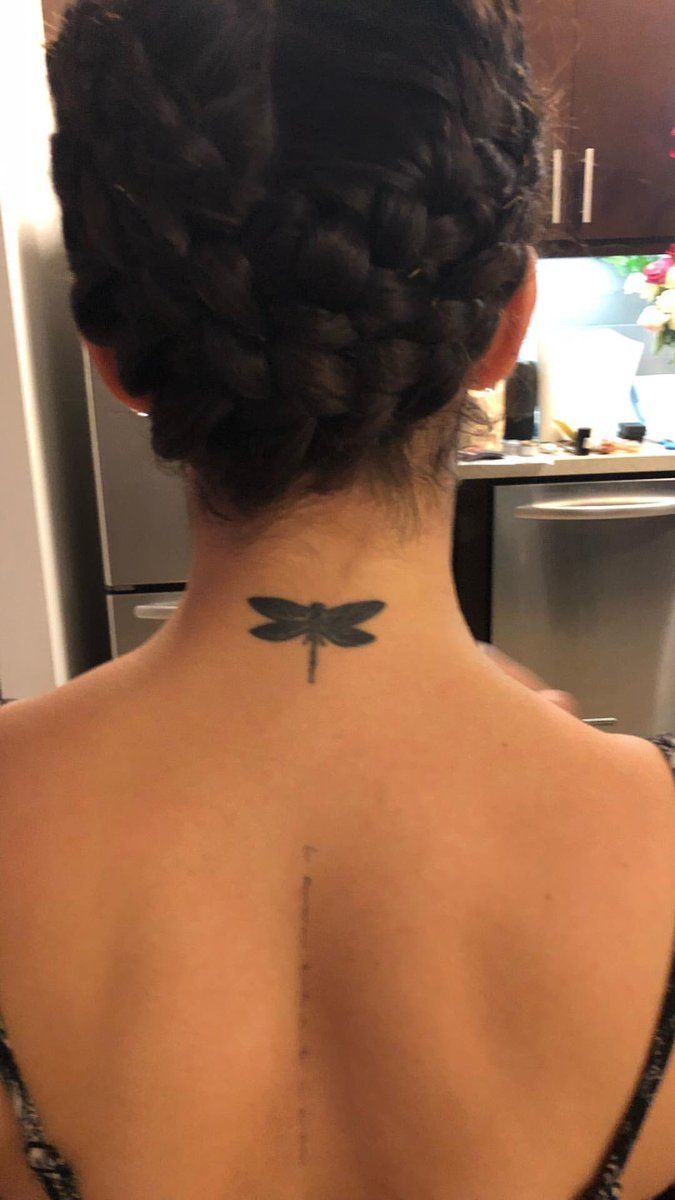
Jauregui’s first tattoo is a black dragonfly on the back of her neck, just below the hairline. Her hair can cover it, while an updo leaves it in view.

She chose it for her grandmother. After her grandmother died, Jauregui noticed dragonflies everywhere and took them as a reminder that her grandmother’s spirit was still around.

The “Angelica” forearm tattoo

Lauren Jauregui tattoos: inline

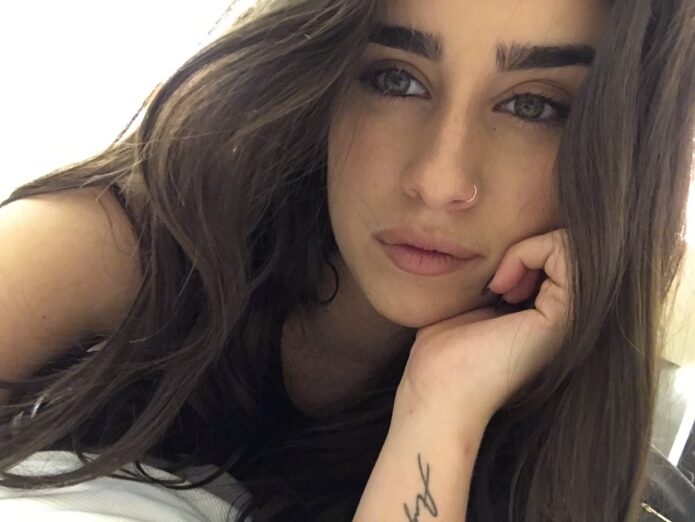
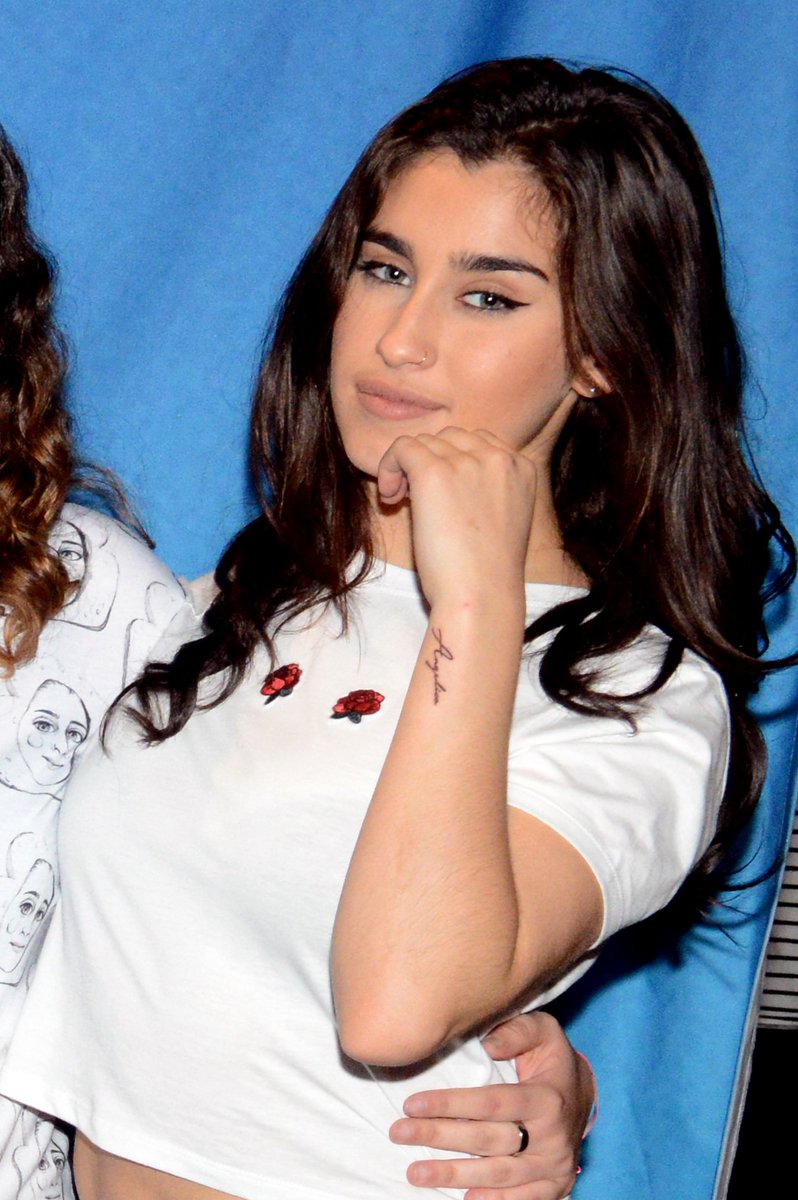
The cursive name Angelica on Jauregui’s forearm honours her paternal grandmother. Jauregui has spoken about their close relationship and shared a tribute after her grandmother’s death. The lettering reads like handwriting, keeping the focus on the name.

Her bee wrist tattoo

Lauren Jauregui tattoos: inline

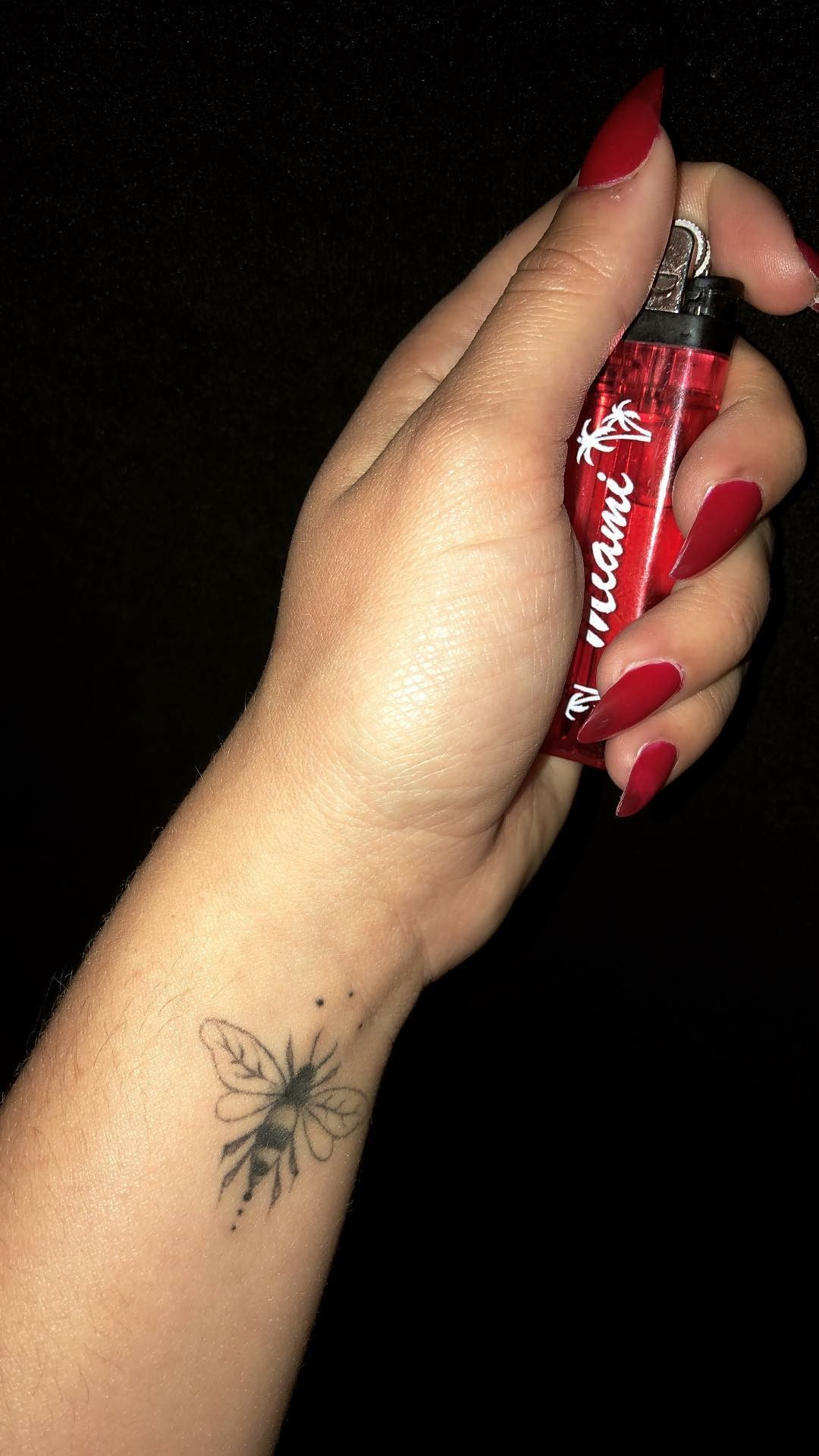
A small bee sits on the inside of Jauregui’s left wrist. It is drawn in fine black-and-gray lines, with its wings open. Jauregui hasn’t publicly explained what it means.

Some fans connect it to the House of Aureum in Halsey’s Hopeless Fountain Kingdom world, since Jauregui worked with Halsey and appeared on “Strangers.” That remains a fan theory, not Jauregui’s confirmed explanation.

The 6.6.18 tattoo that marks her solo start

Lauren Jauregui tattoos: inline

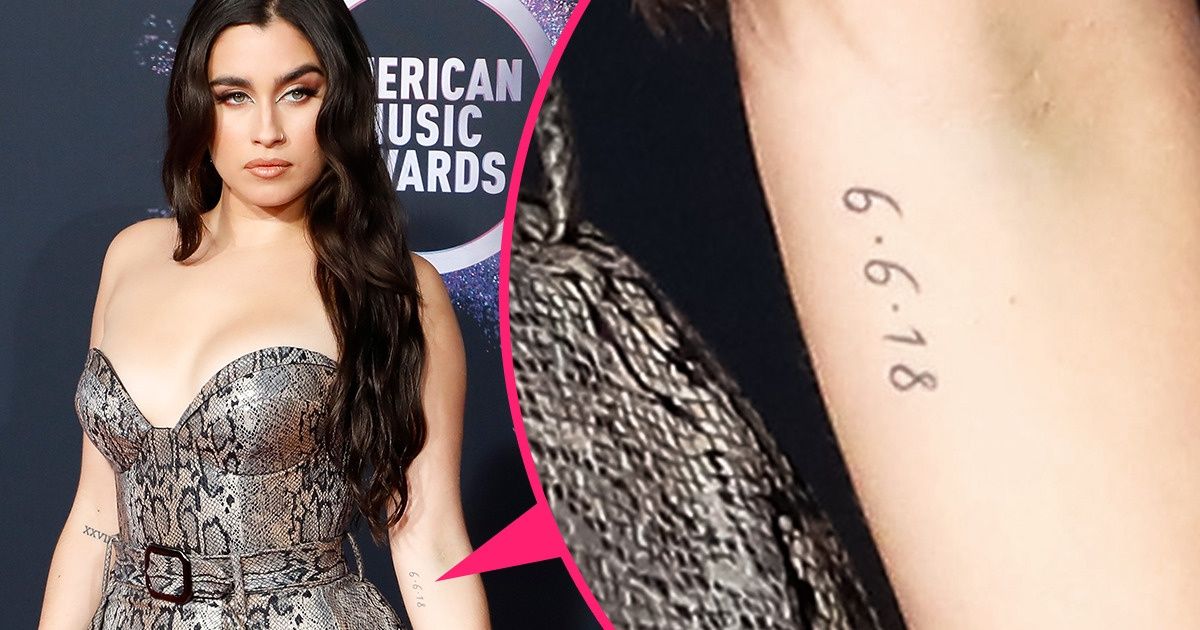
The date “6.6.18” on Jauregui’s forearm marks June 6, 2018, when she performed her first solo show in São Paulo while opening for Halsey’s Hopeless Fountain Kingdom tour. She had already performed with Fifth Harmony; this was her first time onstage with her own songs and direction.

Jauregui has described that night as the moment she realised she could do it on her own. The date marks a career turning point for her, even if its meaning isn’t obvious to anyone seeing the tattoo.

Why Lauren has an XXVII tattoo

Lauren Jauregui tattoos: inline

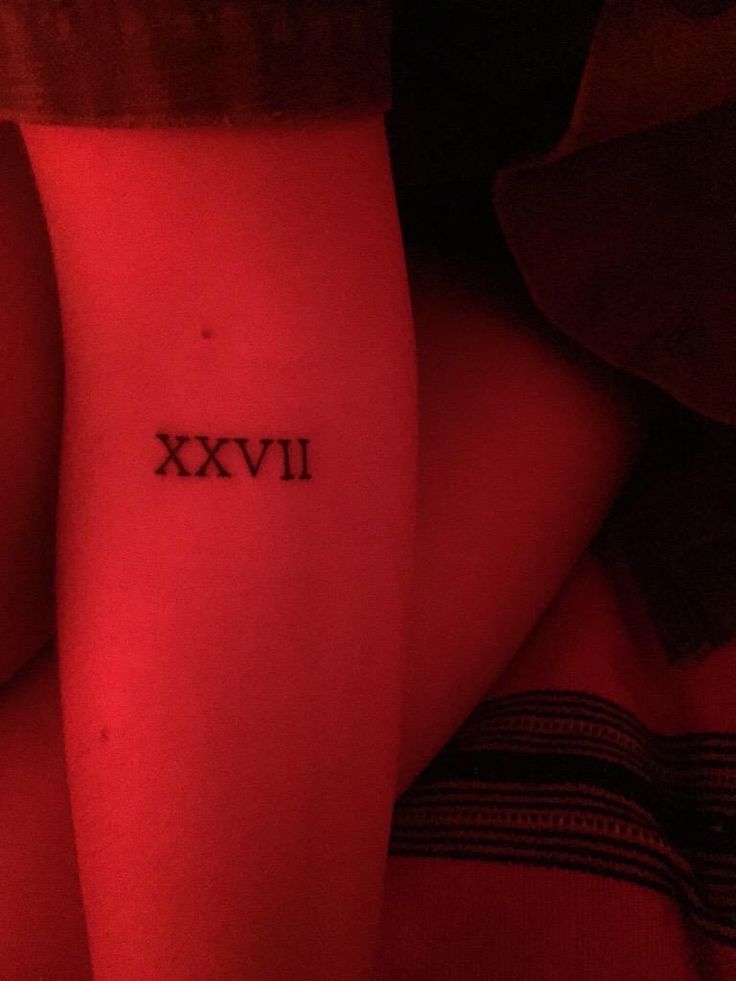
Jauregui’s Roman numeral tattoo reads XXVII, or 27, and sits near her right elbow. The number recurs in her life: she was born on June 27, Fifth Harmony formed on July 27, and the group released the album 7/27.

She has also called 27 a lucky number and said she notices it repeatedly. The tattoo gives that number a lasting place in the collection.

One more personal phrase

The phrase “I Am That I Am” runs along Jauregui’s spine in lowercase cursive. It comes from Exodus, in the story of Moses and the burning bush. She has connected it with gratitude and being alive, rather than presenting it as religious branding.

The lettering follows the length of her back and is less visible than the forearm pieces. Its placement keeps the phrase out of view in everyday photos unless she chooses to show it.

What ties the whole collection together?

The tattoos mark different things: two tributes to her grandmothers, a career milestone, a number Jauregui considers lucky and a phrase she connects with gratitude. The bee is the exception; its meaning hasn’t been confirmed, despite the fan theory linking it to Halsey’s fictional world.

The designs don’t need to match for the collection to feel personal. Each one has a different reference, and the confirmed stories are specific enough without filling the gaps with guesses.

If you’re looking for ideas, focus on a person, date, number or phrase that has a real connection to you. A small tattoo can hold that meaning without copying Jauregui’s design. For more of her music, here’s the official video for “Trust Issues.”

Lindsey Vonn Tattoos: The Meaning Behind Her Shark and Believe Ink

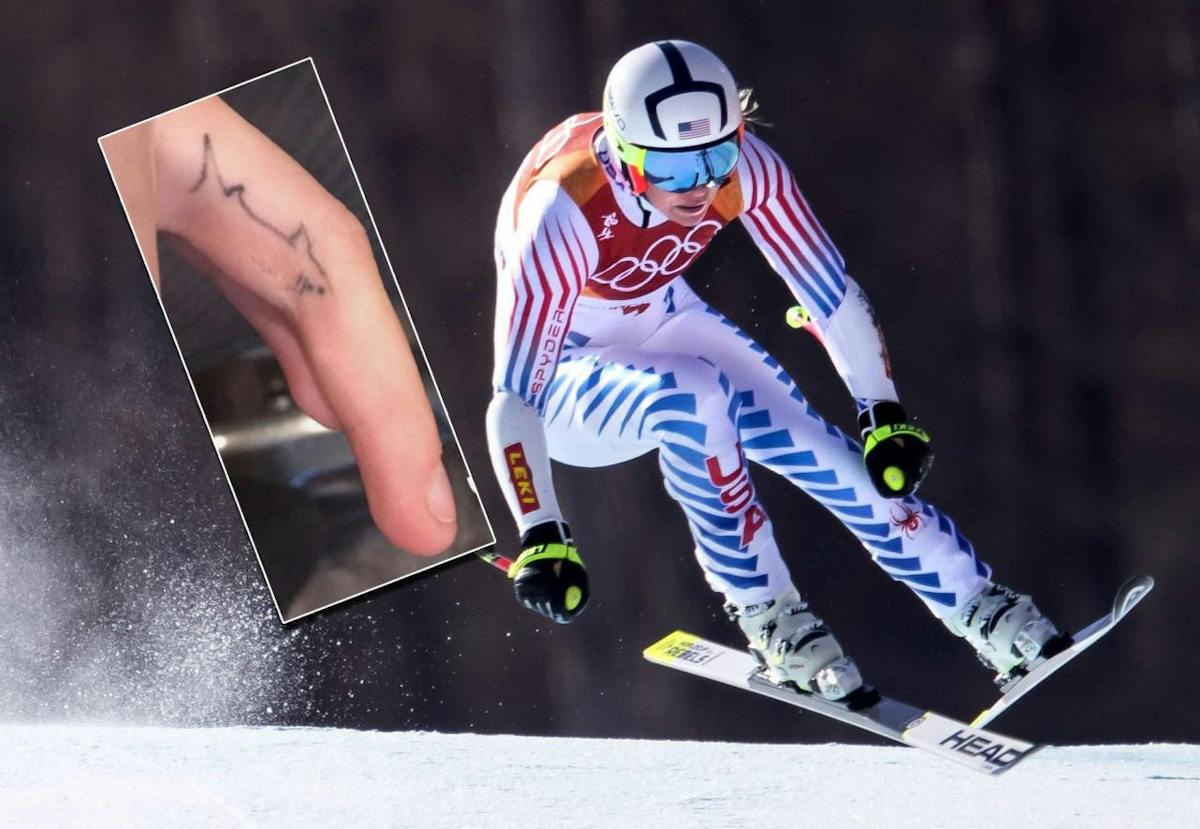
Lindsey Vonn’s known tattoos are small and easy to miss in photos. The shark on her ring finger is the best-known; she has said it represents moving forward. A second design, the Greek word “πιστεύω,” means “believe” and connects to her confidence and Olympic goals.

The shark tattoo on Lindsey Vonn’s finger

Lindsey Vonn tattoos: inline

The small shark outline sits on the inside of Vonn’s ring finger. She has described it as a reminder to keep moving forward. Its meaning is straightforward, without extra symbols or a long phrase around it.

The idea fits how Vonn has talked about the design. It shouldn’t be taken as an explanation for every part of her skiing or career; it’s a reminder she chose for herself.

A quieter public image

Lindsey Vonn in a contextual photograph: inline; not tattoo evidence

Vonn has said she keeps some tattoos hidden. The designs aren’t a constant part of her public image; they show up in close hand photos or interviews when she chooses to show them.

“Πιστεύω,” usually translated as “believe,” is on the middle finger of her right hand. Vonn has connected the word with confidence and her Olympic ambitions. Like the shark, it is brief and personal.

Small choices and daily wear

Lindsey Vonn in a contextual photograph: inline; not tattoo evidence

Both known designs are compact: an outline and a single word. Finger tattoos are easy to see but get more wear than ink on many other parts of the body. Washing, friction and sun exposure can soften fine lines, and small lettering needs room to stay legible. Vonn’s designs keep the shapes simple rather than packing in detail.

Returning to competition

Lindsey Vonn in a contextual photograph: inline; not tattoo evidence

Vonn returned to competitive skiing after stepping away from the sport, following years of knee problems and major surgery. The shark tattoo has been discussed alongside that comeback, but it doesn’t explain it. Vonn has described the design as a reminder to keep going, not as a cause of her return.

A tattoo can serve as a personal reminder without needing to be visible to an audience. The meaning belongs to the wearer; the photograph only shows the ink.

The skiing context matters

Lindsey Vonn in a contextual photograph: inline; not tattoo evidence

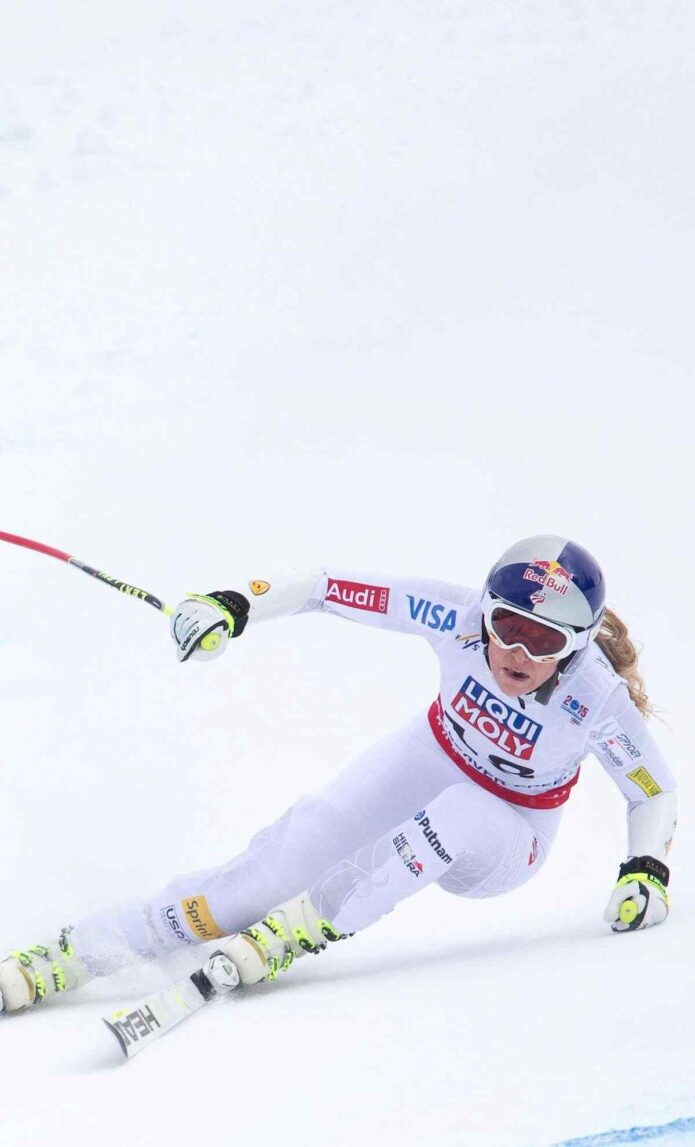
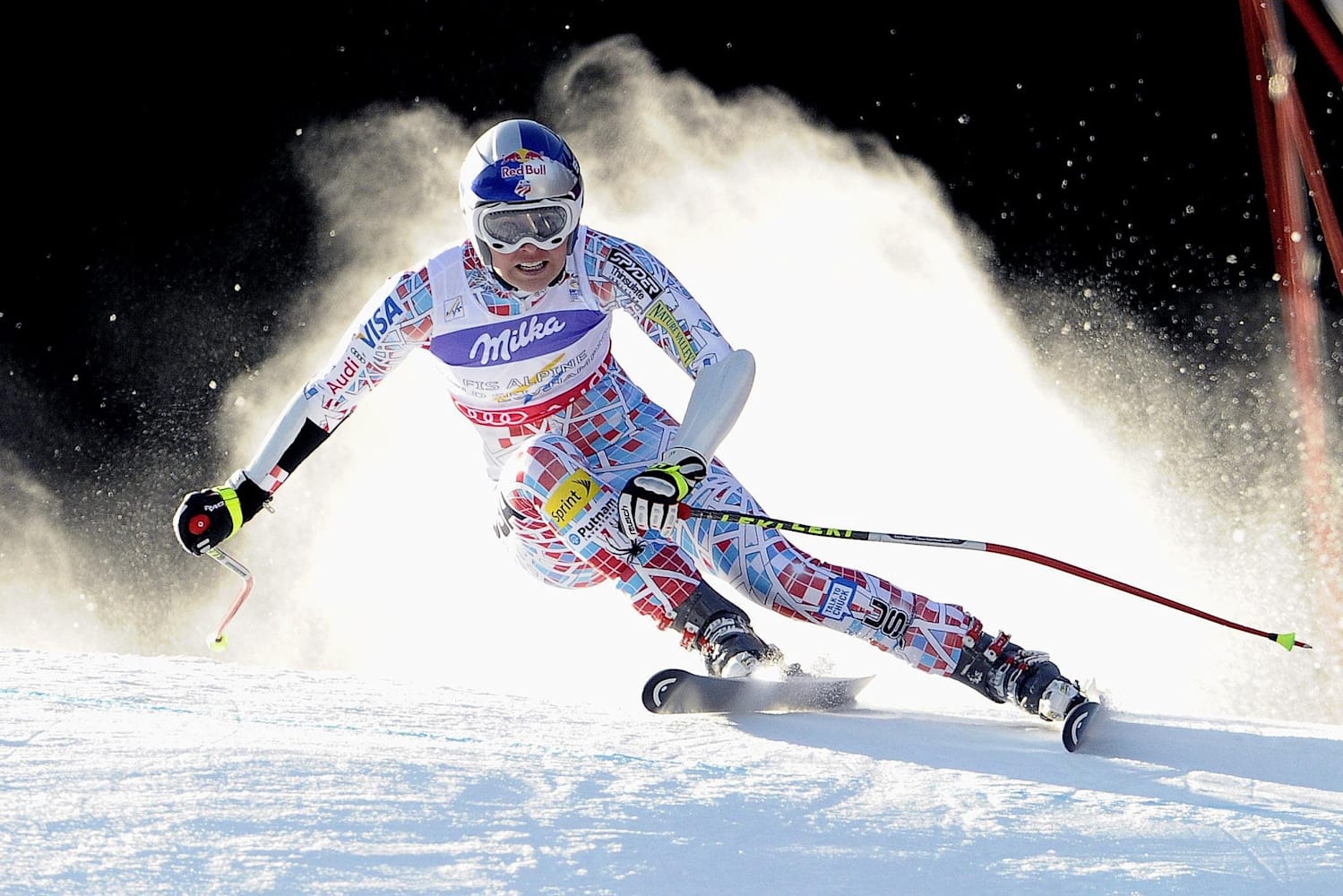
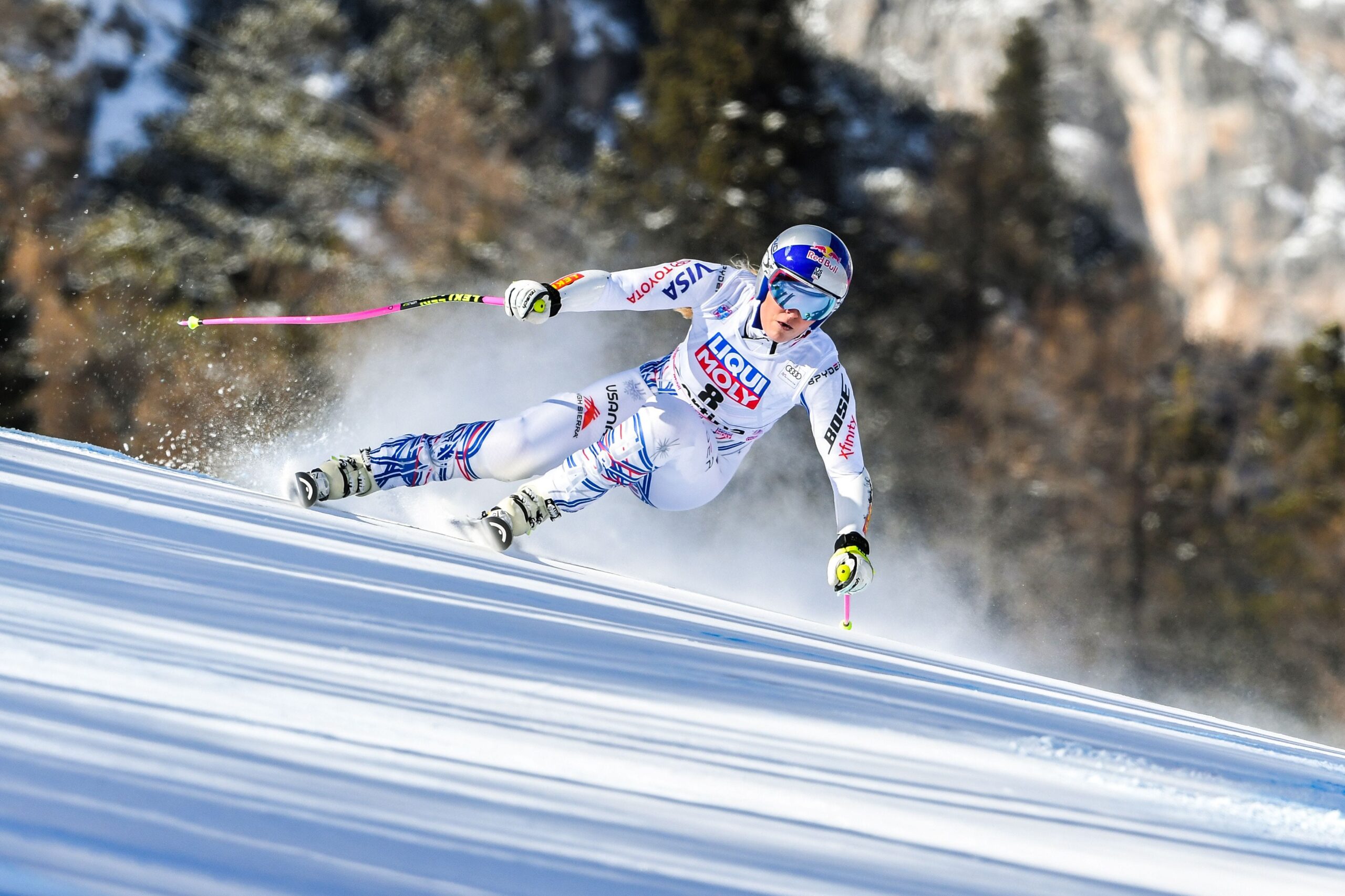
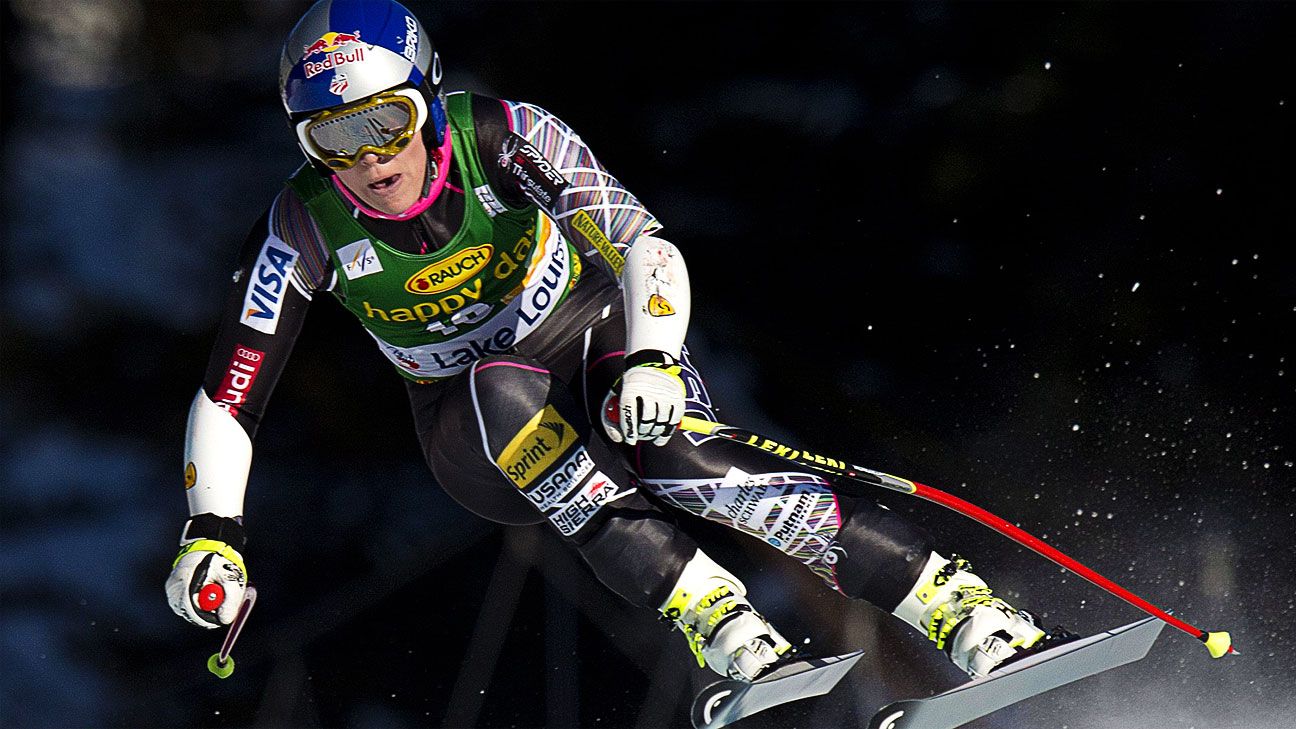
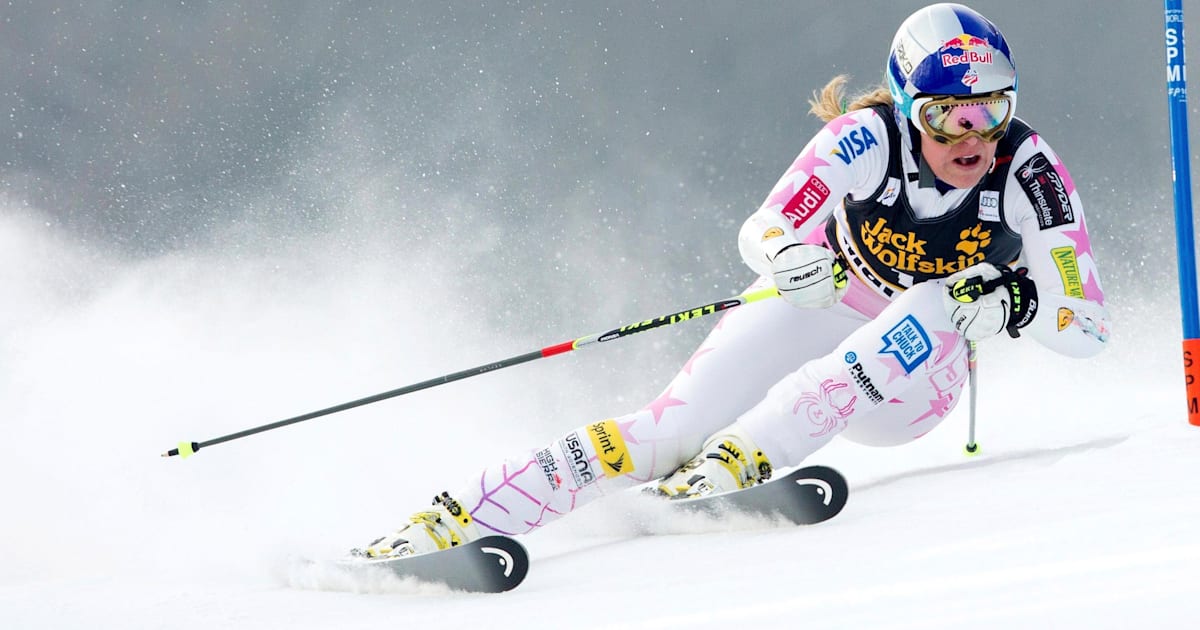
Most photos associated with Vonn show her in ski gear, racing or training, so the finger tattoos can be easy to miss. When close-up images show them, the designs are much smaller than the helmet, goggles and race kit that usually define those pictures.

The skiing images give context to her public career; they don’t provide evidence about the tattoos’ meanings. Those come from what Vonn has said about the shark and the word “believe.”

Ideas worth borrowing

If you’re considering a small tattoo, the useful part of Vonn’s choices is the clear connection behind each one. Pick an image or word that means something to you, rather than copying hers without the same reason.

Finger placement is visible and exposed to wear. Talk with an experienced tattooer about line thickness, whether a design needs simplifying and how it may settle. If you want a discreet piece with more room, the upper arm, ankle or shoulder blade can be covered more easily.

Why the choices feel personal

Vonn’s tattoos aren’t large statements. They are short reminders tied to ideas she has discussed publicly, and she can choose when to show them. The shark is an outline; “believe” is one word. Neither needs a long caption to explain what it means to her.

The simple takeaway

The shark and the Greek word are the clearest parts of Vonn’s tattoo collection: one represents moving forward, and the other is a reminder to believe. The ink stays small, while the meaning comes from her own explanation.

Watch the video below for more Lindsey Vonn coverage.

More athlete tattoo guides