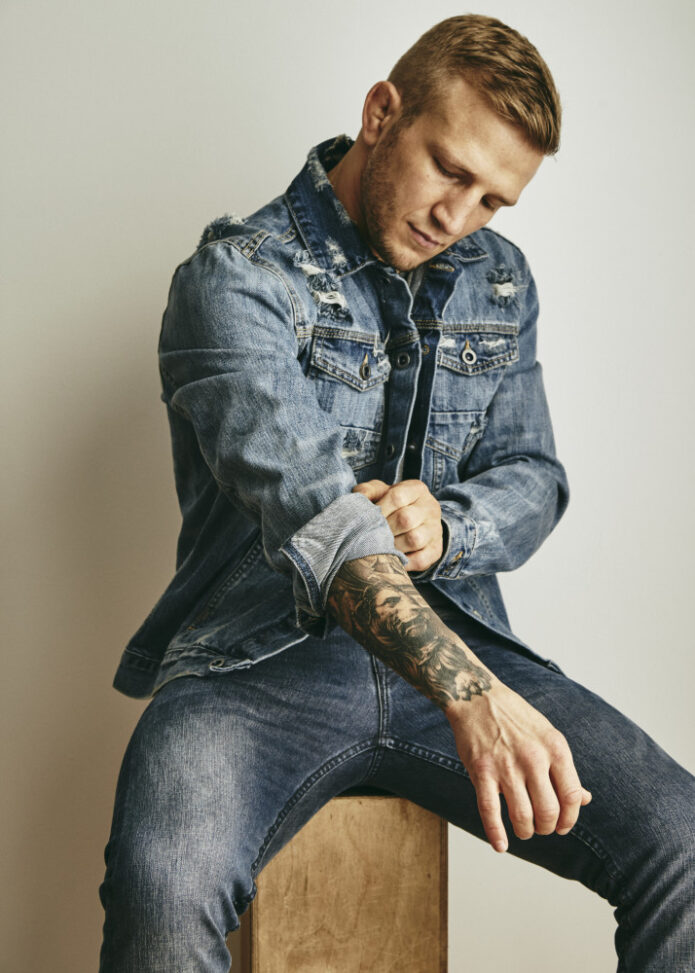
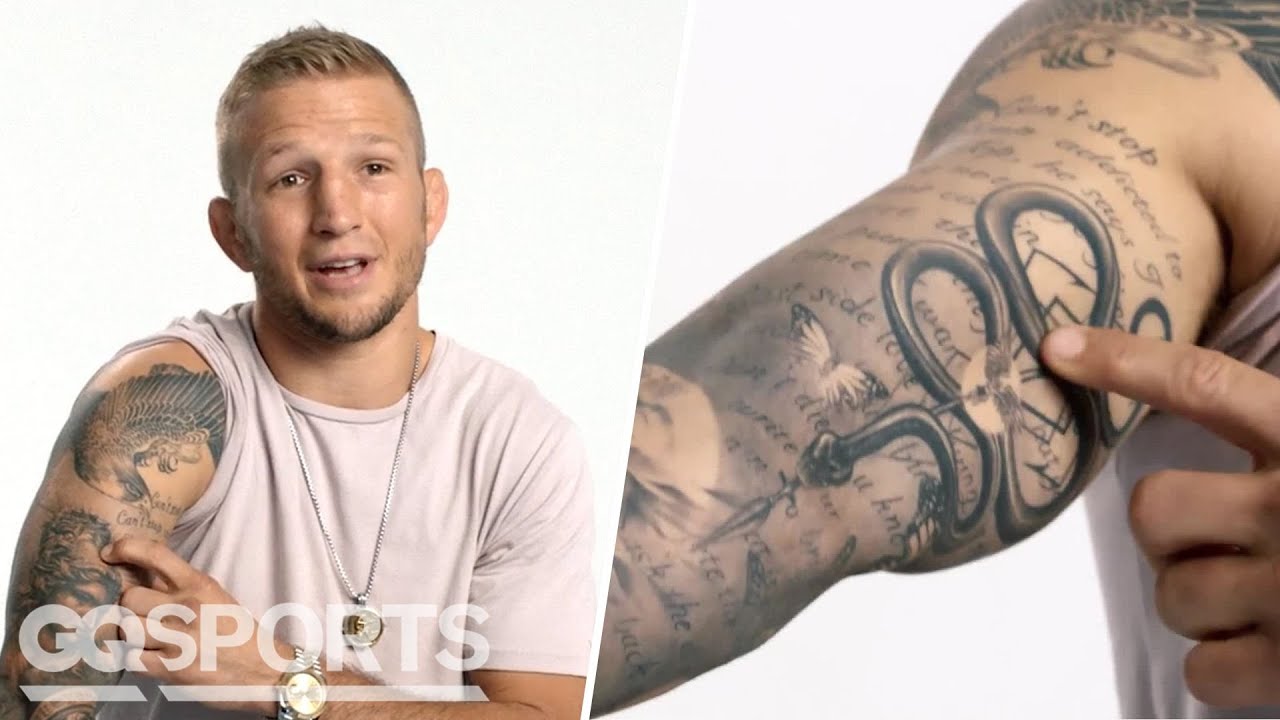
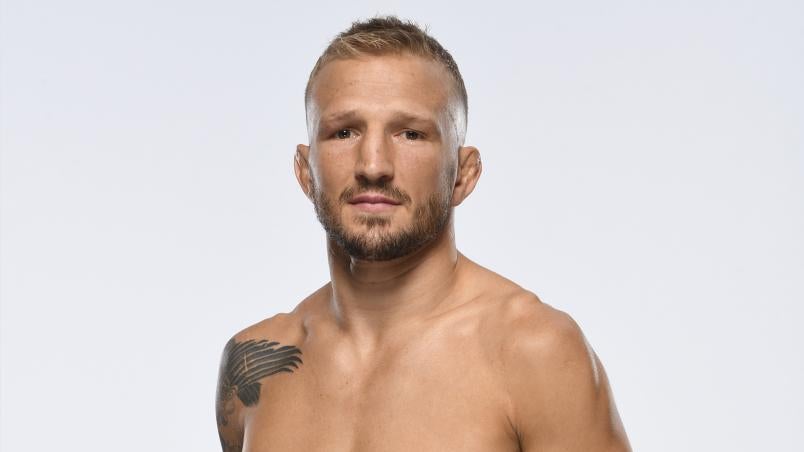
TJ Dillashaw’s sleeve is mostly black-and-gray work, with portraits, lettering, a rose and animal imagery woven through the arm. He described the designs in GQ’s Tattoo Tour, where he also explained that he waited until he could afford good work and choose an artist he trusted.
The photos show the sleeve from different angles. The larger shapes are easy to pick out; some of the smaller marks disappear into the shading unless the camera is close.
TJ Dillashaw’s Tattoo Style
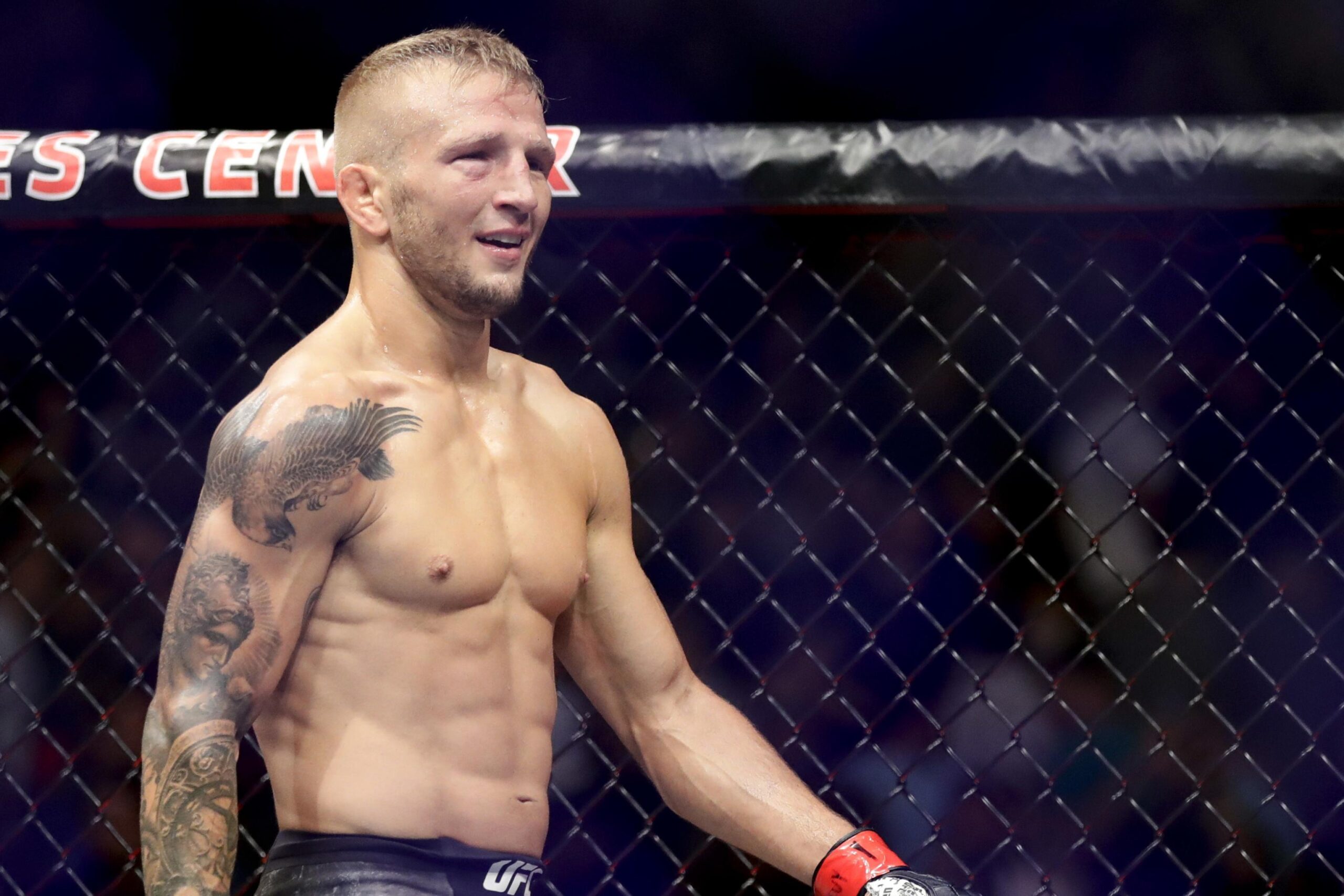
Shading does much of the work in Dillashaw’s sleeve. The black-and-gray realism mixes dark outlines with softer gradients, leaving lighter faces and lettering visible against the heavier areas.
Lighting changes what stands out. In bright photos the dark sections can look almost solid; softer light brings out more of the gray shading and smaller lines.
The Main Images
The sleeve runs from the shoulder down toward the wrist. A bird spreads across the upper shoulder, with script and portrait-style work lower on the arm. The upper shoulder bird gives that end of the sleeve a clear outline.
The bird’s wings reach across the shoulder; below it, the lettering and faces draw the eye down the arm. Dillashaw has described several of the images in GQ, which is a better guide to their meaning than guessing from a photograph.
Small Details
A rose sits among the darker sections of the sleeve. It gives the eye a smaller, more open shape between the larger images.
Script appears in several places, though not every line is readable in a photograph. The angle and distance matter: lettering that is clear in a close-up can fade into the shading from farther away.
Short lines and dark filler connect the larger pieces, so the sleeve doesn’t look like a row of unrelated images. The shadows also help the design hold together across the arm.
Building the Collection
In the GQ tour, Dillashaw says he waited until he was 30 so he could afford good work instead of choosing an artist on price alone. He settled on Oscar Akermo and says they built a relationship as the sleeve developed over separate sessions.
Akermo sometimes travelled to work with him. Dillashaw describes the sleeve changing over time, with the artist adjusting the design as they went rather than treating each visit as a separate, finished tattoo.
Some of the images connect to his fighting career, but the collection isn’t limited to one event. Dillashaw has said that a fight can mark the time when he added a piece, and he uses the tattoos to remember different stretches of his career.
Planning a Similar Project
If you like the look of Dillashaw’s sleeve, start with a style and an artist whose work you trust. For black-and-gray realism, talk through how the larger images will fit around your shoulder, elbow and forearm.
Plan the main shapes before filling every gap. Portraits, lettering and filler can be added in stages, leaving room to see how the design sits on your arm as it grows.
Bring clear references, but expect an artist to adapt them for your body and skin. Look at the design from the front, side and back, not just in one straight-on photo.