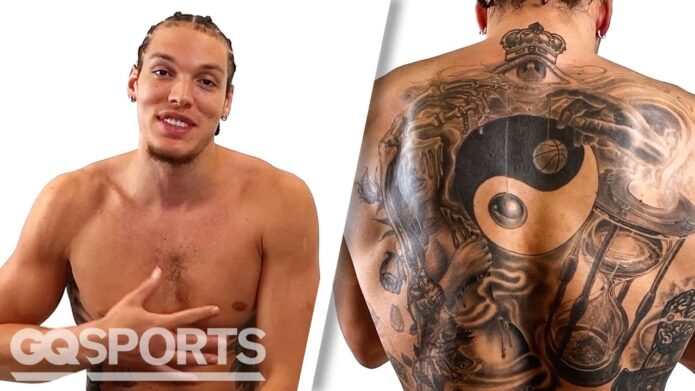
Aaron Gordon did not get tattooed as a teenager just because everyone around him was doing it. In his GQ tattoo tour, he says his first piece came after he had already reached the NBA, when people kept asking when he would finally get ink. That late start shows in the collection: the designs feel considered, and many touch on justice, balance, strategy, humility and staying grounded.
He has not tried to cover every inch of skin, either. Gordon has said he wants to keep his face tattoo-free, and photos still show open space around his chest and stomach. The collection can grow, but its main pieces are already easy to pick out: a black power fist holding scales across his abdomen, chess pieces on his leg, a yin-yang on his back, a crown and all-seeing eye at his neck, and a calf rose marked “LOVE” and “WAR.” One smaller drippy design has a simpler explanation: he liked how it looked.
The larger themes are clear, but not every design needs a grand meaning. Gordon has given context for some of the tattoos; others are best described by what can be seen.
The black power fist and scales put justice at the centre
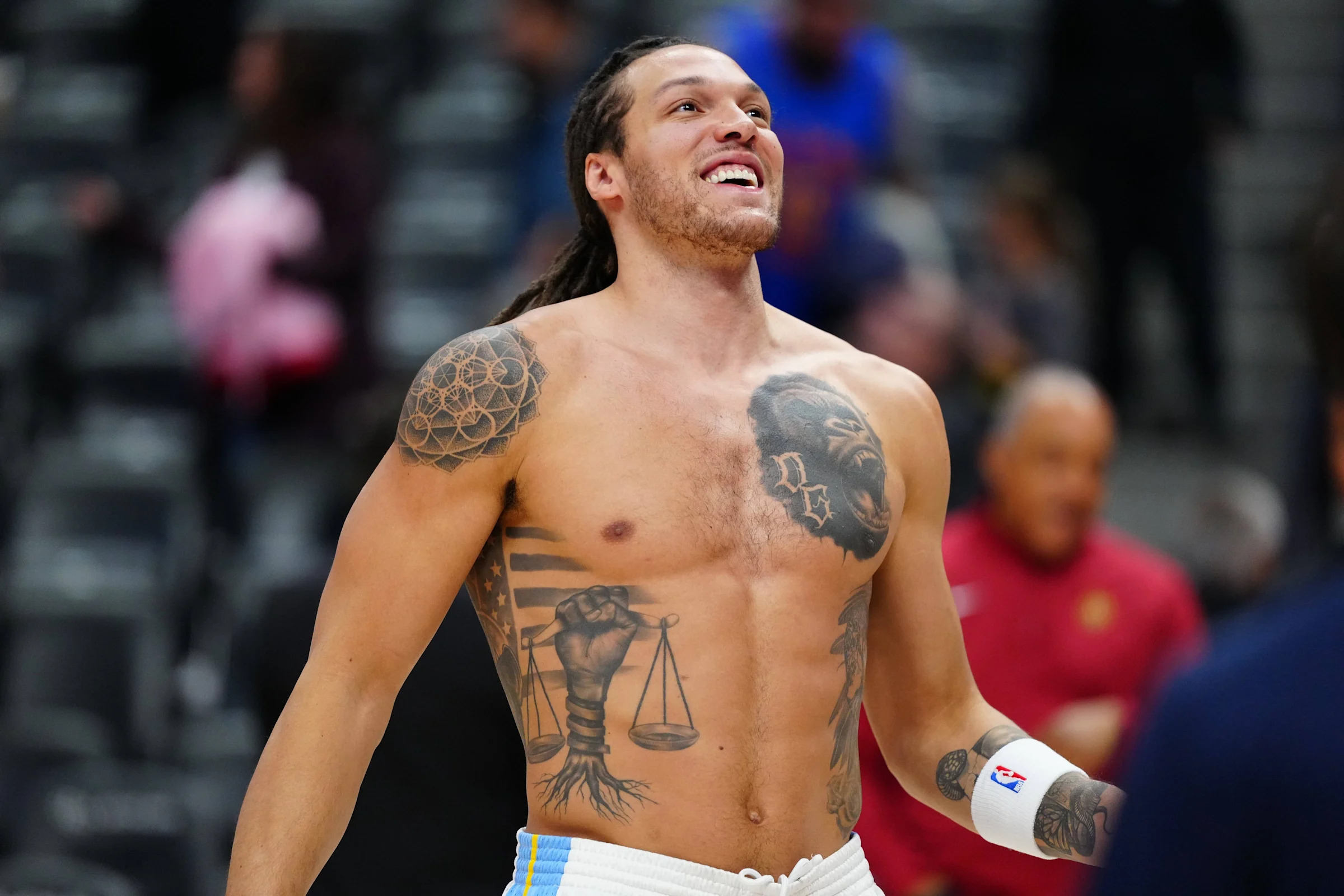
The most direct piece in Gordon’s collection is the black power fist holding a scale. The raised fist connects it to Black equality and activism, while the scales bring in justice and balance. Roots extend below the image, giving the design a grounded feel and tying the political idea to something personal.
Gordon has spoken about this tattoo more clearly than most of the others. He has talked about the need for more activists and for greater justice and equality. The photo shows the fist, scale and roots; his own comments explain the context. There is no need to add a backstory that he has not given.
The abdomen placement affects which photos show it. A full shirtless frame reveals the scale of the work and how the roots extend below the main image. A basketball uniform hides it, and even a warm-up photo may show only the top. The full view lets the piece read as a tattoo rather than a cropped dark shape.
The design is strong even before you know the interview. The fist is instantly recognisable, the scale gives it a focal point, and the roots keep it from floating on his stomach. It is bold, but the parts work together rather than looking like decoration added at random.
Gordon’s explanation keeps the image tied to activism instead of turning it into a vague inspirational symbol. He connects the scale to justice and balance, and the raised fist to equality. Those ideas belong together, but they should not be stretched into a claim about every other tattoo he has.
Black ink and the open skin around the piece make it stand out in studio portraits. Gordon has left space around it instead of building a wall of ink from stomach to chest. That open area is part of how the collection looks now, and it gives the fist and scale room to hold their own.
It is useful to keep this tattoo apart from the more playful designs. The calf rose and drippy mark may have been chosen for their appearance, while Gordon has given the fist and scale a clear social meaning. A crown or chess piece may show in the same wide photo, but that does not make every design political.
The chess pieces turn the thigh into a strategy lesson
Chess is another recurring idea in Gordon’s tattoos. He has described a king, pawn and knight on his thigh, connecting them with lessons he takes from the game: protect a move, think several steps ahead, and remember that every game has a beginning, middle and end. The pieces work as chess images and as reminders for how he wants to approach life and basketball.
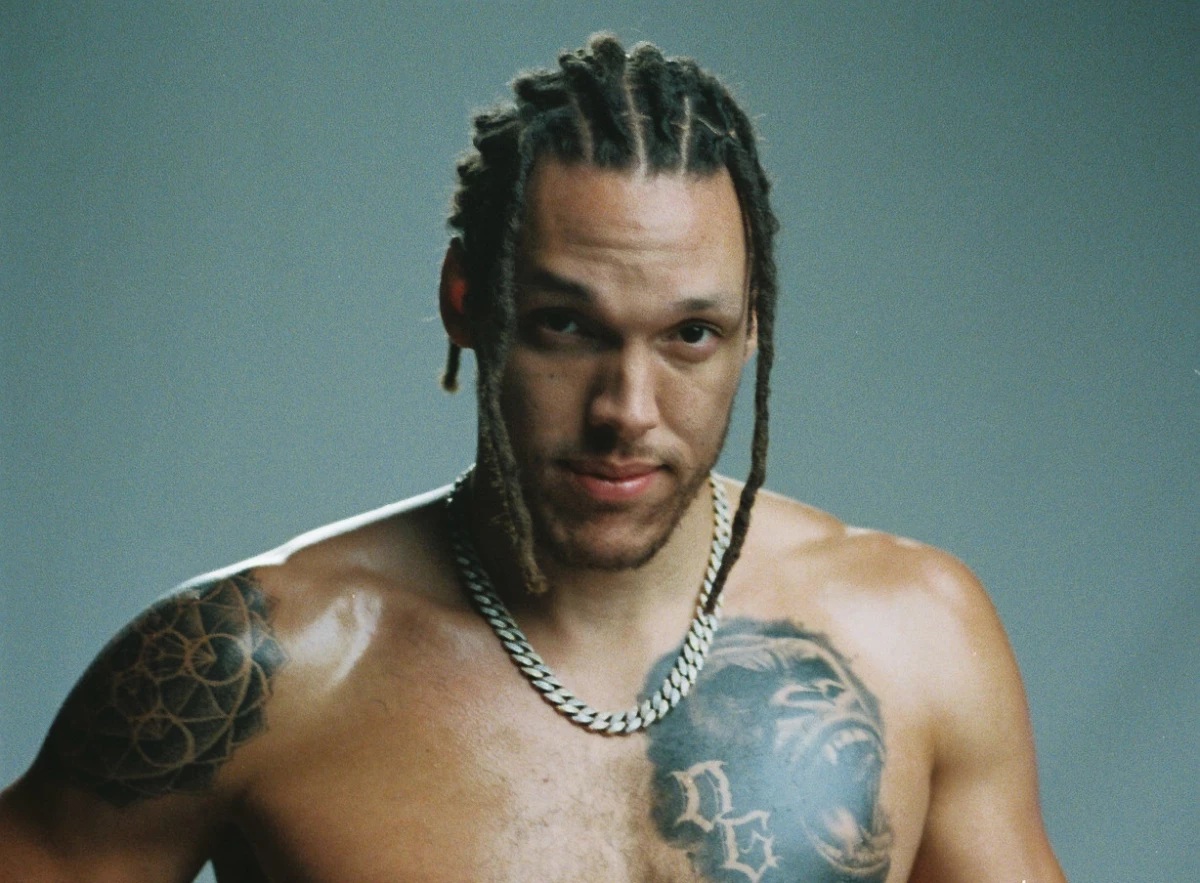
The leg work is harder to see than the abdomen piece because shorts and training gear cover it. Even when his thigh is visible, the chess pieces may look like small dark shapes in a wide photo. The studio portrait gives a better sense of how the lower-body tattoos fit into a collection that still leaves plenty of skin open.
The chess designs bring a quieter mood than the fist and scales. The fist carries a public, political message; the chess pieces feel more private, even when they are visible. Gordon’s own comments are enough: he thinks about planning, protecting the next move and understanding the stages of a game.
That idea sits naturally beside basketball without claiming chess explains every decision he makes on court. Gordon’s work requires reading space, reacting quickly and thinking ahead. The tattoos show that chess matters to him and that he wanted those ideas on his skin.
Other designs touch on related but distinct themes. Scales suggest justice and balance, the yin-yang suggests opposing forces, and chess is about planning. There is some overlap, but they are not interchangeable. Keeping each one separate gives the tattoos their own character.
Gordon’s body is not yet covered in one continuous sleeve or leg piece, so the individual designs remain easy to notice. That open space gives them room, and it leaves space for more work if he decides to continue.
The useful detail is the combination of specific pieces and a specific lesson. This is more than saying Gordon has chess tattoos: the king, pawn and knight are named, they sit on his thigh, and he has explained what the game means to him. That is enough without adding guesses.
The LOVE WAR rose is a sharp little calf tattoo
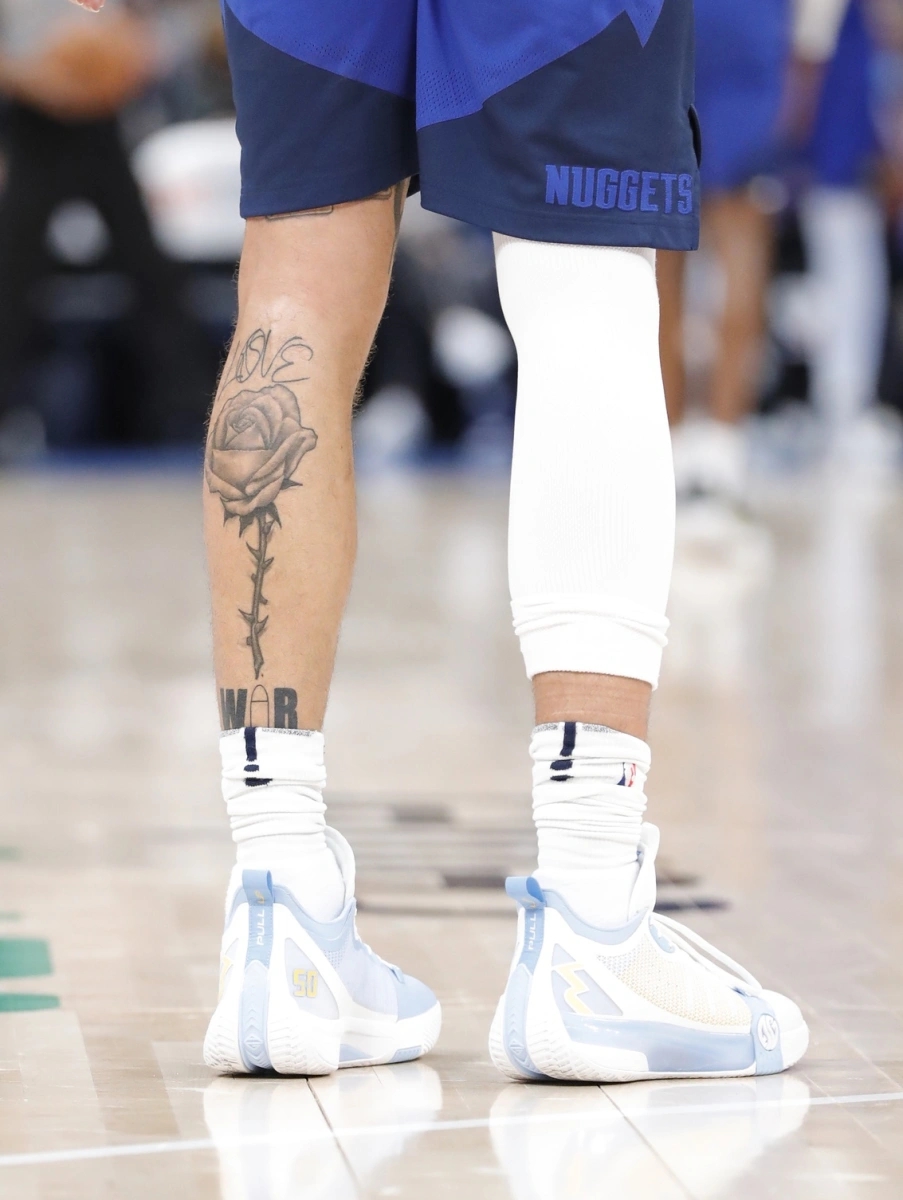
On Gordon’s calf, a rose sits beside the words “LOVE” and “WAR.”. The lettering makes the design easy to identify and gives it its tension. The words sit on either side of the same flower, turning a familiar tattoo subject into a compact contrast.
The rose looks different from the fist and scales. It does not need a wide photo to make sense, but it does need a sharp view of the leg. Basketball clothes can hide the calf or crop the design, while a close-up makes the lettering readable and shows that it is more than a flower tattoo.
Gordon has not built a long explanation around the rose. Its main idea is already there: love and war set beside each other. Those words could suggest broader themes, but the safest description sticks to the contrast in the design rather than attaching a dramatic story from outside.
The calf is a casual placement, and the tattoo can be shown or covered depending on what he wears. It also keeps the rose separate from the heavier imagery on his abdomen, so the two pieces do not blur into one message.
The lettering is the key detail in this photo. A soft image might show the flower but lose the words, which would erase the part that makes the design specific. A full-body portrait gives an overall sense of Gordon’s ink, but it cannot do the calf piece justice.
This tattoo is more direct than some of Gordon’s layered symbols. The fist, scale and roots combine several images; the rose starts with a familiar flower and the words make it his own.
Set beside the chess pieces in the wider collection, the rose brings a different kind of balance. Chess is about planning, the scales point to justice, and LOVE and WAR make a more emotional pair. The themes can sit near each other without becoming one single concept.
The yin-yang on his back is about balance, not a mystery code
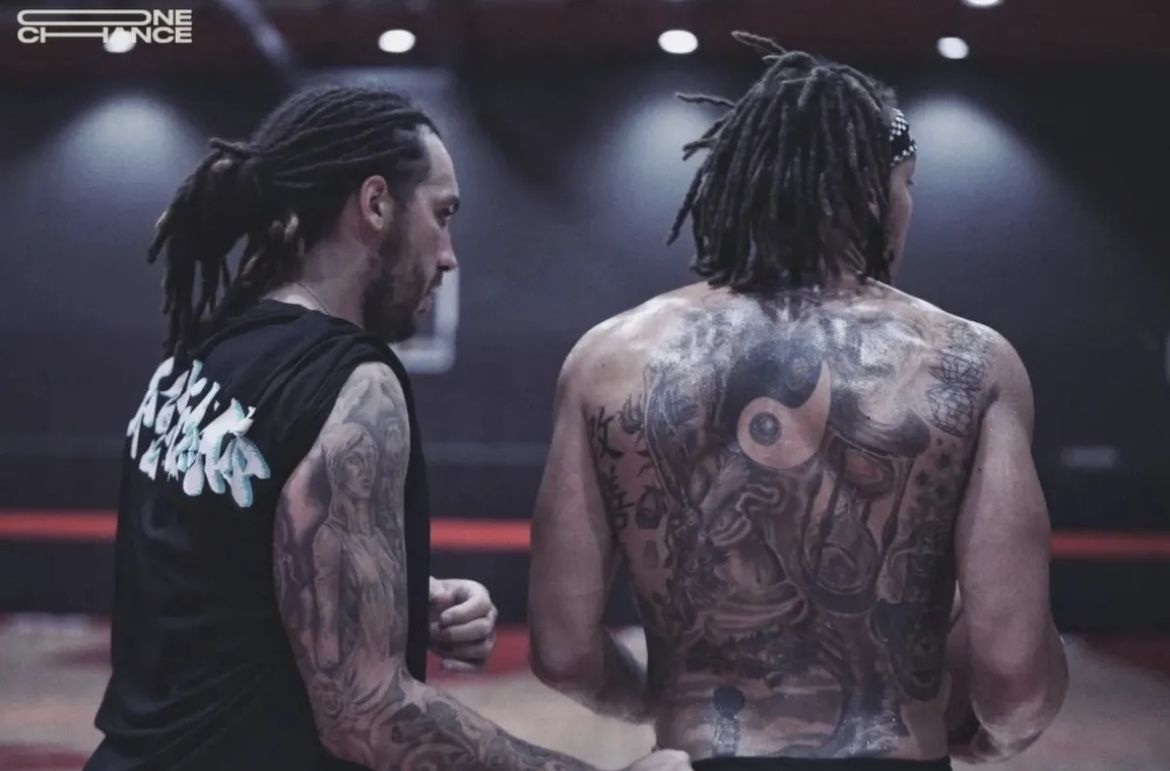
The yin-yang on Gordon’s back adds a quieter centre to the collection. In the GQ tour, he connects the symbol with Daoist pacifism and balance. It is a familiar design, but his comments give this version a personal context; he says it is more than a shape he happened to like.
Back tattoos are easy to miss in photos of a basketball player. Most game images show the front of the body, and training shots may reveal only the shoulders. The yin-yang can seem absent if you look only at court photos. A clear view from behind changes that.
It also makes a useful comparison with the abdominal scales. Both designs involve balance, but the scales are tied to justice and equality, while the yin-yang points to harmony and opposing forces. They can appear in one guide without being treated as the same idea.
There is a quieter feel to the back piece than to the fist. The black-and-white symbol is compact and easy to read, and the back gives it room to stand on its own. It does not need lettering or a large frame.
The symbol has many cultural associations, so Gordon’s own comments should stay in proportion. It is fair to say he connects this tattoo with pacifism and balance. It would be a stretch to treat it as proof of a complete philosophy or an explanation for every other design he has.
A rear photo also establishes placement. A front-facing studio shot may show his neck and torso while hiding the back completely. This image makes clear that the yin-yang is its own piece, not part of the chest layout.
That separation matters because several of Gordon’s tattoos are strong graphic shapes. The fist, scales and yin-yang may all read clearly from a distance, but they sit in different places and have different explanations. Good photos help keep that straight.
The crown, all-seeing eye and drippy design show his more playful side
High on Gordon’s neck are a crown and an all-seeing eye. He says the crown reminds him of his belief that nothing is above the all-seeing, all-being idea. That gives the two designs a connection, though a photo cannot establish a separate meaning for every nearby line.
The neck work is easier to see in a studio interview than in sports photos. Hair, sweat, collars and arena lighting can soften the edges. GQ’s tattoo-tour footage is useful because it points the camera at the ink instead of catching it by accident during a game.
The crown and eye use familiar tattoo imagery, but Gordon’s explanation gives his versions a personal angle. Calling them generic symbols and moving on would miss the way he links the crown to the idea above it.
Gordon has also talked about a drippy tattoo that he chose because he liked its appearance. That is a refreshing counterpoint: some pieces are about justice, balance or strategy, while another simply appealed to him as artwork.
Not every tattoo starts with a full personal manifesto. People can like a shape, a reference or a bit of lettering. Gordon’s drippy design keeps the collection from sounding more serious than it is.
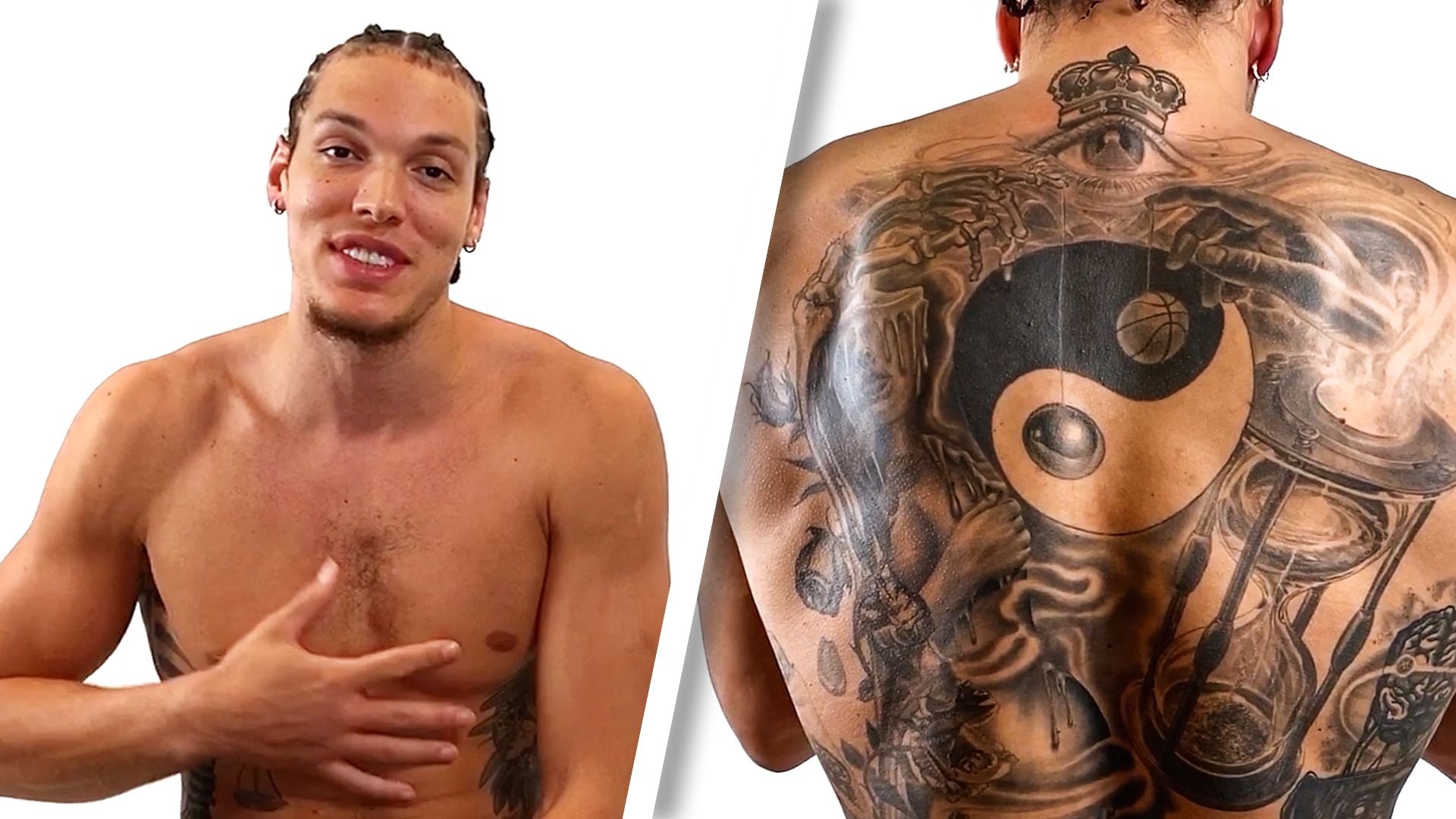
The studio portrait and GQ images show how the neck work sits above the torso designs. The crown and eye are compact and high on the body; the fist and scales take up a much wider area. Their different size and placement stand out even in the same frame.
Gordon’s tattoos do not follow one strict style. The fist brings in political imagery, the chess pieces are figurative, the yin-yang is spare, the rose pairs bold words and the neck work uses familiar symbols. What links them is the ideas he has explained, not a shared line weight or look.
He was already playing in the NBA when he started getting tattoos, which helps explain why the collection feels considered. He had time to decide what he wanted and what he did not. He has said he wants to keep his face clear, and the open areas around his chest and stomach show that he is not trying to turn his body into a solid block of ink.
The clearest summary is straightforward. The fist and scales carry the strongest public message; the chess pieces are reminders about planning; the yin-yang connects to balance and pacifism; and the crown and eye have the spiritual explanation Gordon has shared. The LOVE WAR rose and drippy mark show a lighter side.
The title should reflect those actual designs, not hide behind a generic “tattoos and more” formula. Gordon’s collection has enough specific pieces to name, and the photos let readers move from the abdomen to the leg, back and neck without packing everything into one long block.
That is why the pictures matter. A torso shot shows scale, a calf photo makes the lettering readable, a rear view proves the yin-yang’s placement, and the neck image separates the crown and eye from the chest. Each one does a different job; none has to stand in for the whole collection.
Gordon’s tattoos are still a work in progress, but the pieces already documented tell a clear story. He waited until he was ready, chose designs that mattered to him, left room for the collection to grow and kept at least one tattoo simply because he liked its look. That is more interesting than assigning a grand meaning to every symbol.
2 thoughts on “Aaron Gordon’s Ink: The Black Power Fist, Chess Pieces and LOVE WAR Rose”