
FLETCHER’s tattoos are easiest to see in photos from the stage. The clothes, hair and lighting change from one show to the next; the ink appears in flashes as Cari Fletcher sings and plays.
There isn’t a public list explaining each piece. Concert photos show her arms well enough to describe the placement and style, but not always enough to identify every small design or its meaning. I’ll stick with what the images show.
FLETCHER’s Arm Tattoos Are the Main Event
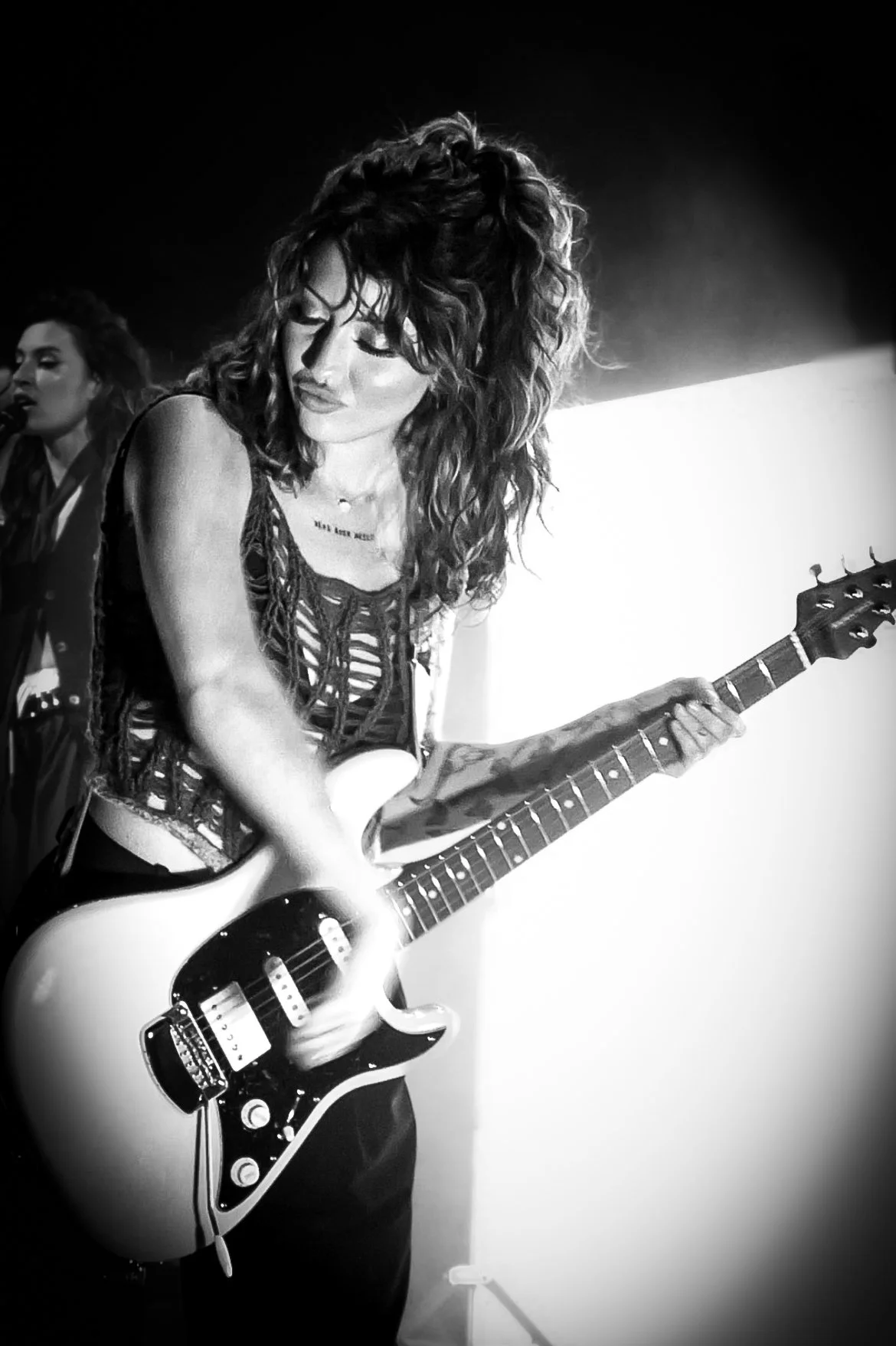
Several separate designs show across FLETCHER’s arms: a larger upper-arm tattoo, darker work lower down and smaller marks between. The gaps leave skin visible, so the collection reads more like pieces added over time than one continuous sleeve. As she reaches for a mic or guitar, the designs bend with her arm and show from different angles.
The concert shots are grainy, but the larger shapes remain clear. Smaller details are harder to separate from the stage lighting.
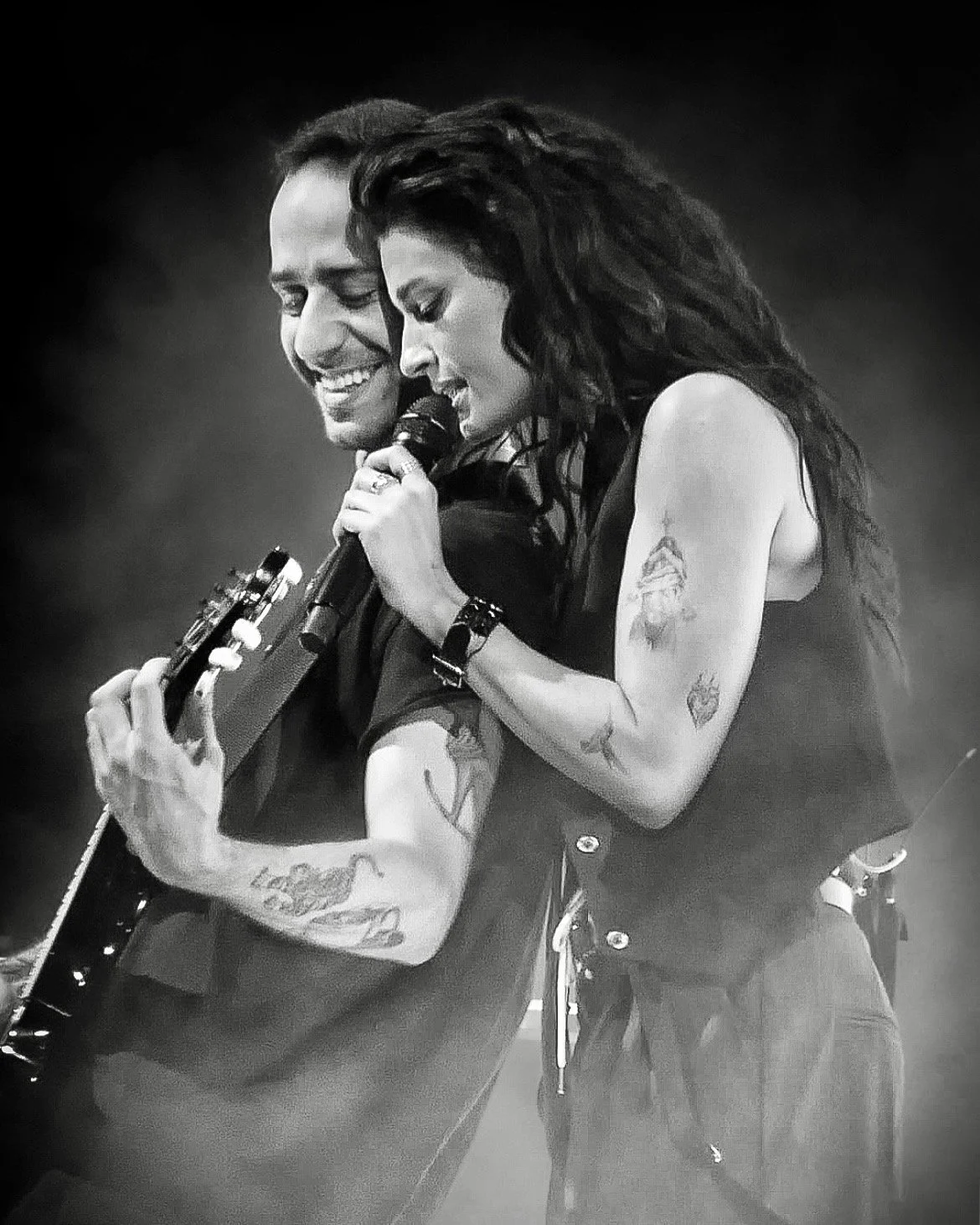
In this second shot, the upper-arm piece is easier to make out; smaller shapes and linework sit lower on the arm. The live lighting hides some detail, but the tattoos still read without a studio close-up.
The pieces vary in size and line weight; they don’t form one solid panel.
Close Views of FLETCHER’s Upper-Arm Ink
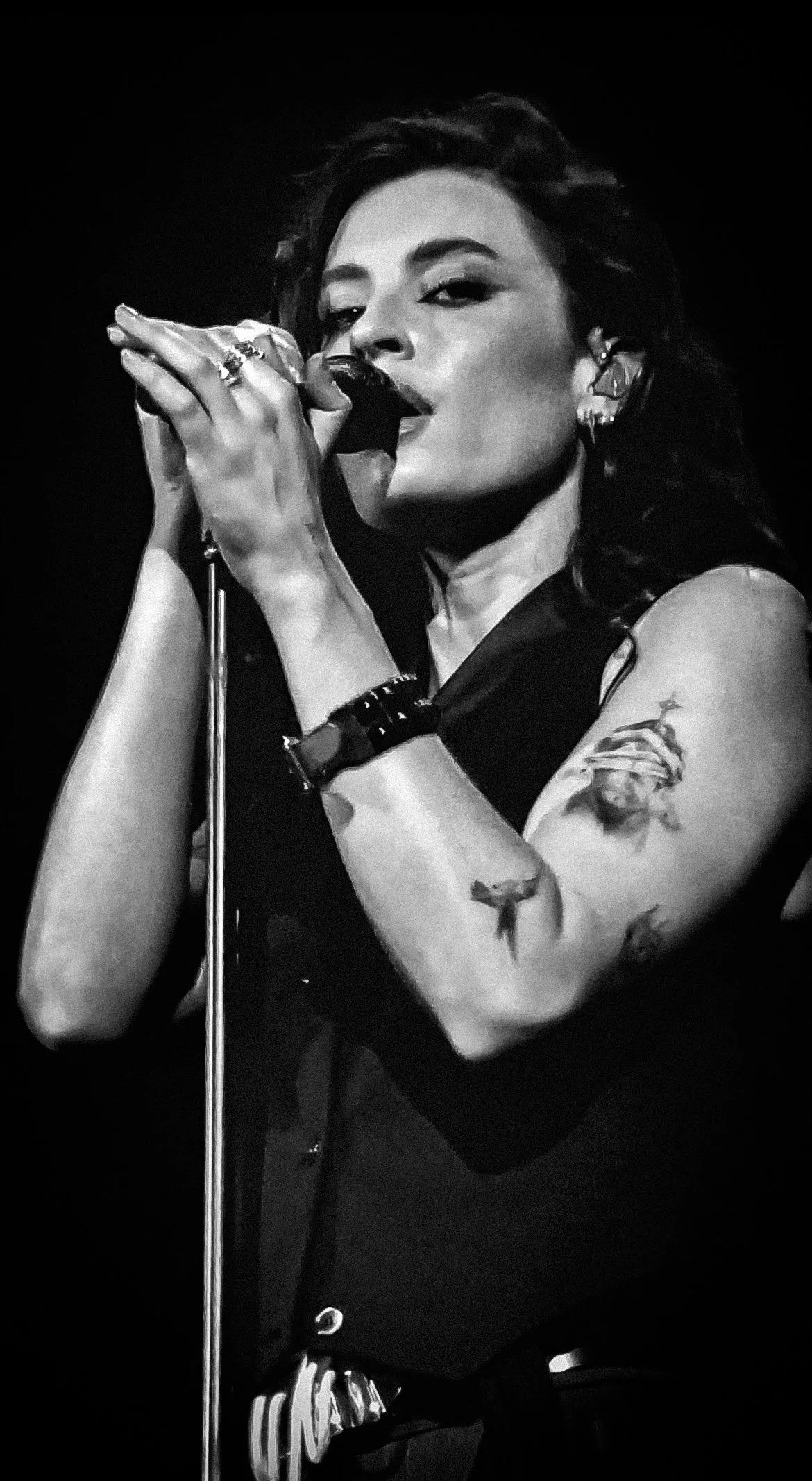
A closer photo shows an illustrative-looking tattoo on the upper arm. Dark shading sits inside a broader outline, and the shape follows the curve of her arm with skin left open around it.
The upper arm gives a design room to breathe and can be covered by a short sleeve. The photo shows its appearance, though, not what it means. FLETCHER hasn’t publicly explained this piece, so there’s no reliable basis for assigning it a story.
The Smaller Pieces Around Her Forearm
Other photos show smaller marks along the forearm, with designs near the elbow and wrist. Some are dark and easy to spot; fine lines fade into the stage light.
Because the forearm turns as she moves, a tattoo that faces the room while she holds a microphone can disappear when she turns her hand. The photos don’t offer a full inventory of the smaller pieces.
Why FLETCHER’s Tattoos Work on Stage

Here, she has one arm raised while singing, so the upper-arm tattoo faces the camera in a natural movement rather than a posed close-up. You can see how the design wraps toward the back of the arm and where it disappears under clothing.
Vests, sleeveless tops and open jackets make the ink visible while leaving the performance in view. Rings, bracelets, dark clothes and instruments share the frame; the tattoos sit among those details instead of taking over every look. Lighting shifts their appearance too: in a monochrome shot the lines feel sharper, while brighter portraits soften them.
There’s No Need to Force a Meaning Onto Every Piece
FLETCHER’s songs and interviews often draw on relationships, identity and touring, so fans may connect a tattoo to a lyric or a moment. Those readings can be personal, but a public photo doesn’t confirm them. It shows where the designs are and what their lines look like, not why she chose them.
A tattoo can have a private meaning, a passing one or no story its owner wants to share. When planning your own design, think about whether its size will leave the lines clear over time instead of shrinking it just to match a screenshot.
How to Borrow the Feel Without Copying FLETCHER
Use the images as placement references, not templates. Show an artist how an upper-arm design curves or how much space sits between forearm pieces, then ask for an original drawing suited to your arm.
Before settling on a spot, bend your elbow, turn your wrist and lift your arm. The stage photos show how a tattoo can look different as the body moves. You don’t have to fill the whole arm at once; leaving space lets the pieces stay distinct and gives you options later.
The Bigger Picture
Her photos show how the tattoos sit on her arms; the reasons behind most of them remain private.