Musicians

Tattoo guides for singers, rappers, DJs and musicians, with photographs, documented meanings and the stories behind their designs.

Swae Lee’s tattoos leave plenty of room for space

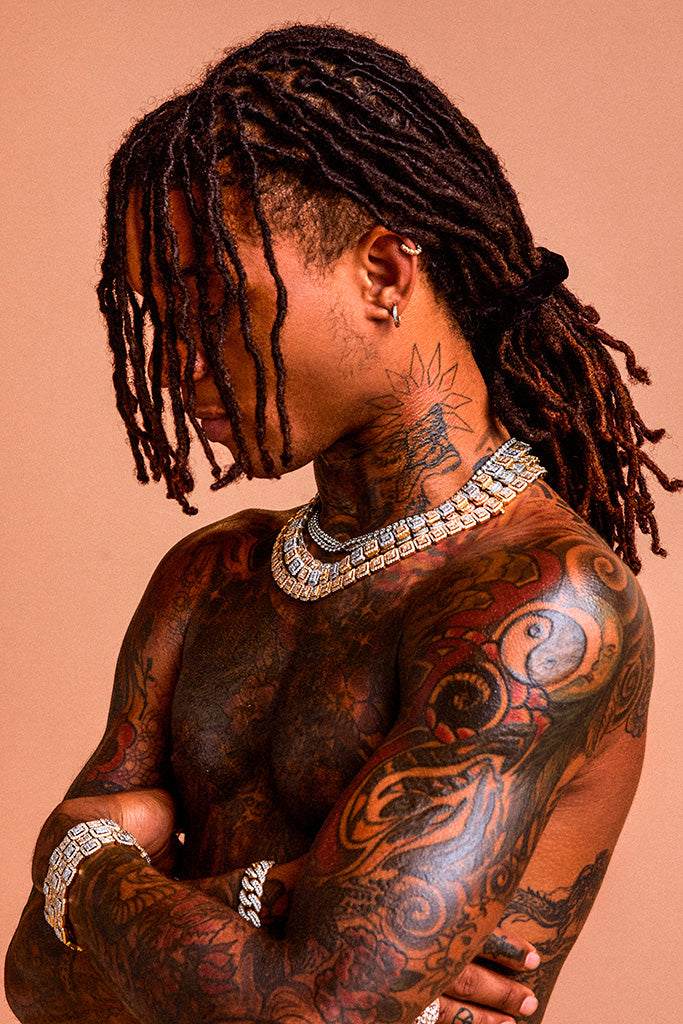
Swae Lee’s tattoos feel like they’ve grown alongside him rather than been designed as one matching set. Space imagery sits beside flowers, family references, symbols, faces and animals, with each piece seeming to belong to a different point in his life. There’s a lot of ink, but it feels personal instead of carefully branded.

A few stories behind the tattoos are especially clear. The wolf stands for strength, a chest cover-up gave him room for a fresh idea, and his back piece took about six hours while still needing more colour. Even the smaller marks on his hands and fingers make the collection feel like a record of life as it happened.

Swae Lee’s wolf tattoo is about strength
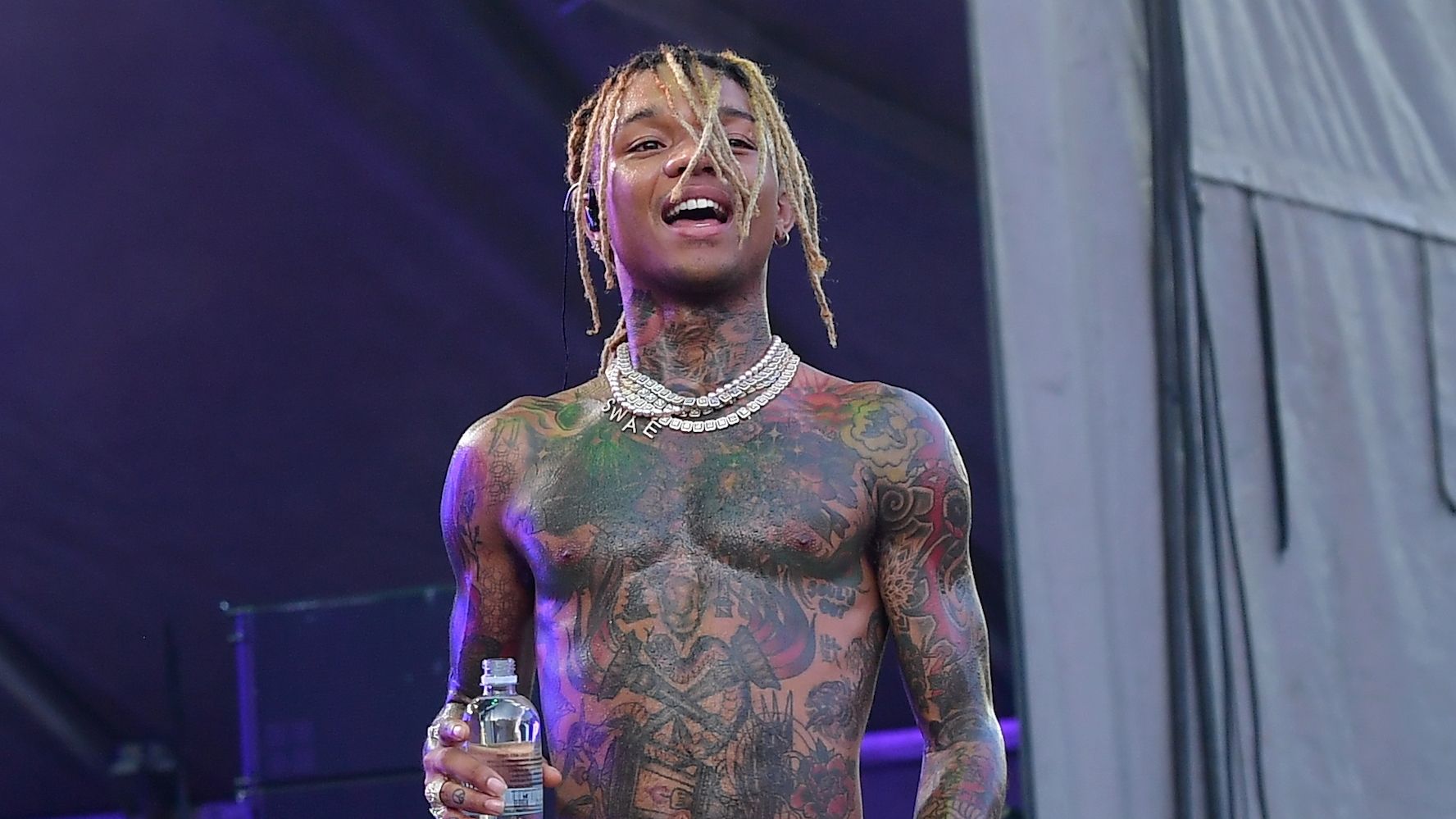
Swae Lee shirtless live portrait showing chest and arm tattoos

The wolf on the inside of Swae Lee’s right forearm is one of the most straightforward pieces in his collection. It represents strength and power, giving the tattoo a clear meaning even as the rest of the sleeve moves into more decorative territory.

It’s a fitting spot for that message. The forearm is easy to see and always in motion, so the wolf feels like a reminder he carries through everyday life, not just something brought out for a photo. It also anchors the collection: some of the other designs are surreal or playful, while this one stays bold and familiar.

The wider right-arm work includes a crown, flowers and vines. The crown suggests confidence and status; the botanical details make the sleeve feel softer. Rather than standing alone, the wolf sits in a mix of authority, nature and ornamental work. It’s a little self-belief, drawn as a wolf.

Motorcycles, planets and a rose on fire bring the chaos
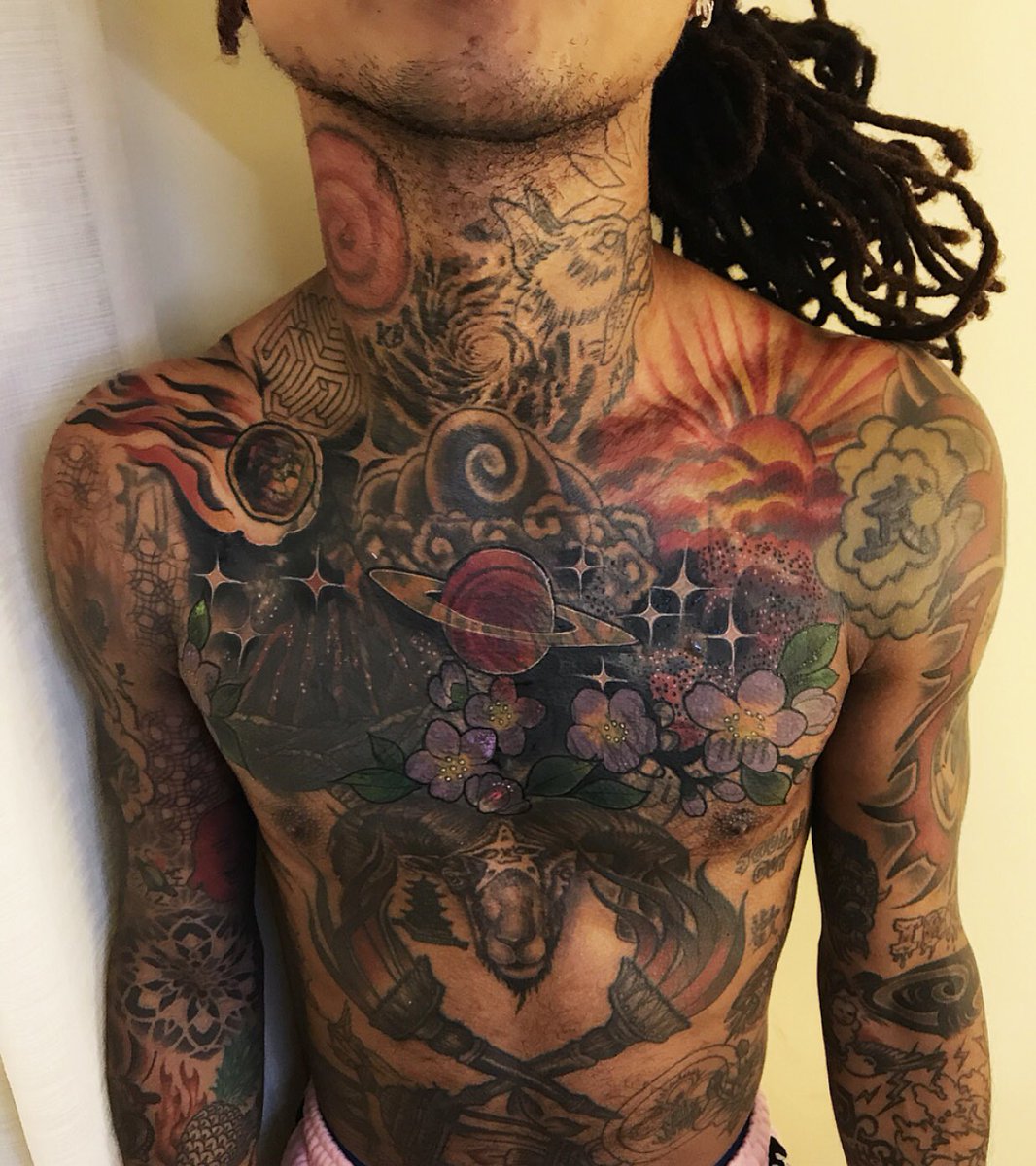
Swae Lee cosmic chest tattoo with planets, flowers and space imagery

Another cluster of tattoos is all about movement and space: a motorcycle on fire, a planet or Saturn, sacred geometry and a rose surrounded by flames. The mix feels restless, calling up speed, travel, heat and the pull of somewhere beyond the everyday.

The motorcycle is the easiest image to read at a glance. It has the familiar association with freedom, but the flames give it a more intense edge than a simple road scene. The space imagery shifts the mood again: a ringed planet turns the body into a small night sky, and the sacred geometry adds a more measured pattern to the sleeve.

The rose on fire is a good example of Swae Lee taking a familiar tattoo symbol somewhere less predictable. Roses can stand for romance, beauty or memory; add flames and the meaning opens up. It could suggest passion, pressure or change, or simply a beautiful image with some heat behind it. The designs connect visually without needing to share one message.

The snakes and lamp point toward healing and rebirth
Swae Lee high-resolution stage portrait with visible chest and arm tattoos

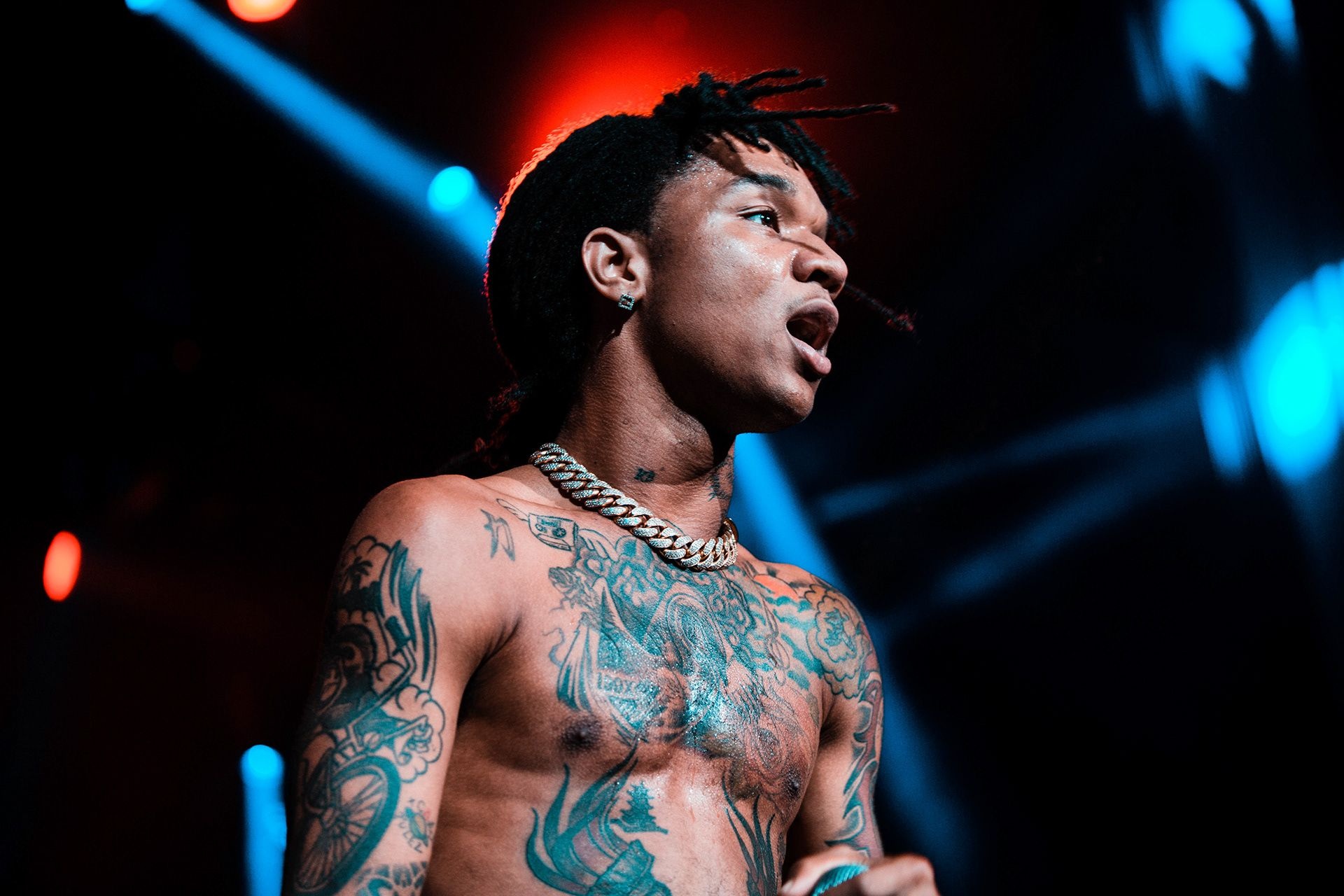
Swae Lee also has tattoos featuring snakes and a lamp, images associated with healing and rebirth in descriptions of his work. They bring a quieter feeling to the collection than the motorcycle and flame designs.

Snakes can suggest change because they shed their skin. They may look dangerous, but they’re also linked with survival and renewal. A lamp adds the idea of light: direction, clarity or a way through a hard stretch. Together, the designs read as getting through something and coming out changed.

That theme sits comfortably alongside the darker pieces elsewhere, including demons, a Baphomet image and a tiger with a dagger. The snake and lamp add a sense of repair without glossing over the difficult imagery. The whole collection doesn’t have to sit in one mood.

His chest cover-up made space for a new idea
Swae Lee performance photo showing his chest and arm tattoos

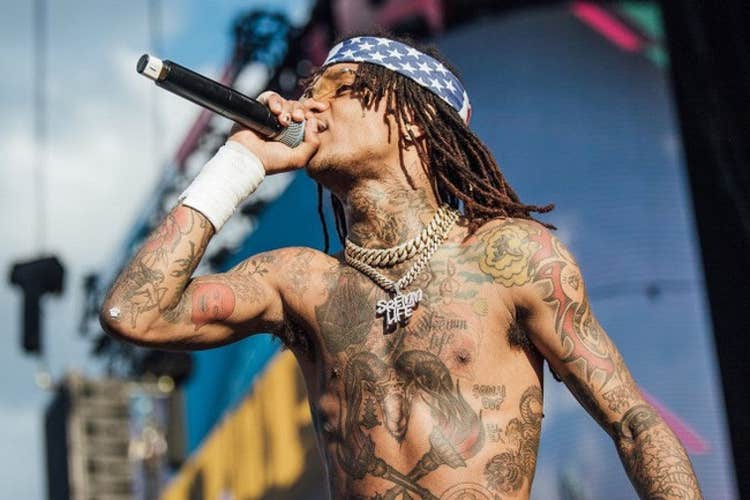
Swae Lee’s chest is one of the busiest parts of his collection. The design includes a meteor, a sunrise, stars, Saturn, flowers and a Chinese character. The space theme ties it together, and Swae Lee has talked about reworking the chest piece. He captioned the result: “I finally fixed my chest tattoo…. needed my own space.”

That line says plenty without spelling out every detail. The new artwork is a cover-up, hiding a design he no longer wanted while giving the whole area a different feel. Meteors and stars make it look like a personal sky has taken the place of the old tattoo.

The sunrise warms up all that cosmic imagery. Flowers keep it from feeling too mechanical, and Saturn gives the eye a rounded shape to settle on. The Chinese character is a small, distinct mark within a much larger scene. There’s a lot going on, but the repeated curves help the elements sit together.

Cover-ups can be practical, but this one also feels like a reset. The line about needing his own space is casual, almost funny, while pointing to the personal reason for changing the tattoo. Sometimes you just want to leave an old image behind and make room for something that fits who you are now.

Neck and stomach tattoos keep the space theme moving
Swae Lee live performance with visible chest, neck and arm tattoos

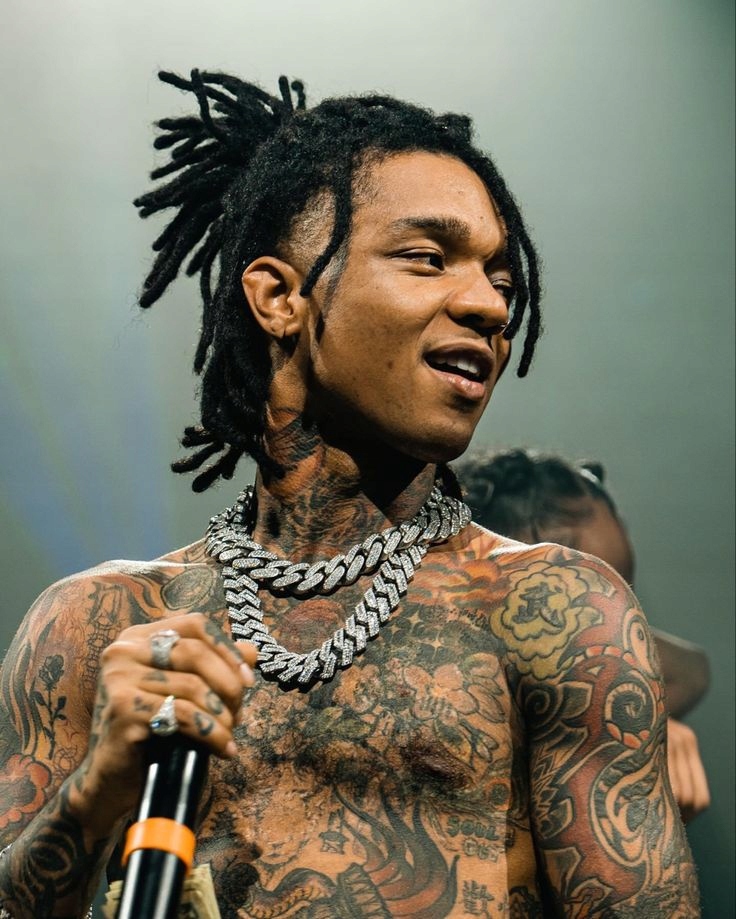
The space theme carries on beyond the chest. Around Swae Lee’s neck are designs that suggest a sphere or supernova, along with a wolf, a galaxy and a maze. They help link the upper body together instead of making every tattoo feel separate. The wolf echoes the one on his forearm, while the galaxy picks up the cosmic imagery from his chest.

A maze makes sense beside those designs. It brings in the feeling of searching, losing your way and finding a route through. Next to the stars and galaxies, it suggests the collection is just as interested in complicated paths as it is in looking up at the sky.

Other tattoos include a Buddha, a pineapple and a Japanese yen symbol. The Buddha brings a calmer spiritual image; the pineapple feels playful and welcoming, and the yen sign adds money and ambition to the mix. They don’t need to share a single meaning. The contrast shows how easily Swae Lee’s visual language shifts from serious to lighthearted.

Torches, Baphomet and SOUL’D OUT make the darker side obvious
Swae Lee face-visible portrait with chest and arm tattoos

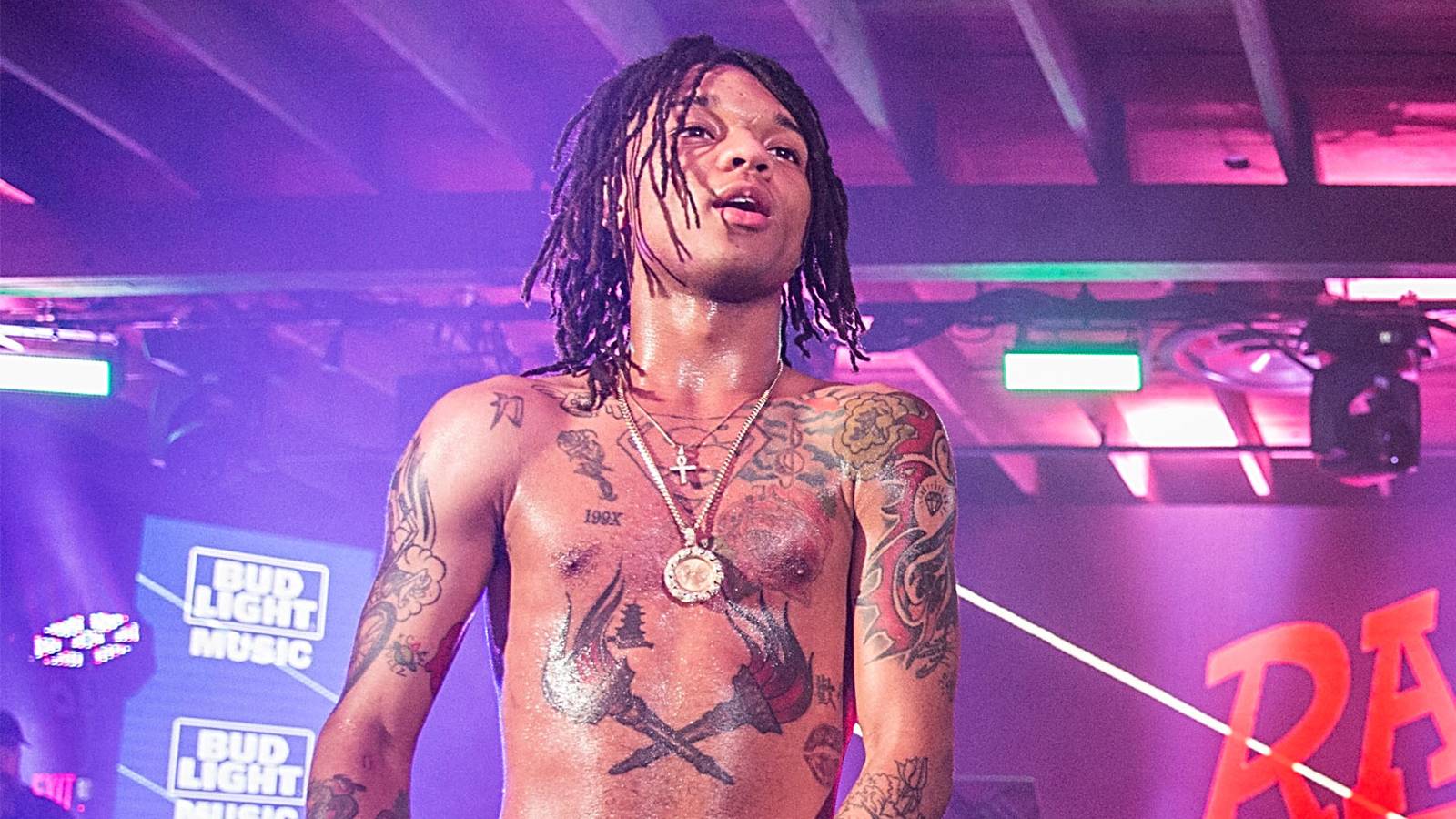
Some of the most striking designs bring together fire, darker imagery and music. Swae Lee has crossed torches, a lantern, a Baphomet or Sabbatic Goat, a tiger with a dagger, flowers and the words “SOUL’D OUT”. The lettering links his tattoos directly to his music history.

The torches and lantern continue the collection’s play between light and shadow. Depending on the design, a flame can suggest guidance, energy or destruction. The Baphomet pushes the mood in a more confrontational direction, while the tiger and dagger have a classic sense of danger and protection.

Then the flowers soften the scene again. They keep the darker pieces from blending into one note. The words can work as a music reference, a statement of identity or a marker of a period when that phrase meant something to him. The designs don’t need to match to sit together.

Hands, face and fingers hold the smaller personal marks

Not all of Swae Lee’s tattoos are big sleeve or chest pieces. There’s a rose under his right eye, a dragon on the left side of his face, a spiderweb on his hand and stars or other symbols across his fingers. Because they’re in hard-to-hide places, these smaller designs change the way the whole collection comes across.

His fingers also carry peace and heart symbols, along with names. Those marks feel more intimate than the larger fantasy imagery. A heart or a name can speak for itself, while a peace symbol can reflect something he wants to keep close. They may be small, but he sees them all the time.

One especially personal detail is “IBIN” with a diamond. IBIN refers to his middle name, giving the tattoo a family connection as well as a decorative look. It can be easy to miss in a photo, but it offers a glimpse of the more personal side of his ink.

The rose on his face makes a statement from the first impression, while the hand and finger pieces mix symbols and names. Together, they show he’s comfortable with both a visible tattoo that people notice straight away and a tiny detail that rewards a closer look.

The dreamcatcher and peacock are his favourite back piece

One of the biggest designs sits across Swae Lee’s back: a dreamcatcher with a peacock. He has described it as his favourite tattoo, and the session lasted about six hours. The colour work is still unfinished, so even though it’s already a major piece, there’s more to come.

Dreamcatchers are often associated with protection, sleep and filtering out bad energy. A peacock brings colour, display and renewal, and its feathers give an artist plenty of room to work across the back. The combination is more decorative than the wolf or meteor, but it still touches on ideas of protection and change that show up elsewhere in the collection.

The six-hour session is a reminder of the physical side of a tattoo that can look effortless in a finished photograph. Large pieces take time, patience and a willingness to sit through discomfort. With the colour still to be completed, this design has another chapter ahead.

That unfinished quality is part of what makes it feel real. A tattoo doesn’t have to be a perfectly closed story. The image can already mean something while the work is still underway.

Swae Lee’s tattoos feel collected rather than planned

Together, the tattoos form a loose visual autobiography. The wolf is about strength; the chest cover-up made room for a new idea; and the snakes and lamp point to healing and rebirth. The “IBIN” and diamond connect the ink to his middle name, while the dreamcatcher and peacock show how much space he’ll give a single design.

Space imagery runs through the collection, but it shares the stage with flowers, fire, animals, music lettering, family references, spiritual images and small symbols. The variety suggests the tattoos came at different times, rather than following one long visual plan.

Some pieces are bold, others feel private, and a few are just fun. They look lived in. Swae Lee’s arms, chest, neck, hands, face and back have become a loose record of different interests and moments. The result is casual, imaginative and a little chaotic, much like the music.

For a closer look at Swae Lee talking through his ink, watch this tattoo tour:
More musician tattoo guides

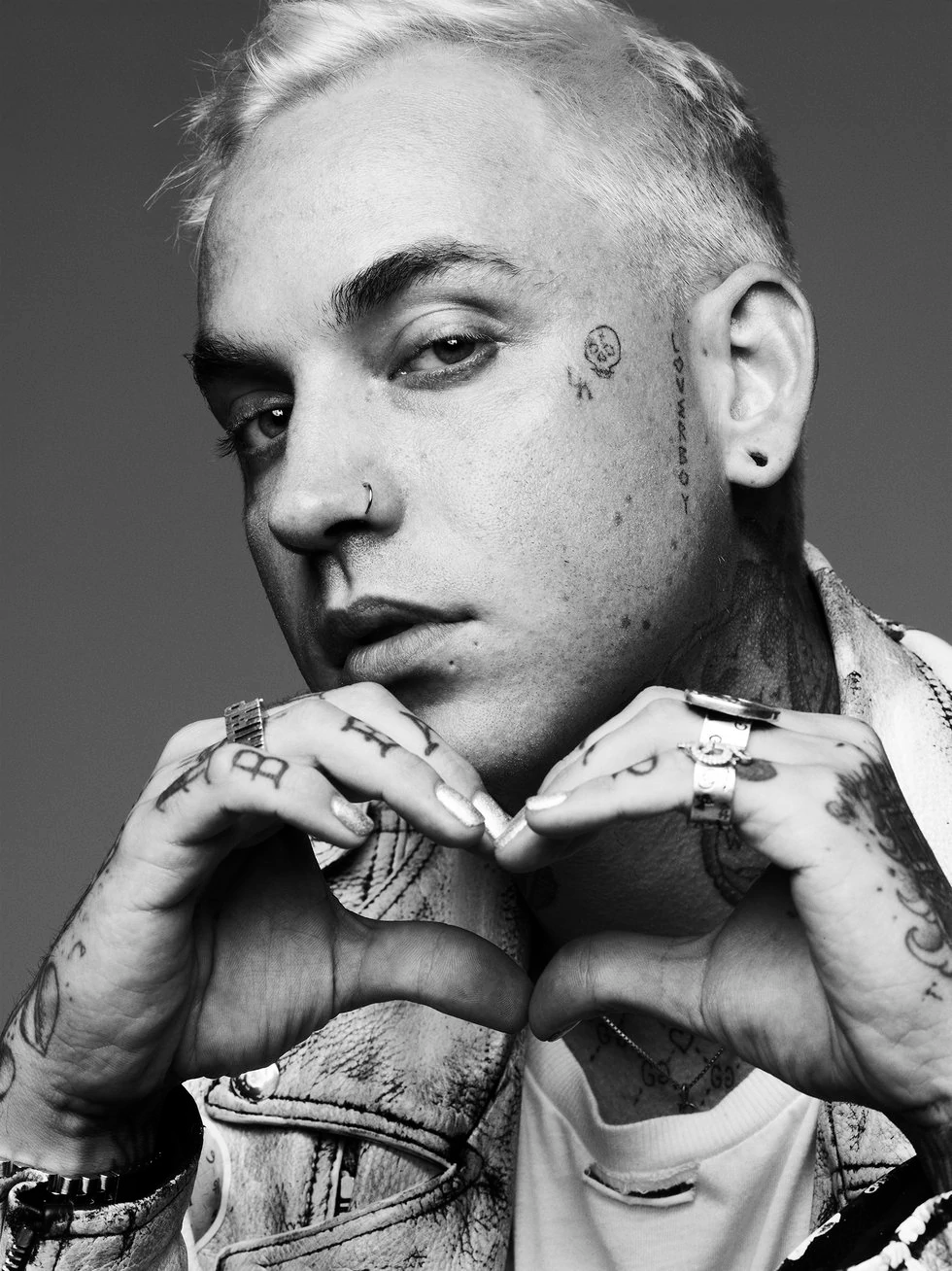
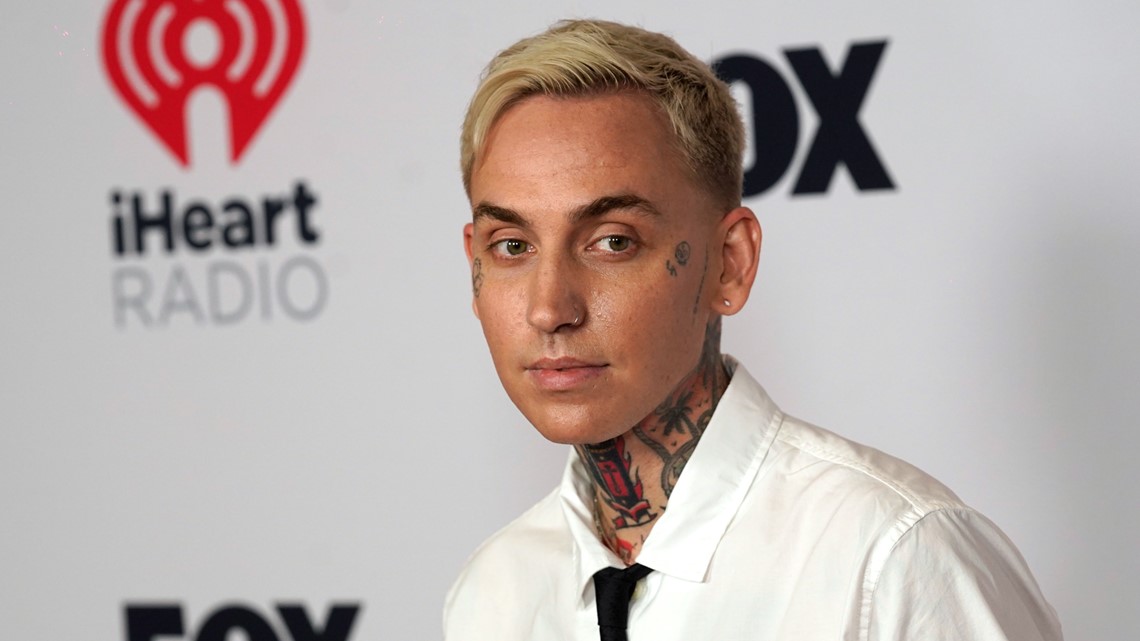
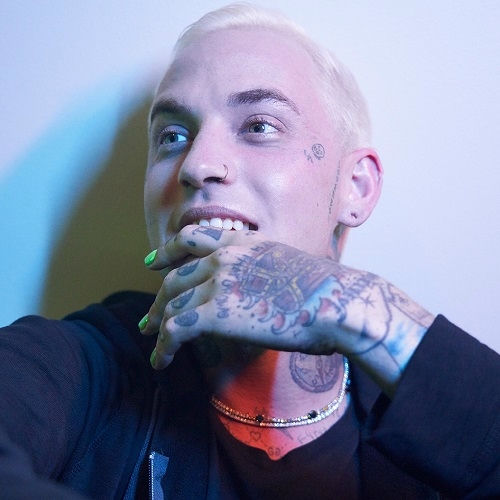
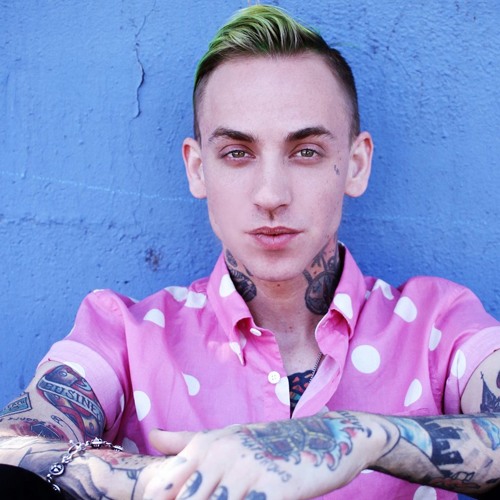
Blackbear lets his tattoos tell the story

Blackbear’s tattoos aren’t just decoration; they feel like a notebook he’s kept on his body. Music, friendships, bad decisions, private jokes and ideas he returns to all show up in the mix. Some pieces are easy to spot from the stage, while others make more sense once he explains where they came from.

His collection includes face ink, bold lettering across his chest, flowers around his neck, hand tattoos and designs tied to people in his life. He has also let friends and other artists add their work, which gives the collection a lived-in feel instead of one carefully planned style. It’s personal without asking every tattoo to carry a grand explanation.

The chest carries the biggest statements

Blackbear the chest carries the biggest statements

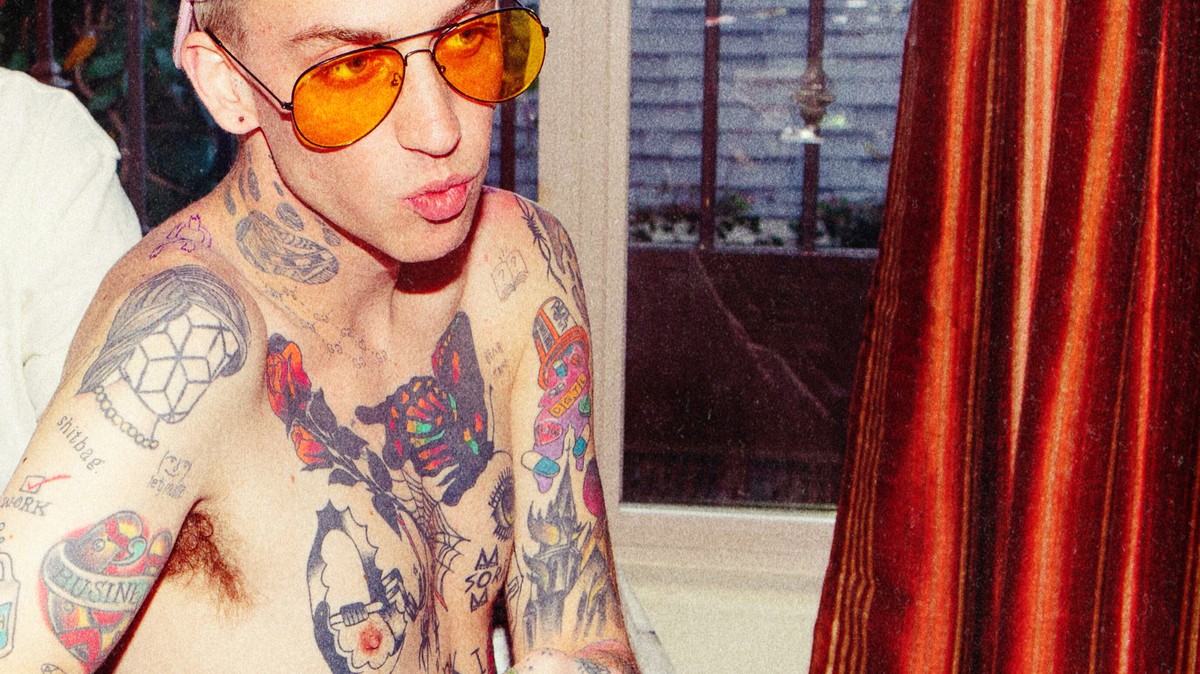
Blackbear’s chest feels like the most crowded page in that notebook. Large lettering and dark shapes sit close together, with words such as WORK, BUSINESS and “shitbag” visible in photos. They’re blunt, funny and fit an artist whose music moves between confession and attitude. It might be tempting to read the chest as one polished statement, but it looks more like ink gathered over time: one phrase could be a joke, another a reminder, another a piece of the persona he was building.

The placement is part of the effect. These tattoos shift as he moves, and look different under stage lights than in an everyday photo. A design can feel loud in one setting and almost private in another. It’s best to stick to what’s visible and avoid assigning meanings he hasn’t confirmed. The uncertainty is part of what makes the collection feel real.

His face tattoos changed the first impression

Blackbear his face tattoos changed the first impression

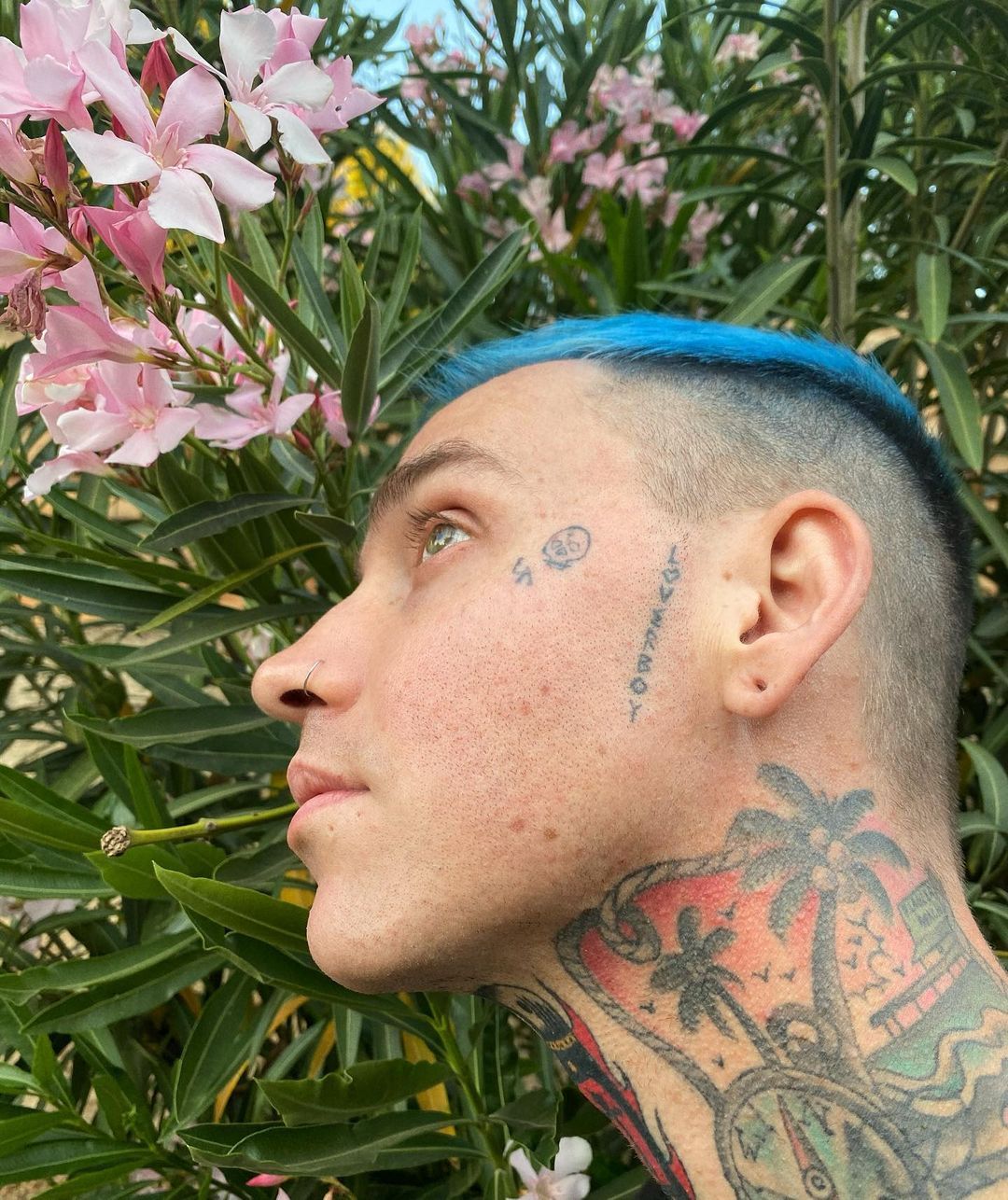
Face tattoos are hard to keep private. Small marks around Blackbear’s eyes and cheek sit alongside piercings and changing hair colours. One visible phrase has been described as sry i suck—a self-deprecating line that doesn’t take up much space. Here, the serious look of face ink meets a dry sense of humour. The marks change the first impression, while the wording keeps the mood from getting too grand.

That contrast is part of what makes the face pieces stand out. They are visible wherever he goes, but their meanings aren’t always public. In photos, the marks can read as styling; the words add a more personal, wry note without making every detail easy to interpret.

The neck pieces bring in flowers and scenery

Blackbear the neck pieces bring in flowers and scenery

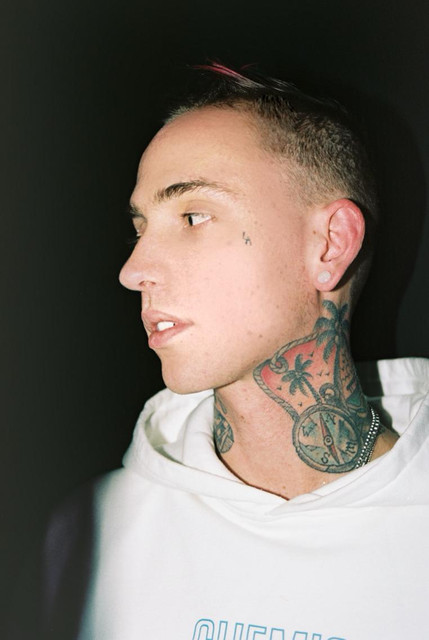
Flowers and a broader scenic design make Blackbear’s neck one of the most distinctive parts of the collection. The botanical shapes soften the heavier lettering, while the dark outlines keep the look from feeling too polished. In profile, the ink frames his face. It brings atmosphere to the neck while the words elsewhere can feel like something written on a dressing-room mirror. They don’t have to match.

The neck work also changes with the angle. From the side, it reads almost like a frame around his face; in other photos, parts disappear beneath clothes or hair. The overall look is clear, even if there’s no public explanation for every detail.

A compass tattoo points toward movement

Blackbear a compass tattoo points toward movement

A compass-style design near Blackbear’s neck brings in a familiar tattoo idea: finding direction. Its position close to his face and throat makes it part of the look people recognise first. It reads as one piece in a larger map, not necessarily as a single grand symbol. Blackbear’s career has moved through songwriting, producing, pop collaborations and darker solo work, so the image fits the broader picture, though he hasn’t publicly explained every line.

There’s no need to turn the compass into a definitive statement about his life. It’s a clear image in a prominent spot, and it sits among other pieces that have their own stories—or no public story at all.

His hands make the collection feel close-up and physical

Blackbear his hands make the collection feel close-up and physical

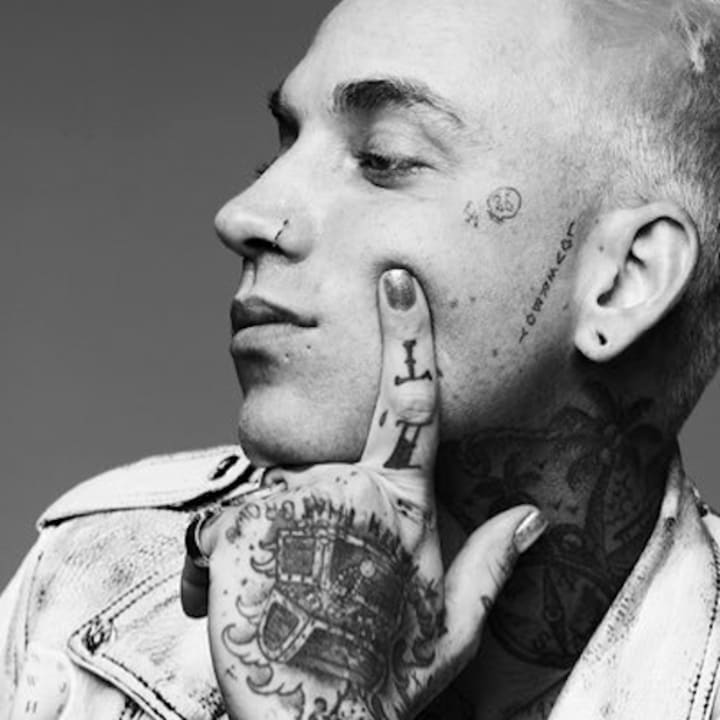
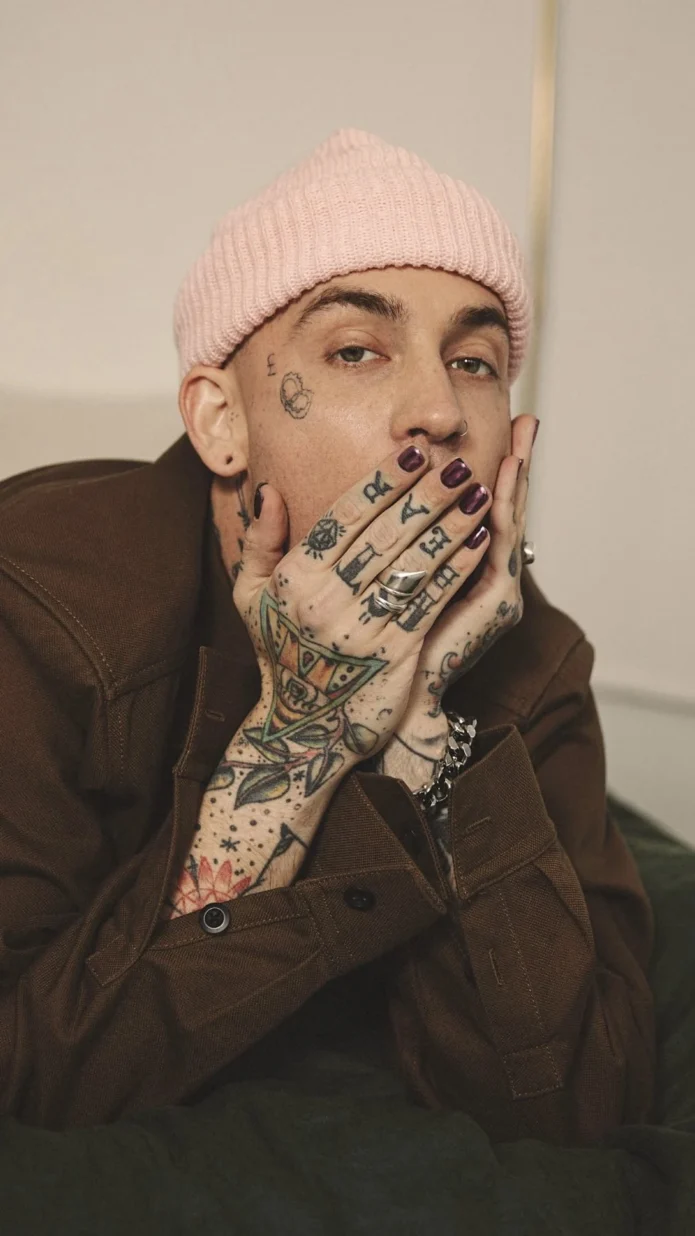
Hand tattoos are difficult to hide. Blackbear often shows his while holding a microphone, signing something or posing for a close-up. In one striking portrait, his tattooed hands form a heart, with rings and dark nail polish finishing the look. The hands draw the eye, and the softer gesture sits unexpectedly well beside the darker work on his face and chest. The collection can be sweet without turning sentimental.

These tattoos are especially visible in photos because his hands are often in the frame. The heart gesture softens the image, while the designs and rings still feel like part of his usual style. No extra backstory is needed to see the contrast.

Artists and friends are part of the story

Blackbear artists and friends are part of the story

Blackbear has talked about working with tattoo artist Kelly Scott Orr and using Photoshop to picture how designs might look on his body. He has also mentioned tattoos connected to other creative people, including a drawing by Halsey and work by Coco Capitán. The Halsey piece feels collaborative, rather than like a design picked from a catalogue. A friend’s drawing brings its own history, and that is part of what makes it meaningful.

Those connections give the collection another layer. It’s not only a record of images Blackbear chose for himself; some pieces came from people he knows and works with. The designs carry those relationships along with them.

The hand portrait shows how many layers sit together

Blackbear the hand portrait shows how many layers sit together

Close-up portraits reveal details that can disappear in a wide stage shot: marks around the fingers, darker work across the hand and smaller facial tattoos. Here, the collection starts to look dense. You might first notice one bold word on his chest, then see the smaller pieces filling the surrounding space. That doesn’t mean it was all planned at once. Tastes change, bodies change, and new tattoos find room beside older ones.

From a distance, the bolder pieces take the lead; up close, the smaller details start to add up. The hand portrait makes that layering easy to see, without telling us when each tattoo was added or what every one means.

The collection keeps changing with the person

Blackbear the collection keeps changing with the person

Blackbear’s tattoos don’t look like they came from one flash sheet. They read as a record of changing moods, friendships and work. The face and neck make the first impression; the chest and hands reveal more the longer you look. Any inventory should separate documented details from guesses. Placement is visible, but personal meaning isn’t always public. What comes through is his taste for ink with attitude, humour and, sometimes, a sincere connection.

That’s why the same design can feel very different under stage lights or in a close portrait. Tattoos move with the body and the setting, and a small mark can be easy to misread when the photo is blurry or cropped. Leaving some things unexplained feels truer than filling every gap with a theory.

Across the collection, public image and private history sit side by side. A word on the chest may be visible to an audience but have started as a private joke. A small face tattoo can look like styling until you learn it has a specific story. Photos from different years matter too: hair, clothes and lighting can hide the same piece or bring it into view. The collection is broad and layered, and small images can be misleading.

Overall, Blackbear’s ink feels casual in the best way. It isn’t trying to be a museum exhibit or follow one theme. The thread is the person wearing it: someone comfortable with sentiment, sarcasm, collaboration and a bit of visual chaos. The tattoos don’t all say the same thing, because he hasn’t been the same person in every song, year or photo.

Watch blackbear explain the ink himself

Blackbear GQ tattoo tour tattoos

For a closer look at the designs and their backstories, start with blackbear’s GQ tattoo tour. He talks through several pieces on camera, including work connected with Halsey and Coco Capitán. The video is more helpful than trying to guess from a cropped concert photo, especially when it’s easy to misread small tattoos on his face or hands. He offers context about the artists and the permanence of the work, and distinguishes tattoos that are simply visible from those with a story attached.

Wiz Khalifa built a diary out of tattoos

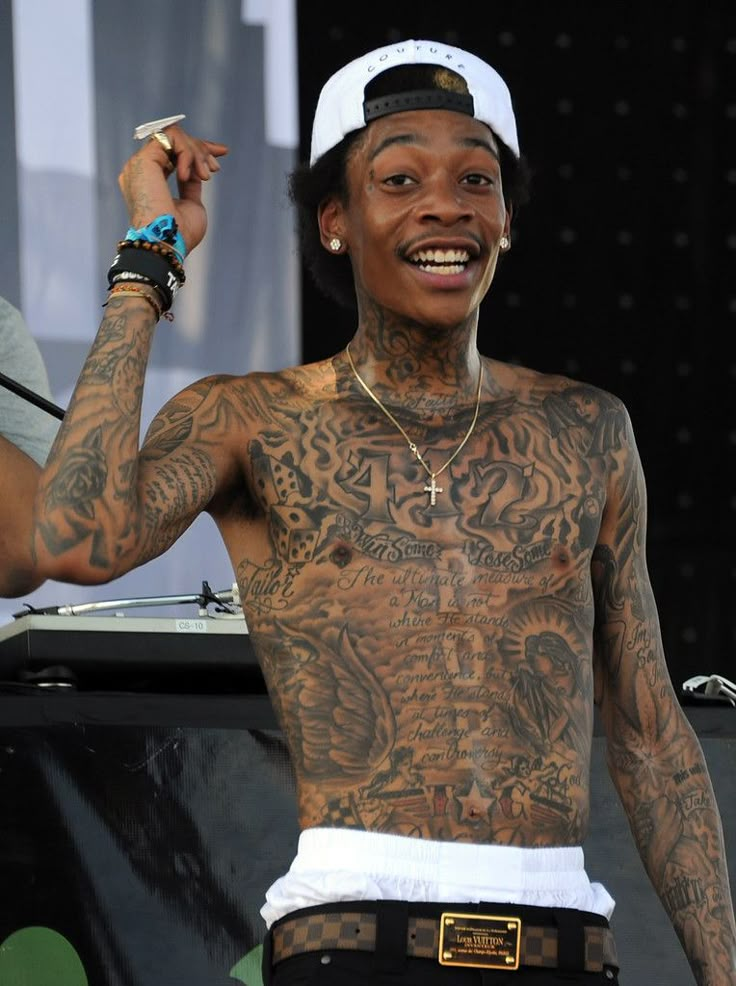
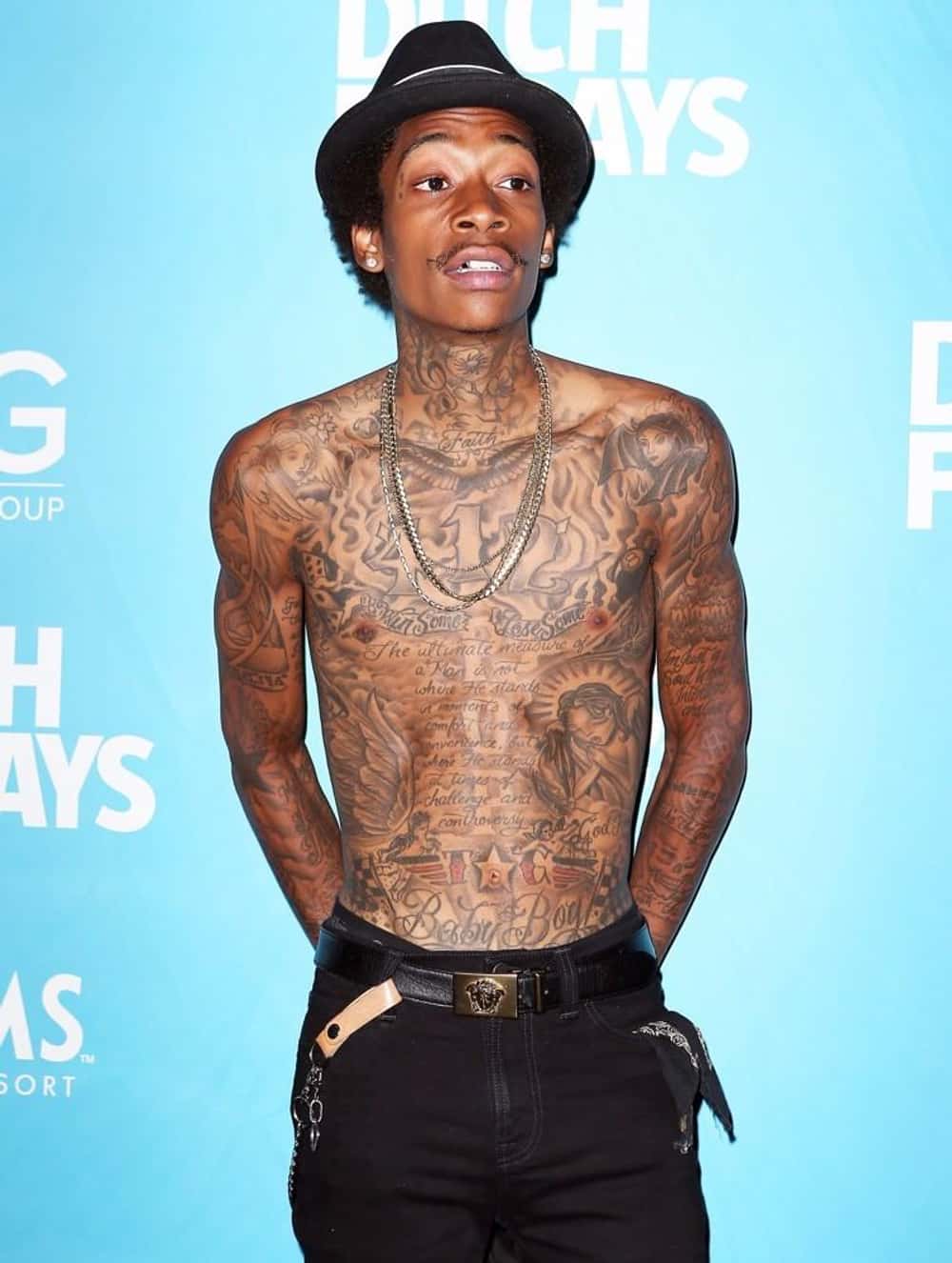
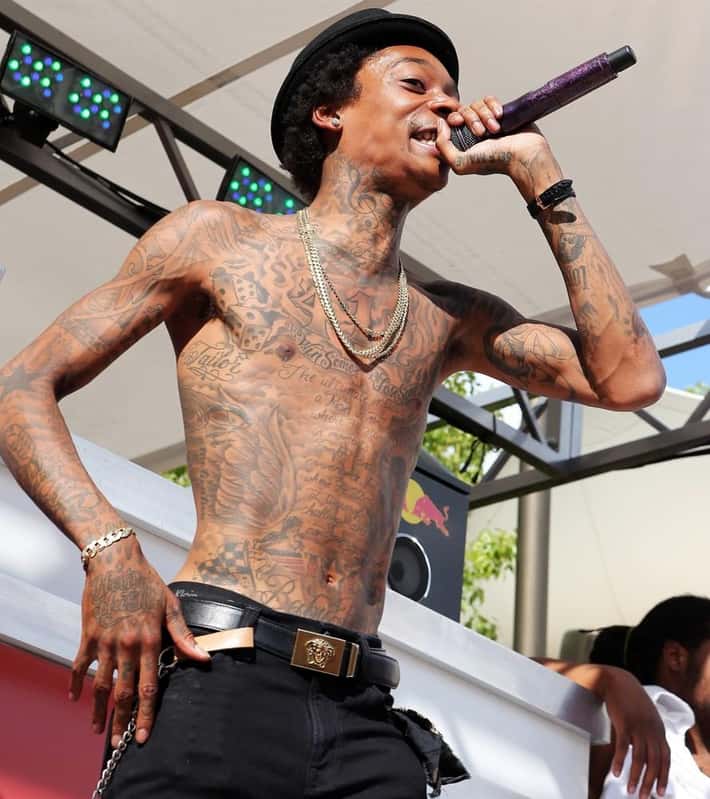
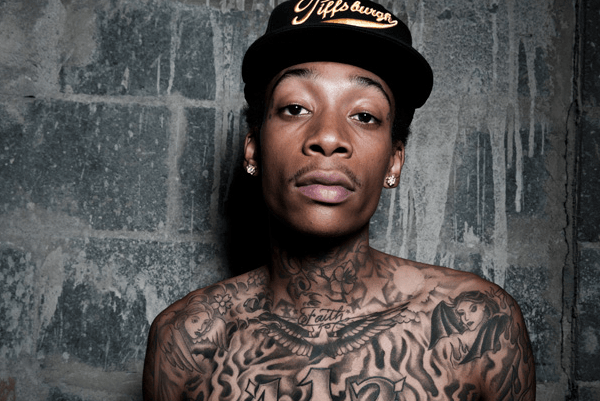
Wiz Khalifa has talked about getting covered in tattoos since he was a teenager, and he has followed through. The ink runs across his arms, chest, stomach, back, neck and face. It’s not one tidy sleeve with a single theme; it feels more like a diary that keeps gaining pages as his life changes.

A simple count doesn’t tell much of the story. Wiz has said he wants his tattoos to mean something, while still leaving room for new ideas and people. Some pieces bring him back to Pittsburgh; others connect to family, Taylor Gang, music or the name his grandfather gave him. And some are best left as images, without trying to force a grand explanation onto them.

Here’s what’s documented, with a distinction between what Wiz has explained himself and what can be identified clearly in photographs.

The first tattoo was personal before the fame arrived

Wiz Khalifa chest and arms tattoos

Wiz has given different ages for when he started getting tattoos, but the basic story is consistent: he was young, around 16, and his mother took him to get his first piece. In an interview with Interview, he said it’s on his left arm and carries the name of his first rap group. He has kept the group’s name private because it belongs to his family and early life.

That’s a revealing place to begin. The tattoo belongs to Cameron Thomaz, before the major tours, label records and face ink. It also sits on the left arm, a part of the body that later filled in around it.

Wiz has described his skin as a record of his trials and tribulations. He wants the tattoos to mean something, but he doesn’t talk as if each one needs a dramatic announcement. The first tattoo matters partly because he has kept its name private. It shows the collection began with people close to him, not as an attempt to create a public image.

Wiz on his arm came from a family name

Wiz Khalifa backstage tattoos

One of Wiz’s best-known early tattoos is his stage name, “Wiz Khalifa,” inked on his arm for his 17th birthday. The story behind it is more than a branding choice. He has said his grandfather gave him the name Khalifa. In the Muslim tradition he grew up with, he connected the word to spreading a message and making an impact on people.

“Wiz” came from wisdom and the nickname Young Wiz. He has said he was good at many things when he was younger, so the name stuck. Making it permanent at 17 was a confident decision, especially while his career was still taking shape. He wasn’t putting a logo on an established brand; he was backing a name he hoped would last.

The tattoo also shows why the collection is more thoughtful than the weed-and-party shorthand often attached to Wiz. It’s a name tattoo, but also a family tattoo and a statement of belief. It links his public identity to his grandfather, his faith and the idea that music can leave a mark on people.

The Martin Luther King Jr quote takes over his stomach

Wiz Khalifa stage lettering tattoos

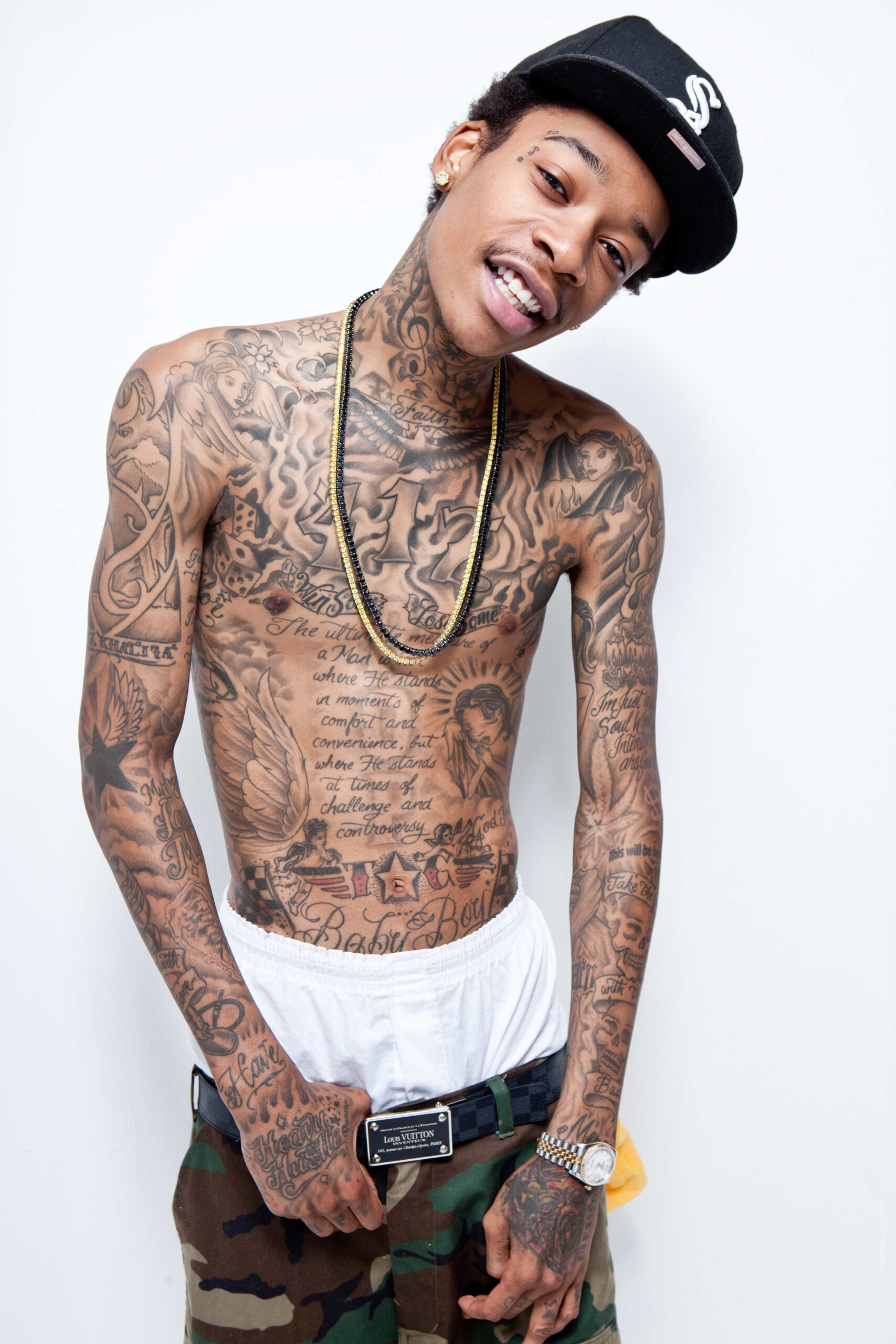
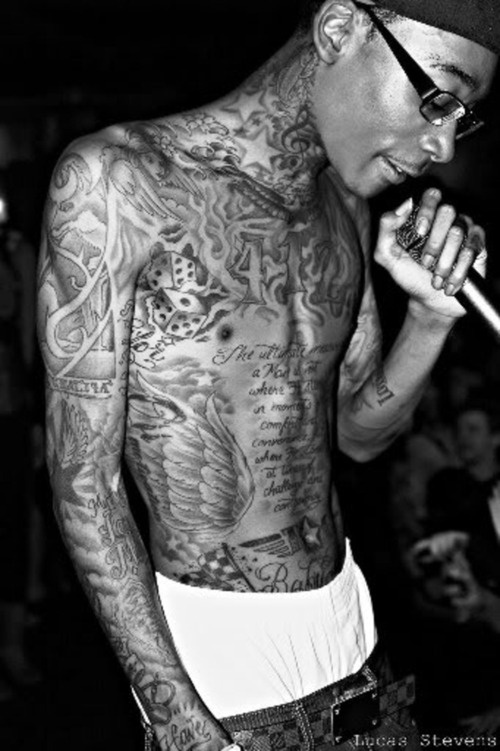
One of the clearest pieces with a documented meaning is the Martin Luther King Jr. quote across Wiz’s stomach: “The ultimate measure of a man is not where he stands in moments of comfort and convenience but where he stands at times of challenge and controversy.” BET has called it one of his most meaningful tattoos.

It’s a long quote, and it changes the shape of his torso. Instead of filling the area with a portrait or symbol, Wiz chose a sentence about character under pressure. That fits with how he has discussed his tattoos over the years: he often returns to the idea of recording what he has learned.

The quote has a different feel from the shorter lettering on his hands and arms, which can read like slogans. This one takes a moment. The stomach tattoo asks to be read slowly; its placement gives the words room to stretch across his body instead of disappearing into a small patch of skin.

His Pittsburgh roots show up in numbers and lettering

Wiz Khalifa angel chest tattoos

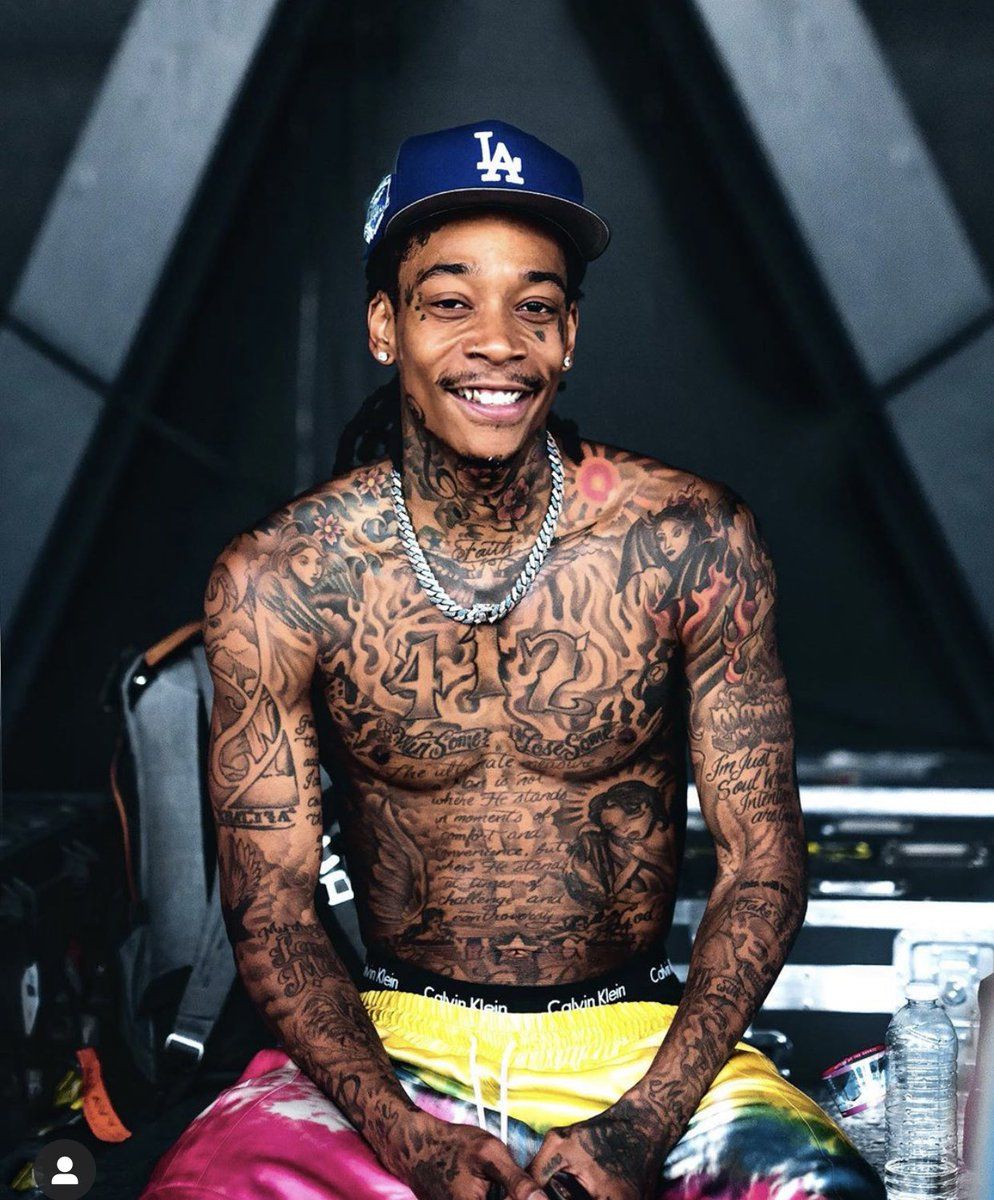
Wiz’s connection to Pittsburgh shows up in the imagery around his tattoos, especially the 412 area code reported on his chest. It points to the city that became home after his family moved around during his father’s military service.

Photos also show Pittsburgh references in his clothes, performances and the way he presents himself. An old portrait with a black Pittsburgh cap might look like it reveals a tattoo, but clothing and ink aren’t the same thing. The confirmed tattoo is the number; the broader Pittsburgh identity comes through in the rest of his public image.

A hometown marker makes sense alongside the quote and his first group tattoo. The collection isn’t only about who Wiz wants to become; it keeps a link to where he learned to make music and where people first knew his name. The city stays in the picture, even when the tattoo is small.

Taylor Gang and the family names sit close to the body

Wiz Khalifa live ink tattoos

Some of Wiz’s smaller tattoos connect to his inner circle and work. The initials “TG” have been identified as a nod to Taylor Gang, the crew and label world that became central to his career. Names tied to family and important relationships also appear around his body, including the widely reported “Bash” on the right side of his forehead, for his son Sebastian Taylor.

Older reports also mention “Baby Boy” on his stomach and “Win Some, Lose Some” across his abdomen. These pieces can be harder to date because the quality and angles of public photos vary over the years. They belong in a documented list, but shouldn’t be described as if every detail came from one official tattoo tour.

Wiz has said some tattoos include names of people he has met and people he has lost. A name or a couple of letters may look simple from a distance, while the reason behind them stays private. The collection feels crowded because there are so many relationships in it: family, music friends, collaborators and people who knew him before the fame.

His sleeves mix symbols with old school rap imagery

Wiz Khalifa Pittsburgh cap tattoos

Photographs are the easiest way to take in the variety on Wiz’s arms. Script, women, flames, stars, a microphone and other traditional-style images run together across the sleeves. Reports also identify “Heavy Hustle” on his right hand, along with phrases such as “Live Now” and “Self Made.”

There’s no need to force every piece into one meaning. “Self Made” fits his career story, while “Live Now” reads more like a reminder. The microphone connects directly to music; the flames, stars and portrait-like shapes can work as visual texture as much as autobiography. With little bare skin left on his arms, the sleeves read as collages rather than separate stickers.

Wiz has also been associated with tattoo artist Tuki Carter, who has worked on Wiz and other Taylor Gang figures. That helps explain the shared visual feel in some of the work, and points to the music and touring community around the tattoos.

The back piece and the face tattoos changed the scale

Wiz Khalifa wings and dice tattoos

A large shark on Wiz’s back is among the biggest designs reported in the collection. Back pieces are difficult to document because clothes cover them and photos rarely show them straight on, but the shark has been described often enough to include. It adds a bold image to an area that can otherwise be easy to miss.

Wiz was once known for keeping his face mostly clear, but that changed over time. Recent portraits show small tattoos around his eyes and forehead, while his neck has visible lettering such as “Faith.” Some symbols are too small to identify confidently in every photo, so it’s safer to describe the face as lightly tattooed than to invent a list of tiny designs.

The shift shows how far the original plan evolved. Wiz has said he wanted to be covered and to keep getting tattooed forever. In 2023, he told Men’s Health he had inked nearly every fun spot, with his butt as the main area left. By then, the joke wasn’t whether he had too many tattoos; it was whether any blank space was left.

Wiz treats the whole body like a living diary

Wiz Khalifa neck lettering tattoos

Wiz’s tattoos can look both planned and spontaneous because the unifying idea isn’t a single style; it’s continuity. The first group’s name stays on his arm. His grandfather’s word became a stage name. Pittsburgh appears in the area code and his clothes. The King quote crosses his stomach. Taylor Gang initials and family names fill smaller spaces, while sleeves grow around them with symbols, flames, stars, music references and portraits.

That’s a lot of ink, but Wiz hasn’t described it as a costume. He talks about the pieces as meaningful, even when he keeps the private details to himself. The collection can hold a serious quote and a simple slogan without one cancelling out the other.

The best way to read Wiz Khalifa’s tattoos is as an ongoing record, not a finished design. He keeps adding chapters instead of closing the book. Photos show how much ground the ink covers; interviews explain the pieces that matter most to him. The rest can stay a little mysterious, which may be how he likes it.

Watch the tattoo artists behind Wiz’s ink

Wiz has worked with tattoo artists in the Taylor Gang orbit, including Tuki Carter. The interview below focuses on Tuki’s work and the tattoos he did for Wiz, adding context without pretending to be a complete inventory.

More musician tattoo guides

Nicolas McCoppin treats his tattoos like a second album

Nicolas McCoppin talks about his tattoos as a project still in progress, more like an album being made than a finished collection on a wall. The New York pop artist has 37 tattoos, and he sees the patchwork as another creative outlet: personal pieces, visual ideas and small details that make sense when you look at them together.

That approach makes his ink fun to follow. There’s no single sleeve or theme running from shoulder to wrist. Instead, he has small hearts, hand tattoos, music references, cartoon characters, fine-line drawings and darker blackwork. Some mark an era in his music; others were simply designs he wanted to keep. The overall effect is more scrapbook than matching set.

In a detailed tattoo interview with V13, McCoppin discussed where he began, how his style changed and why his body art stays connected to his music. Here’s what’s documented about the designs that can be clearly identified.

His first tattoos started with a rose, a heart and a moon

Nicolas McCoppin studio portrait showing arm and hand tattoos

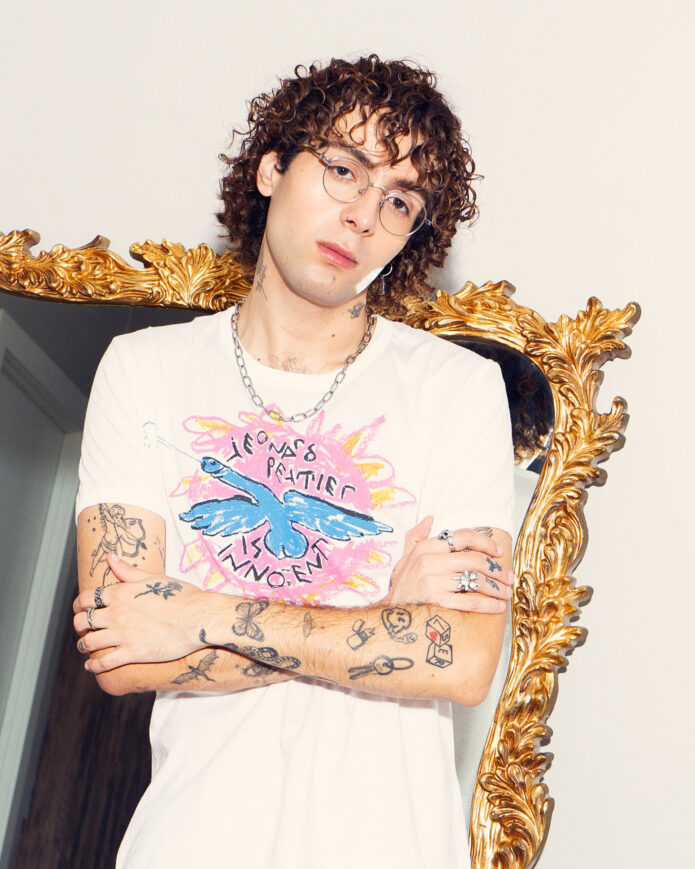
McCoppin got his first three tattoos at 18, all on his hands: a rose, a heart, and a moon with stars. He says they were outlines, which fits the open, light look of much of his early work. The heart meant the most to him. Before making it permanent, he tried the same design in henna on the same finger while he was still in high school.

That little test says something about how he thinks about tattoos. He wasn’t picking random flash just to have ink; he wanted to see if the image would still feel right after the novelty wore off. It did. He still talks about those first hand pieces with affection, and the heart became a quiet thread running through the rest of the collection.

The placement helps explain why his tattoos show up so clearly in photographs. Even in a T-shirt or sitting in a studio, his fingers, hands and wrists are on display. These aren’t hidden away; they’re part of how he gestures, performs and moves through a room.

The tiny hearts became an ongoing game

Nicolas McCoppin forearm tattoos including eye and lettering designs

The heart from his first session didn’t stay on its own. McCoppin told V13 he now has more than 70 tiny hearts tucked into different tattoos. They aren’t necessarily 70 separate appointments or matching little stamps; they recur within larger designs wherever they work visually.

He describes the hearts as a kind of game between him and his artist. That takes the collection out of the solemn territory of the usual celebrity tattoo story. Some hearts are personal; others may be there because the shape has become part of his own visual language. Once you know to look for them, they turn into a small scavenger hunt across his arms and hands.

The repeated shape also gives a rhythm to a collection full of one-off images and music references. The hearts are the closest thing the patchwork has to a chorus. Since they grew out of his first hand tattoo, they make the collection feel as if it developed naturally instead of being planned from the start.

Music is drawn directly onto his skin

Nicolas McCoppin hand and chest tattoos in a close portrait

McCoppin likes dedicating tattoos to music. One clear example is the cover art for Loverboy, his first project, which he had reproduced on his right arm. The release became something he could carry on his skin, and he used the tattoo reveal to tease the project’s name before the music came out.

That’s a more personal connection to an album than putting the title on merchandise. The design becomes part of his own timeline; in a photo, it’s both an image and a piece of career history. The right arm is a fitting place for something he wants people to see when he’s performing or posing.

He kept the tradition going. In the interview, McCoppin says he would tattoo a new record onto himself before its release. At the time, he had another album on the way and was still deciding what the next piece would look like. Since he didn’t describe the finished design, it’s best to leave that chapter open rather than guess.

The Dangerous Woman character sits on his chest

Nicolas McCoppin full arm tattoo coverage with hand designs

One of McCoppin’s more specific pop-culture pieces is a cartoon version of Ariana Grande’s Dangerous Woman character on his chest. Grande is one of his favourite people, so it’s a personal reference, not just a random celebrity portrait. The character connects to Grande’s appearance in a Final Fantasy game in 2017, though McCoppin says he has never played it.

It’s a good example of why a full tattoo guide needs more than a quick image search. A photo can show a cartoon figure, but it can’t tell you why it’s there. Here, the meaning comes from McCoppin’s admiration for Grande and his liking for the character’s look. It’s playful, a little niche and typical of how he turns pop imagery into something personal.

The chest gives the character a more deliberate spot than a small hand or wrist mark. It has a central place in the patchwork even as the rest of the collection stays mixed. It may look like a fan tattoo, but McCoppin talks about it with the same care as his music-related pieces.

McCoppin describes his style as a mix of blackwork and fine line. For years he mostly chose fine-line designs; a first blackwork piece with Nico Delgrosso shifted the balance. The lighter outlines let the patchwork breathe, while blackwork adds weight. Since 2020, he has worked exclusively with Nico Delgrosso in Brooklyn, and says the artist takes his ideas and elevates them. It feels less like ordering a design and more like building a visual record together.

The arms and hands carry most of the visible map

Nicolas McCoppin reclining portrait showing both arm tattoos

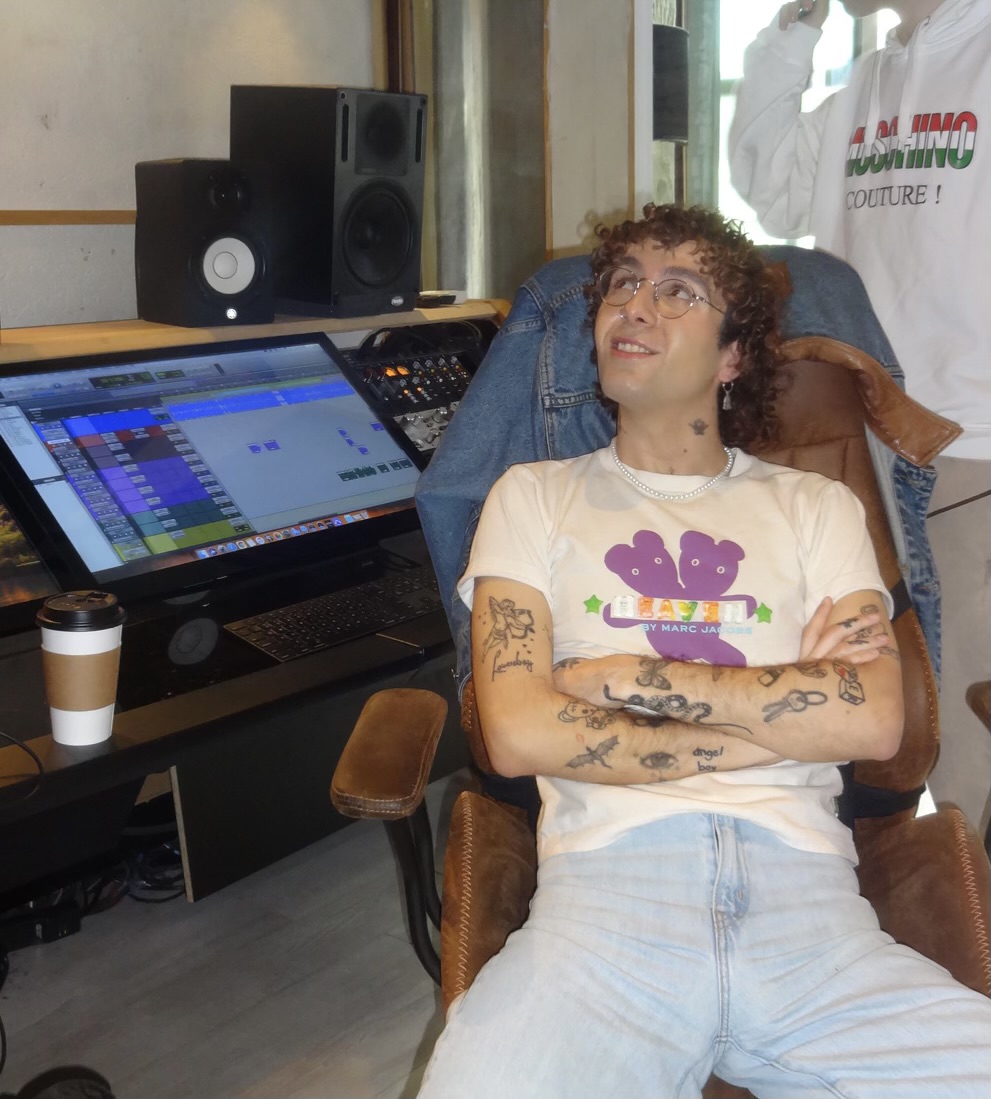
In the available portraits, the arms and hands are the easiest places to follow the collection. Outlines, small symbols, lettering, hearts, figures and heavier patches appear on both sides. Close-ups show how the pieces sit beside one another instead of merging into a single sleeve. Some areas are busy; others leave enough bare skin for each design to stand out.

The hands remain important because they hold the earliest tattoos: the rose, heart and moon with stars. The forearms add later layers, including music-related work and the darker style he adopted over time. His neck is tattooed too, and he has said it and his chest were the most painful places to work on. That gives the placement choices a physical side: the patchwork is shaped by how each session felt, not just the finished look.

McCoppin hasn’t covered anything up so far. He likes the tattoos he has, with one possible exception: a design from a $50 flash spot in Brooklyn that healed blown out. Even then, he talks about it with humour instead of regret. The collection can include polished ideas, spur-of-the-moment choices and imperfect results without losing its personality.

What the collection says about Nicolas McCoppin

It would be easy to turn 37 tattoos into a list of objects, but the more interesting story is how McCoppin uses them. His body art holds career milestones, favourite characters, recurring hearts and experiments he wants to keep close. It also records the shift from fine-line work toward blackwork and his long-running partnership with Nico Delgrosso.

Some details are clear: the first three hand tattoos, the Loverboy cover art on his right arm, the Dangerous Woman character on his chest, the 37-tattoo count and all those tiny hearts. Other parts remain less specific. Not every mark has a published explanation, and a photo alone doesn’t justify inventing one.
That restraint fits McCoppin’s own description of the collection as an art project. Some pieces are deeply personal; others are there because they look good or connect to a song or album. Together, they form a visual diary that can keep changing as the music does.

His tattoos don’t look like a finished identity. It feels as if the next track is always waiting.

Watch Nicolas McCoppin talk about his music and creative life

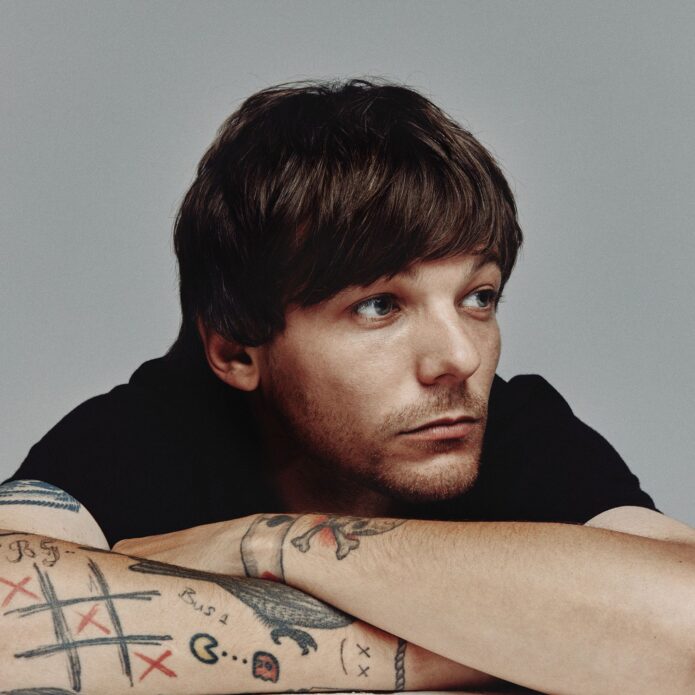
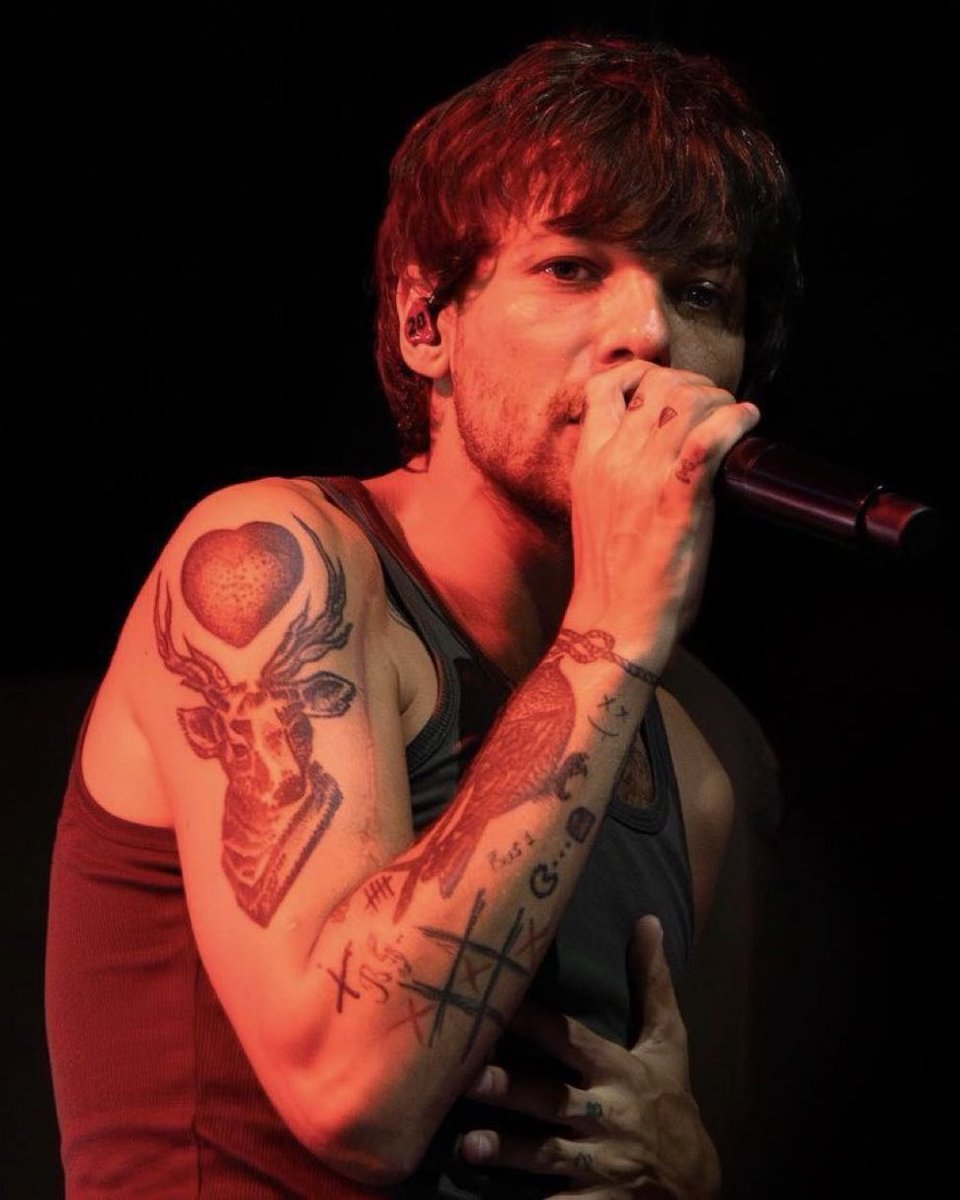
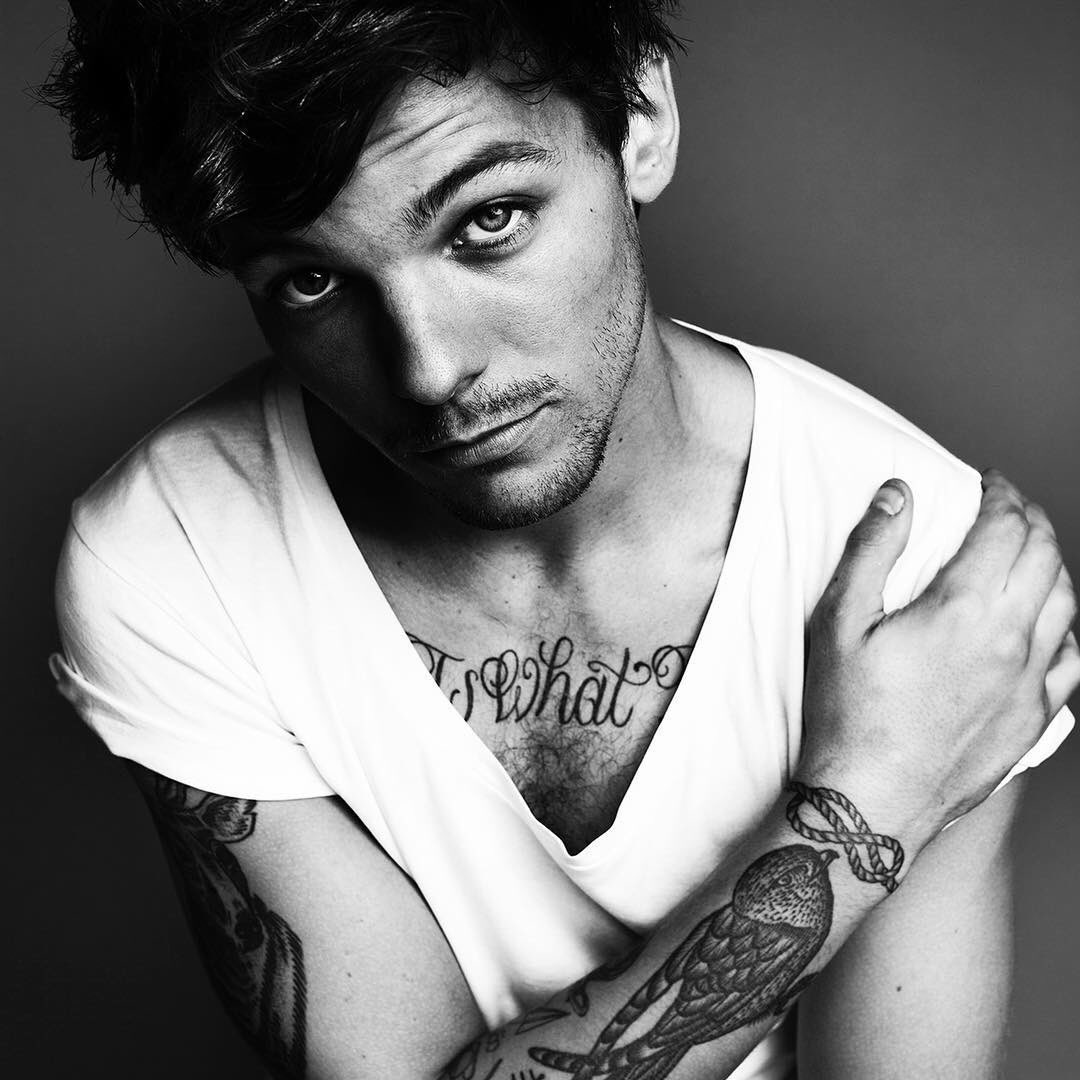
Louis Tomlinson’s tattoos grew with the music

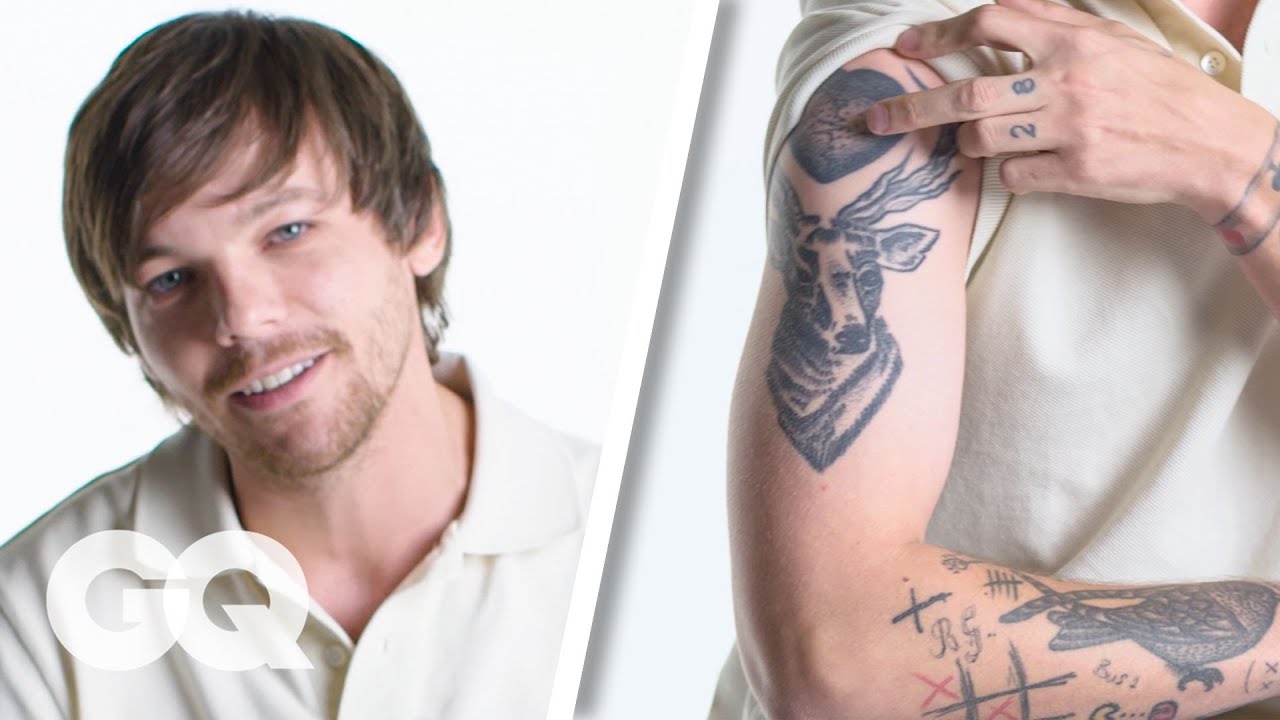
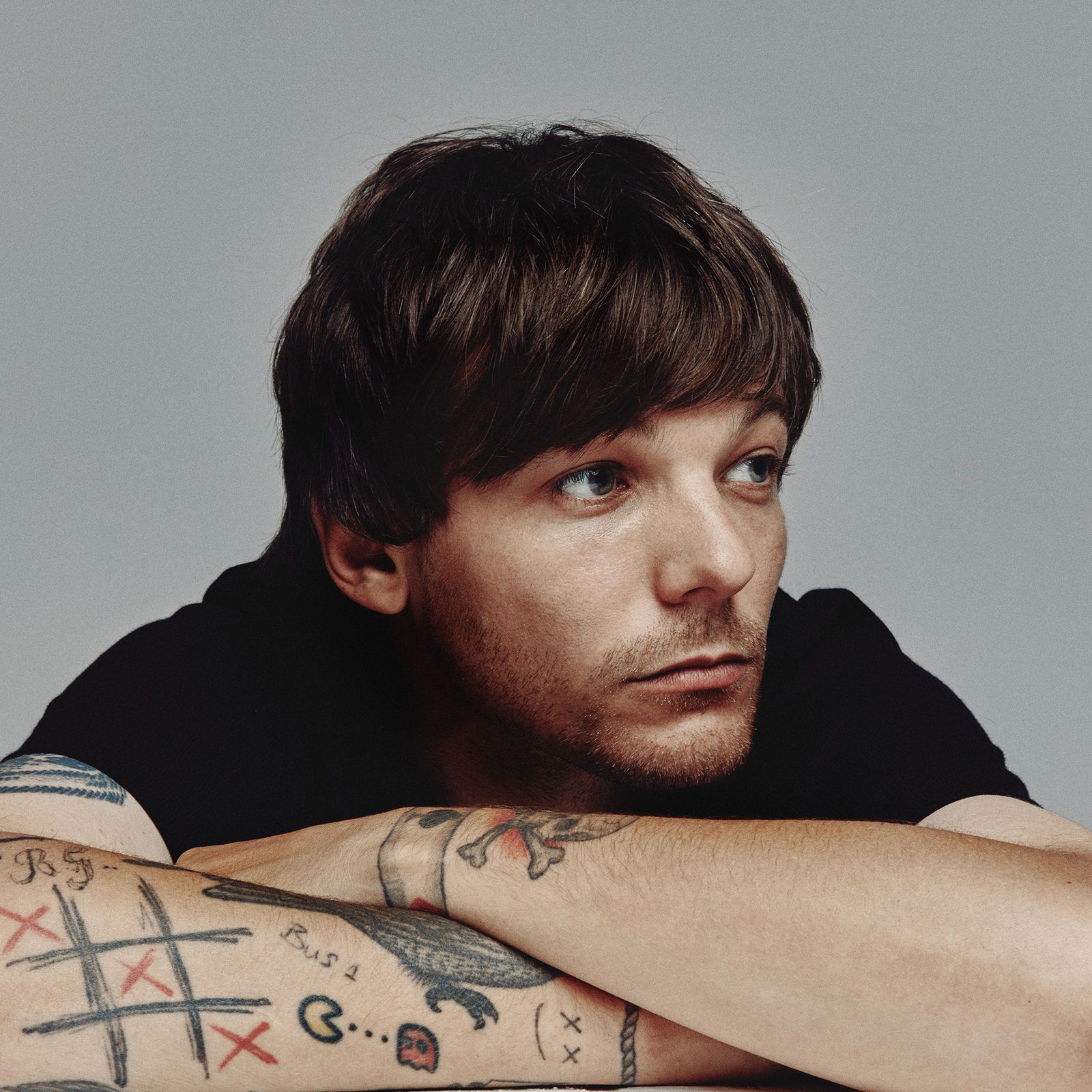
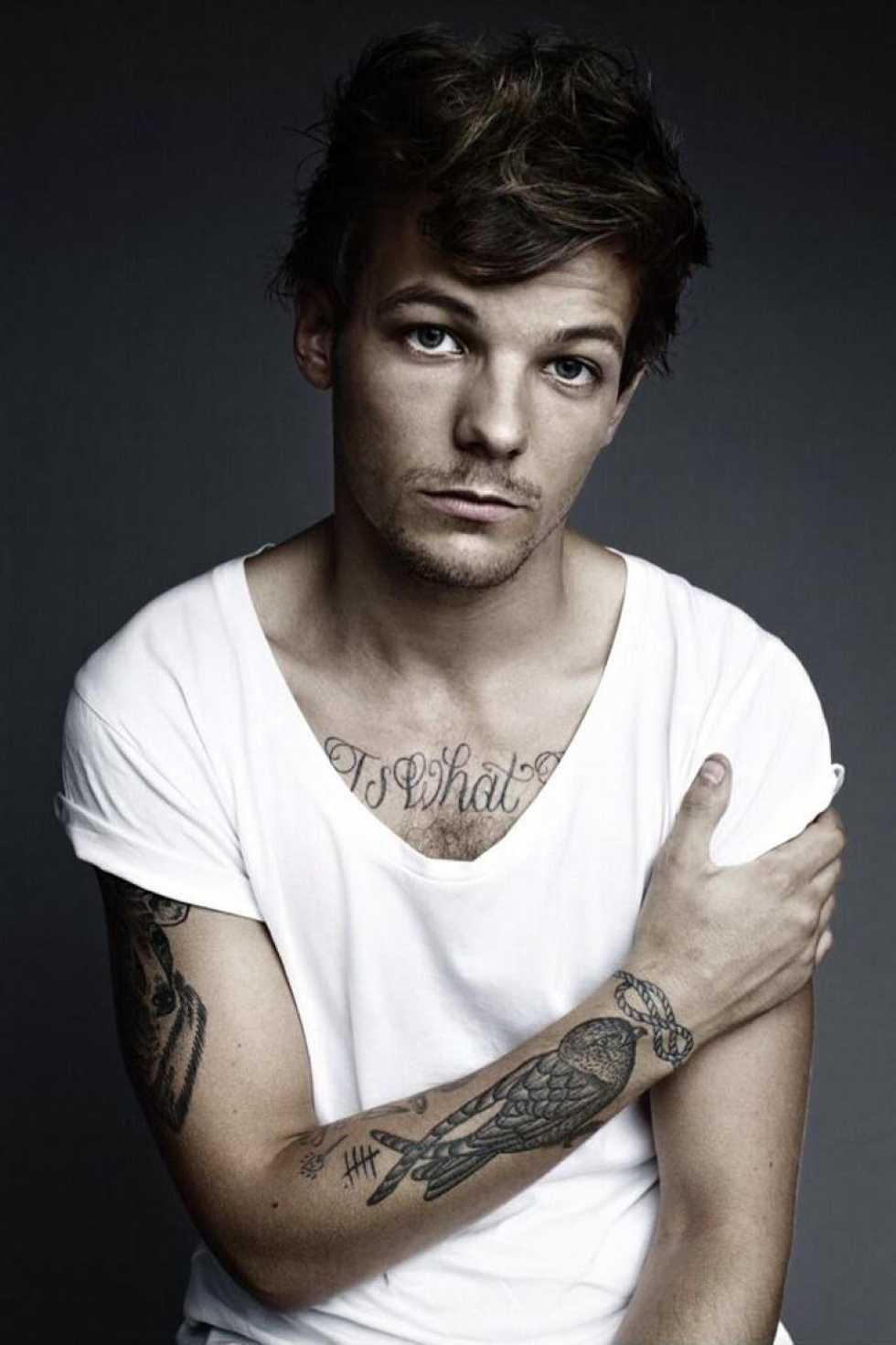
Louis Tomlinson’s tattoos don’t look like a perfectly matched set, and that’s part of their appeal. They came together in different places and at different points in his life: some connect to One Direction, others to home and family, and a few were chosen simply because they seemed fun. The result feels lived in, not designed for one big reveal.
In his GQ tattoo tour, Louis walks through the collection with the dry humour he brings to interviews. He’ll talk about the sentimental pieces, but he’s just as ready to admit when one came from a silly idea, a late night or a decision that made sense at the time. That mix of sincerity and self-awareness is the key to his ink.

The screws and The Rogue keep him grounded

Louis Tomlinson The Rogue ankle tattoo

One of Louis’s earliest documented ideas sits across his ankles. He has a tiny screw on the inside of each ankle, a design shared by the One Direction members. The explanation is simple: the screws are there to keep the group grounded, even as their careers became much bigger than anyone expected.

Above the ankles, The Rogue is written on his legs. Louis has said the phrase refers to a school performance group he belonged to before One Direction. It nods to the five boys who performed together in assemblies, preserving a version of his life from before the stadiums and screaming crowds.

The placement gives the message a private feel. An ankle tattoo isn’t usually the first thing anyone sees, which suits a design about staying connected to an earlier life. It’s a small reminder tucked below his clothes, not a declaration across his chest. Together, the screws and The Rogue make a quiet opening chapter in the collection.

The stag and heart mark his right arm

Louis Tomlinson stag heart tattoo

On Louis’s right upper arm, a large stag sits beneath a heart that originally held a pair of earphones. The heart began as a visual take on listening to your heart, while the stag gives the piece a bolder outline. The design has changed over time, so older and newer photos can look different; it’s useful to check when each image was taken.

The stag is one of the easiest pieces to recognise because its size makes it stand out among the smaller doodles. It also shows why Louis’s tattoos don’t read as one continuous sleeve. Separate images, symbols and lettering overlap to make the arm feel busy and personal.

Louis has always had a playful way of using symbols. A heart with headphones is a joke and a statement at once: it points to music without needing a microphone or lyric, and fits the period when almost every part of his life revolved around the band. The meaning is direct, but the drawing doesn’t take itself too seriously.

It Is What It Is sits across the chest

Louis Tomlinson chest quote tattoo

It Is What It Is runs across Louis’s chest. It’s a familiar phrase, but on him it reads as a compact bit of attitude. Depending on the day, it can sound resigned, practical or quietly stubborn—which may be why it has remained useful as his career has changed.

On the left side of his chest is 78, which Louis has connected to his grandparents’ house number. The simple digits carry a warm family meaning; they’re not a lucky number or football reference. They point back to a place and to people he has spoken about with real affection.

The chest is more exposed than the ankles, so these tattoos are easier to spot in photos and on stage. They sit near each other without becoming one picture: the phrase gives his upper body a clear line of text, while 78 is a private detail fans may miss unless they know its story.

Far Away is a small title with a big feeling

Louis Tomlinson bird arm tattoo

Far Away is tattooed on Louis’s right bicep. He has said the phrase is about leaving family and friends behind when One Direction took him around the world. Being away from home, he explained, didn’t make those people any less a part of him.

It’s a very Louis kind of tattoo: simple to read, with a more complicated feeling underneath. Touring brought the opportunity and success he wanted, but it also meant missing ordinary days at home. The lettering holds both sides of that experience without trying to smooth them out.

It also fits with the other pieces. The screws are about staying grounded, 78 points back to family, and Far Away marks the cost of leaving. Taken together, they show a musician who has spent years moving between home and the road, using tattoos to keep both places close.

The spider web, bomb and match live on the inner arm

Louis Tomlinson GQ tattoo tour showing his arm tattoos

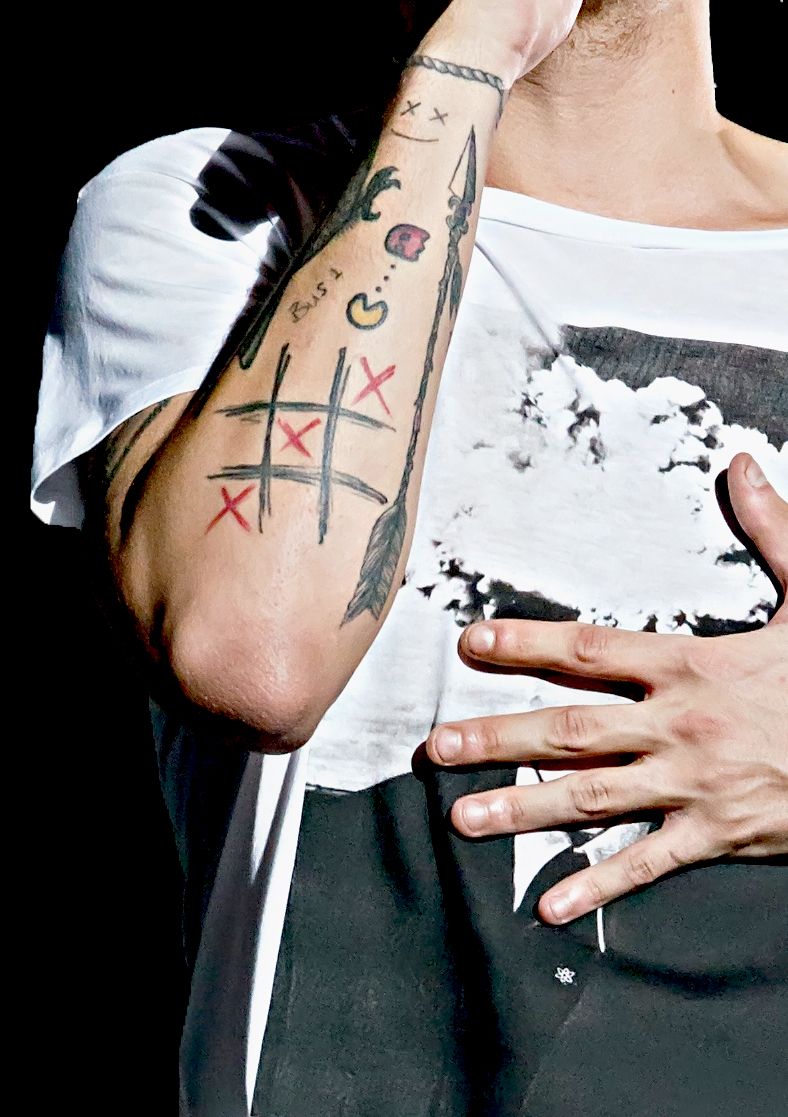
Louis’s inner arm has a cluster of small illustrations: a spider web, a bomb and a lit match. The web stands out because it seems to shoot outward like a projectile. Louis has linked the image to his love of Spider-Man, giving it a comic-book edge instead of making it a simple sign of danger.

The bomb and match add a few more visual jokes. They’re the kind of drawings you can enjoy for their shape before asking for a serious explanation. Treating every tattoo as a deep confession would miss that point; some are simply fun images that work well beside each other.

Photos from different years and angles help here. An inner-arm tattoo can disappear when Louis turns his wrist or bends his elbow, and it may look darker in a close portrait than under concert lights. You need a few clear views to get a sense of the sleeve; it isn’t a flat poster.

The skateboard, horseshoe and compass point toward his life before fame

Louis Tomlinson GQ tattoo tour showing his arm tattoos

There’s a stick figure skateboarding on the inside of Louis’s arm. He has described skateboarding as one of his hidden talents, so it’s a small nod to something he enjoyed away from the more obvious music story. Above it is a horseshoe tied to the mascot of a Doncaster football team that Louis once owned and supported.

The horseshoe is easy to misread as a general symbol of luck, but Louis’s explanation is more specific. It belongs to a football memory and the place he came from, which gives the shape more weight than a generic lucky charm.

A compass and paper airplane add another note of travel. One suggests direction; the other, movement and a life spent touring. Neither needs a definitive meaning forced onto it. They sit naturally beside the other tattoos because Louis’s collection returns to roads, distance, home and the places music has taken him.

The arm ends up feeling like a loose timeline: designs from school, references to Doncaster, images connected to music and reminders of the One Direction years. It has no dates printed beside each piece, but the ideas build up the way memories do. The old doodles remain even as newer work gets bigger.

The bird flock and camera capture the One Direction years

Louis Tomlinson 28 chest tattoo

Louis has a flock of birds on his arm to represent the five members of One Direction. The image reflects the group’s sense of family and teamwork, making it more affectionate than a standard band logo. It holds on to the people around him during the years that changed all of their lives.

He also has a camera tattoo connected to the constant photography that came with One Direction. Louis has said cameras were always around, documenting the group’s movements and making privacy difficult. There’s a little irony in turning that unavoidable part of fame into something he chose to carry.

The chest number 78 and the arm designs tell related stories in different ways. One points to his grandparents, another to his bandmates, and the camera acknowledges the attention that followed them. They aren’t interchangeable, but together they show how much of his early ink grew out of people, places and the speed of the band’s rise.

What makes Louis’s collection worth following is how it holds different moods at once. There are tender pieces about family and friendship, practical reminders of being away from home, and funny little drawings he seems to have chosen simply because he liked them. A tattoo can matter without being solemn.

The designs also show how a person changes. The boy who chose small symbols tied to school, football and One Direction is not exactly the same person touring as a solo artist. The older pieces remain, but now they sit inside a wider story. That’s what makes the collection feel honest instead of carefully branded.

Louis has dozens of tattoos, but not every small design has a confirmed explanation. The responsible way to describe them is to separate what he has said from what a photo merely shows. The stag, Far Away, 78, the screws, The Rogue, the bird flock, camera, compass, skateboarder, horseshoe, spider web, bomb and match are all documented. The rest is better described carefully than dressed up with invented meaning.

His ink looks like a scrapbook grown on skin. It carries home, bandmates, travel, football, music and a willingness to make fun of himself. The collection doesn’t pretend one artist designed every inch; it looks as if Louis kept adding chapters whenever life gave him a reason.

Watch Louis explain his tattoos

In GQ’s tattoo tour, Louis talks through the collection himself, including the first pieces, the compass, the skateboarder and the birds.

More musician tattoo guides

Tove Lo’s tattoos carry a whole career

Tove Lo’s tattoos are a bit like her songs: direct, funny, sometimes provocative and often more personal than they first seem. The Swedish singer’s small but recognisable collection covers her chest, arms and hand. Some designs mark a particular point in her career; others go back to childhood, her first band or an animal she has loved since she was young.

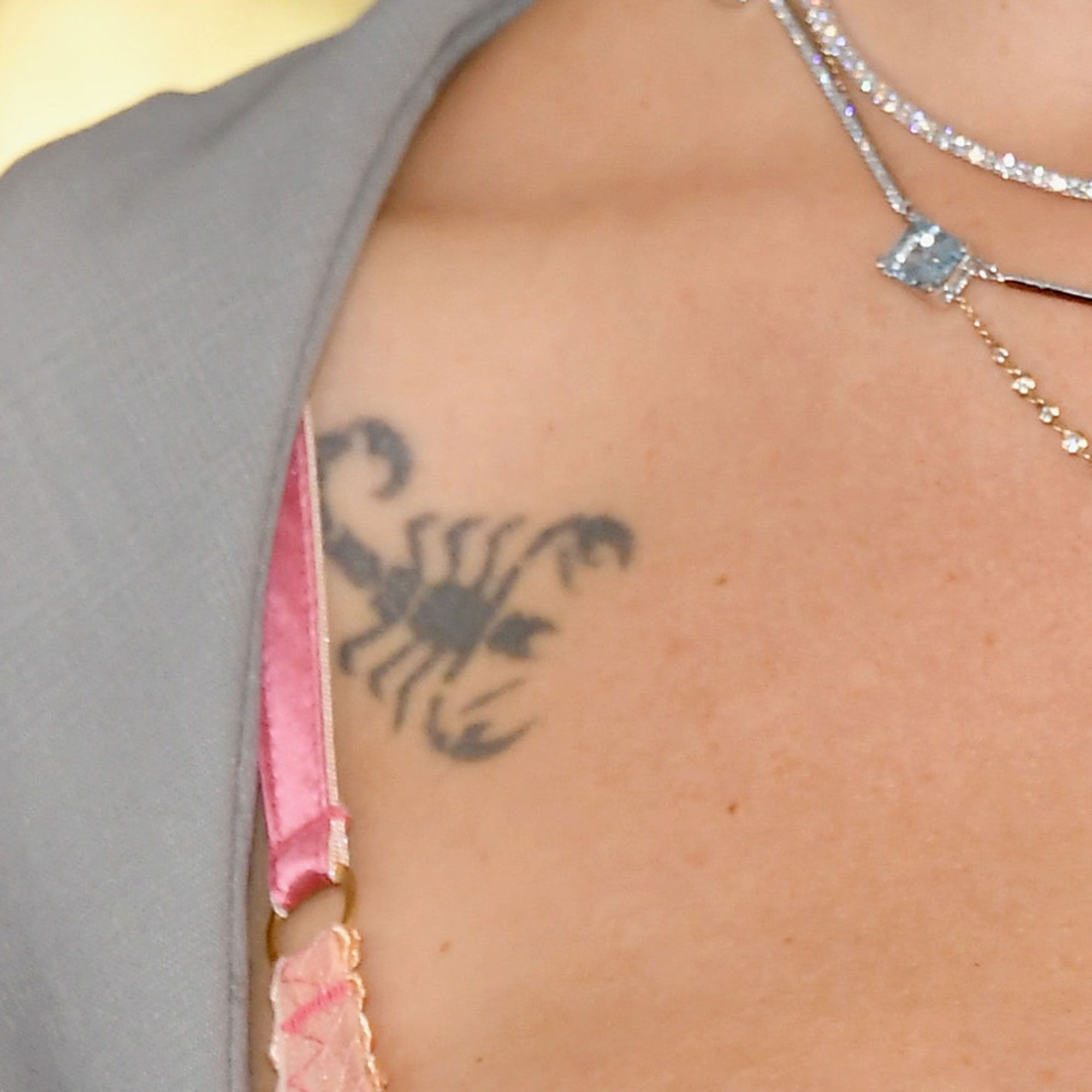
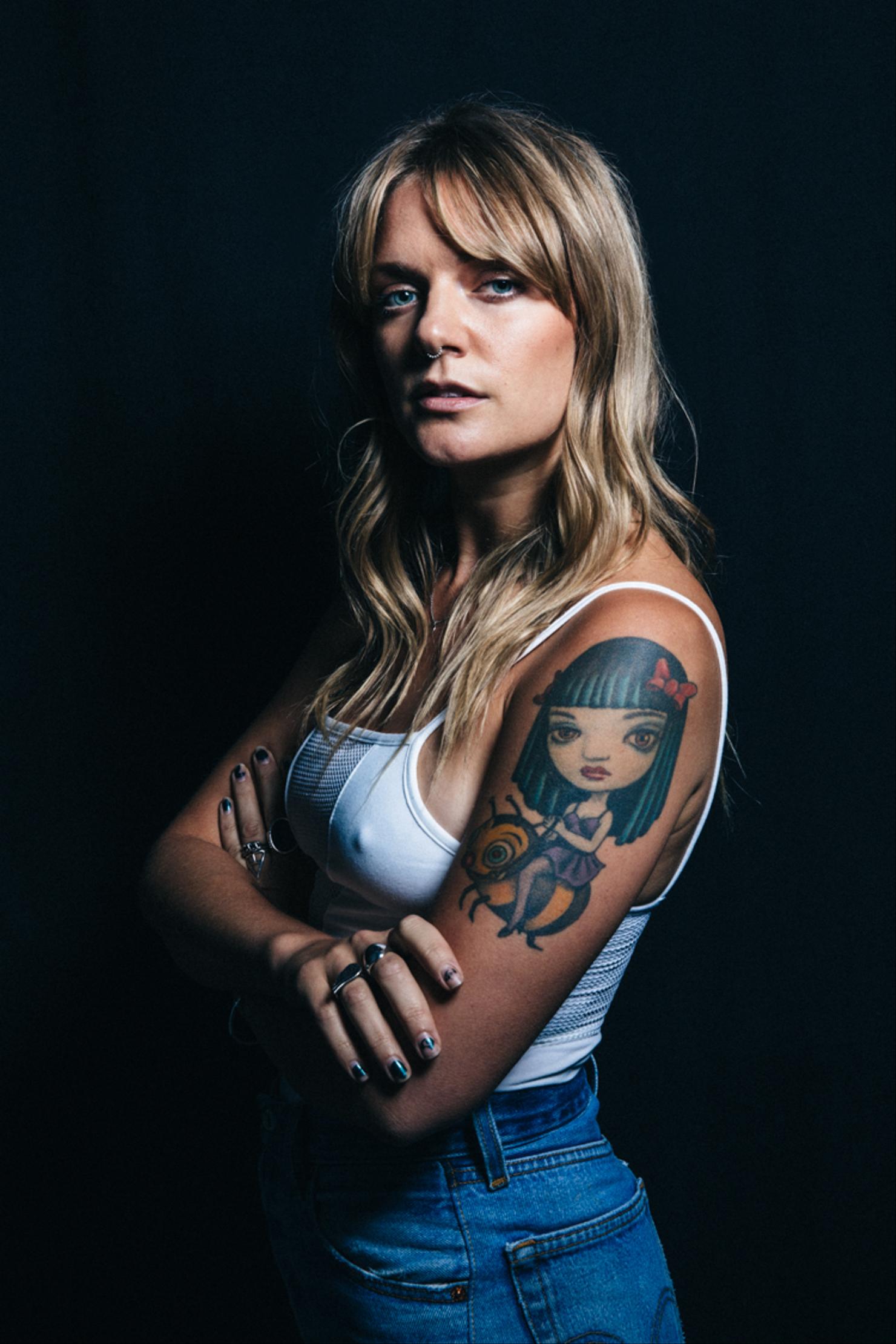
At least five pieces are clearly documented: a scorpion under her right collarbone, a girl riding a bee on her upper arm, a flaming heart with an eye on her forearm, a vagina symbol on her upper arm and a large lynx on the back of her microphone hand. The stories behind them make the collection more than a list of pictures.

Here’s what the sources say, with confirmed details kept separate from guesses.

The scorpion was her first tattoo

Tove Lo scorpion tattoo under her right collarbone

Tove Lo got her first tattoo at 17: a scorpion beneath her right collarbone. It has never been her favourite. In an interview cited in tattoo coverage, she called it a “little super ugly scorpion” and said she wasn’t sure what to do with it now that it was part of her.

There’s something refreshing about that honesty. Celebrity tattoo stories often turn every design into a meaningful emblem, but Tove Lo is happy to say that an early choice didn’t age well in her eyes. The scorpion matters simply because it was first. It marks the moment she decided to make something permanent.

The placement keeps it fairly contained. It shows in lower-cut clothing and close-up photos without taking over her chest, and sits apart from the much larger arm pieces she got later. It feels like a reminder of an earlier Tove Lo, not a polished logo for who she became.

Her father was reportedly upset when she got it, which became part of the story. Whether she still finds it embarrassing or it has simply become familiar, the scorpion has stayed with her throughout her career.

The girl riding a bee connects to her first band

Tove Lo girl riding a bee tattoo on her upper arm

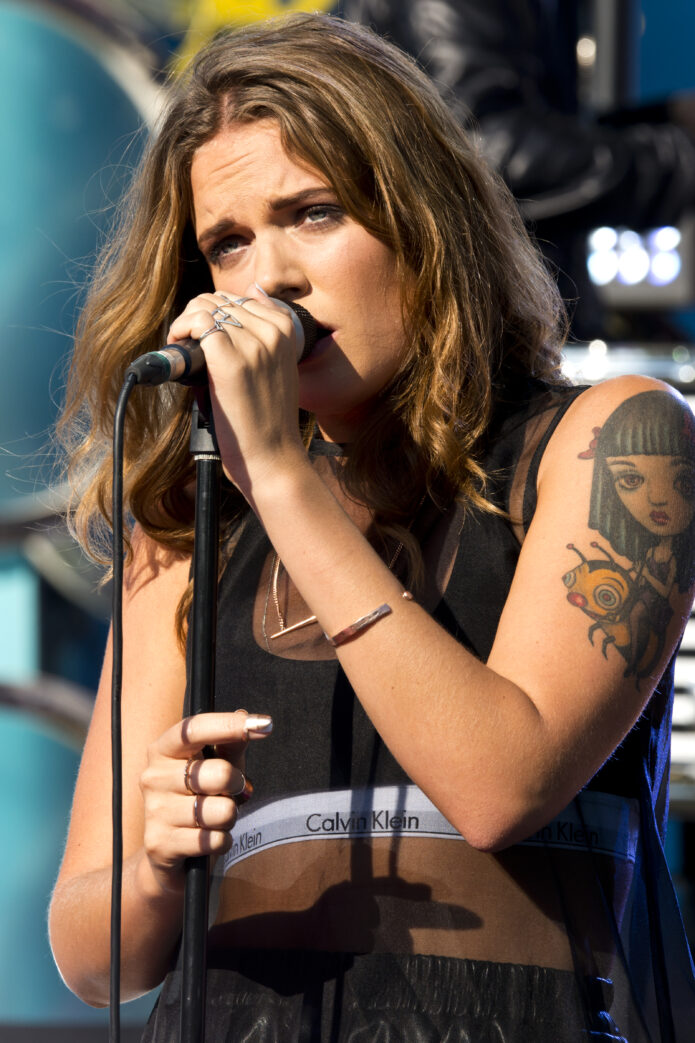
One of Tove Lo’s biggest early tattoos is a girl riding a bumblebee on her upper arm. The image comes from a painting by Mark Ryden and dates back to her first band, Tremblebee. She has said the group mattered to her because it was where she played her first gigs.

There’s a twist to the picture’s history. It was created for the cover of Jack Off Jill’s album Clear Hearts, Grey Flowers, though Tove Lo says she didn’t know that when she chose it. She was responding to the image itself and what it stirred in her, not setting out to pay tribute to the album.

She has described finding the painting and feeling that it went straight to her heart. Moving from the small scorpion to an image across her arm was a big leap. In a vlog, she remembered seeing the finished scale and thinking, “Fuck. What did I just do? It’s over my whole arm.” Years later, it had become part of her.

That change over time is worth noticing. It started as a dramatic decision and became familiar through years of living with it. The bee and rider hold memories of Tremblebee, early gigs and a younger creative life; the size shows she was ready to make a bold commitment before knowing exactly how it would feel years later.

The flaming heart came from Mark Ryden paintings

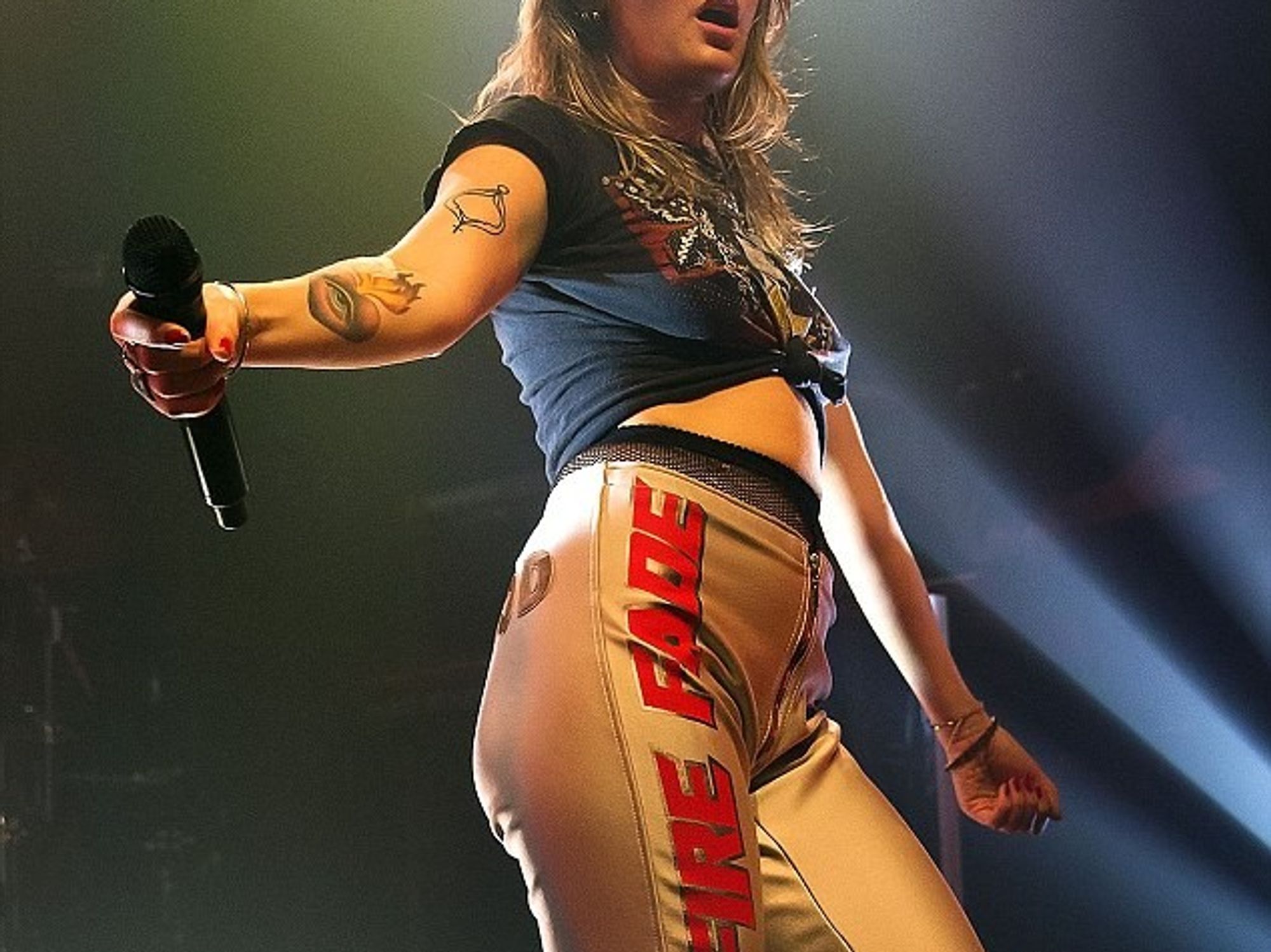
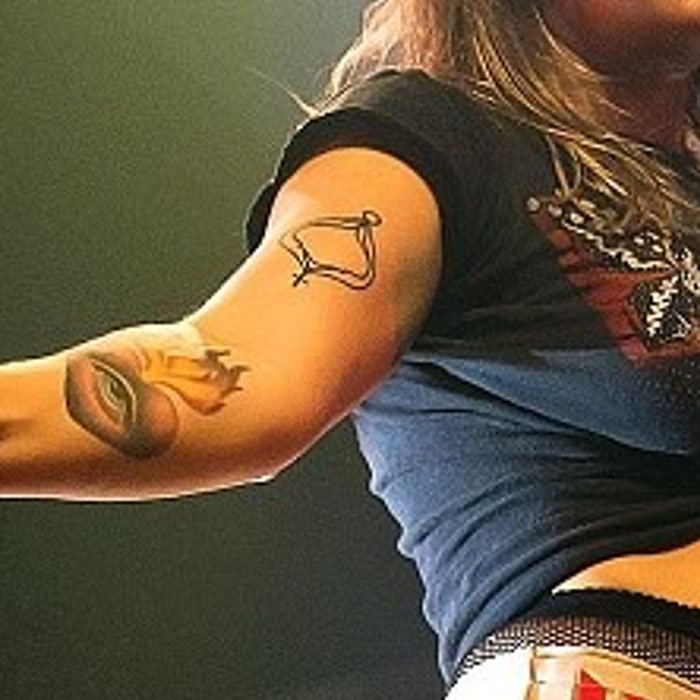
Tove Lo eye and flaming heart forearm tattoo

On Tove Lo’s right forearm is a heart with an eye in the middle and flames rising from the top. She has said the design draws on Mark Ryden’s paintings: the eye comes from Sophia’s Mercurial Waters, and the flames resemble details from Swap Meet Man.

That makes it more specific than a generic heart-and-flames tattoo. The design combines images she already loved and turns them into something that can stand on its own. She has said the eye looked small in the paintings, so she made it much bigger because she liked it.

The tattoo was done at Infamous Studio in Stockholm. It’s busy but easy to read: the heart sits at the centre, the eye draws focus and the flames push upward. From a distance it might look romantic; closer up, the eye makes it feel surreal.

The piece has been visible for much of her career. It appeared in an Instagram photo in 2012, though the exact date she got it isn’t certain. It bridges familiar pop imagery with the odd, unsettling details she enjoys.

The vagina symbol belongs to the Lady Wood era

Tove Lo Lady Wood vagina symbol tattoo on her upper arm

During the Lady Wood album cycle, Tove Lo got a minimalist vagina symbol on her upper arm. Tattoo artist Mark Lonsdale drew the outline from the album’s logo, where it stood in for the letter O. Her tour crew wore matching vagina jackets too.

Tove Lo has explained the meaning herself. She said the tattoo reminds her not to make herself smaller, especially when women are expected to be quiet or agreeable. For her, it’s about claiming space and pursuing things that are frightening as well as exciting.

That context changes how the simple outline reads. It carries a direct message about confidence, sexuality and refusing to soften herself for other people. Although it began as an album symbol, it also works as a personal reminder beyond the campaign.

Unlike the scorpion, this isn’t a tattoo she has described with regret. It’s deliberate, graphic and tied to a time when she made her body part of the conversation around the music. It’s branding, autobiography and a feminist message in one small image.

The lynx on her microphone hand has a personal origin

Tove Lo lynx tattoo on the back of her hand

Tove Lo’s large lynx on the back of her microphone hand is one of the most personal pieces in her collection. Lynxes are her favourite animal, and “Lo” connects to the Swedish word for lynx. As a child, she was struck by a lynx named Tova at a zoo; her family began calling her Tove Lo because of it.

The name stayed with her as a writer and solo artist, making the animal more than a striking image. She has described the lynx as a kind of spirit animal because it has been a favourite since she was little. The design is tied to her identity, not just a passing aesthetic.

In September 2016, while touring with Maroon 5, she visited Alex McWatt, founder of Three Kings Tattoo in New York City. The placement was practical as well as symbolic: she wanted it on the hand that holds her microphone so it would show when she performs.

She has also said she didn’t overthink the finer details. The tassels on the animal’s ears were enough to make the design feel right. That easygoing approach differs from the grand meanings often attached to tattoos afterward. She knew the animal mattered, knew where she wanted it, and let the artist build the image.

Taken together, the tattoos mark different eras. The scorpion goes back to being 17 and making an early permanent choice. The girl on the bee recalls Tremblebee and those first gigs. The flaming heart draws on Mark Ryden, while the Lady Wood symbol turns an album logo into a message about taking up space.

The lynx brings the story back to her name and childhood. It’s personal, but placing it on the microphone hand also makes it part of the performance. That combination runs through the collection: private history set somewhere the public can see it.

There’s no need to pretend these tattoos were planned as one unified sleeve. They come from different times, artists and moods. Some are provocative, some sentimental, and one she has openly called ugly. That mix is what makes the collection believable. Real collections hold both the tattoo you’d choose again and the one you simply learned to live with.

Tove Lo’s best-known pieces stand out because their stories are unusually specific: a first band, an accidental album-art connection, a feminist symbol, a childhood animal and an early scorpion all share the same body. The result is messy in the best way: honest, memorable and unmistakably hers.

For a look at Tove Lo discussing tattoo work in Melbourne, watch this tattoo-focused video:

More musician tattoo guides

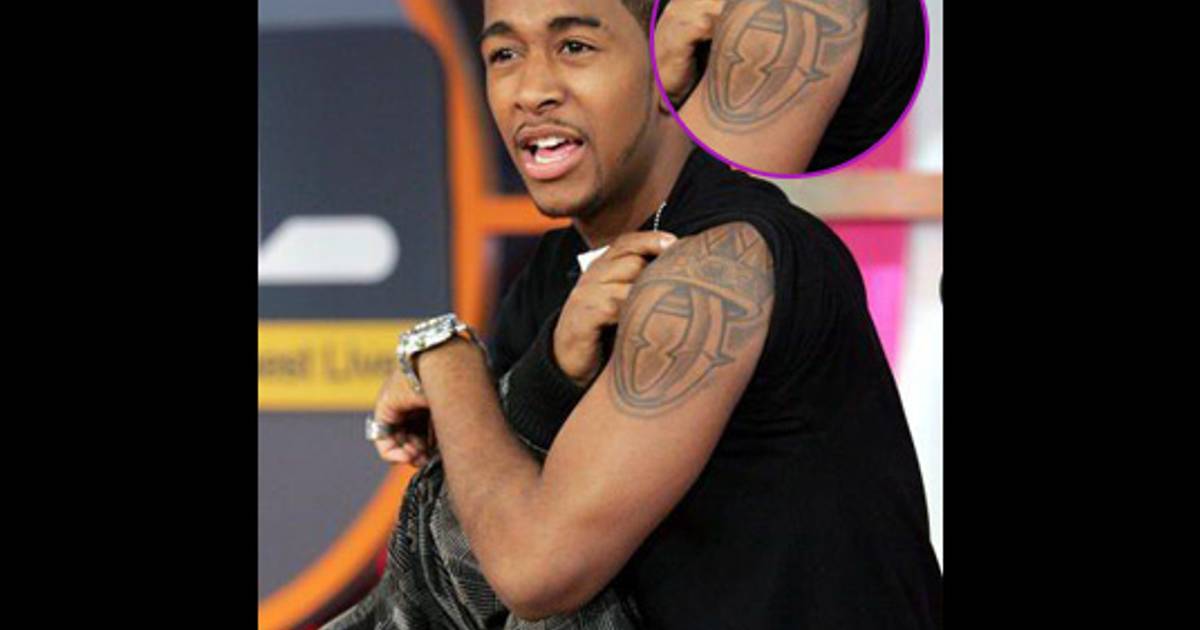
Omarion’s tattoos carry family, music and a little Maybach history

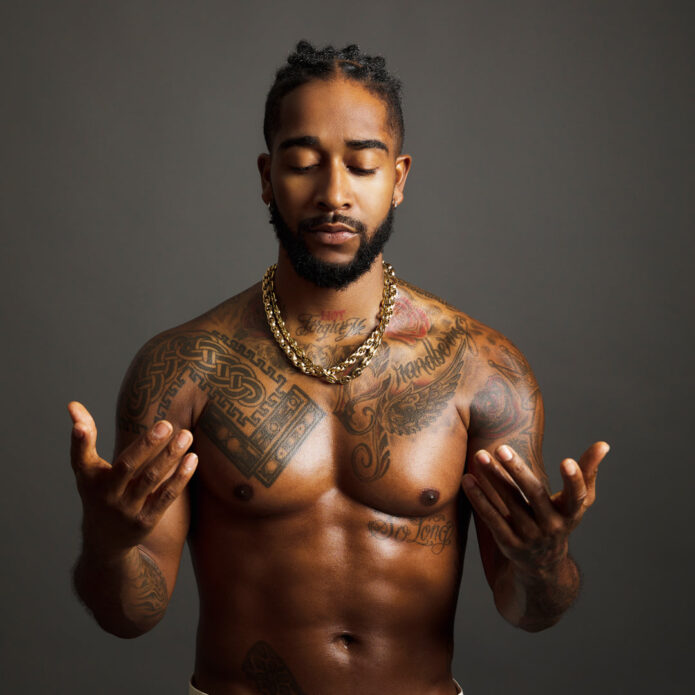
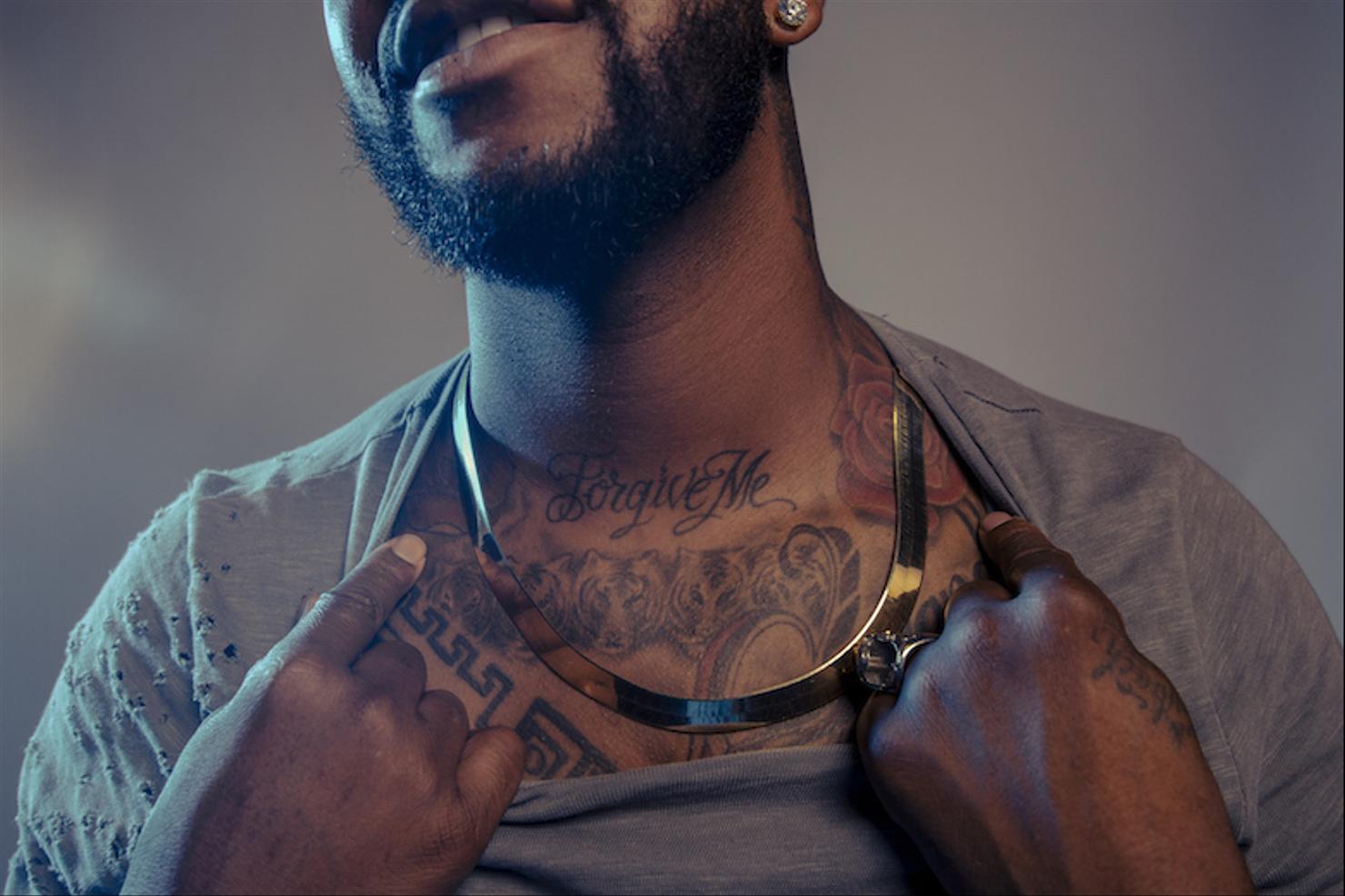
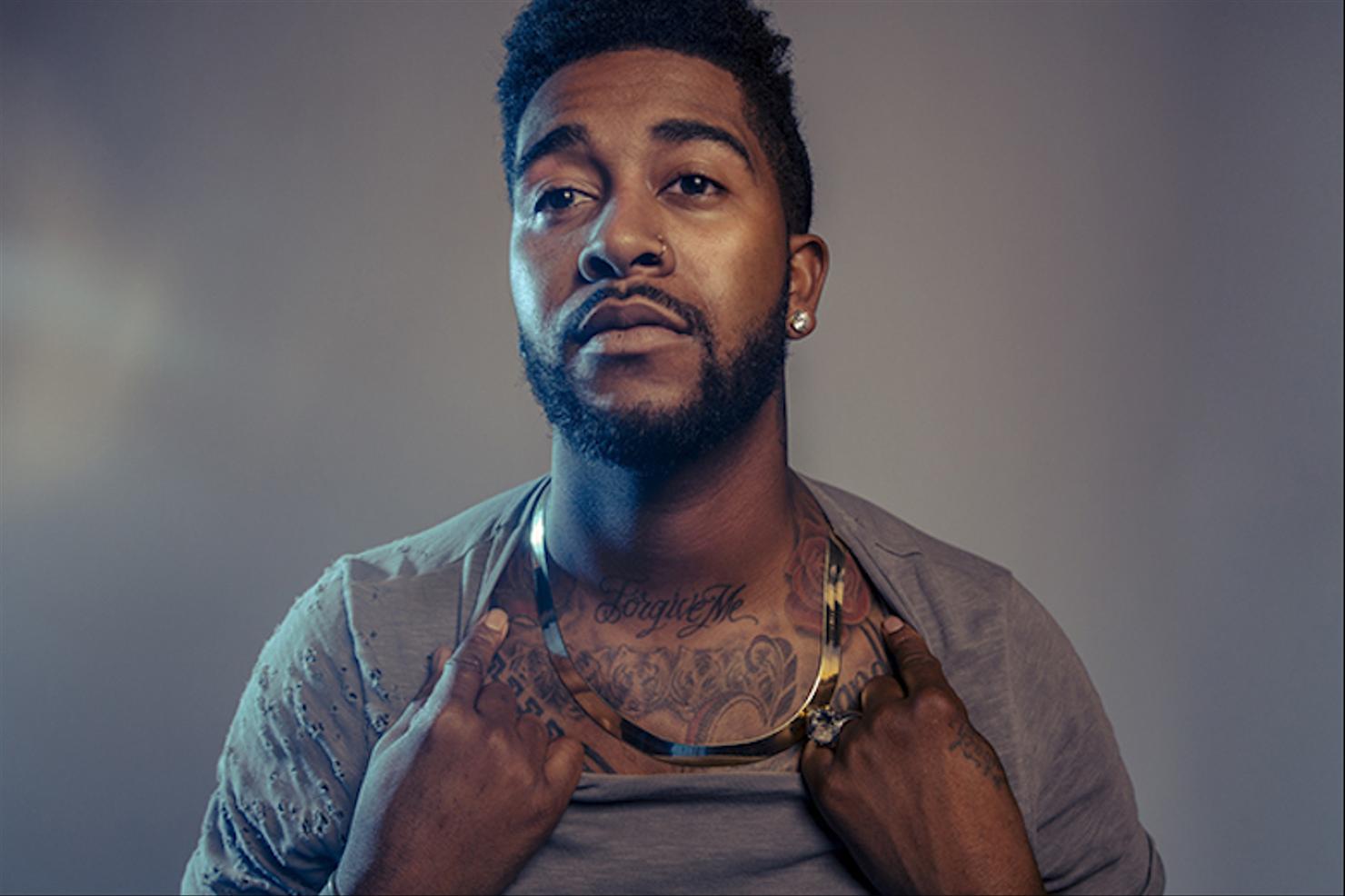
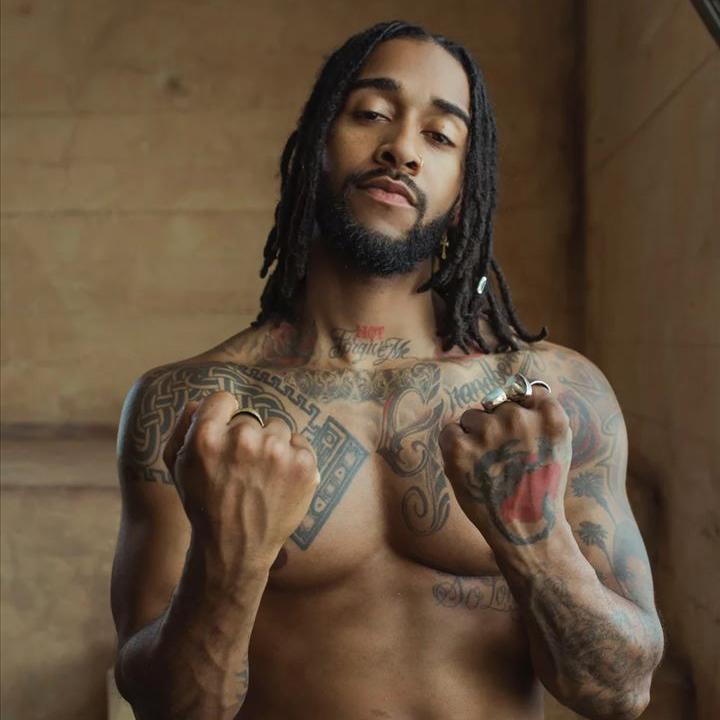
Omarion’s tattoos each have their own story. The huge “Forgive Me” chest piece makes a bold first impression, while a portrait of a young Michael Jackson points to one of his musical influences. The Maybach O on his hand marks a chapter in his career. Tribal-inspired patterns, script and layers of dark ink bring the rest of the collection together.

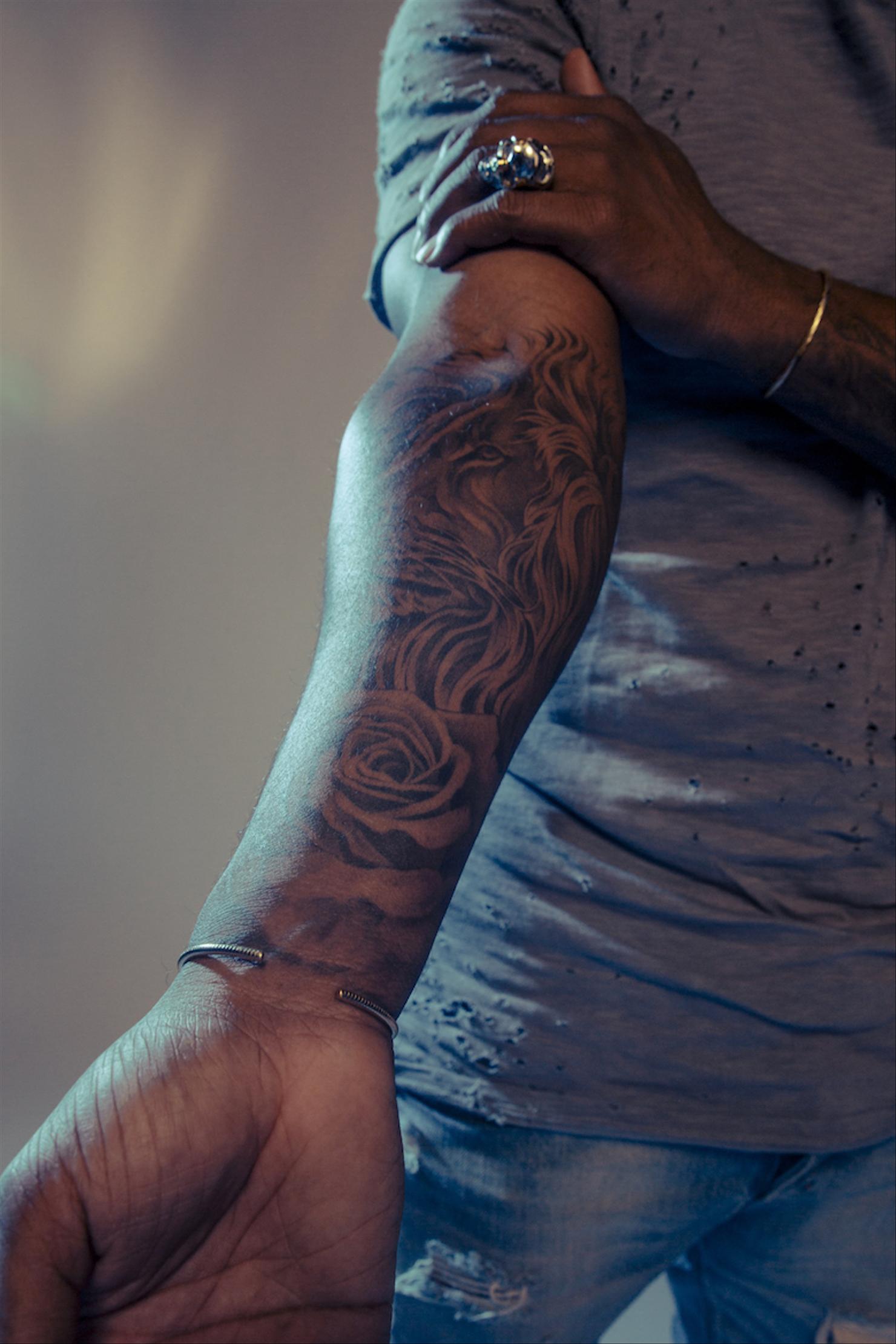
He has explained several of the designs himself. In an iHeart tattoo interview, he linked the lion on his forearm to his son’s Leo sign, described the rose beside it as a symbol of love, and talked about the Maybach O on his hand. He has also discussed the Michael Jackson tribute and tattoos connected to his name, music and family. Here’s a closer look at the pieces with clear stories behind them.

The lion and rose on Omarion’s forearm

Omarion lion and rose forearm tattoo

The lion and rose on Omarion’s forearm carry one of the collection’s clearest family stories. The lion represents his son, who was born under Leo. Its face is set in deep black shading, and the mane stretches in sweeping lines around the arm. It feels personal without relying on a name or birth date.

Omarion has said the rose stands for love. Together, the flower and lion give the piece a balance of softness and strength. From across the room, the big cat catches your eye; closer up, the rose and finer details come into focus.

Artist Jun Cha gave the lion a portrait-like finish, with careful shading that suits the design’s meaning. This is a family tribute with enough presence to hold its own onstage. The personal reason and the bold look meet in the same tattoo.

“Forgive Me” sits across his chest

Omarion Forgive Me chest tattoo

Across Omarion’s upper chest, large script spells out “Forgive Me.” Dense ornamental patterns frame the words and connect them to a wider chest piece. In close-up photos, the lettering stands out against the curls, shading and symmetrical details around it.

Omarion hasn’t attached one definitive explanation to the phrase, so there’s no reason to assign it one. It could be a private reminder, a spiritual appeal, or simply words that mattered to him when he chose them. They sit plainly in the middle of his chest, open to view rather than tucked beneath a sleeve.

The script anchors the design, while the surrounding patterns stretch across both sides of his upper body. A little color appears near the shoulder, but the piece is mostly black and gray. That restrained palette keeps the words clear despite all the detail around them.

His neck is covered in layered symbols and script

Omarion neck eagle and script tattoo

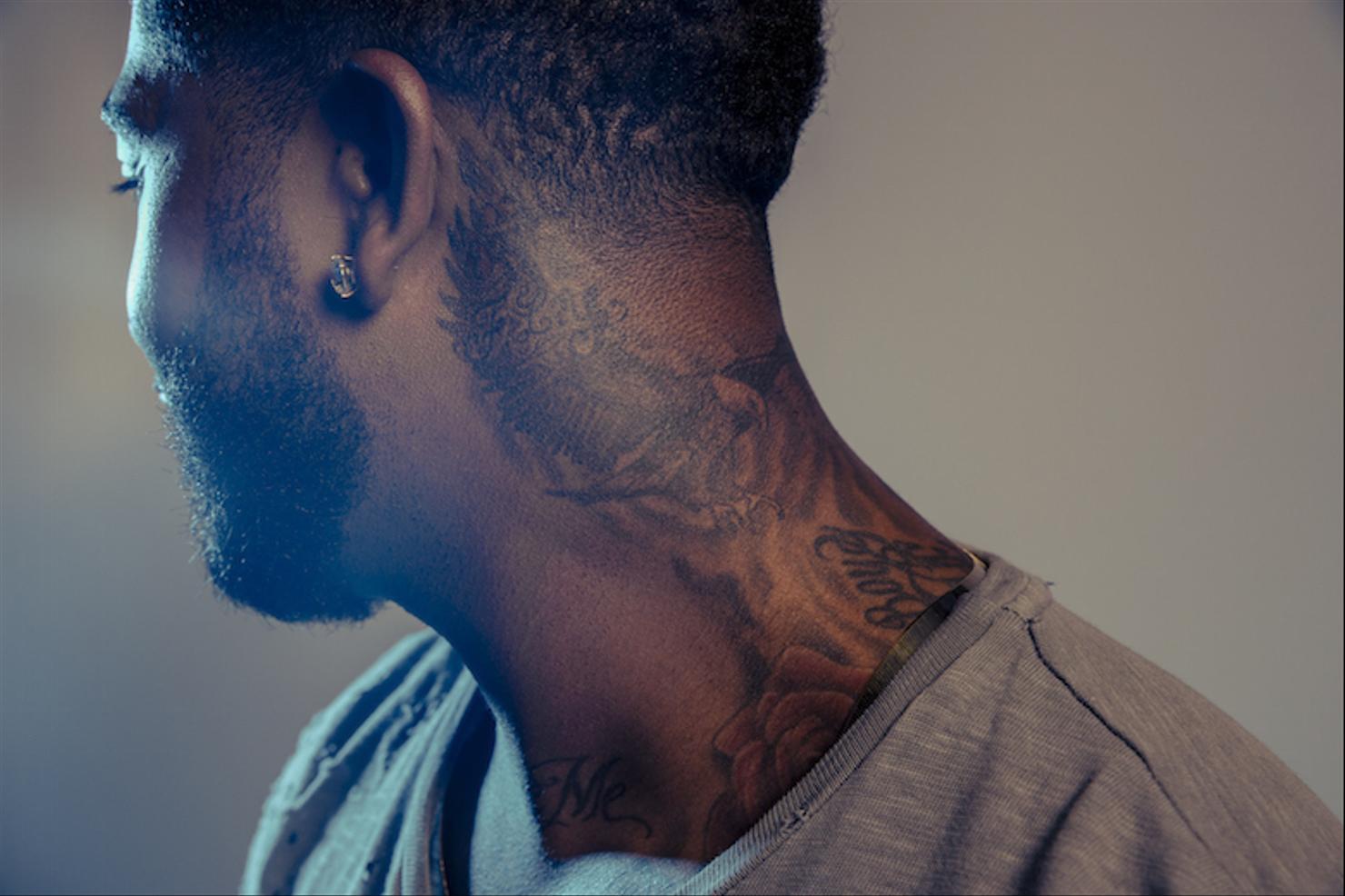
Omarion’s neck tattoos remain visible whether he’s in a shirt or onstage. The close-up shows an eagle-like design, dark ornamental shapes along the side of his neck, and script reaching toward the base of his throat. The pieces follow the angle of his neck instead of sitting in a single, tidy frame.

That placement makes the neck work feel different from the chest piece, which can be covered whenever he wants. This ink is part of his look in interviews and performances. It also seems to link the designs around his collarbone with the ones closer to his jaw.

Some of the smaller lettering is difficult to make out in photos, so its meaning isn’t clear. The eagle, dark shapes and script are visible; the story behind every tiny mark hasn’t been shared publicly. Here, the placement is part of what makes the tattoo noticeable.

The Maybach O tattoo on his hand

Omarion Maybach O hand tattoo

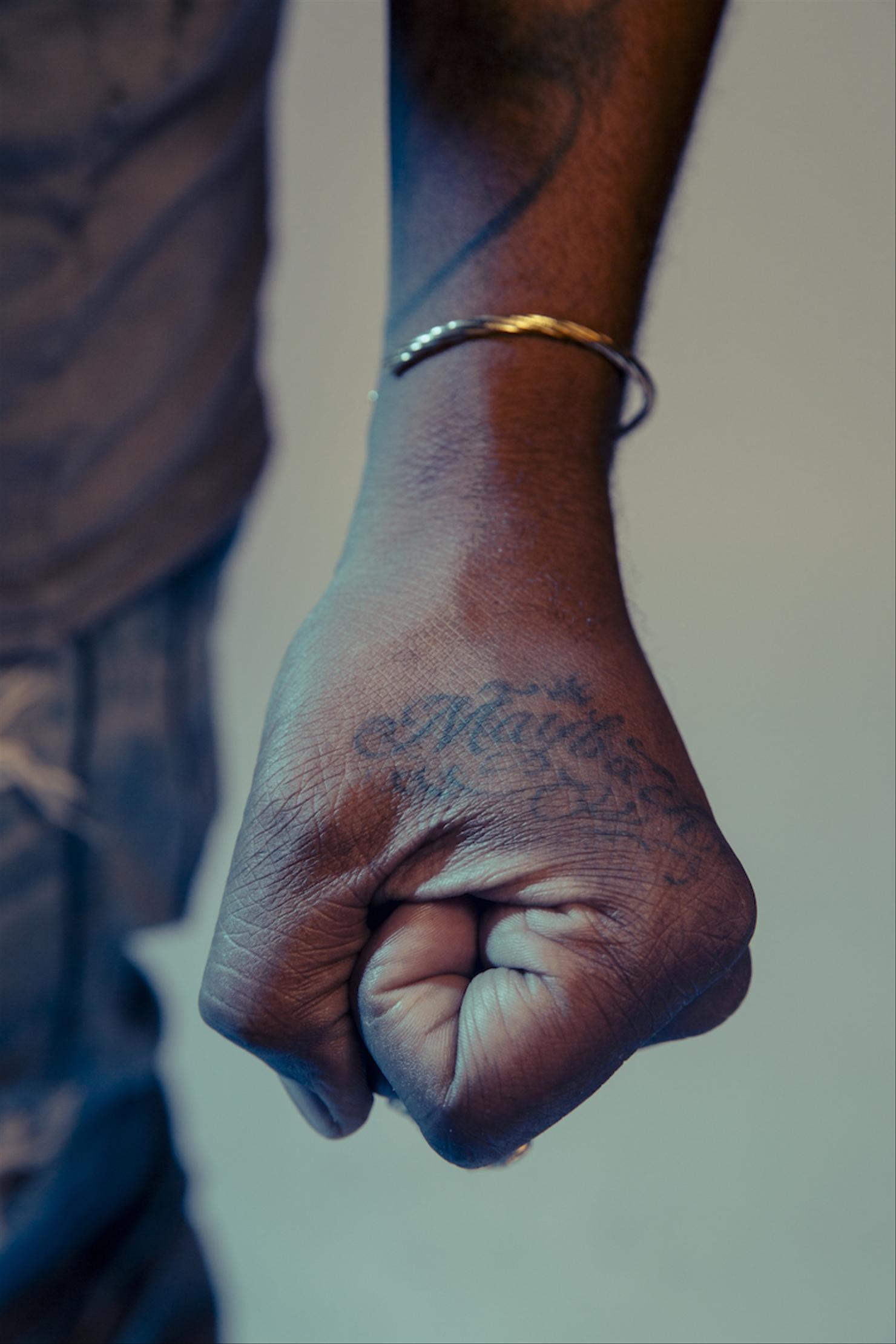
The mark on Omarion’s hand is commonly called the “Maybach O.” It recalls his time with Maybach Music Group. A 2013 interview with The FADER described it as a tattoo he got soon after signing with the label, and he also showed it in a video interview with Karen Civil.

A hand tattoo is hard to keep out of sight, and this one appears in the middle of Omarion’s everyday gestures. It became part of his public image while marking a specific moment in his music career.

The close-up shows additional ink around his hand and wrist. The lines have softened over time, as tattoos do, but that only adds to the sense of history. What began as a fresh mark tied to a label deal now belongs to a much longer career story.

Omarion’s name appears through several O designs

Omarion signature O upper arm tattoo

The letter O appears more than once in Omarion’s collection. BET’s Tatt’d Up Spotlight showed a large, stylised O on his upper arm. It’s shaped like a personal emblem, and its link to his stage name is easy to see.

The upper-arm design and the Maybach mark have different connections. The hand tattoo points to a chapter in his music business career; the O on his arm refers back to Omarion himself. He has said people recognise him by the tattoos around his neck, and the name-based designs add to that signature look.

Repeating a letter helps tie together a large collection that includes portraits, patterns and script. The O works as a name reference and a simple visual thread among the more detailed pieces.

The Michael Jackson tribute on his arm

Omarion chest and arm tattoos portrait

One of Omarion’s most personal designs is a portrait of young Michael Jackson on his left arm. It shows Jackson during his Jackson 5 years, a fitting tribute from an artist who grew up paying attention to performance, dance and pop history. The portrait points to an influence, not just admiration for a famous musician.

The image sits among Omarion’s other tattoos rather than inside a separate frame. Patterns and shading run around it, making the portrait part of a larger, developing sleeve. That mix of personal references and decorative work gives the collection the feel of a visual diary.

A wider chest-and-arm photo shows how much territory the tattoos cover. Script, geometric panels, chest lettering and arm designs overlap, with smaller pieces filling the spaces between. The close-ups can make them seem separate; seen together, they trace influences and different points in his career.

What the collection says about Omarion’s style

Omarion chest and hand tattoos

Across the photos, Omarion’s style relies on strong black lines, ornamental patterns, script and portraits. There aren’t many minimalist pieces designed to disappear. Even the smaller tattoos fit into a larger look built around bold shapes and dark shading.

Some designs point to his career, like the Maybach O, while the Michael Jackson portrait marks an artistic influence. The lion and rose turn toward family and love. The O designs make his own name part of the collection, and “Forgive Me” leaves its meaning open.

That range keeps the tattoos from reading like one big exercise in branding. Some mark his roots, some reflect the people he loves or the artist he wanted to become, and others have become part of the image he brings to performances and interviews. The collection feels personal while still being made to be seen in motion.

There isn’t one neat story connecting every tattoo. Different chapters sit side by side: a portrait, a bold letter, a family symbol, a phrase and patterns that fit the body. Together they bring R&B history, family, career milestones and heavy black ink into one recognisable collection.

Omarion on camera

Omarion has talked about the Maybach O in interviews. In the clip below, he explains the career moment behind it.

More musician tattoo guides

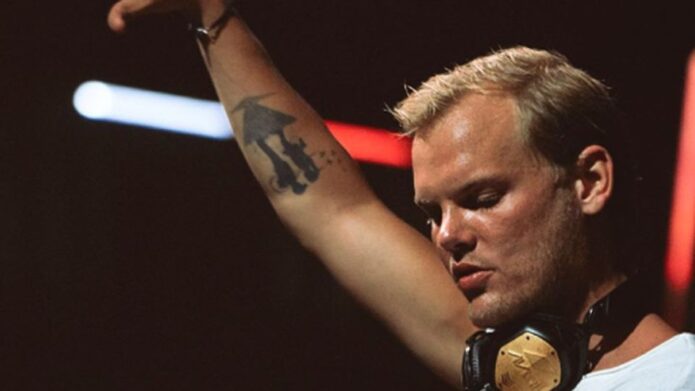
Avicii built a dark sleeve from Banksy, myth and memory

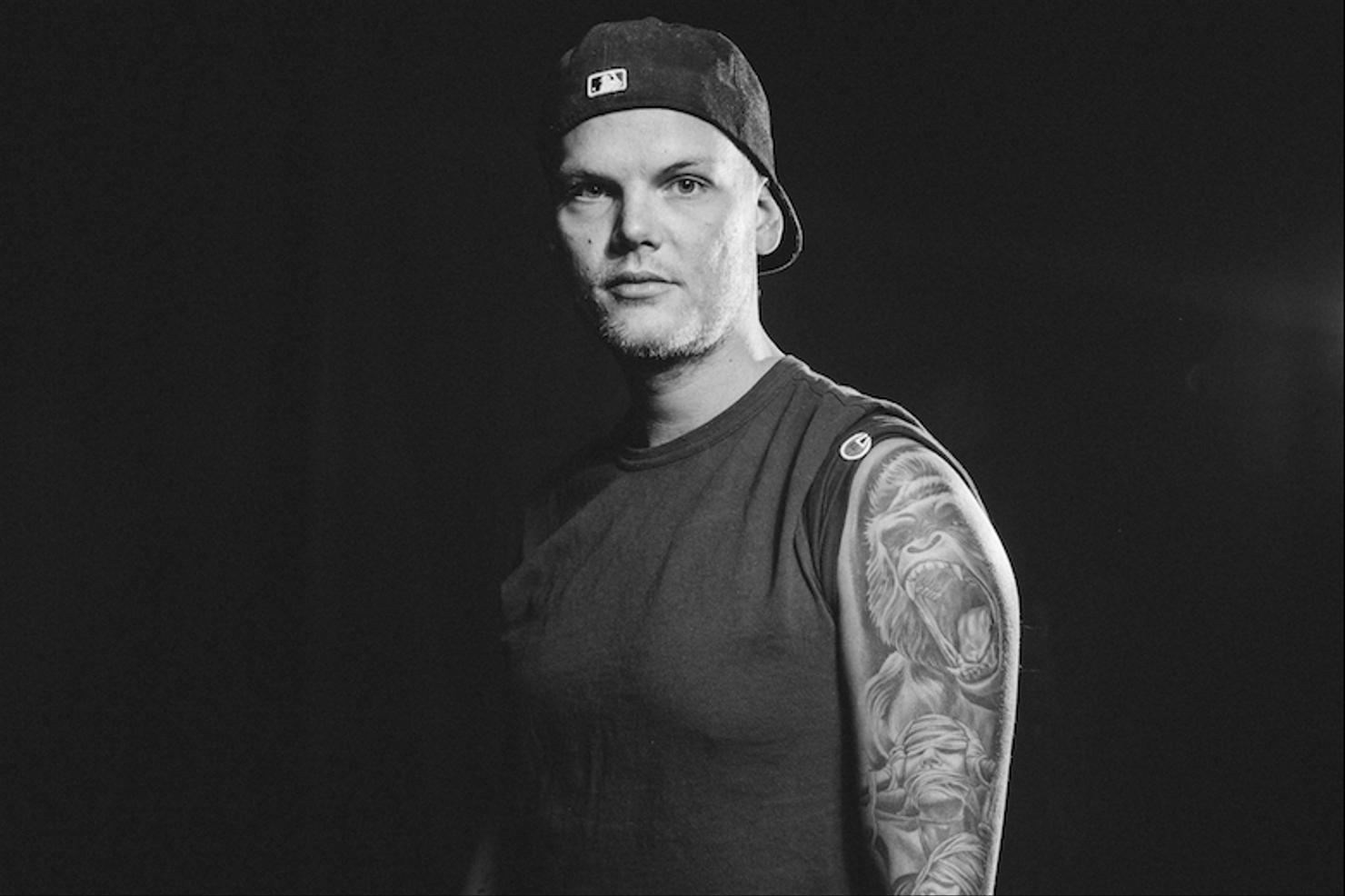
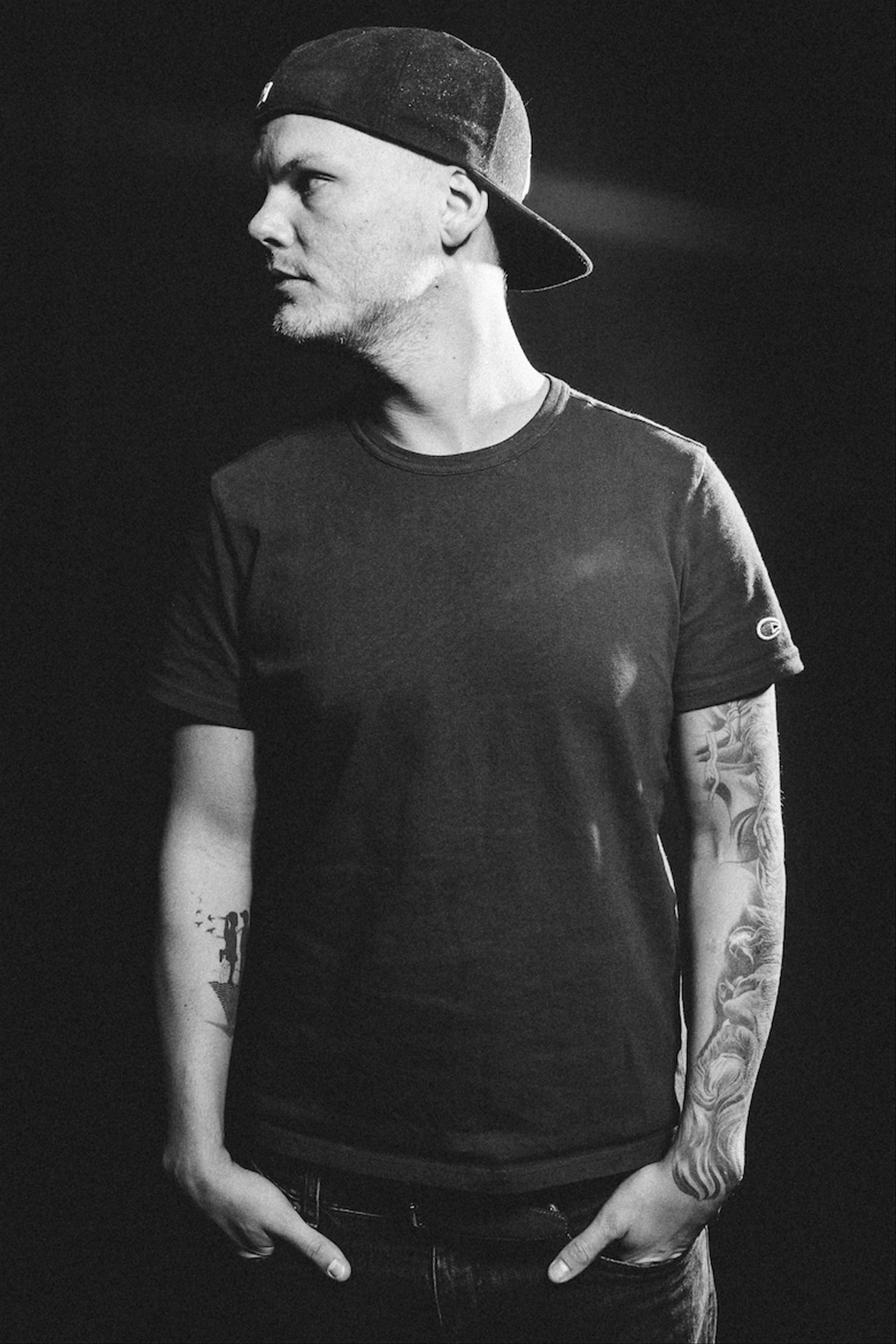
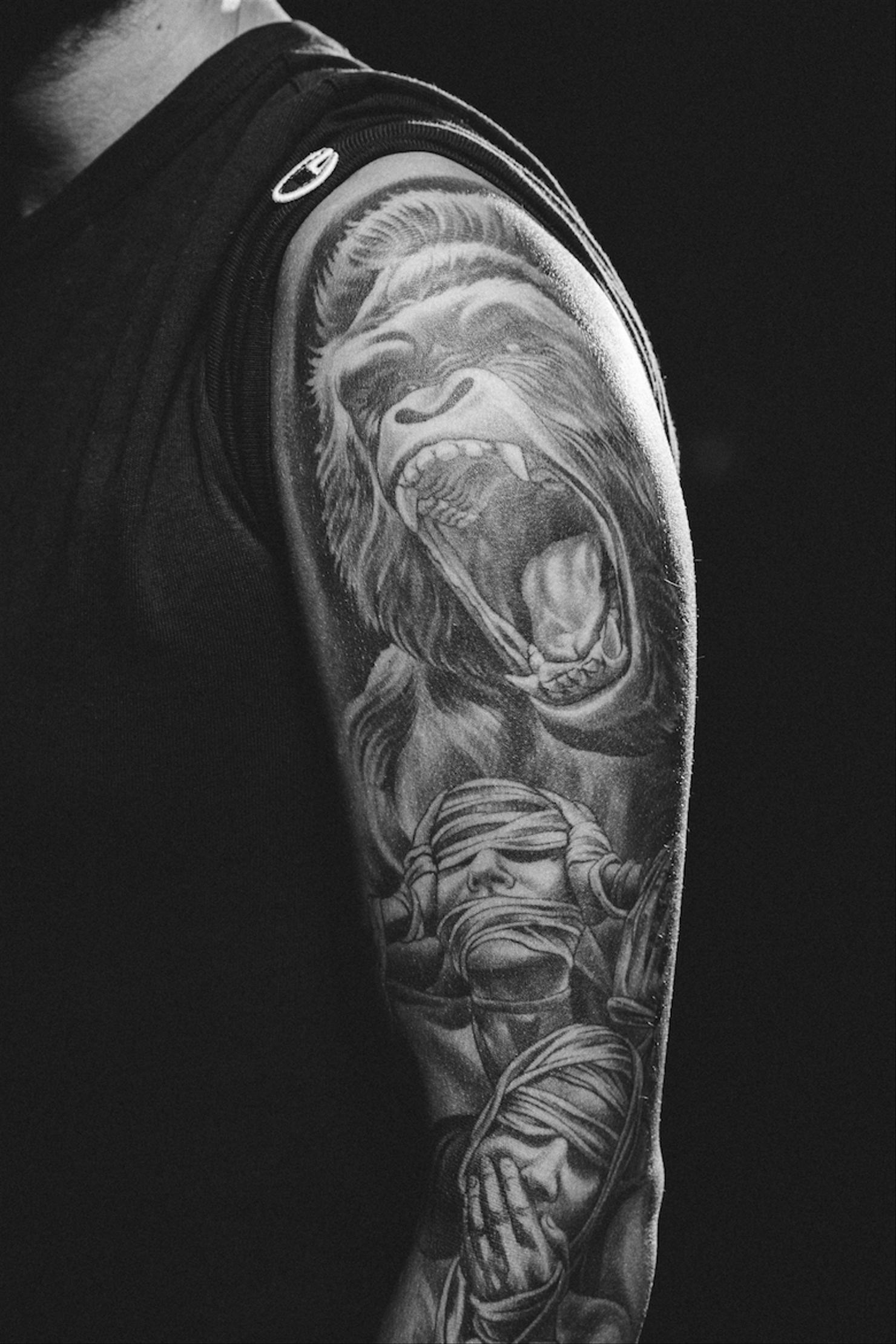
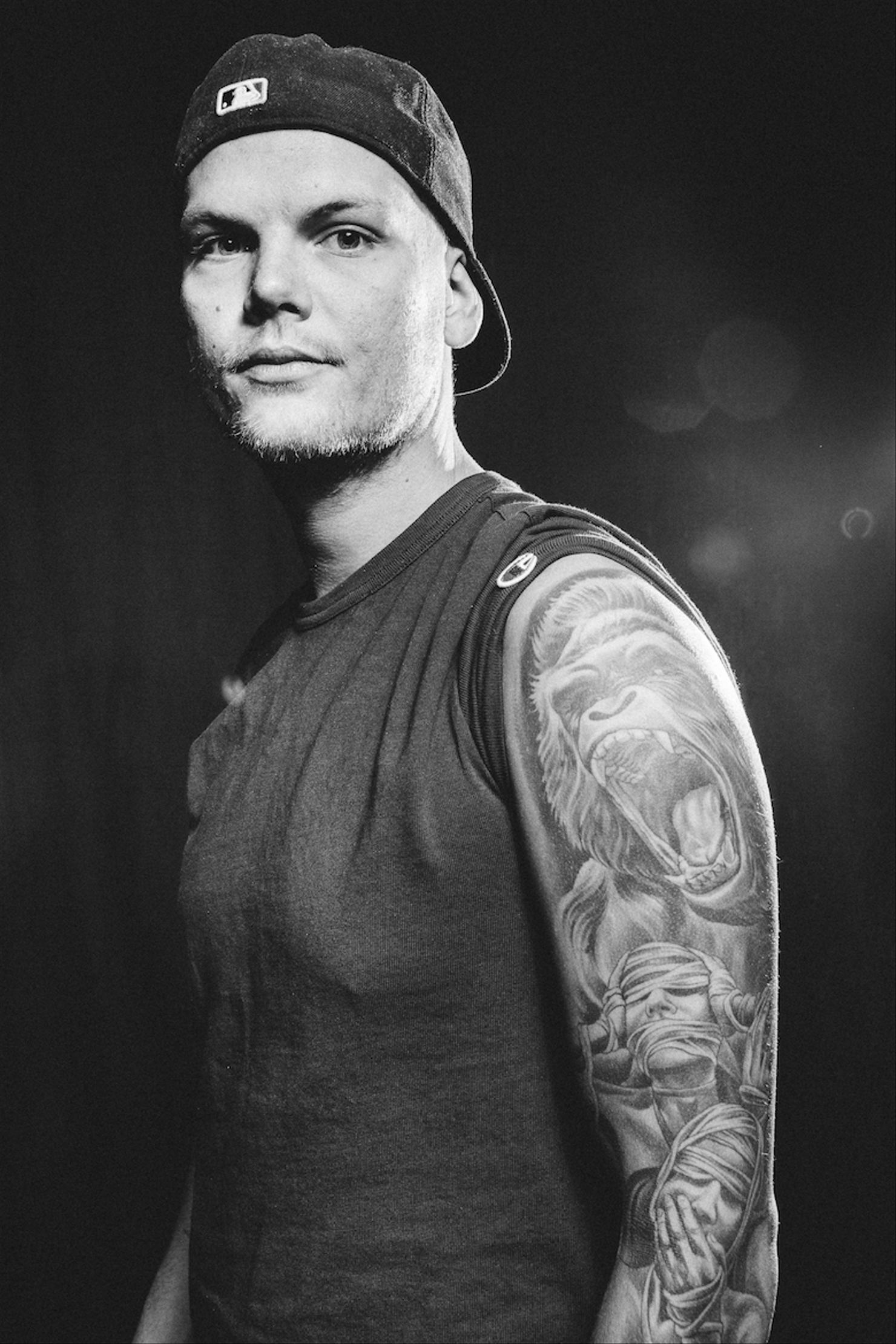
Avicii’s tattoos weren’t a handful of flash pieces picked up between shows. Tim Bergling began with one carefully planned design, then met tattoo artist Jun Cha and built a detailed black-and-grey sleeve over two long sessions. The work brings together a Banksy-inspired image, a roaring gorilla, three bandaged women and a figure drawn from Greek sculpture.

He talked through the stories behind the ink in an iHeart tattoo interview. The first sleeve session lasted about 12 hours and the second around 18. Avicii also said he wanted to keep adding graphic, slightly strange imagery to his arm. Here’s what his comments and the photographs tell us about the designs.

The Banksy-inspired tattoo was his first

Avicii Banksy inspired right forearm tattoo

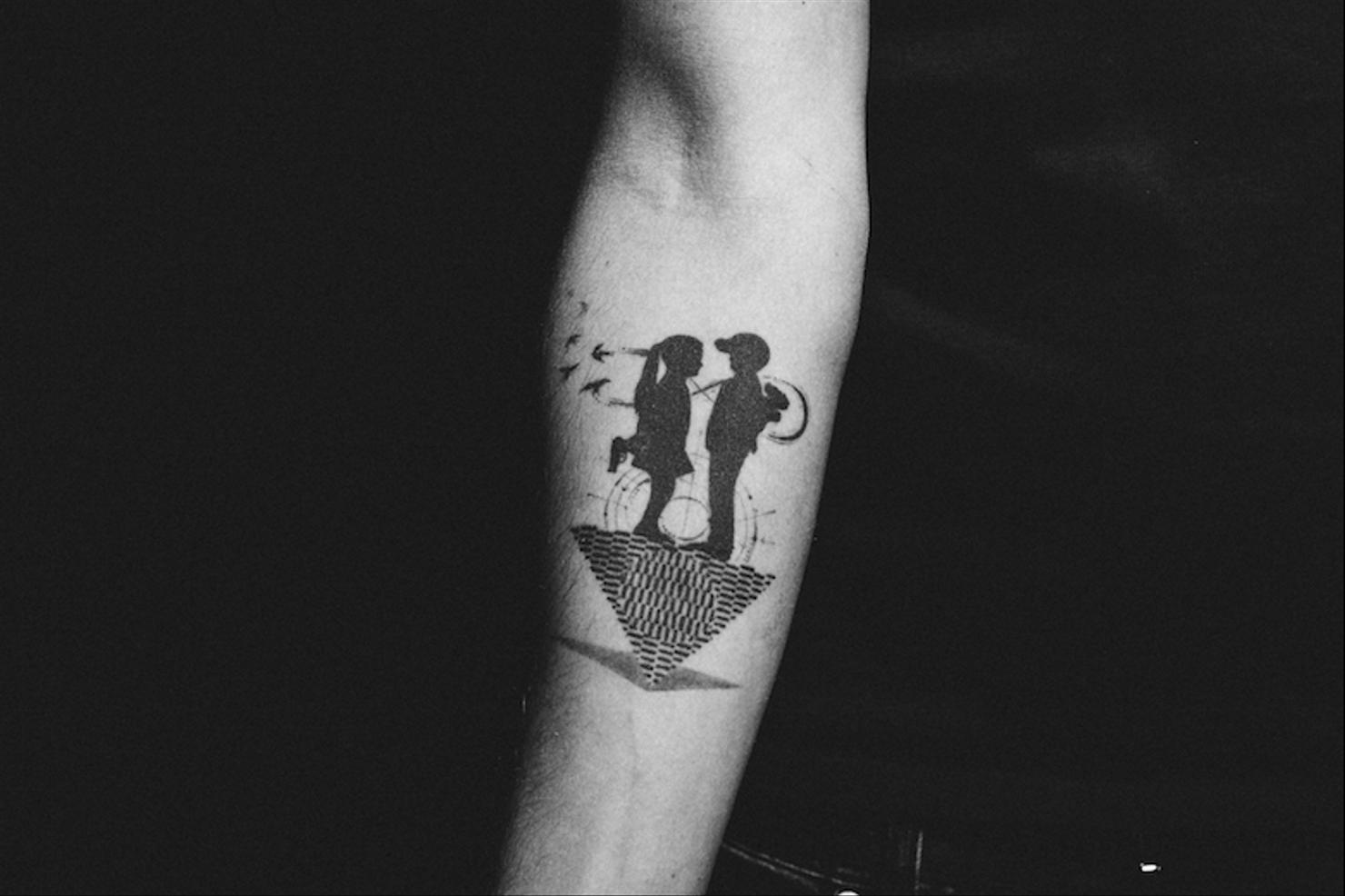
Avicii waited until his early twenties to get his first tattoo. He’d wanted one for a long time but wasn’t sure what to choose. Eventually, he worked with Jun Cha on a Banksy-inspired design for his right forearm, taking time to plan it instead of choosing something on impulse.

The choice suited his taste. Banksy’s work often turns a simple image or small visual joke into an idea that sticks. Avicii wanted a design connected to that world, shaped to fit his arm. He and Cha talked through the layout, and he waited until he felt sure before getting it done.

At first, Avicii thought this might be his only tattoo. In hindsight, that’s a telling detail: the collection grew far beyond one piece. But the Banksy-inspired design stayed on the opposite arm, separate from the later sleeve, giving his tattoos a point of contrast.

One tattoo turned into a full left arm sleeve

Avicii left arm tattoo sleeve wide view

Six months after the Banksy piece, Avicii returned to Jun Cha and began what became his left arm sleeve. In the wide photo, the designs travel from the upper arm to the forearm, with the main images fitting closely together.

The work took two long sittings: about 12 hours for the first and around 18 for the second. Avicii said friends kept him company, while Cha stayed intensely focused on the work. This was a major project, not a quick appointment for one small symbol.

Black and grey set the tone, with realistic faces, deep shadows and theatrical expressions. The sleeve feels closer to a wall of old illustrations than a typical musician’s tattoo collection. Rather than relying on bright colour, it uses skin breaks, dark fabric and carefully shaded faces to create contrast.

The sleeve feels planned without looking rigid. Each section has its own subject, while the shading and linework make the arm read as one piece. That balance came from the conversations between Avicii and Cha before the tattooing began.

The gorilla brings the loudest energy

Avicii gorilla and three women tattoo

The most dramatic image is a roaring gorilla near the top of Avicii’s left arm. Its mouth is open, its teeth show, and the fur is shaded in fine detail. The expression hits you first, making it the part of the sleeve many people notice right away.

Avicii linked the larger design to the three wise monkeys: hear no evil, see no evil, speak no evil. He’d liked the idea since childhood but didn’t want the obvious version of three ordinary monkeys on his arm.

Cha suggested another way to work with the reference. The gorilla became the focal point, with three figures below it carrying the familiar idea in a more unsettling form. That shift gave the tattoo its own character instead of making it a direct copy of a traditional symbol.

The gorilla shows how Cha’s realism can take on a surreal edge. It looks less like a straightforward animal portrait and more like a figure in a darker story. Avicii said he liked having room for strange or even evil-looking imagery, and this design captures that mood.

Three bandaged women replace the usual monkeys

Avicii tattoo sleeve detail with three bandaged women

Below the gorilla are three women wrapped in bandages: one covers her eyes, another her ears, and the third her mouth. The familiar pose is easy to recognise, but the detailed figures feel more human than the usual cartoon monkeys.

Avicii said Cha proposed using the women and pairing them with the gorilla. They discussed the idea and exchanged images before he decided it felt right. The extra thought kept the design from becoming too literal: the reference remains, but the final tattoo has a more serious, almost mythic mood.

In the close-up, the bandages form clear horizontal lines across the faces and bodies, helping the figures stand out within a busy sleeve. Similar wrapped shapes appear elsewhere on the arm, giving the images a visual link even when you focus on one detail.

The idea behind the tattoo is familiar, but the mood is darker than a playful proverb reference. It feels like a reminder of what people choose to ignore. That slight unease is part of what gives it such presence.

The Greek sculpture sits lower on the forearm

Avicii Greek sculpture forearm tattoo

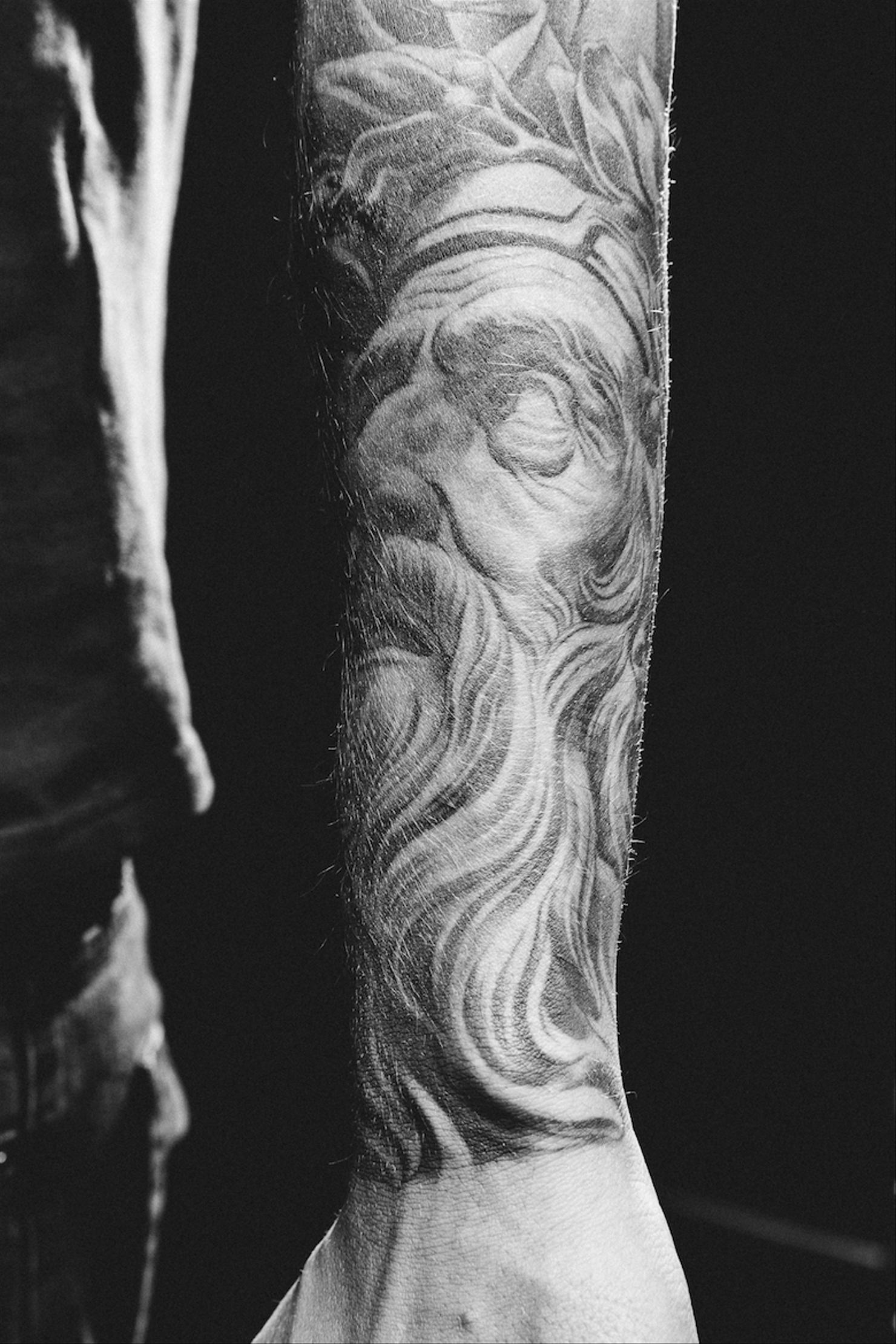
Lower on Avicii’s left arm is a portrait of an older man inspired by Greek mythology. He has a long beard, deep lines across his face and the stillness of a classical sculpture. After the gorilla, this image feels quieter; its detail comes through texture and shading rather than an explosive expression.

Avicii said he already admired the sculpture tattoos Cha was known for, so he came in with a sense of the style he wanted. Cha showed him several options and talked through their stories before they settled on a design that suited the arm.

The figure gives the sleeve a moment to slow down. Its expression is thoughtful rather than aggressive, offering a change of pace after the gorilla and bandaged women. That contrast keeps the full design from feeling like one long shout.

Composition mattered as much as the image itself. The sculpture had to fit the shape of the arm, sit comfortably beside the other figures and help the eye travel from shoulder to wrist.

The finished sleeve reads like one dark visual story

Avicii tattoo sleeve face visible portrait

From a distance, Avicii’s sleeve can look like one large black-and-grey mural. Up close, separate images emerge: the gorilla, the bandaged women, the sculpture, the folds of fabric and smaller marks that connect them. The full-arm photo makes the overall composition easier to see.

His right arm provides a counterpoint. The Banksy-inspired tattoo is more graphic and playful; the left sleeve leans into classical figures and darker drama. Avicii talked about adding more Banksy-style work on the right and continuing the more gripping imagery on the left, treating the two arms as different sides of one collection.

It’s tempting to treat every tattoo as a confession, but Avicii’s own explanations were more grounded. He talked about images he remembered from childhood, artists he admired and designs that fitted the arm. Some have a clear idea behind them; others also came down to what looked right beside the rest.

That keeps the sleeve from feeling like a secret code where every line needs decoding. The Banksy piece marks his first commitment to tattoos; the gorilla and three women reshape a childhood symbol; and the sculpture reflects his interest in Cha’s work. Together, they show how the sleeve took shape over several long sessions.

When he spoke about the tattoos, the work was still evolving. Avicii was considering stranger, more graphic images for the left arm and more Banksy-inspired ideas for the right. The collection wasn’t a finished costume; it was something he was still building. The existing pieces already bring together the music, art and imagery that caught his attention.

Watch Avicii get his tattoos done

Footage from the studio gives a closer sense of the work behind the finished sleeve. The clip below shows Avicii getting tattooed and adds context to the long sessions he described.

More musician tattoo guides

Adam Lambert’s tattoos pull together Queen, symbols and old-world detail

Adam Lambert’s tattoos feel like a collection gathered over time: Egyptian symbolism, old-style lettering, geometric patterns, a Queen tribute and a lyric from one of his own songs. They don’t look as if he planned a matching sleeve from the start. Instead, one idea led to another, and later designs grew around the earlier ones.

That mix makes the collection fun to explore. One piece is about protection, another reflects the energy of performing, and others caught his eye as artwork. Adam has also shared the stories behind many of them, so there’s plenty to say beyond the black-and-grey detail. Here’s a closer look at the best-documented tattoos and how they sit together.

The Eye of Horus was Adam’s first tattoo

Adam Lambert Eye of Horus forearm tattoo

Adam has said his first tattoo was an Egyptian Eye of Horus on his forearm, done before he started American Idol. He was about 27. Part of the choice was practical and part of it was a joke: he wanted an eye of protection before millions of people watched him on camera.

He was already interested in Egypt, so the symbol wasn’t a random lucky charm. The Eye of Horus has long been linked with protection, healing and watchfulness. For Adam, it became a small shield for a major turning point. It’s a very Adam kind of origin story, mixing genuine belief with a wink at the drama of the moment.

“Musica Delenit Bestiam Feram” runs down his forearm

Adam Lambert Musica Delenit Bestiam Feram forearm tattoo

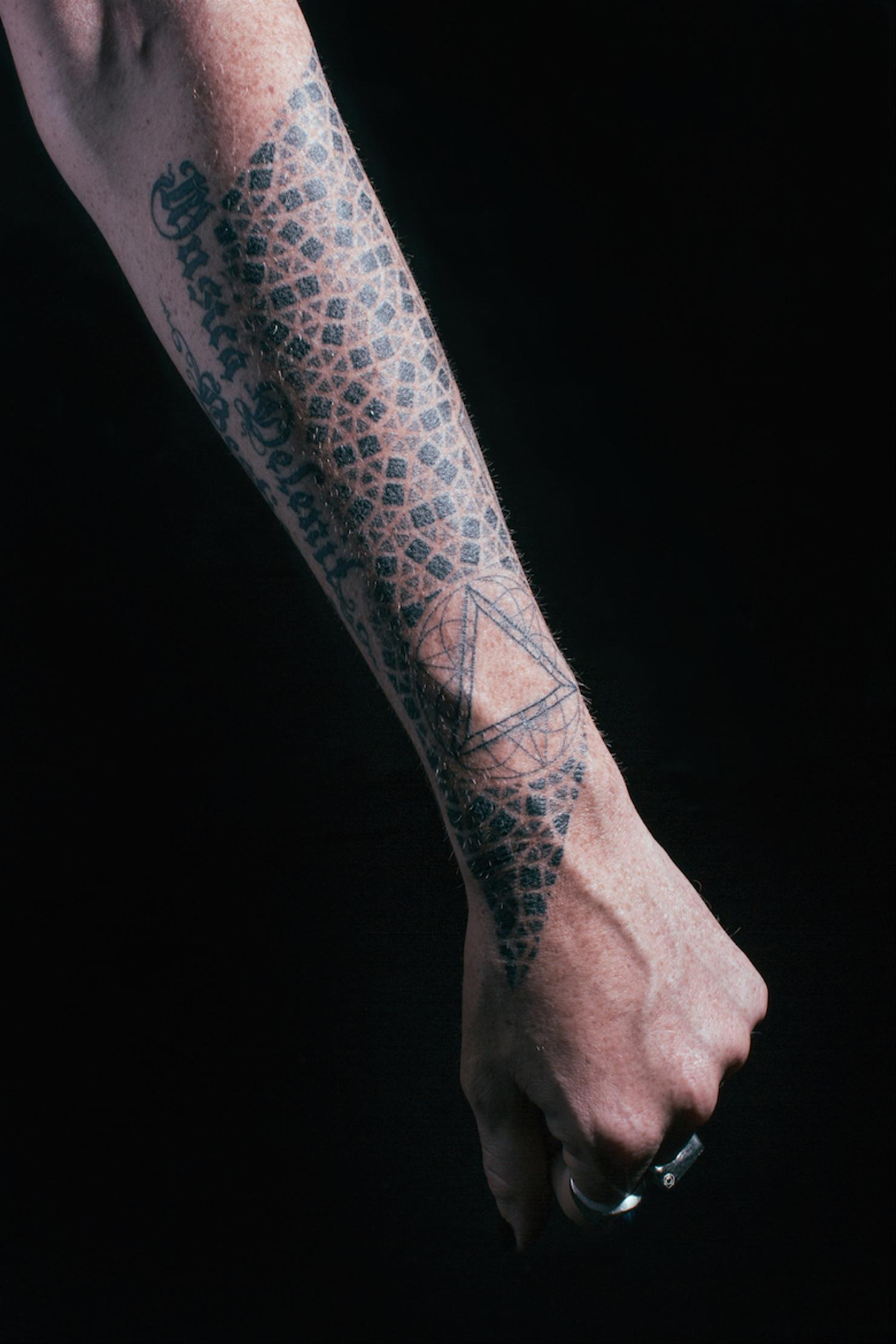
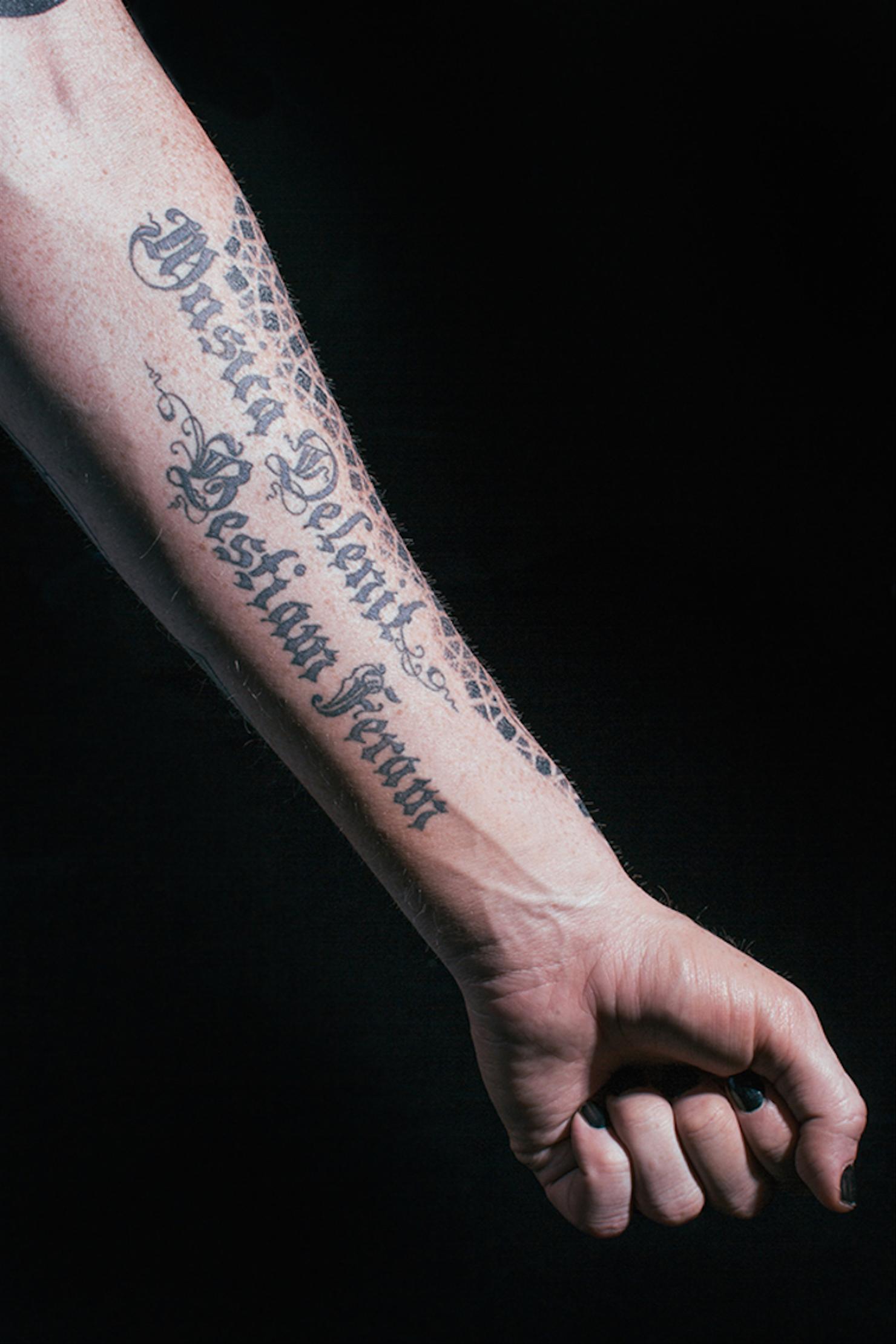
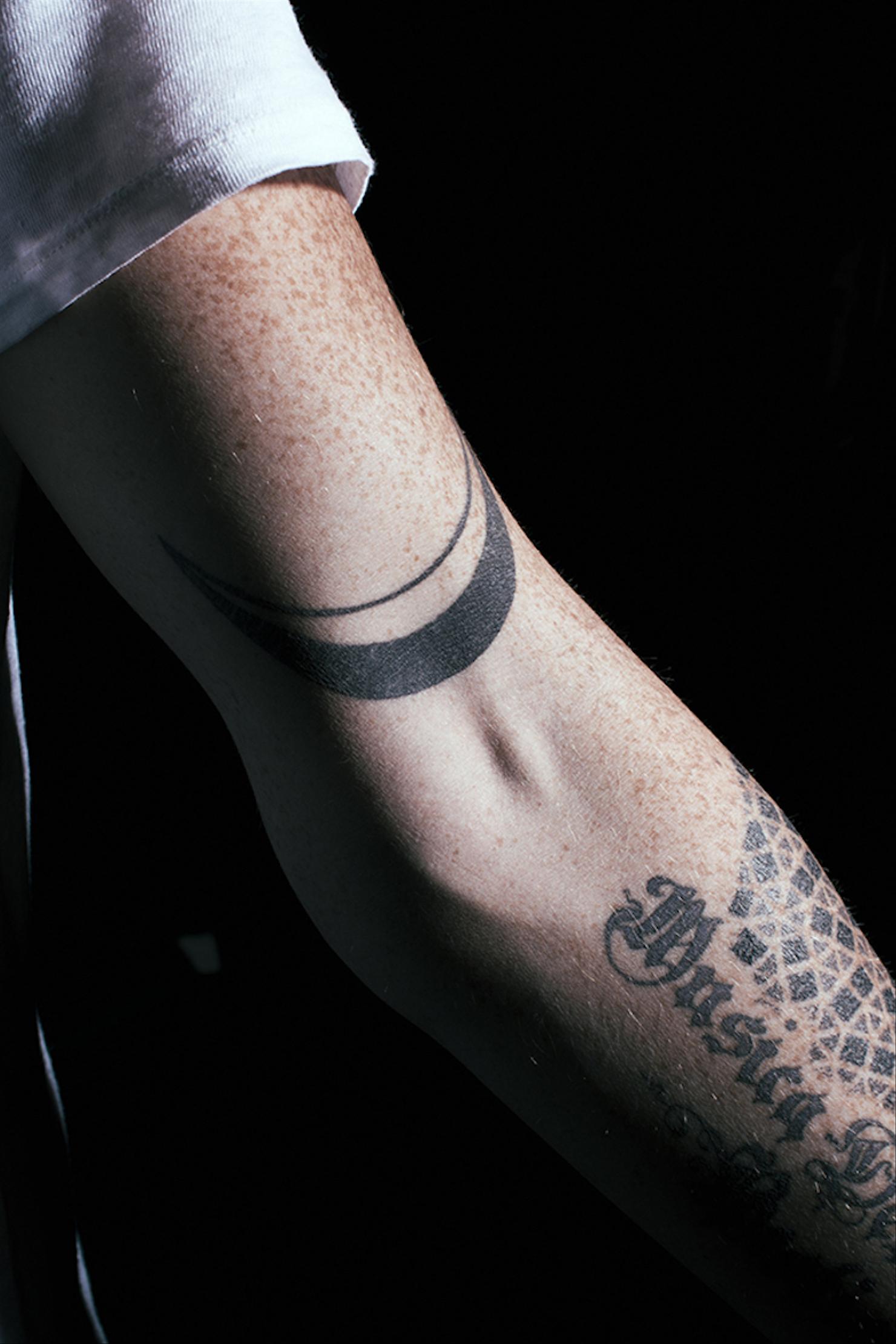
One of Adam’s clearest text tattoos is the Latin phrase “Musica Delenit Bestiam Feram.” It’s often translated as “music soothes the savage beast.” Written in tall, old-style lettering along his arm, it looks more like an inscription from an antique book than a modern slogan.

Adam has talked about how music can shift a mood: it can ease stress, make a workout feel doable or change the atmosphere entirely. He mentioned everything from relaxing music to a night out. The tattoo isn’t only about music as his profession; it’s also about the way music can reset how you feel.

The lettering creates a strong vertical line against the shapes and shading around it. It gives the sleeve a clear focal point without interrupting its theatrical style.

The key came from a friend’s artwork

Adam Lambert infinity and key forearm tattoos

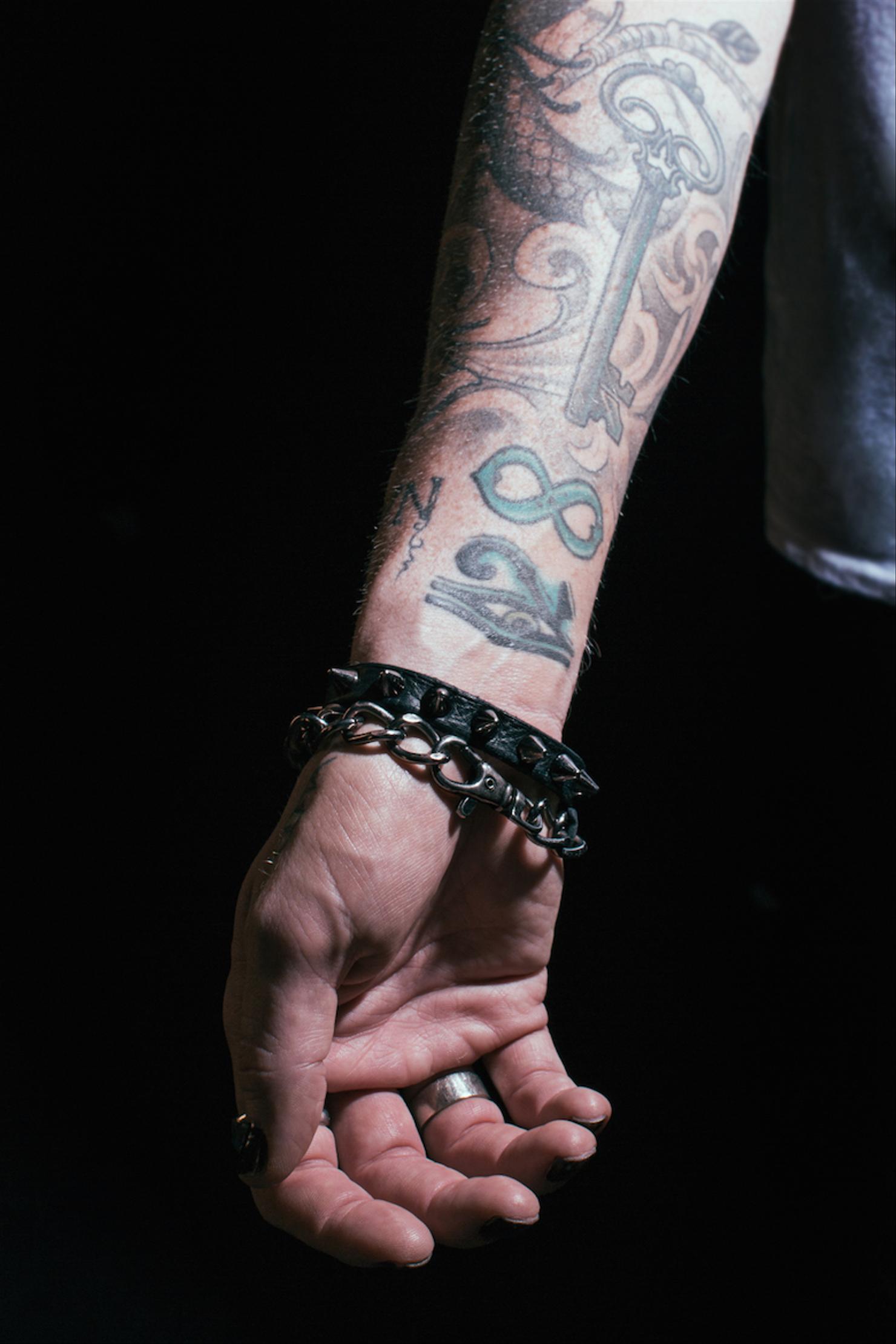
Adam’s old-fashioned key tattoo sits on his left forearm. He said the design came from a piece of art he bought from a friend named Hans. The artwork included a key, and Adam liked that element enough to have it tattooed.

There’s no grand explanation attached to it: he liked the shape and wanted it on his arm. The key has a vintage look, with a decorative top and a long shaft that sits neatly beside the nearby infinity symbol.

It’s a good example of how personal history and visual taste share space in Adam’s collection. Some tattoos carry a clear message; others belong because the design simply felt right.

The infinity symbol is about the energy of performing

Adam Lambert baroque arm sleeve tattoo

Near the key is Adam’s infinity tattoo. He connected it to the exchange between performer and audience: he sends out energy, the crowd returns it, and the feeling keeps moving between them.

That’s more specific than the usual “forever” meaning. Adam wasn’t talking about an endless relationship or an abstract promise. He meant the give-and-take of a live show, where the singer and audience shape the atmosphere together.

The small loop also gives the busier forearm a simple visual pause. It’s easy to pick out in close-up photos without competing with the lettering or the key. Together, the three designs suggest a small vocabulary of performance: music, connection and the opening of a door.

A Greek god and Baroque ideas fill the upper arm

Adam Lambert Greek god arm sleeve tattoo

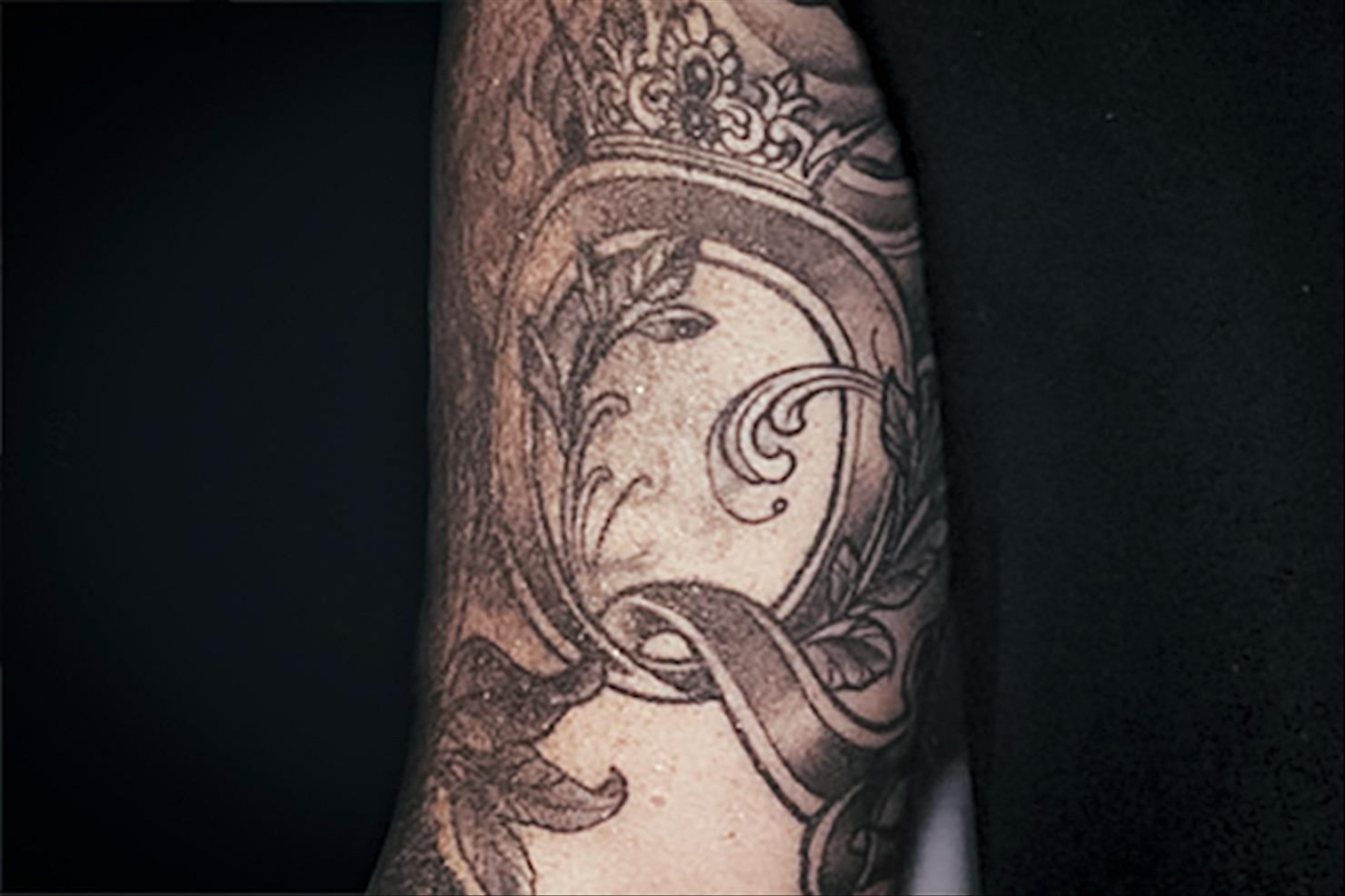
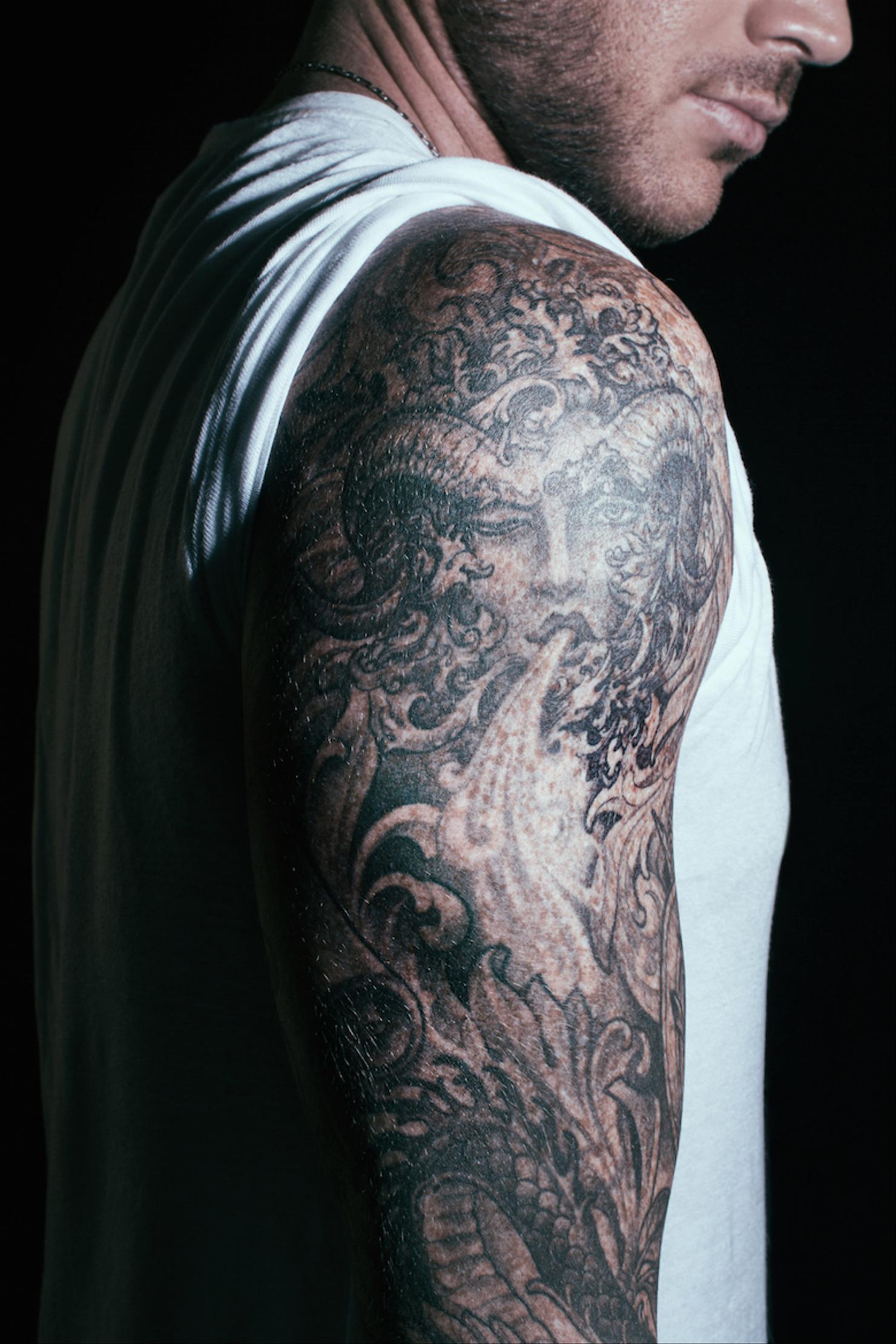
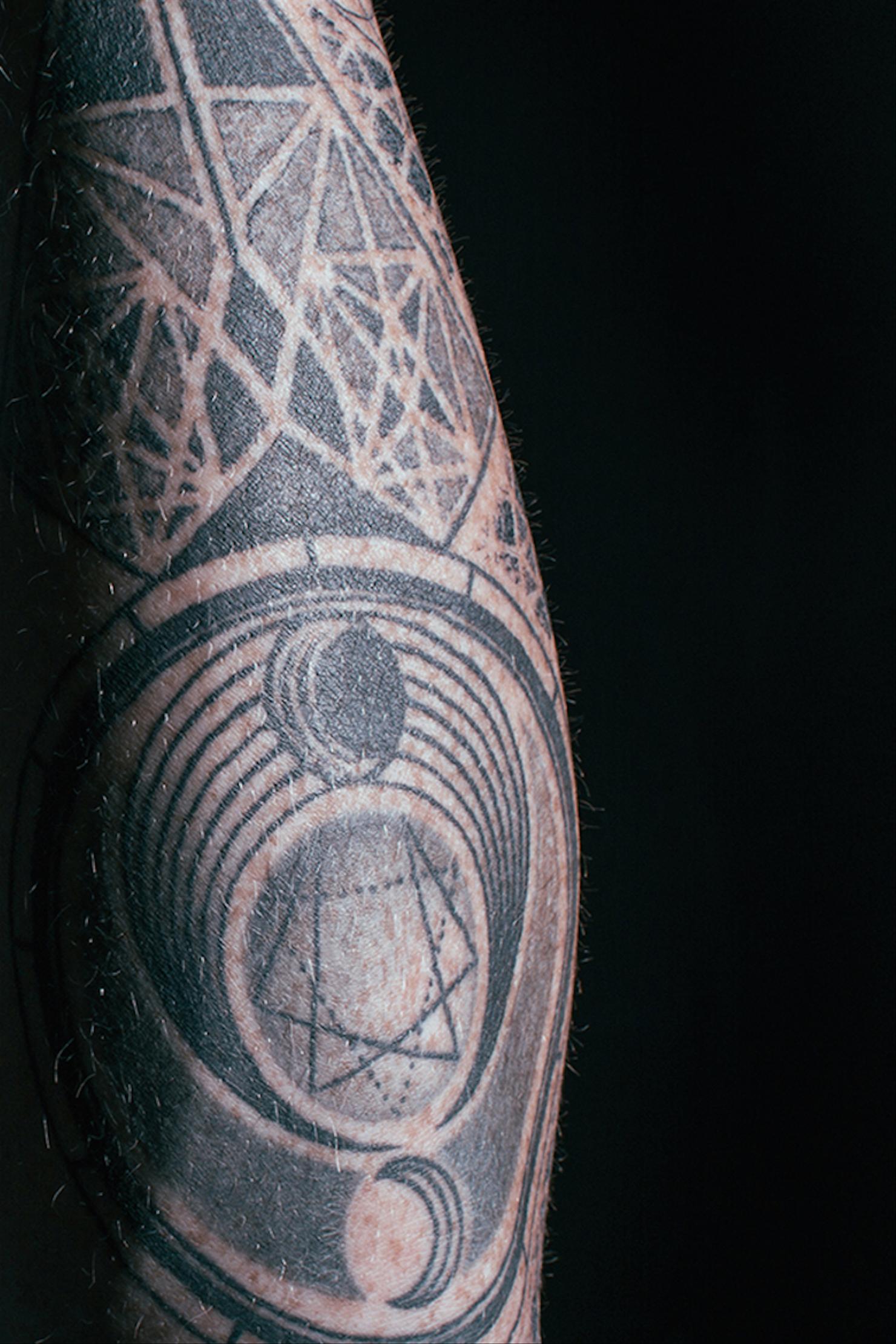
The larger tattoo on Adam’s upper arm has a more theatrical feel. He has described its central figure as something like Dionysus, the Greek god associated with wine, parties, art and creativity. It isn’t meant as a strict textbook illustration: Adam has noted that Dionysus can be interpreted in ways that feel both feminine and masculine.

He got this part of the tattoo in Hong Kong. Later, an artist named Kim in Los Angeles expanded the design around it. Adam was drawn to Baroque imagery, including carved stone, architecture and the kind of dramatic ornament he noticed while walking around Paris.

Curls, faces, ornamental shading and shifts from light to dark make this a dense black-and-grey section. It took several sittings, allowing the skin to heal before the artist returned to build up the shadows and highlights. That gradual work gives the sleeve depth instead of leaving it as a flat wash of ink.

The mosaic and upside-down triangle make a statement

Adam Lambert mosaic and upside-down triangle arm tattoos

Another section of Adam’s arm has a mosaic-style pattern made from repeated shapes and dark patches. It gives the sleeve an architectural feel. Adam has said he liked the pattern and chose it because it looked cool, which is refreshingly straightforward.

Beside it is an upside-down triangle, a symbol Adam has said represents gay identity. It works as decoration and as a visible statement; he hasn’t described it as a hidden reference. Even among the more intricate sleeve work, the simple shape is easy to recognise.

The contrast gives this part of the arm its punch. The mosaic is textured and asks you to look closer, while the triangle makes its point at a glance.

The Queen tattoo marks a huge chapter in his career

Adam Lambert Queen diamond geometric tattoo

After he began touring with Queen, Adam added a “Q” for Queen. It’s an obvious career reference, but the letter stands for more than a band logo: working with Queen became one of the defining chapters of his life onstage.

He has also talked about a more intricate diamond-shaped tattoo he designed with Maxime from Sang Bleu in London. They began with line work in Adobe Illustrator, worked through the shape together, then transferred it to his skin and shaded it by hand.

The Queen-related tattoos bring two sides of Adam’s taste together: a letter you can recognise instantly and a more abstract design built from geometry, shadow and custom detail.

“Chasing the Original High” sits on his collarbone

Adam Lambert Chasing the Original High collarbone tattoo

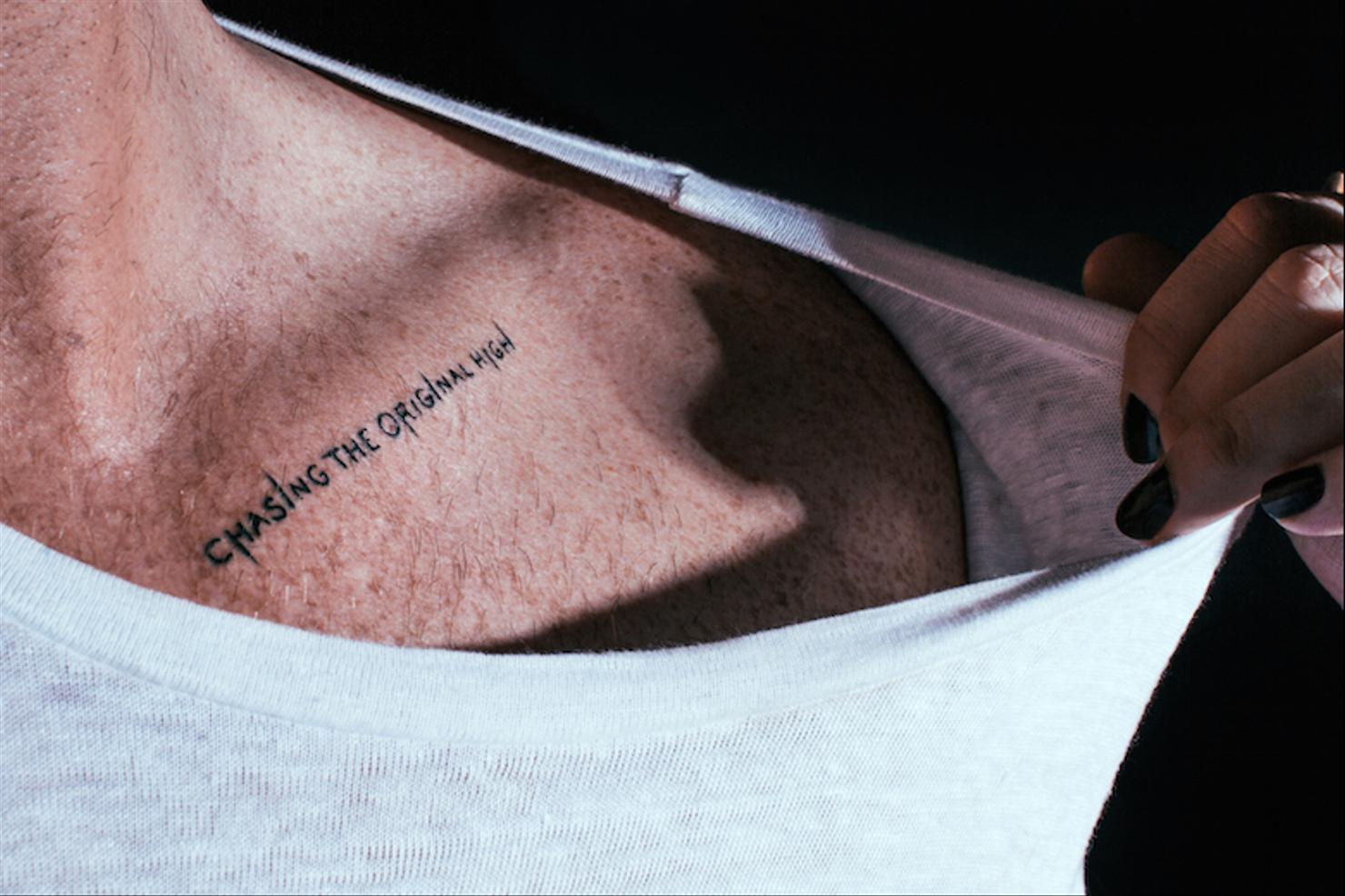
Adam’s “Chasing the Original High” tattoo sits across his collarbone. The words come from the chorus of one of his songs, and he described them as especially relevant to him when he got the piece. Unlike some of the older arm tattoos, this one points straight to a particular period in his own music.

The placement suits the phrase. It shows with an open shirt or stage outfit, then disappears under a fully buttoned shirt. It reads like a personal headline rather than a large chest piece, and the simple lettering keeps the words in focus.

It also makes a direct link between his body art and his music. The arm tattoos often use symbols and images to say something about performing; this one states the thought in plain words.

How the collection fits together

As a whole, Adam’s tattoos feel less like one planned sleeve and more like a conversation that has kept growing. The Eye of Horus came before American Idol and offered protection. The Latin phrase speaks to what music can do. The key came from a friend’s artwork, and the infinity symbol captures the back-and-forth of a live show.

Other pieces bring a more theatrical mood. Dionysus and the Baroque shading add old-world drama; the mosaic adds pattern, while the triangle represents identity. The Queen tattoos mark a major professional chapter, and the collarbone lyric points back to his own songs. A moon tattoo adds a lighter note among all the serious symbolism.

Adam once said he liked abstract tattoos that didn’t have to mean something specific, as long as they looked cool. That might be the best guide to the collection. Some pieces are deeply personal, but they don’t all need to be declarations. Some are memories, some are symbols, and some are artwork he simply wanted to live with.

He has also talked about possibly extending the work onto his chest or back while leaving one arm freer. Whether he adds more or leaves it as it is, the existing tattoos share a few threads: music, performance, visual drama and a willingness to let very different ideas sit side by side.

The interview clip

Adam has explained the stories behind several of these pieces, including the Eye of Horus, infinity symbol, key, Latin phrase and Queen tattoo. In the clip below, he talks through those ideas in his own relaxed way, adding a little context to the photos.

More musician tattoo guides

Chris Carrabba’s ink grew one story at a time

Chris Carrabba’s tattoos feel as if they’ve grown alongside his music. Japanese koi and dragons share space with a traditional rose, stars, arrows and a timepiece linked to a tour night that went a little wrong. There’s also a patch of black ink covering a first tattoo that didn’t go to plan. The collection is colourful, but it still feels personal rather than carefully branded.

Chris has talked about the stories behind many of the pieces, and the details are easy to relate to. Some designs were planned for years; others came from a band or a tour. One began with a teenager, a mail-order tattoo machine and a very wobbly armband. Here’s the story of the tattoos he’s discussed, piece by piece.

His first tattoo became a solid black cover-up

Chris Carrabba blacked-out arm band tattoo

Chris got his first tattoo when he was 15 years old. He wanted a simple armband made of three bold lines. Instead, they came out wavy and raised: the artist was another 15-year-old who had just ordered a tattoo machine through the mail.

He hid the tattoo for about 20 years, though he’s joked that his grandmother knew about it from the day it happened. It’s a funny story now, but the experience was a surprise: Chris had never planned on getting tattooed and had no idea what a normal session was supposed to feel like.

Eventually, Chris covered the original design with solid black ink. He has said he might add a white design over it one day. He also admitted he missed the old, terrible tattoo once it was gone. Even a bad tattoo can become part of your history. The blackout marks both a cover-up and the odd beginning of his collection.

Koi fish and dragons bring Japanese mythology into the sleeves

Chris Carrabba koi fish and dragon sleeve tattoos

The most recognisable work on Chris’s arms features colourful koi fish and dragons. He has connected them to Japanese mythology, where the koi transforms into a dragon. In his collection, the dragon also carries a sense of protection, giving the sleeve an emotional thread as well as striking imagery.

Chris was drawn to Japanese art because it felt older and less predictable than the American traditional and tribal designs that were popular when he began getting more tattoos. He wasn’t chasing a trend; he wanted images with history and a layout that worked on his body.

The arms aren’t identical, but they play off each other. Chris has described wanting a mirror image of fire and water, using movement, colour and opposing shapes to create balance. The koi bring motion, while the dragons add weight and a protective feel.

Meaning came first, but he also cared about how the pieces fit together. That mix helps the sleeves feel considered without turning them into a set of matching flash designs.

The chest rose marks a fresh start

Chris Carrabba traditional chest rose tattoo

Chris’s large traditional rose stretches across his chest. He got it after learning the release date for Dashboard Confessional’s album Crooked Shadows. To him, the rose meant a fresh start: after a long gap between records, things were coming back into bloom.

The timing gave the tattoo a very specific meaning. It wasn’t just a rose he liked; the record was finished, the release date was set and a new chapter was finally real. Chris wanted to remember that hopeful moment whenever he saw the tattoo.

He joked about the risk of tattooing a band name or a partner’s name. The rose let him mark the moment without trying to predict what would happen next. It could remain meaningful even if the album didn’t perform as expected.

That’s one of the strongest ideas in the collection. The album doesn’t have to stay famous for the rose to matter. It holds the feeling of beginning again, and that meaning can shift as life moves on.

The star and wrist details connect to his bands

Chris Carrabba koi fish and star wrist tattoos

Chris has a star tattoo on his wrist, which he has linked to stars in the artwork around Dashboard Confessional and New Found Glory. He doesn’t remember exactly who suggested getting stars, and that’s part of the appeal: not every band-related tattoo starts with a formal plan.

The star is much simpler than the koi and dragon work nearby. That contrast gives the sleeve a little breathing room. The small, solid shape catches the eye before it returns to the colour and detail of the larger designs.

Chris has called it the closest thing he has to a straightforward band tattoo. He has also joked that he hasn’t put out a Twin Forks record since getting the arrows linked to that project, so perhaps the tattoos jinxed things.

Whether he really believes that or not, the pieces show how music appears in his ink without always spelling out a band name. A star or an arrow can hold a whole stretch of his career without looking like merchandise.

The arrows on his legs point back to Twin Forks

Chris Carrabba Twin Forks arrow leg tattoos

Chris also has arrows on his legs, tied to Twin Forks, the other band he has been part of. Arrows became a recurring part of that project’s visual identity. Their long, direct lines feel quite different from the round koi and flowers on his arms.

For a musician, arrows suggest movement without pinning a tattoo to one lyric or date. Twin Forks gives the design a clear starting point, while the image can still carry the broader idea of moving forward.

The placement keeps them in their own space. They disappear under trousers and show clearly in shorts or onstage, without competing with the rose or crowding the sleeves. They add another music-related thread to the collection.

A timepiece and nautical compass mark an important moment

Chris Carrabba timepiece and nautical compass shoulder tattoo

On Chris’s right shoulder, a timepiece joined to a nautical compass marks a moment from a Twin Forks tour with Lucero. He got the tattoo in Dallas on a night when the band had only a short set, leaving him time for a bigger appointment.

The clock is set to an hour that matters to Chris, though he has kept the reason private. The face is visible; the story behind the time belongs to him.

The tattoo session became a story of its own. Chris said he played the show with fresh ink bleeding through his white shirt. He thought the crowd was staring because he was giving the performance of his life, then realised they were probably reacting to the blood. It’s an unglamorous tour memory, which makes it hard to forget.

The compass sits naturally beside the clock. Together they suggest time, travel and the routes between shows, while the memory underneath remains a very specific night on tour.

Why Chris takes his time with the collection

Chris has been tattooed in different parts of the country, but much of his work was done by Janos in South Florida. They built a relationship through long sessions, and Chris has described him as both a brilliant artist and a close friend.

Chris isn’t trying to finish a sleeve as quickly as possible. He has pushed back on bands touring for a week and filling an entire arm in that time. He’d rather add work gradually, let it heal and allow the collection to grow alongside his life.

You can see that slower pace in the finished tattoos. They don’t look like one design placed on his body all at once. Different dates, styles and moods sit together: bright koi near a dark blackout, a traditional rose beside a detailed timepiece. The variety feels natural because the work was allowed to develop over years.

Chris has called the collection an ongoing process, and that still fits. He could add white ink over the blackout, keep building the sleeves or leave some space open. The tattoos don’t need a final version.

How the tattoos fit together

Chris Carrabba’s ink loosely maps his life. The first armband records a teenage decision gone wrong. The koi and dragons reflect Japanese mythology and protection. The rose recalls a new record and a fresh start. Stars and arrows connect to the bands that shaped his work outside Dashboard Confessional.

The shoulder clock holds a private memory from a Twin Forks tour, while the compass gives it a sense of direction. The funny details count too: the bloody shirt, the disastrous first tattoo and the fear of jinxing a band all make this feel like a collection a real person built over time.

No single style rule holds everything together. The common thread is that each tattoo arrived with a reason, even when that reason was simply liking the image. The sleeves are colourful and dramatic, but their stories bring them back to music, friendship, touring and the ordinary mess of growing older.

The interview clip

Chris has talked through his first tattoo, the koi and dragons, the chest rose, stars, arrows and timepiece. The video below adds his humour and his own explanations to the stories behind the photos.

More musician tattoo guides