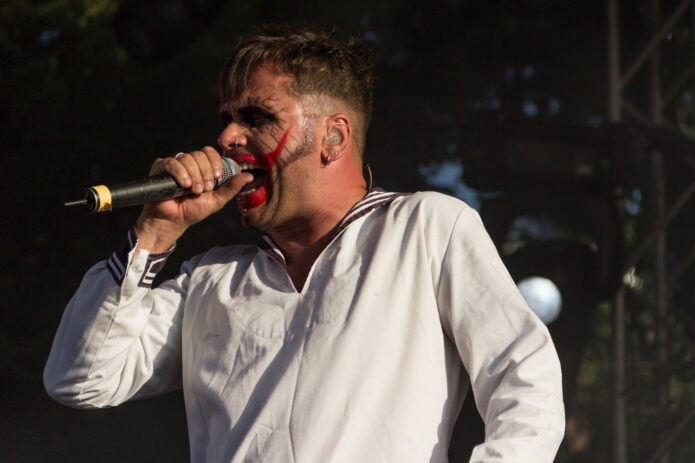
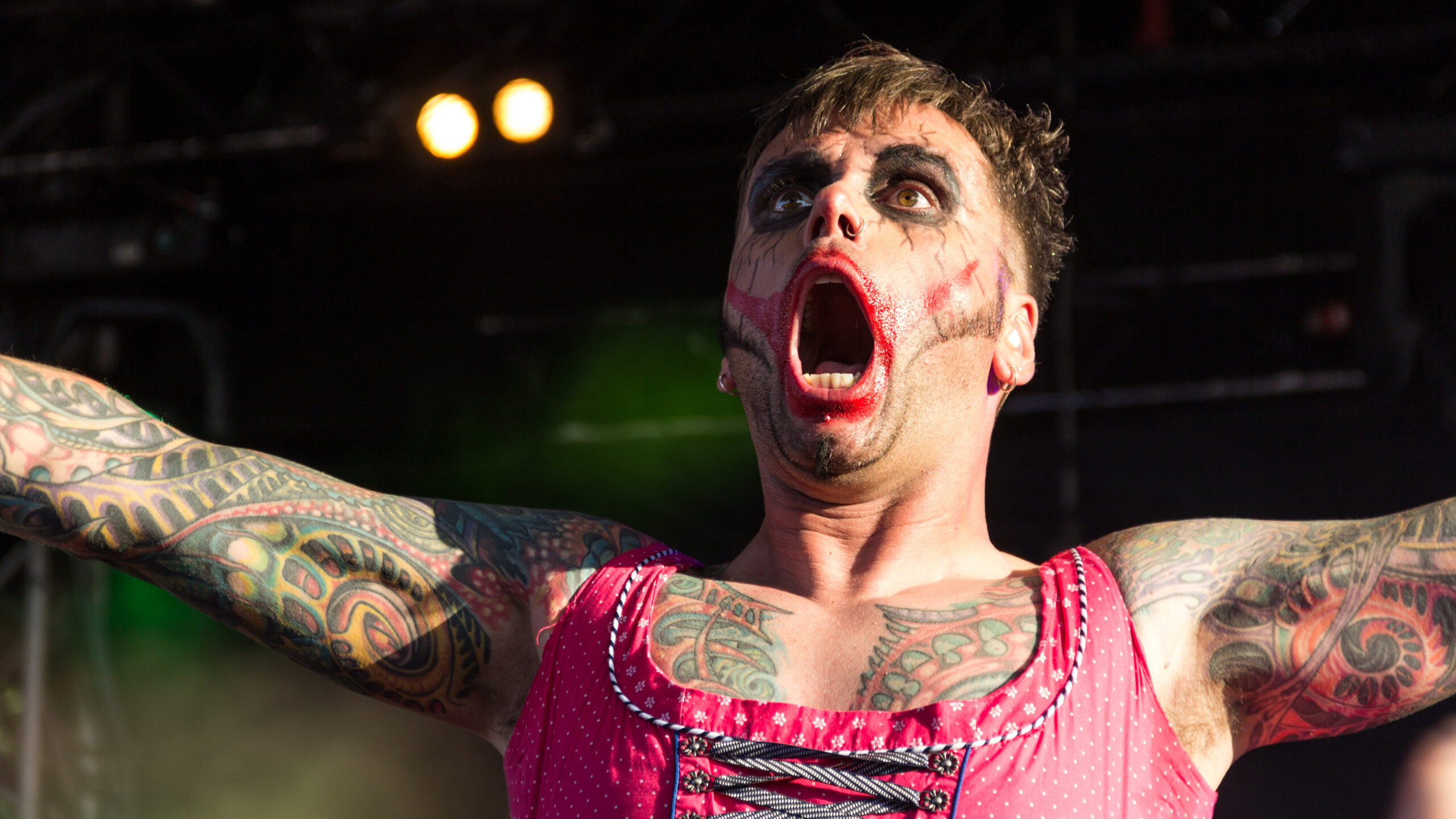
Dero Goi has described his tattoos as one integral piece, not a set of separate flash designs. That phrase is a useful guide to the blackwork across his arms, chest and back: photographs show different sections, but he has said they were meant to connect as one composition.
In an interview about the work, he traced it back to his first tattoo in 1991. He also named the artists who influenced its fractal and biomechanical direction, the Wolfsburg studio and artist who made it, and how his views on pain and changing taste shaped the project.
The interview doesn’t identify each small shape or give every one a separate meaning. Where Dero hasn’t named a symbol, this article leaves it as part of the larger design.
The first tattoo arrived in 1991
Dero says he got his first tattoo in 1991, after thinking it over for a while. He was drawn to black work then, and the first piece was entirely black. He later covered it when his taste changed.
The tattoos people see now didn’t all come from one sitting or one original plan. The early work was more exploratory; the larger project came later and was more deliberate. That first black tattoo is still part of the story, even though the newer design covers it.
It also belongs to an earlier point in Oomph!’s history, before the band’s later visual identity had fully taken shape. The expanded work came as Dero’s ideas about how the tattoos should fit together became clearer.
The collection is inspired by fractal and biomechanical tattooing
Dero has named Aaron Cain and Guy Aitchison as influences on the current direction. He points to fractal and biomechanical tattooing: patterns that branch or repeat, and layered textures that can follow the body’s lines. Those references help explain the connected look without turning every dark patch into a named object.
He wanted the design to feel original. Dero and the artist settled on the motif together, then developed it freehand and refined it with the needle. It wasn’t copied from a book. The interview doesn’t give each section a separate public meaning, so the clearest description is the overall style and how it moves across the body.
Olli at Culture Shocks made the project in Wolfsburg
The work was done at Culture Shocks in Wolfsburg. Dero identifies Olli, the studio’s boss, as the artist. He said he looked through many artists’ portfolios, folders and shop displays before settling on the studio.
Dero and Olli chose the motif together. It was drawn freehand and then refined with the needle, rather than copied from a ready-made design. Having one main artist work across the arms, chest and back helped the composition keep a consistent direction as it grew.
His arms became the most visible part of the work
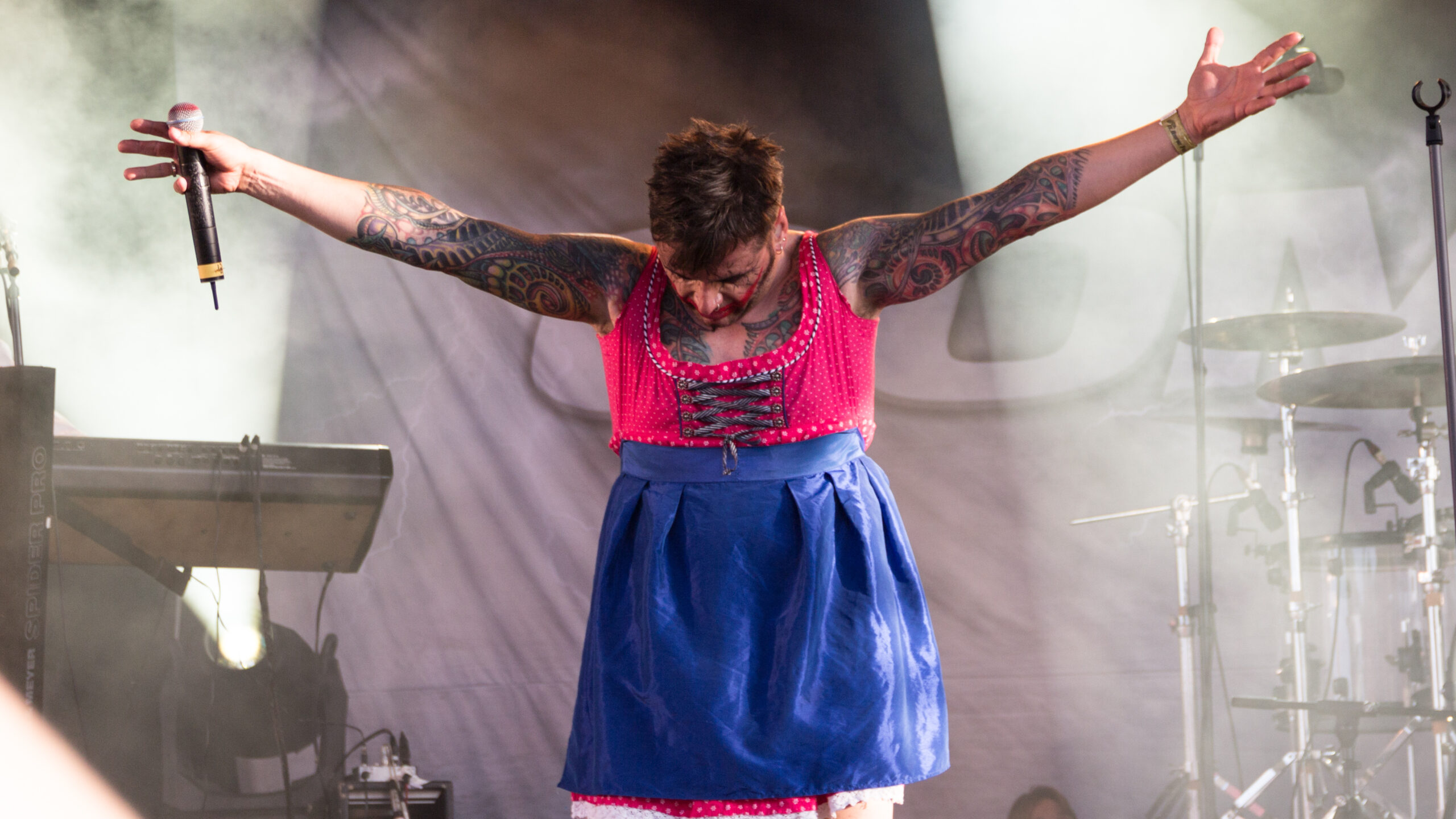
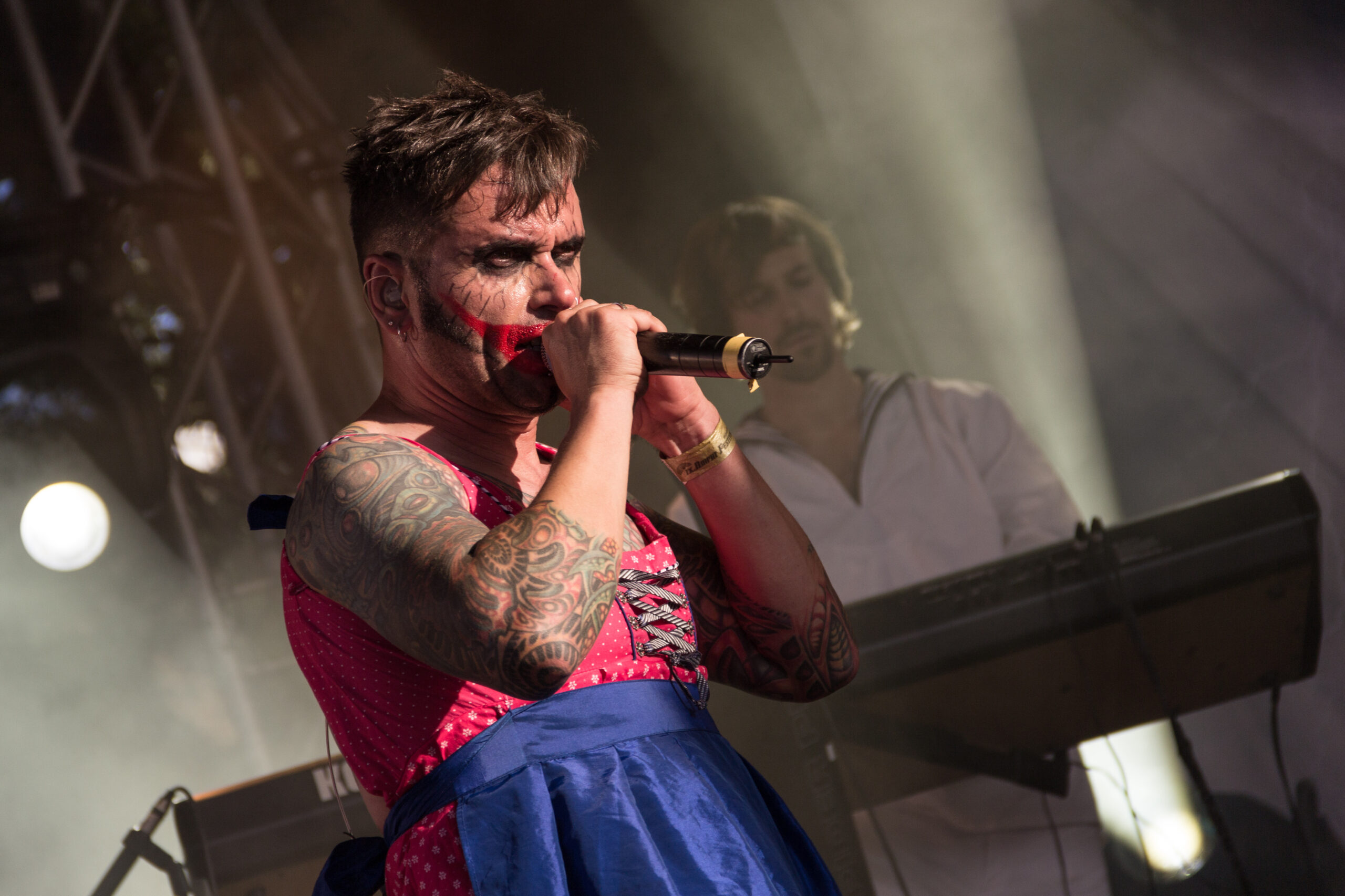
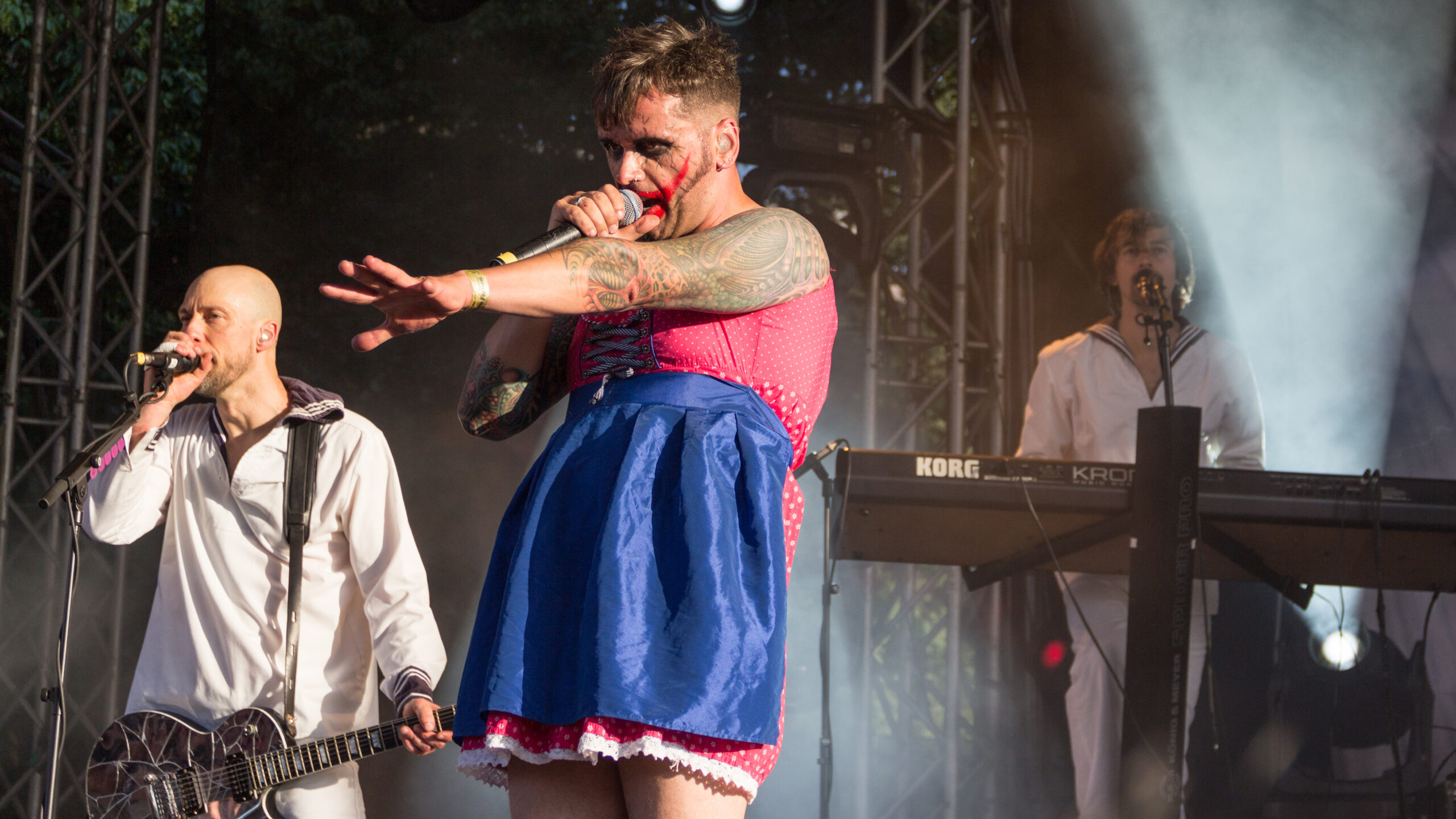
For years, Dero performed fully clothed, so most of his tattoos stayed out of view. That changed when he began wearing outfits that showed more skin. A vest at a Moscow performance made his arms visible, and photos from that period showed people the work wasn’t a new experiment.
He also points to the Supernova video, where part of the upper arm is already tattooed. The project spread from there over time. An older clip shows an earlier stage; later photographs show more of the work.
Dero describes the arms as part of the same piece, not as sleeves with separate themes. A close-up can show one section clearly, but it doesn’t tell the whole story of how the design connects across the body.
The chest and half-back carry the project beyond the sleeves
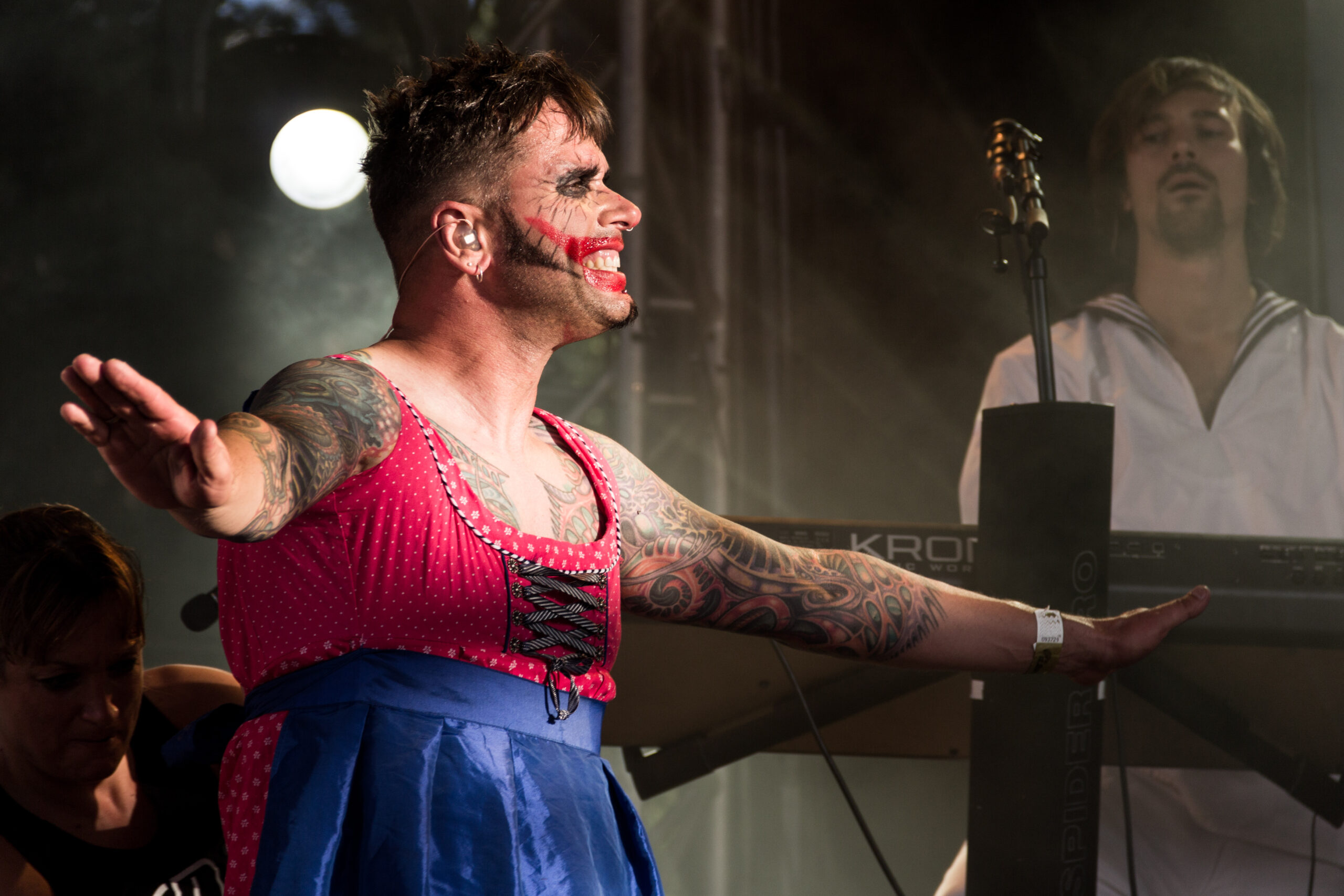
Dero says the work covers both arms, the chest and half of his back. The back carries it beyond a pair of sleeves and around the torso, into an area that isn’t usually visible from the stage.
At the time of the interview, a few small spaces were still to be filled, though the project was nearly complete. The chest photographs show broad areas of connected work rather than one emblem in the centre. Stage lighting and studio portraits bring out different details, and neither offers a full map of the tattoos.
Pain is part of what the tattoos mean to him
Dero says the chest and other sensitive areas hurt a lot. He doesn’t describe that pain as something separate from the finished tattoo; for him, it’s part of the experience and the physical commitment of changing his body.
He connects it with overcoming yourself and with pain traditions in different cultures and religions. His practical advice is that anyone who can’t accept the pain should think carefully before getting tattooed.
The project also took shape over many sessions. Each one added to the same composition, and the time between sessions let the work grow across his body in stages.
Changing taste led to a cover-up and a firm stopping point
Dero says his taste changed enough that he covered his first tattoo. If he wants to alter something again, he would rather rework or refresh existing ink than add a completely new design. He isn’t trying to keep adding separate motifs.
He also has limits on the imagery he’d choose. Tattoos that go against his political, moral or ethical principles aren’t for him. He accepts that other people make different choices, but those boundaries guide his own collection.
At the time of the interview, he was nearly finished and didn’t want to add something unrelated just to fill space. The project already had a direction, an artist and a point where he was ready to stop.
What the documented inventory can safely claim
The record supports a connected project across both arms, the chest and half the back. It began with a black tattoo in 1991, which Dero later covered. The current work was made by Olli at Culture Shocks in Wolfsburg, developed freehand and refined with the needle. Dero has linked its direction to fractal and biomechanical tattooing and named Aaron Cain and Guy Aitchison as influences.
Photographs show dense blackwork, layered textures and branching or repeated forms. The interview says the work grew beyond the upper arm and that a few small areas still needed filling at the time. It doesn’t provide a precise list of every shape, a separate meaning for each section or a complete timeline of every session.
Watch Dero talk about his tattoo project
This interview covers Dero’s influences, the Wolfsburg studio, the pain of the sessions and how the work spread across his body.