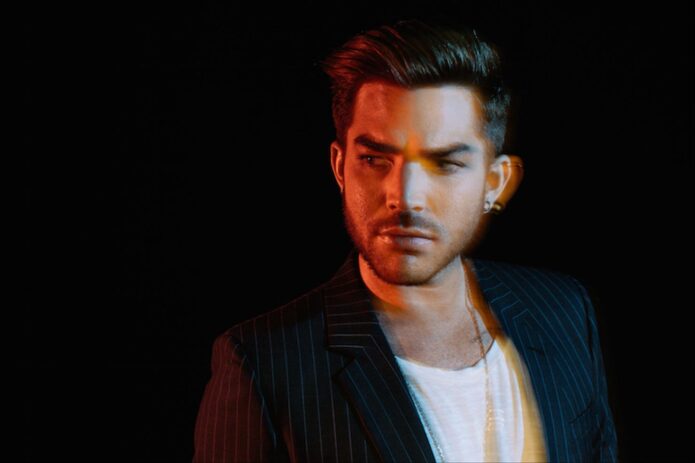
Adam Lambert’s tattoos feel like a collection gathered over time: Egyptian symbolism, old-style lettering, geometric patterns, a Queen tribute and a lyric from one of his own songs. They don’t look as if he planned a matching sleeve from the start. Instead, one idea led to another, and later designs grew around the earlier ones.
That mix makes the collection fun to explore. One piece is about protection, another reflects the energy of performing, and others caught his eye as artwork. Adam has also shared the stories behind many of them, so there’s plenty to say beyond the black-and-grey detail. Here’s a closer look at the best-documented tattoos and how they sit together.
The Eye of Horus was Adam’s first tattoo
Adam has said his first tattoo was an Egyptian Eye of Horus on his forearm, done before he started American Idol. He was about 27. Part of the choice was practical and part of it was a joke: he wanted an eye of protection before millions of people watched him on camera.
He was already interested in Egypt, so the symbol wasn’t a random lucky charm. The Eye of Horus has long been linked with protection, healing and watchfulness. For Adam, it became a small shield for a major turning point. It’s a very Adam kind of origin story, mixing genuine belief with a wink at the drama of the moment.
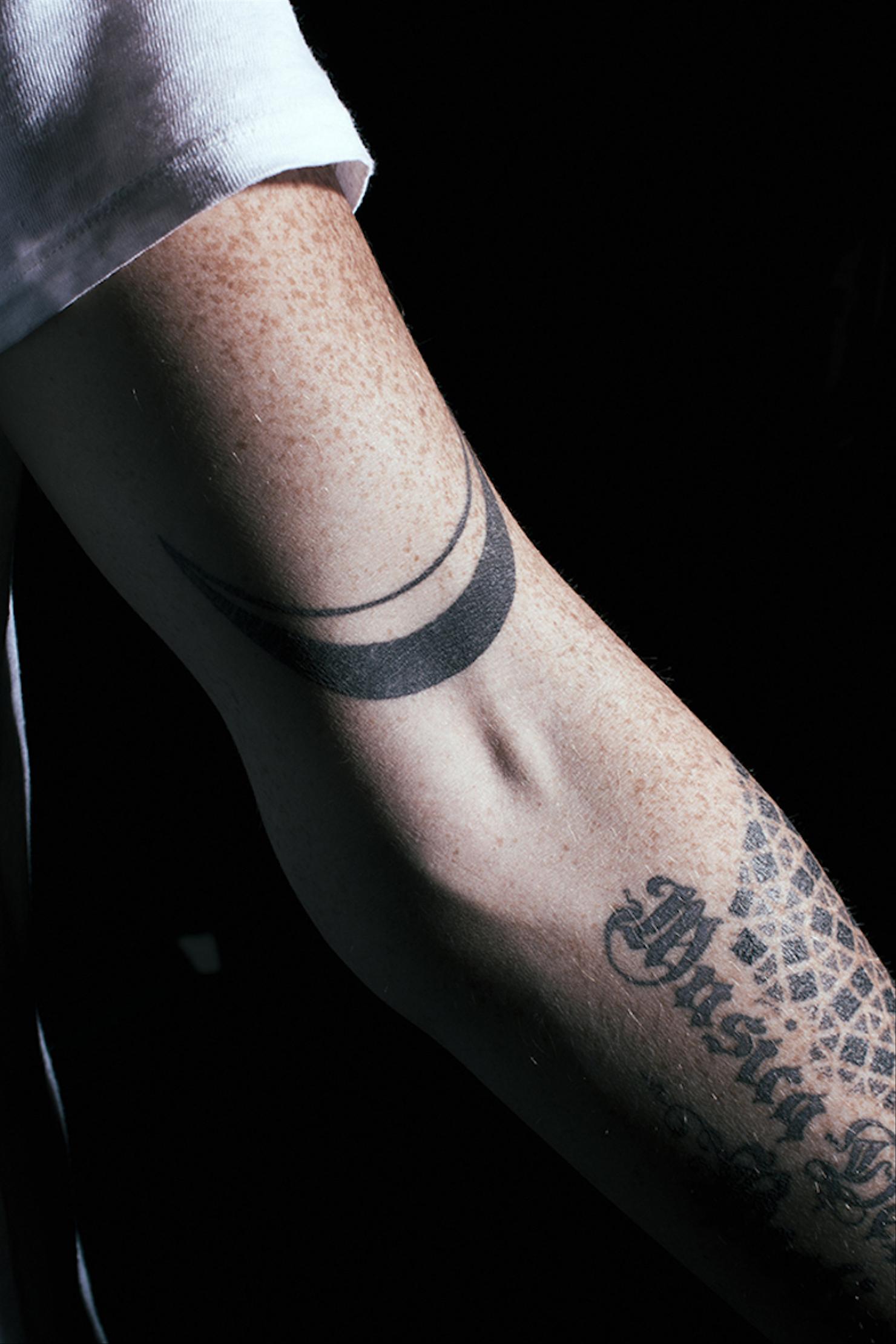
“Musica Delenit Bestiam Feram” runs down his forearm
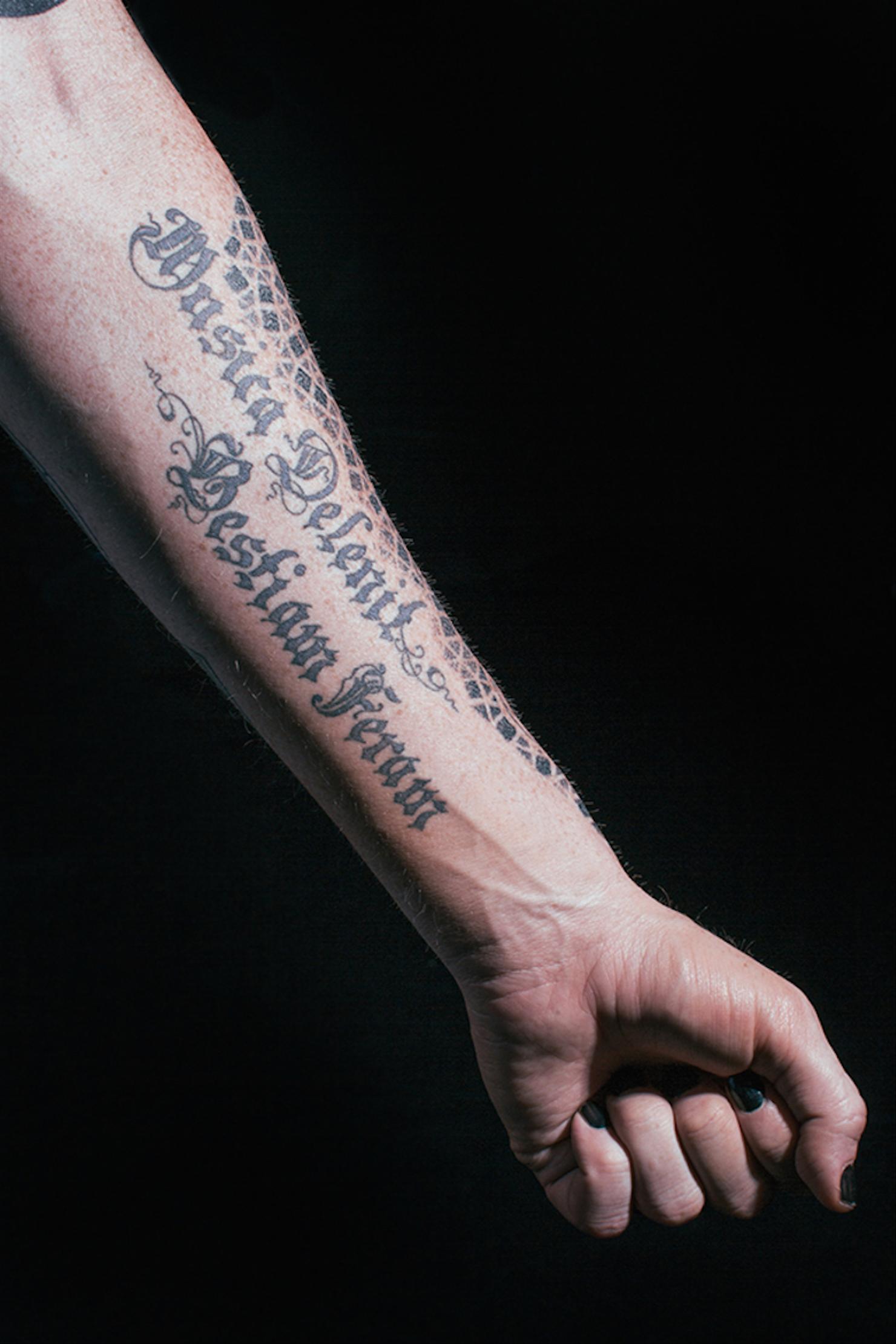
One of Adam’s clearest text tattoos is the Latin phrase “Musica Delenit Bestiam Feram.” It’s often translated as “music soothes the savage beast.” Written in tall, old-style lettering along his arm, it looks more like an inscription from an antique book than a modern slogan.
Adam has talked about how music can shift a mood: it can ease stress, make a workout feel doable or change the atmosphere entirely. He mentioned everything from relaxing music to a night out. The tattoo isn’t only about music as his profession; it’s also about the way music can reset how you feel.
The lettering creates a strong vertical line against the shapes and shading around it. It gives the sleeve a clear focal point without interrupting its theatrical style.
The key came from a friend’s artwork
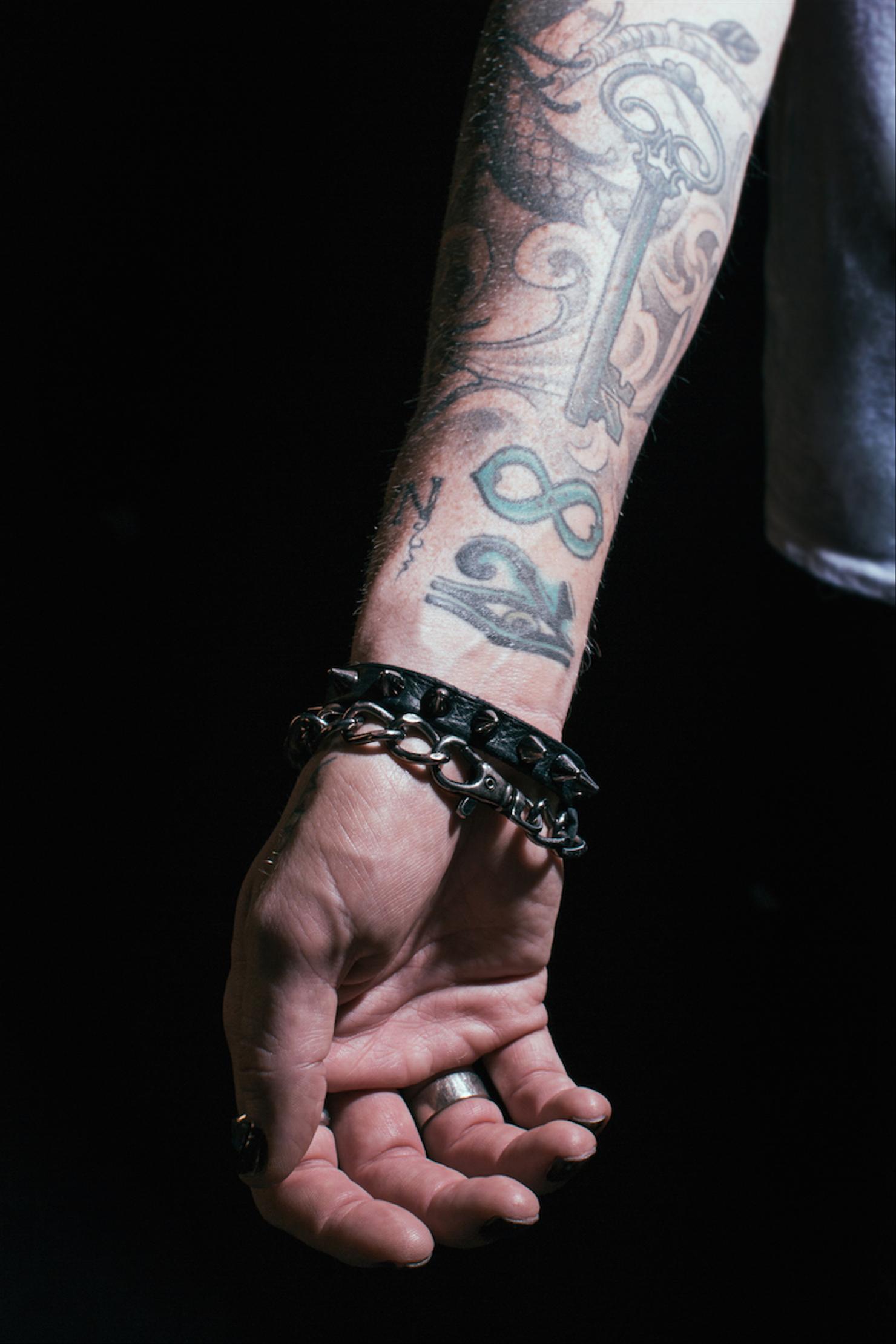
Adam’s old-fashioned key tattoo sits on his left forearm. He said the design came from a piece of art he bought from a friend named Hans. The artwork included a key, and Adam liked that element enough to have it tattooed.
There’s no grand explanation attached to it: he liked the shape and wanted it on his arm. The key has a vintage look, with a decorative top and a long shaft that sits neatly beside the nearby infinity symbol.
It’s a good example of how personal history and visual taste share space in Adam’s collection. Some tattoos carry a clear message; others belong because the design simply felt right.
The infinity symbol is about the energy of performing
Near the key is Adam’s infinity tattoo. He connected it to the exchange between performer and audience: he sends out energy, the crowd returns it, and the feeling keeps moving between them.
That’s more specific than the usual “forever” meaning. Adam wasn’t talking about an endless relationship or an abstract promise. He meant the give-and-take of a live show, where the singer and audience shape the atmosphere together.
The small loop also gives the busier forearm a simple visual pause. It’s easy to pick out in close-up photos without competing with the lettering or the key. Together, the three designs suggest a small vocabulary of performance: music, connection and the opening of a door.
A Greek god and Baroque ideas fill the upper arm
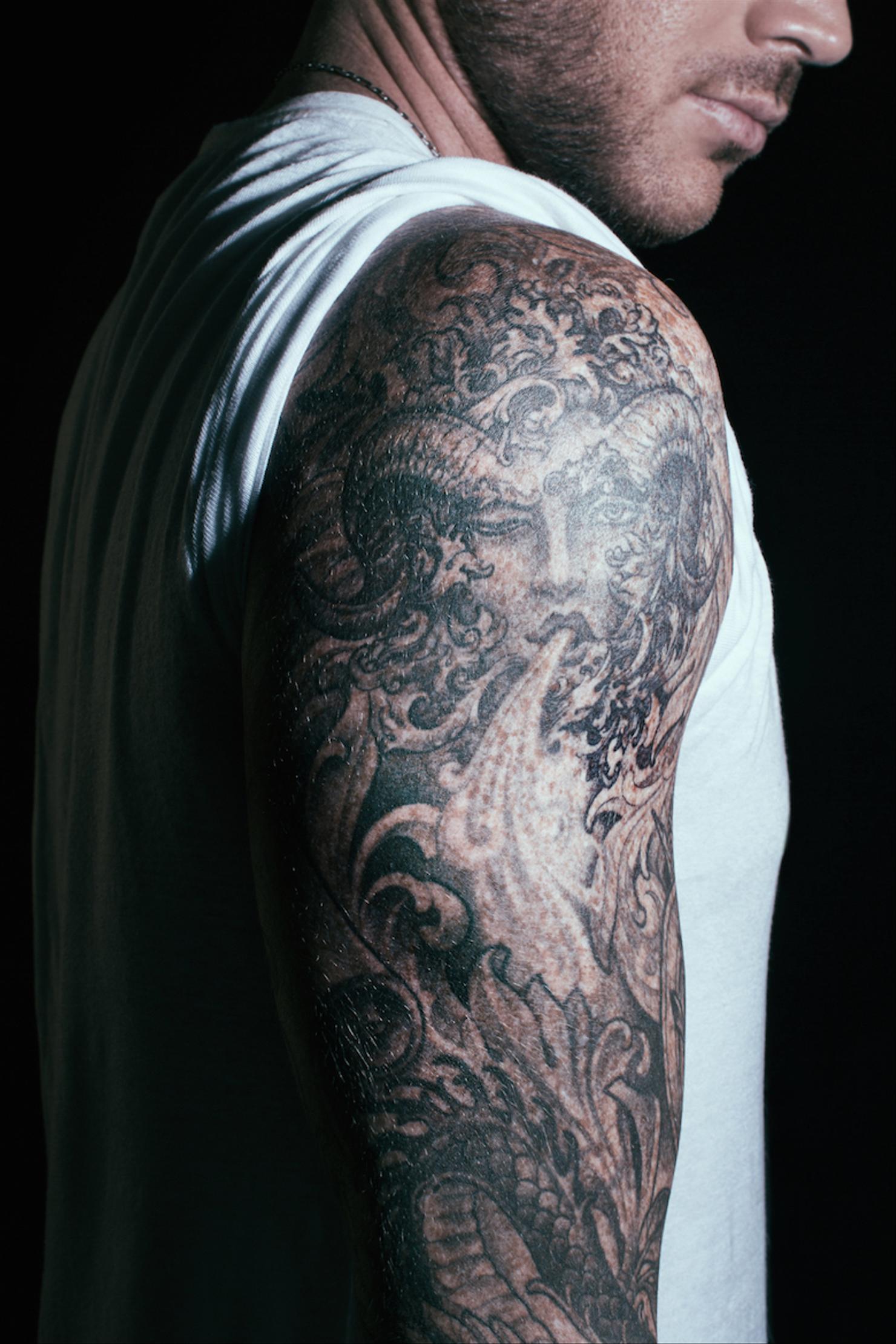
The larger tattoo on Adam’s upper arm has a more theatrical feel. He has described its central figure as something like Dionysus, the Greek god associated with wine, parties, art and creativity. It isn’t meant as a strict textbook illustration: Adam has noted that Dionysus can be interpreted in ways that feel both feminine and masculine.
He got this part of the tattoo in Hong Kong. Later, an artist named Kim in Los Angeles expanded the design around it. Adam was drawn to Baroque imagery, including carved stone, architecture and the kind of dramatic ornament he noticed while walking around Paris.
Curls, faces, ornamental shading and shifts from light to dark make this a dense black-and-grey section. It took several sittings, allowing the skin to heal before the artist returned to build up the shadows and highlights. That gradual work gives the sleeve depth instead of leaving it as a flat wash of ink.
The mosaic and upside-down triangle make a statement
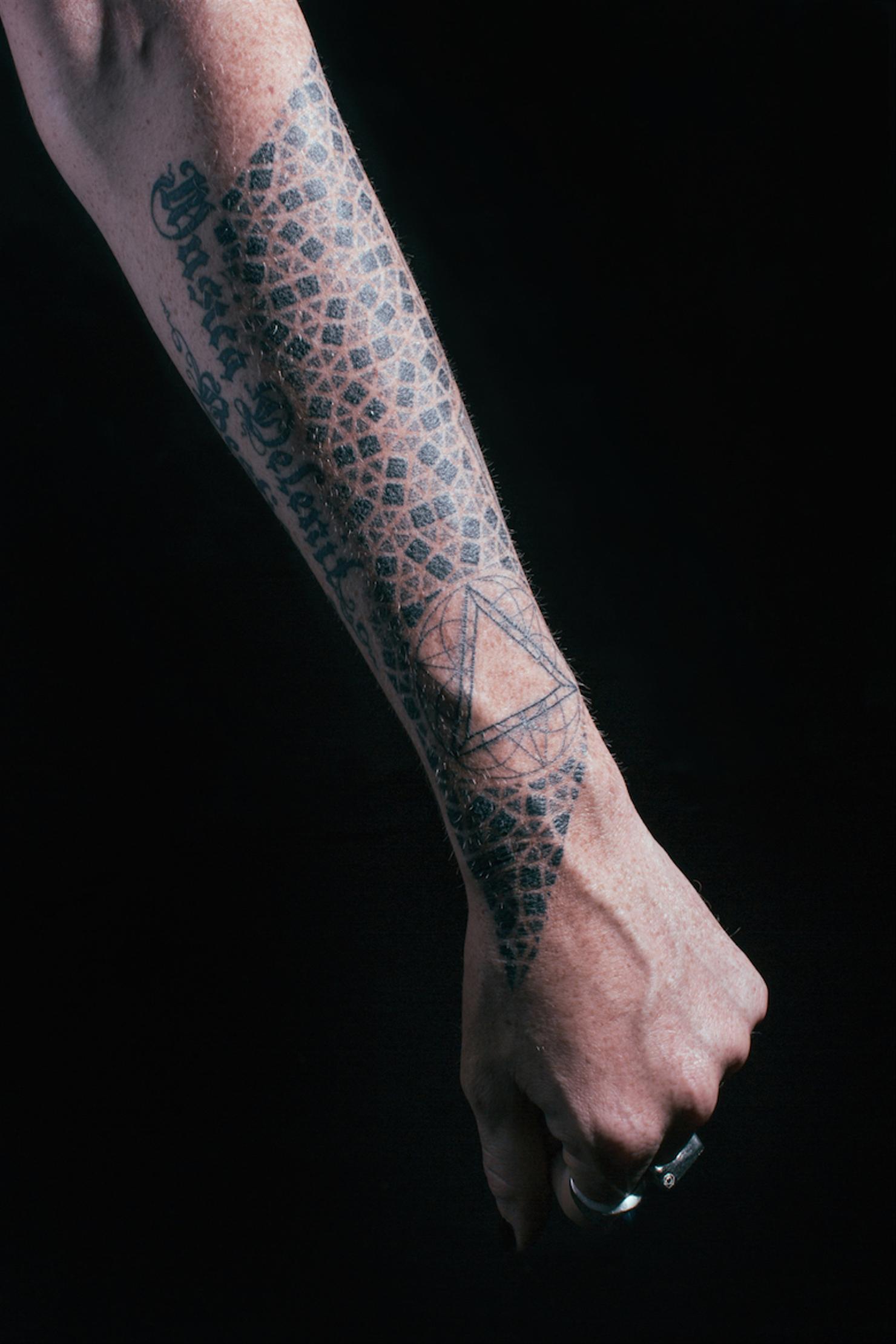
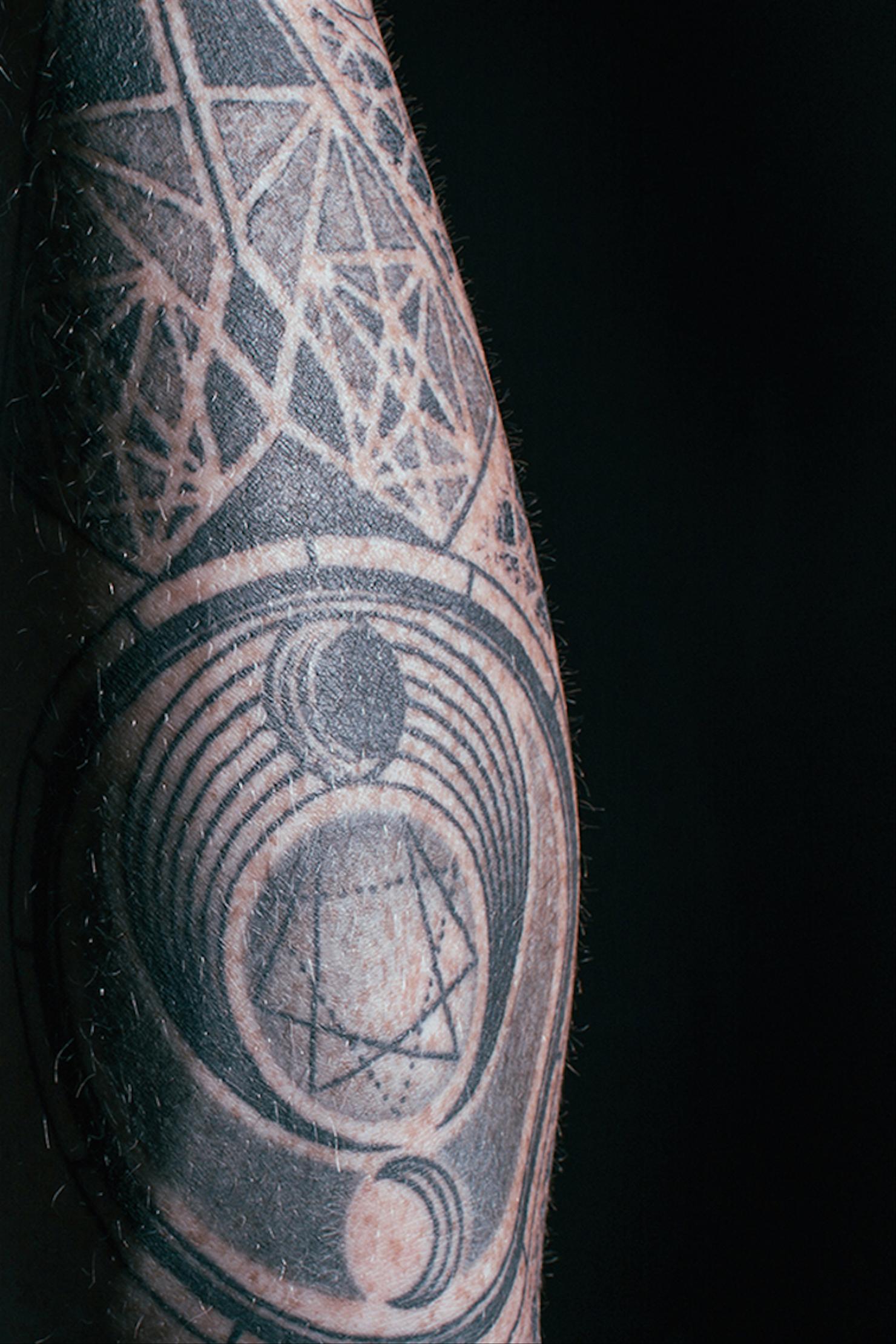
Another section of Adam’s arm has a mosaic-style pattern made from repeated shapes and dark patches. It gives the sleeve an architectural feel. Adam has said he liked the pattern and chose it because it looked cool, which is refreshingly straightforward.
Beside it is an upside-down triangle, a symbol Adam has said represents gay identity. It works as decoration and as a visible statement; he hasn’t described it as a hidden reference. Even among the more intricate sleeve work, the simple shape is easy to recognise.
The contrast gives this part of the arm its punch. The mosaic is textured and asks you to look closer, while the triangle makes its point at a glance.
The Queen tattoo marks a huge chapter in his career
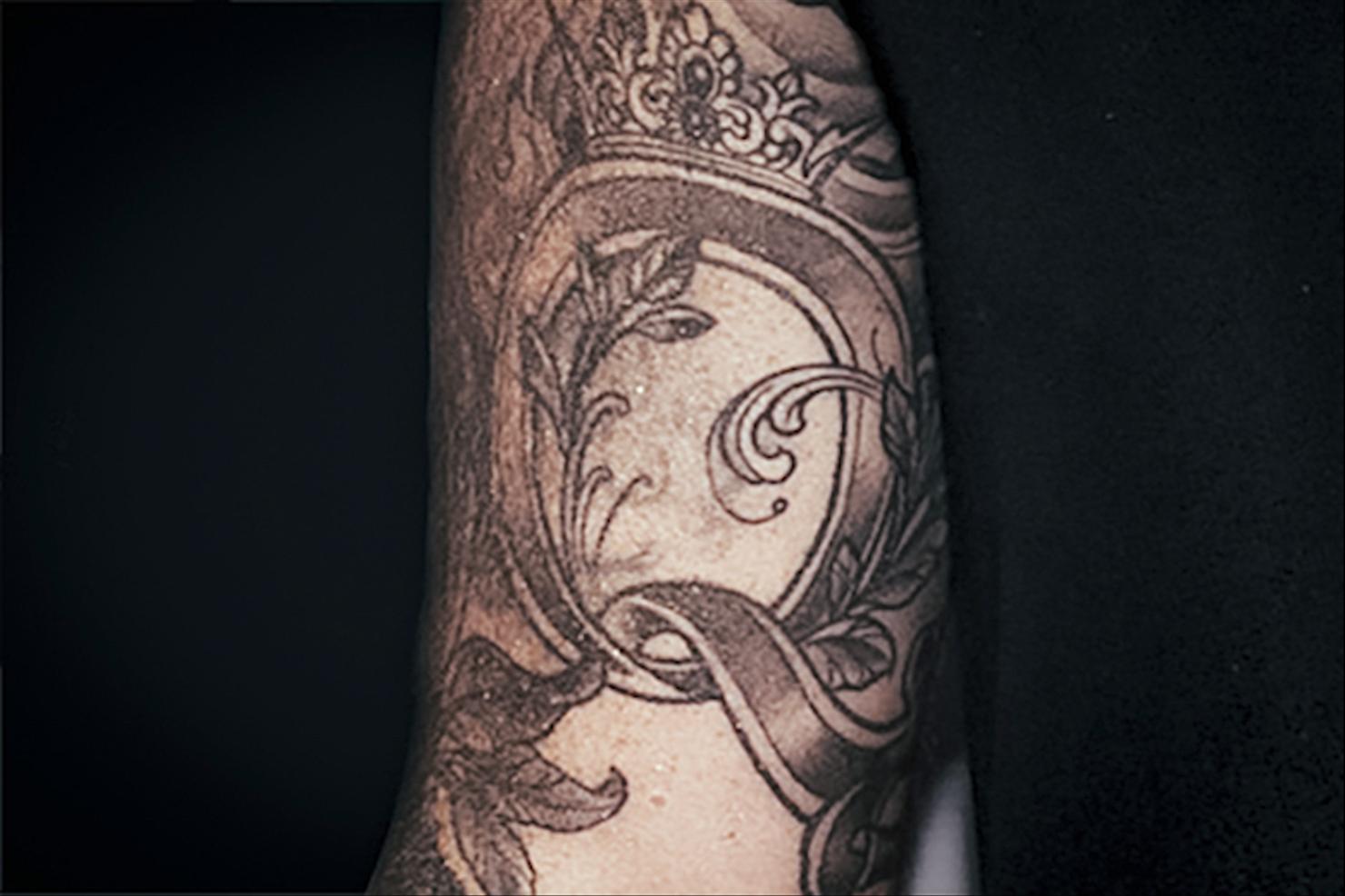
After he began touring with Queen, Adam added a “Q” for Queen. It’s an obvious career reference, but the letter stands for more than a band logo: working with Queen became one of the defining chapters of his life onstage.
He has also talked about a more intricate diamond-shaped tattoo he designed with Maxime from Sang Bleu in London. They began with line work in Adobe Illustrator, worked through the shape together, then transferred it to his skin and shaded it by hand.
The Queen-related tattoos bring two sides of Adam’s taste together: a letter you can recognise instantly and a more abstract design built from geometry, shadow and custom detail.
“Chasing the Original High” sits on his collarbone
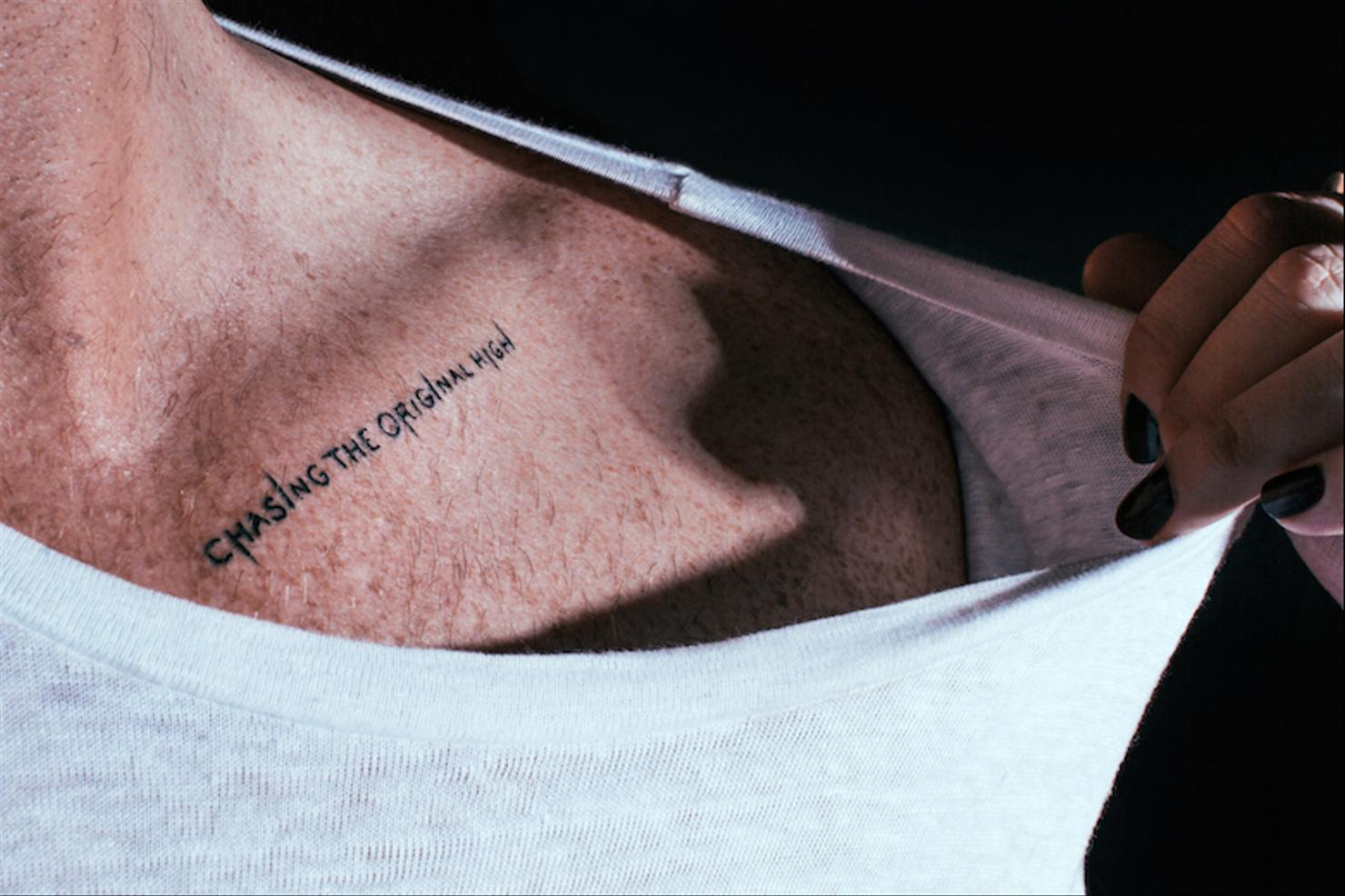
Adam’s “Chasing the Original High” tattoo sits across his collarbone. The words come from the chorus of one of his songs, and he described them as especially relevant to him when he got the piece. Unlike some of the older arm tattoos, this one points straight to a particular period in his own music.
The placement suits the phrase. It shows with an open shirt or stage outfit, then disappears under a fully buttoned shirt. It reads like a personal headline rather than a large chest piece, and the simple lettering keeps the words in focus.
It also makes a direct link between his body art and his music. The arm tattoos often use symbols and images to say something about performing; this one states the thought in plain words.
How the collection fits together
As a whole, Adam’s tattoos feel less like one planned sleeve and more like a conversation that has kept growing. The Eye of Horus came before American Idol and offered protection. The Latin phrase speaks to what music can do. The key came from a friend’s artwork, and the infinity symbol captures the back-and-forth of a live show.
Other pieces bring a more theatrical mood. Dionysus and the Baroque shading add old-world drama; the mosaic adds pattern, while the triangle represents identity. The Queen tattoos mark a major professional chapter, and the collarbone lyric points back to his own songs. A moon tattoo adds a lighter note among all the serious symbolism.
Adam once said he liked abstract tattoos that didn’t have to mean something specific, as long as they looked cool. That might be the best guide to the collection. Some pieces are deeply personal, but they don’t all need to be declarations. Some are memories, some are symbols, and some are artwork he simply wanted to live with.
He has also talked about possibly extending the work onto his chest or back while leaving one arm freer. Whether he adds more or leaves it as it is, the existing tattoos share a few threads: music, performance, visual drama and a willingness to let very different ideas sit side by side.
The interview clip
Adam has explained the stories behind several of these pieces, including the Eye of Horus, infinity symbol, key, Latin phrase and Queen tattoo. In the clip below, he talks through those ideas in his own relaxed way, adding a little context to the photos.