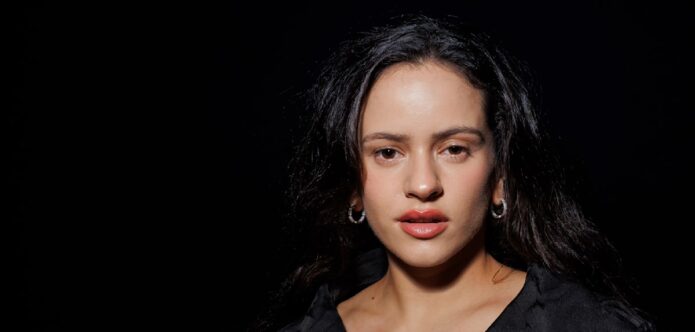
Rosalía’s tattoos mix album lettering with references to art, flamenco and people close to her. The designs covered here span her fingers, feet, thigh, ribs and back; some stories come from Rosalía, while others are documented through photographs and coverage.
Motomami finger lettering
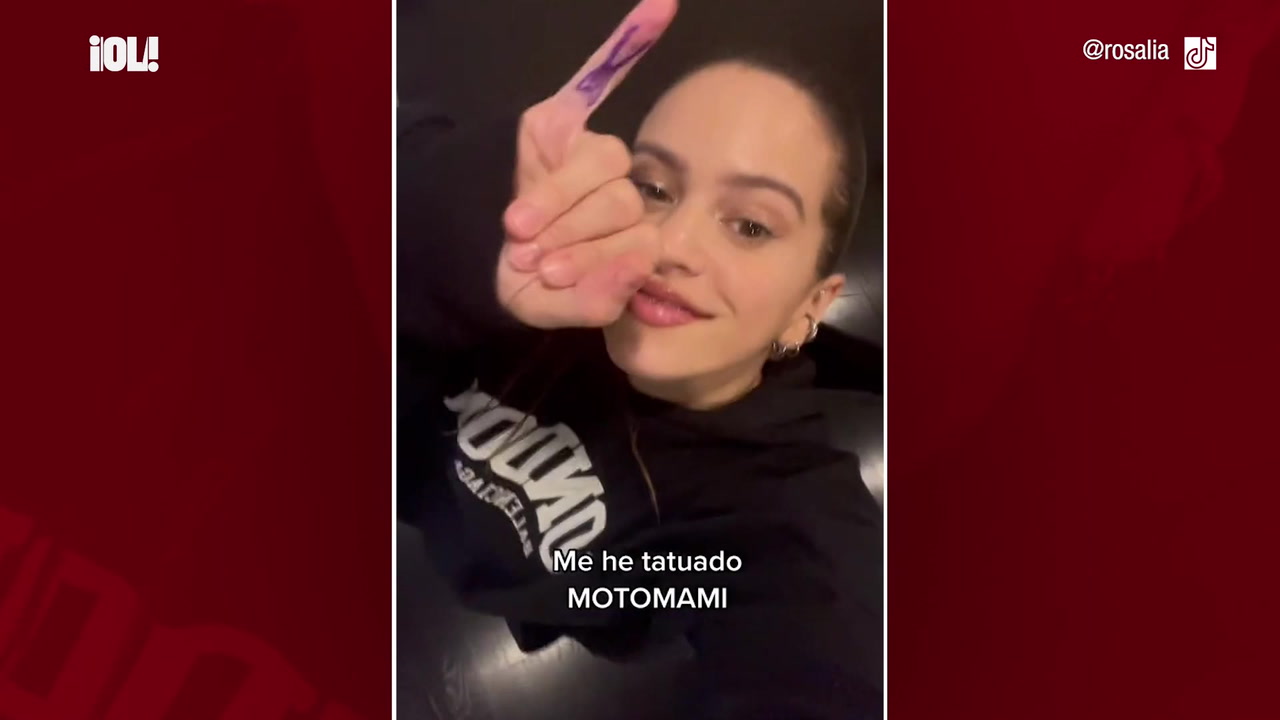
She put MOTO across one hand and MAMI across the other, leaving the thumbs bare. Rosalía shared the process around the announcement of the Motomami World Tour and joked about her mother’s reaction. The short lettering makes the album title readable when she raises her hands.
Finger skin moves and rubs against things, so small letters need room to stay legible. Her four-letter words keep the design compact without adding a longer phrase.
RR sole tattoo
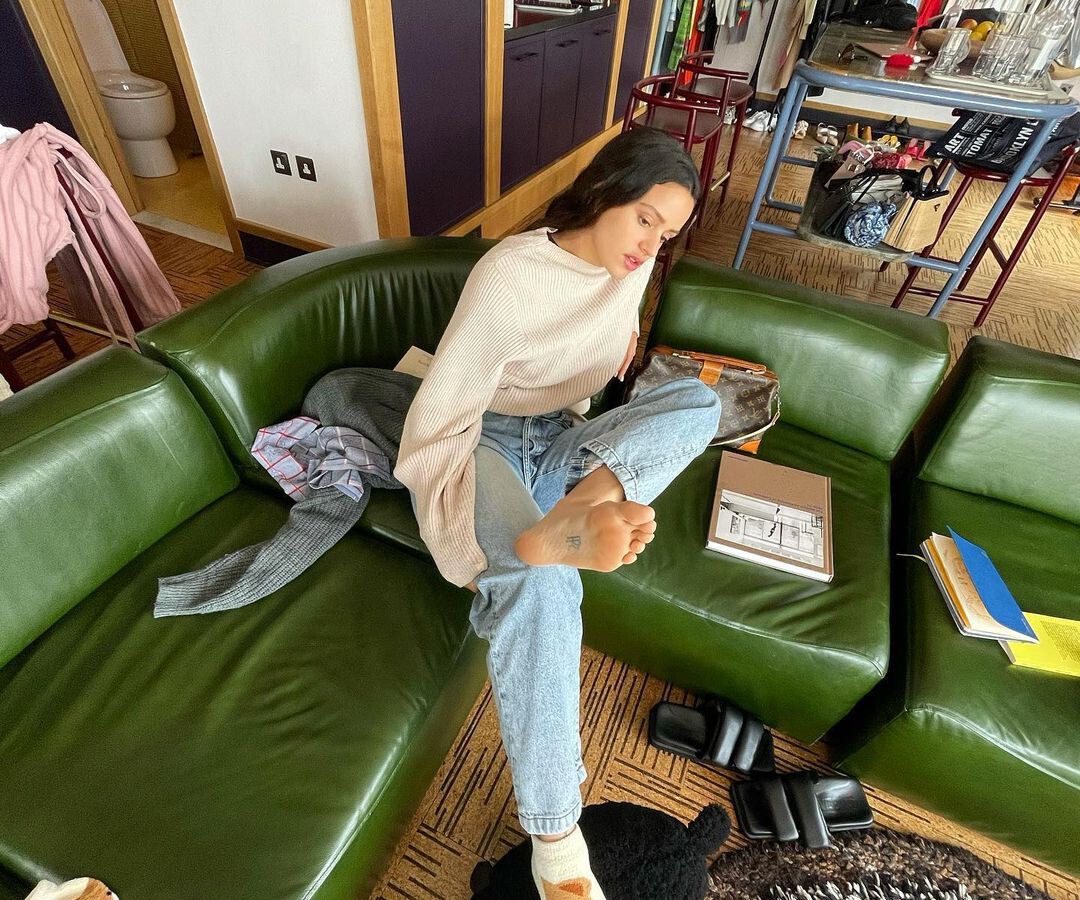
On El Hormiguero, Rosalía took off her shoe to show the double R on the sole of her left foot. She said the two names share an initial and confirmed the tattoo referred to her relationship with Rauw Alejandro at the time. She also said it hurt a lot and she had it done without anesthesia.
The sole is usually hidden by a shoe, which made the reveal part of the story; the tattoo itself is a small pair of overlapping letters.
Valie Export garter clasp tattoo
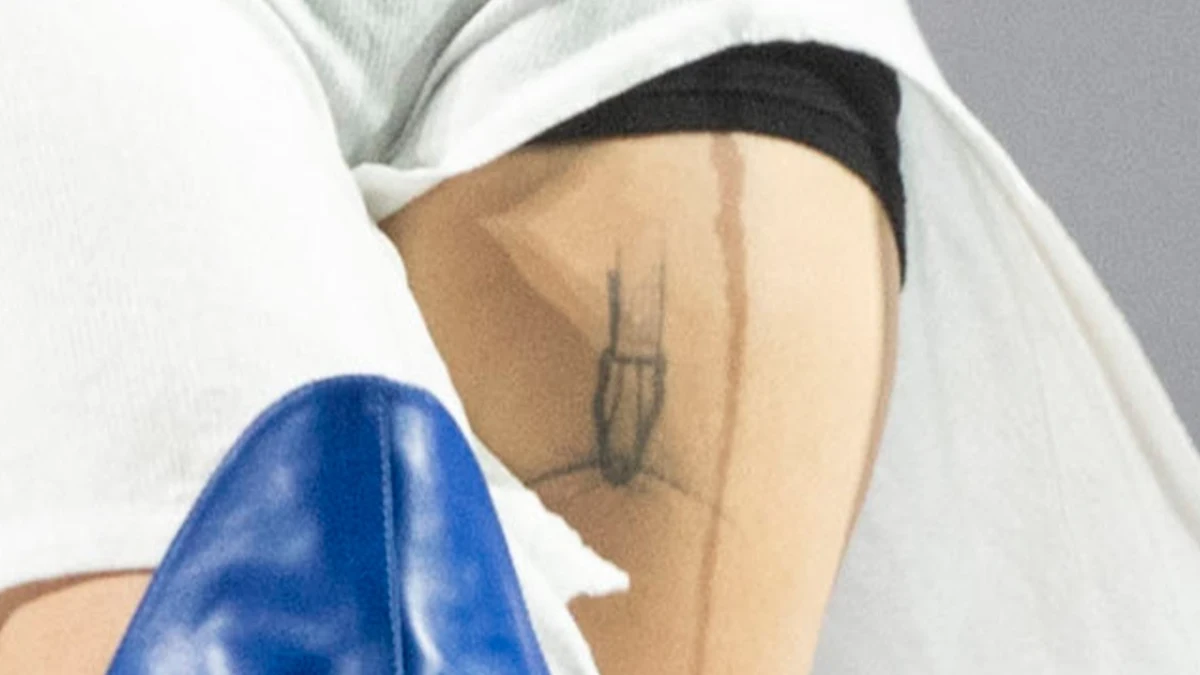
The outlined clasp on Rosalía’s upper left thigh refers to VALIE EXPORT’s 1970 Body Sign Action. Rosalía described the garter symbol as a statement that she decides when she is sexualized. She shares the design with her sister.
The tattoo is a light outline, with a few straight strokes suggesting the strap. Its high placement keeps it under everyday clothes and visible in some stage outfits.
Right instep mandala tattoo
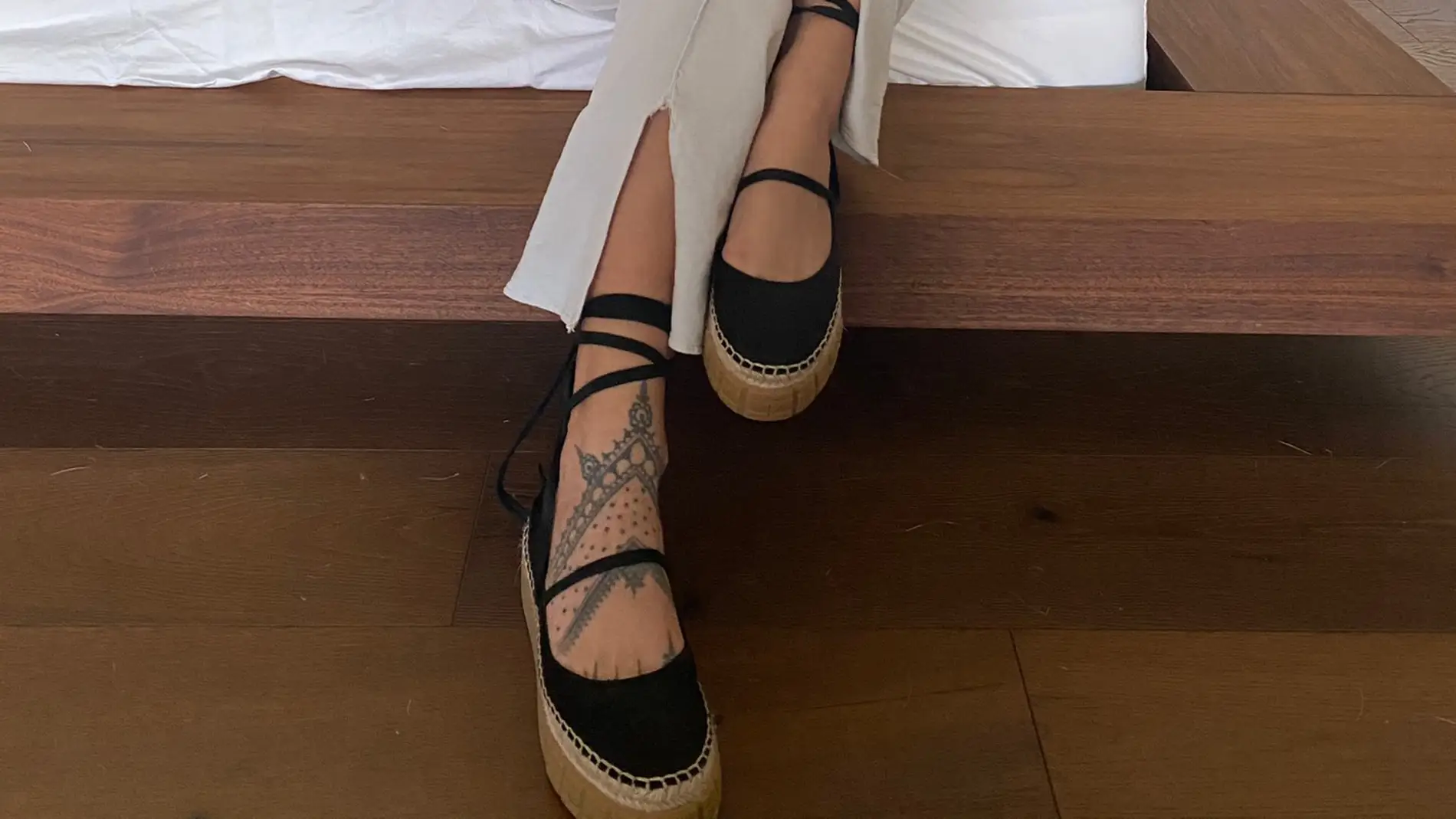
One of Rosalía’s oldest documented tattoos is the black mandala along the top of her right foot, running from the toes toward the ankle. She showed it during an Instagram Q&A and rated the pain ten out of ten. No personal meaning is established in the account, so the design is best described by its concentric shapes, pointed details and dot work.
Flamenco lyric back tattoo
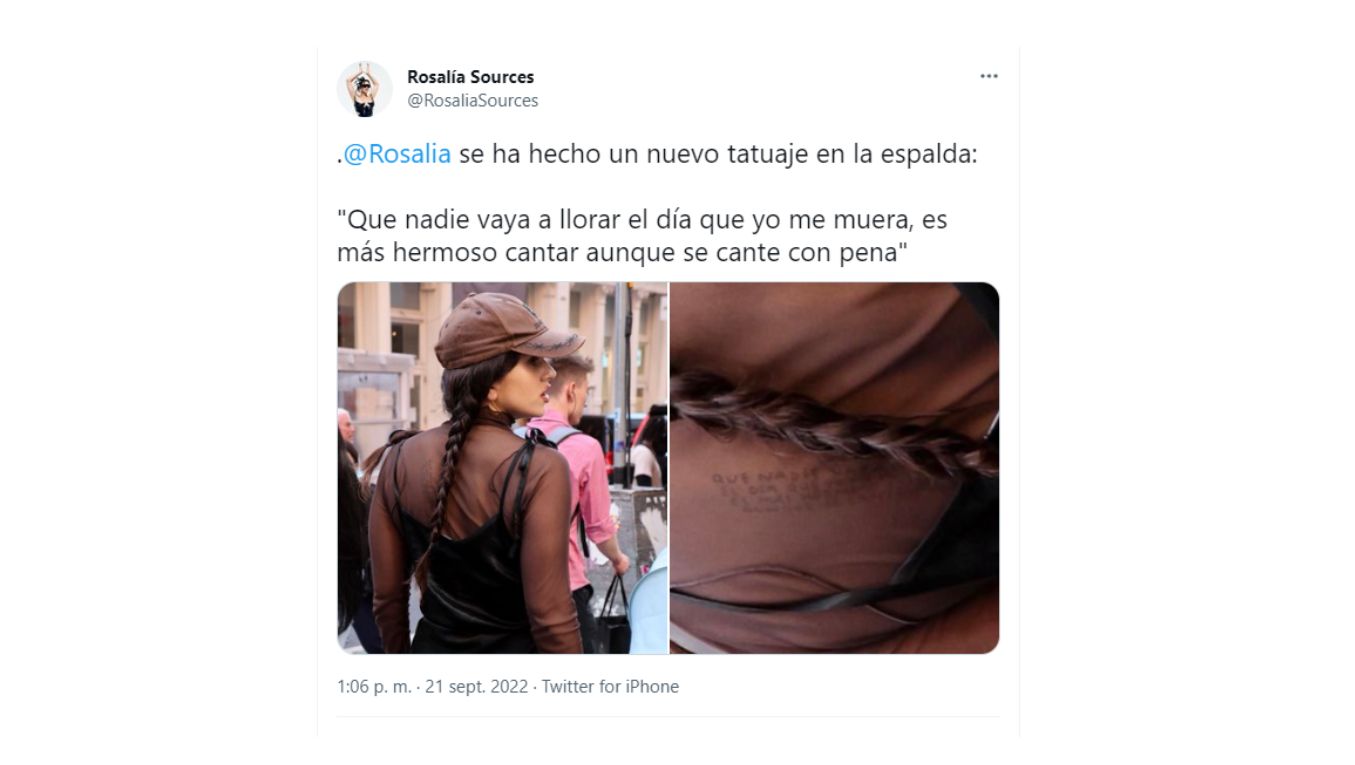
The script across Rosalía’s upper back quotes Manuel Molina’s flamenco song “Que nadie vaya a llorar.” The line says, roughly, that no one should cry on the day she dies because singing through sadness is more beautiful.
It is longer than her hand and foot tattoos, but the handwritten lettering stays fine and open across her back. The song is the reference she chose; the tattoo doesn’t need extra symbolism added to it.
RAUL rib lettering
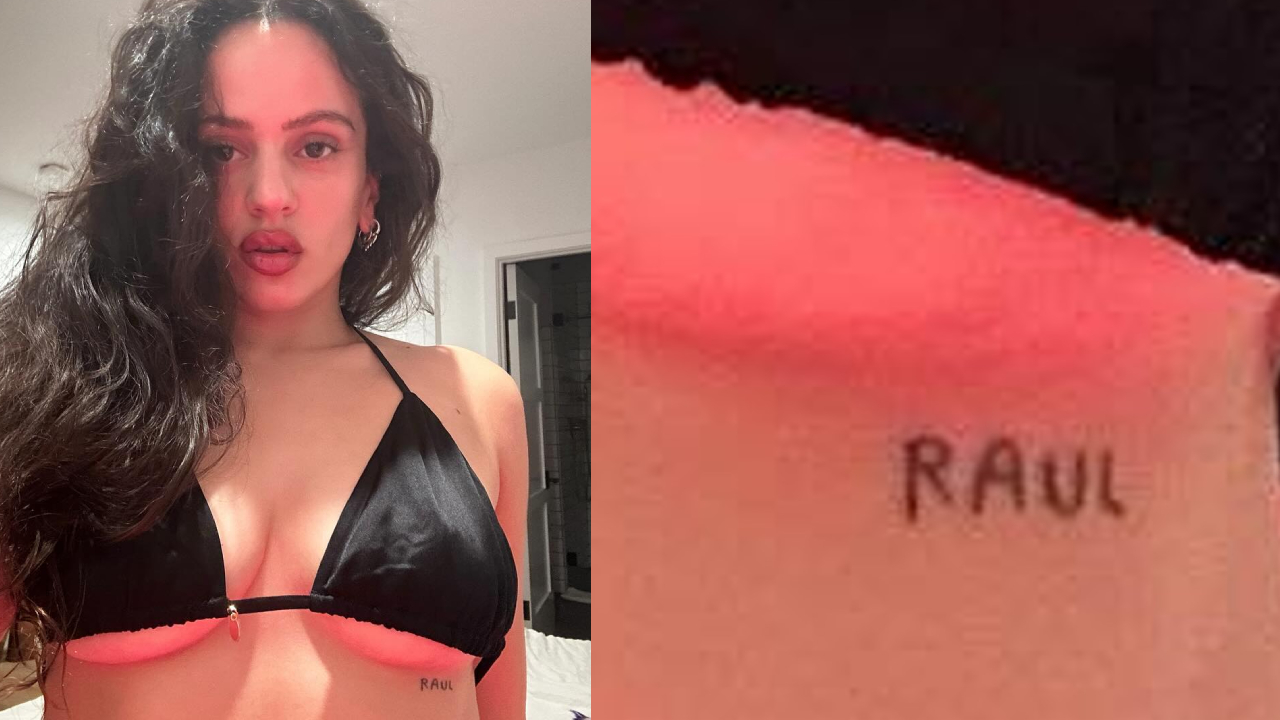
The small uppercase RAUL beneath Rosalía’s left breast appeared in social photos. Coverage connected the name to Rauw Alejandro’s given name, Raúl, but that reading comes from reporting rather than a statement from Rosalía in the sources used here. The plain lettering sits close to the ribs, without decoration.
What makes Rosalía’s collection work
The six pieces covered here range from small hand and foot lettering to a long back lyric. Rosalía has explained some of their stories herself; for the others, the available reports establish the design or placement without giving a personal meaning. Keeping that distinction clear makes the collection easier to read without turning every mark into a symbol.