
Wiz Khalifa has talked about getting covered in tattoos since he was a teenager, and he has followed through. The ink runs across his arms, chest, stomach, back, neck and face. It’s not one tidy sleeve with a single theme; it feels more like a diary that keeps gaining pages as his life changes.
A simple count doesn’t tell much of the story. Wiz has said he wants his tattoos to mean something, while still leaving room for new ideas and people. Some pieces bring him back to Pittsburgh; others connect to family, Taylor Gang, music or the name his grandfather gave him. And some are best left as images, without trying to force a grand explanation onto them.
Here’s what’s documented, with a distinction between what Wiz has explained himself and what can be identified clearly in photographs.
The first tattoo was personal before the fame arrived
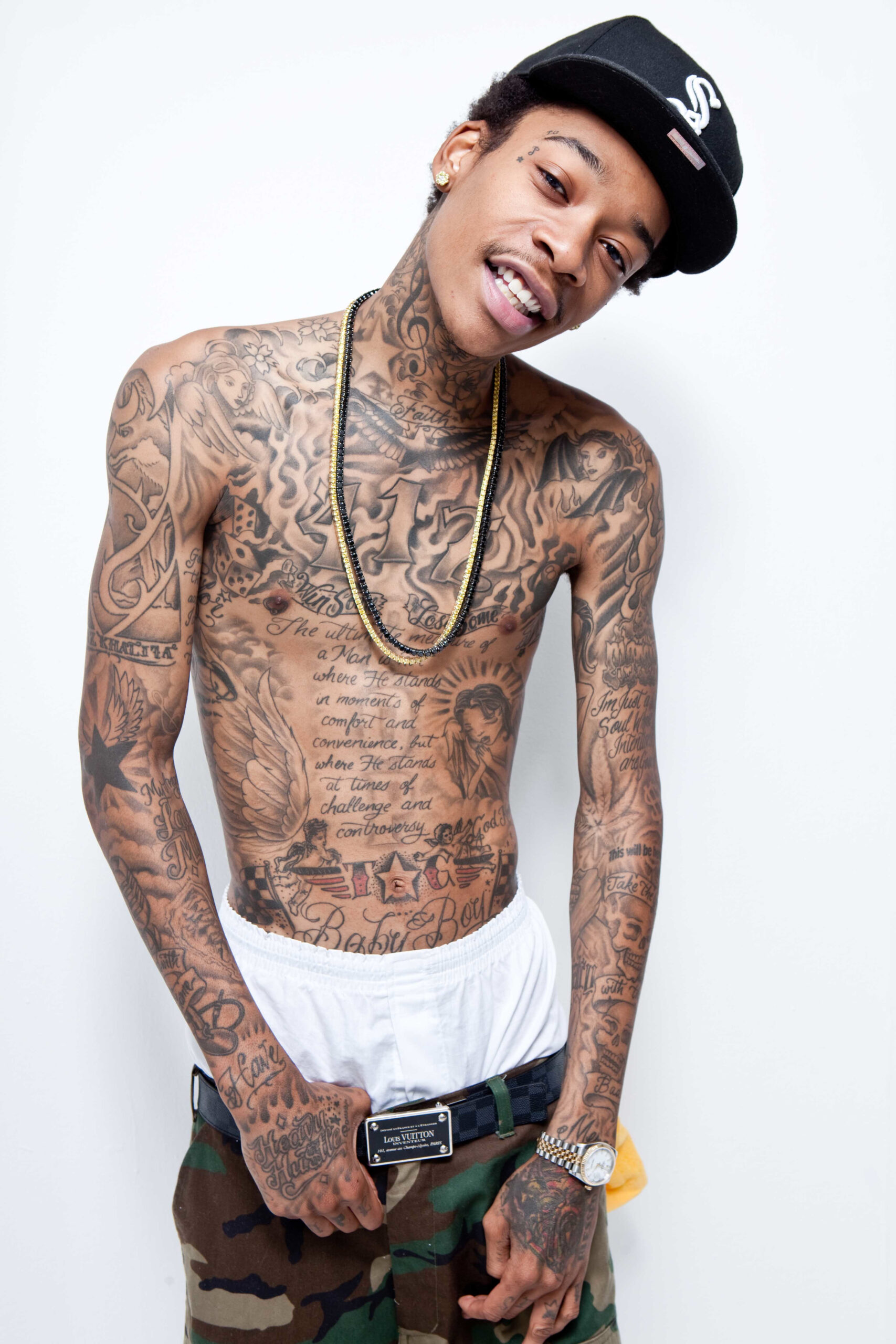
Wiz has given different ages for when he started getting tattoos, but the basic story is consistent: he was young, around 16, and his mother took him to get his first piece. In an interview with Interview, he said it’s on his left arm and carries the name of his first rap group. He has kept the group’s name private because it belongs to his family and early life.
That’s a revealing place to begin. The tattoo belongs to Cameron Thomaz, before the major tours, label records and face ink. It also sits on the left arm, a part of the body that later filled in around it.
Wiz has described his skin as a record of his trials and tribulations. He wants the tattoos to mean something, but he doesn’t talk as if each one needs a dramatic announcement. The first tattoo matters partly because he has kept its name private. It shows the collection began with people close to him, not as an attempt to create a public image.
Wiz on his arm came from a family name
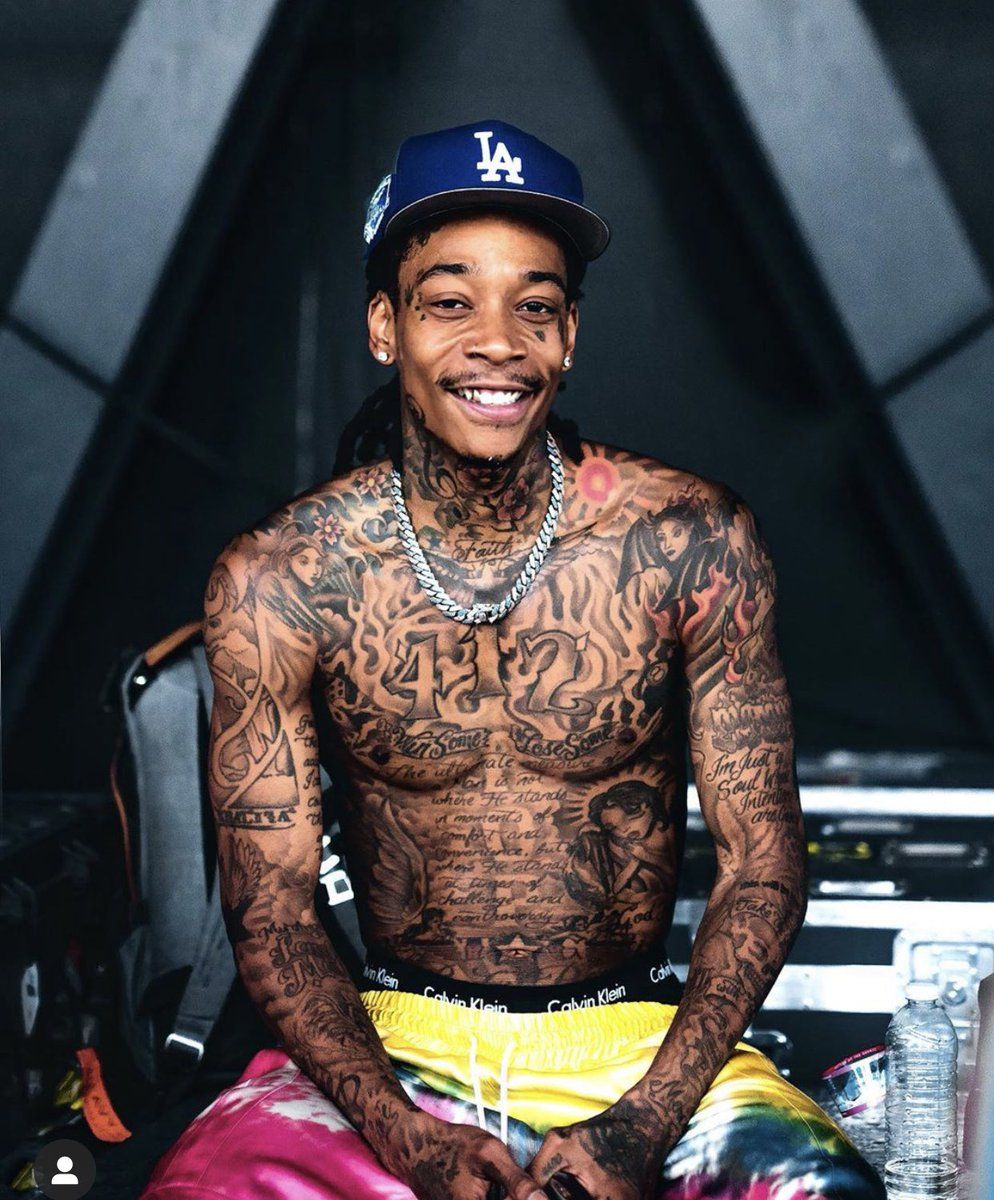
One of Wiz’s best-known early tattoos is his stage name, “Wiz Khalifa,” inked on his arm for his 17th birthday. The story behind it is more than a branding choice. He has said his grandfather gave him the name Khalifa. In the Muslim tradition he grew up with, he connected the word to spreading a message and making an impact on people.
“Wiz” came from wisdom and the nickname Young Wiz. He has said he was good at many things when he was younger, so the name stuck. Making it permanent at 17 was a confident decision, especially while his career was still taking shape. He wasn’t putting a logo on an established brand; he was backing a name he hoped would last.
The tattoo also shows why the collection is more thoughtful than the weed-and-party shorthand often attached to Wiz. It’s a name tattoo, but also a family tattoo and a statement of belief. It links his public identity to his grandfather, his faith and the idea that music can leave a mark on people.
The Martin Luther King Jr quote takes over his stomach
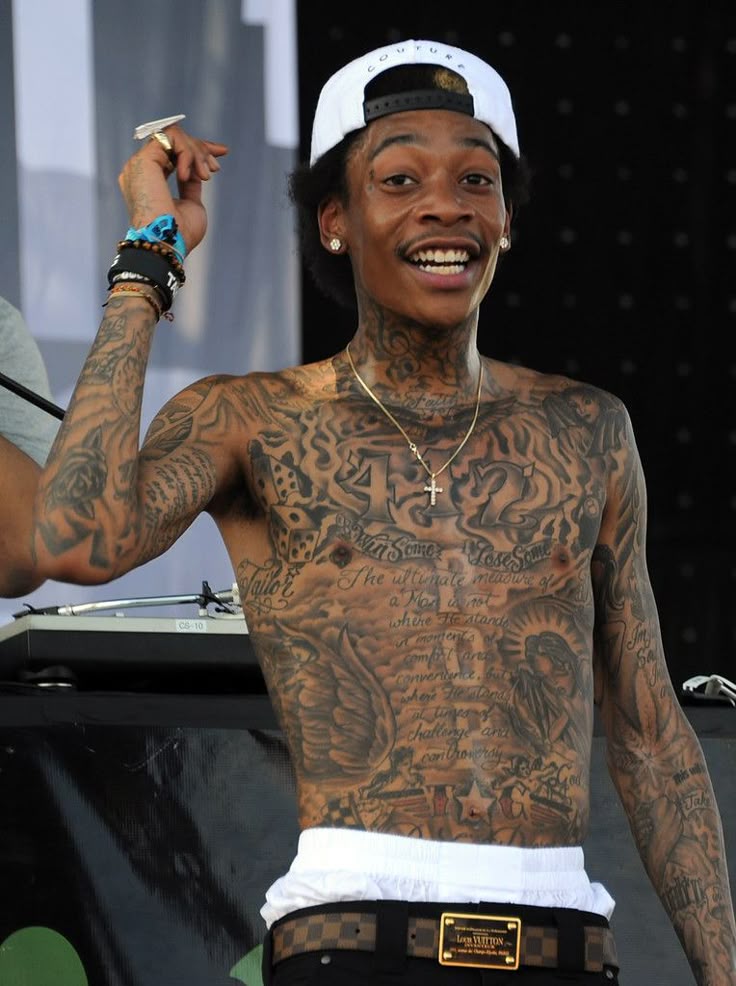
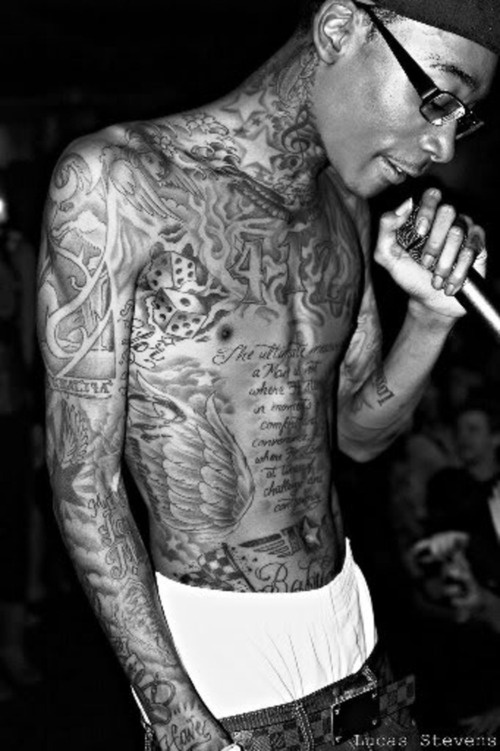
One of the clearest pieces with a documented meaning is the Martin Luther King Jr. quote across Wiz’s stomach: “The ultimate measure of a man is not where he stands in moments of comfort and convenience but where he stands at times of challenge and controversy.” BET has called it one of his most meaningful tattoos.
It’s a long quote, and it changes the shape of his torso. Instead of filling the area with a portrait or symbol, Wiz chose a sentence about character under pressure. That fits with how he has discussed his tattoos over the years: he often returns to the idea of recording what he has learned.
The quote has a different feel from the shorter lettering on his hands and arms, which can read like slogans. This one takes a moment. The stomach tattoo asks to be read slowly; its placement gives the words room to stretch across his body instead of disappearing into a small patch of skin.
His Pittsburgh roots show up in numbers and lettering
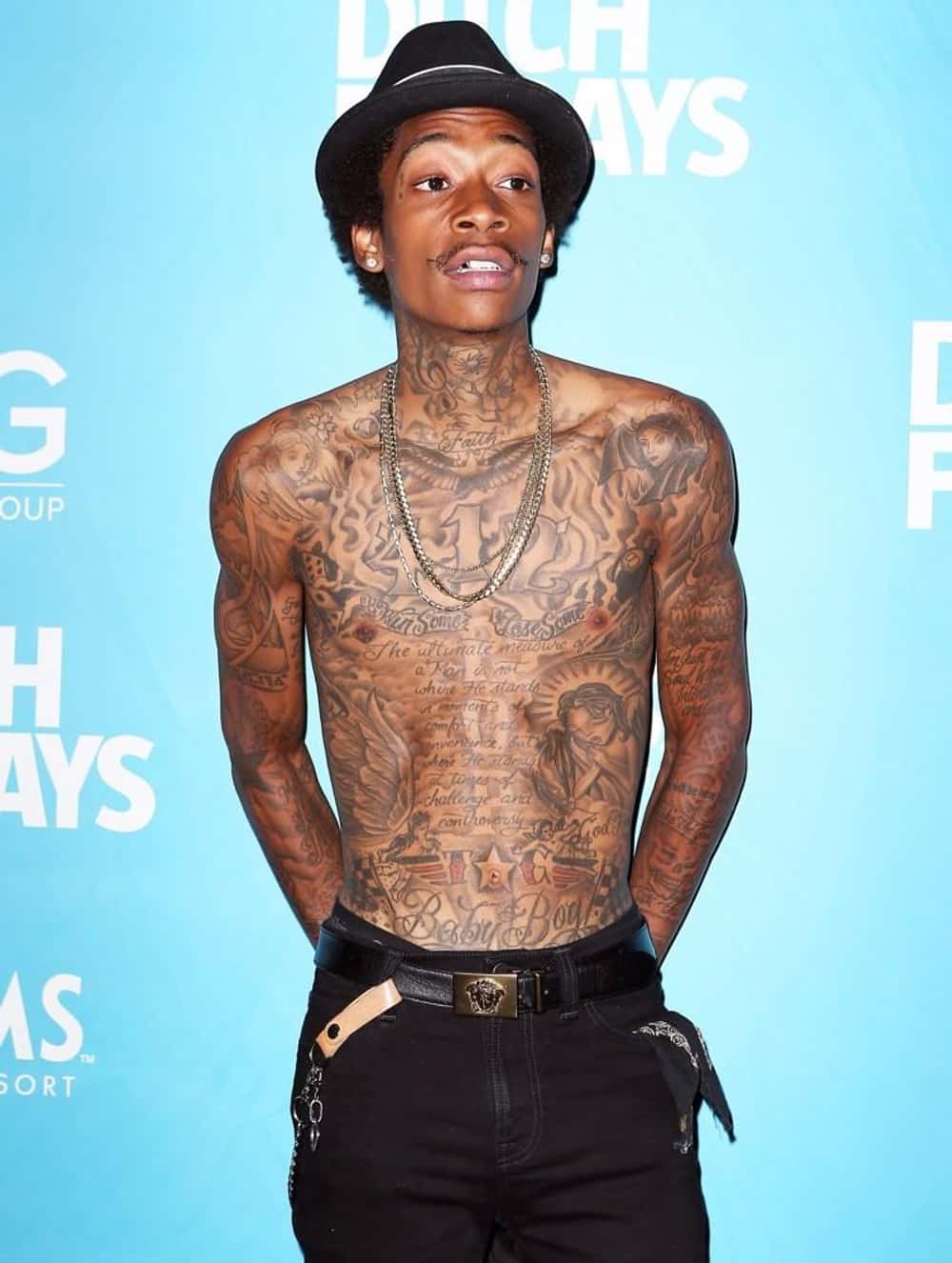
Wiz’s connection to Pittsburgh shows up in the imagery around his tattoos, especially the 412 area code reported on his chest. It points to the city that became home after his family moved around during his father’s military service.
Photos also show Pittsburgh references in his clothes, performances and the way he presents himself. An old portrait with a black Pittsburgh cap might look like it reveals a tattoo, but clothing and ink aren’t the same thing. The confirmed tattoo is the number; the broader Pittsburgh identity comes through in the rest of his public image.
A hometown marker makes sense alongside the quote and his first group tattoo. The collection isn’t only about who Wiz wants to become; it keeps a link to where he learned to make music and where people first knew his name. The city stays in the picture, even when the tattoo is small.
Taylor Gang and the family names sit close to the body
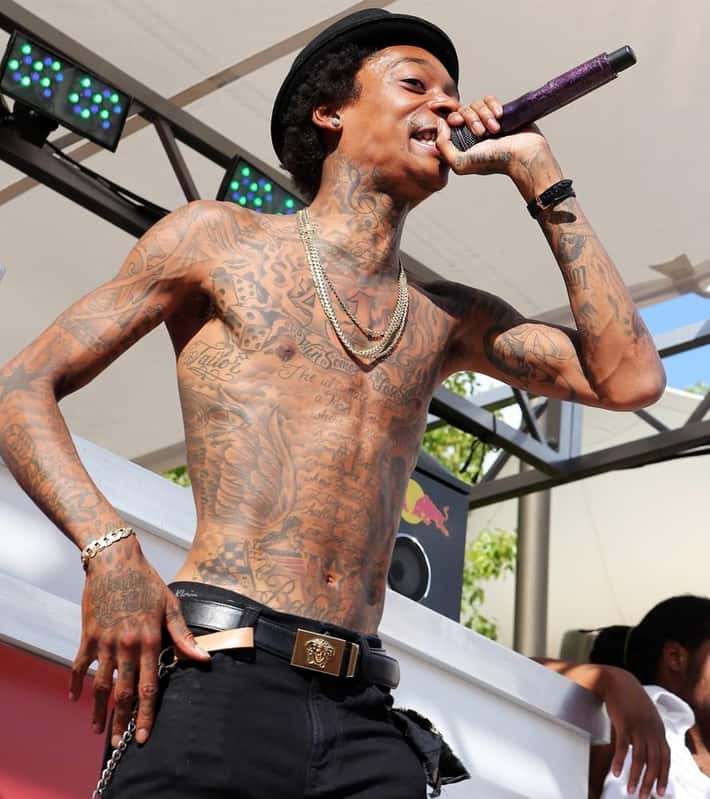
Some of Wiz’s smaller tattoos connect to his inner circle and work. The initials “TG” have been identified as a nod to Taylor Gang, the crew and label world that became central to his career. Names tied to family and important relationships also appear around his body, including the widely reported “Bash” on the right side of his forehead, for his son Sebastian Taylor.
Older reports also mention “Baby Boy” on his stomach and “Win Some, Lose Some” across his abdomen. These pieces can be harder to date because the quality and angles of public photos vary over the years. They belong in a documented list, but shouldn’t be described as if every detail came from one official tattoo tour.
Wiz has said some tattoos include names of people he has met and people he has lost. A name or a couple of letters may look simple from a distance, while the reason behind them stays private. The collection feels crowded because there are so many relationships in it: family, music friends, collaborators and people who knew him before the fame.
His sleeves mix symbols with old school rap imagery
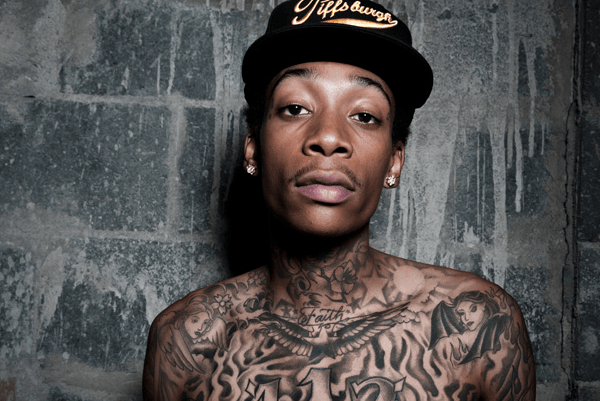
Photographs are the easiest way to take in the variety on Wiz’s arms. Script, women, flames, stars, a microphone and other traditional-style images run together across the sleeves. Reports also identify “Heavy Hustle” on his right hand, along with phrases such as “Live Now” and “Self Made.”
There’s no need to force every piece into one meaning. “Self Made” fits his career story, while “Live Now” reads more like a reminder. The microphone connects directly to music; the flames, stars and portrait-like shapes can work as visual texture as much as autobiography. With little bare skin left on his arms, the sleeves read as collages rather than separate stickers.
Wiz has also been associated with tattoo artist Tuki Carter, who has worked on Wiz and other Taylor Gang figures. That helps explain the shared visual feel in some of the work, and points to the music and touring community around the tattoos.
The back piece and the face tattoos changed the scale
A large shark on Wiz’s back is among the biggest designs reported in the collection. Back pieces are difficult to document because clothes cover them and photos rarely show them straight on, but the shark has been described often enough to include. It adds a bold image to an area that can otherwise be easy to miss.
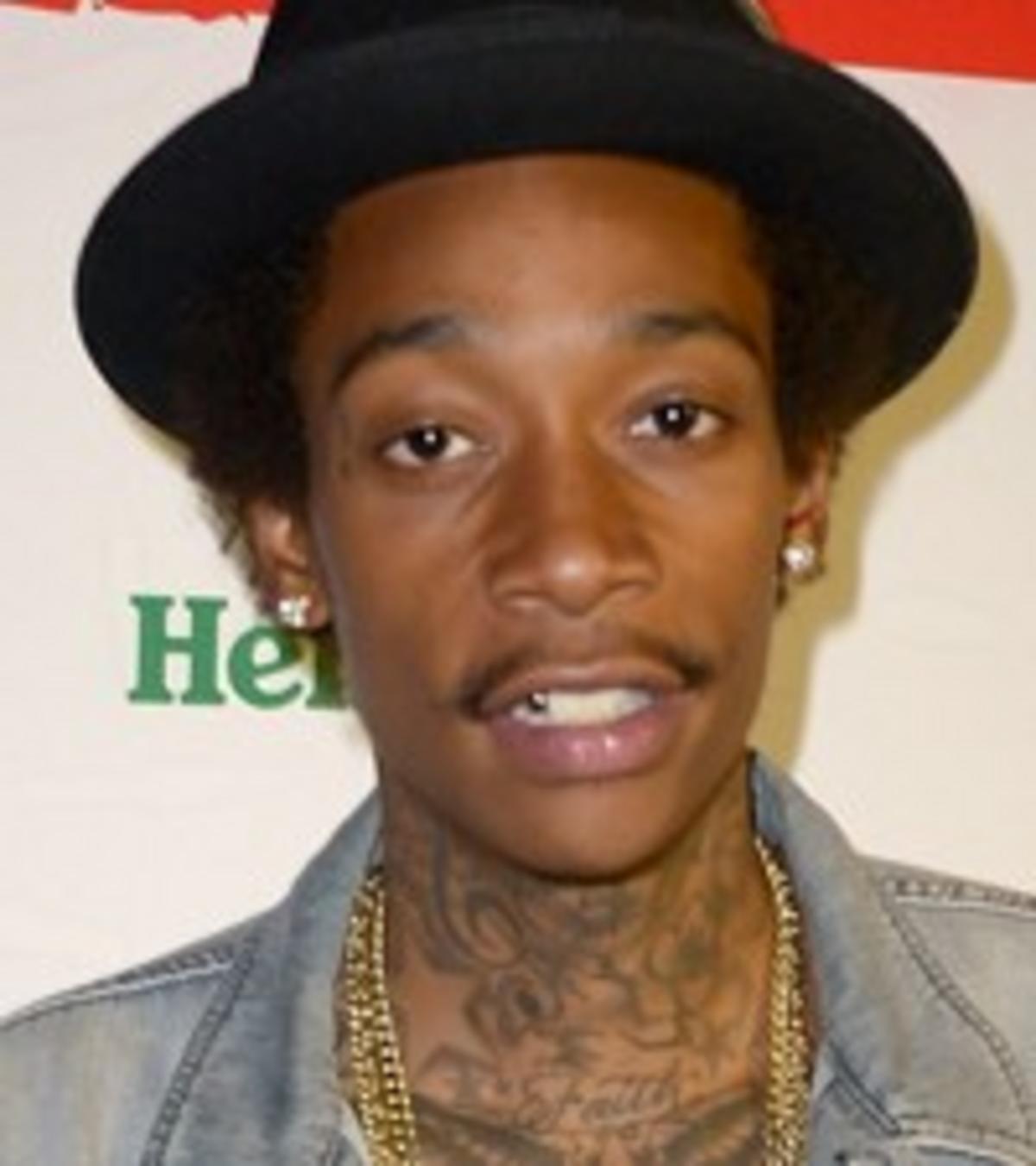
Wiz was once known for keeping his face mostly clear, but that changed over time. Recent portraits show small tattoos around his eyes and forehead, while his neck has visible lettering such as “Faith.” Some symbols are too small to identify confidently in every photo, so it’s safer to describe the face as lightly tattooed than to invent a list of tiny designs.
The shift shows how far the original plan evolved. Wiz has said he wanted to be covered and to keep getting tattooed forever. In 2023, he told Men’s Health he had inked nearly every fun spot, with his butt as the main area left. By then, the joke wasn’t whether he had too many tattoos; it was whether any blank space was left.
Wiz treats the whole body like a living diary
Wiz’s tattoos can look both planned and spontaneous because the unifying idea isn’t a single style; it’s continuity. The first group’s name stays on his arm. His grandfather’s word became a stage name. Pittsburgh appears in the area code and his clothes. The King quote crosses his stomach. Taylor Gang initials and family names fill smaller spaces, while sleeves grow around them with symbols, flames, stars, music references and portraits.
That’s a lot of ink, but Wiz hasn’t described it as a costume. He talks about the pieces as meaningful, even when he keeps the private details to himself. The collection can hold a serious quote and a simple slogan without one cancelling out the other.
The best way to read Wiz Khalifa’s tattoos is as an ongoing record, not a finished design. He keeps adding chapters instead of closing the book. Photos show how much ground the ink covers; interviews explain the pieces that matter most to him. The rest can stay a little mysterious, which may be how he likes it.
Watch the tattoo artists behind Wiz’s ink
Wiz has worked with tattoo artists in the Taylor Gang orbit, including Tuki Carter. The interview below focuses on Tuki’s work and the tattoos he did for Wiz, adding context without pretending to be a complete inventory.