Athletes

Jared McCann keeps his family close in ink

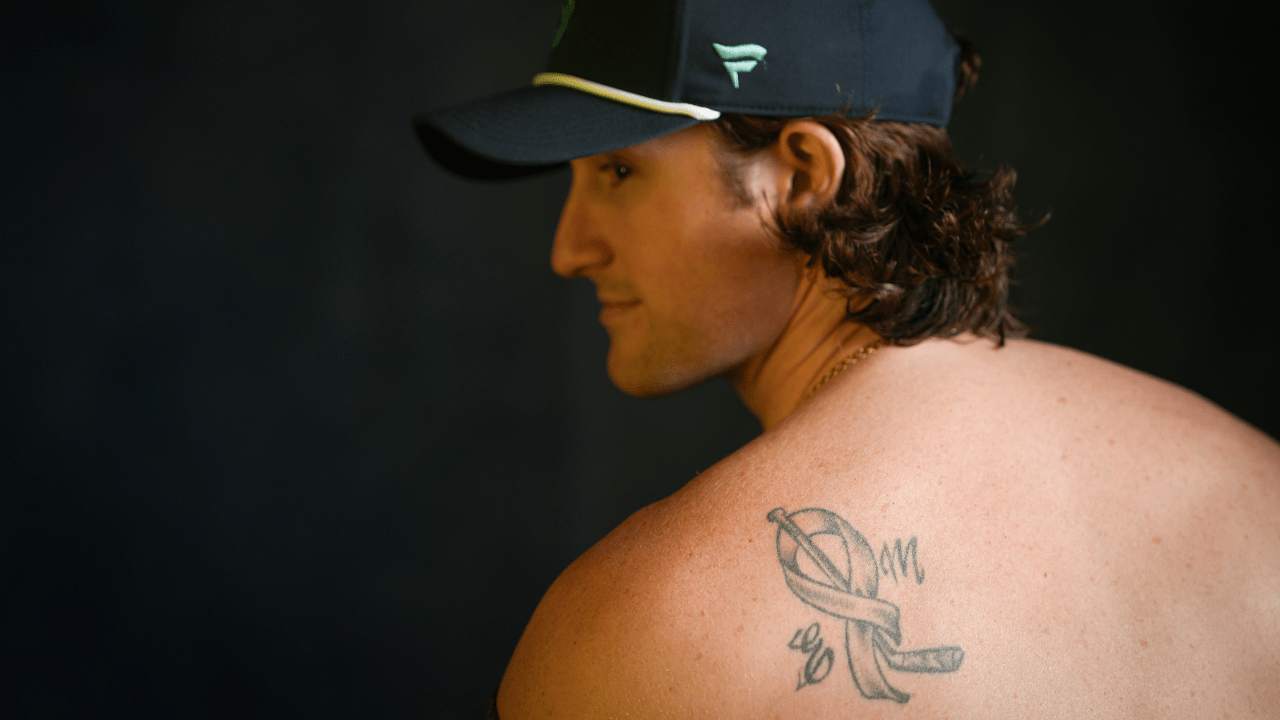
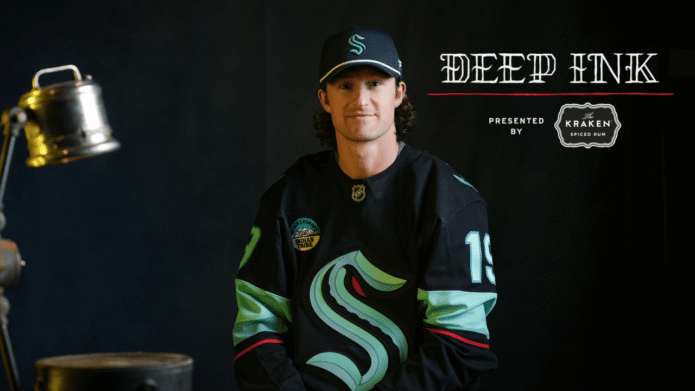
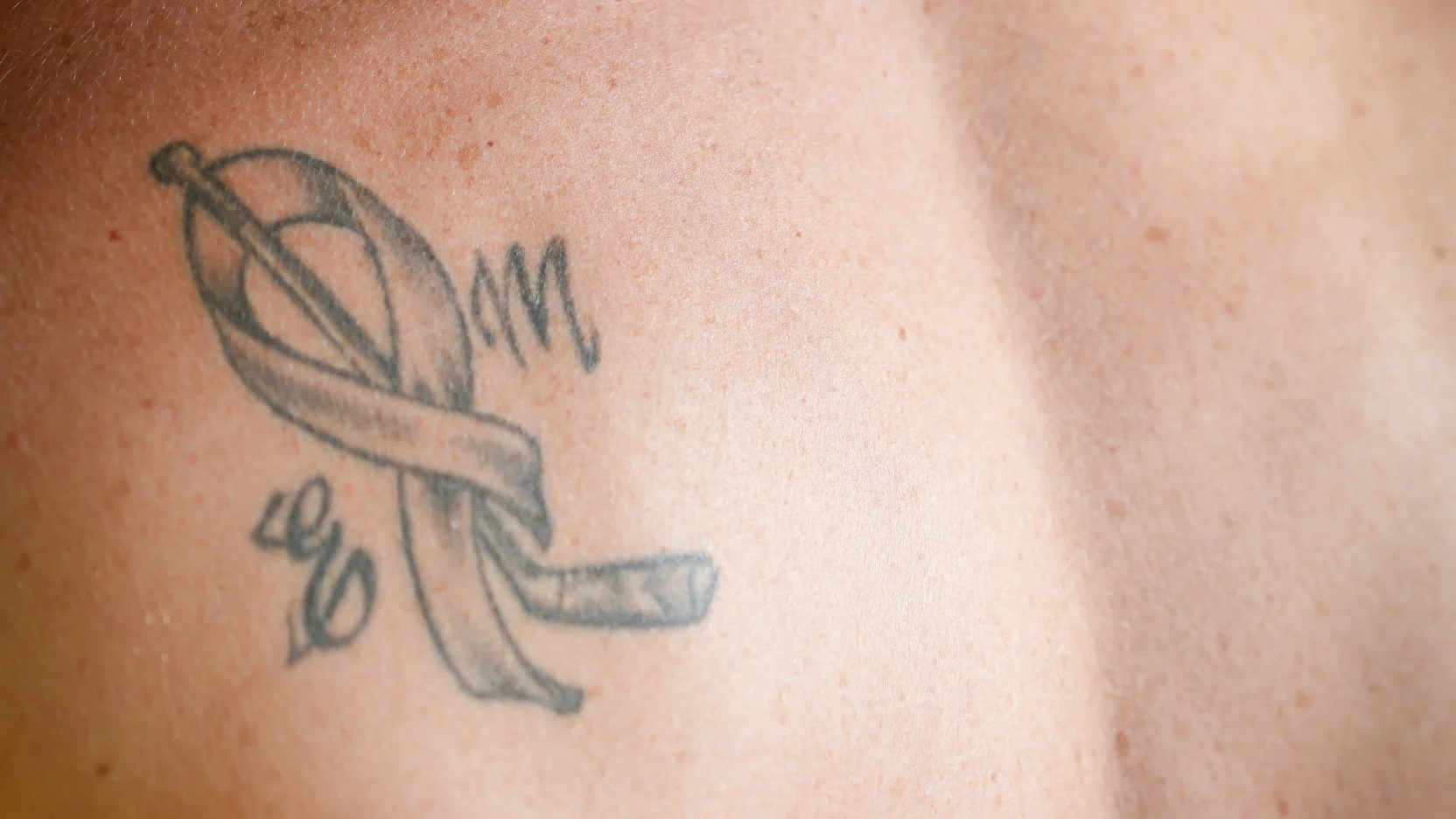
Jared McCann has plenty of tattoos, but the one he talks about most is a hockey stick wrapped in a faded coral ribbon, with the initials EM in the middle. It sits on the back of his left shoulder and was made for his mother, Erin.

The tattoo brings hockey, family and multiple sclerosis together in one design. McCann got it at 16, before his NHL career had begun, and has described it as the piece that set the tone for his later tattoos. He keeps most of the rest private, but says the general idea is simple: small reminders of family and where he came from.

That gives his collection a different feel from the usual athlete tattoo story. The visible design isn’t there to show off; it marks someone who has mattered to him throughout his career.

The hockey stick and coral ribbon were made for his mum
Jared McCann hockey stick and coral ribbon tattoo
Jared McCann shoulder ribbon tattoo

This close-up makes the design easier to see: a hockey stick, coral awareness ribbon and the EM initials, without a jersey or shoulder angle in the way.

McCann’s sister Jamie took him to Perfect Image in London, Ontario, for his first tattoo. They wanted to surprise their mother. He explained the idea to the artist, who drew up the design that became a small piece of family history.

The hockey stick connects to the game that was already shaping McCann’s life, and the support his mother had given him. The coral ribbon represents multiple sclerosis, which Erin has been battling for years. Her initials sit on either side of it.

The hockey reference and the tribute work together. A ribbon alone might read as a general awareness symbol; a stick alone could look like a standard sports tattoo. Together, they show how McCann’s love of the game is tied to the person who helped him get there.

He has said the tattoo took about an hour and a half and hurt more than he expected, especially over the shoulder blade. The meaning is emotional, but the appointment was also a teenager discovering that some tattoo spots really hurt.

McCann brought it home as a surprise and wasn’t sure how his mother would react. She hadn’t seen the design, but over time she came to appreciate what it meant.

The coral ribbon has faded, and McCann has said he’d like to have it touched up. The tattoo is part of his life, not a finished display piece; he can look after it as the years go by.

His shoulder tattoo is the start of a family-themed collection
Jared McCann tattoo sleeve
Jared McCann tattoo sleeve portrait
Jared McCann Born to Raise Hell tattoo


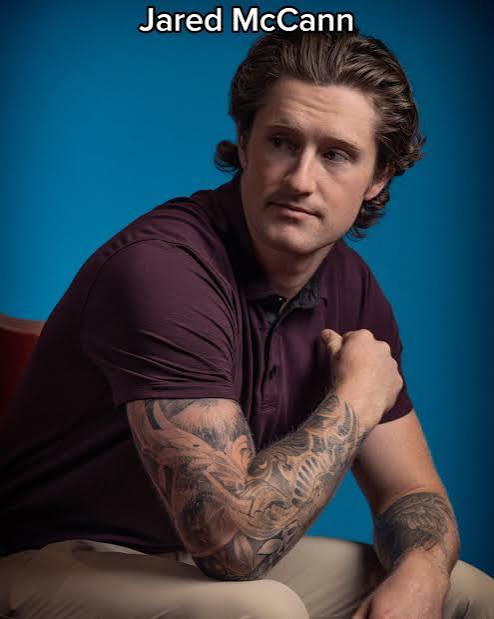
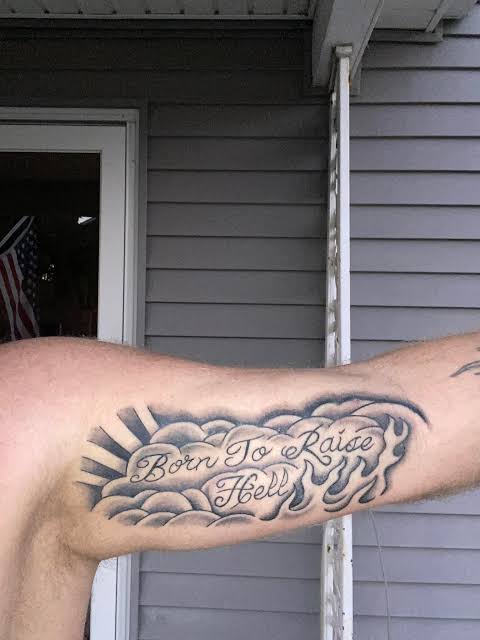
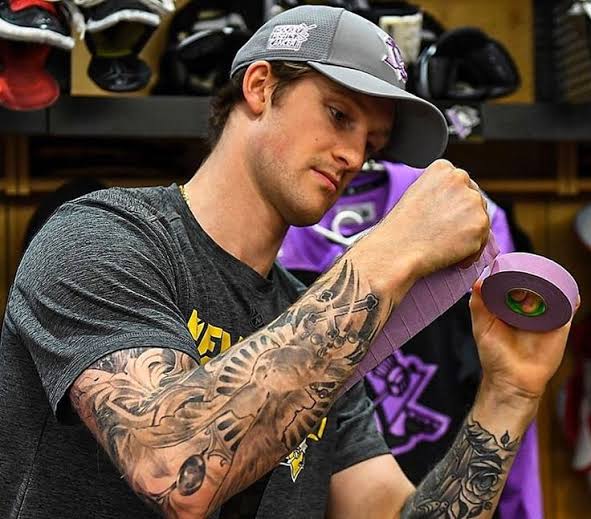
McCann’s collection has grown well beyond that first tattoo and includes a full sleeve on his right arm. He hasn’t explained every design. The broader description he has given is that his tattoos are about family, gratitude and remembering where he came from.

That makes the shoulder piece a useful starting point when the other tattoos are hard to identify in photos. It gives the collection a centre without assigning a meaning to every line of ink.

The shoulder blade isn’t an obvious place to show off a tattoo. The design can disappear beneath a hockey jersey, staying close to his body rather than sitting like a logo. McCann can play a whole game without anyone seeing it, then talk about it when he wants to.

The initials are the smallest part, but likely the most important. “EM” points to one person. The coral ribbon carries the MS connection, while the hockey stick recalls the game McCann was entering as a teenager.

His career has changed, but the reason behind the tattoo hasn’t. McCann has played for different teams and moved through different stages of the NHL, while his mother’s support has remained bigger than one jersey or season.

He has spoken about Erin’s place in a busy hockey family and the support she has given him. The design carries that feeling with him. It isn’t tied to one team crest, so it still makes sense whether he is wearing the Kraken’s colours or representing Canada.

Most of McCann’s other tattoos stay private

That privacy is part of the story. Blurry photos can invite guesses about meanings the player has never confirmed. McCann has shared one clear story and a broad theme, but not a full catalogue.

The confirmed inventory is short: a hockey stick, a coral MS ribbon and “EM” on the back of his left shoulder. His right arm has a full sleeve, but he hasn’t explained every piece. Anything beyond that should be treated carefully unless McCann talks about it.

The unknown details don’t make the collection less interesting. They leave room for the tattoo we do understand to carry more weight. It brings a sport, a family relationship and a health struggle together in one piece.

What Jared McCann’s ink says about him

McCann’s tattoos aren’t built around one dramatic slogan. They’re small anchors: the ribbon keeps his mother’s experience close, the hockey stick marks the game that shaped his path, and the initials make the tribute specific. The placement keeps it personal.

He has said he may add more family tattoos in the future, but there’s no need to rush. The first piece already gave the collection its direction. Anything he adds will sit beside a design that says thank you without many words.

That is what makes this tattoo worth noticing. It isn’t his biggest piece, and it doesn’t need to be. It has followed him from a teenager in Ontario to an established NHL forward. His collection may be extensive, but its clearest message is still the first one he put on his skin.
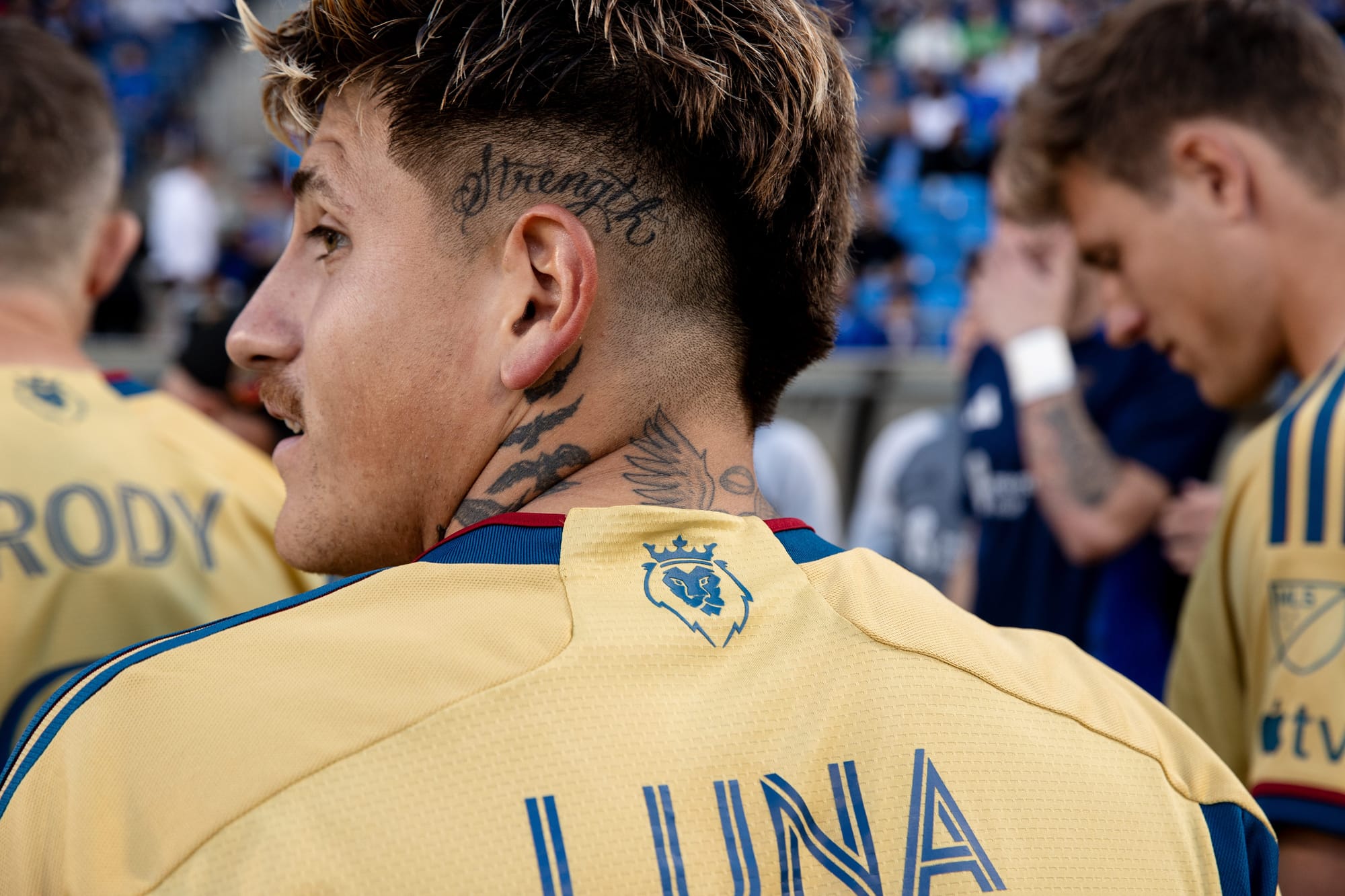
Diego Luna’s tattoos map out family, football and the Moon Boy mindset

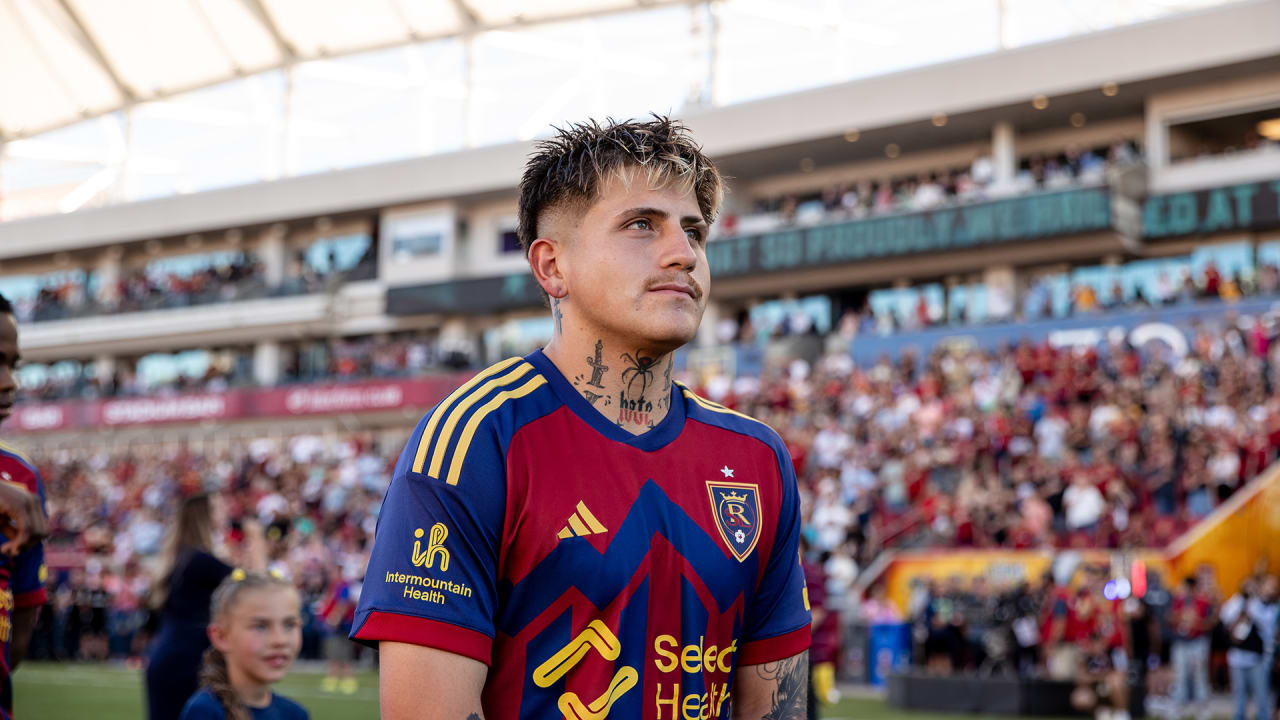
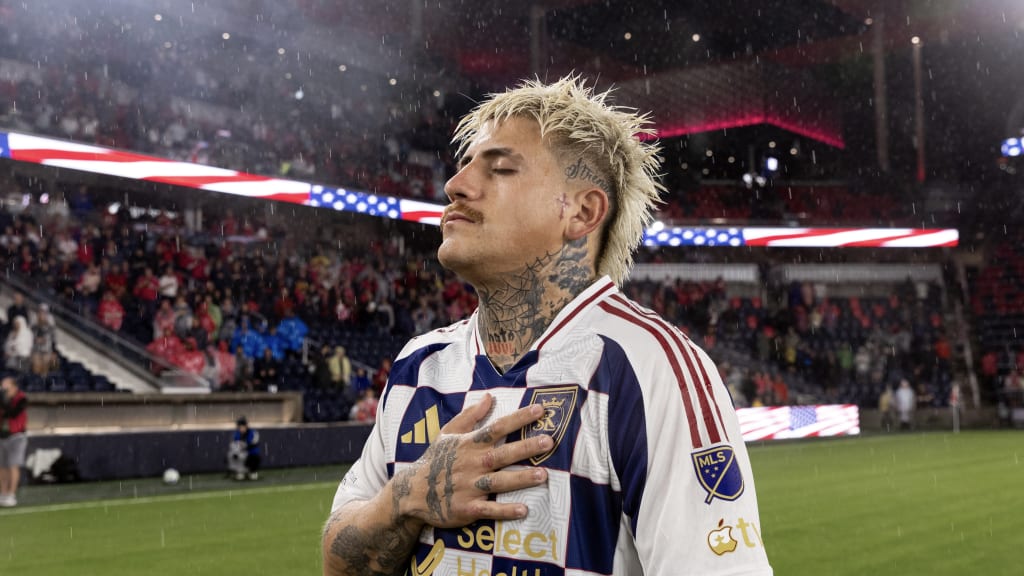
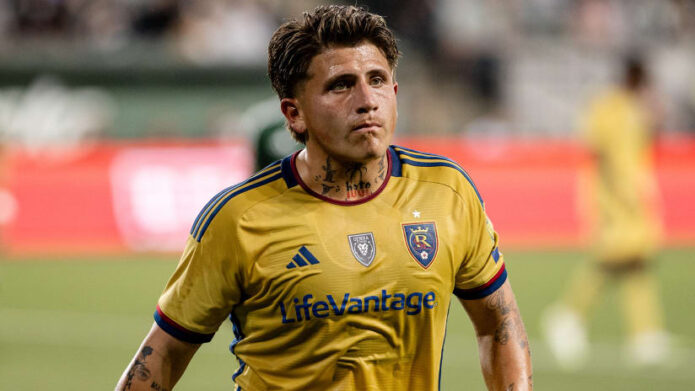
Diego Luna doesn’t blend into the background. The Real Salt Lake and USMNT midfielder plays with the loose, fearless energy fans associate with his “Moon Boy” nickname, and his tattoos have a similar feel: bold, a little chaotic, and full of personal references to family, faith and football.

Luna has said he wanted lots of tattoos from a young age. He’s also explained a few of the stories behind them. Here’s what can be seen clearly in photographs and what Luna has said about the designs.

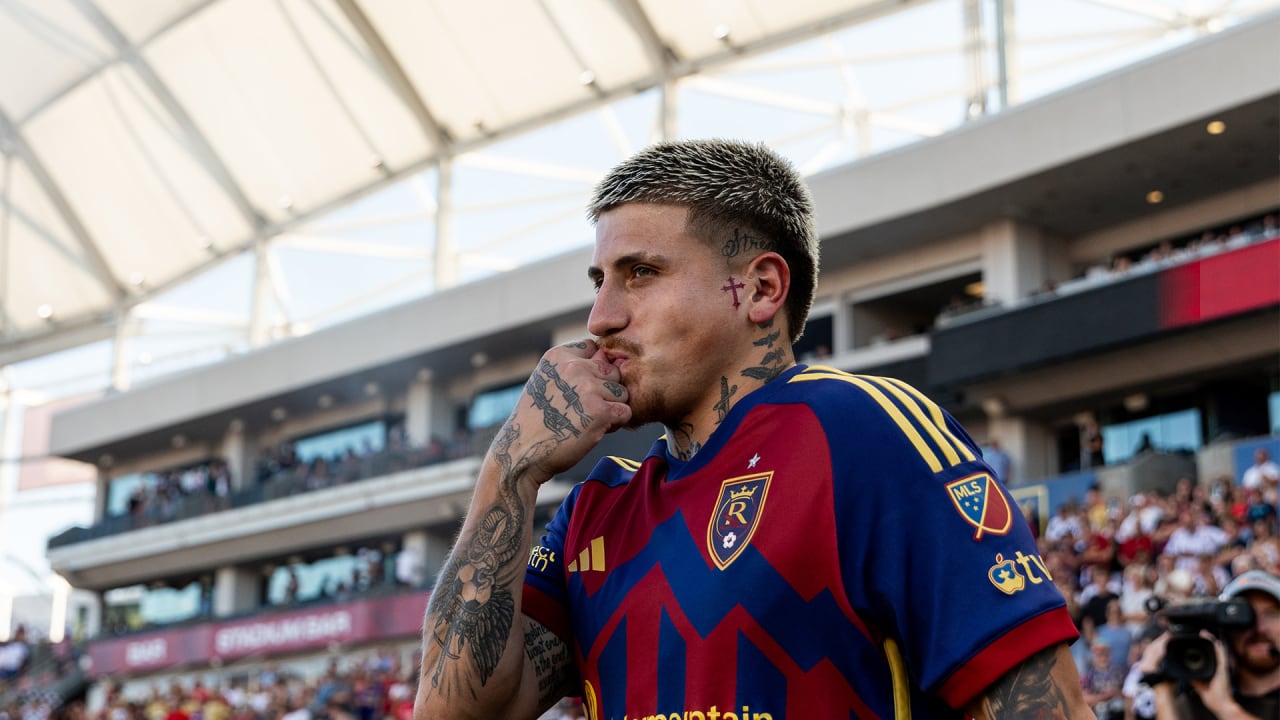
Diego Luna’s “Strength” tattoo sits above his ear

Diego Luna Strength neck tattoo

“Strength” is one of the easiest tattoos to spot. The word sits in script along the hairline above Luna’s ear. It’s not large, but it shows when he turns his head. The lettering feels personal without looking polished or flashy.

The placement lets it disappear in a straight-on photo, then stand out in profile. In the image above, you can read the script and start to see the other linework around his neck. “Strength” can mean getting through pressure, staying level or remembering what he has already managed.

It sits beside darker neck pieces, as part of a patchwork that seems to have grown over time rather than being planned as one sleeve. That suits a young player still building his career.

The forearm cross and number 15 connect ink with family

Diego Luna forearm cross and script tattoo

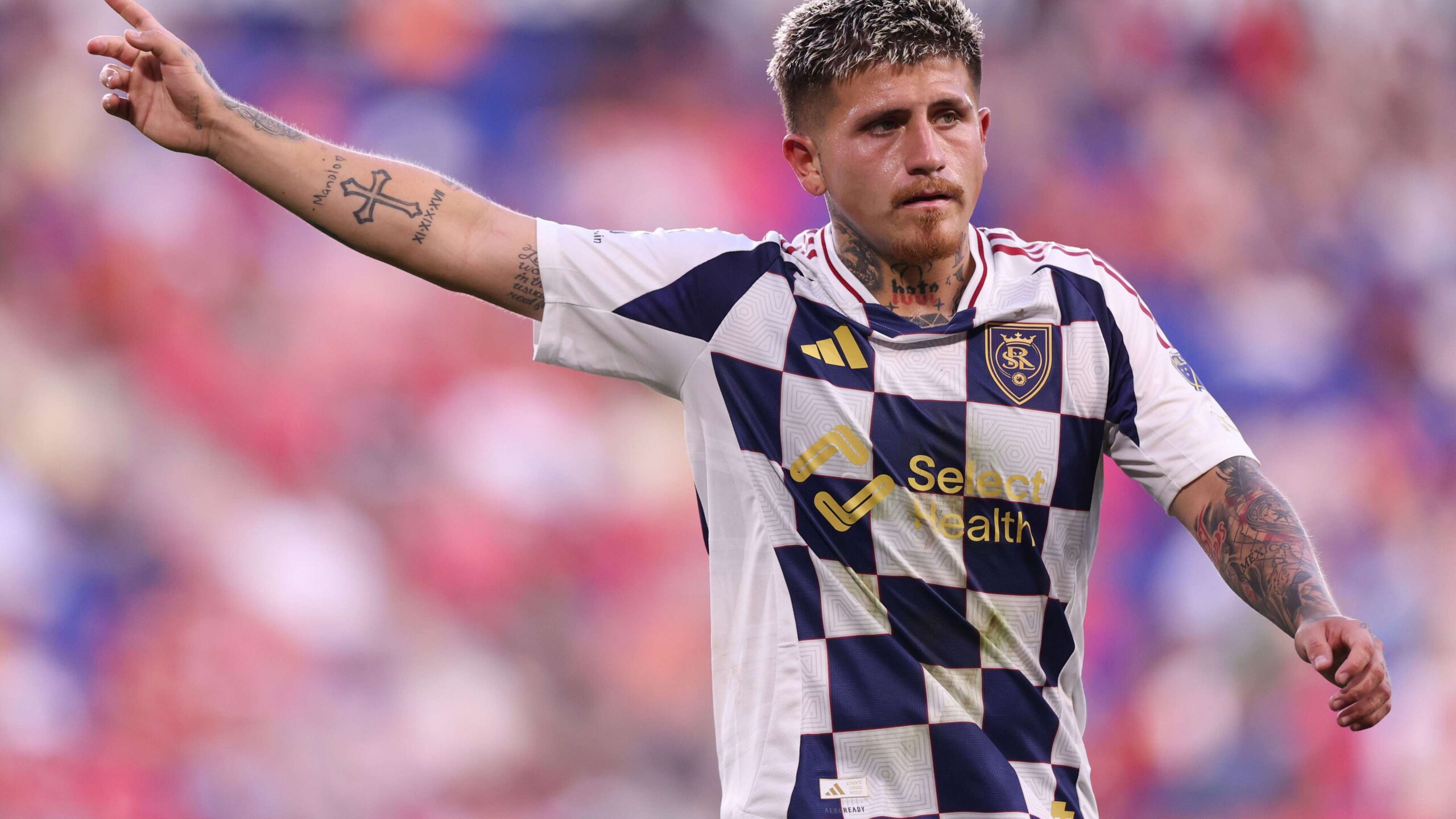
Luna’s forearms are among the clearest parts of his collection in match photos. One design has a cross with lettering and Roman numerals; other words run along his forearm. He has also discussed a small boy kicking a ball in a number 15 shirt, tied to his family’s favorite number. That’s a more personal football tattoo than a club logo.

The cross is easy to pick out, while the words and numbers around it make the arm feel like a page of notes. The tattoos move into view when Luna gestures, points or celebrates.

Family is part of how Luna has described soccer. His father played professionally and later coached, and Luna’s path has been closely tied to the people around him. The little footballer reads like a snapshot of where he came from and where he hoped to go.

His neck tattoos make the biggest first impression

Diego Luna front neck tattoos

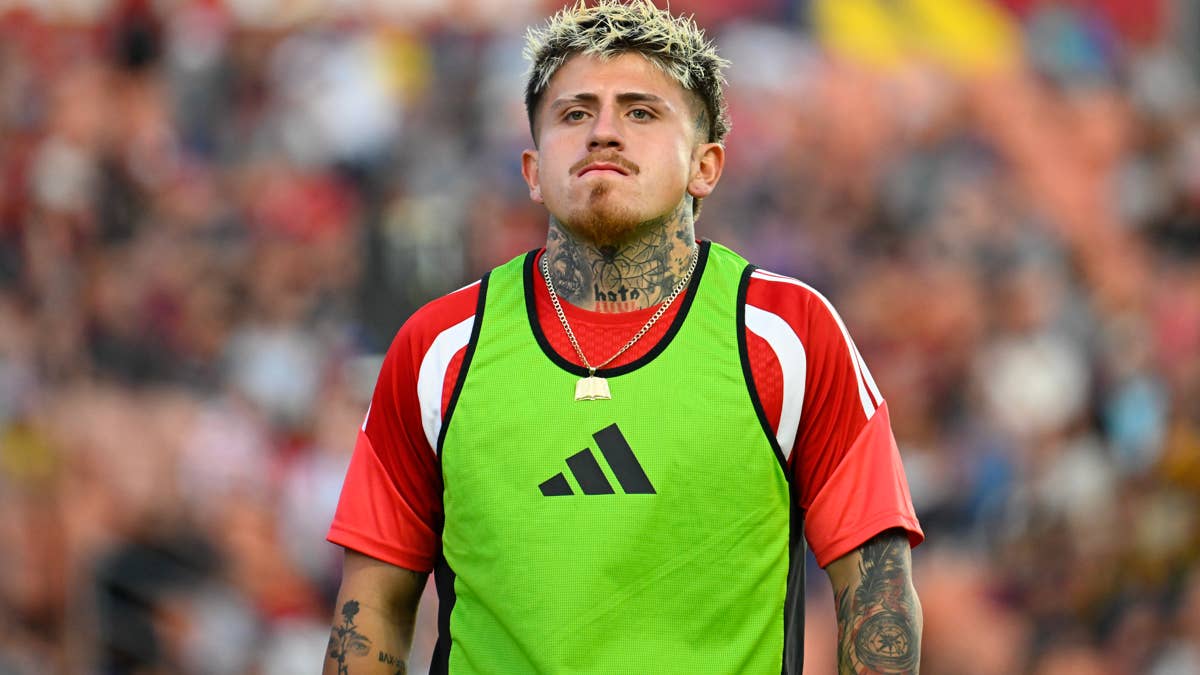
The tattoos under Luna’s jaw and across his neck are often what people remember first. They include dark shapes, script and small symbols packed close together. Some photographs show the word “HATE”; other angles reveal linework that disappears under a collar.

Because the neck is so visible, his tattoos look different depending on his shirt and the camera angle. In this image, they peek above the RSL neckline; with a lower collar or a turn of the head, they can take over more of the picture.

The placement looks intense, but Luna has talked about mental health, pressure and learning not to carry every stressful moment onto the pitch. Tattoos can hold moods, jokes and memories as well as anger. His neck ink sits beside softer references to family and faith, so the collection doesn’t follow one neat theme.

His sleeve work turns the arms into a moving collage

Diego Luna arm sleeve tattoos

Luna’s sleeves are still developing, but black-and-grey linework, script, figures and shaded designs already run from his upper arms toward his wrists. Match kits and camera angles hide different areas, so some photos make the sleeves look denser than others.

The designs change shape as he moves. A tattoo may look compressed when his arm is down and open up when he raises it to celebrate. Match photos show how the pieces look in motion, rather than in a carefully posed studio shot.

The surrounding blackwork gives smaller pieces somewhere to sit. Script, shaded figures and small symbols share the arm, with some open skin between them. The sleeves don’t rely on one large image; their character comes from many smaller choices.

The chest and shoulder tattoos add heavier blackwork

Diego Luna chest shoulder and arm tattoos

Training and international photos show more of Luna’s shoulders and upper chest. The designs look darker and busier than they do under a clean yellow RSL shirt. Linework reaches toward the collar, with heavier pieces across the upper arm.

The tattoos follow the shape of his body, wrapping around his shoulder and connecting with the sleeve. A high collar can hide the centre of his neck; a short-sleeved top exposes the arm. A celebration pose may show part of his chest that a standard portrait misses.

From a distance, the blackwork gives him a tough silhouette. Up close, some smaller designs point to family and faith, while others remind him how he wants to handle pressure.

The Joker’s “Why so serious?” tattoo keeps the mood loose

Diego Luna hand neck and visible tattoo collection

One of Luna’s most memorable tattoos is on his leg: a Joker-inspired design with the words “Why so serious?” He has said it’s more than a reference to a character. It reminds him to loosen up when football starts feeling heavy. Luna has said he doesn’t play his best when he gets too serious, angry or stuck in frustration.

The design itself isn’t always visible in match photos, but the explanation is clear. Some of his tattoos mark family or faith; this one is there to shift his mindset.

Professional football brings pressure, travel, selection debates and people judging every touch. The phrase helps him step back. It doesn’t mean he doesn’t care; getting too caught up in the pressure can make him play worse.

The comic-book line fits beside family numbers, script, crosses and dark neck work. It’s personal, but playful too.

What Diego Luna’s tattoos say about his style

Diego Luna side neck tattoo

Luna’s tattoos are easy to see because they sit on his neck, hairline, forearms, hands and legs. The stories vary: some point to family, some to faith, and others are reminders to keep perspective. The Joker tattoo keeps the collection from feeling too solemn.

Not every design needs a public explanation, or has to match the one beside it. Luna’s tattoos look like choices made at different times, in different moods. A few of the stories may belong only to him and his family.

His style is still changing, and the collection doesn’t look finished. The tattoos give him a strong visual identity, but fans can follow it as it develops alongside his football at RSL and with the USMNT.

The useful thing to take from Luna’s collection is how personal it is. A number that matters, a phrase that helps during pressure or a character that reminds you to relax can all sit together. The boldest pieces are the ones with a story behind them.

See Diego Luna talk tattoos in his own words

Diego Luna sleeve tattoo match photo

In this interview, Luna visits a tattoo shop and talks about his career, the USMNT and why he keeps coming back for more ink.

The collection brings together ambition, family, faith and humor. It’s part of the look, but it also shows what keeps Luna grounded as his football career grows.

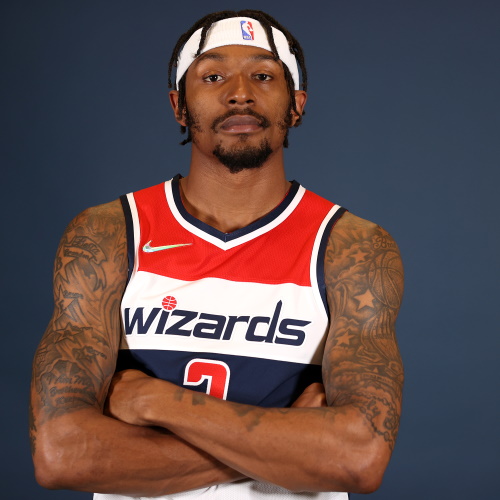
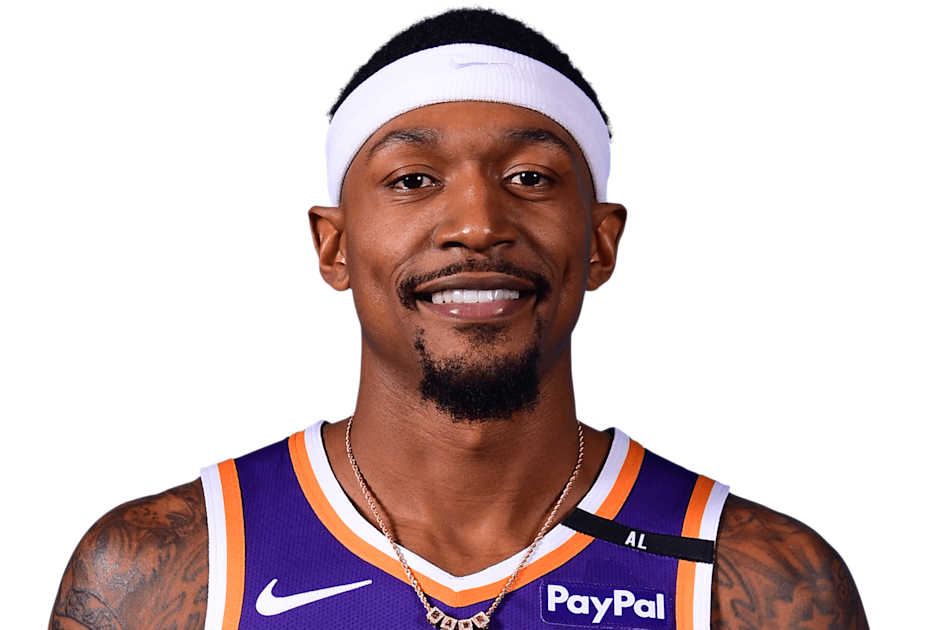
Bradley Beal keeps family, faith and St. Louis in his tattoos

Bradley Beal’s tattoos are easy to spot during a game, but their stories come through when you look closely. The Phoenix Suns guard has built much of his collection around family, faith, St. Louis and basketball. Alongside the lettering are stars, praying hands, a clock, the Gateway Arch and other personal reminders.

Beal started young and has said he got hooked on the process. His tattoos don’t look like one carefully planned sleeve with a single theme. They read more like a timeline: some mark where he came from, some reflect the person he wants to be, and others point to the people closest to him.

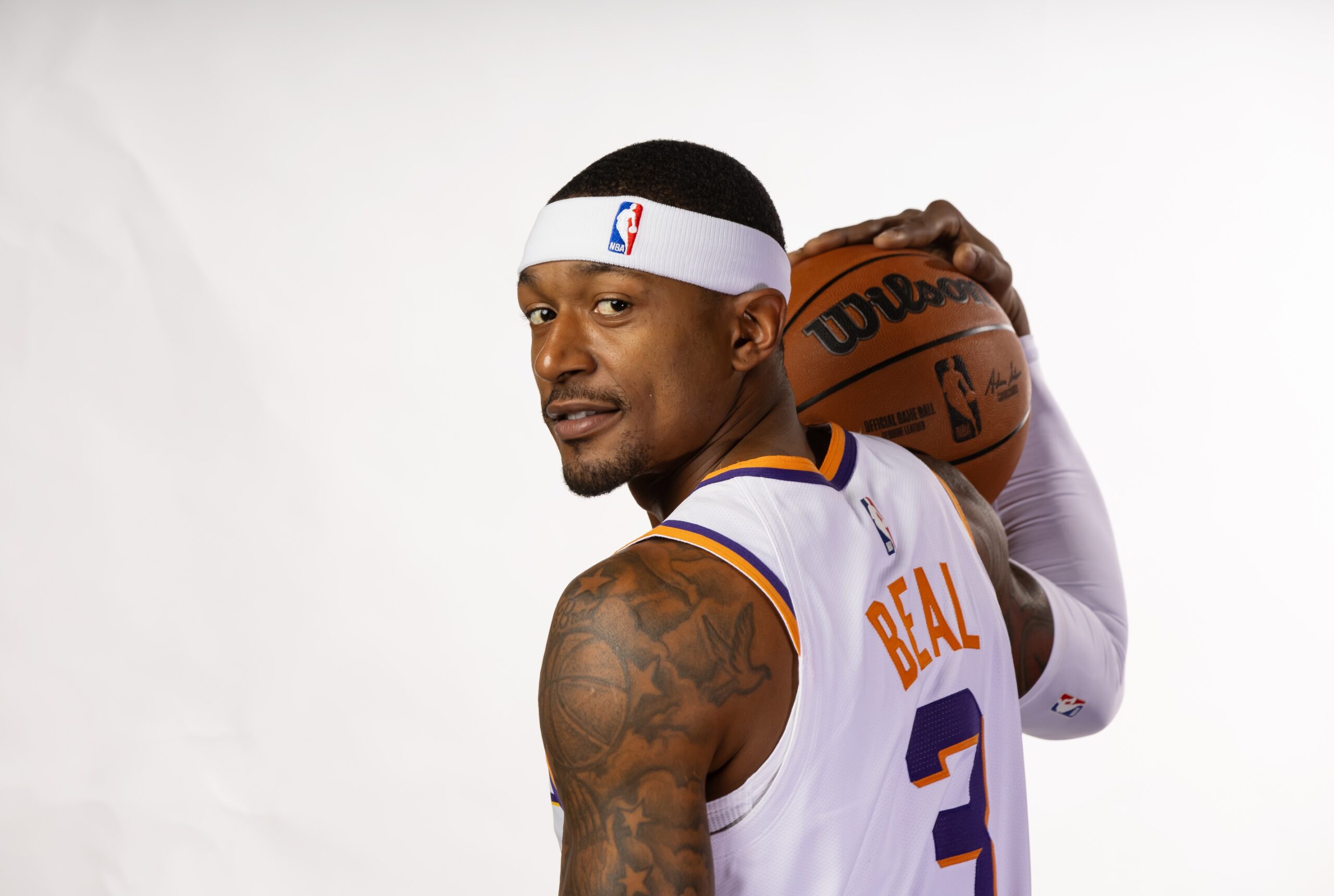
Bradley Beal’s first tattoo was a basketball with his name

Bradley Beal basketball shoulder tattoo

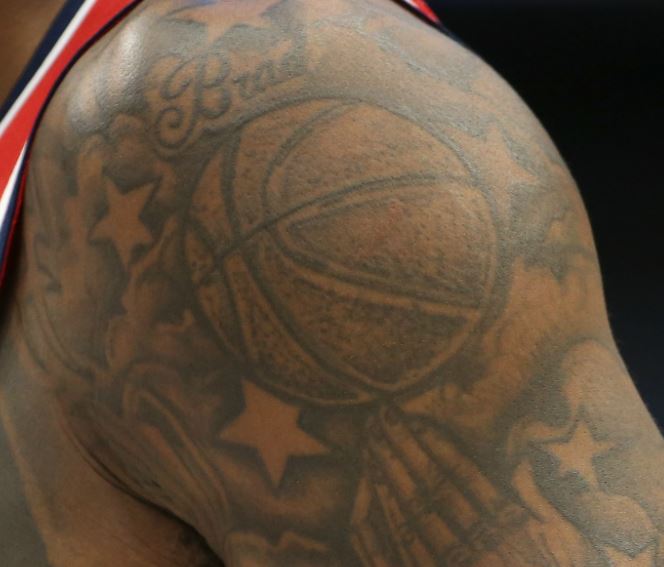
Beal’s first tattoo was a simple basketball with his name. He has described it as an outline, almost like clip art, and said he got it at about 14. His mother had to give permission and went with him to the shop. It sounds less like a teenage act of rebellion and more like the start of a family story.

The tattoo now sits among larger work on his arm, so it’s easy to miss. It still marks the point when Beal decided he wanted more ink. He has joked that tattoos can be addictive once the finished work looks right.

There’s a family memory attached to the first one, too. Beal has said his mother got Nike checks on both ankles around the same time. Their designs were different, but the tattoos became a shared memory.

Praying hands, a pyramid and a clock mark faith and birth time

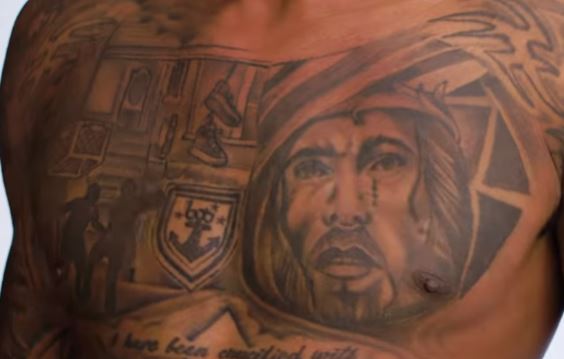
Bradley Beal chest and arm tattoos

Faith is a recurring theme in Beal’s collection. One clear example is the praying hands near a number three, a pyramid and a clock. Three is his basketball number; the clock adds another connection, pointing to 3:30, the time he was born.

The pyramid and clock give the design an old-school look. The birth time makes it personal, while the number connects it to his identity on the court. Beal often starts with a familiar symbol, then adds a detail that only makes full sense once you know the story.

Other religious words and images appear around his arms and torso. Rather than separating faith and basketball, Beal lets those references sit together. The sleeves combine words, dates and symbols.

The “Walk by faith” design turns a Bible idea into a scene

Bradley Beal family script tattoo

One of Beal’s recognisable tattoos is “Walk by faith.” It shows a figure moving toward what’s described as the gates of heaven. The scene gives the phrase movement and sets it apart from the smaller lettering on his body.

Beal has talked about faith guiding him when he can’t see the whole path ahead. The figure walking toward a destination gives that idea a visual form. It isn’t tied to one win or season; it’s about holding onto faith when the next part of life is uncertain.

The design shows how he combines words and images. The phrase explains the message, while the scene gives it shape. It reads like a reminder for the difficult stretches of a long season.

Family is written across his arms and ankles

Bradley Beal stars and alphabet tattoos

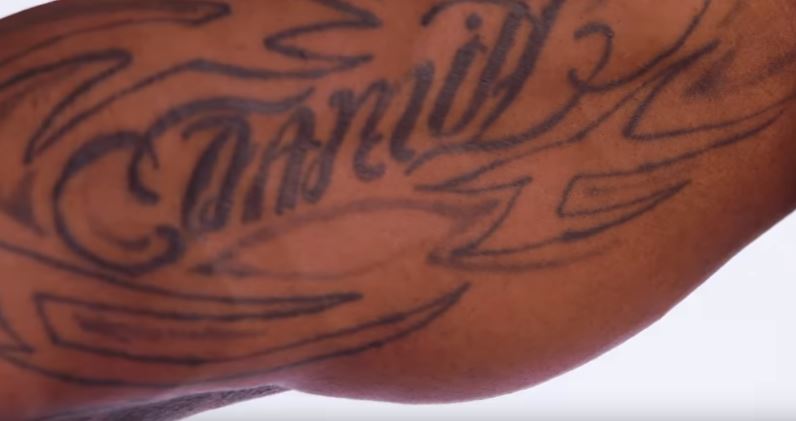
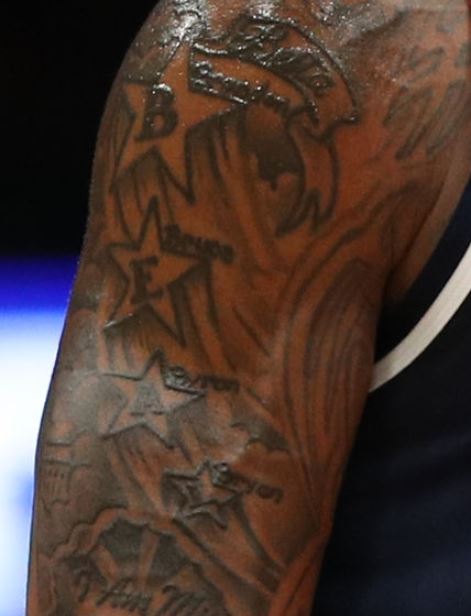
Family may be the biggest subject in Beal’s tattoos. He has lettering for his brothers and a badge-style piece that says “I Am My Brothers’ Keeper.” His four brothers are Brandon, Bruce, Byron and Bryon, so the phrase points to a specific bond.

He also has “Brotherly Love” on his ankle and an anniversary tattoo on his Achilles. Beal has mentioned that the ankle was one of the more painful spots. Those pieces are smaller than his sleeve, but they keep family memories close in different ways.

His family tattoos aren’t limited to names. Some describe the loyalty behind those relationships. “I Am My Brothers’ Keeper” is especially direct, and its placement makes it part of the story visible when he plays.

Faith and hope appear as an ambigram on his inner arms

Bradley Beal Clippers arm tattoos

On the inside of his arms, Beal has an ambigram that reads “faith” one way and “hope” when turned around. It rewards a second look: from one angle it offers one reminder, and from another, a different one.

He also has words connected to family and loyalty, including “family” and “forever.” Together with the ambigram, the inner arms become a kind of message board. The writing is personal but visible during games, interviews and everyday life.

Faith and hope are closely related, though not identical. One points toward belief; the other toward what you expect or keep reaching for. The ambigram lets him carry both ideas.

St. Louis and the 314 keep home close

Bradley Beal Suns arm tattoos

Beal grew up in St. Louis, and his tattoos make that connection clear. He has a St. Louis Cardinals design, the Gateway Arch and the number 314, the area code associated with the city. These pieces mark where he’s from, alongside tattoos about his basketball career.

The Arch is an instantly recognizable hometown image. The 314 is more understated, but it carries the same message. One is a landmark, the other a number; both keep St. Louis with Beal while he travels for basketball.

He has talked about adding more St. Louis references, including his own street name. The hometown section may still grow. It’s a continuing theme rather than a one-off tattoo.

His chest carries scripture, a cross and the words that matter most

Bradley Beal chest portrait tattoo

Some of Beal’s most prominent religious tattoos sit across his stomach and chest. One documented piece uses lines from Galatians 2:20 over a large cross. The passage is about living through faith, and the tattoo gives it a broad field of script instead of a small, hidden mark.

Roses, stars, clouds and other background details help connect the larger designs. From a distance the collection can look dense and dark; close-ups make it easier to separate the scripture, family phrases and hometown references.

Calling Beal simply “heavily tattooed” misses the pattern. He returns to belief, family, home, basketball and the personal dates that connect them. The tattoos don’t explain his whole life at a glance. They bring up stories he has already lived.

The sleeve keeps growing, but the message stays clear

Bradley Beal full back and shoulder tattoos

Beal has said he wouldn’t necessarily keep every early tattoo if he could start over. That’s an honest admission from someone whose ink is such a visible part of his image. It also makes the collection feel real: a design doesn’t have to be a perfect decision to belong in the timeline.

His tattoos cover his arms, chest, stomach, ankles and legs, but the themes give them a loose structure. The early basketball points to his career; the faith imagery shows what grounds him; the names and phrases keep family close; St. Louis gives the collection a home base. Even pieces he might rethink remain part of how he got here.

The tattoos move between personal memories and public identity without a hard line between the two. They look like an athlete’s collection, but read like a family album written in symbols, numbers and script.

Watch Bradley Beal explain his tattoos

For a closer look at the stories behind the designs, watch Bradley Beal’s GQ tattoo tour below.

Beal’s tattoos have grown without losing their centre. Basketball and the number three speak to his career; the deeper thread is family, faith and St. Louis. Some pieces are bold, others easy to miss, and some only make sense when he explains them. Together they keep the people and places he values close.

Nemanja Gudelj carries his family in every tattoo

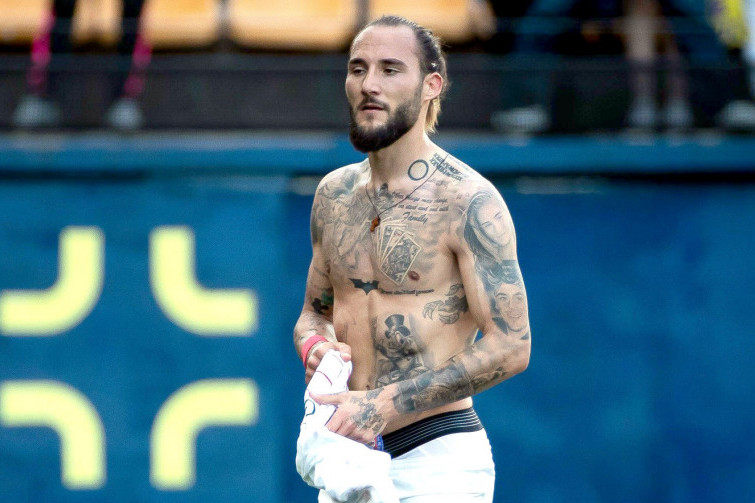
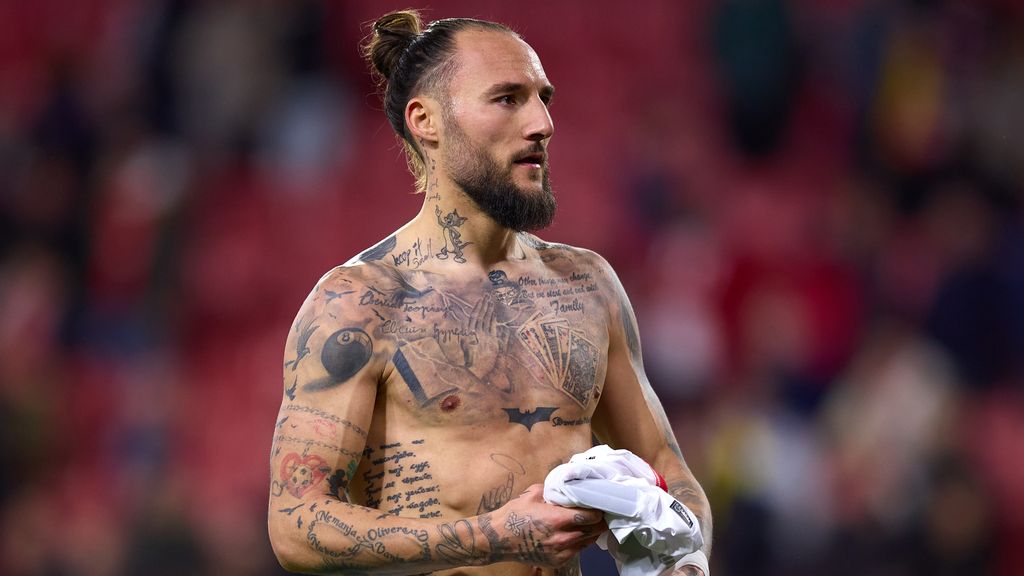
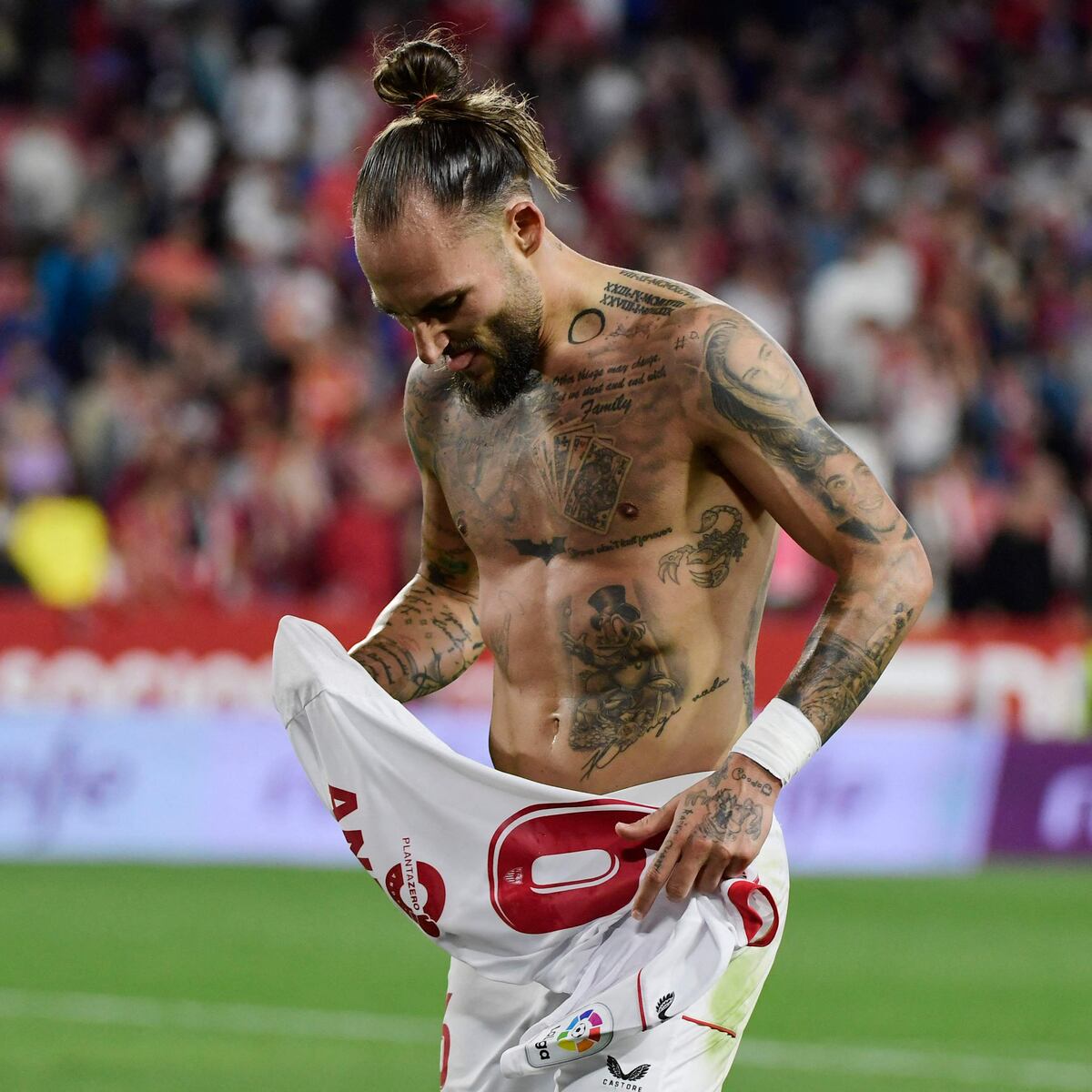
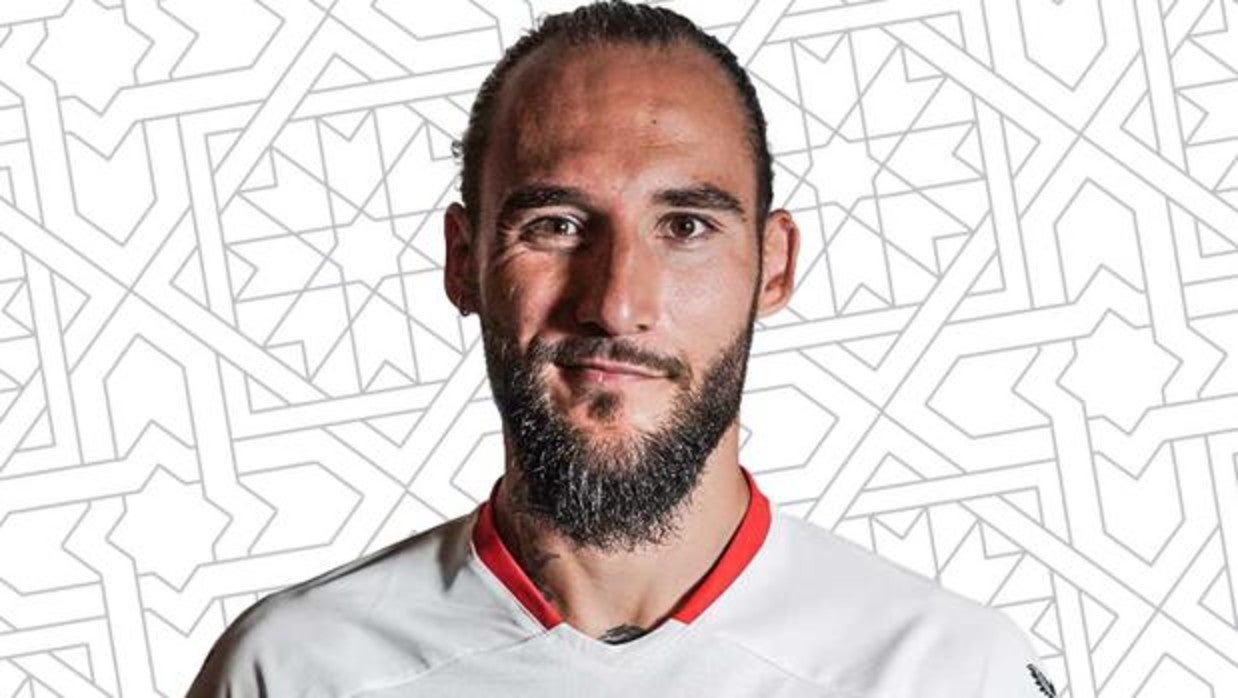
Nemanja Gudelj’s tattoos are hard to sum up with one symbol. They read like a family album, a football scrapbook and a record of things he cares about: portraits, quotes, crosses, Serbian symbols, pop culture and names that matter to him.

When Gudelj talks about the tattoos, he comes back to family, Serbia, faith and friendship. There’s a playful side as well: Batman, playing cards, praying hands and Scrooge McDuck sit beside much more personal work.

The number of tattoos changes as Gudelj adds to the collection. The clearest way to understand it is to start with the people, then look at the country and faith references, and finally the smaller designs.

His family portraits are the heart of the collection

Nemanja Gudelj family portrait tattoos across his chest and arms

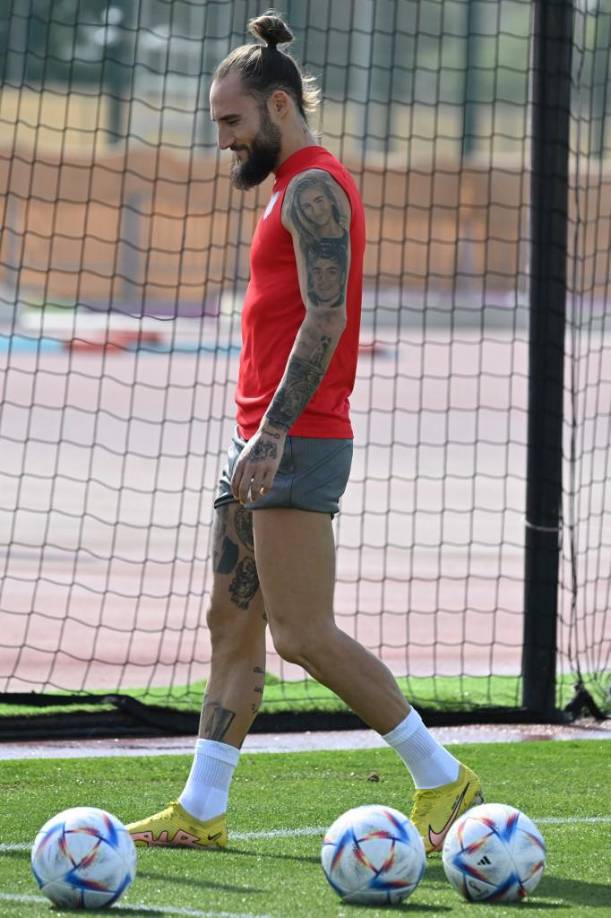
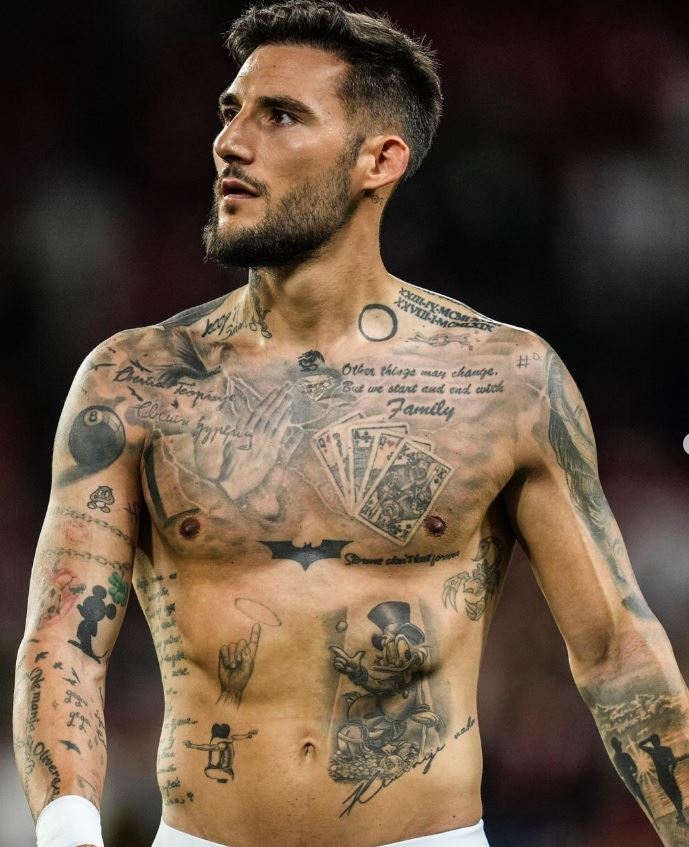
Gudelj’s best-known tattoos are portraits of his family: his father Nebojša, mother Olivera, brother Dragiša and sister Vanja. He has described the ink as a way to carry his family with him, especially when playing abroad.

His father’s portrait was reportedly the first, done while Gudelj was still in the Netherlands. The collection began as something personal while he was building a career and living away from home, not as a fashion statement after he became famous.

In match photos, a chest or arm shot can show faces, script, shading and smaller symbols all at once. The tattoos look less like one sleeve with a single theme and more like memories gradually finding space beside one another. He carries the people who shaped him, not only the places he has played.

His brother and sister appear on the arm

Nemanja Gudelj brother and sister portrait tattoos on his arm

Gudelj’s brother Dragiša and sister Vanja also appear in tattoos on his arm, with the portraits reaching toward the left side of his chest. They show in shirtless football photos, but sit close to his body rather than being displayed like a logo.

The collection keeps returning to family. Even when cards, animals or script surround the portraits, relatives stay at the centre. The tattoos can be seen during training or a match, but their meaning doesn’t depend on strangers recognizing each face.

The Serbian crest makes his patriotism easy to spot

Nemanja Gudelj Serbia eagle and four ocila tattoo on his thigh

One of Gudelj’s clearest patriotic tattoos is on his right thigh: a white eagle with four ocila, part of Serbia’s national symbol. It’s a bold image that keeps his home country close while his career takes him between clubs and countries.

The same area is reported to include family portraits and other smaller details. Gudelj doesn’t separate national pride, family and football into neat boxes; they overlap. Serbia is part of his family history and of the life he built around football.

The eagle and national symbol are documented. The exact meaning of every line around them isn’t. Some of the honest description is simply that this is a larger leg piece built around Serbia and the people he loves.

Batman, playing cards and Scrooge McDuck keep it playful

Nemanja Gudelj playing cards, Batman and Scrooge McDuck tattoos on his chest

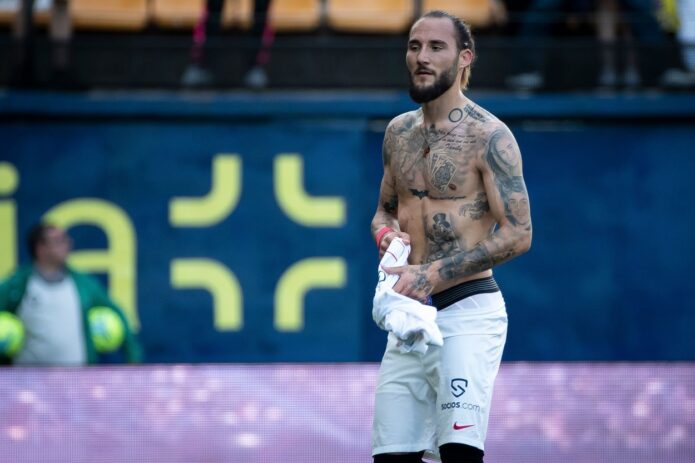
Close-up photos show playing cards across Gudelj’s chest, a Batman emblem, praying hands and a Scrooge McDuck design. They’re easier to spot in shirtless photos than when he’s wearing a Sevilla or Serbia shirt.

The cards add a bit of swagger, but there’s no reliable account tying them to a particular game or event. Batman brings a pop-culture note to a collection otherwise full of portraits, quotes and national imagery. Scrooge McDuck is the unexpected one, bringing humour alongside the family tributes.

The praying hands sit between the playful and spiritual sides of the collection. Together, these designs make clear that Gudelj doesn’t expect every tattoo to carry the weight of a memorial.

Quotes and script fill the spaces between the larger designs

Nemanja Gudelj script quote tattoos across his chest and abdomen

Gudelj has lines of script and shorter phrases across his chest, stomach and arms. Some photos show the word “Family”; other lettering is too small or angled to read confidently. The script fills the spaces between larger designs and helps connect them, rather than standing alone as one big slogan.

There are few blank areas reserved for a future plan. A new portrait or symbol can sit beside older writing, making the collection denser over time. That’s what happens when someone begins with one meaningful tattoo and keeps finding reasons to add another.

Gudelj is also reported to have sports references and personal quotes that haven’t been explained publicly. A photo can show where a tattoo sits and which words are legible, but not its full backstory. The collection is more honest when the unknown parts stay unknown.

Rashid’s name turns friendship into a tattoo

Nemanja Gudelj friendship and name tattoos across his arms and hands

One unusual tattoo honours Rashid Riverchafa, Gudelj’s former driver and friend. Reports say the Mexican driver became someone Gudelj trusted. His brother reportedly got Rashid’s name tattooed as well, turning it into a shared mark of friendship.

Rashid wasn’t a teammate or relative, but someone who became important through everyday life. Gudelj chose to make that relationship permanent.

More recent entertainment coverage has also mentioned an infinity symbol and the initials N and A connected with his wife, Anastasija. The reports and images aren’t consistent enough to give a precise date or design history, so it’s safest to describe it as a later tribute on his neck. It fits the wider pattern: people important to Gudelj appear in his tattoos.

Dragon Ball gives the collection a pop-culture twist

Nemanja Gudelj Dragon Ball tattoo on his thigh

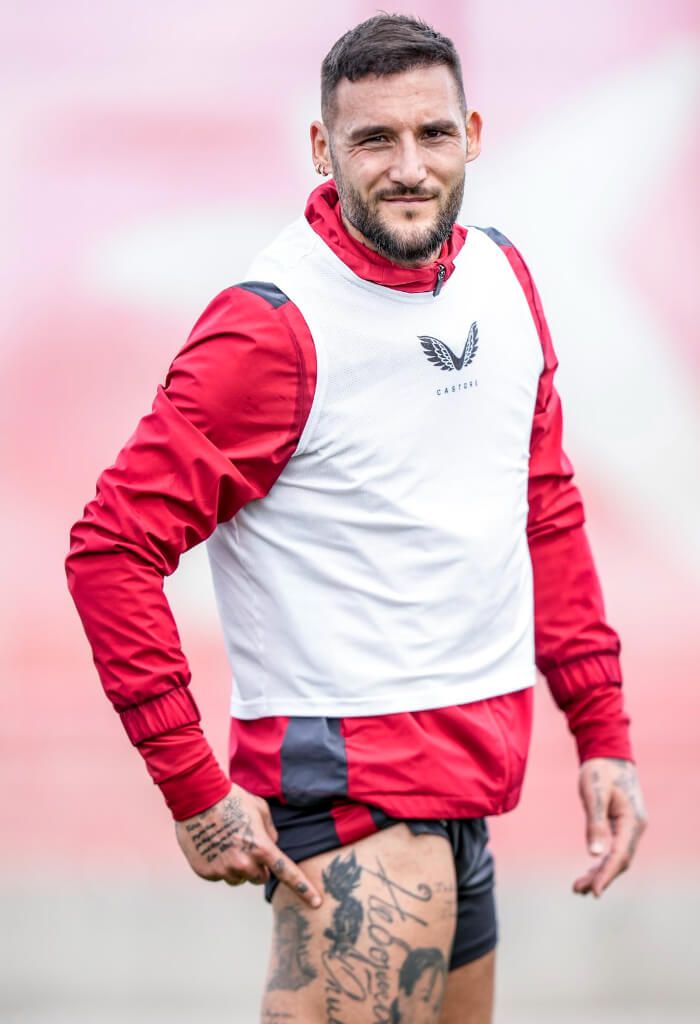
Gudelj also has a Dragon Ball tattoo on his thigh. It drew attention when Sevilla shared a photo of him pointing to it. The club’s post was a tribute to Dragon Ball creator Akira Toriyama and gave fans a clearer look than most match photos.

The tattoo adds another side to Gudelj’s collection. Family and faith are central, but he also likes pop-culture characters and stories. A tattoo can be personal without being autobiographical; sometimes a character, world or childhood memory is enough.

It also shows why one photo isn’t enough to map his tattoos. A chest shot may show the cards and script while hiding the thigh. A training photo can reveal the leg work and cover the back. The collection comes into focus across several images.
Gudelj’s tattoos read like a family album with football around the edges. The main themes are family, Serbia, faith and friendship. Football is there, but not always as a club badge. It comes through in travelling abroad, keeping home close and remembering the people who helped him.

Portraits of Nebojša, Olivera, Dragiša and Vanja give the collection its emotional centre. The Serbian eagle and four ocila mark national pride; the three crosses add a spiritual note; Rashid’s name honours a lasting friendship. Cards, Batman, Scrooge McDuck and Dragon Ball keep it from getting too serious.

The designs don’t follow one clean style, and they don’t need to. Some are well explained, some are easy to see and some remain private. The collection feels like a real person’s skin, not a branding exercise.

For now, the main point is simple: Gudelj’s tattoos record who he carries with him. The names, faces, crosses, Serbian symbols, quotes and pop-culture designs all point to the same idea. He travels for football, but his reminders of home travel with him.
Watch a Nemanja Gudelj interview for more of the personality behind the ink

Dominik Szoboszlai’s tattoos are all about grit, growth and football

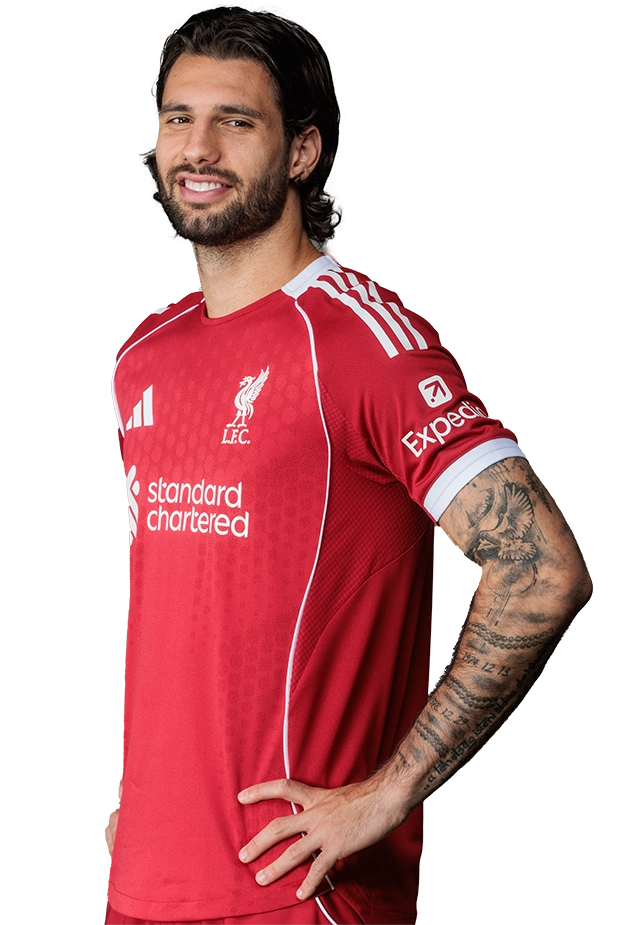
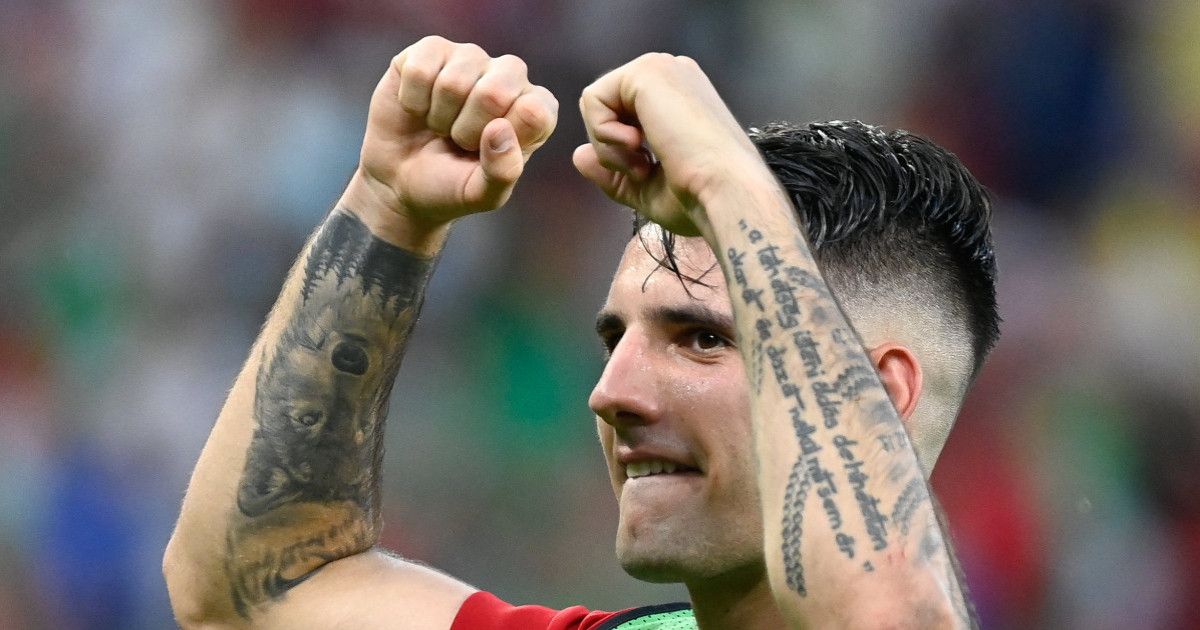
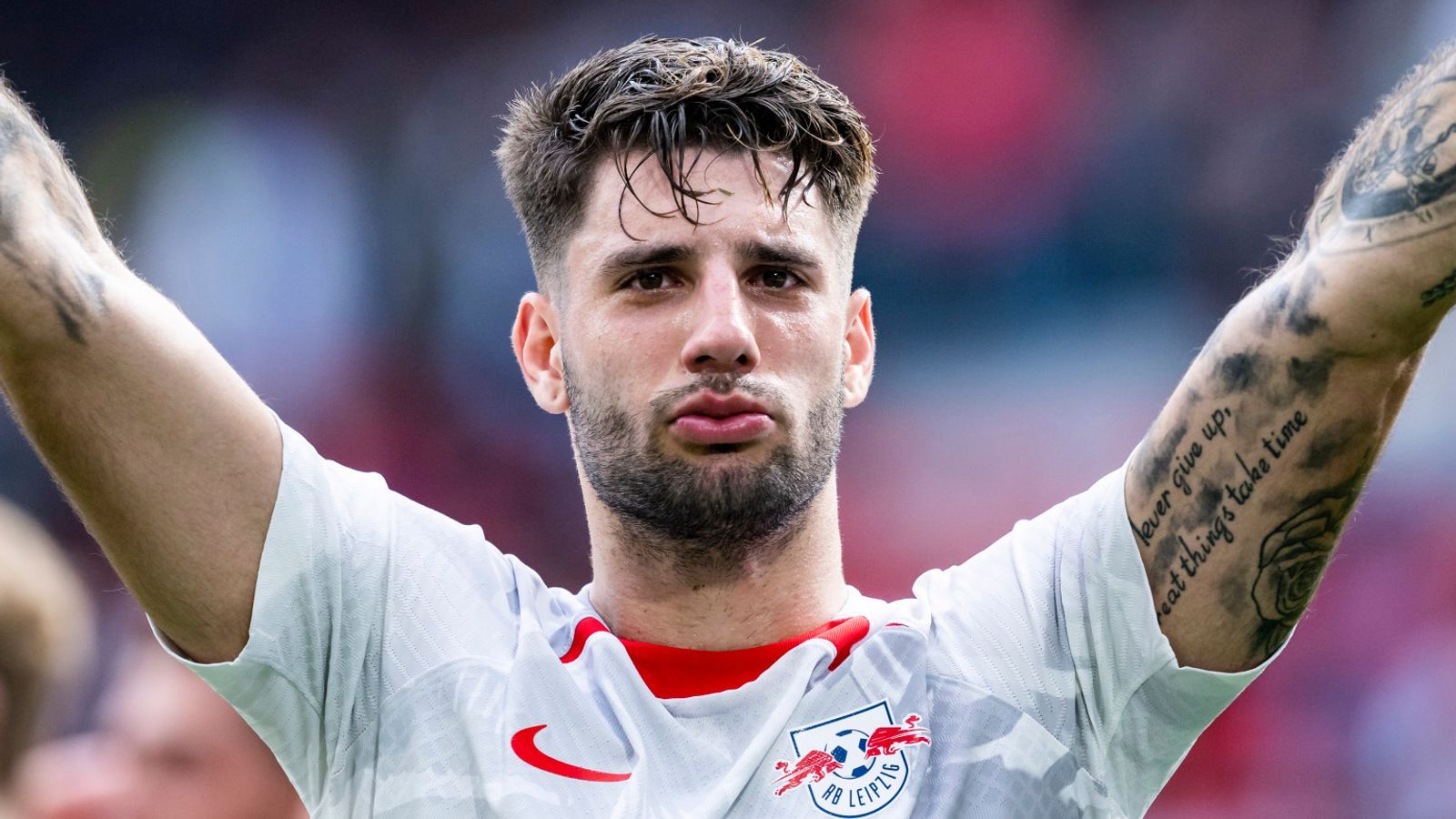
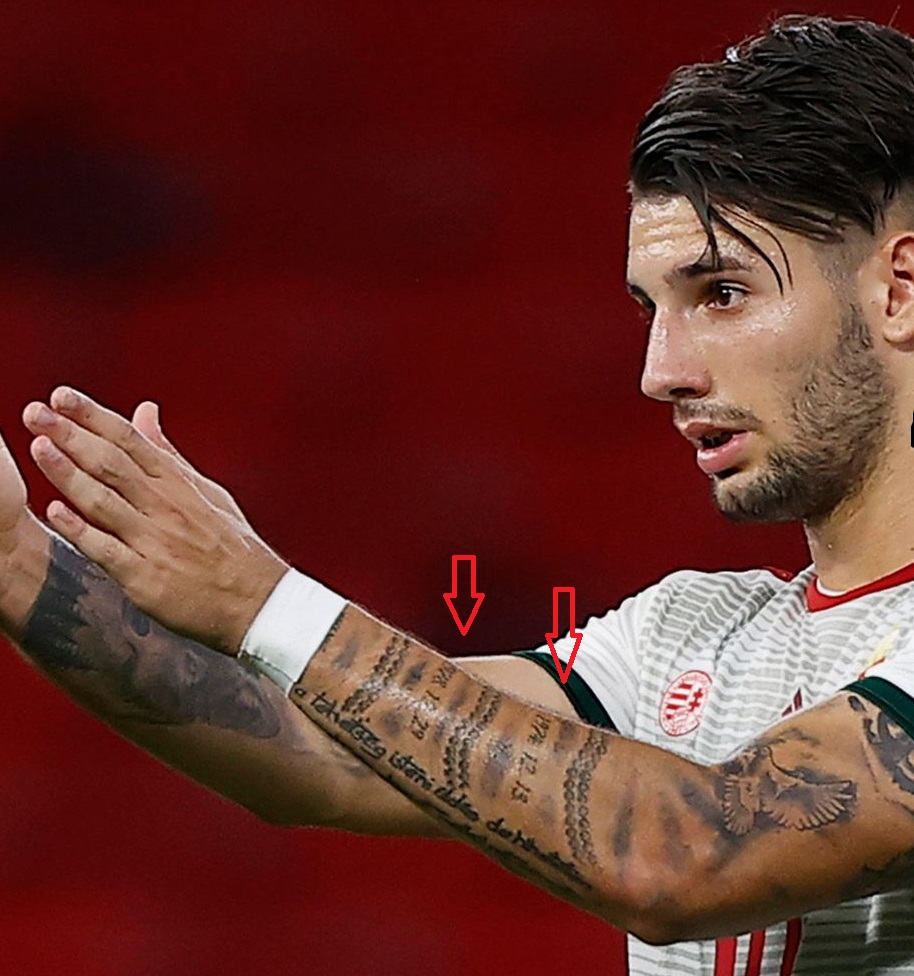
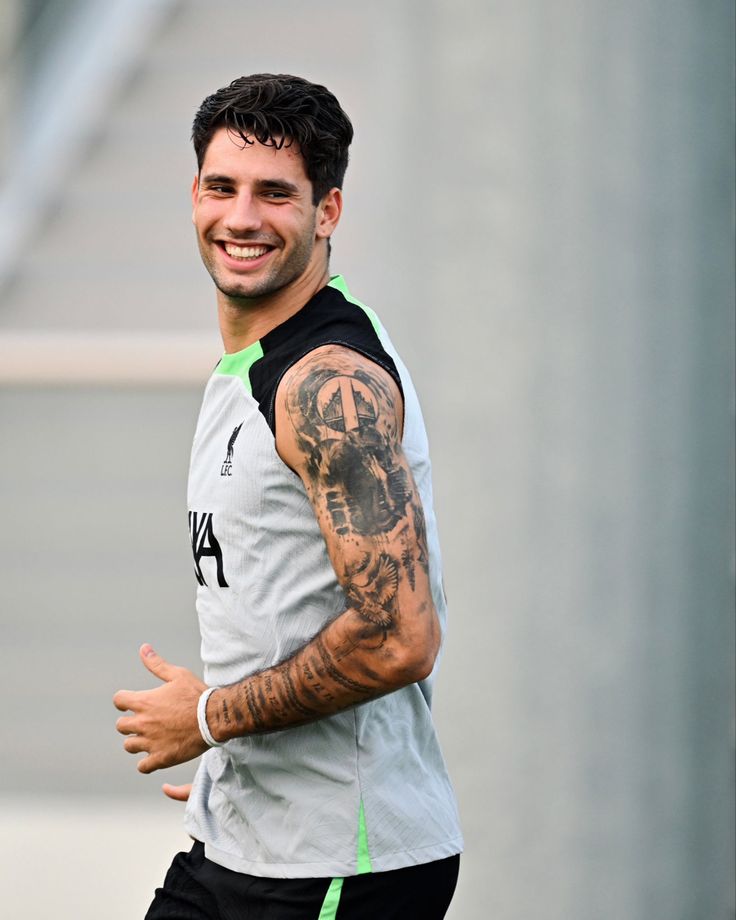
Dominik Szoboszlai’s tattoos take more than one glance to read. His right arm carries a large black-and-grey sleeve, while his other arm has quotes, dates and smaller designs that show when he rolls up his sleeves. The collection has grown with him from Salzburg and Leipzig to Hungary and Liverpool.

The ink is more than decoration. The same ideas keep surfacing: hard work, time, talent, family, football and the people who helped him along. Szoboszlai or his tattoo artist have explained some pieces; others are visible but hard to identify, so I’ll keep those separate from the confirmed stories.

From the wolf on his forearm to the Steven Gerrard quote, many of the tattoos feel like reminders he carries into training. Here’s a closer look at the designs that stand out.

A wolf gives the collection a tougher edge

Dominik Szoboszlai wolf tattoo

The wolf is one of Szoboszlai’s most recognisable tattoos. It covers a section of his forearm, and the heavy shading keeps it clear even in a photo taken from the side of a pitch. It isn’t a small symbol hidden under a sleeve; the animal gives the whole collection a tougher edge.

Body Art Guru’s breakdown of Szoboszlai’s tattoos links the wolf with dedication and perseverance. That fits the way he talks about football: talent matters, but the daily work matters too.

The design is easy to recognise, but the black-and-grey treatment gives it more depth than a simple flash tattoo. The face rewards a closer look, and the dark shading connects it with the other work on his arm. It feels like a central piece, not a stray addition.

Dominik Szoboszlai never give up tattoo

“Never give up” is a quote he can use every day

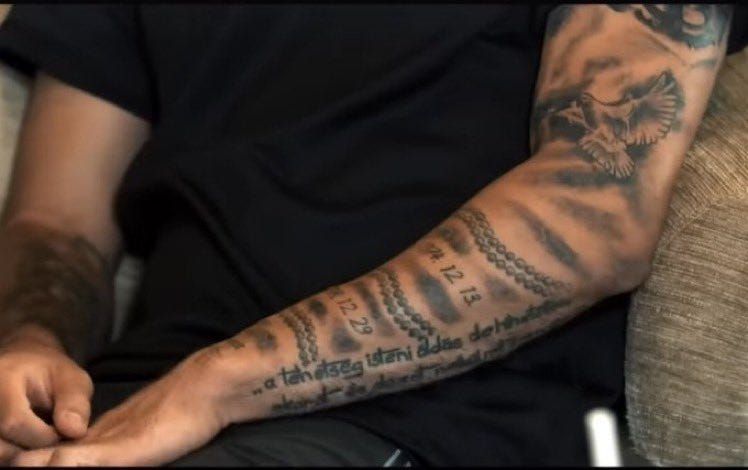
One of Szoboszlai’s clearest tattoos is the line on his left forearm: “Never give up, great things take time.” It’s easy to spot when he raises his arms after a match, and the words don’t need much explanation.

His career has moved quickly, but each step still takes patience. He came through the Red Bull system, became a key player in Germany, took on Hungary’s captaincy and then moved to Liverpool. From the outside those changes look like big jumps; behind them are years of training, recovery and steady work.

The quote can also serve him away from football. It might come to mind after a difficult match, during an injury or while adjusting to a new manager. Unlike a date tied to one event, it applies to whatever challenge comes next.

Dominik Szoboszlai bicep tattoo

Architecture, birds and movement shape the sleeve

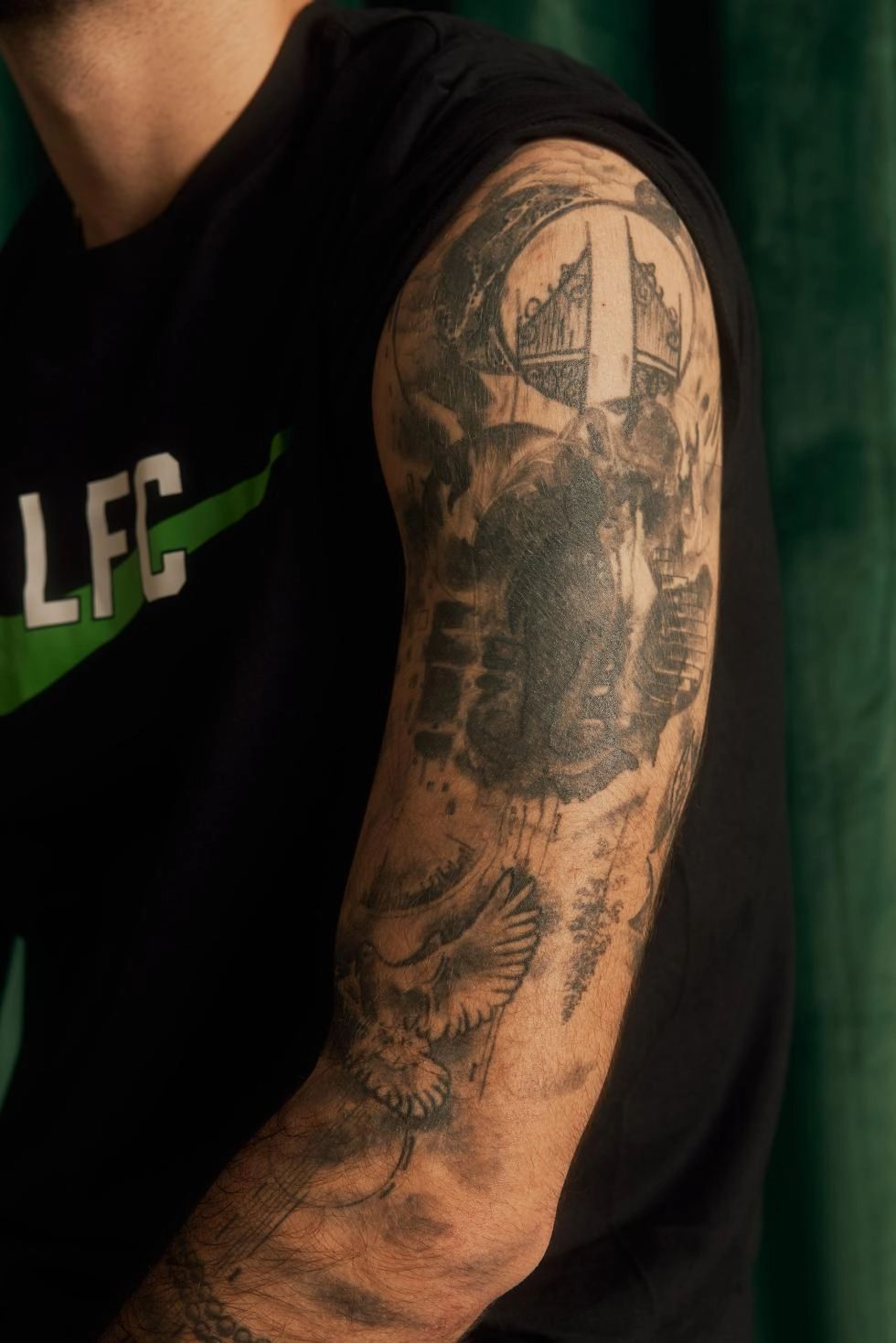
The large sleeve on Szoboszlai’s right arm is the most detailed part of his collection. Photos show architectural shapes, birds, shadows and realistic black-and-grey work layered from the upper arm toward the forearm. The different elements give the sleeve depth as he moves.

The buildings make the design feel like a place rather than a set of unrelated objects: straight lines and windows sit beside softer feathers and shading. The birds break up those hard edges and bring movement to the sleeve, which suits a player usually seen running, turning or celebrating.

Szoboszlai has spoken about wanting to leave a lasting mark and achieve something unforgettable at Liverpool. The sleeve doesn’t need to be a football timeline to sit alongside that ambition. It still looks like a work in progress, with room for the artist to extend it without crowding the existing pieces.

Dominik Szoboszlai clock tattoo

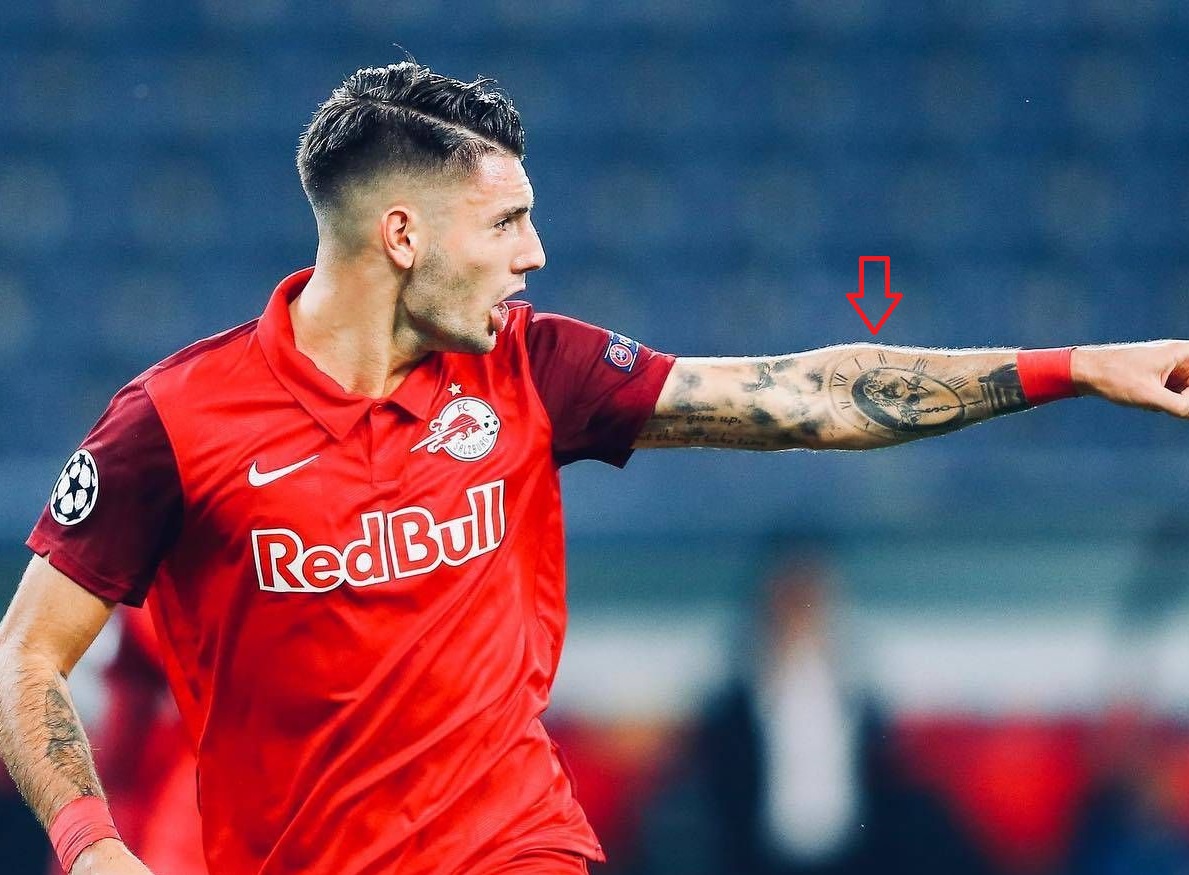
The clock is a quiet reminder that time keeps moving

The clock is one of the quieter designs, but its theme is easy to recognise. A football career is full of deadlines and short windows: players think about development, chances, recovery and how long they have at the top level. A clock gives that pressure a permanent place on the arm.

It sits among the surrounding black-and-grey work rather than looking like a separate sticker. Look at the clock, and then the lines and images around it, and the whole sleeve starts to come together.

Szoboszlai hasn’t explained this design in the same detail as his quotes, so there’s no need to guess at a particular hour or event. It may speak to time, patience or a private memory. The broad reminder to keep moving is clear enough.

Dominik Szoboszlai date tattoo

Dates and numbers hold quieter personal details

Not every meaningful tattoo has to be large. Szoboszlai also has dates and numbers among the bigger designs. In a match photo, they can disappear into what looks like one continuous sleeve; closer views reveal the smaller marks between the main pieces.

A date might mark a birthday, a turning point or a family moment, but those meanings are personal. Unless Szoboszlai explains one himself, it’s better to describe what can be seen and leave the story with him.

These details keep the sleeve from being only a visual effect. A wolf or portrait catches the eye, while a small date may matter just as much to the person wearing it. His collection has both: instantly recognisable designs and quieter reminders meant mainly for him.

Dominik Szoboszlai Gerrard quote tattoo

The Gerrard quote connects a football hero to Liverpool

One of Szoboszlai’s most discussed tattoos is the Steven Gerrard quote on his forearm: “Talent is a divine blessing, but without incredible desire and modesty, it is worth nothing.” The words stood out even more when he joined Liverpool, where Gerrard’s famous number 8 shirt carries so much history.

This is more specific than a general football motto. Gerrard represents a particular player and a particular standard at Anfield, so the quote makes Szoboszlai’s move feel personal as well as professional.

It also sits neatly beside “Never give up.” One line is about patience; the other stresses humility and desire. Together, they make the collection’s clearest statement: talent helps, but he wants to be known for the work and learning that come with it.

Dominik Szoboszlai bird and sleeve tattoos

Birds and feathered details soften the darker sleeve

Alongside the wolf, clock and lettering, softer shapes run through Szoboszlai’s arm work. Birds and feather-like details give the darker sections room to breathe and keep the sleeve from reading as one solid block of black ink.

That contrast helps the full design work. The wolf adds weight, the lettering gives it structure, and the birds bring movement and space. None needs to dominate; together they make the sleeve feel like it has been built up over time.

The photo here shows the tattoos in a natural pose, with the upper arm and forearm visible together. That wider view matters: a close crop can make one design seem separate, while the full arm shows how the pieces fit.

Dominik Szoboszlai tattoo collection training portrait

His tattoos read like a working notebook

Taken together, the main pieces keep returning to a few themes. The wolf suggests perseverance; the slogans focus on patience and effort; the Gerrard quote brings in a football hero and a reminder to stay humble. The clock and dates point to time and personal milestones, while the architecture and birds give the sleeve its visual rhythm.

It feels less like one perfect sleeve planned all at once and more like a collection of reminders added when they mattered. That leaves room for the tattoos to grow with Szoboszlai’s career at Liverpool and with Hungary.

The quotes are the clearest confirmed meanings; the smaller marks don’t need invented stories. From a distance the sleeve is striking. Up close it’s a mix of words, dates and images that circles back to one idea: talent matters, but the work still has to be done.

Watch Dominik Szoboszlai talk about his football journey

This player profile is a useful companion to the tattoo story. It shows the arm work in motion and offers more about the person behind it.

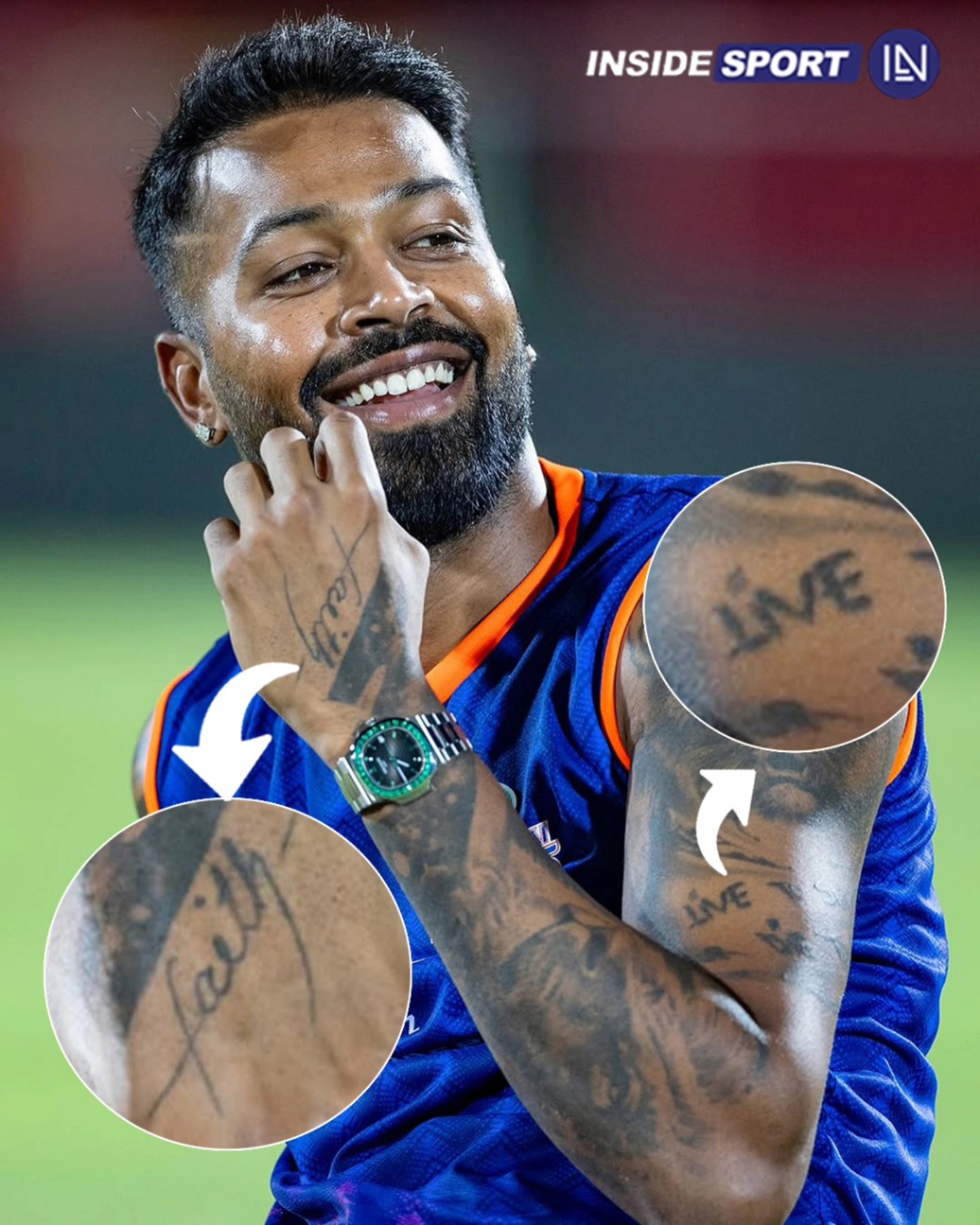
Hardik Pandya’s tattoos: tigers, family dates and the ink behind his fearless style

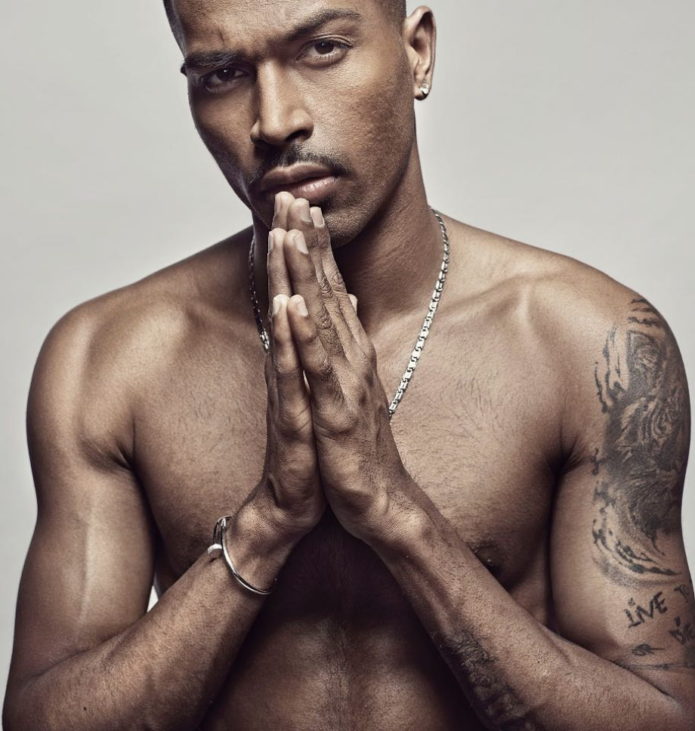
Hardik Pandya’s tattoos suit his public style: bold, visible and hard to miss. Look closer, though, and the collection has a personal side too. Tigers, words, dates, family references and religious symbols run across his arms, neck and chest.

Some designs have straightforward stories. A date can mark a family moment, while a phrase can serve as a reminder before a match. The larger animals and layered sleeves are more open to interpretation, so they’re best described from what’s visible rather than assigned a meaning without evidence.

Pandya continues to add tattoos, which means photos from different seasons can show different versions of the collection. A jersey may cover a sleeve; fresh ink can look darker; lighting can hide small lettering. Clear training and portrait shots help more than a random match-day crop. Here’s a closer look at the most recognisable designs and what has been reported about them.

The tiger tattoo brings power to Hardik’s shoulder

Hardik Pandya tiger tattoo high quality

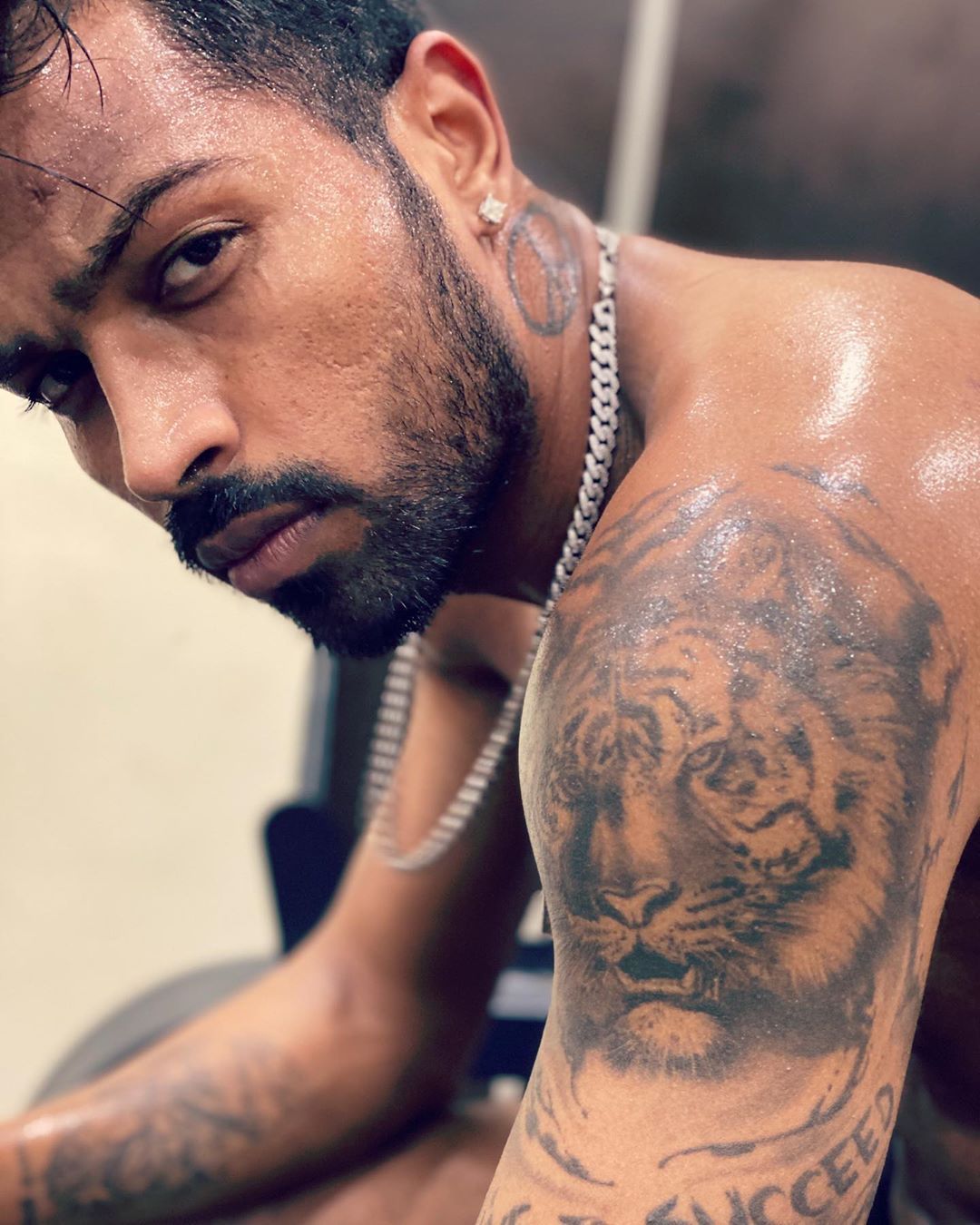
The tiger on Pandya’s shoulder is one of his most recognisable tattoos. It’s a black-and-grey portrait with a strong stare and deep shading, detailed enough to read even from a distance. The size and placement give the collection a bold first impression.

Tigers are often associated with strength, confidence and leadership. Those ideas fit the fierce look of the portrait, though Pandya hasn’t publicly explained every detail. It’s safer to say the design carries a power theme than to claim each line has a confirmed meaning.

The shoulder gives the tattoo two sides: a jersey can cover it during a match, while a sleeveless photo brings it into view at once. It’s both personal ink and a visible part of his style.

“Live to suc or die try” is the phrase people notice first

Hardik Pandya live to succeed tattoo

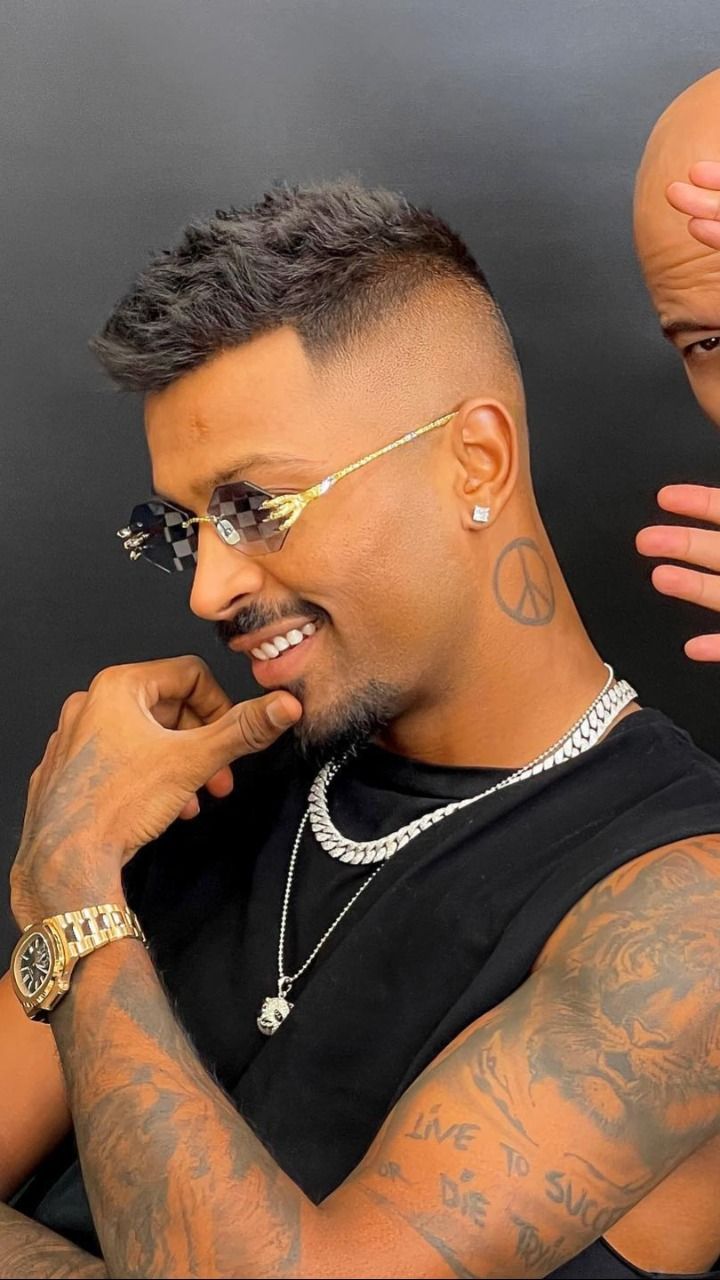
One of Pandya’s most talked-about tattoos reads “LIVE TO SUC OR DIE TRY.” The spelling is rough, but the idea comes through: keep trying, push ahead and don’t settle for standing still. The phrase runs along his arm and is easy to spot in photographs.

It suits a career that has brought big highs as well as injuries, criticism and constant attention. A permanent reminder about effort makes sense for an athlete who has had to keep proving himself.

The lettering is a good example of how a tattoo’s wording doesn’t need to be polished to matter. It reads like a slogan and a personal rule, chosen to stay in view rather than as decoration alone.

The neck tattoo adds a calmer note to the collection

Hardik Pandya neck tattoo closeup

The neck tattoo is smaller and cleaner than the tiger or sleeve work, but it shifts the mood. The close-up shows a peace symbol: a quieter image among the collection’s bolder designs.

Neck ink is hard to keep out of sight, even when the design is simple. On Pandya, it sits alongside jewellery, sunglasses and changing hairstyles that have become part of his public look.

The symbol is a reminder that his tattoos aren’t all about looking tough. The collection has room for calm, spirituality and family as well as confidence, making it feel like snapshots from different parts of his life.

His sleeves mix old-school shapes with personal details

Hardik Pandya lion sleeve tattoo

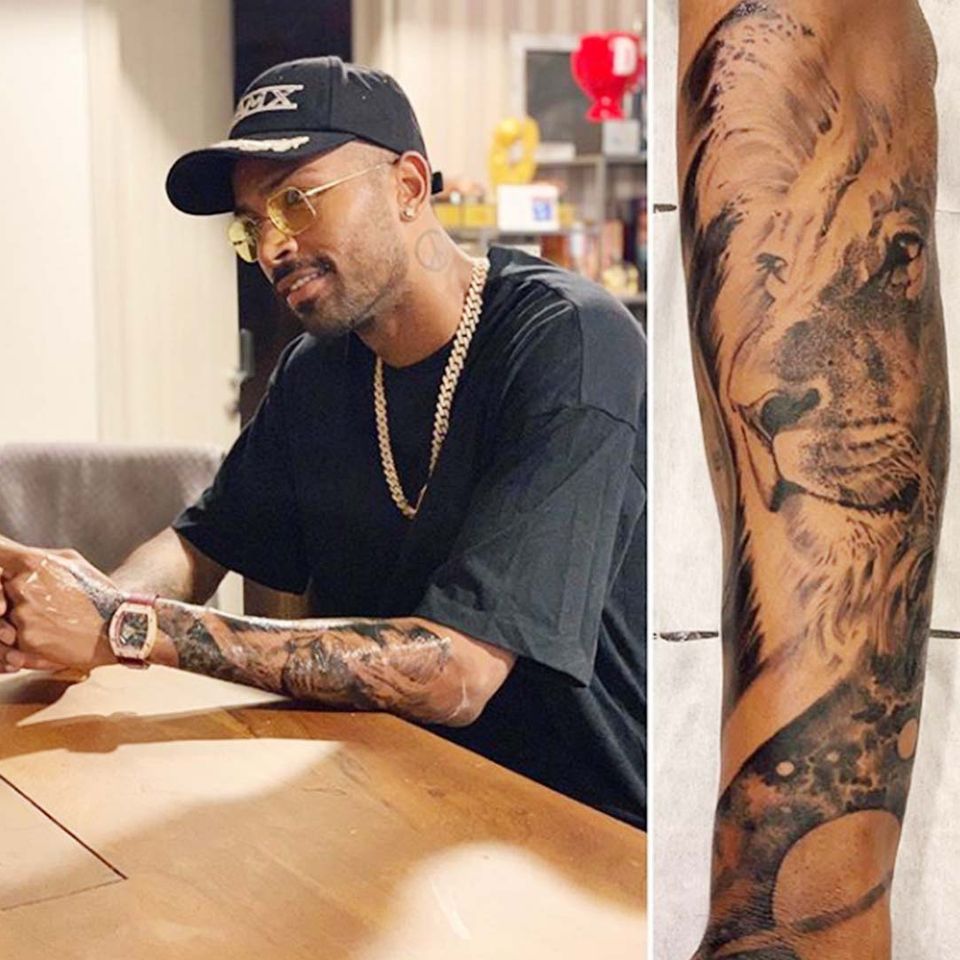
Most of the visual weight sits on Pandya’s arms. The sleeves combine heavy tribal-style shapes, curved lines and darker areas that wrap around his biceps and forearms. In some photos they read as one connected design; in others, you can see how the work has grown over time.

That layered look is common in a collection built over years. An early piece can stay in place while larger shapes are added around it, gaps are filled and older lines are shaded again. The arm gradually takes on a fuller look.

The sleeves also show how much Pandya likes tattoos that can be seen across a room. Get closer and there are smaller shapes and lettering within the heavier work. The mix gives the arms movement without making every section look the same.

The date 30.07.2020 marks a family milestone

Hardik Pandya date tattoo

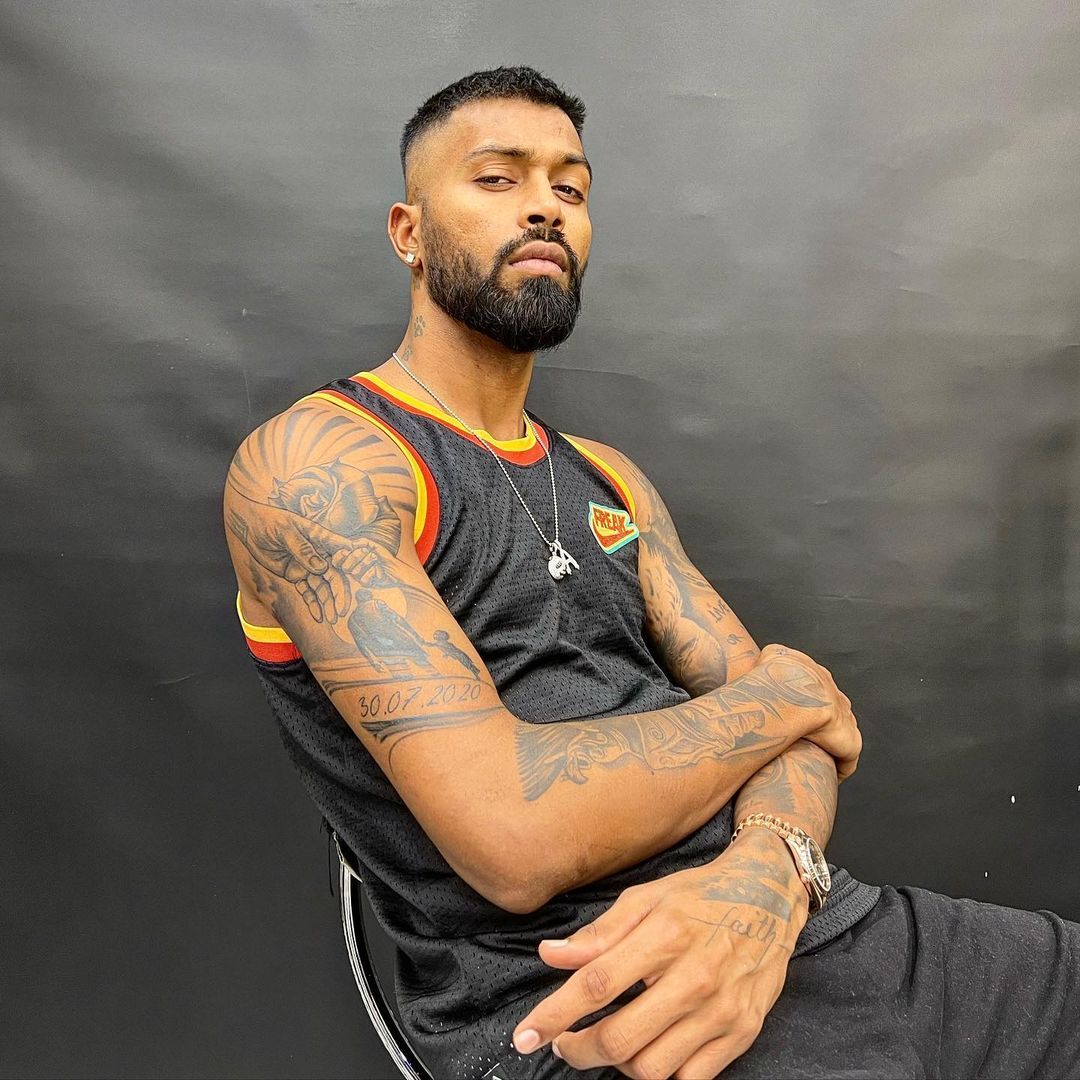
The date 30.07.2020 appears on Pandya’s arm and has been linked to the birth of his son, Agastya. A short line of numbers can hold a lot of feeling because it points back to one particular day.

Family life has been part of Pandya’s public story, so a lasting marker for an important moment fits naturally. The date sits among larger designs, and its clean lettering gives the arm a break from the darker shading.

Other tattoos have also been associated with his children and family. Photos change and sleeves overlap, so it’s best to stick to the pieces that can be seen clearly instead of filling in uncertain details.

Animal and fighter designs echo his competitive side

Hardik Pandya arm tattoo closeup

Alongside the tiger, tattoo guides have identified a lion, an eagle and a sword-carrying fighter among Pandya’s arm designs. The layout can be hard to follow because the images sit close together, but they give the collection a strong sense of motion.

Eagles are often read as symbols of independence, while a sword-bearing figure can suggest courage or readiness. Those are familiar interpretations, not a line-by-line explanation from Pandya.

The photos do show how the artwork supports his public image. He has never aimed for the look of a quiet, traditional sportsman; his tattoos, hair, clothes and jewellery all leave room for his own style.

Hardik’s newer ink keeps changing the story

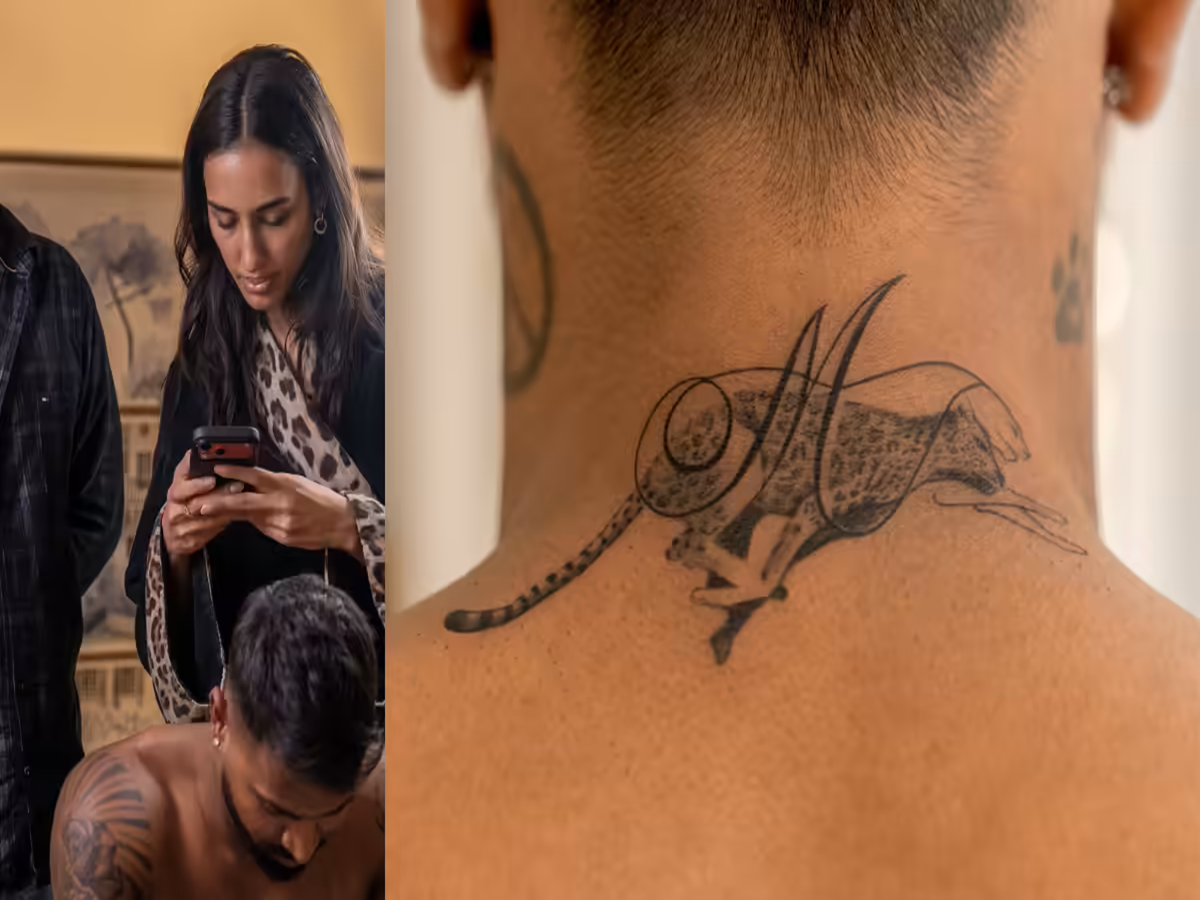
Recent reports have linked new designs to Mahieka Sharma, including an “M” and leopard imagery. Interviews with the tattoo artist have described nature- and earth-inspired ideas being discussed before the final design was chosen. That gives the newer work a different feel from the older slogans and tribal shapes.

The leopard fits the animal theme already present in Pandya’s collection, while the personal connection gives it a more specific story. That’s one way a collection grows: a familiar style can take on new meaning through a letter, a date or a private reference.

It also explains why older photos can give an incomplete picture. New ink gets added, some designs are covered, and lighting changes how faded tattoos appear. Clear photos from different seasons tell more than one old image.

Why Hardik Pandya’s tattoos feel tied to his personality

Pandya’s tattoos fit the way he presents himself: visible, confident and not especially concerned with being subtle. But there’s more there than style alone—family references, a phrase about effort, a peace symbol and newer pieces that reflect his life now.

That mix is why fans look closely whenever a new photo appears. The tattoos form a timeline alongside his cricket career and his life away from the stadium, with the possibility of another addition each season.

The collection has its own rhythm. Large animals catch the eye first, the words carry an attitude, and dates or family references bring the focus back to real memories. The designs don’t need to match perfectly to work together.

If you like athletes whose tattoos tell a story, take a look at Virat Kohli’s tattoos too. Kohli’s lean more toward numbers, faith and milestones, while Pandya’s combine animals, words and sleeve work.

Watch the story behind Hardik Pandya’s tattoos

This video offers another look at the pieces and how they fit into Pandya’s life beyond cricket.

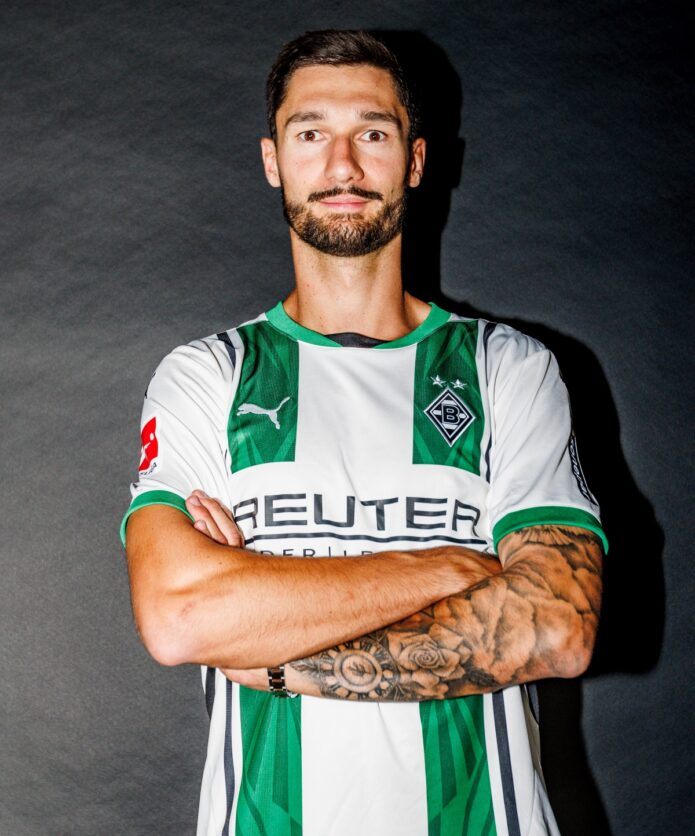
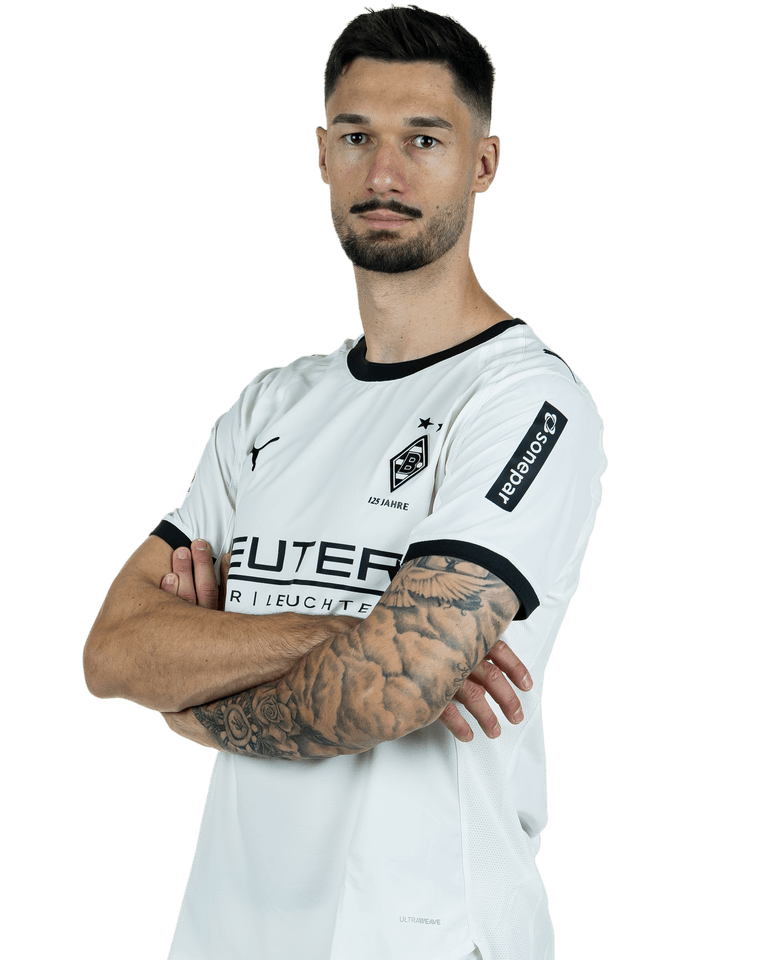
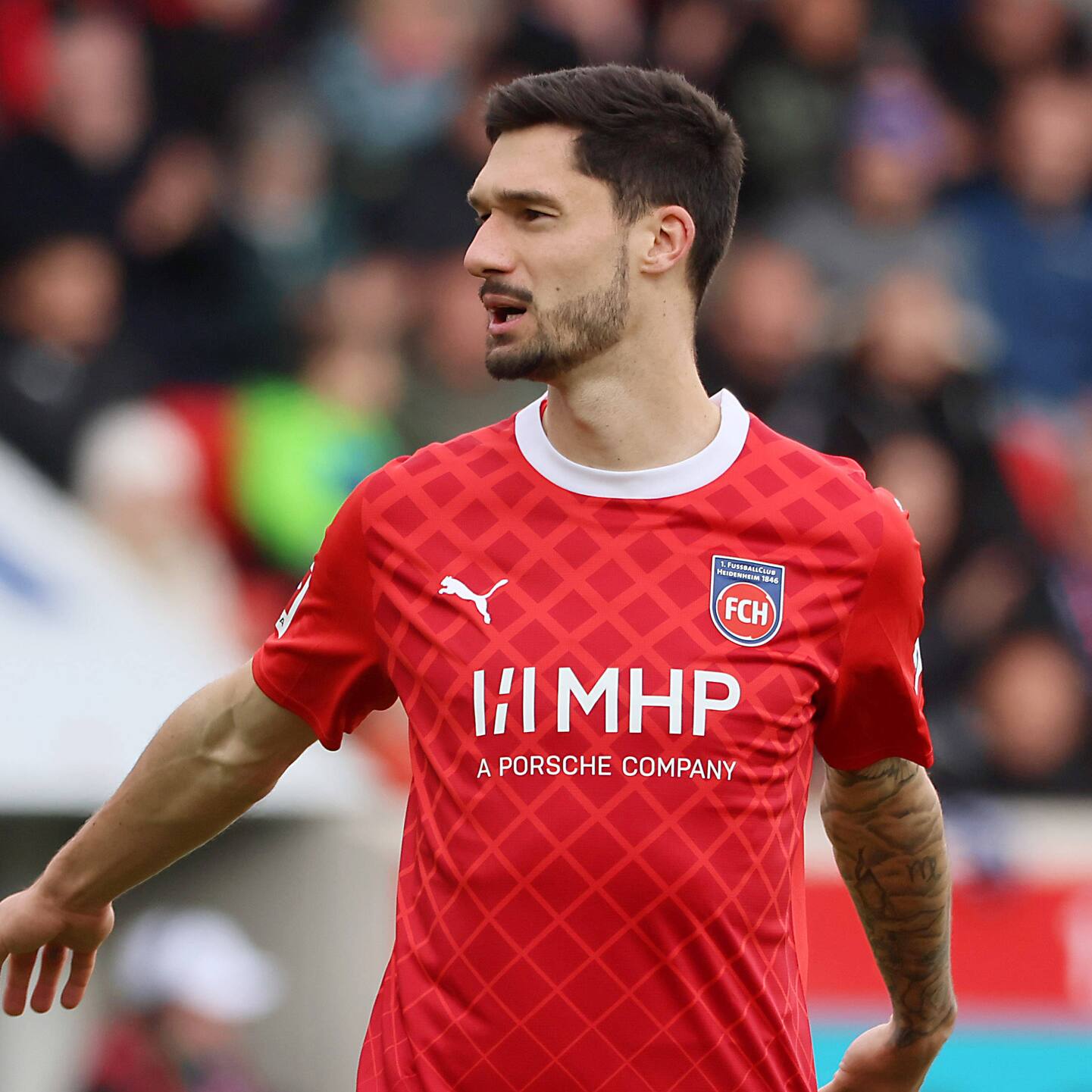
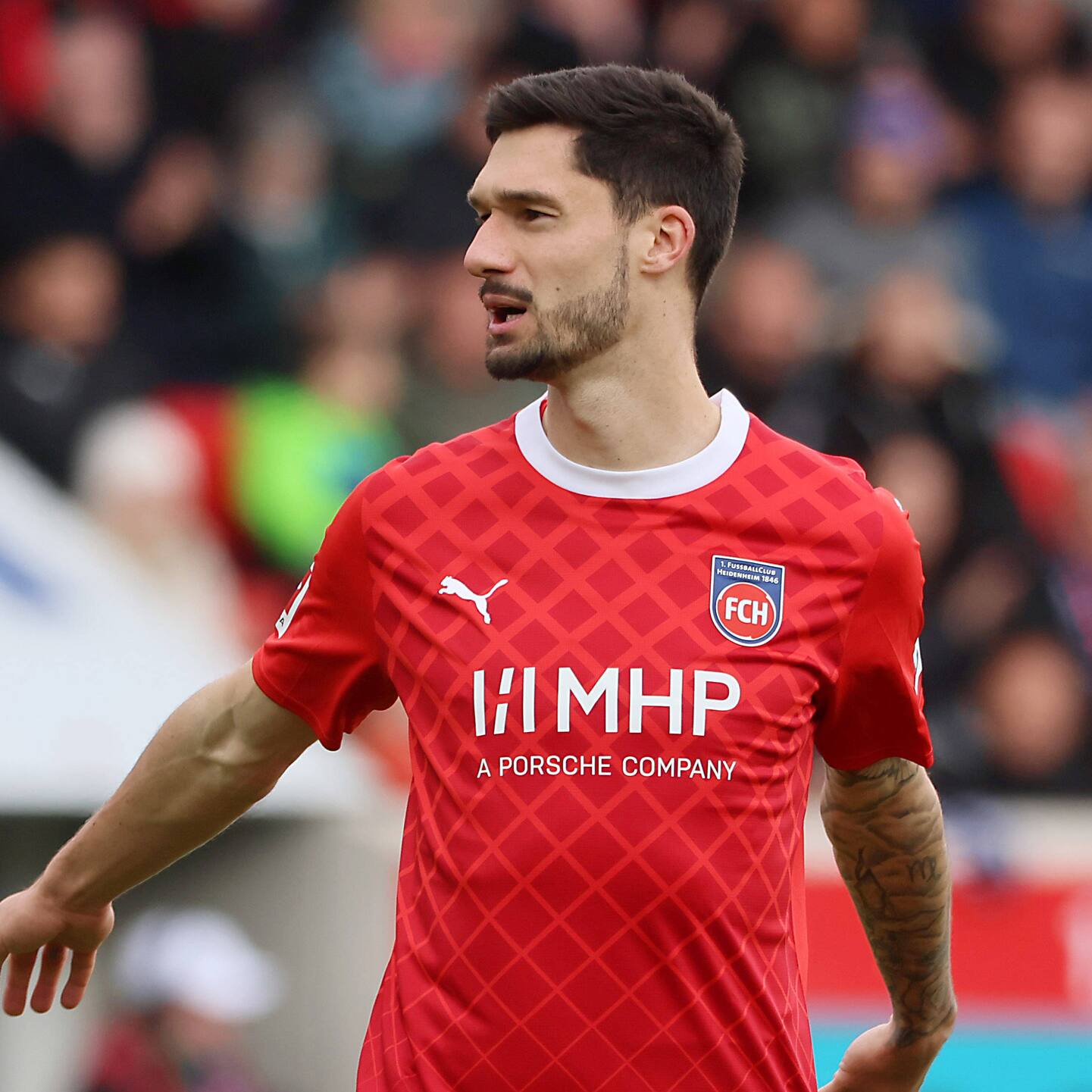
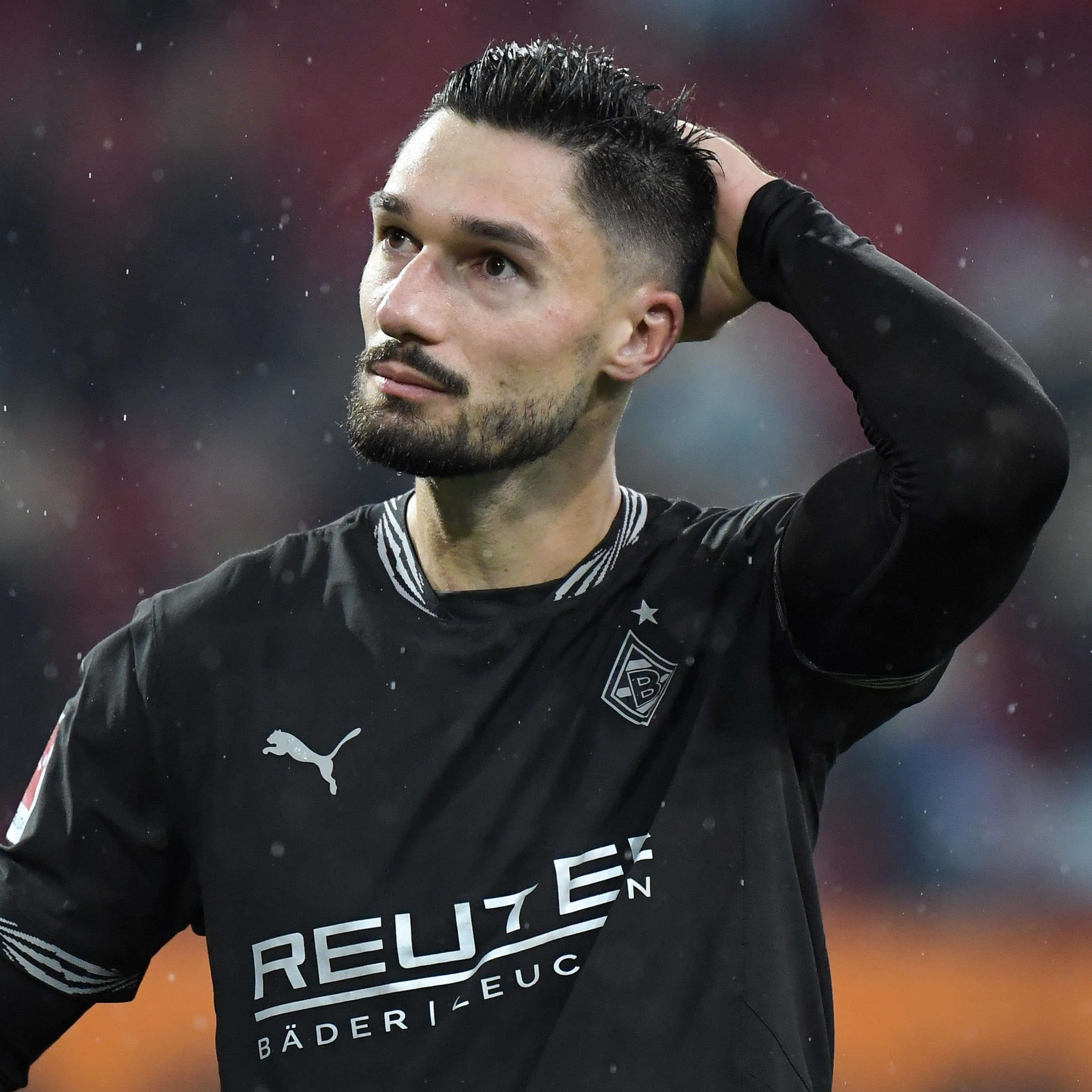
Tim Kleindienst keeps his biggest tattoo stories close to family

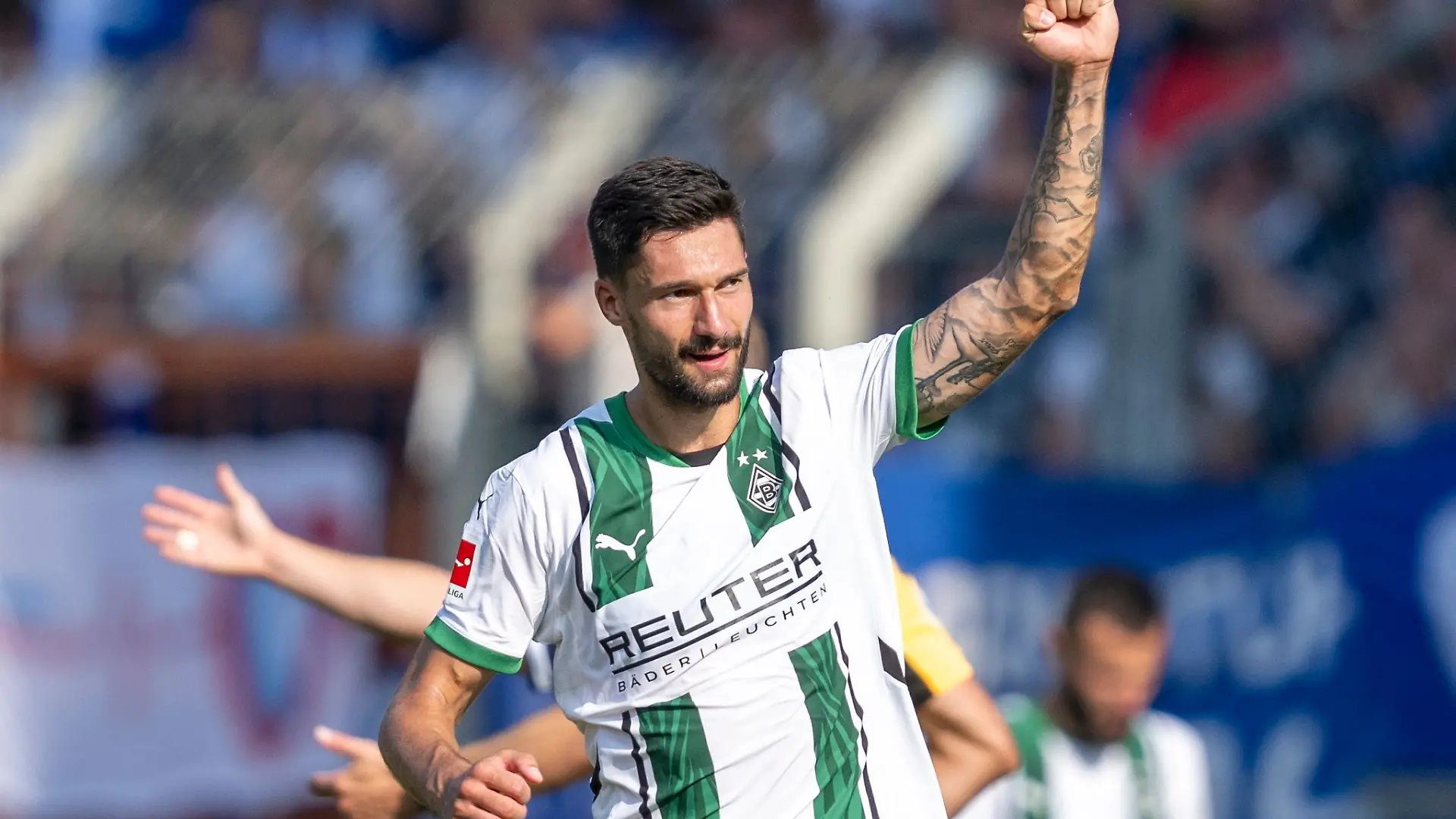
Tim Kleindienst’s tattoos are easy to spot when he rolls up a sleeve, but their stories are more personal than a typical footballer’s ink roundup. The Borussia Mönchengladbach striker has talked about love, family, time and leaving room for one very specific future tattoo. His designs are spread across his arms rather than gathered into one giant statement.

Kleindienst speaks about the ink in a straightforward way. He treats the tattoos as reminders, with the meaning more important than showing off every line. In a 2025 RTL interview, he said love and family matter to his choices; another interview explained the sandglass on his left upper arm and its link to how he wants to use his time.

It’s a focused collection: the sandglass is the clearest documented design, alongside larger black-and-grey work across his arms. Some details show up in photographs without a public explanation, so I’ll describe what’s visible and leave those meanings open.

The sandglass on his left upper arm is a reminder about time

Tim Kleindienst sandglass and arm tattoos

The best-documented tattoo in Kleindienst’s collection is a sandglass on his left upper arm. Its message is simple: time keeps moving, so make good use of what you have.

Kleindienst has said the design reminds him to use his time as well as possible. He connects that idea to doing more than the bare minimum, in sport and in everyday life. It isn’t about a goal celebration or a trophy he has already won; it keeps his own standards in view. For another personal tattoo story, see Roman Kemp’s tattoo story.

The upper arm suits a reminder like this. A match shirt can cover the design, while it comes back into view in everyday life. It’s close enough to feel personal without being on display all the time.

There’s a football connection even though the sandglass isn’t a football symbol. Players face short careers, injuries, changing form, selection decisions and opportunities that can disappear. Kleindienst reached the Germany national team later than some supporters might expect, which gives the theme of time extra resonance.

The design’s strength is its understatement. A sandglass isn’t loud, but its meaning becomes clearer the longer you look. The message is to make the most of the time still in front of you, making this one of his clearest tattoos-as-reminders.

His arm work is built from black and grey images

Tim Kleindienst black and grey arm tattoo

Tim Kleindienst tattooed arm raised during a football match

A match photo shows how far the black-and-grey work runs up Kleindienst’s arm. With the sleeve lifted into view, the shaded shapes and darker bands are easier to distinguish than in an ordinary portrait. It shows how the tattoos look around football, not just in a close-up made for an article.

Tim Kleindienst shirtless celebration showing black and grey arm tattoos

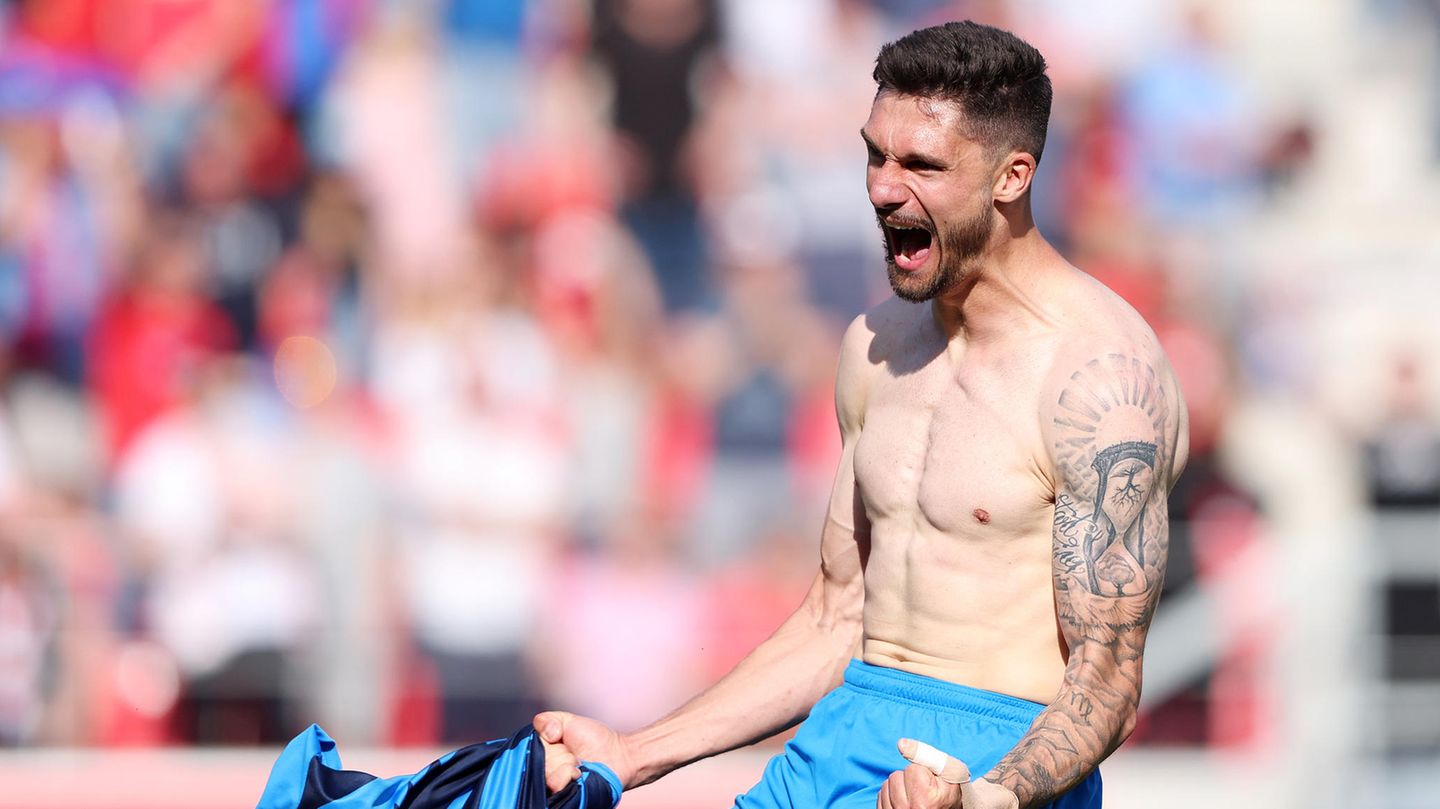
The shirtless celebration photo gives another angle in brighter light. The larger shapes on his upper arm, the deep shading and the way the pieces meet toward the forearm are easier to see. The images confirm that it is more than one small design, while leaving several motifs unidentified.

Photos show a broad area of black-and-grey work across his right forearm and up toward the upper arm. In the clearest shots, layers of shading, curved outlines and connected pieces sit together. From a distance the arm reads as a dark sleeve; up close it looks like several separate designs.

The pictures aren’t sharp enough to name every image, but the overall style is clear: soft grey washes, heavier black areas and rounded shapes with an illustrative feel. Shading and texture give the work more depth than a simple block of ink.

That style fits naturally in match and club portraits. The tattoos show when he crosses his arms or celebrates, but the shirt still frames them. The ink is part of his everyday look without taking over the whole picture.

It’s tempting to give each dark shape a name, especially beside a dramatic headline. There’s no reliable public list identifying every piece on Kleindienst’s arm. The careful description is a black-and-grey collection of overlapping motifs whose exact symbols and meanings haven’t all been shared.

That uncertainty doesn’t make the tattoos less interesting. A real collection grows over time, appears under different lighting and can hold meanings that stay private. Kleindienst’s arm has the lived-in look of something that has developed with him, not a catalogue design planned in one sitting.

Love and family are the themes he talks about most

Tim Kleindienst tattooed arm during a football match

In the RTL interview, Kleindienst said love and family are central to his tattoos. He didn’t give a full map of every design, and public coverage hasn’t identified every family reference, but that comment gives the visible ink useful context.

It shifts the focus from clubs, promotions and trophies toward people and relationships. His explanations make the collection feel more restrained than some of the louder ink in professional sport.

The pieces don’t need to match visually. A family tattoo, a reminder about time and a future idea can all look different while belonging to the same collection. The connection is why he chose them, not one uniform style.

There’s a private side to that as well. Kleindienst plays in front of large crowds, but a tattoo tied to family can stay meaningful without being fully explained to everyone watching. Photos show the shapes; he can keep the deeper story for himself and those close to him.

The confirmed details are already enough: a sandglass, a collection tied to love and family, and a clear message about using time well. The remaining marks can be described visually without inventing their backstories.

He has imagined a World Cup trophy tattoo

Tim Kleindienst celebration arm tattoos

Kleindienst has said he would get the World Cup trophy tattooed if Germany won the 2026 tournament. He described it as an easy decision if the team lifted the title.

The idea fits the sandglass in its own way. One tattoo keeps the time ahead in mind; the other would mark a once-in-a-lifetime football moment. One is a reminder to keep moving, the other a record of reaching the sport’s biggest prize.

This is a planned tattoo, not an existing one. Coverage describes it as a promise tied to a possible World Cup win. Unless Kleindienst gets the design and shows it, it belongs in the future-tense part of the story, not beside his confirmed ink.

That plan also says something about how he thinks of tattoos. He isn’t filling empty space for its own sake; the trophy would come after a meaningful achievement. The sandglass works similarly, carrying a message he wants to keep close.

For now, Kleindienst’s tattoos are best understood through time, family and the steady work of building a football career. The arm pieces give the collection a strong look, but the explanations make it feel personal. The RTL interview below lets him speak about his life and tattoos in his own words.

Tim Kleindienst Tattoos: Family, Love and His World Cup Plan

Tim Kleindienst’s tattoos make more sense once he starts talking about them. His left arm can look like a busy mix of small pieces, but the designs connect to his brothers, his marriage and the family life he speaks about away from football. He also has a future tattoo in mind: the World Cup trophy, if Germany wins it while he is part of the team.

The collection feels like it has grown along with him instead of being planned as one perfect sleeve. Kleindienst has discussed the tattoos in interviews, so there are real stories behind many of the visible pieces. The details he has shared are direct and personal, much like the way he talks about football.

Here’s what is visible and what Kleindienst has actually explained.

His left arm is the main tattoo collection

Tim Kleindienst shirtless arm tattoos after a match

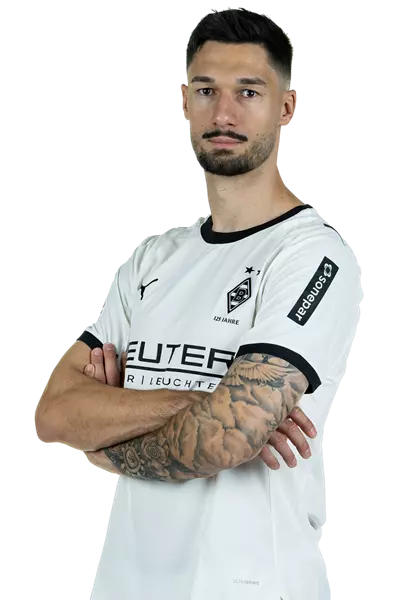
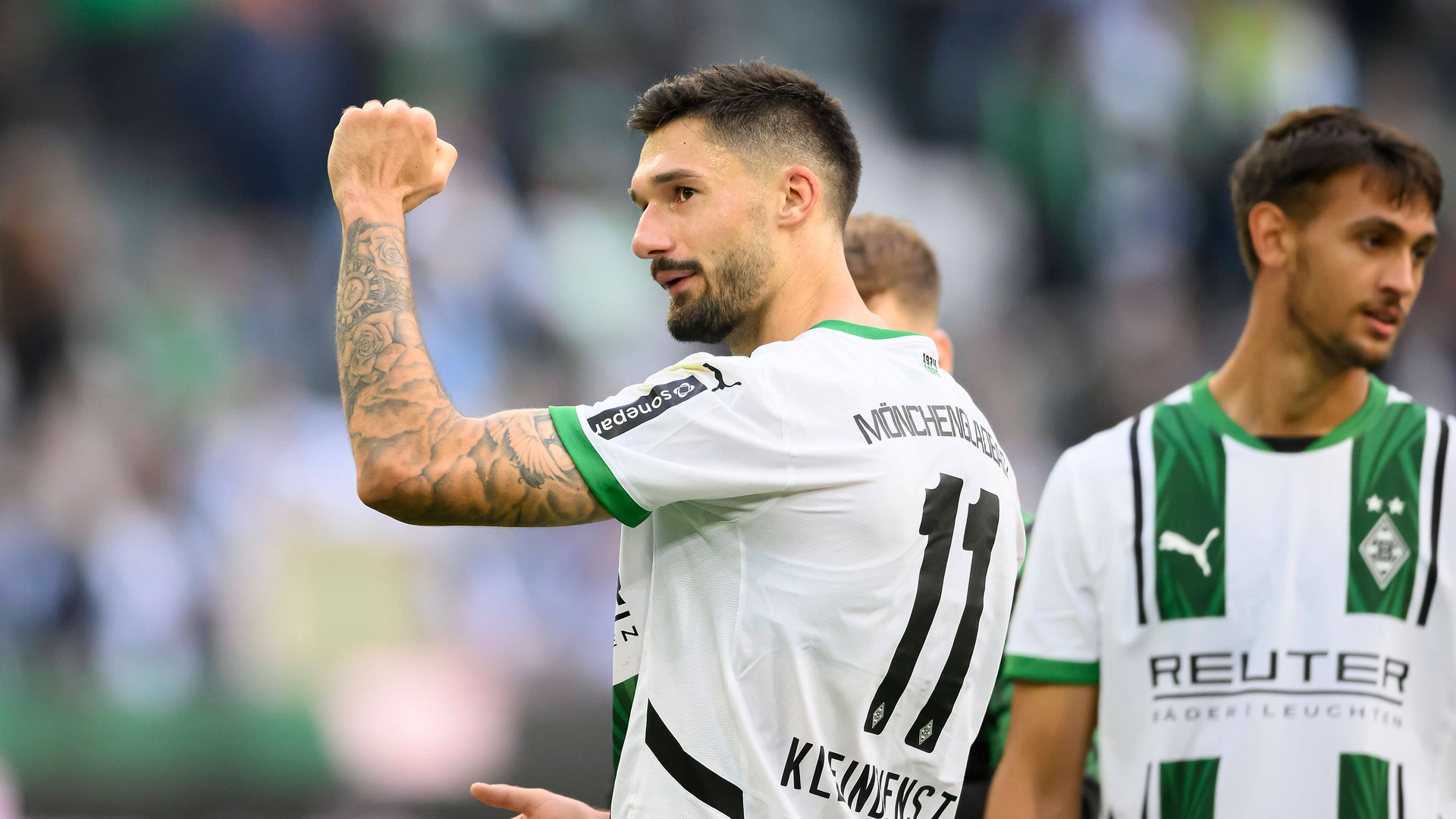
Kleindienst’s left arm is the clearest part of his collection. Photos and interview footage show a range of smaller designs rather than one large image covering the whole arm. Together, the pieces read like a timeline: each has room of its own, while the arm shows how the collection has grown.

He has described the arm as being covered with small artworks that carry deeper meanings. They are not simply there to create a footballer’s look; they connect to people and moments in his life. The visible pieces include family references, zodiac imagery and the tattoo that stands in for his wedding ring.

The placement also works with his day-to-day life. His arms show in short sleeves during matches, training and interviews, but the tattoos do not define how he looks in a suit or team presentation. The collection feels lived in, built up over time rather than planned as a finished design all at once.

The separate pieces matter as much as the overall sleeve. Kleindienst has not given the arm one grand theme. Each tattoo can stand for something different, which keeps the collection personal rather than overly polished.

His brothers are represented in the ink

Tim Kleindienst arm tattoos during an RTL interview

Kleindienst has said that both of his brothers are represented in the tattoos on his arm. He explained it simply, without turning the answer into a long story. The point is clear, though: the designs are reminders of the people closest to him, not just a collection of pictures.

Family tattoos can be as direct as a name or a date. Kleindienst’s references seem quieter, with small pieces and symbols that hold meaning without advertising it. He is willing to talk about the tattoos, but he does not present each one as a dramatic reveal.

The brother references also help explain why the sleeve contains different styles. A piece connected to one person does not have to match a design chosen for someone else. Instead, the memories sit together without being forced into one visual theme. Photos from matches and training show different parts of his arm that a single portrait might miss.

His family ink does not have to shout to matter. The tattoos stay close to the body and become part of his everyday routine, while keeping the people they honour in view.

The Scorpio and Virgo design links him with his wife

Tim Kleindienst back and arm tattoos in football celebration

Another design brings together Kleindienst’s and his wife’s zodiac signs: he is a Scorpio, and she is a Virgo. He has the two signs represented in one tattoo, turning a familiar symbol into something shared between them.

It is a small idea with a clear personal meaning. Without the story, someone might only see a pair of symbols. Knowing the signs makes the tattoo a reminder of his relationship, rather than a general statement about astrology.

That approach fits the rest of the collection. His tattoos do not follow one artist or a single colour palette; the meaning comes first, with the style following the idea. The mix of shapes and sizes gives the arm its lived-in look.

Football takes Kleindienst from club to club, through travel, training and matches. The zodiac design gives him a small reminder of home wherever he is. It adds a private centre to an arm that is often in the public eye.

His wedding ring is permanently inked

Tim Kleindienst zodiac tattoo and arm ink

Kleindienst has said he had his wedding ring tattooed. He and his wife married in 2022, and the ink gives that commitment a lasting place on his hand. For someone who trains and plays football for a living, a tattooed ring has a practical side too: it cannot slip off during a match or be forgotten after training.

The choice is straightforward. It is not described as a trend or a design with a complicated message; it marks the marriage. That simplicity sits naturally beside the other tattoos, which are personal without needing elaborate explanations.

Hands see a lot of wear, and ring tattoos can change over time. Kleindienst has not said the tattoo replaces the meaning of a real ring. It reads as another reminder he carries through work, travel and football seasons. His arm keeps stories about family close, while the mark on his hand makes the marriage a literal part of his everyday life.

The ring tattoo is also a reminder that size does not decide which piece matters most. His arm attracts more attention in photos, but a small mark on a finger can carry just as much meaning. In Kleindienst’s collection, the smallest tattoo may be the most personal.

The collection is still growing

Tim Kleindienst tattooed arm in match portrait

Kleindienst has not ruled out getting more tattoos. In an RTL interview, he joked about adding to the collection and made a playful reference to his wife and the possibility of future family news. He did not name a specific next design, but it was clear that he sees the arm as unfinished.

The most specific plan depends on Germany. Kleindienst said that if he won the 2026 World Cup with the national team, he would get the trophy tattooed. He said he would put it on his body right away if that moment came. It is a playful promise, and a way to turn a major public achievement into a personal memory.

A World Cup trophy would fit the collection better than a random football logo. His existing tattoos reflect family and identity, so a tattoo of the cup would mark a career moment he lived through. It would say more than simply that he plays football.

There is a nice balance in the idea. Kleindienst knows the work it would take to reach and win a World Cup, but he is happy to imagine the celebration. The tattoo plan becomes a bit of motivation kept in reserve: if Germany wins, he already knows how he wants to remember it.

What the tattoos say about Tim Kleindienst

Seen together, the tattoos tell a clear story. The arm represents his brothers; the zodiac piece connects him to his wife; the ring tattoo marks their marriage. A World Cup trophy, if it ever happens, would add the national team and one of the biggest moments of his career. The designs may not all look alike, but the ideas behind them are connected.

That is what makes the collection more than a list of visible ink. These tattoos keep people and memories close rather than building an image for the cameras. Kleindienst is also open to adding more when a new moment in his life feels important enough.

Fans who follow football tattoo stories may recognise that family-and-football mix in other players’ collections. Like Lionel Messi’s tattoos, Kleindienst’s combine family memories with football milestones. The scale and style differ: Messi’s ink is more widely catalogued, while Kleindienst’s story is still unfolding through interviews and match photos.

The simplest reading may be the best one. Kleindienst likes to carry important people and moments with him, and tattoos give him a way to do that. His left arm may fill out over time. If the World Cup plan comes true, the collection will gain a recognisable new piece. Until then, the tattoos already form a personal record of his life away from the pitch.

Watch the RTL interview below to hear Kleindienst talk about family, his current tattoos and the design he would add if Germany won the World Cup.

Lautaro Martínez Tattoos: Family, Faith and Football Memories

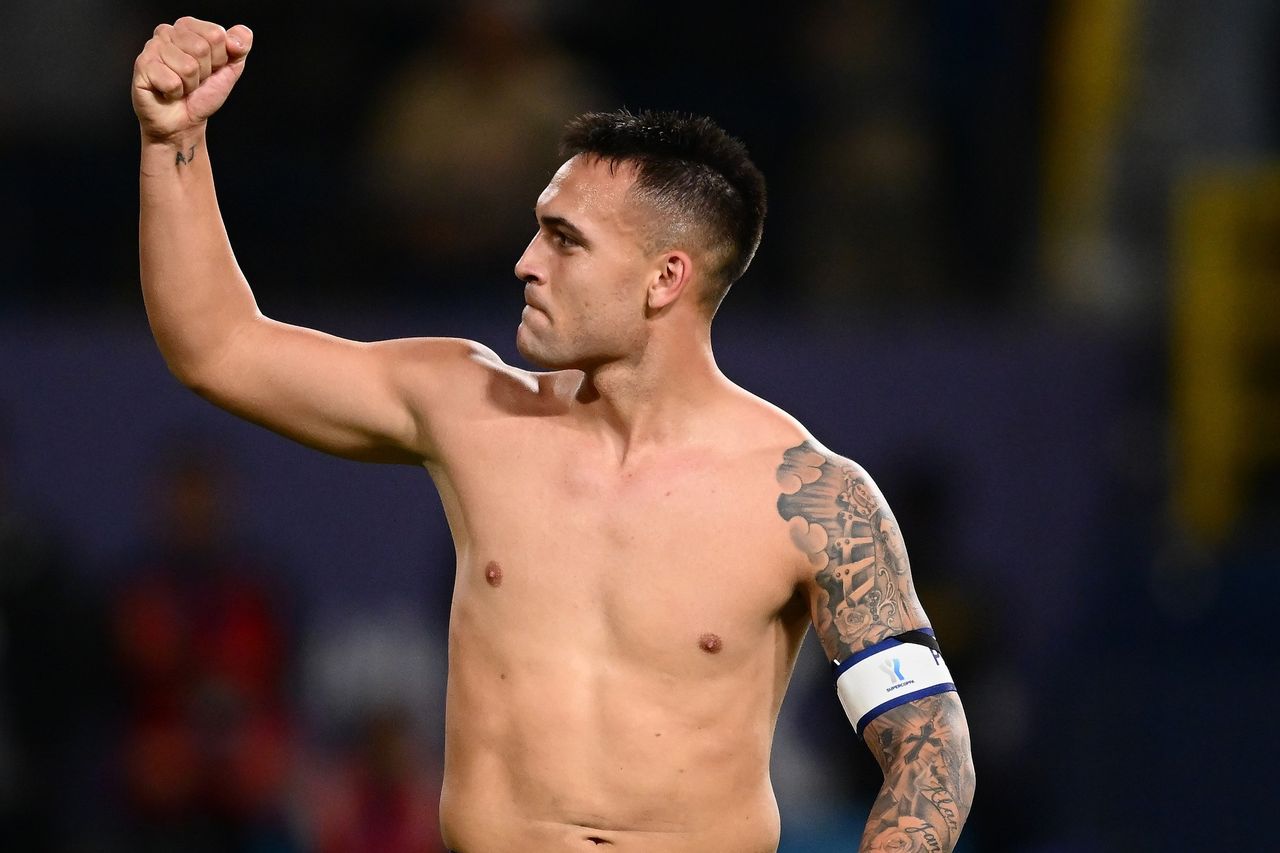
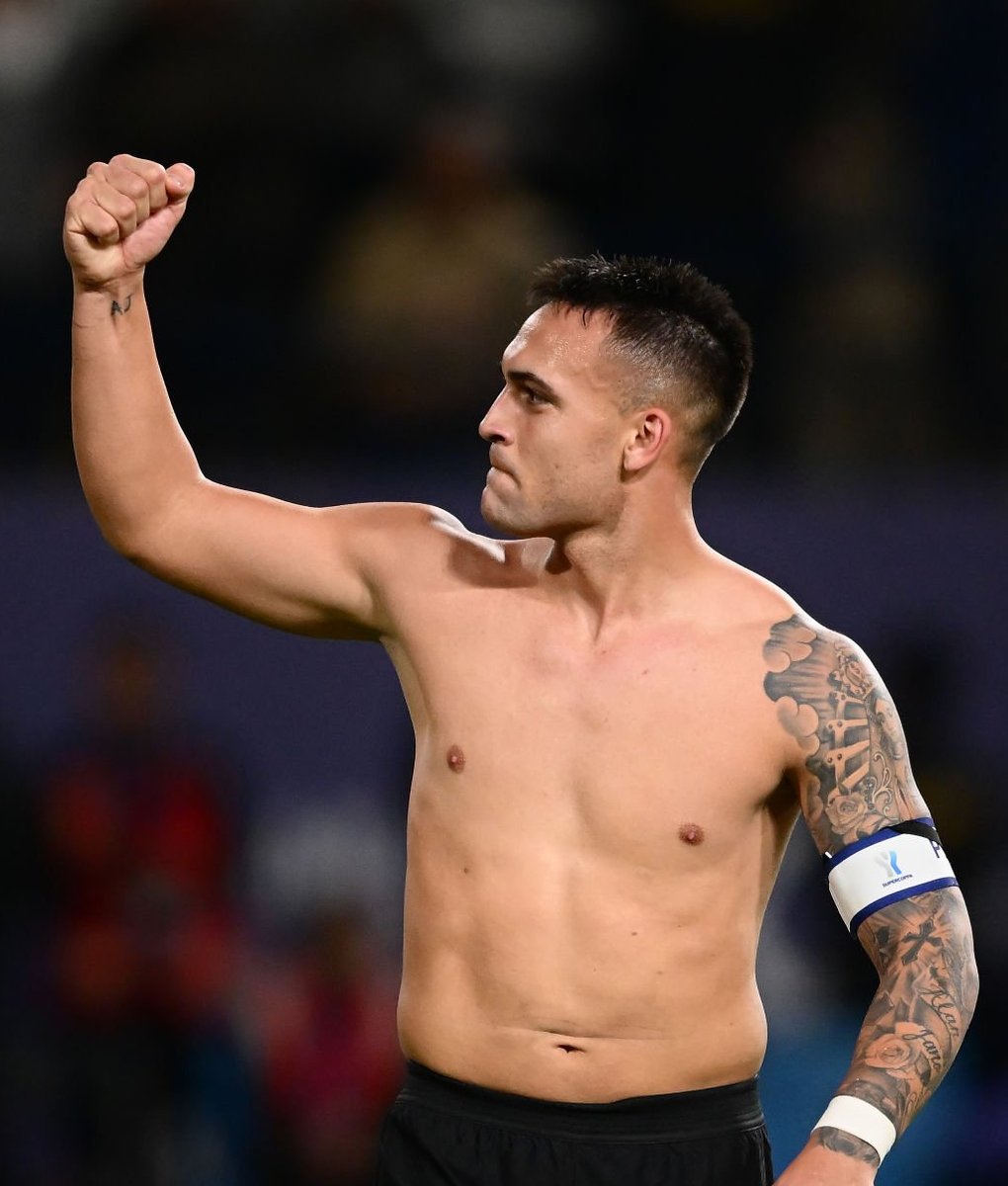
Lautaro Martínez’s tattoos read like a family album with his football career threaded through it. Ink covers his arms, back and forearms, and the designs point to relatives, faith, dates and reminders he has carried since he was a teenager.

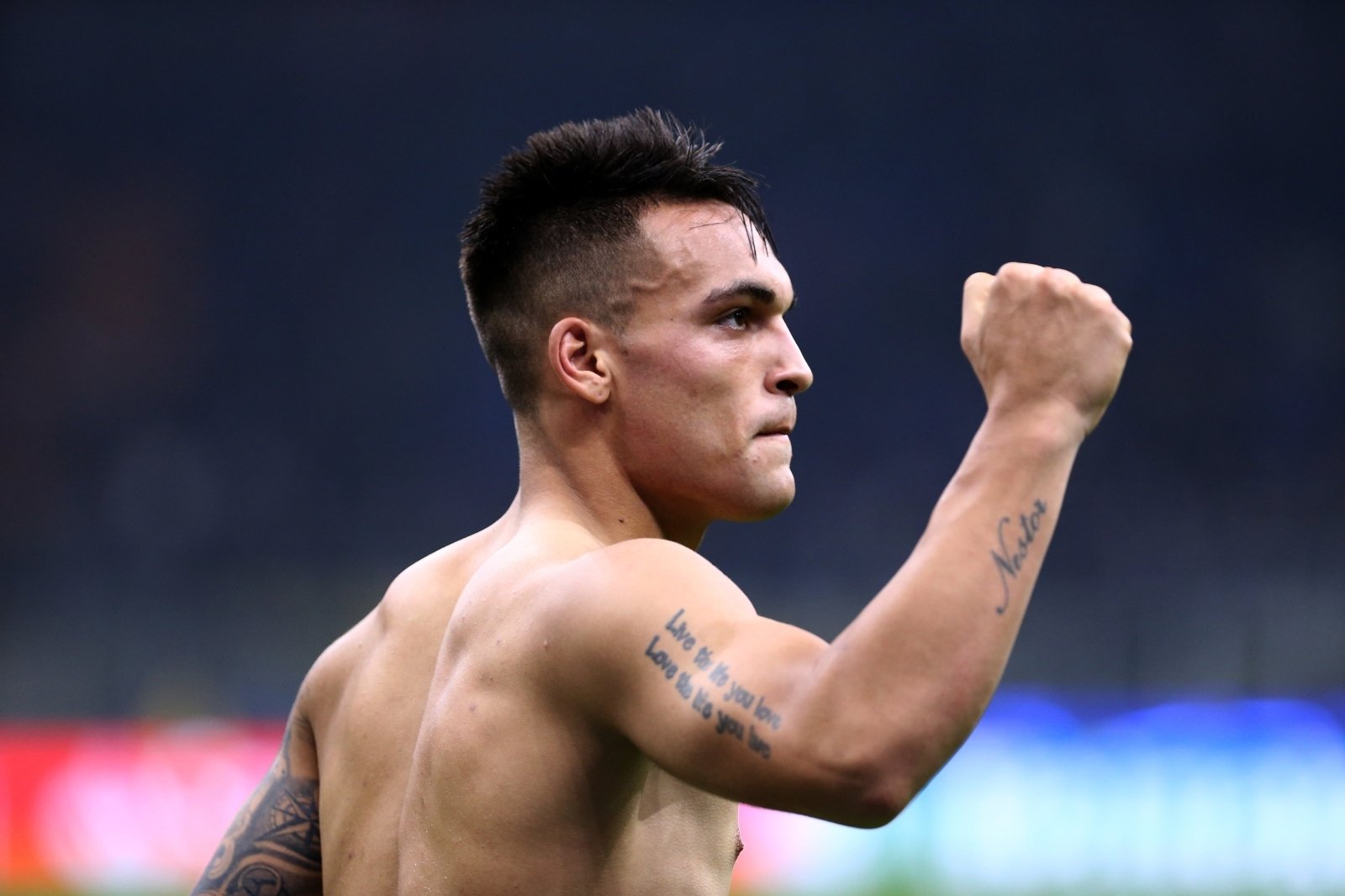
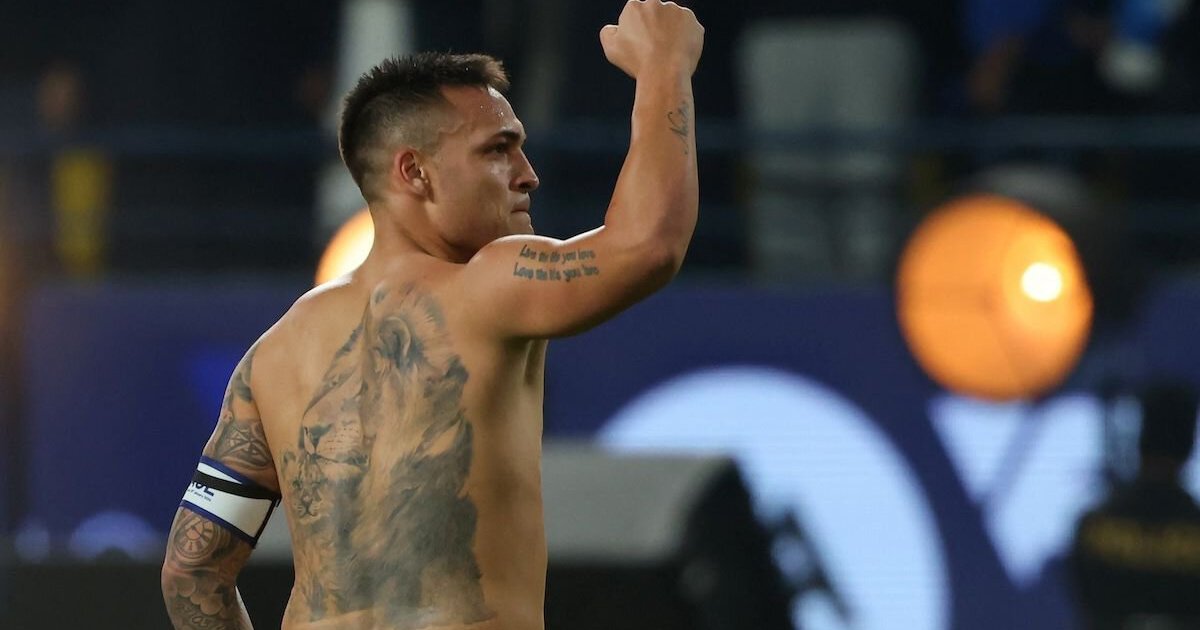
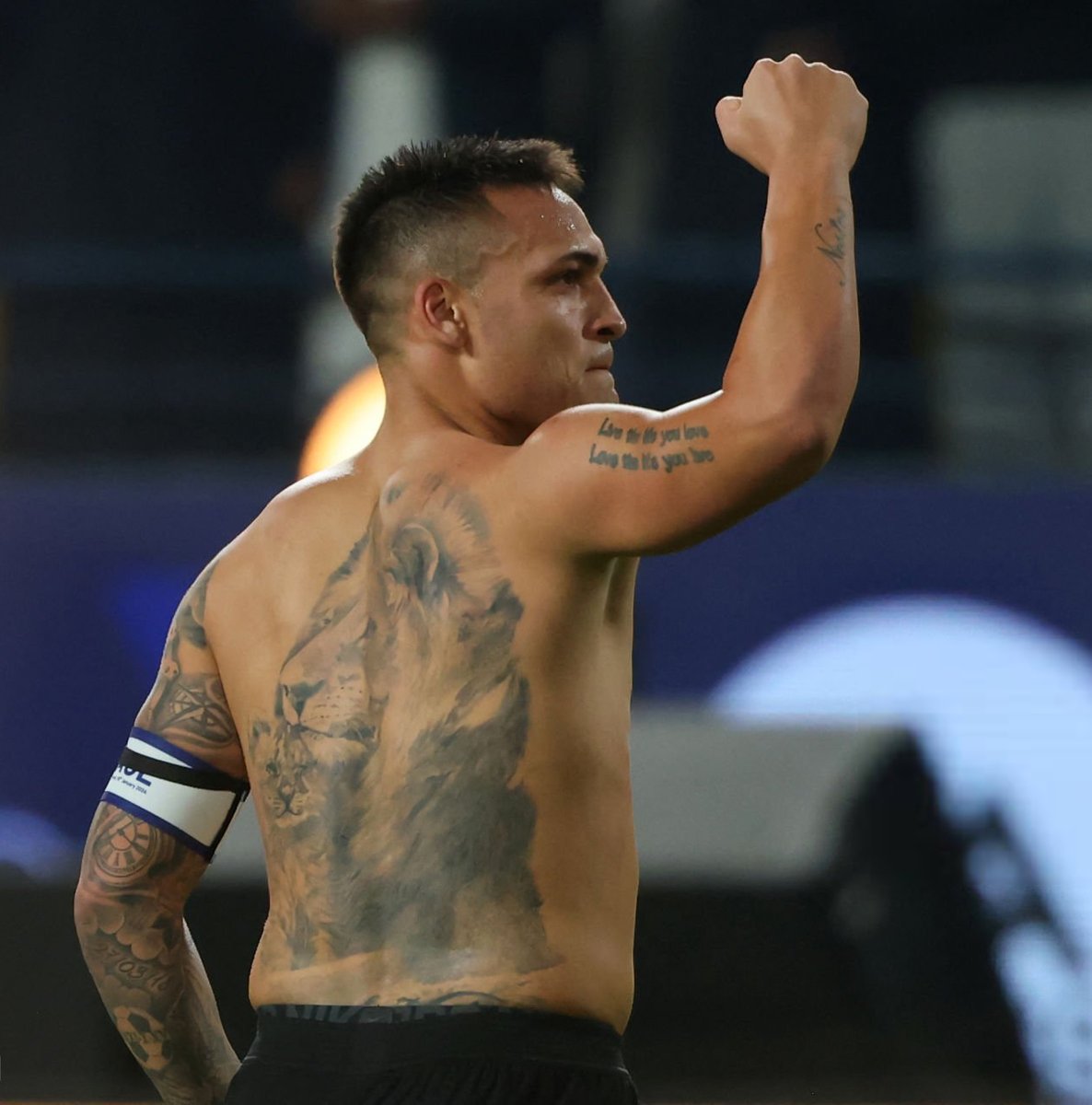
A few pieces stand out in shirtless goal celebrations: the lion and cub across his back, script on his arm, the name Néstor and a football holding important dates. The collection also includes his parents’ names and references to his children, brothers and grandparents.

Martínez has explained many of the tattoos himself, so their stories are more than guesses from match photos. There is no single style tying the whole collection together. The common thread is the people and moments he wants to keep close.

The lion and cub on his back represent his children

Lautaro Martínez lion and cub back tattoo after a match

The largest piece is the lion scene across Martínez’s back. He has said the adult lion represents him and the cub stands for his two children. A jungle and road fill out the image, suggesting a father protecting his children and guiding them forward.

He has also said he would not add another cub if he has more children. One cub represents them together, keeping the design as a single scene instead of turning it into a running count. It is a considered choice that lets the image stay whole.

The lion fits the way Martínez talks about being a father. It is not simply a family portrait; it carries a sense of responsibility. The road gives the scene a direction, with the parent out front and the children close behind.

This is the clearest example of Martínez using a tattoo to express both love and responsibility. The back piece is large, but its message is direct.

The name Néstor was his first tattoo

Lautaro Martínez Néstor name tattoo on his forearm

Martínez got his first tattoo at 14: the name Néstor, in memory of his grandfather. Néstor died when Lautaro was two. His mother did not want him tattooed so young, so Martínez persuaded her by explaining that he wanted to carry her father’s name with him.

That makes the tattoo more than a first piece or a fashionable choice. It is a way of keeping close to a grandfather he lost before he was old enough to know him well.

The name sits on his right forearm, where it appears in match photos among the other designs. The arm can look busy, but the story behind this first tattoo is simple: it became the starting point for the rest of the collection.

There is a little teenage determination in the way Martínez tells the story. He knew his mother would object, then found the reason that mattered most to her. His tattoo began with a family memory and a young person’s effort to get permission.

His parents and wider family appear in the details

Lautaro Martínez arm tattoos with family names and symbols

The names of Martínez’s parents, Mario and Karina, are part of the collection. He also has tattoos connected to his children, brothers and grandparents. Rather than choosing one family tribute, he has let the references accumulate as small pieces.

One design combines his parents’ names with praying hands, bringing faith and protection into the family theme. Around it are names, images, dates and symbols with their own tones. Nothing needs to compete with the larger tattoos.

That variety can make the arm look crowded in a close-up. Each piece holds its own story, and different angles reveal different details. The collection is not arranged like a gallery; it has grown as his life has moved from one chapter to the next.

His children are part of it too, linking the older tattoos to the family he has now. The collection continues to take shape as he moves through adulthood, fatherhood and football.

The family details keep the collection from feeling like a generic footballer’s sleeve. The symbols belong to a particular person and his history.

The Luján Virgin reflects his faith

Lautaro Martínez religious tattoo and arm ink

Martínez has an image of Our Lady of Luján, a Catholic symbol from Argentina. He has said he is a believer and that the Virgin is always with him. The tattoo brings faith into a collection otherwise dominated by family and football.

The image connects his religious life with his country, though its meaning for Martínez is personal. He sees it as something that stays with him as his career changes and takes him from place to place.

Beside the names and praying hands, the Luján Virgin adds to a cluster of tattoos about protection, belief and family. They are not there to put on a show. They are reminders that happen to be visible when he plays.

That same idea runs through many of Martínez’s explanations. The tattoos matter because of the people and beliefs behind them, as much as the image itself. What they carry is more important than how they look in a photo.

The compass, clock and quote keep him moving

Lautaro Martínez back tattoos with compass clock and quote

Martínez has a compass, a clock and the phrase “What doesn’t kill me makes me stronger” on his back. He has described them as daily reminders: the compass suggests direction, the clock marks time, and the quote speaks to getting through hard moments.

Those ideas have a place in a football career shaped by travel, injuries, selection decisions and matches that can change a player’s confidence. The tattoos cannot make those difficulties disappear, but they give Martínez images and words to return to when things get tough.

He plays with visible emotion and has spoken about the pressure of important games. The line about growing stronger through hardship fits someone who has had to fight for his place and lead both Inter and Argentina.

Together, the compass, clock and phrase make a kind of map. It is not only about enduring pain; it is also about finding direction and remembering that time keeps moving, even when a season feels stuck.

A football design holds two dates that changed his career. One marks Martínez’s first professional match for Racing Club on 1 November 2015; the other records his first Argentina call-up on 27 March 2018. He has described both as major moments in his life.

That small tattoo works like a personal calendar. The lion and cub speak to fatherhood, while the compass and clock point forward. The dates bring him back to the start, before the Inter captaincy and the biggest nights with Argentina. Even the smallest designs have a place in Martínez’s story.

For another footballer whose tattoos bring family and career milestones together, see our guide to Lionel Messi’s tattoos. Martínez’s collection is rougher and more crowded, but the link between family and football feels familiar.

Seen together, the pieces form a personal record. The lion protects his children; Néstor keeps his grandfather close; Mario and Karina appear in the family designs. The Luján Virgin reflects his faith, and the compass, clock and quote point to direction and resilience. The football holds the dates that shaped his career.

That is why the collection feels like a record of his life rather than a fashion statement. It has room for new memories, but its centre is already clear. Martínez carries the people and moments that shaped him into every new match.

Watch the related tattoo video below for more on Martínez’s family ink and the stories behind it.

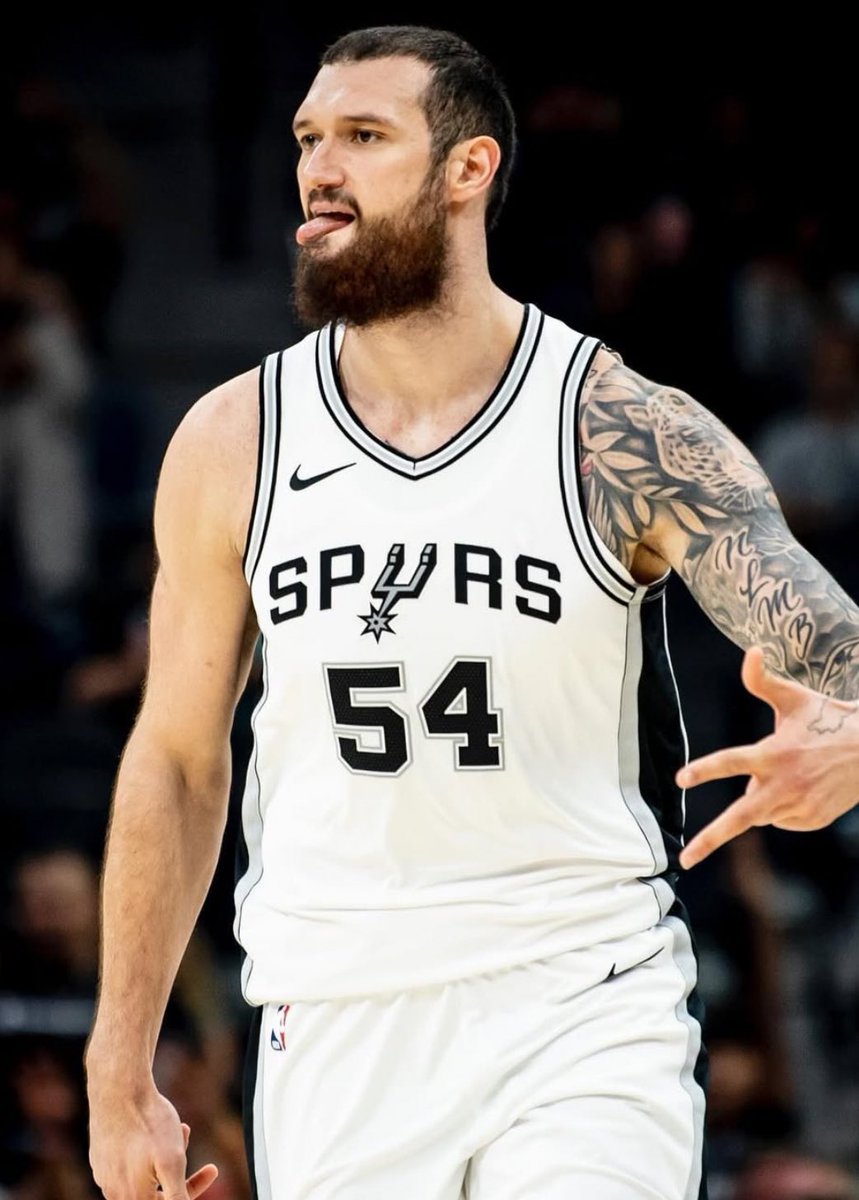
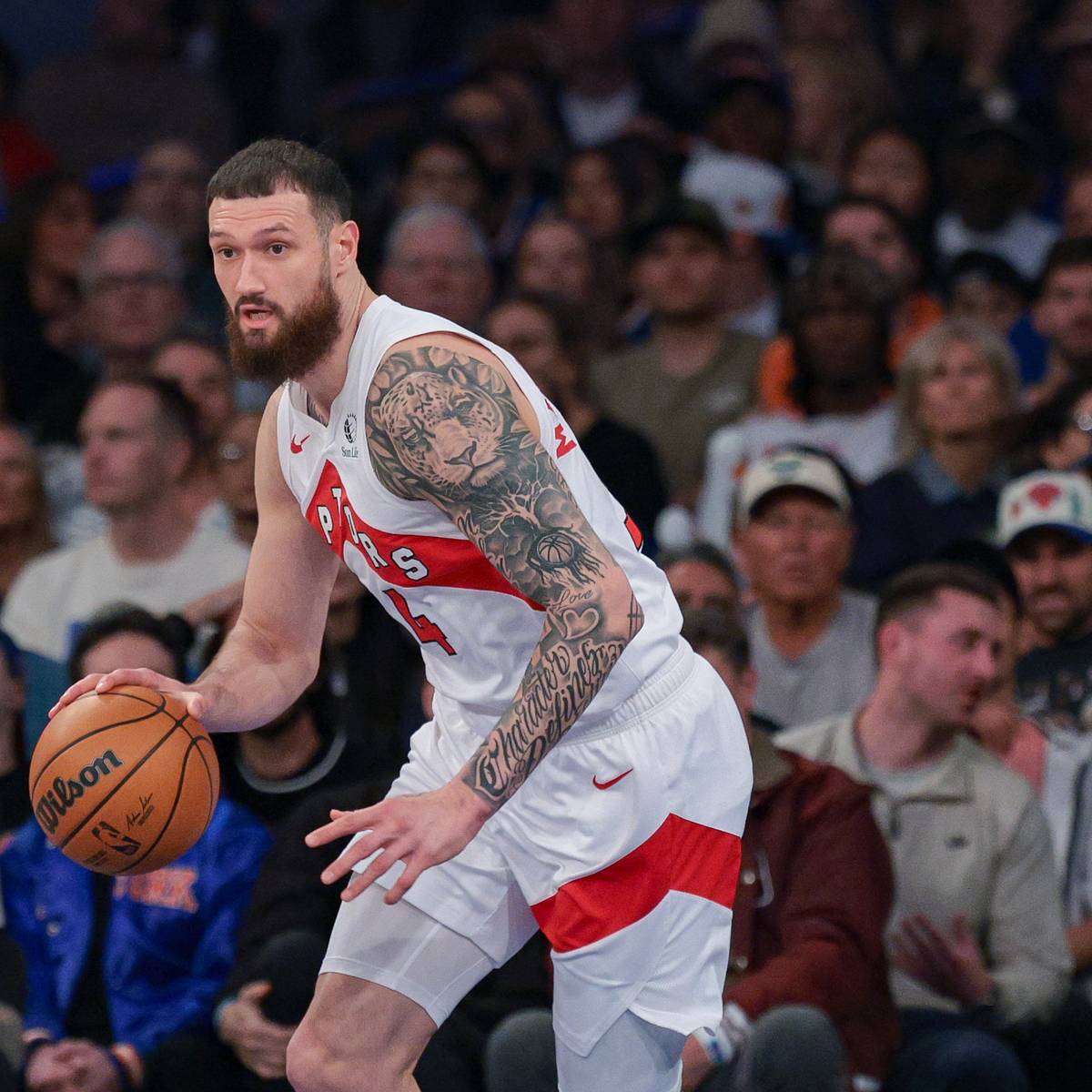
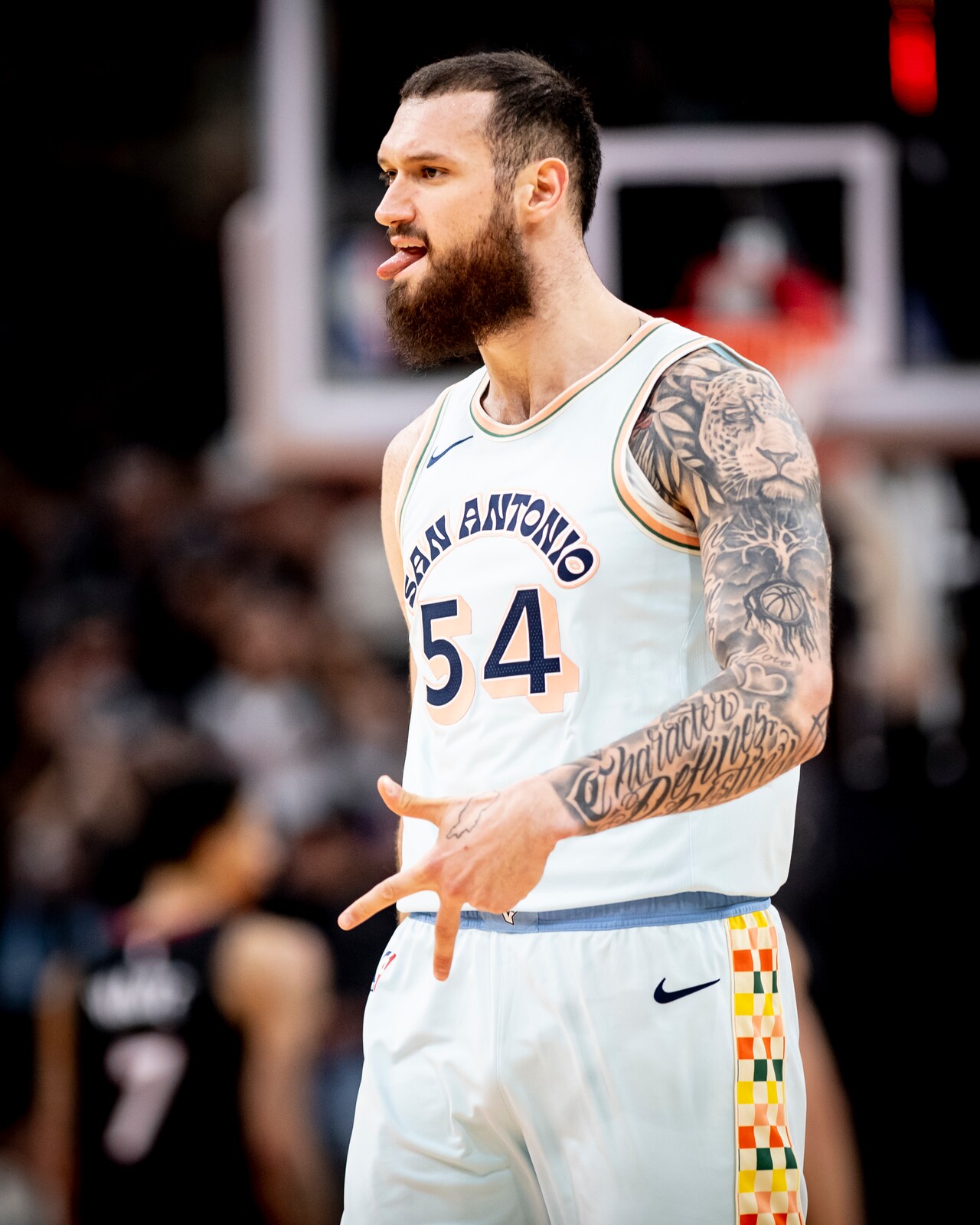
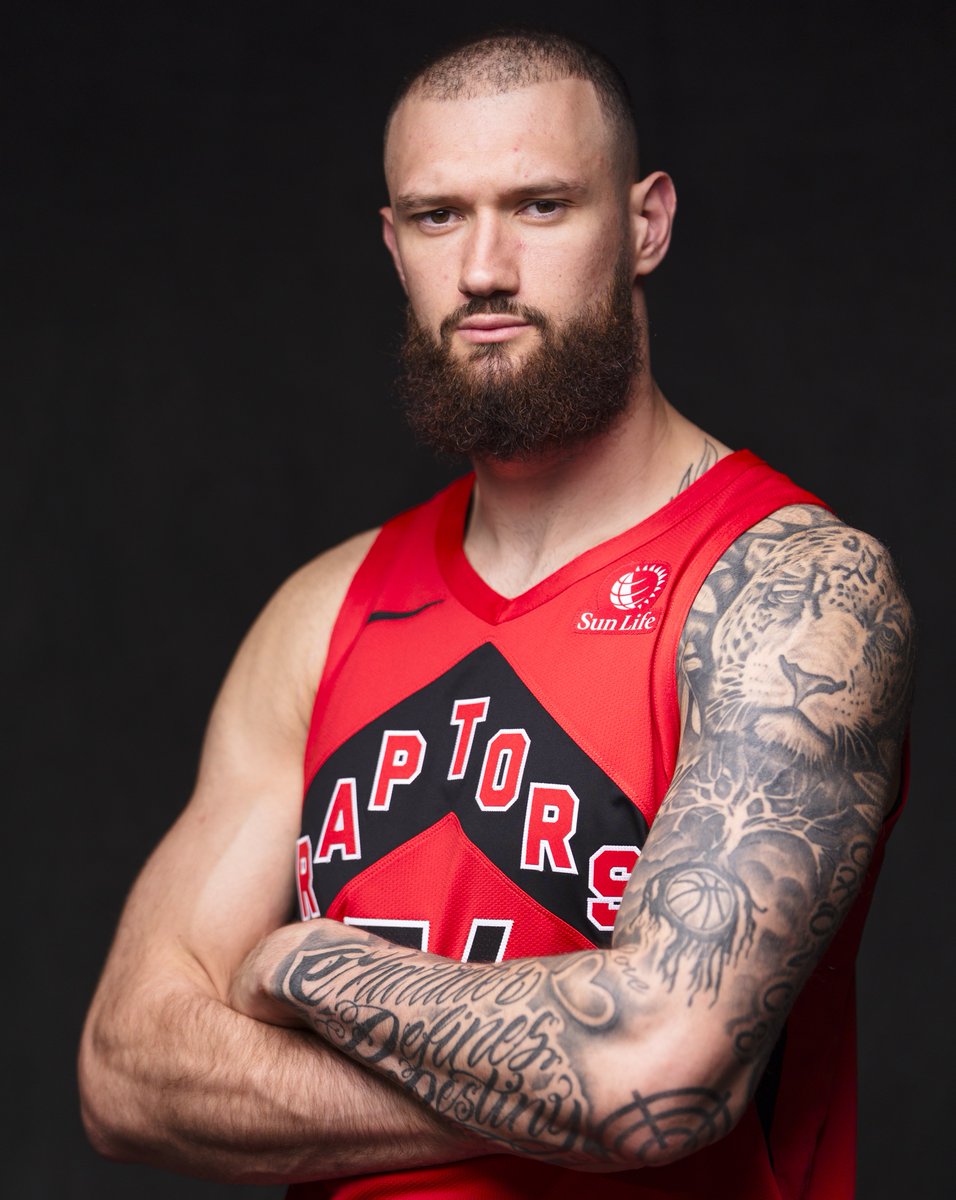
Sandro Mamukelashvili’s ink mixes family, Kobe and a little Kung Fu Panda

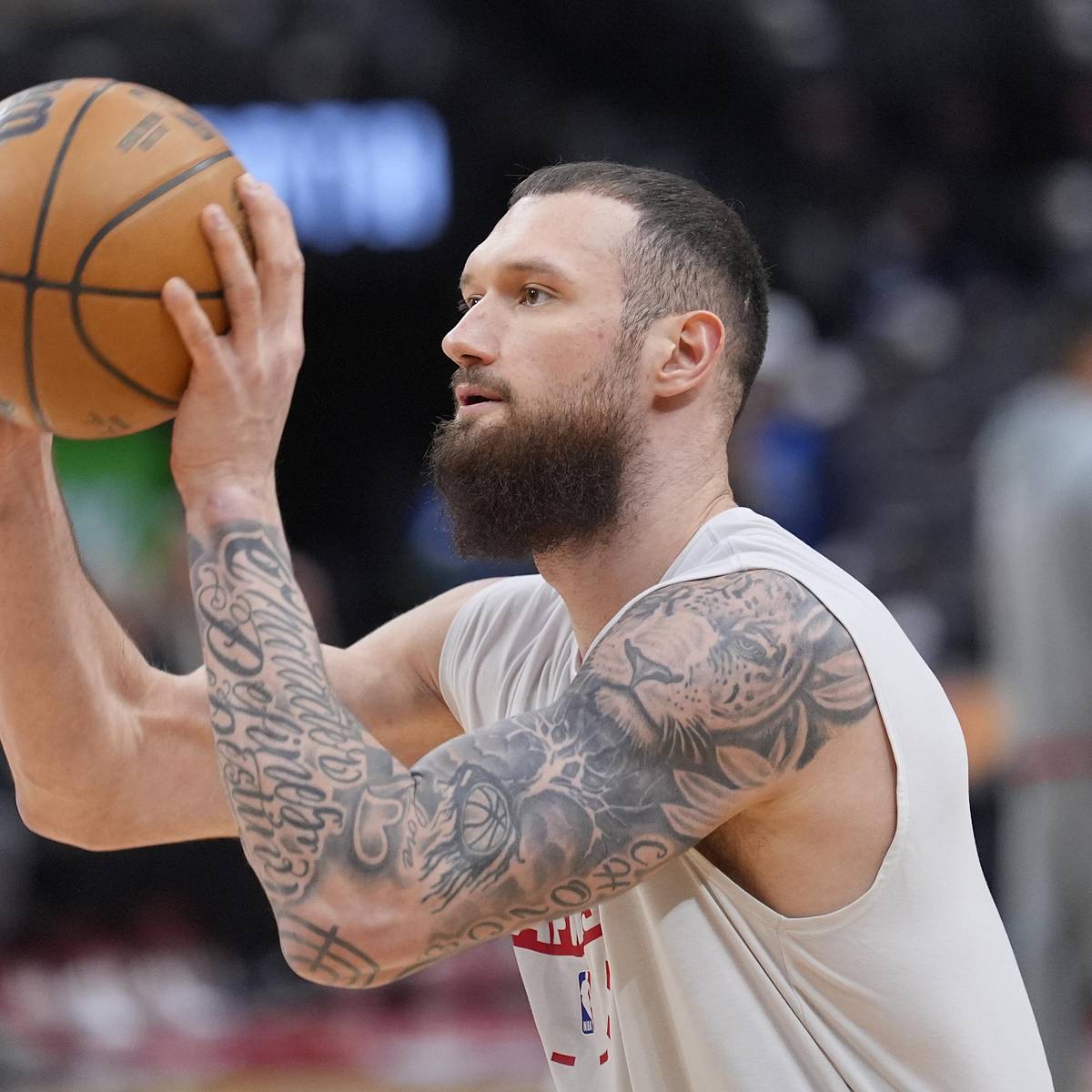
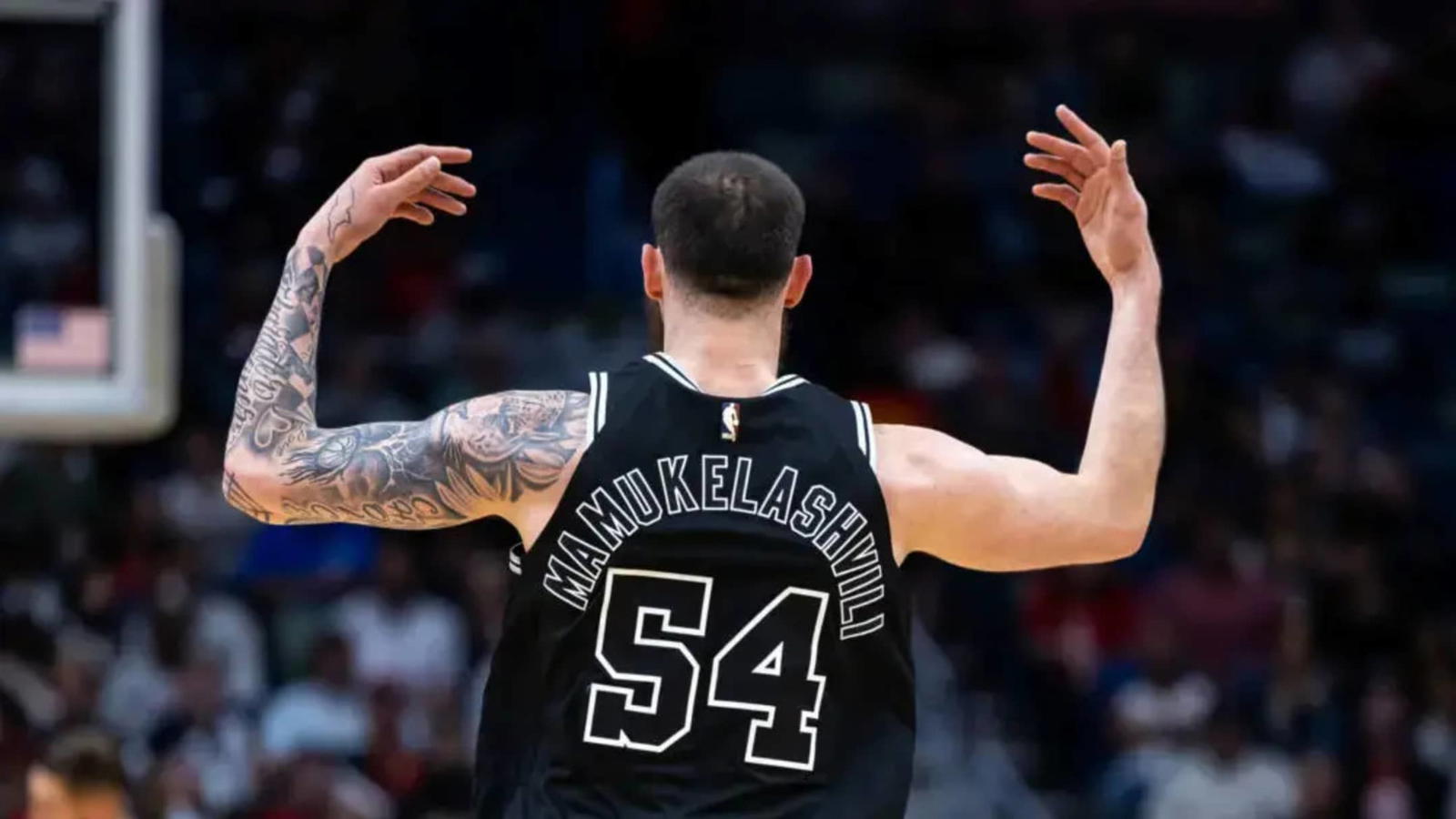
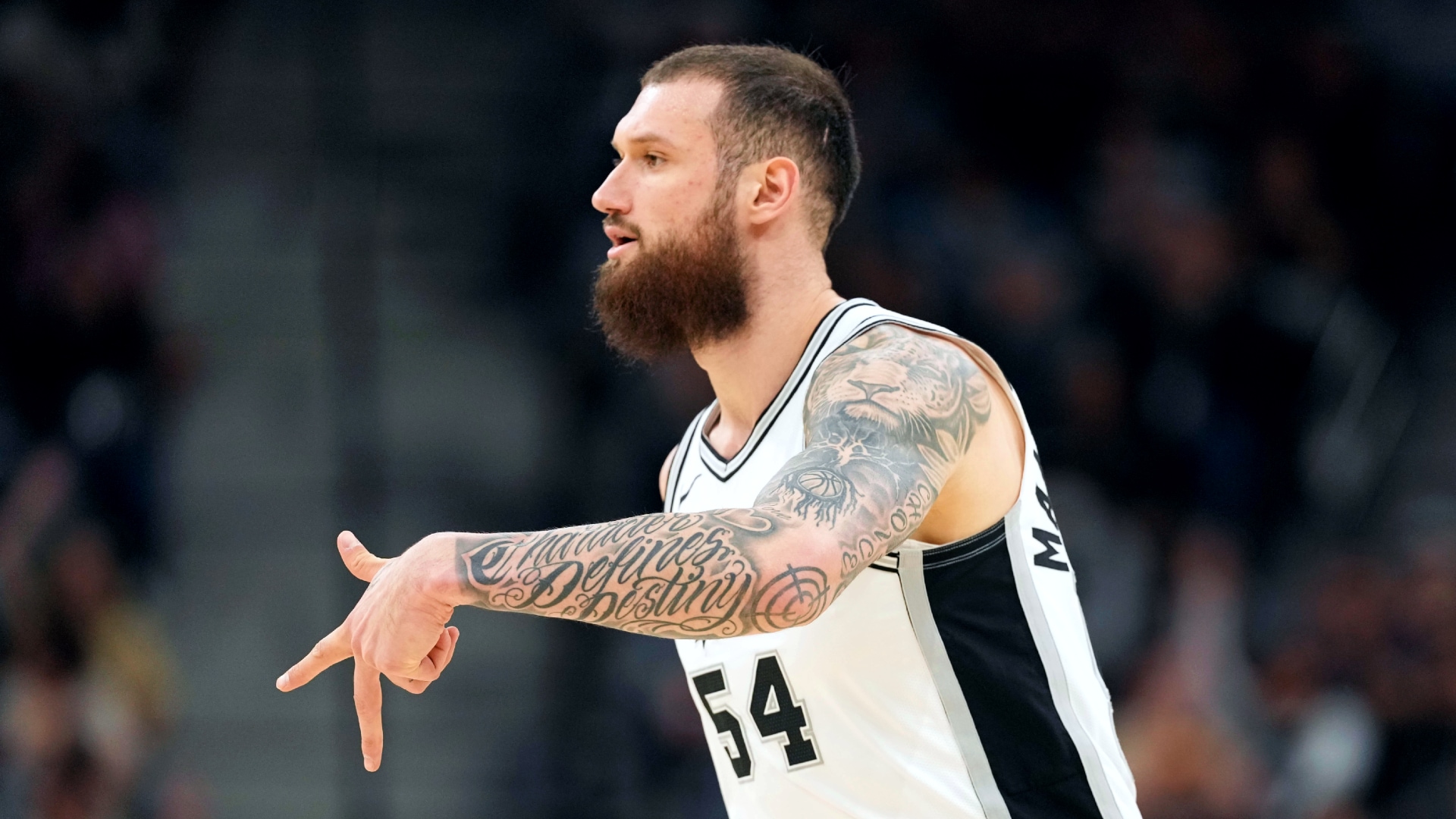
Sandro Mamukelashvili treats tattoos as more than decoration. His ink gives him a way to talk about family, art, basketball and the places that shaped him in Georgia, Italy and the United States. He got his first tattoo at 16 and kept adding to the collection, including sleeves, leg work and a large back piece with artist Zac “Lefty” Colbert.

The collection does not follow a standard athlete’s checklist. It includes a sun on his thigh, Mary and Jesus based on a figurine from his mother, the myth of Icarus, honeycomb, a bull, doves and work connected to Kobe Bryant’s Mamba Mentality. He has also drawn inspiration from Michelangelo, Leonardo da Vinci and Kung Fu Panda.

The designs cover different subjects, but there is a clear thread: tattoos can hold several chapters at once. Some pieces honour family, others remind him about ambition, and some are images he simply liked enough to keep. Here is what he has explained about them.

The sun on his thigh was the first tattoo

Sandro Mamukelashvili arm tattoos in action

Mamukelashvili got his first tattoo at 16, during a trip to Croatia. It is a sun on his thigh, and his stepfather got the same design. That makes it more than a first experiment with ink: it is a shared mark from a trip and a family relationship.

He has said his parents were strict about tattoos, so he hid it from his father for months. The story gives the sun some teenage mischief. It was not a carefully planned public image; he made the decision while travelling, then tried to keep it under wraps when he got home.

A thigh tattoo also let him keep the choice private under everyday clothes. The rest of his collection eventually became harder to hide, but the sun remains the first page in the timeline.

Mary and Jesus connect his ink to his mother

Sandro Mamukelashvili tattooed arm

One of Mamukelashvili’s most personal designs is an abstract image of Mary and Jesus, based on a figurine his mother gave him. That starting point matters more than whether every line in the finished tattoo is easy to identify. The image began with an object already tied to home, faith and family.

He has described the tattoo as something more specific than a religious design picked from a wall. It came from something his mother gave him, and the artist turned that keepsake into a more graphic image. The tattoo carries the memory of the gift while leaving room for an artistic interpretation.

It also shows why he talks about tattoos as a way to stay authentic. The crowd may see one image; for him, it has a much more direct connection. That private meaning is part of the design’s appeal.

Icarus gives the collection its warning about ambition

Sandro Mamukelashvili tattoo sleeve

Another important piece draws on Icarus, the figure in Greek myth who flew too close to the sun despite being warned not to, then fell when his wings melted. Mamukelashvili has described the lesson simply: do not get too high or too low. That idea can be useful in a sports career that swings between big wins, injuries, selection decisions and uncertain stretches.

The tattoo is not only about failure. It also speaks to ambition, risk and keeping perspective when life starts moving quickly. Confidence helps in basketball, but it can turn into carelessness if a player stops paying attention.

The myth adds an old story to a modern collection. Mamukelashvili has spoken about classic artists and historic images, so Icarus fits his interest in art that carries meaning across time. The tattoo can serve as a reminder without spelling out the moral in words.

Honeycomb ties the arm pieces together

Sandro Mamukelashvili celebration sleeve tattoos

When Mamukelashvili had more work done by Zac “Lefty” Colbert, a honeycomb pattern was added to his left arm to bring older pieces together. It is a practical way to connect separate tattoos, and it reflects how the collection actually grew: individual images came first, then the honeycomb helped them work as a sleeve.

The pattern can bend around existing designs without making the gaps look accidental. It gives the arm some structure while letting the family, mythology and basketball pieces keep their own meanings.

In interviews, Mamukelashvili has also credited Pasha Ink for much of his newer work and talked about the skill it takes to handle colour and detail. He pays attention to how the composition works, not just which symbols it contains.

The Kobe tribute is built around Mamba Mentality

Sandro Mamukelashvili Mamba Mentality tattoo action

Mamukelashvili has a tattoo connected to Kobe Bryant’s Mamba Mentality. Bryant’s example influenced him during his college years, as he watched, learned and worked out his own approach to the game.

It is more than a famous player’s name on an arm. The phrase stands for preparation, focus and accepting the work that comes before the result. For someone who moved between countries and levels before reaching the NBA, that message has a natural place in the collection.

The tattoo also connects Mamukelashvili to a generation of players who treated Kobe’s approach as a language of its own. It speaks directly to basketball while fitting his wider habit of choosing designs that represent a way of thinking, not only a particular event.

The back piece honours the women in his life

Sandro Mamukelashvili lion arm tattoos

In 2024, Mamukelashvili returned to Colbert for a large back piece. He described a woman giving birth while holding her child, with two midwives or protectors above. The image includes doves, a woman or angel holding the key of life, two protective faces and a mother with her baby.

He said the design came from a painting he saw in a gallery and was meant to honour his mother, aunties and grandmothers. The symbols become clear with that explanation: the doves represent compassion and love, the women above the central scene protect it, and the mother and child bring the piece back to the people who cared for him.

A bull was also added to his upper back as a reference to his Taurus sign. It is a smaller idea inside a much larger image, but gives the whole piece a personal detail. This is not realism added just to fill space; it is a family story built into a full composition.

The back tattoo shows the difference between choosing a design because it looks striking and choosing one because it has somewhere to go in your life. Mamukelashvili cares about the art, but the meaning came first.

Kung Fu Panda and classic artists keep it playful

Sandro Mamukelashvili tiger and script tattoos

Not all of Mamukelashvili’s tattoos are serious family tributes. He has also talked about Kung Fu Panda tattoos, which bring a lighter note. The film is funny and warm, but it also plays with identity, discipline and growing into a role you did not expect.

That mix suits his collection. A family image can sit beside a cartoon character, a basketball tribute and a myth about flying too close to the sun. They do not need to share a subject if they share a feeling; each design belongs to a particular part of his life.

Mamukelashvili has also named Michelangelo and Leonardo da Vinci as inspirations. His interest in drawing, composition, colour and the artist’s skill comes through in the way he talks about the tattoos. They are personal, but he also wants them to work as art.

Curiosity ties the collection together better than any one style. A Croatian sun, a family figurine, Icarus, honeycomb, Kobe, a bull, doves and Kung Fu Panda all share the same space. The pieces have accumulated over time without feeling random.

He is building a scrapbook on skin. Some pages are about where he came from, others about the people who helped him, and a few are there because an image made him smile. That is more interesting than a standard list of NBA tattoos: you can follow a life through the designs, even when a piece is playful.
Watch Sandro Mamukelashvili explain the ideas behind his ink

Mamukelashvili has talked about his first tattoos, the artists he admires and the family, mythology and Kung Fu Panda pieces. The video below is the closest match for a tattoo-focused look at his collection.