
Josh Emmett’s tattoos are easiest to read as a record built around competition. The UFC featherweight has been photographed under arena lights, at official weigh-ins, after fights, and while explaining a smaller piece on his forearm. Those settings reveal different parts of the same collection. A close portrait shows the colour and texture of the sleeve, while a weigh-in exposes the large chest mask, the script on his side, and the darker work on his opposite arm.
This guide keeps those views separate and specific. It does not turn one photograph into five supposed tattoo records. Instead, each image below is a different original frame from a different source context, and each section explains only what the photograph can support. The strongest overall pattern is a large, colourful left-side composition, a darker right-arm piece, chest lettering, and smaller symbols that appear when Emmett raises his arms or turns toward the camera.
Published coverage from UFC, MMA Weekly, Sportskeeda, and tattoo-focused reporting also gives useful context. UFC profiles identify Emmett as the fighter, while the visual sources show how much of his ink is visible in public. The images are the evidence; the written record supplies dates, settings, and cautious descriptions rather than unsupported meanings.
Josh Emmett’s colourful chest and left-arm sleeve
The most immediately recognisable part of Emmett’s collection is the bright work running from his left shoulder across the upper chest and down the arm. In the close arena portrait, the sleeve is not hidden by a glove, shirt, or fight stance. Flowers, saturated colour, and a large central mask-like design sit beside one another, making the composition read as a connected field rather than as a single small emblem.
The photograph also shows why the same tattoo can look different from one article to another. The shoulder curves away from the camera, so the upper edge of the sleeve becomes clearer when Emmett turns. The chest piece faces the lens more directly, while the lower arm falls into shadow. That is enough to describe the major shapes and colour blocks, but not enough to assign a definitive symbolic story to every flower or line.

Sportskeeda’s fighter profile uses this view to place Emmett in a real competition setting, and the visible tattoos help confirm that the subject is the same athlete named in the article. The arena lighting is soft enough to preserve detail in the colour, while the dark background keeps attention on the skin and face. This is the clearest broad view of the collection in the selected set, not because it shows every tattoo, but because it connects the face, chest, and sleeve in one frame.
The sleeve’s arrangement is especially useful for readers who want to understand scale. The colour spreads over the shoulder and upper arm instead of stopping at a narrow band. Smaller marks overlap the larger forms, so a simple list of isolated designs would miss how the work is actually worn. A careful description can call it a colourful sleeve and chest composition without pretending that every motif has a published meaning.
The fight-night view of Emmett’s chest mask and shoulder ink
A separate UFC action photograph catches Emmett after a hard exchange, with blood on his head and the gloves raised near his face. It is a very different visual record from the calm arena portrait. The body is angled, the left shoulder is closer to the camera, and the chest design is interrupted by movement. Even so, the major tattoo areas remain easy to identify.
The chest mask sits below the shoulder colour and reads as a darker focal point. The surrounding green and red areas give it contrast, while the right side of the torso reveals a more compact black design. Because the frame comes from active competition, it is not a suitable source for guessing fine lettering or exact dates. Its value is elsewhere: it shows that the same visible ink appears in motion and under changing light.

The fight image also places the tattoos in Emmett’s professional environment. The UFC gloves, cage lighting, and opponent-facing posture establish the setting without needing a generic promotional portrait. The design is part of the athlete’s appearance during competition, not an image added by a fan or a tattoo illustration mistaken for a photograph. The moving frame confirms continuity with the calmer views while still standing as its own original photograph.
There is an important limit to what this photograph proves. It cannot establish when each colour was added, who designed it, or whether a small mark has since been covered. It does show the broad chest-and-arm relationship, and it makes the large central mask and saturated sleeve impossible to confuse with an isolated hand tattoo. That narrower conclusion is more reliable than an invented backstory.
The UFC weigh-in frame and the script along Emmett’s side
Weigh-in photographs reveal a different section of the collection because Emmett stands shirtless with both arms lifted. One UFC image shows him flexing against a branded backdrop, exposing the colourful left side, the darker right-arm work, and the vertical script running along his ribs. That script is often hidden when his arms rest by his sides or when a fight photograph is cropped at the waist.
The lettering appears in several stacked lines along the side of the torso. A readable fragment in the source image refers to brotherhood, but the photograph does not provide a complete transcription of every line. It is safer to describe the visible passage as chest-and-side lettering and to note the clearly legible wording only where the frame supports it. The image shows placement and shape with confidence; it does not automatically explain the entire text.
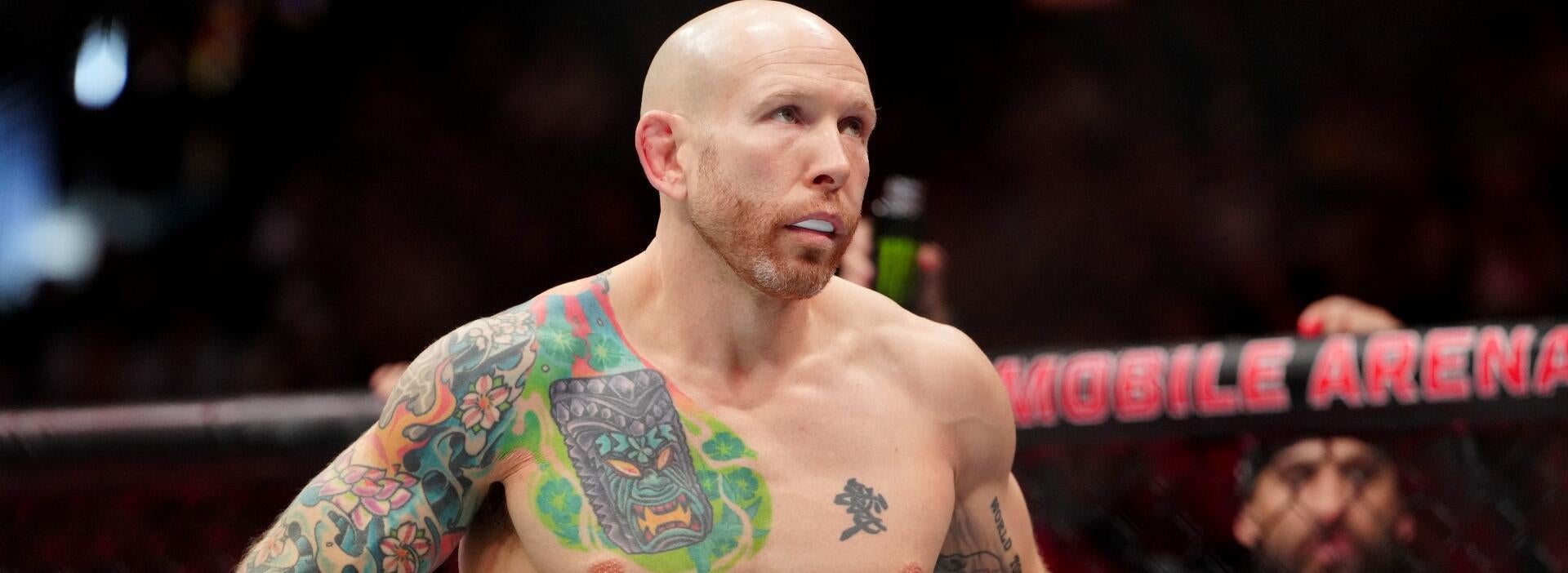
This view is valuable because it expands the article beyond the sleeve. The arms-up pose opens the torso and makes the relationship between the large chest work and the side script easier to follow. It also shows smaller marks near the centre of the chest and on the right arm. The raised-arm pose changes the map of what readers can see, which is why it earns its own section rather than being treated as a duplicate of the first photograph.
Different weigh-in images can look interchangeable in search results, especially when they use the same black UFC branding. The selected frame is retained because the pose, crop, and visible rib lettering are distinct. It is not reused elsewhere in the article, and it is not treated as several separate images simply because a reader can see multiple tattoo areas in the one frame.
The older competition record and the tattooed right arm
Long-running tattoo collections are easiest to verify when photographs from different periods are compared carefully. An older UFC-related frame shows Emmett with his arms raised and a fuller view of the opposite arm. The right-side design is darker and more monochrome than the colourful sleeve, with a large skull-like image occupying much of the upper arm. The difference in style makes it a useful complement to the brighter chest view.
The frame also shows how the body art reads before later photographs add more context. The left sleeve remains recognisable, but the older setting has its own lighting and background, and the proportions of the visible ink do not exactly match a modern studio crop. That is normal for a collection that develops over time. The photograph should be read as a dated visual record, not as a final catalogue of every current design.
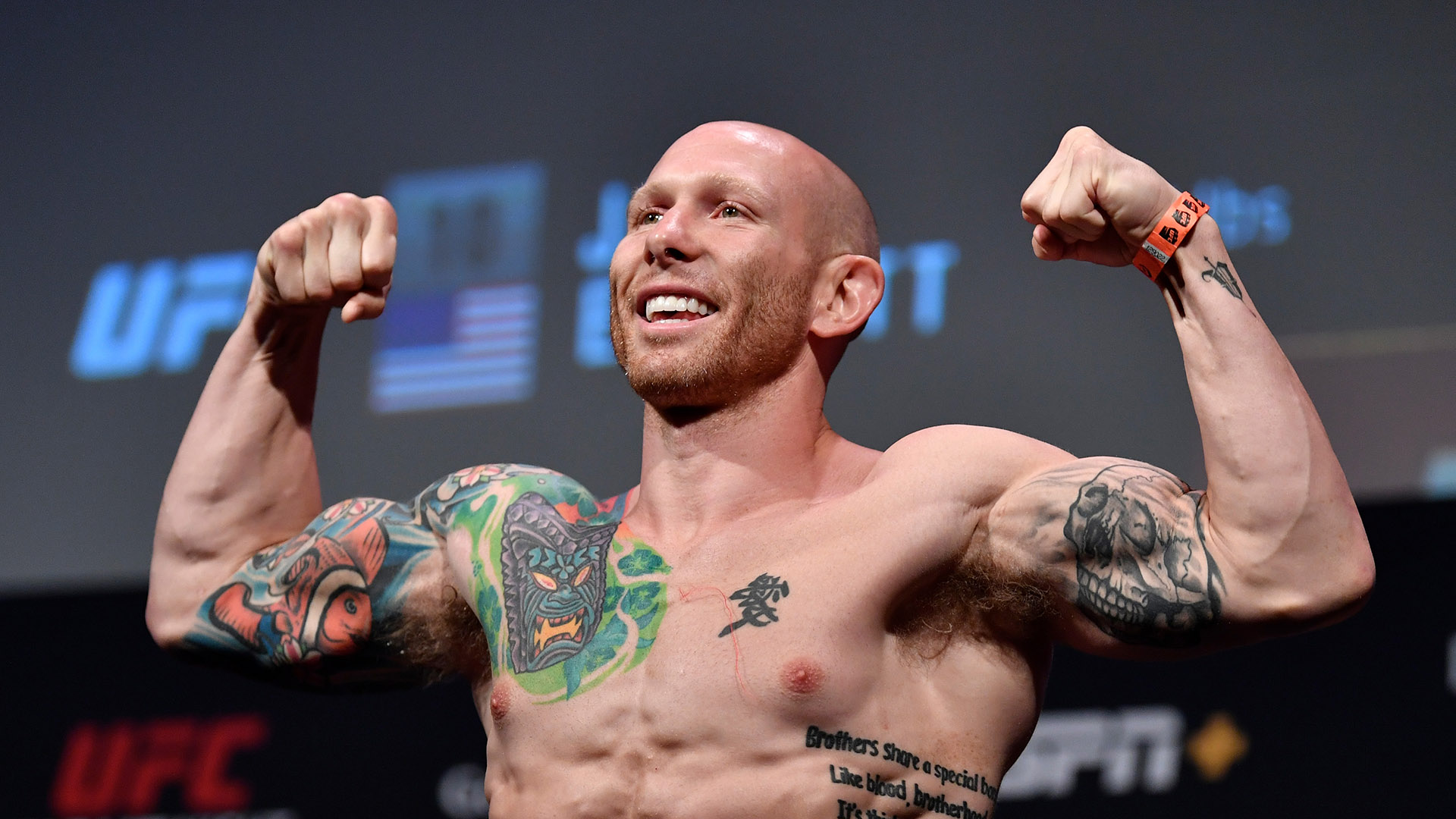
Using this older view helps prevent the article from implying that Emmett’s tattoos all came from one session. The right arm, chest, and side lettering occupy different visual planes, and the raised-arm pose lets readers compare them without a shirt or glove covering the skin. The contrast between colour and black-and-grey work is one of the clearest features of the overall collection.
It is also a reminder that a tattoo article should not rely on a single current portrait. A current image can show what is visible now, while an older competition frame documents how the arrangement looked at another stage of the fighter’s career. When the source does not provide an exact date for a design, the article leaves the timing open instead of inventing a chronology.
The small gothic V forearm tattoo and the larger pieces behind it
Emmett’s smaller forearm tattoo provides a useful close-up because it changes the scale of the visual record. Tattoo Filter’s photograph shows him raising his forearm toward the camera so a black gothic V can be inspected. The symbol sits in a compact area, but the larger chest and arm tattoos remain visible behind it, linking the close detail to the wider collection.
This is the kind of image that broad weigh-in photos cannot replace. A large stage frame can establish the sleeve, mask, and rib lettering, but it cannot show the shape of a small wrist or forearm design with the same clarity. Here, the pose is deliberate and the face remains visible, which helps connect the close-up to Emmett rather than to an anonymous tattoo reference image.
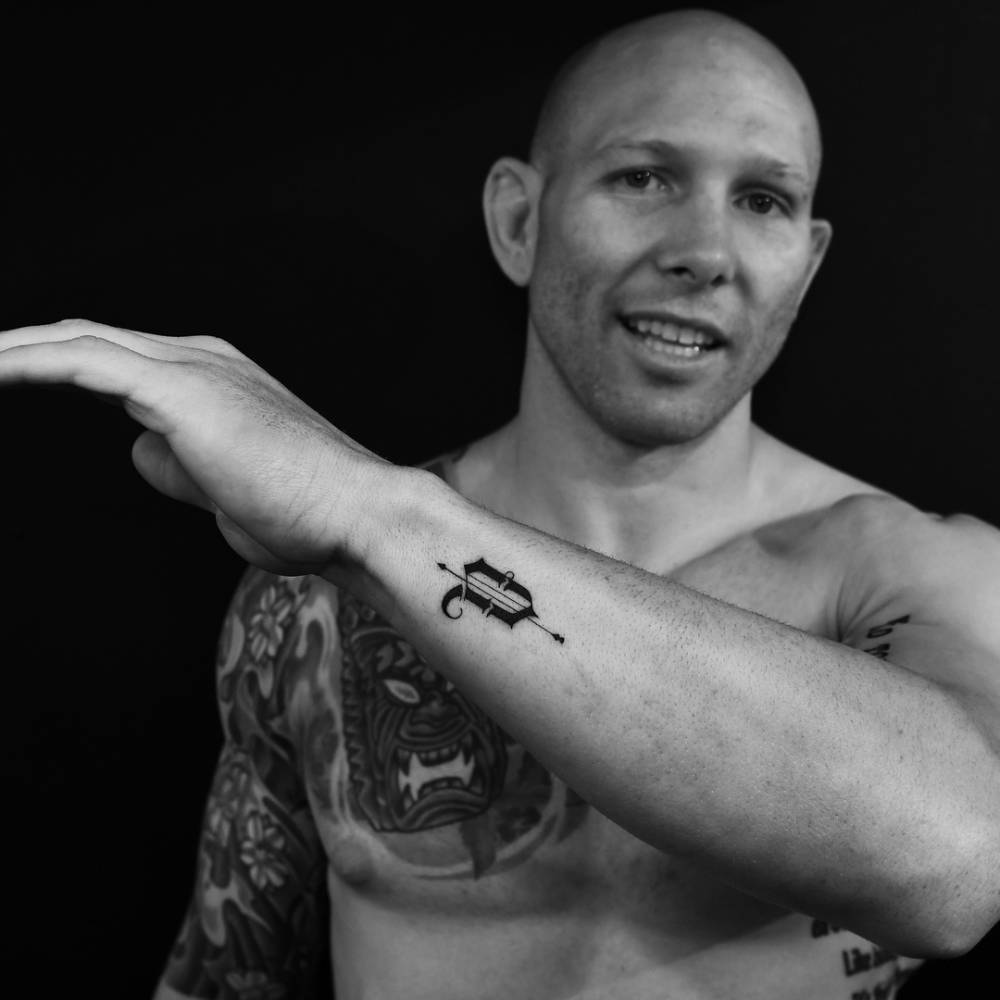
The source identifies the design as a gothic V and credits tattoo artist Evan Kim. Those details belong to the small piece shown in the close frame. They should not be expanded into a claim about the meaning of every other tattoo. The close-up adds precision to the article while the four competition photographs carry the broader body-art context.
The image also demonstrates why distinct tattoo photos matter. It is not a generic fighter portrait placed between sections for decoration. It documents a specific tattoo that cannot be inspected in the same way in the wide fight photographs. That difference gives the page a useful rhythm: wide context, action, raised-arm lettering, older competition evidence, then a close detail.
What the available coverage can say with confidence
Across these photographs, the safest summary is visual. Josh Emmett has a large colourful sleeve and chest composition, a darker upper-arm design, visible script along the side of his torso, smaller chest marks, and a compact gothic V on the forearm. The placements recur across different settings, including a competition portrait, an action frame, official weigh-ins, and a tattoo-focused close-up.
The sources also show why a tattoo inventory should be kept current. A fighter’s body is photographed at different distances and moments, and the same design may be partly hidden by gloves, angles, or movement. A list that only uses one image can make the collection look smaller than it is, while a list that repeats one crop can make it look more documented than it really is. Distinct photographs solve both problems by giving each section its own evidence.
Some details remain unresolved. The available reporting does not provide a complete official catalogue of every symbol, the exact dates of all additions, or a verified meaning for each coloured motif. That is not a weakness in the article. It is a boundary that keeps the description honest. Readers can see the ink, compare the placements, and understand the settings without being told a story the sources do not support.
A separate face-visible portrait is included as identity context rather than tattoo proof. It keeps the subject clear while the inline photographs do the specific work of documenting the ink. The distinction matters, especially for a page about a public athlete whose image appears in many unrelated galleries. A portrait identifies Josh Emmett. The tattoo photographs show Josh Emmett’s tattoos.
The fighter behind the competition photos
The official portrait used as the featured image gives the page a clean identity anchor. Josh Emmett is shown against a plain background with his face unobstructed, while the body art remains secondary to the portrait role. It is deliberately not inserted into a tattoo section and is not counted as one of the five inline tattoo photographs.
That separation helps the page stay accurate. Readers can see who the article is about before moving through the competition and tattoo-focused frames, but the featured image is never described as proof of a particular design. Identity context and tattoo evidence have different jobs, and keeping them separate prevents a generic portrait from being mistaken for a documented close-up.
Reading the photographs as a sequence
The five inline photographs form a sequence rather than a pile. The first establishes the colourful sleeve, the action frame shows it in motion, the wide torso view exposes the rib lettering, the older weigh-in adds a different period, and the final close-up isolates the gothic V. Each image is followed by prose that explains its own evidence before the article moves to the next section.
That rhythm matters because tattoos are read through bodies, not thumbnails alone. A raised arm can reveal lettering hidden in a relaxed stance. A close forearm view can show a small design that disappears in a weigh-in. A different date can show how the visible arrangement developed. The result is a fuller record without pretending that one source supplies a complete official catalogue.
For additional context, the embedded UFC interview gives readers a candidate-specific view of Emmett as a professional fighter. It does not replace the photographs or prove any design. It simply lets the article end with the athlete’s own competitive setting after the visual record has been examined. The video is titled Josh Emmett UFC Vegas 114 Media Day.
The result is a more useful guide than a collage of recycled search results. Each image appears once, the tattoo-bearing photographs come first, the portrait role stays separate, and the text continues between placements. The page records what can be seen, identifies the source context, and leaves uncertain meanings uncertain. That is the strongest way to document a tattoo collection that changes with pose, lighting, date, and the demands of the sport.