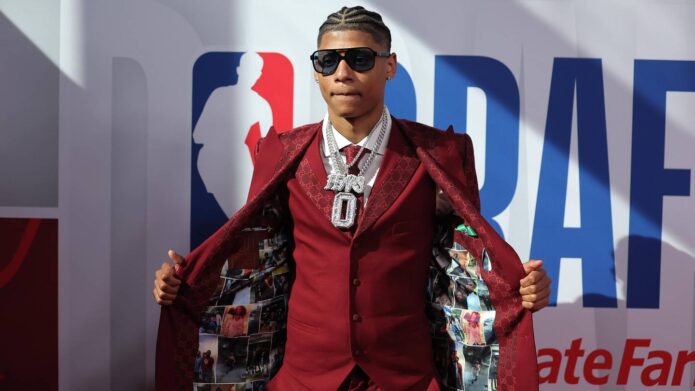
Jeremiah Fears arrived in the NBA with a tattoo story that is unusually easy to date. TMZ Sports reported in July 2025 that the New Orleans Pelicans rookie had spent roughly eleven or twelve hours with Oklahoma City artist Joseph McCormick. The result was a large chest composition that turns the player’s basketball path into a piece of body art. It is not a rumour built from a blurry arena frame. The report names the artist, identifies the shop, explains the session and shows the finished work.
The main image is a composite, but the two halves belong together. On one side, Fears is recognisable by his face. On the other, the tattoo is visible across the chest, with the jerseys, lettering and central number arranged like a visual timeline. That combination makes the image useful as both identity evidence and tattoo evidence. It also creates a sensible starting point for an article about a young player whose public career is still being written.
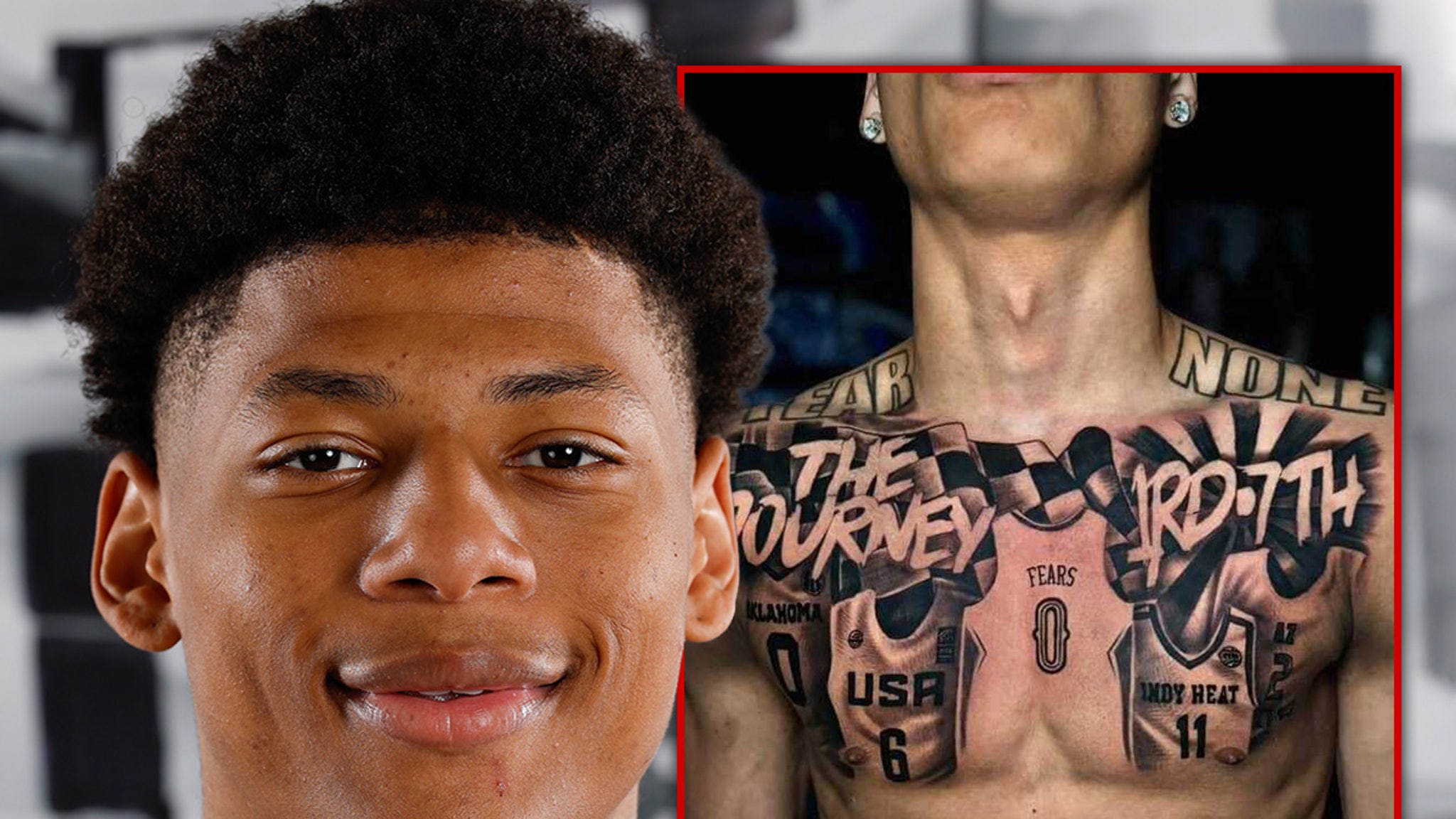
The design records several stages before the Pelicans. TMZ describes references to Arizona Compass Prep, the Indy Heat program, Oklahoma, the United States under-18 team and New Orleans. The centre of the piece is not a generic basketball symbol. It is a personal résumé rendered in ink, with the words The Journey and a draft reference giving the composition its narrative frame. The image does not establish that every detail has a private explanation, but it does establish that the chest tattoo is deliberately tied to Fears’s path through the sport.
The basketball tattoo turns a career into a visual map
Seen as a whole, the chest tattoo reads more like a map than a single emblem. The lettering sits above and around jersey panels, while large numbers and team names create a rhythm across the torso. The artwork is busy, but its subject is clear. It is about movement through different teams, levels and stages. The phrase The Journey gives the viewer a safe description of the intended idea because the reporting attributes that explanation to the tattoo artist rather than to anonymous fan speculation.
The scale matters. A small name tattoo could have marked one milestone, while this piece gives several milestones the same permanent status. The artist told TMZ that the work included the teams Fears had represented and the New Orleans jersey he had not yet worn in a regular-season game. That detail places the tattoo at a moment of anticipation. It looked backward at the player’s development while also pointing toward the professional future he was about to enter.
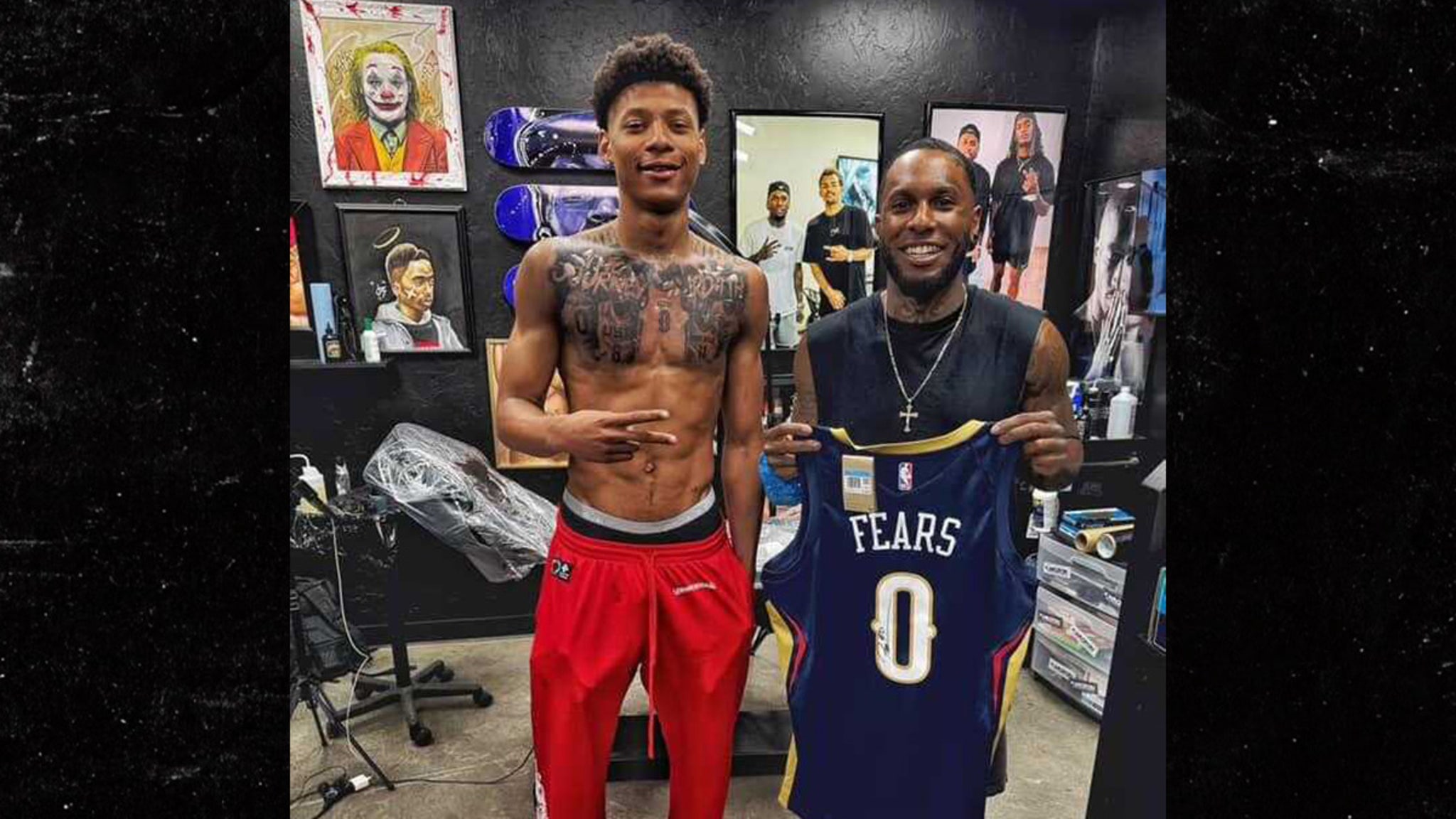
The studio photograph provides a second, distinct view of the ink. Fears stands beside the artist with his chest uncovered, which makes the scale easier to judge than the composite alone. The setting also clarifies that this was a real tattoo session rather than a graphic treatment added for a social post. The artist’s presence, the shop environment and the exposed skin all support the same conclusion: the chest design was made as a substantial piece and not as a temporary promotional mark.
The chest tattoo close view adds detail without inventing a meaning
A third tattoo-bearing original shows the chest more directly. It is a closer crop with the face outside the frame, so it should not be used as the only identity proof. Its value is different. The camera gives more room to the centre of the composition, where the Fears name and the number zero can be read alongside the surrounding jersey references. The image is especially helpful for separating what can be seen from what the viewer might be tempted to infer.
The tattoo contains obvious basketball language, but a visible sports reference is not the same thing as a complete personal explanation. The artist’s comments support The Journey as a theme and explain the racing flags as a link to earlier work, yet the published record does not provide a private statement from Fears for every line, number or word. A careful account therefore describes the placement, lettering and structure before discussing possible symbolism. Specific observation is stronger than a confident story with no source behind it.
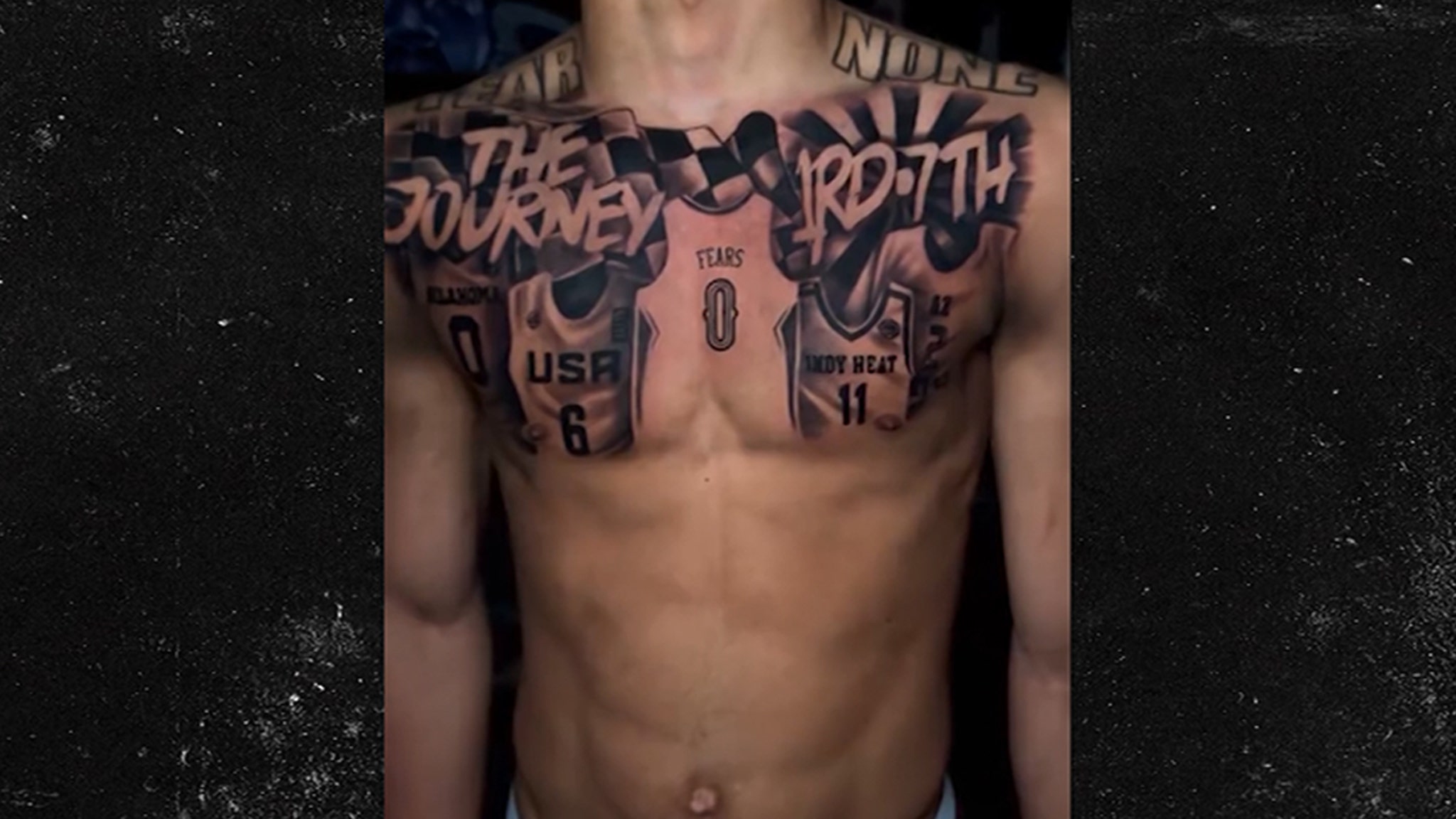
The close view also shows why three different tattoo photographs are worth keeping. The first image establishes Fears and the full concept. The studio image shows the work in its making environment. The close view lets the reader examine the lettering and central jersey more carefully. None of the three should be treated as a duplicate of the others, and none should be stretched into proof of a complete inventory of every mark Fears may have.
His first Pelicans season adds public context
The tattoo arrived just as Fears moved from college basketball into the professional game. NBA records identify him as a New Orleans guard, while the Pelicans profile provides the team route that makes the centre jersey in the artwork legible. Sports Illustrated’s coverage connects the tattoo to the rookie’s name and number and identifies the artist’s social post as the source of the reveal. Those details give the article a firm identity chain instead of relying on a repost with no caption.
A separate action image belongs later in the article because it is supplemental context, not close-up proof. Fears is shown in a Pelicans uniform during play, with his face visible and his public role clear. The frame does not expose the chest design, and that is precisely why it should not be mapped into a tattoo-specific paragraph. Generic sports fame cannot substitute for a tattoo photograph. It can, however, help the reader understand the athlete whose career the tattoo is documenting.
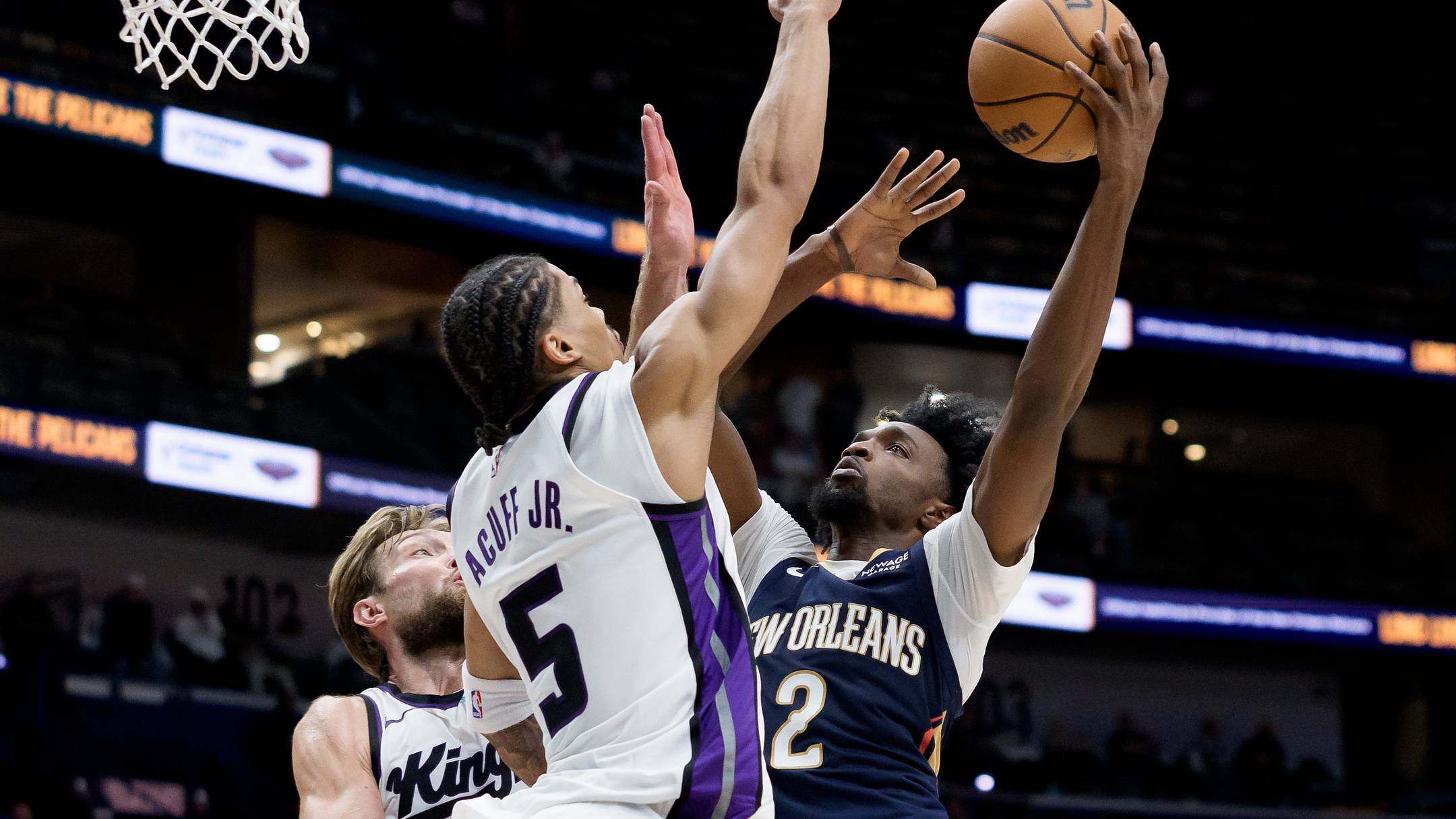
The contrast between the action frame and the tattoo images is useful. On court, Fears is part of a fast team system and the jersey is the uniform of the present. In the studio and chest views, the jerseys become a permanent record of the past and the future. The two kinds of photograph answer different questions, so they should remain clearly labelled and separated in the visual sequence.
A separate Pelicans game view keeps the identity trail separate
The separate Pelicans portrait provides another face-visible route. Sports Illustrated’s image service identifies Fears in a Pelicans uniform during play, giving the reader a distinct public-era portrait after the tattoo close-ups. It is context only, and the uniformed frame does not expose enough of the chest to document the design. Its role is narrower: it confirms the player’s professional identity while keeping the tattoo photographs responsible for the ink itself.
That separation is editorially important because Fears’s tattoo is dramatic enough to dominate the story. A reader should be able to see where the body-art evidence begins and where the biographical context takes over. The article therefore puts three tattoo-bearing originals first, follows them with clearly labelled supplemental portraits, and keeps the featured image separate as another face-visible identity view. This order reflects the evidence instead of padding the article with generic photographs.
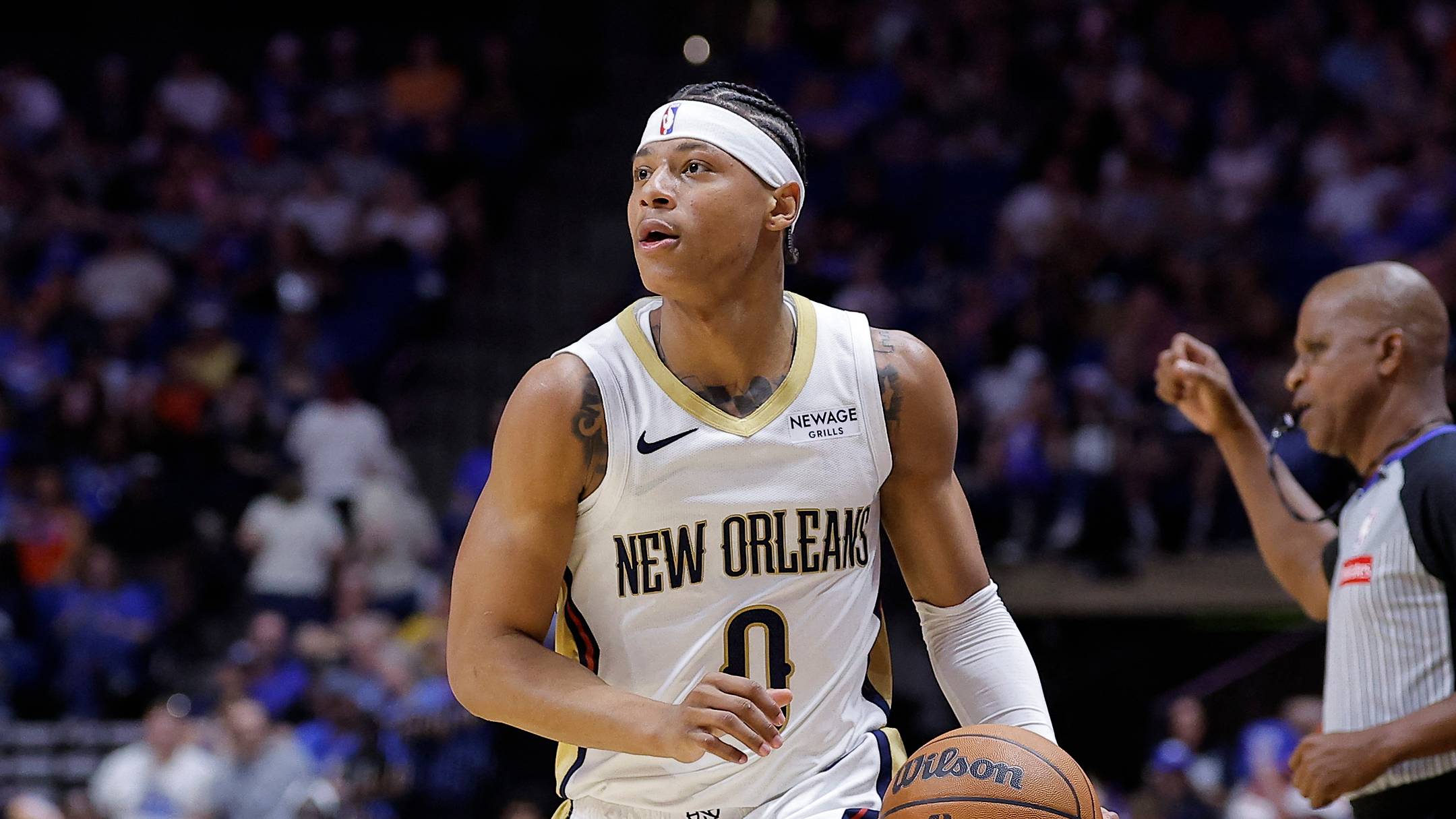
The Pelicans action frame also reinforces the timeline encoded in the chest piece. The tattoo looks backward at earlier basketball stages while the portrait places Fears in the professional setting represented by the New Orleans jersey. The frame cannot prove the exact moment any ink was added, but it supplies a clean visual reminder that Fears’s public basketball identity changed quickly between college and the NBA.
What the photographs establish and what they leave open
The inspected set establishes a large chest tattoo built around basketball jerseys, team references, the number zero, draft language and the phrase The Journey. It establishes that Joseph McCormick made the work in a long session at Ink Plug Tattoo Co. It establishes that the piece was revealed publicly in July 2025 and that sports coverage connected it to Fears’s path from earlier programs to the Pelicans. These are strong claims because each is supported by a named source and a distinct image route.
The set does not establish that every symbol has a separately confirmed meaning. It does not justify calling the artwork a complete autobiography, assigning a private emotional story to each panel or claiming that the design can never change as Fears’s career develops. The tattoo records a moment of ambition, but the future could add new chapters. The safest reading is also the most interesting: a young player made his route visible on his chest before he had played a full NBA season.
The best tattoo account lets the photographs prove the permanence of the work without pretending that a public image reveals everything personal about the person wearing it.
The images are most persuasive when they stay inside that boundary: they show a real, unusually detailed piece without pretending that public access equals private access.
The timeline remains readable after the reveal
Once the close-ups are separated from the supporting portraits, the design becomes easier to read. The three tattoo-bearing frames answer different visual questions: what the full composition looks like, how large it is in the studio and which lettering sits at its centre. The later Pelicans portraits then return the reader to the athlete’s public career without asking a generic game photograph to do the work of tattoo evidence.
That structure also keeps the article honest about what remains unknown. The published material gives a strong account of the artist, the session and the visible basketball timeline, but it does not turn every panel into a confirmed private confession. Jeremiah Fears’s chest tattoo is compelling precisely because the images show enough to study while leaving room for the player’s future chapters.