
Marko Arnautovic’s tattoos cover his arms and forearms, with lettering across his chest and abdomen and later work reported at his neck. The photographs span different stages of his football career: a shirtless West Ham moment, an Austria portrait, a Stoke City match and a West Ham arrival photo. Each frame catches another part of the collection, and a couple of the captions in the earlier version didn’t match the actual image.
Written coverage adds details the photos can’t supply. Bild and Corriere della Sera have discussed the wording and family references; Austrian sports reporting follows the designs across club and international settings. Those sources name a few phrases, but they don’t provide a complete inventory of every tattoo, artist or date. The guide below keeps the visible designs separate from details reported in interviews and articles.
Marko Arnautovic’s shoulder and arm tattoos in a West Ham photo
One West Ham photograph shows Arnautovic shirtless, turned away from the camera as he raises his hands. The view catches the back and side of his shoulders, upper arms and forearms. Dark shaded pieces sit beside lighter areas of skin, and the linework continues around the arm rather than forming a single front-facing panel. His body is in motion, so the photograph gives a natural sense of how the designs look when his arms are bent.
This angle doesn’t show the chest lettering clearly. It is useful for the broader arm and shoulder coverage: several shapes overlap, with different sizes and line weights across the arm. The original description called attention to his torso, but the photo itself is a rear-side view. Keeping that distinction makes the image more useful and avoids assigning it details that belong to a different frame.

Chest and abdomen lettering in another shirtless West Ham photo
A second West Ham photograph shows Arnautovic from the front, with his shirt gathered at his waist. “Emilia” is written across the upper chest, and a larger motto runs down the abdomen. The line begins “If you can DREAM it you can do it.” Tattoos also cover his shoulders and arms, but the torso lettering stands out because of its size and central placement.
The two shirtless photos are separate views, not alternate crops of the same pose. Here, the chest and stomach are visible; the earlier frame turns away and gives more room to the back of the arms. The front view makes the name and motto easier to read, while stadium light and movement soften some of the smaller marks below them. Coverage links the name to his family, though the photograph by itself only establishes the lettering and placement.

Forearm tattoos in a close Austria portrait
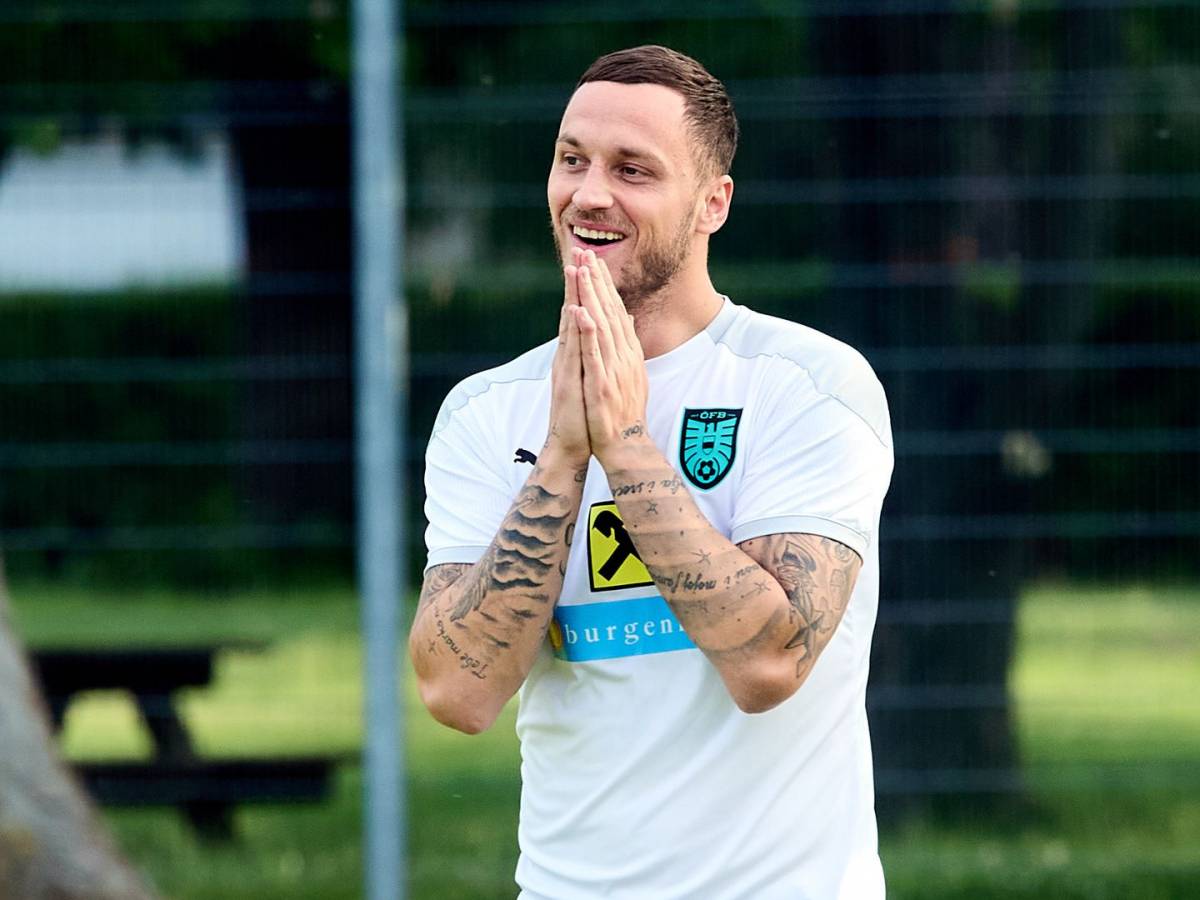
In a closer portrait wearing Austria’s white shirt, Arnautovic holds his hands together in front of his chest. Both forearms face the camera. Script and darker shaded forms run from near the wrists toward the elbows, with smaller symbols nestled between the lines. The pose brings the two arms close enough to compare, though the hands and shirt hide parts of the design.
Coverage has identified Arabic script, “la vie continue” and “only God can judge me” among the words on his arms. Some letters are easier to make out than others. Script bends with the forearm, and a photograph’s sharpness affects whether thin strokes stay distinct. The placement is clear in this frame; it isn’t a reliable transcript of every line.
The abdomen motto in a Stoke City match
An ESPN photograph from Arnautovic’s Stoke City period catches him lifting his shirt during a rainy match. His head is lowered toward the fabric, while the camera looks down across the front of his body. The abdomen motto is central in the frame; his hands and forearms add smaller details around it. The wet kit and stadium background place the image in an earlier chapter than the West Ham portraits.
The visible words begin “If you can DREAM it you can do it,” though the folds and the angle make some of the lettering less crisp. A few smaller marks sit lower on the abdomen and near the ribs, but they aren’t clear enough here to name. This photo is a better reference for the motto’s placement than for the fine detail of the surrounding tattoos.

Arm sleeves in a crossed-arm West Ham portrait
A West Ham arrival portrait shows Arnautovic with both arms crossed over his shirt. The position lays his forearms diagonally across his chest and puts the shaded work and script in the foreground. Broad dark areas sit beside lighter writing, and the crossing point makes the two arms overlap. It can look like one continuous pattern at first glance, until the separate wrists and elbows come into view.
Compared with the Austria portrait, this pose folds the arms inward instead of presenting them side by side. The tattoos haven’t changed; the visible arrangement has. That difference is useful when looking at a sleeve on a moving body: lines and shaded sections curve around the arm, and the design reads differently as the elbow bends.

What the phrases and family references show
Several of the best-known details are words rather than standalone symbols. The name “Emilia” sits across the chest; coverage connects it to Arnautovic’s family. The abdomen motto is about acting on a dream, and his arms carry religious or motivational phrases alongside smaller marks. Bild and Corriere della Sera discuss some of the wording, but no public source here gives a verified date, artist and private meaning for every piece.
A later phrase, “Luck follows the brave,” has been reported at his neck after he joined Red Star Belgrade. It belongs to a later point in the collection than the Stoke and West Ham photographs on this page. Keeping that timing clear helps separate older chest and arm pieces from tattoos reported in more recent coverage.
The writing is only part of the look. The photographs show dark ink against his skin, with some sections filled by heavier shading and others made up of fine script. The pieces vary in scale: the chest name and abdomen motto can be read from a wider frame, while short lines on the forearm need a closer view. The photos don’t establish the original ink colors beyond their visible dark appearance.
How the collection changes with the football setting
Each football setting exposes something different. The shirtless views show the chest, abdomen and shoulders. Short sleeves leave the forearms open; an arm raised above the head changes which side of the wrist faces the camera. A crossed-arm pose puts the forearms over the torso, while the Stoke photo catches the abdomen only because Arnautovic lifts his shirt.
That’s why the five photographs work as a set. They come from different moments and angles, not repeated versions of one frame. The images make it possible to follow the placement from chest to abdomen, shoulder to forearm, while the reporting supplies a few names and phrases that can’t be confirmed by appearance alone.
A career sequence from Stoke to Inter
The Stoke City photograph shows the abdomen motto in an earlier stage of Arnautovic’s career. Later West Ham images show the torso and arms under different match conditions, while the Austria portrait offers a close view of the forearms in an international shirt. Subsequent coverage from Inter and Red Star adds newer settings; the neck phrase has been reported in connection with his move to Red Star.
Club, kit and pose help place a photograph, but they don’t date every tattoo. The chest and abdomen are most visible in shirtless or lifted-shirt images; arm writing is easier to compare in short sleeves, raised arms and portraits with crossed wrists. Newer coverage should be treated as a separate point in the timeline unless a source confirms when a piece was added.
What remains uncertain about the designs
There’s no complete public inventory naming every tattoo, artist and date. Some photographs show only part of a phrase, and details blur in match images. The sleeve also contains several separate marks, so a shaded shape near the elbow shouldn’t be given a symbolic name based on resemblance alone.
The supported picture is still substantial: tattoos span both arms and forearms, the chest and abdomen carry lettering, and later reports mention a neck phrase. Coverage identifies some words and family references. The photographs show scale and placement. The sources don’t settle every personal meaning, so those questions stay open.
How to read the photographs together
Begin with the rear-side West Ham frame to see the shoulder and arm coverage, then compare the second shirtless image for the name Emilia and the abdomen motto. The Austria portrait brings both forearms into close view; the Stoke match photograph shows the same motto under earlier match conditions; the crossed-arm portrait shows how the sleeves meet over the torso.
Read the pictures with the reporting rather than asking one frame to do both jobs. The photos show the ink’s visible form and placement. Bild, Corriere della Sera and regional Austrian coverage provide the wording and family context they have reported. That combination gives a clearer account than repeating one shirtless frame or treating every unclear mark as a named design.
Closing perspective on Arnautovic’s football years
Marko Arnautovic’s tattoos form a layered record across his chest, abdomen, shoulders and arms, with a later neck phrase reported in connection with Red Star Belgrade. The clearest wording includes “Emilia,” the motto “If you can DREAM it you can do it,” arm script and “Luck follows the brave.” Different football photographs show how those designs appear as he moves from match to match and club to club.
The photos are most useful for their distinct views: the rear-side shoulder and arm coverage, the front torso lettering, close forearm script, the Stoke-era motto and the crossed-arm sleeve portrait. They show dark ink and varied shading, but they aren’t a complete tattoo catalogue. The text and meanings remain tied to the sources that have actually discussed them.
In the interview below, Arnautovic speaks after returning to Inter.