Athletes

Marlon Vera Tattoos: Chito’s Panther, Back Piece and UFC Story

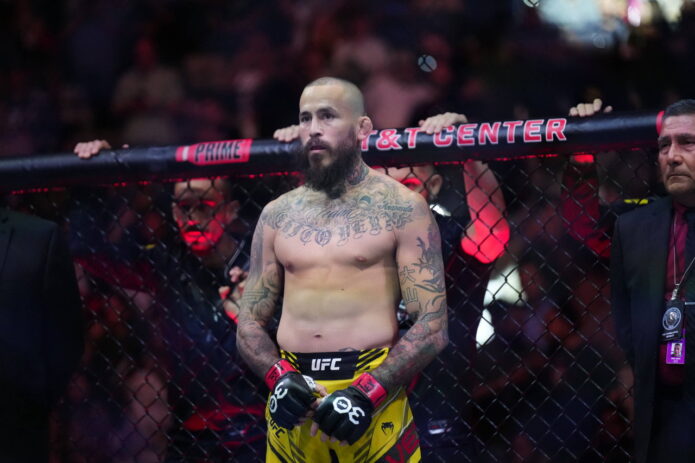
Marlon Vera’s tattoos are hard to miss when the UFC bantamweight takes off his shirt. The Ecuadorian fighter’s collection feels less like a random assortment than a scrapbook built over time: a colorful black panther on the back of his head, a huge Mister Cartoon mural tied to Chone, bold chest lettering, religious images, family names, roses, script and smaller designs across his arms and legs.

Vera hasn’t described the collection as a perfectly planned catalogue. In interviews, he has talked about trusting the people around him and letting the tattoo artist shape an idea. That easygoing approach is part of the appeal. Some pieces clearly connect to family or his hometown; others are images he liked enough to wear. Together, they show a fighter comfortable with putting his history, faith and humor on display.

Here’s a closer look at the pieces people recognize most and the stories Vera has shared.

Marlon Vera’s panther head tattoo is impossible to miss
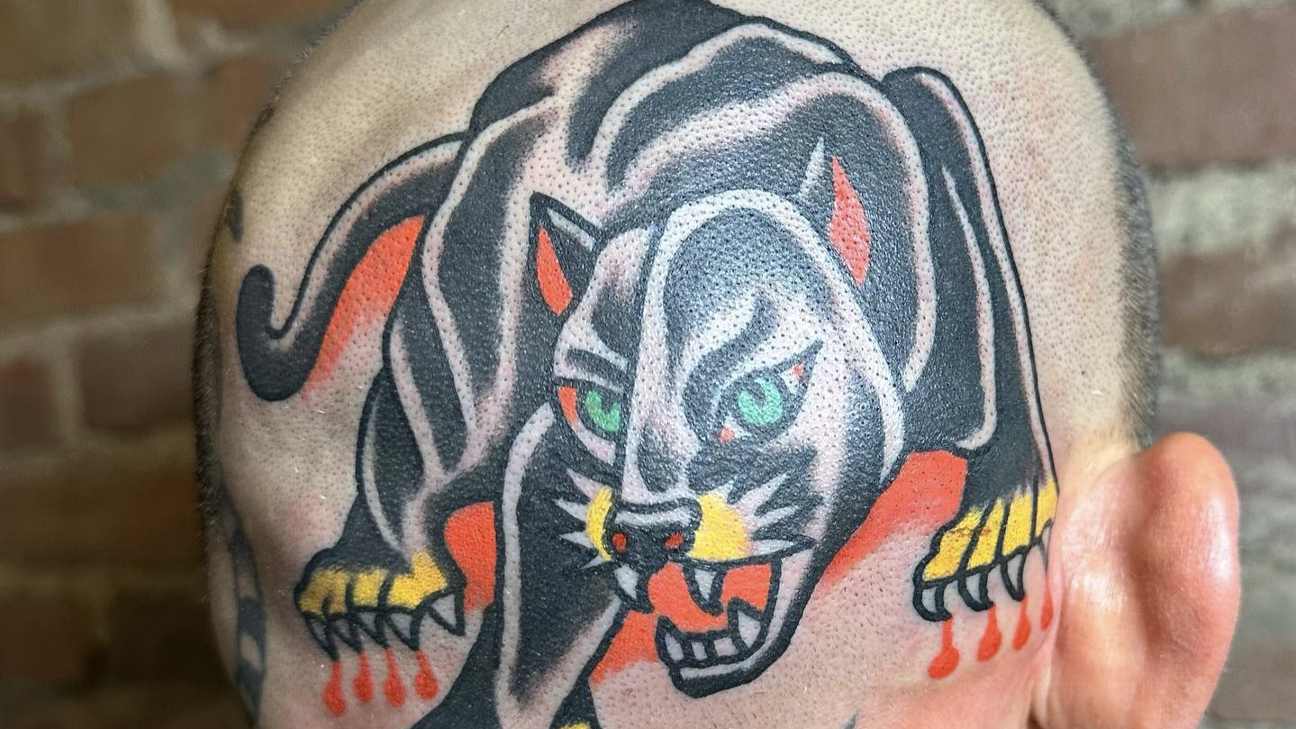
Marlon Vera black panther head tattoo with green eyes and yellow claws

The most striking tattoo sits across the back of Vera’s shaved head: a black panther with vivid green eyes, yellow claws and red accents like drops of blood. The design follows the curve of his skull, so it shifts as he moves. From afar it reads as a dark animal; up close, the eyes, teeth, claws and sharp blocks of color give it an almost comic-book quality.

Vera has said he didn’t arrive at the shop with a finished drawing in mind. He knew he wanted a head tattoo, then trusted his friends and the artist with the final panther design. That’s helpful context for fans looking for a deep meaning behind each piece: Vera has said there wasn’t one single explanation for this one, even if it says plenty about his taste. It’s aggressive and loud, with a playful edge that suits his public fighting persona.

The placement is part of what makes it memorable. Unless Vera wears a hat, the tattoo is visible at fight camp, weigh-ins and interviews. It has become part of his recognizable outline, alongside his beard and scars. It’s also one of the few designs viewers can identify without knowing much about his personal story.

The Mister Cartoon back piece starts with Chone
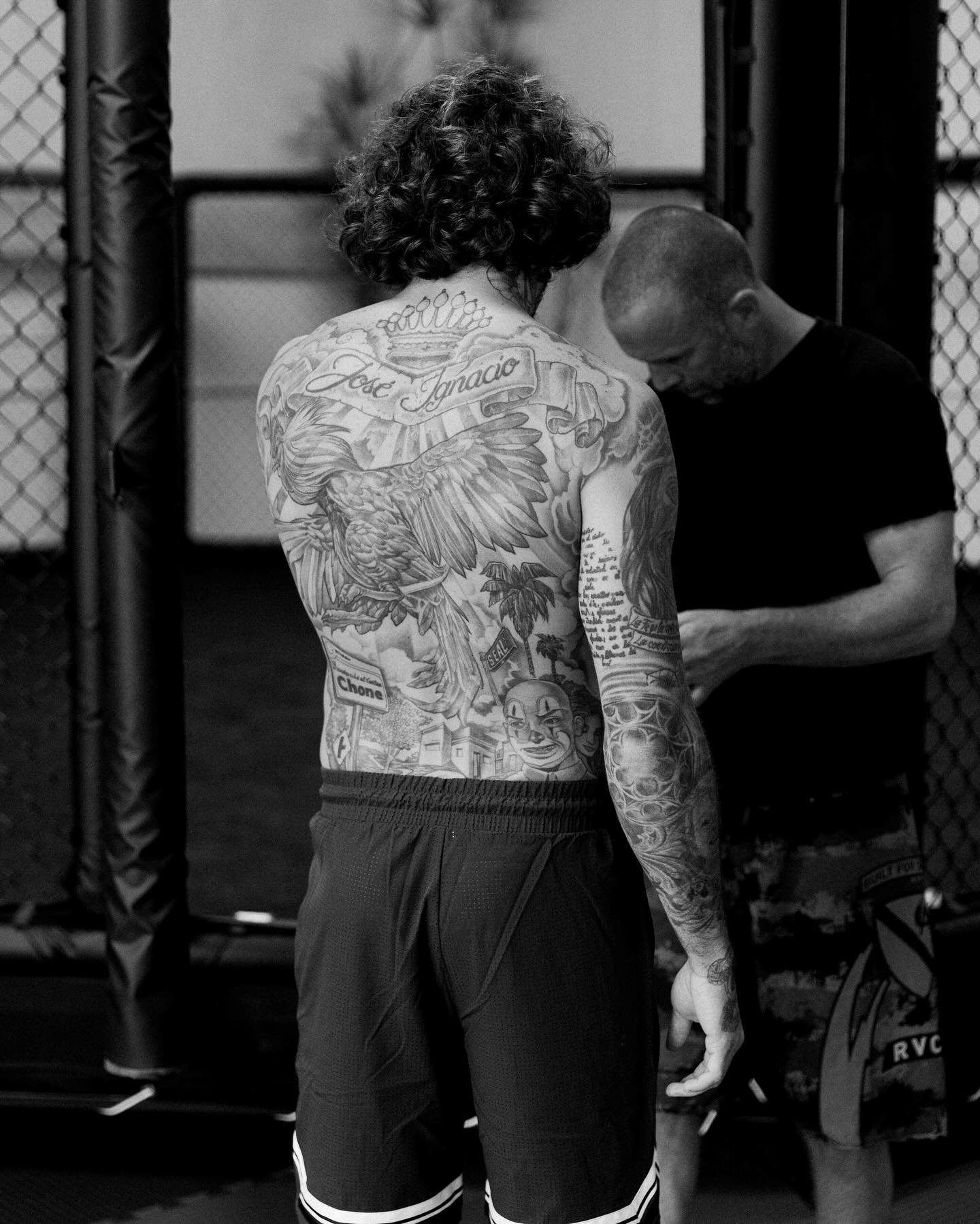
Marlon Vera showing his large back tattoo with Chone lettering and a rooster

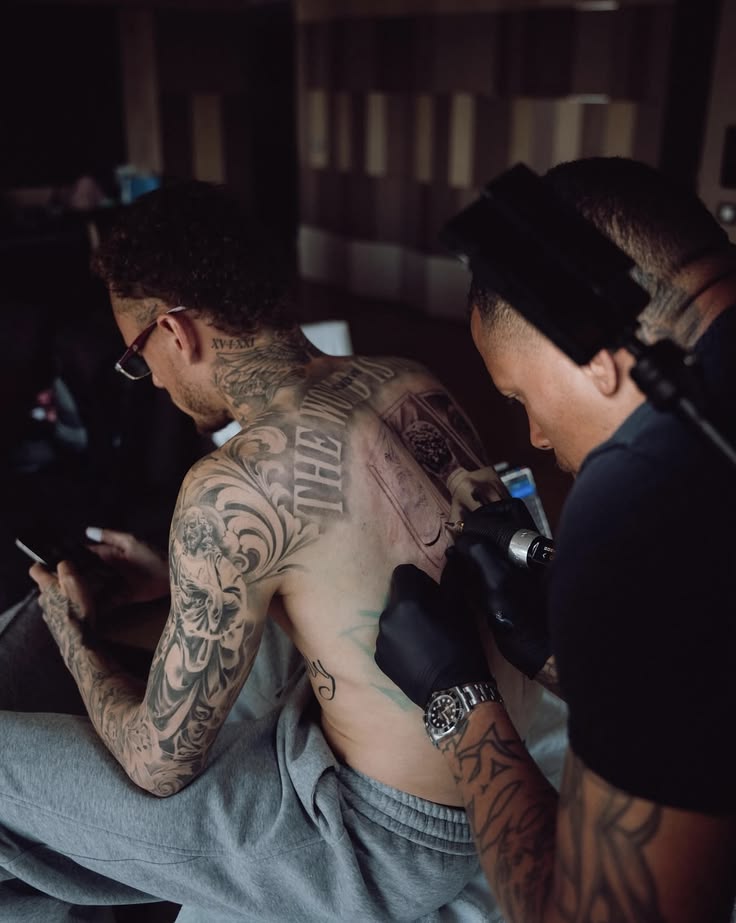
A huge tattoo by Los Angeles artist Mister Cartoon covers Vera’s back from the shoulders toward the waist. The scene brings together a banner, a crowned bird, palm trees, clouds, buildings and character details. “Jose Ignacio” appears in script near the top, while signs lower down refer to Chone, the Ecuadorian city tied to Vera’s childhood.

There’s a lot in the design, but it doesn’t feel haphazard. Mister Cartoon is known for narrative scenes in black and grey, and that gives Vera’s back a strong sense of place. The eye can move from the lettering to the wings and down through the palms and signs. The details are varied in scale, so they don’t all compete for attention at once.

Vera has spoken with real excitement about Mister Cartoon’s reputation and the well-known people he has tattooed. That admiration is part of the story: he wanted more than technical skill; he chose an artist whose visual style already has a place in tattoo culture. The finished piece brings Vera’s memories together with Cartoon’s way of building a scene.

The rooster connects the tattoo to Vera’s childhood
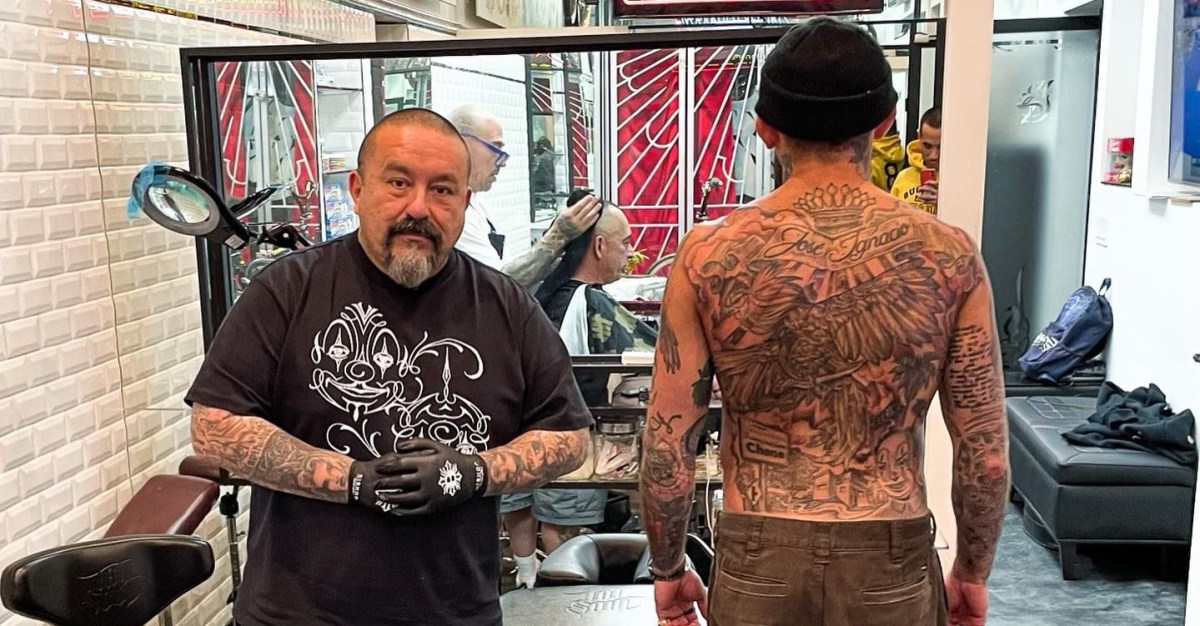
Marlon Vera back tattoo photographed with tattoo artist Mister Cartoon

The rooster at the center gives the back piece its emotional focus. Vera has connected it to childhood memories of cockfighting and to the fighting spirit that took him from Ecuador to the UFC. It isn’t a simple team logo or mascot. The bird sits within a larger landscape of home references and the tattoo’s rough, theatrical energy.

That mix makes it more personal than a generic animal design. The rooster can suggest a fighter, but it also points back to the world Vera knew before international arenas and pay-per-view events. “Welcome to Chone” gives the mural a specific place. This is more than a dramatic back tattoo; it’s a map of where Vera comes from.

Other details create contrast. A clown mask and a woman appear in the scene, alongside clouds and light that keep the composition moving. The clown imagery adds a mischievous edge, while the buildings and palms ground the piece. Heavy shading brings all the elements together as one mural instead of a group of unrelated flash designs.

Roses, lettering and family names fill the front
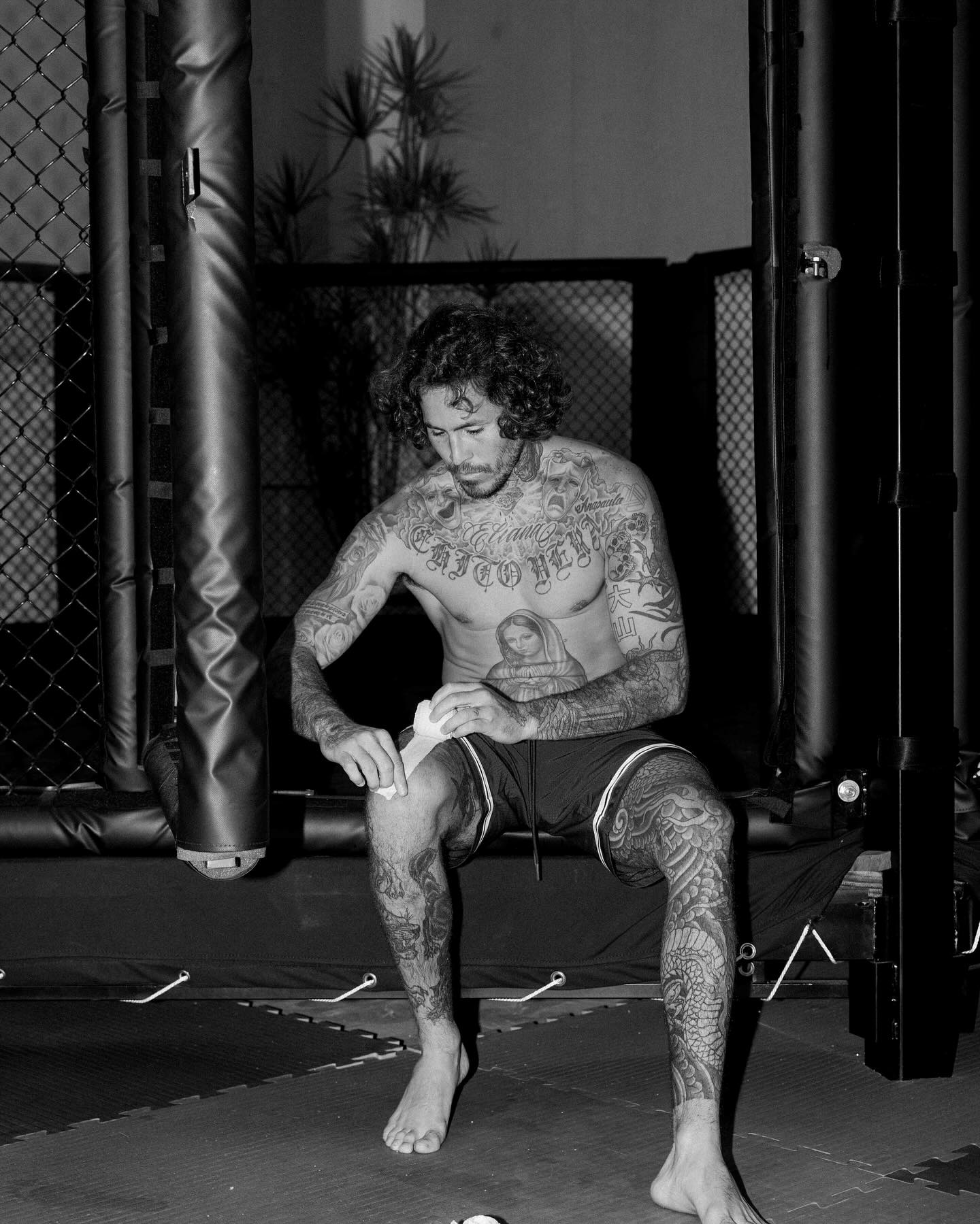
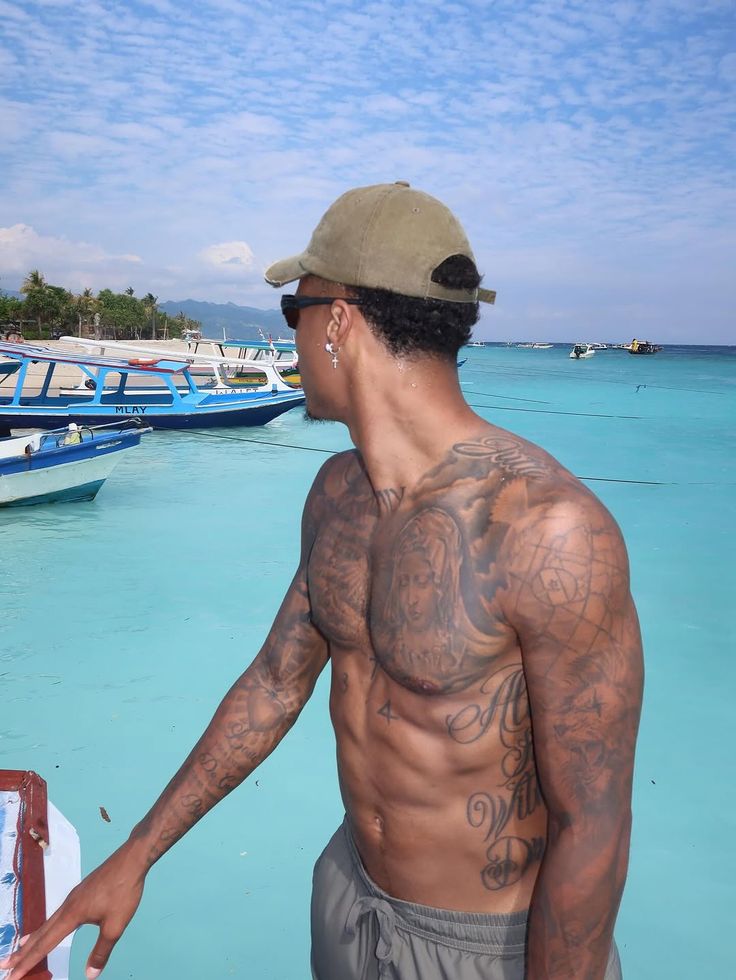
Marlon Vera front tattoos showing chest lettering, Virgin Mary and arm designs

Vera’s chest and torso have a different feel from the mural on his back. Large, stylized “CHITO VERA” lettering sits across his chest, surrounded by roses, leaves and theatrical masks. “Anapaula” is also visible near the upper chest. These designs are easy to see at face-offs, just below the neckline of a fight kit.

Farther down his torso is a portrait of the Virgin Mary, one of the clearest signs of the collection’s religious side. It creates a calmer focal point beneath the bolder lettering. His arms add further details: a rose and Chinese characters on the left, a spiderweb at the left elbow, and bands of script and shading around the forearms.

The designs pull in different directions. The chest lettering is direct, almost like a ring name on a poster; the Virgin Mary feels softer and more devotional. Roses connect the two, while the masks and heavy script keep the overall look grounded in tattoo culture. Vera’s ink isn’t one single style—it brings together family, faith, identity and images he likes seeing on his body.

The smaller tattoos show the collection is still growing
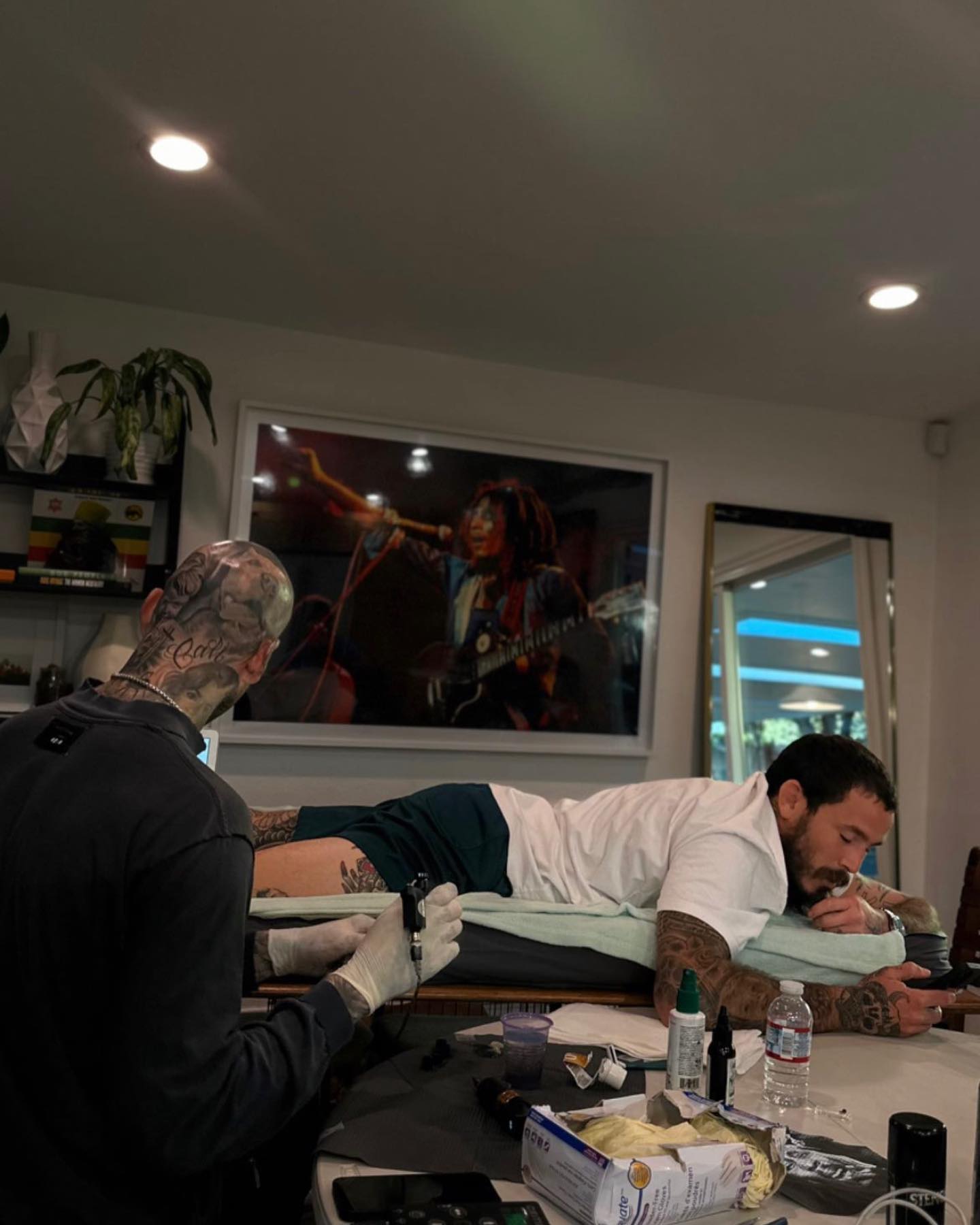
Marlon Vera during a tattoo session showing leg and lower-body ink

The head and back pieces draw the most attention, but the smaller tattoos count too. Vera has ink on his legs, wrists, forearms and around his elbows. A photo from a tattoo session shows how much of his lower body is covered already, and how comfortably he moves between large projects and smaller additions.

One of the leg tattoos people talk about most is a Bob Marley design near the back of his knee. It fits the variety in Vera’s collection: a musician, a religious portrait, hometown lettering and a fighting animal can all belong to the same visual story. The common thread isn’t a single theme; each piece offers another clue about what Vera values or remembers.

Smaller tattoos also change how the larger work sits. They fill spaces around the main pieces, give the eye somewhere to pause and make the collection feel lived in rather than assembled for a photo shoot. Vera’s body art looks like something he’s added over time, not a one-off branding exercise.

Why Vera’s tattoo collection works as a visual history
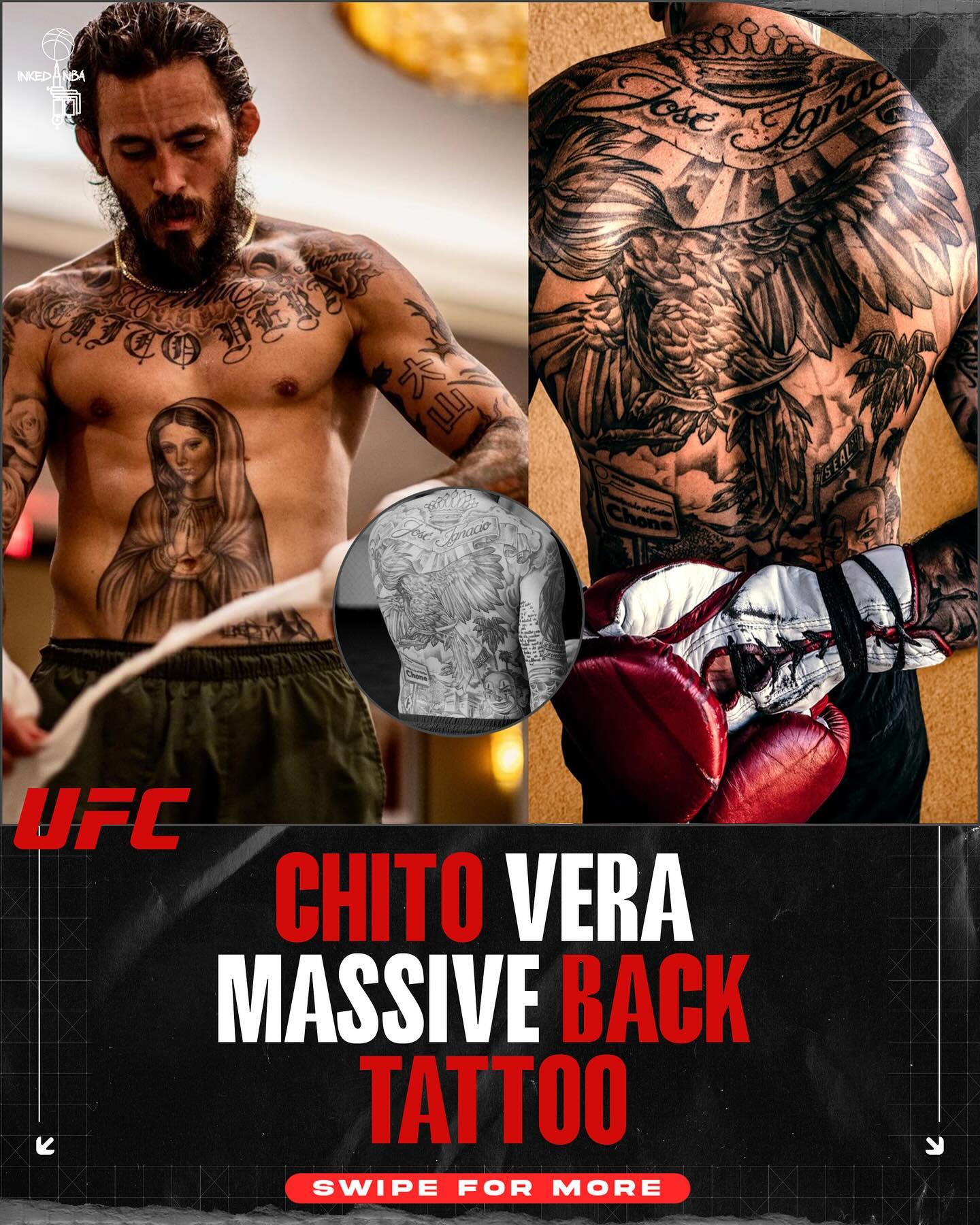
Marlon Vera tattoo collection collage showing chest and full back designs

Together, the tattoos tell a visual story about Vera’s career and personality. The panther is the immediate statement piece. The back mural points to Chone, family and childhood. The chest lettering carries the name he made in combat sports; the Virgin Mary adds faith, while roses, masks, script and leg tattoos fill out the picture.

Vera’s relaxed approach to tattooing is as interesting as the finished designs. He has talked about trusting friends and artists, and he seems willing to leave room for surprise. Not every tattoo needs a long explanation. Some matter because of the person involved, the place where it was done or the moment he chose it. Others may simply appeal to him and help the collection feel like his own.

That mix is on display during UFC fight weeks. The tattoos aren’t just background details in a weigh-in photo; they give fans something to read before the bell. Ecuador, family, religion, music, humor and fight culture all show up on the same body.

For another athlete whose tattoos work like a visual history, see our Odell Beckham Jr. tattoos guide. Beckham’s collection is more colorful, but the same idea applies: a good tattoo story shows how individual pieces become a personal archive.

Vera’s collection is still growing. The next addition might reference family, come from an artist he trusts or appear without warning. That unpredictability is part of the appeal. He’s already shown he’ll make bold choices, and there’s no sign this is the final chapter.

Watch Vera talk about an awkward tattoo experience and getting tattooed by Mister Cartoon below.
Canelo Alvarez Tattoos: Family Portraits, Boxing Ink and the Meaning Behind His Numbers

Canelo Alvarez’s tattoos aren’t random decoration. Much of the ink on his arms, neck and back connects to family, boxing, faith or a moment he wanted to keep close. Some designs are easy to read; others make more sense with a little context about his life outside the ring.

This guide focuses on tattoos that are clear in published photos and coverage, while separating what’s visible from what’s only guessed at online. It’s a closer look at Canelo Alvarez tattoos, including family portraits, boxing phrases, dates, eyes, crowns and the word Perseverancia that fans often ask about.

Canelo Alvarez’s first tattoo story starts with boxing

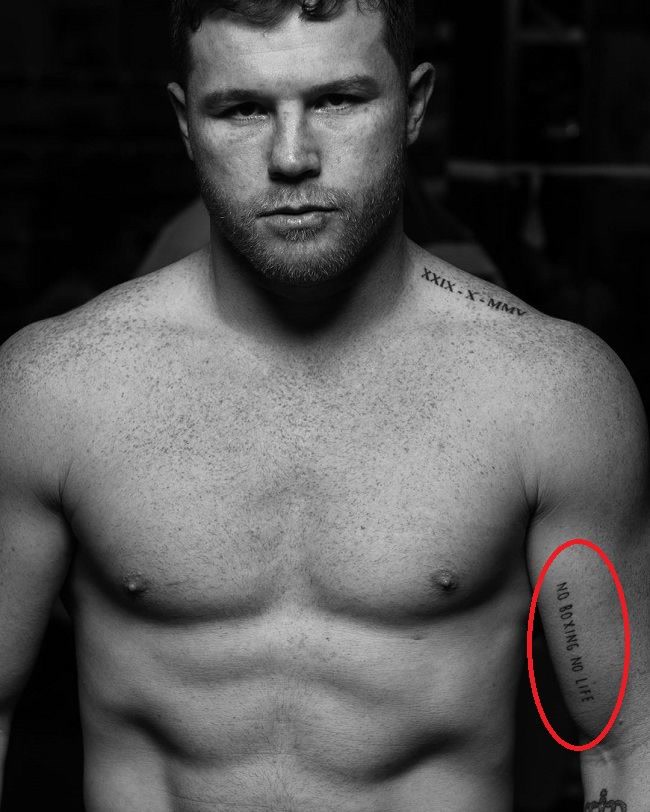
Canelo Alvarez No Boxing No Life tattoo on his arm

One of the easiest pieces to identify is No Boxing No Life on Canelo’s arm. For someone who has spent much of his life in gyms, the words read like more than a fighter’s slogan. Boxing is his profession, but it’s also the routine that shaped his discipline, confidence and public identity.

The lettering stands out in ringside photos, making it one of his most recognizable tattoos. It also fits the way Canelo talks about training. He doesn’t describe boxing as a shortcut to fame; he talks about repetition, sacrifice and the hours that happen when no cameras are around. The short phrase puts that outlook on his skin.

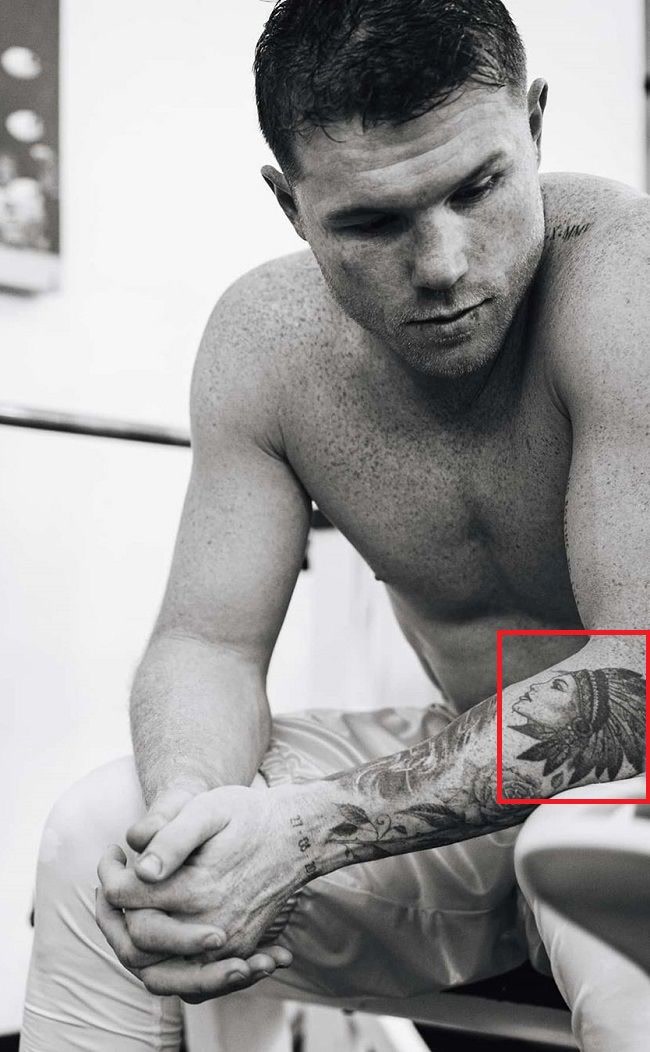
Canelo Alvarez lady with plume tattoo on his forearm

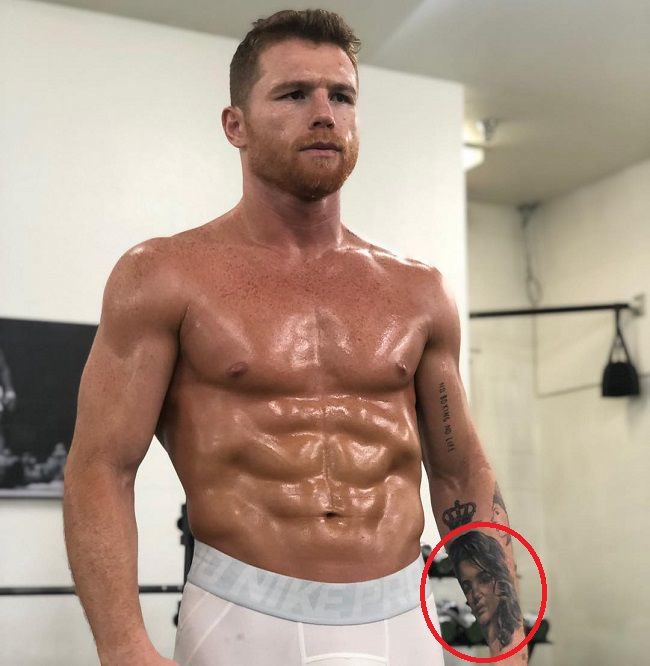
Another arm tattoo shows a woman wearing what looks like a plume or feathered headpiece. It’s a more detailed image, easier to study in a close-up than during fight week. Next to the direct boxing motto, it feels like a portrait from a story or a memory.

Together, the two pieces show the range of Canelo’s taste. He has short words that work like a motto alongside large illustrations that invite a closer look. That mix keeps his ink from feeling like one repeated theme.

Family portraits make his arm tattoos personal

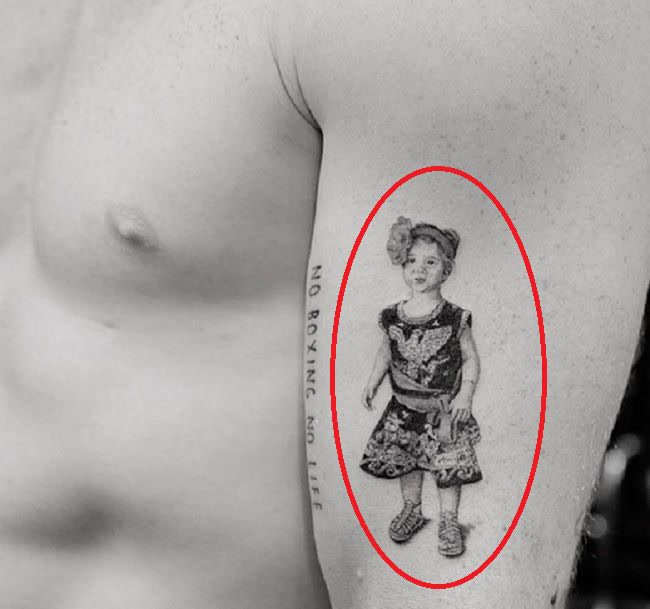
Canelo Alvarez daughter Maria portrait tattoo

The collection’s most personal images are the portraits connected to his children. Tattoo coverage identifies one prominent arm portrait as his daughter Maria. A child’s portrait captures one moment in family life, but the reason for the tattoo reaches beyond the date of the photo the artist used.

Portrait tattoos take careful work: a small change around the eyes, mouth or face shape can throw off the likeness. Canelo’s portrait sits where it appears in plenty of short-sleeve photos, whether he’s training, celebrating or talking with reporters. It makes the family connection visible rather than hidden.

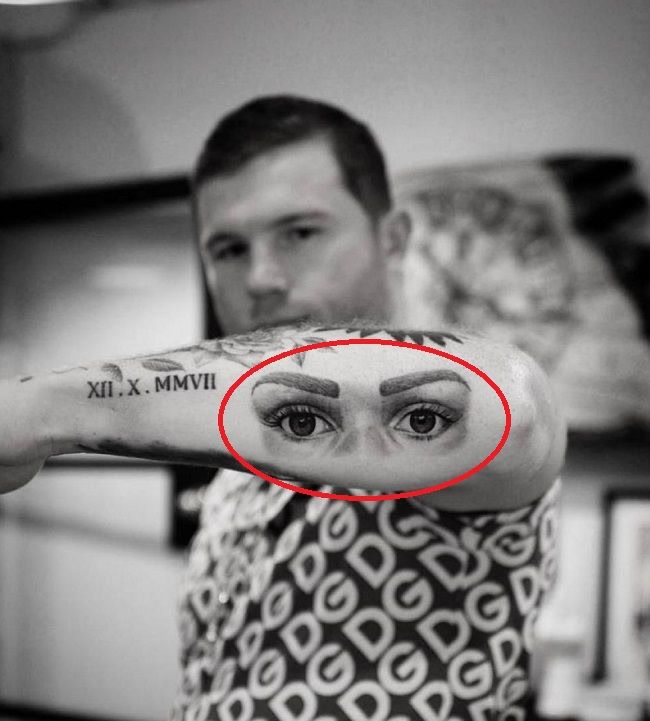
Canelo Alvarez eyes tattoo close-up

Canelo also has a striking pair of eyes on his forearm. Fans sometimes read eyes as protection or a sign of being watched over, but he hasn’t publicly confirmed one explanation for every detail. The image feels intimate and watchful, rather than just filling space between larger pieces.

That distinction matters with celebrity tattoos. A photo can show what’s on someone’s skin, while its meaning remains private. Canelo’s family portraits are documented visually, but the emotions behind them belong to him. Their placement and subject suggest their importance, even without an exact quote from the boxer.

The eyes, crowns and dates mark private chapters

Canelo Alvarez matching crown and date tattoos

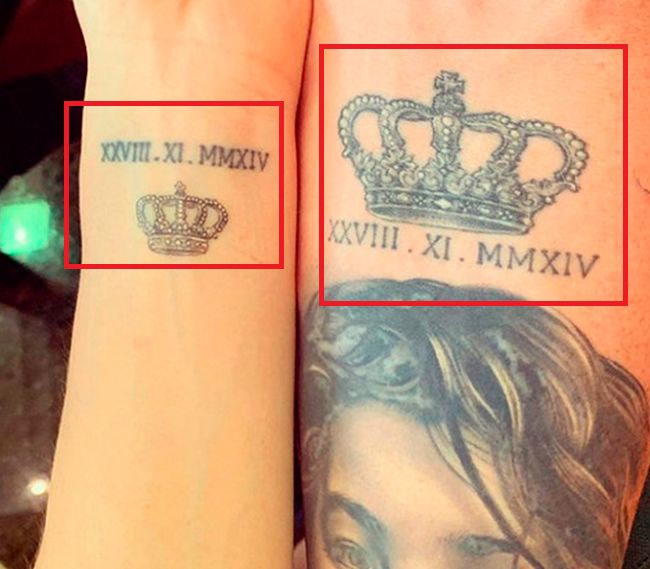
Some of Canelo’s smaller designs carry plenty of visual weight. A matching piece combines crowns with Roman numerals or dates, giving his arm a sense of occasion. Crowns are common in boxing, where champions are often described in royal terms, but they can also represent family, a relationship or a private milestone.

The numbers are difficult to interpret without his explanation. They might mark a birthday, anniversary or another important date. Rather than guess, it’s safer to describe what the tattoo conveys: the date matters enough to keep, and the crown gives it a sense of value.

Canelo Alvarez Perseverancia neck tattoo

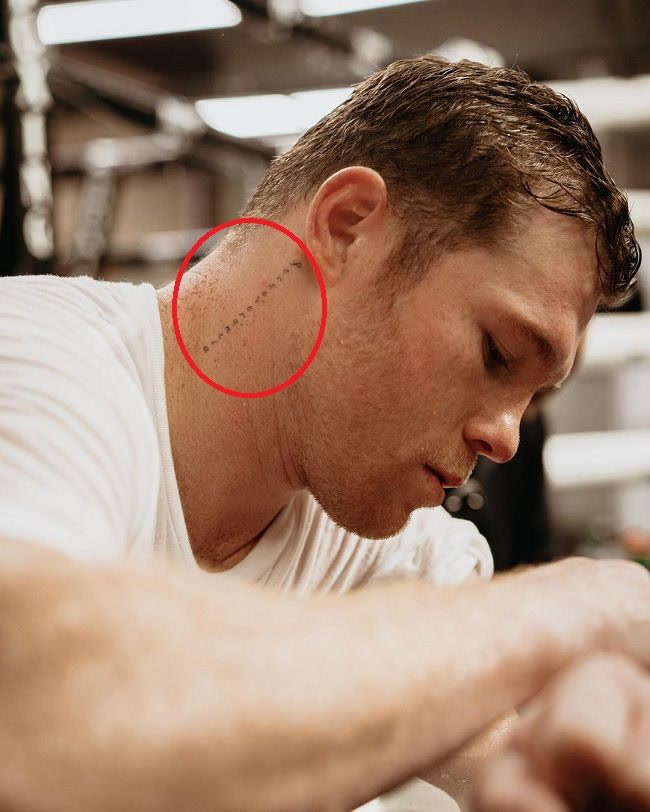
The word Perseverancia, or “perseverance,” is visible on Canelo’s neck. Its message is hard to miss. It sums up a part of his story fans know well: a long career shaped by difficult training camps, setbacks, comebacks and the expectation that he’ll win.

A neck tattoo is a confident choice because a shirt collar can’t always hide it, especially in training clips or public appearances. Putting “perseverance” there makes it a daily reminder, not just a message for the audience. It’s close whenever he looks in the mirror or gets ready for another demanding session.

Alongside the crowns and eyes, the neck piece gives the collection an emotional thread of ambition, memory and endurance. The tattoos don’t need to come from the same artist or year to feel connected. They mark separate chapters that now share the same body.

A back quote turns perseverance into a daily reminder

Canelo Alvarez quote tattoo across his back

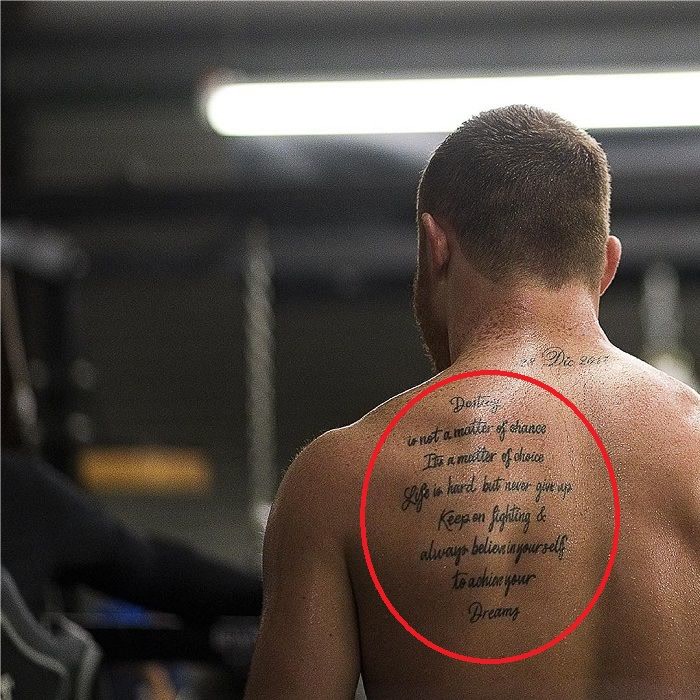
Canelo’s back carries a larger quote that’s easier to take in through a full-back photo than a cropped social media image. Text tattoos can look simple from a distance, but scale changes their effect. There’s space for the lettering to breathe, so it reads as a statement across his back rather than a small personal note.

The quote is often discussed alongside No Boxing No Life and Perseverancia because it reinforces similar ideas. The exact wording matters, but language itself is a recurring part of his collection. Canelo uses words when he wants a message to stay direct; portraits and symbols give other tattoos more atmosphere.

The back piece isn’t always on display. His arms appear in public constantly, but the quote usually needs a shirtless photo, weigh-in or training setting to be seen. That gives it a different quality from the arm designs: it can be personal first and public second.

For anyone considering a meaningful quote tattoo, the lesson is straightforward. Words work best when they connect to a real habit or experience. Canelo’s motivational phrases feel grounded because they fit the life people see in the ring and at camp.

What Canelo Alvarez tattoos say about his life

Canelo Alvarez daughter Emily portrait tattoo on his forearm

Taken together, Canelo’s tattoos look less like one planned sleeve and more like an archive. The family portraits honor important relationships; the boxing phrases point to the sport that shaped him. Eyes and crowns leave room for symbolism, while the words on his neck and back tie perseverance to his public image.

The designs draw attention partly because Canelo often wears athletic clothes that leave his arms visible. A fresh detail or portrait can spark questions after just one photo. That doesn’t mean he chose every tattoo for publicity; it means fans often see the ink in the same moments they’re already watching him.

A useful guide to Canelo Alvarez tattoos starts with what the images show and leaves some space around the meaning. A daughter’s portrait can be identified. A phrase can be translated. A crown or date can be described without claiming to know a private story. That keeps the account accurate and lets the tattoos remain personal.

For another athlete’s tattoo style, compare his collection with Halsey’s tattoos. The look is very different, but the same principle applies: the strongest celebrity tattoo collections combine public identity with details only the wearer can fully explain.

In the end, Canelo’s ink suits the fighter people see. It’s direct where it needs to be, detailed when a memory deserves room and centered on people and principles he wants to carry with him. That’s why fans still notice the tattoos long after a fight is over.

Watch a Canelo Alvarez tattoo interview:

Odell Beckham Jr. Tattoos: Leg Murals, Icons and the Stories Behind His Ink

Odell Beckham Jr.’s tattoos are less a random assortment of flash designs than a visual history. Ink covers much of his legs, arms and back, where portraits of famous figures sit alongside music, sport and family references. Some pieces are obvious in football photos; others are easier to make out in close-ups from tattoo sessions.

Beckham has said he knew early on that he wanted a lot of tattoos. In a GQ interview, he recalled drawing on his arms with a Sharpie in high school and getting his first tattoo, “Make dreams reality,” during his senior year. He planned to cover most of his body but stop at his wrists. That helps explain the collection: he wasn’t after one neat symbol, but a body full of reminders.

It also helps separate the real tattoos from social media posts that call every visible mark a new design. The collection has changed over time, and some tattoos overlap within large sleeves. The clearest way to understand it is to look at the main areas one at a time.

Odell Beckham Jr.’s leg sleeve is built like a museum wall

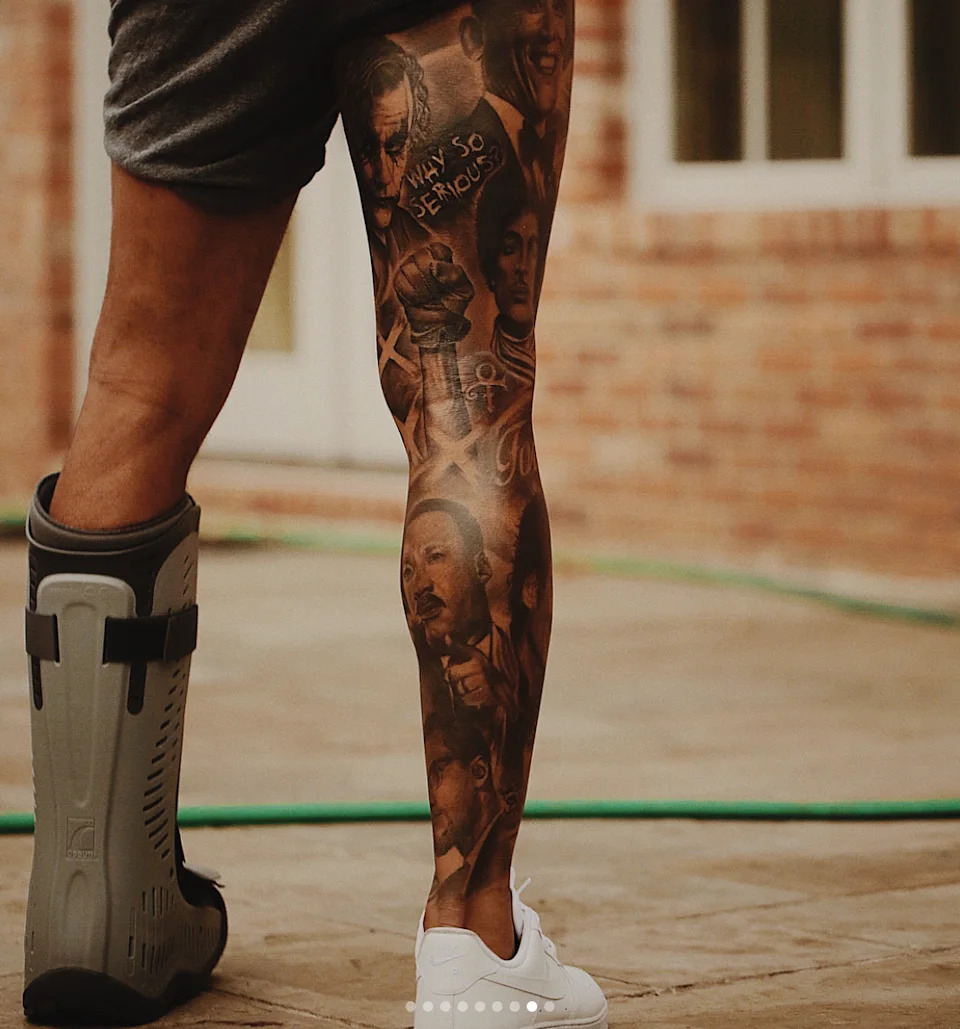
Odell Beckham Jr. leg sleeve tattoo mural with portraits and lettering

The leg sleeve is the part of Beckham’s collection that catches the eye first. Detailed black-and-gray portraits, lettering and layers of shading fill the area. From a distance it reads as one dark mural; closer up, separate faces and scenes begin to emerge. The scale invites you to look for a while, rather than catch a glimpse from the sideline.

One of the clearest figures is Martin Luther King Jr. The words “Why so serious?” sit beside another face, giving part of the composition a comic-book feel even as the larger subject stays serious. Other cultural figures appear throughout the sleeve, too. Beckham hasn’t stuck to one theme; it’s a record of the people, images and moments that stayed with him.

Low-resolution reposts can make the work look muddy. In a small crop, the shading turns into a dark block; a clear close-up brings out the differences between hair, skin, clothing and background. That detail is what makes the Odell Beckham Jr. leg tattoo work.

The other side of the sleeve adds athletes, artists and history

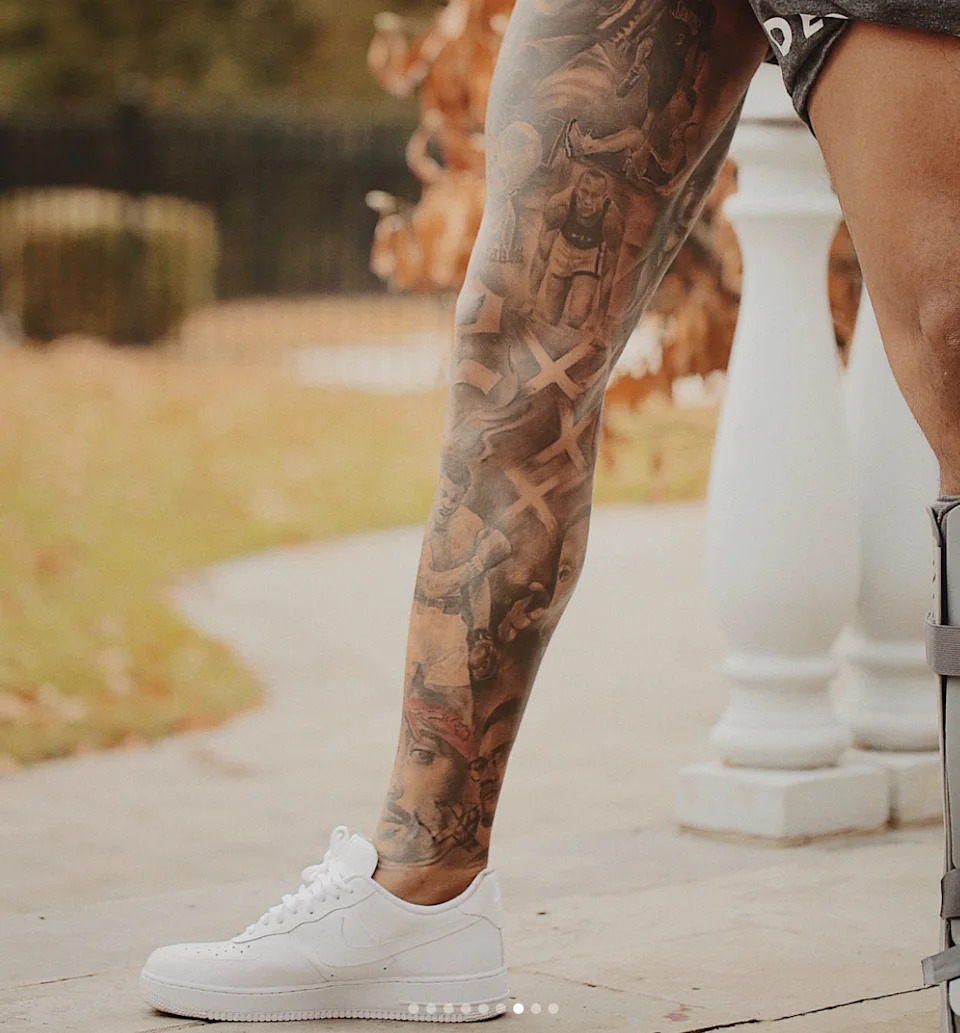
Odell Beckham Jr. detailed leg tattoo sleeve with historic portraits

A second close-up shows how the sleeve changes as it wraps around his leg. The portraits aren’t arranged like framed photographs; smoke, shadows and diagonal forms blend one into the next. That gives the design movement, which suits Beckham as an athlete. The tattoo feels active even when the people in it are standing still.

Published descriptions of the sleeve name Tupac Shakur, Muhammad Ali, Jesse Owens and Allen Iverson, as well as Michael Jackson, Malcolm X, Barack Obama, Prince and the Joker. Not every face is equally clear in every photo, so it’s safer to call it a broad collection of references than to claim one image shows every detail perfectly.

Ali and Iverson connect the sleeve to Beckham’s athletic life; the musicians and civil rights figures widen it beyond football. The mix points to people who shaped popular culture, ambition in sport and ideas about confidence. The tattoos are personal, but they’re made to be seen. That’s why the sleeve becomes a conversation starter when he wears shorts.

His Lil Wayne and Bob Marley thigh tattoo mixes three different worlds

Odell Beckham Jr. showing arm tattoos and the style of his portrait-heavy ink

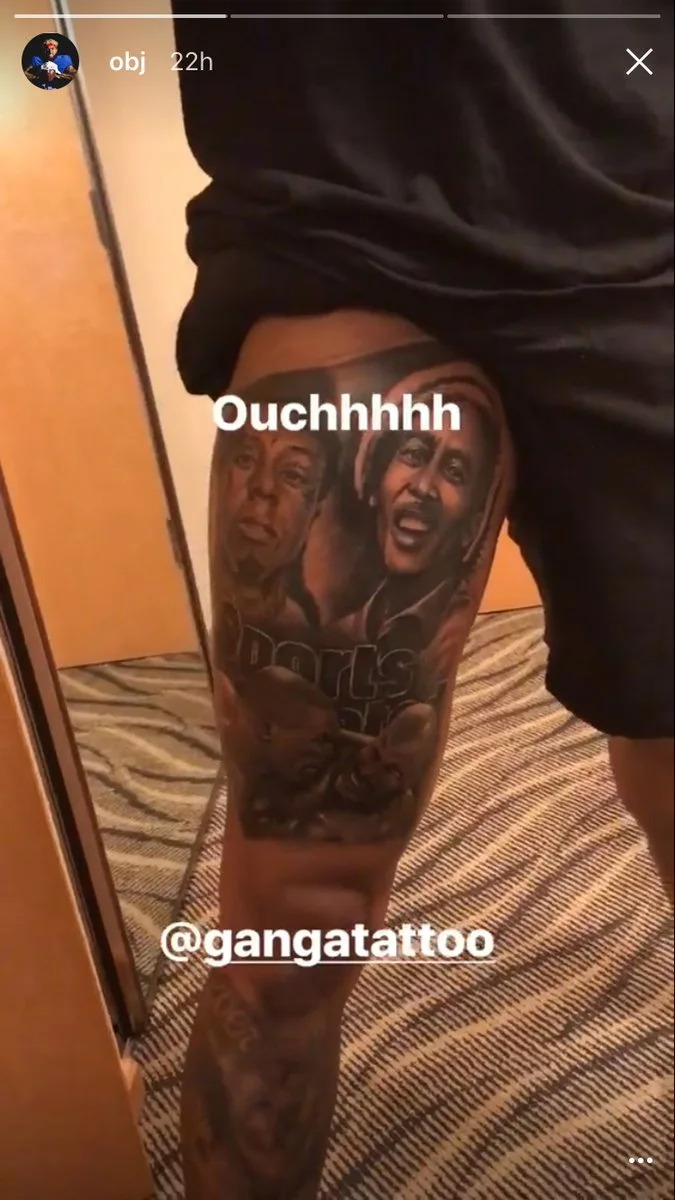
One of Beckham’s most talked-about designs sits on his right thigh. Yahoo Sports described a composition combining rapper Lil Wayne, reggae musician Bob Marley and part of the well-known Sports Illustrated photo of Mike Tyson biting Evander Holyfield’s ear. The combination sounds unlikely until you see Beckham’s wider approach: he brings different cultural memories together on the same canvas.

It isn’t a simple row of celebrity portraits. The faces and references form a collage that keeps the eye moving. Lil Wayne represents a major musical influence, Marley brings a different cultural weight, and the Tyson-Holyfield image recalls one of boxing’s most unforgettable moments.

This design is easier to understand in a photo that shows its full placement. A tight crop may reveal one face but hide how the elements fit together. The wider view shows why Beckham’s tattoos read like murals rather than separate stickers. New work adds a chapter without erasing what came before.

The Michael Jackson portrait is one of his clearest single-subject pieces

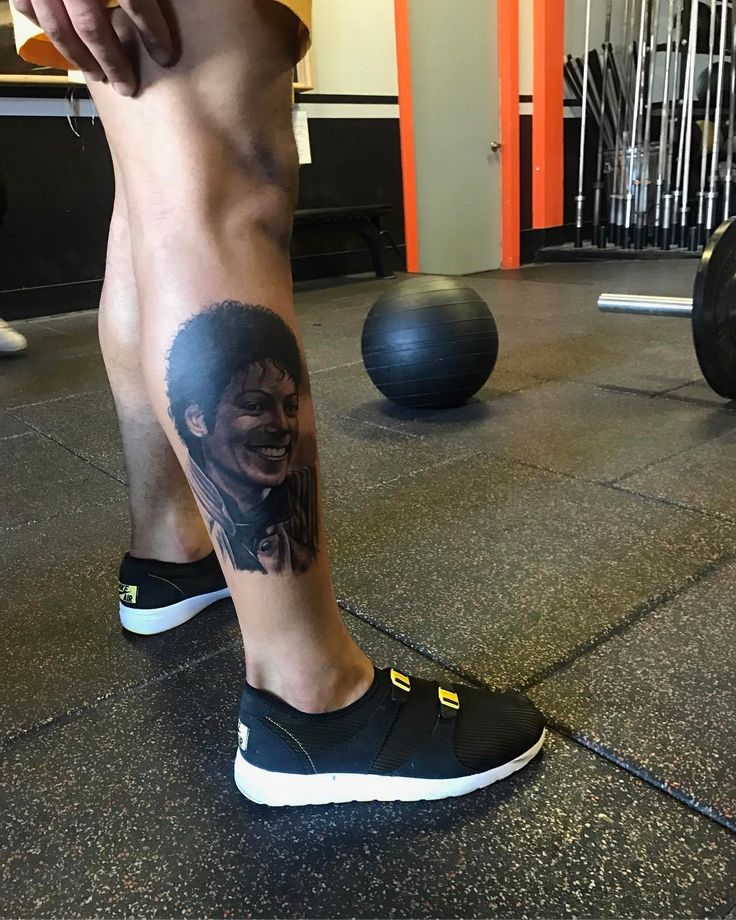
Odell Beckham Jr. Michael Jackson portrait tattoo on his calf

Beckham’s Michael Jackson tattoo is a more straightforward tribute. He’s a longtime fan, and the portrait on his lower leg shows Jackson in the Thriller era. Beckham has brought Jackson’s music and dance into touchdown celebrations, so the design ties his football persona to one of his biggest pop culture influences.

The portrait has room for expression, rather than relying on a name or logo. Jackson’s eyes, hair and smile carry the image, with surrounding shading helping it sit naturally on Beckham’s calf. It’s a good example of the portrait style seen elsewhere in the collection: Beckham chooses figures with a strong visual identity and lets the artist build around it.

It’s worth being precise about dates. Beckham has shown and discussed many tattoos, but the exact session date for every piece isn’t clear in galleries that get reposted. News coverage and video document the Michael Jackson portrait well; smaller additions can be harder to place in time. The safe takeaway is that it’s one of his most recognizable tattoos and a direct nod to his love of performance.

His arms and hands carry the everyday part of the collection

Odell Beckham Jr. visible arm tattoos during his football career

The tattoos on Beckham’s arms show how the collection looks in motion. Football photos often catch them in pieces: one sleeve below a jersey, another design wrapping toward the shoulder. The work is dense enough that a standard action shot can reveal several layers at once. It’s less one headline tattoo than part of his everyday public image.

His hands have become part of the story as well. Beckham has worked with Bang Bang and other well-known artists, and reports on his sessions describe new hand designs as meaningful rather than purely decorative. Since hand tattoos are hard to hide, they show how committed he is to the collection. They appear in interviews, practice clips and photos.

The phrase “Make dreams reality,” his first tattoo, gives the smaller details more context. It’s direct, and it fits the ambition and influence running through the larger portraits. The arms aren’t filler between the leg murals and back piece. They’re where the collection enters everyday life, from press conferences and practice to fashion events.

Why the collection feels more like a story than a checklist

Odell Beckham Jr. close-up of detailed portrait tattoo work

Beckham’s tattoos come into focus when you stop looking for one master list. The portraits point to musicians, athletes, activists and entertainers. The leg sleeve turns those references into something like a history lesson. His arm and hand tattoos show the work continuing, while his back has been described as a large Planet of the Apes-inspired scene—another ambitious project.

The artists help explain the look. Bang Bang is associated with some of Beckham’s hand and body work, while Joaquin Ganga is connected to the large realism portraits and leg sessions. Their work brings deep black-and-gray shading, realistic faces and compositions that need space and time.

Compare this with a newer football tattoo story like our Raphinha tattoos guide, which focuses more on phrases, faith and football milestones. Beckham’s collection is louder and more portrait-heavy. Neither approach is better; they show different ways athletes use tattoos to express identity.

For the main Odell Beckham Jr. tattoos to remember, start with the leg murals, then look for the Lil Wayne and Bob Marley thigh design, the Michael Jackson calf portrait, the hand and arm work, and the large back piece. Together, they show an ambitious collection built around people Beckham respects and images he wants to carry with him.

His ink keeps expanding, but the through line remains: memory, influence and a personal definition of style.

Raphinha Tattoos: Barcelona Ink, Neck Quote and Career Symbols

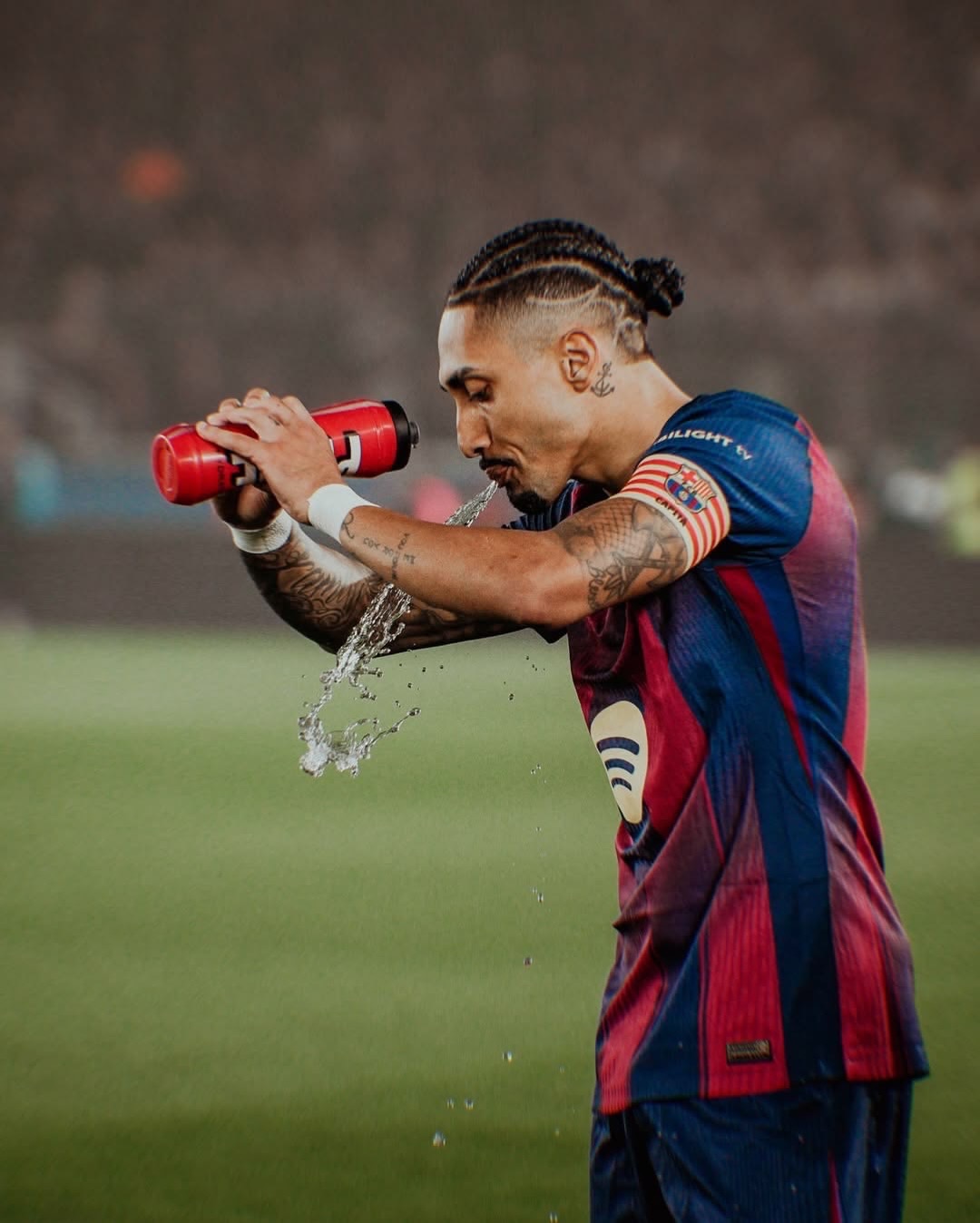
Raphinha’s tattoos aren’t random pieces added to fill space. They trace where he’s been, the people who helped him get there and what still matters. The Barcelona winger has visible ink across his arms, neck and upper body, with designs connected to football, family, faith and the places that shaped him.

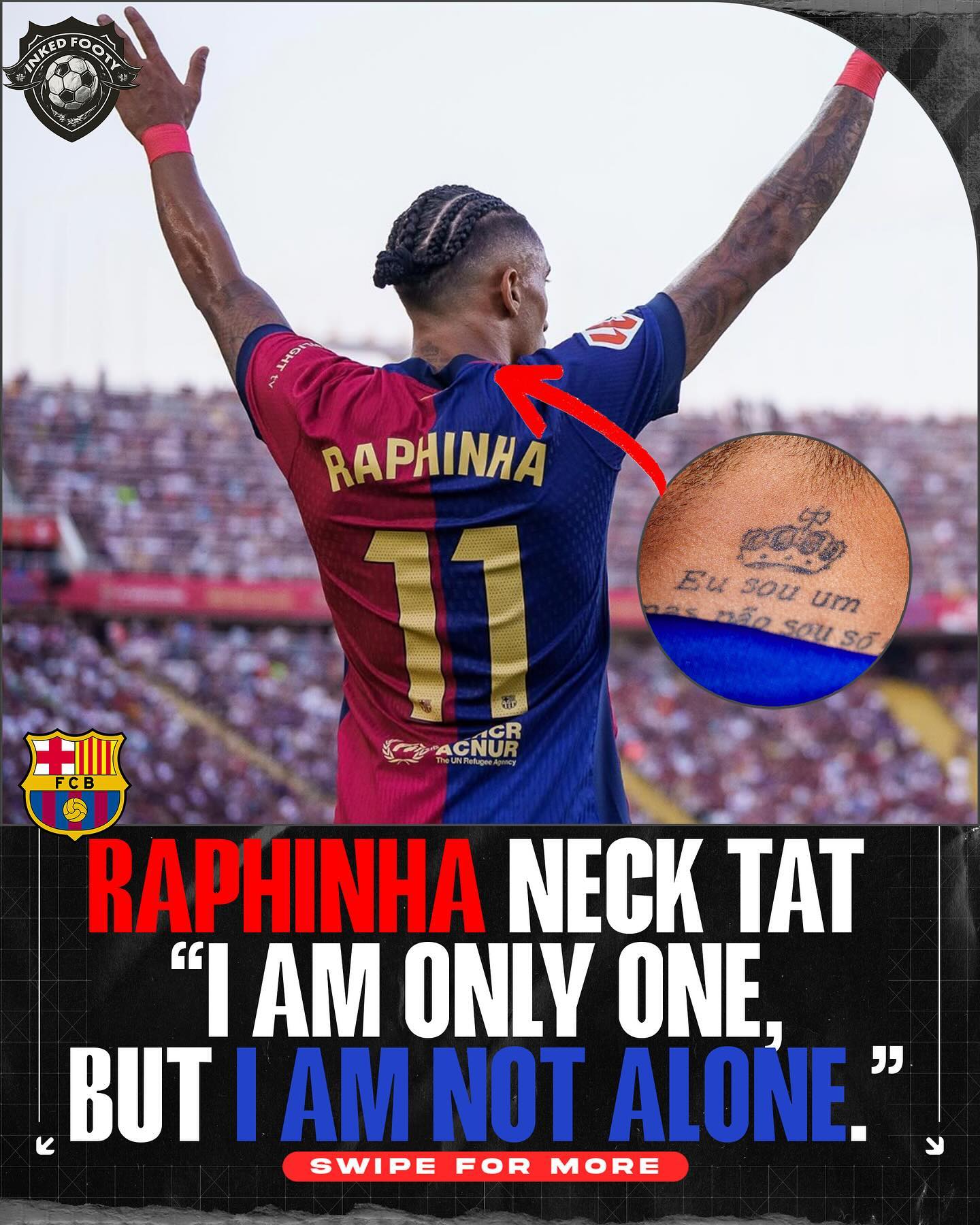
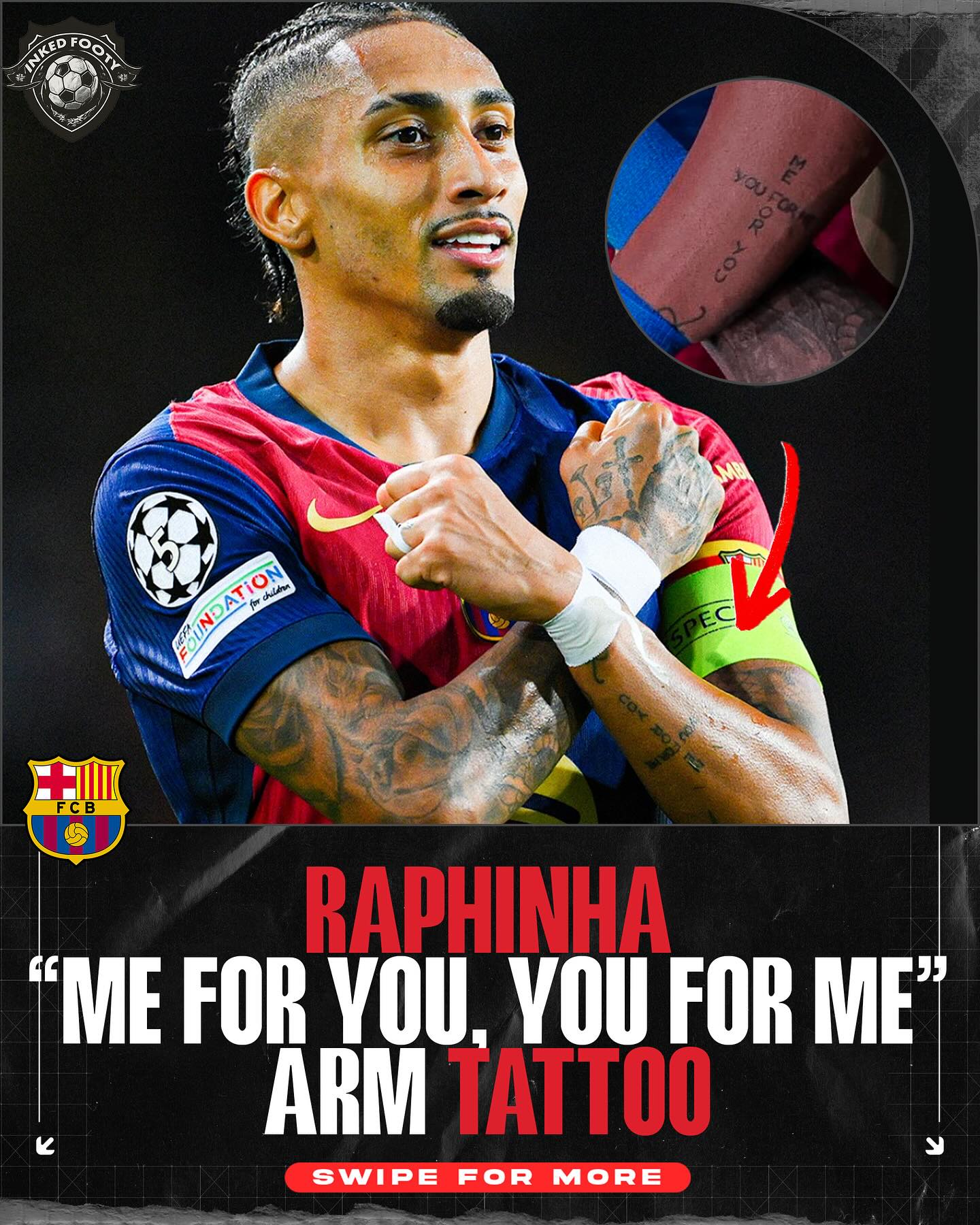
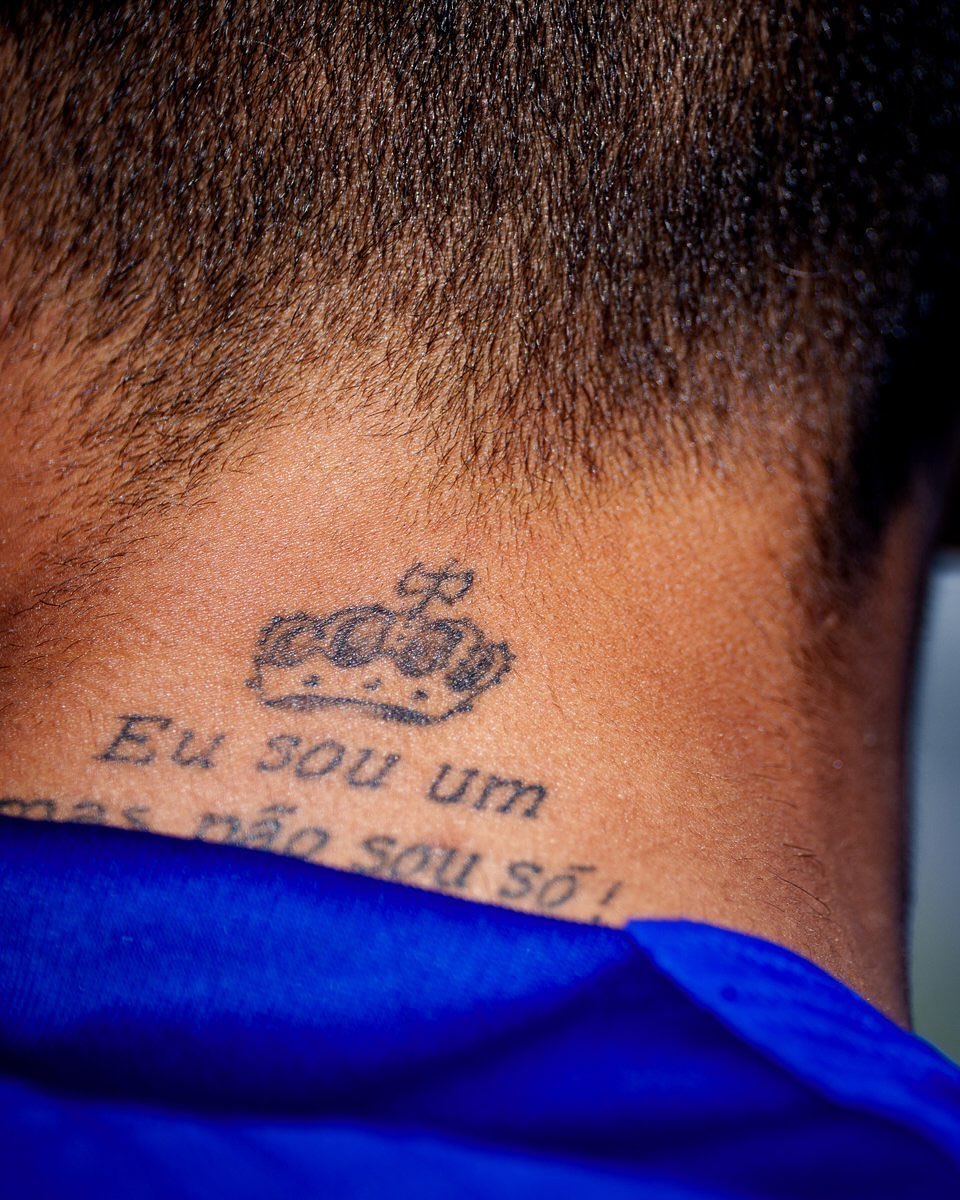
That makes Raphinha tattoos especially interesting to football fans. One neck tattoo reads “Eu sou um mas não sou só,” often translated as “I am one, but I am not alone.” Another says “me for you, you for me,” and a tattoo on his leg marks Barcelona’s 2022/23 La Liga title. He has also said a Champions League trophy could be his next major football tattoo.

The collection is easier to understand as a timeline than a checklist. Its words and symbols link his childhood in Porto Alegre with his rise through European football, his life in Barcelona and the people he keeps close.

Raphinha’s neck tattoo says he is not alone

Raphinha neck tattoo reading I am one but I am not alone

The neck tattoo that draws the most attention reads “Eu sou um mas não sou só.” The meaning is close to “I am one, but I am not alone.” It’s a short phrase with a clear point: Raphinha may take the shot or wear the captain’s armband, but he sees his career as something built with other people.

The placement makes it hard to miss. A neck tattoo isn’t hidden under a sleeve or kept for private moments; it shows when he turns, celebrates or speaks to a camera. The phrase has a public presence without feeling like a slogan. It reads more like a reminder he chose to keep close.

It also fits the way Raphinha talks about football. Even when an interview is about goals or assists, he often brings up teammates, family, coaches and others who helped him move forward. The tattoo gives that belief a permanent place.

Translations deserve a little care. Fan pages sometimes shorten or slightly alter the English wording, but the central idea stays the same: being an individual doesn’t mean being alone. That’s why the neck piece has become one of the most recognizable in his collection.

“Me for you, you for me” brings a relationship into the collection

Raphinha arm tattoo reading me for you you for me

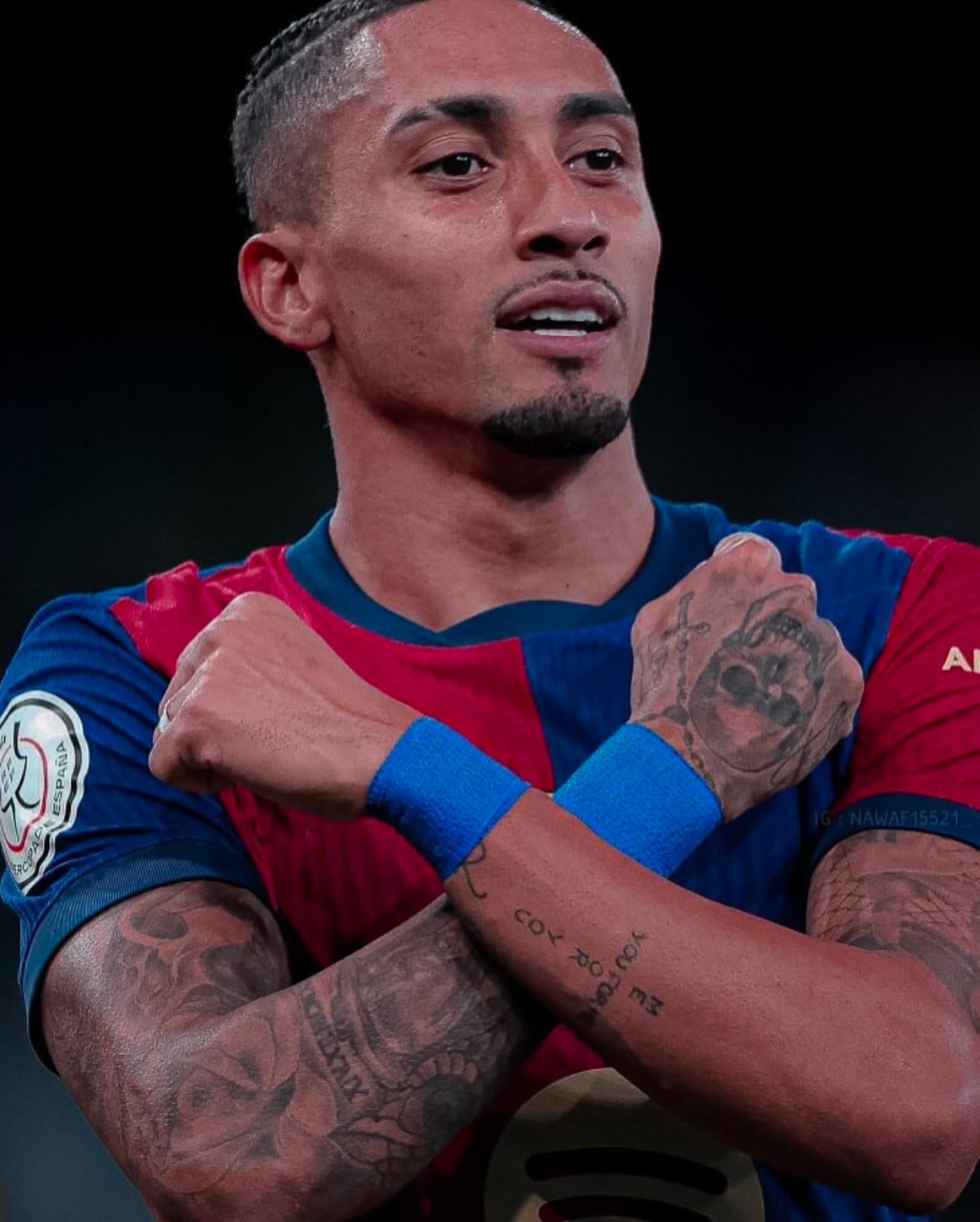
Another visible phrase on Raphinha’s arm reads “me for you, you for me.” It feels more like a personal promise than a football statistic. The words are direct, balanced and easy to remember, which helps them stand out among the larger designs around them.

Lettering can look generic when it’s separated from the wearer. Here, the phrase echoes the idea of the neck tattoo. Raphinha can be fiercely individual on the pitch, but the story around him still involves loyalty and give-and-take: someone offers support, someone returns it, and both become part of the journey.

The arm placement keeps the line in motion. It shows when he raises his hands after a goal, points toward the badge or walks through a mixed zone after a match. It’s a short sentence with a surprisingly wide audience.

The surrounding tattoos matter, too. Raphinha has enough work across his arms that no phrase sits alone. Some designs are darker and bolder, while the lettering adds a more personal note. That contrast keeps the collection from feeling like one repeated style.

If you’re considering a text tattoo, this is a good example of how a short line can do more than a paragraph. The words have rhythm, symmetry and a clear emotional point, while leaving room for the wearer’s own meaning.

His faith and mindset show up in “1% chance, 99% faith”

Raphinha tattooed arm with faith and motivational lettering

Another phrase associated with Raphinha is “1% chance, 99% faith.” It feels at home in a footballer’s collection, where careers include unexpected turns. A player may be written off, face a difficult move or enter a match as an underdog, then change the story with one performance.

The wording is about more than confidence. “1% chance” admits that the odds can be rough; “99% faith” describes how he chooses to respond. That feels more grounded than a promise that everything will work out. There’s room for doubt, but belief gets the final word.

Raphinha’s path from Porto Alegre to European football gives the phrase added weight. His rise wasn’t a straight line with every door opening immediately. He moved through different clubs and leagues before becoming an important player at Barcelona. A line about faith fits a career shaped by persistence.

It also shows how sports tattoos can work in different ways. Some players mark trophies, dates or shirt numbers; others choose words to carry into difficult moments. A motivational phrase may be less about proving something to the public and more about what a player returns to when the pressure builds.

This is where Raphinha’s tattoos feel more layered than a gallery of football symbols. They don’t only celebrate what has already happened; some seem to point toward the next challenge.

The La Liga trophy tattoo celebrates Barcelona’s title

Raphinha Barcelona and La Liga trophy tattoo image

Raphinha marked Barcelona’s 2022/23 La Liga win with a trophy tattoo on his thigh. Unlike a phrase, the trophy points directly to one achievement. It turns a season into something he can carry long after the medals and celebrations have been put away.

The choice says something about how he remembers success. Players collect photos, shirts and match balls, but a tattoo becomes part of the body. It can’t be packed away in a box or left in a cabinet. The title becomes a lasting chapter rather than a piece of memorabilia.

The thigh suits a larger design: it gives the tattoo space while still letting him cover it in a kit. That balance matters for an athlete whose working life is public.

The tattoo also links his personal story to the club’s history. Raphinha joined Barcelona in 2022, so the title came during his early period in Catalonia. Marking the win on his skin ties the team achievement to an important stage in his career.

It’s easy to assume every football tattoo is a prediction or a boast, but this one records an event that already happened and mattered to him. The achievement is clear, even if the design doesn’t spell out every detail.

The Champions League trophy could be his next major football tattoo

Raphinha tattooed arms and football themed body art

Asked about a possible future tattoo, Raphinha pointed to the Champions League trophy. It would fit the pattern of marking real career milestones. If Barcelona were to win Europe’s biggest club competition while he is there, it would sit naturally alongside the La Liga tattoo.

Wanting a trophy tattoo isn’t the same as already having one. The Champions League design is still a possibility, not a confirmed piece. That distinction matters because coverage can turn a plan into a finished fact. For now, it’s a goal he has mentioned.

If he gets it, the design would add another layer beside the La Liga trophy: one for domestic success and one for a bigger European stage. Together they could turn his leg—or another area—into a football timeline that grows with his career.

Raphinha already has enough visible ink for a new design to shift the balance of the collection. A trophy wouldn’t be a tiny afterthought; it would become something fans look for when he celebrates or shares a personal photo. The anticipation is part of the story because he has shown that career moments matter to him.

Until that tattoo exists, the accurate description is simple: the Champions League trophy is an idea he has discussed, not a finished design fans can point to.

Raphinha’s tattoos connect Brazil, Barcelona and personal memory

Raphinha visible tattoos across his neck, arms and hands

Look across the collection and movement is the main theme: from Porto Alegre to Europe, personal phrases to club trophies, and private belief to public football history. Those ideas don’t cancel one another out.

The neck phrase is about people; the arm lettering is about mutual loyalty; the faith line is about staying committed when the odds are poor; and the La Liga tattoo marks a Barcelona achievement. The possible Champions League design points toward the next ambition. Different words and images, but a coherent set of ideas.

The tattoos also read well in photos because Raphinha often wears short sleeves at training, during celebrations and on holiday. His arms stay visible, the neck lettering appears in close-up, and larger leg or back designs show in photos taken from behind or during a celebration.

That variety gives fans different ways into the collection. One person may notice the lettering first; another may focus on the trophy or dense arm work. The designs reward a closer look because different photos reveal different areas.

For more football tattoo stories, see our guide to Lionel Messi tattoos. Messi’s collection has a different visual mood, but both players use ink to keep family, faith and career milestones close.

Raphinha’s tattoos make the most sense as a timeline, not a checklist. Some designs mark what he has achieved; others keep the next goal in view. That gives the collection its personality.

The ink keeps moving because his career is still moving.

Anthony Joshua’s Tattoos: Wisdom, Africa, Team GB and New Tribute Ink

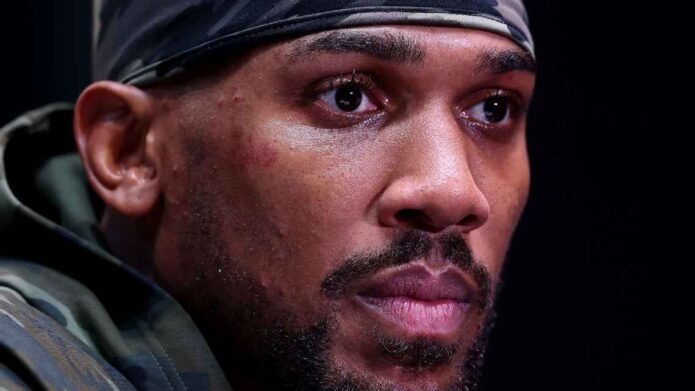
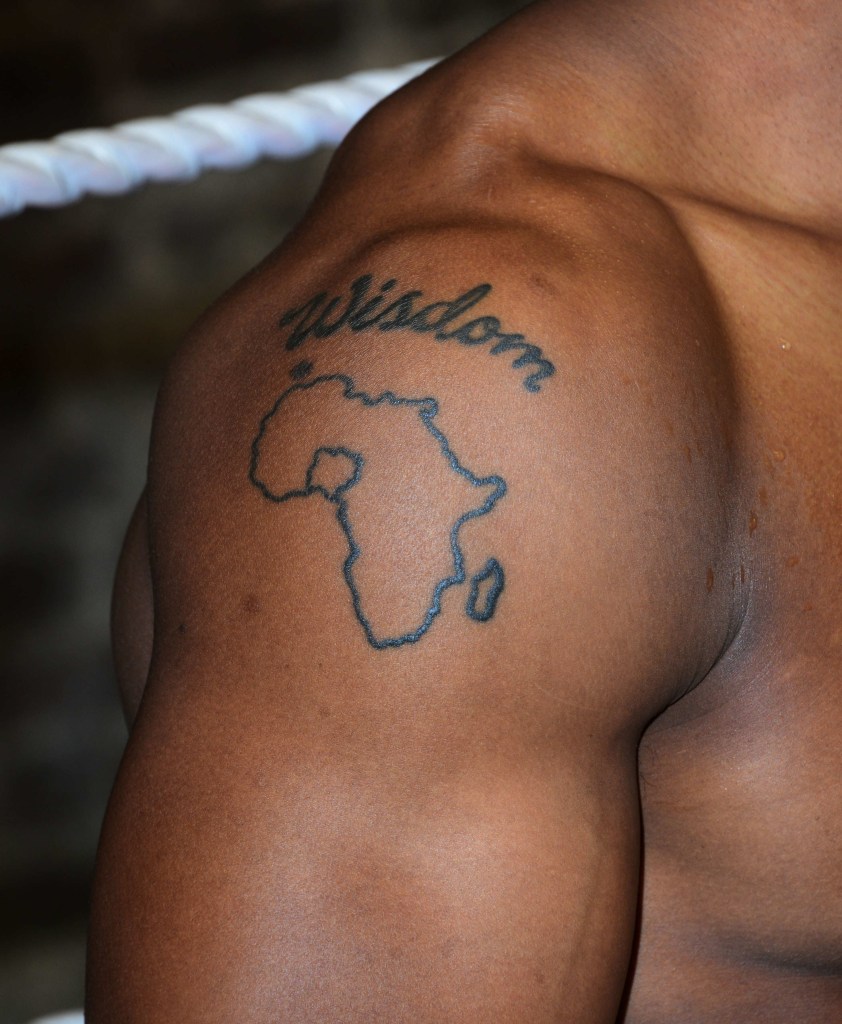
Anthony Joshua’s tattoos can disappear beneath a robe or behind a microphone. In the ring, they become part of the picture. A Team GB lion sits between his shoulder blades, “Wisdom” leads into an outline of Africa on his right shoulder, and a small hand tattoo turns an old boxing scar into artwork. Recent ink has a heavier story too: tribute lettering for two close friends who died in a car crash in Nigeria.

The collection doesn’t look like random flash designs. Its subjects follow the same threads as Joshua’s life: Nigerian family roots, Olympic ambition, a drive to keep learning and the people who helped him along the way. Here’s what is known about the best-documented tattoos, where they sit and what they mean.

Anthony Joshua’s Team GB lion tattoo

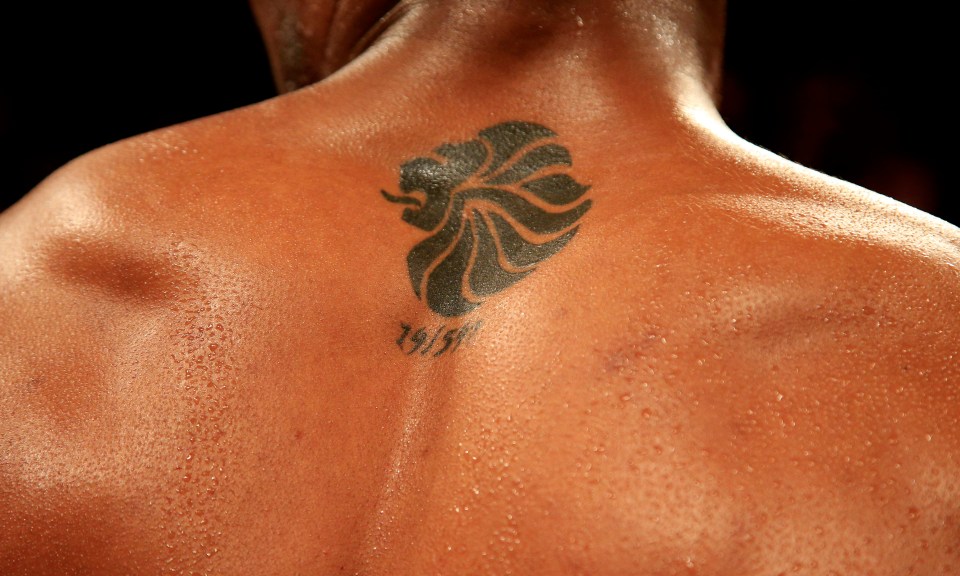
Anthony Joshua Team GB lion tattoo on his upper back

The most recognizable design is the lion emblem across the back of Joshua’s neck and upper shoulders. It’s linked to Team GB and the 2012 London Olympics, where he won super-heavyweight gold. That tournament wasn’t an easy run: in the final, he came back from a three-point deficit against Italy’s Roberto Cammarelle to win.

Joshua has described the tattoo as a reminder of that journey. It’s more than a national-team logo on a famous athlete; it marks the moment a talented amateur handled pressure on a global stage. The placement matters too. It sits high on his back, usually covered by clothes but clear when he trains shirtless or celebrates after a fight.

Many photos show the tattoo as a dark shape from far away. A closer look reveals the lion’s lines and the date beneath it, giving the design a more personal feel than a standard sports logo. It reads like a medal he carries into every training camp and comeback.

The “Wisdom” and Africa shoulder tattoos

Anthony Joshua Wisdom and Africa shoulder tattoos

Joshua’s right shoulder holds two designs that speak to his interest in learning and his heritage. The word “Wisdom” sits above a simple outline of Africa, forming one connected tattoo rather than two unrelated pieces. It’s one of the clearest examples of him bringing a personal value and family history together.

When he discussed the tattoo around his 2017 fight with Wladimir Klitschko, Joshua said he was always looking for knowledge. He linked the idea to wise characters in old Italian films and to learning from people around him. The placement fits: the word is visible in photos and training mirrors, while the map grounds the idea in the family history behind it.

His mother, Yeta Odusanya, is Nigerian, and Joshua has spoken about learning more about his family’s history as he grew older. Nigeria is marked within the outline, making the tattoo more specific than a map of the continent alone. It points to a place, a family line and a sense of belonging that he carries into his British boxing career.

The style is deliberately simple, without heavy shading or a crowded background. The words and map have space to breathe, keeping the meaning clear even in a quick ringside photo. For a boxer known for power, the shoulder design has a quiet quality.

The lion and forest tattoo on his finger

Anthony Joshua lion and forest tattoo on his middle finger

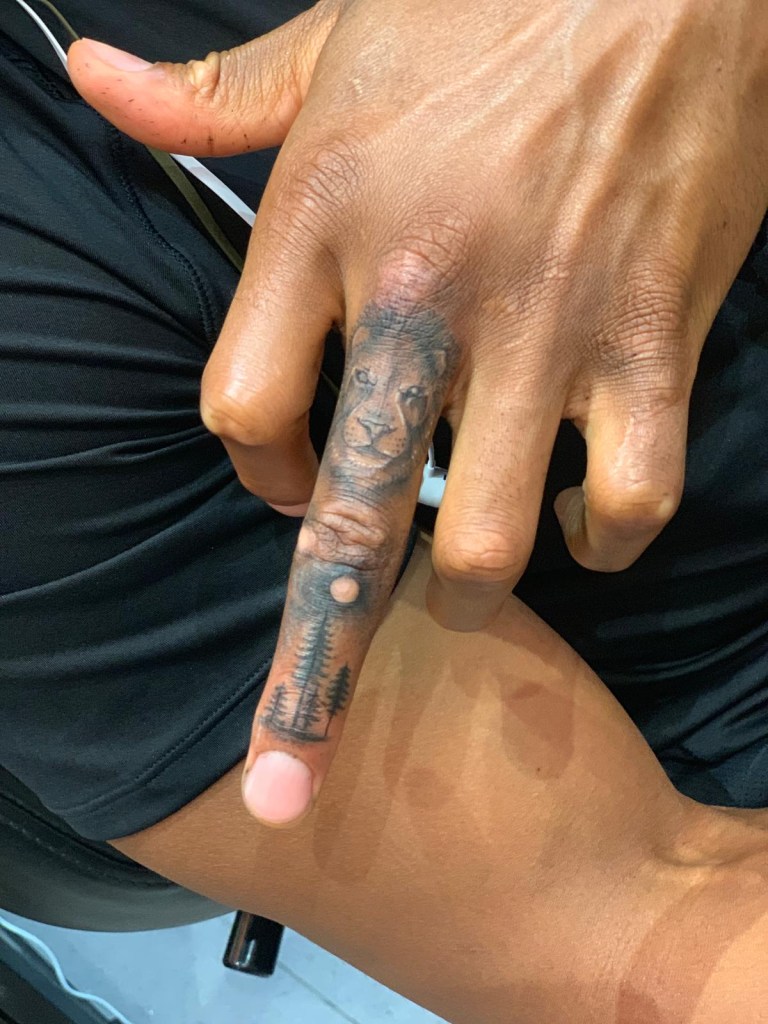
Joshua’s middle-finger tattoo is much smaller than the shoulder work, but it’s one of the collection’s most striking images. A lion’s face sits with a forest scene. He got it after his first professional loss to Andy Ruiz Jr.; the tattoo also helped cover scarring and calluses on a finger that had taken years of boxing punishment.

That history gives the design a different feeling from the Olympic lion. The Team GB piece looks back at a breakthrough. The finger tattoo came during a harder period, when Joshua was dealing with the shock of losing his heavyweight titles. Turning damaged skin into a detailed image feels like a boxer’s response: acknowledge the wear, then make something of it.

The tattoo artist has said that one callus became the moon in the design. It’s an easy detail to miss without a close-up, which is why distant fight photos don’t show the tattoo at its best. Trees frame the lion, and the small scale makes every part of the artwork work hard. It functions as both cover-up and character piece.

Joshua has also talked about possibly adding a lioness and cubs on other fingers. Whether that plan goes ahead or not, the existing tattoo hints at a larger set of images. The story could grow without changing the original design.

How the shoulder ink looks in fight photos

Anthony Joshua shoulder tattoo visible after a boxing match

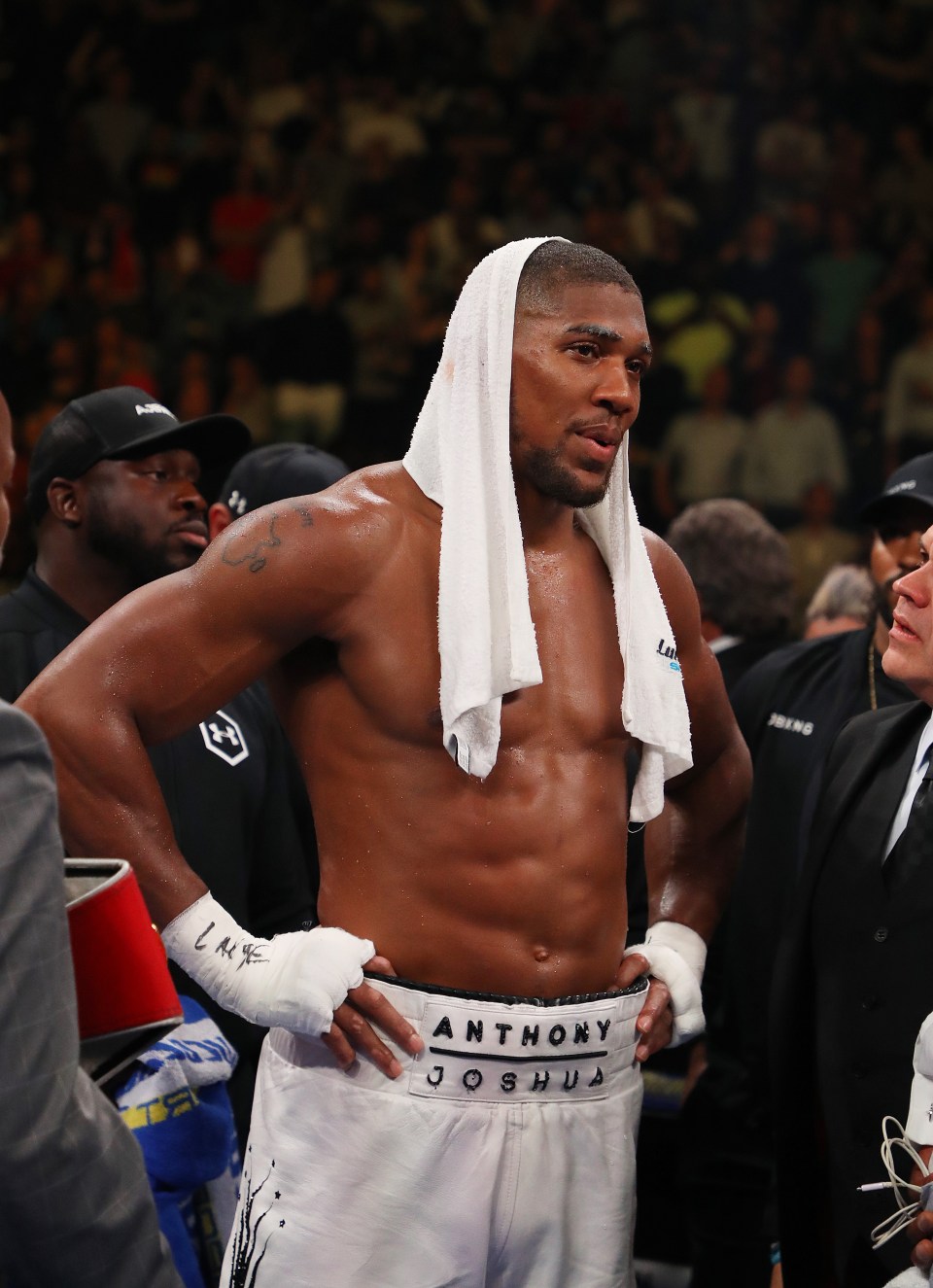
Close-up tattoo photos reveal detail, but ordinary fight photography shows how the ink looks on Joshua in motion. A post-fight image from his earlier heavyweight years catches the shoulder design in the ring, partly framed by the towel around his neck. It’s less polished, but explains why fans often catch the tattoos in passing.

The designs sit where a boxer’s movement keeps changing the view. A raised arm may reveal one part; a towel or a member of his corner can hide it seconds later. The stop-and-start visibility is part of their appeal. They show up in training, at weigh-ins, celebrations and the exhausted minutes after a fight, not only in a studio portrait.

That context keeps the tattoos connected to Joshua’s career. The lion, Africa outline and “Wisdom” aren’t separate decorations in a ringside photo. Together they point to the athlete he has tried to become: sharper, conscious of his roots and willing to learn after setbacks.

More body art and the newer tribute ink

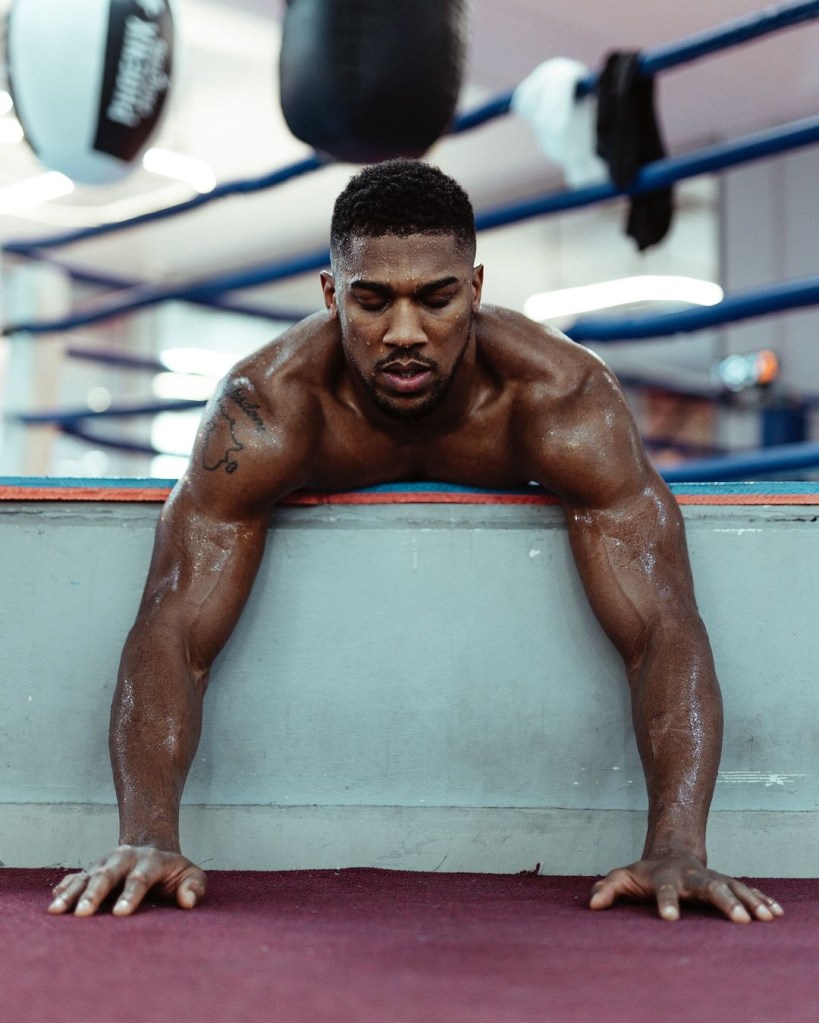
Anthony Joshua tattoos visible during boxing training

Some of Joshua’s other tattoos are harder to catalogue because photos show them from different angles. Training pictures reveal smaller marks on his arms and hands; interviews and weigh-ins show pieces usually covered in public. This isn’t one sleeve, so a good guide needs to distinguish confirmed designs from guesses based on blurry photos.

The latest documented chapter is deeply personal. In February 2026, ESPN and other sports outlets reported that Joshua had the names Latz and Sina tattooed after the two friends died in a car crash in Nigeria. The tribute changes the tone of the collection. Earlier tattoos point to achievement, education, heritage and recovery; this one is about keeping people close after loss.

That’s part of why people keep asking about Joshua’s tattoos. They’re visible on a powerful athlete, but the stories behind them are familiar: a team, a family connection, a hard lesson and friends who mattered. The ink becomes a map of his life alongside the boxing career.

A useful way to read the collection is to start with what Joshua has actually explained. The Team GB lion has a clear Olympic connection; he has discussed “Wisdom” and the Africa outline; the finger piece has a documented cover-up story; and reports describe the tribute names after the tragedy. Other marks may become clearer in future photos, but there’s no need to fill gaps with invented meanings.

Together, the tattoos form a loose timeline. The Olympic lion marks the win that made him a national sports figure. The shoulder designs represent values and heritage. The finger piece records a setback and the choice to turn scars into art. The tribute lettering carries the names of friends who remain part of his story.

That mix also works visually. The tattoos move from bold symbols to small personal details, from the back of the neck to the shoulder and down to the fingers. Some are meant to be read at a distance; others need a clear close-up. Each scale suits the memory attached to it.

For anyone looking to Joshua’s tattoos for ideas, the lesson isn’t to copy the symbols. Give a tattoo a purpose: a word can hold a value, a map can carry family history, and a lion can mark a team or turning point. Even a cover-up can preserve the memory of an injury while changing how it looks. The artwork feels personal because it has a job.

Quick answers

What is Anthony Joshua’s most famous tattoo? Many people recognize the Team GB lion on his upper back and the “Wisdom” and Africa design on his right shoulder.

What does the Africa tattoo mean? Joshua has said it reflects his Nigerian family roots and his effort to learn more about his heritage.

Why does Joshua have a tattoo on his finger? The lion and forest design helped cover scarring and calluses from boxing. He got it after his loss to Andy Ruiz Jr.

Does Anthony Joshua have tribute tattoos? Yes. Reports in 2026 said he added the names Latz and Sina, two friends who died in a car crash in Nigeria.

Anthony Joshua’s tattoos remain a work in progress, like his boxing career. The clearest pieces already tell a story, and new photos may reveal more over time. For now, the confirmed designs show a lion for Team GB, wisdom and Africa for learning and family, a forested lion for scars and recovery, and names for friends he refuses to forget.

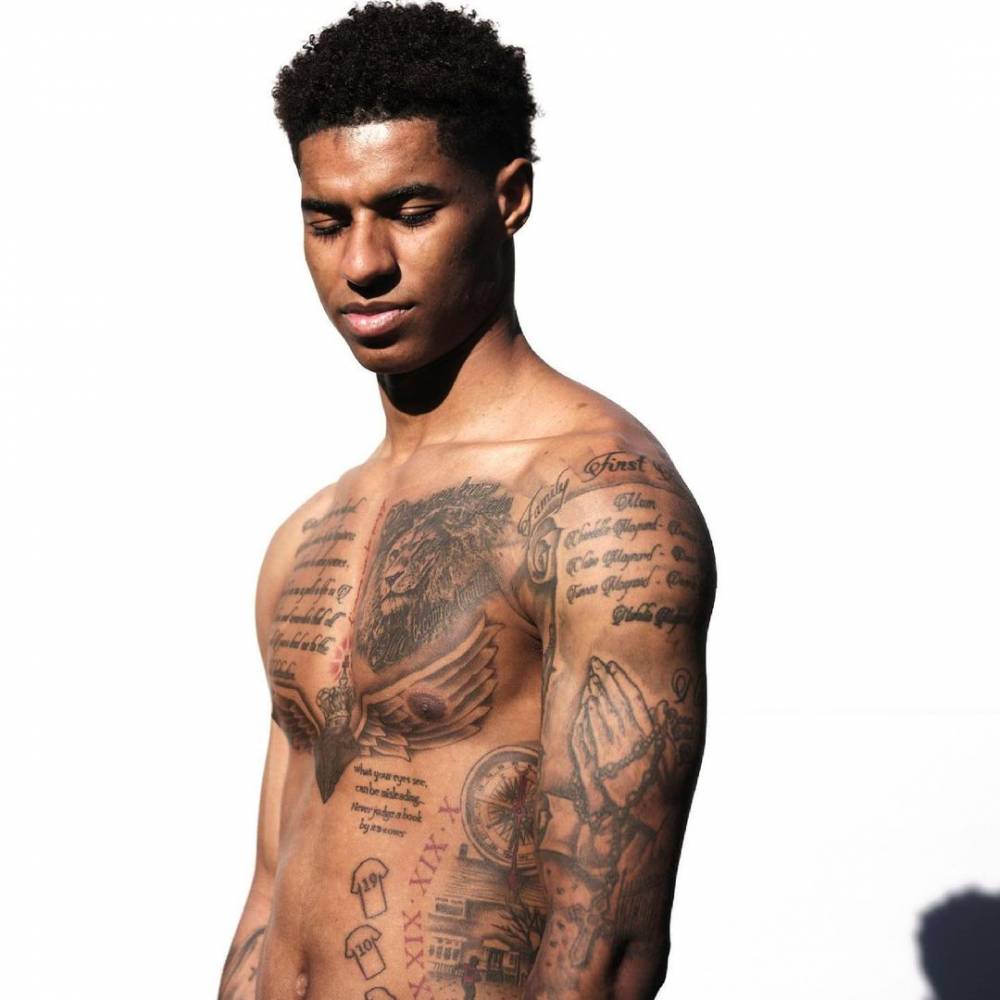
Marcus Rashford Tattoos: Family, Football and the Ink Behind His Story

Marcus Rashford’s tattoos form a visual diary of where he’s come from. The Manchester United forward has used ink to mark family memories, football milestones, faith and people whose words shaped him. Some designs show in match photos; others appear only when he trains shirtless or poses for a campaign.

That range makes the collection more than a string of football numbers or a sleeve from a catalogue. Old shirt numbers sit alongside a dramatic chest lion, script, portraits and symbols connected to his roots. Photos also show the ink changing as his career moves through new clubs, challenges and chapters.

Not every detail has been explained by Rashford, so it helps to distinguish what’s visible from what’s only repeated online. His own photos, tattoo-focused interviews and clear images offer the strongest clues. Here’s what can be documented.

The boyhood football scene on Marcus Rashford’s side

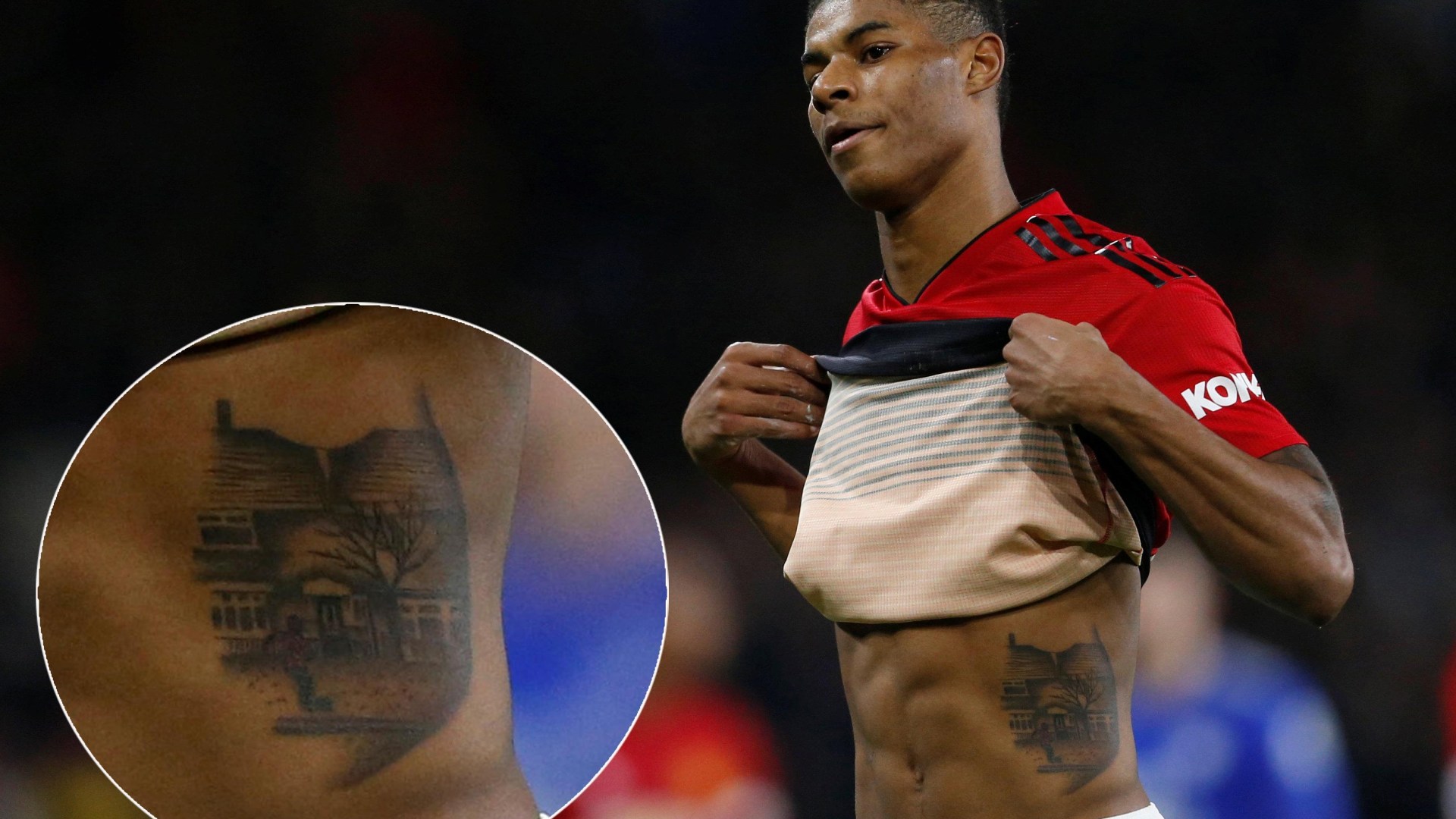
Marcus Rashford boyhood football tattoo

One of the most personal designs is the football scene on Rashford’s side. It shows a young boy with a ball in front of a row of houses and a familiar neighborhood. Rather than a generic football badge or pair of boots, it points back to the child who dreamed of playing and the place that made the dream real.

The torso placement lets the image stay covered beneath a shirt or appear when Rashford lifts his top. That feels right for a piece about memory. It isn’t there just for cameras; it looks back to the starting point, before the stadiums, contracts and international nights.

Photos from when the tattoo was first discussed show a detailed scene rather than a tiny flash design. The houses, the boy and the ball come together as one story. It offers a useful way into the rest of his ink: football is present, but the meaning is tied to people and place rather than team branding.

The chest script and lion carry most of the emotional weight

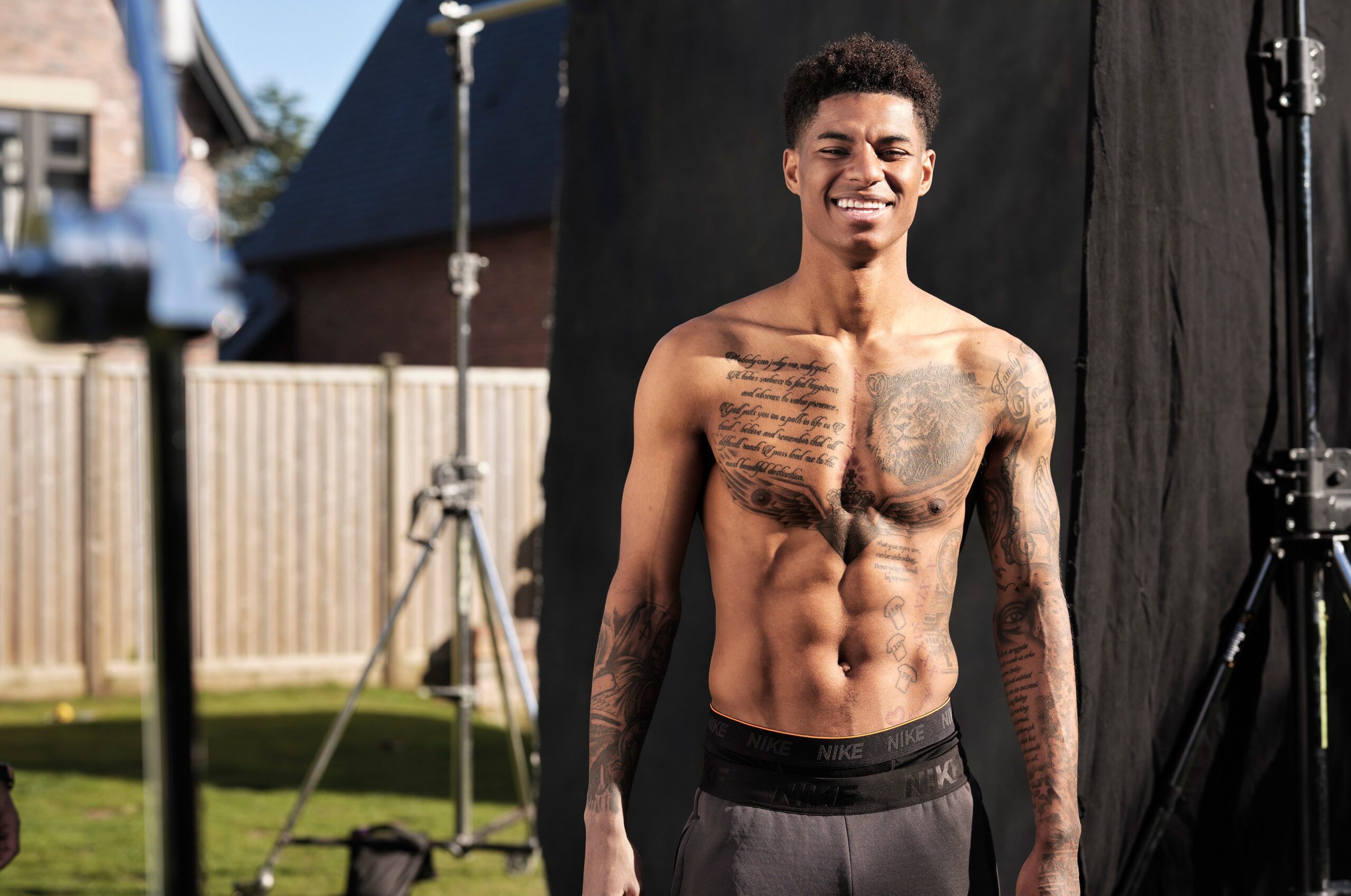
Marcus Rashford chest lion and script tattoos

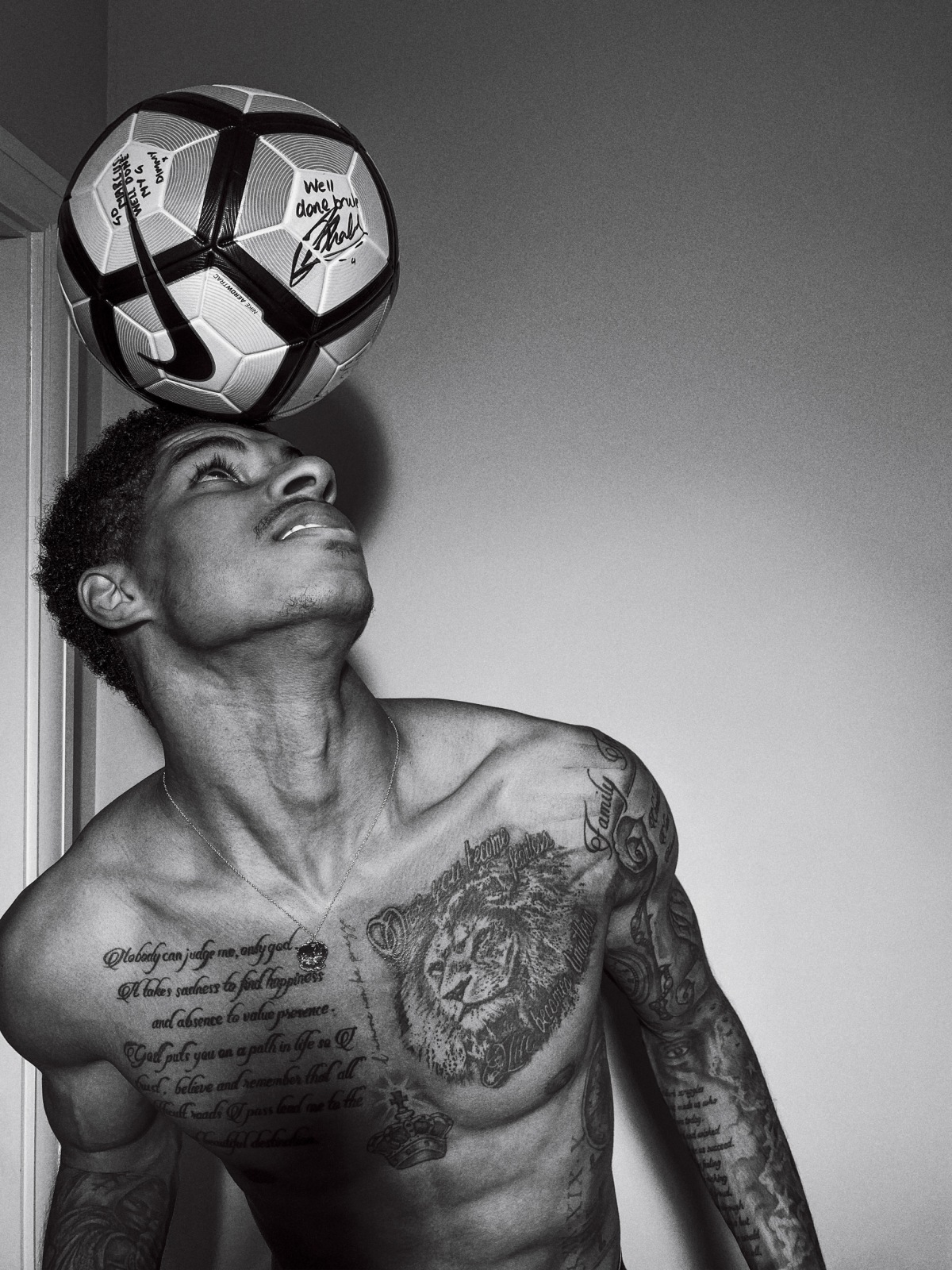
Two tattoos define much of Rashford’s chest. A large lion portrait sits on one side, with flowing script across the other. In clear photos, shading and ornamental details give the lion an old-school portrait feel without making it look flat or cartoonish.

The script appears to describe hardship, faith and continuing forward. Different articles transcribe parts of it slightly differently, so it’s best not to present every word as a definitive quote. The main idea is clear: difficult periods, belief and hope for a better place ahead. That gives the chest design the feel of a personal creed rather than decoration.

The lion dominates in photographs and sits beside the writing instead of replacing it. Together, the animal and script balance strength with reflection: the image suggests confidence, while the words offer some of the mindset behind it.

A Men’s Health interview showed the scale of this work more clearly. The ink spreads beyond one isolated symbol, with smaller details around the main designs. A tight crop of only the lion can be misleading: it anchors the chest piece, but the script and surrounding marks belong to the same composition.

His Manchester United shirt numbers are tattooed as career markers

Marcus Rashford Manchester United shirt number tattoos

Rashford has also turned his Manchester United shirt history into body art. Small shirt-shaped tattoos on his lower torso mark numbers from different Old Trafford chapters. Earlier photos show 39, 19 and 10—the numbers he wore before becoming one of the club’s senior players.

The idea is simple, but the shirts work like a timeline. Squad numbers usually disappear when a season ends; these designs keep each stage visible. They recall the academy player, the teenager who reached the first team and the forward who became a major attacking figure for United.

More recent reports connect the same design to number 14 from his Barcelona loan and number 9 on his later return to Manchester United. That suggests the tattoo has continued to grow with his career. The numbers aren’t just collectibles; they mark the places and chapters attached to them.

Their placement helps explain why fans miss them. A football shirt hides the whole group, and in training photos shorts or camera angles may cover part of it. When visible, the small jersey outlines make the idea clear: they’re like little football shirts within a larger collection of personal symbols.

Script, prayer and family details run down his arms

Marcus Rashford script and chest tattoos

The chest work gets most of the attention, but Rashford’s arms carry quieter designs too. Shirtless photos show writing across his upper body, small symbols near the ribs and layered black-and-gray work down his arms. Prayer imagery and other details have been linked in coverage to family, faith and the people close to him.

It’s tempting to turn every small mark into a dramatic theory, but the photos don’t always support that. Some designs are too blurred to read; others disappear beneath clothing or movement. The safest conclusion is that his arms have several smaller pieces rather than one clean sleeve with a single public explanation.

That fits with the chest tattoos. Script holds the words he wants to carry, while portraits and symbols add visual weight. The result is busy without being random: open gaps separate the pieces, and darker shading tends to frame the writing rather than swallow it.

The collection can look different from one photo to the next. A match image might show a dark forearm that seems like one solid block. A closer portrait reveals separate letters, figures and lines. His tattoos reward a careful look instead of a quick glance.

The lion and script connect football success with personal influences

Marcus Rashford chest lion and script tattoos alternate view

Clear, front-facing photos show the chest tattoos working as a group. The lion, long passage of script and smaller marks add up to something larger than any one symbol: a statement about strength, belief and the people or ideas that have helped Rashford keep going.

Coverage of his wider body art also mentions tributes to Nelson Mandela, Malcolm X, Muhammad Ali and Bob Marley. Not every portrait is equally clear in every photo, and some online lists mix confirmed designs with guesses. The broader theme is easier to see: his ink is often linked to courage, social change and self-belief, not only football.

The references to 1968 in tattoo coverage fit that same context. The year is widely associated with Black history and civil rights conversations, alongside the names and messages connected with Rashford’s public work. Even when an individual mark is hard to read, the larger pattern comes through in the chest design: identity matters as much as appearance.

Compare this with another player’s collection, like the large back piece and family ink in our Leroy Sané tattoos guide. Rashford’s designs are less about one giant scene and more about separate memories sitting together.

New additions are best understood as updates to an ongoing record. A change in shirt number can bring a new number tattoo; a move to another club can add a reference. That’s different from completing one sleeve and never returning to it.

There’s a practical point here as well. Older tattoos show up in different light, from different angles and sometimes in low-resolution social posts. A newer image may simply be clearer; it doesn’t always mean the tattoo is new. A careful account shouldn’t count the same design twice because it appears in a different crop.

The through line is easy to see. The boyhood football scene points back to Rashford’s beginnings. The lion and script speak to strength, faith and difficult periods. The shirt numbers mark his development at United. Portraits and historical references show the people and ideas he wants to keep close.

That’s why the collection is more interesting than a simple list. It keeps Rashford’s roots visible as his public life grows. The tattoos may keep changing; the best way to follow them is through clear, dated photos and confirmed reporting rather than treating every social media crop as another design.

Watch a short visual guide to Marcus Rashford’s tattoos

For a quick look at the designs and their football connections, watch the relevant video below.
Kevin Durant Tattoos: Tupac, Rick James and His Biblical Back Piece

Kevin Durant’s tattoos cover his chest, back, legs and arms, with designs tied to faith, family, music and basketball. Some are easy to spot during a game; others appear in photos away from the court.

The collection has grown over time, so it brings together different styles rather than one matching design. The best-known pieces include a large religious back tattoo and portraits of Tupac and Rick James on his legs. Smaller marks and lettering fill the spaces between them.

Here is a guide to the tattoos that have been documented, while keeping the less certain details in perspective.

The huge biblical back tattoo is the centrepiece

Kevin Durant biblical back tattoo

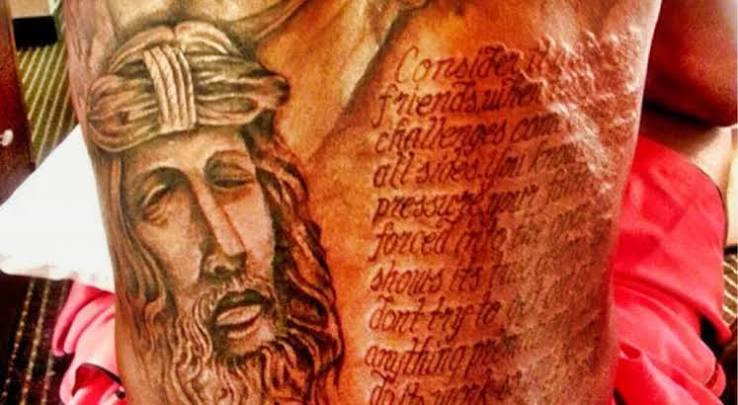
The largest piece in Durant’s collection is a biblical scene across his back, with a prominent religious figure, wings and a long section of script. The design reads as one image from a distance, while the smaller details are easier to see up close.

Its size gives the tattoo real presence. Depending on the angle and light, the portrait or lettering may stand out first. Reports have also pointed out a misspelling in part of the text, which drew attention beyond basketball coverage.

The back piece fits with the importance Durant has given to faith and family. It is bold, but its place in the collection goes beyond appearance.

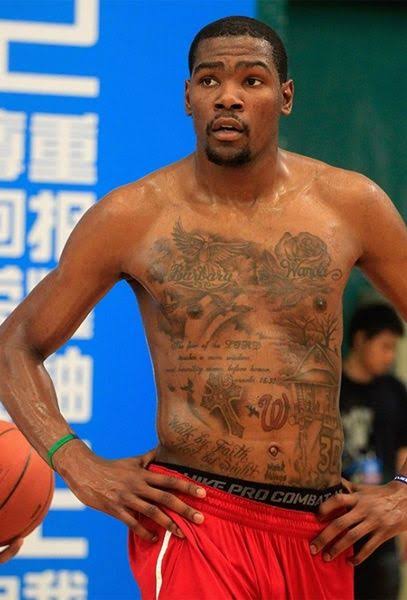
His chest ink mixes words, numbers and smaller symbols

Kevin Durant chest tattoos

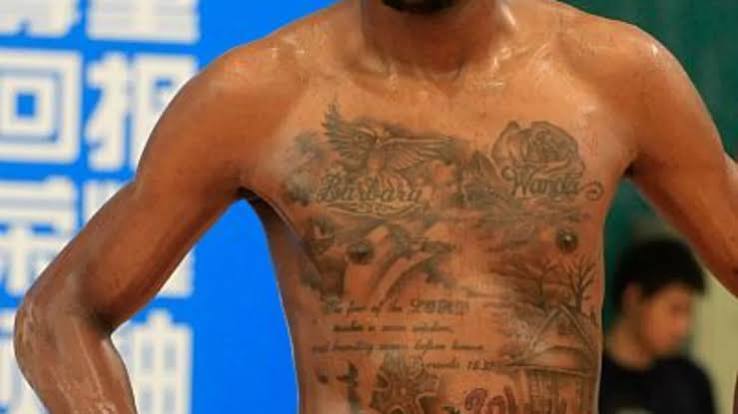
Durant’s chest has lettering, numbers and smaller symbols placed alongside one another. The result feels layered: rather than one large image, separate designs fill the area.

Number references appear across his collection, including the jersey number that became part of his identity in basketball. Some of the chest lettering is difficult to read in a game photo, so closer images show more detail.

There are religious elements around the chest and stomach too. The tattoos were added over time, and not every small mark has a public explanation. Photos can also make the work look different as clothing, sweat, shadows and camera quality obscure the finer lines.

The Tupac tattoo puts music on his leg

Kevin Durant Tupac tattoo on his leg

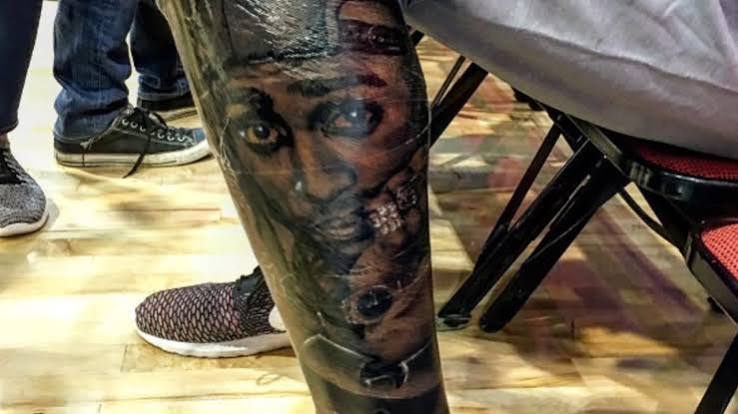
The portrait of Tupac Shakur on Durant’s leg is one of his best-known tattoos outside basketball. It is a detailed portrait rather than a small reference, and it is easy to see when he wears shorts.

The tattoo has appeared in GQ, sports coverage and tattoo features. The shading gives the portrait depth and makes it feel like a tribute rather than a quick likeness.

Durant has spoken about his connection to hip-hop, and the tattoo brings that interest into view. The placement also gives him some choice over when it shows: it is usually covered during games, but appears in off-court photos and interviews.

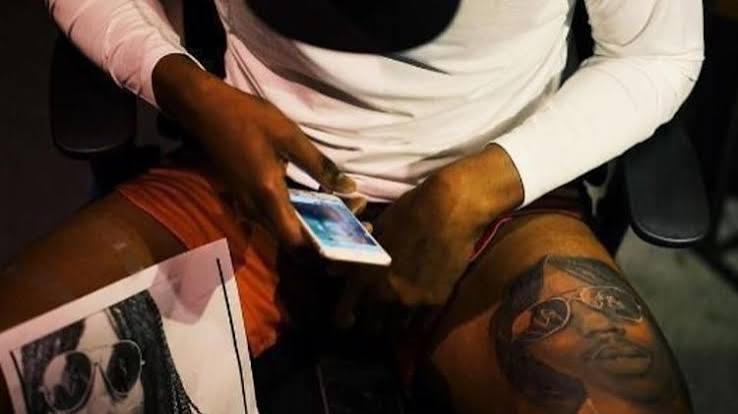
Rick James gives the other leg a completely different feel

Kevin Durant Rick James tattoo on his leg

Durant’s Rick James portrait adds another music reference to the collection. It has a different feel from Tupac’s image and points to funk and soul.

The portrait is large, with the face at the centre. Photos show detailed shading in the hair and features, much like the Tupac tattoo.

Durant has described the two portraits as connected to his taste in music. Together, they show influences that are separate from his career in basketball. Both are realistic, prominent pieces, giving his legs a story of their own.

The hidden torso ink fills in the spaces around the main pieces

Kevin Durant hidden torso tattoos

Alongside the better-known pieces, Durant has smaller tattoos across his torso and sides. They are easiest to spot when he lifts his jersey or in older photos from his early NBA years.

Some sit between the larger designs; others use lettering or small images. The collection includes references to faith, music and his personal background, though not every mark has been explained publicly. A tattoo can matter to its wearer without becoming a story for the press.

Much of this work stays covered by a jersey or shorts during games. That is why interviews, training photos and off-court images reveal more of the collection than a standard game photo.

The smaller torso designs connect the larger pieces. Alongside the back scene and leg portraits, they make the collection more than just a few headline tattoos.

What Kevin Durant’s tattoos say about his style

Durant’s collection combines realistic portraits, religious imagery, script, numbers and smaller symbols. The styles do not all match, but they reflect different parts of his life rather than a single planned theme.

Faith, family, music and basketball recur throughout the collection. The large back piece carries the religious imagery; the chest and torso have words and other personal marks; Tupac and Rick James represent music; basketball remains part of the wider story.

Reports of the misspelling in the back tattoo became part of the conversation too. The detail did not erase the care in the rest of the design, but it gave fans another reason to look closely.

The collection has grown like a personal record rather than a finished catalogue. Some meanings are public and others remain private. The larger tattoos draw attention, while smaller numbers, script and symbols reward a closer look.

Together, the back piece, music portraits and torso tattoos show interests that do not always come through in game highlights.

Watch Kevin Durant explain the Tupac tattoo

https://www.youtube.com/watch?v=qw7Z-chVAt4

Allen Iverson tattoos: the stories behind his fearless ink

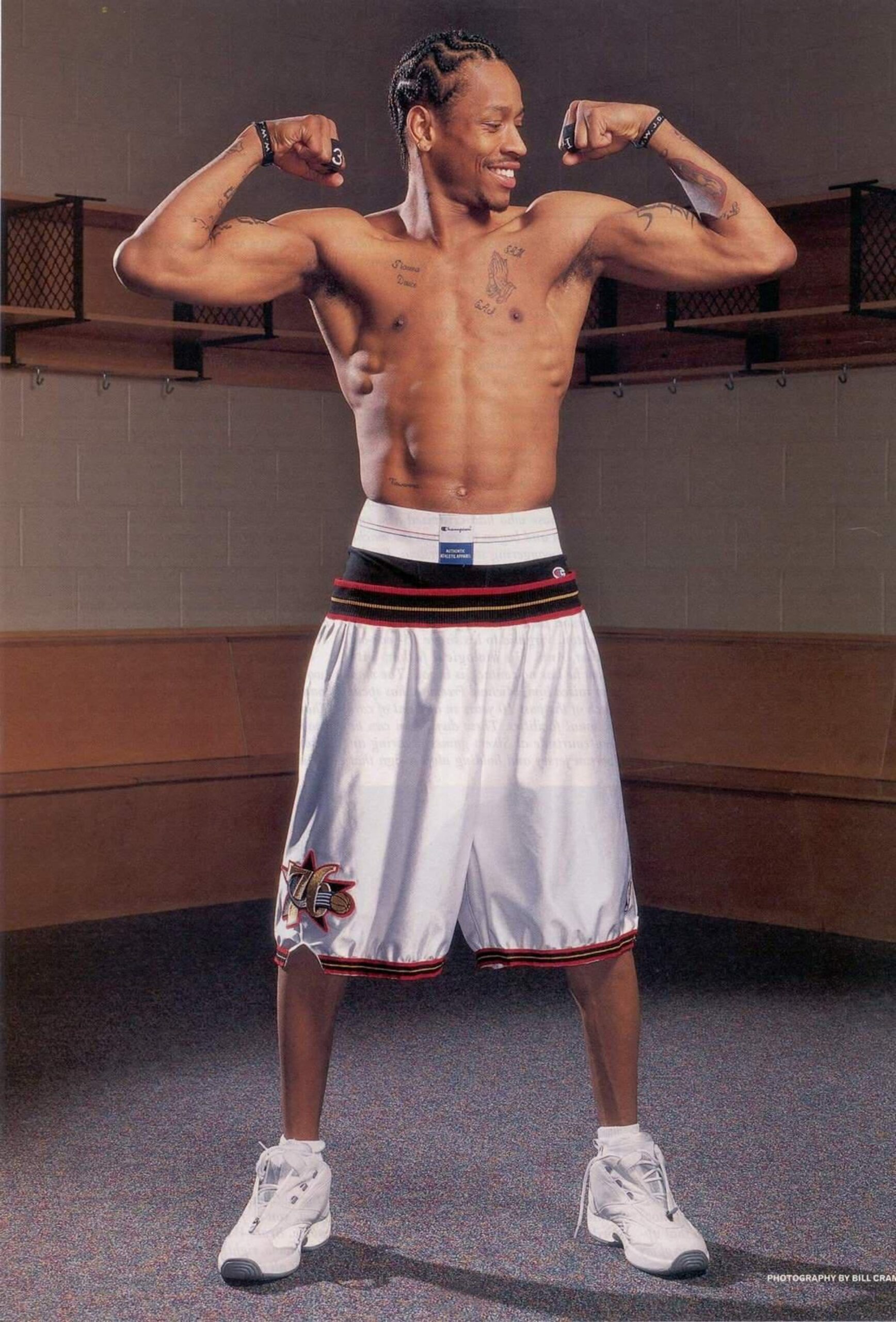
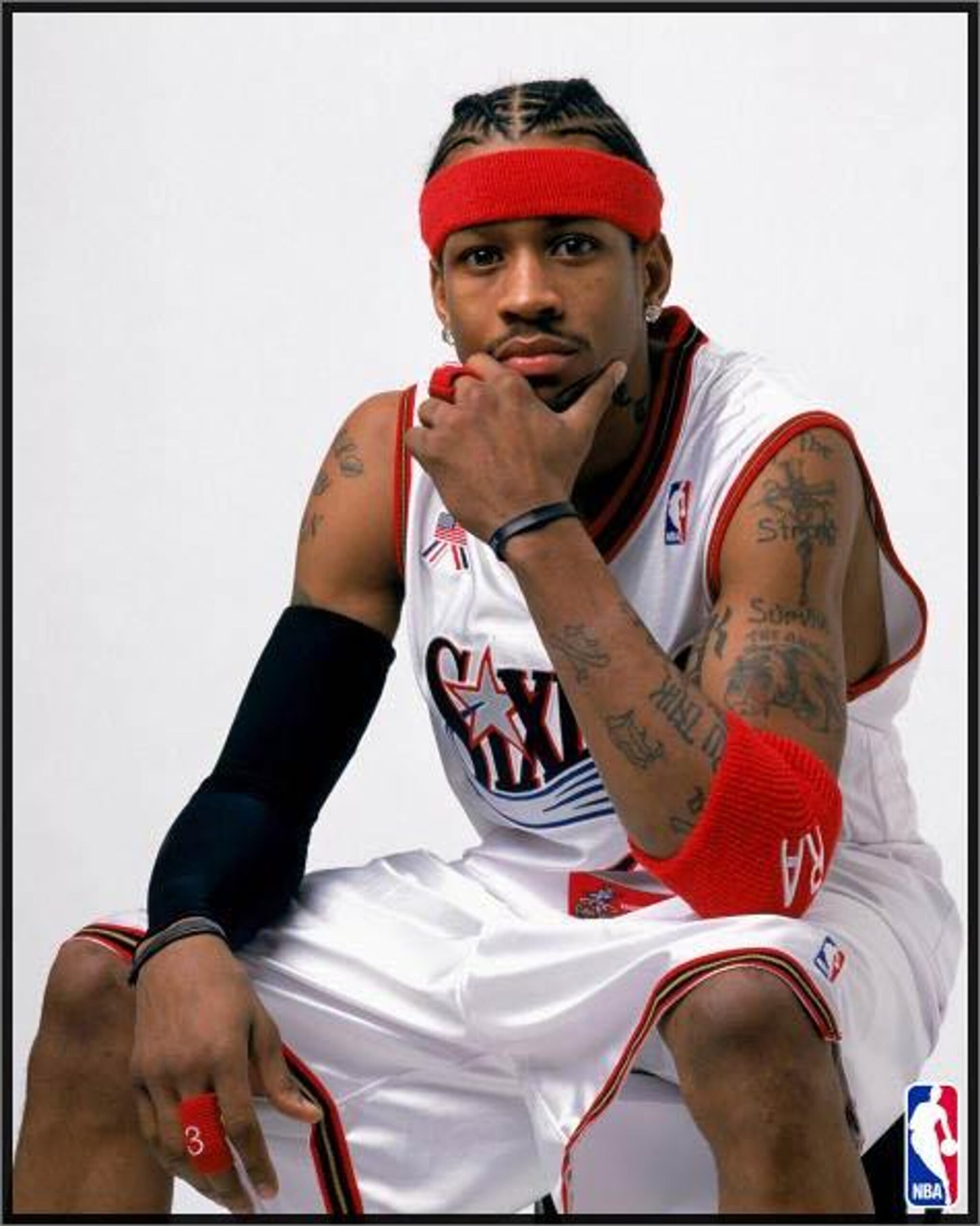
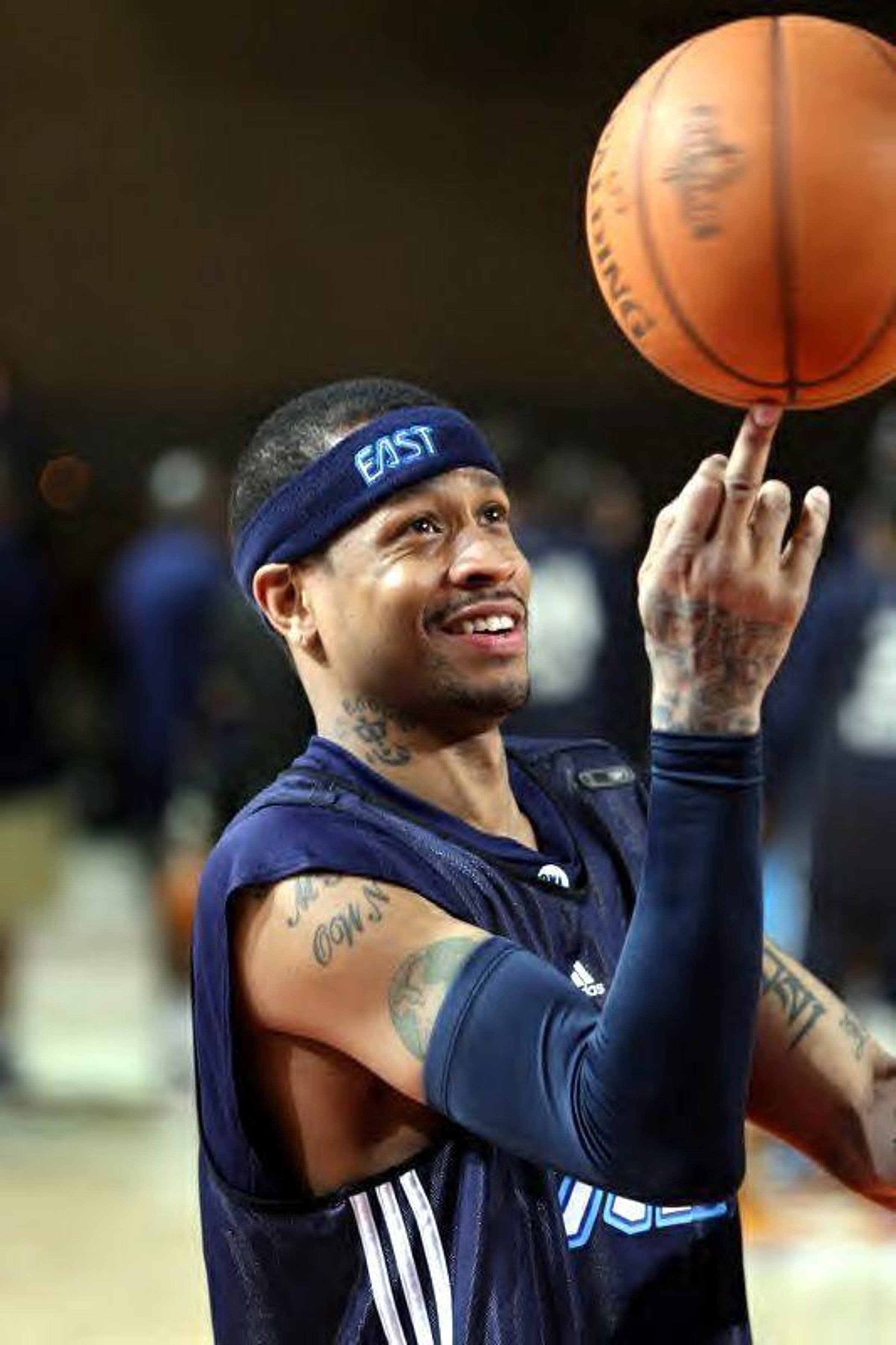
Allen Iverson’s tattoos were never just decoration. They became part of the same look as his cornrows, headband and loose fit, and they matched the fearless way he played. His ink gave people a sense of where he came from before he said a word, and became part of the image that set him apart in the NBA.

Iverson has more than 20 tattoos. Many connect to family, friends, faith, survival, or the people and places that shaped him. Some are always visible; others show only when he takes off a jersey or turns his head toward a camera. The pieces below have the clearest stories, with a few notes on designs whose meanings are harder to pin down.

“Fear No One” on his left arm

Allen Iverson Fear No One tattoo

The words “Fear No One” sit on Iverson’s left arm. They fit his public image: one of the smallest stars on the court, he played as if no defender could intimidate him. The phrase reads like a personal rule, not a slogan added for the cameras.

His tattoos weren’t only about looking tough. “Fear No One” can also be read alongside the pressure he faced as a young guard, the criticism of his style and the expectation that he prove his size wouldn’t limit his game. It’s a short, direct message, much like the way Iverson played.

The lettering can blend into the other tattoos on his arm in photographs. Once you know it’s there, though, it’s one of the clearest pieces in the collection.

“Only the Strong Survive” and the cross of daggers

Allen Iverson Only the Strong Survive tattoo

Iverson has “Only the Strong Survive” on his left shoulder, alongside a cross made from daggers. He has spoken about this design and called the phrase the one true thing he learned in life. That gives the words a more personal meaning than a general motivational slogan.

The message fits the career fans watched. Iverson took hard fouls, heard constant questions about his height and faced doubts about whether his style could lead a team. He kept coming back. The cross and daggers add a tougher look, but the phrase is about enduring what’s meant to stop you.

Reebok later used the words in Iverson campaigns and on special releases, bringing the tattoo into his wider visual identity. But it began as Iverson’s own belief, not as a brand line borrowed for a shoe.

“RA Boogie” keeps Rashaan’s memory close

Allen Iverson RA Boogie neck tattoo

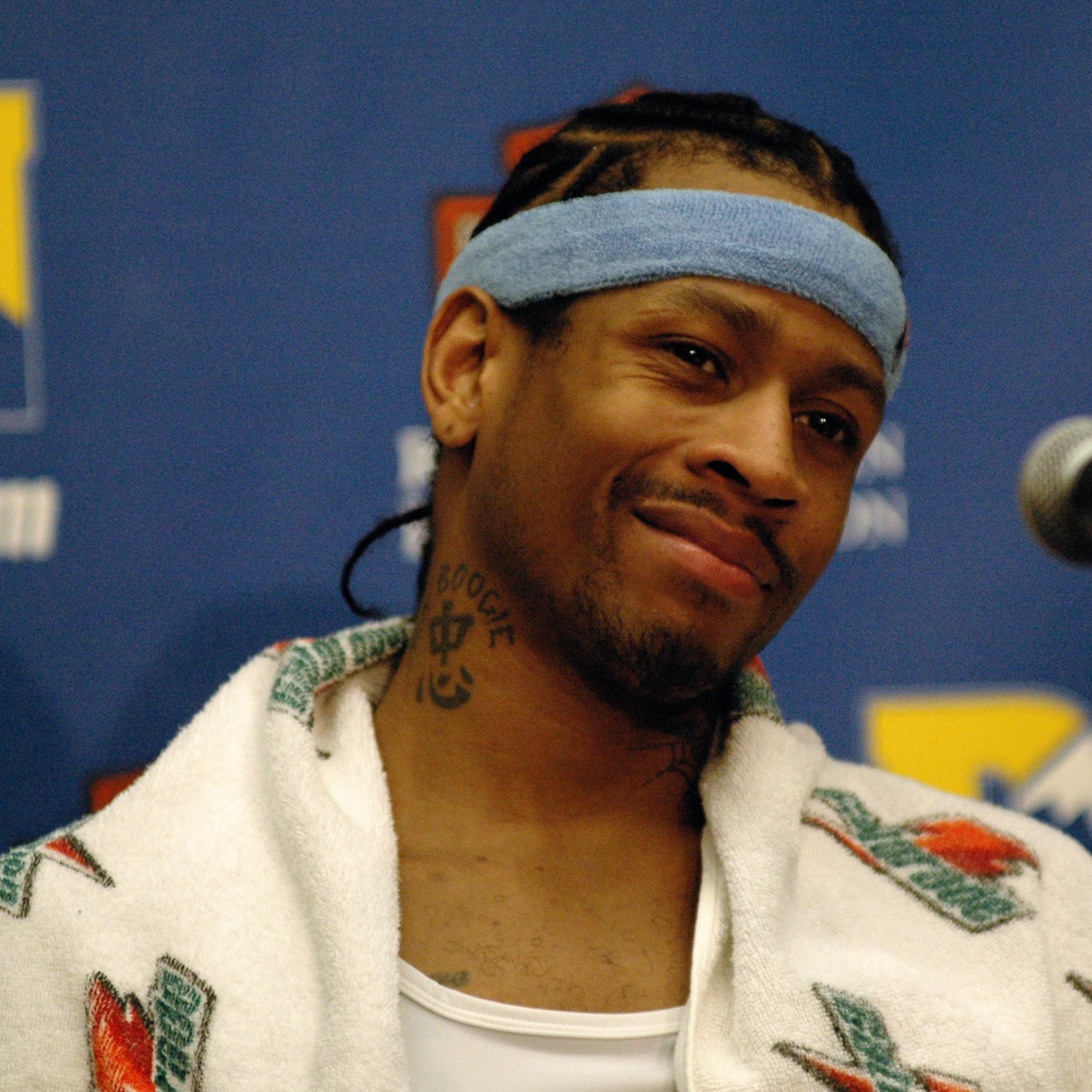
The words “RA Boogie” on the left side of Iverson’s neck honor his childhood friend Rashaan. Reports say Rashaan was shot and killed. The tattoo keeps someone from Iverson’s life before the NBA close to him.

A neck tattoo is hard to hide, and Iverson wears this one in plain view. It’s a name he chose to carry with him. Some of his ink is about style, but this piece is about memory and loyalty.

The lettering can look soft in older photos, especially when Iverson turns his head, but the placement is clear. It sits beside his other neck designs and gives that part of the collection a personal center. “RA Boogie” is one of the clearest examples of Iverson marking where he came from.

His mother’s and grandmother’s initials with praying hands

Allen Iverson mother and grandmother initials tattoos

Iverson has his mother’s and grandmother’s initials on his chest, near a praying-hands design. The placement puts family close to the center of his collection. The initials are a reminder of the women who were important to him before the trophies and magazine covers.

The praying hands add faith and gratitude to the piece without making it feel formal. Much of Iverson’s ink uses bold lettering and heavier imagery; this chest tattoo brings a gentler note to the same story.

It’s easiest to see in shirtless photos or portraits with his chest uncovered. A jersey hides it, which is why casual fans may know his arm tattoos better. Still, it’s one of the important pieces for understanding what family means in his collection.

“Hold My Own” is a personal motto

Allen Iverson Hold My Own tattoo

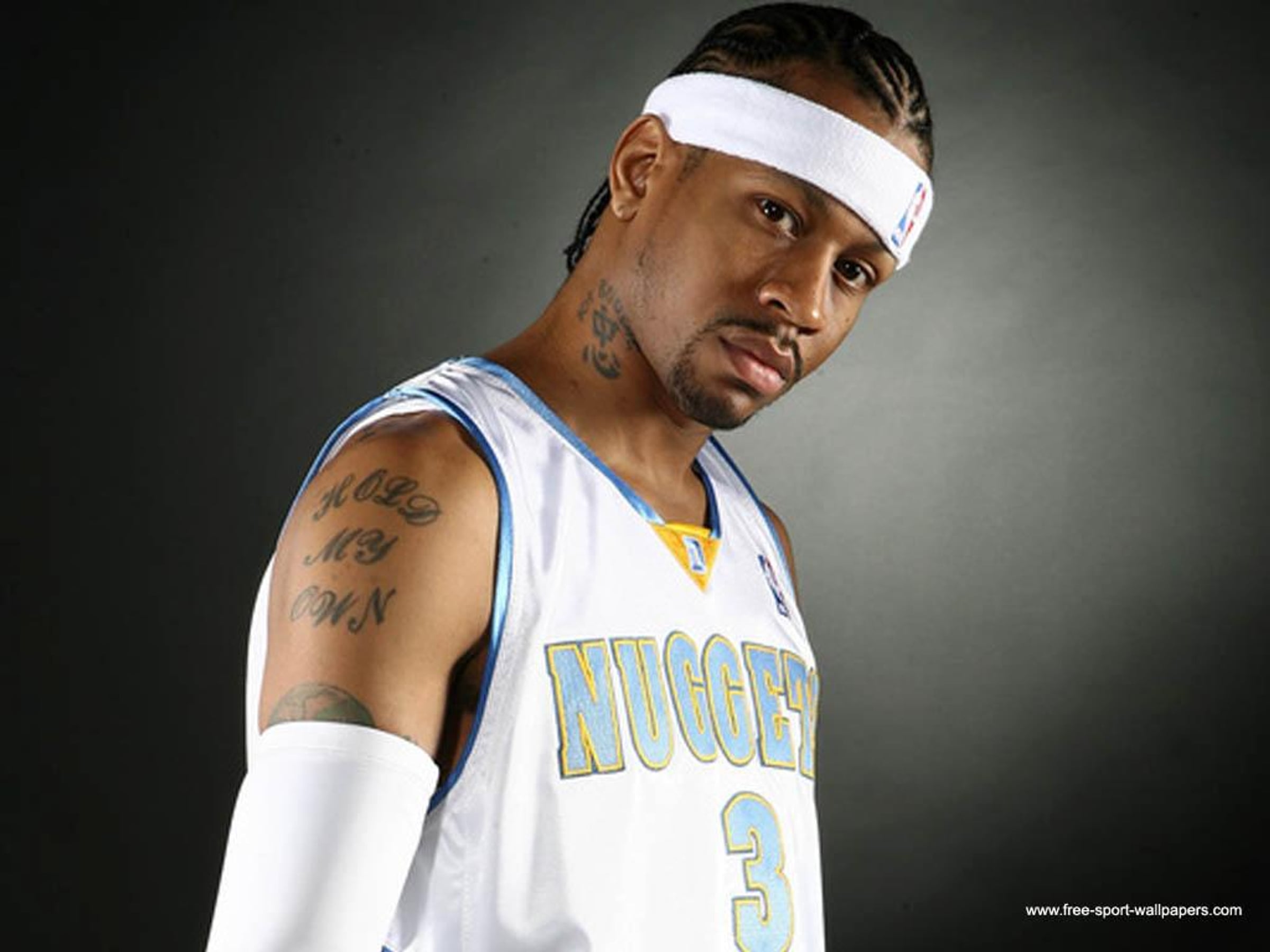
“Hold My Own” is written across Iverson’s right shoulder. The phrase speaks to independence and fits the player fans watched. He didn’t wait for permission, and he resisted attempts to fit him into a safer image.

It can mean standing up for yourself, taking care of your responsibilities or staying with your own choices when people disagree. All three readings fit his career, which he built by making room where others saw limits.

The tattoo is mostly lettering, so it can be easy to miss next to larger designs. It’s a short statement with plenty of context behind it. “Hold My Own” says Iverson’s identity was his to define.

The Georgetown bulldog and “The Answer”

Allen Iverson bulldog and The Answer tattoos

Two familiar tattoos on Iverson’s arm point back to Georgetown: a bulldog, the school’s mascot, and the nickname “The Answer.” The bulldog connects him to the college program that helped launch his career. “The Answer” became the name people used throughout his NBA years.

The nickname was more than a marketing label. Iverson played with the confidence to take on the defense in front of him, even when the whole team was trying to stop him. Having it inked made the name part of his identity.

The bulldog carries a different kind of connection: it points to a school and a team. The two designs put college, nickname and professional life in the same visual space.

This arm also shows how his collection grew. Older tattoos sit beside newer ones, and some lines have softened over time. They give the sleeve a lived-in look that fits the story behind it.

The Chinese symbol for loyalty

Allen Iverson Loyalty tattoo

Iverson has a Chinese character for loyalty on his neck. The meaning fits with other tattoos in his collection, including his family initials and the tribute to Rashaan. Here, loyalty connects to people who stayed close and places that shaped him.

The character is easy to miss among the other neck tattoos. In close-up photos, it sits beside the “RA Boogie” tribute and other lettering. Together, they make his neck ink read like a set of promises.

There’s plenty of bold language in Iverson’s collection, but this piece is quieter. It’s less about fearlessness or proving a point and more about the people he remembers. That gives the tattoo a different feel from some of his tougher phrases.

What the rest of Allen Iverson’s ink says about him

Allen Iverson Fame tattoo

Ranker’s gallery lists around 20 Iverson tattoos, including “FAME,” a skull soldier, a black panther and other lettering linked to his crew, CRU THIK. Not every design has a detailed public explanation, so it’s better to leave those meanings open than guess.

A pattern does emerge: family, friendship, survival, faith and basketball identity come up again and again. Even the tougher-looking designs connect to parts of his life. The ink feels personal before it feels theatrical.

That helps explain why the NBA’s discomfort with tattoos became part of Iverson’s story. His body art came with the same directness as his clothes and voice. He didn’t soften it for a boardroom; he wore it as his own.

If you like comparing NBA ink, take a look at Jordan Clarkson’s tattoos. Clarkson’s collection has a different feel, but both players use tattoos to hold memories, influences and identity together.

Iverson’s tattoos still stand out because they feel tied to the person fans remember. Some are rough around the edges or hard to read, and their references make more sense once you know the story. The collection doesn’t look designed to be perfect. It looks gathered over the years Iverson was becoming himself.

Watch Allen Iverson discuss the “Only the Strong Survive” tattoo

Leroy Sané’s tattoos: the huge back piece he regrets and the family ink he keeps

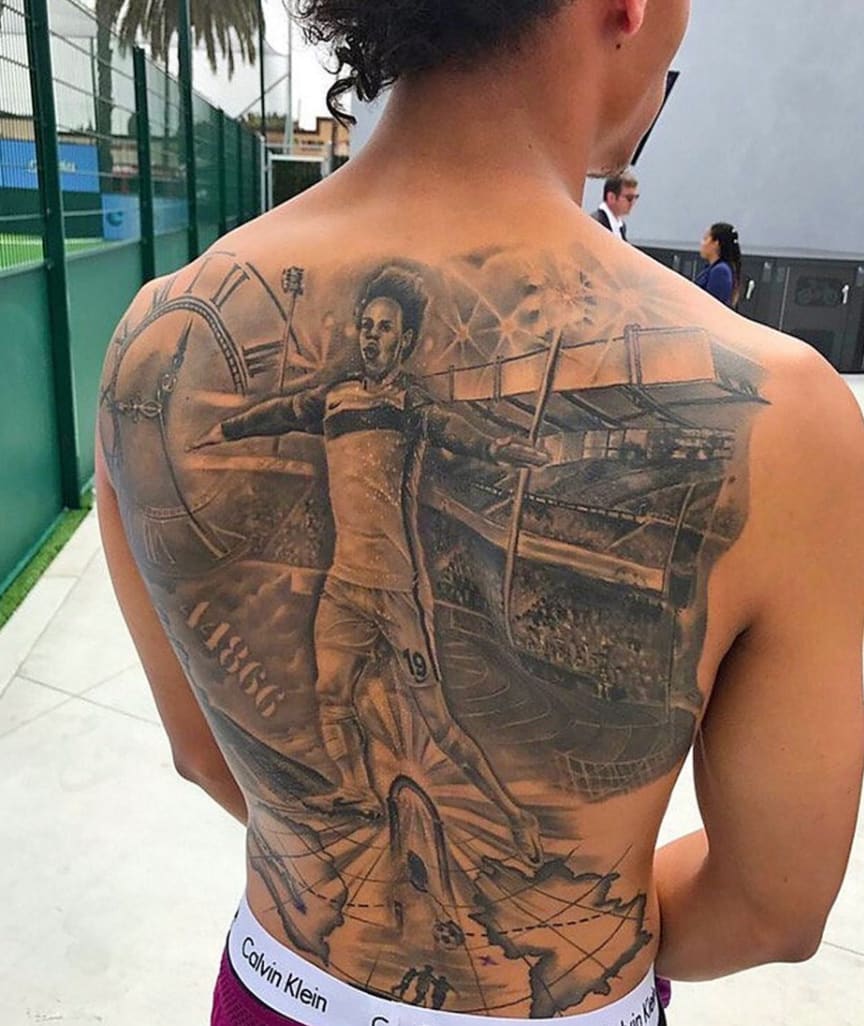
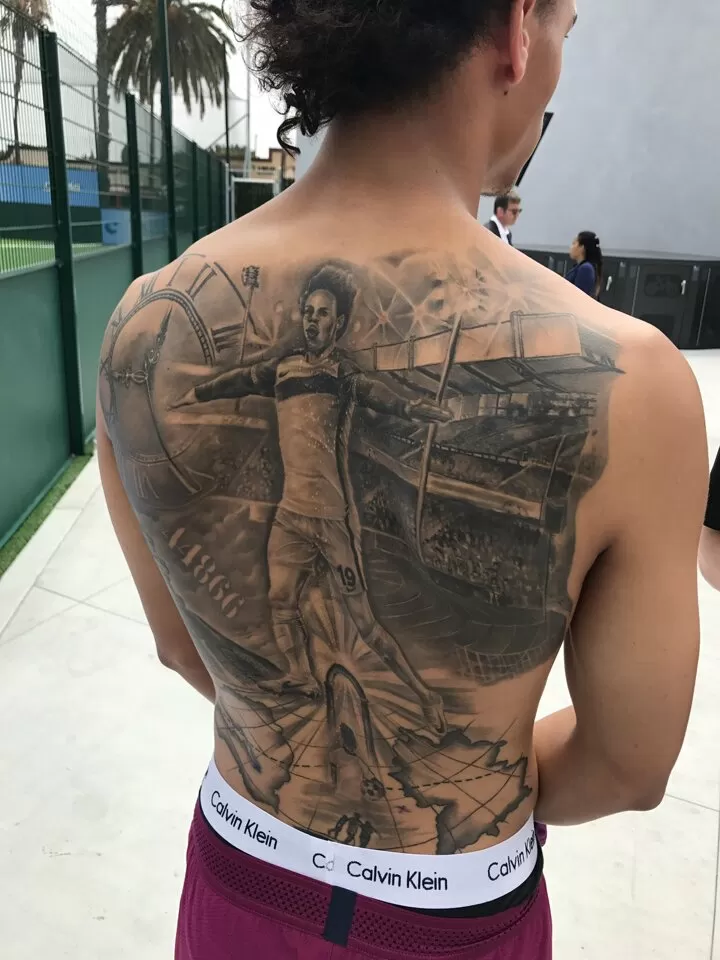
Leroy Sané’s tattoos are hard to miss, but one design gets most of the attention. His enormous back piece shows a football celebration in detail: a stadium, floodlights, a clock and Sané with his arms spread. A shirtless photo of it tends to become a headline.

There’s more to his collection: family words across his chest, Roman numerals on his forearm, French lettering on his upper arm, initials near his wrist and a simple ring on his finger. The back piece is the spectacle; the smaller tattoos are more personal.

Sané has also said he regrets the huge back tattoo. That adds another layer to the story. Ink can hold on to a brilliant moment, but it can also preserve a version of you that no longer feels like you. Here’s what’s been reported about the main pieces.

The huge back tattoo captures Sané’s breakthrough

Leroy Sane full back tattoo

The full-back design shows Sané celebrating in front of a stadium, arms stretched wide. It recreates his goal for Manchester City against Monaco in the Champions League. With so much detail, it looks more like a sports poster than a small tattoo.

He’s wearing his number 19 shirt, with the stadium and a large clock behind him. There are also a world map and pitch details lower down. The image holds the goal, the crowd and the feeling of a career moving forward in one frame.

Body Art Guru reported that Sané sat for four painful days to get the piece. It was a major project, not a quick appointment between matches, built around a moment that clearly mattered to him at the time.

The goal celebration is the tattoo’s centre

Leroy Sane back goal celebration tattoo

Photos vary, but the central idea is clear: Sané has tattooed himself into one of his own football moments. The figure isn’t generic. It’s him in a celebration fans recognise, with the stadium around him.

That specificity is why the tattoo drew so much attention when it first appeared. Many players choose a trophy, date or club symbol; Sané chose the whole scene, like a photograph from his first major European night made into a back mural.

The tattoo also became part of his public image. The design is loud, though Sané has said he’s more reserved than the flashy stereotype people attach to it. A huge celebration on his back doesn’t tell the whole story of the person wearing it.

The clock and stadium freeze one moment in time

Leroy Sane back tattoo match photo

The clock is one of the most striking details. It gives the design a sense of time, fitting for a tattoo built around one exact football moment. The scene is more than a player in a stadium; it’s a memory stopped and saved.

A career keeps moving, of course. Sané left Manchester City for Bayern Munich and went on to new chapters with Germany and club football. The tattoo still points back to the young player he was when he scored that goal.

That doesn’t make the piece meaningless. It shows how much the moment mattered. It also means the tattoo has aged along with him: what once felt like a perfect snapshot can seem more complicated years later.

Shirtless photos show the ink around the back piece

Leroy Sane shirtless tattoos

When Sané takes his shirt off, the back tattoo still draws the eye first, but there are smaller designs on his arms and torso. They make the collection feel like more than one giant image.

Action photos don’t always show those pieces clearly. Some are on his arms, some cross his chest, and others sit by his wrists or hands. Close photographs make it easier to tell where each design begins and ends.

Fans see the tattoos in all kinds of settings: celebrations, medical checks, training and holidays. The context changes, but the ink stays visible and has become part of how people recognise him outside a Bayern or Germany shirt.

The family script on his chest is more private

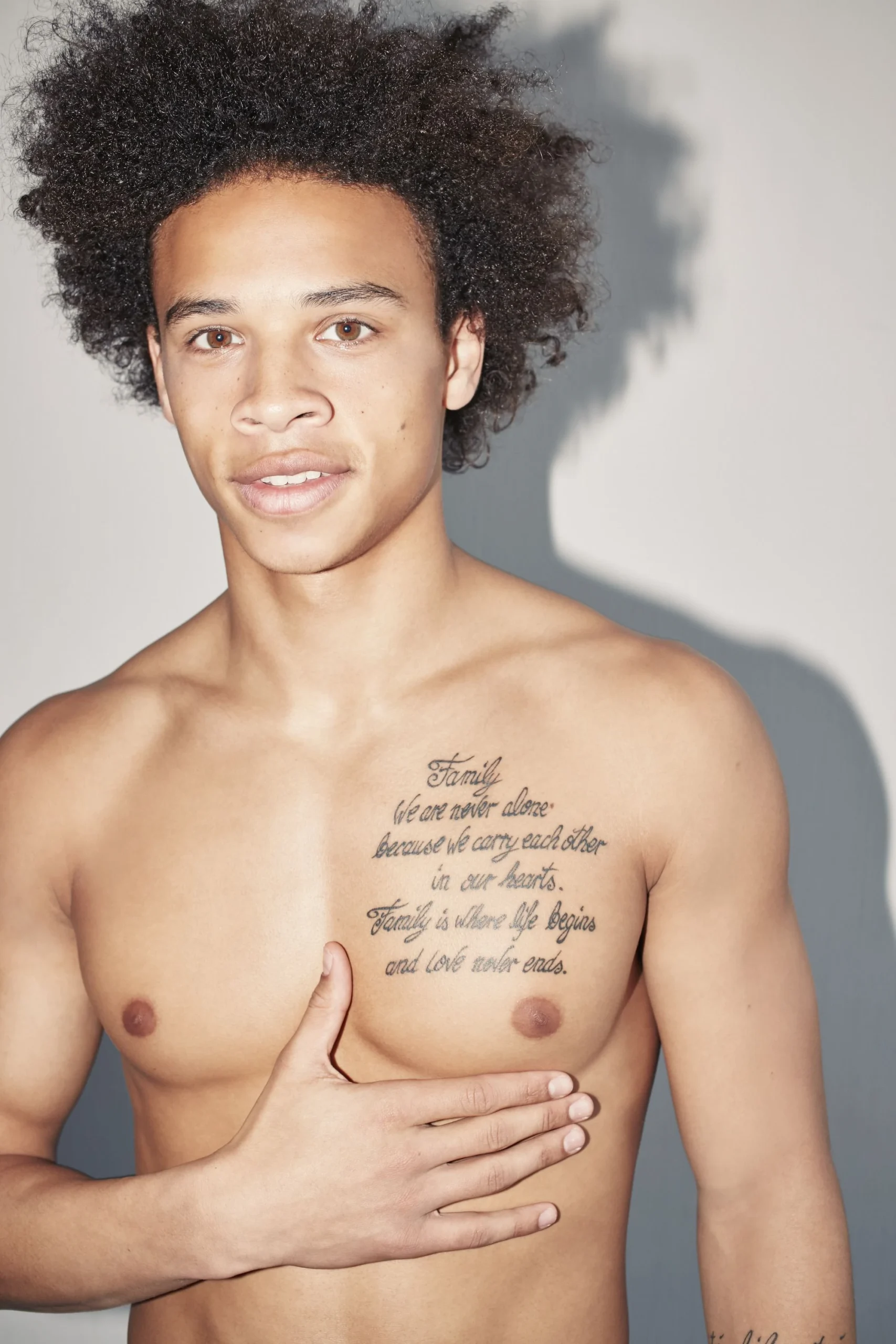
Leroy Sane family chest tattoo

Reports describe a script tattoo on the left side of Sané’s chest that reads: “Family we are never alone because we carry each other in our hearts. Family is where life begins and love never ends.” It’s a long message, but its meaning is direct.

This tattoo is about the people closest to him, not a public achievement. It’s the kind of message that would matter whether or not he were famous, and could stay with him as the rest of his life changes.

The difference between the chest script and the back piece is striking. One marks a Champions League goal in a stadium; the other is about home, support and family. Focusing only on the giant image misses half the story.

Why Sané says he regrets the back tattoo

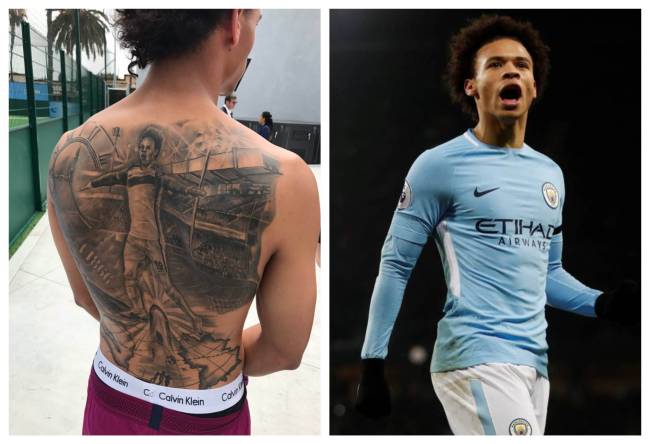
Leroy Sane tattoo collage

Sané told Der Spiegel that he regrets the huge back tattoo and felt it helped create a “bling-bling” image around him. He said he was younger when he chose it and would make a different decision now. That’s a candid reaction to such a prominent piece.
Regret doesn’t mean the tattoo was poorly made or that the goal stopped mattering. Sané has changed, and he doesn’t want the loudest design on his body to define him. He sees himself as more down-to-earth than the image suggested.

His view of the tattoo seems to have shifted. In 2017 it could stand for confidence, arrival and the rush of a major European goal. Years later, the same image can look like a permanent choice made by a younger version of himself.

Some of his smaller pieces may have aged differently because they aren’t tied to one club, celebration or season. Family stays family; initials keep their private meaning. The back tattoo is the headline, but the quieter designs add another side to the collection.

The story is a reminder that a tattoo doesn’t have to remain a perfect choice. A player can mark a career high, then grow into someone who would choose differently. The ink stays, but its meaning can change.

Clear photos help show why the collection can’t be judged from one viral image. A match shot may make the back piece look like one dark shape; a closer view reveals the stadium lines, clock and player. The chest script and the smaller wrist and forearm designs tell different stories.

Watch the story behind Sané’s famous back tattoo

The short video below shows the design and the goal celebration it was based on.

Ismail Jakobs Tattoos: Family, Faith and the Back Tattoo Debate

Ismail Jakobs’ tattoos feel personal before they feel flashy. The AS Monaco defender has ink across his chest, arms and back, with family and faith at the centre. He has said most of his tattoos connect to those parts of his life; a 2022 club interview explains more than a random photo can.

His back piece has also become a talking point after fans noticed similarities to Jayson Tatum’s tattoo. That debate is one part of the story, alongside the older pieces Jakobs has explained himself. Here’s what can be seen and what he has said about it.

Ismail Jakobs’ sleeves are the first thing you notice

Ismail Jakobs tattoos

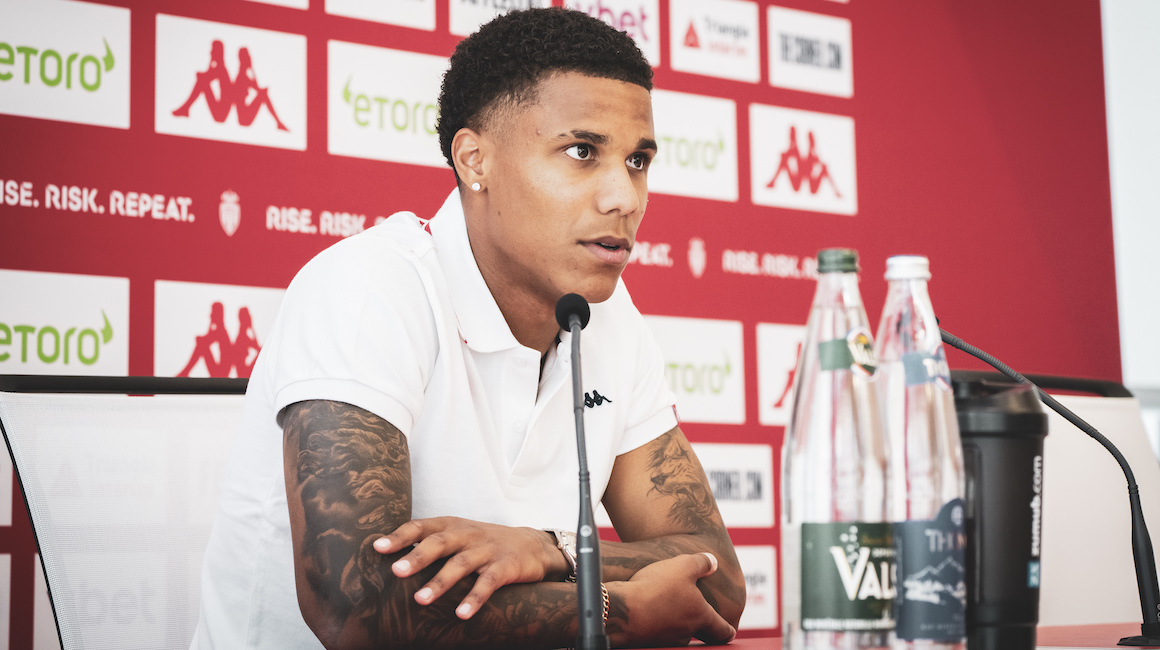
In the press-conference photo, both arms stand out. Dark work runs down Jakobs’ upper arms and forearms in realistic black and grey. The designs blend into a connected sleeve rather than looking like separate stickers.

His right arm looks especially dense around the upper arm; lower down, lighter spaces give the shapes room. The ink sits alongside his watch and short sleeves. Jakobs wears the tattoos as part of his usual look, whether he is speaking to the press or heading to a match.

Public photos don’t show every small image clearly, so there’s no point pretending we can identify them all. What comes through is the overall style: layered, shaded and added over time. His arms look lived in, rather than like the work of one session.

His chest tattoos carry the family message

Ismail Jakobs tattoos

In an interview with AS Monaco, Jakobs pointed to the writing across his chest and described it as “Family.” He connected the word to the people closest to him, which explains why it sits in such a central, visible place.

The photo also shows script, shaded figures and smaller marks across his torso. Some details are hard to read in low-light photos, but the chest clearly brings together several personal references.

Jakobs has said his parents’ names are among his most important tattoos. Their names are the emotional centre of his collection, while the larger chest design gives them a setting. He knows which pieces matter most to him.

Faith tattoos sit close to the family ink

Ismail Jakobs tattoos

Faith is the other major theme Jakobs mentioned in the interview. He described himself as very religious and said Christ is tattooed just below the “Family” piece on his chest. In photos, the religious image blends into the surrounding black-and-grey work, so its outlines can be hard to pick out.
The placement brings together the two subjects he talks about most: his family and his faith. There’s no need to invent a more complicated explanation for why they sit together.

The shoulder and upper-back work in this photo shows the same style continuing around his body. Heavy shading and dark areas look different as the light changes; details visible in a sunny holiday photo can disappear in a stadium shot.

His back tattoo became part of the Jayson Tatum debate

Ismail Jakobs tattoos

The back piece brought Jakobs into a wider online discussion. Large block lettering stretches across his upper back and shoulders. Fans noticed its similarity to NBA star Jayson Tatum’s back tattoo, and Tatum’s tattoo artist publicly criticised the resemblance.

The sequence is straightforward: Jakobs showed the piece, the comparison spread online, and the conversation shifted from football to originality in tattoo design. A back tattoo can attract attention well beyond the person wearing it.

The debate is one chapter in a collection Jakobs has described through family and religion. It doesn’t need to become the whole story, but it matters because many readers first heard about his tattoos through the comparison.

The back lettering is bold enough to read from a distance, which may be why the comparison travelled so quickly. It stands out in a different way from the finer script across his chest.

The forearm work fills in the smaller details

Ismail Jakobs tattoos

The tattoos on Jakobs’ forearms are easiest to see when he is shirtless or wearing a sleeveless top. Script, portraits and dark filler run from his upper arms toward his wrists. The designs aren’t mirrored, which keeps the arms from looking too uniform.

Some marks resemble dates or numbers, but available photos aren’t clear enough to identify each one. The forearms connect the larger designs: the chest work flows down into the arms, and the sleeve shading gives the collection a shared look.

Parts of the collection look finished, while other areas still show skin between designs. It’s normal for tattoos added over several years. Jakobs has joked that his father wouldn’t be thrilled if he got another one without warning.
The beach photos show just how much ink he has

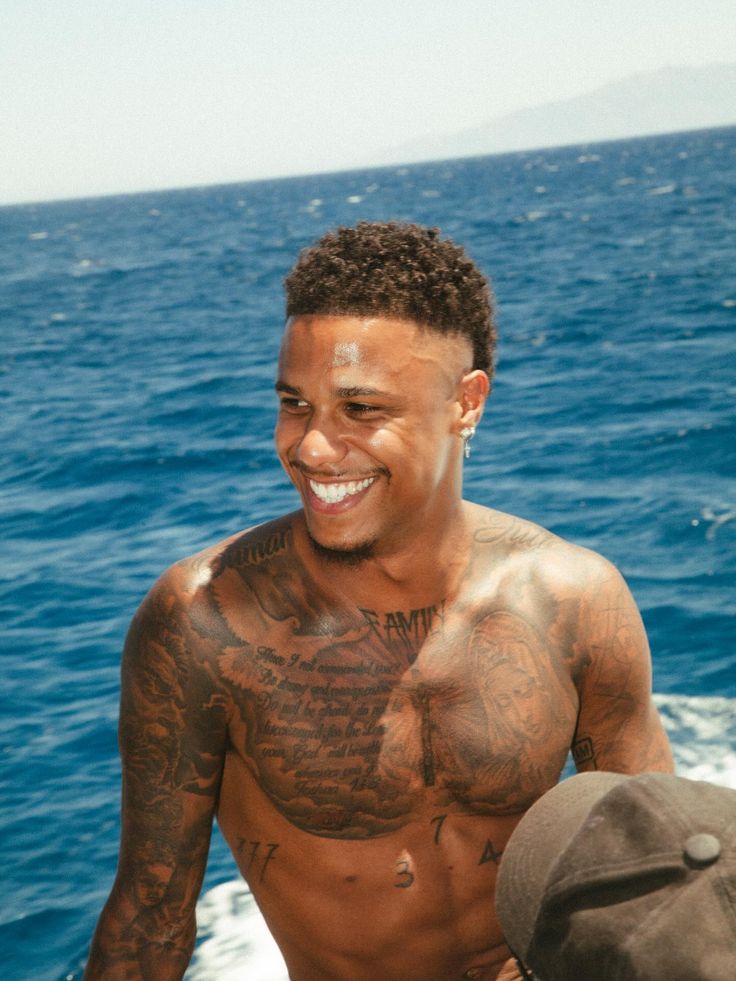
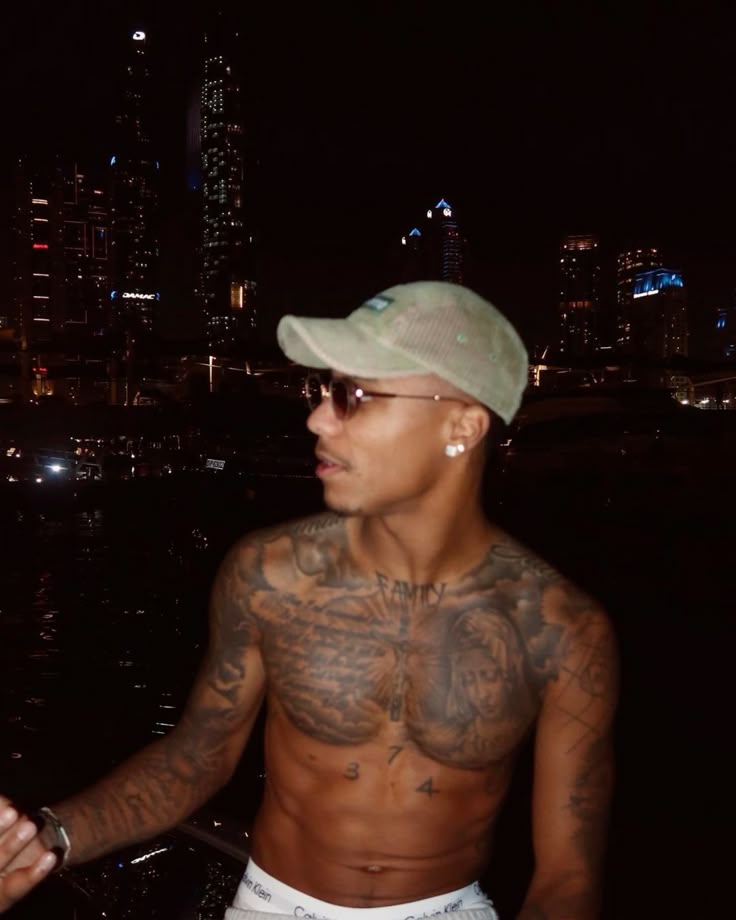
Holiday photos show the tattoos that football shirts cover. Script and shaded designs fill his chest and shoulders, with the heaviest lines across his upper torso. Some writing is hard to read in every frame, but there’s no mistaking how much work is there.

Numbers on his stomach are also visible. They may be dates or personal references, but there is no reliable public explanation for each one. They belong in the “visible but unconfirmed” category. Tattoo coverage doesn’t need to guess at every line; it should distinguish what Jakobs has explained from what a photo shows.

In this image, the chest script, arm tattoos and upper-back work appear together. Jakobs has named family as the main theme, so that’s the clearest way to understand the collection. The smaller symbols are best left without invented meanings.

What Ismail Jakobs has actually said about his tattoos

Jakobs spoke directly about his tattoos in the AS Monaco interview. He said most relate to his family or religion, mentioned his parents’ names, and pointed out a design he shares with his brother. He also named “Family” on his chest and Christ beneath it.

That interview is the clearest guide to the collection. His parents’ names matter most to him, and the tattoo he shares with his brother connects to family in a different way. The chest word makes the message plain, with the religious image beside it.

His explanation stays grounded. Family and faith are the main themes, and he still has to answer to his dad if he comes home with another tattoo.

If you enjoy football tattoo stories, the family-and-faith theme offers a useful contrast with Rade Krunić’s tattoos, which connect family, Bosnia and religion in a different way.

Ismail Jakobs tattoos: the short version

Jakobs has a large collection across his chest, arms and back. The confirmed details include his family, his parents’ names, a tattoo shared with his brother and Christian imagery. The back piece drew attention because of its similarity to Jayson Tatum’s tattoo. Other numbers, script and shaded images are visible but haven’t been explained publicly.

The clearest meanings come from Jakobs himself. The other designs are still worth looking at without guessing. Together, they show a footballer who keeps family and faith close, even when cameras are focused on the match.