
Vernon Norwood’s tattoos are documented in Amy Higgins’s 2025 Inked Magazine profile, which pairs photographs of the athlete with his account of the name across his back. The images show a large black-and-grey composition over his back, shoulders and arms, along with several lines of script on his side. Norwood explains the back name himself; the other designs can be described from the photos, though their meanings are not all known.
Norwood is a Louisiana-born American track and field athlete who competed for LSU and the United States. Team USA lists him as a two-time Olympian with four Olympic medals, including relay gold. His work in the 400 metres and 4×400-metre relay provides context for the competition photographs, while Inked’s profile covers the tattoos alongside his family history, Hurricane Katrina, education and athletic career.
Career context and the documented source
Team USA’s athlete profile supplies Norwood’s career details and a face-visible portrait. The tattoo photographs come from Inked’s feature, published in February 2025. It shows the ink from the front, back and side, including views from a track setting, and includes Norwood’s explanation of why he put his surname across his back. The article keeps those two kinds of information separate: the photographs show placement and design, while the interview supplies a personal meaning for one piece.
The front view of the sleeve and script work
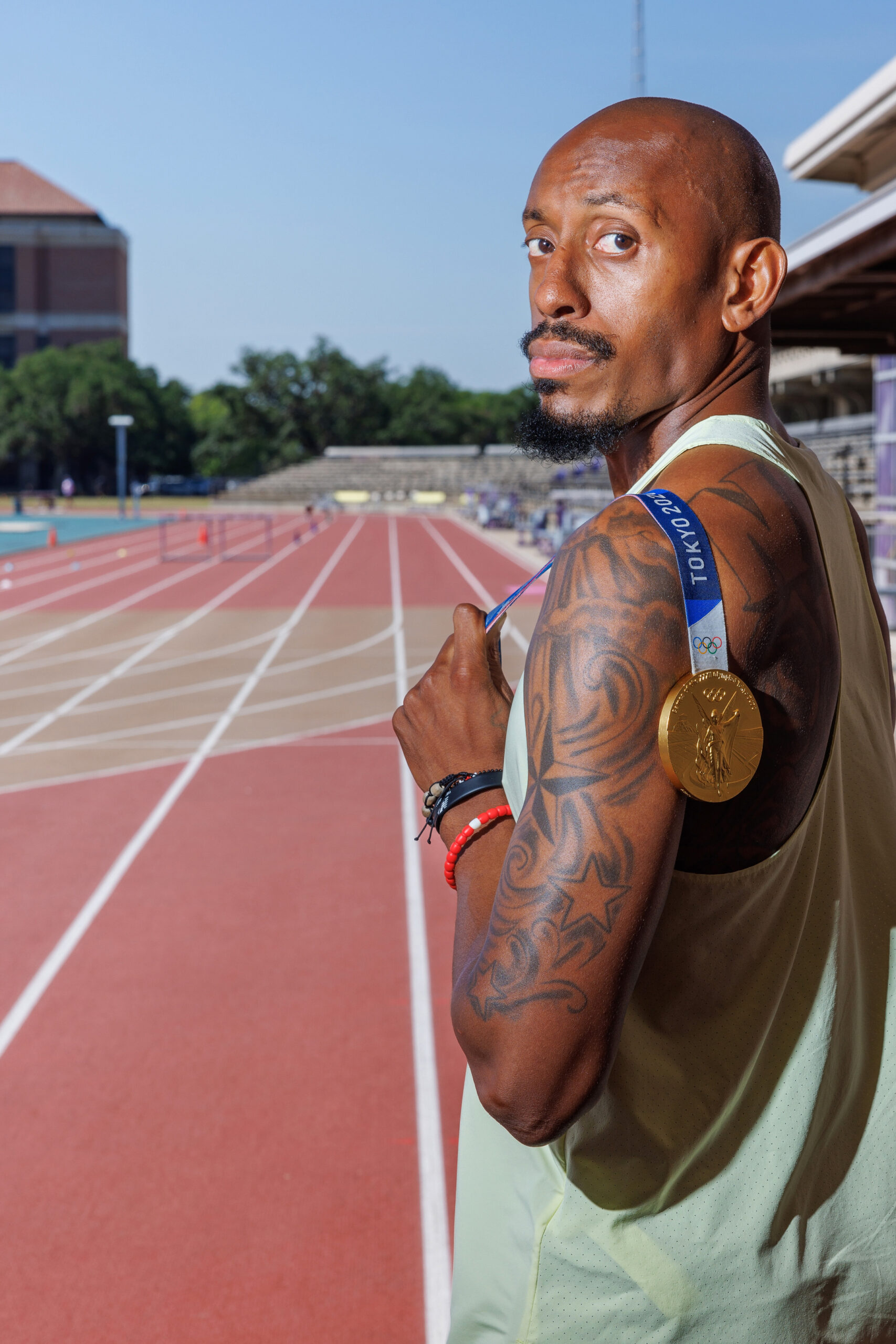
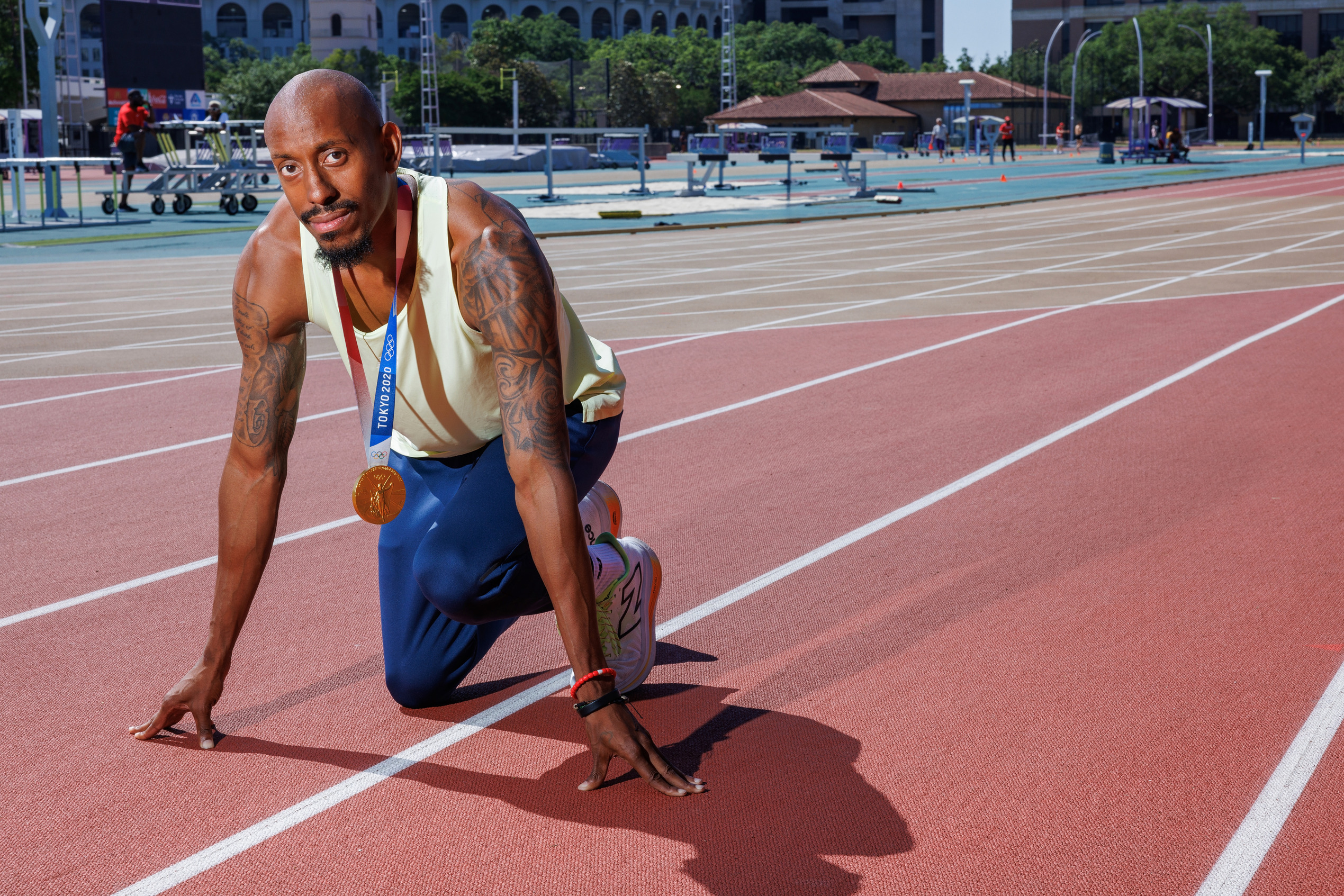
The front-facing stadium photograph shows black-and-grey work over both shoulders and upper arms, continuing toward the forearms. Dark sections sit beside curved lines, star-like shapes and shaded forms. The ink covers a broad area rather than forming a narrow band, though the details become harder to separate lower on the arms.
Several lines of script run along the right side of Norwood’s ribs. The writing appears to angle across the torso, but the photograph is too soft to transcribe reliably. The front view is useful for seeing how much of the shoulders and arms is covered; it also shows the script’s placement beneath his arm.
The stadium light leaves the main outlines visible against the skin, even as the smaller details blur. Norwood’s face appears in profile, and both arms are uncovered. From this angle, some of the work reads as a pair of sleeves; the rear and side photographs show how the same shading continues around his shoulders and back.
The surname across the upper back
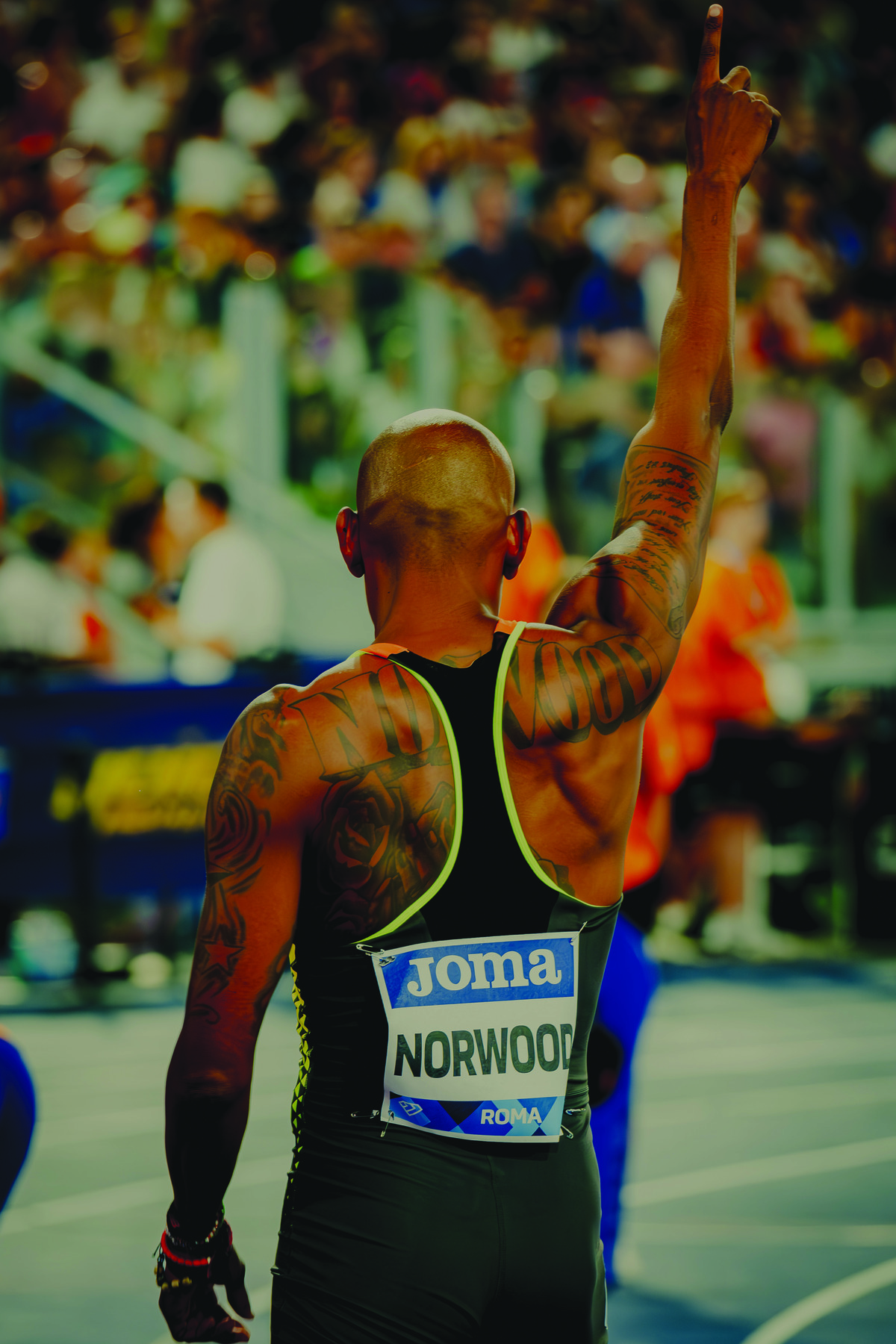
The rear track photograph shows NORWOOD in large letters across the shoulder blades. The name runs horizontally from one side of his upper back to the other, following the width of the shoulders. It is the most immediately readable part of the collection and gives the larger back design a clear starting point.
Below the lettering, shaded figures and floral-looking forms fill much of the back. The photo shows heavier black areas beside softer grey shading, with portrait-like shapes in the central panel. It does not identify every figure, so their names or stories should not be supplied from appearance alone. Norwood’s explanation of the name itself appears in the interview section below.
Central back panels and shaded imagery
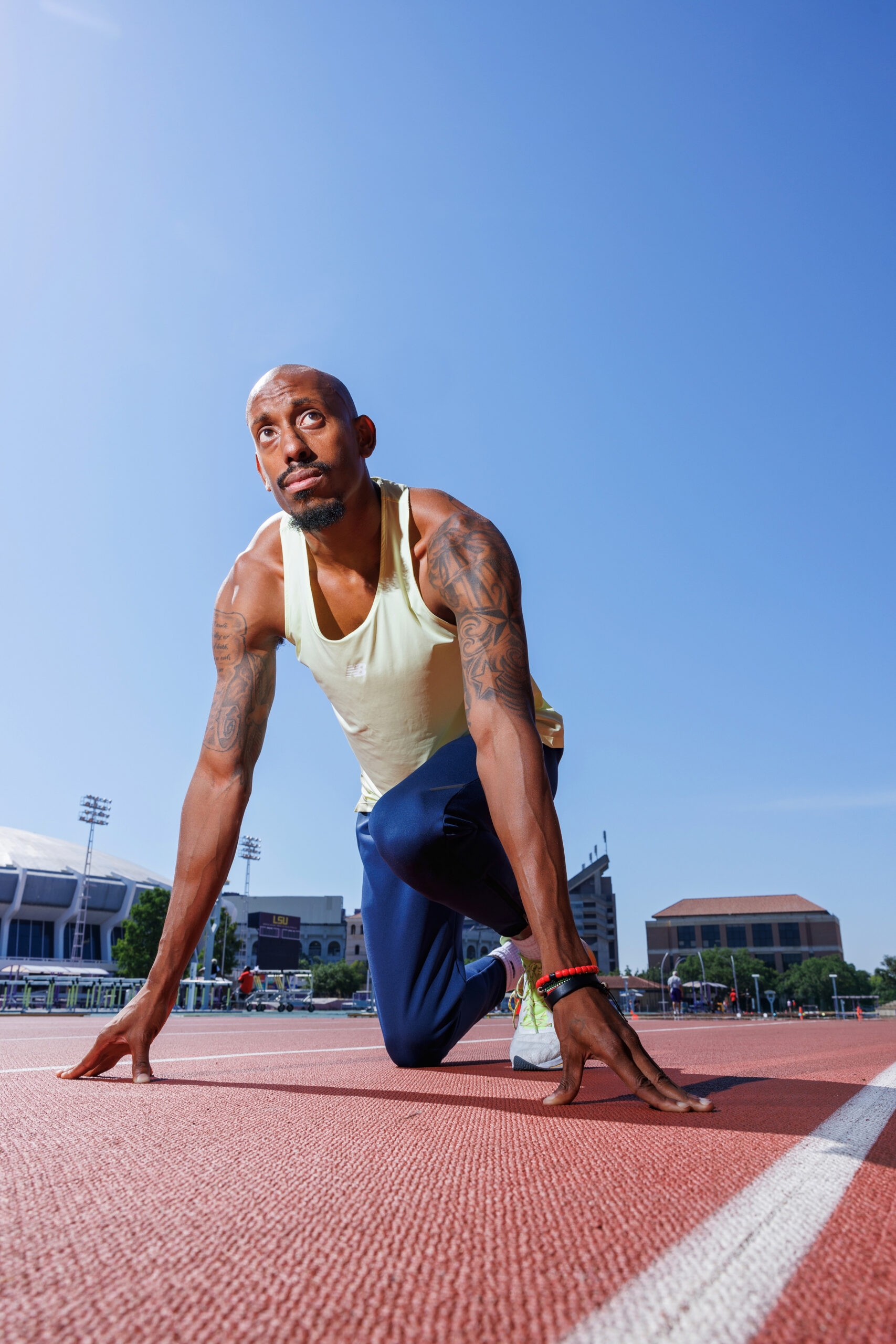
A second rear view shows how far the central work extends below NORWOOD, toward the lower back. Several large shaded forms are arranged vertically, with curved outlines and portrait-like details. Smaller script or banner-like shapes appear among them. The full composition uses dark outlines and broad grey areas, rather than one isolated name on otherwise bare skin.
The backs of Norwood’s shoulders and arms carry additional ink around the central panel. One arm is turned partly away in this frame, so the coverage differs from side to side. The photograph shows how the pieces connect from this angle, but no single pose reveals every section at once.
Side lettering, shoulder shapes and arm coverage
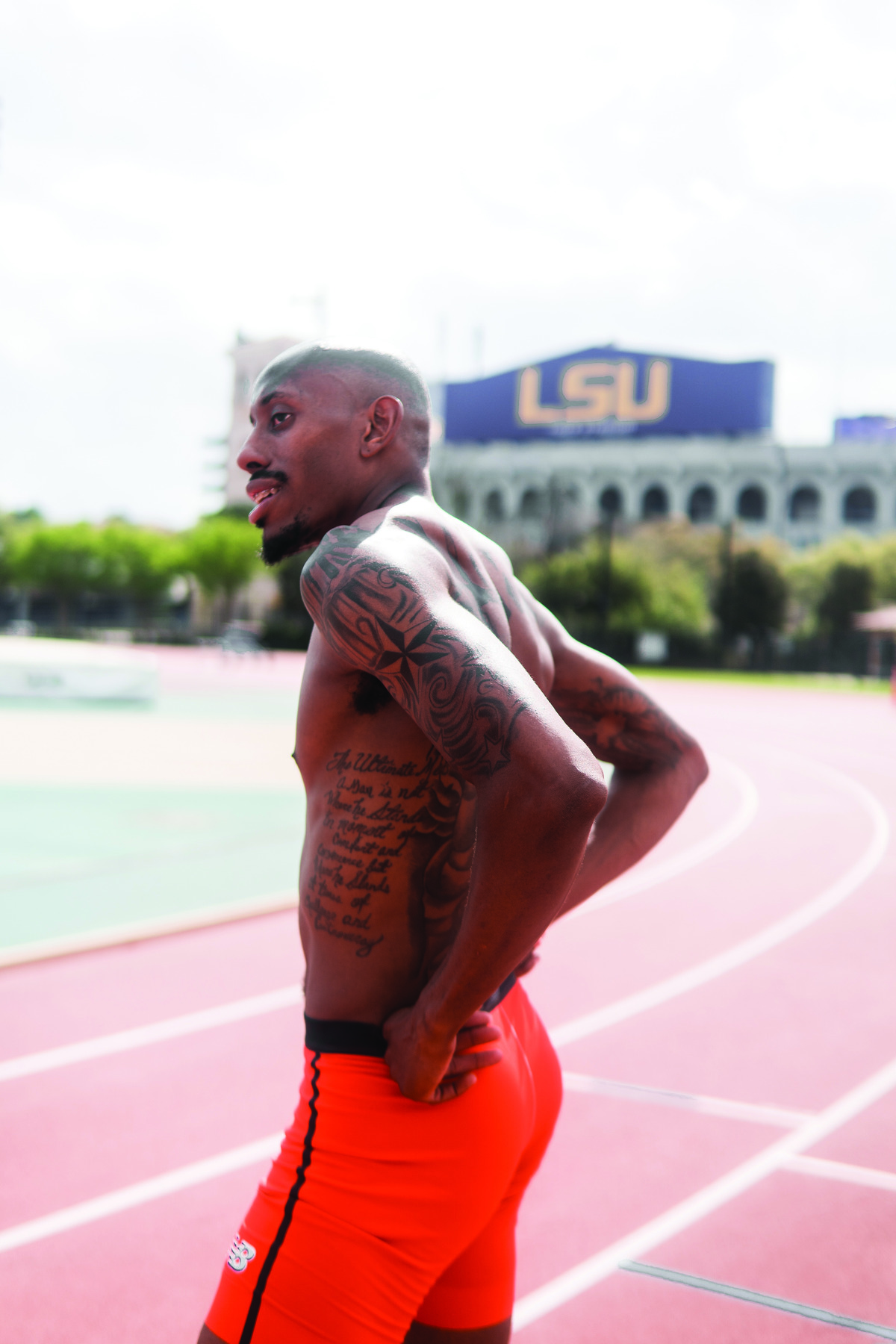
In profile, the script sits along Norwood’s ribs beneath his arm, while black-and-grey work wraps from the shoulder toward his back. The writing is arranged in several lines, but the photograph does not show enough detail to quote it as a sentence. Its position is clear even where the letters are not.
The angle changes how the upper-arm work reads. From the front, it looks like a sleeve; from the side, the coverage turns around the shoulder and continues onto the back. The photos show the same connected area from different positions, so they should not be counted as separate pieces simply because the outlines shift between frames.
The track photograph with the full back visible
In this competition photograph, Norwood faces away from the camera with one arm raised. His racing bib identifies him in the frame, and his back name and central shading are visible again. The raised arm exposes more ink along the upper arm and forearm. The image is darker and farther away than the posed photographs, so it shows the overall placement better than small details.
Because the camera is behind him, this frame does not show his face. The Team USA portrait serves that purpose elsewhere in the article; the Inked photograph records the tattoos while Norwood is competing. It also shows the back composition outside a posed setting, with the same name and shading visible as his body moves.
What Norwood has said about the name piece
Inked’s interview gives the clearest personal explanation of any design shown here. Norwood connects the name across his back with the weight and responsibility he felt while growing up with his mother and brothers. He also talks about Hurricane Katrina, his education and the pressure to build a different path. That context is his explanation of the name piece, not a key to every other tattoo.
The photographs show roses, script, stars and shaded figures, but the published account does not assign a private meaning to each of them. Their placement and appearance can be described; a personal story for those marks would need another source.
Comparing the public photographs
The front image shows the arm coverage and rib script. The rear shots make the surname, central panel and shoulder work easier to see. The side photograph shows how the arm piece wraps around the shoulder, and the competition image catches the tattoos while Norwood is on the track. Taken together, they give a fuller view than any one frame.
Some lines of ink cross the shoulder, arm and torso, which makes a total count difficult to support. A section can look like a sleeve in one picture and part of a larger back design in another. The clearest description is by placement: the name across the upper back, shaded work over the back and shoulders, ink down both arms and script along the side.
Official identification image
Team USA’s featured portrait shows Norwood facing the camera in his USA racing uniform. It identifies him before the tattoo-specific photographs, but it is not a close view of a design. The Inked images show the back, arms and side script; the Team USA image provides the face-visible reference.
Sources and visual limits
Amy Higgins’s Inked Magazine profile, “Vernon Norwood: The Inked List,” was published on February 26, 2025. It is the main tattoo source and includes photographs from several angles as well as Norwood’s account of the back name. Team USA’s Vernon Norwood profile supplies career details and the featured portrait.
The public photographs do not give a complete inventory, a confirmed list of tattoo artists or an explanation for every symbol. The central figures remain unidentified, and the rib script is too blurred to quote. The visible surname and broad placements are clear; more specific claims should stay within what Norwood and the named sources have actually said.
Norwood’s tattoos form a connected black-and-grey collection across the back, shoulders and arms, with script on his side. The name across his back is the piece he has explained publicly; the rest can be described through its linework, shading and placement without assigning meanings the sources do not establish.