
Topi Keskinen’s best-known tattoo shows Wayne Rooney fishing. The Finnish winger has said Rooney was a football hero when he was growing up, while angling is one of Keskinen’s own interests. On the forearm, those two references meet in a small scene that’s more personal than a standard player portrait.
The documented Wayne Rooney fishing tattoo
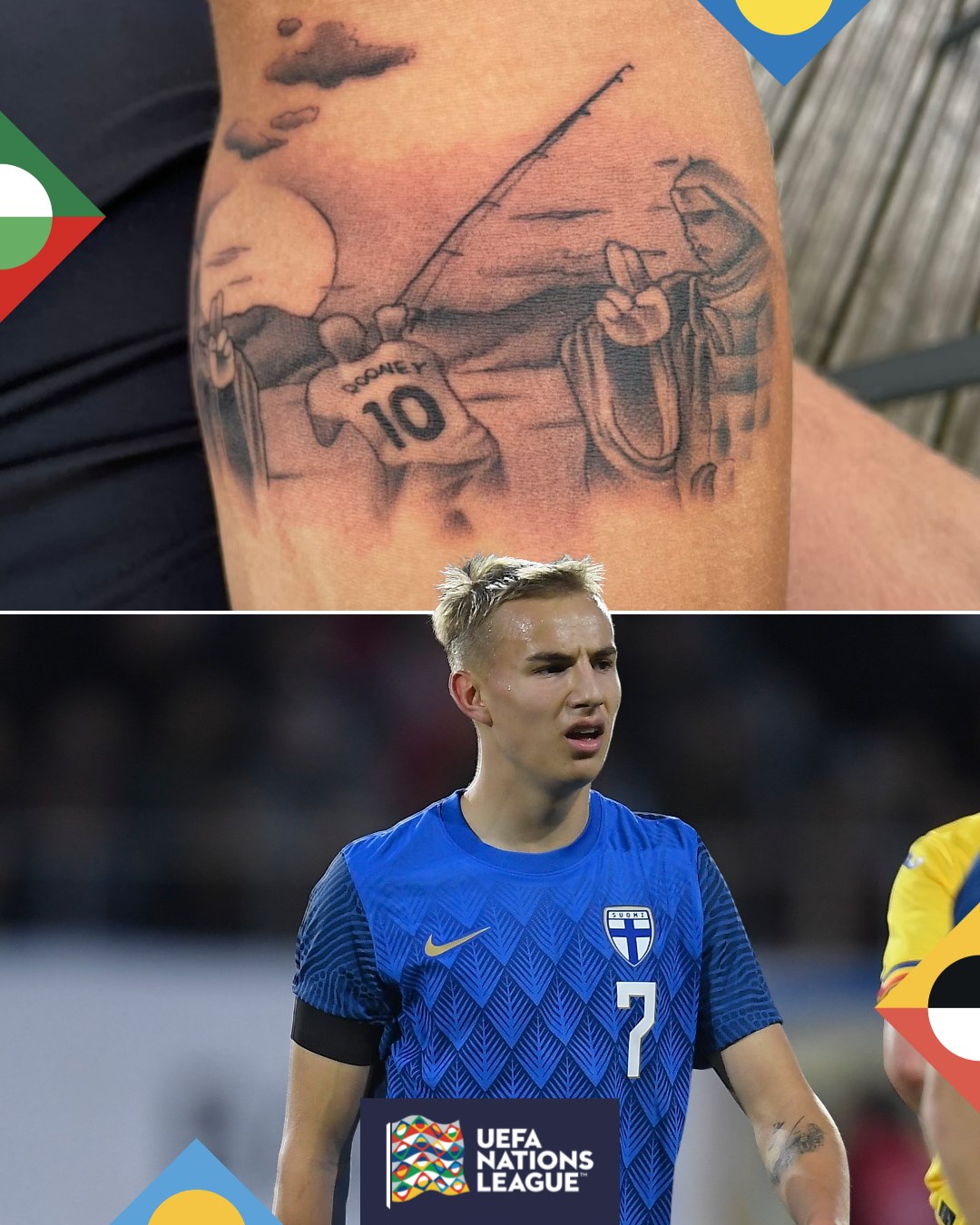
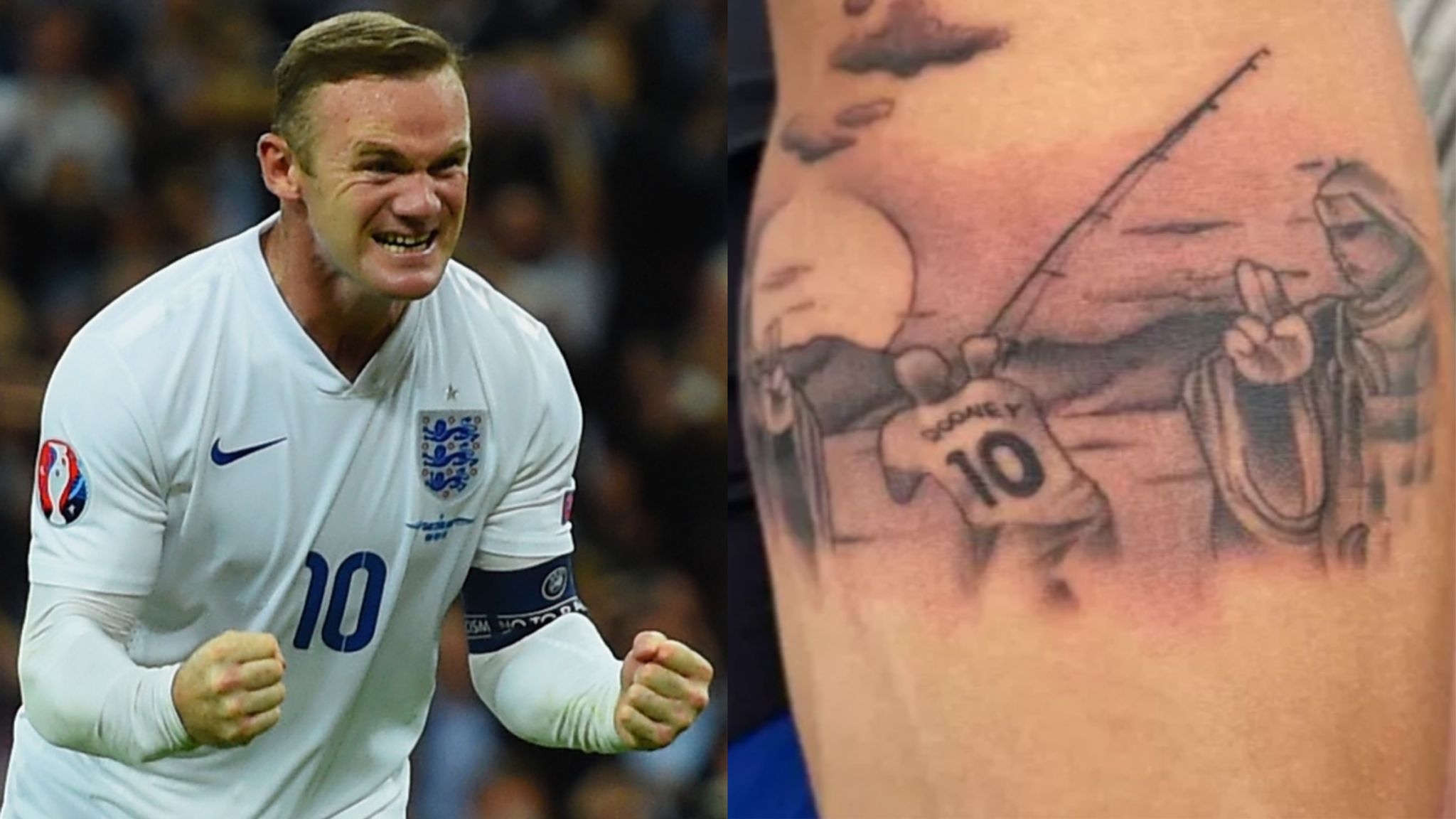
Coverage by The Independent, Irish News and Goal, along with UEFA’s published image, identifies the design as Rooney in a number 10 shirt with a fishing rod. The name “ROONEY” and the number 10 are visible against a sunset-like background. A close image shows black-and-grey linework and soft shading; it gives enough detail to describe the scene without guessing at smaller marks.
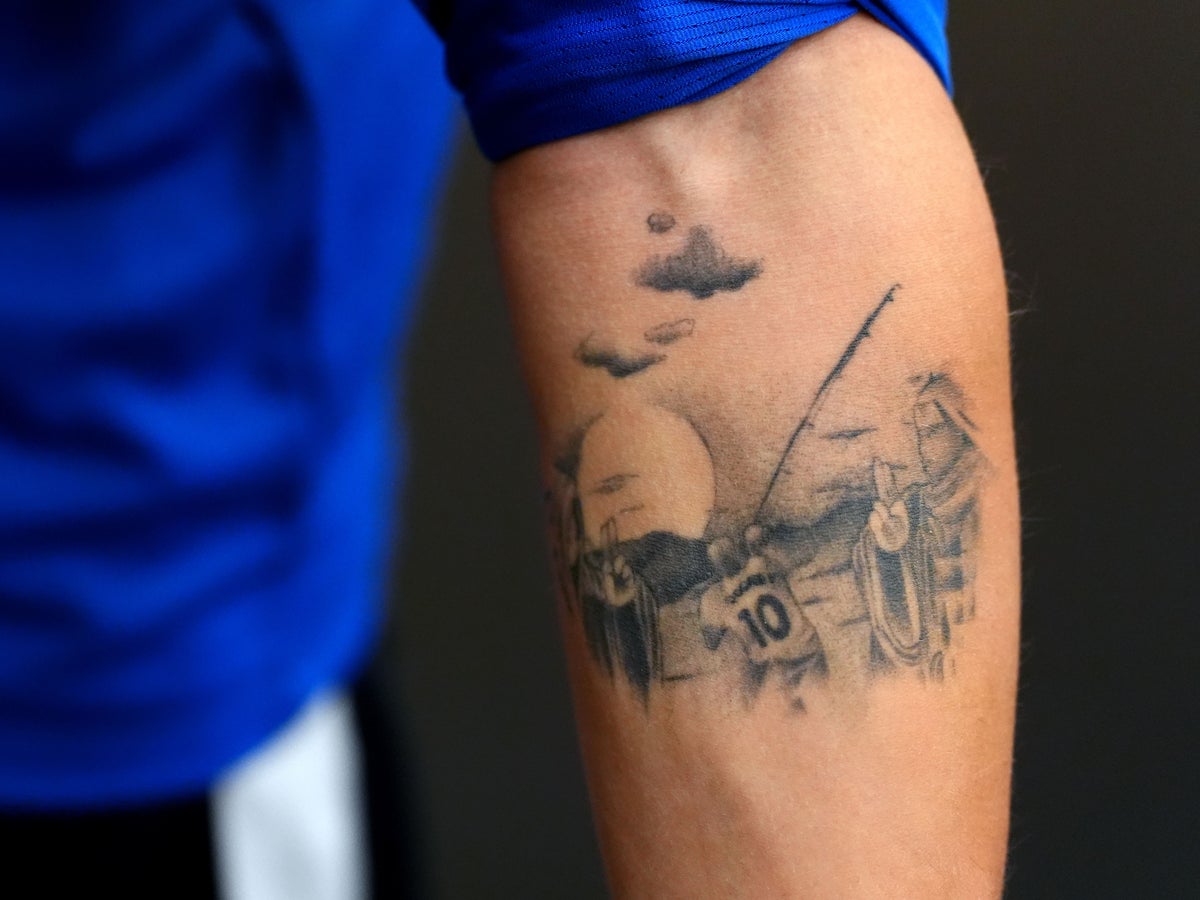
The first photograph shows the artwork itself; the UEFA collage pairs the close view with a separate portrait of Keskinen. The two images provide different evidence: one shows the ink, the other helps identify its wearer.
Why Wayne Rooney is the subject
Keskinen has explained that he followed Rooney as a young fan. His mother supported Everton, one of Rooney’s former clubs, which adds a family connection to the choice. The tattoo doesn’t use a familiar goal celebration or club badge. It puts a player he admired into an unexpected setting.
How the tattoo combines two passions
That setting is fishing. Keskinen has spoken about angling as something he enjoys away from football training and travel. The rod is both part of the picture and a reference to his own hobby, so the tattoo joins the two interests in one image rather than placing a fishing detail around an otherwise ordinary portrait.
The number 10 and the “ROONEY” lettering remain readable inside the forearm composition. The rod runs through the scene, with the figure and background arranged along the arm. The close-up shows the drawing’s black-and-grey shading; a wider crop gives more context for its scale and vertical placement.
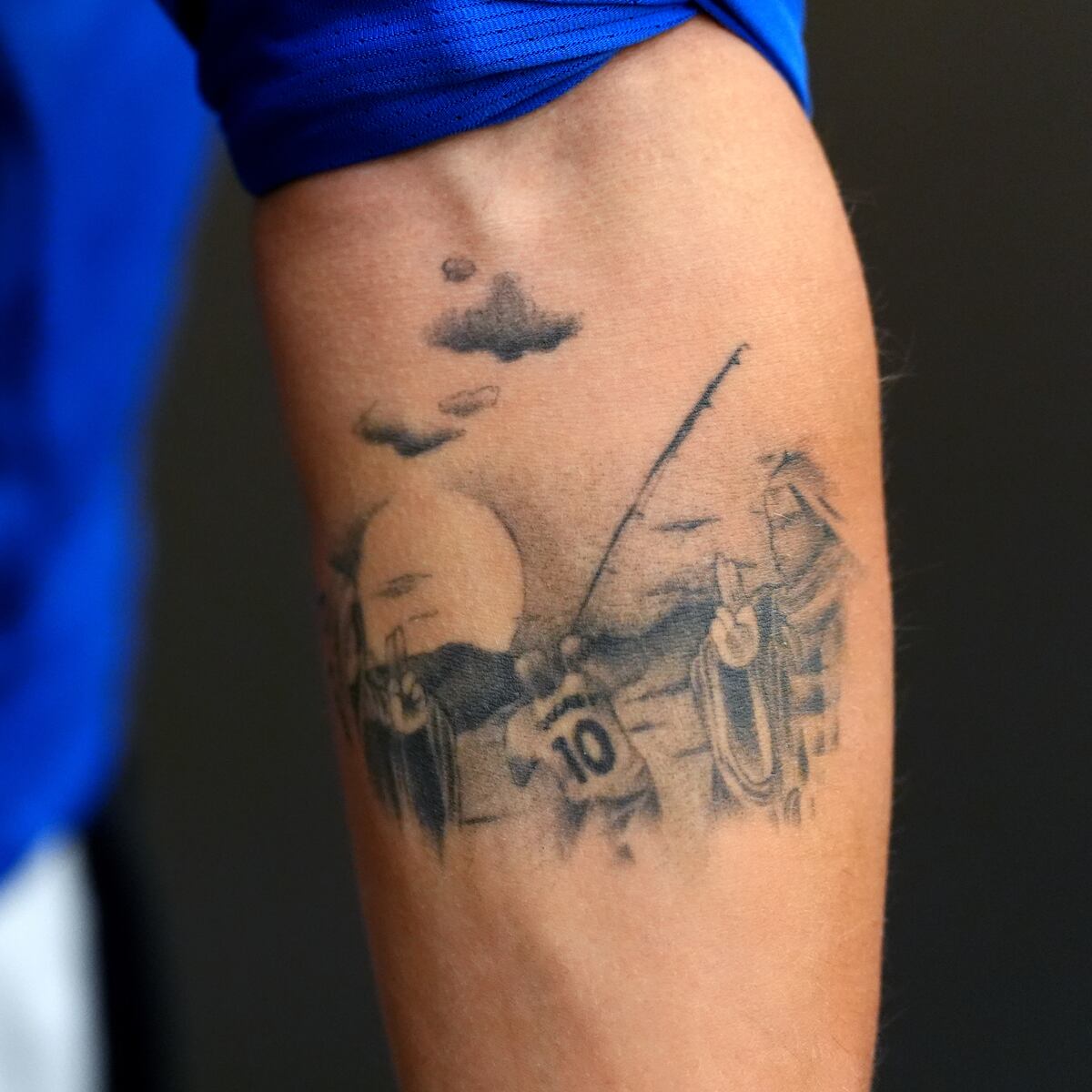
The forearm gives the image a long, narrow space to work with. That suits a fishing rod and lets the scene follow the arm rather than sit like a flat badge. In the photographs, Keskinen turns his arm so the tattoo can be seen; the same placement can be covered by clothing.
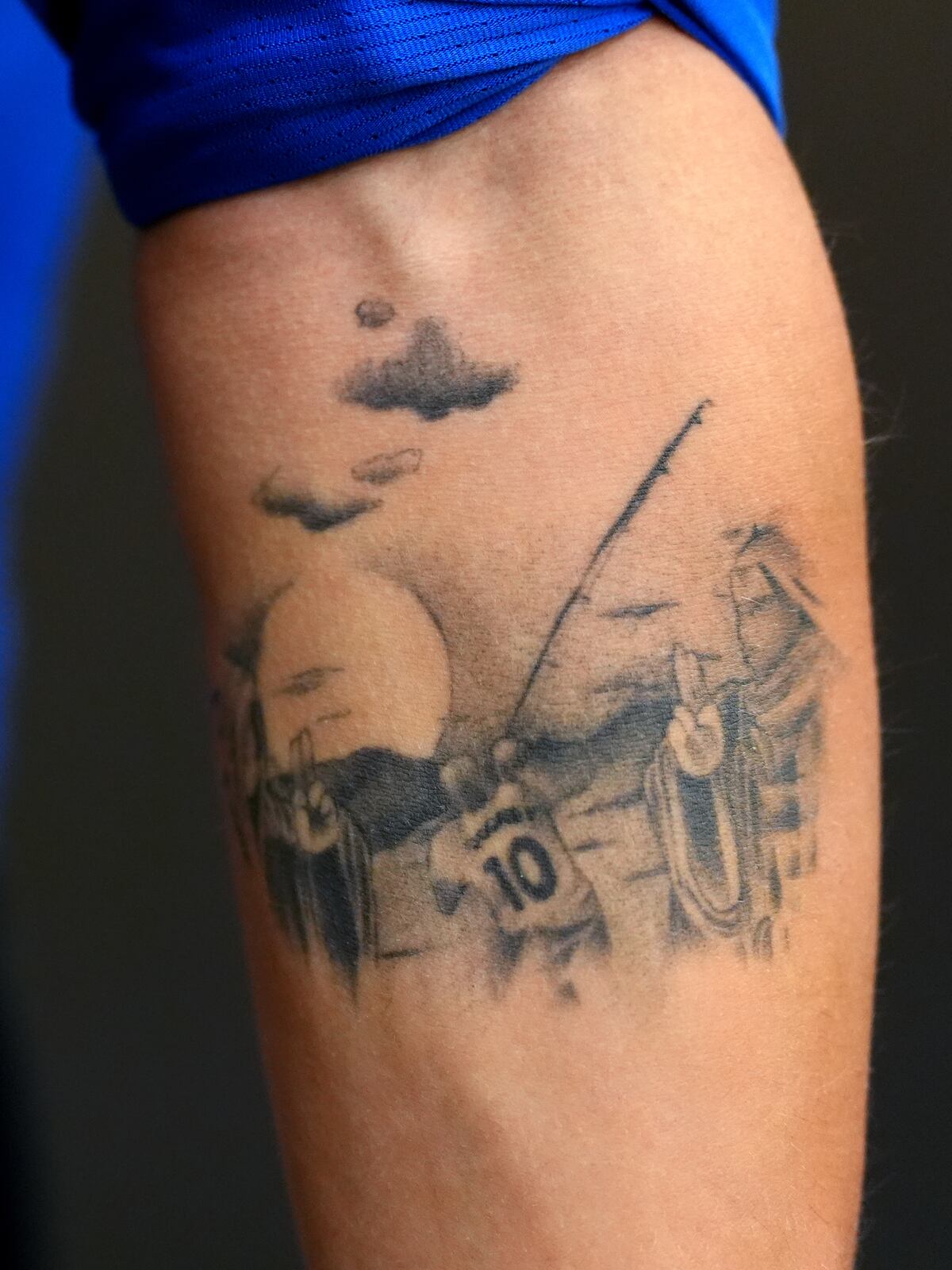
The linework and placement matter
The square detail is clearest for the figure, rod and number. The portrait crop shows more of the arm around it. Looking at both helps distinguish the design itself from where it sits on the body.
The person in the photographs
UEFA’s collage also shows Keskinen in Finland colours, with his face visible beside the tattoo close-up. Match-day and portrait images help connect the arm to the player, but they aren’t evidence of additional ink. The tattoo photograph establishes the design; the face-visible image establishes who wears it.
Humour is part of the design
The joke is affectionate: a football idol is pictured fishing rather than scoring. The number 10, clouds and rod make the scene playful without turning Rooney into a punchline. Goal’s collage pairs Rooney’s face with the tattoo, making that contrast easy to read.
Lessons from a playful scene
The idea works because the references belong together in Keskinen’s life. A fan tribute, a family connection to Everton and a hobby he enjoys outside football all have a place in the same drawing. That kind of link is more individual than copying a famous face on its own.
There’s also a practical design lesson in the way the elements are arranged. A portrait, lettering and a long rod could compete for attention, but here the scene has a clear route across the forearm. The close view shows those parts; the wider image shows how the whole panel fits.
Reading the photographs carefully
The close press photographs are the clearest evidence for the tattoo’s linework and placement. UEFA’s collage adds a face-visible portrait, while Goal’s pairing shows why the fishing scene caught attention. They don’t all prove the same thing, and none identifies details that can’t be seen clearly.
The documented design is Rooney fishing on Keskinen’s forearm, with the name “ROONEY,” number 10 and a shaded background. Other marks shouldn’t be named without a clear image or a reliable source. Keeping the description to what the photographs and reported context support makes the story easier to trust.
Why the scene stays memorable
The contrast is the point: a player Keskinen admired as a child appears in a scene drawn from a hobby he still enjoys. The result is recognisably about Rooney, but the fishing setting makes it specific to Keskinen.