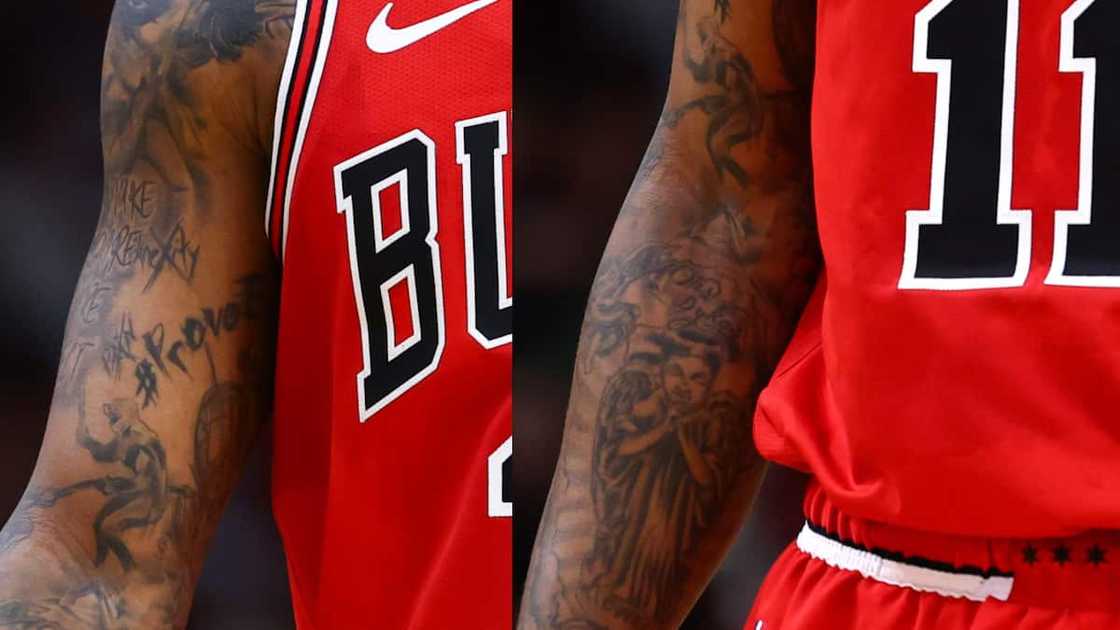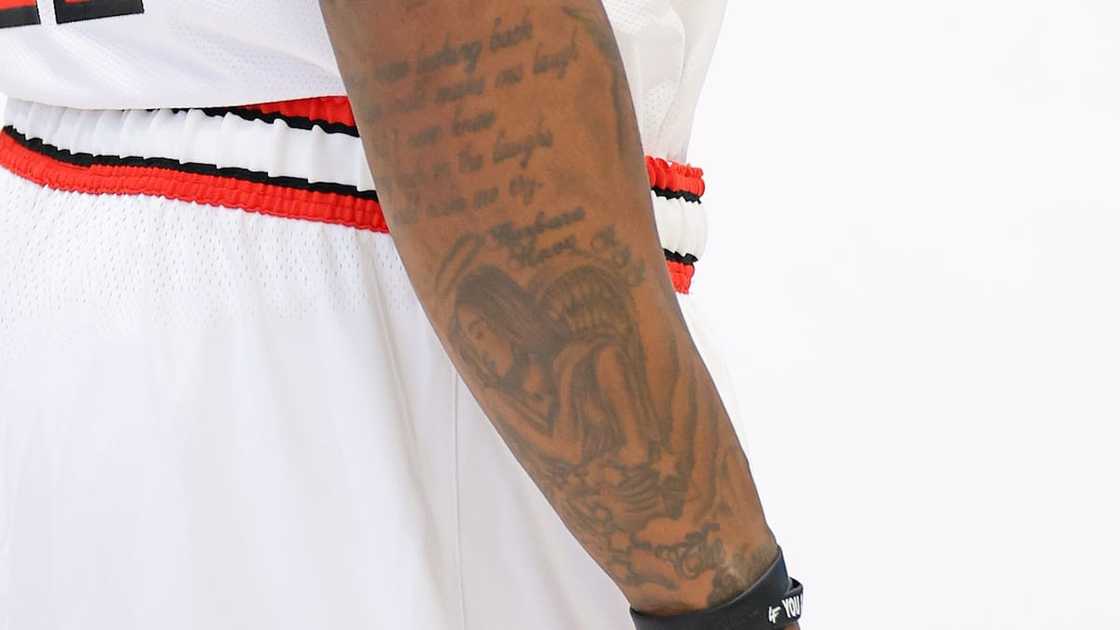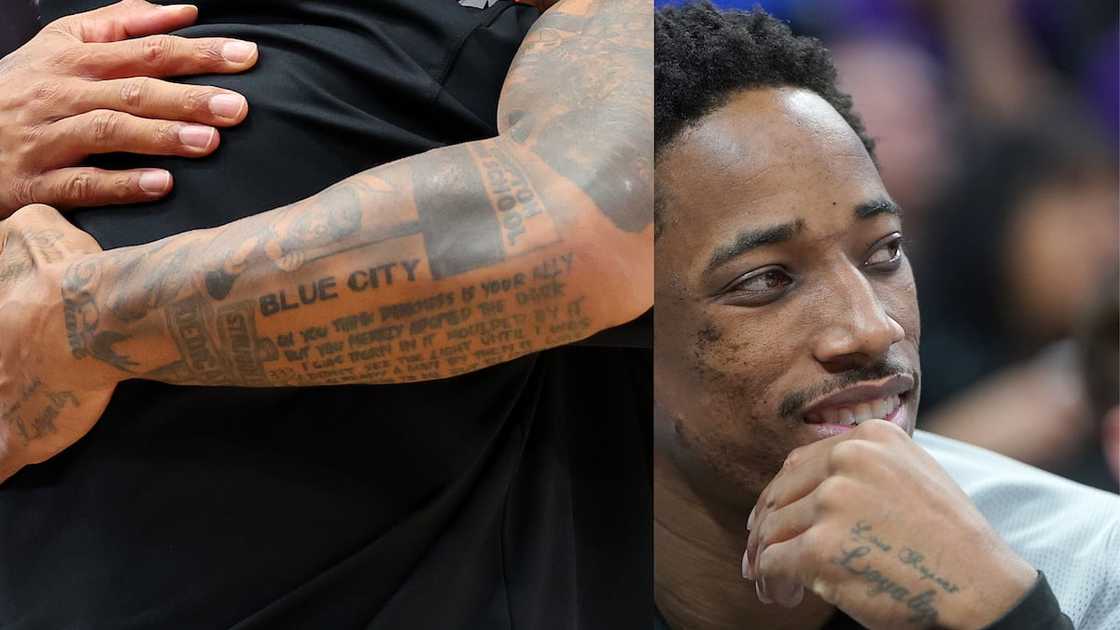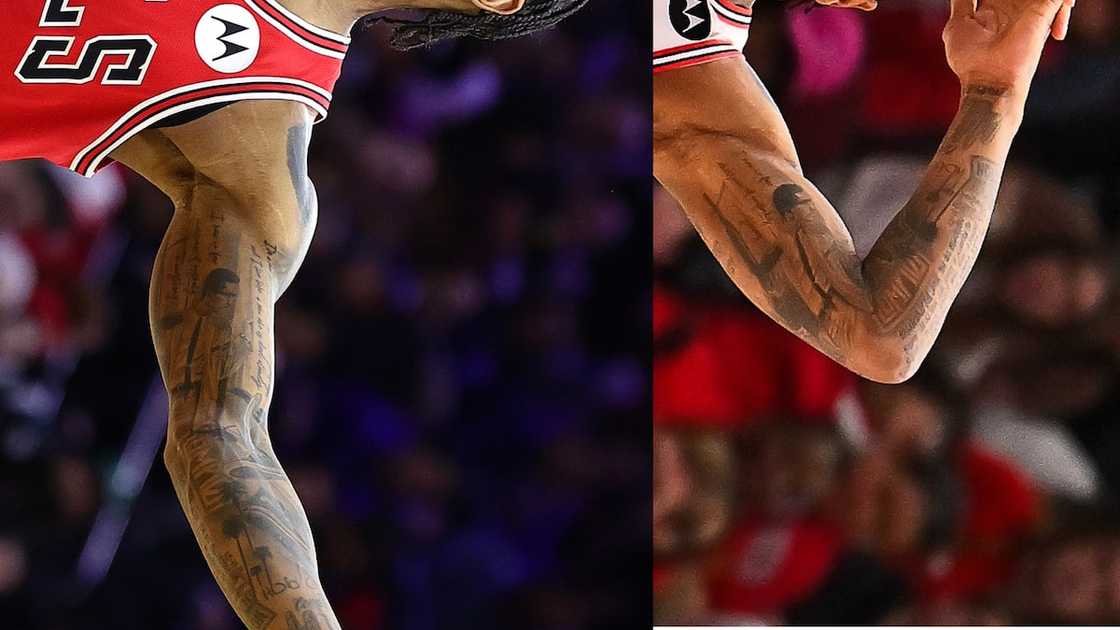
Athletes

J.R. Smith Tattoos: Chest, Arms and Family Ink

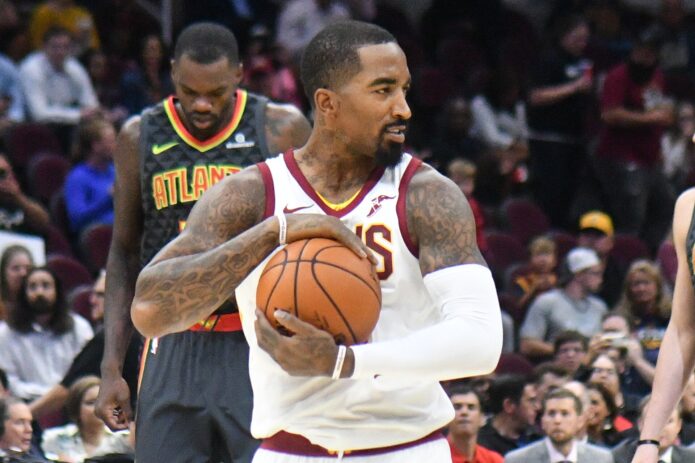
J.R. Smith has tattoos across his chest, arms, shoulders, neck and hands. Some show in basketball photos; others are easier to see when he is shirtless or photographed from the side.

The J.R. Smith tattoos include family portraits, religious imagery, basketball references and bold lettering. They don’t form one matching sleeve, and the public record doesn’t explain every piece. Here are the designs that have been documented in photos and reports.

J.R. Smith’s chest is the main story
J.R. Smith torso tattoo triptych

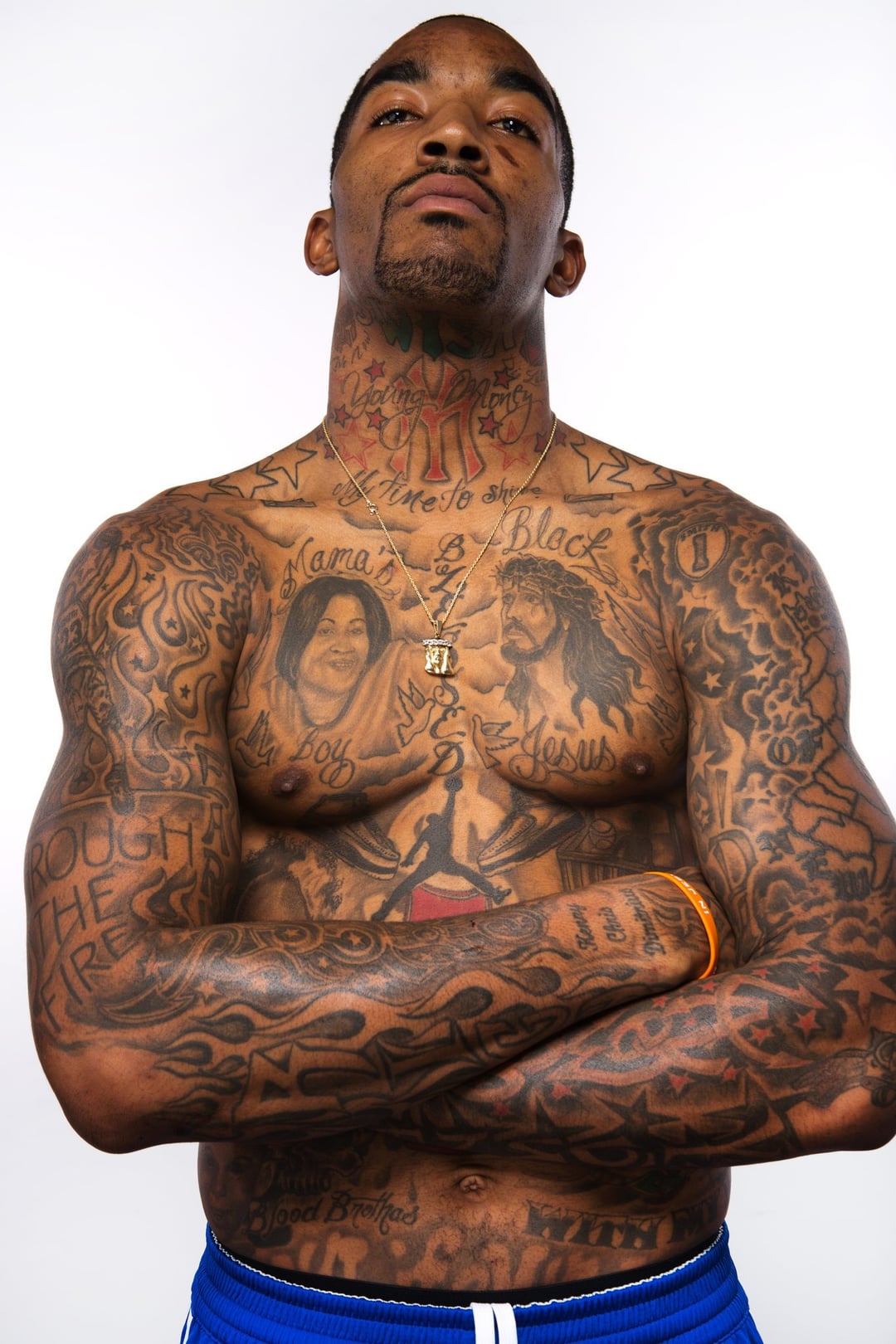
Photos show a large family portrait across Smith’s chest, alongside religious imagery and bold lettering. Mama’s Boy is among the phrases that stand out. It puts his relationship with his mother in view, though the tattoo doesn’t explain every part of that story.

A portrait of his mother and an image of Jesus sit nearby. From a distance, the shading and lettering can read as one large black-and-grey piece; up close, the separate images and text become clearer. The chest looks more like several memories placed together than one emblem.

Smith has spoken and posted about his family over the years. That context helps explain why family imagery recurs in the collection, though we shouldn’t assign a private meaning to every detail. For another athlete tattoo story with family pieces, see our feature on Ryan Sheckler tattoos.

The arm tattoos are packed with small details
J.R. Smith tattooed torso and arms

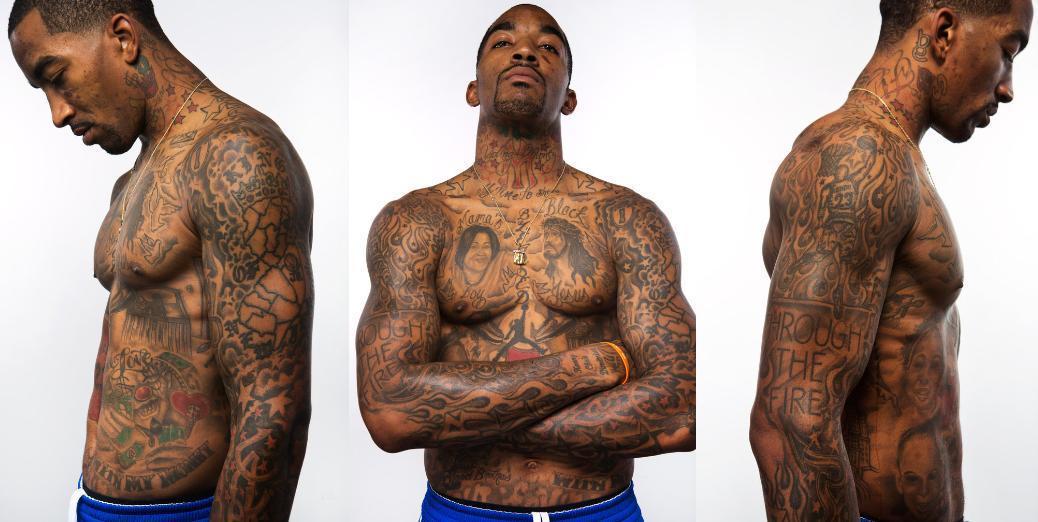
Smith’s arms add lettering, dark shading and smaller marks around the larger designs. In a full-torso photo, the ink runs from his shoulders down both arms.

Some details are difficult to identify from a single game-day photo, and not every small mark has a confirmed meaning. Older and newer tattoos sit together, with areas of heavy black ink, open skin around lettering and smaller symbols between the larger images.

In a VICE Sports interview, Smith said his first tattoo was a picture of Vince Carter dunking. Basketball appears alongside family and faith in the collection, rather than taking the place of those themes.

His neck and shoulder ink is hard to miss
J.R. Smith shoulder and arm tattoo close-up

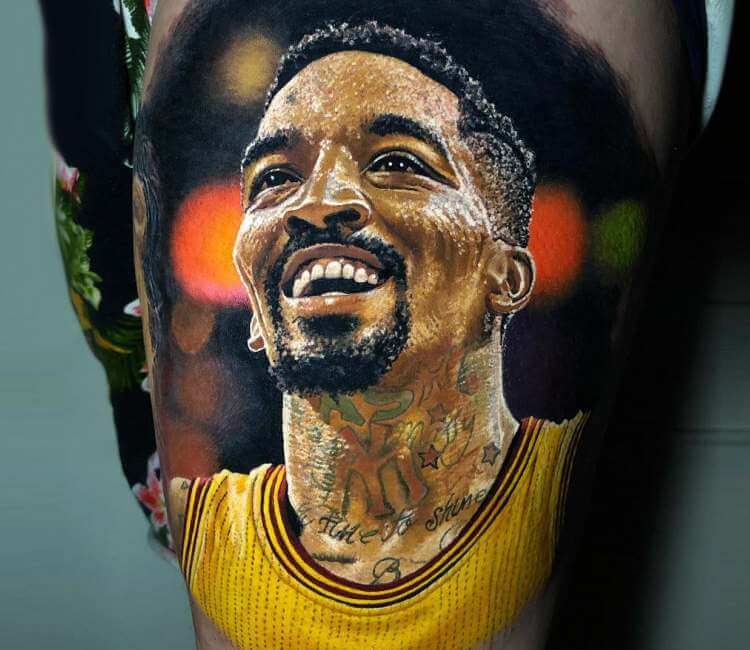
The neck and shoulder pieces show when Smith wears a tank top or an open shirt. A close-up reveals detail around the shoulder and upper arm, with dark lines that remain clear from a distance.

The lettering on his neck is among the collection’s most visible details. That placement keeps the ink in view whether he is on court, at a parade or in a casual photo.

A clear close-up is useful here: it shows the tattoo itself and how the lines follow the shoulder and upper arm. A distant portrait may not show enough to identify the smaller details.

The shoulder and upper-arm tattoos finish the look
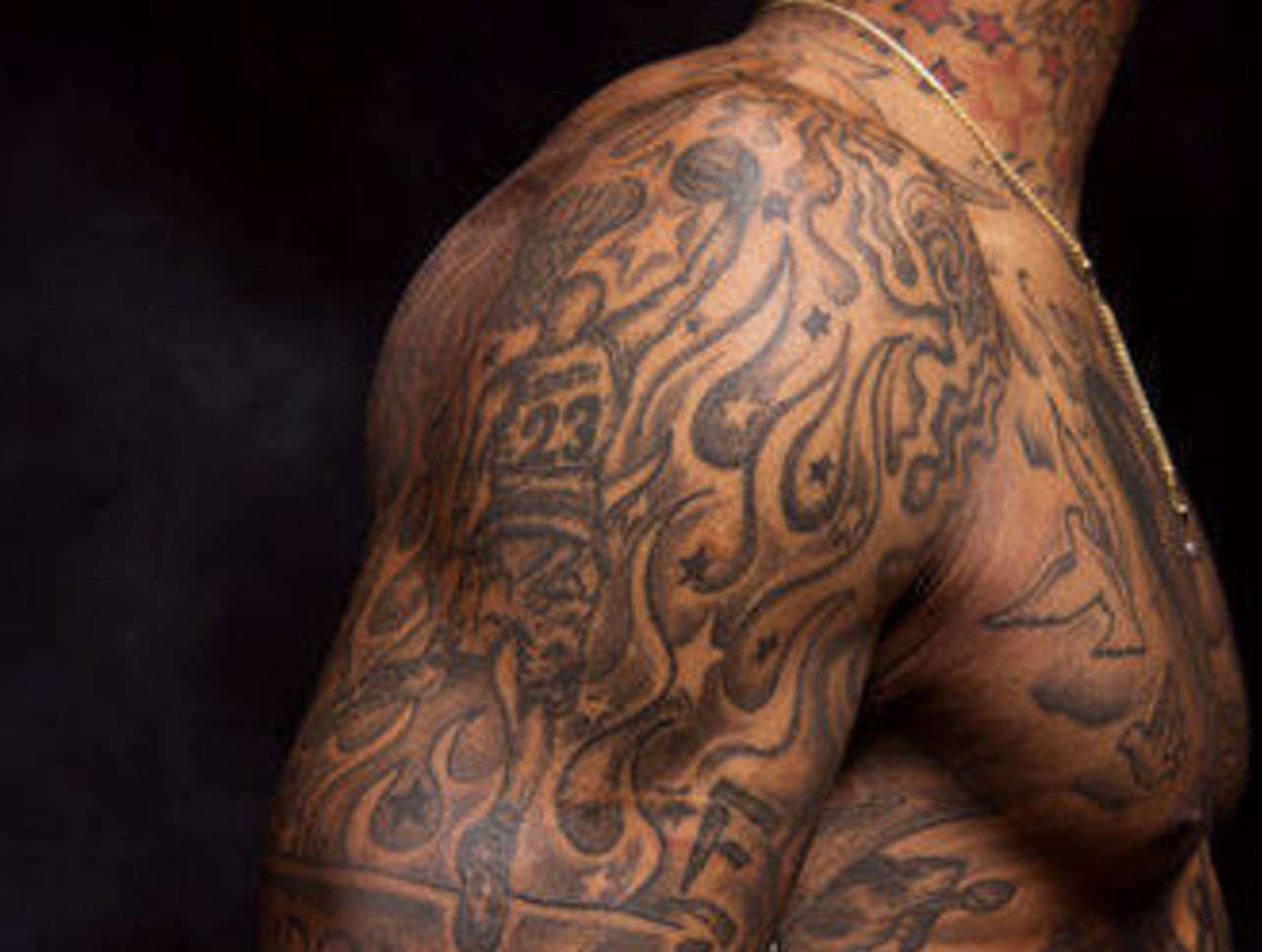
J.R. Smith arm tattoo close-up

The shoulder and upper arm carry large areas of dark shading. They are easy to see when Smith is in a jersey or tank top and add to the dense coverage across his arms.

Close-ups show how the ink runs over the shoulder and down the arm. Some designs are clearer than others, and the amount of open skin varies from one area to the next.

The pieces don’t all share the same size, shading or lettering style. The collection looks accumulated over time, rather than planned from a single catalogue page.

Why J.R. Smith’s ink became part of his public image
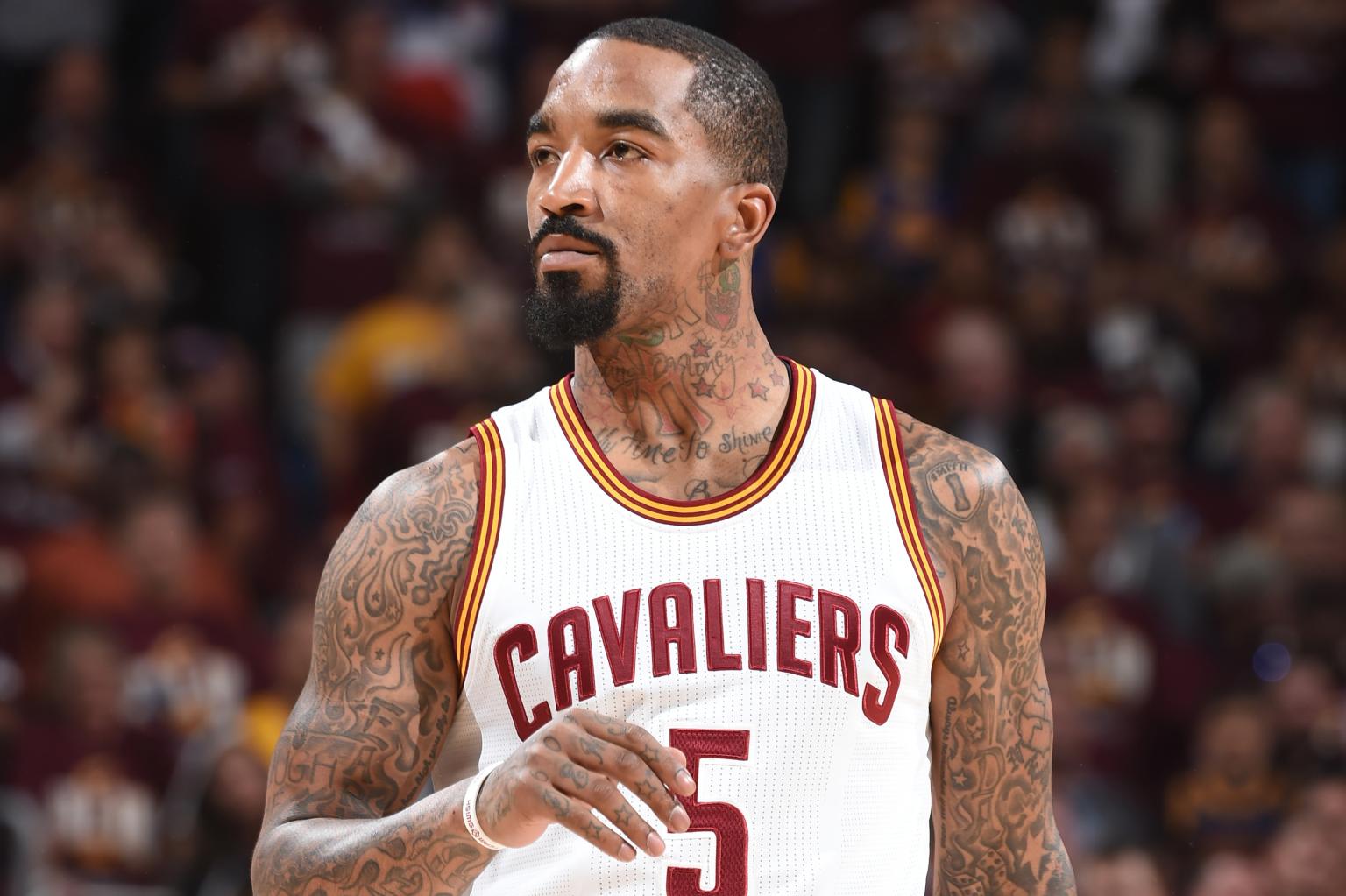
J.R. Smith visible chest and arm tattoos

Smith’s tattoos drew attention during his NBA career because so much of the ink was visible on camera. The league’s dress-code dispute over the Supreme logo tattoo on his calf turned his body art into a sports story.

A courtside photo may show neck ink, a shoulder design or a hand tattoo; a shirtless photo reveals more of the chest and arms. Each view catches a different part of the collection.

Family and religious imagery appear on his chest, while basketball references and smaller designs show up on his arms. Taken together, the photos document a collection spread across several parts of his body.

The mix of family, faith and basketball

The number of tattoos is obvious, but the recurring subjects are easier to place: family, faith, basketball, loyalty and memory. Their meanings aren’t all public, but several designs point to these themes.

The Mama’s Boy lettering, family portrait and image of Jesus are on his chest. The Vince Carter story connects his first tattoo to basketball. Neck and arm pieces make much of the collection visible even when he is dressed.

Clear photos from different angles show more than a single blurry image can. Smith’s chest, shoulder, arms and hands each have distinct pieces, so the details are easier to follow when the ink is in focus.

Watch a video about Smith’s NBA tattoo story

The Fumble video below looks at the NBA debate around Smith’s visible tattoos:

Smith’s tattoos have changed over the years, but photos still show a collection tied to family, basketball and the life he has lived in public.
Chris Andersen Tattoos: The Birdman’s Colorful NBA Ink Explained

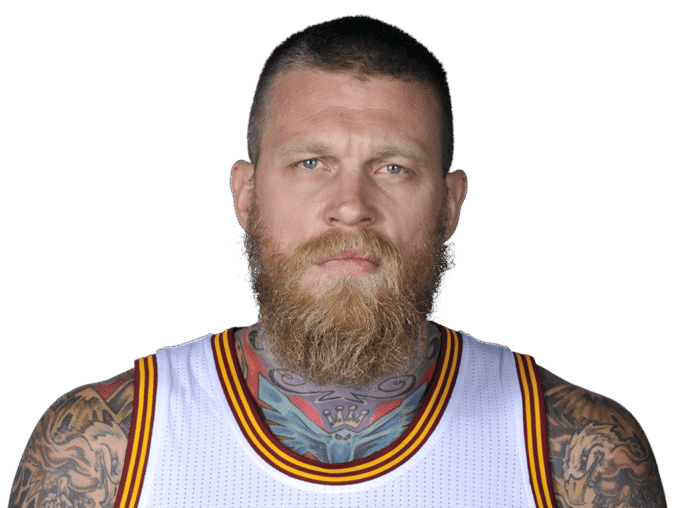
Chris “Birdman” Andersen’s tattoos were hard to miss, even in a basketball jersey. Ink covered his arms and shoulders and climbed up his neck. The mohawk and the tattoos made him easy to recognize on court.

Photos show a mix of birds, wings, bright color and lettering across much of his upper body. One clear example is the “Dead End” lettering on his arm. Other designs sit close together, so a detail that stands out in one photo can disappear in another.

These images show several of the clearest pieces. They don’t explain the meaning behind every tattoo.

Chris Andersen’s “Free Bird” tattoo

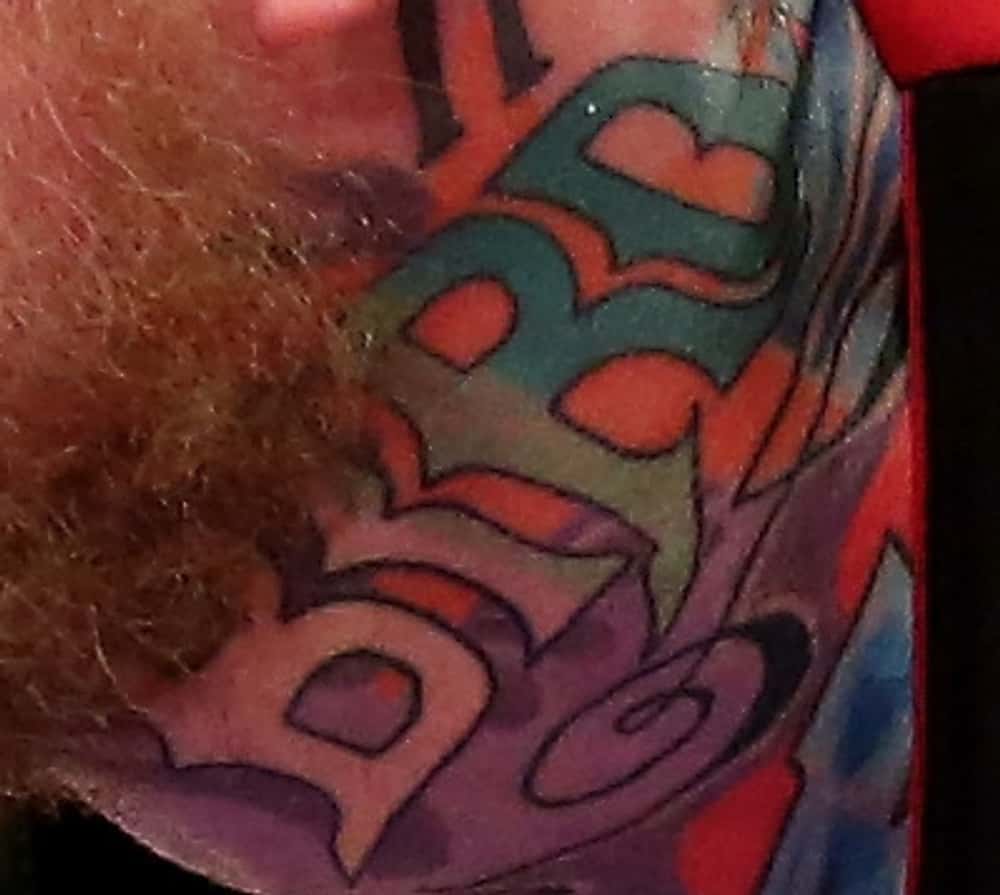
A close-up shows “Free Bird” in thick, rounded letters near Andersen’s face and upper neck. The lettering uses several colors and sits within a larger patch of ink, so it reads as one part of a denser design.

Chris Andersen free bird tattoo

The phrase also recalls Andersen’s Birdman nickname, though that doesn’t tell us why he chose it. There’s no reliable public explanation of when he got the tattoo or who did it. The bright colors and rounded letters give it a loose, upbeat feel, set among the other neck and face tattoos.

The bald eagle tattoo on Andersen’s shoulder

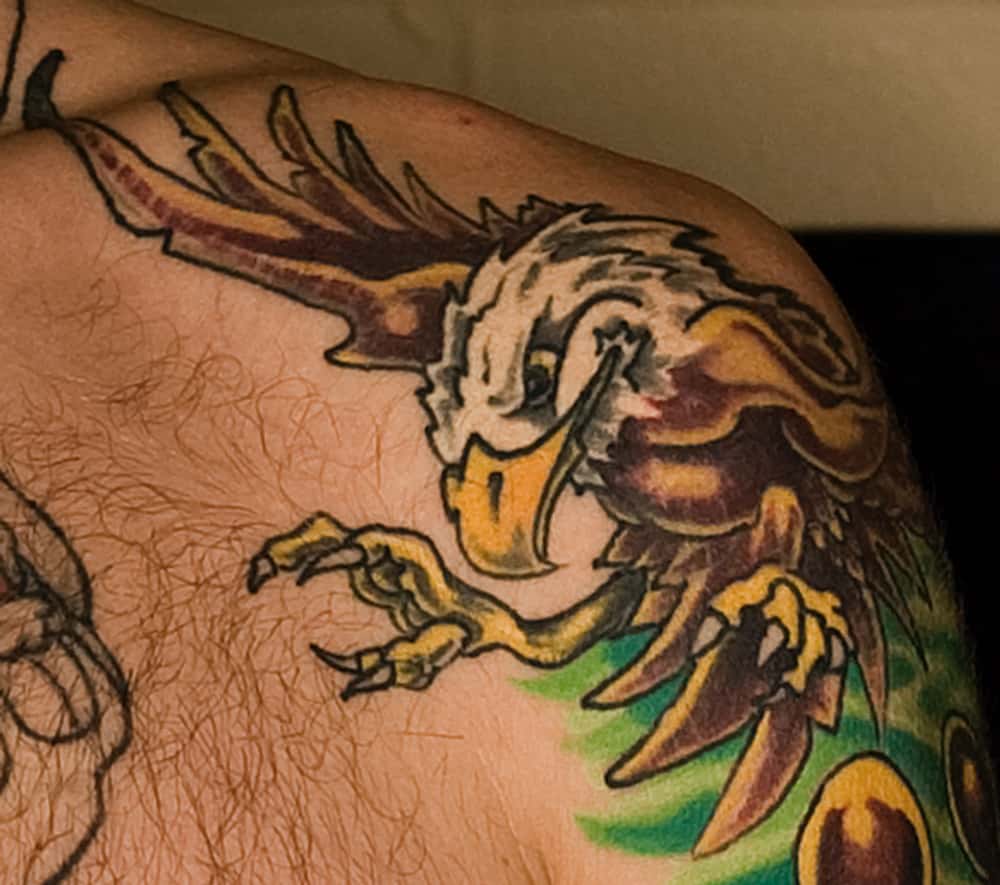
A bald eagle spreads across Andersen’s shoulder. The beak, feathers, wings and claws use warm colors, with a dark outline that keeps the image distinct from the surrounding ink.

Chris Andersen bald eagle tattoo

The photo makes the eagle easy to identify, but Andersen hasn’t publicly given one confirmed meaning for the piece. It’s a large shoulder design, and the bird imagery fits alongside the Birdman name without needing a more specific explanation.

The red wing tattoo

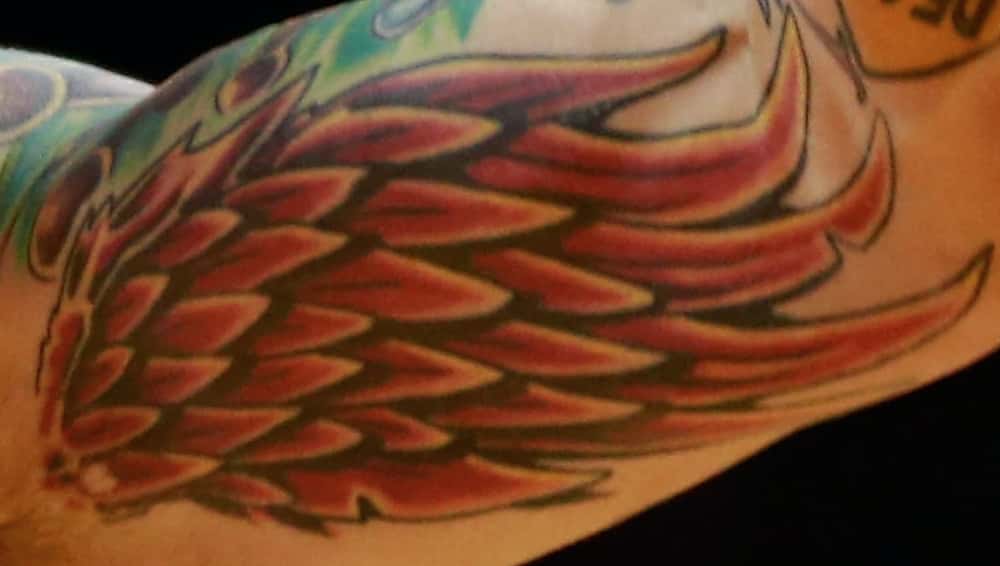
Another close-up shows a red wing across the skin. Dark outlines separate the layered feathers, and the shapes follow the arm. The red gives this piece a different look from the eagle’s warmer tones.

Chris Andersen red wing tattoo

Wings appear elsewhere in Andersen’s collection, but this one is easy to pick out because of its color and scale. In a close-up, the red feathers take up most of the frame; in a wider photo, they sit among the other arm tattoos.

The “Dead End” lettering

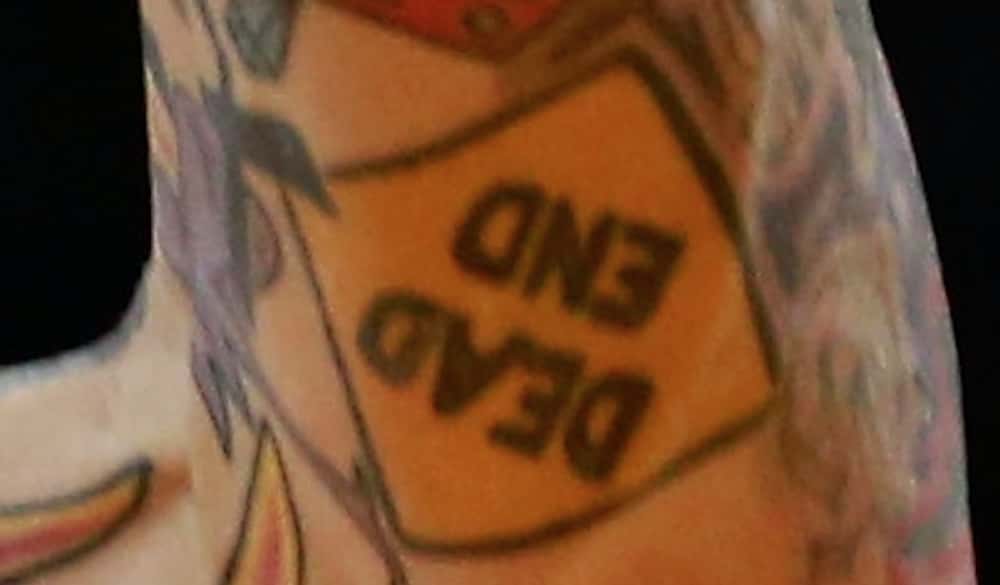
The “Dead End” tattoo sits inside a bordered shape. Its heavy letters are easy to read, and the design has a graphic, direct look.

Chris Andersen Dead End tattoo

There’s no confirmed public explanation for the phrase. The photo shows the border, the lettering and the contrast between the dark ink and the skin around it. That’s enough to identify the tattoo without guessing at a backstory.

Neck tattoos and the Birdman name

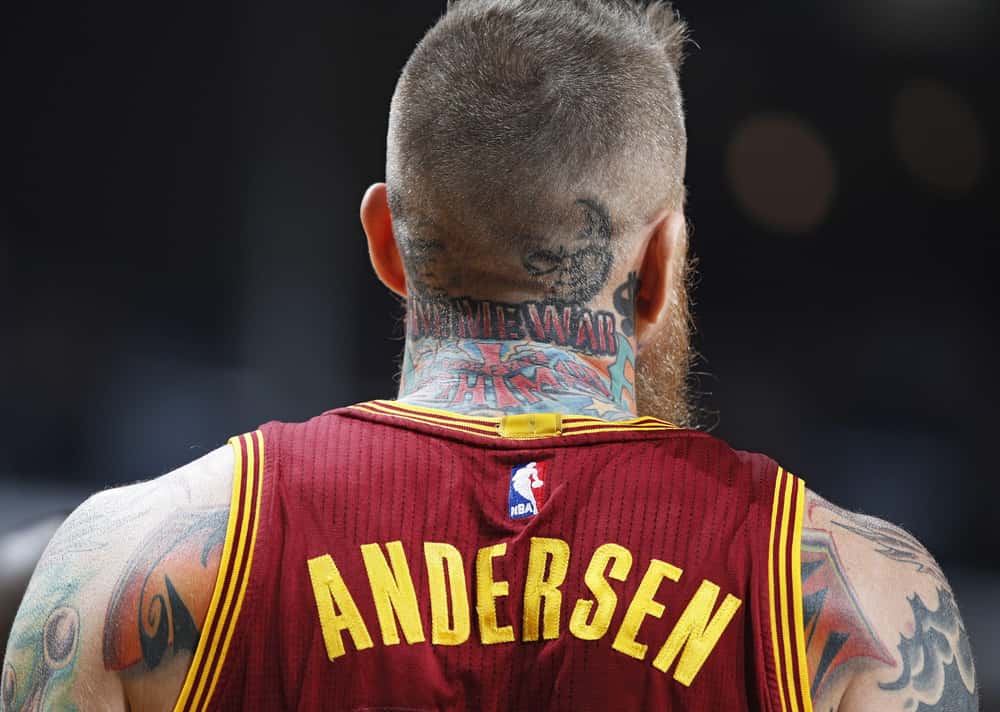
Photos from behind show large lettering across the back of Andersen’s neck, with color and smaller shapes around it. The word “Birdman” is easy to make out, linking the ink to the nickname fans knew.

Chris Andersen neck tattoos

Neck tattoos stay visible in a jersey, and Andersen’s are part of the look people remember. The lettering sits among the surrounding color and symbols rather than on its own, making the back of his neck look densely covered.

How many tattoos does Chris Andersen have?

There’s no reliable public count. Andersen has tattoos across his neck, shoulders, arms, chest and back, and some designs overlap or connect closely enough to read as one larger piece.

That makes a total hard to pin down from photos. A close-up may show one eagle or phrase; a game photo catches more of the collection but loses the fine detail. The clearest answer is that he has extensive coverage across much of his upper body, with no neat count confirmed in public.
What makes Andersen’s tattoos stand out?

Color is part of what stands out in the photos: reds, blues, greens and warm yellows appear alongside heavy dark outlines. The placement is just as visible. Tattoos on his neck and face show even in uniform, while the arm pieces cover a broad area.

Birds, wings and lettering recur across the collection. The styles vary from one piece to the next, with colorful images beside heavier shapes and text. Together they give Andersen’s tattoos a look that’s easy to distinguish in photos.

Why the tattoos became part of his basketball identity

Andersen was recognizable for his mohawk, size and energy around the rim. The colorful tattoos added another visible part of that image, on court and in photos.

His tattoos also appear across different parts of his body and in different styles, so the collection doesn’t read as one uniform design. If you like athletes whose ink became part of their public image, Dennis Rodman’s tattoos are another example.

Final take on Chris Andersen’s tattoos

The eagle, red wing, “Dead End” lettering, “Free Bird” phrase and neck work are among the clearest pieces in these photos. There’s much more ink across Andersen’s upper body, but the meaning of every small design isn’t publicly documented.

The photos show the broad picture: colorful, heavily outlined tattoos across his neck, shoulders and arms, with birds and lettering among the recurring designs.

Watch: Search clips of Andersen’s basketball career and tattooed Birdman look below.

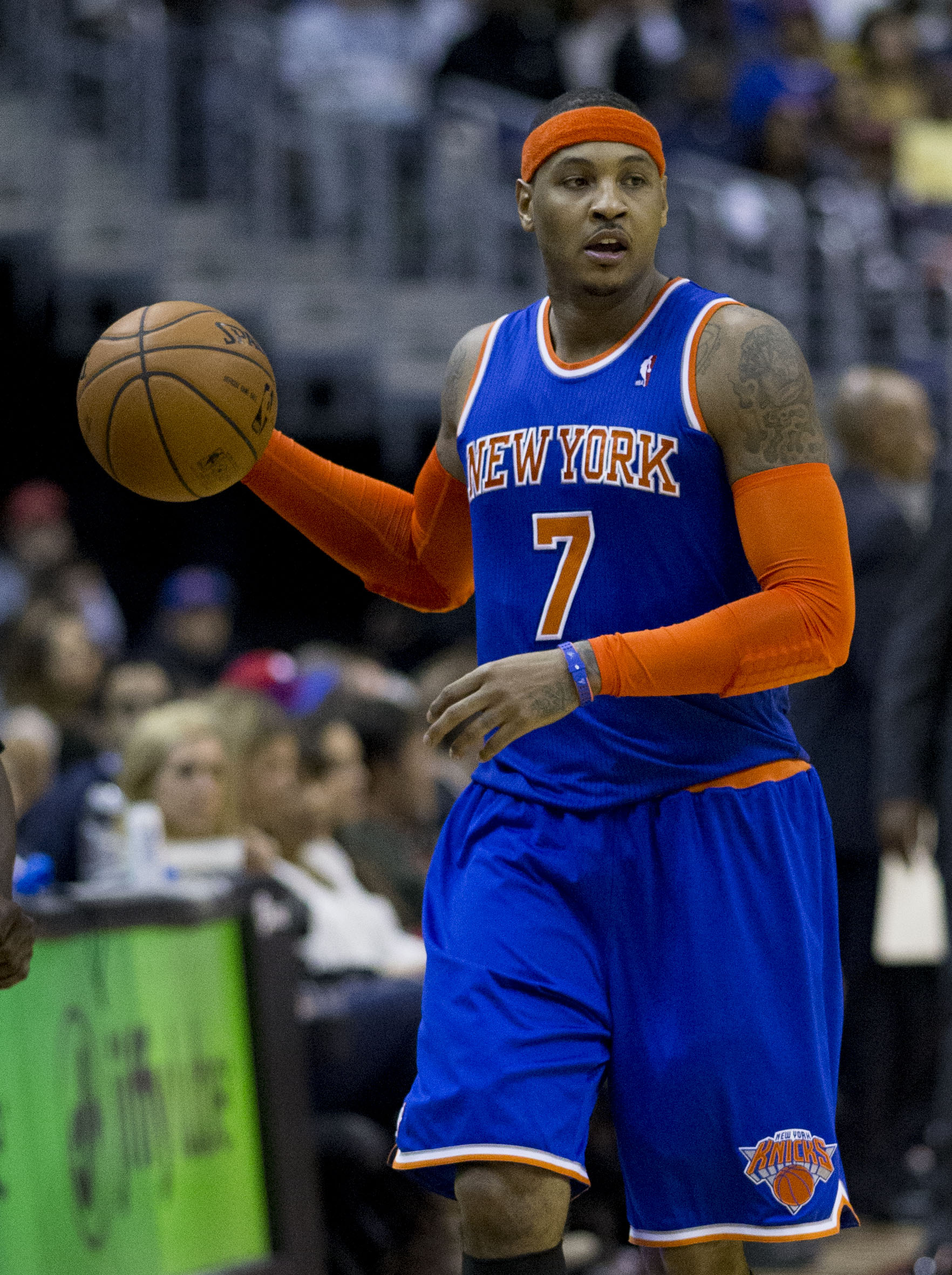
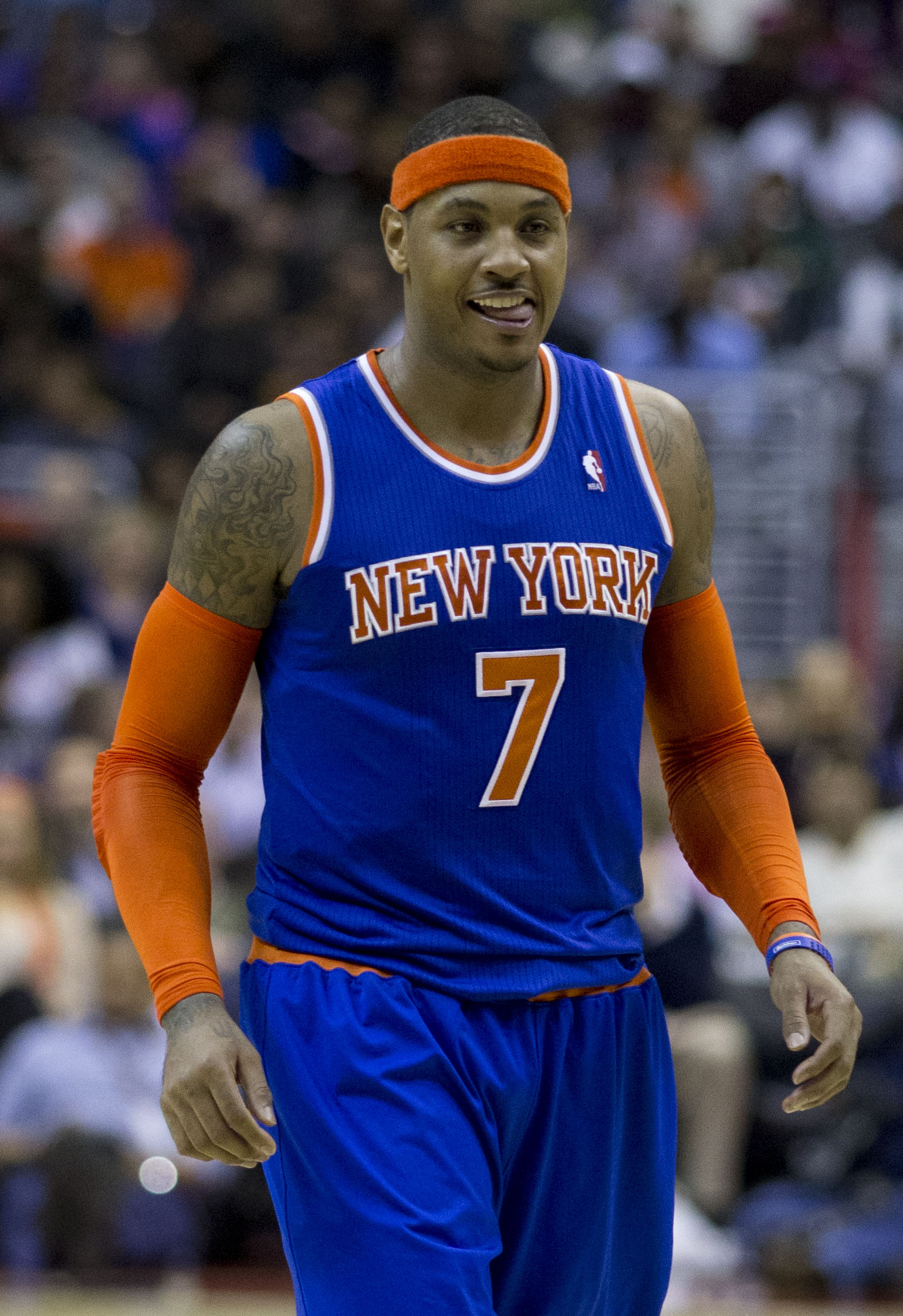
Carmelo Anthony Tattoos: Sleeves, West Baltimore and the Ink Behind the Game

Carmelo Anthony’s tattoos bring together basketball, West Baltimore, family and questions of trust. The ink covers his arms and reaches across his chest. Some designs are easy to identify; others are hard to make out in a game photo.

I’ll stick to what the clear photos show and to meanings Anthony has discussed. When a phrase or symbol has no confirmed explanation, there’s no reason to guess.

What stands out first in Carmelo Anthony’s tattoo collection?

The amount of ink on both arms is hard to miss. It runs from his shoulders toward his forearms, mixing lettering, sports imagery, portraits and black-and-gray shading. There’s also chest work, along with smaller tattoos on his hands and wrists that show in some photos.

The collection grew over time, so the styles don’t all match. Some older tattoos look softer in later photos; the larger arm pieces still have enough contrast to read from a distance.

Carmelo Anthony right shoulder and arm tattoos

The flaming basketball and his initials

A flaming basketball with Anthony’s initials sits near his upper arm and shoulder. It appears in early basketball photos. The flames give it a familiar sports-tattoo look, and the initials make the design specific to him.

The image also connects directly to his career. Basketball took Anthony from West Baltimore to Syracuse and then the NBA. The basketball and initials make the connection plain; the rest of the design doesn’t need an extra explanation.

West Baltimore and the WB shoulder tattoo

The letters WB below Anthony’s shoulder are commonly linked to West Baltimore, a place he has often described as home. It’s one of the most direct references to where he came from in this collection.

The initials sit beside the larger arm work, so they’re part of a wider design. They can be easy to miss in a distant shot; a side view of his upper arm makes them clearer.

Carmelo Anthony arm lettering and shoulder tattoo

“Who Can I Trust?” on the upper arm

The words “Who Can I Trust?” run across Anthony’s upper arm. The wording gives the collection a different feel from the basketball imagery. Without a specific explanation from Anthony, there’s no reason to tie it to one event.

Text can be difficult to read when it sits beside heavy shading, but the phrase shows in sharper photos. The wording is clear even if the story behind it isn’t.

The bulldog, playing cards and left arm work

Anthony’s other arm has a bulldog, playing cards, the nickname “Melo” and flame-style designs. The bulldog is the main image, with the cards and surrounding lines filling in the space around it.

The view changes with the angle. In a game photo, you might see only the shoulder; another shot can show more of the forearm and how the designs sit beside each other. Together, they look like separate pieces added at different times.

Carmelo Anthony tattoos covering both arms

Chest lettering and “No Struggle, No Progress”

Anthony has lettering across his chest, including “No Struggle, No Progress.” The wording is direct and fits with the emphasis on work and persistence that runs through his tattoos.

A jersey usually hides chest tattoos, so they’re clearer in older studio shots, warmups and photos with a lower neckline. The chest pieces add another personal statement alongside the basketball designs.

Forearm lettering, hand details and smaller symbols

The forearms carry more lettering and smaller symbols. Some photos show words running along the arm; others catch ink near the wrist or hand. When the letters aren’t sharp enough to read, it’s better to describe where they sit than to supply a guess.

Multiple views help. The same arm looks different when relaxed, raised, partly covered or turned toward the camera. Clear images show the designs without relying on a small crop.

Carmelo Anthony forearm tattoo detail

How the arm tattoos changed across his career

The photos show the collection filling in over time. Earlier images leave more open skin between individual tattoos. Later ones show fuller arms, with older lettering and shading beside newer work.

Lighting changes what you can make out. Arena photos can flatten black ink or lose gray shading against the background. A close portrait may show the bulldog, a shoulder symbol or script that’s hard to see during a game. Different views help separate the tattoo from a shadow or jersey edge.

Carmelo Anthony arm tattoos during a game

Which Carmelo Anthony tattoo ideas are easiest to recognize?

The clearest designs are the flaming basketball and initials, the WB mark, “Who Can I Trust?”, the bulldog with playing cards, and the chest phrase about struggle and progress. That covers the larger, easier-to-read tattoos; the smaller symbols don’t all have confirmed meanings.

To compare his hometown and basketball tattoos with other players’ ink, see Michael Phelps’ documented tattoos. Jayson Tatum’s ink also connects family, identity and basketball, though the style differs. For another NBA veteran’s personal symbols, look at Dennis Rodman’s tattoo collection.

Final take on Carmelo Anthony’s tattoos

The arm pieces carry most of the color and coverage, while the lettering points to West Baltimore, family, trust and the game. Some meanings have been documented; others are readings of what’s visible. A few small details remain hard to identify in public photos.

More than one angle helps. A jersey, shadow or arena light can hide a piece in one photo and bring it out in the next.

Watch Carmelo Anthony talk about his first tattoo

In the short interview below, Anthony talks about getting his first tattoo and his mother’s reaction.

Valentina Shevchenko Tattoos: Glock, Sak Yant and Snow Leopards

Valentina Shevchenko’s tattoos point to several parts of her life: Muay Thai, Kyrgyz identity, her coach and competitive shooting. She has explained some designs herself; others are easier to describe by what the photos show than by what they mean. A cropped weigh-in shot can hide one piece and make another look larger than it is.

The clearest way to read Valentina Shevchenko’s tattoos is to look at each design from more than one angle. Most of her ink sits around her shoulder, side, waist and back. Here’s what the photos show, and where Valentina has spoken about their meaning.

Valentina Shevchenko tattoos at a glance

  • Glock 19: a lower-abdomen tattoo tied to her interest in shooting and the “Bullet” nickname.
  • Muay Thai shoulder emblem: a design connected to her Kyrgyz federation, coach Pavel Fedotov and training academy.
  • Snow leopard imagery: part of the shoulder emblem; the motif connects it to Kyrgyz national style and combat sports.
  • Hanuman Sak Yant: a Thai spiritual tattoo tied to Muay Thai and ideas of strength, courage and protection.
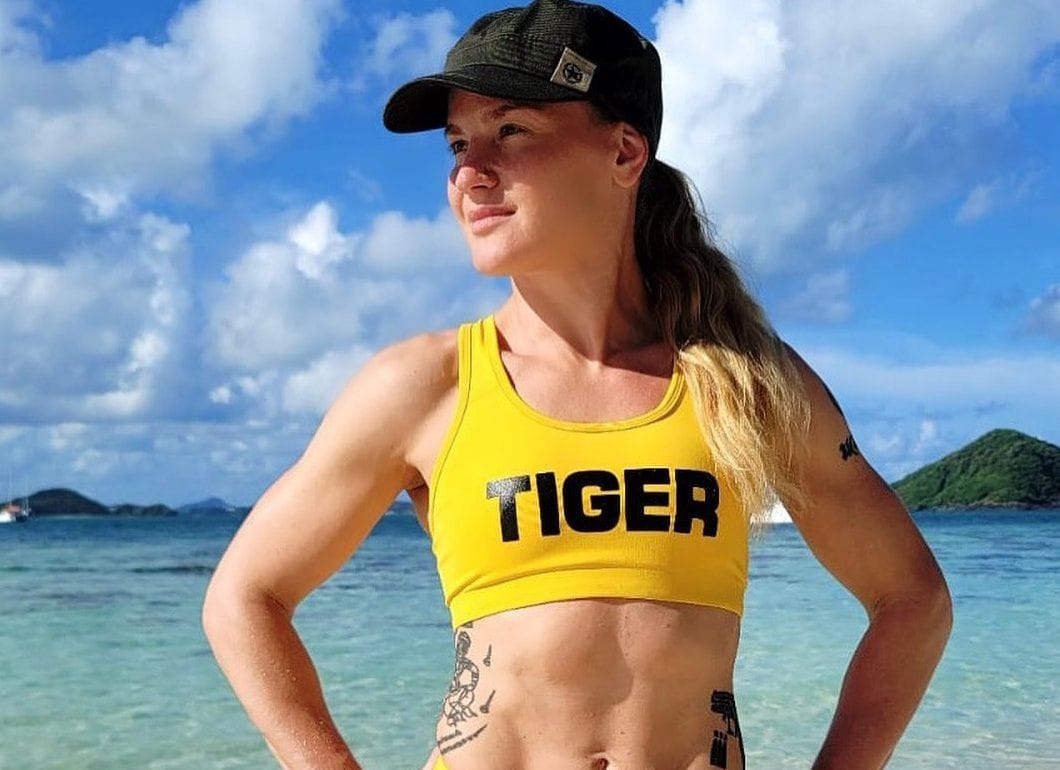
  • Back and side script: smaller writing and symbols visible in beach, training and weigh-in photos.

The Glock 19 tattoo on her lower abdomen

The easiest tattoo to recognize is the black Glock 19 on Valentina’s lower abdomen. It sits low on her side, so fight kit can cover it; bikini and training photos show more of it. She has said she likes shooting and sees the Glock as something universal, much like MMA itself.

She has competed in shooting events outside the cage and talks about firearms with the same calm focus she brings to fighting. Her longtime coach gave her the nickname “Bullet” because of her speed, which makes the gun an easy visual match for the name. The shooting connection comes from her own explanation; the nickname adds another link people may notice.

Valentina Shevchenko Glock waist tattoo

The black outline and magazine sit low on the side of her body, which is why a sports top can hide the design. A LowKick MMA breakdown also connects it to her shooting background and her comments about choosing that model.

Her shoulder emblem and the snow leopard design

In a 2015 interview, Valentina said she got the shoulder piece after a Muay Thai world championship in Thailand. It combines the Kyrgyz Republic’s Muay Thai federation emblem with the club of her coach Pavel Fedotov, who helped train her from childhood.

The design includes two snow leopards, a fist and Kyrgyz-inspired pattern work. It’s easy to read the snow leopard as a match for her fighting style—fast, watchful and at home in rough terrain—while the pattern points back to Kyrgyz identity. That keeps the design tied to home instead of generic fight branding. It wraps around the shoulder and upper arm, but it is not a full sleeve. Tight crops can make the piece look larger than it is.

Valentina Shevchenko snow leopard shoulder tattoo

The upper-arm view makes the layout easier to follow: the circular tattoo, dark animal shapes and text beneath it are all visible. Valentina has described the piece as connected to her career and family. That account adds more than the impression that she chose it simply because it looked fierce.

The Hanuman Sak Yant and her Muay Thai roots

In the same interview, Valentina said she added the Thai deity Hanuman after the 2009 IFMA world championship. Hanuman is associated with strength, courage, loyalty, devotion and protection, which gives the tattoo a natural place in her Muay Thai story.

Sak Yant tattoos have a spiritual side that can get lost when they are reduced to “fighter tattoos.” Traditional versions are associated with blessings and rules for the person who receives them. LowKick notes that those rules can draw on Buddhist ethics, including avoiding killing, stealing, lying, intoxication and sexual misconduct. That tradition has its own cultural context; it deserves more than a quick caption calling it a trendy graphic.
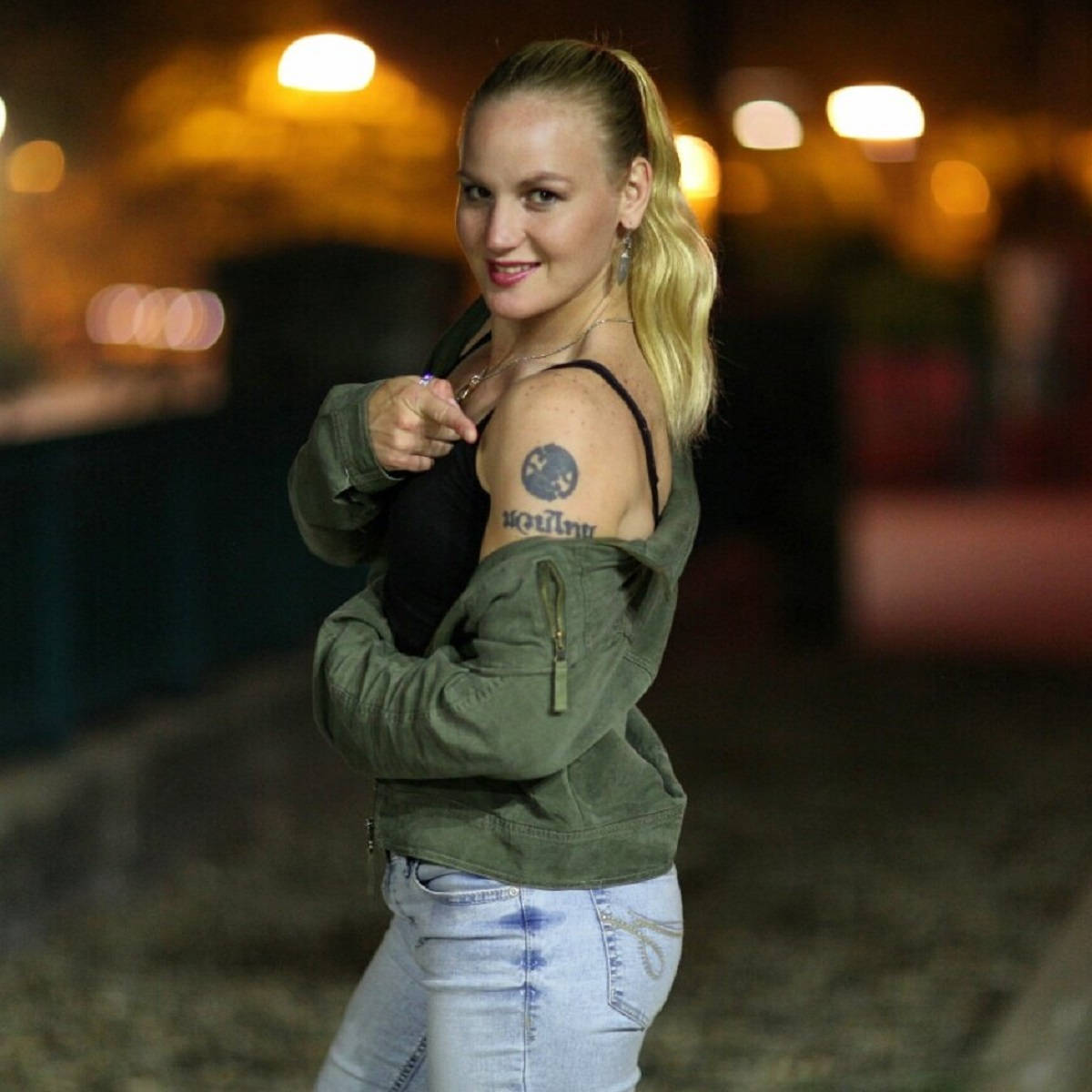
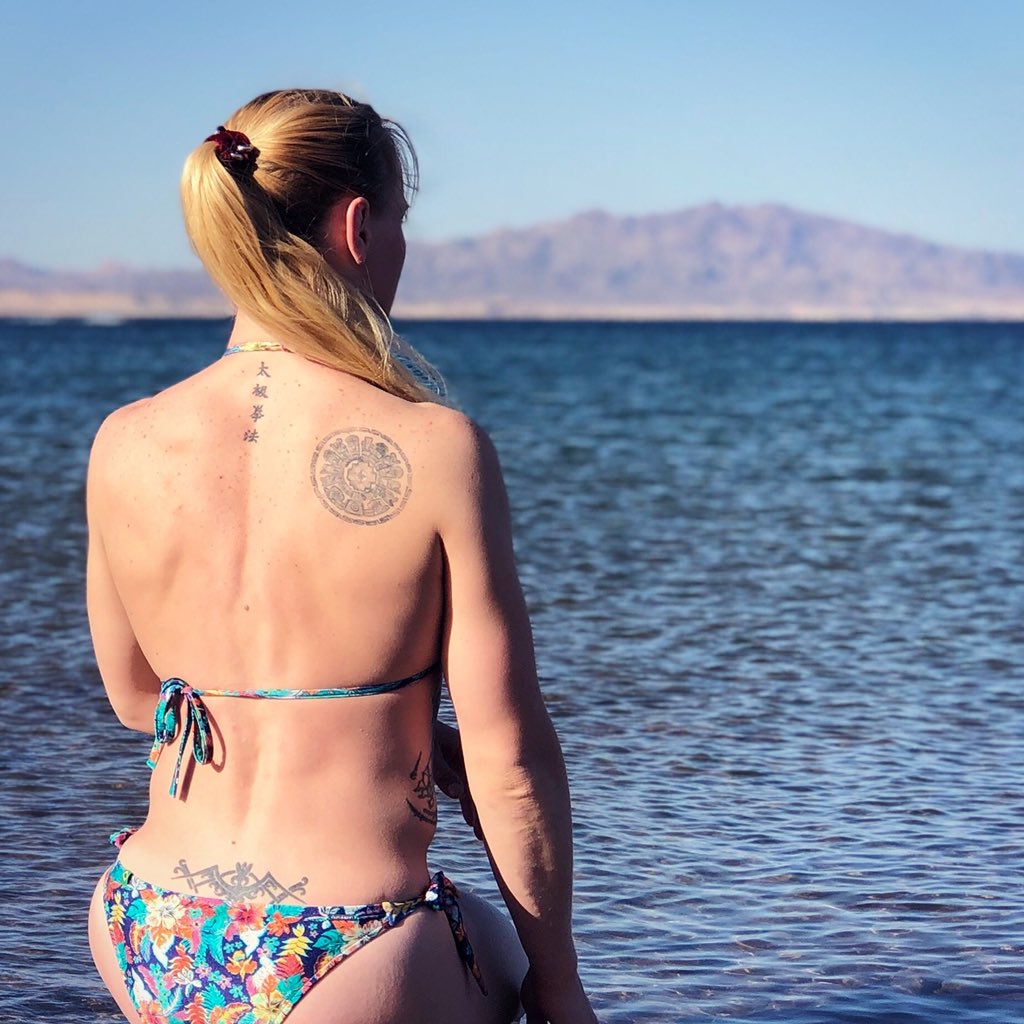
Valentina Shevchenko back Sak Yant and script tattoos

This photo shows the circular upper-back design, vertical script, side piece and lower-back writing in one frame. They sit far enough apart to read as separate tattoos. The sharp image and even lighting make the details easier to see without a tight crop.

Side tattoos, waist ink, and the details people miss

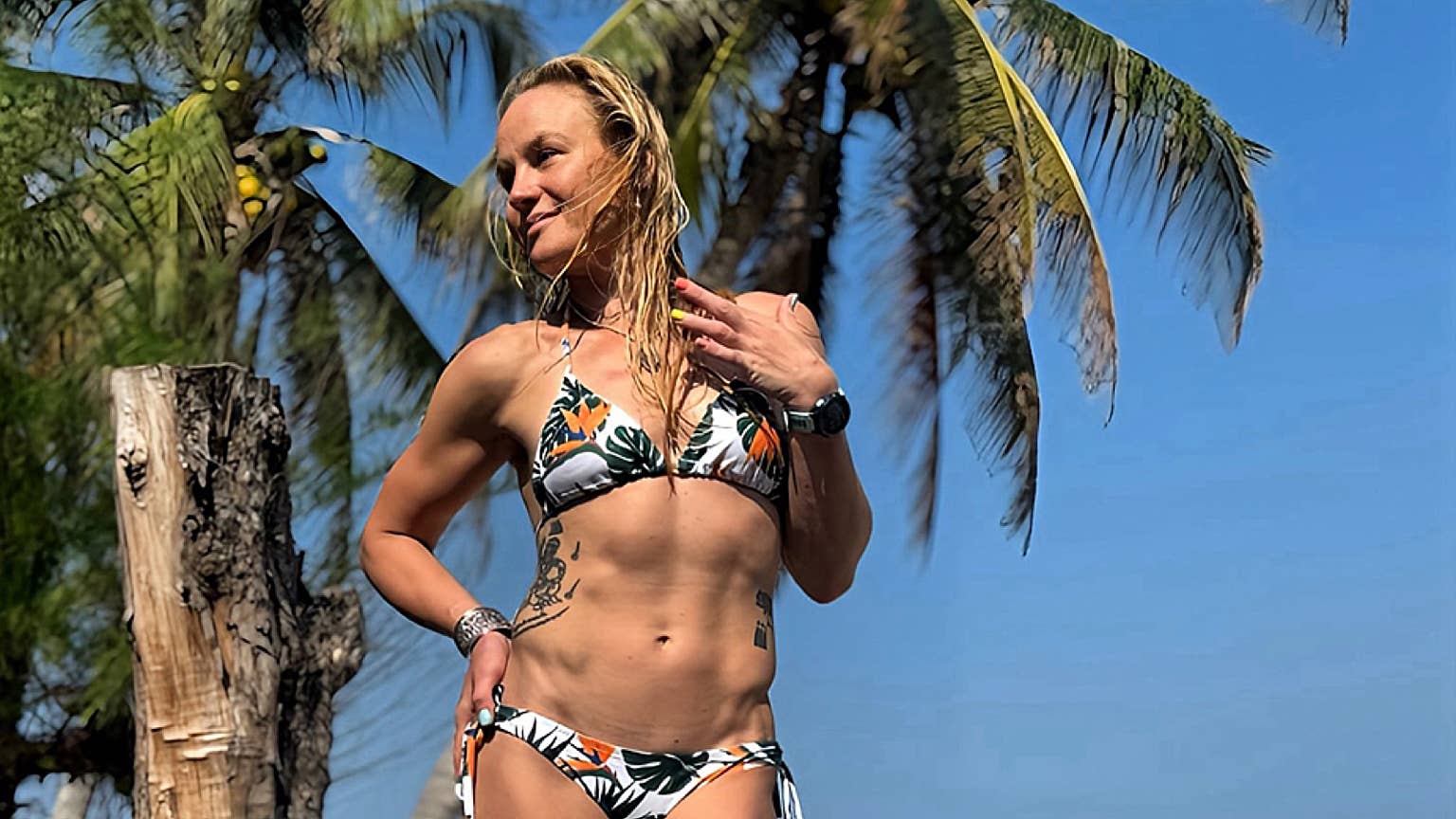
Valentina also has smaller marks around the side of her torso. Reliable accounts do not name all of them, so it is safer to describe what is visible: a darker vertical piece along her side, smaller marks near the waist, and writing or symbols that show more clearly when she turns away.

That is why two swimwear photos can appear to show different collections. One catches the side piece and lower-waist marks; another shows the upper arm and how the shoulder emblem sits in relation to the rest of her ink.

Valentina Shevchenko side torso tattoos

The wider side view lets you follow the black line work from the waist upward and see the smaller marks near her abdomen. The full placement makes more sense than it does in a close-up, where separate pieces can blur together.

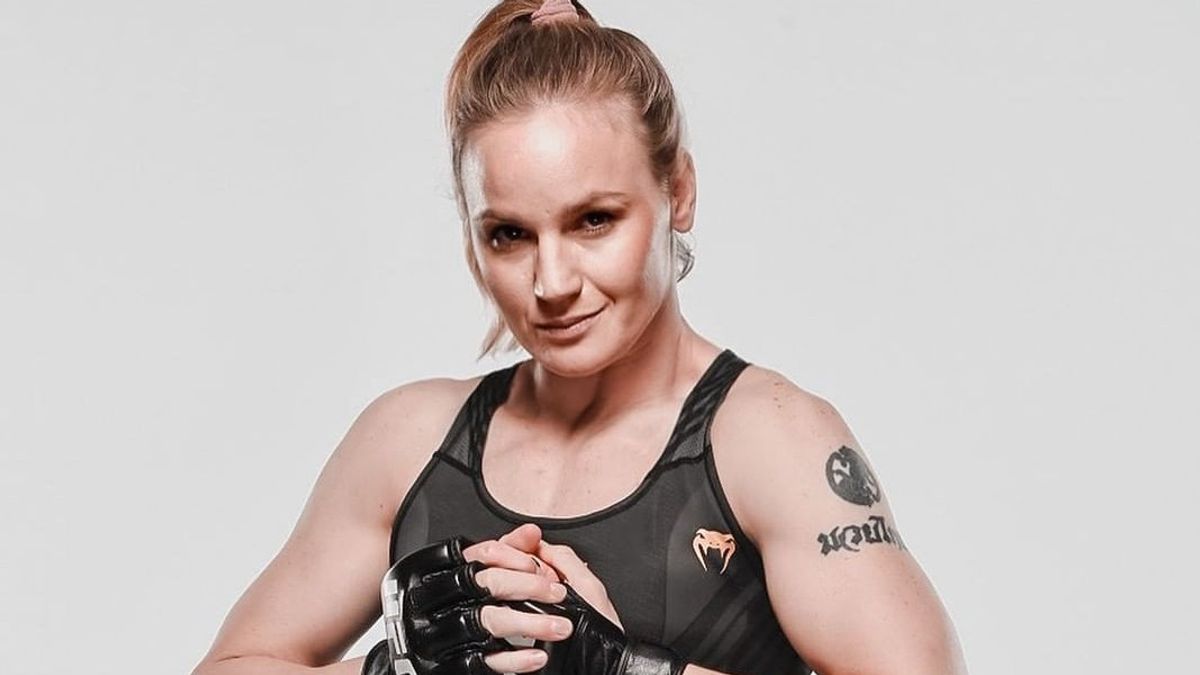
Valentina Shevchenko shoulder and upper arm tattoos

This upper-body view gives another look at the shoulder and the lettering beneath the circular design. The piece is not huge, but it is readable in the full photo. Her fight kit can cover or reveal it depending on the cut, so the ink’s visibility changes from one image to another.

What Valentina’s tattoos have in common

The named designs point to different parts of Valentina’s life. The shoulder emblem connects her to Kyrgyz Muay Thai and her coach; Hanuman connects the collection to Thai spiritual tradition; the Glock reflects her interest in shooting and her “Bullet” nickname. The smaller marks around her back and waist are harder to explain from photos alone.

This is not an all-over collection. A few well-placed designs carry most of the documented story, each tied to a person, a championship or a part of her life. Together, they make a partial timeline rather than a full inventory.

For other athlete tattoos, compare Michael Phelps’ tattoos with the more performance-driven ink in Jayson Tatum’s collection. For a very different wrestling-era look, Dennis Rodman’s tattoos are louder and more experimental.

Watch Valentina explain the stories behind her ink

In this video, Valentina talks about her designs, her interest in shooting and life as a fighter. She explains the designs in her own words.

Final take

Valentina Shevchenko’s tattoos connect to shooting, Muay Thai, Kyrgyz identity, Thai spiritual tradition and the coach who helped shape her career. The Glock is easiest to recognize, while the shoulder emblem and Hanuman piece show other parts of that story. Clear photos make the placement easier to follow. Where Valentina has not explained a design, its personal meaning remains hers.

DeMar DeRozan Tattoos: Malcolm X, Family Portraits and Blue City Ink

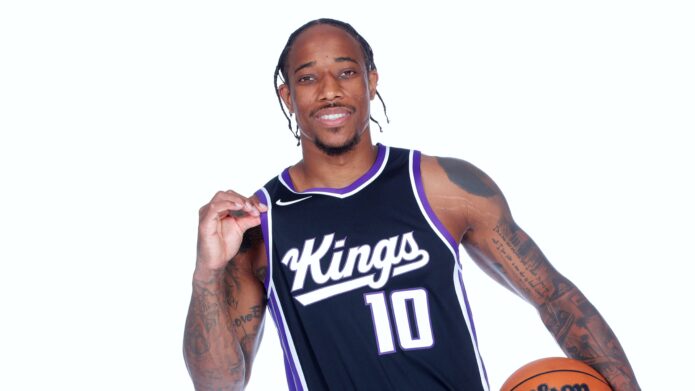
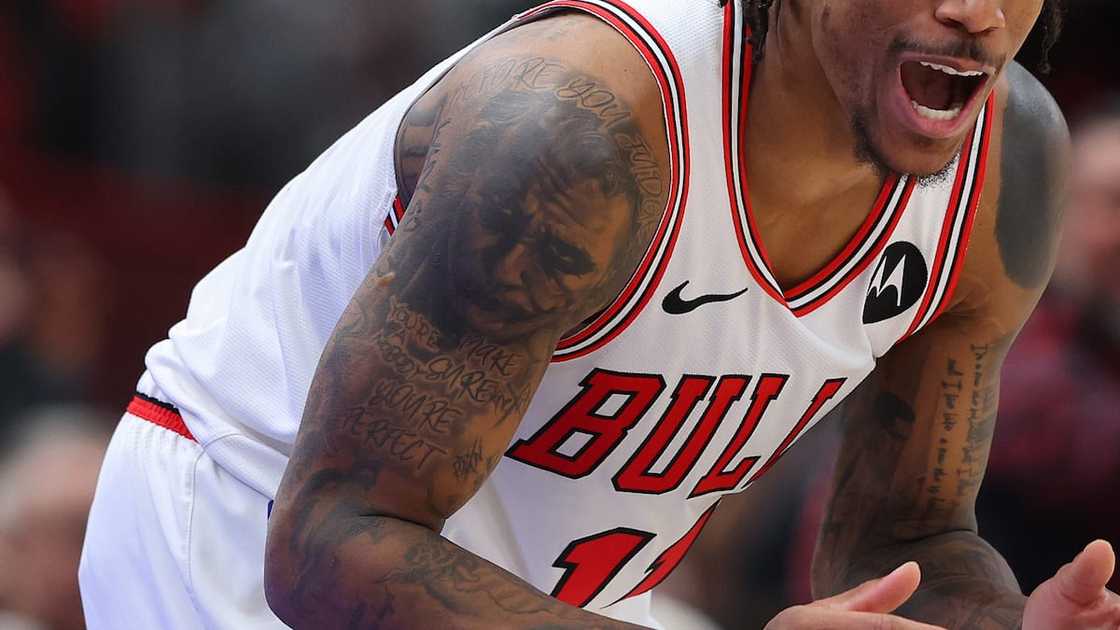
DeMar DeRozan’s tattoos bring together family portraits, reminders about struggle and ambition, and images of people he admires. His arms show his father and grandmother, Malcolm X, and Heath Ledger’s Joker. During a game, a jersey or moving camera can make those separate pieces look like one mass of ink.

It helps to look at DeMar DeRozan’s tattoos one area at a time. A jersey and courtside angle can hide some lettering or make portraits run together. Across the collection, family, Compton, Chicago, pressure and the people closest to him keep coming up.

DeMar DeRozan tattoos at a glance

  • Malcolm X portrait: a detailed tribute on his left bicep, done by tattoo artist Steve Wiebe.
  • Father tribute: a portrait of Frank DeRozan on his left shoulder, added after his father died.
  • Grandmother tattoo: a portrait of Barbara with the words “Blessed One” on his forearm.
  • Blue City and motivation: text such as “Blue City,” “Loyalty,” “Struggle,” and “Dedication” runs through the arm work.
  • Heath Ledger Joker: a dramatic character portrait that brings a darker note to the collection.
  • Why So Serious?: a phrase that stands out in game photos and sits with the Joker imagery.

The full arm work is more than one sleeve

Photos often flatten DeMar’s arm work into one giant sleeve. Closer views show separate portraits, lettering, symbols and shaded sections beside one another. No single design covers the whole arm.

The mix is easier to read up close: script, portrait shading, larger dark areas and smaller marks tucked between them. The pieces appear to have been added over time, but their placement still leaves each design room to breathe.

Clothes and camera angle change what shows. A jersey strap can cover a shoulder tattoo, while the forearm lettering comes into view when he reaches for a shot. One game photo is not a complete inventory.

For a similar example of separate pieces building a larger look, compare Jayson Tatum’s tattoos with the more theatrical work in Dennis Rodman’s tattoos.

DeMar DeRozan inked arms tattoos

His father Frank is part of the story

One of DeMar’s most personal pieces is the portrait of his late father, Frank DeRozan, on his left shoulder. Reports describe it as a memorial and a way to keep that connection close. It is family history placed where it can show during training, games or everyday life.

A shoulder portrait can sit under a jersey, then show when he wears something that leaves the area uncovered. It sits among the other tattoos, as one of several family pieces on his arm.

DeRozan has spoken openly about pressure, anxiety and mental health. Those conversations give context to the memorial, but they do not tell us exactly what he was feeling when he got it. The portraits and phrases give some of those experiences faces and names; the full account stays with him.

This also helps explain why the portrait looks different from one photo to the next. A media-day image may show it clearly, while a game photo catches only the edge. Pictures with both the shoulder and arm in view give the best sense of how it fits with the rest.

DeMar DeRozan grandmother tribute tattoo

The Barbara portrait and the words “Blessed One”

Another family tattoo honors his grandmother Barbara. Her portrait sits on DeRozan’s forearm with “Blessed One” beneath it, a phrase tied to the nickname she gave him. The face and lettering give it a softer feel than the Malcolm X portrait.

It makes the collection feel less like a highlight reel and more like a timeline. The wording is short; the family connection does most of the explaining. Names and portraits turn a public career into something personal.

The forearm keeps the message in view during warmups, while driving and in the pauses between plays. Fans see it when he reaches for the ball, too.

“Blue City,” “Loyalty,” “Struggle,” and “Dedication”

The lettering matters as much as the portraits. “Blue City” points to Chicago, while “Loyalty,” “Struggle” and “Dedication” connect to DeRozan’s path from Compton to the NBA. They are bold phrases that show clearly in photos.

The words also change how the darker portrait work reads. A Joker or shaded figure can look intense on its own; alongside phrases about loyalty and dedication, the arm starts to feel like a personal code. The wording is direct, closer to a short list of reminders than a polished motivational poster.

One clear photo shows the forearm text in blocks, wrapping around the arm. Low-resolution screenshots blur those letters, making it easy to guess at meanings that are not actually visible.

DeMar DeRozan Blue City forearm tattoos

The Malcolm X tattoo on his left bicep

DeRozan’s Malcolm X portrait is one of the pieces with a clear public identification. It is based on the well-known photograph of Malcolm X looking through a window with a rifle. Tattoo artist Steve Wiebe worked on it, using close black-and-gray shading to keep the face recognizable.

The image has a specific place in Black history and carries associations with self-protection and pride. That context matters, though it does not tell us everything DeRozan sees in it.

The portrait sits among the other tattoos, surrounded by lettering and shaded pieces. On court, the bicep can look like a dark patch; a close-up makes the face, hair and outline easier to distinguish from the surrounding ink.

The reported details are clear: it is Malcolm X, the photo reference has been identified, and Wiebe has been named as the artist. The exact meaning of every nearby symbol is not public, so those are best left undescribed.

DeMar DeRozan Malcolm X tattoo close-up

The Joker, “Why So Serious?” and the darker arm pieces

DeRozan also has a Heath Ledger Joker portrait, with “Why So Serious?” visible in game photos. The character changes the mood of the arm: the family portraits feel grounded, while the Joker brings in a more chaotic image. Some readers connect it with pressure or the public mask athletes wear, but that is an interpretation.

DeRozan has not given a public explanation for every detail. The photos show the Joker clearly, and the nearby lettering makes a visual connection. Beyond that, the meaning is his to explain.

The phrase is short and easy to read where the camera catches it, especially when his arm is extended toward the basket. A close-up helps show how it fits among the other work, but it is visible in game photos, too.

DeMar DeRozan Joker tattoo close-up

What DeMar DeRozan’s tattoos have in common

People, places and pressure run through the collection. His father and grandmother represent family; Malcolm X connects the work to a historical figure he admires; the Chicago phrases point to home and identity. The motivational words recall the effort behind his career.

The Joker adds a pop-culture image beside those family portraits and personal reminders. From a distance the arms can look busy. Closer photos show different subjects and phrases; no single theme explains every piece.

A full-body image shows where the ink sits, an arm close-up lets you read the lettering, and a tattoo-session photo shows more of the shading. Together they give a clearer view than any one shot.

If you like sports tattoos that stay personal, see Michael Phelps’s tattoos. His collection is smaller, but it also uses ink to mark identity, memory and the path to major moments.

Watch DeMar talk about his tattoos

In this interview, DeRozan talks about basketball, the Joker tattoo and playing alongside Nikola Jokic. He gives his own context for the character piece.
Cody Garbrandt Tattoos: Family, Faith, Fight and the Stories Behind His Ink

A lot of Cody Garbrandt’s tattoos point to family, faith, fighting, and the people and places he talks about. He got his first tattoo at 14 after winning national titles. Since then, he has added bold lettering, black-and-gray work, hand ink, chest pieces, sleeves and larger designs tied to his life.

That’s what makes Cody Garbrandt tattoos worth looking at closely. The Family Over Everything chest piece says exactly what it means; his backpiece has a very different, more dramatic feel. The words on his hands and wrists read like reminders he carries into a fight. In his GQ Tattoo Tour, he explained many choices, including tattoos he likes and a chest piece he later regretted.

Here’s what the photos show, alongside the meanings Garbrandt has discussed himself.

Cody Garbrandt’s tattoo style at a glance

His collection mixes clean symbols with larger, densely shaded scenes. Lettering carries much of the message, while the bigger images give his arms, chest and back a darker look. Some designs read from across a room; others need a clear photo to make out the figures and shading.

Family, faith, resilience and proving yourself recur in the collection. That doesn’t mean every piece has a deep explanation. Some of the ink is simply part of a look he has built over time. Taken together, it fits the public image of a father, fighter and Ohio native.

Family Over Everything on his chest

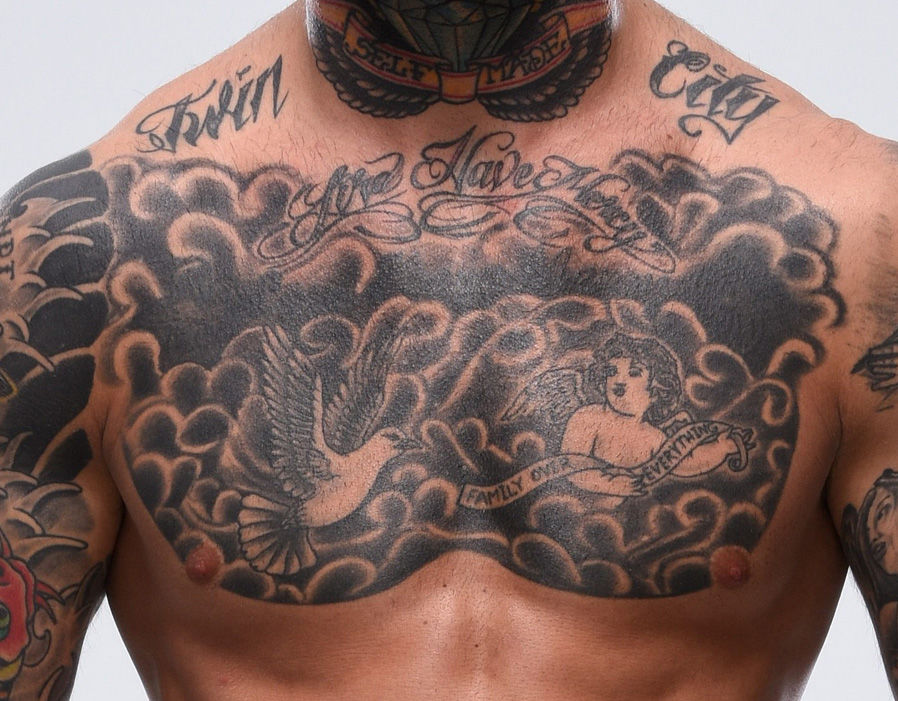
The chest piece reads Family Over Everything. A banner and dove sit with the words, while a cherub and shaded details fill out the design. It is a direct statement that he wears across his chest.

Cody Garbrandt Family Over Everything chest tattoo

Garbrandt has talked about the importance of family outside the cage, and the tattoo puts that priority in view. The lettering is easy to read; the dove, banner and shaded figures give the rest of the chest piece more to look at.

A full-size image helps with the smaller details, which can disappear in a social-media crop. You can see the lines and how the different parts fit together.

The A Promise Kept tattoo and the UFC chapter

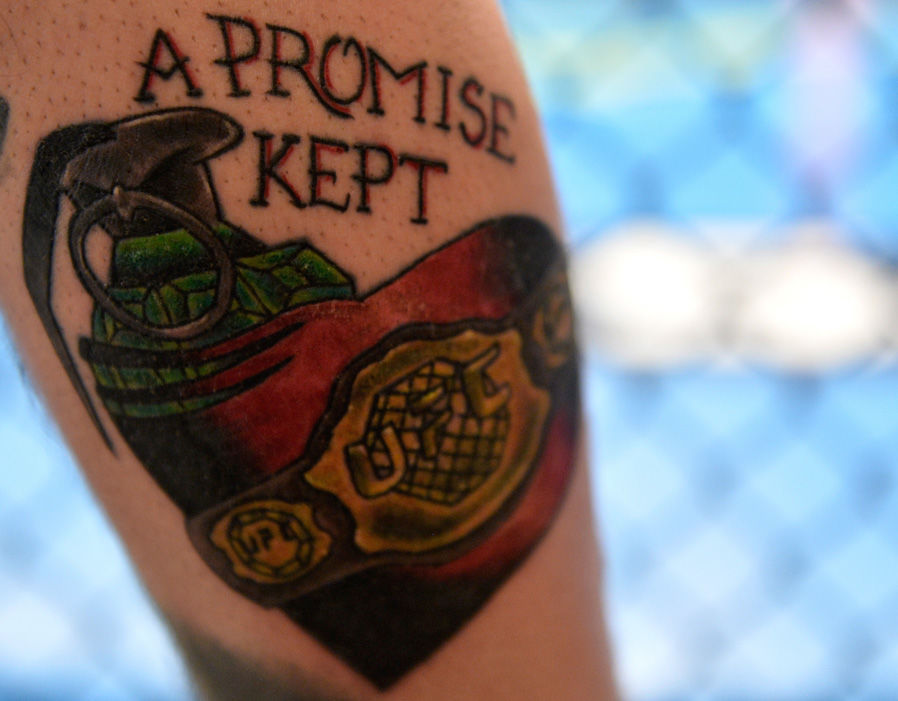
Another piece he has discussed is A Promise Kept, lettering paired with a colorful fight-related design. The image has the feel of a trophy or belt, with the hard road to earning one built into the idea. Garbrandt has often talked about goals, preparation and keeping his word to himself; the phrase fits that outlook.

Cody Garbrandt A Promise Kept tattoo

The words name the theme, and the colored image gives the tattoo a focal point. It connects to his UFC career, though the idea can also apply to commitments to training, family, recovery or the person he wanted to become.

Much of his larger work is black and gray. This piece uses more color, which sets it apart and makes the lettering easy to pick out.

His backpiece is a full fight story

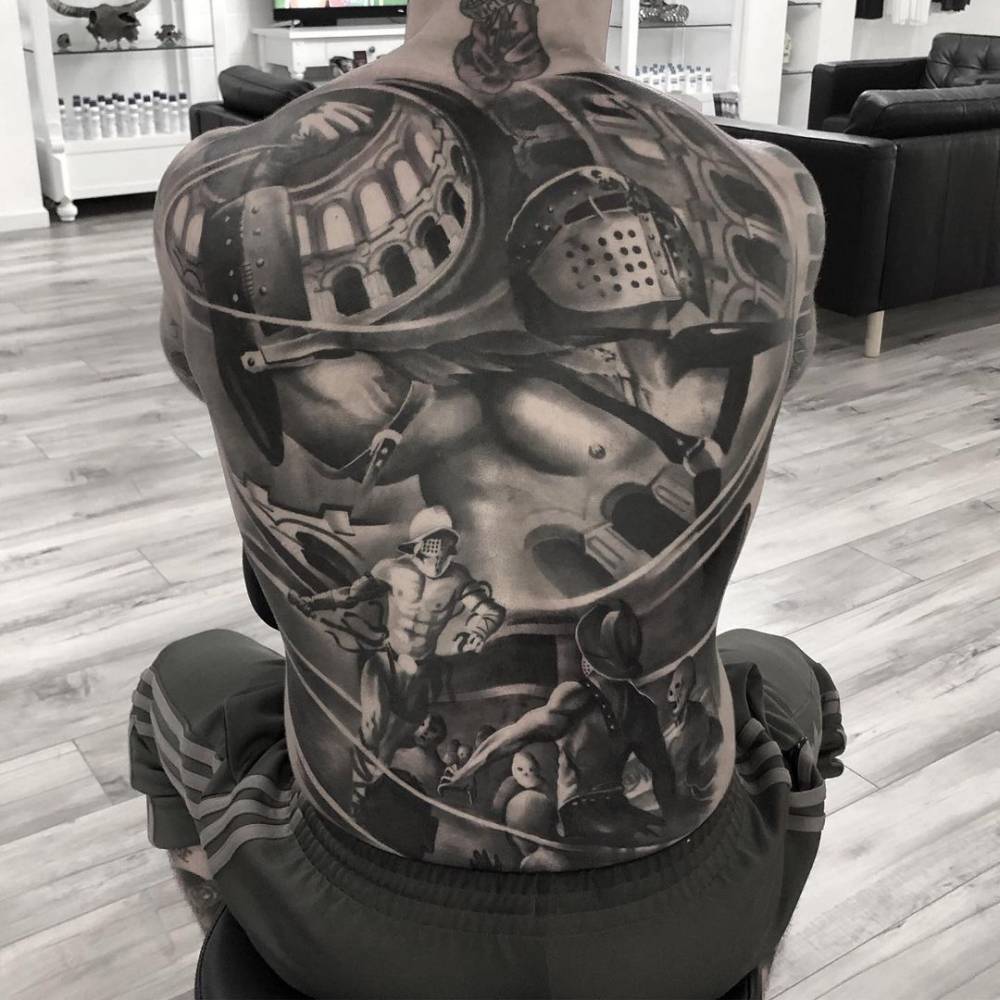
Garbrandt’s backpiece covers a large area. It has a dramatic, armor-like figure and dense shading, with a serious, imposing look that suits a fighter.

Cody Garbrandt full backpiece tattoo

A quick phone photo can flatten the detail because the back curves and the image gets compressed. In a clear view, the darker sections frame the central figure and use most of the back. The parts read as one composition.

This is one of the collection’s most visual pieces. The chest lettering spells out a priority; the backpiece leans into strength, conflict and theater. Its scale gives it the feel of a fight poster without repeating a specific logo or event.

Hand, knuckle, and wrist tattoos

The hand ink is hard to miss. Garbrandt has lettering and small symbols on his hands and wrists, including Only God Can Judge Me, which he discussed on his tattoo tour. Hand tattoos stay visible in training photos, interviews and daily life.

Cody Garbrandt hand tattoo close-up

The close-up shows the ink more clearly than a distant portrait. The placement gives the phrase the feel of a personal reminder and fits the hard-edged look of his fighting persona. His knuckle work includes True Love; the words come into view when he raises his hands.

He has also talked about the wrist phrases Live to Fight and Fight to Live. They read like two sides of the same idea: fighting is central to his life, and endurance matters beyond the cage too. The short wording does the work without a larger symbol around it.

Tiger work and the realistic side of his sleeves

The tiger on Garbrandt’s arm has a different look from the lettering. It is a realistic black-and-gray design with a strong face and deep shading. The piece puts texture and movement at the center.

Cody Garbrandt arm tiger tattoo

Tiger tattoos often suggest power and aggression. Here, the expression and dark shading keep the face clear on the arm. A small photo can turn the stripes and facial detail into a blur; a larger image gives the design a focal point.

His arm work looks like it has grown over time. The subjects and styles vary, while the darker black-and-gray pieces help them sit together. It isn’t perfectly uniform; it reads more like a record of different chapters.

Neck ink, faith, and the piece he questioned

Garbrandt’s neck tattoos add another visible part of the look. Photos show lettering and bold shapes, including self-made and winged imagery. The placement makes the ink part of his overall appearance, not something only visible in a close-up.

Faith appears in pieces he has discussed, including Saint Michael fighting the devil and other religious imagery. Some tattoos connect to protection, judgment and getting through hard times. That is a thread in the collection, though each image may have its own meaning.

He has also talked about regretting a chest tattoo with the words Lord Have Mercy and a dove. He hasn’t presented every piece as a perfect decision. Sometimes a tattoo belongs to a moment that looks different later.

Family, Ohio, and the details that make the collection personal

Some smaller pieces fill in parts of Garbrandt’s story. He has said a 9mm tattoo on his back honors Nick Duell, and he has ink tied to his nickname, No Love. Ohio’s Finest on his foot marks where he comes from.

Those names, places and phrases keep the larger designs from reading as generic fight imagery. A grenade, belt, saint, tiger and chest banner have their own look; personal references make the set recognizably his.

You can see a similar mix in other athletes’ stories, including our Tyrann Mathieu tattoos guide. The strongest tattoo guides pair photos with what the person has said and leave the unknowns alone.

What Cody Garbrandt’s tattoos say about him

Family comes first in the chest lettering. Faith appears in several forms, and the belts, phrases and darker images point to fighting. The plain words—family, promise, love, judgment and Ohio—carry much of the message.

The collection also has different eras in it. Some pieces are polished and colorful, others are dense black and gray, and some are just words on a hand or wrist. They don’t look like they came from one design brief, and that variety is part of the appeal.

Questions people ask about Cody Garbrandt tattoos

What was Cody Garbrandt’s first tattoo?

In his GQ Tattoo Tour, Garbrandt said he got his first tattoo at 14 after winning national titles. He has added many different pieces since then.

What does No Love mean?

No Love is Garbrandt’s nickname. The phrase ties the tattoo to the identity he carries as a fighter.

Does Cody Garbrandt have a face tattoo?

Public interviews have covered his visible tattoos and the possibility of going further. A mark that is hard to see in a photo should not be called a confirmed face tattoo. His neck and hand work are already prominent.

How many tattoos does he have?

Public lists often count 30 or more, but the number can change as he adds or covers work and as pieces are grouped into larger designs. There may not be one definitive count.

Are all of his tattoos about fighting?

No. Fighting is a major part of the collection, but family, faith, Ohio, relationships and personal reminders are there too. The Family Over Everything chest piece makes that clear.

Watch Cody explain his tattoos

Garbrandt’s GQ Tattoo Tour lets him talk through the hand lettering, faith pieces and tattoos tied to his career. It adds context that a photo alone can’t provide.

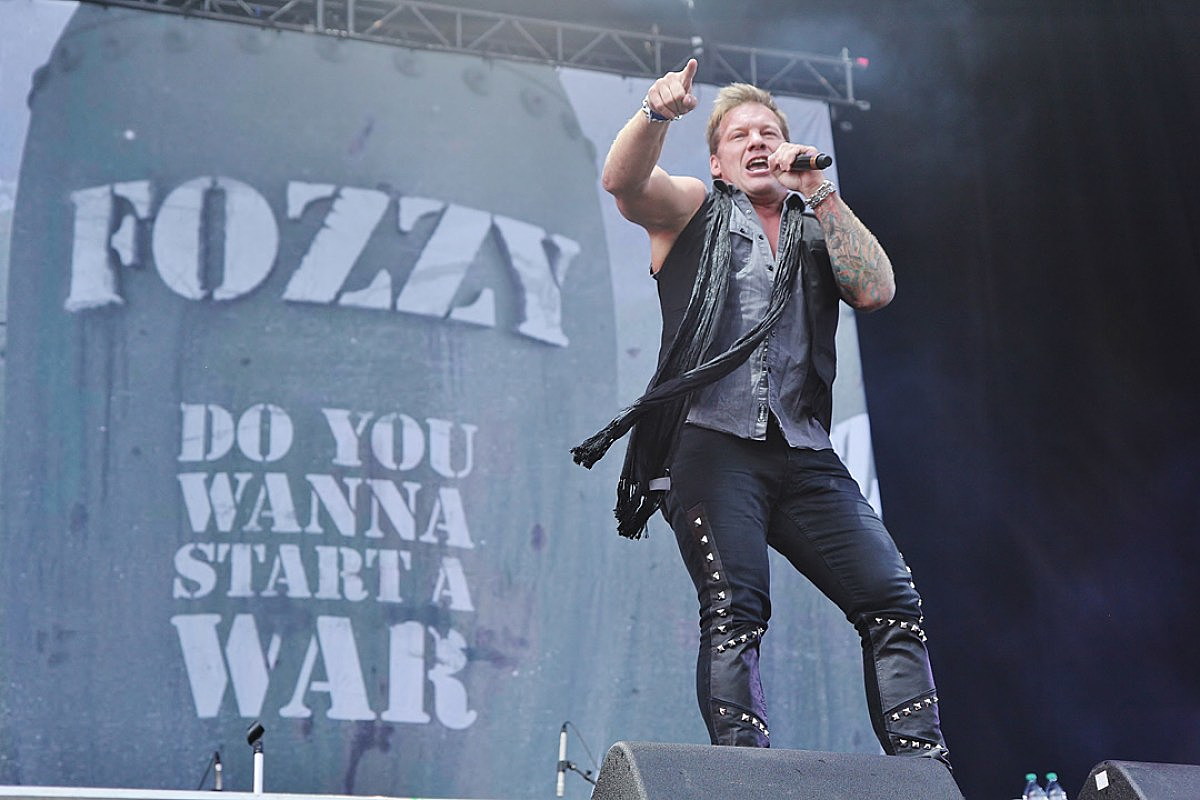
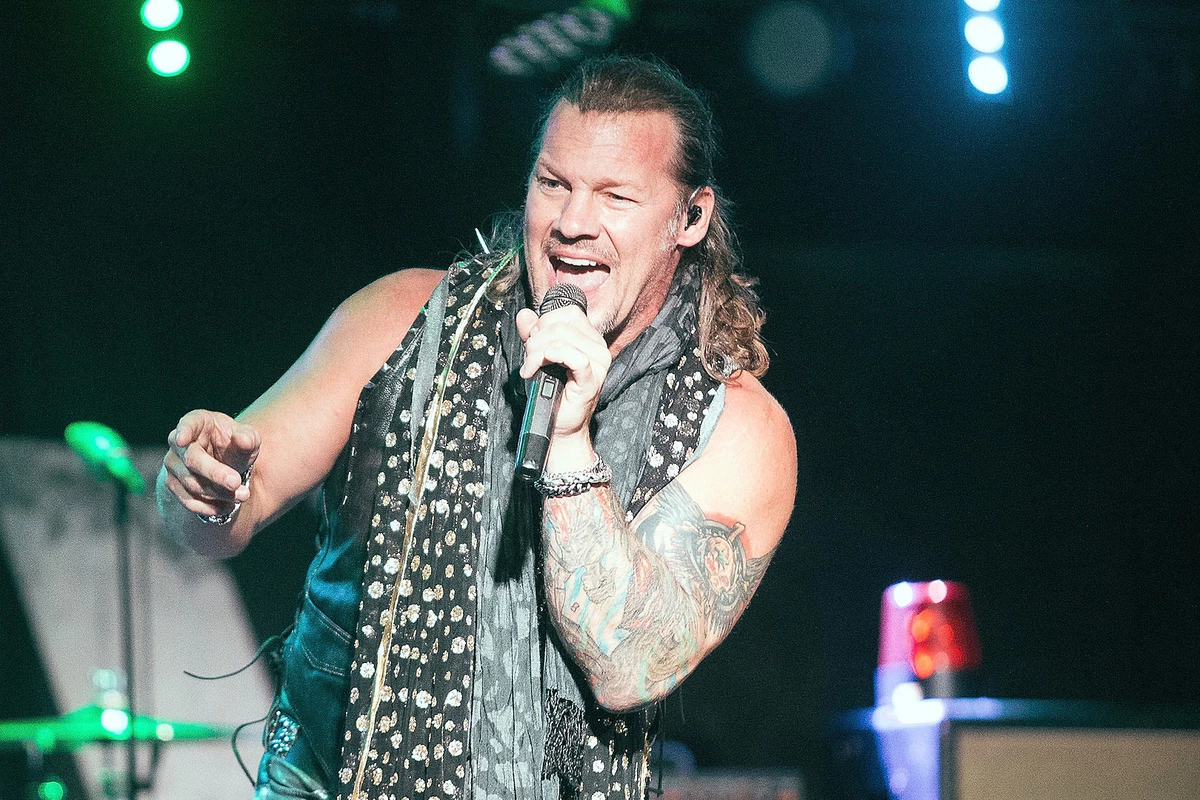
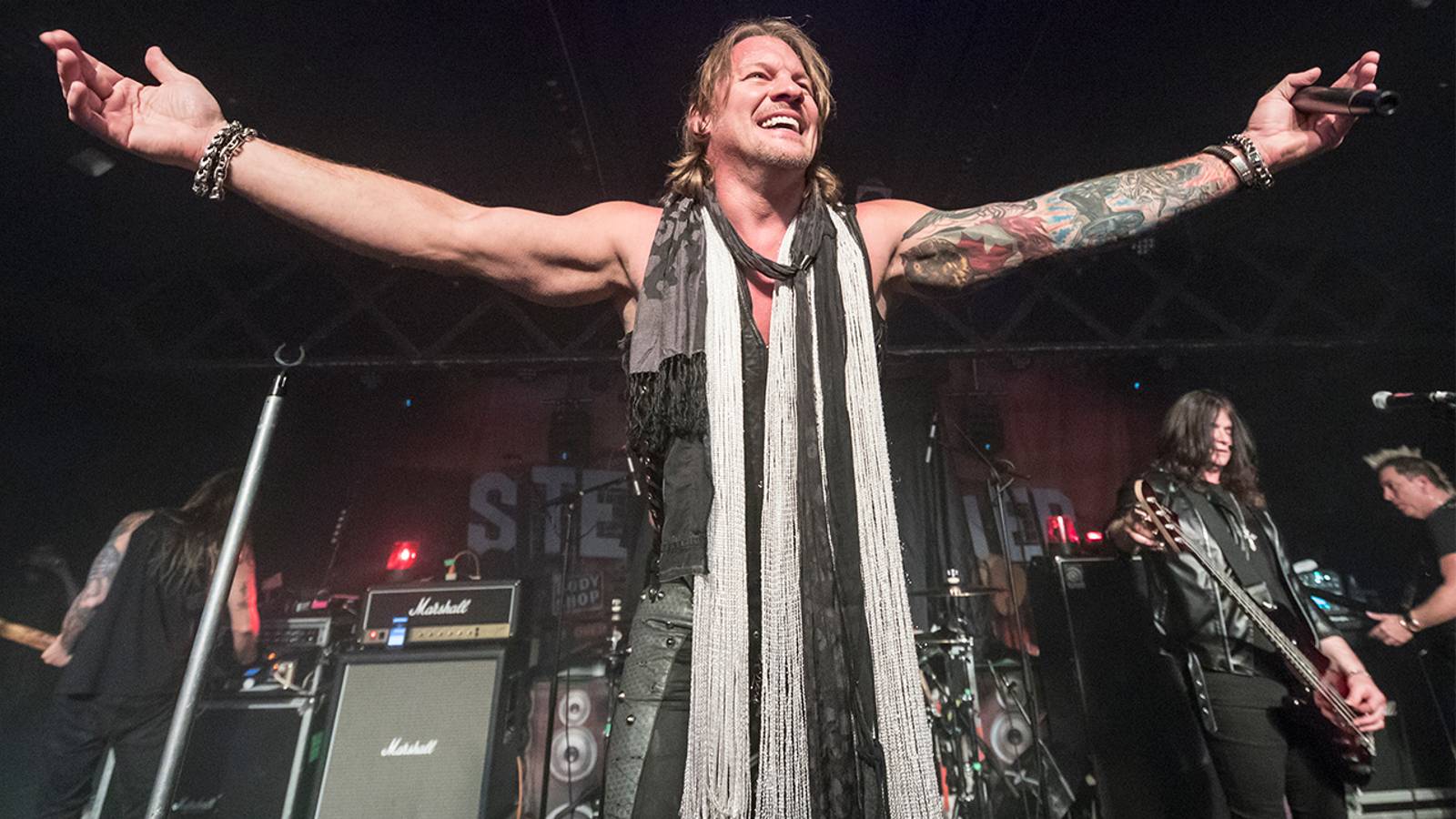
Chris Jericho Tattoos: Fozzy, Metallica and the Skull Ink

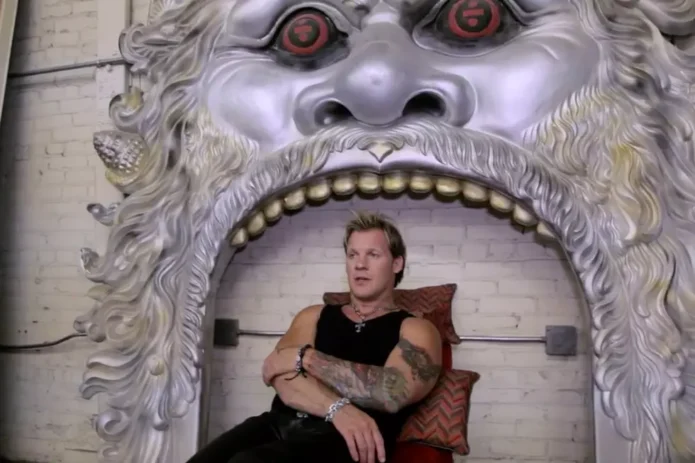
Chris Jericho’s tattoos connect to his family, his music and the people he’s met through wrestling and rock. His arms carry most of the visible work, while the first tattoo he has discussed is Jessica’s name around his ring finger.

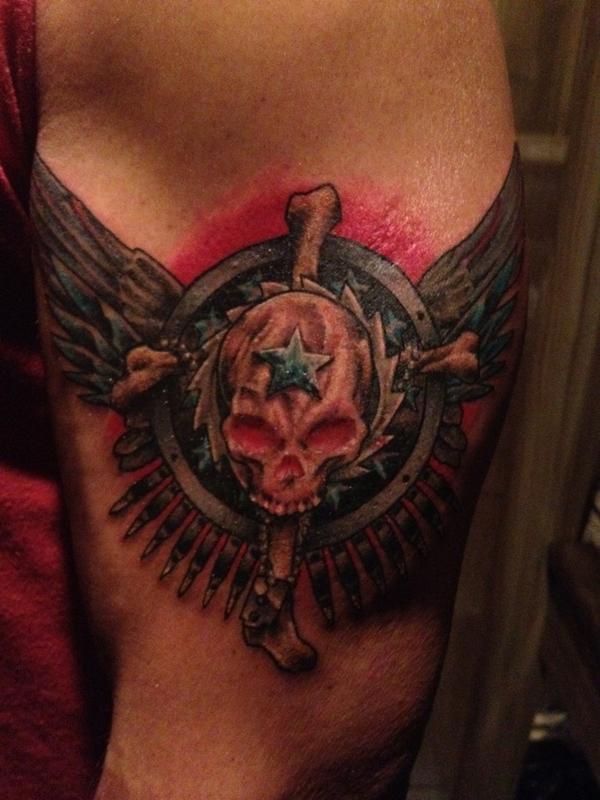
The skull and wings tattoo stands out first

Chris Jericho skull and wings tattoo

The skull-and-wings design is one of Jericho’s most visible pieces. A large skull sits in the center, with wings and smaller details spreading across the arm.

From a distance, the design can read as one dark shape. Closer photos show the lines, shading and touches of color. It is one of the larger pieces on his arm.

His first tattoo is his wife’s name

Chris Jericho tattooed arm and upper body

Jericho has said his first tattoo was Jessica’s name around his ring finger. He got it for his wife, before adding the larger designs on his arm.

The ring-finger tattoo is smaller and more direct than the sleeve. He wears it whether he is wrestling, performing with Fozzy or away from work.

Fozzy artwork is part of the arm

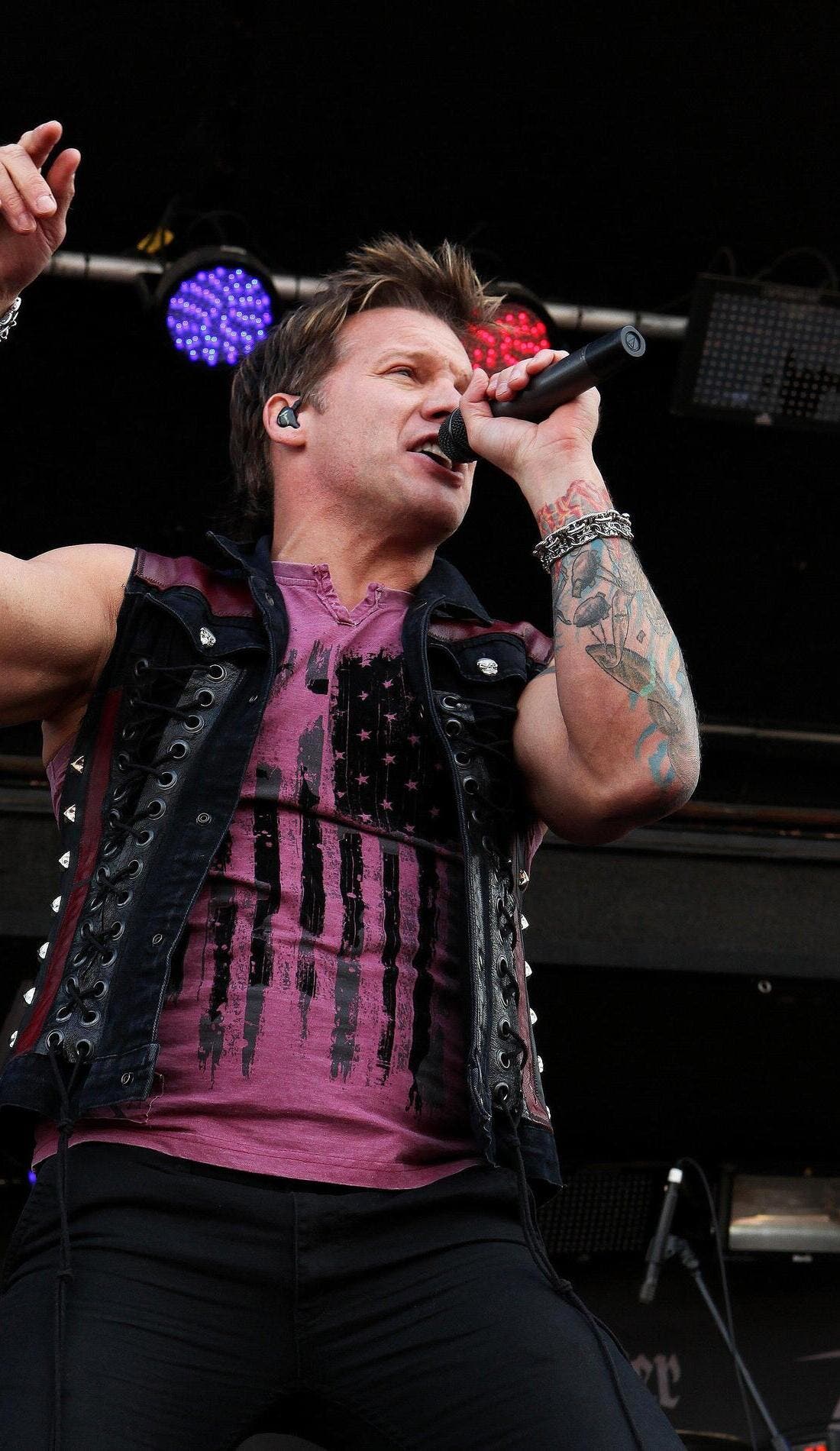
Chris Jericho performing with his tattooed arm visible

One design on Jericho’s arm is linked to Fozzy’s Sin and Bones era. The band has been a major part of his life beyond wrestling, with its own music, artwork and history.

Some of that history appears in his tattoos. The designs connect the band’s visual style to the music he performs onstage.

He has matching ink with M. Shadows

Chris Jericho sleeve tattoos during a Fozzy performance

Jericho and Avenged Sevenfold singer M. Shadows share a matching jack-o’-lantern tattoo. The two musicians have talked about it, and the design reflects a friendship formed in the rock and metal scene.

The pumpkin gives the matching tattoo a playful edge. It is a shared design tied to a person and a friendship, alongside the larger music and family pieces in Jericho’s collection.

Metallica, the Beatles and metal heroes fill out the arm

Chris Jericho showing both tattooed arms onstage

Jericho has also discussed tattoos tied to artists he admires, including Metallica, the Beatles, Helloween and Iron Maiden. The references span different corners of rock and metal, all of which have influenced his own music.

He has described favorite artists as part of the artwork on his arm. The photos give a broad view of the collection, though they don’t always make every design easy to identify.

What the photos can and can’t show

The documented stories connect Jericho’s tattoos to family, friendship, Fozzy and the musicians he admires. The designs vary, but those are the themes he has talked about.

Concert photos don’t show every detail clearly. Lighting, movement and the angle of his arm can make the same design look different, so it’s better to leave unclear pieces unidentified.

Watch Chris Jericho talk through the tattoos

Jericho and M. Shadows discuss their matching tattoo in the clip below.

Jericho’s tattoos cover more than his wrestling career. They include a tribute to his wife, references to Fozzy and designs tied to friendships and favorite bands. More musician ink is in the musician tattoos section.

Ryan Sheckler Tattoos: Sheckler, Skate Life and More

Ryan Sheckler’s tattoos connect to skating, family and moments he wants to remember. His back piece puts him in a skate park; other designs point to his dad and brothers. He has a lot of ink, and not every piece has a public explanation.

At least 15 tattoos are documented across his chest, arms and back. Ryan has explained some; photos show others without confirming their meaning. Here’s what he’s said and what the pictures show. For more athlete ink, browse the athlete tattoo archive.

Ryan Sheckler’s giant Sheckler back tattoo

Ryan Sheckler Sheckler back tattoo

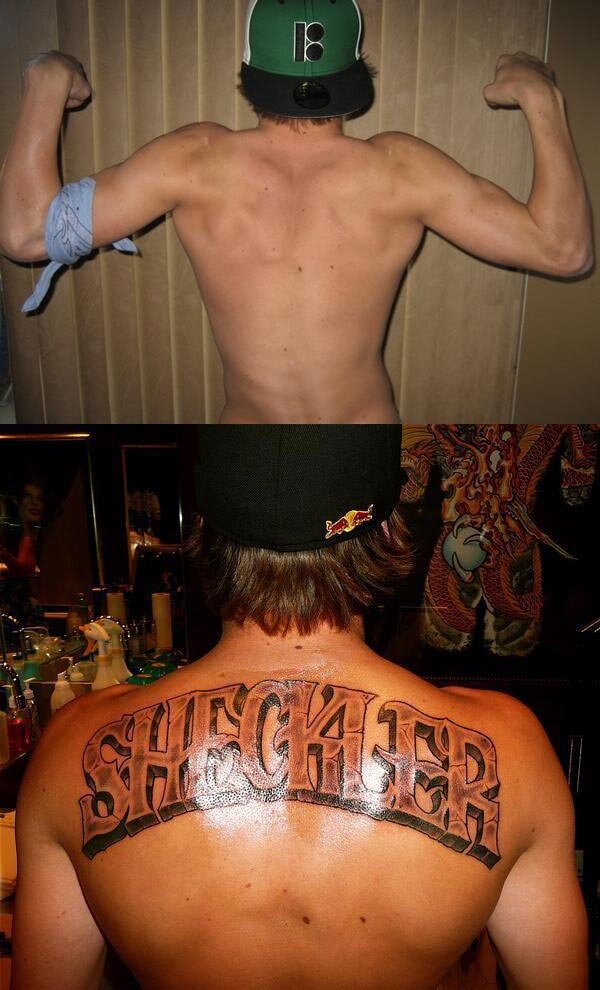
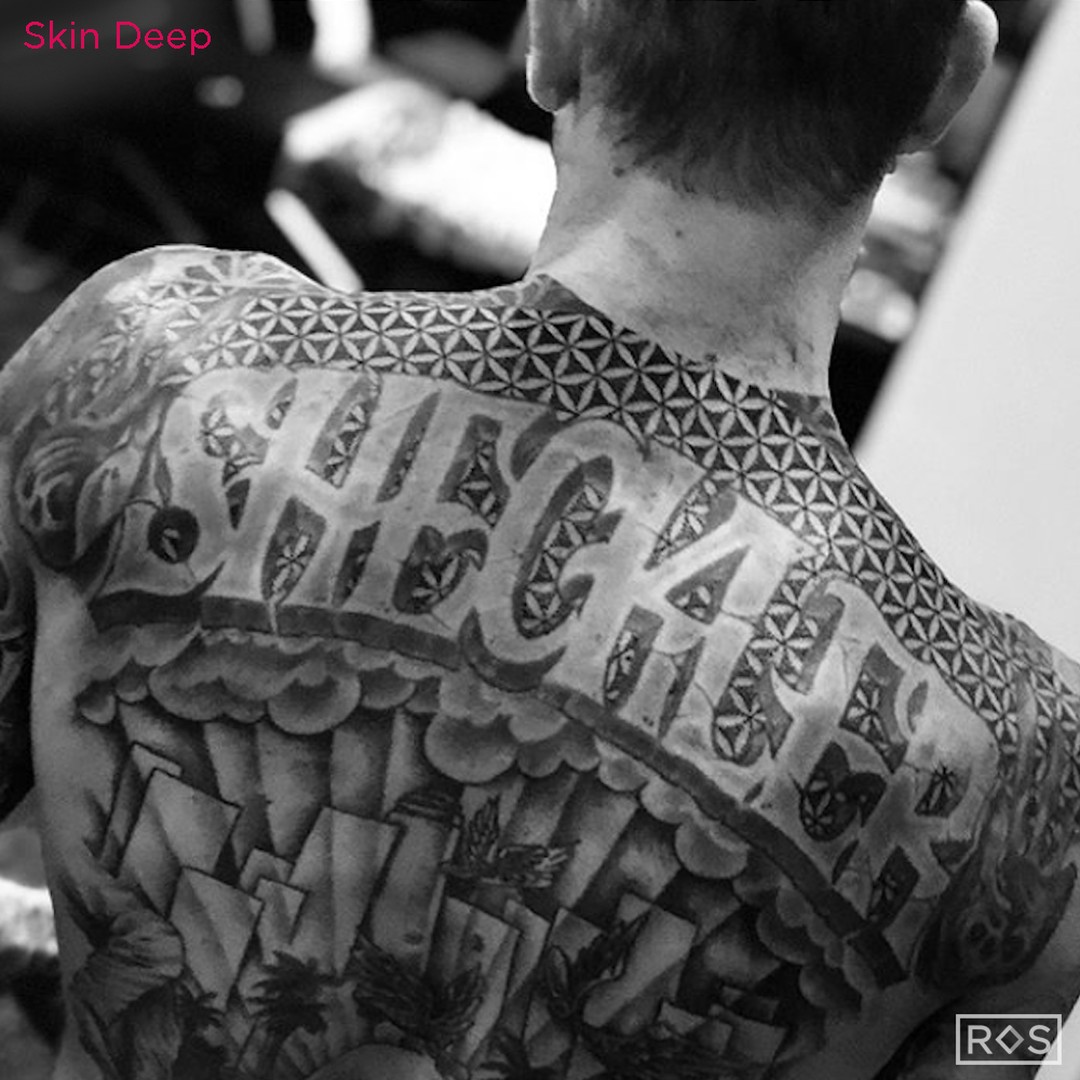
The huge back piece is the most recognizable tattoo in Ryan’s collection. His last name stretches across the top of a skate park scene, with a sunset, ramps, stairs, a skater and small angel figures worked into it. The setting has a Southern California feel.

The lettering runs across his shoulders, with the park filling the space below. The name and scene work together, making skating the focus. The tattoo covers most of his upper back and shows clearly in shirtless photos.

Ryan showed the large piece in his early twenties, and it soon became the tattoo most associated with him. The skate park and skater make the subject clear, while the lettering ties the design to his name.

It’s a large, detailed project, with several parts working together. The scene looks busy up close, while the name and skate park still read clearly from a distance.

Strength and Honor across his upper chest

Ryan Sheckler Strength and Honor chest tattoo

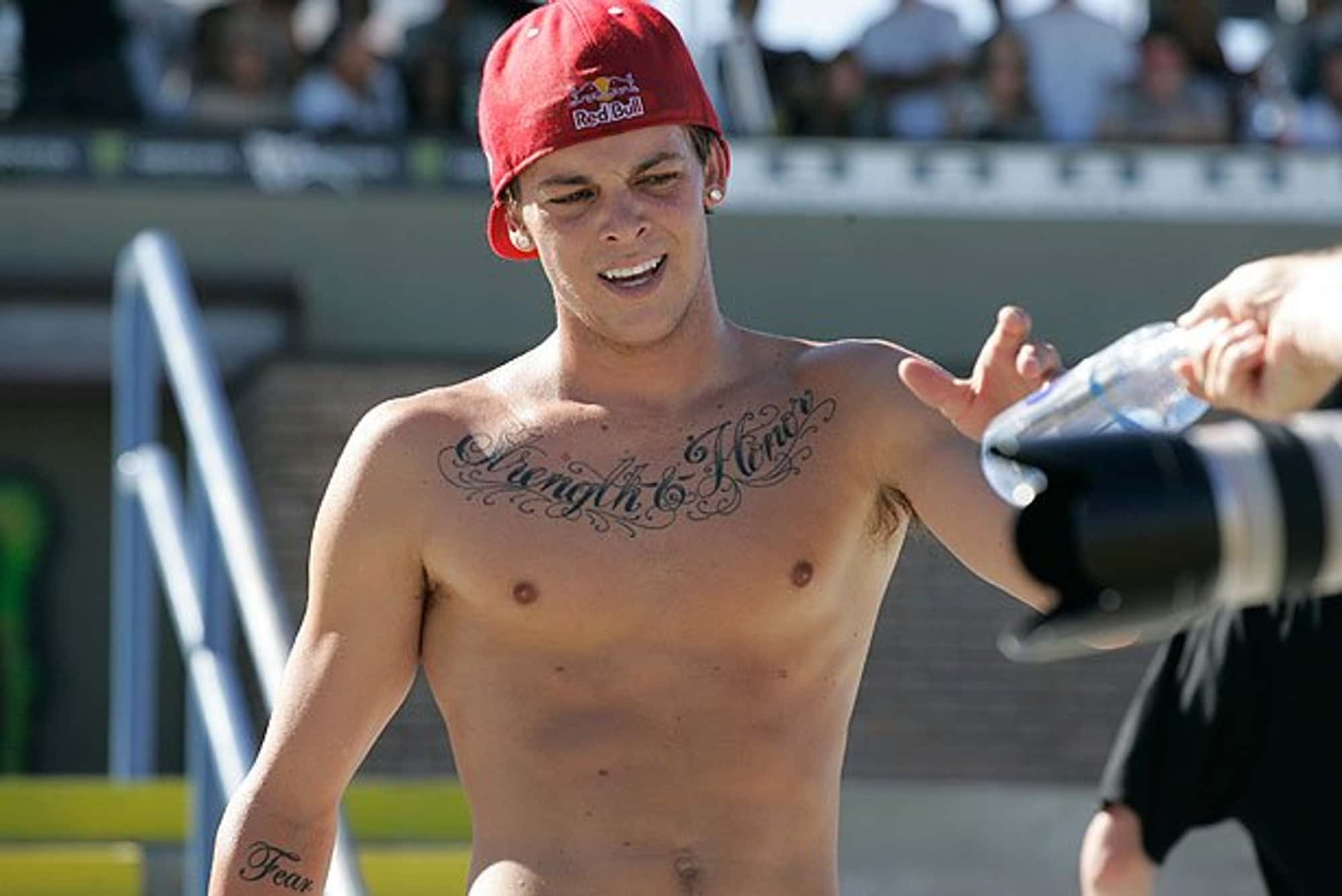
Ryan has Strength and Honor written in flowing script across his upper chest. He’s said he and his dad watched Gladiator together, and the phrase became something they said to each other before skating competitions.

Ryan suggested he and his dad get matching tattoos. His dad wasn’t sold on the idea at first, but a couple of days later he got the words himself. Ryan followed after seeing his. That family detail gives the chest tattoo more weight than a quote chosen from a list.

In photos, the script runs across the top of his chest. It’s easy to read, and it sits among several other designs. From the front, it’s usually one of the first tattoos you notice.

Ryan and his dad used the phrase before competitions, tying it to the moments before he skated. That link to his dad is what makes the tattoo personal. It carries a routine they shared.

The large wings and chest lettering

Ryan Sheckler chest wings tattoo

A broad pair of wings spreads across Ryan’s upper chest, filling both sides of his torso. A photo gallery calls the piece “Affliction Wings.” The feathers sit around the lettering already on his chest.

The wings are large and symmetrical, with feathers reaching toward his shoulders. They frame the words at the center of his chest, so the designs read almost like one panel. Together, they cover much of his upper chest.

The wings dominate a straight-on shot. A more relaxed angle shows where they meet the lower script; across photos from different years, the pieces can look separate or connected.

Ryan hasn’t given a public meaning for every feather. The photos show the wings alongside words he has explained. The design is large and easy to see.

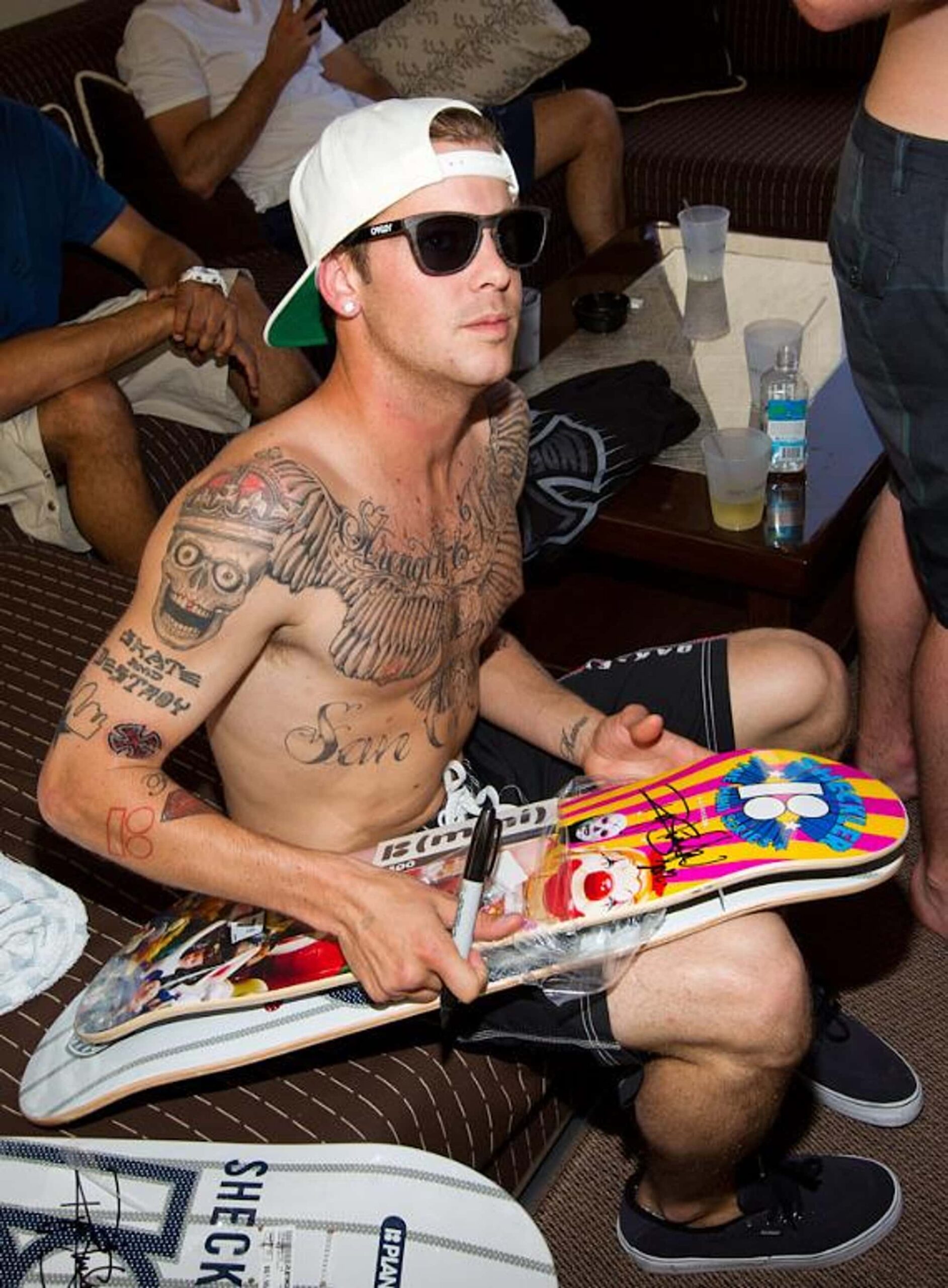
Skate and Destroy on his right arm

Ryan Sheckler Skate and Destroy arm tattoo

The words Skate and Destroy sit on Ryan’s right upper arm. They make the skateboarding connection plain and appear among the other tattoos, as part of a larger sleeve-style collection.

Other ink fills the area around the phrase: detailed work across his shoulder and chest, plus smaller lettering and symbols farther down his arm. Older photos show some designs before the space around them filled in.

The words sound tough, but they come from the skate culture Ryan grew up in. He turned pro young and built his life around contests, travel and skating. That history gives the phrase a clear place in his collection.

His back scene shows the world of skating, while the arm carries a short phrase from it. The two tattoos share a subject without repeating the same design.

Skate Life on his forearms and the family names

Ryan Sheckler Skate Life forearm tattoos

Ryan has matching “Skate Life” tattoos on his forearms. He’s described those words as a shorthand for who he is. Skating came before television, sponsorships and the rest of his public life, so the tattoos point back to what shaped his career.

A close-up shows the lettering among the many shapes and bits of script on his arms and chest. The words remain easy to read, and matching placement makes the pair look deliberate.

Ryan also has tattoos of his brothers’ names, Kane and Shane. The names are more direct than the skate scenes: they mark specific people in his life. They sit alongside “Strength and Honor,” the phrase tied to his dad.

The huge back scene and chest wings catch the eye first. Some quieter marks carry the family story: his brothers’ names and the phrase he shares with his dad.

Other visible tattoos include “Till Death” on his left arm, along with chest lettering and smaller arm designs in older photos. Some online lists give those symbols a meaning, but Ryan hasn’t confirmed them in a direct quote. It’s safer to describe what’s visible and leave the guesses open.

A clear photo can show where a tattoo sits and what it says, but not always why he chose it. In a conversation with Graham Bensinger, Ryan described tattoos as reminders of moments, places and people in his life. That gives the collection a personal timeline.

Ryan has also described tattoos as an outlet and as a replacement for an adrenaline rush. His collection includes big projects, bold lettering and designs connected to skating. He wears the ink openly and has talked about how it fits into his life.

The short Graham Bensinger interview below lets Ryan talk through the stories behind his tattoos and how they connect to his life.

His tattoos range from the sprawling skate park on his back to the phrase he shares with his dad, chest wings, arm lettering and matching “Skate Life” designs. Some pieces have a clear story; others are best described by what the photos show. The ink is tied most closely to skating, with family and personal memories running through the smaller details.

Carson Beck’s tattoos carry a few very personal reminders

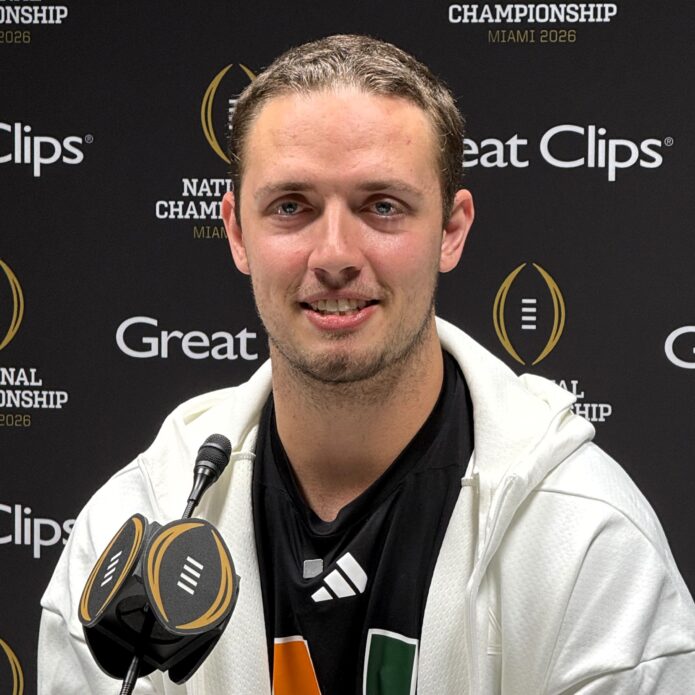
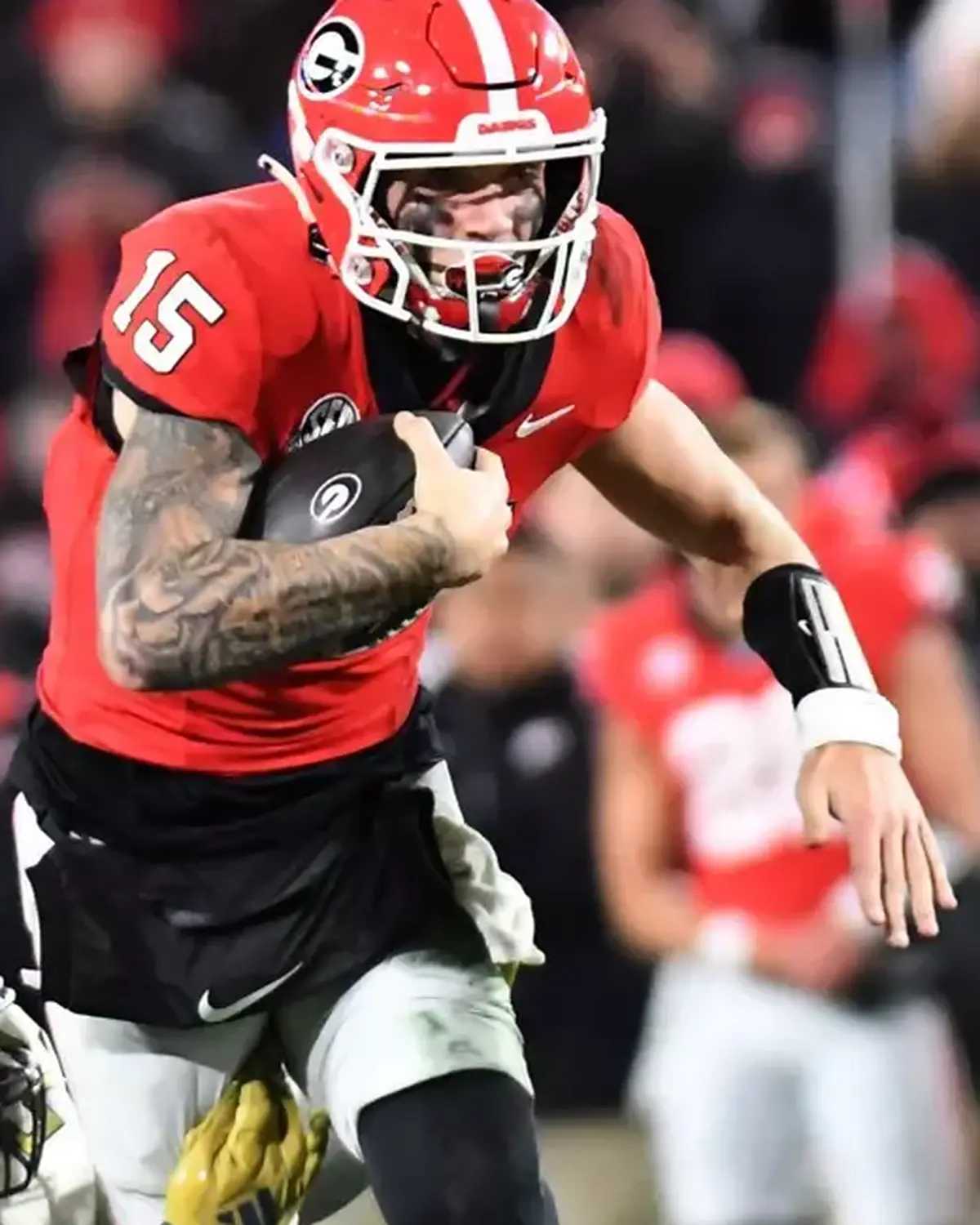
Carson Beck’s tattoos tell a personal story that is easy to miss in a game-day photo. The Miami quarterback has ink across his arms and legs, with designs tied to a friend, family, Jacksonville, faith and football.

The collection grew over time rather than following one plan. Some tattoos are clear in photos; others are partly hidden by movement, equipment or clothing. Beck has explained a few, while the meanings of many smaller details remain private.

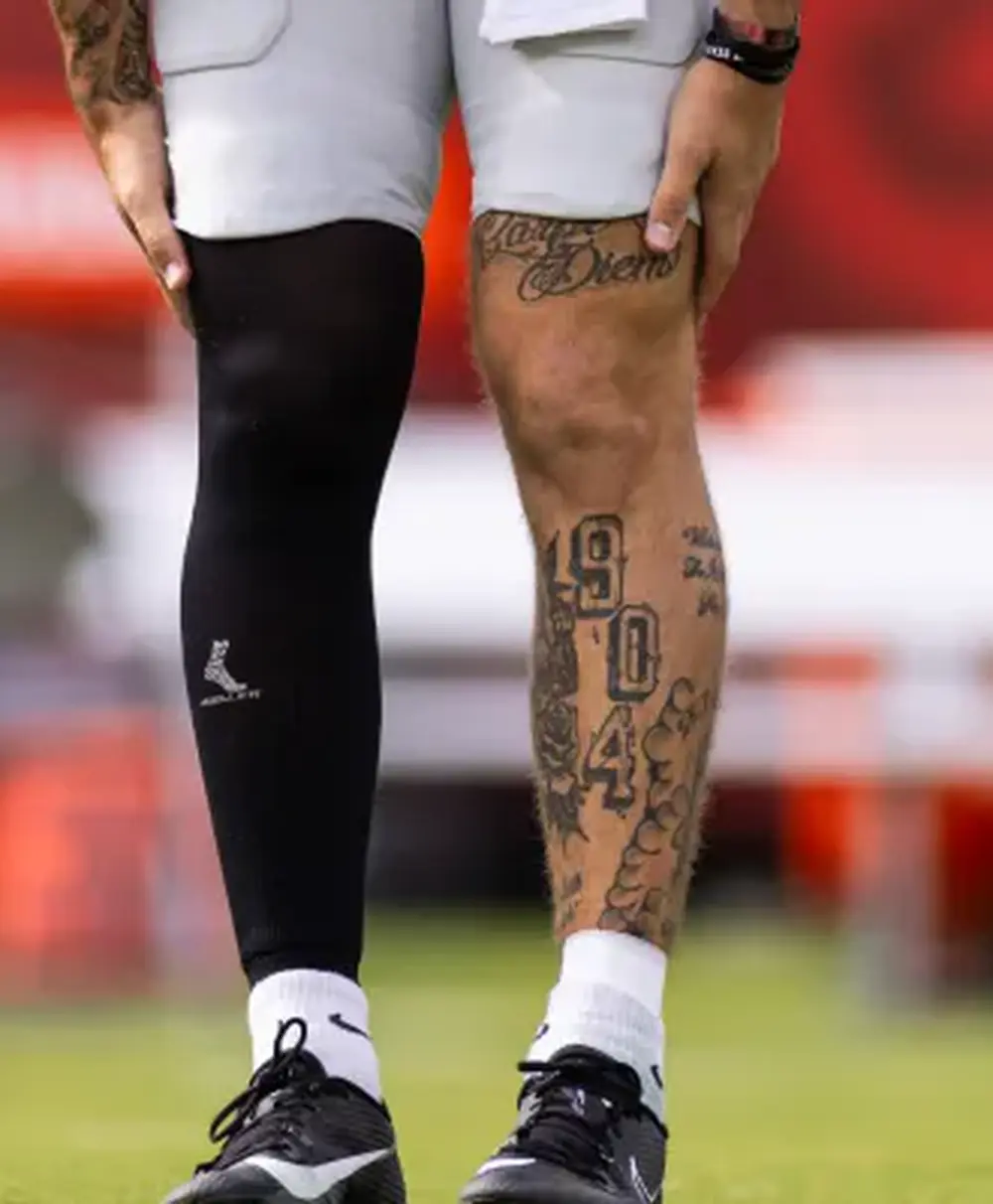
The documented designs include “LLD,” Carpe Diem, roses, family initials, Jacksonville’s area code 904, a tiger, a Roman-numeral clock, a bird, the number 145, a phoenix and the Batman Begins line “Why do we fall?”

Carson Beck’s arm sleeve is packed with personal ink

Carson Beck arm sleeve tattoo closeup

Beck’s first known tattoo honours Dominic Allmond, his childhood friend. Allmond died in a one-car accident in 2018, when Beck was a high-school junior. Beck had transferred to Mandarin High School and had just played his season opener when he heard the news.

Beck dedicated that football season to Allmond, known as Dom. He wrote “LLD,” for “Long Live Dom,” on his cleats, and later got the initials tattooed. The mark can be hard to spot beside his larger pieces, but its story is central to the collection.

The tattoo began as a memorial to a friend and a difficult period in Beck’s life. Football gave him a way to honour Dom and keep moving.

The left leg mixes Carpe Diem, roses, family initials and 904

Carson Beck 904 leg tattoo closeup

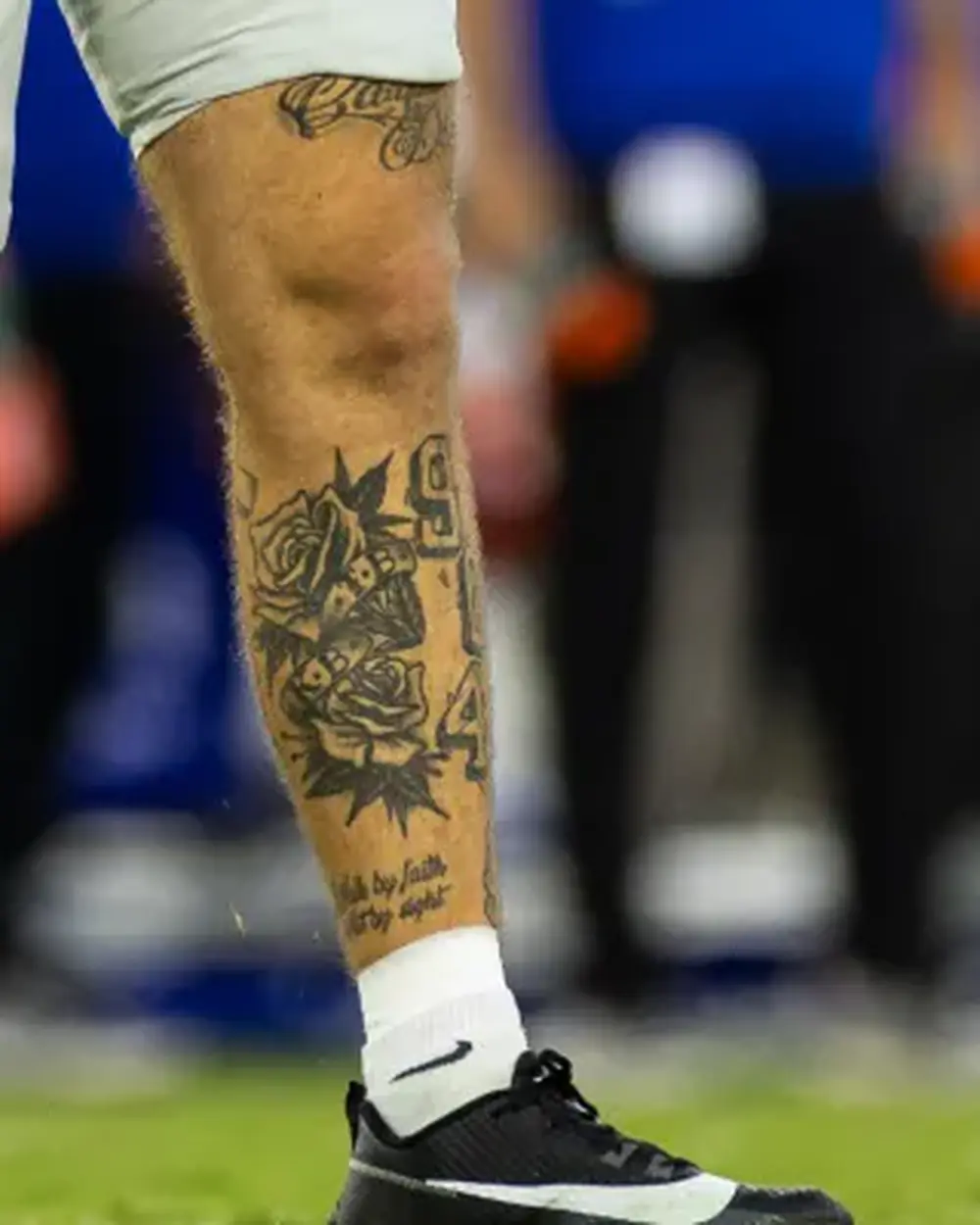
Beck’s left leg brings together phrases, traditional imagery and family references. Above the knee is Carpe Diem, usually translated as “seize the day.” On the outside of the calf, cursive lettering sits above a rocket ship, though the full sentence is difficult to read in public photos.

Roses and scrollwork appear on the inside of the calf. The initials T.B. and K.B. have been reported as references to his mother, Tracy, and sister, Kylie. That reading appears in tattoo coverage, but Beck has not publicly explained every letter himself.

A short phrase connected to his Christian faith is also reported below the roses. In photos, the layout is easier to see than some of the fine lettering: the words, initials, roses and rocket ship sit beside one another.

The number 904 is the area code for Jacksonville, where Beck grew up. It is a direct hometown reference, even as his football career took him from Georgia to Miami and toward the NFL.

The tiger is one of the clearest pieces in Carson Beck’s leg tattoo collection

Carson Beck tiger leg tattoo closeup

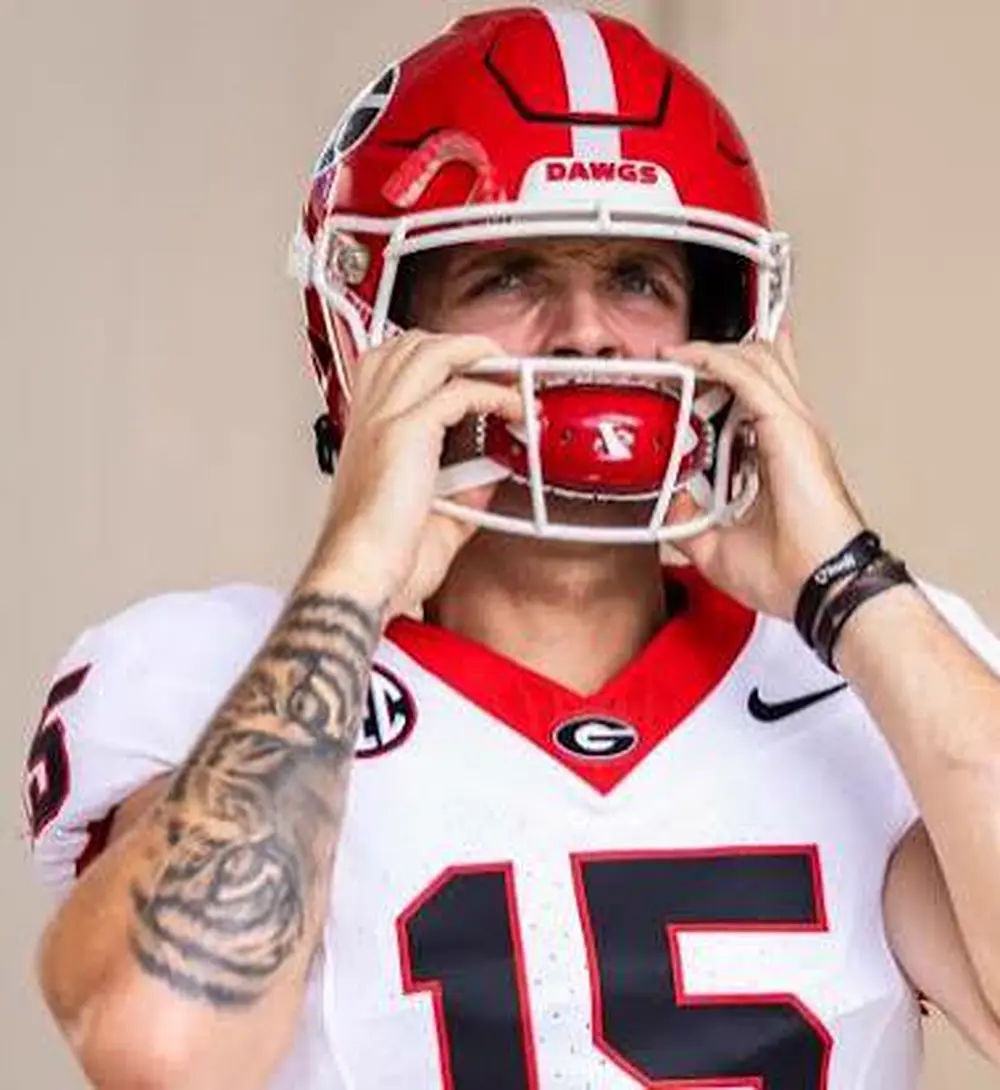
Beck’s right forearm has a dense group of designs. A tiger’s face covers part of the outside; on the inside is a clock with Roman numerals, with a bird above it toward the elbow. The number 145 sits above the bird.

Smoke and shading link the larger images, so the forearm reads more like a mural than a row of separate tattoos. Smaller writing appears in some photos, but it is not clear enough to identify consistently.

Beck has not given a full public account of every forearm design. The tiger, clock, bird and number are visible; the personal meanings of the smaller marks remain unconfirmed.

The phoenix and “Why do we fall?” tattoo carry the strongest symbolism

Carson Beck phoenix arm tattoo closeup

Near Beck’s right elbow is the line “Why do we fall?” from Batman Begins. In the film, Thomas Wayne says people fall so they can learn to get back up. A phoenix tattoo nearby adds another image associated with resilience.

The phoenix has also been connected to Beck’s interest in Harry Potter, where the bird is an important figure. The idea of renewal took on a more personal meaning after an elbow injury and UCL surgery left a scar running through the tattoo.

Beck has said in Miami coverage that the scar crossing the phoenix did not feel meaningless to him. The tattoo was already there, but his injury and recovery changed how he saw it.

It is a clear example of life changing the context of an existing tattoo. The scar was not part of the original design; it now links the phoenix with surgery, rehabilitation and his return to football.

The newer upper-arm mural is bigger, but its full meaning is still private

Carson Beck arm tattoos closeup

Before the 2024 season, Beck added more ink to his throwing arm. Reports described a large design that appears to include a gladiator across the upper arm and another bird or phoenix near the biceps. He has not publicly explained the inspiration, so it is best to stick with what can be seen.

From a distance, the new work can look like one dark area. Closer photos show separate figures, shading and smaller marks between them. The addition makes the arm read more like a full sleeve, with the older tattoos still visible among the new work.

Beck has explained the phoenix and the quote near his elbow, but not every part of the newer design. A photo can identify an image without telling us whether it refers to family, faith, football or something else.

The sleeve can also look different depending on the photo. His throwing arm is often bent or turned away, and jerseys, towels and wrist tape can cover part of it. Movement and shadows make small numbers or lettering especially hard to read.

The arm’s layout has a natural flow: the forearm holds the tiger, clock, bird and 145; the elbow area connects the quote and phoenix; the upper arm fills in the space above them. The leg tattoos are arranged differently, with phrases, roses and initials spread across the skin.

Across the collection, some meanings have been explained and others have not. It is fair to name a clear image or number; it is better to leave an unreadable mark open than assign it a story without evidence.

The tattoos follow a loose timeline. “LLD” remembers Dom. The leg includes family references and the Jacksonville area code. The forearm brings together the tiger, clock, bird and 145. The phoenix and film quote now sit alongside Beck’s injury and recovery, and the upper-arm mural adds another chapter.

Carson Beck’s tattoos are reminders as much as decoration. Some are easy to see from the sideline; others remain private. Together, they point to memory, family, home and resilience.

Watch Carson Beck discuss his football journey:

Nicolás Otamendi Tattoos: Messi Tribute and Full-Back TV Collage

Otamendi’s tattoos aren’t subtle. His back, chest and arms are filled with large, detailed designs tied to things he cares about, from favorite TV shows to Argentina’s biggest football wins. The collection doesn’t look like one matched set; it has the feel of a scrapbook that has grown over time.

The Messi tribute drew attention after Argentina won the 2022 World Cup, but it’s only one part of the collection. Photos show ink on his arms, chest, neck and legs, while his back keeps revealing new details. Here’s what the clearest images show.

The full-back tattoo is an online cinema of favorite shows

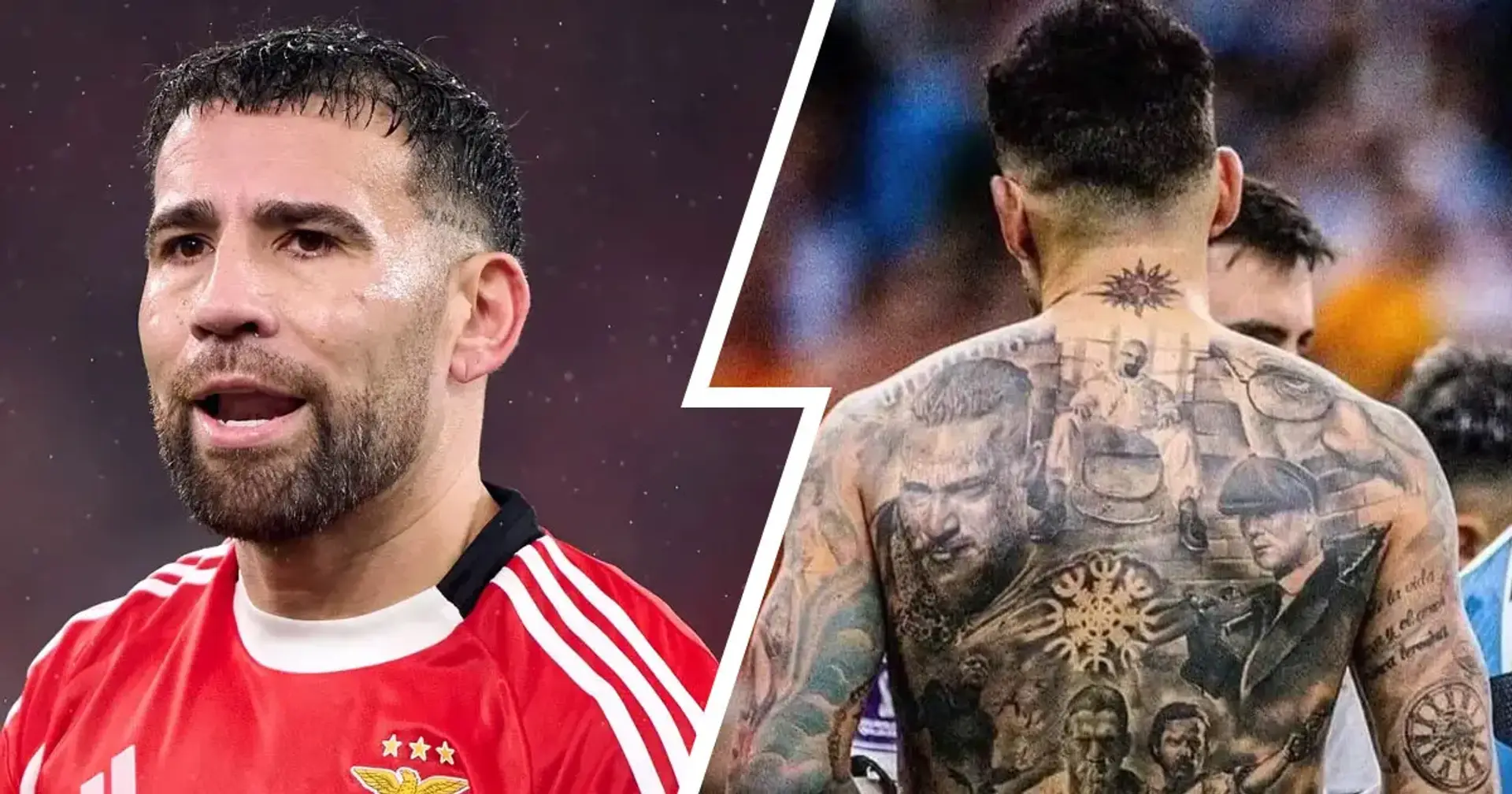
Nicolas Otamendi full-back tattoos showing television characters

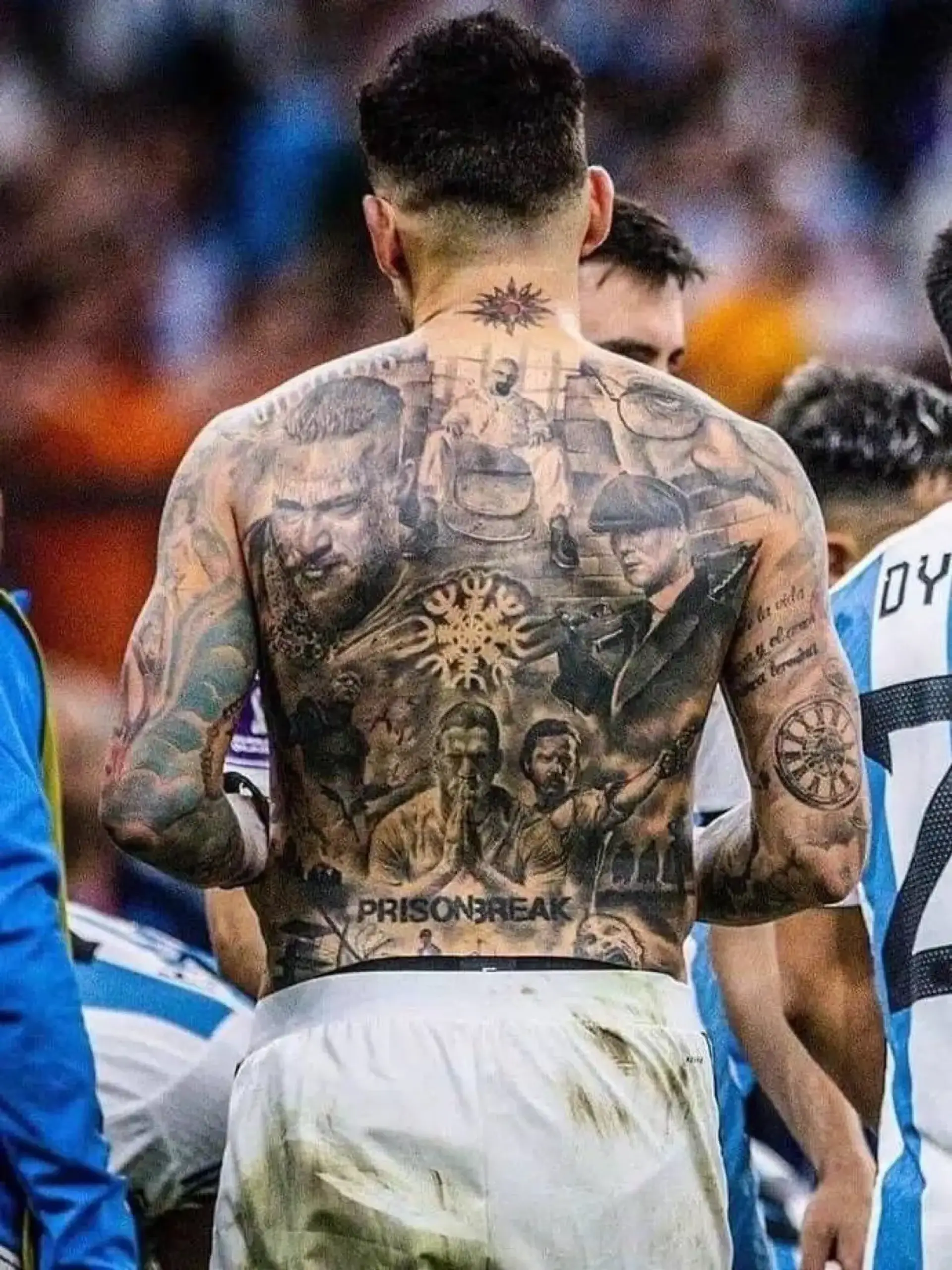
Most people start with the back, and it’s easy to see why. Clear photos show large black-and-gray portraits and scenes filling the space, rather than one repeated symbol. Faces sit beside one another, with lettering and shading tying them together into a mural.

Photos and reports identify characters from Breaking Bad, Peaky Blinders, Prison Break, Vikings, The Walking Dead and Game of Thrones. With so many shows represented, the piece moves between recognizable faces, costumes and darker moods as you look across it.

More than one photo helps show the full tattoo. A straight-on shot gives a sense of the overall layout; closer views make individual portraits easier to recognize. Otamendi appears to have added images over time while keeping them within the same television-inspired theme.

Walter White and Tommy Shelby give the mural its sharpest portraits

Nicolas Otamendi back tattoo collage with television character portraits

Walter White from Breaking Bad and Thomas Shelby from Peaky Blinders are two of the first faces to stand out. Both are instantly recognizable, and the tattoo portraits keep the serious expressions that made them memorable on screen. Careful shading around the eyes and hair helps the faces read even from a distance.

The choices also give the mural a particular tone. These aren’t just random celebrity portraits: the characters are associated with pressure, loyalty, survival and ambition. Other reported portraits, including Ragnar Lothbrok, Michael Scofield, Rick Grimes and the Night King, bring in a mix of anti-heroes and fantasy figures.

The portraits share a black-and-gray style, with no bright cartoon panels breaking up the design. Faces, clothing and background textures blend into one piece that looks dramatic from across a room and more detailed up close.

His Messi tattoo turns a World Cup memory into a tribute

Nicolas Otamendi Lionel Messi World Cup tattoo close-up

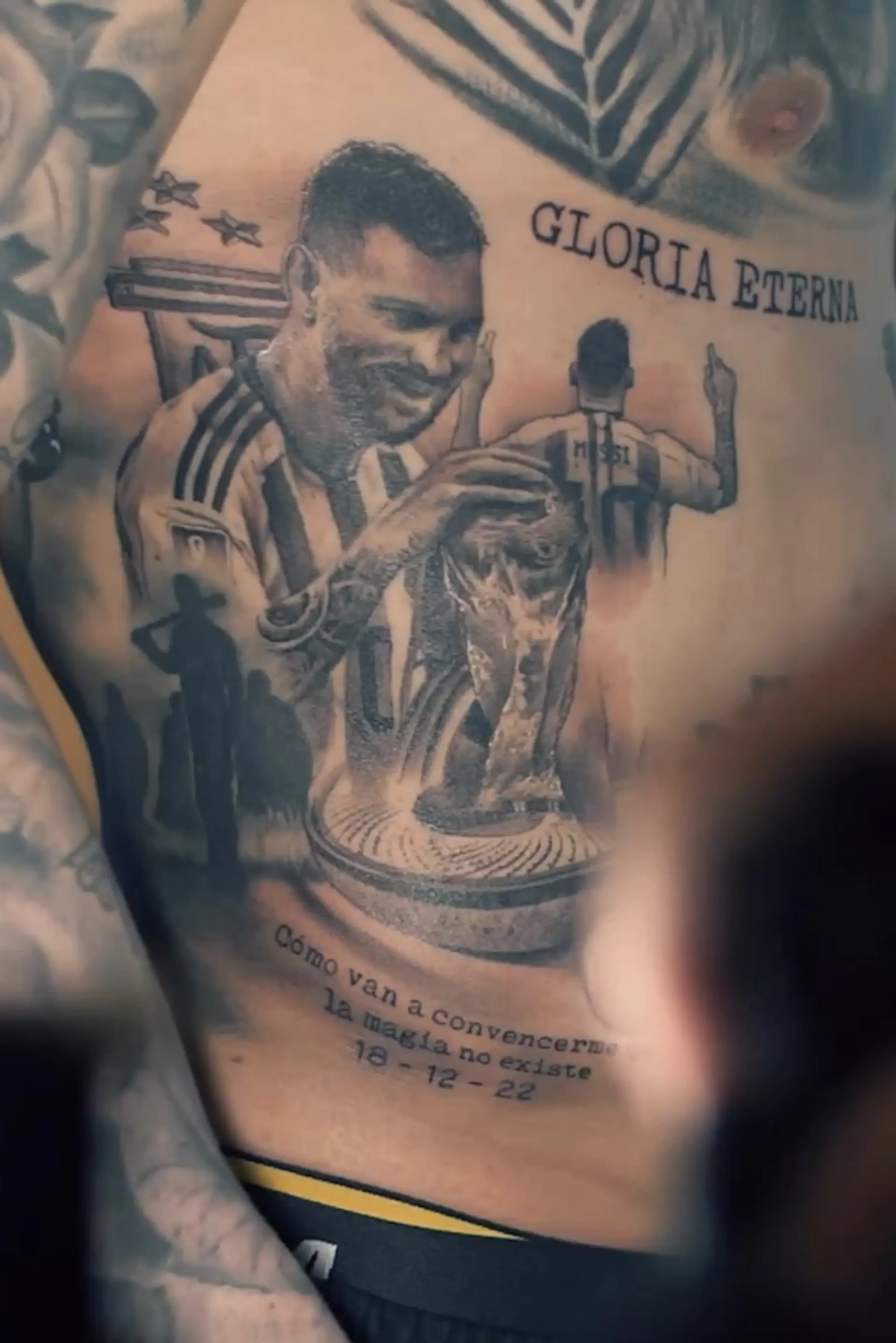
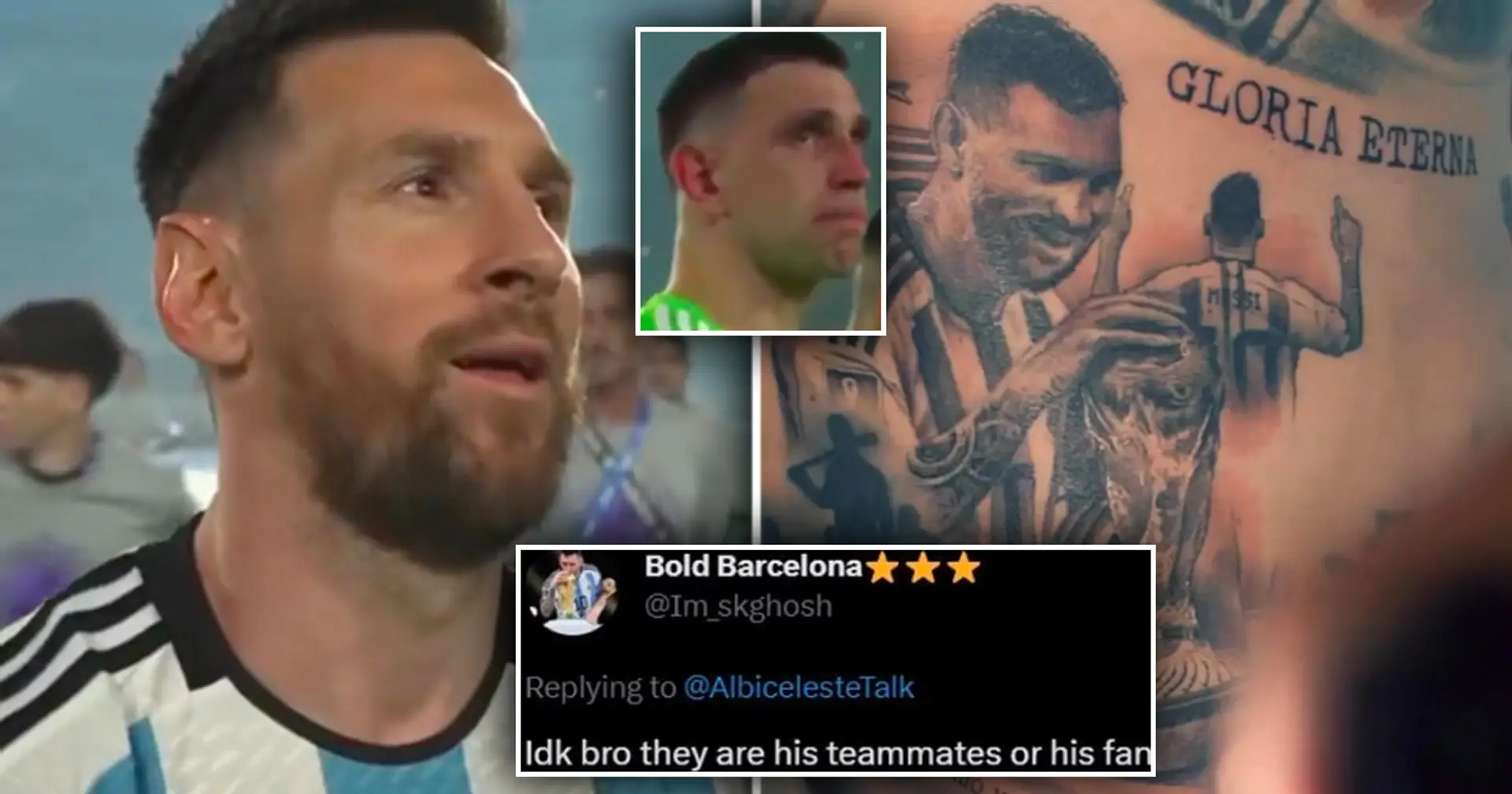
The Messi tattoo is one of the most personal additions to Otamendi’s collection, linking him to Argentina’s World Cup win. ESPN and Argentine outlets described a design showing Messi with the trophy, capturing the image many fans associate with the Qatar final. Close-up photos show it alongside the other ink on Otamendi’s side, with detail in the faces, the cup and the lettering around them.

This isn’t just a portrait of a teammate from afar. Otamendi shared the pitch with Messi throughout the tournament, so the image marks an achievement they experienced together. The tattoo came after the title and reads as a way to preserve that moment.

Messi saw the design and publicly thanked Otamendi, calling it something special from a friend and teammate. That response became part of the story: the tattoo was a tribute to a football icon from someone who had shared the tournament with him.

“Gloria Eterna” and the trophy details fill out the Argentina story

Nicolas Otamendi tattoo showing Argentina trophies and Gloria Eterna lettering

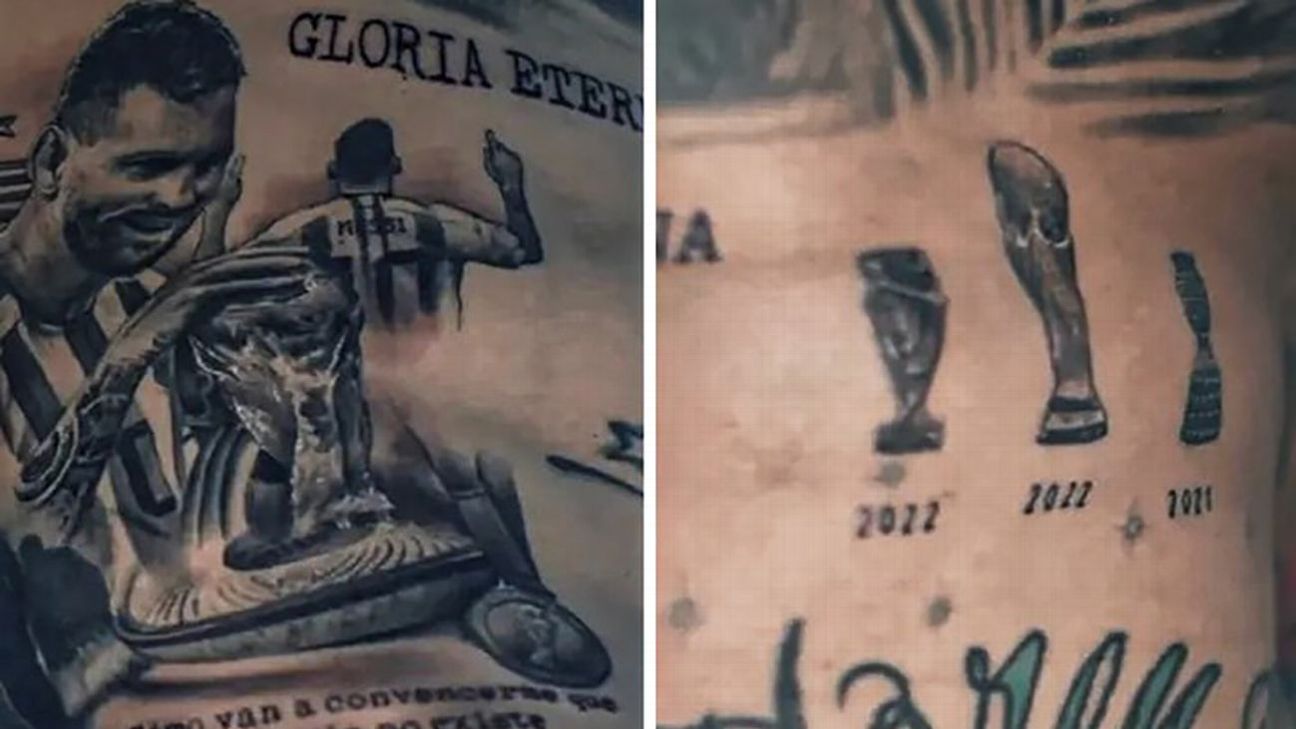
The Messi portrait sits among other details tied to Argentina’s major wins. Photos show trophies and the words Gloria Eterna, a phrase associated with the country’s World Cup celebrations. Smaller dates and trophy shapes beneath the larger work turn the design into a timeline as well as a portrait.

Otamendi often adds words, numbers, symbols or shading around a large image instead of leaving it on its own. That can make the tattoos look dense, but it also gives them context. If you recognize the match, character or trophy, the surrounding details help tell the story.

The Argentina piece has a different feel from the TV mural on his back. The mural draws on fictional stories he enjoys; the trophy and Messi designs record real people, matches and moments from his career. The two themes show different reasons he may choose to get a tattoo.

His chest and arms carry older, heavy black-and-gray work

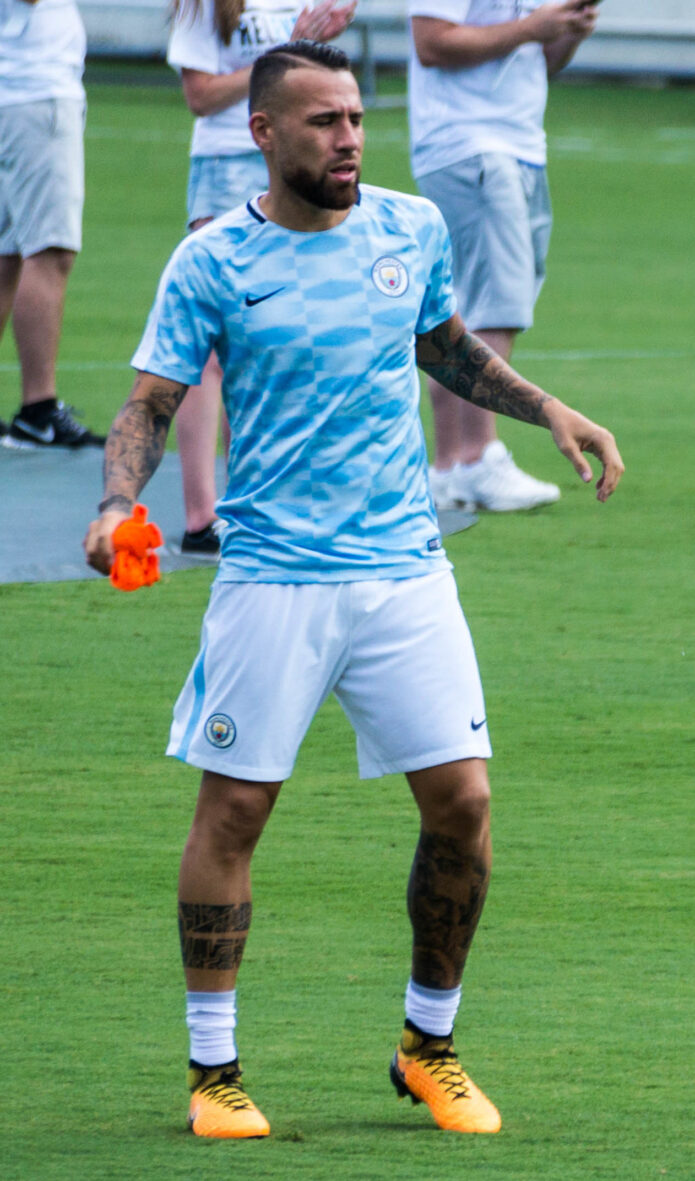
Nicolas Otamendi chest and arm tattoos visible during a match

Match photos show dense work across Otamendi’s chest and both arms, including shaded areas, script and portrait-style details. The chest pieces sit close together, while the sleeves frame his upper body. In a short-sleeved shirt, his arms are usually the first tattoos fans notice.

The action shots make individual details hard to catalogue. Sweat, movement and the angle of a shirt can hide parts of the designs. The broader style is clearer: strong outlines and heavy shading, with little open skin between the larger pieces.

That’s why the newer Messi work sits comfortably beside the older ink. The portrait and trophy are detailed, but they share a similar visual weight with the chest and arm tattoos.

Neck and matchday photos reveal the smaller details

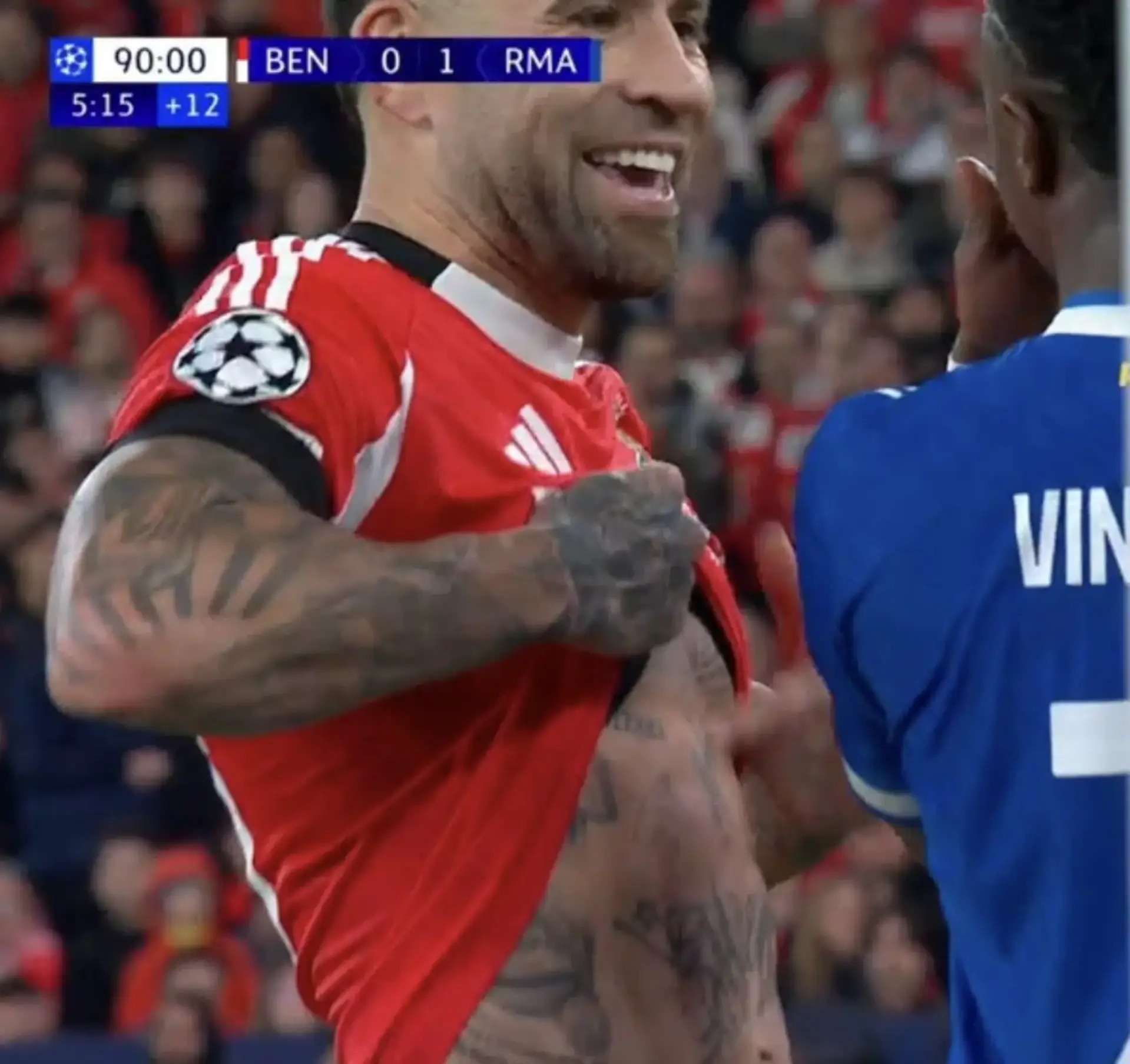
Nicolas Otamendi tattoos on his arms and upper body during a match

Close-up match photos show details that disappear in the full-back views: a sun-like design at the back of the neck, fine lettering around the arms, and tattoos that continue toward the legs. Some only come into view when Otamendi turns or lifts his shirt during a celebration.

Those smaller designs keep the collection from being just a story about the mural. The neck tattoo sits near the top of the larger canvas, while the arm work helps carry the look across his body. The tattoos follow his shape rather than sitting in separate blocks.

Readers interested in football tattoos can compare Otamendi’s approach with Mauro Icardi’s tattoo collection or Jadon Sancho’s tattoos. Otamendi’s work is heavier and more focused on portraits, while all three collections link ink with family, career or identity.
What makes Otamendi’s tattoos stand out

It isn’t only the number of tattoos that makes the collection memorable. It has distinct chapters: the back mural draws on favorite shows, the Messi and Argentina pieces preserve football memories, and the tattoos on his arms, chest, neck and legs make the collection feel lived in rather than planned as a matching set.

The contrast between scale and detail is part of the appeal. The larger designs read from a distance, while close-up photos bring out faces, lettering and dates. The full-back image and the rib close-up each show something different: the scale of the collection and the emotion attached to one piece.

Otamendi’s tattoo style has changed over the years, but the newer Argentina tribute still sits alongside the older entertainment-inspired designs. Taken together, the work records his interests, friendships and biggest football memories.

The collection is busy, but the themes give it shape. You can start with a familiar face on the back, notice the Argentina lettering on his side, then find smaller details on his neck and arms. The tattoos trace the shows he watches, the people he values and the matches he wants to remember.
Watch a closer look at Otamendi’s tattoo collection

This video includes Otamendi in a roundup of footballers with notable tattoos and puts his collection in a wider football context.