
Craig Bellamy’s tattoos are part of the visual language of his Wales career, but the most useful record is not a single glamour photograph. It is a sequence of football and interview images in which the arm work appears at different distances, under different lighting and while he is doing ordinary public work. The Guardian’s 2024 profile identifies an Owain Glyndŵr tattoo celebrating the Welsh victory at the Battle of Pilleth and places it on Bellamy’s right arm. That source gives the collection a specific historical anchor rather than leaving the article with a vague claim that he is tattooed.
The photographic set below keeps the evidence narrow and honest. Five distinct originals show the arm from matchday, training and public-event settings. A separate face-visible Commons portrait is reserved for identity context, not tattoo proof. The goal is not to claim a complete inventory of every symbol under every sleeve. It is to map the documented Welsh-history reference to visible photographs and show how a full arm composition reads when it is photographed in real life rather than isolated in a studio close-up.
The Owain Glyndŵr tattoo tribute on his right arm
The clearest named design in the published record is the Owain Glyndŵr tribute. In The Guardian’s interview, Bellamy describes the tattoo as celebrating the Welsh victory over England at the Battle of Pilleth in the fifteenth century. The reference is important because it connects body art to Welsh history and to Bellamy’s identity as a Wales player and coach. It also gives the reader a responsible way to describe the ink: as a historically themed Welsh tribute, not as an invented list of symbols that the available photographs cannot resolve.
The right-arm placement is visible in the full-length Wales frame. The arm is not held flat for inspection, so the photograph does not prove every contour or line. It does show a dense, established composition running along the outer arm, with darker passages and lighter gaps changing as the elbow bends. That anatomy is part of the design language. A sleeve has to work around motion, and the negative space between shaded areas keeps the whole arm from reading as one undifferentiated block.
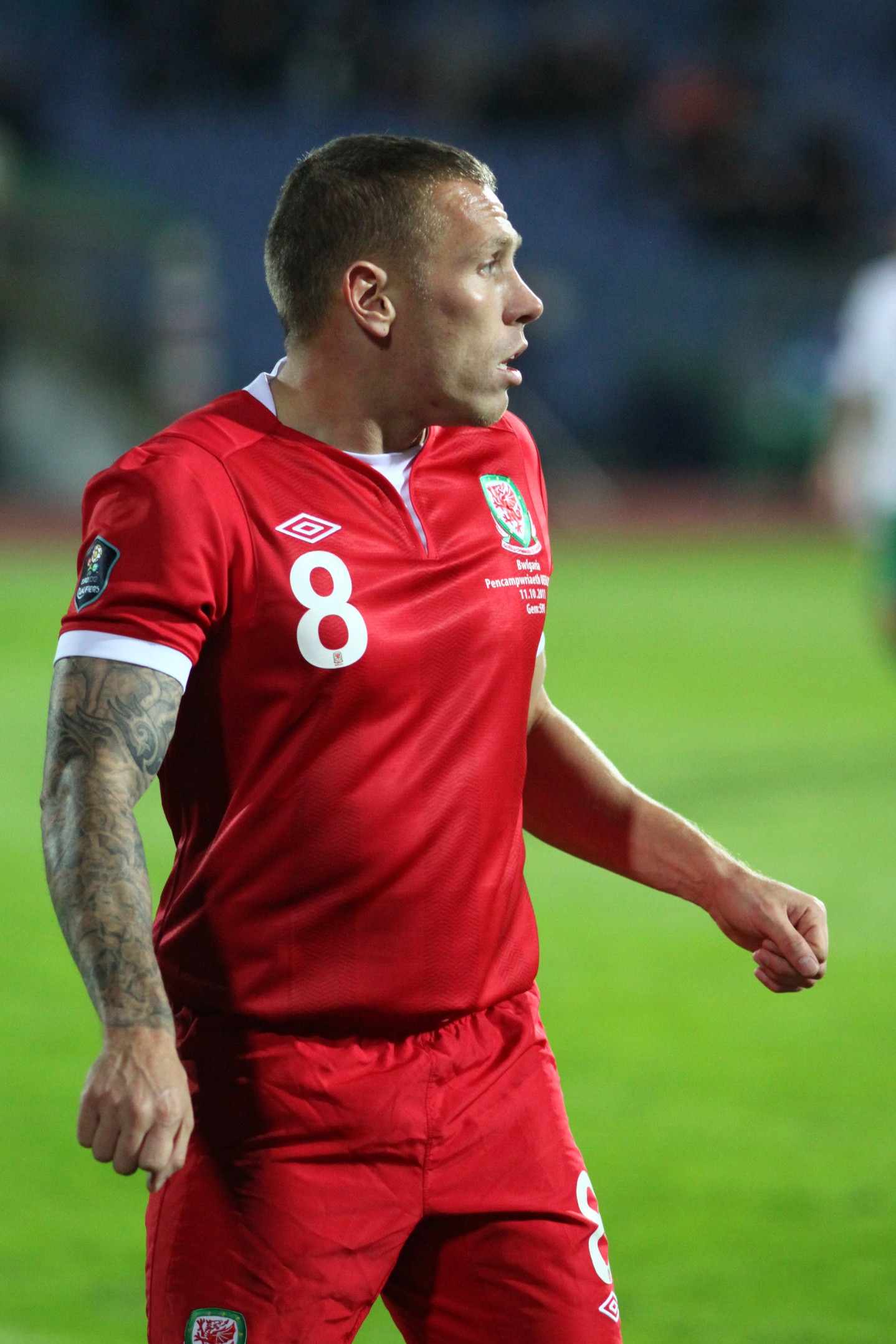
The source record and the image record do different jobs. The Guardian supplies the specific Owain Glyndŵr story. The match photograph supplies the visible scale and location. Neither should be stretched into a claim about the exact artist, the date of every session or the hidden side of the arm. Keeping those jobs separate makes the tattoo guide more useful for readers who are studying placement and visual balance rather than searching for unsupported biography.
Family and football ink across the sleeve
Bellamy’s arm is also described in football-tattoo archives as carrying family names and other personal references. Tattoo Town F.C.’s gallery preserves a period-specific visual record, while the newer RedWall+ programme, Cymru Ink, has Bellamy discussing the stories behind meaningful tattoos. Those sources support a broader reading of the sleeve: the arm is not merely a decorative pattern, but a layered archive of family, country and career.
The phrase layered archive is more accurate than a fixed catalogue. Names and dates can be added, covered or reworked, and a match photograph rarely reveals the whole surface at once. In the public-event frame, the forearm is closest to the camera while the upper arm disappears into clothing and shadow. The image therefore maps to the forearm and overall sleeve sections, while the family-history discussion is anchored to the interview and gallery sources rather than to a guessed visual detail.
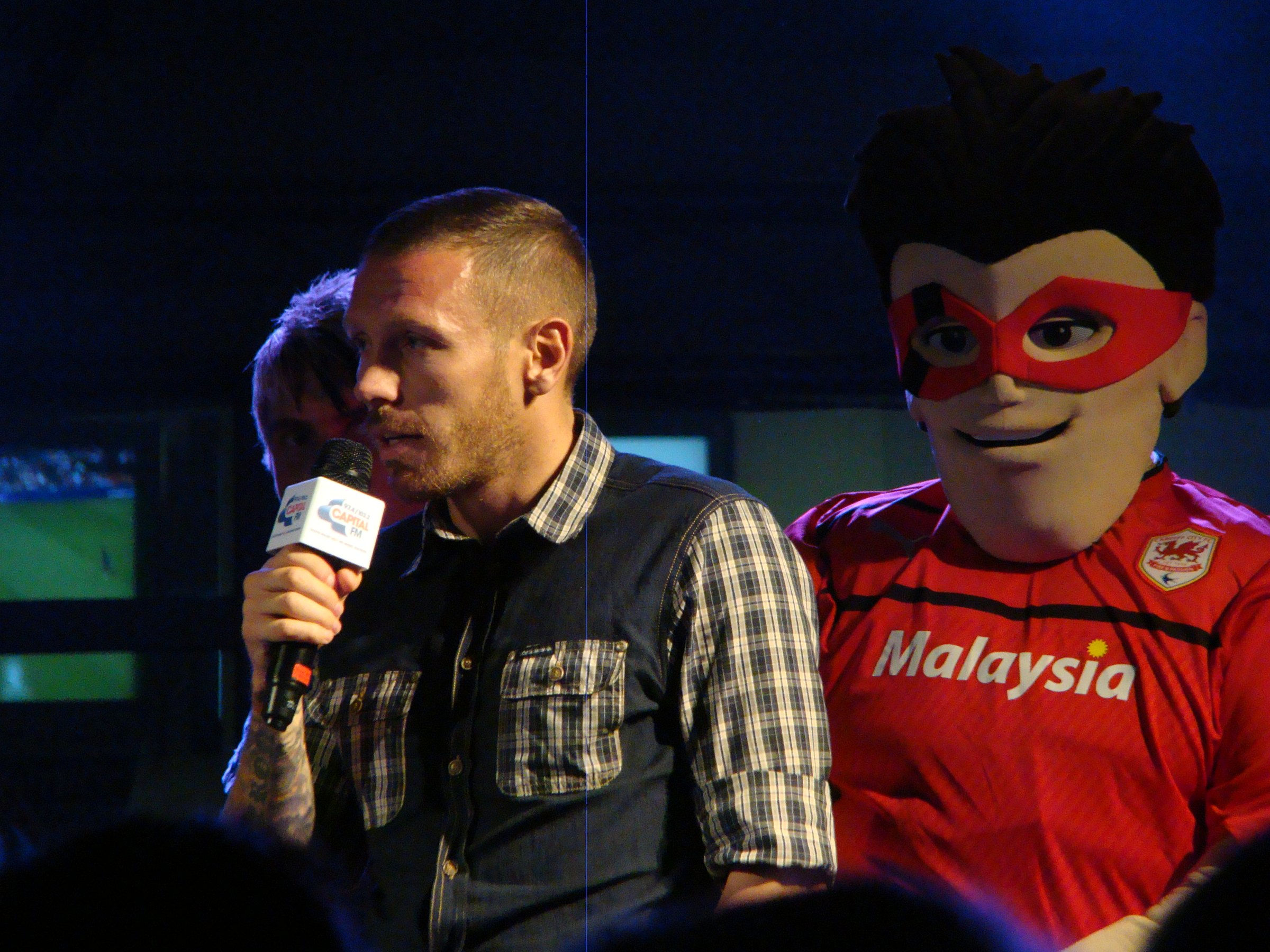
This is a useful design lesson. Personal tattoos often become stronger when the wearer allows different motifs to coexist instead of forcing every piece into the same style. Bellamy’s visible arm work has the feel of an accumulated composition: large shaded elements provide weight, while smaller lettering and narrative references give the sleeve a private register. The photographs do not establish a full chronology, but they show how a collection can look intentional even when it was built over years.
Matchday photographs of the tattooed arm
The matchday images make the arm especially legible because Bellamy is wearing short sleeves and moving through open space. In the Cardiff City frame, the tattooed forearm drops naturally beside the body, so the ink is seen in a relaxed position rather than a flexed pose. In the celebration frame, the arm turns toward the camera and the darker areas become more obvious. These are different originals, not repeated crops, and the differences in pose are editorially valuable. The result is a genuine tattoo-bearing comparison, not a gallery of repeated thumbnails.
The photographs also show why a tattoo story should use more than one view. A front-facing arm can make a sleeve look compact, while a side angle reveals how far the design travels around the limb. One frame suggests a block of shading; the next shows breaks, lighter motifs and the way the composition follows the forearm’s curve. The article uses each image in the section it can actually support and does not treat one frame as proof of the entire collection.
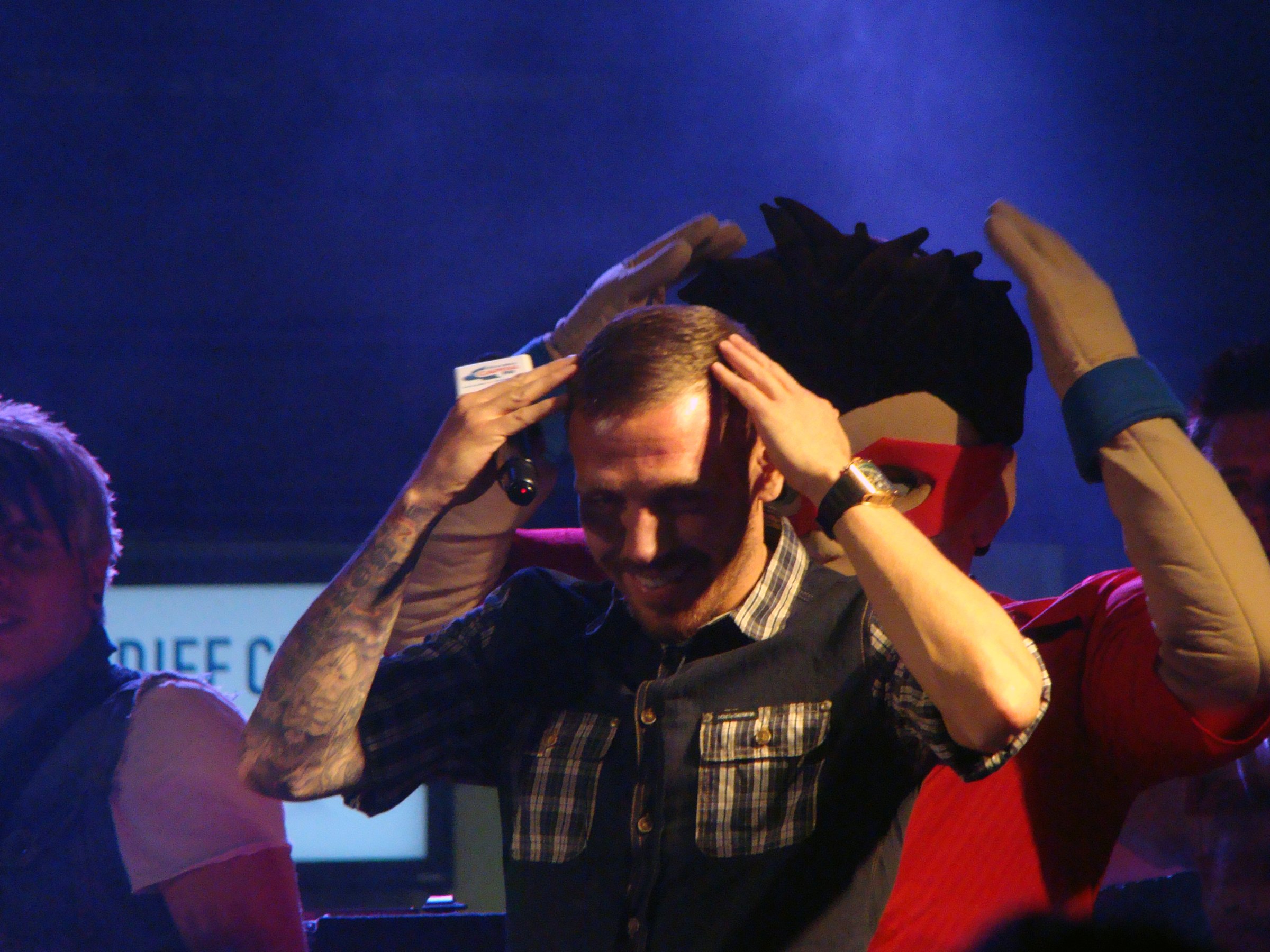
The quality threshold matters here. Search thumbnails and small reposts can make a tattoo look more detailed than it is, especially when compression turns individual lines into dark texture. The retained Commons originals are large enough for visual inspection and have distinct file hashes. That allows the reader to see the actual arm rather than an enlarged thumbnail, while the page and source links preserve the provenance of each photograph.
The ink in quieter public moments
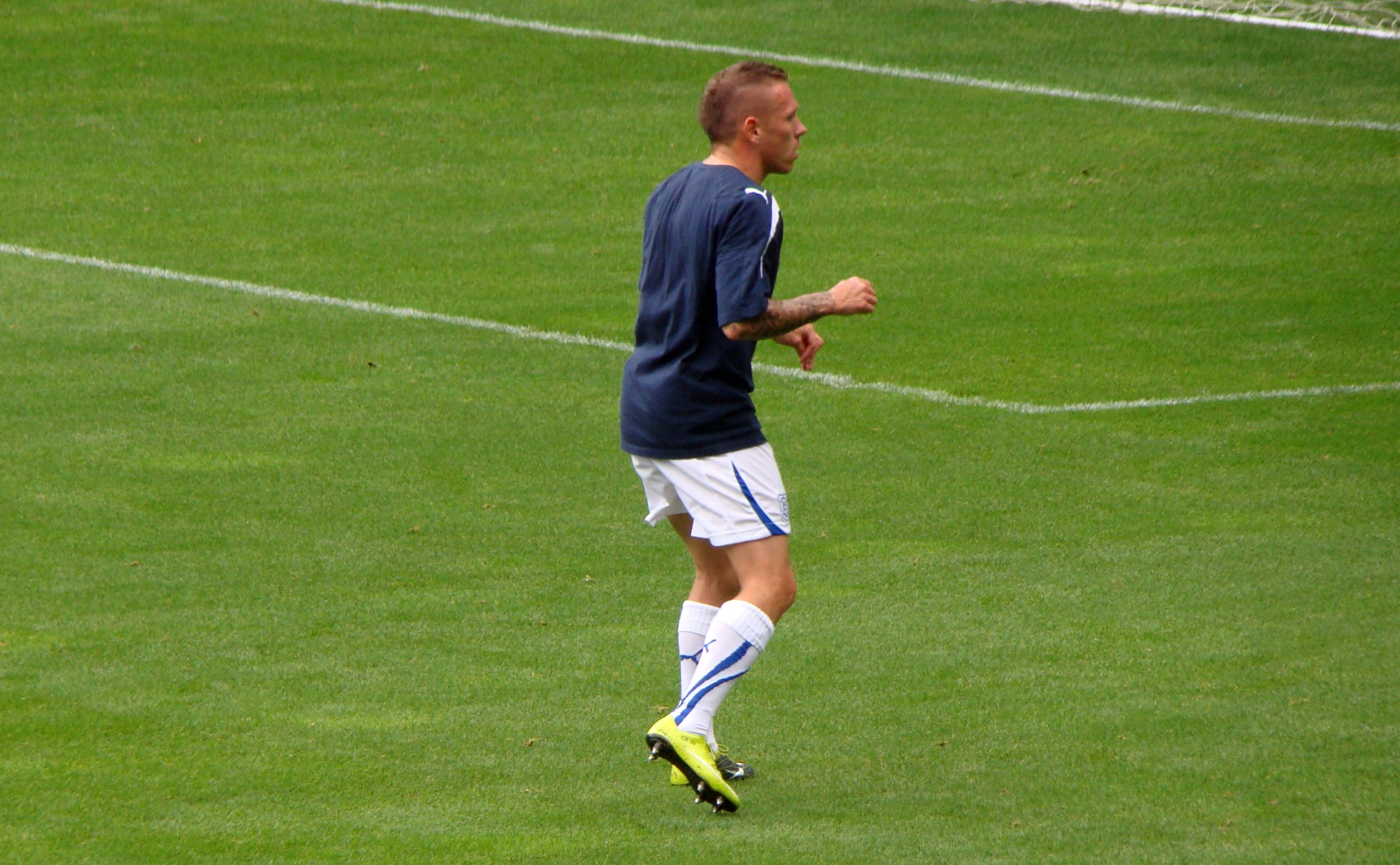
The warm-up photograph adds a quieter context. Bellamy is not celebrating or speaking to a camera; he is simply moving on the pitch. His arm is partly turned, and the sleeve is interrupted by the way the body is working. That is exactly why the frame earns a place in the set. It shows how the ink behaves in motion and how clothing, distance and lighting can hide parts of a design without making the visible parts less genuine.
A practical tattoo composition has to survive these ordinary conditions. The strongest sections remain readable when the elbow bends, when the forearm rotates and when the viewer sees the arm from a few metres away. Bellamy’s tattooed arm has that performance quality. The line work and tonal blocks remain recognisable in football photographs, while the less visible areas are left as unknown rather than reconstructed from imagination.
The RedWall+ interview adds a different kind of quietness: it turns the tattoos into a conversation about meaning. That is a valuable counterweight to match photography. The images establish what is visible; the interview gives Bellamy space to explain why particular pieces matter. Together they make the subject more human without requiring the article to claim that every design has a public explanation or that the camera has captured every mark.
A second matchday angle on the tattooed arm
The Cardiff City original supplies a second matchday angle on the tattooed arm. Bellamy is farther from the camera than in the interview frame, yet the forearm still reads as a continuous area of ink. That distance is useful because it shows how the composition functions as part of his public silhouette rather than only as a close-up detail.
The second angle also helps separate the historical claim from the visual claim. The Guardian identifies the Owain Glyndŵr tribute; the Cardiff City photograph does not identify a specific figure. It does, however, show a different original photograph in which the same arm carries visible, established work. That is enough to support placement and continuity without guessing at symbols that are too small to read.

When the two matchday frames are placed together, the sleeve appears more dimensional. One view gives a stronger side profile, while the other gives a wider sense of proportion against the shirt and body. Readers looking for inspiration can study how the darker mass follows the arm, how uncovered skin provides breathing room and how movement can become part of a tattoo’s everyday visual identity.
Identity context and evidence limits
The separate face-visible Commons portrait comes last in the inline sequence. It is intentionally not presented as tattoo evidence. The photograph identifies Bellamy clearly and gives the reader a neutral pause after several sections focused on his arms. Its editorial job is to establish the person, not to add another unverified tattoo claim. Keeping that distinction visible is part of the image-quality standard for this article.
Bellamy’s public identity is unusually connected to Wales. He was a prominent Welsh international and later became the Wales men’s head coach, which is why the Owain Glyndŵr reference carries more context than a generic historical motif would. The Guardian interview discusses his coaching work, while the FAW’s RedWall+ series places him in a programme explicitly about Cymru and personal tattoos. Those career sources explain the setting, but the visual description remains limited to what the photographs show.
The evidence supports a bounded conclusion. Bellamy has publicly documented tattoos, including a right-arm Owain Glyndŵr tribute connected to Welsh history, and multiple distinct photographs show a substantial tattooed arm from different eras and angles. The images do not establish a complete body map, the artist for every piece or the meaning of every shaded motif. That boundary is not a weakness. It is what lets the article remain useful, source-led and honest about uncertainty.
How the image set was assembled
The tattoo-first search covered the Guardian interview, the FAW Cymru Ink programme, Tattoo Town F.C.’s archive, Wikimedia Commons category and file pages, and source-page image variants. The Commons category supplied a group of large originals with different dates and contexts. The Tattoo Town gallery was useful as a discovery and comparison route, but its files were too small for the final inline set, so they were not used as publishable assets.
The final five tattoo images are all different originals. One is a full-length Wales match frame, one is a public-event interview image, two are separate celebration or matchday photographs and one is a warm-up photograph. The portrait is a sixth original kept outside the tattoo evidence. The selection therefore meets the minimum image count without padding the article with repeated crops or generic headshots.
The placement order is interleaved with prose. Readers encounter the named historical reference first, then the family and football context, then matchday comparisons, then the moving warm-up frame and finally the neutral portrait. That order makes the images answer specific questions. It also prevents a media pile-up at the top and keeps later explanatory prose between the visual placements.
The search was intentionally exhausted before a supplemental portrait was considered. Duplicate frames, near-identical views, low-resolution Tattoo Town thumbnails and images in which the arm was covered were excluded. The retained assets have independent source URLs, independent local files and independent hashes. They are evidence of what can be seen in each frame, not a promise that the collection has no hidden or newer work.
What the photographs cannot prove
A photograph can show genuine visible ink, body location, scale and the way a design reads in a particular pose. It cannot automatically prove the date of every tattoo session, the name of every artist, the complete back or inner-arm design, or the private meaning of an uncaptioned symbol. Those claims need their own sources, and the article keeps text-based testimony separate from visual description.
The Owain Glyndŵr reference is the strongest example of that discipline. The Guardian gives the historical subject and Bellamy’s stated reason for the tattoo. The photographs confirm a large right-arm composition. They do not let the writer label every visible shape as a specific historical figure. The safe wording is that the arm carries a documented Welsh-history tribute and a broader collection of visible ink.
The article also avoids turning tattoo coverage into a judgement about character. Bellamy’s tattoos are discussed as personal and cultural records, not as proof of toughness, rebellion or any other stereotype. The useful design questions are visual: how the sleeve follows the anatomy, how dark and light areas are balanced, how movement changes visibility and how a historical theme can sit beside family references.
Taken together, the record is substantial without pretending to be total: one named Welsh-history tattoo, a layered right-arm composition, five distinct tattoo-bearing originals and one separate face-visible portrait. That is enough to study the visual language and documented story of Craig Bellamy’s ink while leaving room for future interviews, new photographs and better close-ups to add detail later.