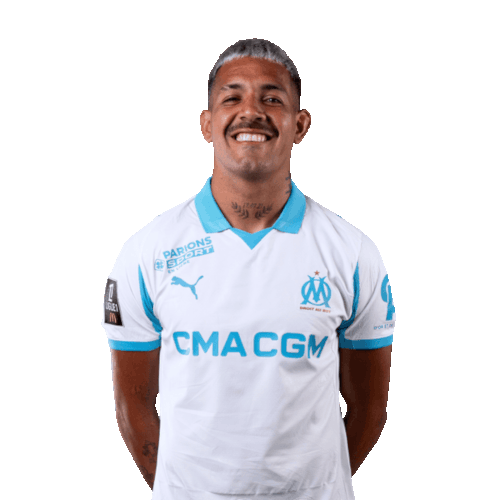
Facundo Medina has never treated his tattoos as background decoration. The Argentine defender’s public photographs show a compact but highly legible visual language: a cross at the neck, lettering close to the collar, fine-line and blackwork details across the hands and forearms, and heavier marks that become easier to read when he is training or celebrating. His current collection is best understood through those changing views rather than through one definitive portrait.
That approach matters because Medina’s tattoos sit across moving parts of the body. A hand can be hidden by a sleeve, a forearm can turn away from the camera, and a neck design can look different under a jersey collar. The strongest images therefore come from several settings, including Argentina portraits, Lens match coverage, club presentation photography and training work.
Family, football and the shape of the collection
Medina’s biography gives the collection a clear emotional frame. He came through River Plate’s system, made his professional breakthrough with Talleres, established himself at Lens and later joined Marseille before moving into the Bayer Leverkusen chapter of his career. His tattoos travel with that story, but the meanings should be separated from what photographs can actually prove.
Reporting from Germany identifies a large lion on Medina’s back as a tribute to his mother, Monica. That design is tied to the story he has told about her protecting him while he travelled from Villa Fiorito to training and fought for stability for her children. It is one of the few pieces whose meaning has been directly described in reliable coverage, while many smaller marks remain visually identifiable but personally unexplained.
Family is the clearest theme that has been documented. Football supplies the changing settings in which the tattoos are seen, from the Lens shirt to the Argentina kit and the Marseille presentation backdrop. The result feels personal without needing every symbol to be assigned a dramatic meaning. The collection can be read through family, place, and movement without turning every line into a claim about private life.
The neck cross is the most consistent visible marker
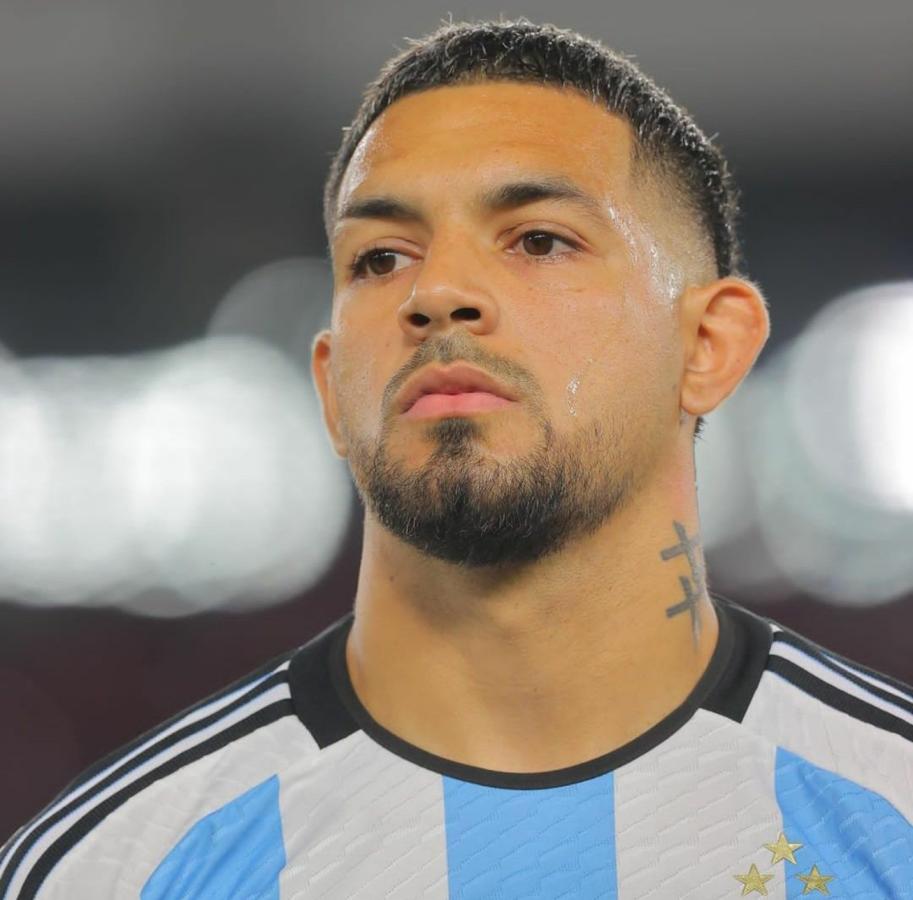
A small cross on the side of Medina’s neck is the most dependable anchor across the available photographs. It appears in close Argentina portraiture and in training images where the collar is open enough to show the design. Its placement makes it immediately recognisable, but its scale keeps it from overwhelming the rest of the collection.
The cross also shows why angle matters. In a front-facing portrait it sits just beyond the jawline, while a turned head brings the dark strokes into stronger contrast against the skin. The surrounding area is comparatively open, so the design reads as an intentional focal point rather than as one element inside a full neck cover-up.
There is no reliable public explanation for the exact style or artist behind this cross. It is safer to describe the visible form and location than to attach an unverified religious or family meaning. That restraint preserves what makes the photograph useful: it shows a real, repeatable design rather than a guess about private symbolism.
Hands and forearms carry the densest visual detail
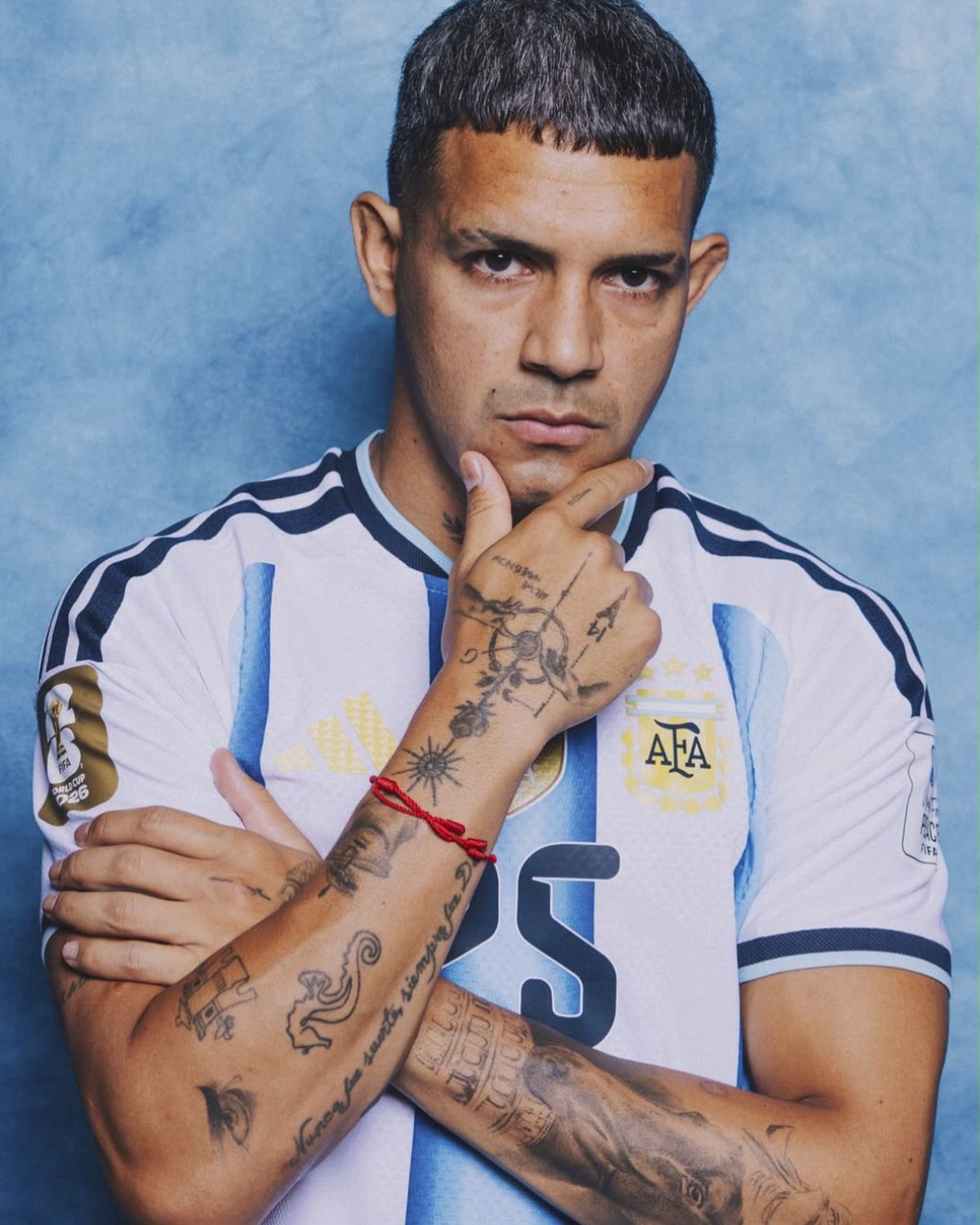
The Argentina portrait from Diario Uno is the clearest view of Medina’s hands and lower arms. With one hand resting near his face, the photograph exposes several overlapping elements: small marks across the fingers, a larger composition on the hand, script and linework along the forearm, and additional shapes continuing toward the elbow.
These designs do not read as one solid sleeve. They leave areas of skin between individual pieces, creating a patchwork effect that is closer to a personal scrapbook than a single illustrated panel. Some motifs appear to be floral or ornamental, while others are too small to identify confidently from the available resolution. The variation gives the arms a lived-in quality.
The hands are especially important because they turn the collection into a working athlete’s collection. Medina is photographed gripping a shirt, bracing against an opponent and lifting his arms in celebration. Those gestures make the ink part of his public silhouette, but they also mean that the same tattoo can look compressed or stretched from one frame to the next.
A Lens match photo shows the ink in motion
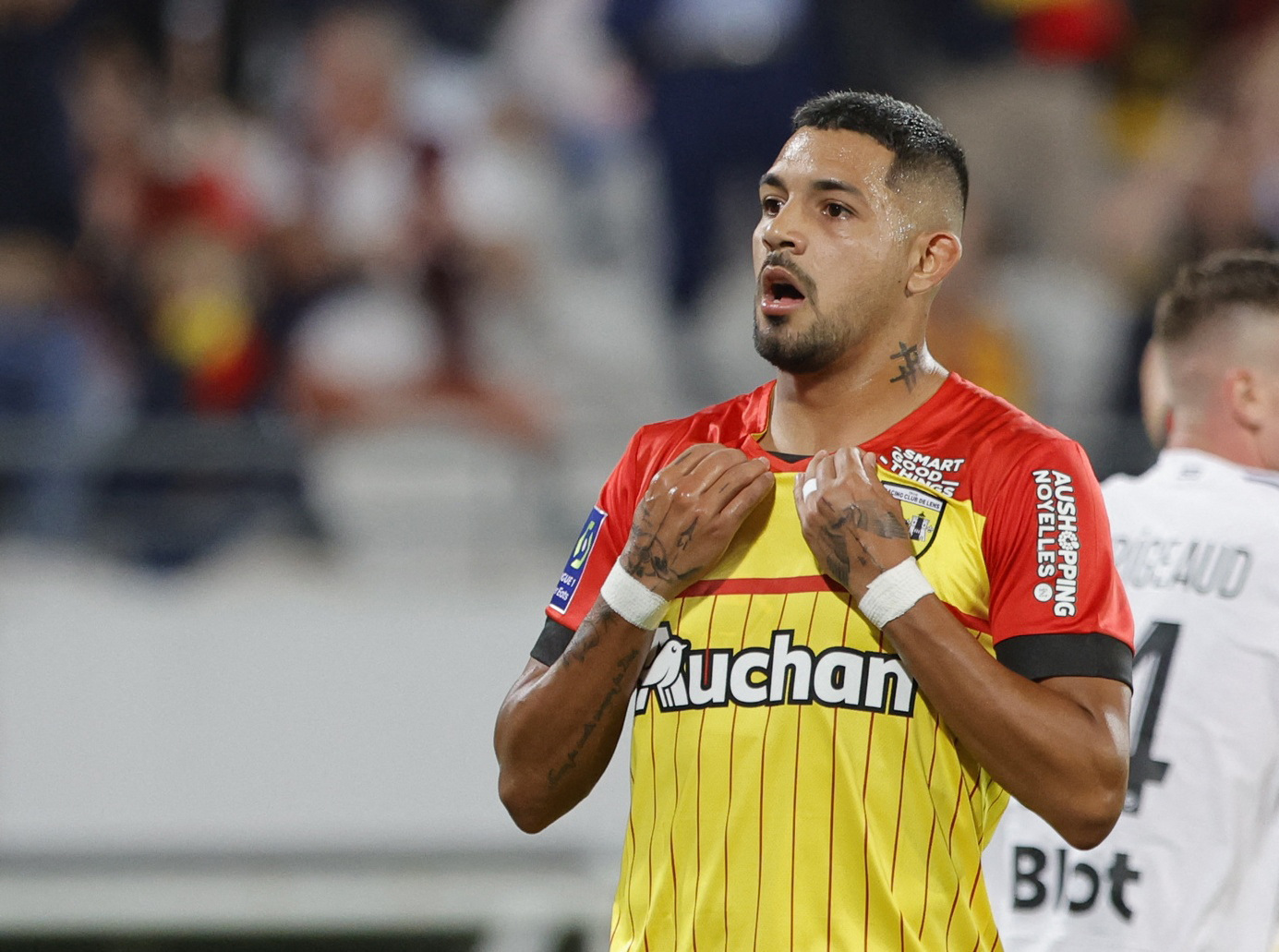
Infobae’s Lens match photograph shifts the emphasis from posed detail to movement. Medina is pulling at the front of his yellow and red shirt, exposing the cross at his neck and the darker ink that tracks across both hands and forearms. The change in setting makes the pieces feel less like a catalogue and more like part of his match-day identity.
The image also provides useful continuity with the formal Argentina portrait. The neck marker remains in the same position, while the forearm work appears in a different orientation because Medina’s hands are raised. That repeat view supports the conclusion that the visible marks belong to one consistent collection, not a temporary design or a styling effect.
Sports photography is often dismissed as too distant for tattoo research, but a well-timed frame can show how a design behaves in ordinary motion. Here, the shirt, sweat and stadium background supply context while the tattooed hands stay close enough to the camera for their broad shapes to remain readable.
The Marseille presentation reveals a quieter tattoo layout
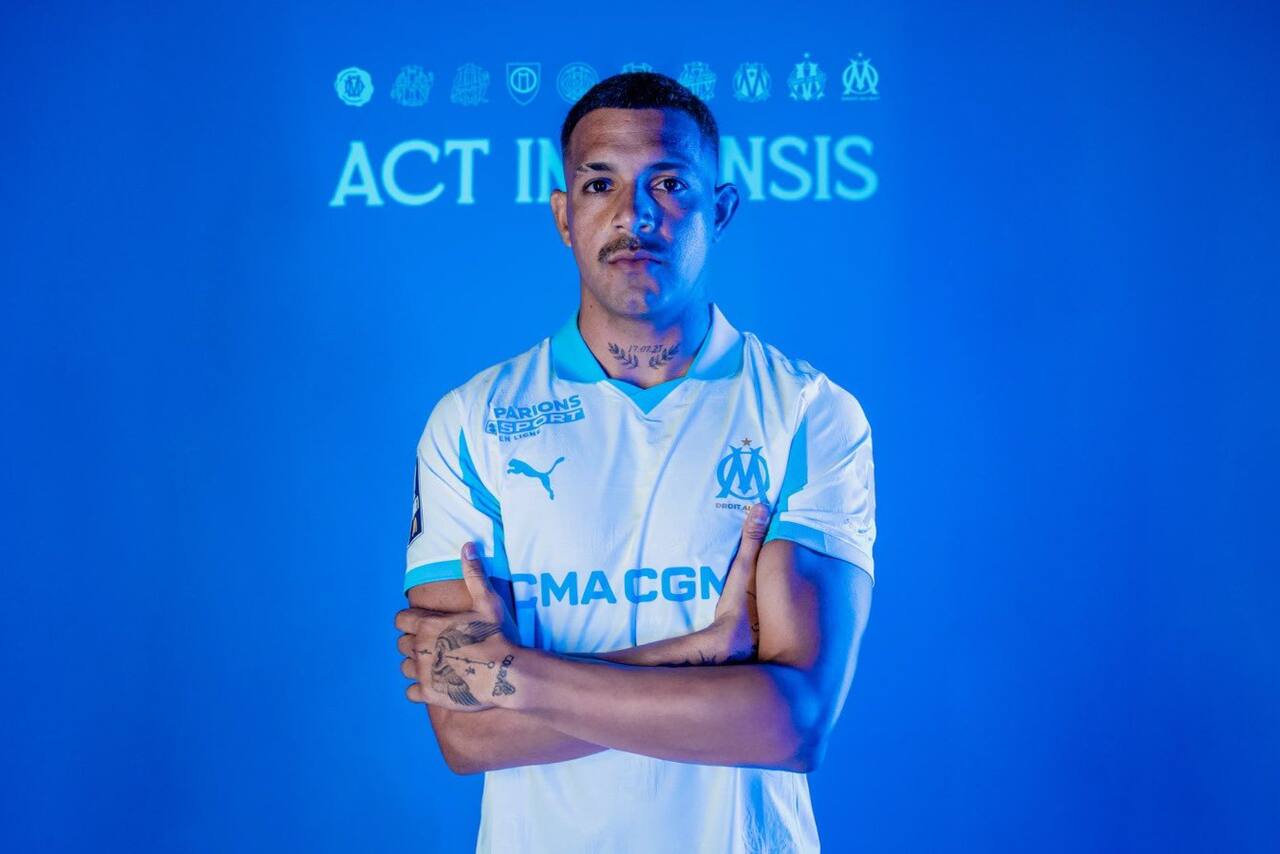
Medina’s Marseille presentation photograph is more controlled. He stands against a blue backdrop with his arms folded, exposing the neck lettering and part of the hand work while the rest of the jersey keeps the composition clean. The pose makes the collection look more deliberate and less crowded than it does during a match.
The hand tattoos are partly overlapped by the opposite forearm, which is a useful reminder that even official club imagery cannot show every design at once. It does, however, make the relationship between the neck and hands easier to read. The ink forms a connected path from the collar to the wrists without becoming a continuous black sleeve.
That balance between exposed skin and dense detail is the strongest style clue in Medina’s photographs. The designs have impact because they are separated by space. A future piece can sit beside them without needing to copy their exact symbols, as long as it respects the contrast between small marks and larger, darker passages.
Training imagery adds arms and legs to the picture
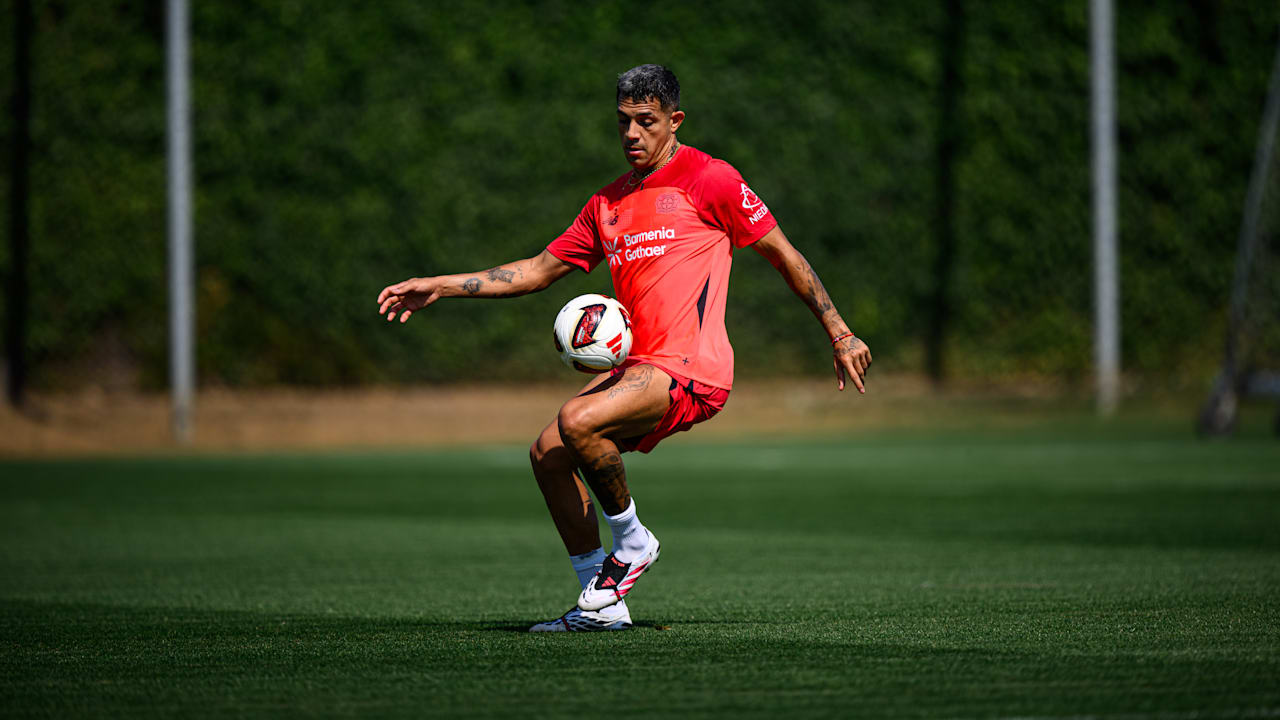
The Bayer Leverkusen training photograph shows another side of the collection. Medina is captured in motion on the grass, and the frame reveals ink across his arms and legs that is easy to miss when he is wearing a full match kit. The designs are not presented as a single close-up, but their distribution confirms that the collection extends beyond the neck and forearms.
German reporting about Medina’s back describes a large lion dedicated to his mother. The lion is a separate, larger-scale statement from the fine-line marks visible on his hands. That contrast is useful: his tattoos range from small personal symbols to a major back composition with an explicit family story.
The training photograph should not be read as a complete map of every lower-body design. It is valuable because it shows the collection in a different posture and environment. The visible arm and leg marks create continuity with the closer portraits while adding scale to the overall picture.
A possible next chapter with Messi
In an interview on Ferne con Grego, Medina said he asked Lionel Messi to choose a photograph for a future tattoo. That is a genuine, documented plan, not a completed design. The distinction matters because celebrity tattoo coverage often turns an announcement into a finished image before the needle has touched skin.
For now, the confirmed collection is the one seen across the neck, hands, forearms, arms, legs and the reported family lion on the back. A Messi portrait may eventually become the most talked-about addition, but its final size, placement and artist are not established by the interview alone.
The planned piece also fits the pattern already visible in Medina’s ink. Football is not treated only as a career badge. It overlaps with family, place and personal loyalty. A future portrait selected by Messi would add another layer to that story, while still sitting inside a collection that already mixes small linework with one major back tattoo.
Facundo Medina’s tattoos are compelling because the photographs show a person rather than a checklist. The neck cross anchors the face, the hands and forearms carry the closest detail, the match images reveal movement, and the family lion gives the collection a larger emotional centre. The most accurate reading is specific but modest: describe what is visible, preserve the meanings that have been reported, and leave private symbols open when Medina has not explained them himself.
Seen together, the photographs also show how much a tattoo collection can change with posture and clothing. The same athlete can look almost unmarked beneath a long sleeve, then reveal a layered set of decisions when a hand reaches for a shirt or a collar shifts during a match. Medina’s ink is therefore best read as a changing visual record, with family at its centre and football providing the scenes in which that record becomes visible.