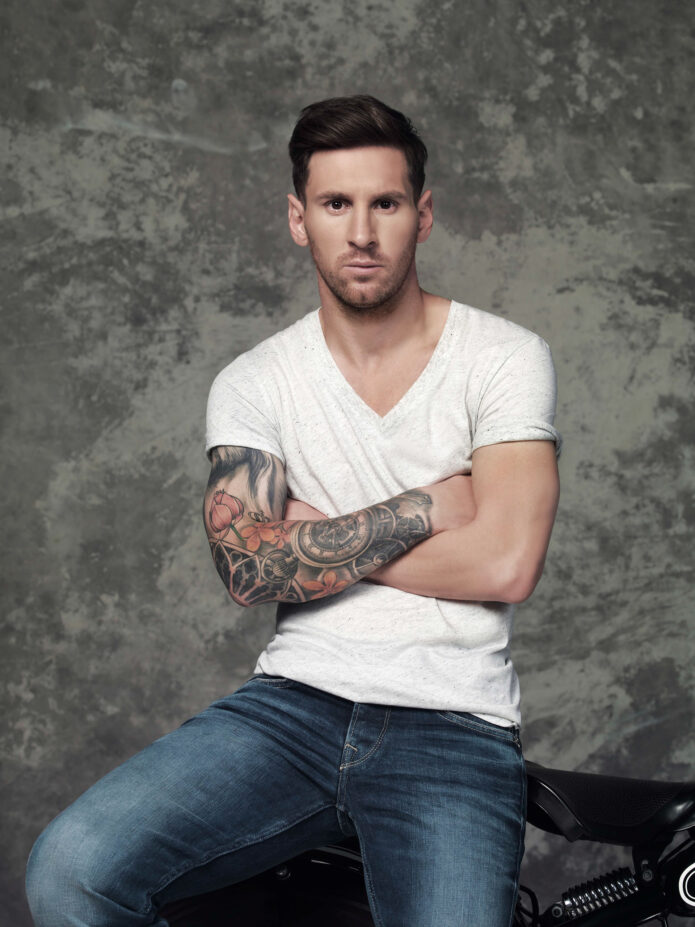
Lionel Messi’s tattoos can look like a football story, but that’s only part of it. The number 10 and ball imagery are obvious. Family names, handprints, a rose window, rosary, clock, eye and portrait of his mother are what make the collection feel personal.
His ink has changed over the years. The left leg once had a dagger, wings and a red rose, much of which is now covered in blackwork. Newer details sit around the blackout, including his son’s handprints, the number 10 and a football. On the right arm, religious imagery shares space with symbols connected to Antonela, family, Barcelona and time passing.
There are plenty of blurry fan-made lists, so this guide sticks to designs that have been reported clearly or shown in strong photos. It doesn’t claim to name every tiny mark on his skin; it follows the pieces with the clearest stories.
His leg tattoos carry family names and football memories
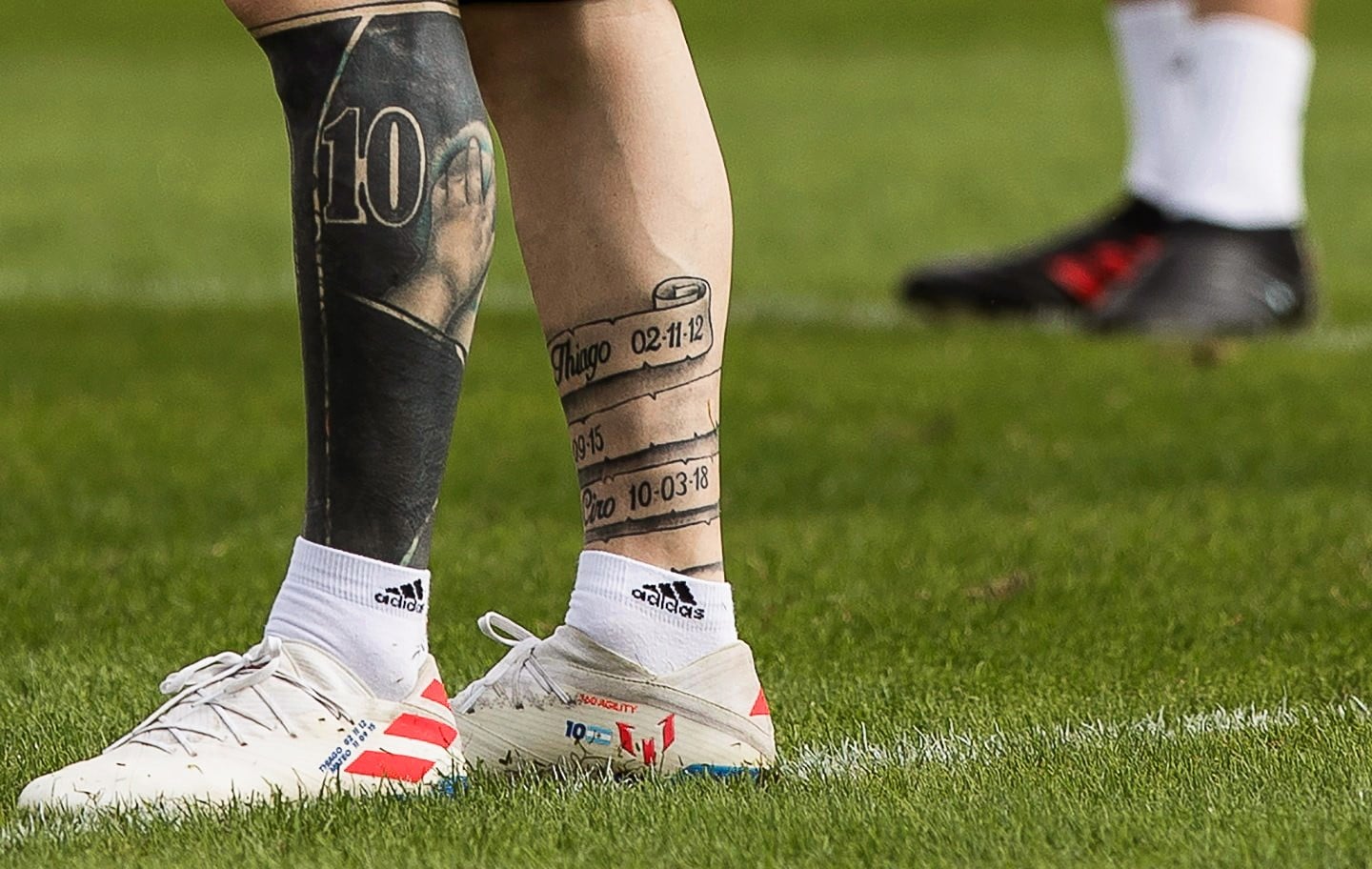
Messi’s lower legs bring football and family together. Around one ankle are the names and birthdates of his sons, Thiago, Mateo and Ciro. The details make the leg a permanent family record, in the same area where fans also see his number 10 and football references.
The names aren’t a public-relations slogan. They’re close to the ground, carried through training, travel and matches. Messi has spent much of his adult life moving between stadiums, and the tattoos keep his closest people with him wherever the schedule takes him. That part of the collection feels quietly lived in.
His leg work also includes handprints connected to Thiago. They’re more personal than a standard name tattoo because they preserve a specific moment in childhood: a name tells you who someone is; a handprint reminds you how small they once were.
That family thread keeps the leg from reading as a simple tribute to his career. Football is there, but it shares space with reminders of home. The collection belongs to the player wearing number 10 and to the father behind the shirt.
The blackout covers an older dagger and wings design
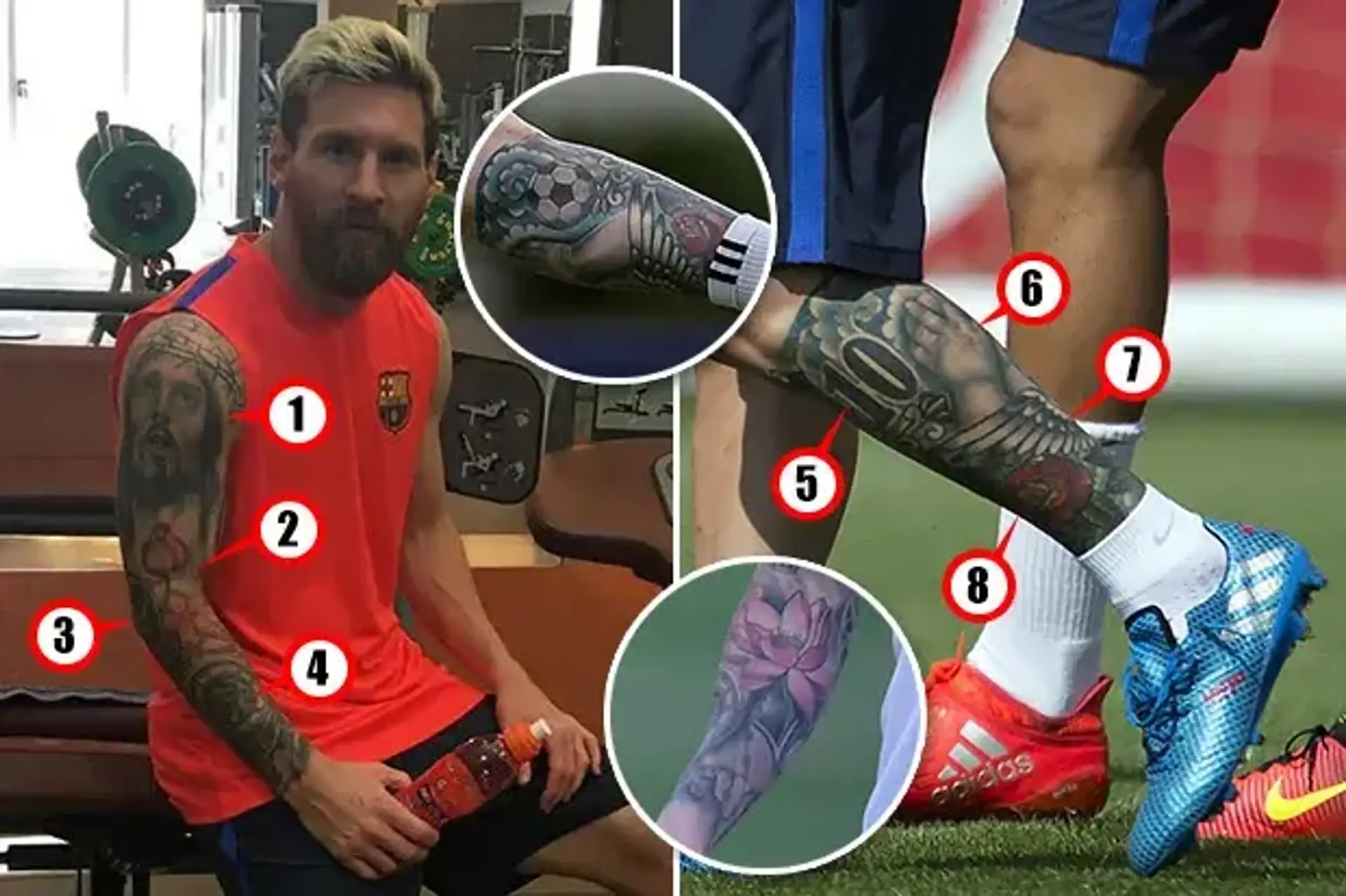
Messi’s left leg has gone through a striking change. A large section is now covered in solid black ink, hiding earlier designs that included a dagger, angel wings and a red rose.
Cover-ups aren’t unusual, but the scale makes this one stand out. It’s not a small correction around the edge of an image; the blackout changes the whole balance of the leg, creating a dark base while leaving selected details visible above or around it.
The change makes the collection feel honest. Tattoos don’t always remain as they were first made. People change their minds and tastes shift; an old piece can stop fitting the person they’ve become. Messi didn’t simply add another symbol to the edge. He reshaped the canvas.
The earlier rose and wings still matter because they explain what the blackwork replaced. The current leg isn’t a clean beginning; it’s an edited version of an older story, with the first design helping fans understand how the work evolved.
The number 10 and the football are tied to his identity
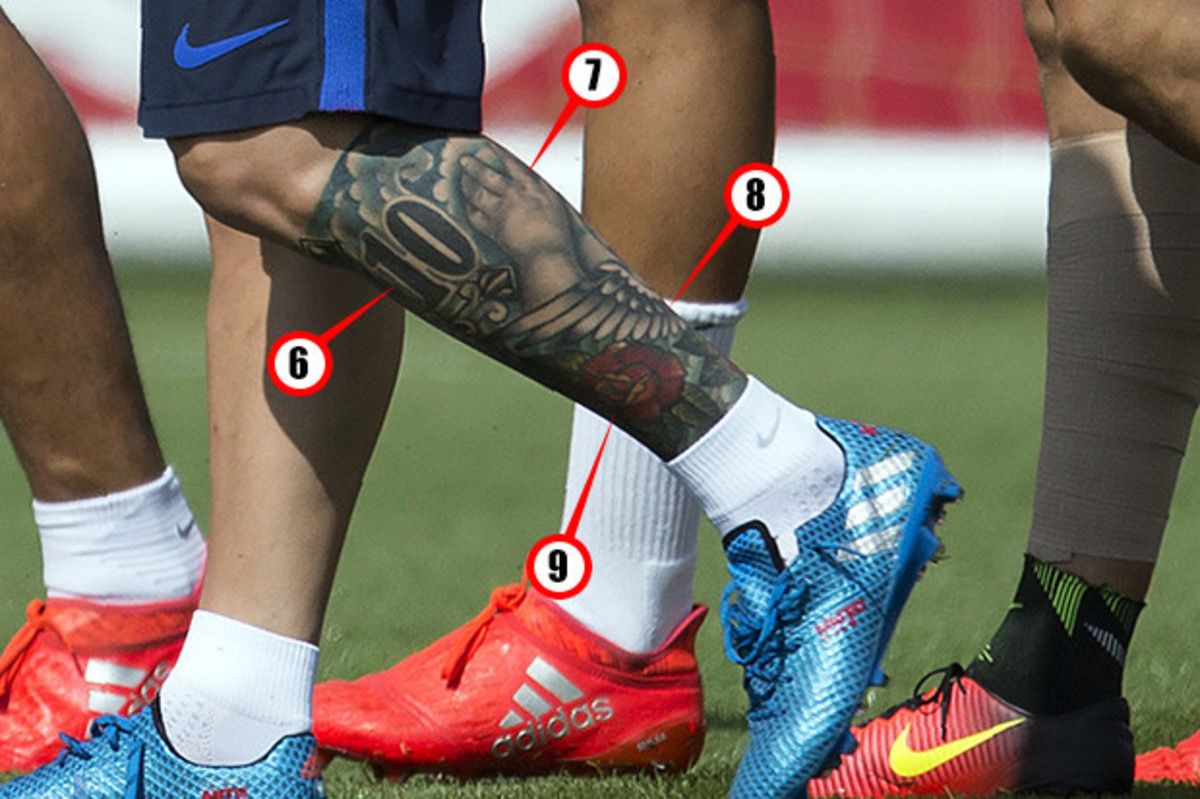
Near the blackout, Messi has kept the number 10, a football and a reference to FC Barcelona. The number is central to his public identity. It’s strongly associated with his Barcelona years and Argentina, so having it on his leg makes that connection permanent.
The football is a more direct image, but no less meaningful. Messi’s career has revolved around the sport since childhood; the ball is the simplest possible symbol for that life. It works almost like a signature.
The interesting part is how those designs sit beside the family tattoos. The 10 and the ball tell the world what Messi does. His children’s names and handprints show who he is when a match is over. Both belong on the same leg because his career and family life have never been completely separate.
The number also helps fans date photos. As the tattoo changes, the 10 stays a visual anchor—one of the pieces that remained easy to recognise while other areas were covered or extended.
The Five of Cups tattoo became a quiet World Cup-era symbol
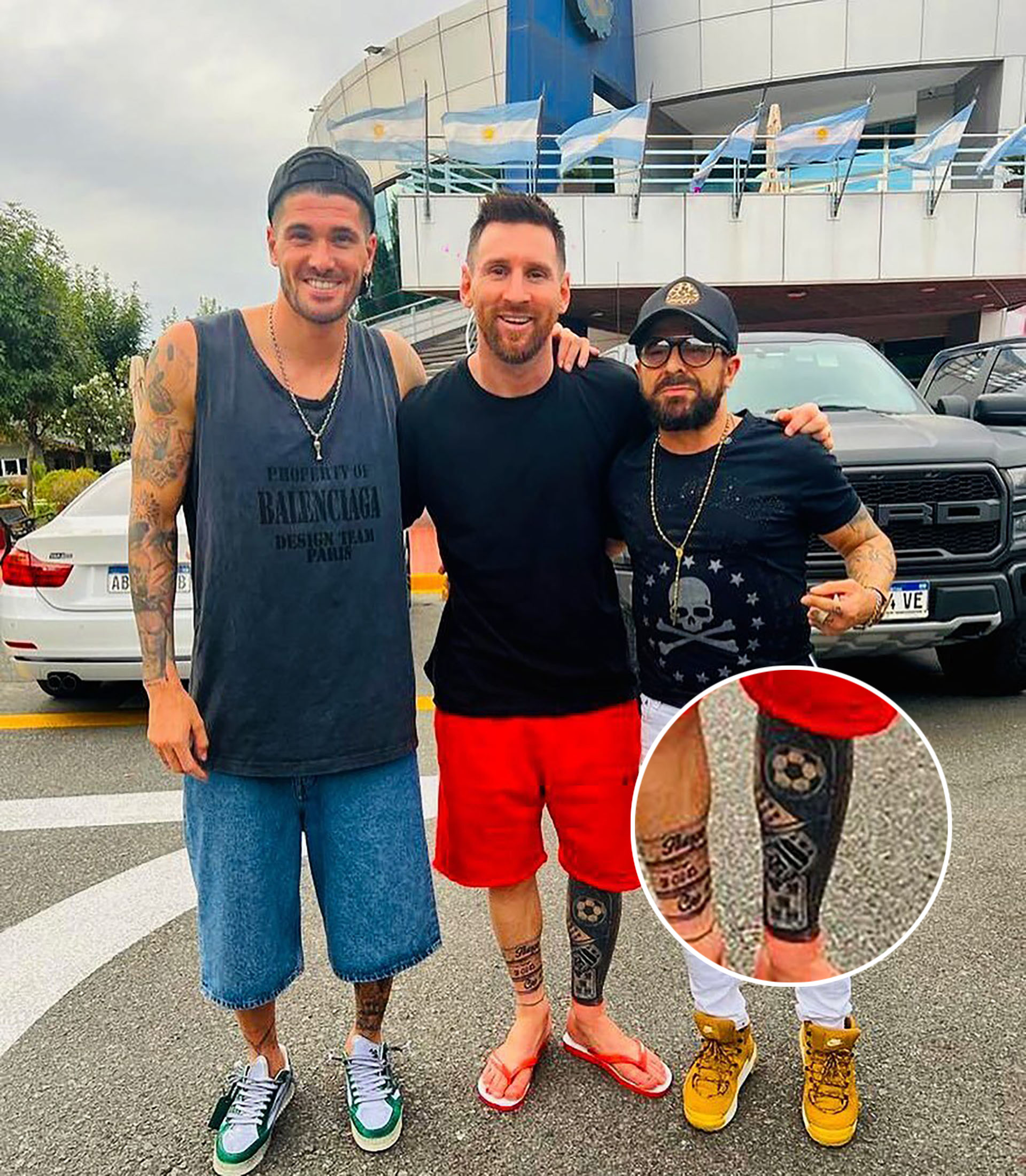
After Argentina won the 2021 Copa América, several players from that group chose to tattoo playing cards connected with a well-known moment. Messi got the Five of Cups, a tarot-style card that took on even more meaning after Argentina won the 2022 World Cup.
The story sounds almost too neat, which may be why people remember it. A card game shown in a documentary caught Messi guessing the Five of Cups. Later, he saw the coincidence as a kind of sign. The tattoo links a private game, a team memory and the feeling that a long-awaited victory was meant to happen.
The number five carries another personal association for Messi. It was one of his early squad numbers and can also be read as a reference to the five people in his immediate family. That doesn’t replace the card-game story; it adds another layer.
Unlike a giant World Cup trophy tattoo, the Five of Cups is subtle. Messi didn’t need a huge label announcing that he had won. The small image works like a private reminder of the strange chain of moments that led to the biggest prize of his career.
His right arm sleeve mixes faith, flowers, and family
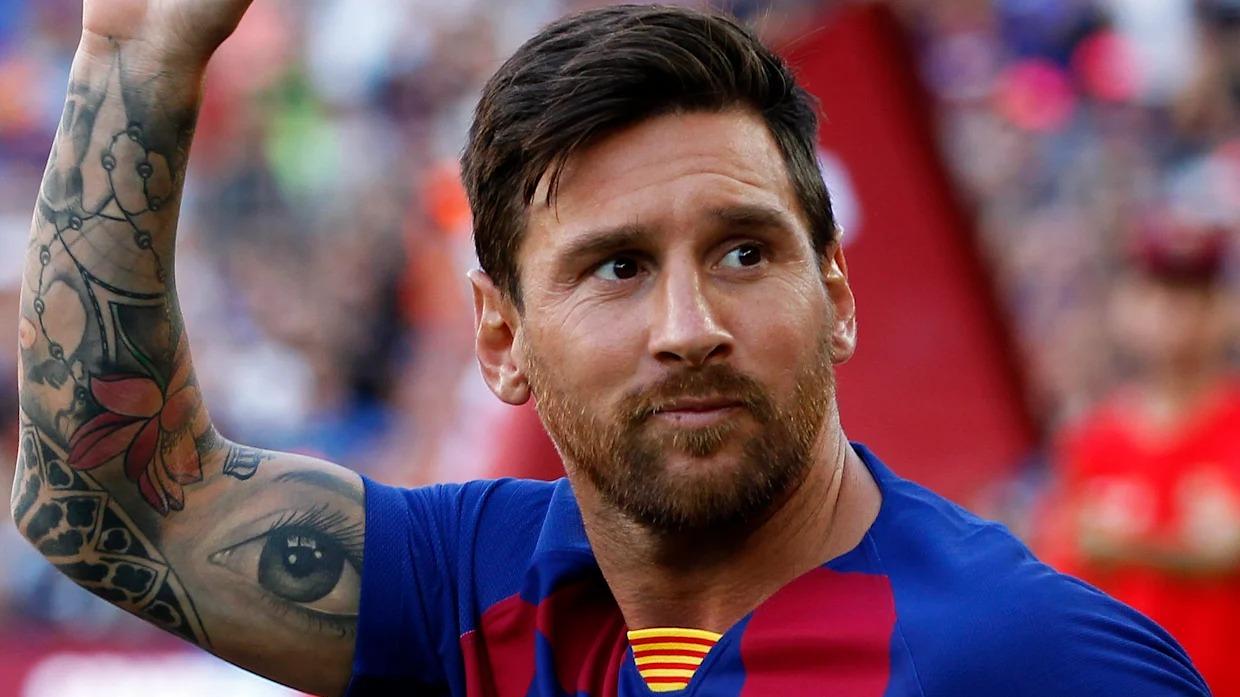
Messi’s right arm sleeve is the most layered part of the collection. Near the shoulder is Jesus wearing a crown of thorns, a clear expression of his Christian faith. Lower down are a rose window, flowers, rosary beads and other connected designs.
The sleeve came together over several years rather than appearing as one block. That gives it a more natural flow. The eye, flowers and religious imagery don’t all carry the same visual weight, but they move together down the arm.
The rose window is often linked with the Santa Maria del Pi church in Barcelona. It’s a smart choice for Messi, connecting faith with the city where he built so much of his career. The tattoo isn’t religious only in a general sense; it also carries a sense of place.
Flowers soften the sleeve and keep it from becoming a wall of heavy black symbols. Roses and lotus flowers bring colour and shape; the rosary beads then return the design to its spiritual thread.
The eye and crown point back to Antonela
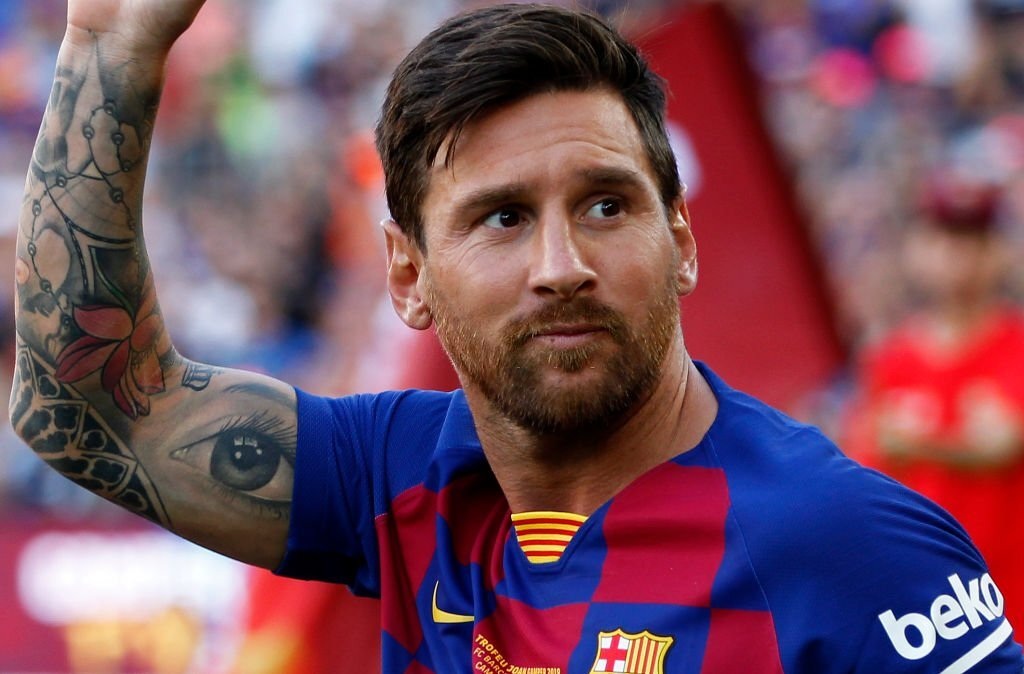
Inside Messi’s right bicep is an eye associated with his wife, Antonela Roccuzzo. A crown sits nearby, and both images fit the shared tattoo language the couple has used. Antonela has a similar eye-and-crown combination, so this part of Messi’s sleeve feels less like a solo design and more like a private exchange between them.
An eye is simple, but can carry several meanings. The connection to Antonela gives it a clear emotional centre. The crown adds admiration and partnership without needing a long phrase or a portrait.
The inside of the bicep is also a little more private than the outside of the arm. The tattoo can be shown when he wants, but it isn’t the first thing everyone sees under a regular shirt.
This is one of the quieter parts of Messi’s collection. He has enormous fame and a very public career, yet this design needs neither his name nor a trophy. A small shared symbol is enough.
The clock and cogs turn time into part of the sleeve

Further down the arm is a pocket watch surrounded by cogs. It makes time into a physical image, which fits a player whose career has been measured in seasons, matches, records and milestones.
The clock can be read as a reminder that time keeps moving, even when someone is at the top of the world. It also fits the family side of the sleeve. A player can win trophies, but can’t stop his children growing or change moments that have passed.
The cogs give the design a mechanical feel and tie it into the rest of the arm. They fill the space around the watch while keeping time as the clear idea. It isn’t a tiny clock hidden in a corner, but a visible piece of the full sleeve.
Messi hasn’t needed to explain every possible reading. The picture speaks for itself. A clock in a sleeve full of family and faith symbols naturally becomes a reminder that careers and lives are made of passing moments.
His mother’s portrait is one of the most emotional pieces
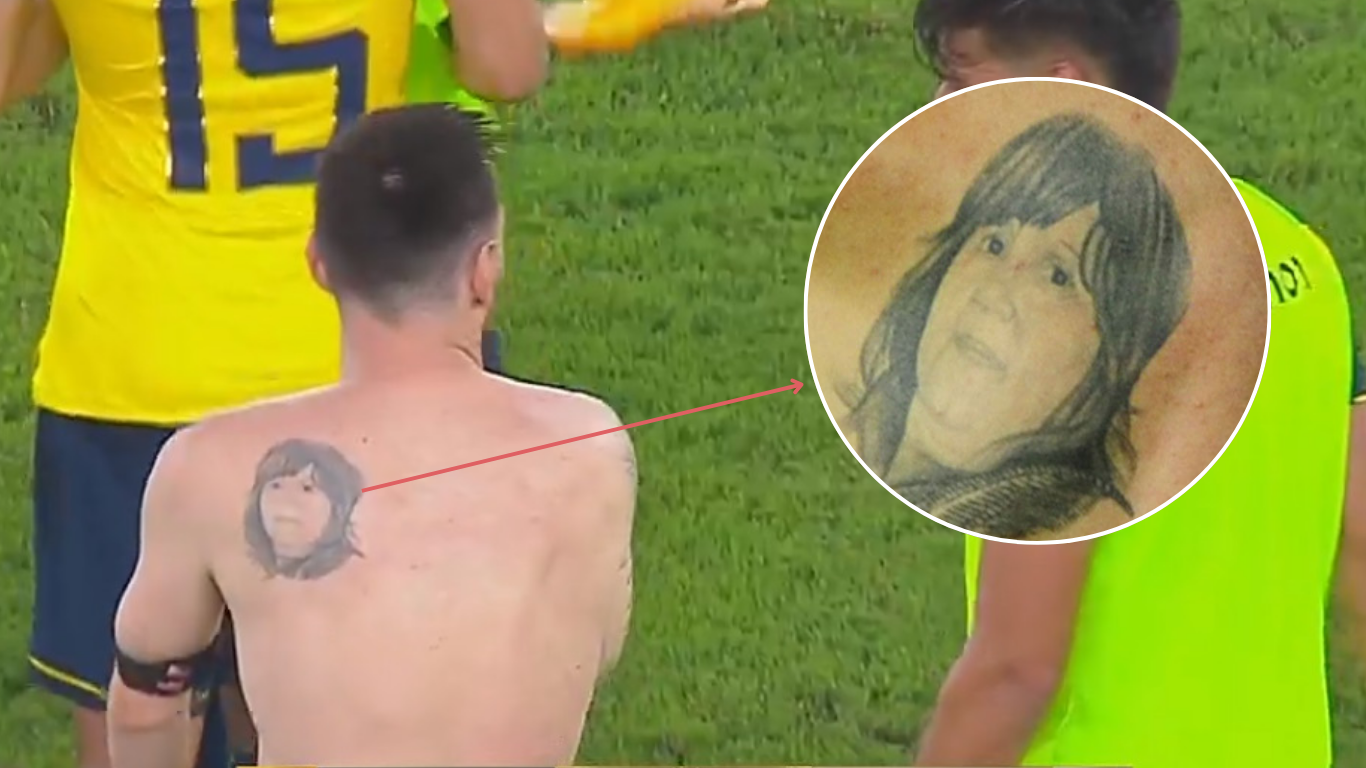
On his left shoulder blade, Messi has a portrait of his mother, Celia. It’s among his earliest and most heartfelt tattoos, with a different feeling from the football symbols on his leg or the decorative sleeve on his arm.
Celia played a major role in Messi’s life, especially during the difficult early years of his football development. A portrait is a direct tribute: it keeps someone’s face close and feels personal even to people who don’t follow football.
The shoulder blade is a thoughtful spot. The portrait isn’t always on display, but it’s large enough to matter when Messi chooses to show it. That balance of privacy and permanence suits a family tribute better than a loud design across the front of his chest.
Some photos have led people to guess that the portrait shows a politician or another famous person. The documented explanation is that it’s Celia. The real story is more grounded than the speculation.
The small red lips tattoo keeps the romance understated
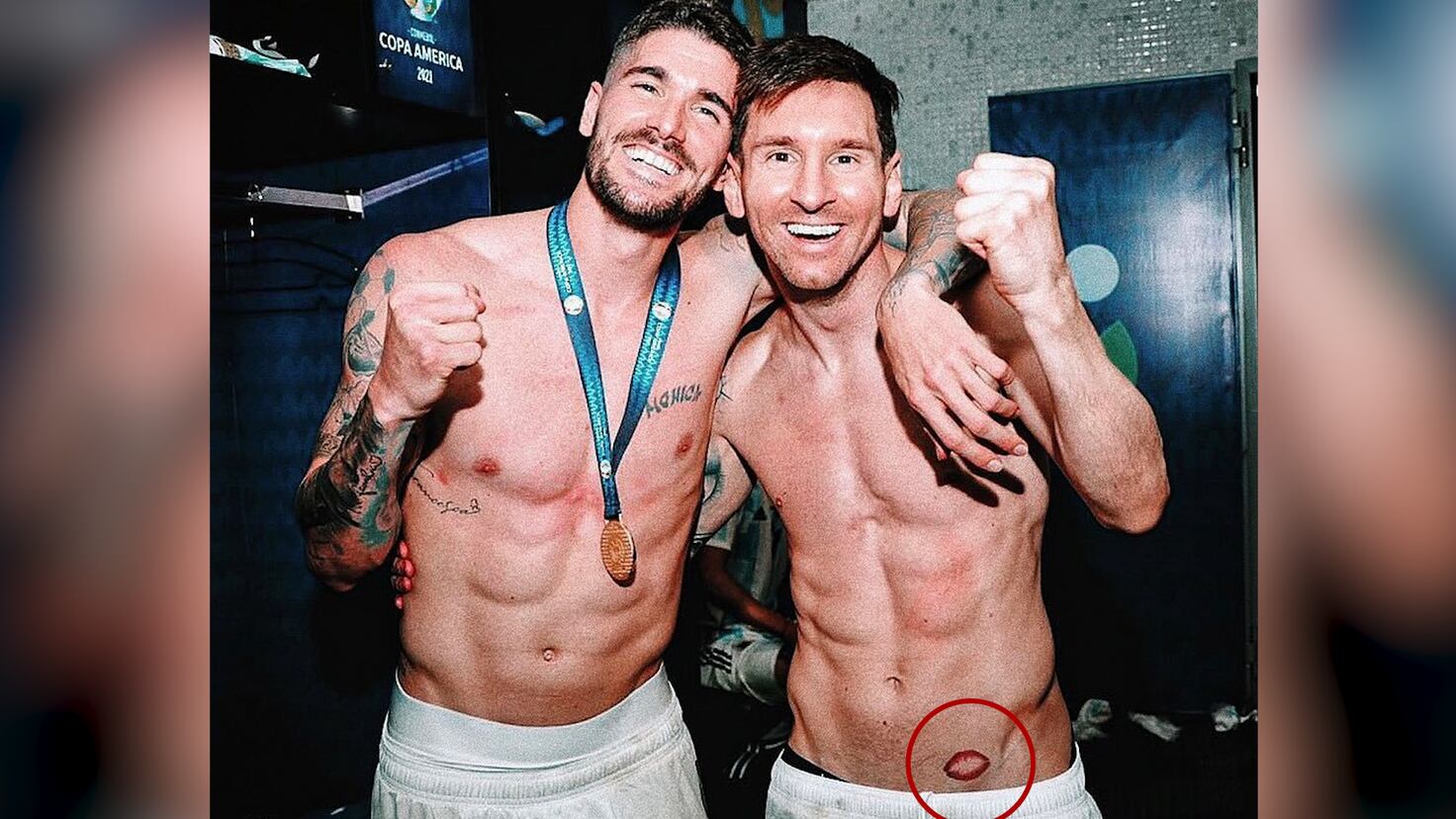
Messi also has a small pair of red lips on his left hip, described as a romantic nod to Antonela. It’s almost the opposite of the portrait on his shoulder blade: that’s large and unmistakable, while the lips are discreet and easy to miss unless he’s photographed without a shirt.
That contrast makes the collection feel human. A meaningful tattoo doesn’t need to be a giant sleeve; a tiny image can matter when it points to a relationship.
The lips add a flash of colour to a collection that is mostly black and grey. His arm has flowers and some colour too, but the red mark on his hip stands out because it’s so simple.
There’s no need to make the design more complicated than it is. It’s a romantic image in a private place, and that’s enough.
Watch a relevant video about the story behind Messi’s tattoos.
3 thoughts on “Lionel Messi’s Ink Keeps Family and Football Together”