
Tim Kleindienst’s tattoos are easy to spot when he rolls up a sleeve, but their stories are more personal than a typical footballer’s ink roundup. The Borussia Mönchengladbach striker has talked about love, family, time and leaving room for one very specific future tattoo. His designs are spread across his arms rather than gathered into one giant statement.
Kleindienst speaks about the ink in a straightforward way. He treats the tattoos as reminders, with the meaning more important than showing off every line. In a 2025 RTL interview, he said love and family matter to his choices; another interview explained the sandglass on his left upper arm and its link to how he wants to use his time.
It’s a focused collection: the sandglass is the clearest documented design, alongside larger black-and-grey work across his arms. Some details show up in photographs without a public explanation, so I’ll describe what’s visible and leave those meanings open.
The sandglass on his left upper arm is a reminder about time

The best-documented tattoo in Kleindienst’s collection is a sandglass on his left upper arm. Its message is simple: time keeps moving, so make good use of what you have.
Kleindienst has said the design reminds him to use his time as well as possible. He connects that idea to doing more than the bare minimum, in sport and in everyday life. It isn’t about a goal celebration or a trophy he has already won; it keeps his own standards in view. For another personal tattoo story, see Roman Kemp’s tattoo story.
The upper arm suits a reminder like this. A match shirt can cover the design, while it comes back into view in everyday life. It’s close enough to feel personal without being on display all the time.
There’s a football connection even though the sandglass isn’t a football symbol. Players face short careers, injuries, changing form, selection decisions and opportunities that can disappear. Kleindienst reached the Germany national team later than some supporters might expect, which gives the theme of time extra resonance.
The design’s strength is its understatement. A sandglass isn’t loud, but its meaning becomes clearer the longer you look. The message is to make the most of the time still in front of you, making this one of his clearest tattoos-as-reminders.
His arm work is built from black and grey images


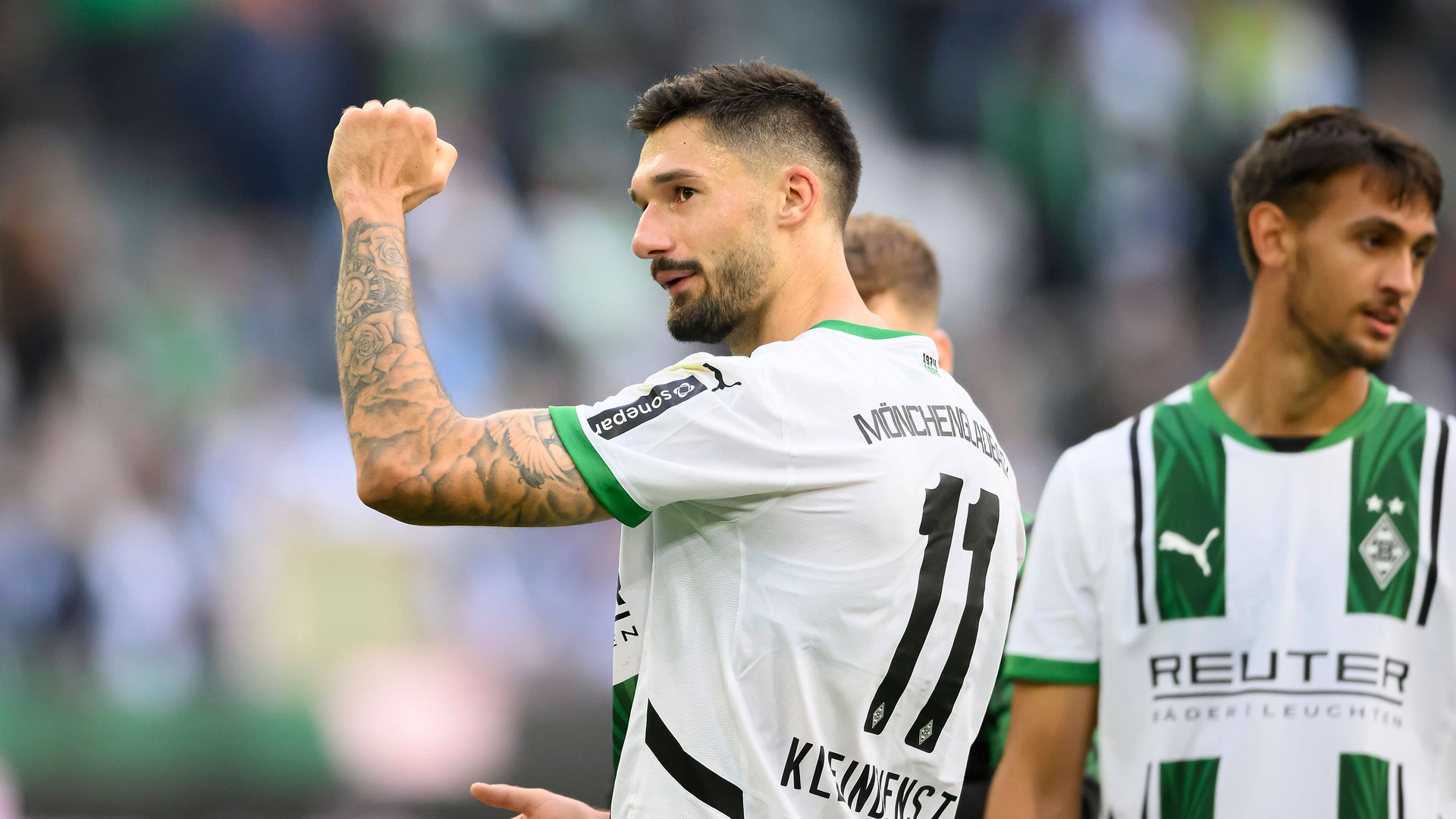
A match photo shows how far the black-and-grey work runs up Kleindienst’s arm. With the sleeve lifted into view, the shaded shapes and darker bands are easier to distinguish than in an ordinary portrait. It shows how the tattoos look around football, not just in a close-up made for an article.
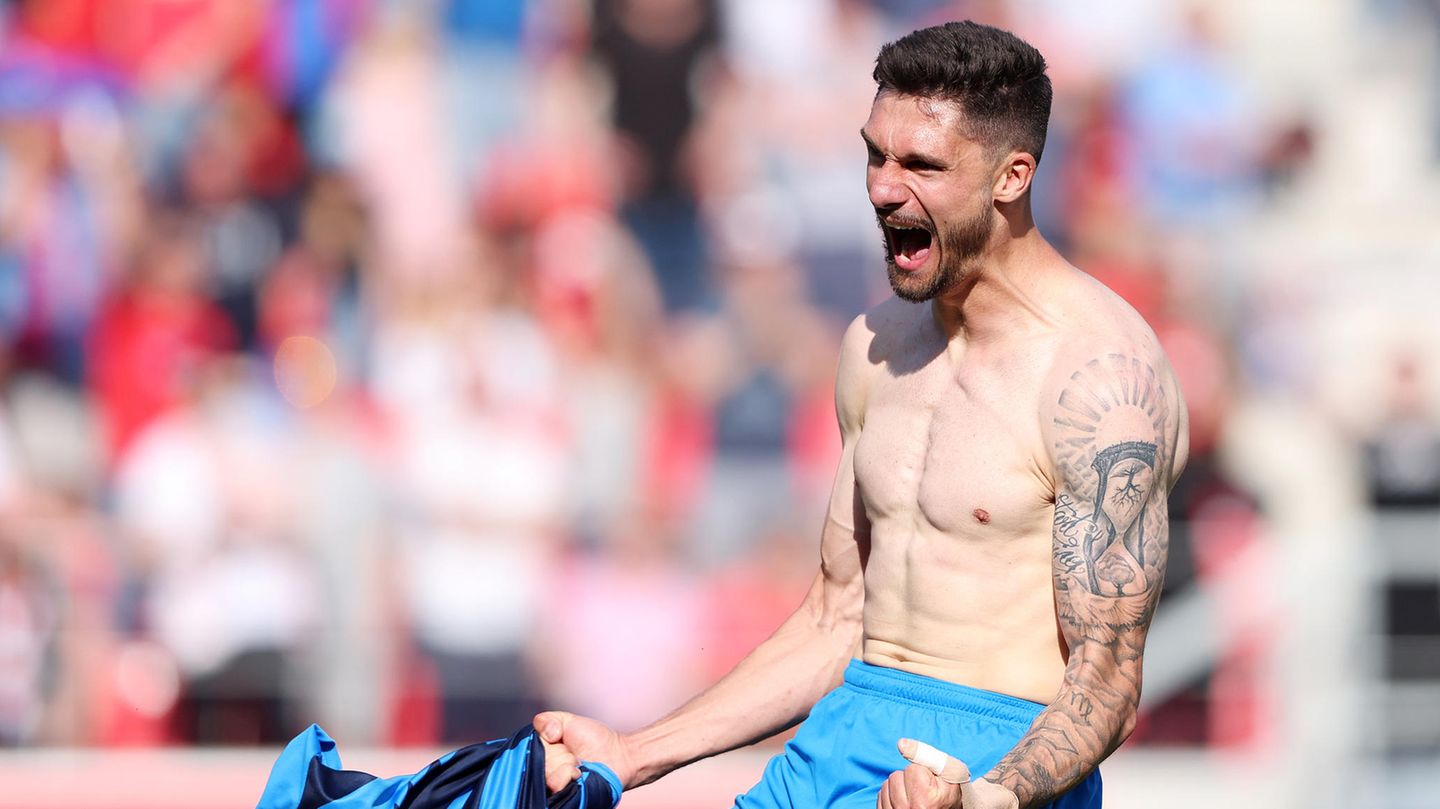
The shirtless celebration photo gives another angle in brighter light. The larger shapes on his upper arm, the deep shading and the way the pieces meet toward the forearm are easier to see. The images confirm that it is more than one small design, while leaving several motifs unidentified.
Photos show a broad area of black-and-grey work across his right forearm and up toward the upper arm. In the clearest shots, layers of shading, curved outlines and connected pieces sit together. From a distance the arm reads as a dark sleeve; up close it looks like several separate designs.
The pictures aren’t sharp enough to name every image, but the overall style is clear: soft grey washes, heavier black areas and rounded shapes with an illustrative feel. Shading and texture give the work more depth than a simple block of ink.
That style fits naturally in match and club portraits. The tattoos show when he crosses his arms or celebrates, but the shirt still frames them. The ink is part of his everyday look without taking over the whole picture.
It’s tempting to give each dark shape a name, especially beside a dramatic headline. There’s no reliable public list identifying every piece on Kleindienst’s arm. The careful description is a black-and-grey collection of overlapping motifs whose exact symbols and meanings haven’t all been shared.
That uncertainty doesn’t make the tattoos less interesting. A real collection grows over time, appears under different lighting and can hold meanings that stay private. Kleindienst’s arm has the lived-in look of something that has developed with him, not a catalogue design planned in one sitting.
Love and family are the themes he talks about most
In the RTL interview, Kleindienst said love and family are central to his tattoos. He didn’t give a full map of every design, and public coverage hasn’t identified every family reference, but that comment gives the visible ink useful context.
It shifts the focus from clubs, promotions and trophies toward people and relationships. His explanations make the collection feel more restrained than some of the louder ink in professional sport.
The pieces don’t need to match visually. A family tattoo, a reminder about time and a future idea can all look different while belonging to the same collection. The connection is why he chose them, not one uniform style.
There’s a private side to that as well. Kleindienst plays in front of large crowds, but a tattoo tied to family can stay meaningful without being fully explained to everyone watching. Photos show the shapes; he can keep the deeper story for himself and those close to him.
The confirmed details are already enough: a sandglass, a collection tied to love and family, and a clear message about using time well. The remaining marks can be described visually without inventing their backstories.
His brothers, zodiac design and tattooed wedding ring
In the RTL interview, Kleindienst discusses references to his two brothers in his arm tattoos. He also describes a design combining his Scorpio sign with his wife’s Virgo sign, and a tattooed wedding ring. Those explanations give some of the smaller pieces a family context without assigning a meaning to every visible shape.
He has imagined a World Cup trophy tattoo
In the earlier RTL interview, Kleindienst said he would get the World Cup trophy tattooed if Germany won the 2026 tournament. He described it as an easy decision if the team lifted the title.
The idea fits the sandglass in its own way. One tattoo keeps the time ahead in mind; the other would mark a once-in-a-lifetime football moment. One is a reminder to keep moving, the other a record of reaching the sport’s biggest prize.
That was a conditional promise made before the tournament. The interview does not establish that he later received a trophy tattoo; it should be recorded as an earlier idea, rather than counted as confirmed ink.
That plan also says something about how he thinks of tattoos. He isn’t filling empty space for its own sake; the trophy would come after a meaningful achievement. The sandglass works similarly, carrying a message he wants to keep close.
For now, Kleindienst’s tattoos are best understood through time, family and the steady work of building a football career. The arm pieces give the collection a strong look, but the explanations make it feel personal. The RTL interview below lets him speak about his life and tattoos in his own words.
For another footballer’s collection, see Lionel Messi’s tattoos.
More photographs of Tim Kleindienst’s tattoos

One thought on “Tim Kleindienst Tattoos: Family, Hourglass and Wedding Ring”