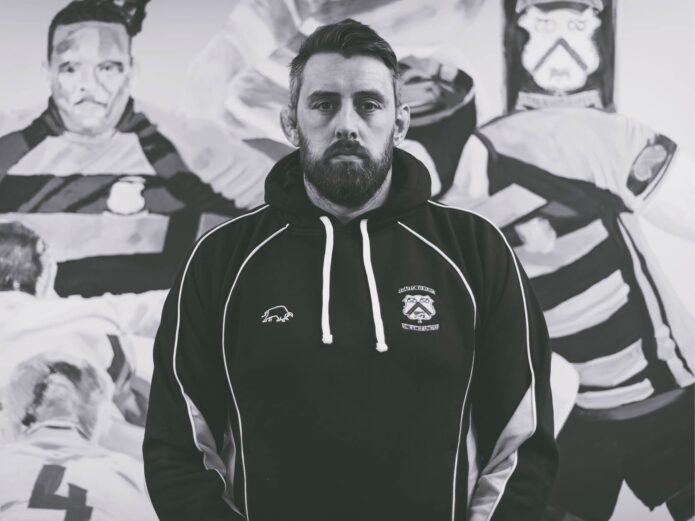
Alastair Muldowney, usually known in rugby coverage as Aly Muldowney, carries his playing history in a way that is especially visible when a jersey sleeve moves. The former lock played for Glasgow Warriors, Exeter Chiefs, Connacht, Grenoble and Bristol before returning to Stafford rugby, and photographs from those chapters repeatedly show substantial tattoo work across his arms. The images are clear enough to discuss placement, scale and style, while the published interviews also give the ink a credible personal setting.
The most useful starting point is Muldowney’s own story about a Connacht tattoo. The Rugby Journal describes the former player returning to Stafford and recalls the clubs represented by his shirts, while a French report on Grenoble shows him during training with a Celtic-style tattoo visible on his shoulder and upper arm. Those sources do not provide a complete catalogue of every mark. They do show that the tattoos are genuine, long-standing and closely tied to the movement between clubs, countries and roles.
This is therefore a visual study rather than a claim that every symbol has a published explanation. What can be confirmed is the relationship between the tattoos, the rugby timeline and the way his arms appear in different settings. Close-ups, match photographs and relaxed interview images each reveal a different part of the same collection.
A rugby career behind the visible collection
Muldowney’s career created a natural sequence of places and identities. Glasgow gave him an early professional platform, Exeter placed him in the English Premiership, Connacht became the club associated with a major Pro12 success, and Grenoble and Bristol added more chapters across Europe. The Rugby Journal interview presents him as someone reflecting on the whole route rather than reducing his life to one team. That broader context helps explain why his tattoo coverage feels accumulated rather than designed as one single mural.
In the photographs, the arm work is not hidden behind one carefully staged portrait. It appears when he is drinking with friends, sitting in a stadium, lying on a pitch or preparing for a match. The repeated visibility across ordinary and athletic scenes makes the tattoos part of his working identity. They are seen during motion, not only when he is posing for a close-up.
That distinction matters for reading the collection. A full sleeve can look like a finished block when the light is controlled, but rugby photography breaks it into sections. A shoulder may carry the strongest contrast, the forearm may reveal a smaller symbol, and a wide match frame may show how the work sits against the muscles used in the lineout. The changing settings make the collection feel like a record of a career in motion.
The Connacht crest tattoo carries club memory
Connacht is the clearest club reference in Muldowney’s tattoo story. The Rugby Journal article notes his connection to the province and the remarkable team that won the Pro12 in 2016. The42’s retirement coverage also describes him as one of the important individuals in that Connacht success. Across the available photographs, a club-related tattoo is most plausibly read alongside this documented history, although the exact design and all of its symbolism should not be expanded beyond the published evidence.
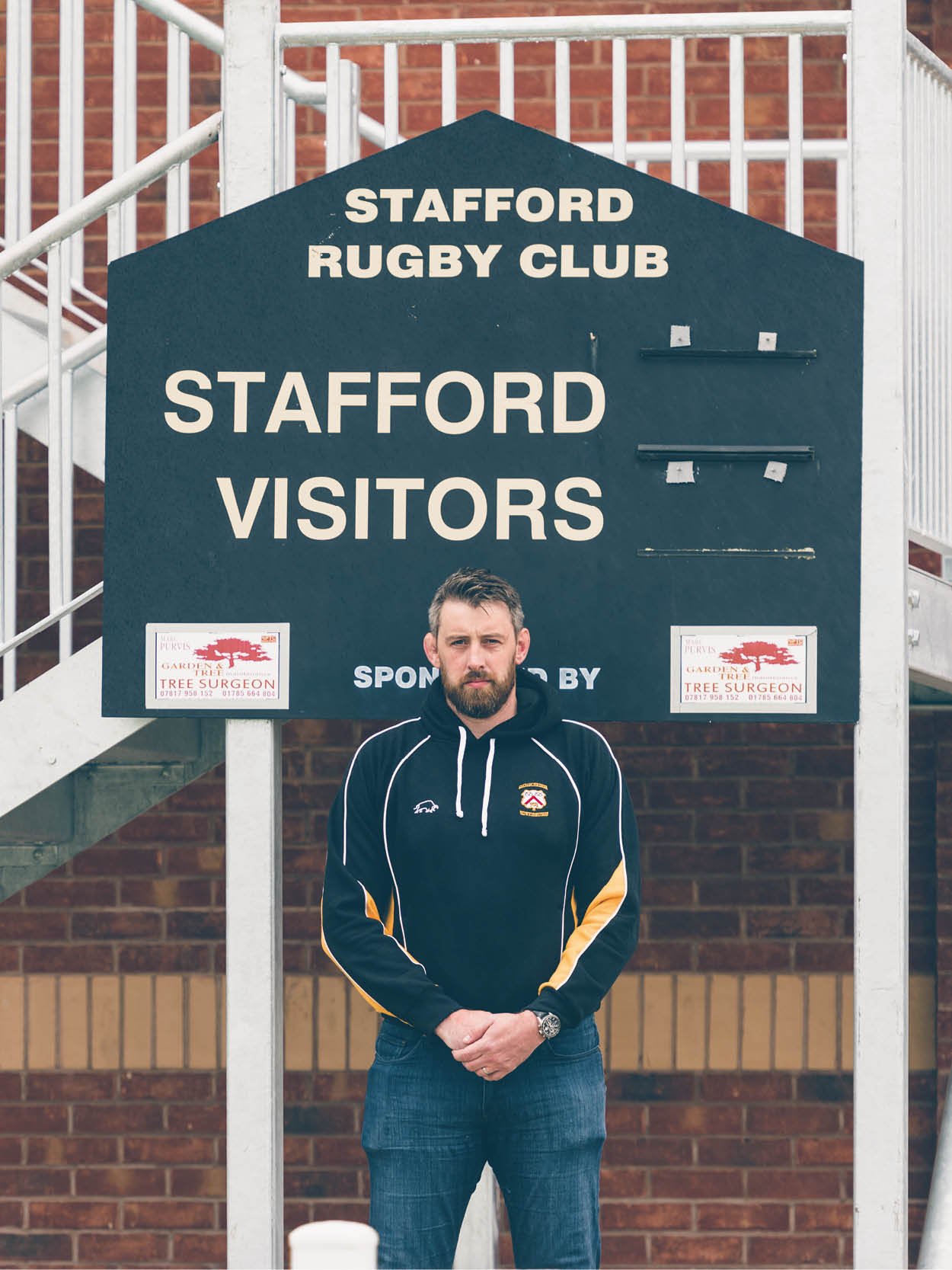
The Rugby Journal photograph shows Muldowney in a relaxed setting with his forearm and upper-arm work plainly visible. The image is useful because it does not flatten the tattoos into a catalogue. His posture, the casual drink and the surrounding club atmosphere make the ink feel connected to team life. The tattoos sit within a social world, the same world of changing shirts and conversations that the interview describes.
Club tattoos often carry a tension between private memory and public recognition. A crest or regional reference can be immediately legible to supporters while still belonging to the person who wears it. In Muldowney’s case, Connacht is supported by several independent career sources, so it is reasonable to discuss that connection. It is not reasonable to assign a precise meaning to every nearby shape simply because the photograph was taken during his Connacht years.
The strongest Connacht reading is therefore one of belonging. The tattooed arm is seen in the same broad emotional territory as the club story: friendship, travel, difficult seasons and the pride of being part of a team that changed expectations.
Celtic geometry turns the upper arm into a focal point
A Le Dauphine training photograph provides the clearest close view of the upper-arm work. The image shows Muldowney during his Grenoble period, with a bold Celtic-style pattern running across the shoulder and upper arm. Celtic geometry is built from repeat, knotting and interlocking lines, so its visual effect changes with the curve of the body. The design looks dense in a close-up and more like a dark shoulder frame when viewed from the field.
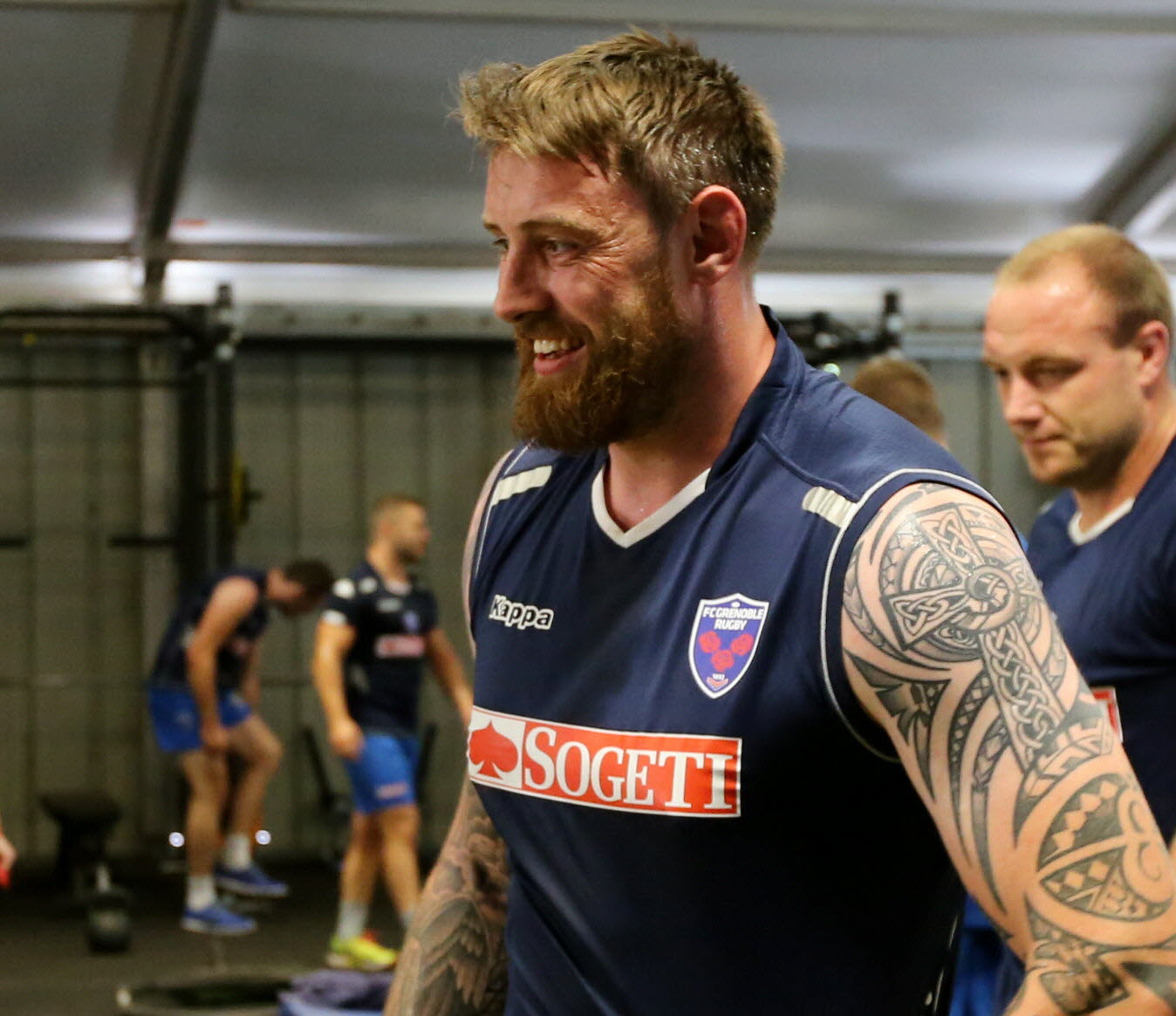
The close framing also reveals why a sleeve should be studied from more than one distance. Individual lines and shapes matter when the camera is near the shoulder, but the larger silhouette matters when Muldowney is moving. The upper arm becomes a focal point because the pattern creates a strong border between the bare skin near the face and the kit around the torso.
There is a useful cultural caution here. A Celtic-style tattoo can suggest heritage, place or personal history, but the available sources do not establish a single private explanation from Muldowney. The responsible description stays with what the photograph and career record support: the design has a Celtic visual language, it is visible during his Grenoble period, and it is part of a larger collection that travels with him between clubs.
The pattern’s structure also suits rugby photography. Interlaced lines remain readable when the arm is bent, raised or compressed against a jersey. That makes the tattoo durable as an image, even when the camera catches only a fraction of the sleeve. Its power comes from the way geometry holds together under movement.
Black and grey sleeve work rewards movement
The FCG Rugby action photograph shows Muldowney at full pace, with both tattooed arms exposed as he reaches into a match. This is a very different frame from the Le Dauphine close-up. The camera is farther away, the body is turning, and the details are softened by the speed of the play. Even so, the sleeve work remains distinct because its larger areas of dark ink create contrast against the kit and the pitch.
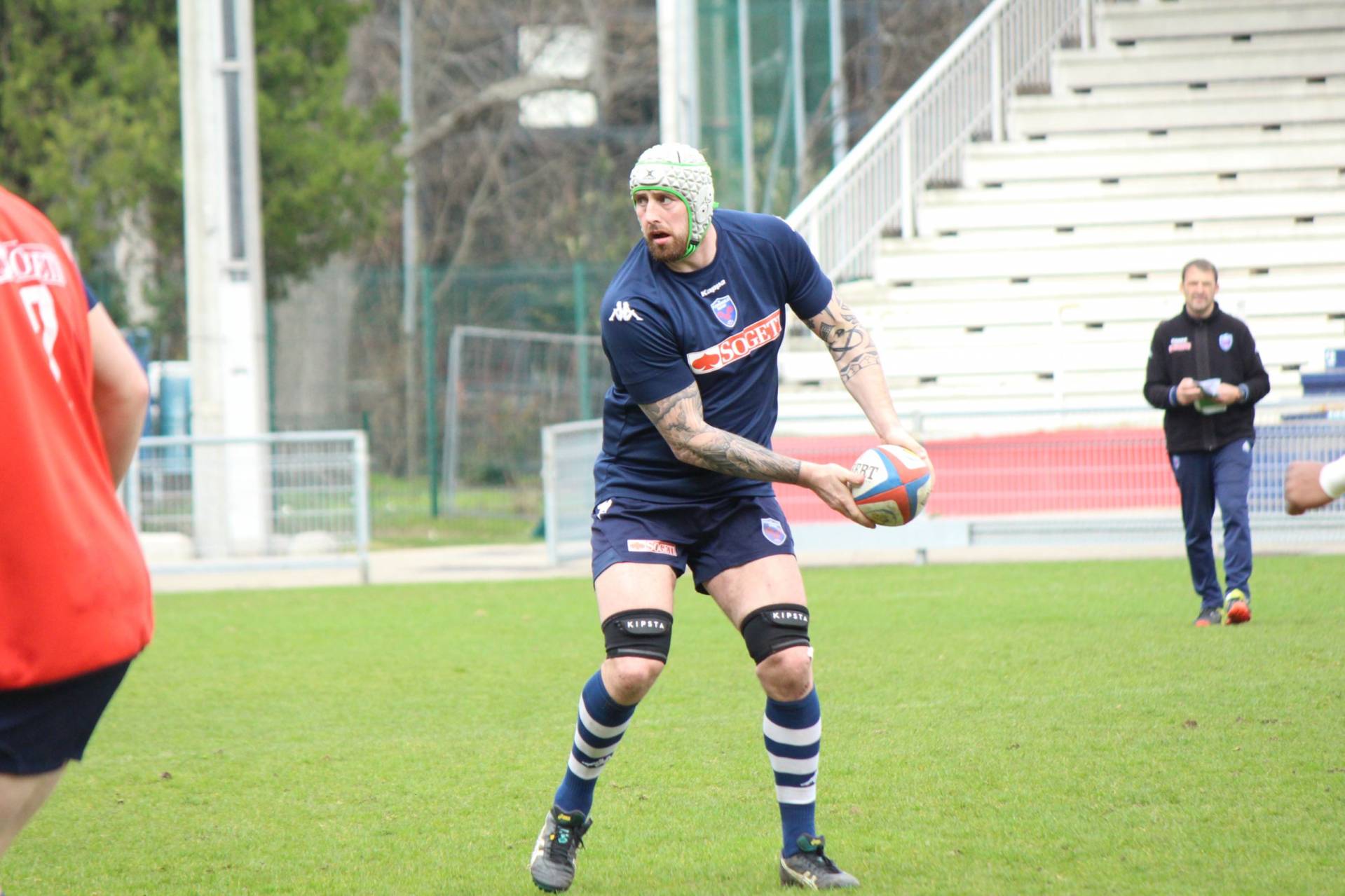
Action images are often treated as secondary tattoo references, but they answer questions that a close portrait cannot. They show how a design follows the athlete’s physical structure. The shoulder piece remains readable when the arm extends, while the forearm work breaks into a sequence of shapes as the wrist turns. This gives the tattoos rhythm. They do not sit on a static mannequin; they move with the player who wears them.
The photograph also resists the temptation to call every dark area a separate symbol. At match distance, separate motifs can merge into one visual field. That is why the safest language is to describe the sleeve as layered black and grey work with visible Celtic-style geometry and smaller marks, rather than inventing a complete inventory from a single action frame.
Rugby adds another layer to the reading because the athlete’s arms are repeatedly placed in positions that expose the ink. Tackles, lineouts, hand-offs and celebrations create short changes in angle. The collection becomes legible through a sequence of moments. The sleeve’s character is created as much by movement and contrast as by any one isolated motif.
Smaller symbols keep the collection personal
The Rugby Journal gallery includes a seated stadium photograph in which Muldowney’s arm tattoos are visible at a more conversational distance. Unlike the match image, this frame gives the viewer time to notice small marks around the larger pieces. It suggests a collection that grew in stages, with smaller details filling the spaces around the stronger shoulder and forearm shapes.
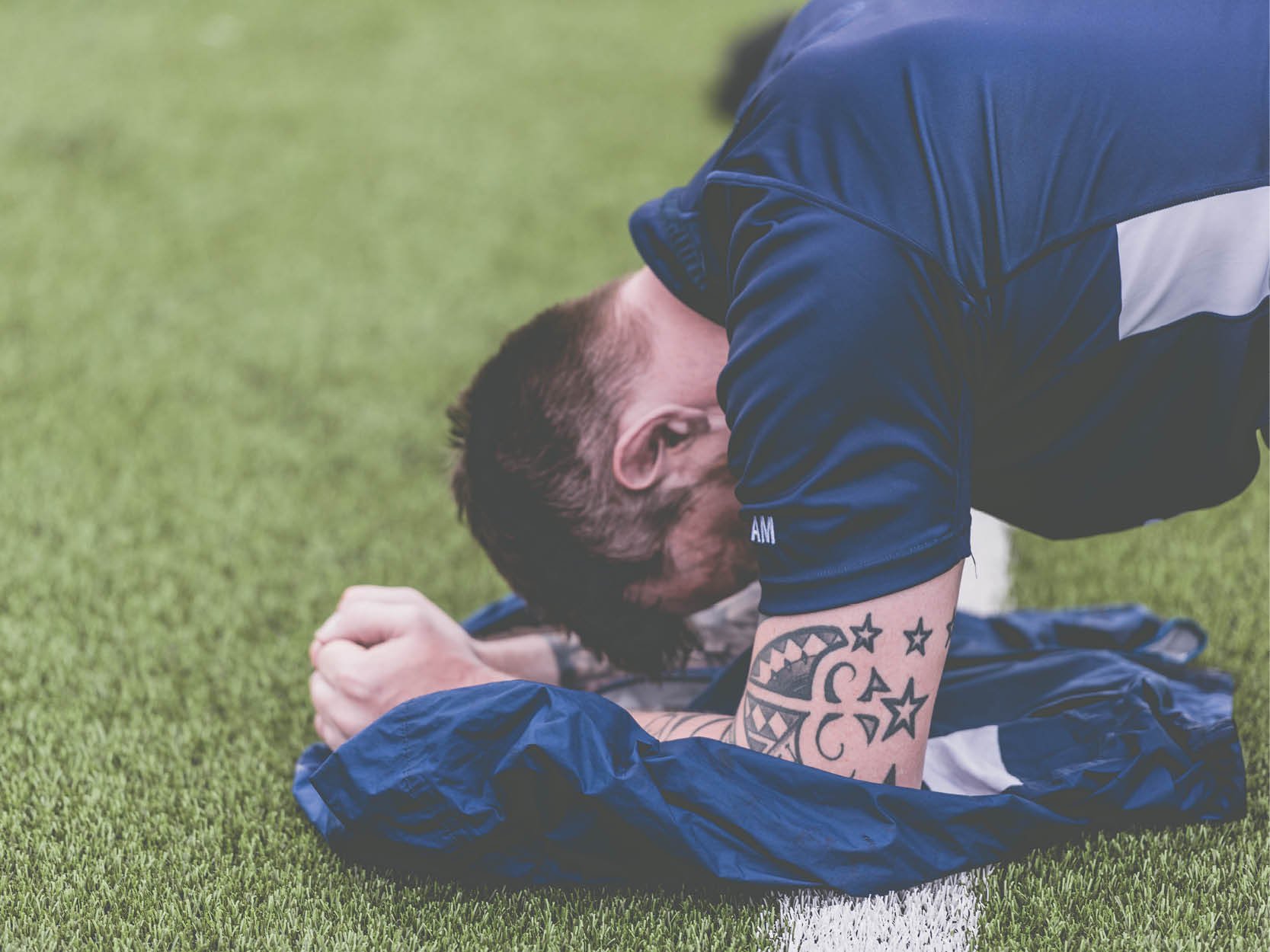
Small symbols are the part of a tattoo collection most likely to attract overconfident explanation. A shape can look like a letter, a number or a familiar emblem without the wearer ever confirming it. Muldowney’s published interviews are rich in rugby memories, but they do not decode every piece of ink. The photographs can establish that the marks exist and show how they sit together. The meanings remain personal unless he chooses to explain them.
This uncertainty is not a weakness in the story. It gives the larger designs room to breathe. The Celtic-style shoulder work carries the strongest visual identity, while the smaller pieces make the arm feel lived in. Together they produce the impression of a long-running collection, one that has accompanied different contracts, homes and phases of adulthood.
The seated photograph is also useful for understanding scale. A close-up can make one tattoo dominate the frame, but a wider portrait shows how the marks relate to the hands, elbows and sleeve line. The result is less like a single emblem and more like a layered map of the arm.
How rugby photographs change the way the ink reads
Muldowney’s tattoo coverage changes meaning according to the photograph’s setting. The close-up at Grenoble emphasizes pattern and shoulder placement. The action frame emphasizes flow and contrast. The Rugby Journal images place the tattoos beside conversation, clothing and the ordinary details of life after a playing career. None of these views is complete on its own, but together they create a more reliable account of what the collection looks like.
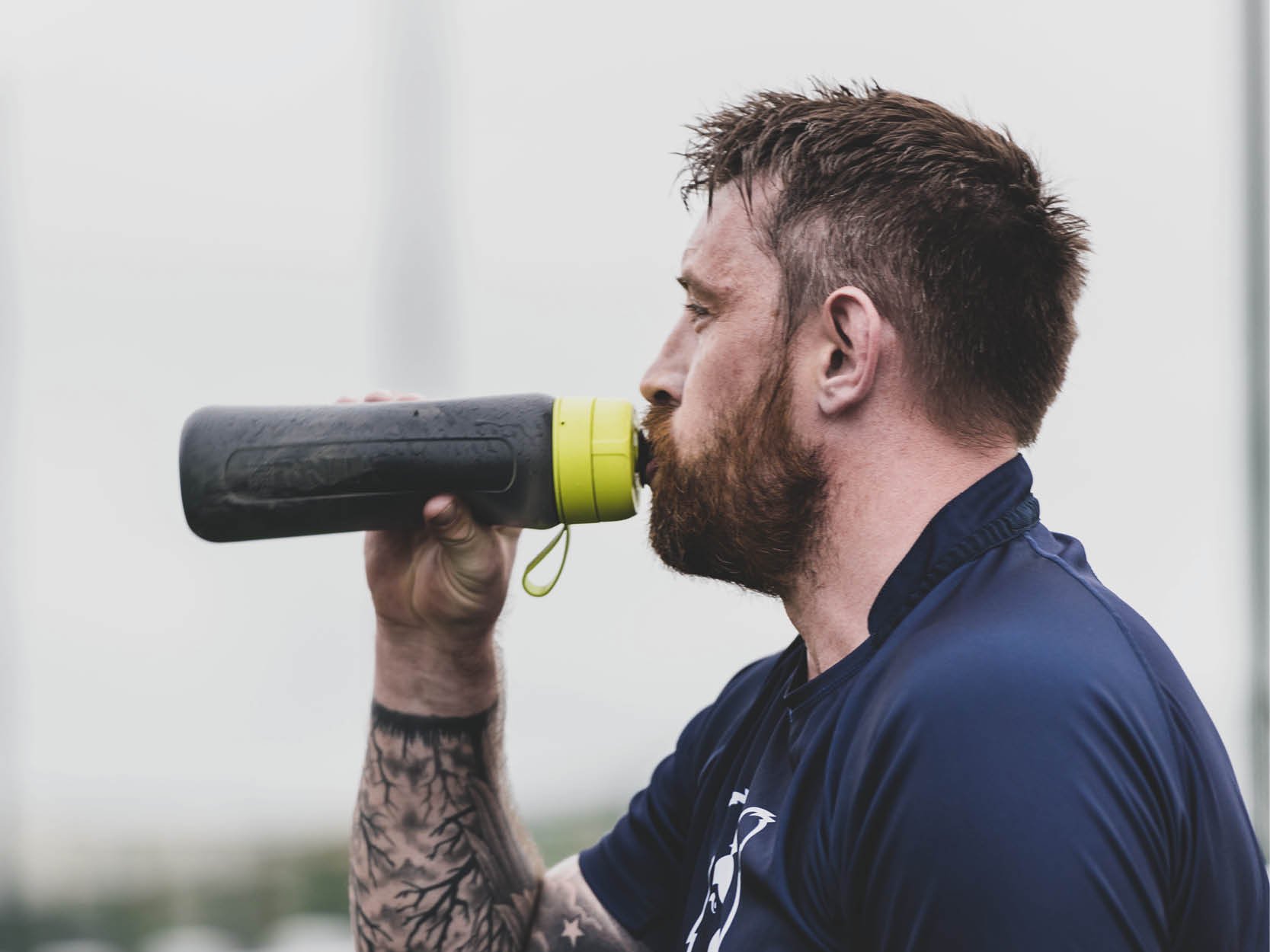
The fifth Rugby Journal photograph is especially useful as a portrait because Muldowney’s face is clearly visible while the arm ink remains part of the composition. That balance matters. Tattoo articles can sometimes turn a person into a set of body parts, but a face-visible image keeps the subject anchored. The tattoos belong to a former lock, director and family man whose story extends beyond the ink.
The gallery’s sequence also mirrors the way a career is remembered. There are moments of preparation, moments of rest and moments where the body is working at full intensity. The tattoos travel through all three. Their visibility is not dependent on a single publicity pose, which makes the evidence stronger and the visual story more natural.
The camera changes the emphasis, but it does not change the underlying collection. What appears as a shoulder crest in one frame becomes part of a full sleeve in another. What looks like a dark band during a match becomes a group of interlocking forms when the arm is still.
From player to director, the same story remains
Muldowney’s move into rugby leadership at Stafford gives the tattoo story a useful final chapter. The Express and Star reported his appointment as director of men’s rugby, describing it as part of a new era for the club. The role changes the kind of public image he occupies. He is no longer photographed only as a player preparing for a match. He is also a coach, organiser and local figure returning to the community where the career began.
The tattoos fit that transition because they do not depend on a playing jersey to be recognizable. The same arm work appears in the Rugby Journal material, in training photographs and in club settings. It becomes a visual continuity between the athlete he was and the rugby director he is becoming. The designs do not explain the transition, but they remain present as part of his personal history.
This is where the collection gains its strongest emotional shape. The ink is not presented as a marketing rebrand. It looks like something accumulated through years of travel, competition and belonging. Its meanings may be private, yet its presence is public and consistent.
A final reading of the rugby years
Alastair Muldowney tattoos are best understood through the meeting of documented rugby history and carefully observed photography. Connacht supplies the clearest club context, the Grenoble image offers a strong view of Celtic-style shoulder geometry, and the wider rugby photographs show how the sleeve work behaves when the body is moving. Smaller symbols fill out the collection, but their private meanings should not be guessed.
The visual record is strongest because it contains distinct kinds of photographs. A close-up reveals line and texture. A match image reveals motion and scale. A relaxed portrait keeps the face and the person in view. Read together, these images show a tattoo collection that has accompanied Muldowney from professional rugby to a leadership role in Stafford.
The final impression is continuity. The tattoos do not replace the story of the clubs, teammates and family that shaped his career. They sit inside that story as visible markers of time, place and identity. That is why the ink remains compelling even where the exact symbolism is not publicly explained.