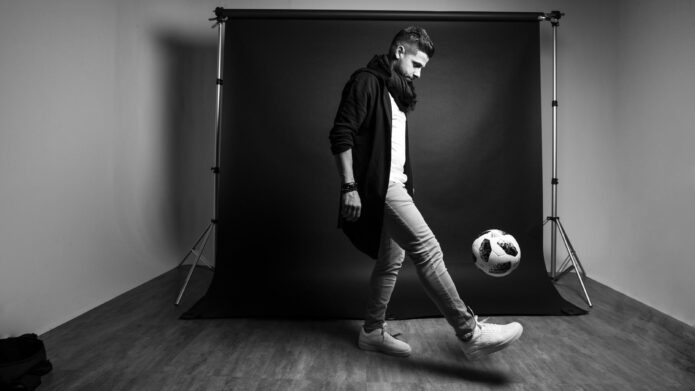
Cicinho’s tattoos span his hands, wrists, forearms and neck, with the densest coverage appearing in football and studio photographs of his arms. The record comes from several periods of his life: UOL photo essays, GloboEsporte reporting on his Roma years, a later Flow Sport Club appearance and Italian coverage of his tattoo count. Together they show more than a list of designs. Cicinho has also spoken about how some tattoos were made while he was drinking, the regret he felt afterward and the difficult period around those decisions.
The images below show separate views of the collection. Some bring both forearms into view; the Roma match photograph shows a small mark on his neck while his shirt hides most of his arms. The sources name only a few details, so the visible shapes and Cicinho’s own comments are kept distinct.
The full forearm composition in a studio portrait
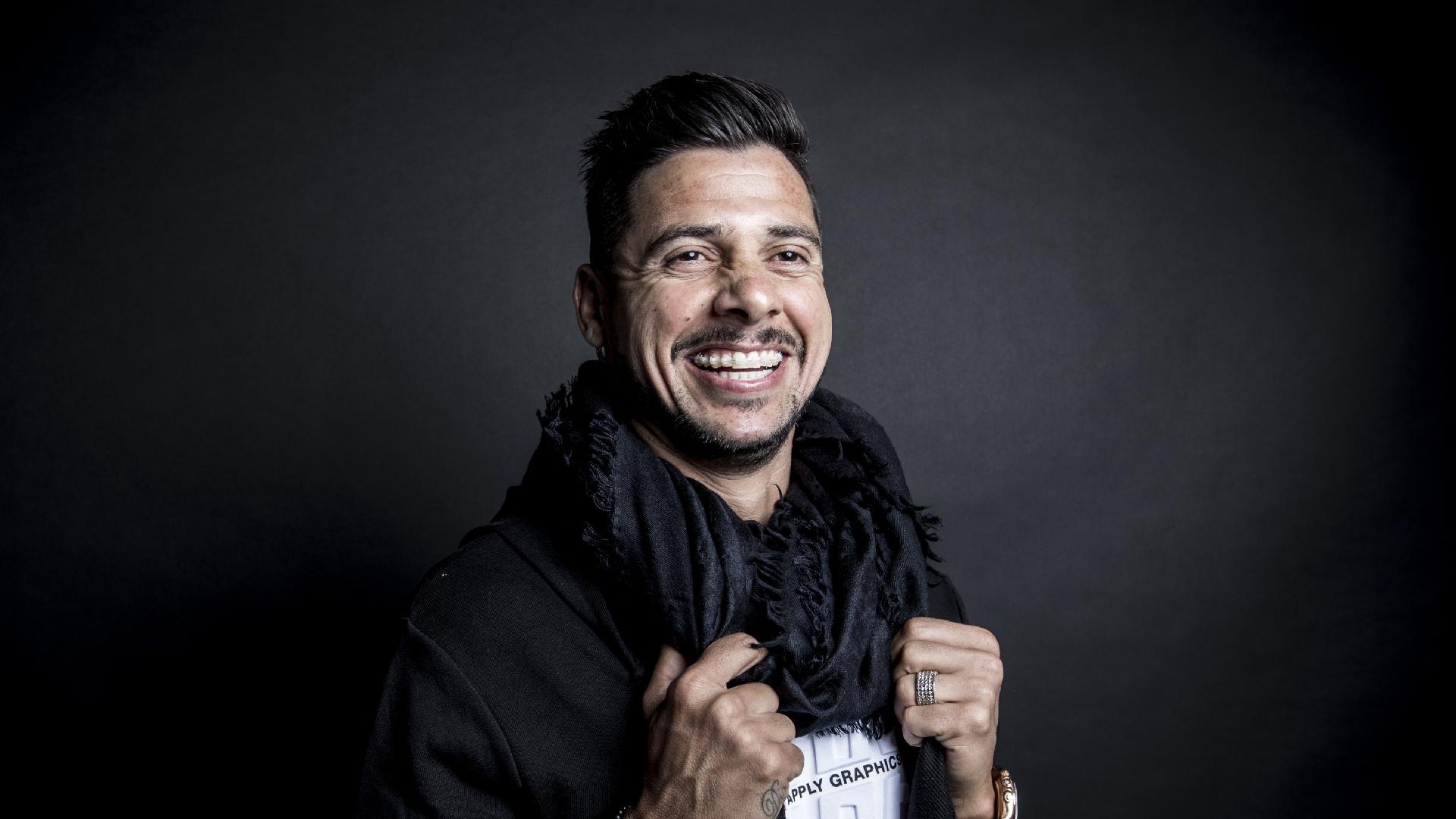
In a UOL photo essay, Cicinho faces the camera with a football held between his arms. Both forearms are uncovered, making this one of the clearest wide views of the collection. Dark black-and-grey work covers large areas, with lighter gaps and smaller marks breaking up the heavier sections. The forms overlap and follow the shape of each arm rather than sitting as one flat panel. His face is also in frame, so the photograph clearly identifies him without relying on a caption or shirt.
From this angle, the tattoos read as layered coverage across both forearms, not as one isolated emblem. The image shows changes in density but doesn’t make every small element clear enough to name. When Cicinho bends his arms around the ball, the inside forearm turns toward the camera and the outer edge moves away. That shift changes what can be seen: the linework appears to wrap with the arm, and the wrist gives a different view from the forearm above it.
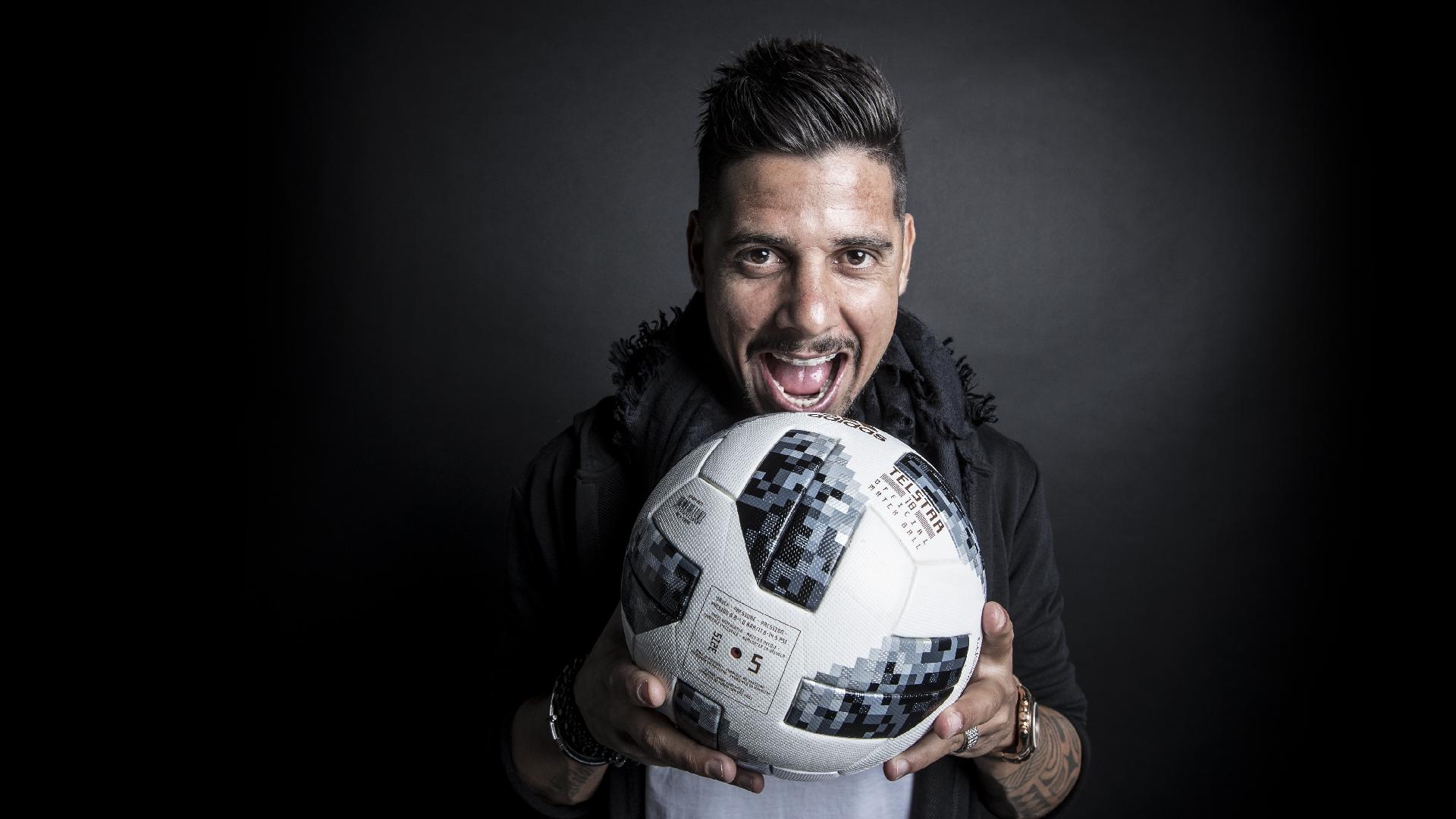
The football portrait with both hands and arms exposed
A second UOL portrait shows Cicinho holding the ball lower in front of his body. The forearms sit differently from the first image, bringing the hands and wrists into view beside the larger arm coverage. A watch and bracelets interrupt parts of the line, but the tattoos continue around the areas exposed between them. The pose makes it easier to compare the hand-side marks with the denser sections higher on the forearm.
This is another frame from the photo essay, with a separate pose, background and crop. It adds a lower view of the arms rather than repeating the first photograph. Smaller lettering and thin strokes near the wrist are difficult to read at this scale, while the broad dark sections remain clear. The photographs together show how the same collection changes appearance as the wrist turns and the arms move.
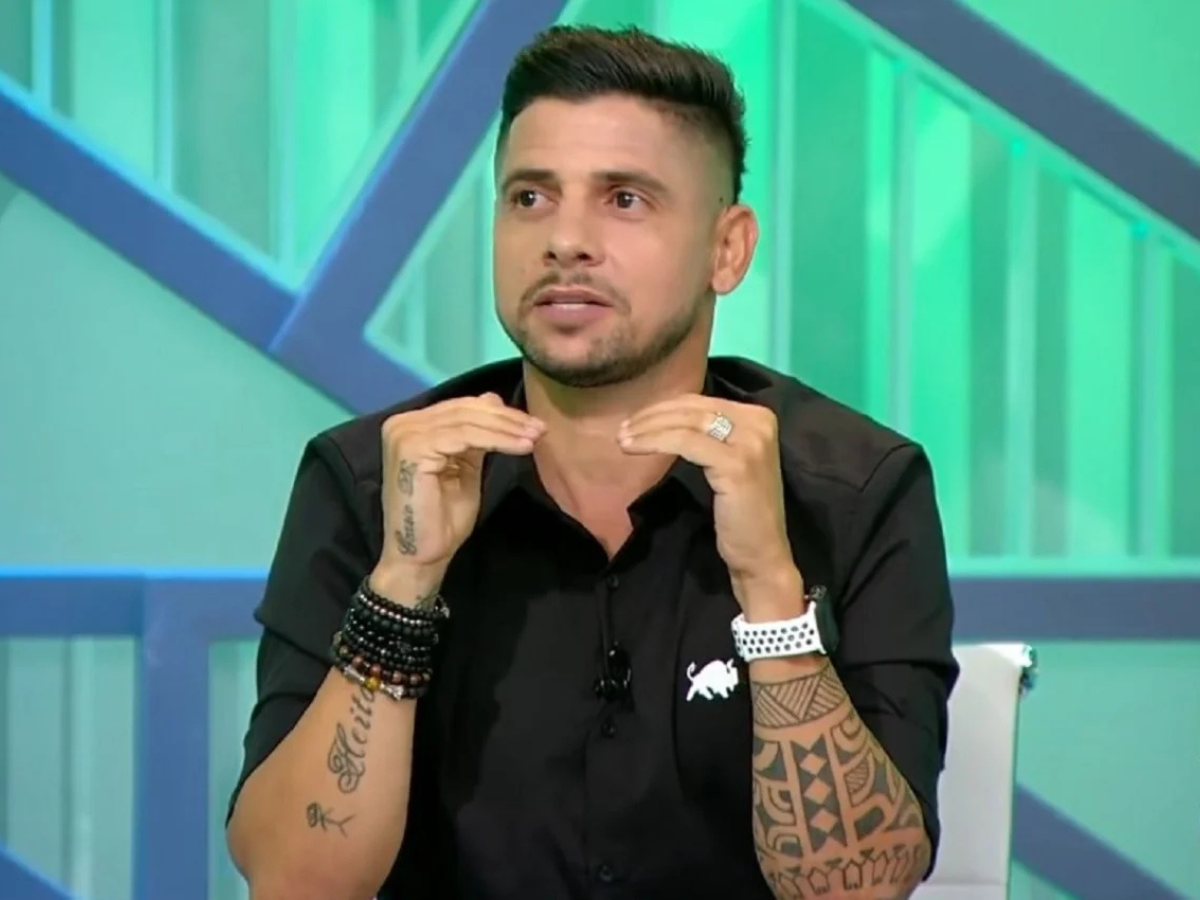
The close studio view of the forearm and hand tattoos
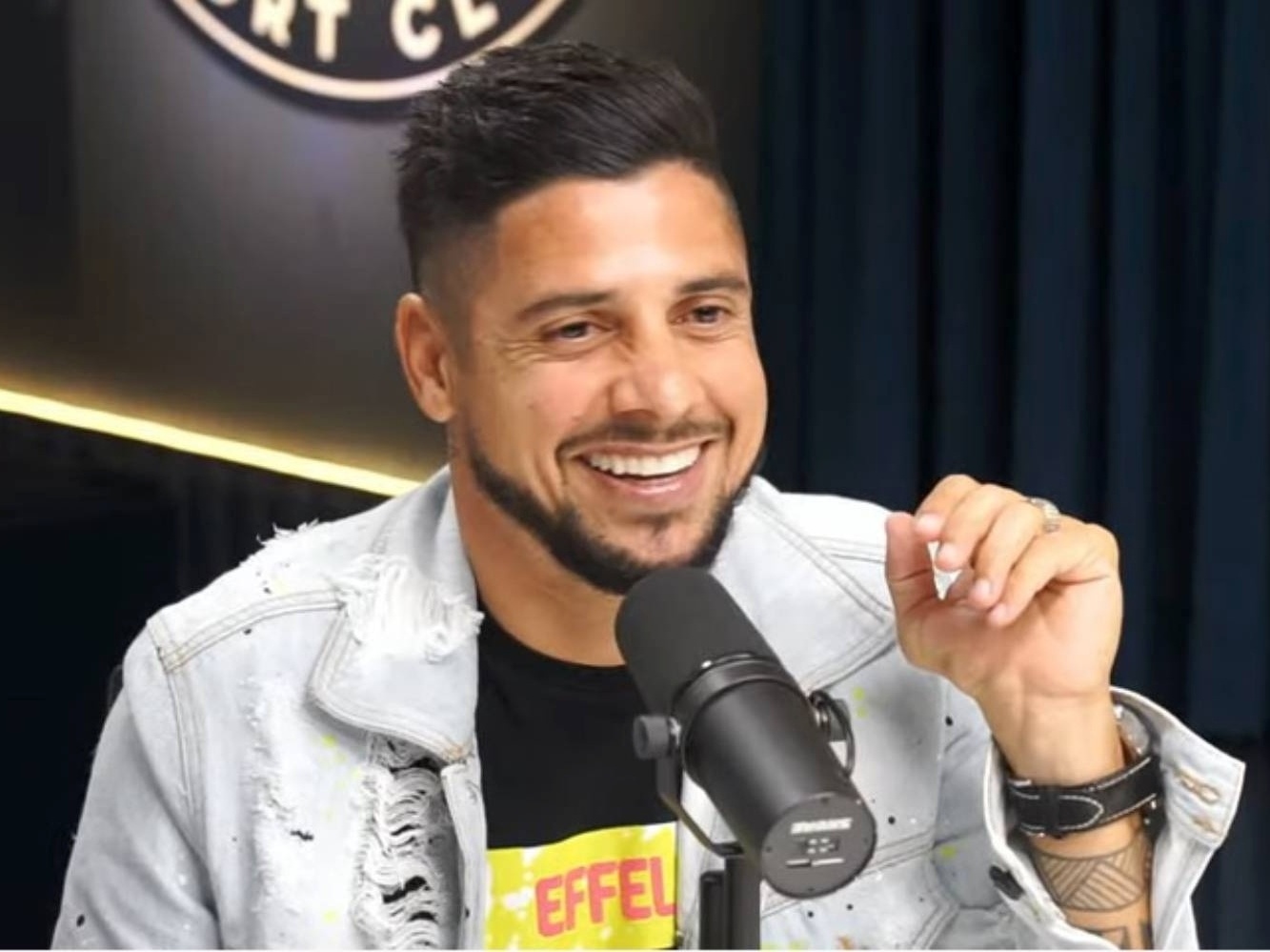
During a later Flow Sport Club appearance, Cicinho sat at a microphone in a light denim jacket and held one forearm close to the camera. The tighter view makes the pattern easier to inspect than a distant match photograph. Shaded and geometric-looking forms run along the forearm, with a smaller mark nearer the hand. The image gives a better sense of scale against his wrist and fingers, although it still doesn’t identify each design or explain what it means.
The jacket hides much of the upper arm, leaving the forearm as the focus. That’s a useful reminder when reading football photographs: an exposed section may be only one part of a larger piece. GloboEsporte’s reporting describes extensive body art, while this frame shows a close view of the area Cicinho brought toward the camera. It is a more personal setting than the match shots, but it remains one view of a collection that changes with clothing and pose.
The Roma-era image with a visible neck mark
A Gazzetta photograph from Cicinho’s Roma years catches him shouting during a match in a red shirt. Its long sleeve covers most of his arm tattoos, but a small mark on the side of his neck remains visible. The image offers a different placement from the forearm portraits and ties the collection to a distinct football period.
GloboEsporte reported that Cicinho had more than 30 tattoos and connected a large arm piece with his difficult time in Rome. The match photograph does not show that arm design clearly, so it cannot illustrate its details. What it does show is the neck mark and the way a long shirt sleeve can leave most of the collection out of view. The written account and the photograph answer different questions.

The UOL portrait with both forearms lifted
The fifth tattoo-bearing photograph is another separate frame from UOL’s essay. Cicinho holds a football close to his face, lifting both forearms so the ink comes forward. The position reveals a broad dark section on his right arm and additional marks on the left. With his elbows and wrists bent, the image shows how the work shifts across joints rather than appearing as a flat design.
The ball partly covers his torso, while the raised arms expose their sides and undersides. That angle adds information the first portrait doesn’t provide. It also shows how dark blocks and smaller marks sit across changing curves of skin. The broad arrangement is visible, but the image still can’t establish a complete inventory of symbols, artists or dates.
What Cicinho has said about the collection
GloboEsporte reported that Cicinho called a tattoo artist after drinking in Rome and later regretted the large arm piece. In an interview with UOL, he said he drank because he disliked the pain and wanted the tattooing to feel easier. He also said he was unhappy with the result and spoke directly about depression, cautioning that tattoos did not cure it. These are difficult parts of the story, and they come from Cicinho’s own account rather than clues read from a photograph.
His comments make the collection’s history more complicated than a style gallery can show. Some of the visible work is dense and dark, but its appearance does not explain the circumstances in which it was made. Cicinho has described regret, pain and a hope that the tattoos would bring peace. Those remarks give context to the choices he discussed without assigning a personal meaning to every shape in the pictures.
He has also said that he tried to hide some tattoos during matches and that his faith changed how he viewed his past. That perspective helps explain why the same body art may appear in older photographs without much comment, then become part of a later interview. The photographs show placement and style; Cicinho’s words explain the parts of the experience he chose to share.
How the football timeline changes what is visible
Cicinho played for São Paulo, Real Madrid, Roma, Villarreal and Sivasspor before later working in sports broadcasting. Photos from those years were taken in different kits, lighting and settings. A long match shirt may cover the upper arm, while an open jacket or studio appearance exposes more of the forearm. One frame can therefore make the collection look smaller than another without showing that a tattoo was added or removed.
The Roma photograph is a good example: it documents the neck area and his football setting, while the long sleeve hides most of the arm. The UOL portraits and Flow appearance provide closer views of the forearms but cannot establish exactly when each mark was added. Reading the images alongside the dates and interviews helps keep those distinctions clear.
A collection shaped over time
Across the five tattoo photographs, the work appears concentrated on the hands and forearms, with a separate neck mark visible in the Roma frame. The images show a largely black-and-grey look, darker areas broken by lighter skin and smaller details. The composition changes as Cicinho moves: a bent arm makes the designs feel compact; a raised arm reveals how they continue around the sides. In the close studio view, shading and linework sit nearer the wrist and hand.
The photographs don’t show one seamless sleeve planned in a single sitting. They show separate areas accumulated over time, seen under different conditions. GloboEsporte links a large arm piece with the Roma period, and Cicinho’s interviews describe decisions he later regretted. Together, that history explains why the collection has a layered appearance without requiring a guess about the date or purpose of every tattoo.
Why the source mix matters
The visual record draws on more than one kind of source: UOL’s close and wide portraits, a Flow Sport Club interview, a Gazzetta match photograph and reporting from GloboEsporte, Terra and Portal Leo Dias. The different views help distinguish the forearm coverage from the neck mark and show how clothes, pose and camera distance affect what can be seen. UOL’s portraits focus on the arms; the Roma image preserves a match context; the interview frame brings one forearm closer.
A face-visible featured portrait identifies Cicinho, while the five inline images show tattoo-bearing views. Keeping those roles separate avoids treating a generic player portrait as evidence of a design. The written sources also have different jobs: one reports the difficult Roma-era piece, another records Cicinho’s comments about drinking and pain, and Gazzetta carries his later estimate of the total number of tattoos.
What remains unconfirmed
The sources do not provide a complete artist list or a verified sequence for every addition. They also don’t give a reliable name or meaning for every shape visible on the forearms. Resolution and camera angle vary: smaller marks can disappear in one photograph and reappear in another. The visible work is enough to describe the extent and placement of the ink, but not to label every section.
The strongest confirmed details are Cicinho’s reported count, the Roma-era context for a large arm piece, his comments about regret and the visible tattoos on his forearms and neck. Geometric-looking shapes can be described by appearance, but they shouldn’t be given a symbolic name without a source. That leaves some open questions, which is more accurate than turning uncertain details into facts.
How the evidence fits together
Start with the first and fifth UOL portraits to compare the forearm work under two poses. The second photo brings the hands and wrists lower into the frame, while the Flow Sport Club image offers a closer look at one forearm and hand. The Roma match photograph provides a different view of the neck and shows how a long sleeve changes what is visible. None of them is a complete catalogue; together, they give a fuller picture of placement.
Read those images beside the reporting. GloboEsporte describes the large arm tattoo and the attempt to cover it during matches. UOL records Cicinho’s comments about drinking, pain and regret. Gazzetta reports his estimate of 33 tattoos, with only eight made sober. The numbers are his reported estimate, not a count that can be checked against these five photos.
Final notes for readers and artists
Cicinho’s tattoos are a changing record of football, difficult years and later reflection. The clearest photographs show dense work on both forearms and hands, while a Roma-era frame adds the separate neck mark. His own interviews give the context he has shared about pain, drinking and regret; the images show how the pieces sit on his body.
For design reference, the photos are most useful for scale, dark-to-light contrast and the way the work follows a bent wrist and forearm. They are not stencils, and small shapes that blur in a match image shouldn’t be copied as though their details were confirmed. A reader who wants to adapt the general placement can take clear references to a professional artist and make choices that suit their own arm and reasons for getting tattooed.
In this Flow Sport Club appearance, Cicinho speaks about recovery and his tattoo history.