admin

Tim Kleindienst Tattoos: Family, Hourglass and Wedding Ring

Tim Kleindienst’s tattoos are easy to spot when he rolls up a sleeve, but their stories are more personal than a typical footballer’s ink roundup. The Borussia Mönchengladbach striker has talked about love, family, time and leaving room for one very specific future tattoo. His designs are spread across his arms rather than gathered into one giant statement.

Kleindienst speaks about the ink in a straightforward way. He treats the tattoos as reminders, with the meaning more important than showing off every line. In a 2025 RTL interview, he said love and family matter to his choices; another interview explained the sandglass on his left upper arm and its link to how he wants to use his time.

It’s a focused collection: the sandglass is the clearest documented design, alongside larger black-and-grey work across his arms. Some details show up in photographs without a public explanation, so I’ll describe what’s visible and leave those meanings open.

The sandglass on his left upper arm is a reminder about time
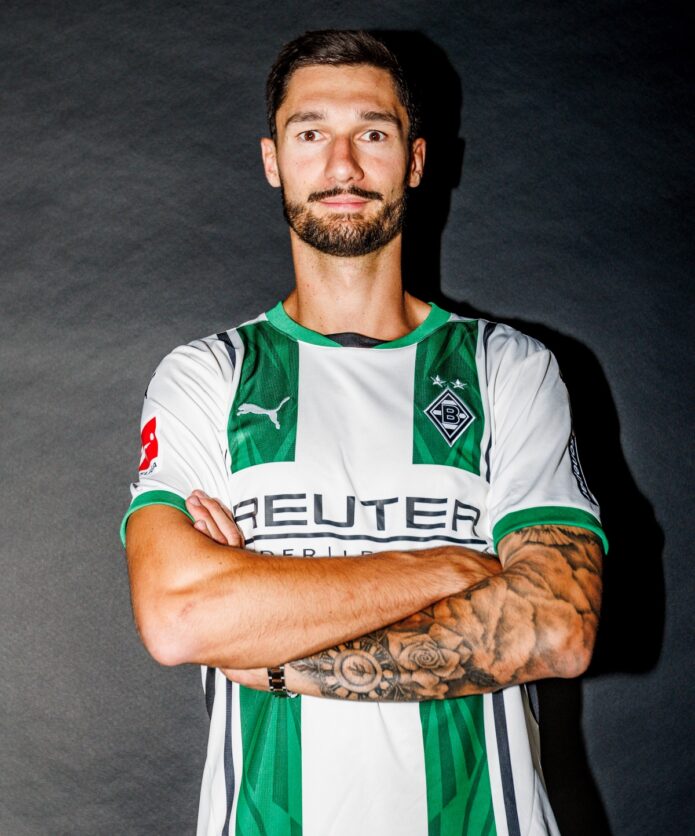
Tim Kleindienst sandglass and arm tattoos

The best-documented tattoo in Kleindienst’s collection is a sandglass on his left upper arm. Its message is simple: time keeps moving, so make good use of what you have.

Kleindienst has said the design reminds him to use his time as well as possible. He connects that idea to doing more than the bare minimum, in sport and in everyday life. It isn’t about a goal celebration or a trophy he has already won; it keeps his own standards in view. For another personal tattoo story, see Roman Kemp’s tattoo story.

The upper arm suits a reminder like this. A match shirt can cover the design, while it comes back into view in everyday life. It’s close enough to feel personal without being on display all the time.

There’s a football connection even though the sandglass isn’t a football symbol. Players face short careers, injuries, changing form, selection decisions and opportunities that can disappear. Kleindienst reached the Germany national team later than some supporters might expect, which gives the theme of time extra resonance.

The design’s strength is its understatement. A sandglass isn’t loud, but its meaning becomes clearer the longer you look. The message is to make the most of the time still in front of you, making this one of his clearest tattoos-as-reminders.

His arm work is built from black and grey images
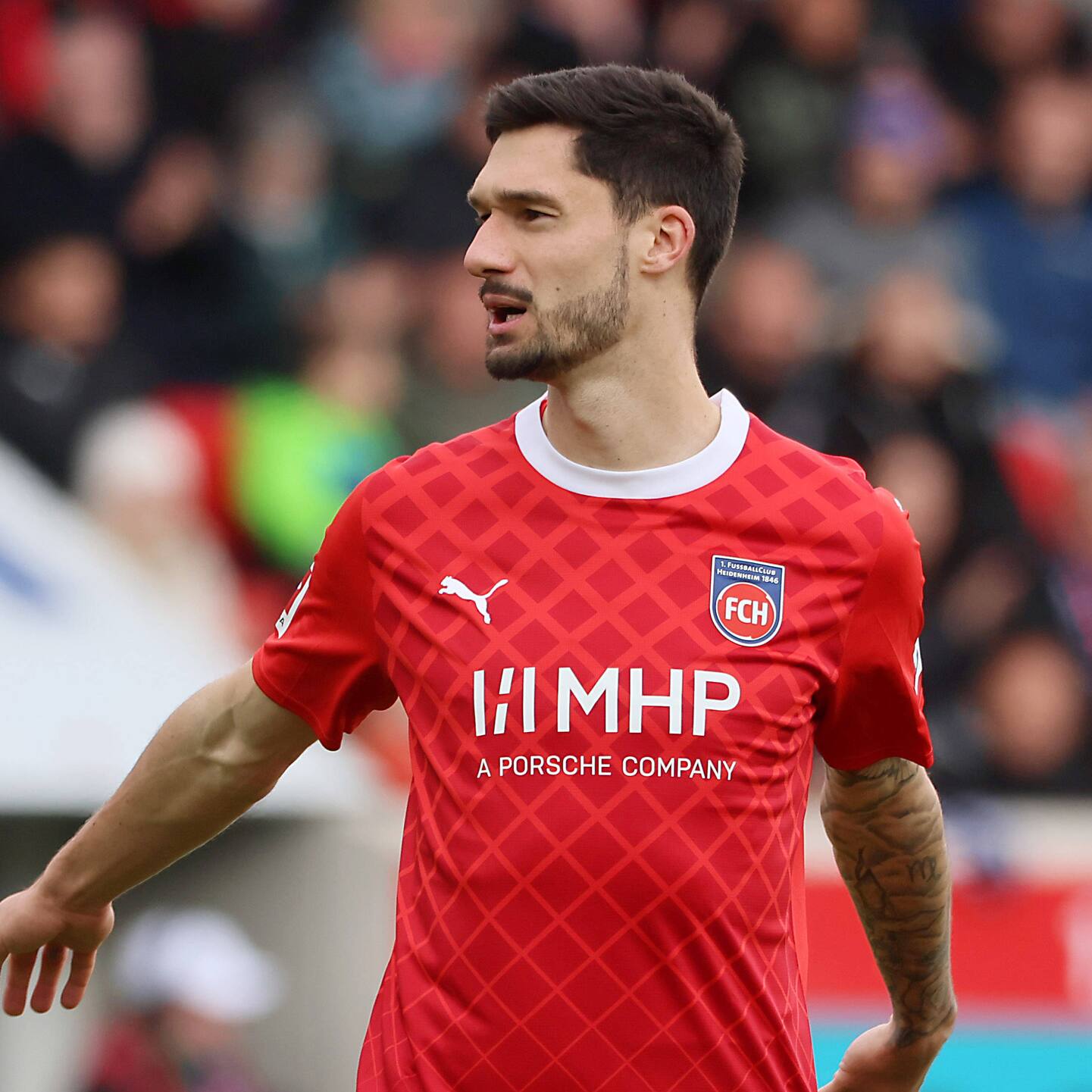
Tim Kleindienst black and grey arm tattoo

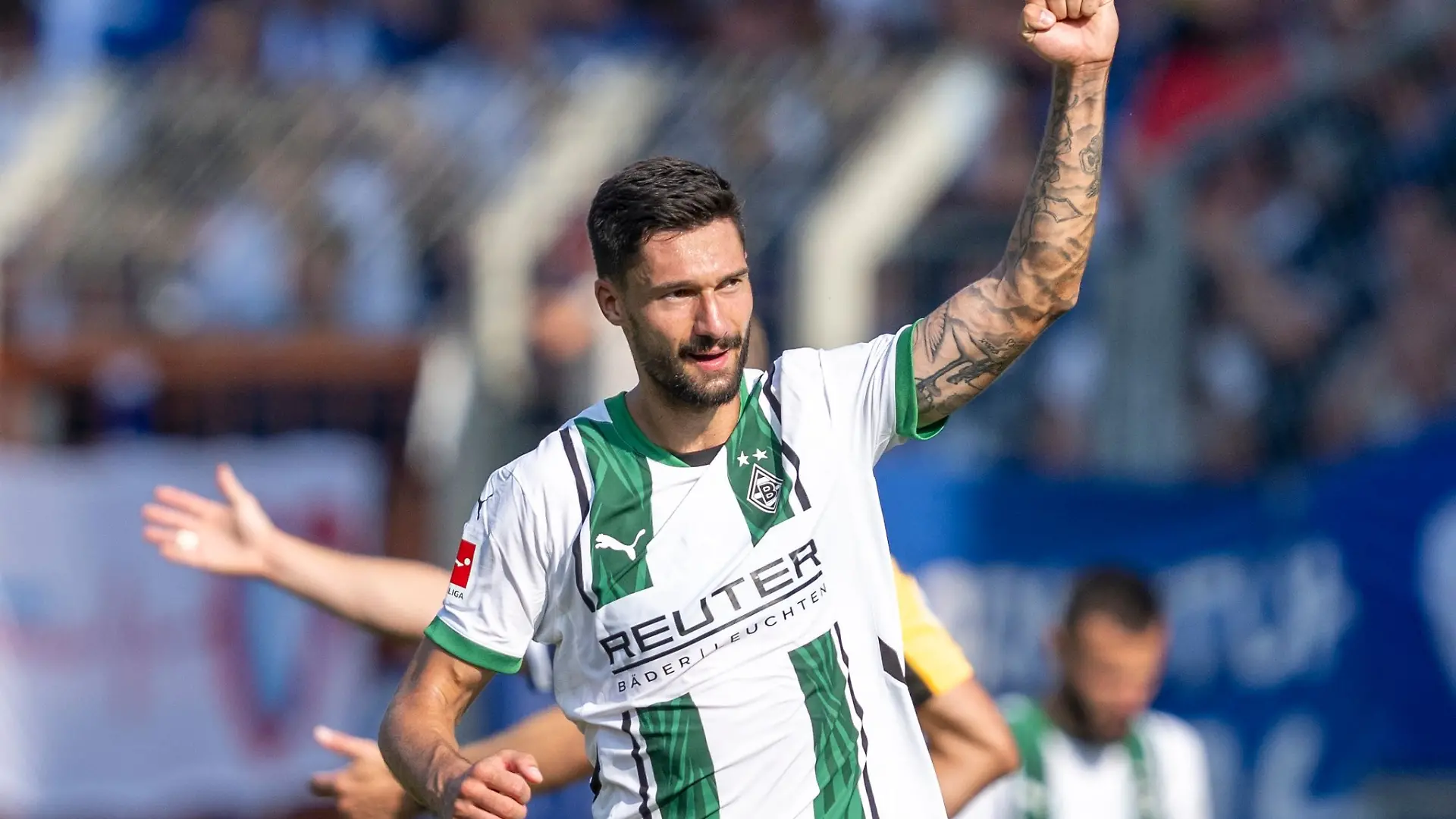
Tim Kleindienst tattooed arm raised during a football match

A match photo shows how far the black-and-grey work runs up Kleindienst’s arm. With the sleeve lifted into view, the shaded shapes and darker bands are easier to distinguish than in an ordinary portrait. It shows how the tattoos look around football, not just in a close-up made for an article.
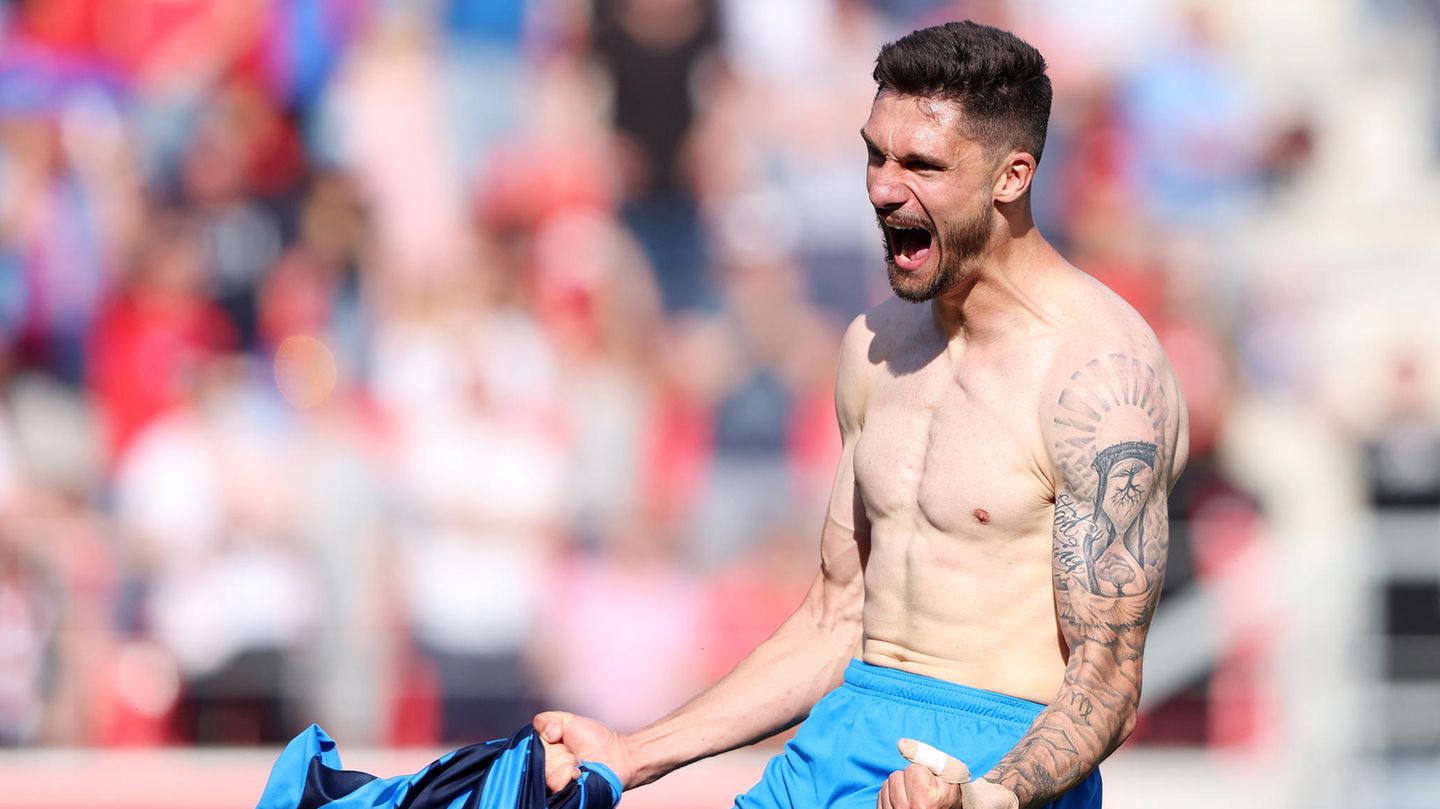
Tim Kleindienst shirtless celebration showing black and grey arm tattoos

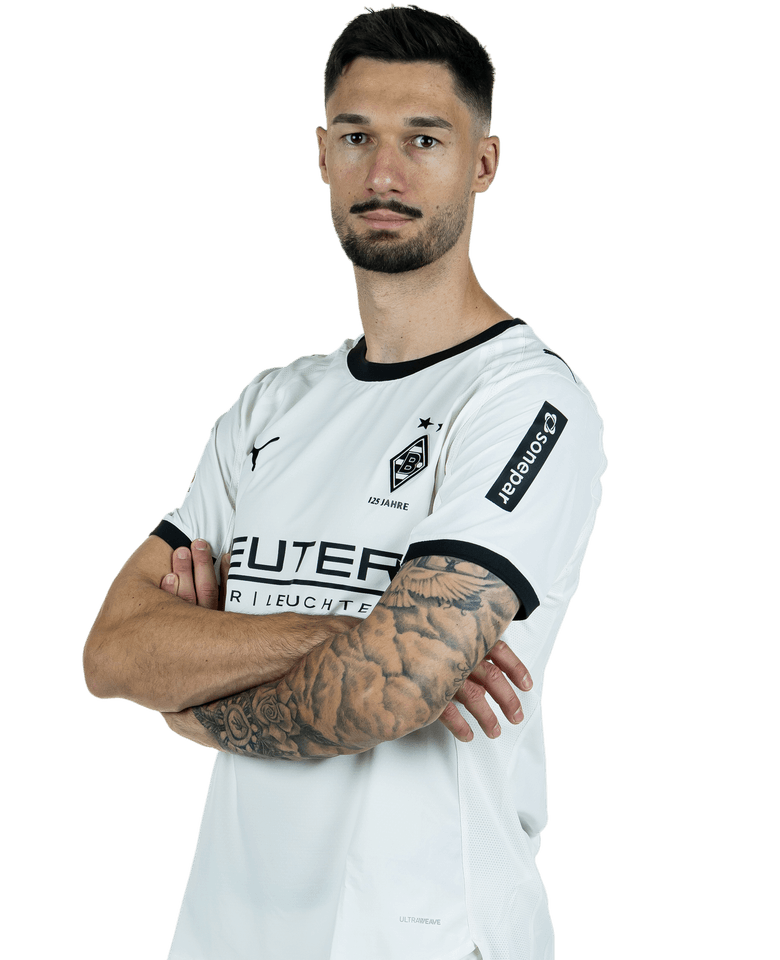
The shirtless celebration photo gives another angle in brighter light. The larger shapes on his upper arm, the deep shading and the way the pieces meet toward the forearm are easier to see. The images confirm that it is more than one small design, while leaving several motifs unidentified.

Photos show a broad area of black-and-grey work across his right forearm and up toward the upper arm. In the clearest shots, layers of shading, curved outlines and connected pieces sit together. From a distance the arm reads as a dark sleeve; up close it looks like several separate designs.

The pictures aren’t sharp enough to name every image, but the overall style is clear: soft grey washes, heavier black areas and rounded shapes with an illustrative feel. Shading and texture give the work more depth than a simple block of ink.

That style fits naturally in match and club portraits. The tattoos show when he crosses his arms or celebrates, but the shirt still frames them. The ink is part of his everyday look without taking over the whole picture.

It’s tempting to give each dark shape a name, especially beside a dramatic headline. There’s no reliable public list identifying every piece on Kleindienst’s arm. The careful description is a black-and-grey collection of overlapping motifs whose exact symbols and meanings haven’t all been shared.

That uncertainty doesn’t make the tattoos less interesting. A real collection grows over time, appears under different lighting and can hold meanings that stay private. Kleindienst’s arm has the lived-in look of something that has developed with him, not a catalogue design planned in one sitting.

Love and family are the themes he talks about most

In the RTL interview, Kleindienst said love and family are central to his tattoos. He didn’t give a full map of every design, and public coverage hasn’t identified every family reference, but that comment gives the visible ink useful context.

It shifts the focus from clubs, promotions and trophies toward people and relationships. His explanations make the collection feel more restrained than some of the louder ink in professional sport.

The pieces don’t need to match visually. A family tattoo, a reminder about time and a future idea can all look different while belonging to the same collection. The connection is why he chose them, not one uniform style.

There’s a private side to that as well. Kleindienst plays in front of large crowds, but a tattoo tied to family can stay meaningful without being fully explained to everyone watching. Photos show the shapes; he can keep the deeper story for himself and those close to him.

The confirmed details are already enough: a sandglass, a collection tied to love and family, and a clear message about using time well. The remaining marks can be described visually without inventing their backstories.

His brothers, zodiac design and tattooed wedding ring

In the RTL interview, Kleindienst discusses references to his two brothers in his arm tattoos. He also describes a design combining his Scorpio sign with his wife’s Virgo sign, and a tattooed wedding ring. Those explanations give some of the smaller pieces a family context without assigning a meaning to every visible shape.

He has imagined a World Cup trophy tattoo
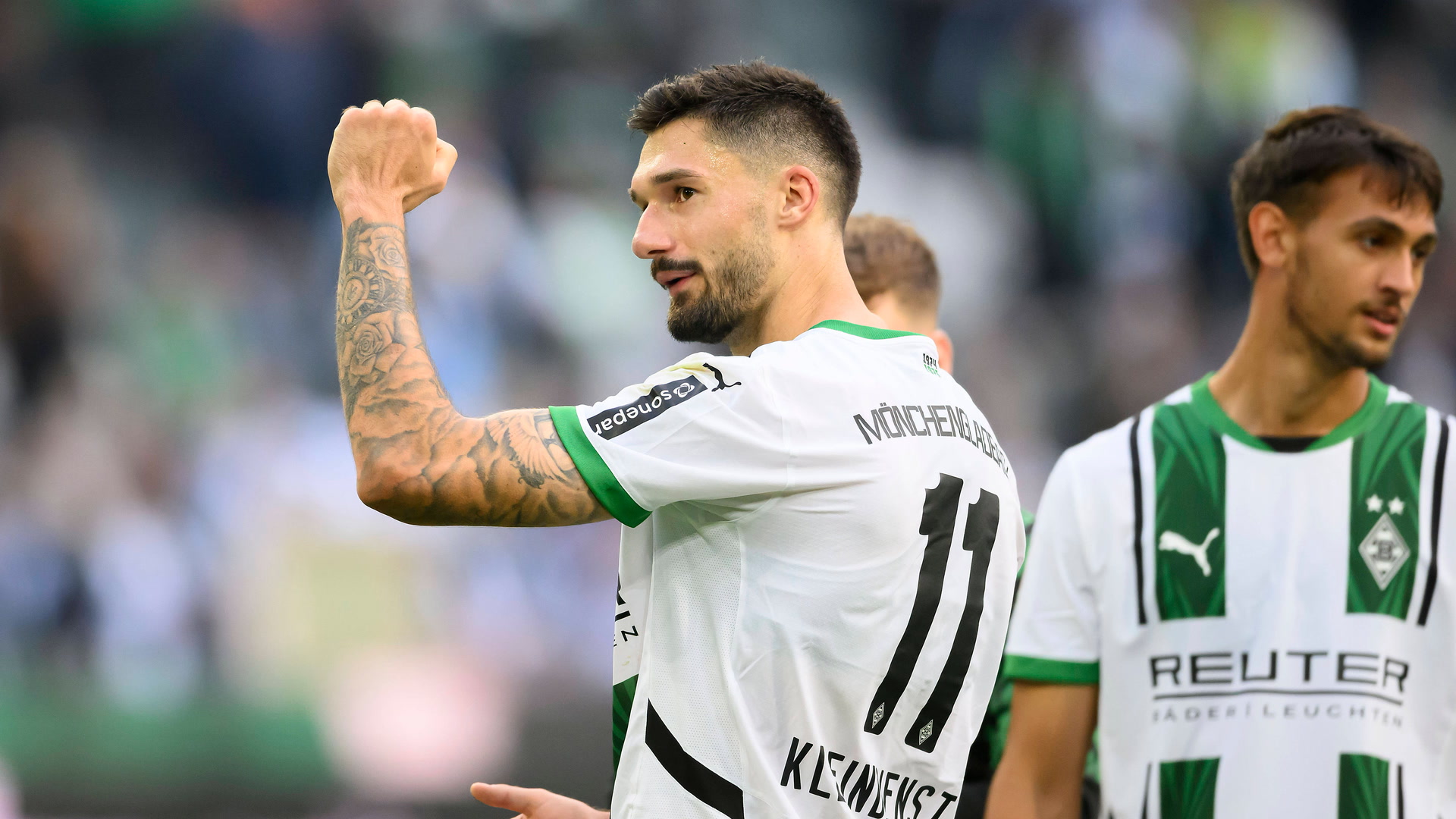
Tim Kleindienst celebration arm tattoos

In the earlier RTL interview, Kleindienst said he would get the World Cup trophy tattooed if Germany won the 2026 tournament. He described it as an easy decision if the team lifted the title.

The idea fits the sandglass in its own way. One tattoo keeps the time ahead in mind; the other would mark a once-in-a-lifetime football moment. One is a reminder to keep moving, the other a record of reaching the sport’s biggest prize.

That was a conditional promise made before the tournament. The interview does not establish that he later received a trophy tattoo; it should be recorded as an earlier idea, rather than counted as confirmed ink.

That plan also says something about how he thinks of tattoos. He isn’t filling empty space for its own sake; the trophy would come after a meaningful achievement. The sandglass works similarly, carrying a message he wants to keep close.

For now, Kleindienst’s tattoos are best understood through time, family and the steady work of building a football career. The arm pieces give the collection a strong look, but the explanations make it feel personal. The RTL interview below lets him speak about his life and tattoos in his own words.

For another footballer’s collection, see Lionel Messi’s tattoos.

More photographs of Tim Kleindienst’s tattoos
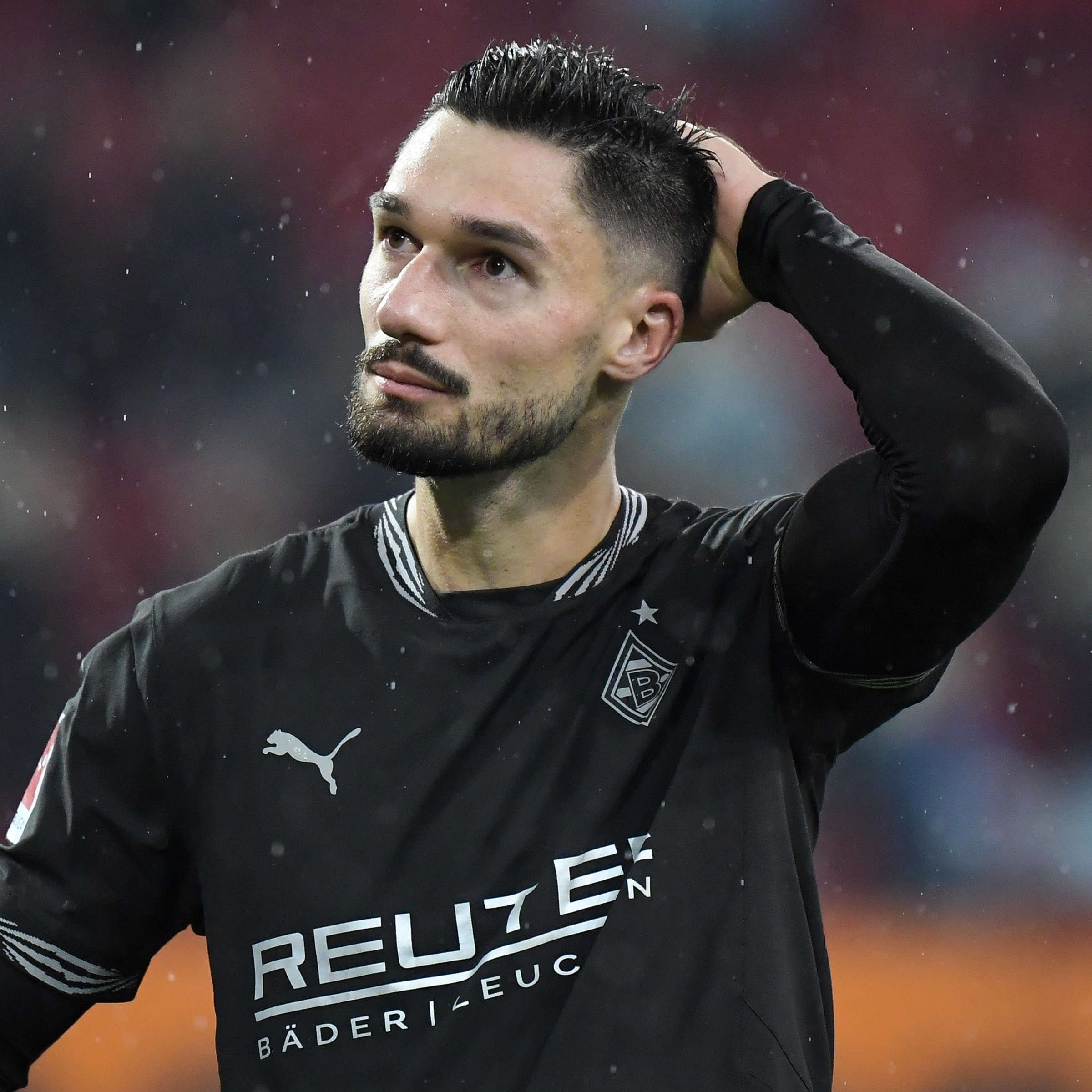
Tim Kleindienst in a training portrait.

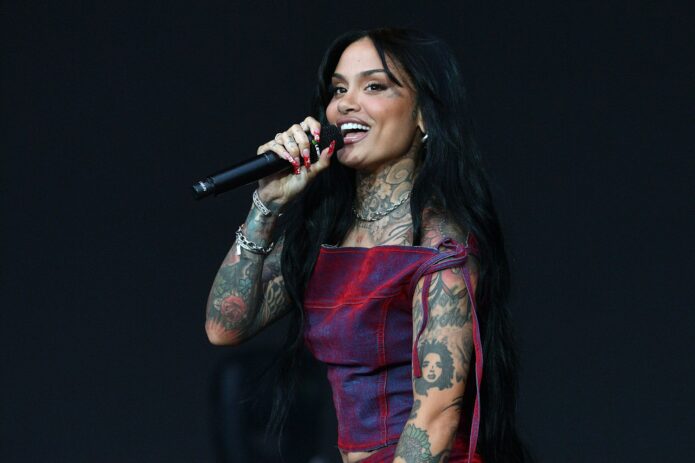
Kali Uchis keeps her tattoos close to the story

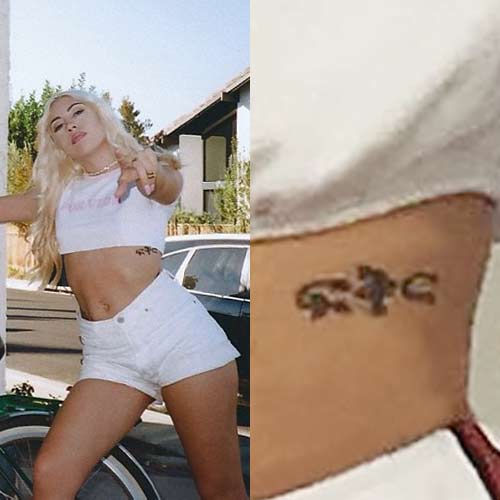
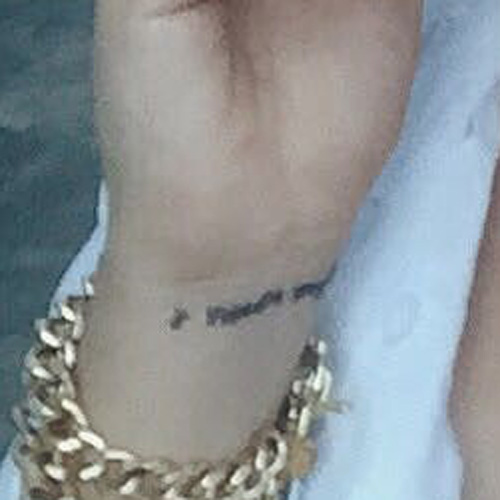
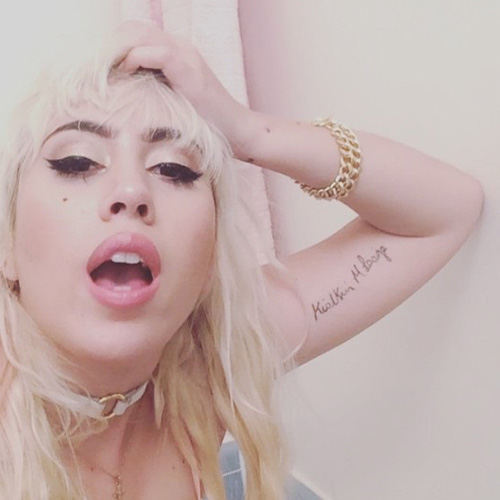
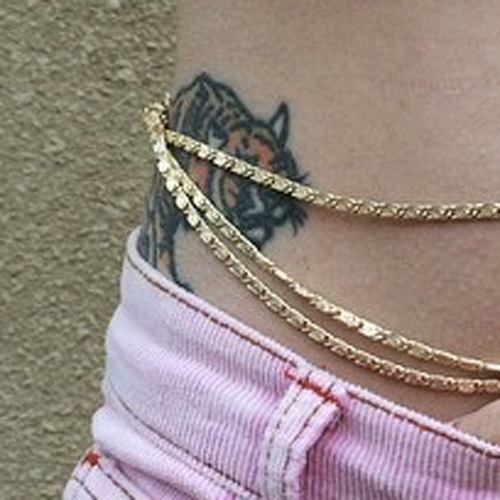
Kali Uchis has a compact tattoo collection with unusually personal stories behind it. Public coverage identifies a rose on the back of her hand, an Om symbol on a knuckle, initials on her side, writing on her wrist, her father’s passport signature on her bicep and a tiger on her hip. The designs touch on family, spirituality and simple appreciation for an image.

Newer photos also show tattoos connected with her music and album artwork. It helps to separate what Kali has explained from what viewers are guessing from a picture. The confirmed pieces already suggest an artist drawn to ink that can be intimate, symbolic and quietly decorative.

The hand rose is one of Kali Uchis’s clearest tattoos

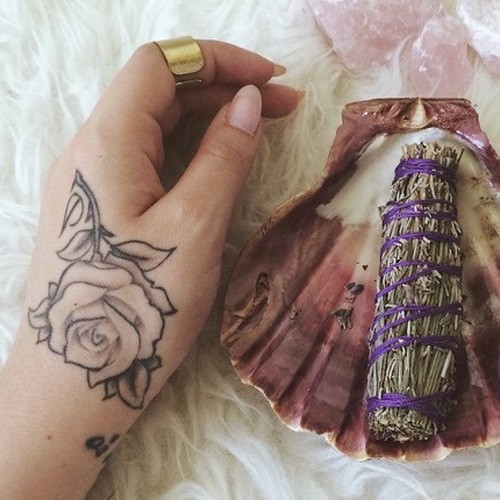
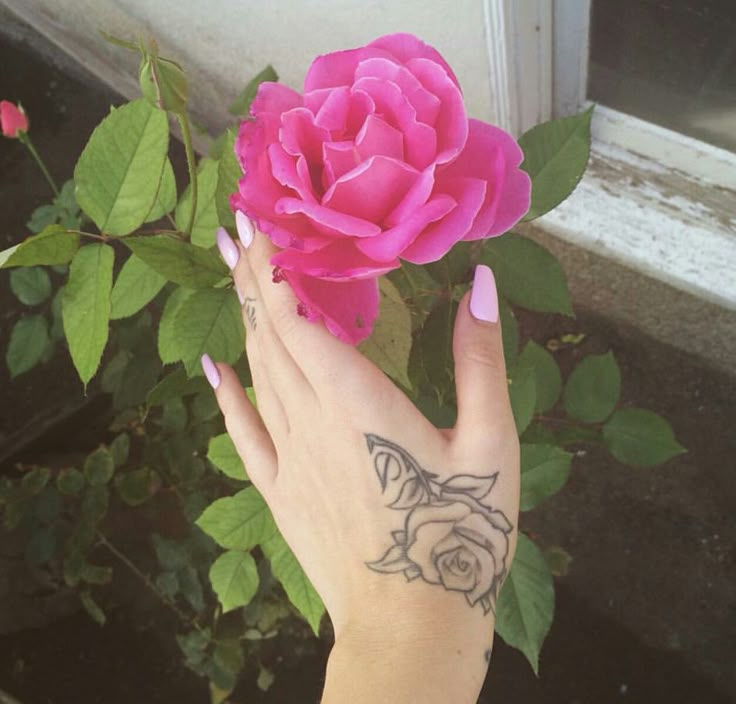
Kali Uchis rose tattoo on the back of her hand

Kali has a simple outline rose on the back of her hand. The placement makes it easy to spot in photos, on stage and in everyday gestures, so the small black design has a bigger presence than its size suggests.

Rose tattoos can carry many meanings, but there’s no direct quote from Kali giving this one a specific private story. The outline is light and graphic, in keeping with the softer, vintage-leaning side of her image.

A hand is a natural place for an artist who uses her hands constantly. The rose moves with her, appearing alongside rings and nail designs when she reaches for a microphone or poses for a photograph.

The Om symbol sits on her knuckle

Kali Uchis Om symbol tattoo on her knuckle

Another hand tattoo is the Om, or Aum, on the knuckle of her left middle finger. The symbol has associations with mantra and spirituality in Hinduism, Buddhism and Jainism. Public descriptions connect it with the soul and spirit, but Kali hasn’t shared a detailed personal explanation for choosing it.

The small mark suits a knuckle: it stays readable without taking over the hand. It sits close to the rose, forming a loose group of fine black designs rather than a heavily shaded composition.

The two tattoos use different visual languages. The rose is a familiar image from nature; the Om is a compact spiritual symbol. Her hands don’t follow one single theme, and not every deeper meaning needs to be made public.

Her side initials keep a private detail close

Kali Uchis initials tattoo on her side

Kali Uchis writing tattoo on her wrist

Kali has initials on her left side, a placement that can stay under everyday clothes. It can be shown deliberately, but it doesn’t have to appear in every public photo.

Public descriptions identify the mark as initials or a symbol, but don’t establish what each letter means. It could refer to family, a relationship or a private phrase; without an explanation, guessing would turn it into a story that may not be hers.

She also has writing on her right wrist. The side mark stays more concealed, while the wrist lettering is easier to notice. Together they show that Kali is comfortable with words and symbols without needing each tattoo to function as a public statement.

Her father’s passport signature is a family tattoo

Kali Uchis father passport signature tattoo on her bicep

One of Kali’s most specific tattoos is her father’s name on her left bicep, copied from the signature in his passport when he came to America. It preserves more than a name: it keeps the movement of his own handwriting, including the small irregularities that make it recognisable.

The story connects the design to immigration and family history without needing a portrait or a long quote. It turns an everyday document into a lasting piece of body art.

The bicep gives the signature room to stay legible. It can be covered easily, but it also shows when Kali wears sleeveless clothes, leaving her free to choose when the family reference is visible.

Among the documented tattoos, this is the clearest example of her carrying a real piece of family history with her. It feels less like a label than a personal keepsake.

The tiger on her hip brings in a bolder image

Kali Uchis tiger tattoo on her right hip

Kali also has a tiger tattoo on her right hip. It brings a more forceful image to the collection than the hand rose or tiny Om, while the placement keeps it relatively private.

Tigers are often associated with strength, independence or protection, but there’s no confirmed quote settling what this one means to Kali. It’s safer to stick to what’s visible: a bold animal design away from the more public hand and wrist pieces.

The tiger changes the collection’s visual rhythm. Most of the other documented designs are words, symbols or compact linework; the animal is more illustrative and gives her tattoo map a stronger anchor.

Newer music-related images add another layer

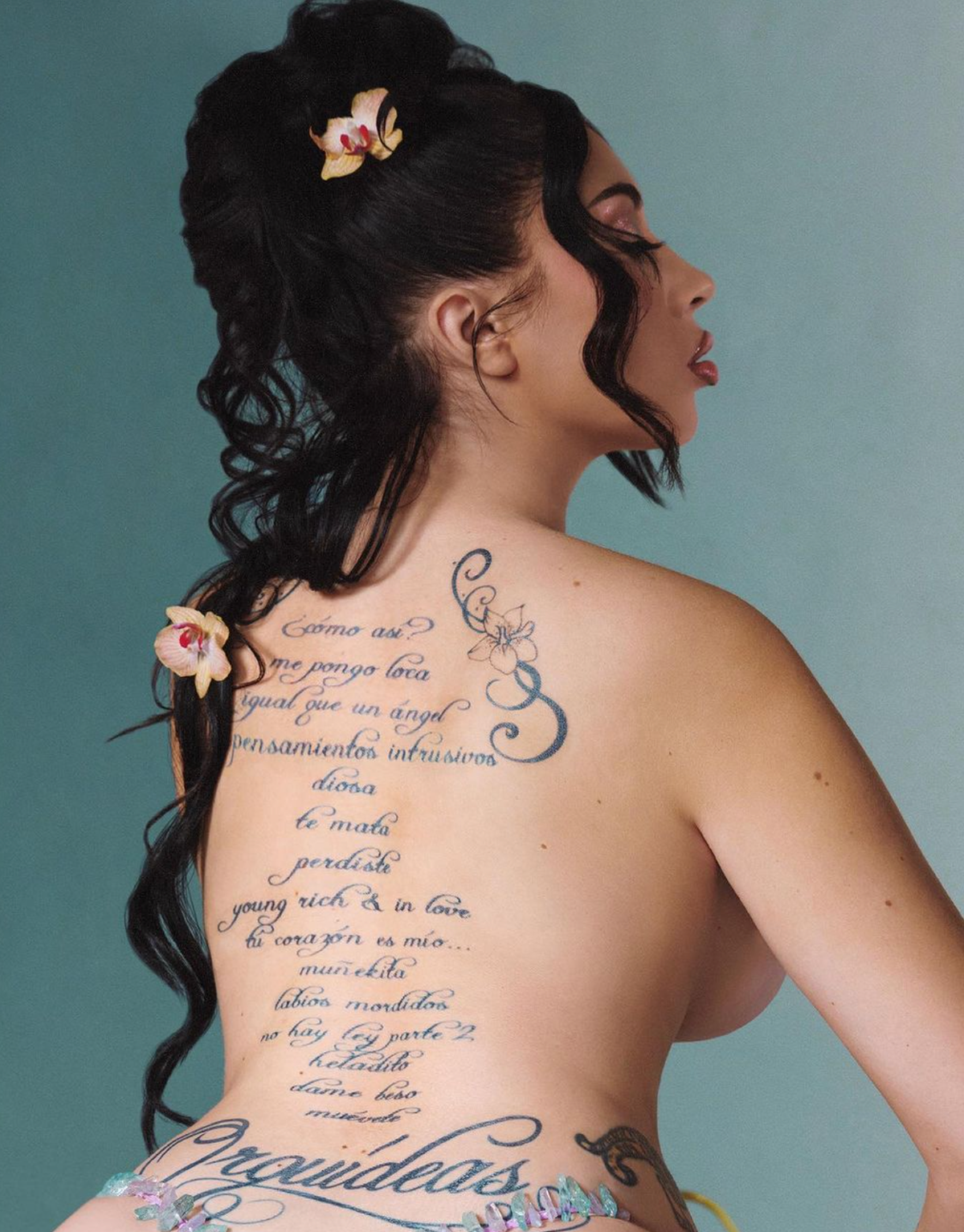
Kali Uchis music-related back tattoo and tracklist design

More recent photos show tattoo imagery connected with Kali’s music and album world, including a tracklist-style design from an album era. The reporting is based mostly on images rather than a detailed interview, so the connection is clear while the meaning of each line remains open.

Tattoos and music visuals can overlap. Kali builds strong visual worlds around her records, and an album-linked design can carry that era with her. It doesn’t necessarily mean each title has a separate private story; sometimes the point is to keep the period itself.

The design has a different origin from her father’s signature, but both turn something temporary into something she can keep: one preserves family handwriting, the other carries a public creative project.

Taken together, the documented pieces make a collection of close details: the hand rose, Om on her knuckle, initials on her side, wrist writing, her father’s signature and the tiger on her hip. Music-related imagery adds another layer tied to the world around her records.

They don’t need one shared meaning. Some are spiritual, some family-related, some visual choices, and some remain private. That variety is part of the collection’s character; a tattoo doesn’t need a public explanation to matter.

The family signature is the most specific story in the group, while the hand rose is likely to make the quickest impression. The tiger adds a bolder contrast, and the small Om and initials show how much a compact design can hold.

Her ink feels personal first. Even when a tattoo appears in a music photo, it can still have been chosen for her own reasons. That balance makes the collection worth a closer look.

Some designs read at a glance; others need context. A rose or tiger is easy to recognise, even when its private meaning is unknown. The passport signature becomes more moving once you know whose handwriting it preserves. The Om carries a long cultural history, while Kali’s personal reason may remain hers alone.

There’s no need to turn the collection into a forced biography. The documented themes already cover family, spirituality, music, handwriting and natural imagery. Her hand tattoos are the easiest to see, while the side and bicep pieces stay more private.

For more on Kali’s creative world and the stories behind her records, watch this interview:

Kyle Kuzma’s ink carries Flint, faith and a love of art

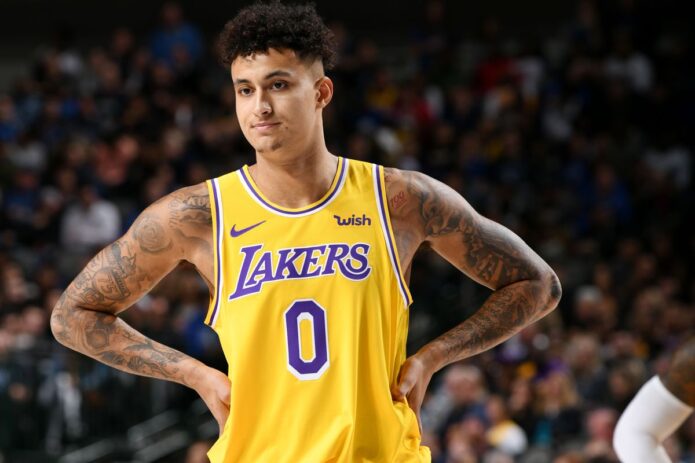
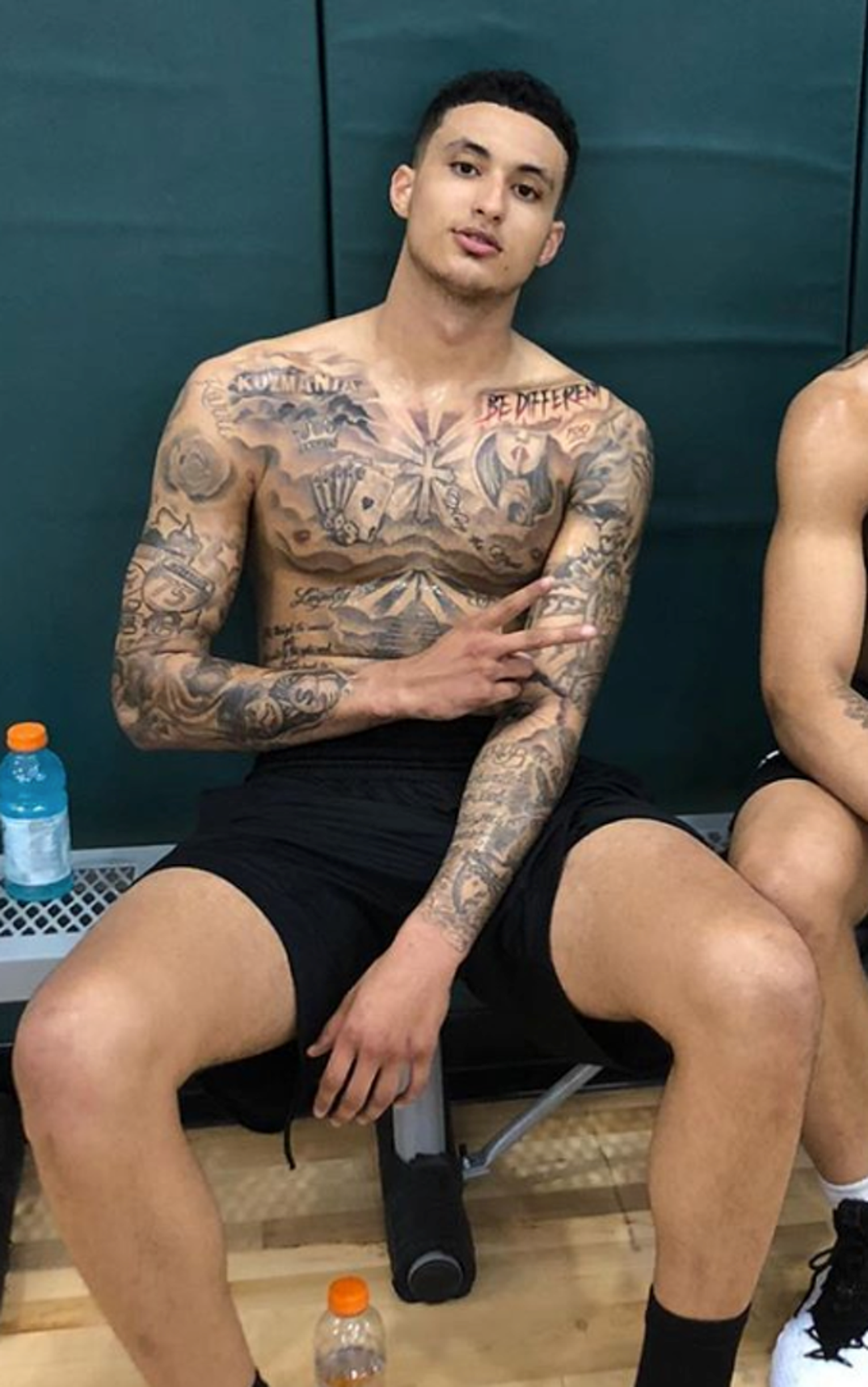
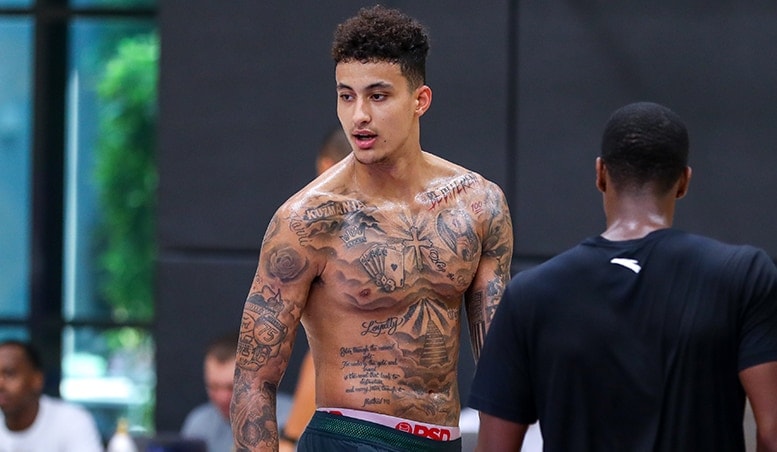
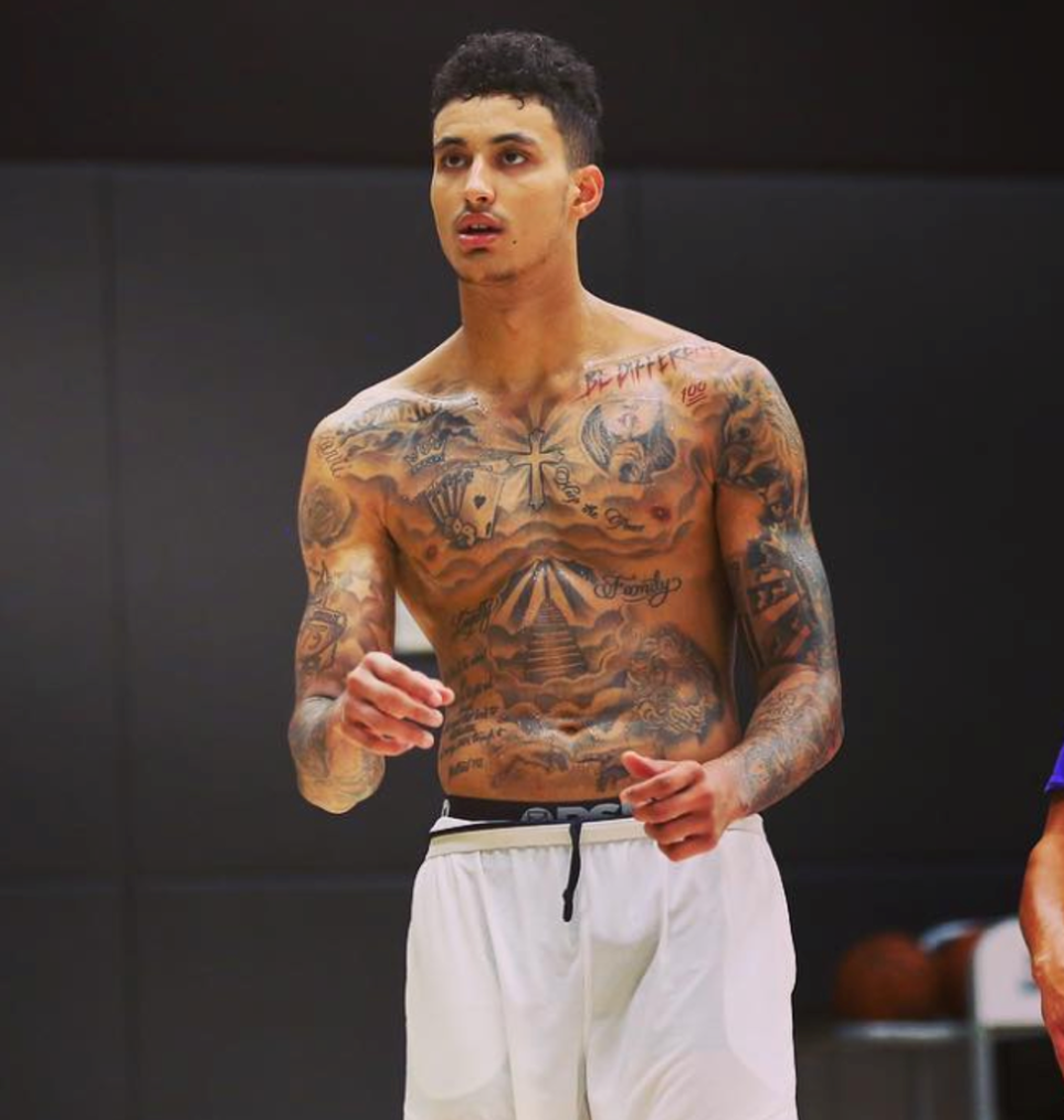
Kyle Kuzma’s tattoos read like a scrapbook of what has shaped him: Flint, Michigan, faith, family, basketball, art and the NBA players he watched growing up. The designs stretch across his arms, shoulders and legs without following one uniform style. In his GQ Sports tattoo tour, he explains how some pieces connect to his life. Others are playful or simply images he liked, and that mix keeps the collection from feeling like a brand.
The lion and rose began with basketball and being a Leo

Kyle Kuzma Monopoly man tattoo on his forearm

Kuzma’s first tattoo was a lion’s head on his left shoulder, which he got at 18. The choice suits his Leo star sign, but the design has another layer: the back of the lion’s head turns into a basketball, tying the zodiac image to the sport that became his safe place and career.

He has said the first session took about three hours. That makes it feel less like a quick experiment and more like the start of a lasting relationship with tattoos. The lion is large enough to set the tone for what followed: bold images and personal references that take up real space.

A rose on the other shoulder gives the upper body a second visual anchor. The two tattoos are different, but they balance each other. That’s often how Kuzma’s collection works: one piece has a clear story, while another is there because he liked how the image fit.

Flint keeps his hometown close

Kyle Kuzma Psalm 23 sleeve tattoo on his arm

The word Flint appears in red, white and black on the side of Kuzma’s lower left arm. It’s a direct tribute to the Michigan city where he grew up.

He has described Flint as a difficult place with plenty of temptation, but also as the place where basketball gave him a safe haven. The tattoo holds both parts of that story. It doesn’t pretend his hometown was simple or reduce it to a headline about hardship; it carries the people, pressure, court and reasons he kept working.

The name is easy to see in photos and during games. On his lower arm, it stays close to the hands that helped make basketball his route forward. Flint isn’t just where Kuzma started; it’s part of what kept him going.

Praying hands and Ginny honour his grandmother

Kyle Kuzma praying hands and Ginny chest tattoos in a high-quality seated portrait

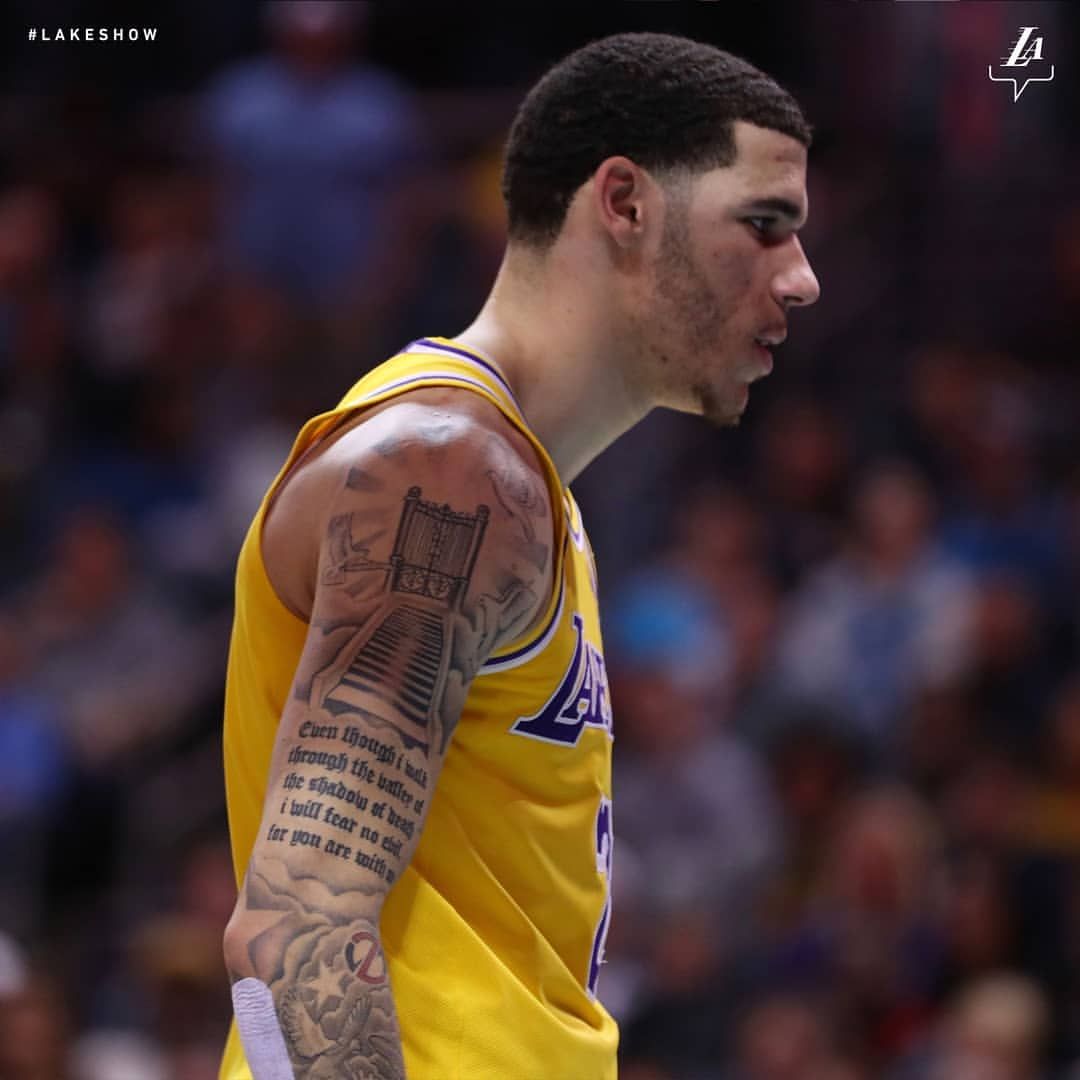
Above Kuzma’s elbow are praying hands with rays of light, and below them is the name GINNY. The tattoo honours his grandmother, who died while he was still in high school. It turns a family memory into something he can carry with him.

The praying hands draw on familiar religious imagery, but the name makes the piece specific. Without Ginny, it could belong to anyone; with her name, it becomes a direct act of remembrance rather than faith in the abstract.

Doves, scripture, an eye and a cross appear elsewhere among his religious tattoos. This family name keeps those bigger themes grounded in the people closest to him.

The sacred heart and doves mark a new beginning

Kyle Kuzma sacred heart and dove chest tattoos at Lakers practice

On the upper part of Kuzma’s left wrist is a Sacred Heart of Jesus wrapped in chains, with flames rising above it. It brings traditional tattoo imagery into the collection: the heart suggests love and devotion, while the fire gives the design energy.

Above it, doves fly through clouds. Kuzma has explained that they mark a new phase in his life, recalling the birds sent out after the flood in the story of Noah. One returned with a branch, a sign that the difficult period had passed and a fresh start was possible.

That idea fits a career that took him from Flint to college basketball and then the NBA, with each step asking him to adapt. The doves aren’t just decorative filler; they stand for beginning again after pressure, uncertainty or loss.

The eye and scripture add a quieter layer

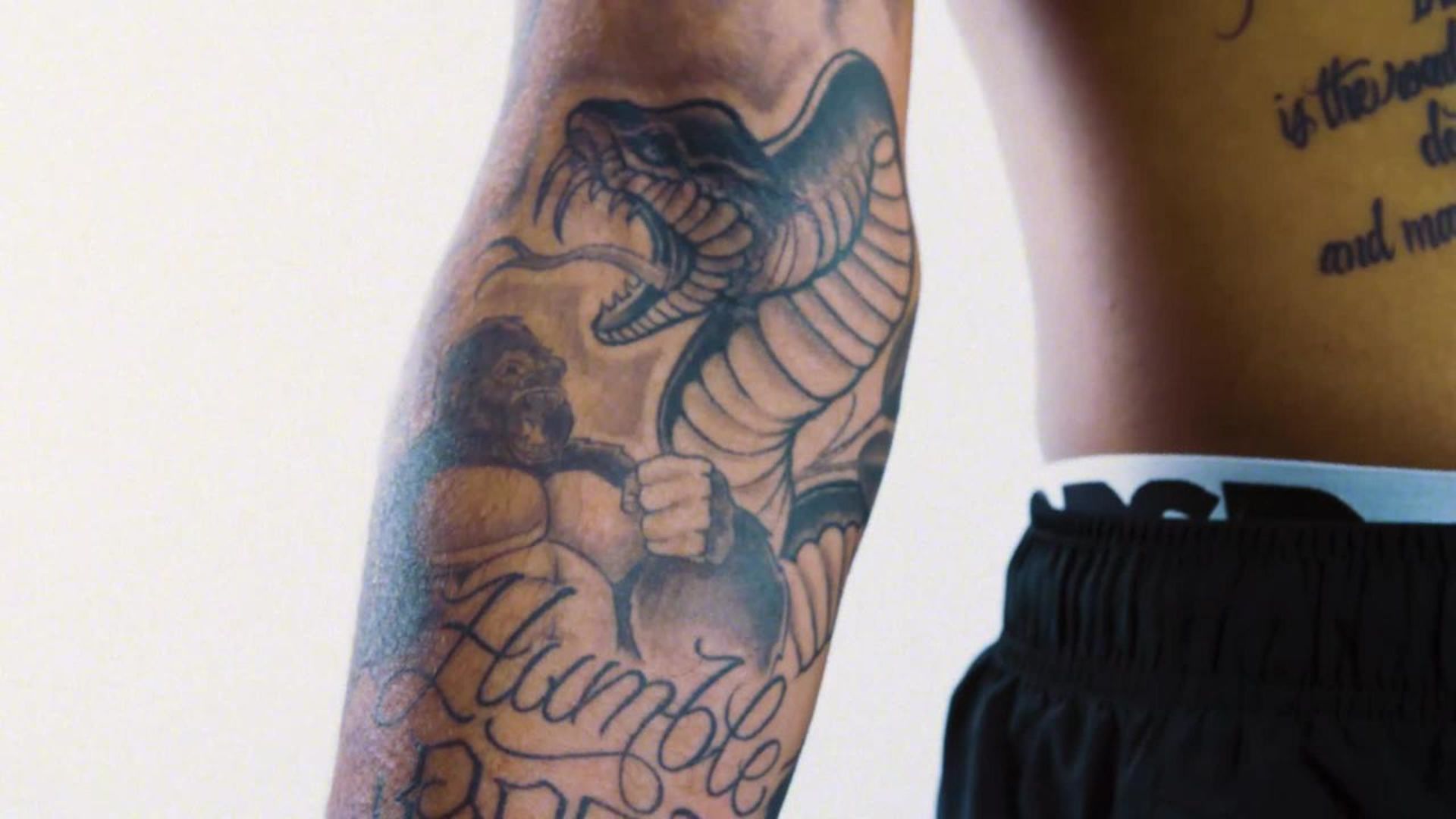
Kyle Kuzma gorilla and snake forearm tattoo with Humble lettering

Kuzma has a green eye tattoo on his left elbow, with an eye-and-cross design above the scripture on his inner forearm. He has said the eye and cross simply looked good in that spot—a useful reminder that a tattoo doesn’t always need a big biography.

The verse comes from Proverbs 16:20 and focuses on wisdom, trust and happiness. It sits near his other religious pieces, but the words add a different rhythm from the images around them.

The eye, cross and verse make a small cluster of symbols and language rather than one illustration. Kuzma is comfortable letting a purely visual choice sit beside tattoos tied to family or faith.

The flag tattoo pays tribute to Nipsey Hussle

Kyle Kuzma chest and arm tattoos in a high-quality practice portrait

One of Kuzma’s most meaningful tattoos is a striped flag marked TMC, short for “The Marathon Continues,” a phrase associated with Nipsey Hussle. Kuzma got it after Hussle died in 2019.

It’s a tribute, but it also reflects Kuzma’s own view of life as a marathon. He has connected the words to the adversity he has faced and the need to keep moving toward the finish line. The design holds respect for Nipsey and a personal rule for Kuzma at the same time.

The flag gives the piece the feel of a banner. It’s easy to read and not hidden away as a tiny mark. Like the Flint tattoo, it places him in a wider community: one design names home, the other honours an artist whose work and outlook reached him.

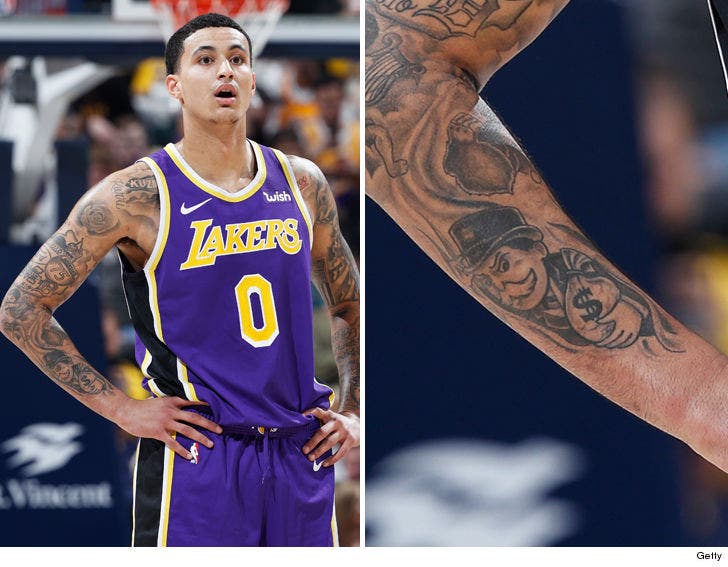
Kuzma also has an angry Rich Uncle Pennybags character from Monopoly. He has described the board game as a family favourite, with games at home lasting for hours. That makes the tattoo a family memory, but it’s also plainly fun.

A snake, gorilla, cartoon and other illustrative designs add more movement around the solemn pieces. The collection can move from his grandmother’s name to a cartoon character without feeling confused; both belong to the same person.

Kuzma has also pointed to the influence of players he watched as a kid, especially Allen Iverson and Chris Andersen. Iverson showed how tattoos could become part of a basketball identity, while Andersen treated his body like a bold piece of art. Kuzma found his own space between symbolism and visual style.

The themes become clearer when the pieces are grouped. Flint and the lion look back to home and beginnings. Ginny, praying hands and scripture keep family and faith close. The doves and TMC point toward survival and new chapters; Monopoly, the snake and cartoon images leave room for fun.

Not every tattoo has a published explanation, and there’s no need to invent one. The stories Kuzma has shared about Flint, Ginny, religion, basketball and Nipsey Hussle already give the collection plenty of meaning.

There’s a relaxed honesty in the way he talks about the ink. He’s comfortable with serious memorial pieces and just as comfortable saying a design looked good in a spot. The tattoos matter without pretending every choice was part of a master plan.

Across his arms and shoulders, the designs record where Kuzma came from, the people who helped him, the artists who influenced him and the beliefs that keep him moving. The collection is busy, but the thread is clear: art helps him remember, reset and keep playing.

Watch Kyle Kuzma explain his tattoos
In his GQ Sports tattoo tour, Kuzma talks about the lion, the Flint tattoo, his religious pieces and the designs tied to the people and ideas that shaped him.

Aitch keeps Manchester and family close in his tattoos
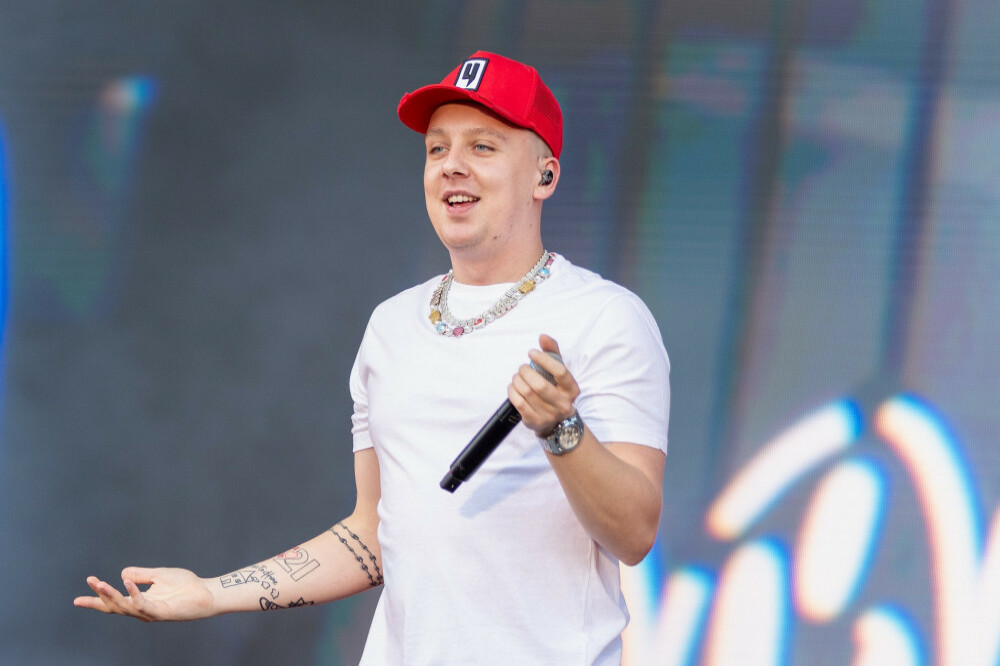
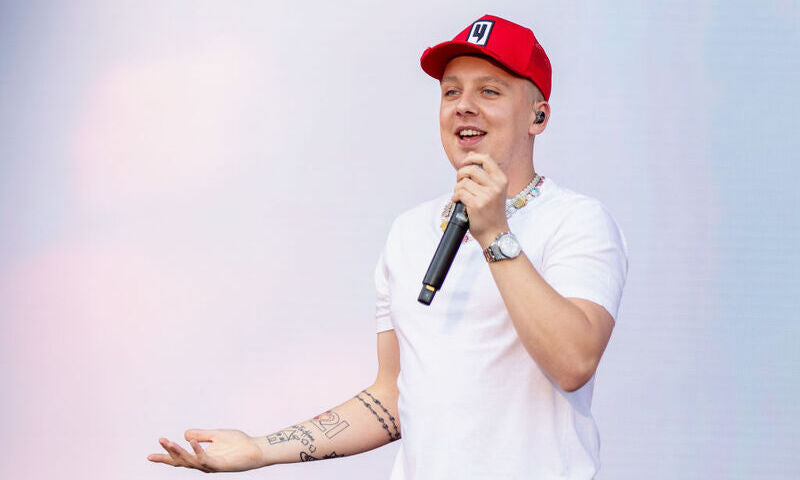
Aitch’s tattoos stand out because they aren’t arranged into one giant sleeve. The designs are spaced out, personal and often playful: a Manchester symbol on his chest, a debut-album reference on his arm, rosary beads for his mum, a Maybach logo and a message from his family.
He has added a lot of ink in a short time. Older photos show more bare skin; recent appearances reveal a growing patchwork across his arms and torso. Some meanings are well documented, while other designs are visible without a public explanation. It helps to keep those two things separate.

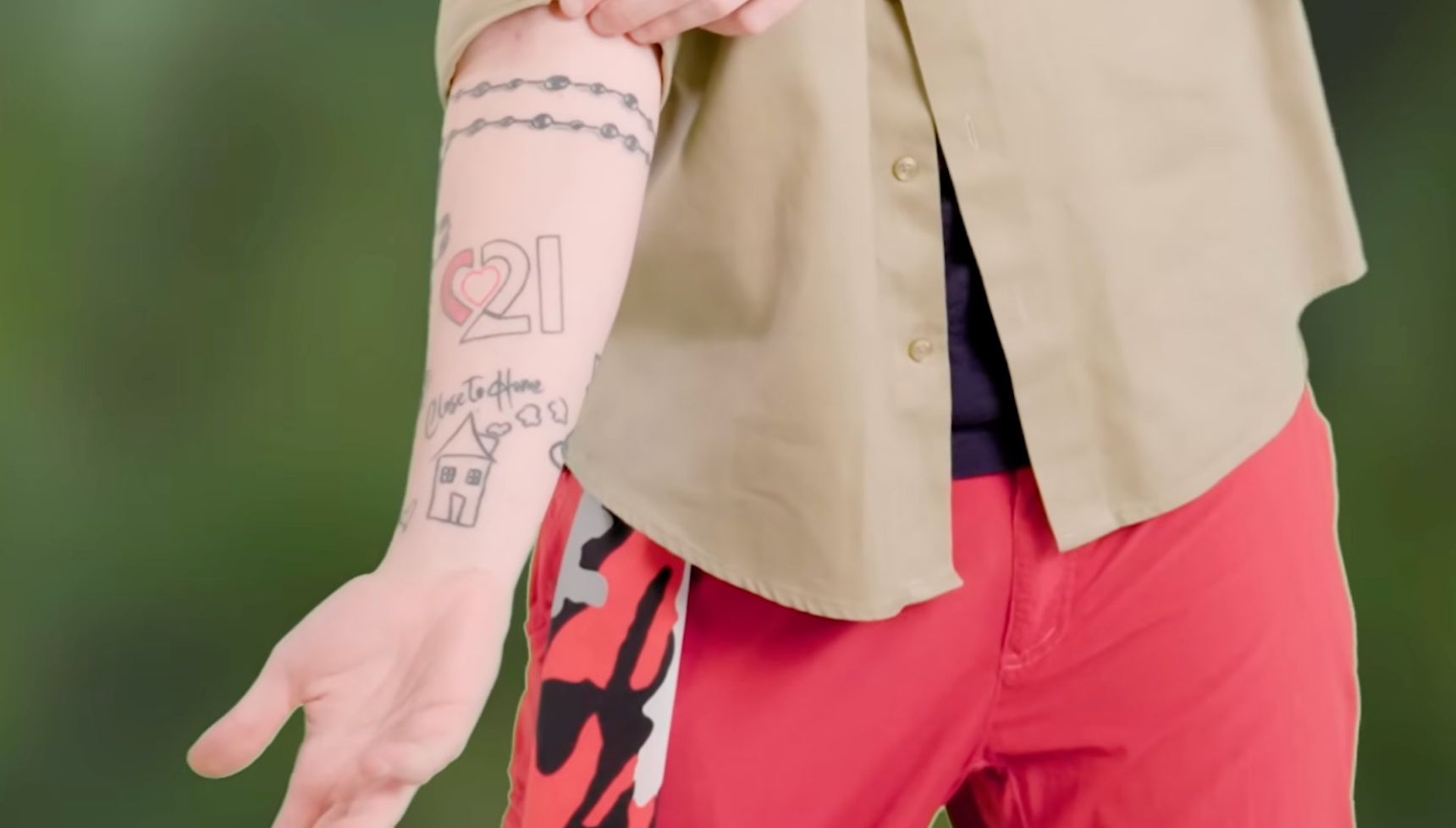
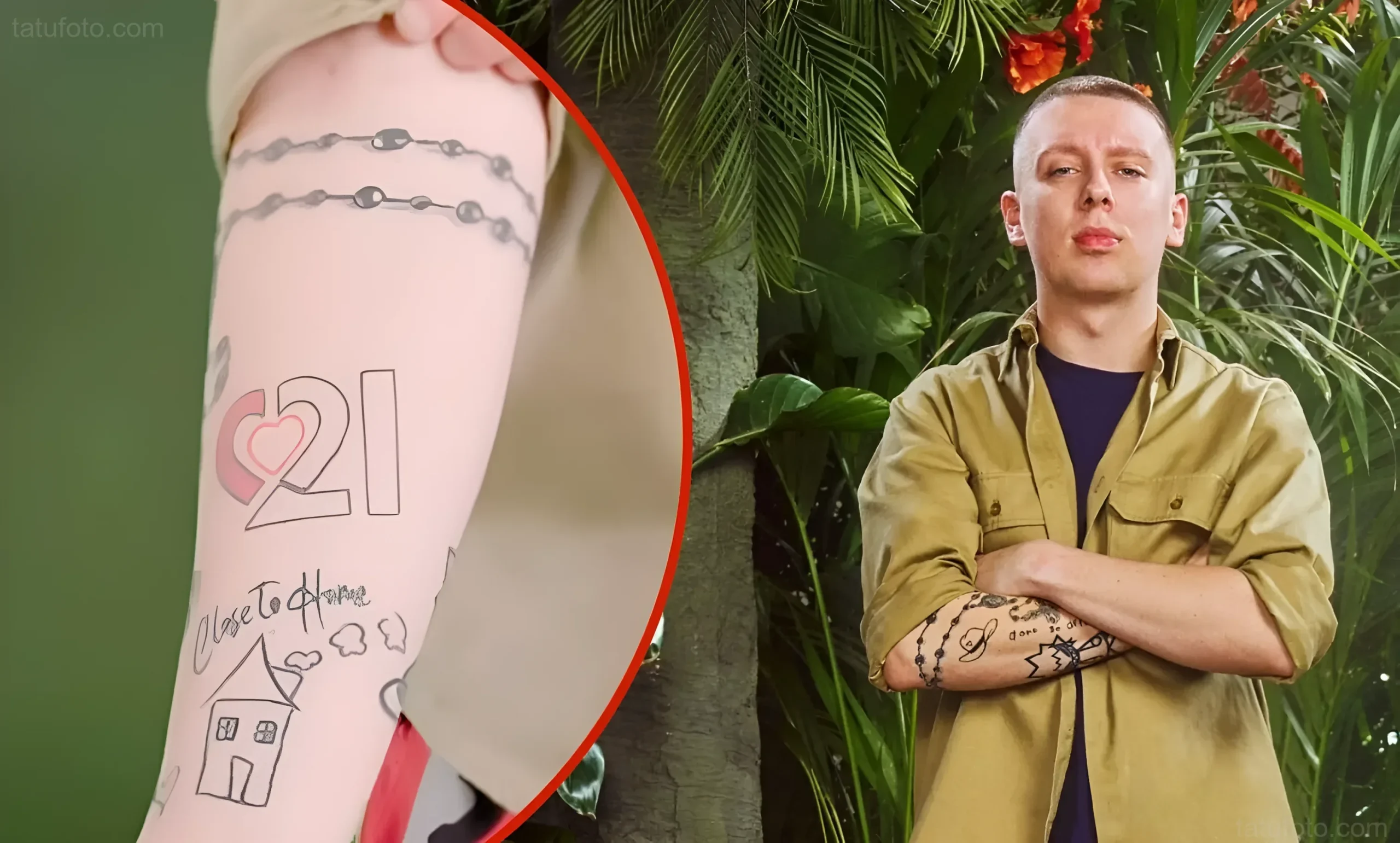
“21” and the “Close To Home” house

Aitch Close To Home arm tattoos including the 21 and house design
Two of the clearest arm designs are the bold number 21 and a small house beside the words “Close To Home.” The house is linked to Aitch’s debut album and the idea of remembering where he came from.

Its simple shape says a lot without needing a portrait or a wall of text. “Close To Home” is a neat summary of Aitch’s identity: he has become a major name in British rap, but Manchester remains part of how he talks about himself. The house is a small signpost between his early freestyles and the life he has now.

The number 21 appears beside it, though its exact meaning hasn’t been explained as clearly in public. It could refer to a date, milestone or private detail. For now, what’s clear is that it is one of the strongest marks on his forearm and sits next to the house rather than hidden away.

Rosary beads are for his mother’s protection

Aitch showing his rosary, arm and Manchester tattoos in a tattoo feature
Aitch has rosary beads tattooed on his arm and has linked them to wanting protection for his mother. It’s one of the gentler stories in the collection: a family symbol he can see often, not a design chosen to make the arm look tougher.

The beads bring the focus back to home among the career references and more playful pieces. They feel like a quiet reassurance, with their emotional centre in his family even when the tattoo appears in a television photo.

Religious imagery can mean different things to different people. Aitch’s stated meaning is protection for his mum, and that is enough without adding a bigger claim about his faith.

The Manchester bee anchors the chest piece

Aitch Manchester bee and cherub chest tattoos
A large Manchester bee sits on Aitch’s chest, a direct nod to the city he comes from. The bee is one of Manchester’s best-known symbols, and here it works as a clear mark of local pride.

Cherubs and arrows around it give the chest tattoo more movement than a single emblem would have. The bee is still the first thing most people notice, but the surrounding figures make the piece feel like a full composition.

His arms hold a lot of separate images and phrases; the chest carries the biggest statement about where he is from. The bee isn’t subtle, but it doesn’t need to be.

Family words that stay close

Aitch showing his family and Manchester tattoos in an official portrait
One of Aitch’s most meaningful tattoos is a handwritten message from his sister Gracie: “Harrison, don’t be afraid.” Because it’s in her handwriting, it keeps the shape of her own words instead of setting them in a standard font.
The message is practical as well as personal. Aitch has spoken about his sister having Down’s syndrome, and the tattoo keeps her voice and encouragement close. It isn’t a generic quote from a poster; it belongs to his family.

That piece helps explain the patchwork feel of his tattoos. A number can sit beside a house, a family message beside a logo. The styles don’t have to match when the memories connect them.

The Maybach logo marks a career milestone

Aitch chest cherubs and bee tattoos

Among the more unexpected designs is the Maybach logo. Aitch has linked it to buying his first luxury Maybach at 23. It might sound like an unusual thing to make permanent, but it suits the humour in his collection.

The logo marks a point when his career had changed enough for that purchase to matter. It’s a success marker with a cheeky edge: an achievement worth enjoying, without turning it into a grand ceremony.

It also pairs neatly with the “Close To Home” house. One tattoo looks back to where he started; the other records how far the music has taken him. Together, they make the forearm read like a quick timeline.

Polaris, the clown and other smaller designs

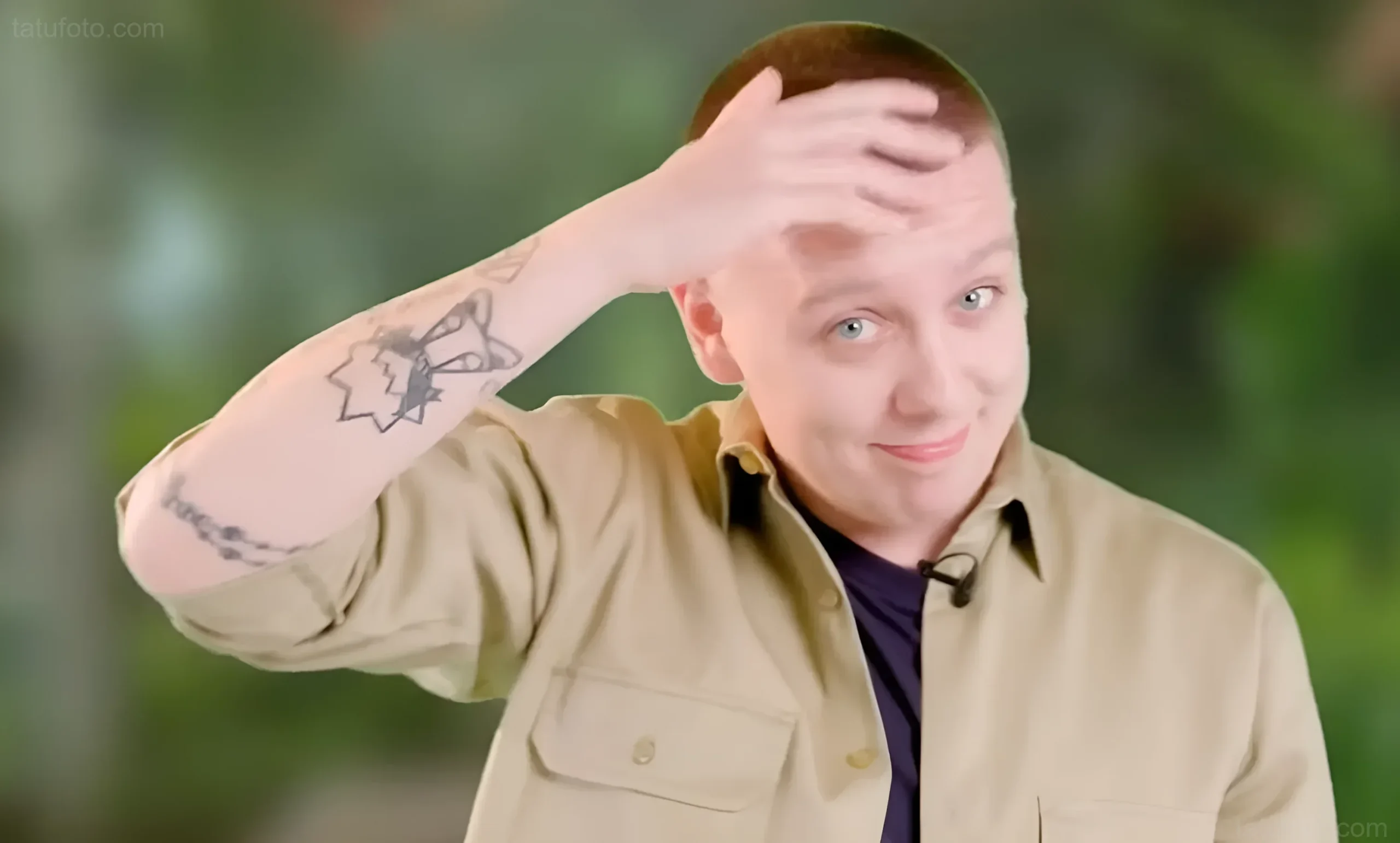
Photos show more scattered pieces across Aitch’s arms: the word “Polaris,” a clown, a star, a wine glass and a cowboy hat. Not all have a confirmed public explanation, which gives the collection its casual, unplanned feel.

“Polaris” can suggest a direction or a fixed point, but there’s no reason to settle on a meaning without Aitch explaining it. The star and wine glass are visible too; their personal stories remain private.

The clown adds a mischievous note, and the cowboy hat keeps the arm from being only family tributes and career milestones. Those smaller images leave room for personality, jokes and designs he liked at the time.

Aitch’s patchwork style is the point

The word that best describes Aitch’s tattoos is patchwork. The designs are spaced apart, shift from arm to chest and range from family to Manchester, music and money. Nothing is trying to look as if it came from one flash sheet.

That suits the way people collect memories. A tattoo often follows an idea that matters right now, rather than a sleeve mapped out years in advance. The house came with an album, the bee with hometown pride, the handwriting from his sister and the Maybach logo with a career milestone.

Recent television appearances have made it easier to see how much ink he has added. The list will keep changing, so this is best read as a snapshot of what has been documented, not a final inventory.

What the tattoos say about his story

Together, the designs tell a relaxed story about where Aitch came from and what matters to him. Manchester appears in the bee; music and ambition in the album reference and the Maybach; family in the rosary beads and Gracie’s handwriting.

The smaller pieces keep the collection from becoming too solemn. A clown, wine glass and cowboy hat can be funny as well as meaningful. Some tattoos can simply be part of the scenery.

That mix is why the collection works visually. It feels lived in, and it still has room to grow. Aitch doesn’t look as though he planned every inch of his skin years ago; he adds reminders as he goes and leaves space for another story.

Aitch tattoo checklist

  • 21 on the forearm.
  • A house sketch with “Close To Home”.
  • Rosary beads linked to protection for his mother.
  • A Manchester bee on his chest.
  • Cherubs and arrows around the chest design.
  • A handwritten family message: “Harrison, don’t be afraid.”
  • A Maybach logo linked to his first luxury car.
  • “Polaris,” a star, clown, wine glass and cowboy hat.
  • Other newer arm and torso marks that are visible but not fully explained in public coverage.

Watch Aitch talk about his journey

In long-form interviews, Aitch talks about growing up in Manchester, music and the life around his career. The profile video below is a useful companion to the tattoo story.

More musician tattoo guides

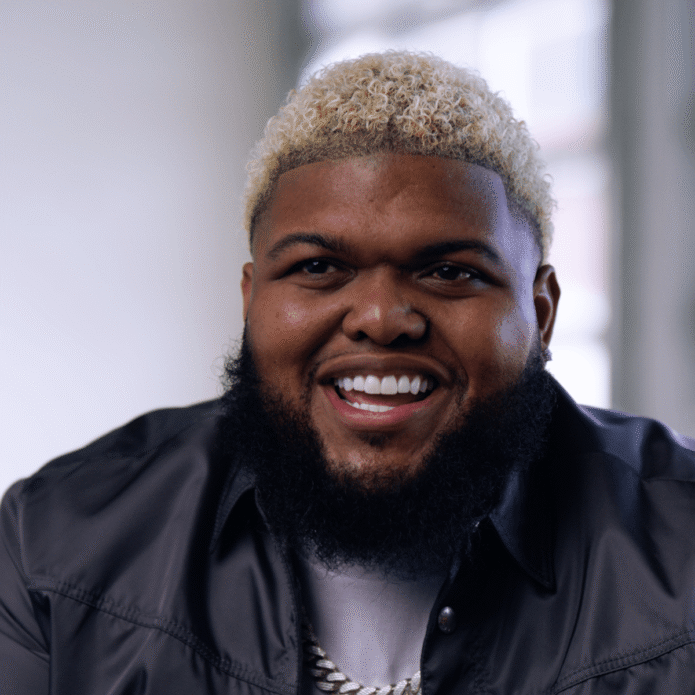
Druski lets the ink do some of the talking

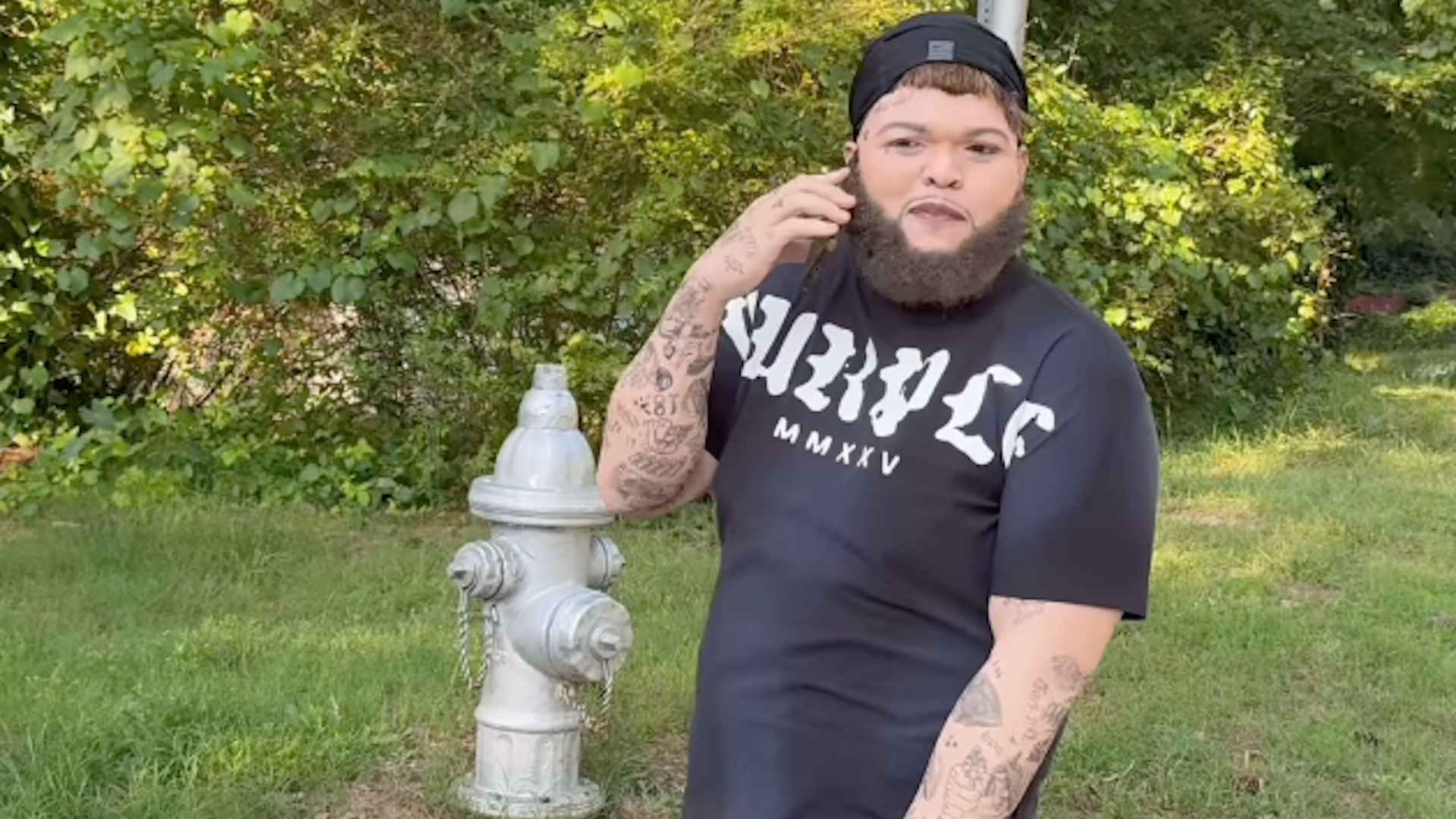
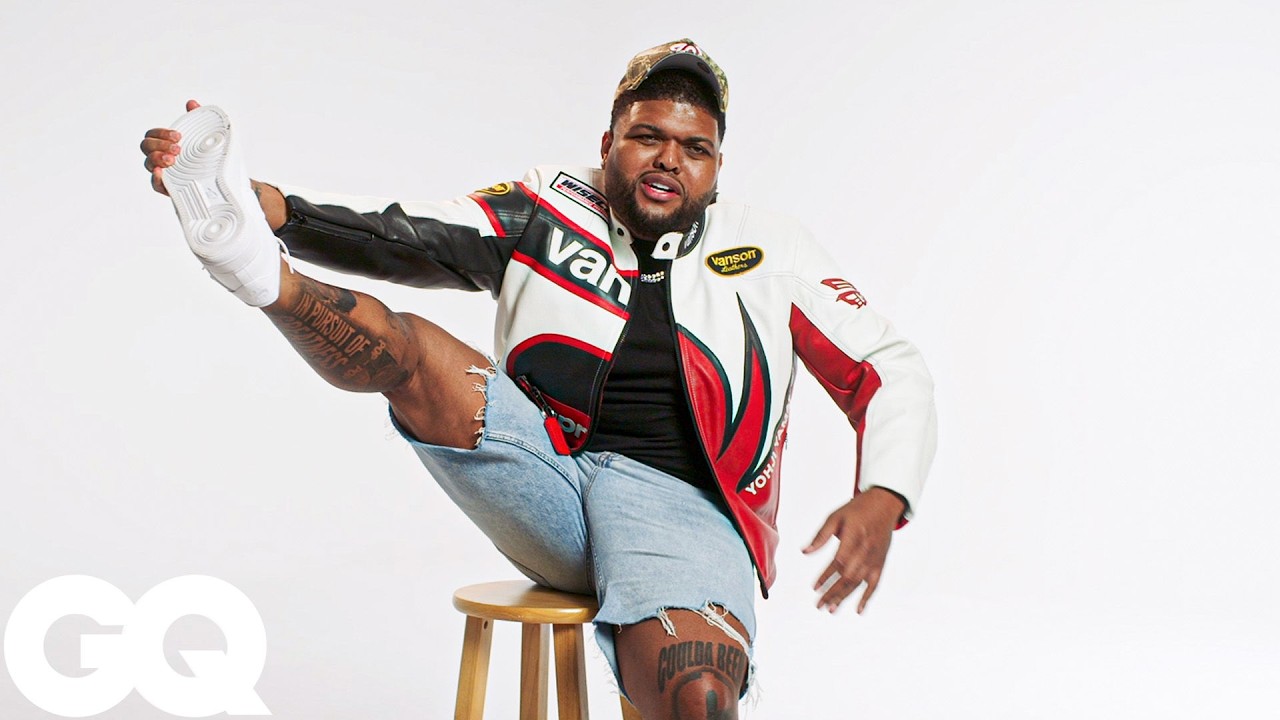
Druski’s tattoo tour opens with the piece he would rather leave in the past. In GQ’s Tattoo Tour, he laughs about his first tattoo, then walks viewers through the ink on his legs. He doesn’t pretend every design comes with a deep backstory: some are personal, some belong to a particular chapter of his life, and some simply mark the route from Atlanta comedy sketches to sold-out shows.

There still isn’t much reliable detail about the full collection. GQ offers the clearest tattoo-specific account, while photos from public events help show where the ink sits. A few designs are easy to make out; others are obscured by clothing, shadows or distance. The guide sticks to what Druski has said and what the pictures actually show.

That mix of self-mockery and selective detail feels right for him. He is willing to talk about early choices without turning every tattoo into a grand statement. The ink sits between private history and public persona, a familiar place for a comedian’s ink.

The first tattoo is the one Druski is least proud of

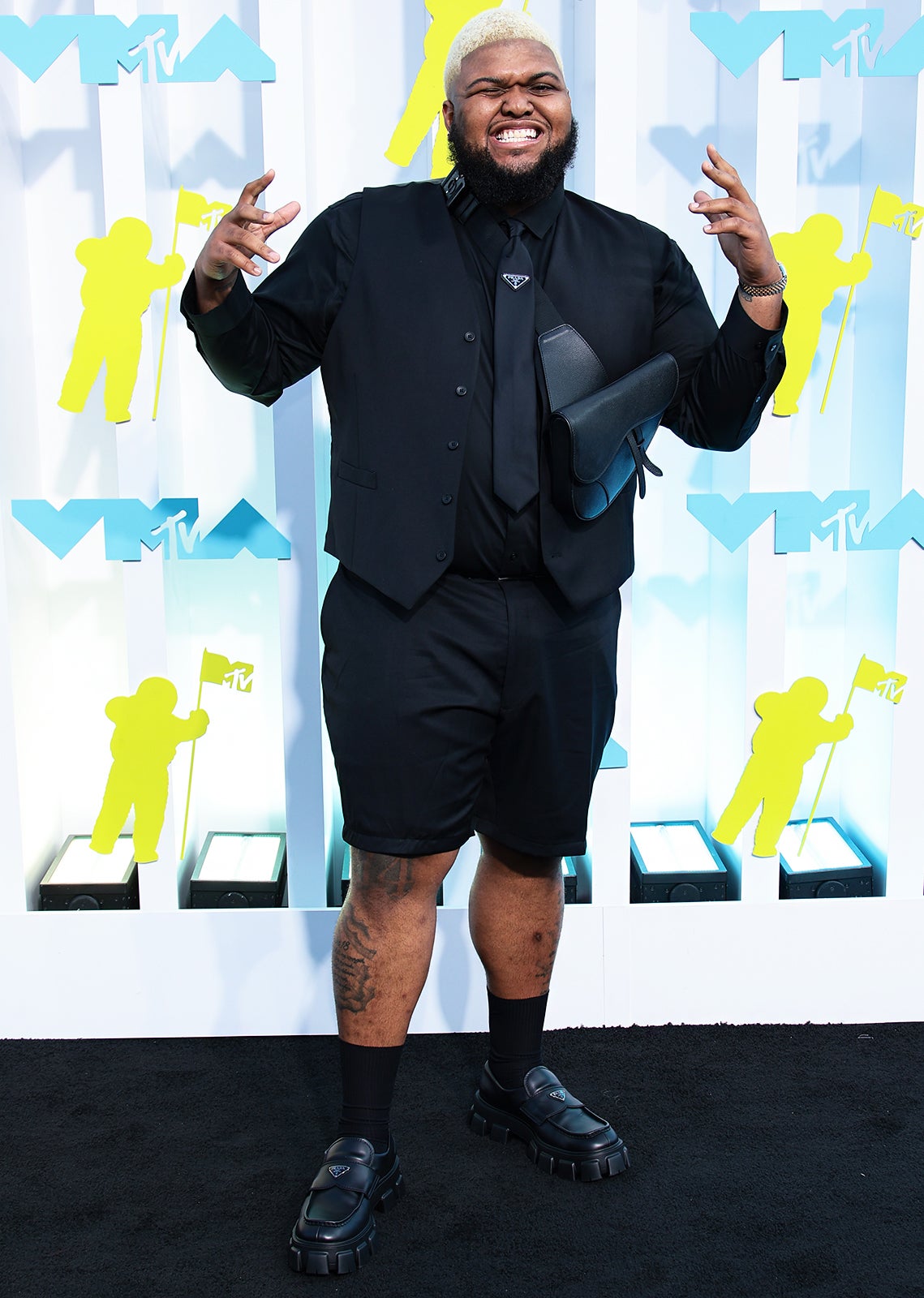
Druski leg tattoos visible at the MTV Video Music Awards

Druski starts his tour by poking fun at his younger self. The official GQ description quotes him saying, “I’m not proud of my first tattoo!” It sounds like an early decision he made with less confidence than he has now, and he is happy to laugh about it.

He also draws a line around anything from before the money, saying he will not show those pieces. That does not tell us exactly what is hidden, but it gives the collection a little context: some of his earlier years remain private, while the GQ video focuses on the tattoos he is comfortable showing today.

The first tattoo still has a place in the story, even though public sources do not clearly identify its design. It is an awkward beginning and an easy setup for a joke. Druski’s willingness to laugh at that choice tells us more than a made-up explanation ever could.

His legs are the main canvas viewers can actually follow

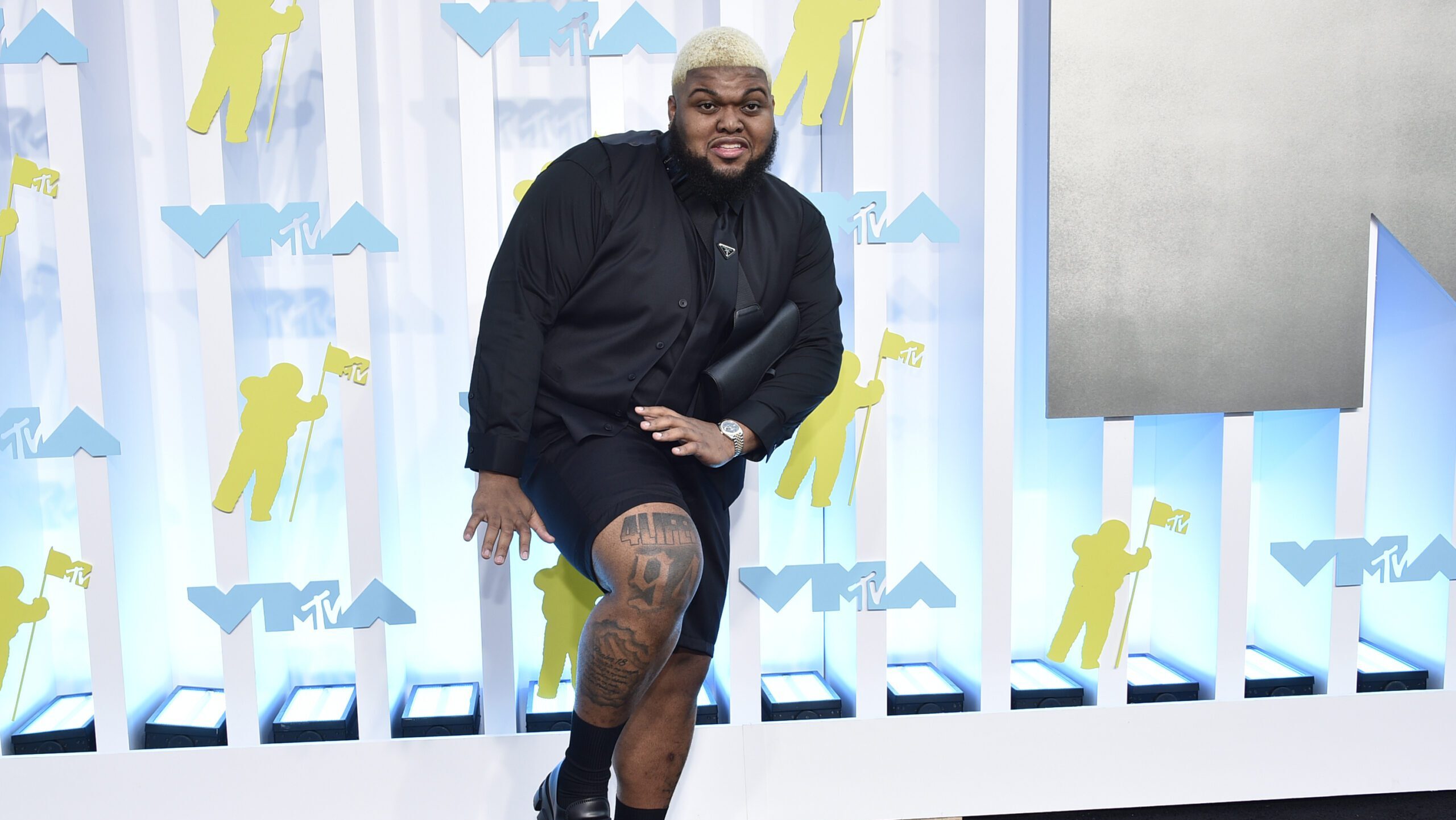
Druski leg tattoos in high-resolution stage photo

The most consistent feature in the available coverage is Druski’s leg ink. GQ says he spends time discussing the tattoos on his legs, and photos from events often show the work when he wears shorts. It is the clearest centre of the collection that viewers can follow.

Stage and red-carpet photos reveal several pieces across his lower body, but lighting and distance make it hard to identify every design. A dark patch in a picture is not enough to name a tattoo. What the images do support is a growing collection of leg pieces, seen from different angles and at different points in time.

The placement also lets Druski change how much of the collection he shows. Trousers keep the ink covered for a polished appearance; shorts bring it into view at a performance or photo call. The tattoos move easily between the formal celebrity setting and his more playful comedy persona.

“If you ain’t first, you’re last” connects the ink to his ambition

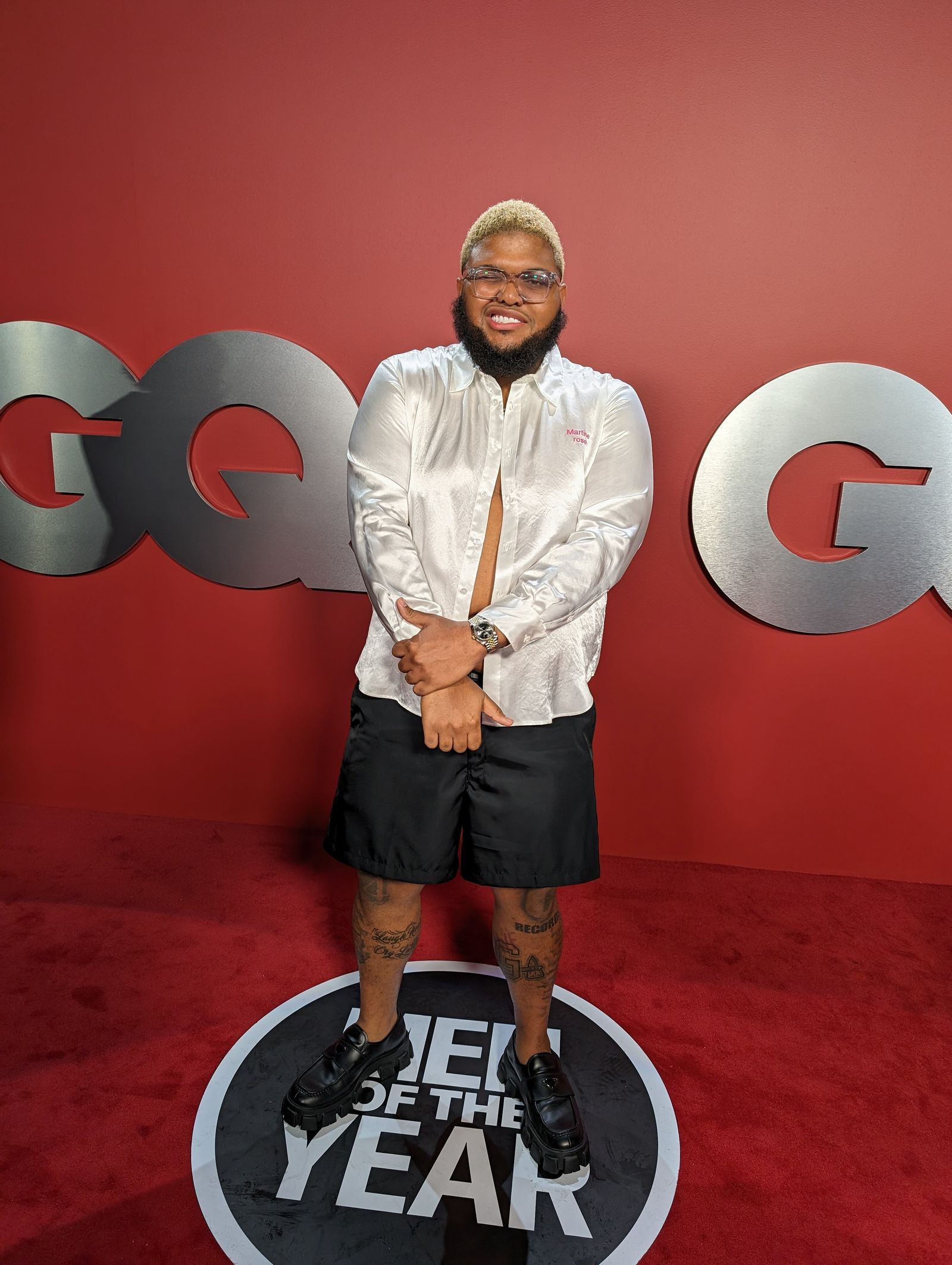
Druski leg tattoo collection at a GQ event

One of the few tattoos with a clearly reported meaning is the line “If you ain’t first, you’re last.” Druski told XXL that he had the quote from Ricky Bobby tattooed on his body. It is a joke from a movie, but it also matches the competitive energy he brings to his career.

This is not a quiet tribute or an abstract symbol. It is an over-the-top motto borrowed from a fictional driver and made permanent. That combination feels very Druski: a motivational line delivered with a wink, while still reflecting how much he wants to keep moving forward.

The sources used here do not consistently identify where the quote sits, so its placement is best left open. The phrase and its connection to the film are clear; attaching it to a particular body part would go beyond what has been documented. Tattoos can carry meaning without sounding solemn.

The red-carpet photos show how the collection looks in motion

Druski leg tattoos in a GQ portrait

Photos from public appearances catch Druski’s tattoos as part of an outfit, rather than as isolated close-ups. Shorts and loafers reveal the leg work while he stands, sits or turns for photographers. The ink becomes part of his silhouette.

The GQ event pictures are a good example. His clothes are sharp, but the exposed legs keep the look relaxed. Bleached hair, glasses and his comic expressions already make him easy to recognise; the tattoos add another detail without taking over the frame.

The images also show why a careful inventory matters. A photo can confirm ink on a calf or thigh without revealing the design itself. Shadows, fabric and resolution hide details, so the pictures help document where the tattoos appear without giving us license to guess what they are.

Some tattooed looks belong to characters, not the real collection

Druski leg tattoos at the MTV VMAs

Druski’s sketches often involve costumes and different characters, which can make tattoo research tricky. A character may have extra ink on the arms or chest, but that does not mean Druski has those designs permanently.

It helps to keep documented personal ink separate from character styling. The GQ tour is useful because Druski speaks as himself and shows his own collection. Repeat appearances in event photos can also confirm that an area of ink is part of his real look. Sketches, makeup and temporary tattoos need to be identified as such before they belong in an inventory.

That distinction explains why his tattoos can look very different from one image to another. A character may have a separate pattern, while a photograph of Druski himself may show only a small section of his legs. The shifts are part of the comedy, but they should not be mistaken for changes to his permanent collection.

What the tattoos say about Druski’s public image

Druski’s tattoos fit the playful, ambitious image he has built. He can joke about an early mistake and still be open about the rest of the collection. He can dress formally with leg ink on show, or turn a movie gag into a permanent motto without treating it like a solemn declaration.

The contrast between the private early pieces and the tattoos he discusses now hints at how his life has changed. He says the pieces from before the money will stay hidden; today, he is a comedian who has built Coulda Been Records, headlined tours and stepped into bigger entertainment spaces. The ink offers a small glimpse of that timeline.

It is not a full biography. A visible calf cannot explain a whole life, and a movie quote cannot stand in for everything about the person who wears it. The public evidence gives us a more modest picture: a growing collection most visible on his legs, one quote with a clear story behind it, and a comedian who can laugh at his earlier choices.

Druski’s tattoo timeline is still being written

The collection is still changing, which may be the most honest place to leave the story. GQ frames the tour as a look at a lifetime of tattoos, but its description leaves room for the phrase “almost.” Druski’s career is still moving, and his ink can keep growing with it.

For now, the public record includes an early tattoo he jokes about and does not want to celebrate, visible work across his legs, and the “If you ain’t first, you’re last” quote tied to his competitive, movie-loving humour. Other designs may show up in photos, but unclear images and unconfirmed details should stay undescribed.

That restraint leaves room for the known details to stand on their own. This is not a finished display; it is a story with jokes, awkward beginnings, new confidence and a few choices Druski would rather leave behind. It is a fitting way for him to approach a tattoo tour.

Anyone looking for every design should remember that a tattoo tour is only a snapshot. New pieces can appear, old ones can be covered, and Druski may choose to keep his least polished work private. This guide counts the tattoos and placements that the available reporting and images can support, and leaves uncertain details open.

That approach keeps the collection in perspective. Druski is not building a serious mythology around his ink. He is cracking jokes, admitting that some early decisions were questionable and showing enough for viewers to follow the story. His tattoos add to that story without having to explain all of it.

Watch Druski break down his tattoos

More comedian tattoo guides

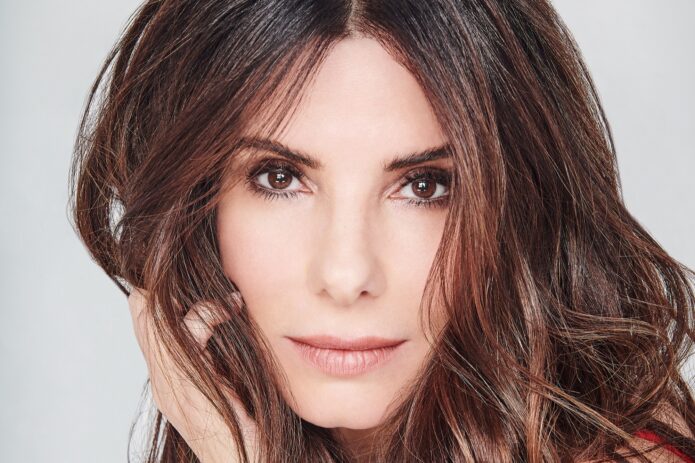
Sandra Bullock’s New Shoulder Ink Keeps Her Kids Close

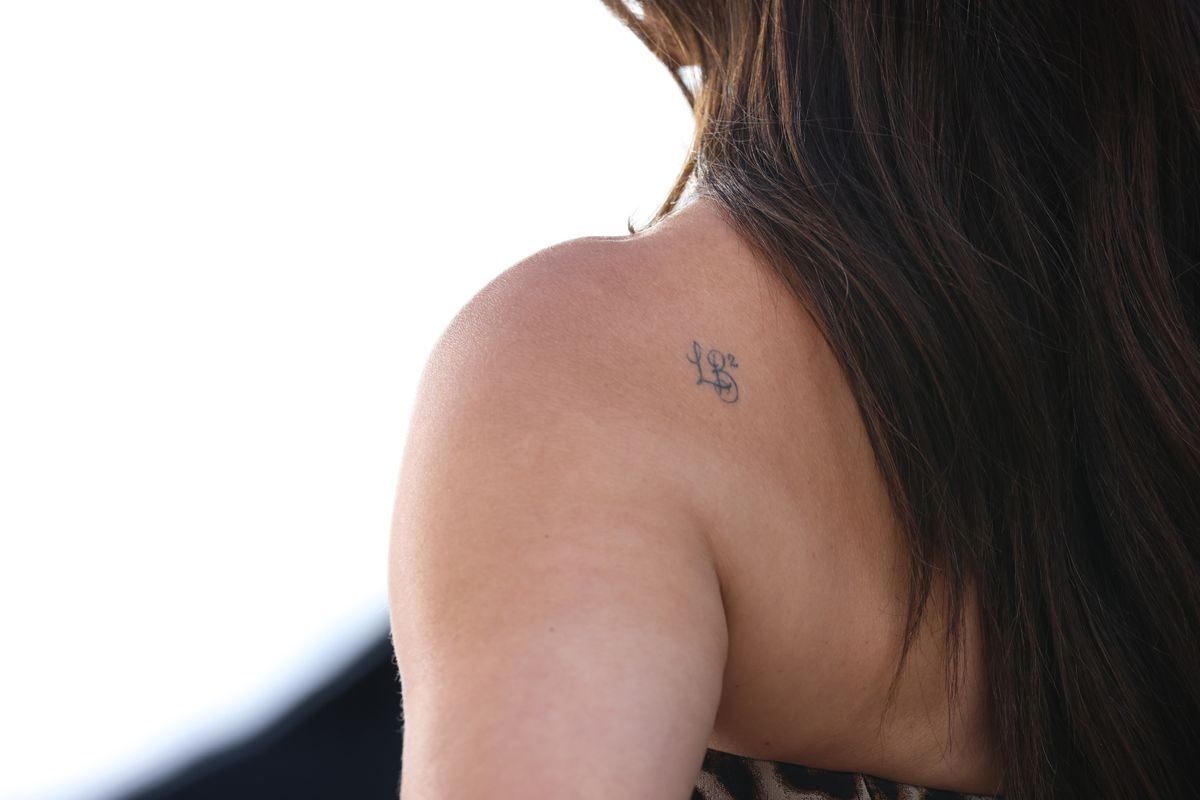
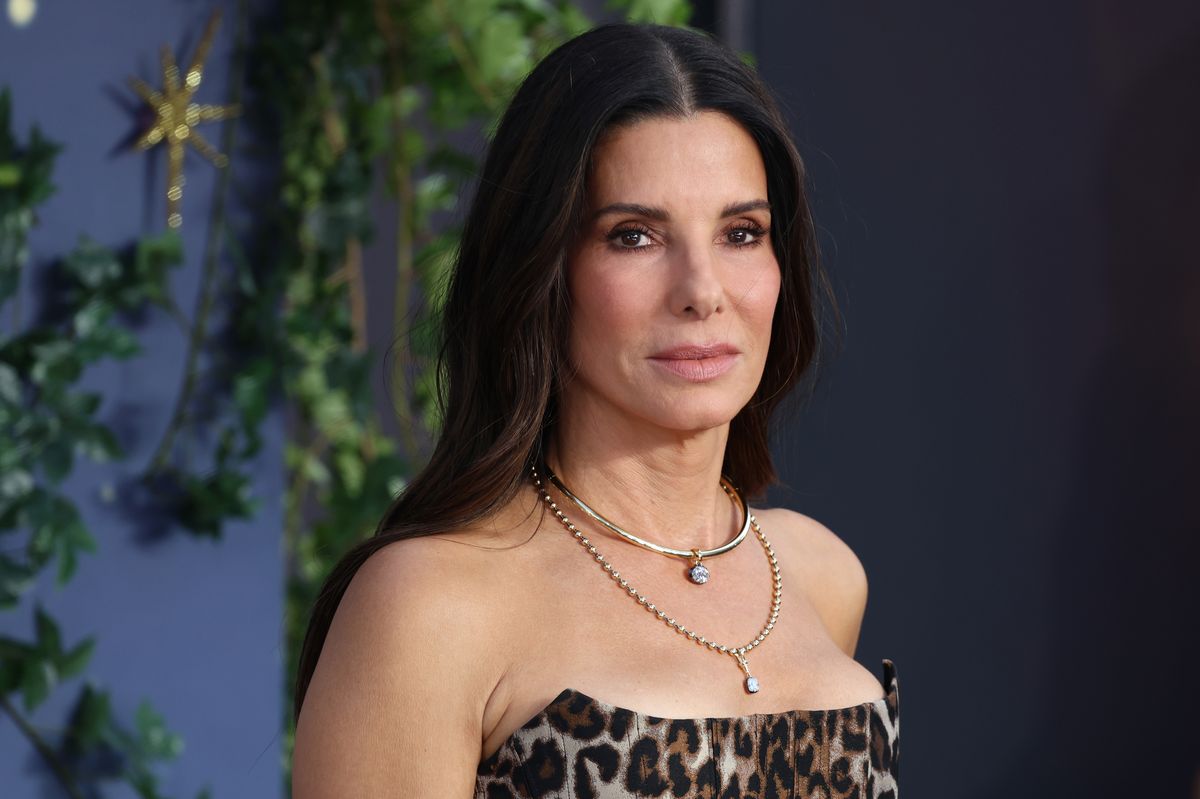
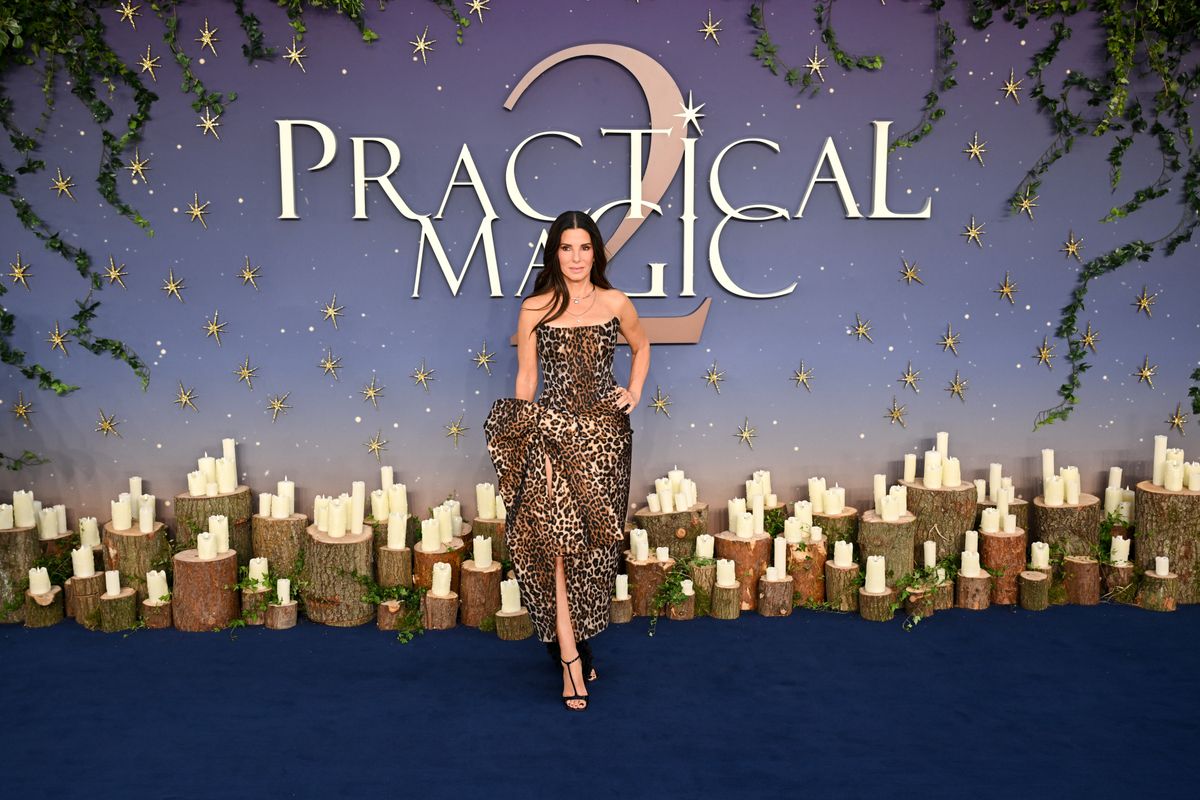
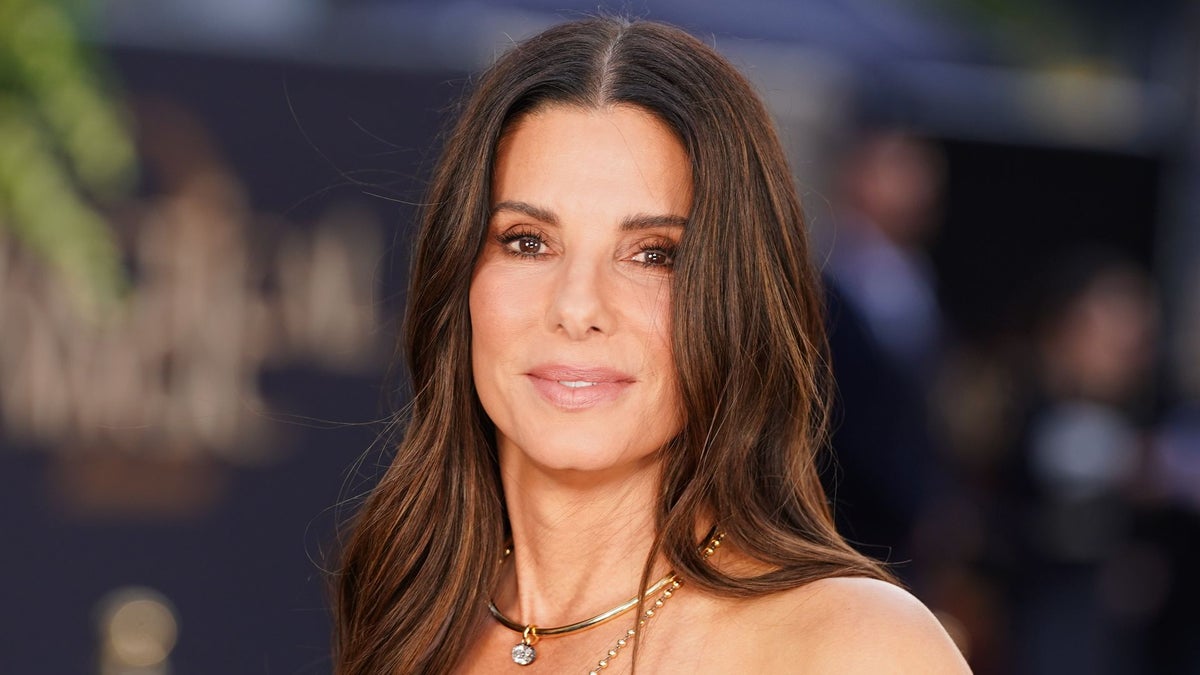
Sandra Bullock’s newest tattoo is small, but the thought behind it is unmistakably personal. She revealed the shoulder ink at the London premiere of Practical Magic 2, where her strapless dress left it in view.

The design reads LB2: “LB” points to her children, Louis and Laila, and the number marks that there are two of them. Bullock’s representative confirmed the meaning to PEOPLE, turning what first looked like a mysterious bit of lettering into a direct tribute to her kids.

The tattoo was briefly tied to another story. Some early reports suggested it also referred to Bullock’s late partner, Bryan Randall. PEOPLE later corrected that detail, and her representative confirmed the tattoo is for her children. That correction belongs in the story too; celebrity ink can collect extra meanings before the facts are clear.

Sandra Bullock’s LB2 tattoo sits on her shoulder

Sandra Bullock LB2 shoulder tattoo for her children

Sandra Bullock Practical Magic 2 premiere tattoo

Sandra Bullock LB2 shoulder tattoo premiere view

Sandra Bullock LB2 tattoo premiere wide view

Sandra Bullock LB2 tattoo premiere arrival

The tattoo sits on the back of Bullock’s shoulder, just below her hair and above the dress line. It is fine lettering rather than a large block of text. In the close-up, the L and B are clear, with a small 2 tucked into the design.

The spot gives her a choice about when the tattoo is visible. It shows with a sleeveless or strapless look, then slips beneath a shirt, coat or dress. The placement feels personal without making the ink the first thing people notice.

The lettering is compact by design. Bullock did not spell out Louis and Laila’s names or add a long message about motherhood. The initials and number carry the reference, like a private shorthand that happens to show in close-up photos.

That understated scale suits Bullock, who has not been known for a large collection of visible tattoos. One small shoulder piece adds something personal without changing the overall feel of her look.

LB2 is a tribute to Louis and Laila

Bullock’s representative described the tattoo as a tribute to her children. “LB” takes the first letters of their names, and “2” brings the two references together. Once you know that, the short code is easy to read.

Family tattoos can be very literal: names, dates or portraits. Bullock chose something quieter. LB2 keeps the message brief, allowing the design to sit on her shoulder without looking like a formal memorial or a display of lettering.

The number helps make the initials specific. Without it, “LB” could be a monogram or refer to one person. The 2 clarifies the family connection and gives the tattoo its own shape.

There is a balance here between letting people see the ink and keeping its meaning personal. A passerby might notice the letters without knowing what they stand for. The tattoo points to her children without turning their names into a public label.

Its small size fits that idea. The design does not spell out every part of Bullock’s family story. It works more like a reminder she carries with her, with enough detail for the people close to her to understand.

She showed it at the Practical Magic 2 premiere

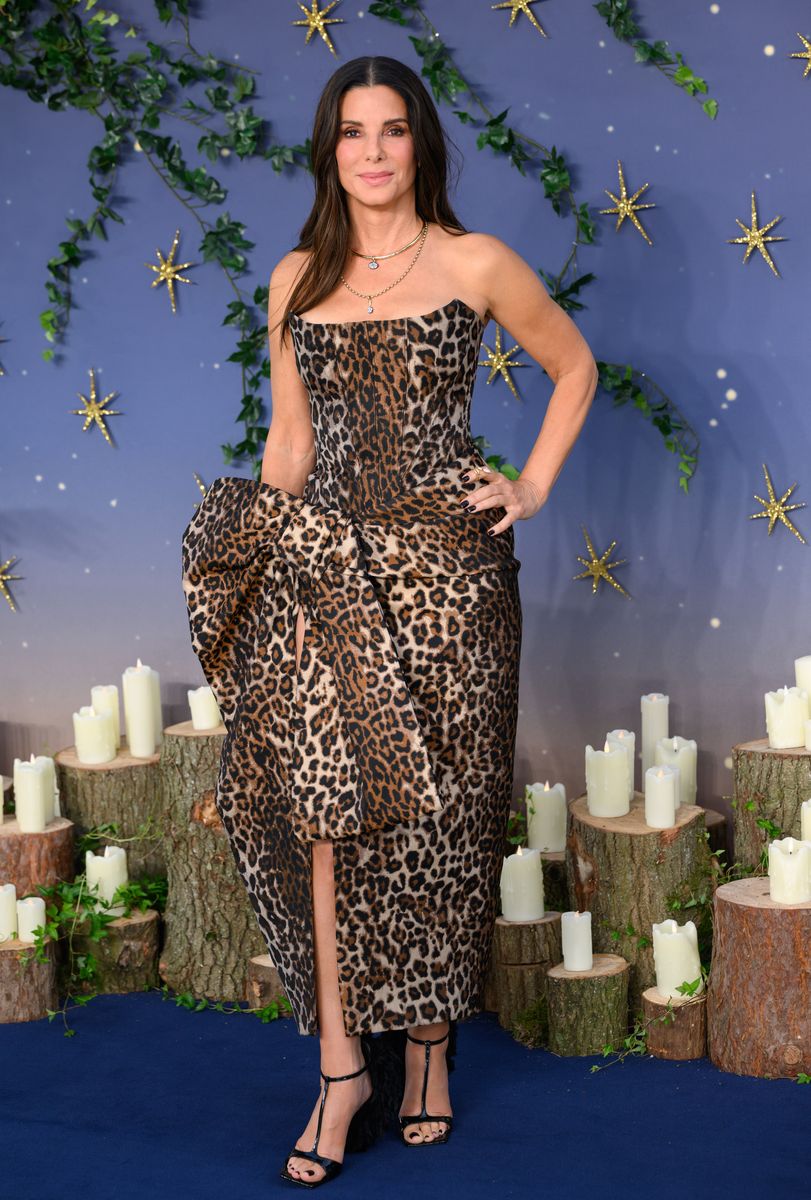
The first widely reported sighting came at the London premiere of Practical Magic 2. Bullock wore a strapless leopard-print Givenchy gown, leaving her shoulder uncovered and making the fresh tattoo easy for photographers to catch.

Premiere nights can turn a small tattoo into a much bigger conversation: there are plenty of close-ups, and every angle gets discussed. Bullock’s new ink appeared alongside interviews about parenting and the emotional themes of the film. The family meaning felt timely, even though the tattoo itself is not connected to the movie.

During the film’s promotion, Bullock also spoke about the worries that come with raising children and the limits of trying to protect them from every hard experience. In that setting, a tattoo for Louis and Laila carried more feeling than the three characters alone might suggest.

The premiere was the reveal, not necessarily the moment the tattoo was done. Bullock has not shared a specific date for the appointment, so there is no reason to guess. What is documented is the public sighting and the confirmed meaning.

That distinction keeps the account grounded. Celebrity tattoos invite speculation about when they were done, who designed them and what event inspired them. Here the solid details are straightforward: the ink was seen in London, it reads LB2, and her representative says it honours her two children.

The early confusion about Bryan Randall was corrected

Some early coverage linked the letters to Bryan Randall as well as Bullock’s children. The suggestion was understandable: Randall was an important part of her family life, and the tattoo appeared after his death. But that detail was later corrected.

PEOPLE updated its report to say an earlier version had incorrectly connected the tattoo to Bullock’s late partner. Her representative gave the clearest account of the meaning: LB2 is for Louis and Laila. That is the explanation this guide follows.

It is best to keep the confirmed meaning separate from any private associations Bullock may hold. The public explanation is about her children. Adding another tribute without confirmation would make the story more dramatic, but less accurate.

A small tattoo does not need an invented backstory. Its confirmed meaning is already personal. It reflects the importance of her children and the complicated balance of wanting to protect them while letting them grow.

Why this design fits Bullock’s style

LB2 does not look like a trend piece or a design chosen to match a particular celebrity image. It is compact lettering with a clear personal reference: easy to cover, easy to recognise once explained, and unlikely to overwhelm the rest of her appearance.

That feels natural for someone who has generally kept body art out of the spotlight. A shoulder placement gives Bullock control over when the tattoo becomes part of the conversation.

The meaning matters, but the design does not have to be large to prove it. LB2 is a quiet mark with a very specific audience: Bullock, her children and anyone who knows what those initials stand for.

Even if she never adds another tattoo, this one feels complete: it has a reason and a place that suits it. If she chooses to get more ink later, the small shoulder design can sit alongside it without taking over an entire sleeve.

Sandra Bullock’s tattoo collection remains very small in public view

Plenty of online lists claim to catalogue celebrity tattoos, but Bullock’s confirmed public record is much shorter. LB2 is the clear focus of the 2026 coverage. Older rumours about hidden ink should not be treated as fact without stronger evidence.

That limited record keeps the story focused on the tattoo that was photographed and explained. There is no need to pad the page with uncertain claims about designs Bullock has not discussed publicly.

The available images show the letters and number clearly, while a separate portrait gives a broader view of Bullock without repeating the same close-up. Together, they show the tattoo itself and how it sits as part of her look.

For now, the confirmed picture is simple: Bullock has a small shoulder tattoo reading LB2, dedicated to Louis and Laila. The initials keep the reference personal, the number makes it clear, and the placement lets her decide when it shows.

Three characters hold a lot of feeling. The tattoo needs no extra symbols or long caption; the people it refers to are already the heart of the story.

Watch Sandra Bullock explain the meaning behind the tattoo

This verified Entertainment Tonight report covers Bullock’s shoulder tattoo and the explanation that it is dedicated to her children.

More actor tattoo guides

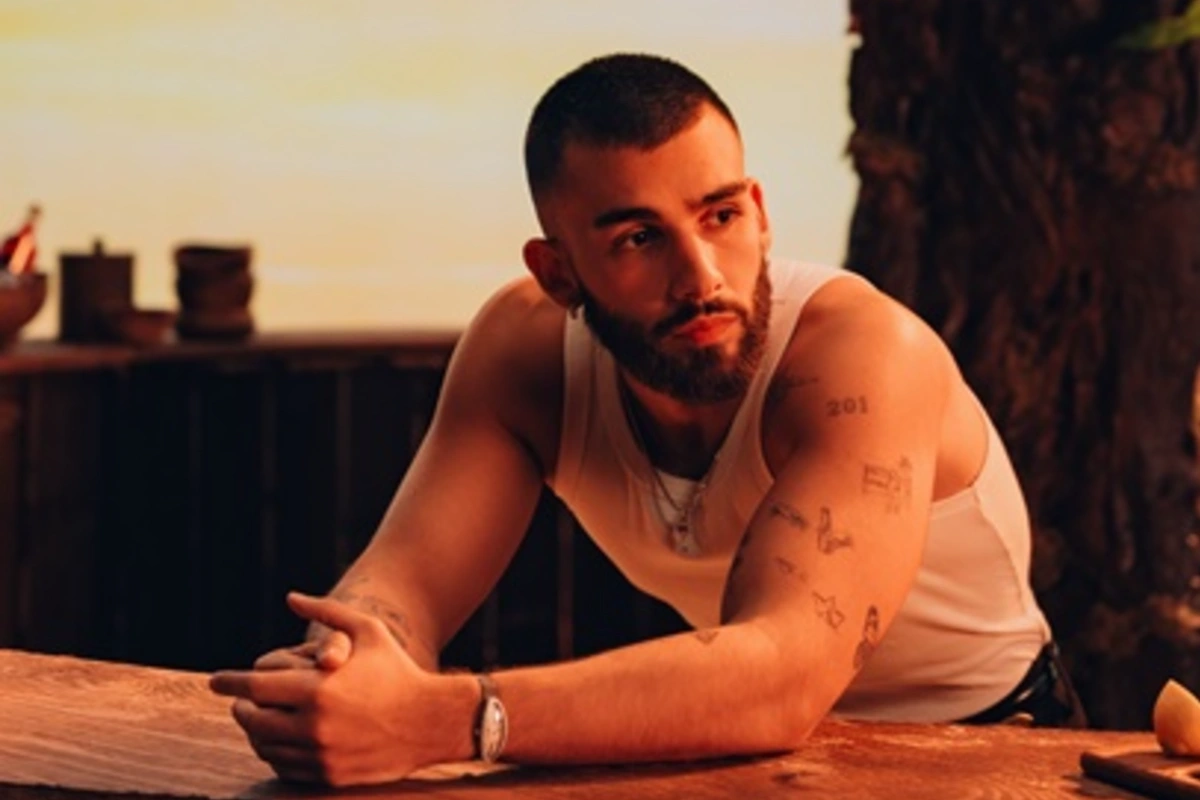
Manuel Turizo’s tattoos keep family and music close

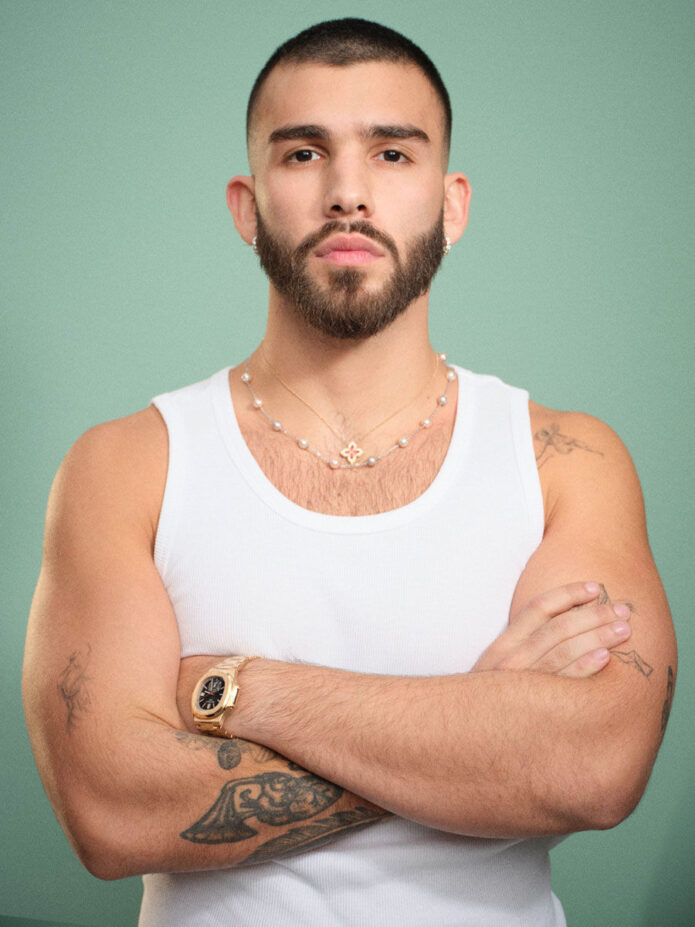
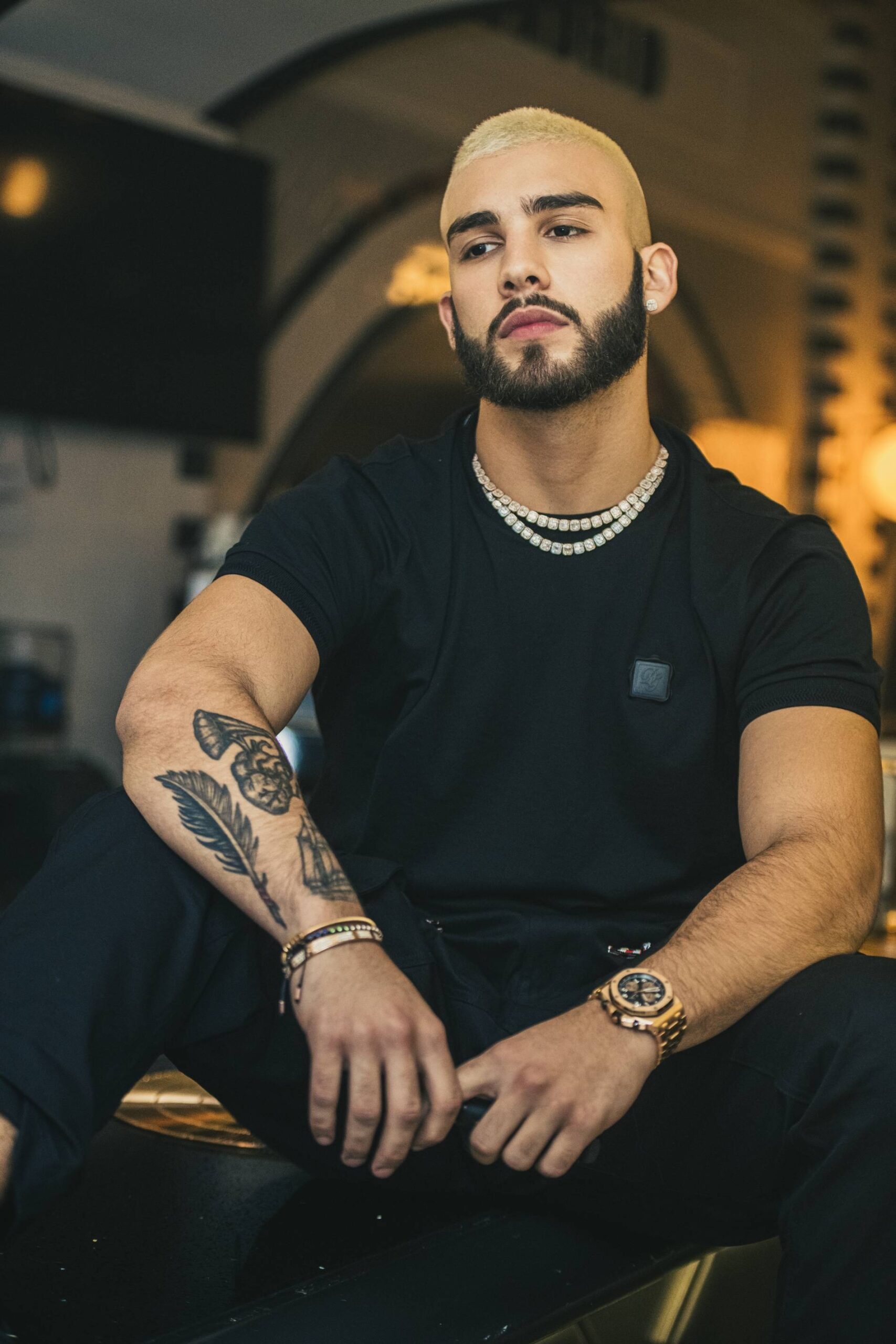
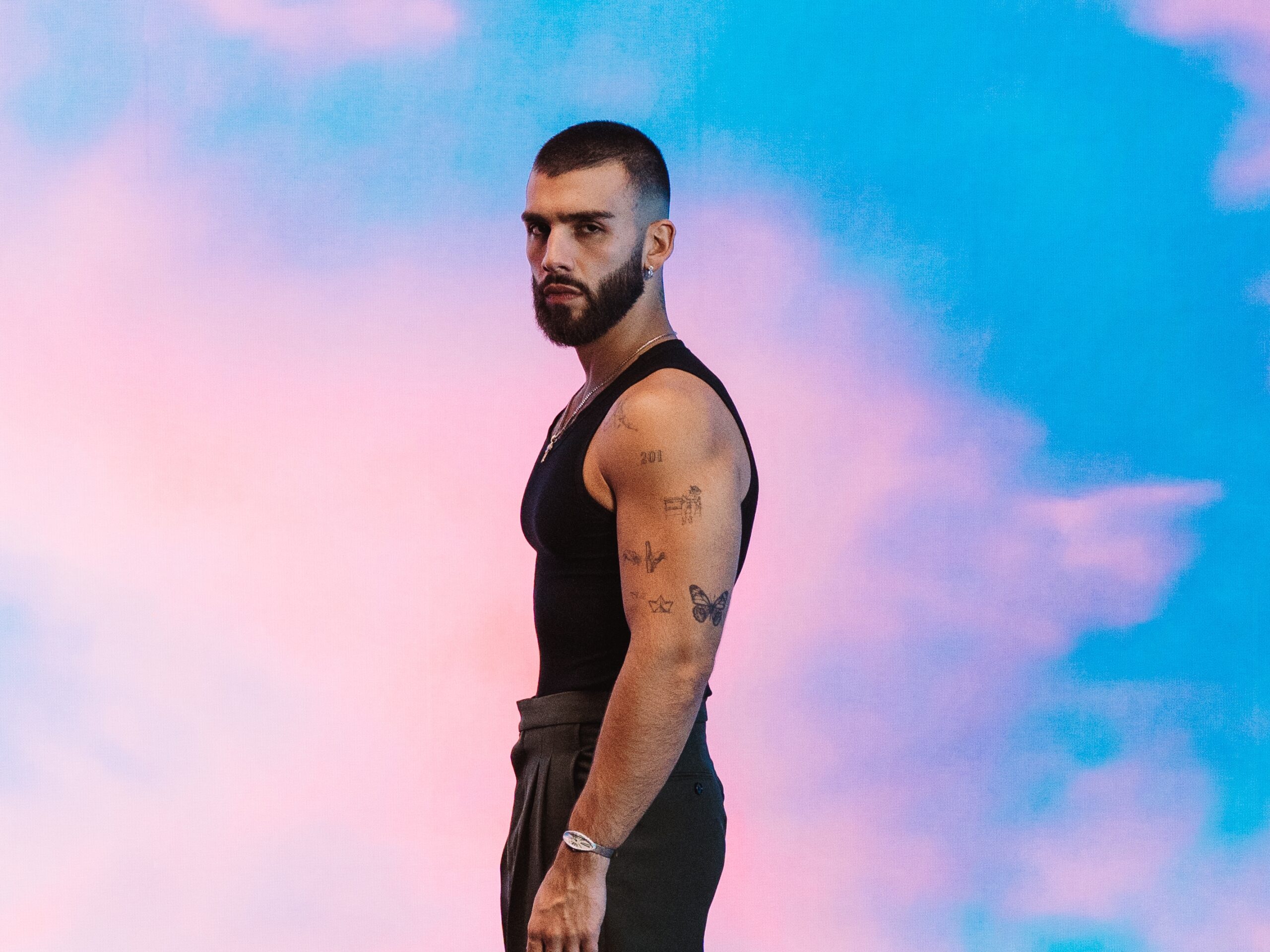
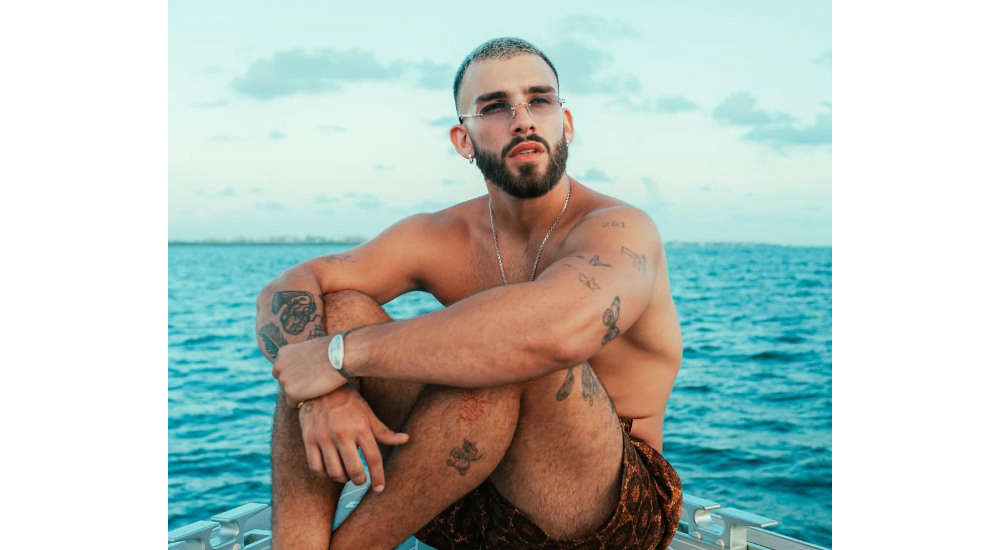
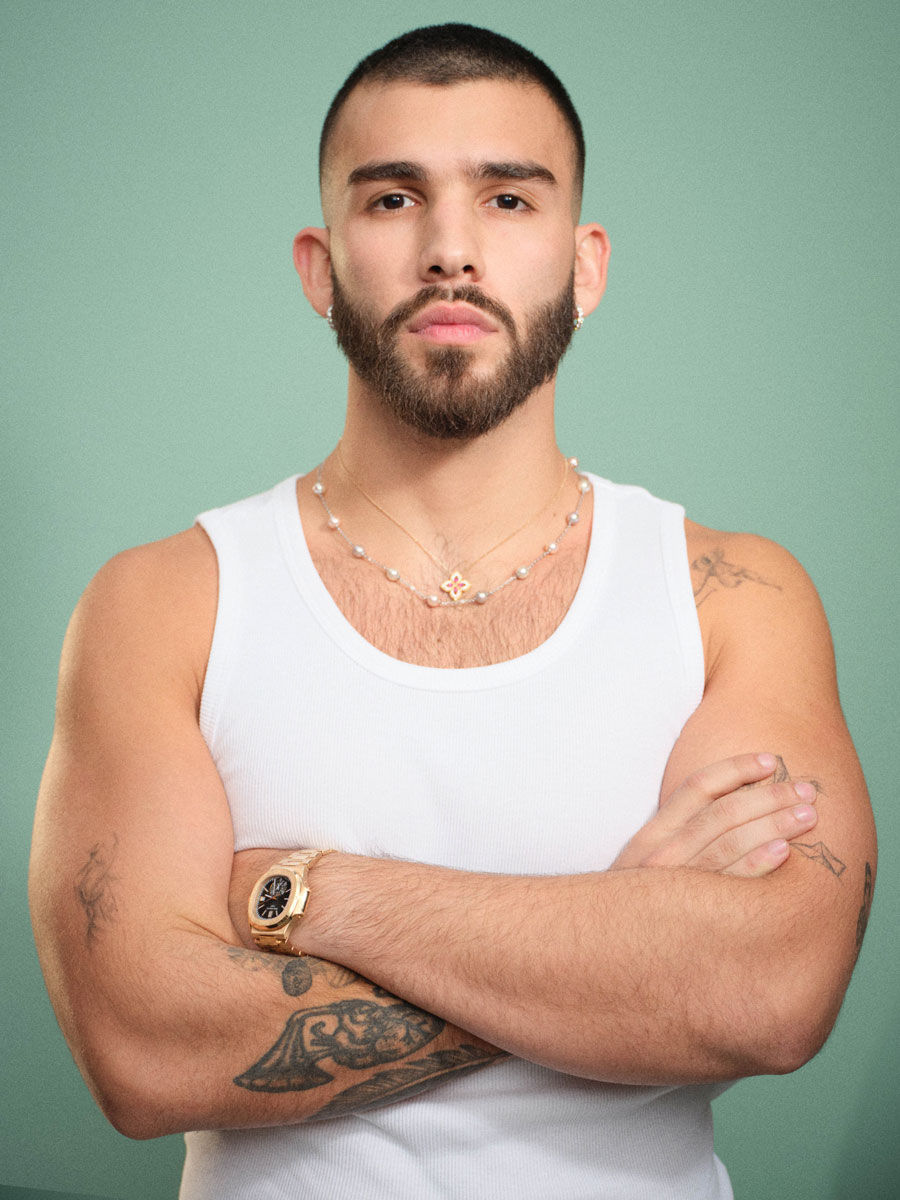
Manuel Turizo’s tattoos are easy to miss under a shirt, but open-shirt photos show a collection spread across his arms and shoulders. A butterfly, a few script pieces and smaller blackwork designs sit comfortably with the chains and sunglasses he often wears. It looks like a group of individual choices rather than one large sleeve.

Turizo has spoken about the people and craft behind some of the ink. In a SPIN interview, he pointed out a favourite piece and praised the tattoo artist. Other interviews have mentioned a tattoo he shares with his brother, and Spanish television has covered the way he thinks about his designs. The details that are visible are only part of the story; the rest is best left to what he has actually said.

The butterfly and script pieces keep the arms personal

Manuel Turizo feather arm tattoo portrait

The butterfly is one of the clearest designs in photos of Turizo. It sits among smaller script and blackwork, giving the arm a recognisable focal point without turning the whole area into a solid sleeve. He has singled out one of his arm tattoos as a favourite and praised the artist’s work, suggesting that the execution matters to him as much as the image.

The placement lets the ink show without taking over. The pieces appear when his sleeves are rolled or his shirt is open, then fade back into the look when he is fully dressed. They come into focus in the unguarded moments when the camera gets close. Unless Turizo has explained a design, it is better to describe what the photos show than to invent a meaning for it.

Open-shirt photos show how the tattoos sit together

Manuel Turizo upper arm tattoos in an open-shirt portrait

In seaside and boat photos, the spacing between the tattoos is easier to see. The pieces are spread along his arms rather than packed together, with open skin between them. That gives the collection a sense of having grown over time. The relaxed setting suits the designs: they feel personal and easygoing, not staged to make a statement.

Those open spaces are part of the look. Each small mark gets room, so even a casual photo can show the details without making the tattoos dominate the frame. When Turizo is moving naturally, the pieces read as part of his style rather than a separate display.

A shared family tattoo adds another layer

Manuel Turizo tattoos in an open-shirt seaside portrait

Manuel Turizo crossed arm tattoos portrait

Interviews have also mentioned a tattoo that Turizo shares with his brother. A matching piece does not need to be large to matter; the connection is the point. That family detail gives the collection another dimension beyond its visual style. Some tattoos are there because he likes the design, while others carry a relationship he wants to keep close.

The family story changes how you read the collection. A small mark can hold a private connection, and that reported link is more useful than guessing at symbolism he has not explained. The account identifies the family meaning; the photographs show how discreetly the tattoos sit.

Why the collection feels relaxed rather than staged

Manuel Turizo arm tattoos in a sunset portrait

Turizo’s tattoos suit the easy shift in his public style. He can look polished on a red carpet, then appear in a coastal photo with his arms bare and the ink in view. The pieces are visible without being confrontational; they sit naturally alongside his jewellery and clothes.

The butterfly gives the collection a clear image, while script and smaller blackwork add texture. The family tattoo brings a personal connection into the picture, and Turizo’s praise for his artist points to the care behind the work. What links the confirmed details is connection: family, music and the people who help bring an idea to life.

Photos can only show so much. Clothing may hide a tattoo, light can flatten a small design and a low-resolution post can blur its details. This guide stays with pieces that appear clearly in the images or have been discussed in interviews. More ink may exist, but there is no need to add uncertain guesses to the list.

For now, the collection still feels in progress. The designs vary, but the open spaces keep them from looking random. Turizo’s tattoos are a record of the people and moments he chooses to carry with him, rather than a finished uniform. That relaxed quality is part of their appeal.

Taken together, the tattoos tell familiar human stories about family, personal taste and finding an image that feels right. They are stylish, but they do not need to stand for a grand theory. The smaller details are interesting enough on their own.

Watch Manuel Turizo talk about tattoos and his life

This interview is the most relevant available video for the article. It is not a formal tattoo tour, but Turizo talks about his life and work, and Spanish coverage has also discussed his thoughts about getting more tattoos. The clip adds context without presenting it as a tattoo-specific episode.

More musician tattoo guides

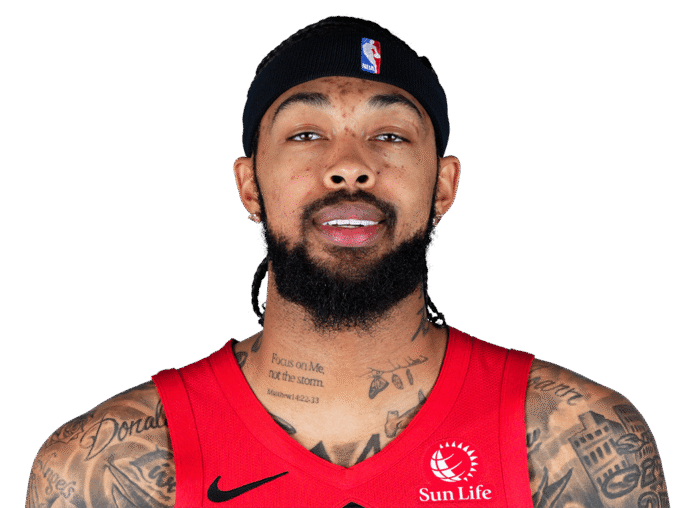
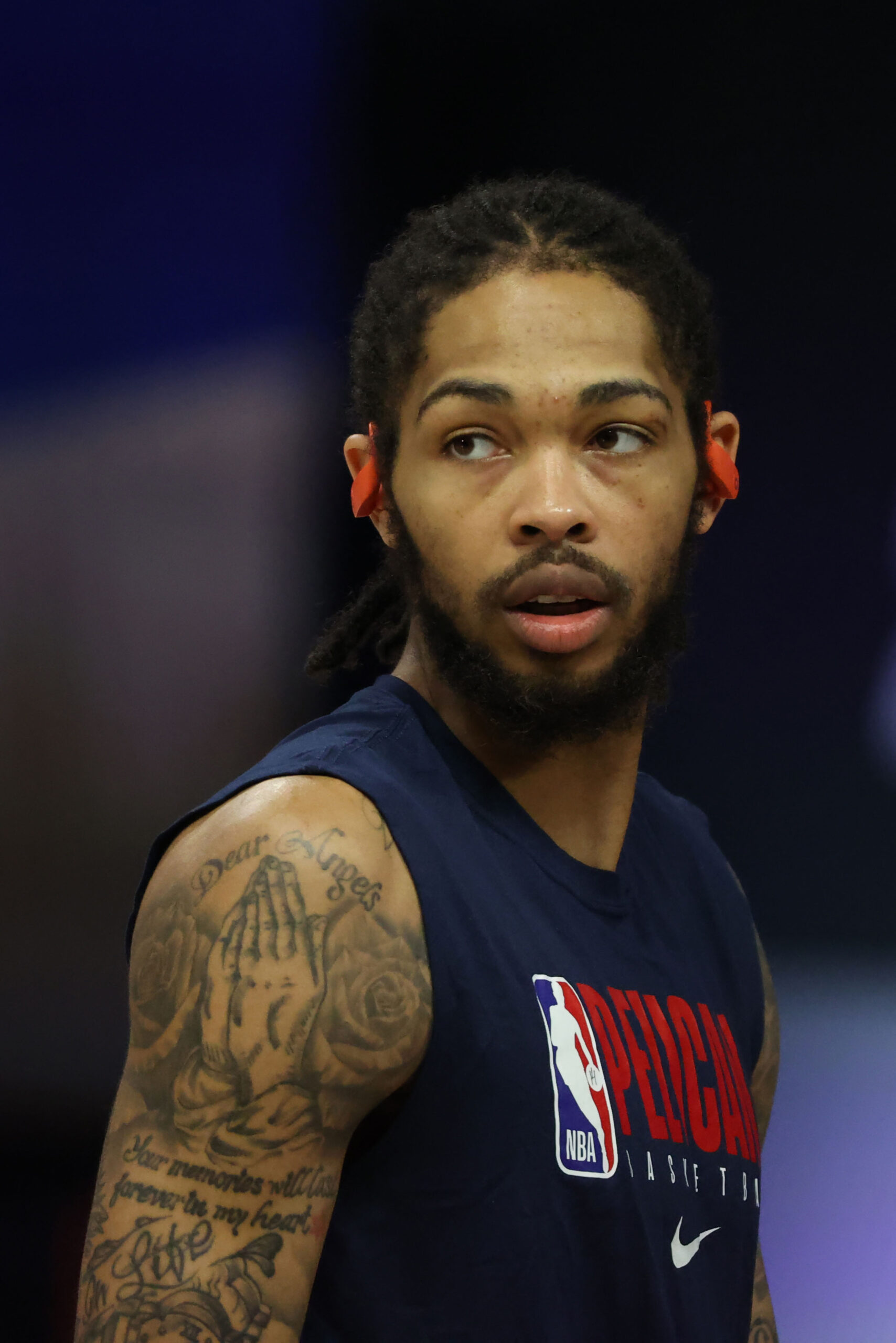
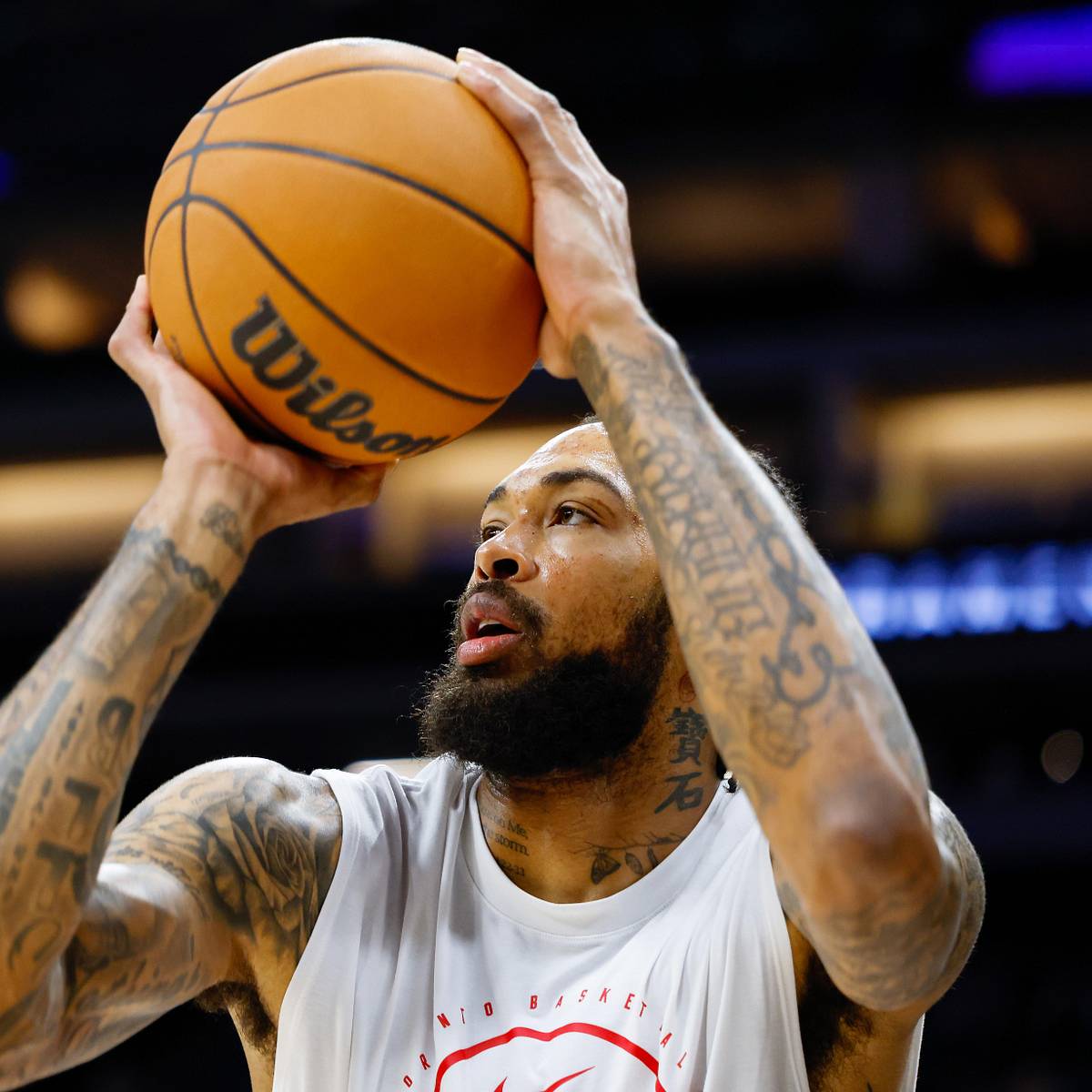
Brandon Ingram’s tattoos keep family close

Brandon Ingram’s tattoos have grown into a kind of visual diary. He started getting ink at about 15, and his arms and chest now hold family tributes, scripture and phrases he returns to. The designs stretch from his shoulders to his wrists, though not every piece has a public explanation.

The thread that comes through most clearly is home. Ingram has talked about growing up in Kinston, North Carolina, the work his parents put in and the relatives who helped raise him. The tattoos keep those people and the mindset of his early years close, even as his career took him from a small-town gym to the NBA. Some pieces are easy to read; others only come into focus in a close photo.

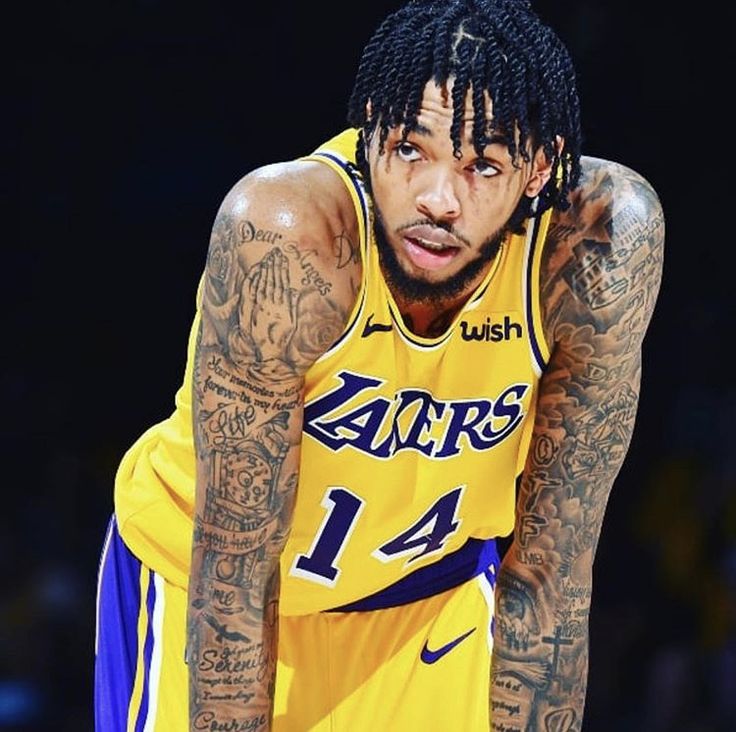
Family, honor and loyalty sit at the center of the collection

Brandon Ingram tattooed arms in a Lakers game portrait

The star-shaped Family, Love, Honor and Loyalty tattoo on Ingram’s upper arm is one of his most recognisable pieces. Its words frame a central design, giving it the look of a badge rather than a plain line of script. The image is decorative, but its message points to the family theme that runs through the rest of his collection.

Ingram has said some of his arm tattoos honour people who were important while he was growing up. He was especially close to his great-aunt Leatha Smith, who helped raise him while his parents worked long hours. That history gives the family lettering a personal context: it recalls the people who were there before basketball carried him to the NBA.

His chest carries a message about time and faith

Brandon Ingram tattooed shoulder and arm in a basketball portrait

Across Ingram’s chest, “Live for Today, Pray for Tomorrow” sits alongside a winged Celtic cross. The phrase is readable in shirtless photos, and the cross fills out the surrounding space with a more traditional religious image.

The Celtic cross has been described as a tribute to family members who have died. Ingram likes the artwork, but the people and memories attached to certain tattoos matter too. Chest placement keeps the words close, even when his jersey covers them during a game.

A large numeral 4 appears among the chest designs. It shows up in tattoo inventories and close-up photos, though not every smaller mark has a clear public explanation. It helps to keep what can be read separate from what Ingram has actually said about the meaning.

The names Donald and Joann are tattooed on his shoulders for his parents. These are among the most direct pieces in the collection: the names themselves say who they honour, without needing an elaborate interpretation.

Their work ethic is a big part of Ingram’s story. His father worked at a forklift plant, helped run a gym and refereed basketball; his mother worked in pharmacy services. Ingram has recalled seeing his dad put in very long days and still show up for him. The shoulder tattoos keep those two people close and recognise the foundation they gave him before anyone knew where basketball would lead.

The rose and “Promised” ink cover his left wrist and forearm

Brandon Ingram arm tattoos while shooting

A detailed rose on Ingram’s left wrist is easy to pick out in a close-up. It sits within a broader stretch of arm work, with lettering and shading continuing up the forearm. The word “Promised” is visible in the same area, adding text alongside the floral design.

Roses often appear in family or memorial tattoos, but Ingram has not assigned one meaning to every rose on his body. The design is clear in the photos; the private reason behind each detail is not. What can be said is that it sits among the words and images that give this section of his arm its layered look.

On his right shoulder, a prayer-hands tattoo honours his grandmother Ida Mae and great-aunt Leatha Smith. Ingram drew the design himself as a blueprint, making the piece personal both for the family it remembers and for the image he helped shape. It turns that family history into a picture instead of another line of script.

That creative detail fits with Ingram’s background in art. At Duke, he studied art and spent time drawing basketball scenes, shoes and people around him. He has said sketching comes naturally to him, so creating the outline for his own prayer tattoo feels like a natural extension of that habit. It is not only a finished design; it also reflects how he turns memories into images.

“Nothing’s Promised” is one of his clearest arm phrases

Brandon Ingram focus scripture neck tattoo portrait

One of Ingram’s best-known phrases is “Nothing’s Promised.” The words on his arm fit the grounded tone of the family tattoos. They sound less like a boast than a reminder that circumstances can change quickly.

Another line carries a similar thought: “The fear of suffering is far worse than suffering itself.” Ingram has explained that it helps him worry less about what might happen and keep going through difficult stretches. The words are more than decoration; they give him something to come back to.

His motivational tattoos feel like reminders for himself, not lines chosen for the cameras.

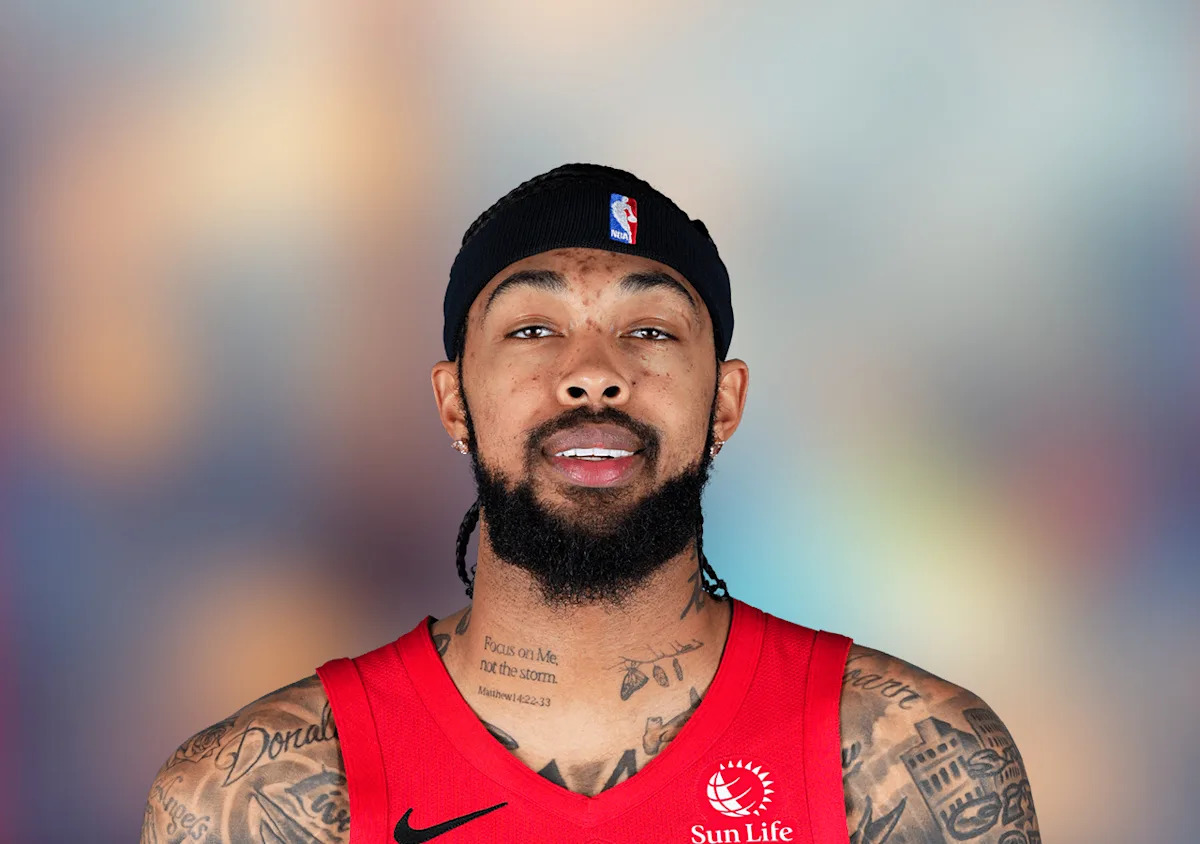
More recent photos show script on Ingram’s neck, including “focus on me, not the storm.” The phrase was reported during a period when he was reassessing his career and concentrating on what he could control. Its placement makes it more visible than the older pieces on his chest and shoulders.

The neck script fits the rest of his collection: practical, direct and personal. A warm-up top can cover it, but the words remain close to his face. It is a reminder to stay steady when the circumstances around him feel unsettled, rather than a reference to a team, season or statistic.

His forearms are packed with smaller designs

Brandon Ingram tattooed arms during warmup

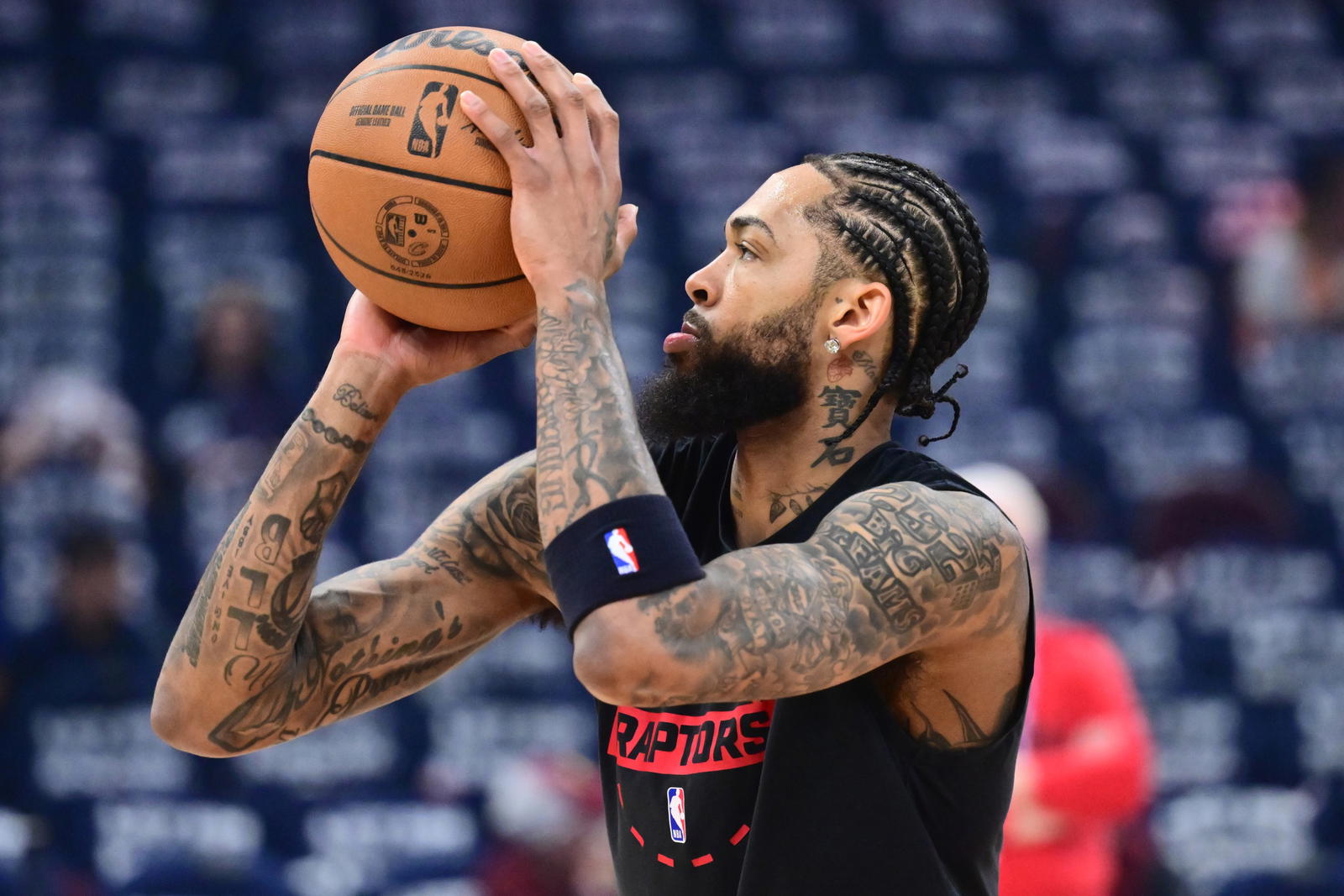
Ingram’s forearms are where the tattoos start to feel like an archive. The area holds script, small symbols, shaded figures and details that are hard to identify unless a photo is sharp. A visible “Believe” sits among the designs, along with pieces catalogued by Body Art Guru and older basketball profiles.

The variety is part of what makes the arms interesting. Bold lettering gives way to a rose, then a portrait or a small emblem. The designs do not look as if they were all planned to match; they read as pieces added over time wherever there was room.

Other documented designs include a portrait tattoo, a heart with a letter, a crown behind the ear, a Jesus figure, barbed wire and words such as “Strong” and “Survive.” Some are easier to make out in dedicated photos than in a game image, where motion, sweat and sleeves obscure the details.

The often-repeated total of 46 tattoos is best understood as an inventory from a particular moment, not a permanent count. Ingram has continued to add ink, and designs can overlap, fade or be covered. The broader pattern is clearer than an exact number: phrases about resilience, images tied to family and enough small pieces to make the arms feel like a collection still growing.

The tattoos are varied, but the themes connect. Family names sit alongside words about faith and endurance. The prayer hands recall the women who helped raise him; the chest carries memorial imagery, while the arm script points back to his parents and hometown. The ink follows his history, not just the lines of a basketball uniform.

Ingram started young, but the size of his collection is not the point by itself. The designs accumulated as he found people, memories and ideas he wanted to keep. “Forty-six tattoos” sounds like a statistic; the names and phrases show the life inside that number.

He has not explained every mark, and the confirmed pieces already tell plenty. They point to family, faith, work and the determination that brought him from Kinston to the league. Once you know what to look for, the tattoos are hard to miss.

Watch Brandon Ingram talk about basketball and family

More athlete tattoo guides

Dakota Johnson Tattoos: Birds, Amor, Foot Ink and More

Dakota Johnson’s tattoos tend to appear in glimpses: an open-back dress, a raised arm or bare feet in a close-up photo. There is fine script, three birds on her upper back, a few tiny symbols, a flower and several small pieces on her feet. Together, they have become part of her red-carpet look.

Johnson has said she has around 11 or 12 tattoos, though older guides have counted more depending on how they group the smallest designs. The collection stays low-key, but it touches on family, love, books and art. Here is what the clearest photos and interviews reveal.

Acta Non Verba was her first big piece

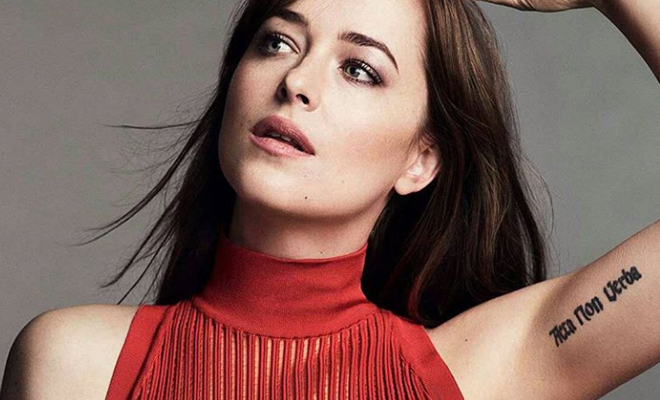
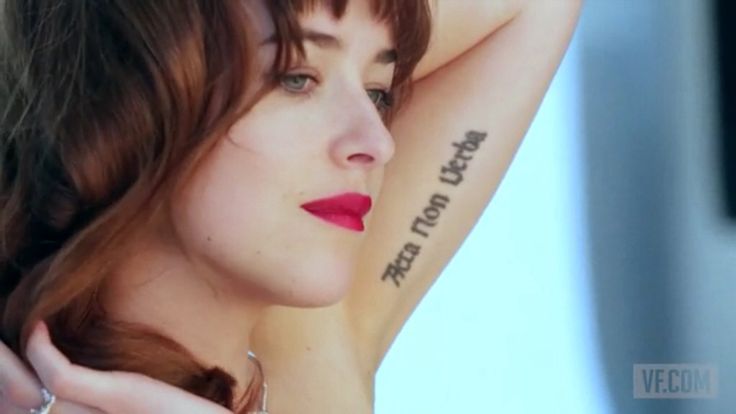
One of Johnson’s most recognisable tattoos is the “Acta Non Verba” lettering on her left inner bicep. The Latin phrase means “deeds, not words.” She has said it was her first tattoo and that the words mattered to her father, Don Johnson. It is a bold choice for a first piece, and much easier to spot than most of her smaller ink.

There is a little regret in the story too. Johnson has since admitted she is not entirely happy with the tattoo, partly because it is so visible and partly because the lettering has not aged exactly as she hoped. That does not erase its meaning. It just gives the piece a recognisably Dakota mix of polish and imperfection.

The placement suits the way she wears her tattoos. A sleeve can hide it, then a raised arm brings it into view. That quiet reveal runs through much of her collection; the designs can stay private until she chooses to show them.

Dakota Johnson Acta Non Verba tattoo on her inner arm

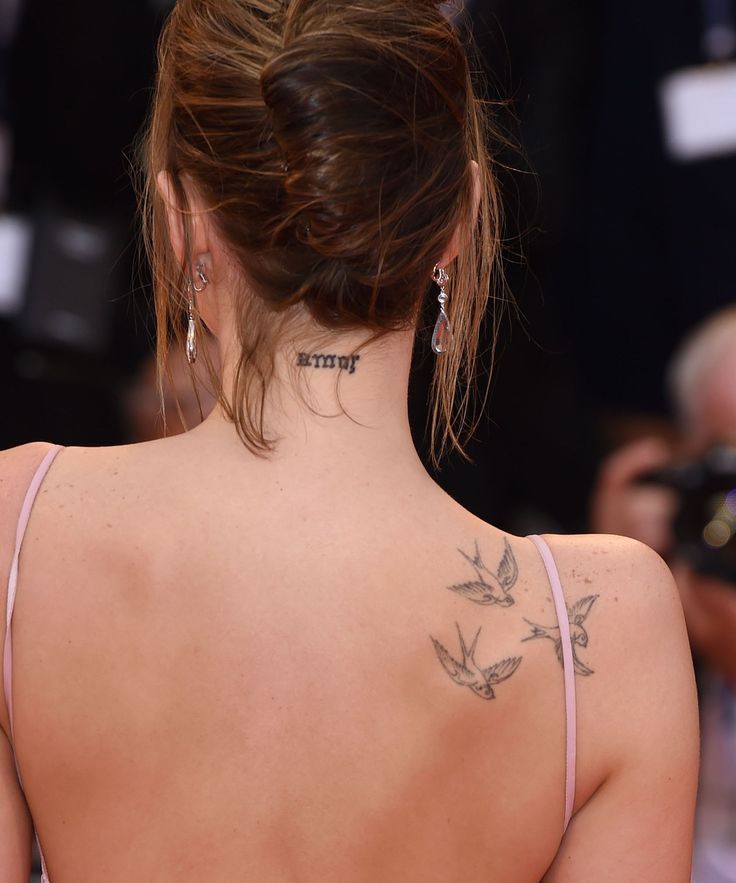
The three birds on her back are her most recognizable design

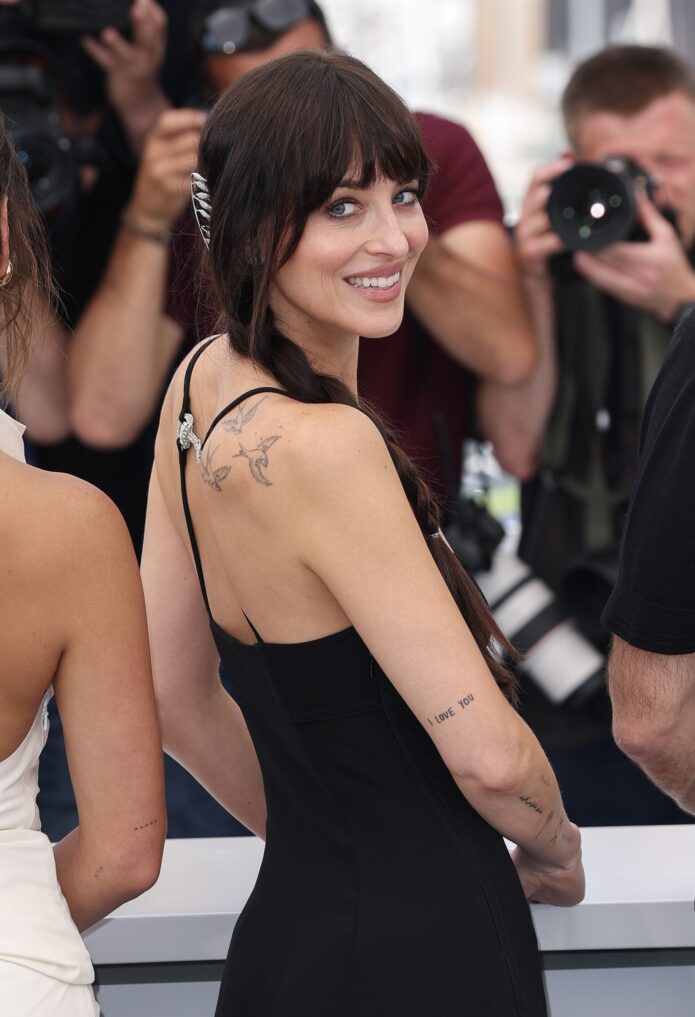
The three small birds near Johnson’s shoulder blade are probably the tattoos fans spot first. They look like swallows in flight, drawn in fine lines rather than heavy shading. The simple shapes work especially well with open-back dresses and thin straps. From across a room, they read as a light decorative detail; up close, each bird has its own outline.

The design is often linked to Johnson’s grandmother Tippi Hedren, who starred in Alfred Hitchcock’s The Birds. That connection is widely reported, though Johnson has not offered a long explanation every time the tattoo appears. The family link makes sense, and the placement lets photographers catch the birds without making them take over the look.

The birds capture a favourite mood in Johnson’s collection: personal without being loud. Hair or clothing can cover them, while a backless gown makes the fine-line work the detail people notice.

Dakota Johnson three bird tattoos on her upper back

Her foot carries two tiny pieces, including Look at the Moon

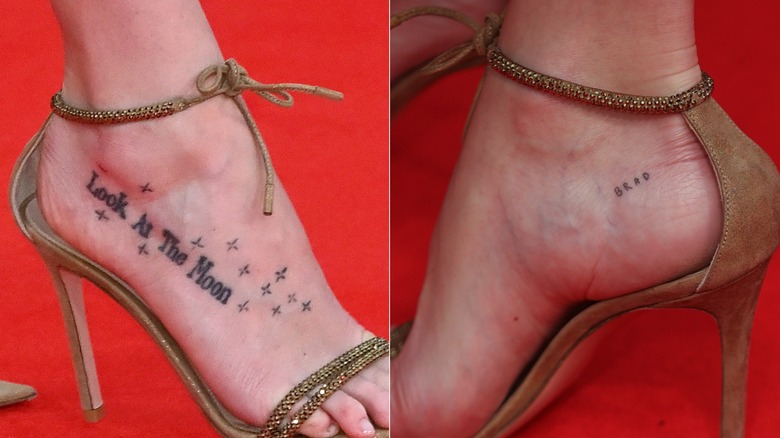
Johnson’s feet hold two of her most playful tattoos. The best known is “Look at the Moon”, written across the top of her right foot with little stars around it. It appears only when shoes and camera angle allow, which is why red-carpet photos seem to rediscover it every so often.

Near her heel is a tiny Brad tattoo. The letters show clearly in close-ups, but Johnson has not confirmed the reason behind the name. There is no need to fill in that gap; not every tattoo comes with a public explanation, and she seems content to leave some details private.

“Look at the Moon” feels dreamy, while “Brad” is spare and direct. Putting them on her feet gives the collection a playful note, and both can stay hidden when she wants a clean look for a role or event.

Dakota Johnson Look at the Moon and Brad foot tattoos

Amor matches the tattoo her mother has

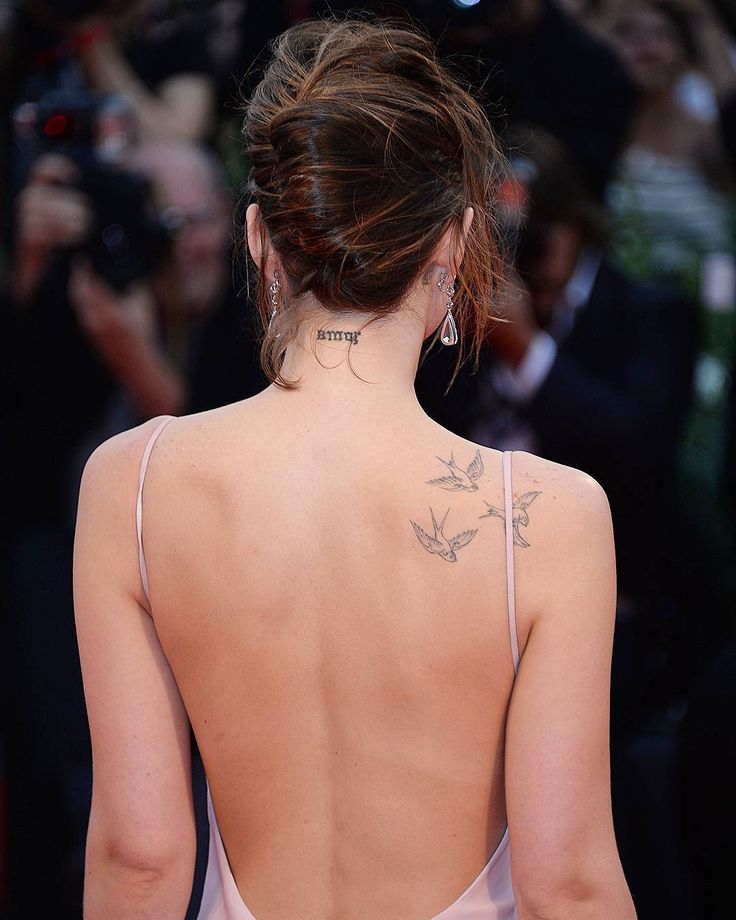
Johnson has “amor”, the Spanish word for “love,” inked at the back of her neck. It matches a tattoo worn by her mother, Melanie Griffith, making this one of the clearest family connections in her collection. The short word is easy to read and sits at the nape.

The tattoo changes with her hairstyle. With her hair down, it can disappear; an updo puts it in clear view. The three birds sit nearby, so the two designs often appear together in photos, creating a small family-themed group without crowding her back.

While some of Johnson’s other script feels like a private note, “amor” is warm and direct. The lowercase lettering fits the fine-line style that runs through her arms, feet and shoulders.

The placement helps the small design stand out. The nape gives it a natural frame: hair can conceal it for a role or daytime appearance, while an updo gives photographers a glimpse.

Dakota Johnson amor neck tattoo and bird tattoos

Her imperfect flower tattoo was inspired by Egon Schiele

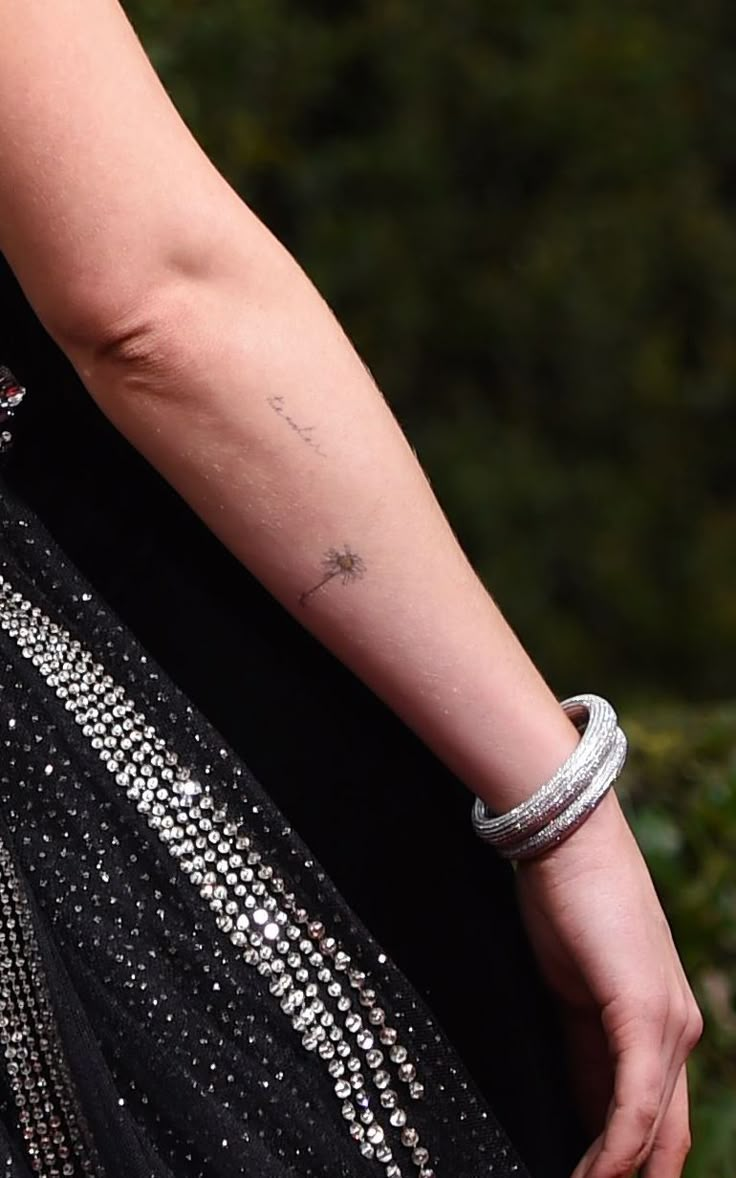
Johnson also has a delicate flower on her forearm. Tattoo artist Dr. Woo has said the design took inspiration from Austrian artist Egon Schiele. It is not a rounded, picture-perfect bloom; the slightly bent shape is why it is often called a withering flower.

That rough edge is part of the appeal. The lines feel fragile and almost sketchbook-like, rather than like a generic pretty flower. Johnson’s tattoos often sit between elegant and a little unusual, and this one looks simple at first, then more thoughtful once you notice its deliberate imperfection.

The forearm gives the flower enough room to breathe. It can stand alone instead of disappearing into a busy sleeve, and in close-up it looks more like a small art reference than standard flash.

Dakota Johnson delicate flower and forearm tattoo

Non mi uccida and other small script tattoos keep things personal

Another phrase associated with Johnson’s ink is “Non mi uccida,” Italian for roughly “do not kill me.” The small script on her arm has appeared in older photos and a Vanity Fair shoot. Like “Acta Non Verba,” it adds a hint of literary drama, but its size keeps it from feeling like a slogan.

Photos have also shown an infinity symbol and an “I love you” tattoo on her arm. The infinity design has been associated with Chris Martin, though the story behind every small mark is not confirmed. It is safest to record what has been seen without inventing the missing details.

That privacy is part of the collection’s appeal. Johnson does not explain every tattoo, and a new close-up can still reveal a small design. The pieces feel like notes from different chapters rather than one large project with a formal beginning and end.

Dakota Johnson Non mi uccida script tattoo on her arm

Watch Dakota talk about her tattoo regrets

Johnson has talked about her tattoos in interviews, including a late-night conversation where she joked about regretting some of them. It is a useful reminder that celebrity ink does not always need a perfectly meaningful story. Sometimes the choice was quick, the lettering aged differently than expected or the person simply changed their mind.

Taken together, Johnson’s tattoos are understated without being dull. The birds, “amor,” “Acta Non Verba,” foot phrases and imperfect flower all have different moods. Some point to family, some to love and art, and a few remain private. She does not seem to be trying to prove anything with her ink; she keeps a handful of ideas she likes and lets them show when they show.

More actor tattoo guides

Millie Bobby Brown Tattoos: 011, Ruth, Roses and More

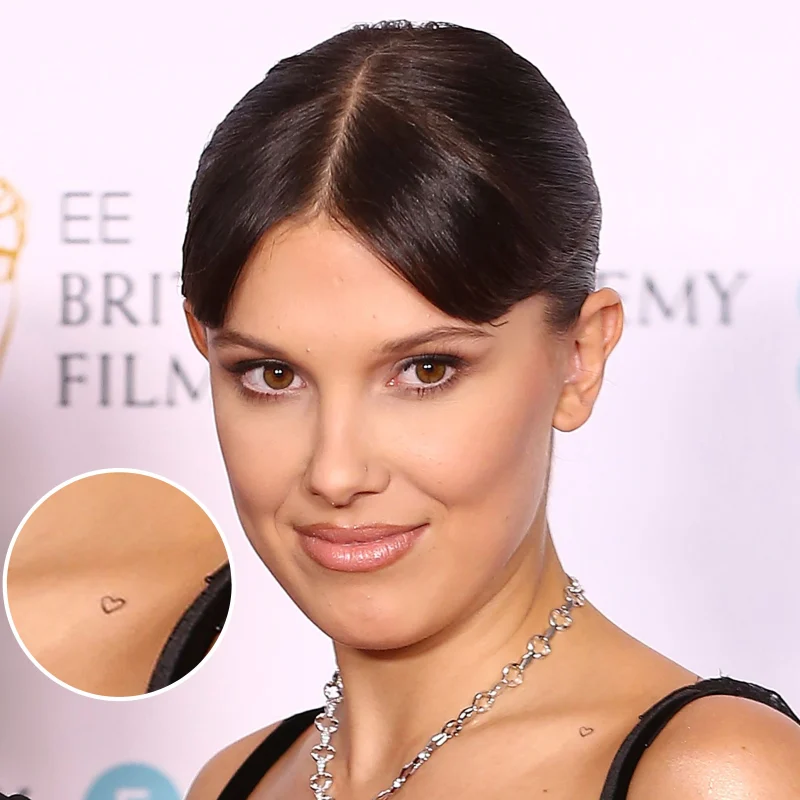
Millie Bobby Brown’s tattoos are small and easy to miss until a close-up or a red-carpet look brings them into view. There is the 011 number from Stranger Things, a tribute to her grandmother Ruth, a tiny heart, a rose and other delicate pieces on her back and ribs.

The collection is not a full sleeve, but each design has its own place. Some connect to family, others to the character who made Brown famous, and a few are simply little drawings she likes. Here is what the clearest photos and interviews show about the tattoos fans tend to notice first.

Brown’s tattoos also show how a public image can change. When she first appeared on Stranger Things, viewers knew her through Eleven’s shaved head, hospital gown and temporary makeup. Brown’s real tattoos belong to her, not the character. As her own style has grown, the ink offers another small distinction, even when one design points straight back to the role.

The rose tattoo is one of Millie’s prettiest pieces

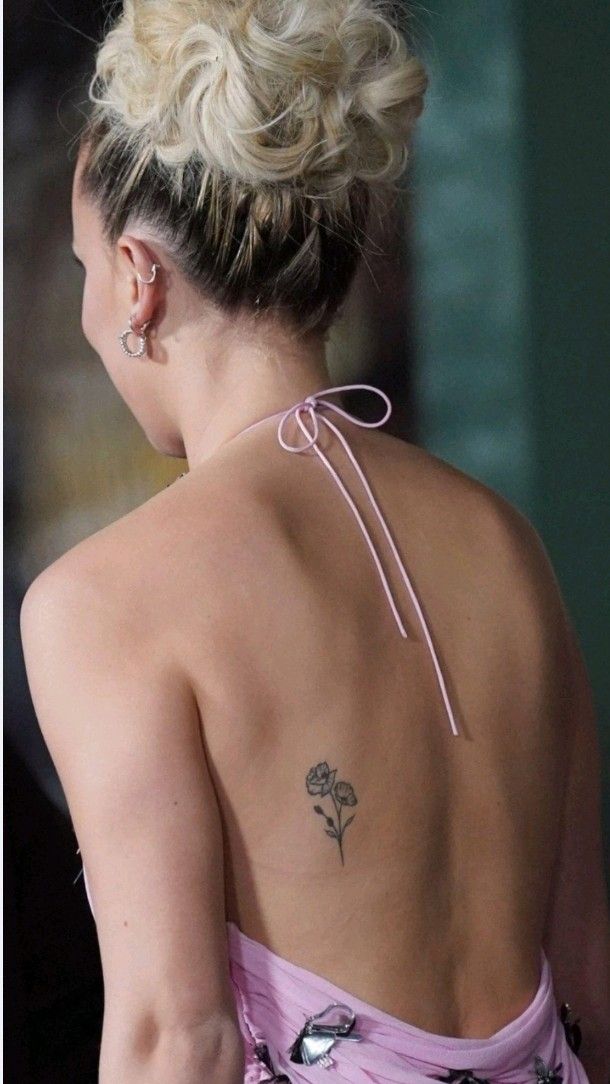
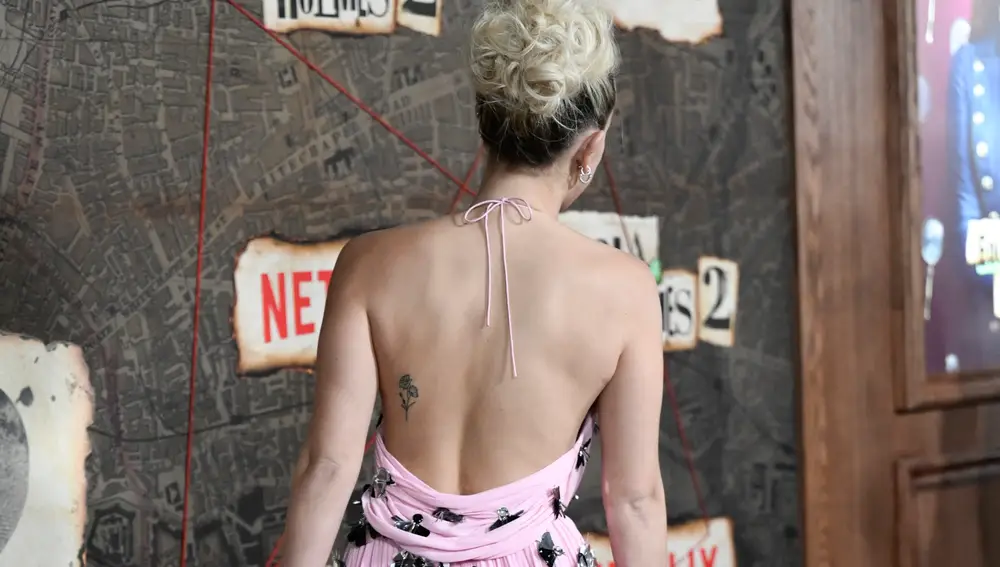
One of Brown’s most visible designs is a small rose tattoo toward the back of her body. It is drawn with light lines rather than heavy traditional shading, almost like a little sketch. The simple style fits the rest of her collection and is easy to cover when a role calls for it.

The rose tends to show up in open-back or low-back dresses. Under a T-shirt it can disappear, then become the detail people remember when an outfit reveals it. That hide-and-show quality runs through Brown’s tattoos: they are modest in size, but close-up photos reward a second look.

Tattoo guides also mention other small floral designs, including a branch and a tiny rose. It is better to treat them as separate pieces than to assume every flower in a photo is part of one design. The collection has grown over several years, and pictures catch different tattoos from different angles.

Millie Bobby Brown rose tattoo on her back

Ruth is a tribute to her grandmother

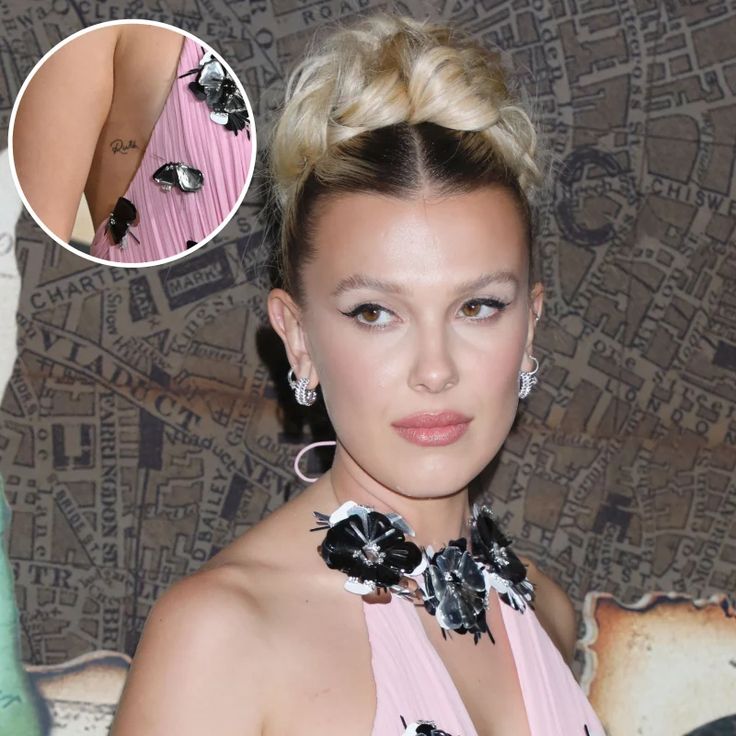
Brown has the name Ruth tattooed near her ribs in memory of her grandmother. Ruth died in 2020 after living with Alzheimer’s, and the name gives Brown a small, lasting way to keep her close. It is a simple tribute rather than a large portrait or an elaborate memorial.

Photographers first caught the lettering when Brown wore a pale pink Louis Vuitton gown to the Enola Holmes 2 premiere. The dress exposed part of her side, and the same look also revealed her 011 tattoo and a small heart near her collarbone.

A rib tattoo stays hidden most of the time, but remains close to the body. Brown has spoken about the importance of family, so the placement feels fitting even without a longer explanation.

Millie Bobby Brown Ruth tribute tattoo near her ribs

011 is her personal link to Eleven

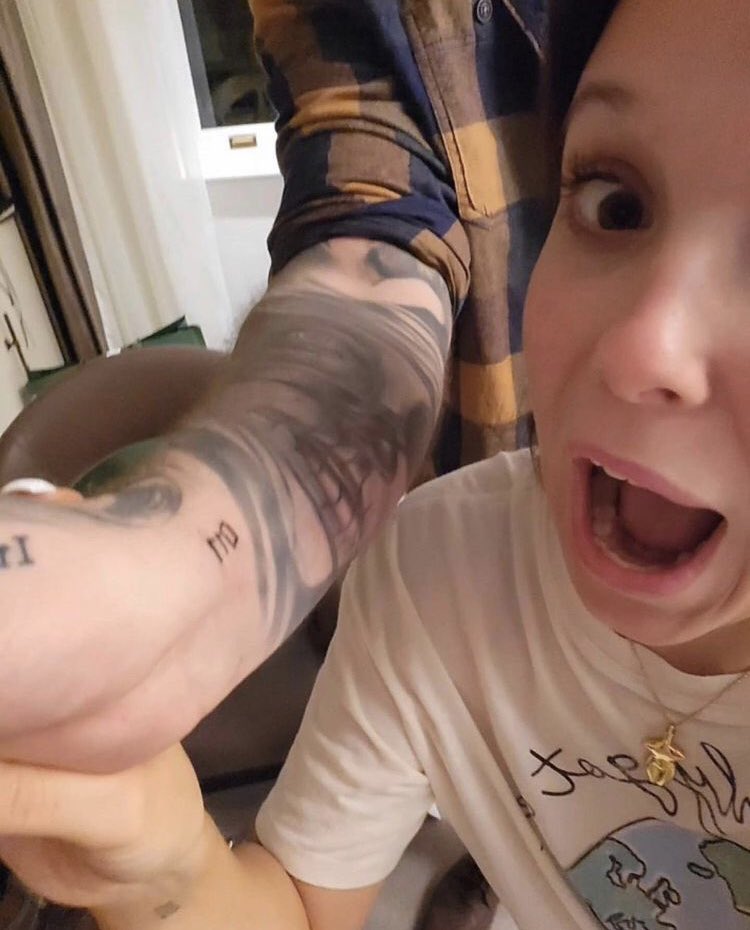
The number 011 is the tattoo most closely tied to Brown’s career. It refers to Eleven, the character she played in Stranger Things. On her wrist, the small number can look like a code until fans recognise the reference.

It is a neat way to remember the role without spelling out “Eleven” or adding a portrait. Brown spent years filming, promoting the series and meeting fans as the character. The number keeps that chapter personal while still giving viewers a clue.

Photos from the tattoo session show Brown smiling as the artist works on her wrist. The black ink is simple and small: visible to her every day, but not large enough to take over her hand or arm.

Millie Bobby Brown getting her 011 wrist tattoo

She and her sister Esme have matching 011 tattoos

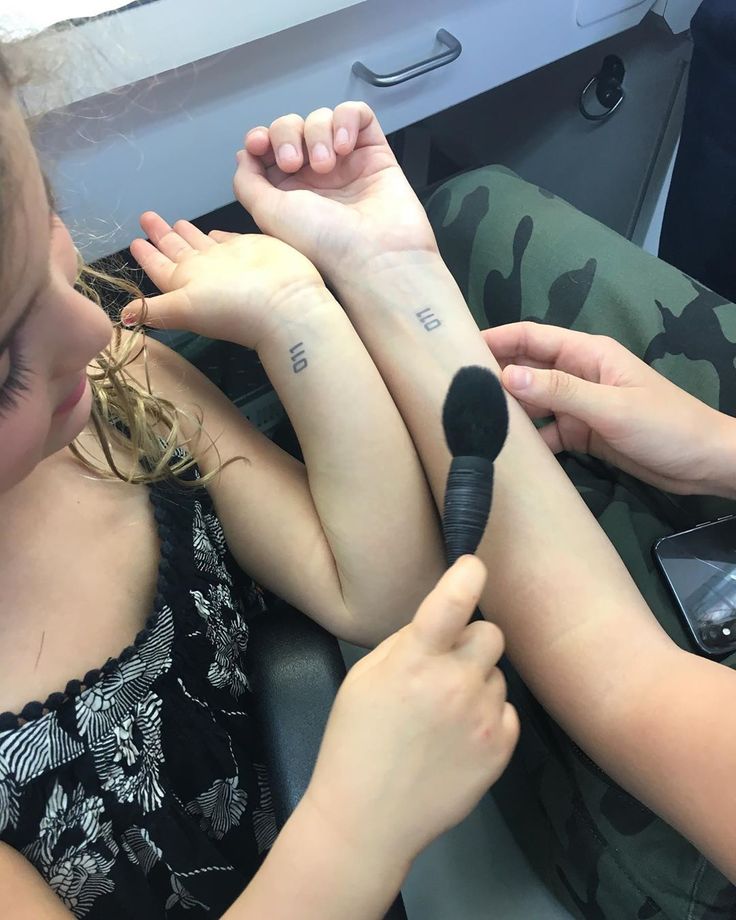
There is a family story in Brown’s 011 tattoo too. She and her sister Esme got matching versions of the number on their wrists, turning a reference to the show into a sibling tattoo.

The matching designs are tiny and uncomplicated. A quick turn of the wrist is enough to show them, and they do not need extra decoration. The connection matters to the sisters; everyone else can simply see a neat little number.

The same three digits hold two meanings at once: a reminder of Eleven and a memory shared with Esme. That is part of why the tattoo has stayed meaningful beyond the show’s run.

Millie Bobby Brown and Esme matching 011 wrist tattoos

The tiny heart keeps her collection playful

Brown has a small heart tattoo near her collarbone. It can disappear among jewellery or a detailed neckline, but close-up red-carpet photos catch it as a small accent beside the rest of her outfit.

The heart has not been presented as a major tribute, and it does not need to be. Brown’s collection has room for designs that are simply sweet. The heart gives the more serious Ruth and 011 tattoos a lighter neighbour, while matching the fine-line feel of her other ink.

Its placement works with different looks. A high neckline can hide it; a strapless dress can bring it out. Brown can change how visible the heart is without changing the tattoo itself.

That flexibility is useful for an actor. A tattoo can be covered for a period role, shown at a personal appearance or left visible because an outfit allows it. None of Brown’s designs dominate her look, so the focus stays on her rather than the ink.

Millie Bobby Brown small heart tattoo near her collarbone

Brown’s smaller tattoos make the full collection feel personal

Fans have spotted other small tattoos over the years, including a cowboy hat on Brown’s arm. It is more playful than the family tributes and shows that she does not need every design to follow one perfect theme.

The cowboy hat may be a joke, a private reference or simply an idea she liked at the time. Small novelty designs can sit comfortably beside the rose and heart; they do not need to carry a solemn meaning to matter.

Older photos also show floral details and shapes that are hard to identify. The safest guide is to stick with designs that appear clearly and consistently. Celebrity tattoo lists sometimes repeat a guess as fact when a blurry image makes a tiny mark look like something else.

What comes through is Brown’s preference for small tattoos with clean lines. They can be covered for a role, revealed on a red carpet or joined by another small piece without changing her whole look. The collection feels less like a branding exercise and more like a scrapbook, built one choice at a time.

Millie Bobby Brown revealing tattoos at the Enola Holmes 2 premiere

Watch Millie talk about people getting her tattoos

Brown has joked about fans getting tattoos connected to her and her work. The clip below is a fun look at how closely some of her body art is tied to the Stranger Things years, especially the 011 design fans recognise right away.

Brown’s tattoos are small, but each one points somewhere different. The rose and heart keep things light, Ruth honours family, and 011 links her everyday life to the character that changed her career. Add the matching wrist tattoo with Esme and the little cowboy hat, and the collection starts to feel like a timeline. It is personal without being over-explained, which may be why fans keep spotting new details in clear photos.