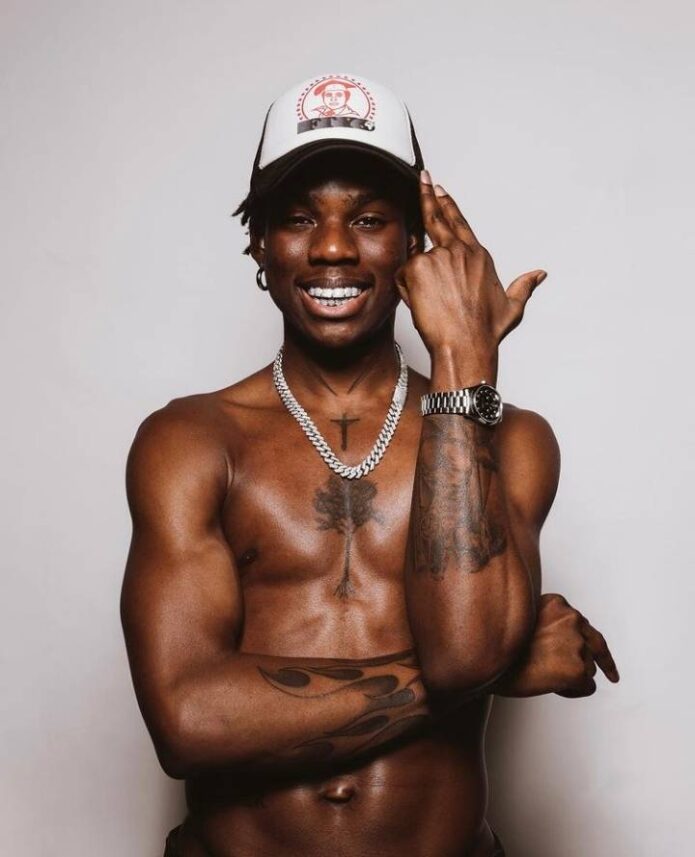
Rema’s tattoos move between religious images, fantasy, animals, fire, and lettering. The Nigerian singer and rapper has no single sleeve or theme holding everything together; the designs feel like parts of a visual world that continues to grow alongside his music.
Twin swords sit near his neck. A detailed scene covers an arm, and a simple word appears lower on his stomach. One image feels ancient, another fantastical, while other marks connect more directly to his identity. Together, they give the collection a character of its own.
Rema has spoken about faith and personal choice when discussing his tattoos. The images connect with ideas of belief, protection, and ambition, as well as the larger-than-life mood in his music. Here’s a closer look at the pieces that give his ink its movement.
The larger designs have room to read, while the smaller ones sit on their own instead of filling every gap. The collection works because the designs have room to breathe. That’s a useful detail to keep in mind if you’re planning several tattoos.
Rema’s sword tattoos frame the neck with a sharp spiritual idea
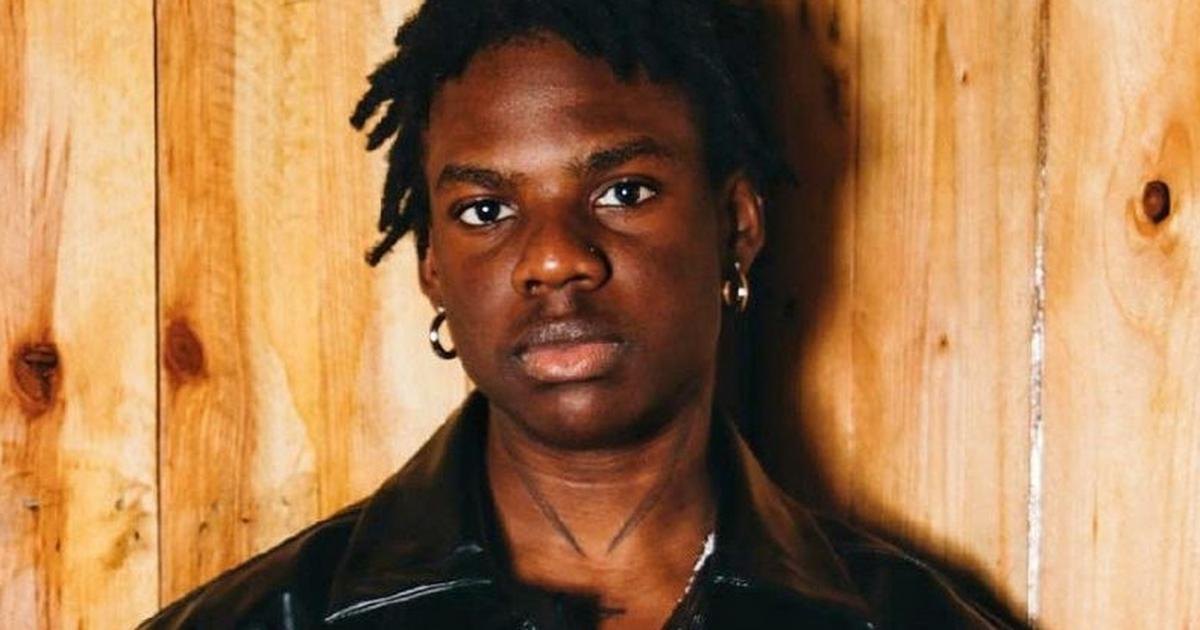
The twin swords on Rema’s neck are among the first pieces you notice. Their dark blades rise on either side, creating a balanced shape and a strong vertical line. They almost resemble a collar or guards, and their closeness to his face changes his outline when he turns his head.
Rema has linked the swords to a biblical idea about the power of the word. The reference is often associated with Hebrews 4:12, which describes the word as sharper than a two-edged sword. That gives the image a clear point without illustrating the passage literally: the blades suggest speech, conviction, and what a person carries within.
Two swords give the design balance. The symmetry makes the neck tattoo feel deliberate without crowding the space. The gap between them leaves the center of the throat open, which matters in a placement with little room to spare.
The arm scenes bring myth, motion and drama into the set
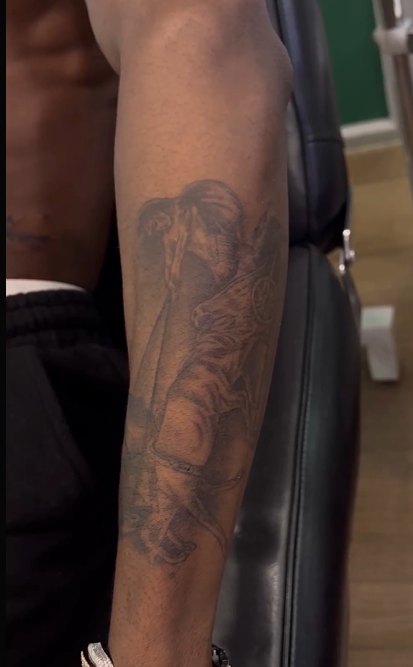
The arm work is more detailed and cinematic than the neck pieces. One image shows a chariot, a horse, and a soldier, like a scene from an old legend. The horse gives it speed, the chariot points the way, and the figure draws your attention to the middle of the design.
A large illustrative tattoo needs to follow the arm’s shape. The shoulder gives the image a natural starting point, while the upper arm has space for the horse, wheels, and surrounding detail. It reads as one scene rather than a set of unrelated objects.
The dramatic scale suits the persona Rema brings to his music. His songs move through menace, romance, confidence, and fantasy, and this image has a similar range. A dramatic tattoo can leave some details for a closer look. It doesn’t need to explain the whole scene at a glance.
The angel and gun tattoo adds a darker edge to the biblical imagery
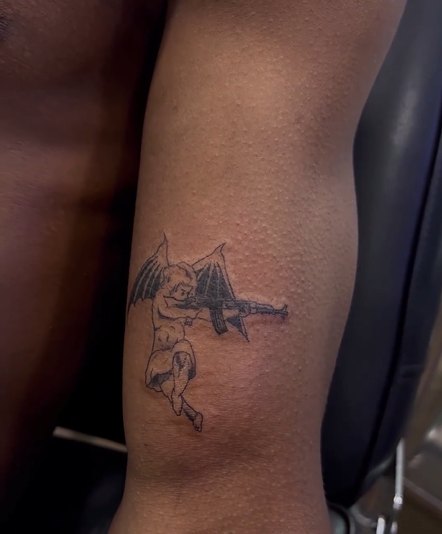
Another striking piece shows an angel with bat wings and a gun on Rema’s bicep. The angel suggests protection or heaven; the gun brings in a more dangerous, streetwise note. The wings keep the figure recognizable, while the darker details steer it away from a traditional religious image.
That tension gives the design its edge. Rema uses familiar symbols but changes their mood: an angel can suggest guidance, bat wings add a gothic feel, and the gun brings another idea of power and defense. The image carries those layers without needing a written explanation.
The bicep gives the wings space to spread. With a design made of several moving parts, the body should help the composition. An artist can use the curve of the arm to make the figure feel more dynamic when the wearer moves.
Rema’s Father, Son and Holy Spirit tattoo keeps faith close to the centre
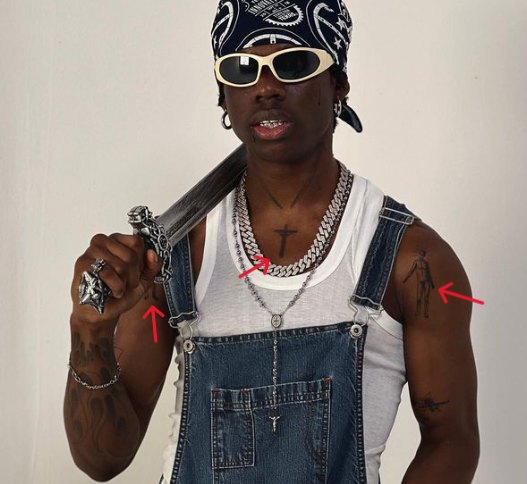
The sword isn’t Rema’s only religious tattoo. Another piece depicts the Father, Son, and Holy Spirit, a direct Christian reference. The subject has a familiar structure, but its detail and shading make it feel like a personal statement rather than a stock design.
Faith comes up often in the way Rema talks about his life and career. He has described his mother as an important influence, and interviews have touched on the role of belief in his choices. This tattoo gives that part of his identity a place in the collection, alongside protective symbols and more dramatic scenes.
An image with this much detail needs enough space. Faces, hands, and other shapes should remain clear, with room around the tattoo to keep it from feeling crowded. It acts as a visual anchor among the more aggressive and fantastical pieces.
The Tree of Life tattoo gives the collection a calmer visual pause
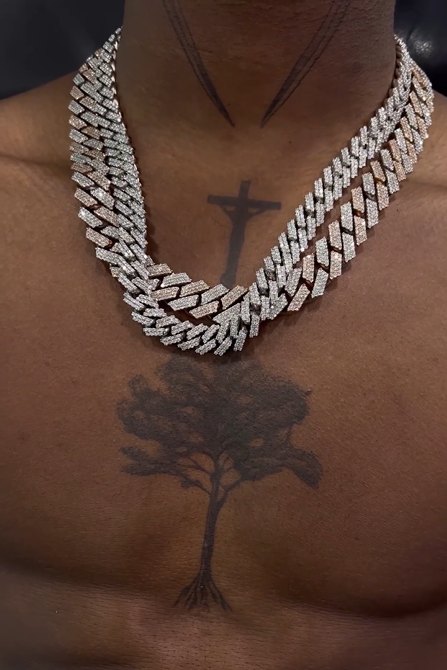
The Tree of Life gives Rema’s collection a quieter image. Its trunk creates a vertical line, with roots below and branches spreading out. That natural shape gives the artist a structure to work with, while leaving room for leaves, texture, and shading.
Trees often stand for growth, family, grounding, or the link between past and future. Those ideas sit alongside the swords, with their associations of words and strength. The tree brings a more rooted feeling to a collection otherwise full of action and drama.
A tattoo doesn’t have to be loud to earn its place. Quiet imagery can make the louder images hit harder. The tree gives the eye a pause between more dramatic scenes.
Rema’s collection also includes fire imagery and the word “Raver” low on his abdomen. The lettering connects to his music and fans, while the fire adds heat and energy. These pieces are smaller than the chariot or religious scenes, but they tie his body art to his work.
The word points to the idea of raving that runs through his fan community. It’s short, easy to read, and personal to the world around his music. “Raver” feels like part of that world, not just a slogan.
Small words and symbols can tell you something the larger designs don’t. They show what a person calls their community and which parts of their public identity they want to carry with them. Here, those smaller marks keep the bigger images from feeling like a costume.
What makes Rema’s Afro-rave look work
Rema’s tattoos share a sense of movement even when the subjects change. Swords, angels, trees, fire, and chariots all suggest action. The religious imagery carries conviction; the fantasy scenes have a larger-than-life scale. The lettering brings the collection back to his life as a Nigerian artist with a distinct audience and sound.
Black and gray shading links the pieces. Strong contrast gives the figures depth, open skin keeps the details visible, and linework directs attention to faces, blades, and words. The designs feel related through their treatment, not because every tattoo looks the same.
Some meanings are visible to anyone who sees the tattoos; the reasons Rema chose a particular scene may be his alone. That’s one reason these images hold interest: the design catches the eye, while the personal story adds another layer.
If this style appeals to you, take the layout as inspiration rather than copying the images. Start with one large piece, then add smaller symbols that reflect your own interests. Leave space for future tattoos, and check any translation or religious reference with someone who understands it. The aim is to build a visual language that fits your own skin.
Rema’s tattoos carry the same contrasts as his music: religious imagery beside fantasy, dramatic scenes beside smaller words, and a tree among the more forceful designs. The twin swords frame his face, the arm pieces carry the action, and the lettering ties the collection to his music.