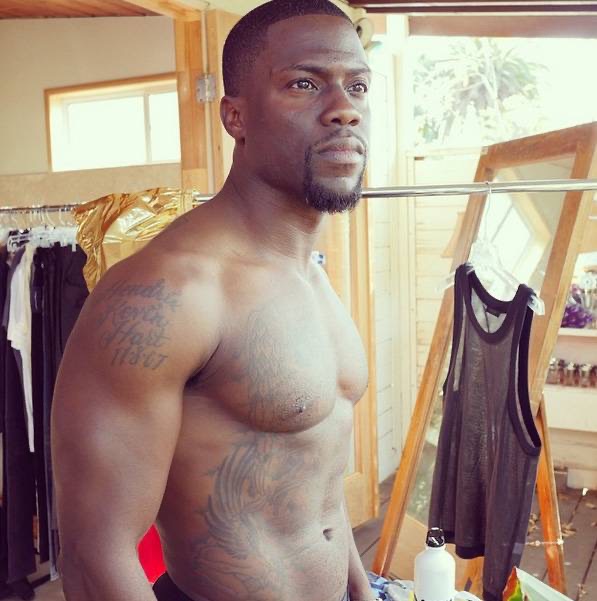
Kevin Hart has more tattoos than his usual red-carpet outfits show. His chest, shoulders, arms and back all carry ink, including family names, an angel, theatre masks and smaller symbols. The back piece is the biggest, but the mix of large work and small details gives the collection its character.
The photos here focus on different parts of the body. A headshot cannot show a back tattoo, and one shirtless image may not make the lettering easy to read. Several views, with a little context from coverage, give a clearer picture of Hart’s tattoos.
Kevin Hart’s chest tattoos include family names and a large angel
Hart’s chest is one of the easiest places to see the collection. It includes an angel and lettering connected to his family, including his children’s names. That personal detail does not need an elaborate explanation. A clear shirtless image shows how the words sit across his chest instead of letting them blur together.
The angel is the larger visual feature in the centre. Its shape anchors the chest, while the smaller lettering sits nearby. These are separate designs with different roles, and the photo also shows how chains, lighting and muscle definition can affect their appearance.
Hart has been photographed at the gym, on the beach and during tattoo sessions. Those images make the ink visible, but some are more useful than others. A wide shot shows how much of the chest is covered; a close-up helps readers make out the names and the angel’s edges. The family names need that sharper view.
The family connection is clearer than the meaning of many smaller symbols. Hart has publicly linked parts of the work to his children and relatives. Other marks can be described by their shape and location until he gives them a direct explanation. That keeps the article detailed without inventing a story for every line.
The comedy and tragedy masks cover most of Kevin Hart’s upper back
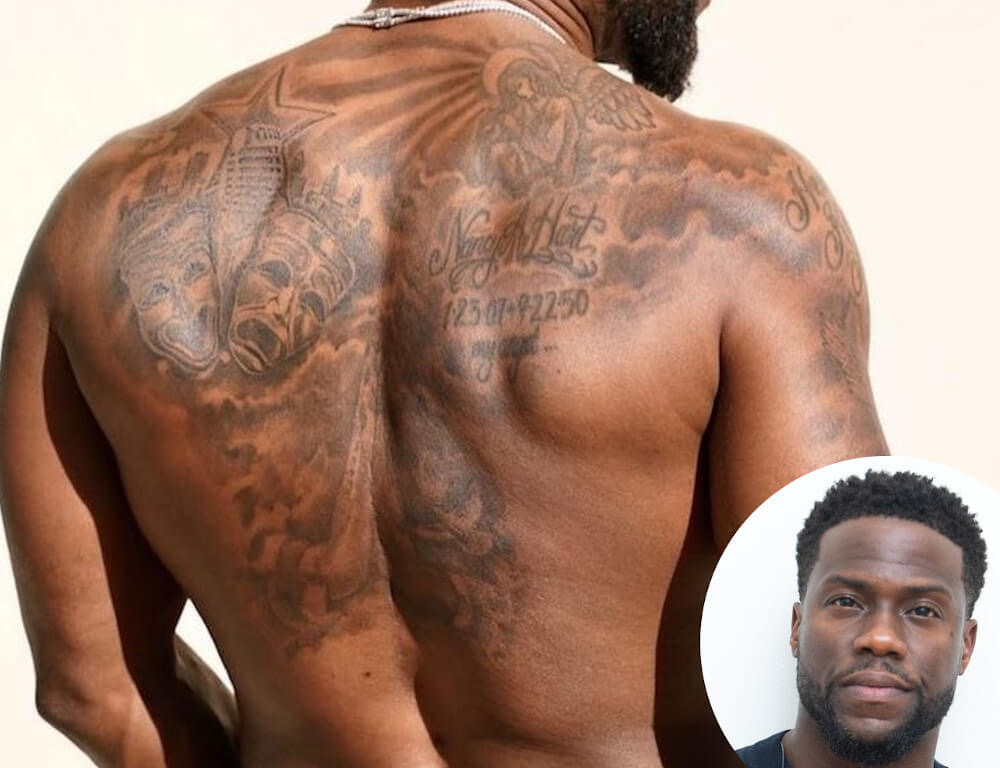
Hart’s largest single tattoo is on his back: comedy and tragedy masks spread across the upper back. It is a fitting design for a comedian whose career centres on performance. The masks use black-and-grey shading and stretch across both shoulders, reading as one strong composition when he turns away from the camera.
Their contrasting expressions give the piece its focus. One face feels lighter and more playful; the other has a darker theatrical mood. The difference creates a clear centre without needing colour. A full back photo lets the masks read properly instead of reducing them to a small crop on an otherwise empty page.
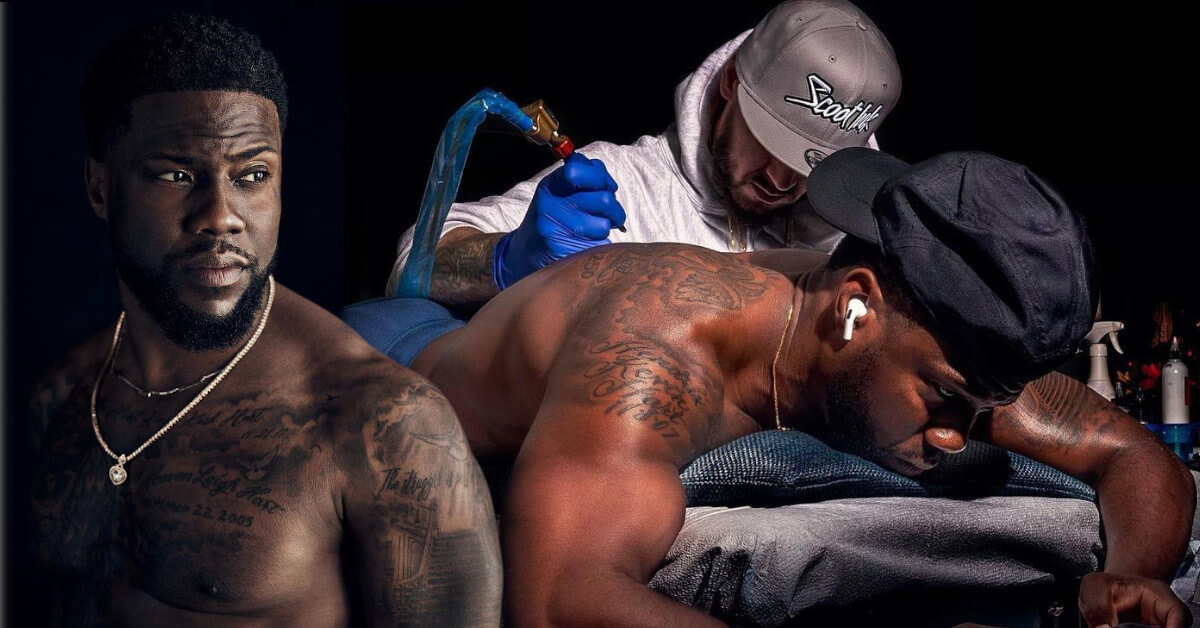
Hart revealed the tattoo during a workout-style photo session, and later pictures show how it sits beside smaller shoulder pieces. Coverage has also shown an artist working on his back, helping establish the timeline. The finished design developed over time rather than appearing all at once.
A generic portrait would not work for this section. The featured image can show Hart’s face, but only a separate back photo reveals the tattoo, its shading and its placement.
Hart’s arm tattoos sit beside the chest work and smaller symbols
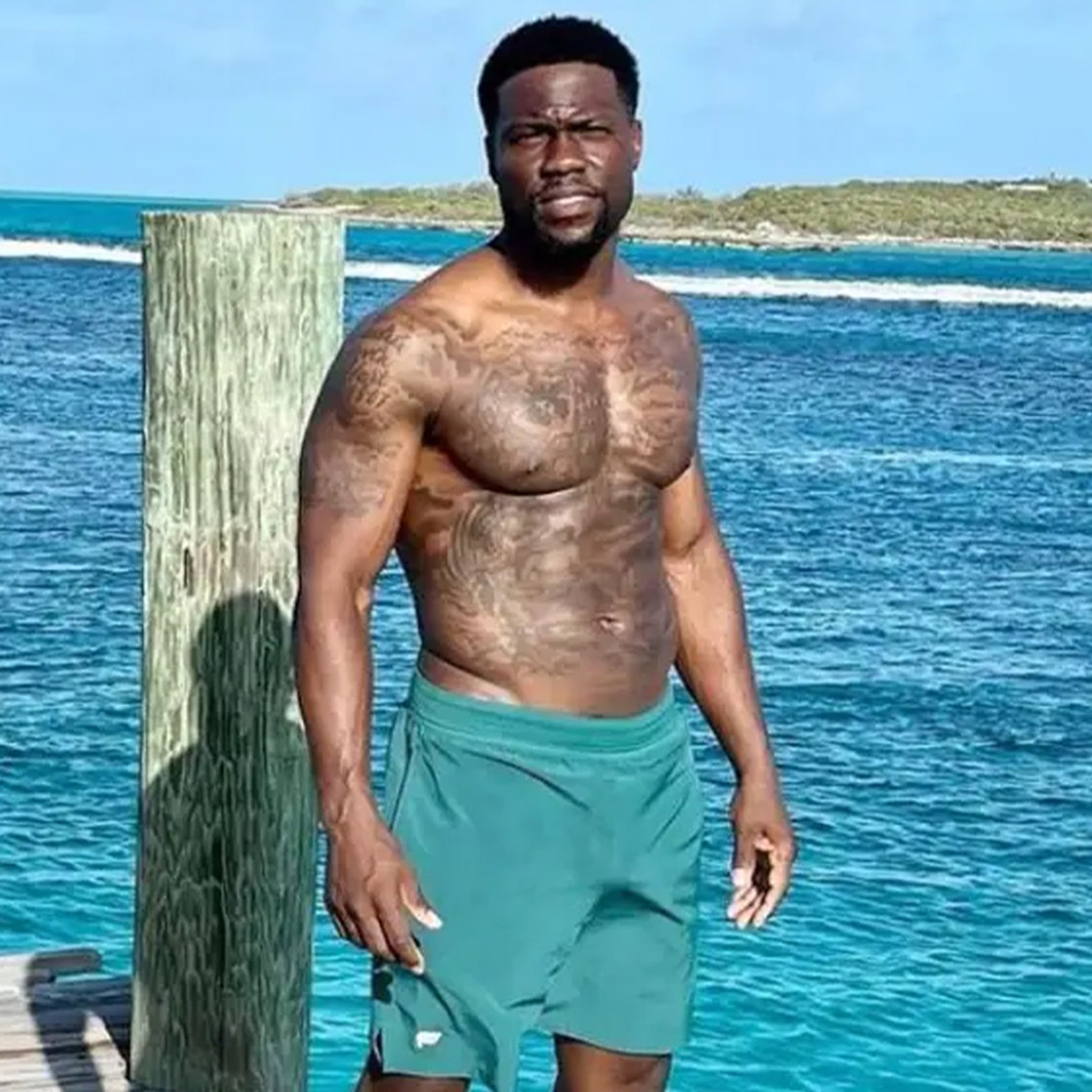
Small tattoos on Hart’s arms can disappear under a T-shirt. There is lettering, darker imagery and work that visually connects with his chest. A beach photo helps because his arms are uncovered and the strong light makes it easier to distinguish the individual marks.
The arms do not form one precisely planned sleeve. Some tattoos stand alone, while others sit close enough to look connected in a wide image. That is natural for a collection built over years. It is more accurate to identify what is visible and leave uncertain edges alone than to claim the whole arm follows one theme.
Hart has also been photographed during tattoo sessions, showing the work as it develops. One image may catch an artist working on his back with older tattoos still visible around the shoulders. That adds timeline context, but it does not prove that every surrounding mark came from the same appointment.
The arm lettering is another reason to use a large image. Compressed photos can make small words unreadable. A clear body shot shows where the text sits, while the article adds only the context supported by the available sources.
The shoulder and side tattoos fill in the gaps around the main pieces
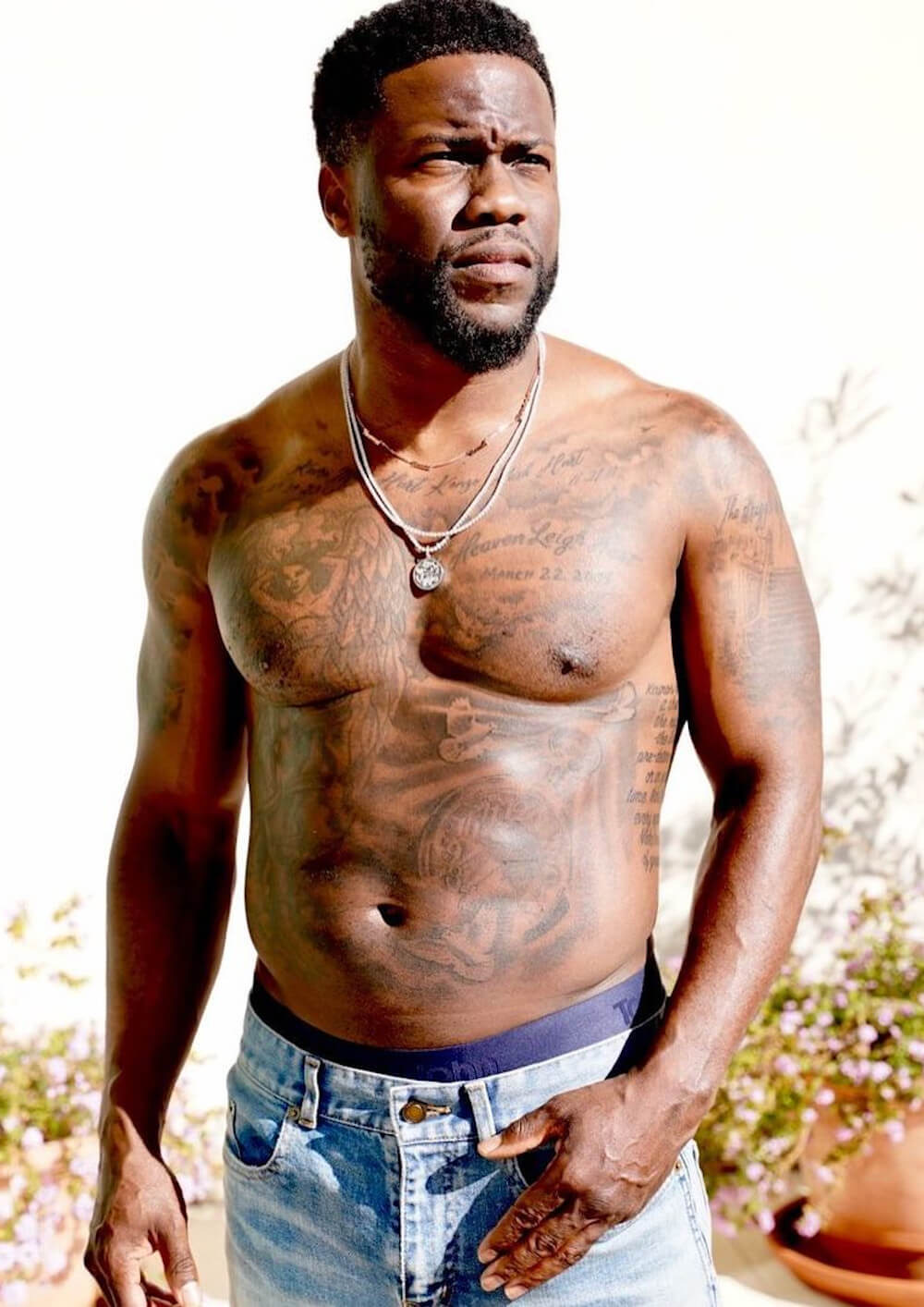
Smaller tattoos around Hart’s shoulders and sides fill out the upper body. Some sit near the collarbone; others are beside the angel or extend toward his ribs. They may not be as famous as the back masks, but they explain why a shirtless photo shows more ink than a short list of headline designs suggests.
Posture changes how the shoulder work appears. When Hart raises his arms, the skin stretches and the lines seem farther apart. When he turns or relaxes, the designs bunch closer to his chest. More than one angle is useful because a single pose can hide the placement.
Coverage and tattoo galleries identify the angel, family lettering and other shoulder designs, but not every small symbol has a confirmed meaning. It is enough to describe what is visible: an outline, a short word, a mark near the shoulder or a design running toward the side. That is more helpful than guessing.
The shoulder details also show why photos need different framing. Larger tattoos benefit from a wide view, while small lettering needs a close one. Both belong in the article and deserve a clear image instead of getting buried in one long paragraph.
Kevin Hart’s tattoo collection changes with each workout and studio photograph
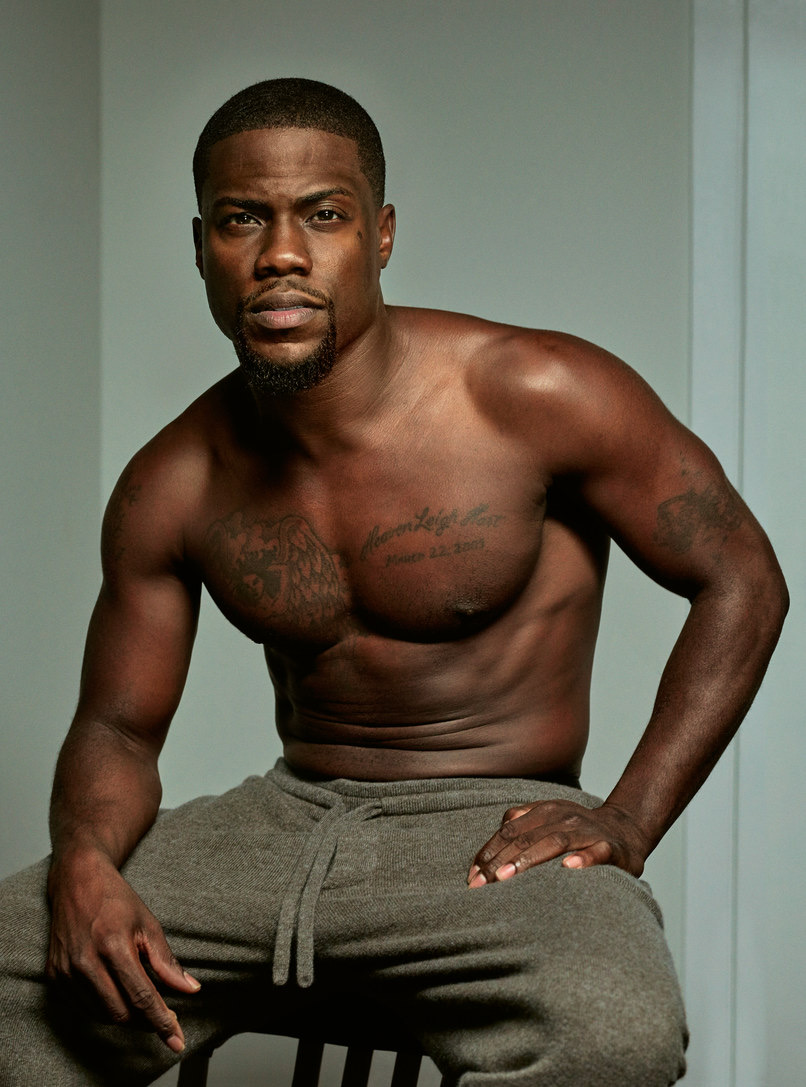
Fitness photos often capture Hart’s arms, chest and torso all at once. That makes the tattoos easy to spot, but the details can flatten out. Sweat, hard light and shadow may make a design look darker than it does in a calmer portrait.
This workout image is separate from the beach and gallery photos. It shows the tattoos while Hart is moving and posing naturally, which helps explain why the layout can look different from a straight-on studio view. His chest may appear broader, an arm can obscure a shoulder and the back is usually out of sight.
Those changes do not necessarily mean Hart has added or removed anything. Clothing, posture and camera distance all affect the view. Where possible, a reliable account dates the photo and avoids calling every difference a cover-up. The overall layout becomes clearer when several distinct images are compared.
Hart’s tattoos have an easy, personal feel: family names, an angel, performance masks and smaller marks around his arms and shoulders. It is not one rigid sleeve built around a single idea. The collection appears to have grown as his family, career and interests changed, making the photos as useful as the design list.
The tattoos are easier to read as a timeline than as one finished mural
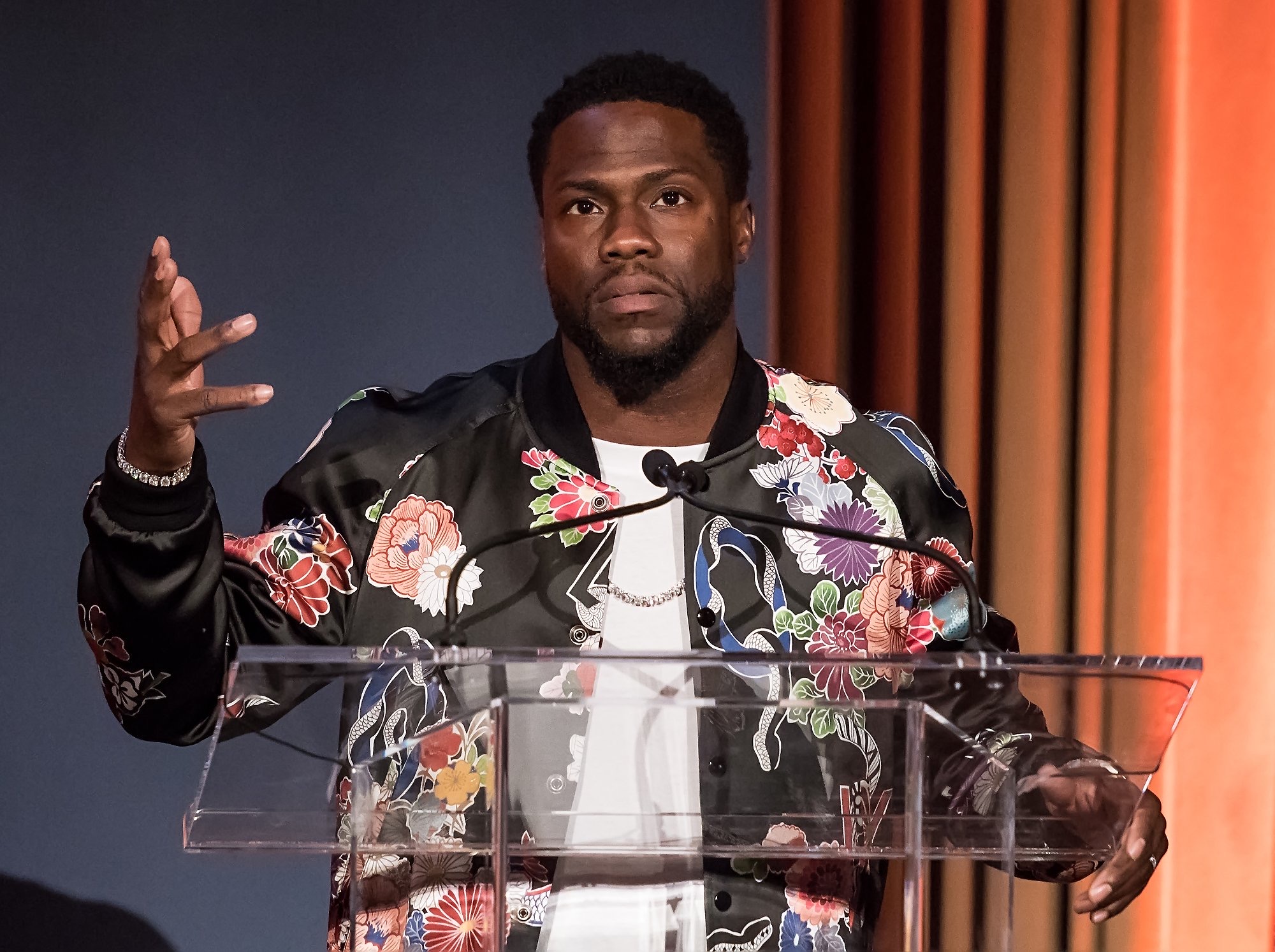
Hart’s tattoos did not all become visible at once. The back masks drew particular attention in later fitness photos, while the chest and arm pieces had appeared in public earlier. The timeline explains why older portraits can look less crowded than newer ones.
The family lettering belongs to the personal side of the collection, while the masks connect with comedy and performance. The angel brings in another mood, and the smaller shoulder marks bridge the spaces between. The designs can have different reasons; they do not need to add up to one polished statement.
The clearest visual inventory includes the comedy and tragedy masks, the angel, his children’s names and the arm, shoulder and side tattoos shown in close photos. Less distinct marks should remain uncertain. That tells readers where the evidence is clear and where the image does not show enough.
Hart has enough documented work to merit several body photos instead of one generic headshot. The featured portrait is separate, and the six tattoo images appear beside the sections they support. Together, they show his chest, back, arms, shoulders and the changing layout of his collection.
Framing matters. A full back piece needs enough space for the masks to remain recognisable, while a child’s name or a small shoulder symbol needs a closer view. Reusing one low-quality photo would make the collection look smaller than it is. The images here show distinct scenes rather than one file cropped in several ways.
Hart’s tattoos are easier to follow when the body is broken into areas: family and angel designs on the chest, theatre masks on the back, and smaller work around the arms and shoulders. The strongest meanings are the ones Hart or a reliable source gives directly. The designs themselves fill in the rest.
For readers looking up Kevin Hart’s tattoos, the simple takeaway is that there is plenty to see, and the designs do not all come from one session. The collection has grown along with his public life, family and training routine. It reads best when each group gets a clear photograph instead of being rushed through a short list.
2 thoughts on “Kevin Hart Tattoos: Back Masks, Family Names and His Angel”