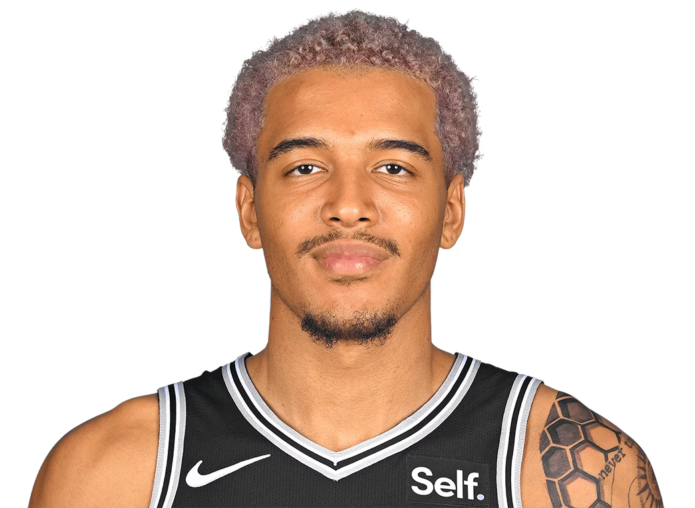
Jeremy Sochan’s tattoos bring together family, Polish roots and ideas he wants to keep close. Some are small; others cover much of his back or run down an arm. The contrast makes the collection feel as though it has grown with him, rather than being planned as one matching sleeve from the start.
He has also worked with tattoo artist Zac Lefty Colbert, whose black-and-grey style appears in newer pieces. A few meanings come from Sochan himself or from reporting about the tattoos; other details are only visible in photos. Keeping those apart makes it easier to say what is known and what is simply on display.
The back piece is a tribute to the women in Sochan’s family
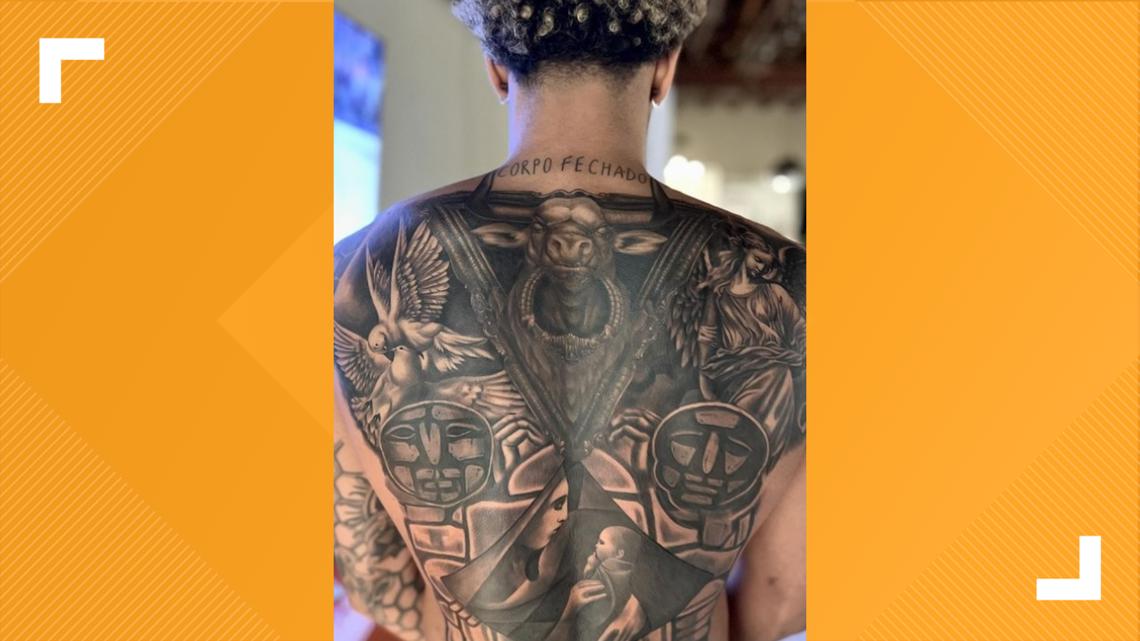
Sochan revealed his large back tattoo in 2024. KENS5 reported that it honours his mother, grandmothers and aunts, giving the piece a clear family focus. It is more than a dramatic black-and-grey design chosen for its size.
At the centre is a mother and child, surrounded by protective figures. Doves appear in the wider composition, with a bull at the top. The bull also connects to Sochan’s Taurus sign, but the tribute to his family remains the main story; the zodiac detail is an additional layer.
A good photo matters because an NBA jersey hides most of the tattoo, and even training shots may reveal only a small section. In a clear image from behind, the figures, wings and geometric panels read as one scene rather than unrelated pictures.
O2 later showed the finished work, while KENS5 gave the clearest explanation of its meaning. Together, those sources show both what the tattoo looks like and why Sochan chose it. There is no need to assign a separate meaning to every face or shape.
The matching teraz tattoo keeps his Polish roots close
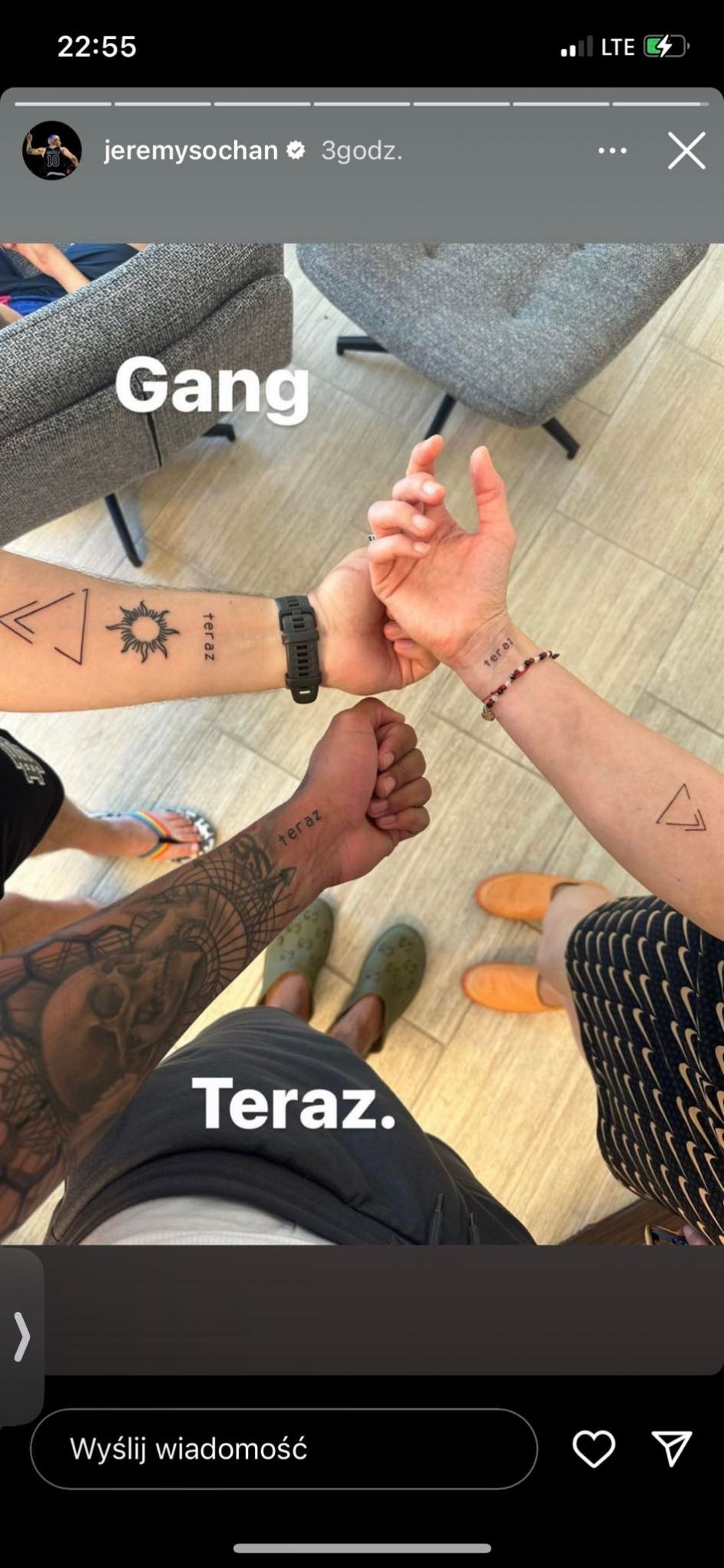
In Polish, Teraz means “now.” Sochan showed the small tattoo alongside family members who have the same design. Interia and TVP Sport connected it with his Polish background. The matching detail is what gives a short word its family meaning.
Arrows and sun-like details sit around the lettering. The tattoo is easy to miss in a basketball photo, especially beside the larger pieces on Sochan’s arm. A family photo makes it easier to see because they can all show the matching mark together.
The word itself does not need an elaborate interpretation. It can serve as a reminder to stay present, but the clearest reported point is that Sochan and his family chose it together. That is enough to make the tattoo personal.
The honeycomb helps hold the arm sleeve together
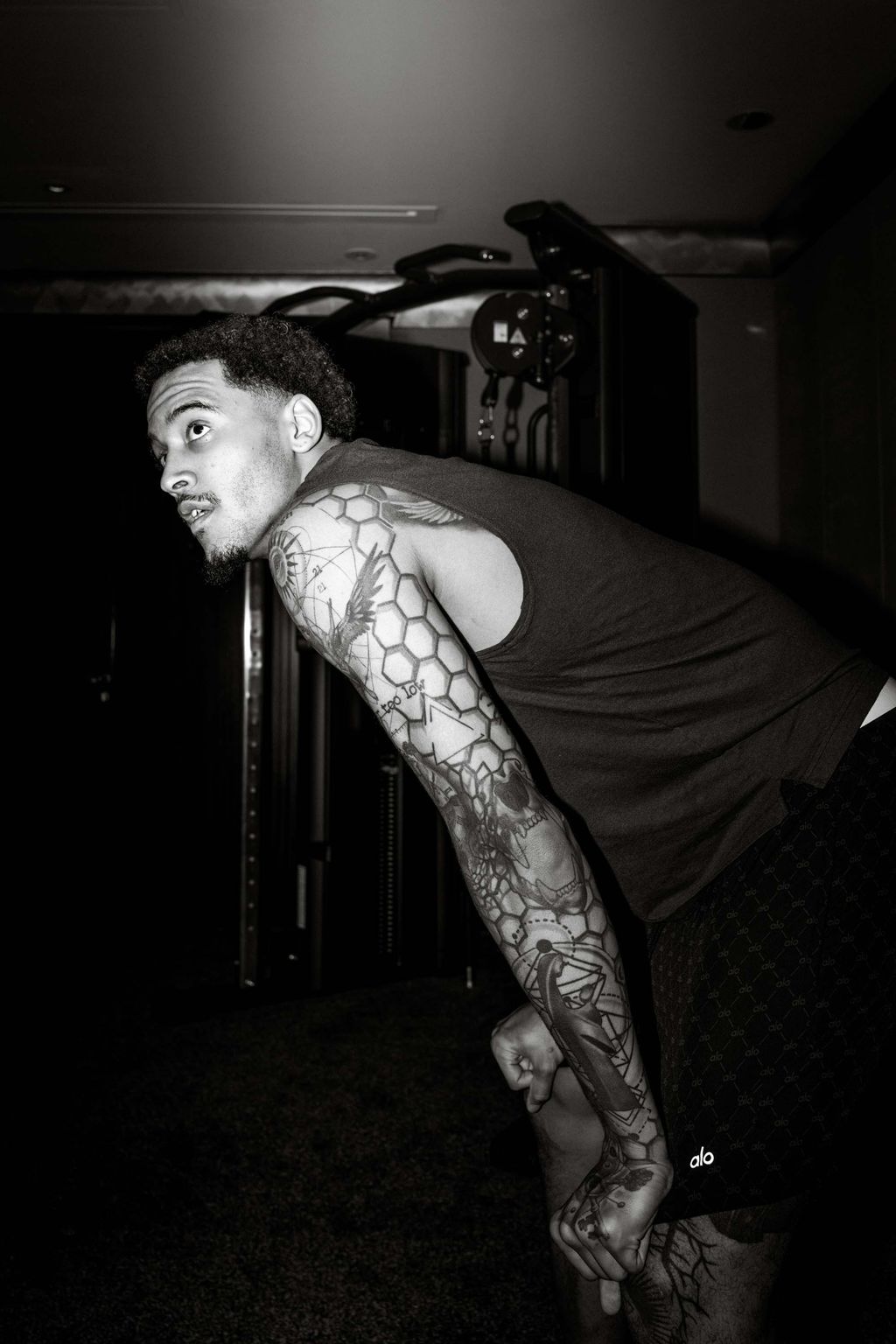
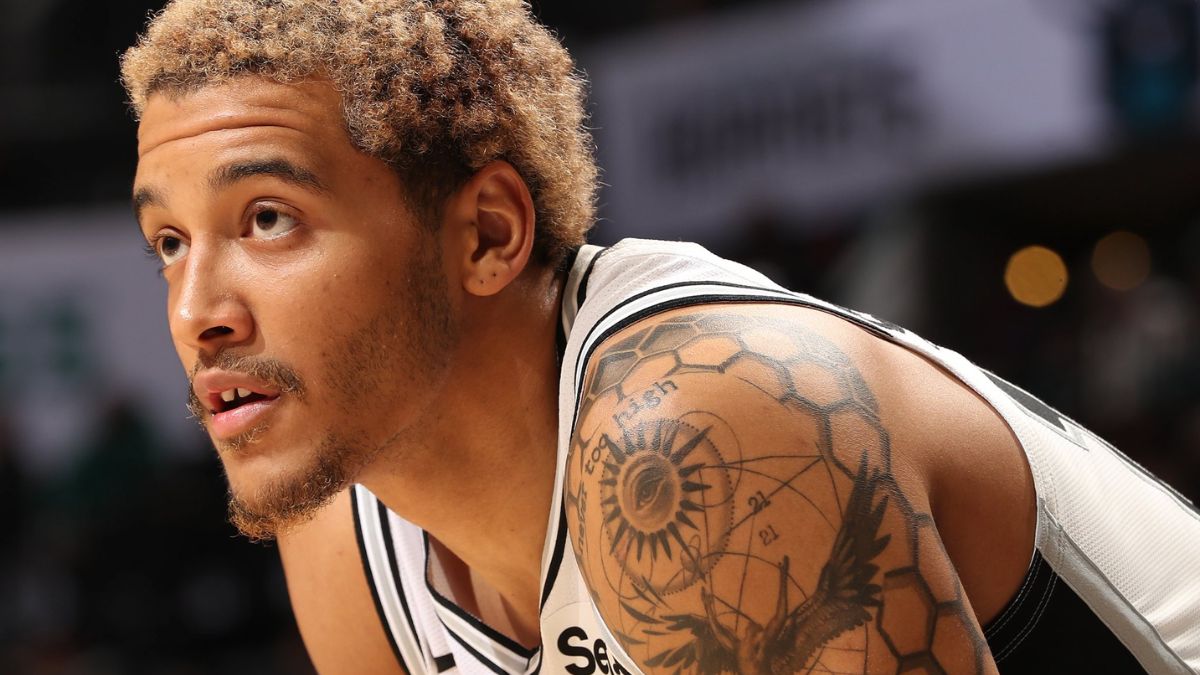
The honeycomb is not the flashiest part of Sochan’s sleeve, but it helps tie the rest together. He has described it as part of the way the sleeve connects. The repeated hexagons sit between larger images, giving the arm a steady pattern.
A sleeve with portraits, symbols and lettering can look scattered without something linking the pieces. The honeycomb fills the gaps without turning the whole arm into a solid block of ink. It gives the eye a path between the larger designs.
A close photo shows the geometry better than a full-body sports image. The pattern follows the arm and changes scale around the other tattoos. Colbert’s black-and-grey approach is visible too: strong outlines define the shapes, while open skin keeps the sleeve from looking flat.
The arm looks different from every angle
The tattoos shift in appearance from one photo to the next. The shoulder, upper arm and forearm turn away from the camera, while a jersey can hide half the work. A training shot might show the honeycomb clearly; a game photo may catch only a dark edge.
That is why one image cannot explain the whole sleeve. The honeycomb is one part, while the surrounding symbols, religious imagery and smaller marks need their own context. A wide photo shows the overall effect; a closer one lets readers see what is actually there.
The sun tattoo goes back to a family trip
Sochan has said that his first tattoo was a sun on his thigh, done when he was 16 during a family trip to Croatia. His stepfather got a matching one. The age, place and shared decision make it a memorable start to the collection.
Those details are the story: an early tattoo from a particular trip, shared with someone close to him. It may be small beside the full back piece, but it marks where the collection began.
The early sun and the newer back tribute serve different purposes. One holds a holiday memory; the other turns a wider family story into a large composition. The newer work does not make the first tattoo any less personal.
Icarus is Sochan’s reminder to stay balanced.
Sochan has also talked about an Icarus reference among his tattoos. He says it reminds him not to get too high or too low. The myth warns against flying too close to the sun, but Sochan’s explanation is more practical: keep your balance when things are going well and when they are not.
That idea fits the ups and downs of a young athlete’s career. A great game can bring a surge of attention; a difficult stretch can feel just as intense. The tattoo is a reminder not to be carried away by either extreme.
There is no need to turn Icarus into a grand statement about ambition. Sochan has already explained the point he takes from it: staying steady.
The Mary and Jesus design started with a keepsake.
Sochan has connected the Mary and Jesus design to a wooden figure his mother gave him. That family keepsake is the key detail. The tattoo is not proof of a particular private belief or a wider religious programme; its documented meaning is tied to an object from his mother.
That puts it naturally beside the sun and Icarus references. One began with a trip and his stepfather, another is about balance, and this one recalls something his mother gave him. The designs cover different subjects, but family keeps returning in the background.
Photos show the placement and style, while Sochan’s comments explain the connection to the wooden figure. Each source answers a different question. Keeping them separate avoids making the tattoo sound more mysterious than it is.
The back tattoo works as a full composition.
The back piece is more than the bull at the top or the mother-and-child image in the centre. The upper section catches the eye, while the doves and figures frame the main subject. The lower panels draw attention back toward the people at the heart of the design.
That gives the tattoo a clear order. The bull is striking, but the family tribute is what the piece is about. The dramatic imagery gives it scale without pulling attention away from the people it honours.
Black-and-grey shading helps the different elements sit together. Heavy outlines, softer shading and patches of open skin make the back read as one connected scene. A small social-media image can lose that detail, so a larger photo makes a real difference.
Teraz is simple, but the shared design gives it weight.
The “teraz” tattoo is much smaller than the back piece, and that is part of its appeal. The word is easy to read, and the family connection carries most of the meaning. It does not need a hidden code.
Arrows and sun-like details add movement around the lettering, but the word stays at the centre. The Polish language reflects Sochan’s roots, and the matching tattoos bring his family into the design.
A small tattoo can disappear in a basketball photo or look different as the arm turns. The clearest family picture is more useful than a distant game shot because it shows both the tattoo and the people who share it.
Sochan’s collection is still growing.
The back tribute, matching teraz tattoo, honeycomb pattern, early sun and Icarus reference make a solid guide to the collection. The Mary and Jesus piece adds another family connection. Together, they bring in memories, balance, Polish identity and large-scale artwork.
Not every dark mark in an action shot needs a name. If a photo is too distant, it is more accurate to say the tattoo is visible but unclear than to turn a blurry line into a confident claim.
Sochan’s tattoos make the most sense when each stays with its own photo and explanation. The back piece tells a family story; teraz keeps his Polish roots close; the honeycomb links the sleeve; the sun recalls a family trip; and Icarus is about balance. It is a varied collection, with no need for one theory to hold it all together.