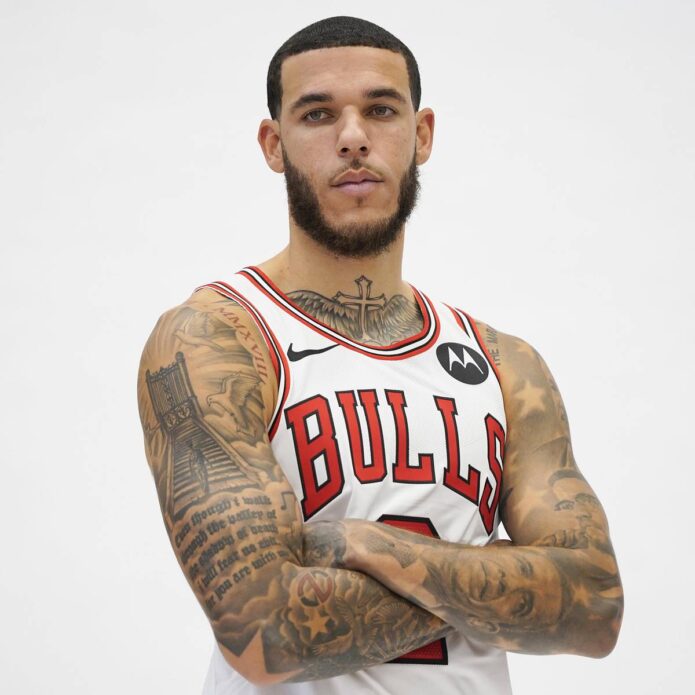
Photos from different years show Lonzo Ball’s tattoos growing from small wrist designs into full sleeves, scripture, portraits of Black leaders, and a cover-up tied to his career. Faith, family, and basketball recur throughout the collection.
Lonzo Ball’s tattoos mix personal references with careful placement. Lettering follows the arm, portraits have space around them, and shading links the designs without making every section identical.
Ball has said he first got tattooed partly because he didn’t want his brother LiAngelo to be the only one in the family with a lot of ink. Later pieces became more personal and more extensive.
Lonzo Ball’s arm sleeve tattoos are built around portraits and scripture
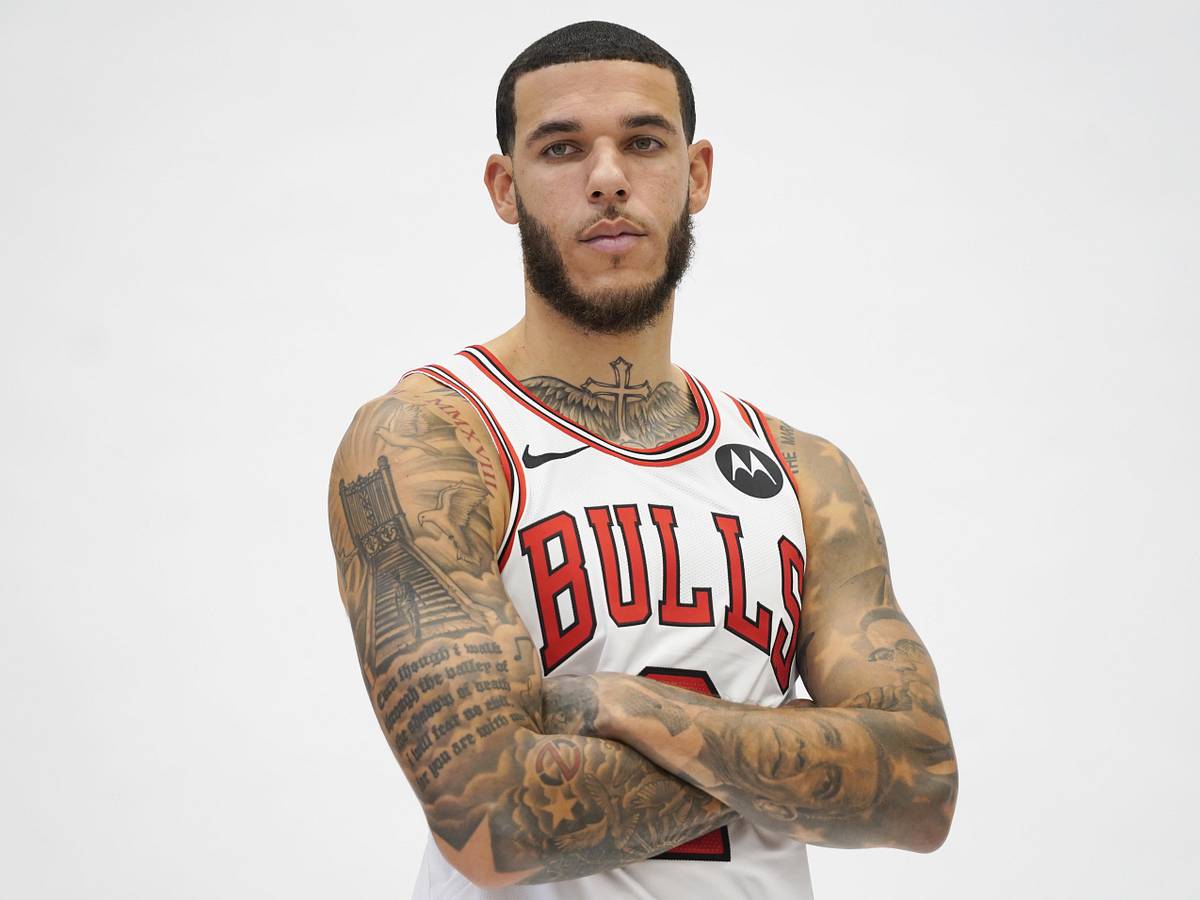
One sleeve combines portraits, a staircase, birds, and long sections of lettering. In Lakers photos, the staircase and gate stand out first, with doves around them.
The lettering below the image comes from Psalm 23. Ball used a long passage in dark, compact gothic letters that run down the arm.
The staircase draws the eye upward, the birds soften the design, and the lettering anchors the lower arm. Each part has a different role, which keeps the sleeve readable.
Long scripture takes planning. The words need to fit the bicep and forearm as they curve and turn, with room around the elbow.
If you’re considering a verse tattoo, choose the passage first, then test it at the intended size and placement. A shorter excerpt needs less space; a larger area gives the lettering room.
His chest and neck tattoos frame the Bulls-era look
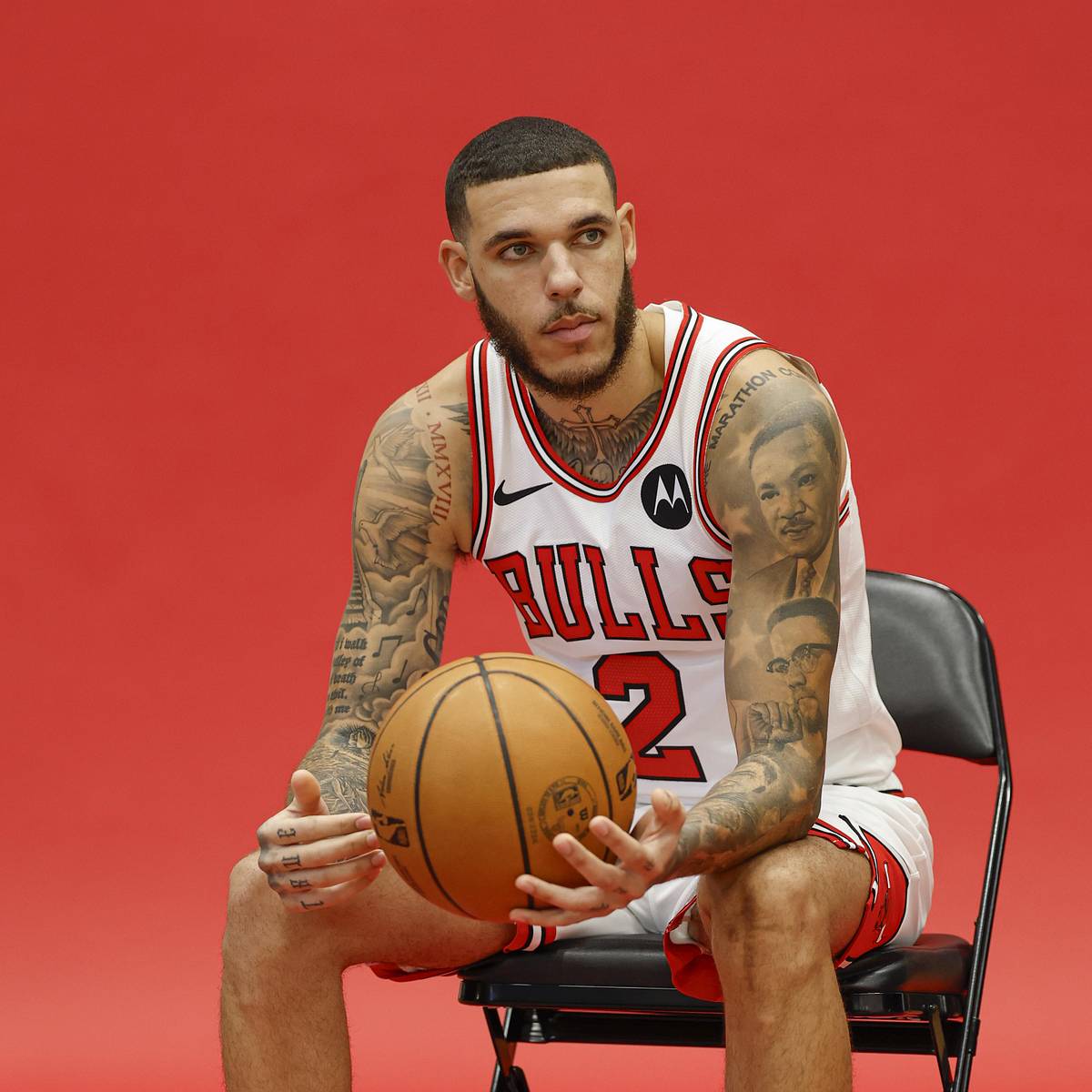
Bulls media-day photos show a cross at the center of Ball’s upper chest, surrounded by feathered or wing-like shading. It sits above the jersey line and remains visible in uniform.
Script runs along the shoulders and upper arms, with smaller marks around the larger designs. Some areas have lighter shading; others are darker. The difference keeps the chest from reading as one solid patch.
The neck and upper chest sit between the chest work and sleeves, helping the areas read together. The tattoos don’t have to connect physically to share a visual line.
A jersey covers the lower chest and back but leaves the cross, shoulders, and neck visible. Placement affects what a tattoo shows with everyday clothes.
For a similar chest layout, choose one central image first, then decide how much shading or lettering should surround it. Leave enough space for the main shape to stay clear as the body moves.
The Psalm 23 tattoo turns a long verse into a full arm piece
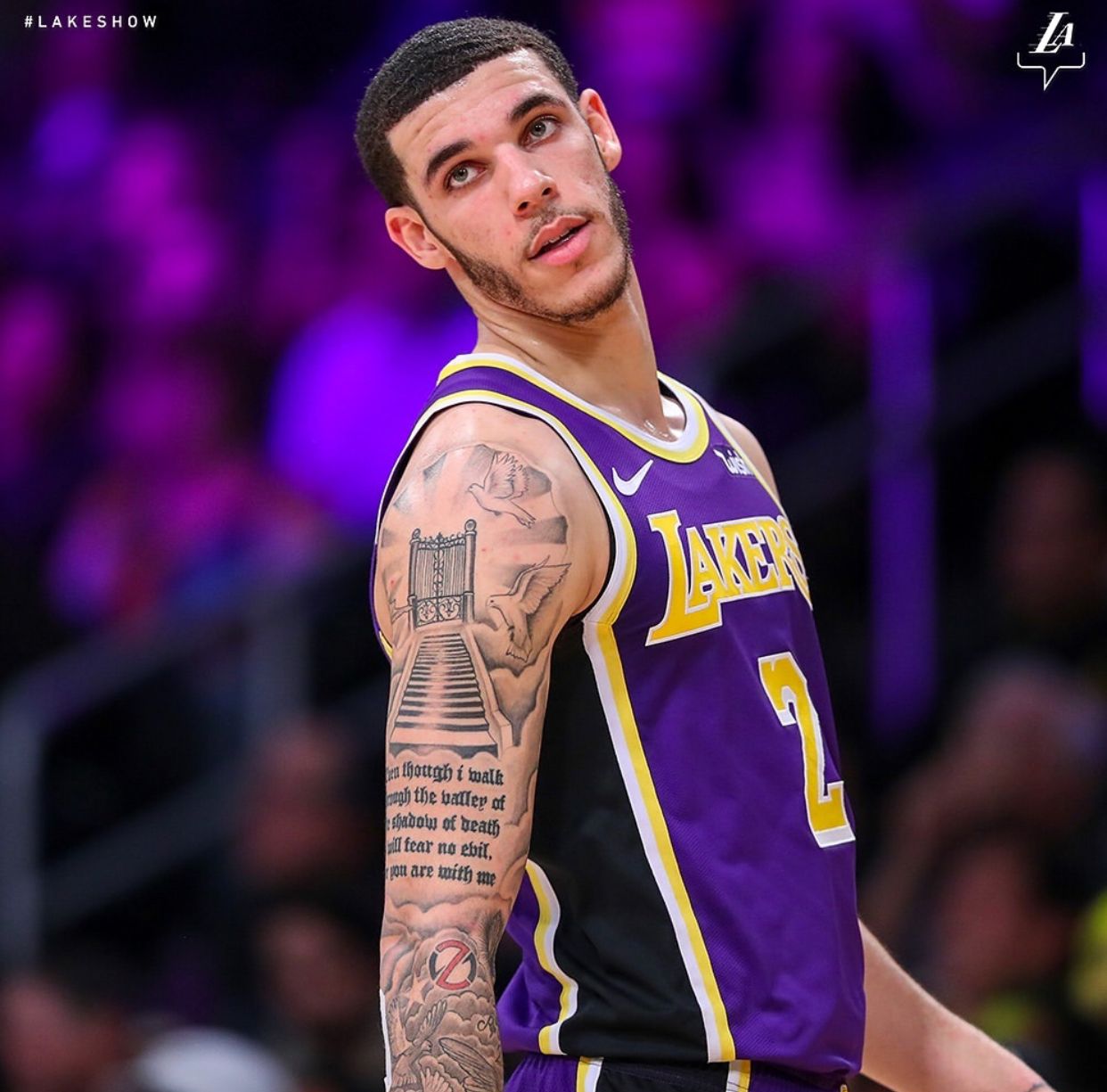
Psalm 23 appears alongside the staircase and gate. In Lakers photos, the stairs climb across the upper arm while the passage runs down the forearm, linking text and image.
The passage includes the lines about walking through the valley and not fearing evil. The text is a large part of the image, not a short caption.
For a long script tattoo, line breaks and spacing affect the whole design. Readable lettering needs room; cramped text can blur together over time.
The doves and gate break up the text with lighter areas. A simple image around a verse can keep a long passage from reading as one dark block.
Choose words you expect to care about beyond their appearance in a particular font. Scripture, poetry, and lyrics all need room and a reason to stay on the skin.
Portrait tattoos of Black leaders add a tribute layer
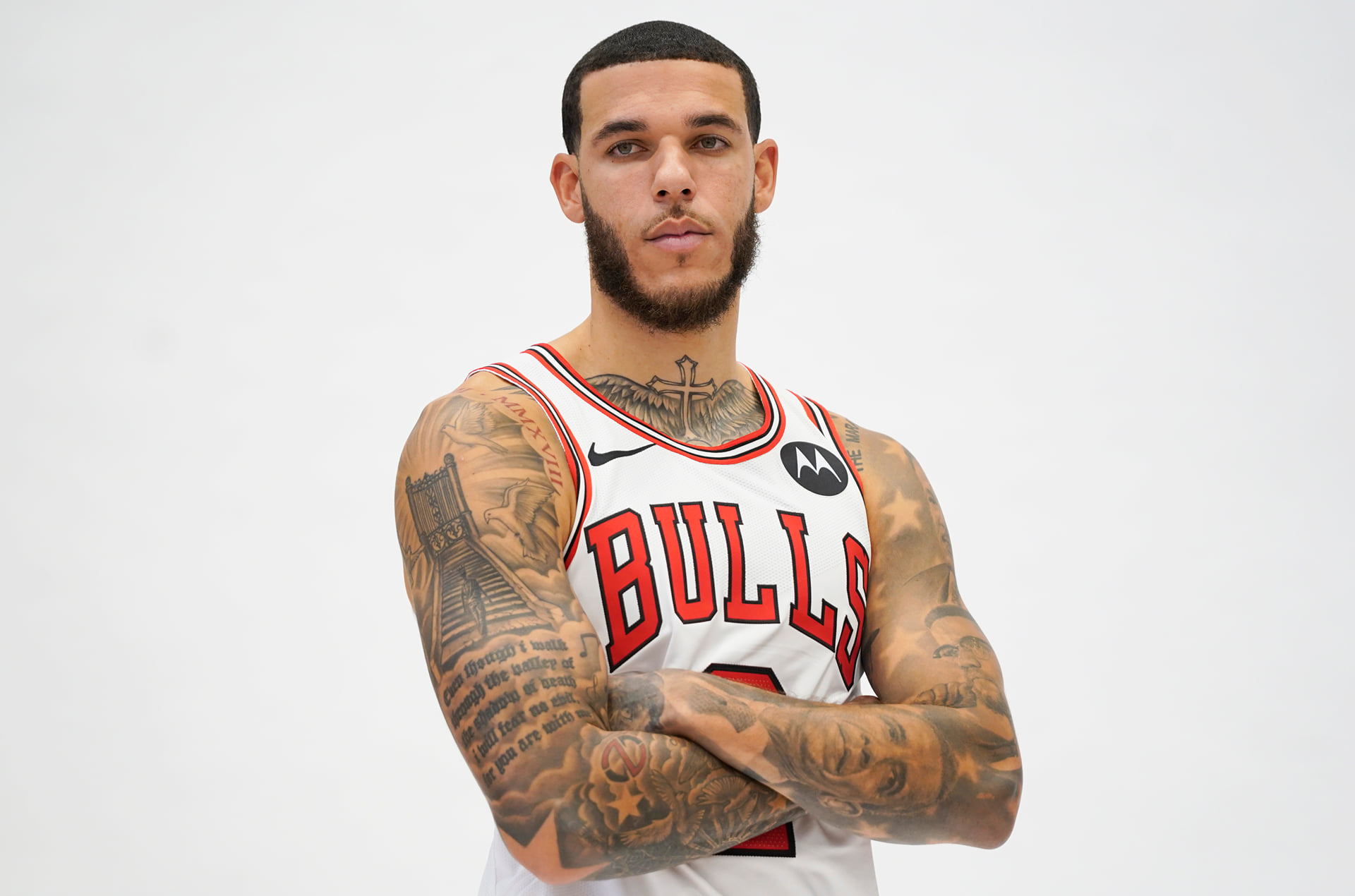
One sleeve features Black leaders and cultural figures: Martin Luther King Jr., Malcolm X, Rosa Parks, Jackie Robinson, Harriet Tubman, and Barack Obama. It’s often called his Black excellence sleeve. The Marathon Continues runs across the top.
The portraits vary in expression, angle, and shading. Those differences keep the sleeve from looking like a row of identical faces.
Ball has said he looks at the portraits when he needs perspective. He sees them as reminders of people who faced challenges greater than his own.
Portrait sleeves depend on likeness and layout. The faces need to remain recognizable and fit beside one another; shading and small gaps help separate them.
For a tribute sleeve, choose the people and the link between them before planning the layout. A shared family story, movement, or set of values can give the portraits a common thread.
The Big Baller Brand cover-up shows how tattoo plans can change
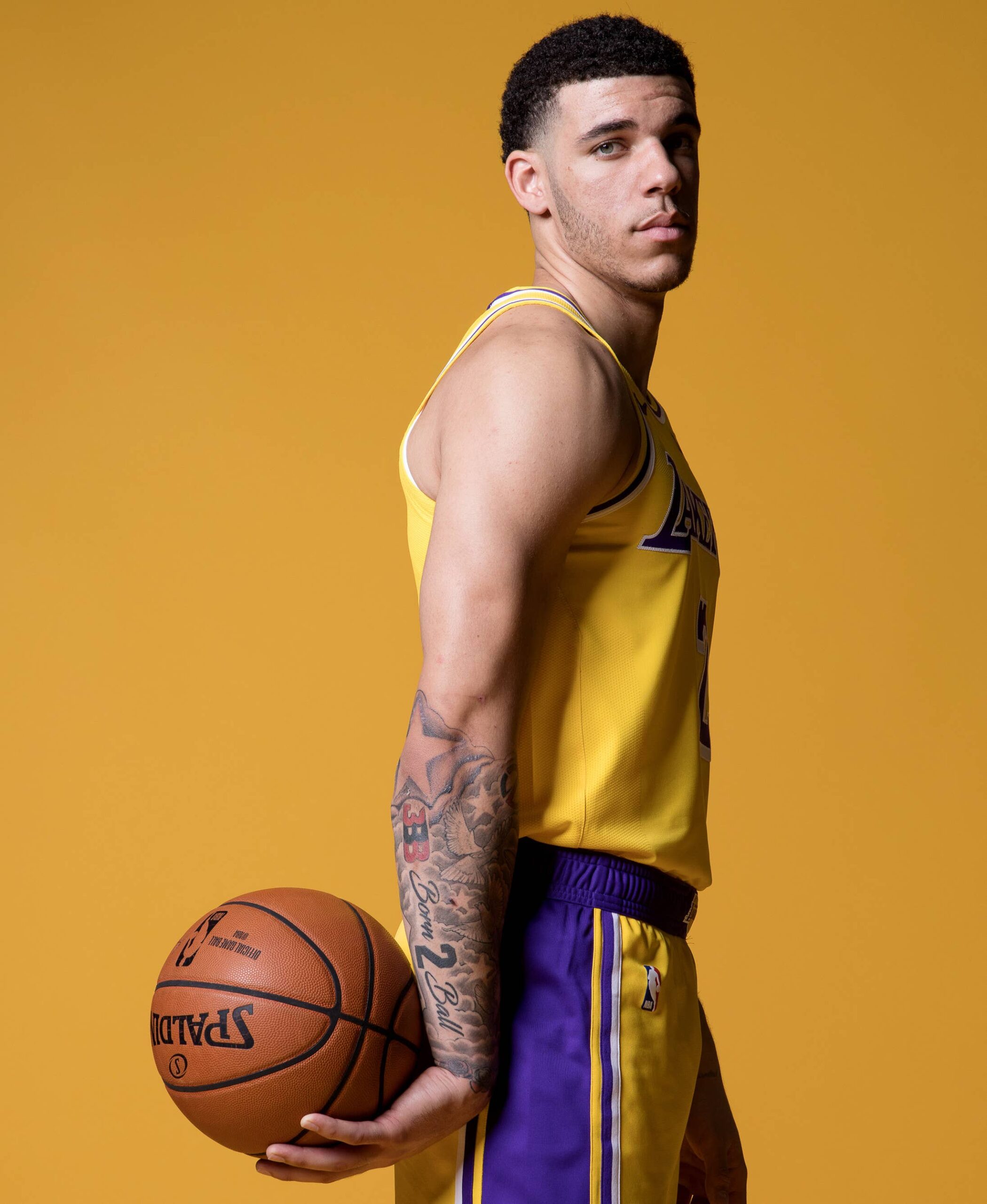
Before the portrait sleeve, Ball had a Big Baller Brand logo on his forearm. The NBA objected to visible commercial branding, so he covered it during games. The logo became part of the tattoo’s history for practical reasons.
The logo was later covered with dice showing one, two, and three for Lonzo, LiAngelo, and LaMelo. Nearby, Born 2 Ball keeps the family and basketball references together.
A side-view Lakers photo shows the dice with the surrounding sleeve. The cover-up replaces the logo with a family reference rather than a solid patch.
If you’re considering a brand or name tattoo, remember that the design may stay after a company or relationship changes. A number or symbol can leave more room to reinterpret it later.
Ball’s early wrist tattoos include words about being motivated by Jesus and dedicated to the game, and a “Born to Ball” phrase with his birthday. The collection returns to faith, family, and basketball.
The scripture sleeve, portraits, dice, chest cross, and wrist lettering point to faith, history, and family. If you’re planning a sleeve, choose the story first and build the images around it.
The text follows the arm, portraits have room, and lighter shading separates darker areas. You can use the same planning approach with designs of your own.
In the video below, Ball talks about the family and basketball ideas behind his tattoos.
171 container
172 container wp-word-count
173 text Word count: 1911
174 text Last edited by admin on October 8, 2026 at 8:42 am
175 container side-sortables
176 container Description: Publish, ID: submitdiv
177 heading Publish, Value: 2, ID: submitdiv-title
178 text Publish
179 container