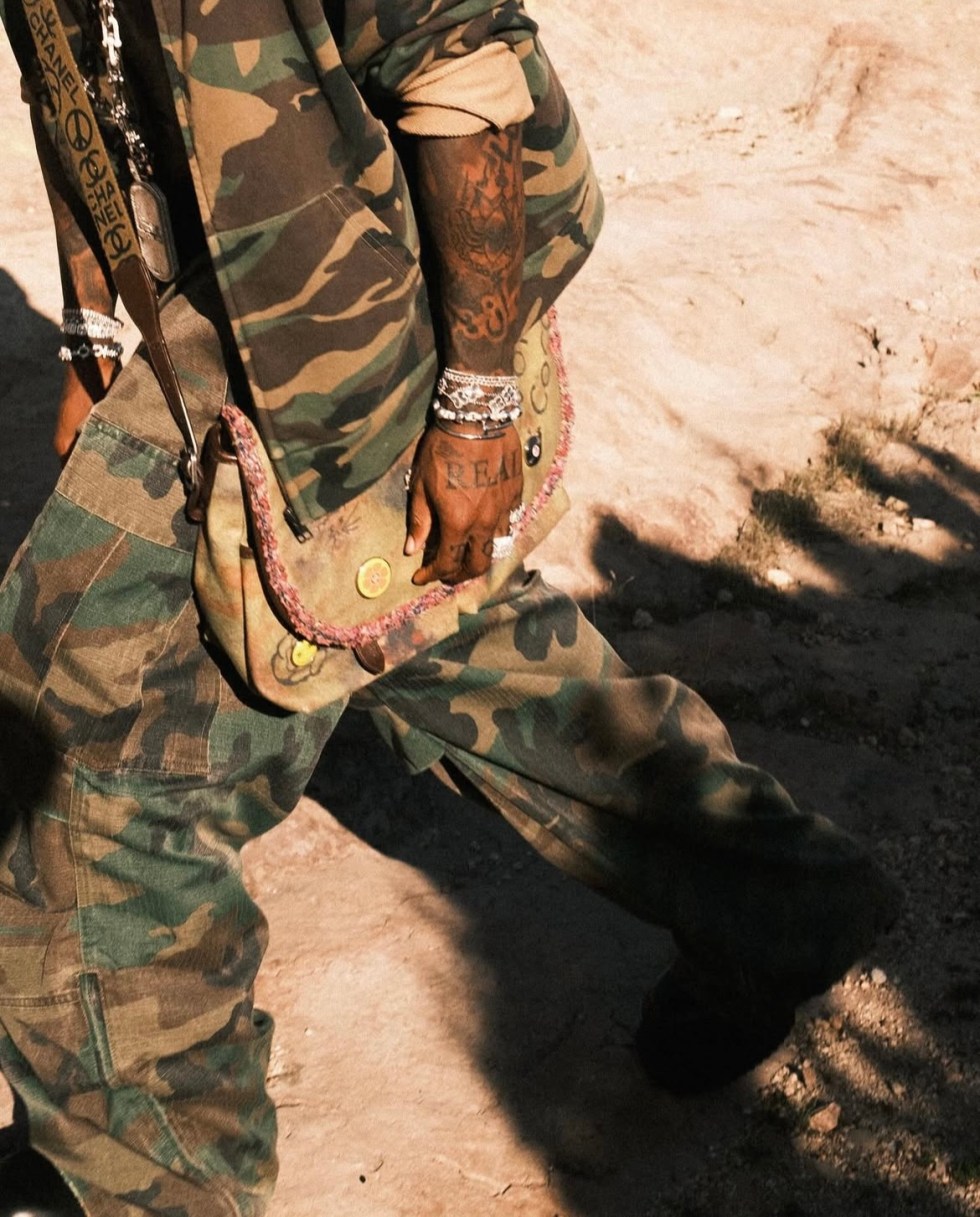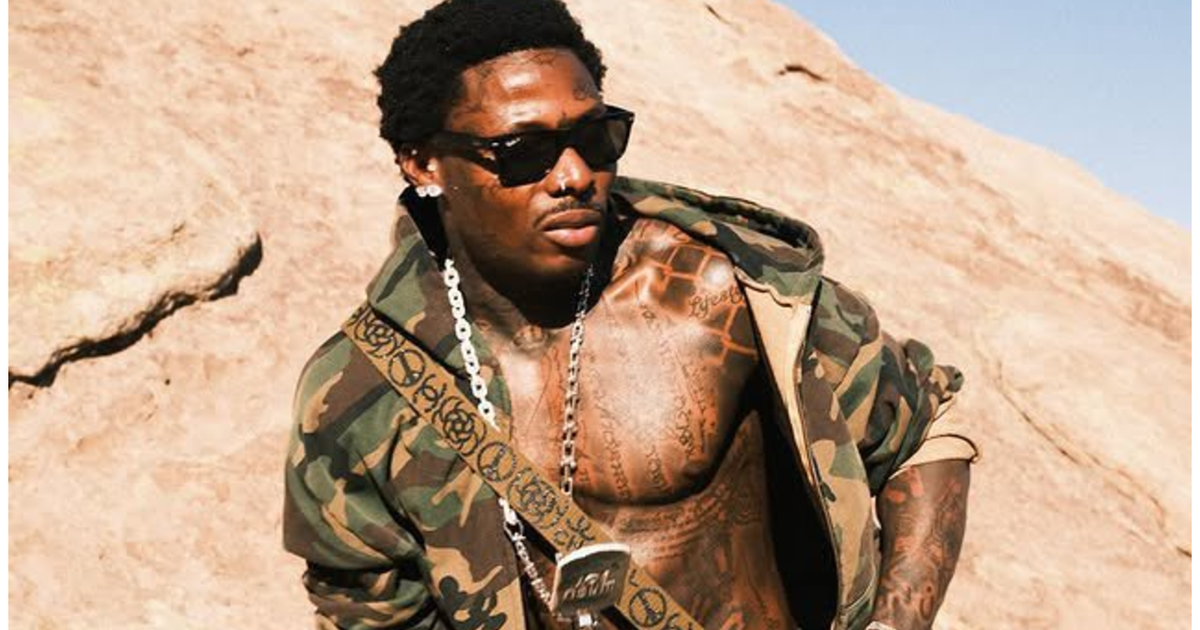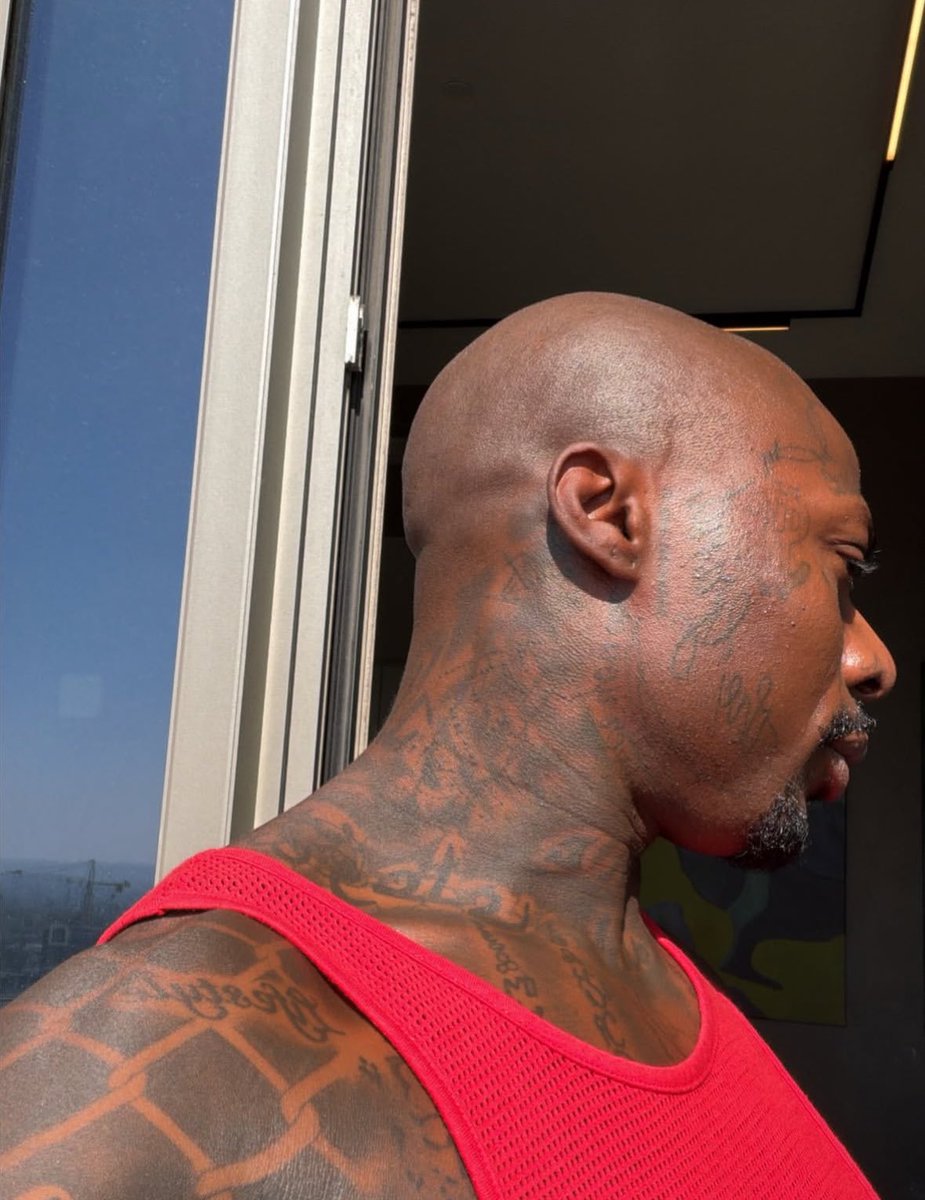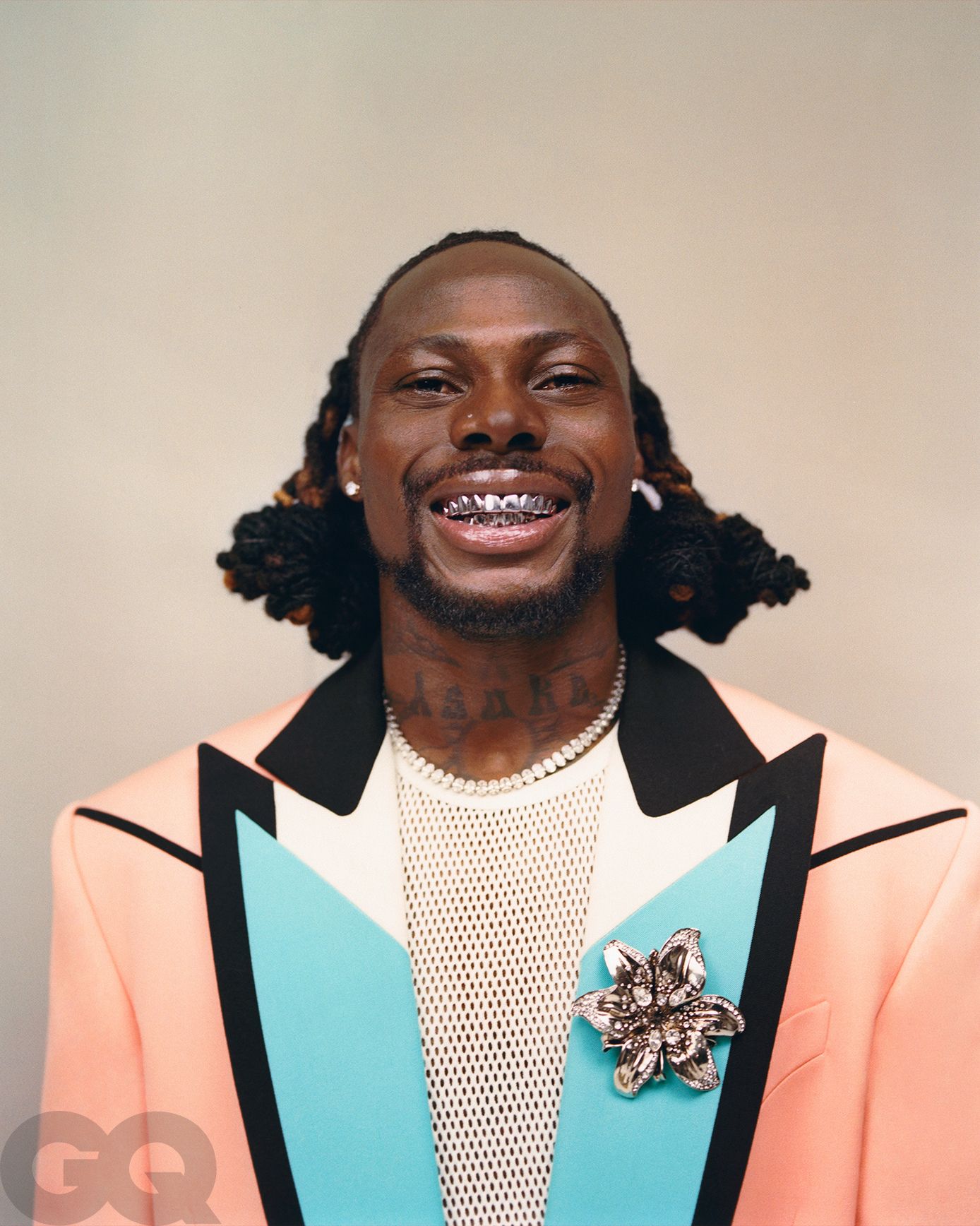
50 Cent’s tattoos have changed over the years. The large Southside and 50 design across his back is the piece most people recognize first. Older photos show more ink across his arms, including names and religious images.
He later removed many of those arm tattoos for acting work. In 2010, he said covering the ink for film roles took extra time in makeup, and that he planned to keep the large back tattoo.
The giant Southside and 50 back tattoo
50 Cent’s large back piece combines the word Southside with a huge 50 design.
The large back piece is the best-known tattoo in his collection. “Southside” crosses his upper back, above a large 50 that takes up much of the space below it.
The word Southside refers to South Jamaica, Queens, where Curtis Jackson grew up. The tattoo ties that place to his stage name.
Heavy black-and-gray shading, broad lettering and large figures fill the back. In early music videos and photos, it was the easiest part of his tattoo collection to recognize.
God Understands Me on his left lower arm
The phrase “God Understands Me” is tattooed along 50 Cent’s left lower arm.
On his left lower arm, the words God Understands Me appear in older photos. The phrase is clear and direct.
It reads as a statement of faith, though the words alone don’t tell us what personal meaning he gives it. Anything more specific would be a guess.
The tattoo was easy to see when he wore sleeveless tops. Older photos show his arms covered with many designs; this is one of the clearer pieces in those images.
The angel tattoo on his left shoulder
50 Cent has an angel tattoo on his left shoulder.
An angel tattoo on his left shoulder is another part of the collection. It has the black-and-gray look seen in many of his earlier tattoos.
Set high on the shoulder, the design can disappear under a T-shirt and show when he wears sleeveless clothing. It’s smaller than the back piece, but it adds another figure to the mix.
There’s more religious imagery elsewhere on his body. The Love and Hate tattoo below his stomach, for example, sits between heads of Jesus and the Devil.
Sabrina and the ghetto angel on his right arm
The right arm piece includes part of “Sabrina” alongside a larger ghetto angel design.
A design on 50 Cent’s right arm includes the name Sabrina, his mother’s name, beside a larger figure described as a ghetto angel.
The lettering and figure share the same section of his arm. The name is part of the larger image, rather than a separate tattoo on its own.
His mother died when he was young, and the Sabrina lettering has been described as a tribute to her.
Love and Hate below his stomach
The words “Love” and “Hate” sit below 50 Cent’s stomach, between religious images.
Below his belly button, the words Love and Hate sit between the heads of Jesus and the Devil. The figures frame the two words and give the design its strong visual contrast.
The tattoo sits low on his abdomen, so it’s usually covered by clothing. It shows most clearly in shirtless photos.
Marquise and Warrior on his right arm
“Marquise” and “Warrior” appear together on 50 Cent’s right arm.
The name Marquise refers to 50 Cent’s son, and the word Warrior appears alongside it on his right arm.
The piece pairs a family name with another word, both worked into a larger arm design. Older photos show this section among the many tattoos that once covered his arm.
The ink ran from his shoulder toward his forearm, so the Marquise and Warrior lettering wasn’t an isolated name tattoo. It sat within a much denser arrangement.
The second 50 tattoo on his left bicep
A second 50 design sits on 50 Cent’s left bicep.
50 Cent has another 50 tattoo on his left bicep. This one has a detailed frame around the number, unlike the much larger design on his back.
Both tattoos use the number from his stage name. The back piece covers a large area; the bicep design repeats the number on a smaller scale.
Photos taken years apart show different amounts of ink on his arms. Some tattoos visible in earlier pictures were later removed for film roles, so images from different periods don’t show the same collection.
Why did 50 Cent remove some of his arm tattoos?
In 2010, 50 Cent said he had removed some tattoos because film makeup took too long. Makeup artists had to cover the ink before each shoot, which could mean hours of preparation. He described removal as an ongoing process.
At the time, he expected his arms to be tattoo-free and said he planned to keep the large back tattoo. That helps explain why later photos show less ink on his arms while the back piece remained part of his look.
The change took place over time. Older photos show heavy arm coverage; later ones show the collection after some of that ink had been removed.
Here’s a video about the story behind 50 Cent’s famous back tattoo and its artist, Mister Cartoon:
LeAnn Rimes has small script tattoos on her foot, wrists, back, waist and ribs. Some have stories she has shared publicly: a phrase Eddie Cibrian came up with, matching initials, and a feather she tied to the end of a long recording contract.
An older photo also shows a butterfly drawn on her wrist for a campaign. It was temporary body art, not a permanent tattoo.
The foot tattoo says “the only one that matters”
The script across the top of LeAnn’s right foot reads “the only one that matters.” She said Eddie came up with the phrase during a vacation, and she liked it enough to have it tattooed.
She later told Taste of Country that getting a tattoo on her foot hurt less than she expected. The lettering is fine and runs across the top of her foot, where it shows with sandals.
“God’s work” brought a lot of comments
In 2019, LeAnn added “god’s work” to her left forearm. Tattoo artist Daniel Winter did the script, and she thanked him in an Instagram post.
Some of the reaction focused on the lowercase “g.” People disagreed over whether it should be capitalized. The debate was about spelling; LeAnn’s post showed the tattoo and thanked Winter.
The lettering is light and easy to miss in wider photos.
The butterfly on her wrist was campaign body art
In 2012, LeAnn shared a butterfly drawn on her left wrist to support The Butterfly Project. It was campaign body art, not a permanent tattoo.
The project offered support to people dealing with self-harm. LeAnn said she wanted to show support for people affected by bullying, and shared the drawing as part of that message.
LeAnn shared it as a sign of support, but it shouldn’t be counted as permanent ink.
“Love” sits low on her back
LeAnn has the word “Love” low on her back, near the waistband. It tends to show in bikini or low-backed photos and stays covered by most clothes.
There’s no reported backstory for this one. The word and its placement are the clearest details.
“Trust” and the arrow are easy to miss on her wrists
Two small tattoos sit around LeAnn’s wrists. “Trust” is on her left wrist, and a fine-line arrow is on her right.
Before getting the arrow, she called Kacey Musgraves’s “Follow Your Arrow” her theme song. Both designs are small enough to disappear in a wider stage photo.
The “E” on her finger matches Eddie’s “L”
LeAnn has a small “E” on her ring finger; Eddie has an “L” on his. The matching initials stand for their first names. She shared the detail after a fan noticed the letter in a photo.
The marks are easy to miss because they’re so small, but the matching letters make the connection clear.
Her feather tattoo marks a big career change
The feather on LeAnn’s left ribcage is tied to the end of a long recording contract. She said she got it after spending about 20 years under a deal she described as one of the worst in the music business.
The placement lets her keep it covered most of the time. It can show in a swimsuit or a cutout outfit, though the fine lines are partly hidden in some photos.
Another phrase associated with LeAnn is “Still I Rise,” from Maya Angelou’s poem. It appears around her hip or waist in older photos. The words are often read as a message about resilience, though the exact placement is hard to pin down from those images.
Why LeAnn’s tattoo collection feels so personal
Some of LeAnn’s tattoos have a public story: the foot phrase came from Eddie, their finger initials match, and she linked the feather to the end of her recording contract. The “god’s work” script drew comments about its spelling. The butterfly was different because it was drawn on for a campaign, not meant to be permanent.
Most of the designs are small and easy to cover. Script appears across her foot and forearm, while the feather and hip lettering sit beneath clothing. The collection has grown over time, but it isn’t built around one large sleeve or a single image.
For another country singer’s tattoos, see our Kellie Pickler tattoo breakdown. The designs are different, but both collections include small pieces tied to personal memories.
Watch LeAnn get the foot tattoo
The old Splash News clip below shows LeAnn getting the foot tattoo and talking about the phrase behind it.
Kellie Pickler’s tattoos are personal and easy to miss in a concert or red-carpet photo. There is no huge sleeve or sprawling collection; instead, she has a few small designs tied to family, faith and parts of her life that matter to her.
Three pieces come up most often in older interviews and photos: “Faye” on her foot, three stars on her left arm, and “Pray” on her right wrist. Here is what Pickler has said about them, along with what the clearest pictures show.
Kellie Pickler’s “Pray” wrist tattoo
“Pray” runs across Pickler’s right wrist in loose, flowing script. A tiny star-like mark above it gives the simple lettering a little extra shape.
Pickler has described this tattoo as a reminder rather than a mystery. She called it self-explanatory and said it was her newest tattoo at the time. The wrist placement suits the idea: she can see the word during a busy day, and it is visible when she works or reaches for a microphone.
The close-up shows that the lettering is not barely visible. The dark script runs across much of the inside of her wrist and reads clearly when she turns her hand over. It is often the first tattoo people notice when she wears short sleeves or bracelets.
The three stars on her left arm
Three outlined stars sit on Pickler’s left arm: one larger star with two smaller ones nearby. The light, almost hand-drawn lines look softer than the heavy black stars common in traditional designs.
Pickler has connected the stars to her USO tours, adding one for each trip she made to perform for service members. She later said she might stop adding stars and had even considered changing direction with an American flag design.
That background gives the design a clear purpose. The stars are not just filler; they mark a part of her career that mattered to her, while leaving room for the idea to change over time.
“Faye” honors her grandmother
Pickler’s first tattoo was her grandmother’s name, “Faye.” The decorative script sits on the top of her foot, with a small flourish above it. It is delicate but readable in a close photo.
She has joked that her grandmother was not thrilled when she first saw it. The reason for the tattoo is sweet, though: Pickler wanted to keep her grandmother’s name close. The foot is a personal placement, not the first thing people see.
Shoes and camera angles can hide it completely. With open heels, the name appears above the shoe and is easy to spot; in most other red-carpet photos, the tattoo is out of view.
A closer look at the wrist ink
A second close-up shows how the wrist tattoo sits beside Pickler’s everyday jewellery. The word is high enough to remain visible above a bracelet, and the script looks settled in rather than freshly done.
This angle also clears up details a distant red-carpet photo can blur. The letters and the small mark above them are easier to see, confirming that it is the same “Pray” tattoo from a more useful viewpoint.
Pickler has not presented it as a complicated symbol that needs decoding. It is a word she can see, a straightforward reminder to carry with her.
What the street photos add
Street-style photos help explain why the tattoos are easy to overlook. They are small and placed where shoes, sleeves or accessories often cover them. A design may be clear in one picture and completely hidden in the next.
The close views also support the basic picture from Pickler’s interviews: this is a short list of tattoos with personal stories, not a secret collection revealed by online rumours. “Faye” is for her grandmother, the stars connect to her USO work, and “Pray” is a faith-based reminder.
That is a useful way to read Kellie Pickler’s tattoo history. Each design is simple, but each has a reason behind it. For more singer tattoos with stories attached, browse the musicians tattoo archive.
The difference between a confirmed meaning and a guess based on a photo is worth keeping clear. Pickler has talked about the stars, the name on her foot and the reminder on her wrist. Those explanations say more than a caption calling them “three cute tattoos”; together they connect family, her USO work and faith.
She also seems to prefer designs that can stay private when she wants. Most shoes cover the foot tattoo; a bracelet or long sleeve can hide the wrist; the stars are easy to miss when her arm is turned away. That is different from a large piece across a shoulder or chest.
The documented list is fairly short, but the stories are in the details. Each tattoo points to a person, a belief or a meaningful part of her work, without needing an elaborate explanation.
Before the video, one quick note: a photo can show where a tattoo sits and what it looks like, but it cannot prove every rumour repeated online. For Pickler, these are the three pieces backed by her own comments and clear image coverage.
Oliver Sykes has spent years making his body a kind of archive for Bring Me The Horizon. The tattoos are bold, uneven, symbolic and sometimes hard to decipher, which suits the band’s music. In interviews, he has talked about starting young, tattooing himself and choosing designs that would hold on to a memory even as a song changed over time. His collection feels less like a finished sleeve than a map of the years that shaped him.
The surviving Behind the INK interview is a useful starting point. Sykes discusses the meanings behind his tattoos, his face ink, the painful pieces and the unusual situations that can come with travelling for appointments. He does not name every symbol in a neat catalogue, but he does explain the attitude behind the collection. For him, each piece needs a reason to be there; it does not need to fit a perfect plan.
His neck tattoos are commonly described through life-and-death imagery, with a rose between the two ideas. That gives the collection a visual centre. For a touring musician who has watched friendships, bands and versions of himself change, life and death are not just abstract themes. The rose softens the contrast without making it sentimental; it suggests that beauty and damage can sit side by side.
The face tattoo draws the most attention because it changes a person’s first impression. Sykes has never seemed interested in blending into a conventional image. The ink makes his alternative identity visible before the audience hears a note. In the older interview, he speaks plainly about how the tattoos came about, including work from a period when he was learning by doing.
That history of tattooing himself gives the early pieces a different feel from a polished celebrity commission. Self-applied ink carries its own risk, and the unevenness becomes part of the memory. For Sykes, the mark left by the process can matter as much as the symbol. A list of motifs alone cannot explain why the collection feels so personal.
One of the phrases most closely associated with him is “Your Pain Is a Gift,” across his knuckles. The words fit Bring Me The Horizon’s emotional world: pain is acknowledged, but it can also be turned into something useful. On his hands, the phrase is hard to miss during a performance. Each gesture brings another part of the band’s visual language into view.
Other tattoos have been connected to songs, friends and earlier versions of the band. Some fans identify symbols from music videos as tattoos; others mistake temporary artwork, stage styling or a recent appointment for permanent ink. Comparing photos from different years helps, as does separating what Sykes has confirmed from what fans have inferred. When the evidence stops, a tattoo guide should leave some things unexplained.
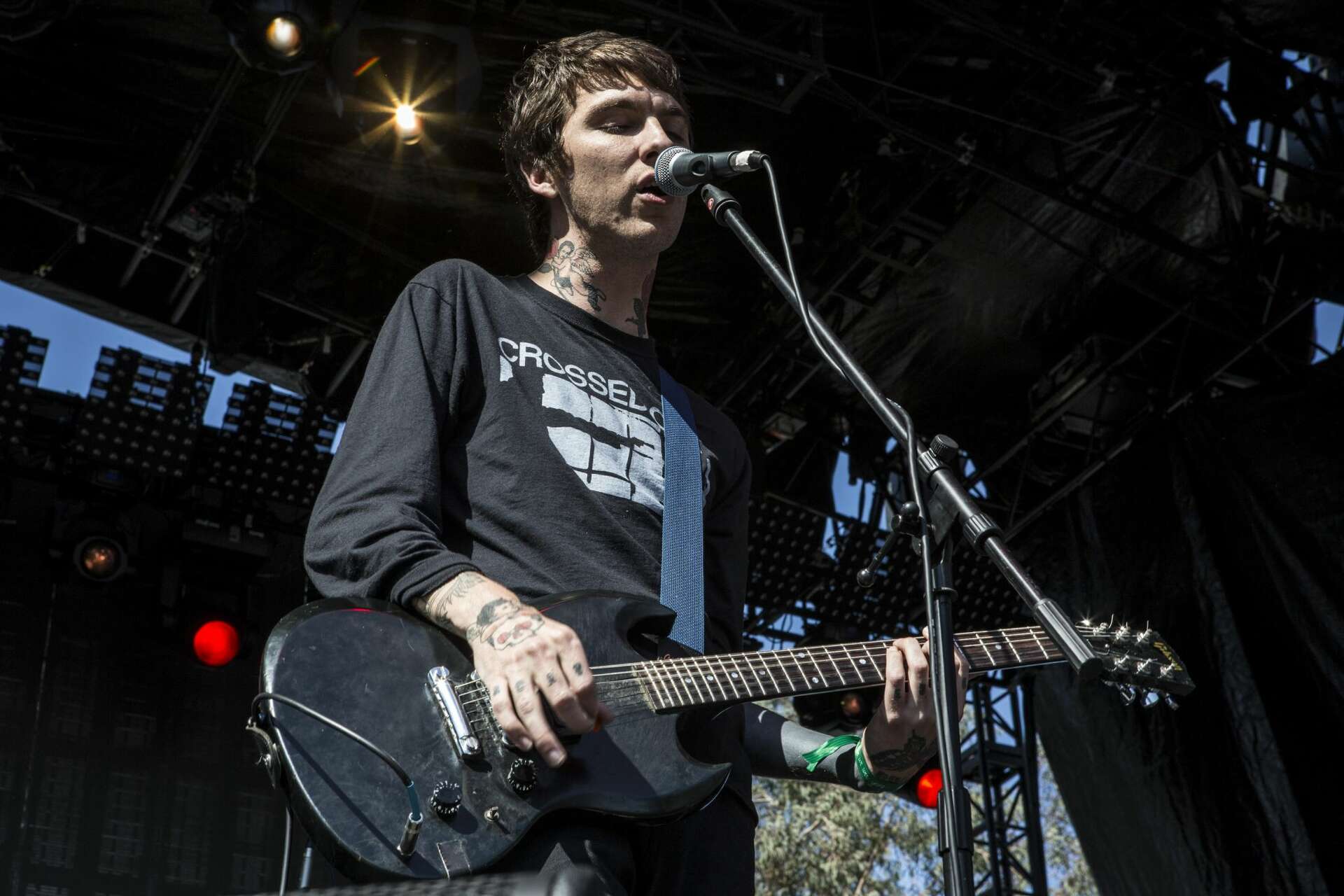
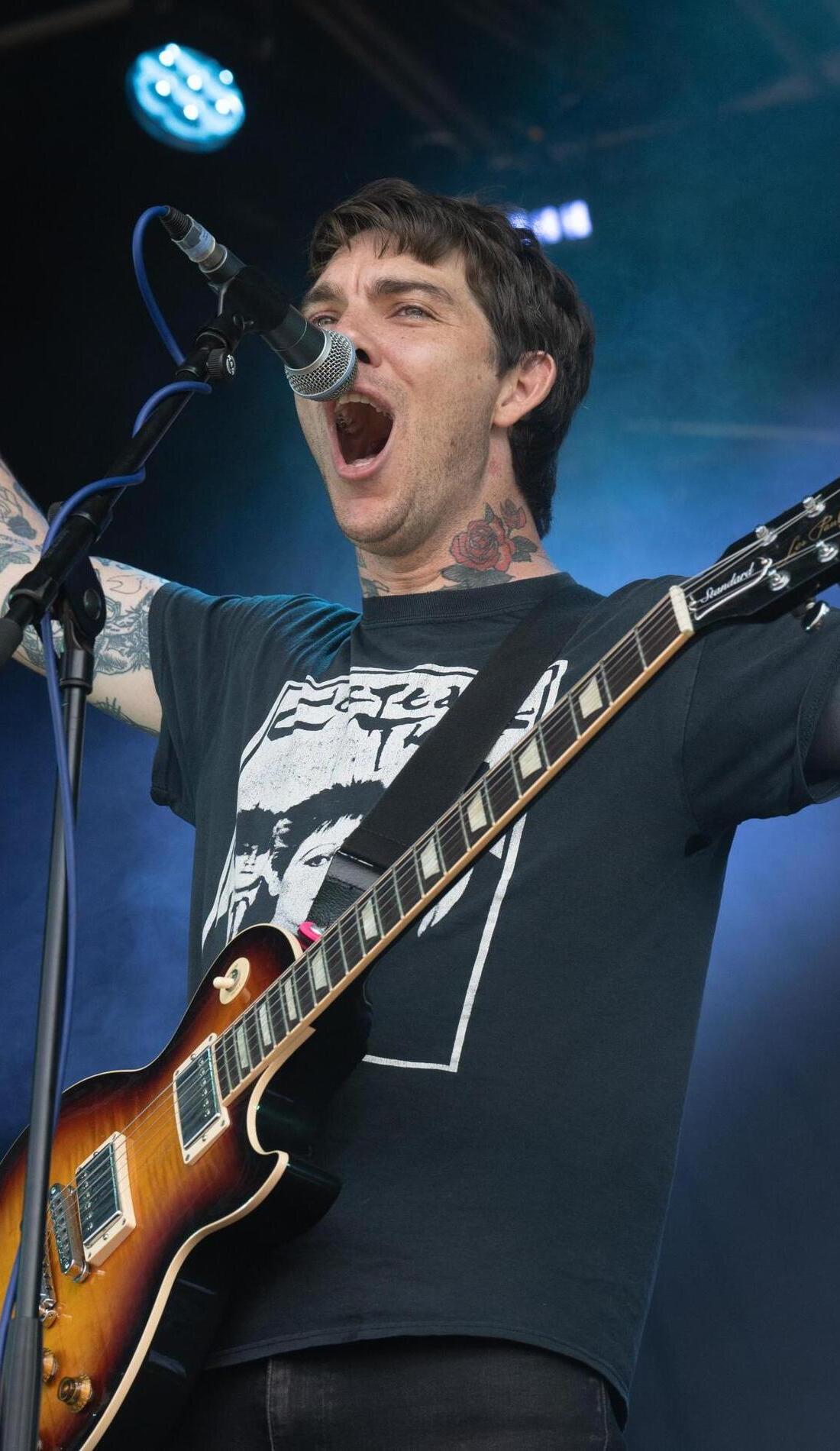
Photos also make the changing collection easier to see. In a 2014 festival shot, the marks belong to the lean, restless look of that period. A 2016 performance photo shows different lines and shapes beneath hard stage lighting; later images capture a more established performer whose tattoos have become part of his silhouette. No single image proves every placement, but together they show how the collection has developed.
That timeline matters because Sykes’ tattoos have not stayed tied to the scene that first made him famous. New references, appointments and ideas about the band continue to find their way into the collection. His interviews make it sound like an open process, with another appointment, unexpected experience or design still to come.
The way Sykes talks about pain does not come across as simple toughness. In the tattoo interview, he describes painful work and the odd situations that can arise when an artist is tattooing a musician on the road. The humour keeps the stories from feeling too solemn. Tattoos can carry real meaning without being treated as sacred objects. They are reminders, but they also record curiosity and impulse.
Bring Me The Horizon’s black-and-white imagery can make the tattoos look harsher than they might in everyday light. Stage lighting flattens colour and turns lines into shadow, while a close-up can reveal details that disappear in a crowd shot. Neither view tells the whole story. A useful inventory compares different sessions and respects what each photo can actually show.
Meaning and biography are not quite the same thing. A design may remind Sykes of an event without explaining everything about it. A rose can remain a rose; the life-and-death imagery can stay open to interpretation. “Your Pain Is a Gift” may also speak to listeners in a way its wearer never intended. Good tattoo writing leaves room for both the owner’s meaning and the reader’s response.
The collection also reflects Bring Me The Horizon’s changing look. The band moved from a rawer metalcore image toward a broader, more flexible sound, and Sykes’ tattoos have evolved alongside it. They do not need to match a single era: older work stays beneath the newer designs, making those shifts visible.
Fans often notice the tattoos in motion rather than in a studio portrait. A hand closes around a microphone, his neck turns under a spotlight, or a sleeve rides up during a backstage conversation. The ink becomes part of the performance without having to call attention to itself. Each new photograph adds another partial page to the archive.
There are limits to what can be said with confidence. Online lists often repeat placement claims without dates, and fan-made diagrams may combine work from different years. The careful approach is to name the phrases Sykes has discussed, describe visible designs without overreaching and label the rest as undocumented. That respects both the artist and the reader.
The face and hand tattoos shape how the audience reads his expressions. Face ink is visible before he speaks; knuckle lettering appears when he reaches for a microphone or gestures toward the crowd. These designs move through the show rather than sitting still in a portrait, which helps explain why the collection has become so closely tied to his public image.
It is easy to treat every tattoo as a clue to some hidden biography, but a simpler reading can be more revealing. The pieces suggest someone who wanted his outward image to carry some of his inner intensity. Some mark people or memories, others confront pain, and some record a choice made at a particular age. Together they show a willingness to commit before knowing exactly what comes next.
The interview brings out that candid side. Sykes is willing to say when a tattoo hurt, when an experience was strange or when an idea came from an impulse. That makes the work feel lived in. The collection keeps its mistakes and rough edges rather than hiding them. Those details help it feel like his, not a generic celebrity sleeve.
As the band keeps changing, the tattoos will gather new context. A design from an early club show or tour can look different after years of arenas and shifting lineups. Its meaning does not have to remain fixed: the ink keeps the memory, while the person wearing it moves on.
That sense of being unfinished is part of the appeal.
A documented inventory of Oliver Sykes’ tattoos
The strongest public record includes the life-and-death imagery with a rose on his neck, the face tattoo he discusses in Behind the INK, the “Your Pain Is a Gift” knuckle lettering and a wider range of blackwork and illustrative pieces visible at Bring Me The Horizon shows. Sykes has also discussed tattoos without giving a full key to every symbol. Those can be recorded as visible or reported, but should not be assigned meanings without evidence.
Why the collection still feels personal
Sykes’ tattoos are compelling because they show a process. They belong to a musician who has changed his sound, stage presence and relationship with the past. Some look like declarations, some like private jokes and others like reminders of a time he no longer needs to explain. The collection forms a biography in fragments, not a single logo.
Watch Oliver talk about the ink
The Behind the INK interview pairs well with the photos: Sykes talks about the meaning behind the designs, face tattoos, pain and the practical realities of travelling for appointments.
Roddy Ricch doesn’t have a huge collection of face tattoos, but the pieces he’s chosen carry meaning. The clearest example is “Prolific”, written on his face as a tribute to Nipsey Hussle, the West Coast artist who reportedly supported Roddy before his wider breakthrough. Photos also show lettering and arm designs, including ink that connects with his music and personal language.
His documented collection is smaller than the catalogues of more heavily tattooed rappers, which makes care with the details especially important. A few clear designs can tell a stronger story than a long list of guesses. Here’s what published coverage and photos show, where the tattoos are and how they connect to his music without turning into merchandise.
“Prolific” is Roddy’s clearest tribute tattoo
The face tattoo most often associated with Roddy Ricch is the word “Prolific”. Coverage describes it as a tribute to Nipsey Hussle, who was an early supporter and one of the West Coast artists to recognize Roddy before he became widely known.
The word makes the tribute feel particular. It isn’t just a name or portrait; it describes a way of working. It connects Nipsey’s reputation for output and independence with the path Roddy was making for himself. Putting it on his face keeps that respect visible instead of tucked away in a sleeve.
It would be easy to turn that connection into a full account of their relationship, but the tattoo can’t confirm every detail fans repeat online. What’s documented is the word, its placement and its reported tribute. The rest belongs to the personal history behind the ink.
The lettering works like a signature
Roddy’s other visible tattoos include lettering and name-like designs that work almost like signatures. In photos, they fit with his stage name, album art and handwritten-looking logos. The marks are direct and easy to read, and they hold their shape in the blur of a music video.
Lettering may look simple, but placement changes its effect. A word on a hand or arm shows when the artist gestures; a word on the face becomes part of every portrait. The same letters can feel intimate in close-up and larger than life onstage. Roddy’s ink makes good use of that shift in scale.
Some photos don’t show enough to make out every word. The image may be cropped, or jewelry and clothing may cover part of the line. A careful inventory names what can be read and leaves uncertain fragments alone instead of treating a low-resolution guess as fact.
His arm tattoos connect the personal and the performative
Roddy’s arm tattoos are easier to spot in performance photos and casual portraits than in close-ups of his face. There’s more room for lettering and symbols, and the designs show when he holds a microphone or wears short sleeves. They feel like part of his working image rather than a special reveal.
Arm tattoos tend to build up over time. One piece can sit beside another without requiring a full sleeve plan. A photo from one year may show open skin that a later design fills; a jacket may hide work that was visible before. The timeline matters more than a final number.
The overall look mixes dark outlines with compact lettering. Roddy hasn’t covered every visible inch of skin, so the open space remains part of the design. The tattoos stand out because they’re selective, with room around each mark.
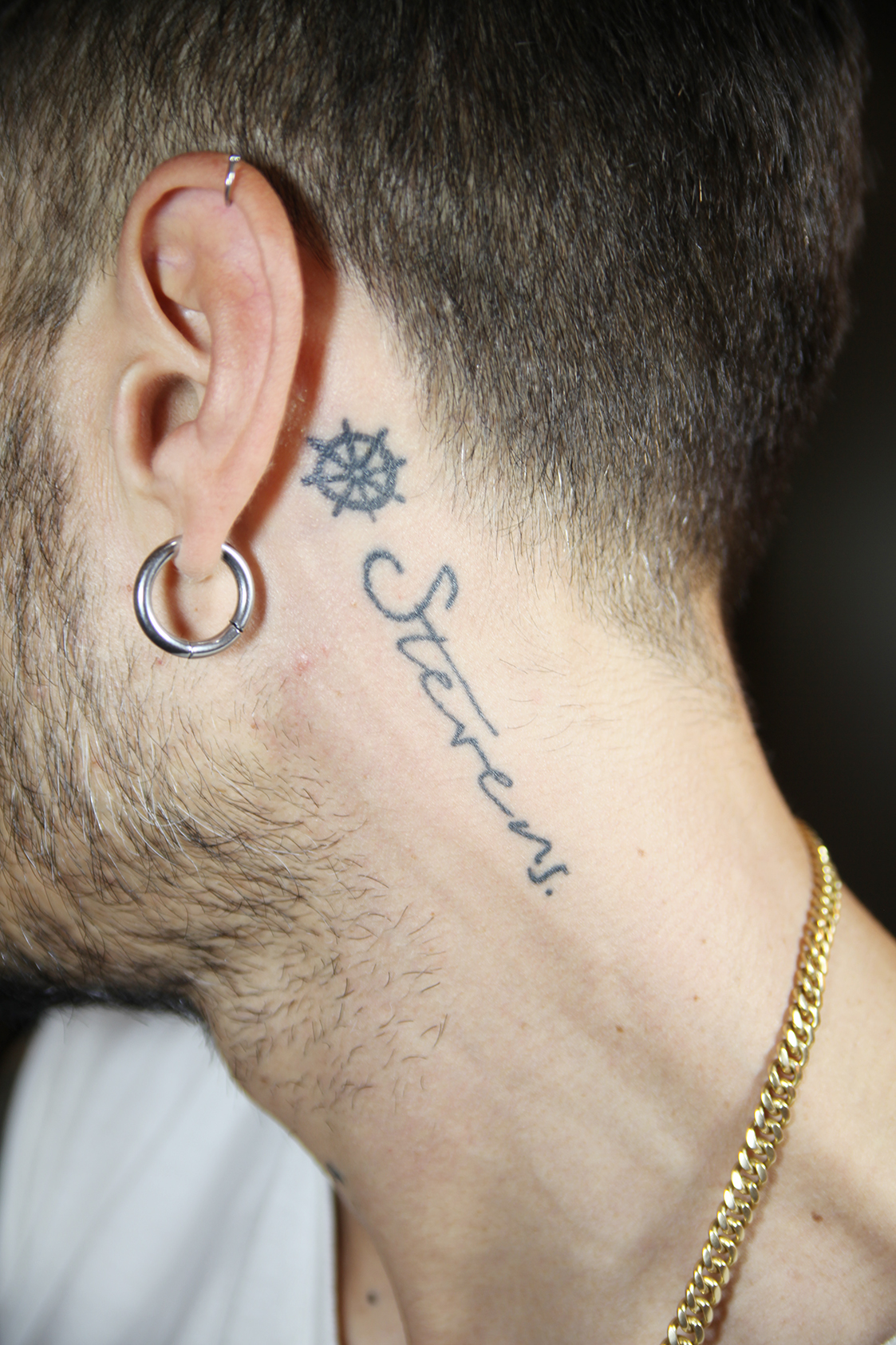
Music references appear without turning every tattoo into a lyric
Roddy’s songs and tattoos are often discussed together because both touch on identity, ambition and survival. That connection makes sense as part of his public image, but it doesn’t mean every tattoo refers to a lyric. Sometimes he simply wants to keep an image or a word.
The phrase “Done Caught My Tempo” has appeared in social posts about new Roddy ink, showing how easily music language moves into tattoo culture around him. But a short clip or caption isn’t the same as a full explanation from the artist. The safest account is that music-related wording appears in coverage, while the full intention may remain private.
Readers can enjoy the collection without decoding every mark. The ink shares themes with the songs, but it doesn’t need to illustrate them one by one. A tattoo can echo an era without being a literal track title.
The face piece changed how fans read his image
Roddy’s early public image was relatively clean and polished. The face tattoo added a sharper edge without replacing the fashion and restraint that were already part of his style. That contrast makes the word stand out in portraits: the lettering is direct while the rest of the image can stay controlled.
Face tattoos shift the balance of a photograph. Your eye goes to the eyes, then the lettering and the expression around it. A simple word can become the first thing fans recognize. “Prolific” works almost like a visual title card.
The tattoo also makes a lasting link between Roddy and the person he was honoring. It isn’t hidden somewhere only he can see; it appears in interviews, on red carpets and at performances. That public visibility can be powerful, but it doesn’t reveal the private reason he chose the tattoo.
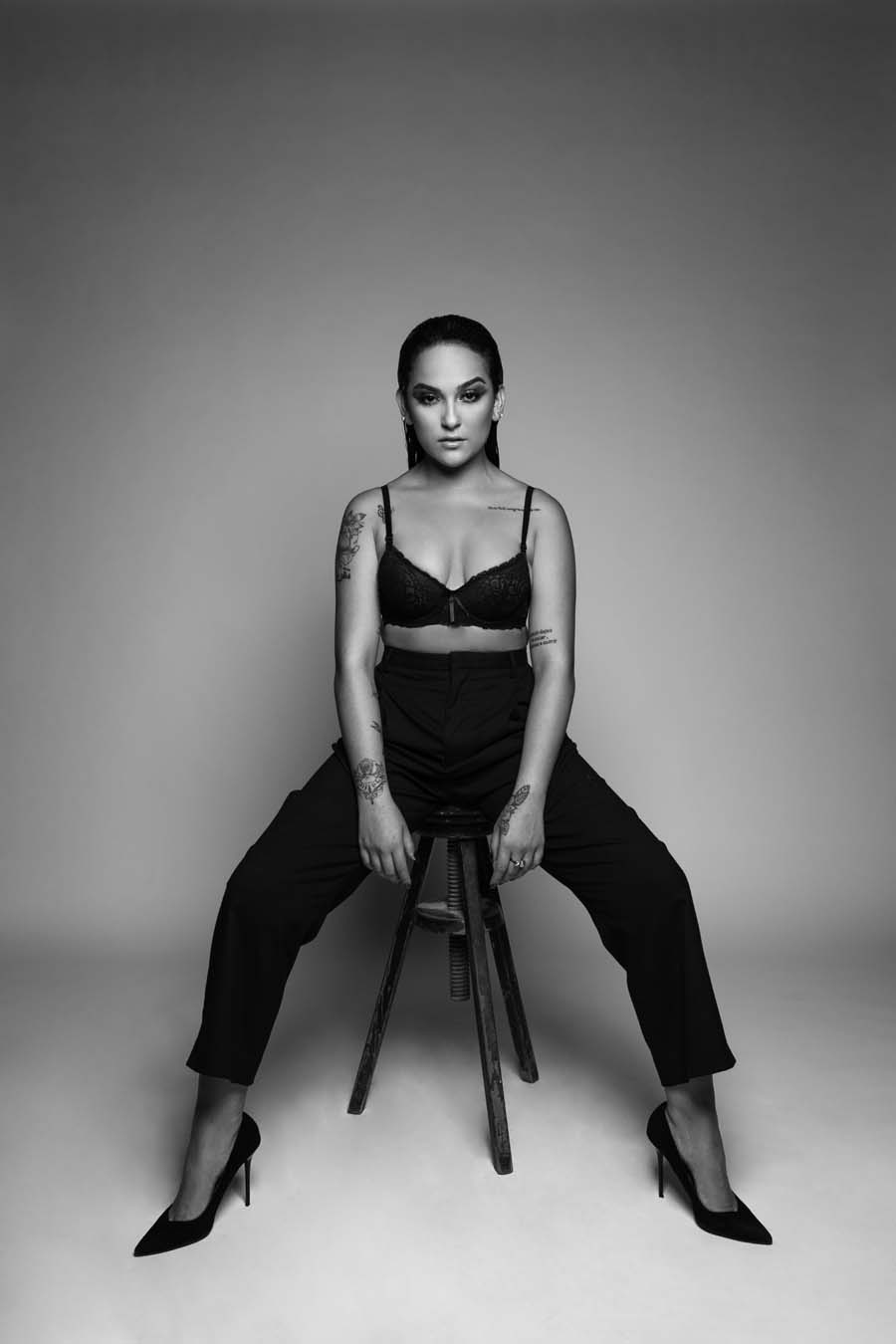
Visibility and explanation are two different things. The lettering appears in nearly every close portrait, but its personal history can’t be reconstructed from pixels alone. The same is true of arm designs that show in one stage photo and disappear under a sleeve in the next. Photos help us follow the ink, but they don’t make every design an open book.
That care also keeps the tribute from getting swallowed by talk of style. “Prolific” is part of Roddy’s look, but it remains a memorial. The word connects his own rise with the artist who supported him, and its placement keeps the connection in view. Other lettering can be part of the collection without carrying the same meaning.
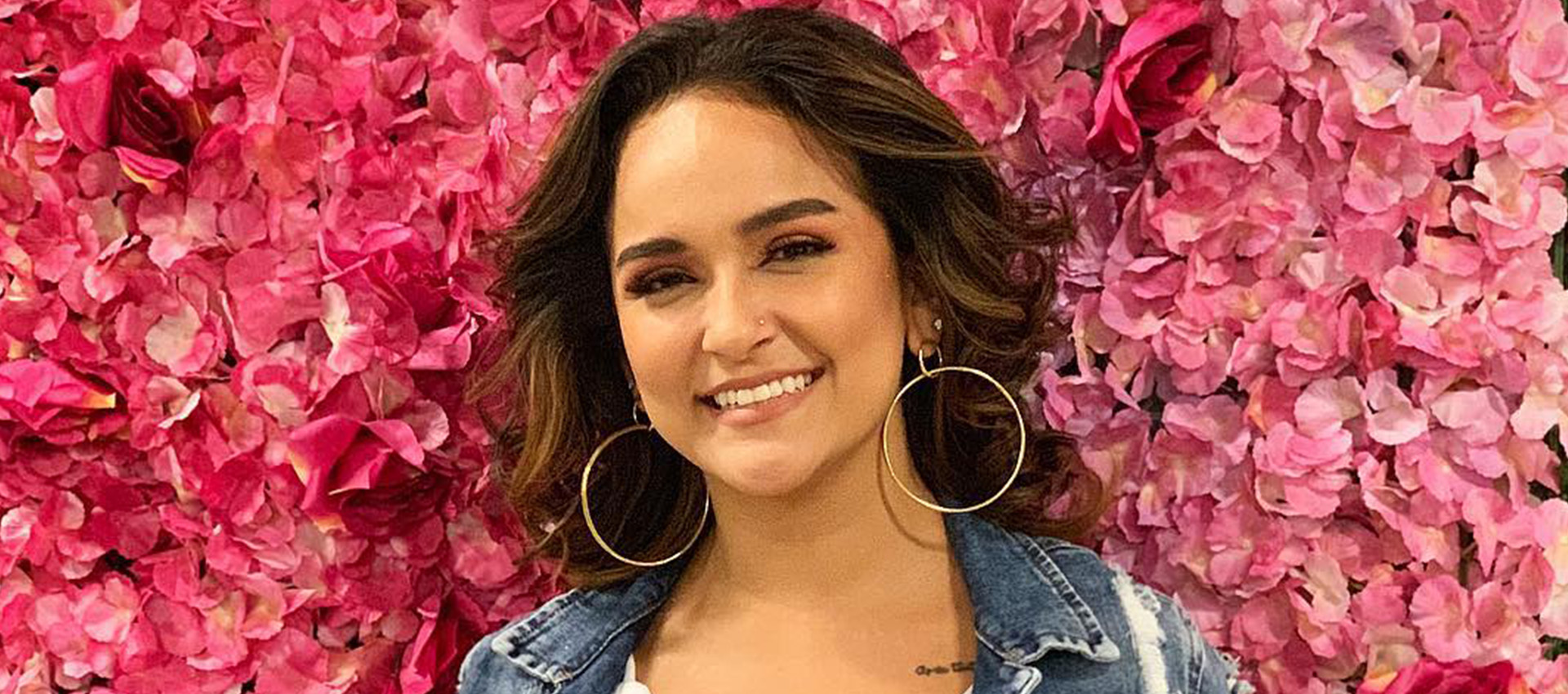
The clearest documented tattoo is “Prolific” on Roddy’s face, reported as a tribute to Nipsey Hussle. Photos also show lettering and name-like marks on his arms and upper body, along with music-related wording that has appeared in coverage of newer ink.
The exact total is harder to establish because photos span different years and body areas. Some designs are clear enough to describe by placement; others are partly hidden or too blurry to read. A responsible count should leave those gaps visible.
There’s also a difference between tattoos Roddy wears and designs fans make in response to his lyrics. Search results include fan art, Pinterest boards and tattoo artist posts inspired by his music. Those are part of his cultural reach, but they aren’t tattoos on his body. Keeping that distinction clear makes the guide more useful.
The strongest photos show context. A close crop can confirm a word; a wider performance image shows how the tattoo sits with clothes, jewelry and movement. Both views help, but neither tells the entire story. Roddy’s ink looks deliberate in part because the marks have space around them, not because every blank patch has been filled.
That restraint leaves room for whatever comes next.
The tribute works because “Prolific” carries two stories: it remembers Nipsey Hussle and describes the kind of artist Roddy wanted to become. One adjective holds grief, respect, ambition and continuity without needing a large illustration.
That’s a good way to understand the collection as a whole. The tattoos are selective rather than overwhelming. Words and compact designs mark the people, ideas and chapters Roddy wants close. The ink stays readable without shouting in every direction.
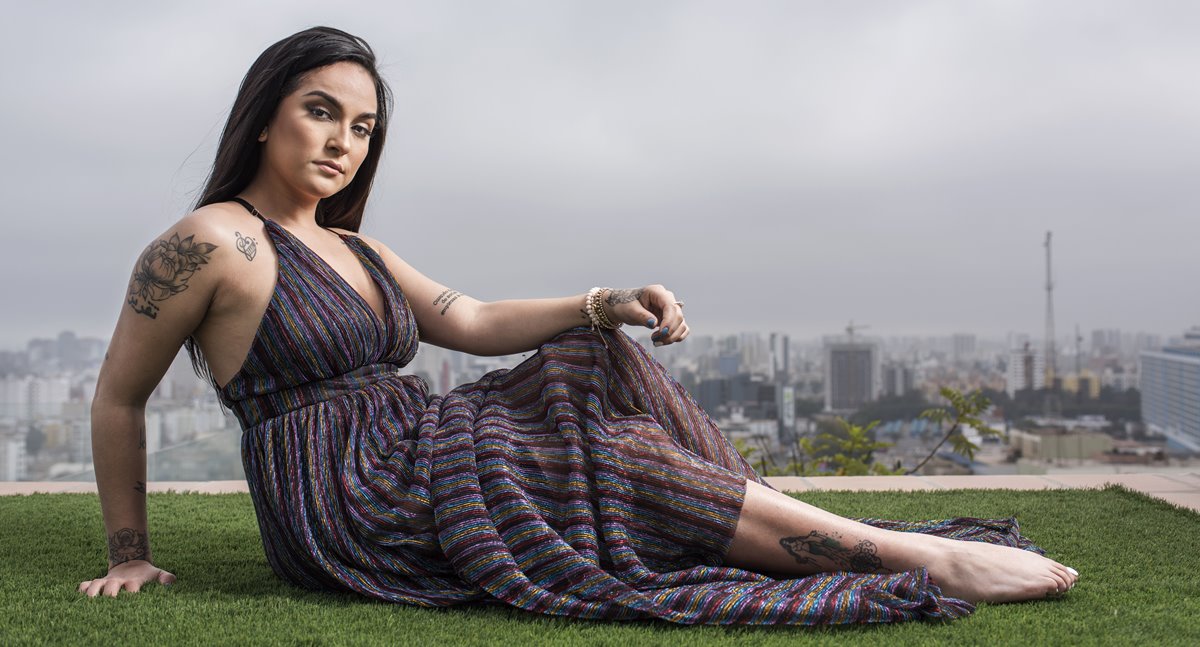
There may be more tattoos in the future, and new photographs might clarify pieces that are hard to see today. For now, the strongest story is the face lettering, the arm work and the way musical language continues to appear around the collection.
Watch Roddy Ricch in a GQ profile
This GQ video isn’t a dedicated tattoo tour, but it offers a relevant profile of Roddy in his own voice and public style. It adds context after the tattoo inventory.
Christina Aguilera performs at the 8th Annual Motorola Anniversary Party at the Palladium in Hollywood, California, on October 2, 2006. Photo: Rafael Amado/PI, Prensa-internacional.com.
Christina Aguilera’s tattoos are small, but they hold pieces of her story. She doesn’t have a full sleeve; instead, a Hebrew phrase across her lower back, a pair of initials, a neck design and a few compact symbols have appeared through different eras, from early pop stardom to a more deliberate approach to self-expression.
Some tattoos point to love or devotion; others have been linked to spiritual curiosity, friendship or changing identity. The photos aren’t always clear, and older galleries often reuse the same images from different angles. It helps to separate the pieces that are well documented from details that remain uncertain.
The collection pairs private wording with visible pop-star symbolism. The tattoos are personal, but they’re also part of the visual record of Aguilera’s career. Even a small mark can invite a closer look at a celebrity tattoo.
The Hebrew line across her lower back
The tattoo most often associated with Aguilera is the Hebrew phrase across her lower back. It is commonly translated as “I am my beloved’s and my beloved is mine”. The words come from the Song of Songs and carry a romantic, devotional tone.
Its placement gives Aguilera some control over when it’s seen. She can show it in a performance outfit or keep it covered by everyday clothing. In photos, the lettering follows the curve of her back like a band of text rather than a small, separate symbol.
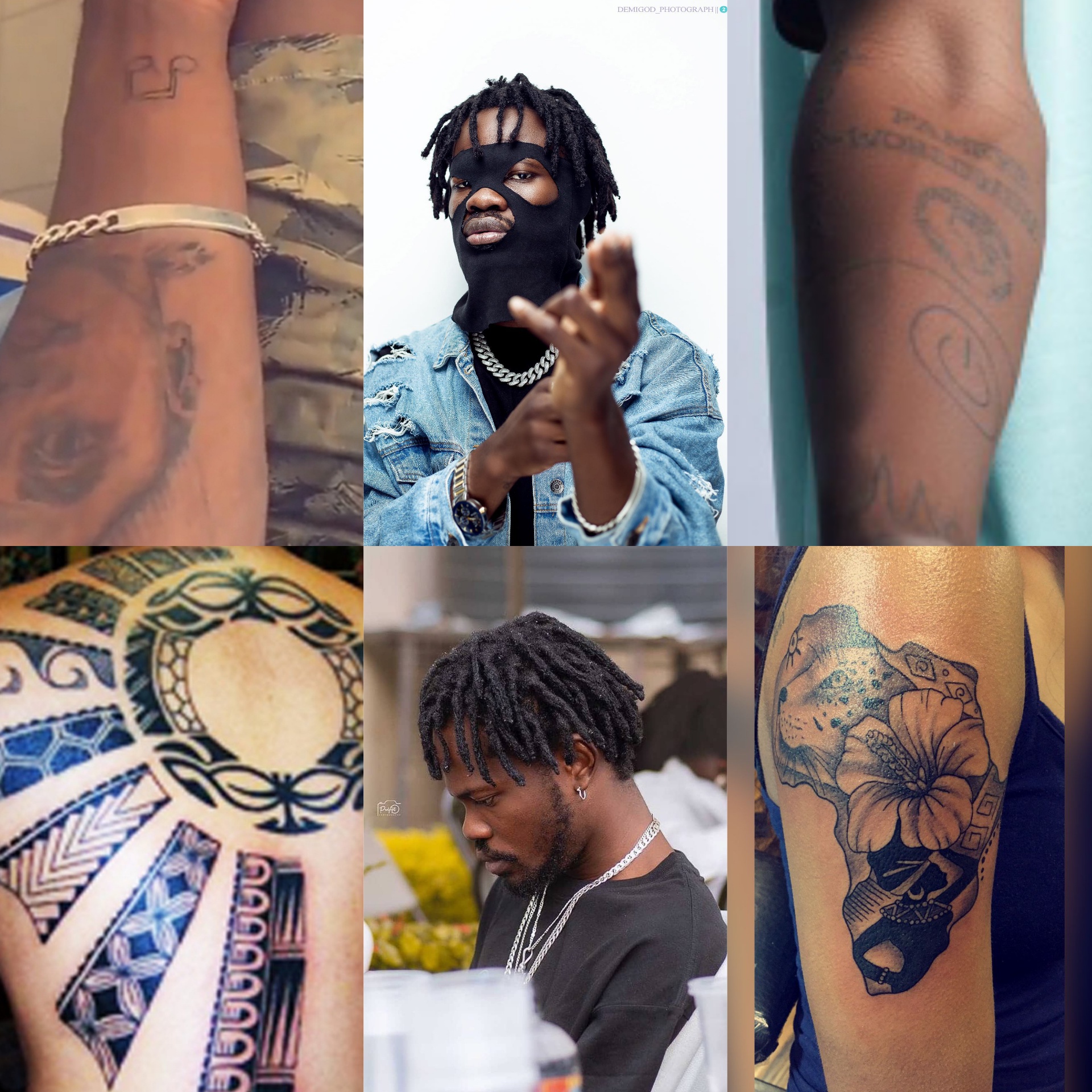
The phrase is often mentioned alongside the initials JB below it, which are widely understood to refer to her former husband, Jordan Bratman. Together they point to two different things: an enduring statement and a specific relationship from one period of her life.
The translation deserves care. Hebrew lettering can be mirrored or hard to read in a low-resolution image, and celebrity tattoo lists sometimes repeat a translation without explaining its source. The phrase itself is consistently identified, making it the best-documented meaning in Aguilera’s collection.
The initials JB make the back piece more personal
Aguilera has also been photographed with the initials JB below or near the Hebrew script. They’re generally linked to Jordan Bratman, the record executive she married in 2005. Initials are simple to draw but can carry a specific history, even after a relationship changes.
That’s why it can be limiting to describe tattoos only by their shape. Two letters may look anonymous to someone seeing a photo for the first time, but mean something very particular to the person wearing them. Aguilera’s back ink is both lettering and a snapshot of one chapter in her life.
Some sources group the initials and Hebrew phrase as one tattoo; others count them separately. The pieces sit close together, but they have distinct meanings. For a useful inventory, it makes more sense to mention both than to debate the total count.
There’s also a contrast between them. The biblical phrase is broad and devotional, while the initials refer to one person. That combination gives the design more depth than a generic lower-back tattoo.
The Hebrew neck tattoo and a period of spiritual curiosity
Aguilera has also been photographed with Hebrew lettering, or a Hebrew-inspired design, at the back of her neck. Coverage connects it to her interest in Kabbalah early in her career. Unlike the lower-back phrase, it’s easy to see when her hair is pulled up or cut short.
Sources describe the neck piece in different ways, and some online discussions question its translation. The most careful description is a small tattoo in Hebrew script associated with a period of spiritual exploration. A precise translation would need clearer lettering and a reliable explanation.
That uncertainty matters. Tattoos in another language can be mistranslated or copied incorrectly, even when the lettering looks beautiful. The neck design is visually striking, but not every translation repeated online should be treated as confirmed.
It looks like a snapshot of a young artist exploring belief, identity and presentation. The tattoo sits between personal curiosity and public image, a tension that runs through several of Aguilera’s early designs.
The mark’s visual role is easier to see than its exact meaning. Aguilera’s neck tattoos appeared when her styling was bold and theatrical, and she was photographed constantly. A small mark could become part of her silhouette in a video, on the red carpet or in a performance close-up.
That doesn’t mean she chose the tattoo for publicity. Placement simply affects how a private choice is seen. A lower-back phrase can stay covered; a neck design enters the frame whenever her hair moves. Aguilera’s collection includes both kinds of visibility.
Photos also show smaller designs around her arms and wrists. Roundups often list them with the better-known pieces, but a blurry image isn’t always enough to confirm a separate tattoo. Overall, the photos suggest a preference for compact lettering and symbols rather than one large scene.
Mirrored photos can reverse lettering, and tight crops can make nearby marks look like parts of the same design. The neck tattoo, the lower-back phrase and the JB initials are the clearest anchors for understanding the collection.
Small symbols and the swirl on her wrist
Aguilera is also associated with a small swirl or infinity-like mark on her wrist. Some roundups read it as a symbol of continuing movement or infinity; other coverage simply notes the shape. It’s best described as a small tattoo with a reported interpretation, not a meaning she has definitively confirmed.
A wrist tattoo can be a private reminder that the wearer can see, while remaining easy to cover with a cuff, bracelet or watch. That placement suits the more personal side of Aguilera’s ink.
Some reports also mention a flower or floral detail. Because floral tattoos are common in celebrity galleries, photos need to be checked carefully before a design is treated as a distinct piece. The images support a collection of small symbols, but sources don’t agree on an exact count.
Small doesn’t mean meaningless. A tiny mark can hold as much memory as a large tattoo, especially if it was chosen during a formative time. What her tattoos say about changing identity
Aguilera’s tattoos make more sense as a timeline than as a catalogue. The early neck lettering reflects a period of spiritual curiosity and highly stylized pop imagery. The Hebrew phrase and JB initials connect to love, marriage and a particular personal chapter. Smaller wrist and floral marks add detail around those larger themes.
No single tattoo has to sum up her identity. The initials can record a relationship without defining Aguilera forever. They remain part of what mattered to her at one point, even as her life moved on.
There’s a contrast between the devotional language of the lower-back phrase and Aguilera’s glossy public image in the early 2000s. The tattoo is tender; the styling around it could be loud, playful or provocative. Those sides can coexist. A private story can sit beneath a very public image.
Her ink is less about collecting designs than keeping reminders. That may be why the Hebrew phrase gets the most attention, while the smaller marks reward a closer look.
A careful inventory of Christina Aguilera’s documented ink
The most consistently reported pieces are the Hebrew phrase across her lower back, the JB initials linked to Jordan Bratman, the Hebrew-script or Hebrew-inspired neck tattoo, and smaller symbols including the wrist swirl or infinity-like mark. Floral imagery appears in some galleries, but counts vary because photos are reused and sources group nearby or matching marks differently.
A careful inventory separates a visible placement from an uncertain interpretation. The lower-back phrase is clear; the initials are widely identified. The neck design is visible, but its exact translation is less secure. Smaller wrist and floral marks appear in photos, though their meanings aren’t always documented directly.
When comparing images, check placement and line shape, and look at how the tattoos sit beside one another. A mirrored photograph may reverse the back phrase; a stage shot may hide the wrist, and a hairstyle can cover the neck. Those differences don’t necessarily mean Aguilera has new tattoos.
The collection needs no sensational number. Its story lies in the mix of devotion, romance, spiritual curiosity and pop reinvention. Each piece marks a different kind of connection.
Watch Christina Aguilera talk about her tattoos
This short tattoo-focused video gives another view of Aguilera’s ink and how it fits with her public image and changing style.
Ski Mask the Slump God’s tattoos are hard to miss. Arrows, numbers, symbols and lettering cover parts of his face, and fans often try to read them like a map. Some designs have come up in tattoo videos and interviews; others are visible in photos without a clear explanation from Ski.
His 777 tattoo stands out, along with the marks around his mouth and across his face. Photos also show ink on his hands when he performs or poses. Here’s what the images and public comments can tell us, and where the meaning is still unknown.
The face tattoos are the first thing people notice
The tattoos on Ski Mask’s face are a cluster of small, dark designs, not one large image. Arrows, numbers and other compact marks sit around his nose, cheeks and mouth. From a distance they can blur together; a close portrait makes it easier to see each piece.
Lighting, makeup and filters can change how the designs look from one photo to the next. A stage shot may make the ink appear darker, while shadows can hide a fine line. It’s often easier to confirm a tattoo’s placement than its meaning, and the two shouldn’t be confused.
Because the marks are on his face, they’re part of Ski’s everyday public image. A hoodie can cover a sleeve; a face tattoo is visible in interviews, photos and videos. People can see the ink without knowing the story behind it.
The lips and arrow design has become a recognisable detail
One close-up clearly shows the lips and arrow tattoo detail around Ski’s mouth. The bold lines and arrow are easy to make out even in a less-than-sharp image.
Online guides often give confident meanings for each line. But a symbol could come from a favourite character, a spiritual idea, a private joke or an artist’s suggestion. Without Ski’s own explanation of that mark, it’s safest to describe what’s visible: an arrow and lip-area ink as part of his face tattoo arrangement.
The mouth moves when he raps, talks or smiles, so a tattoo there changes with his expression. It moves with him instead of staying fixed like the image in a portrait.
Symbols sit beside the lettering
Photos show different small symbols around Ski’s eyes, forehead and cheeks. Some images reveal details another photo doesn’t, but the marks read as separate shapes rather than a single blackout design.
It’s easy to understand why fans want to decode them, especially when a mark appears across different years. Still, a guess shouldn’t be presented as something Ski said. We can describe an unexplained tattoo without pretending to know its meaning.
A symbol’s usual meaning in a guide may not be the reason Ski chose it. A careful description sticks to the shape, placement and any source that discusses it, and leaves room for a better explanation if he shares one.
The 777 tattoo stands out from the smaller marks
The 777 tattoo is one of the recognisable marks associated with Ski Mask the Slump God. The repeated numbers stand apart from the harder-to-read symbols elsewhere on his face, which makes them an easy shorthand for his wider collection.
Photos show the numbers clearly, but their meaning is less clear. Some fans read 777 as a lucky or spiritual number; others connect it to Ski’s own symbolism. Unless he explains it directly, those are interpretations, not confirmed meanings.
The repeated number gives viewers a simple detail to recognise in photos and videos. It gives the busier set of marks a visual anchor, even if we don’t know what 777 means to him.
The hand tattoos carry the face story onto the body
Photos show tattoos on Ski’s hands too, extending the ink beyond his face. They’re visible when he holds a microphone, gestures during a performance or speaks in an interview.
Those designs are harder to track. Fingers bend, sleeves cover wrists, and photos don’t always show both hands; one clear shot may reveal a mark while hiding another. It’s more useful to describe what each image shows than to give a total count.
The face and hand designs both use compact shapes that are easy to notice from a distance. Together, they make the tattoos part of Ski’s gestures and stage presence, not just details in a close-up.
The collection grew with his public image
Photos from different years suggest that Ski’s tattoos came together over time. Earlier pictures show one version of the face arrangement; later portraits make additional marks easier to see. Changes in styling, lighting and image quality can also make an old tattoo look new.
That makes a final count hard to pin down. The available photos are uneven: a show, music video and tattoo explainer may each reveal a different part of the collection. It’s better to think of the tattoos as an evolving set than a complete checklist.
As Ski’s sound and public image changed, the tattoos became part of the look fans associate with him. That doesn’t mean every tattoo refers to a song; it means the ink became part of the image people saw as his career developed.
A careful inventory of Ski Mask the Slump God’s documented tattoos
From available photos, the clearest entries are a 777 number tattoo, the arrow and lip-area ink, other small face symbols and lettering, and multiple hand tattoos. That describes the visible pieces without claiming every line has been identified.
Fans and online guides have suggested meanings for the numbers and symbols, but those remain interpretations unless there’s a direct source. The designs themselves are visible; the reasons behind all of them are not.
That distinction still gives readers a useful overview: the 777 motif, the arrow and lip placement, and the hand tattoos that extend the look. It also leaves room for pieces that aren’t clear in the photos.
Why the mystery is part of the appeal
Ski’s face tattoos invite questions, but not every answer is public. The designs help shape his visual image even when their backstories are private. Fans may look for references in a celebrity’s public image, but that doesn’t tell us what a particular tattoo means to the person wearing it.
Some designs are easy to identify, some have been discussed in tattoo videos, and others are glimpsed only in photos. Being clear about what we don’t know is part of giving an accurate account.
The numbers, arrows, symbols and hand tattoos give Ski a look that’s easy to recognise. Their meanings may be personal or open-ended. What’s clear is that the tattoos have become part of his public image.
Denzel Curry’s tattoos draw the eye much like his music: there’s plenty to notice, but not every detail comes with an explanation. One design has a well-documented story; other tattoos are visible in photos without a clear account of what they mean. Curry hasn’t offered a public explanation for every mark, so it’s worth separating what’s known from what’s only a guess.
The best-documented example is the “WingRiddenAngel” forearm tattoo, which Curry got in memory of XXXTentacion. Photos also show black ink across his arms and upper body. In a 2024 Under Your Skin interview, tattoo artist Grace Neutral spoke with him about his relationship with tattooing. Here’s what those sources tell us, and where the details remain uncertain.
The WingRiddenAngel tattoo carries the clearest public meaning
XXL reported in 2018 that Curry had “WingRiddenAngel” tattooed on his forearm in honor of the late XXXTentacion. That gives the piece a documented story, rather than an interpretation based on an unclear photo. Of Curry’s tattoos, it’s the clearest place to start.
Curry and XXXTentacion were both part of South Florida’s music scene, and their careers overlapped in ways that made the tribute resonate with fans. The words on Curry’s arm read as a memorial. Its forearm placement makes it visible in performance photos, but that doesn’t tell us everything it means to him. Curry hasn’t described all the feelings behind it; what has been reported is straightforward: he got it to honor a friend and fellow artist.
Because the story is already documented, there’s no reason to speculate about its font, where it was done, or private conversations around it. Those details haven’t been verified.
Black ink does most of the visual work
Photos show substantial black lettering and solid black designs across Curry’s arms. The number and shapes that are visible vary by image and year: a sleeve can look full from one angle, while another photo reveals bare skin or smaller tattoos. Describing placement and appearance is more reliable than assigning a final count.
His arm tattoos are easiest to track because they show up in performance photos, portraits and close-ups. Some look like lettering; others are hard to identify clearly, so it’s safer to describe them as dark graphic shapes. That may be less specific, but it avoids naming a design the photo doesn’t clearly show.
The ink is bold enough to read from a distance, especially onstage. The overall effect comes from the contrast: skin, shadow and heavy lines, with little bright color. The look suits the energy of his performances, but that alone doesn’t show that any particular tattoo refers to a song.
The tattoos sit naturally inside his stage image
In performance photos, Curry’s tattoos can look like part of his stage look, though they were added over time. Bare arms or a sleeveless shirt make the ink easy to see; a jacket may reveal only a small part. That can make an older tattoo seem new when it appears from a different angle.
The arm lettering is well documented in photos, so it has become part of his public image. Smaller tattoos, pieces on his upper body, and designs usually covered by clothing are harder to identify unless Curry names them. We can describe what appears in a photo without trying to solve every unclear shape.
His look has changed over the years, from clothing and hair to the silhouettes he wears onstage. Tattoo visibility changes with it. Photos from 2018, later festivals and a 2024 interview don’t give us one complete picture of his tattoos; each captures a different moment.
The XXXTentacion tribute should not be separated from the person
The “WingRiddenAngel” tattoo is often discussed for its lettering, but the reason behind it is clearer than any reading of its design. It was reported as a tribute after XXXTentacion died. Their shared South Florida roots help explain why fans see it as part of Curry’s story; it isn’t just another word in a photo gallery.
Still, the public account doesn’t tell us everything Curry felt about the loss. It tells us why the tattoo was made, not what every part of it means to him. The meaning belongs to Curry, especially for a memorial to someone who died young. We can acknowledge the tribute without filling in what he hasn’t shared.
A tattoo can be seen in different ways: as a personal memorial to Curry, a connection between two artists for listeners, or simply words caught in a photograph. Those readings can sit alongside each other. Seeing the ink doesn’t give anyone the full story behind it.
Newer tattoo coverage is easier to find than a complete inventory
A 2024 interview with Grace Neutral for Under Your Skin also gives a closer look at Curry talking about tattoos. It’s a longer conversation focused on tattooing, rather than a brief red-carpet question. Still, it doesn’t give us a complete list of every design he has.
Recent coverage is not the same as a complete inventory. Curry could get a new tattoo after an interview is published, and older photos may hide pieces that become easier to see later because of clothing, angle or image quality. His collection is best treated as something still changing.
A careful timeline starts with the 2018 WingRiddenAngel tribute and adds later portraits and interviews where they fit. A clearly visible tattoo can be described; a shape that’s only partly visible should stay unidentified. That’s more reliable than repeating a claim from an unsourced fan post.
What can be confirmed from the public record
The available reporting gives one clear example: the “WingRiddenAngel” forearm tattoo, which XXL identified as a tribute to XXXTentacion. It is the only design whose wording, placement and reason have all been reported together.
Photos also show other dark ink on Curry’s arms and upper body. Some pieces look like lettering; others are bold shapes or blackwork. The photos show where the tattoos are and what they look like, but not what each one means. Later portraits and a tattoo-focused interview show that Curry continued to engage with tattooing after the tribute, though they don’t pin down when every design was added.
Some fans have connected the dark imagery with the mood of “BLACK BALLOONS.” It’s an understandable interpretation, but a song’s theme doesn’t prove Curry has a matching tattoo. It helps to keep interpretation separate from what’s been confirmed. The tribute is documented; the rest is best described by what can be seen until Curry identifies the designs himself.
Why fans keep looking for the next piece
There isn’t one big reveal behind Curry’s tattoos. A new photo or interview can show more of his arms than the last, so fans compare different years, zoom in and try to tell whether a line is new or was simply out of sight before.
It’s natural to be curious, but the photos don’t answer every question. Not every dark mark needs an invented backstory, and some designs may remain private even when they’re visible.
The ink makes for an interesting contrast: his public work can be emotionally direct, while the tattoos’ personal meanings are mostly left to him. The tribute is clear; the rest is less certain. Readers can notice the size, placement and style without assuming they know what every piece means.
Why the story keeps changing
Curry’s tattoos are easier to follow as a timeline than as a finished checklist. The reported tribute has a clear story. Later photos show a recognizable mix of blackwork and lettering, while tattoo-focused interviews show he’s willing to talk about the craft without explaining every design.
Some may be memorials or personal symbols; others may simply be designs he liked. There’s no evidence that one idea explains the whole collection. The clearest account sticks to what photos show, what sources have reported and what Curry has said.
For now, the confirmed points are the WingRiddenAngel forearm tribute, visible black ink on Curry’s arms and upper body, and his ongoing interest in tattooing. A fuller account of the other designs would need clearer photos, reliable reporting or Curry’s own explanation.
Watch Denzel Curry talk tattoos
Grace Neutral’s tattoo-focused interview gives Curry room to talk about ink and creative life in his own words. After looking at the tattoos visible in photos, it offers useful context for his relationship with tattooing.
Julian Casablancas’s tattoos are like his music: some details are easy to spot, but their meaning isn’t always clear. Photos show a spider and web, lettering often read as “All or 0,” musical symbols and other small designs on his arms and torso. He hasn’t published a complete list or explanation of them.
Some details are well supported by photographs; others come mainly from fan archives and concert shots. It helps to separate what can be seen from what fans have identified, and leave the interpretation open where there’s no direct explanation.
Across the collection, sharp images, private references and open-ended symbols sit side by side. The designs read as fragments. A photograph can show their shape without telling us what they mean to Casablancas.
The spider and web are the image fans notice first
The spider and web are the most recognizable pieces in Casablancas’s tattoo record. Photos show them across his upper body and arm, with the web framing a smaller figure. It’s a familiar tattoo subject, though the way it sits among his other designs gives it a personal, slightly unusual feel.
Spiders can suggest patience, independence or danger; a web can stand for connection or entrapment. Casablancas hasn’t given a public explanation that settles the question, so these are possible readings, not confirmed meanings.
That openness suits the way he presents his work. The design is visually clear even when a grainy photo or his clothing hides part of it. It doesn’t need a caption to make an impression.
It draws the eye while leaving its story unresolved. That may be why fans return to it when they talk about his tattoos.
All or 0 is a small phrase with a big mood
Another tattoo often identified in photos is the lettering “All or 0”, usually read as “All or Zero.” The short phrase has the feel of a lyric or private rule. “All” suggests total commitment; “0” can suggest emptiness, a reset or a fresh start.
The letters are small, and fan-shared photos don’t always show the same angle. Capitalization and placement can be hard to confirm. It’s better to use the commonly reported wording than to claim every photo gives a perfect transcription.
The phrase also feels at home beside The Strokes’ music, which often pairs a cool surface with urgency underneath. “All or 0” has a similar tension: it sounds decisive, but the zero leaves the thought open.
It could be a personal phrase, a song reference or simply a line Casablancas liked. Its appeal partly comes from not knowing which.
Musical symbols sit beside the darker imagery
Fans have also identified musical symbols among Casablancas’s tattoos, including a treble-clef-like design photographed beside the spider work. It’s a direct reference to music, which keeps the collection from feeling uniformly dark or mysterious. Some marks may simply point to the work he has spent his life doing.
Musical notation is common in tattoos, but even a familiar symbol can feel personal when it sits next to less obvious designs. A treble clef says “music” without needing a band logo, song title or date.
That contrast gives the collection range. The spider can invite several readings; the musical mark is more direct. Together, they move between coded imagery and a simple statement.
Depending on the photo’s crop, the musical symbol can look like its own tattoo or part of a larger group. The images don’t always make it possible to count each design with certainty.
The arms collect the smaller references
Photos suggest that Casablancas has several smaller pieces on his arms, including text and symbols that fans connect to his early solo period. The tattoos can show when he rolls up a sleeve and disappear under a jacket onstage.
His styling often makes the ink seem spotted by chance. A microphone, guitar, bracelet or long sleeve can hide part of an arm; another photo may reveal a different shape. Fan archives help fill in those gaps when the tattoos haven’t been covered in formal interviews.
Still, fan identifications can go too far. A shadow can be mistaken for a symbol, mirrored photos can reverse lettering, and the same tattoo can be counted more than once. Comparing several images helps, but where details remain unclear, the description should stay cautious.
The arm tattoos still have a recognizable feel: brief, angular and a little off-centre. They sit alongside the spider and musical symbol without making the arm look like one coordinated sleeve.
Why the tattoos match his music
Casablancas’s tattoos share some of the contrasts in his songs. “All or 0” sounds like a firm rule, while the zero leaves a gap. The spider is easy to recognize, but its meaning can shift from danger to patience or connection, depending on how you read it.
The musical symbols give the collection a clear link to his life as a songwriter and performer, even as other marks stay obscure. The tattoos feel like part of his visual identity, not a separate costume.
The designs feel cool in manner, but not empty. They seem chosen, even when their full stories remain private. That leaves room for meaning without turning each tattoo into a public statement.
For fans, the collection can feel like a puzzle. A new image may add another detail without solving the rest.
A timeline from The Strokes to The Voidz
Casablancas first became widely known with The Strokes, and early tattoo photos are tied to that period. The band’s lean, monochrome look is often associated with the early 2000s rock revival. Later images show him with more room to explore the stranger edges of his style.
No single band explains every tattoo. Personal symbols don’t line up neatly with discographies. Still, the shift from fronting The Strokes to the more individual world of The Voidz helps explain why the ink can feel both classic and eccentric.
The spider and web draw on older tattoo imagery; “All or 0” reads more like a private phrase; the musical symbol is widely understood. Together, they suggest different sides of the same person rather than one fixed era.
That range helps the designs hold their own across time. They connect to the past without depending on one old version of Casablancas.
What can be confirmed from the record
The pieces most often identified are the spider and web, the “All or 0” lettering, a treble-clef or musical symbol, and other small arm tattoos visible in fan photos. Some sources also mention crown, sword or other symbolic shapes, but those should be checked against clear images before being counted as confirmed tattoos.
The collection is easier to describe through recurring ideas than as a precise numbered list. Spiders, music, short phrases and sharp symbols show up in the available photos. Many of the designs are small enough to stay personal but distinct enough to notice.
When comparing photos, look closely at placement, check whether an image is mirrored, and remember that a concert shot may show only part of a design. The same spider can look different when a sleeve covers the web.
Casablancas’s tattoos leave room for interpretation. They feel like fragments from an artist who rarely spells everything out.
Watch Julian Casablancas in conversation
This interview isn’t a full tattoo tour, but it offers a glimpse of Casablancas’s personality and creative world alongside the visual guide to his ink.
Josh Dun’s tattoos are easy to see and harder to interpret. The Twenty One Pilots drummer has bold designs across his arms and upper body, but he tends to keep their personal meanings to himself. Fans have tracked shapes, dates and placements in photos and videos; Dun hasn’t explained every piece in public.
That privacy sets his collection apart. Many celebrity tattoo guides can build on a quote from the person wearing the ink. With Dun, the public record mostly shows what’s visible. His choice to keep some stories private is clear: not every meaningful tattoo has to become content.
The designs include dark blocks, symbols, lettering and pieces fans connect to Twenty One Pilots. Some of those band-related links have been discussed by fans; others remain open to interpretation.
The collection is built around bold black shapes
The scale and contrast make Dun’s tattoos recognizable. Much of the work on his arms and upper body is bold black imagery rather than tiny decorative marks. From the crowd, the ink becomes part of his silhouette, alongside the black-and-white visual language often associated with Twenty One Pilots.
Photos show separate pieces close together, not necessarily one giant tattoo. Clothing or a drum kit can hide parts of them, so a single concert shot rarely gives a complete map.
The tattoos come into view while he plays. Dun is a drummer, and the ink moves with his performance under changing stage lights.
From a distance, the collection can read like stage armor. The designs move with him instead of sitting still like a gallery wall.
Some meanings are deliberately kept off the internet
Fans have often noted that Dun doesn’t explain the full meaning of his tattoos online. That leaves room for speculation, but it also draws a line: we can identify a symbol without claiming to know the personal story behind it.
Celebrities are often expected to narrate every choice they make. A tattoo can remain visible while its story stays with the person wearing it. That seems fitting for an artist whose work leaves space for coded images and personal readings.
Fans connect some pieces to songs, different eras or the Twenty One Pilots logo, but not every link has been confirmed by Dun. “Fan-associated” is more accurate than “officially explained.” Uncertainty is part of the record.
The photos are public; the reasons for some designs can remain private. That makes his tattoos feel more personal than a standard list of explained meanings.
The Twenty One Pilots connection is visible without explaining everything
Twenty One Pilots fans recognize shapes and symbols from the band’s visual world. Dun and Tyler Joseph have built a close creative partnership, and discussions of their tattoos often mention the band’s logo, matching references and the idea of carrying the music on the body.
That doesn’t make every Josh Dun tattoo a band tattoo. He may also have family designs, personal symbols or pieces he chose because he liked the art. The band is useful context for why fans look closely and why some designs become part of the group’s mythology.
Matching tattoos are easy to overstate. One design may resemble Tyler Joseph’s without being identical, or fans may link two pieces because they appeared around the same time. Photos can show a resemblance, but they can’t always tell us why the tattoos were chosen.
Dun’s ink sits within a strong creative partnership. The music shapes how fans read the tattoos, even when a particular design remains unexplained.
Arms, hands and the practical side of drummer ink
Arm tattoos stay visible during performances. Sleeveless tops, rolled sleeves and movement around the kit reveal different sections of Dun’s collection. A fan watching a show may see a tattoo that disappears under the clothes in a formal portrait.
The tattoos also change shape as he moves. A line on the forearm bends when his wrist turns; a shoulder design shifts when he raises his arm. Stage lighting can make the same piece look different from photo to photo.
Hand and wrist details are harder to identify with confidence. Drum hardware, gloves, bracelets and motion blur can hide them. It’s better to name a detail only when it appears clearly in more than one image.
The collection is seen on a working musician’s body, not arranged for a studio scan. That gives the tattoos a practical, lived-in quality.
Why fans keep trying to solve the symbols
Part of the appeal is the gap between what fans can see and what Dun has explained. Photos let people compare the tattoos across different band eras, but they don’t always reveal what each shape means.
Fans connect designs to lyrics, albums, the Twenty One Pilots logo, animals or geometric symbols. Those readings can be interesting, but they should be described as theories unless a clear source confirms them.
A tattoo doesn’t lose its meaning when its owner chooses not to explain it. The decision to keep a story private is part of how Dun relates to the ink.
That openness also fits the band’s music, which leaves listeners room to bring their own experiences to the songs. The tattoos can work in a similar way visually. The timeline matters more than a final number
Online lists sometimes try to count Dun’s tattoos, but the timeline tells us more. A design in an older Twenty One Pilots photo may later be covered, expanded or joined by new work. Fans may also count matching pieces separately or group them together.
Across the photos, Dun’s body art becomes denser as the band’s career develops. The reason for each piece doesn’t have to be announced publicly; a collection can grow through private choices.
Older and newer photos can make the same tattoo look different. Ink settles, black areas soften, and clothing changes how much of a design is visible. A difference in darkness doesn’t necessarily mean a new tattoo.
The collection records time, not a score. What matters is how the tattoos carry the years he has spent making music, not the total number. A careful inventory of Josh Dun’s documented tattoos
The safest inventory includes the bold arm and upper-body designs that appear repeatedly in photos, symbols fans associate with Twenty One Pilots, and additional blackwork and lettering visible in performance images. Many of their exact meanings remain private.
A visual guide can describe placement, scale and recurring shapes without assigning a story to every mark. It can also note that Dun hasn’t published a full explanation of his tattoos.
To compare photos, start with the arms and upper body and check whether a symbol appears more than once. Watch for mirrored images, repeated concert shots and stage lighting that changes how the ink looks.
Dun’s tattoos remain partly his alone. The public can see the collection without knowing the story behind every piece.
A close photo may show where a tattoo sits, how heavy its lines are and what shape it takes, but that doesn’t prove why it was chosen. The available record mixes clear images with fan discussion and incomplete explanations. The most reliable account sticks to what can be seen, notes the body area and leaves the private meaning with the person who wears it.
Related visual guide
This fan-made compilation lets viewers compare the tattoos across different Twenty One Pilots eras and see how the designs appear in motion.