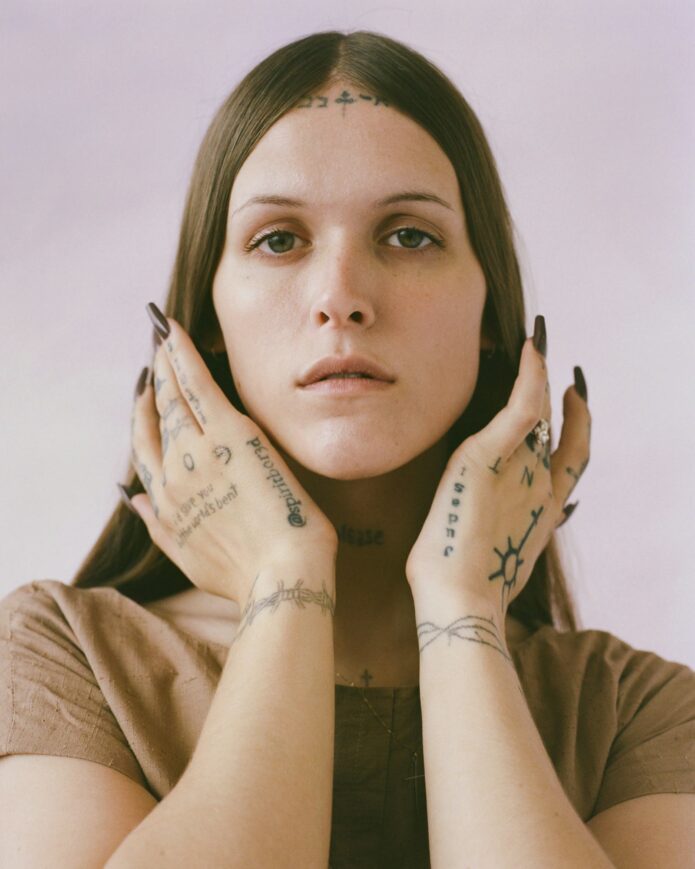
Ethel Cain is the stage name of Hayden Silas Anhedönia. Portraits show small crosses and hand-drawn symbols, lettering on her fingers, the word “please” at her neck, and a hand that later appears blacked out. Some of the same marks recur across interviews and photo shoots, so they read as body art rather than temporary styling for one appearance.
The photographs show where the tattoos sit; interviews give context for a few designs and for Cain’s approach to making them.
Forehead and hand details
A close colour photo shows compact script and cross-like shapes near Cain’s hairline, with letters and simple forms on her fingers and hand. The same areas appear in other editorial and interview portraits.
Her hair can cover the forehead marks or reveal them when parted. The hand ink comes into view when she gestures or holds a microphone, though rings, sleeves and shadow sometimes hide parts of it. Different photos may show different amounts of the same tattoos.

The visual language is deliberately homemade
The collection mixes uneven lines and varied sizes, from small symbols to broad, dark areas. In the photos, a small cross or letter can sit beside denser blackwork, while some lines look more like sketches than polished designs.
That varied, handmade look is part of what distinguishes the tattoos. Rather than a uniform set, they appear to have accumulated in different forms and at different scales.

A close reading of the photographs
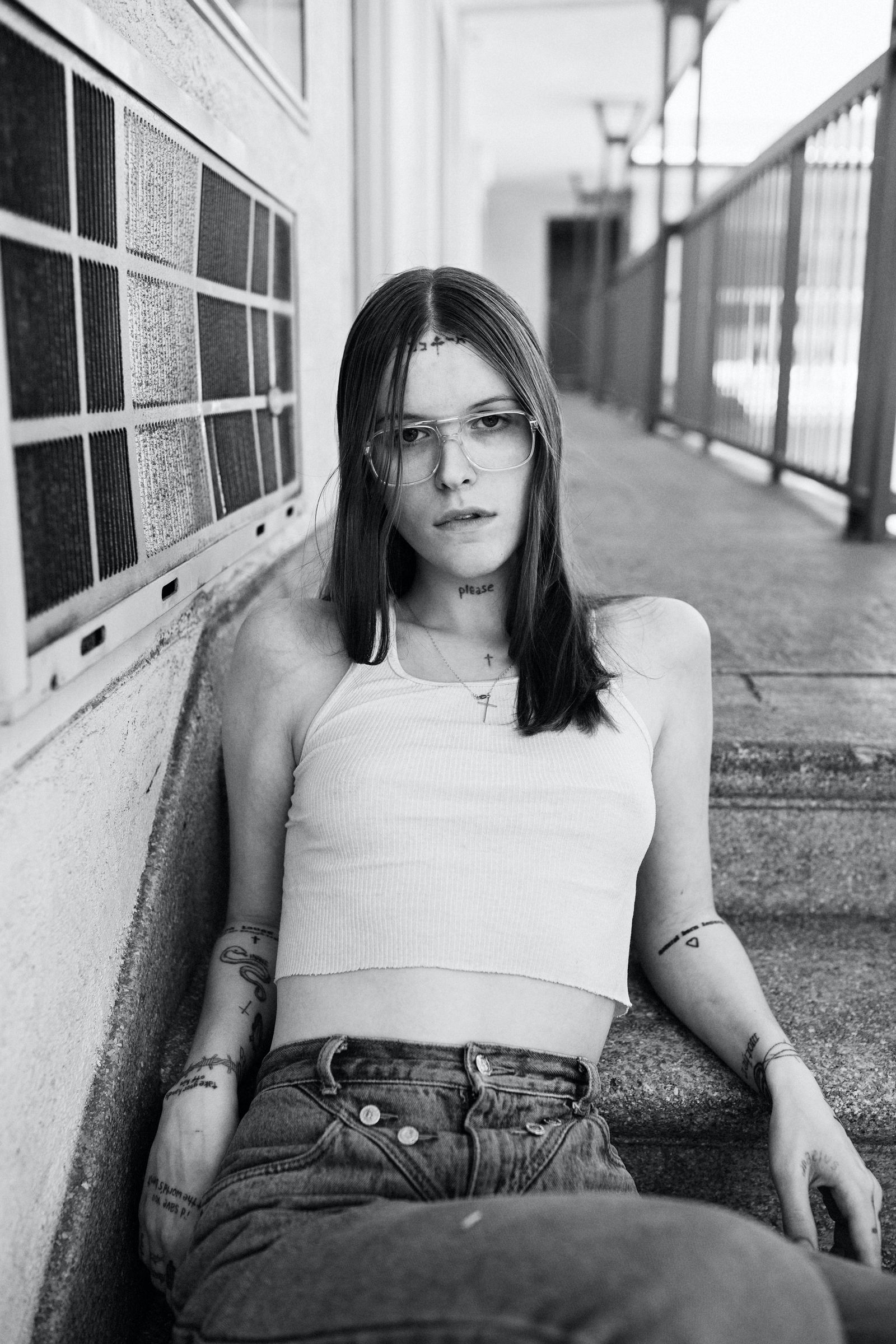
The photos come from different years and settings, so contrast changes how the ink reads. Black-and-white images can make it look heavier, while colour portraits show skin and faded edges more clearly. Recurring shapes and placement are a steadier basis for comparison than trying to identify every fine line.
Pitchfork’s relaxed portraits show Cain’s face, arms and neck without a stage setting. They make it easier to compare the forehead and neck marks across images, but they aren’t a complete inventory of her tattoos.
The image that establishes her public identity
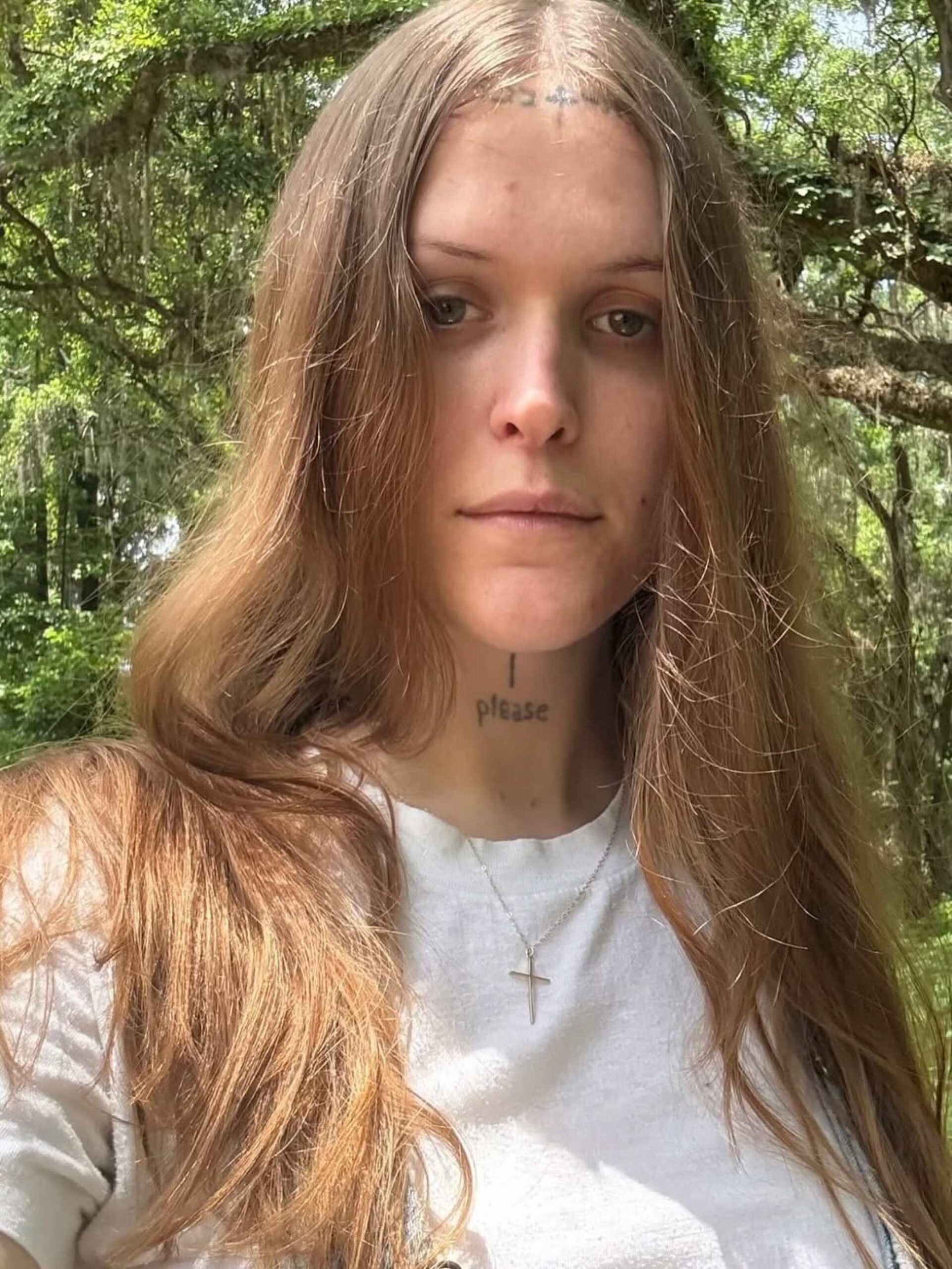
The lowercase word “please” sits at the front of Cain’s neck, just below the jaw. It shows up in face-first portraits and has become a recognisable part of her public image.
A colour portrait from the South China Morning Post places the word against Cain’s face and jawline. It gives context for the tattoo’s placement; the close-up above shows the forehead and hand details more clearly.
Religious imagery without a single explanation
Crosses recur in Cain’s tattoos. Some sources connect them with her Southern Baptist upbringing and the religious imagery in Preacher’s Daughter. Interviews don’t give each cross one fixed meaning, so treating every design as a coded lyric would go further than the evidence.
Her songs also draw on church language, family stories and Southern Gothic imagery. That context can shape how the tattoos are read, but it doesn’t establish a direct link between any one mark and a song.
What the interviews add
Interviews clarify the process: Cain has made some tattoos herself, and sources describe hand-poked pieces, marks made with friends and the larger cross sleeve, which has its own history. They don’t attribute every visible line to her own hand.
Later photos show a broad blacked-out area on the hand, which makes earlier marks harder to pick out. Where an interview doesn’t identify a design, describing its visible form is more reliable than guessing how it began.
How the collection changes with the project
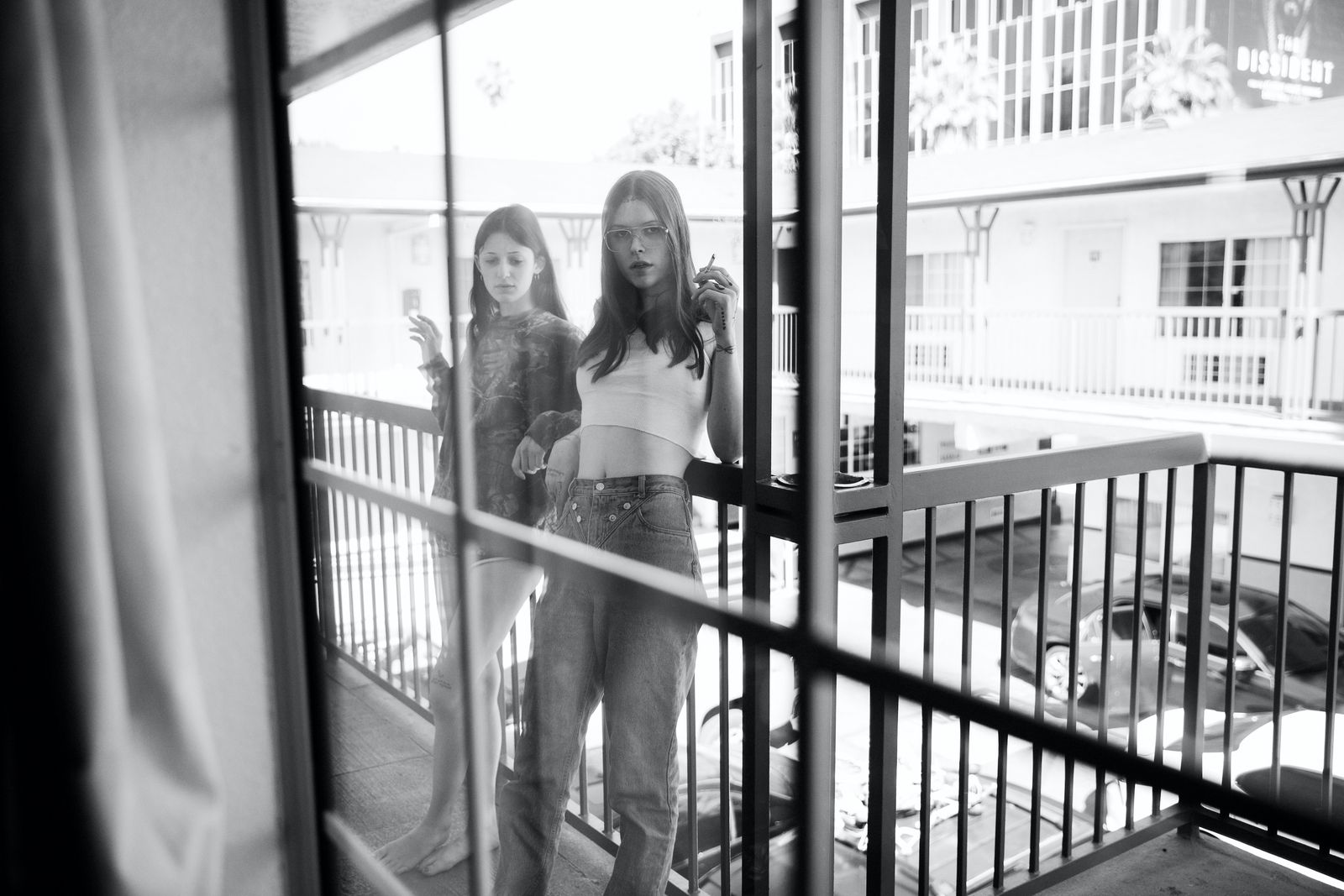
Across photos from different stages of the project, later portraits show denser blackwork and more developed symbols than older ones. Hair, lighting and makeup can obscure fine marks near the forehead, so the images suggest a collection changing over time but don’t establish when any one addition was made.
The video below is a further interview source on Cain’s approach to tattoos and their history.