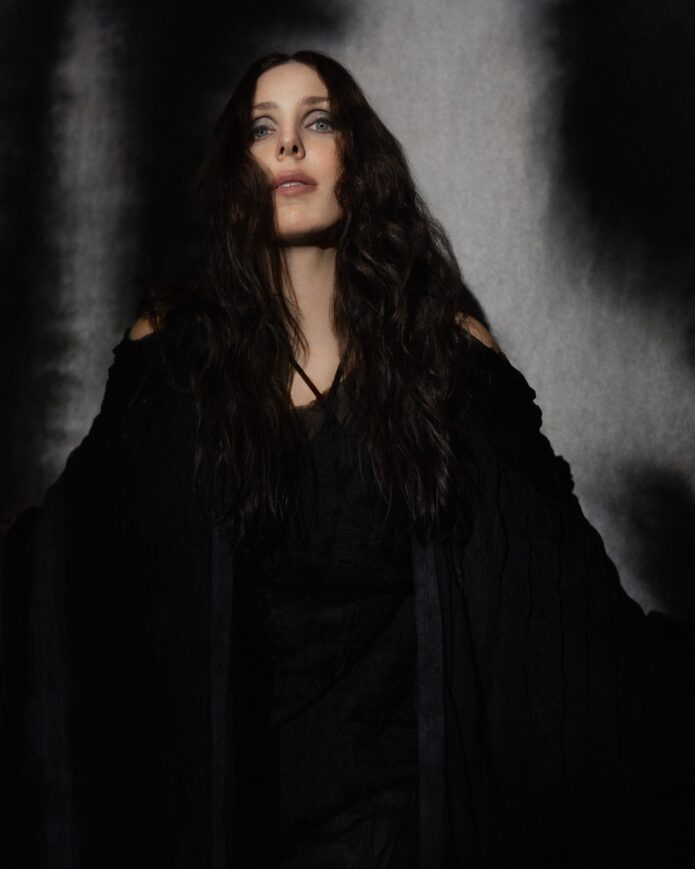
Chelsea Wolfe’s tattoos fit the mood of her music without looking like stage props. Some pieces are dark and spare, with shapes that leave room for interpretation. A long snake winds along one forearm; smaller marks sit around her hands and fingers. Geometric lines and fan-like forms become visible when she folds her arms or brings her hands near her face.
Chelsea Wolfe tattoos are worth looking at as a collection, not a checklist. The larger images sit on her forearms; smaller marks appear on her hands and fingers. They show up differently when she’s singing, holding a microphone, or resting her hands against her chest.
Wolfe has spoken about images including a dagger, trident, moon, raven, and Scorpio constellation. A coiled snake is another clear motif on her forearm. Those symbols sit beside her interest in tarot, seasonal cycles, dreams, and the darker edges of folk and metal. The layout feels personal, though the visible designs also offer ideas about placement.
The photos show how the pieces share space: a portrait centres the snake and forearm work; another shows her arms crossed; close views make the finger ink easier to see. The point isn’t to copy a photo as a stencil. Look at the spacing, how the blackwork travels across the skin, and how small tattoos balance the larger ones.
The coiled snake gives Chelsea Wolfe’s forearm a clear focal point
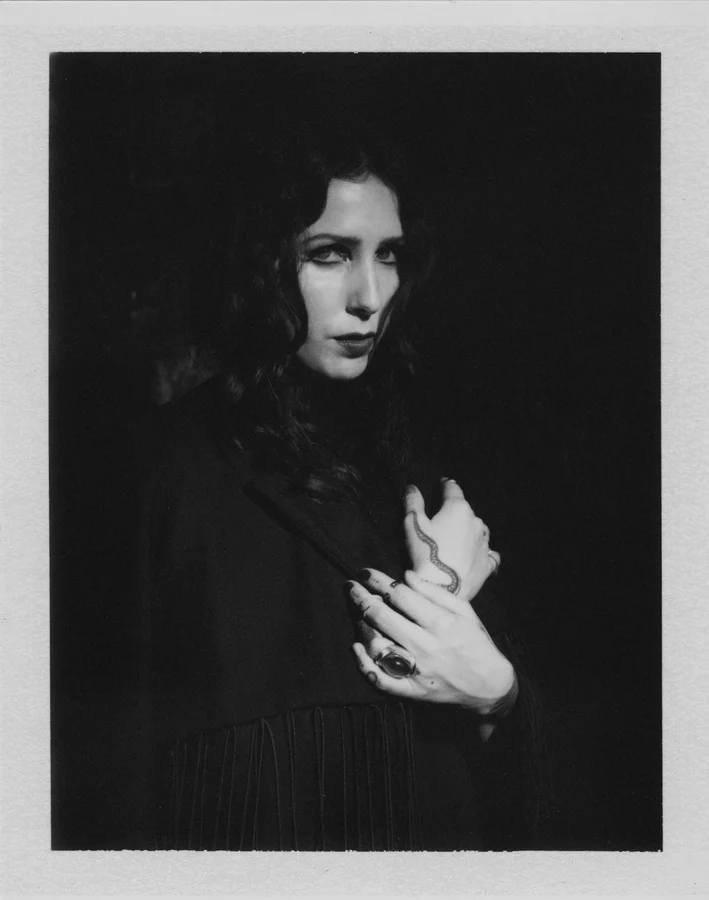
The coiled snake is a natural starting point. In a straight portrait, it sits along Wolfe’s forearm and has the look of an old woodcut. Its outline reads from a little distance; the tighter lines show up when you look closer. That balance gives the tattoo detail without relying on lots of tiny marks.
A snake also gives a forearm design some movement. It can follow the length of the arm, bend around the muscle, or curl toward the wrist. Wolfe’s piece looks integrated with the nearby dots and geometric details rather than pasted on top. The surrounding marks give the snake room without having to fill every inch.
A snake can mean different things to different people: change, instinct, protection, danger, healing, or simply an animal they like. The pose makes a difference too. A tight coil feels contained; a long S-curve opens up the design; a head turned toward the wrist can make it seem watchful.
Let the curve follow the arm instead of fighting it. Ask your artist to draw the design with your arm relaxed and bent. A shape that looks right on paper can twist once the elbow moves. The forearm is a long canvas, but its front, side, and underside all change with a gesture.
Wolfe’s snake also shows what open skin can do around a main image. The space keeps its outline clear. Dots and smaller symbols can come later, but they don’t need to crowd the snake from the start. One animal with a few quiet marks around it can carry the same dark folk feel.
Geometric marks and fan shapes make the crossed-arm layout feel deliberate
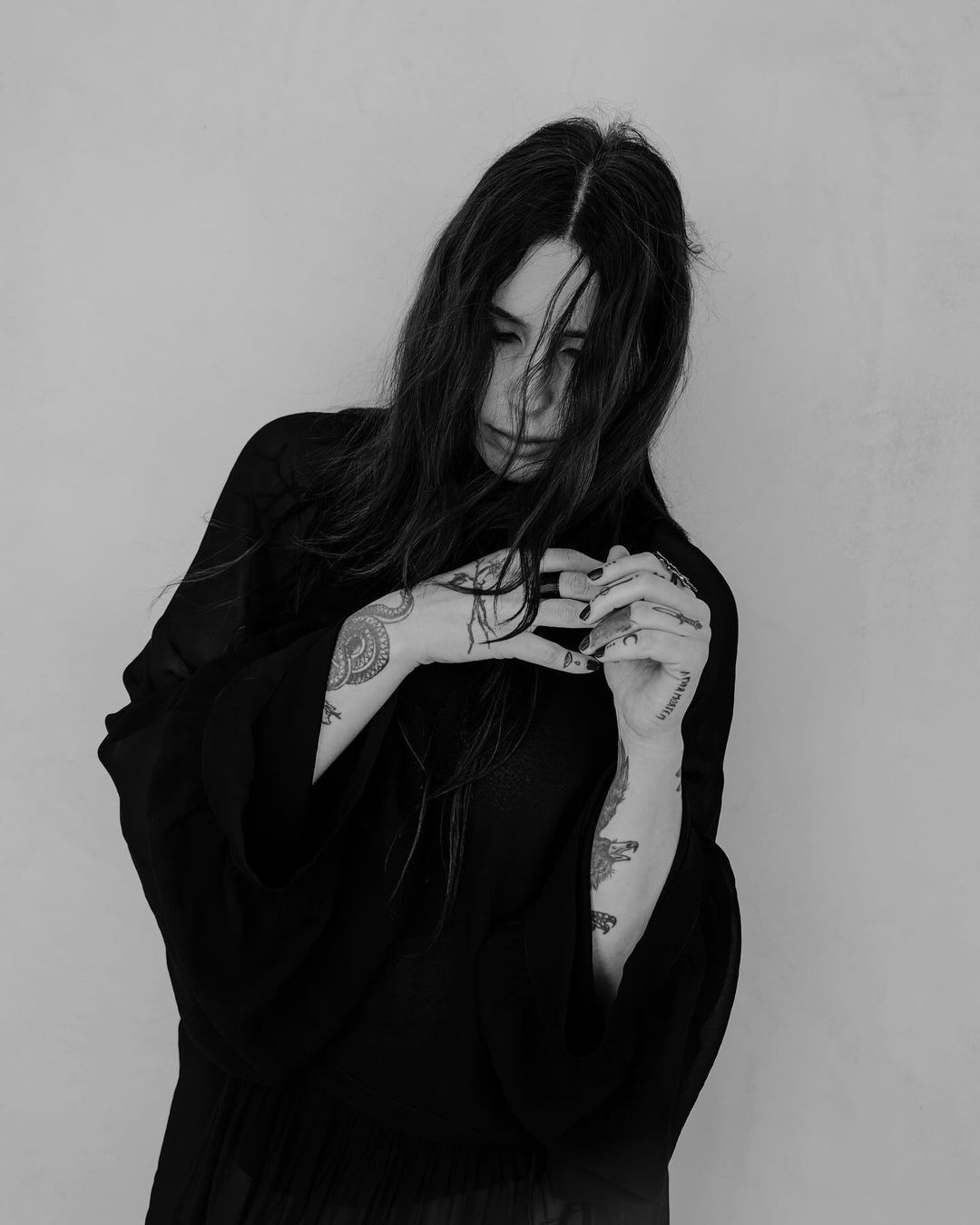
When Wolfe crosses her arms, the tattoos read like a collection of panels. Lines on one arm meet shapes on the other, and the pose lets you see several kinds of blackwork together: curves, dots, dark fills, and bare skin. That mix keeps the arms from reading as one solid block.
The fan-like forearm shape is a good example of a simple outline with texture inside it. It could be adapted into feathers, leaves, rays, shells, or abstract blades. Whatever the subject, the outer shape needs to read before the smaller details are added.
Geometric designs can look exact on a sketch, but skin isn’t a flat sheet. The wrist narrows, the forearm turns, and the elbow interrupts a line. In Wolfe’s photos, some marks stay crisp and centred while others soften around the side of the arm. That slight irregularity lets the design follow the body.
Use one repeated shape to connect separate tattoos. It might be a dotted line, a thin border, a pointed end, or a shared shade of black and grey. You don’t need to repeat the same motif everywhere. One visual link can help pieces added over several sessions feel related.
Where a geometric shape sits changes where the eye goes next. Near the wrist, it can lead toward the hand; higher on the forearm, it can point toward the elbow. Check the stencil from the front, side, and back, and see how it looks when your hand is doing something ordinary.
Her hand tattoos bring the collection right up to the face

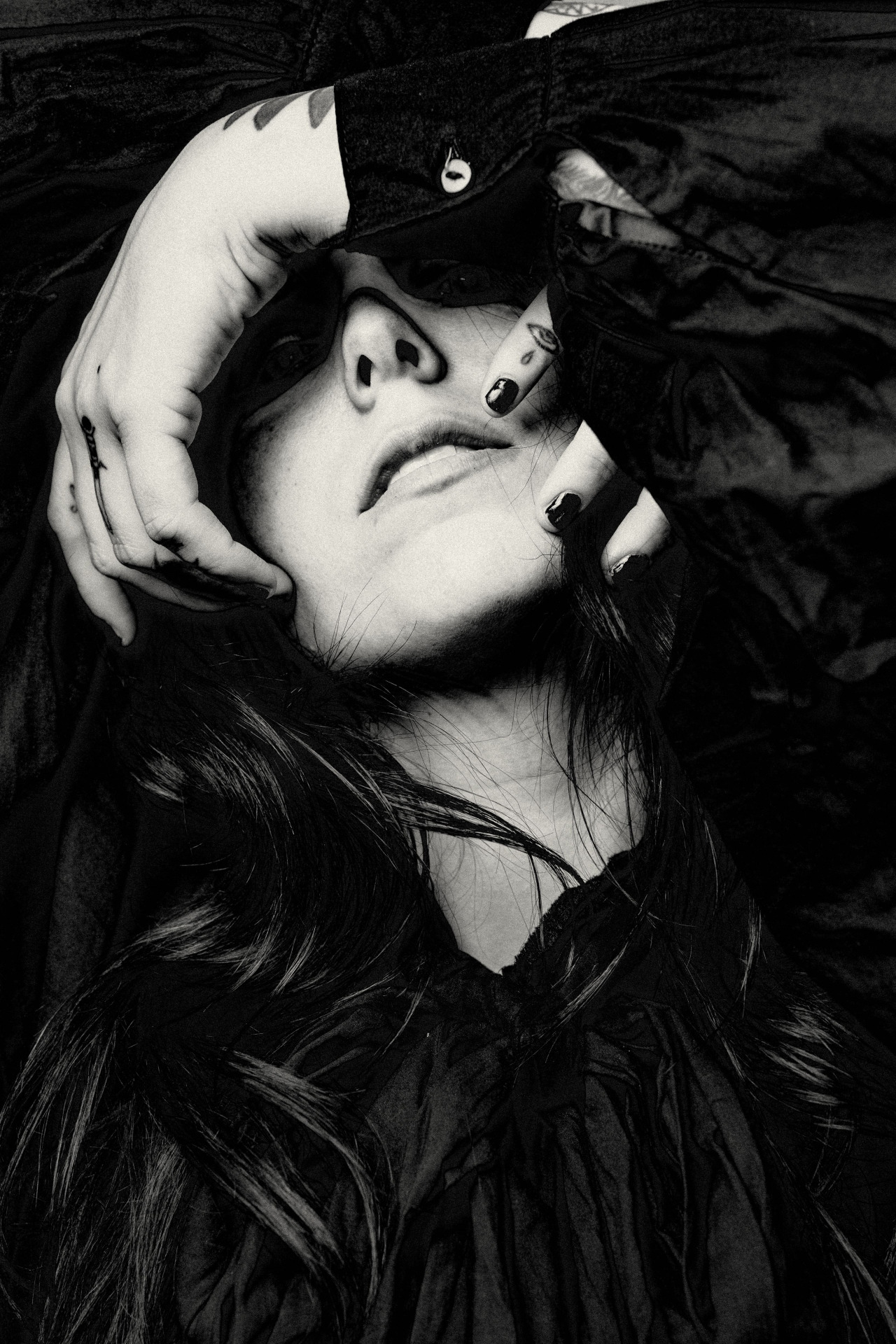
The smaller tattoos are easy to notice in close portraits. Wolfe has marks on her fingers beside rings and nails. They don’t compete with the snake farther up the arm; they draw your eye closer. In a photo, you may see the hand first, then pick out the larger pieces.
Finger tattoos are always moving and changing shape, and they can be partly hidden. A mark can look sharp with the hand open and break up when the fingers curl. That movement is part of their appeal, but it also means the design needs to stay simple enough for everyday wear.
Wolfe’s hand ink fits the larger work through direct shapes rather than dense decoration. A small dagger, star, rune-like mark, or short line of script can stand on its own. You don’t need matching symbols on every finger; one or two can make the same impression and leave the hand easier to read.
Test your hand tattoo in the gesture you actually use. Hold a microphone or phone, rest your chin on your knuckles, or put your hands together. Watch how the stencil shifts as the skin folds. A design centred on a flat hand may move to the side when the fingers bend; an artist can adjust its angle before tattooing.
Hands are washed often and exposed to sun, friction, and weather, so fine lines may soften sooner than on the upper arm. A clean outline, enough space, and a design that doesn’t depend on microscopic detail can help the tattoo hold up. Keep the small marks deliberate rather than crowded.
A darker full-arm look changes the balance from one photo to the next

In a full-arm photo, the tattoos look different from how they do up close. First you see the darker outline and a few strong shapes; then the symbols, lines, and shading separate out. That lets the designs work in close portraits and performance shots alike.
The arm doesn’t have to be covered edge to edge to feel finished. Wolfe’s tattoos use darker areas as anchors, with bare skin around them. From a distance, those shapes hold the composition; up close, the smaller details come through.
Think about how dark tattoos will sit beside your clothes and other ink. A black piece against a black shirt may disappear in a wide photo, while the same design stands out against bare skin or a light top. You don’t have to dress around the tattoo, but contrast affects how visible it looks.
Plan the outline first and the filler later. A clear outside shape gives the artist a way to organise the arm. Dots, leaves, rays, and small symbols can be added after the main pieces heal. Leaving some gaps for now lets you see whether the open skin is doing useful work.
Wolfe’s blackwork doesn’t read as harsh. Curves, soft edges, and shapes like a woodcut give it a quieter feel. If that’s the style you want, bring references that show line weight and texture as well as the subject. The way an artist handles space can make a black graphic feel quite different from a woodcut.
How to borrow the mood without copying Chelsea Wolfe’s tattoos
Use Wolfe’s tattoos as a reference for the design choices, not as drawings to copy. Start with what catches your eye: the old-world snake, the small hand marks, the spare geometry, or the dark shapes. A similar mood doesn’t require someone else’s personal symbols.
Think about scale as well as subject. Wolfe’s forearm pieces have room around them, while the hand tattoos stay small. The same balance can work with other imagery: a large bird on the forearm and a tiny star on a finger, or a geometric panel leading toward a small moon at the wrist. Each design has a job, and their sizes help connect them.
Decide how visible you want the tattoos to be. Hand and finger ink shows up often; forearm pieces can hide under long sleeves and show with short sleeves; upper-arm or shoulder work is easier to cover. Think about how the placement will fit your ordinary day, not just a portrait.
Leave space for the tattoo to become yours. Bring references to your artist and explain what you like about them. The curve that works on Wolfe’s arm may need a different angle on yours, and her hand marks may carry meanings of her own. Adjust the shape and subject to your body and your reasons for getting it.
Choose an artist who is comfortable with the style and placement. Geometric work, blackwork shading, finger tattoos, and long forearm designs each call for a different kind of control. Look at healed examples when available, discuss how much detail and coverage will work for you, and check the stencil from every side.
The snake gives Wolfe’s forearm a clear centre. Geometric and fan-like shapes add texture around it, while the smaller hand and finger tattoos bring the collection up toward her face. The scale changes from one area to the next, but the dark palette holds the look together. Chelsea Wolfe tattoos stand out for that mix of a steady mood and varied placement.
If you’re looking for ideas, focus on the layout: choose one main image, leave it room, and use smaller marks to guide the eye around it. That can make a collection feel dark and personal without covering every patch of skin.
Here’s a Chelsea Wolfe performance with the same intimate, stripped-back feel: