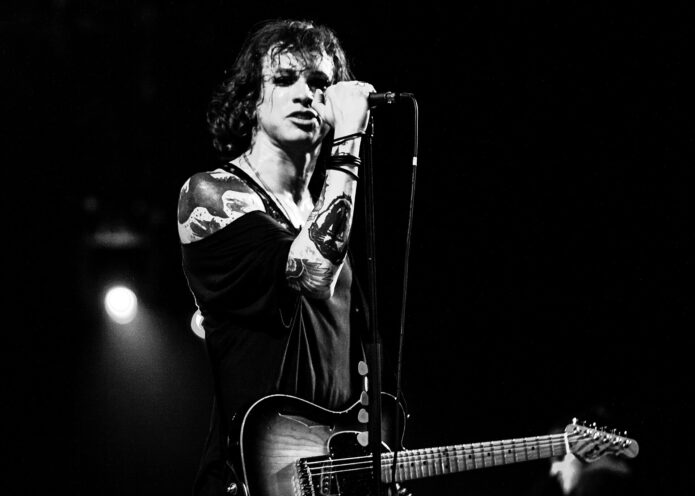
Laura Jane Grace’s tattoos have changed alongside her. Older illustrations and lettering sit beside newer blackwork, and some earlier pieces have been covered or marked through. Her arms draw the most attention, but photographs also show tattoos on her hands, neck and chest.
Grace has spoken about tattooing as a way to change how she sees her body. That context helps explain the revisions, though it doesn’t assign one meaning to every design.
Laura Jane Grace’s sleeve tattoos are built around change
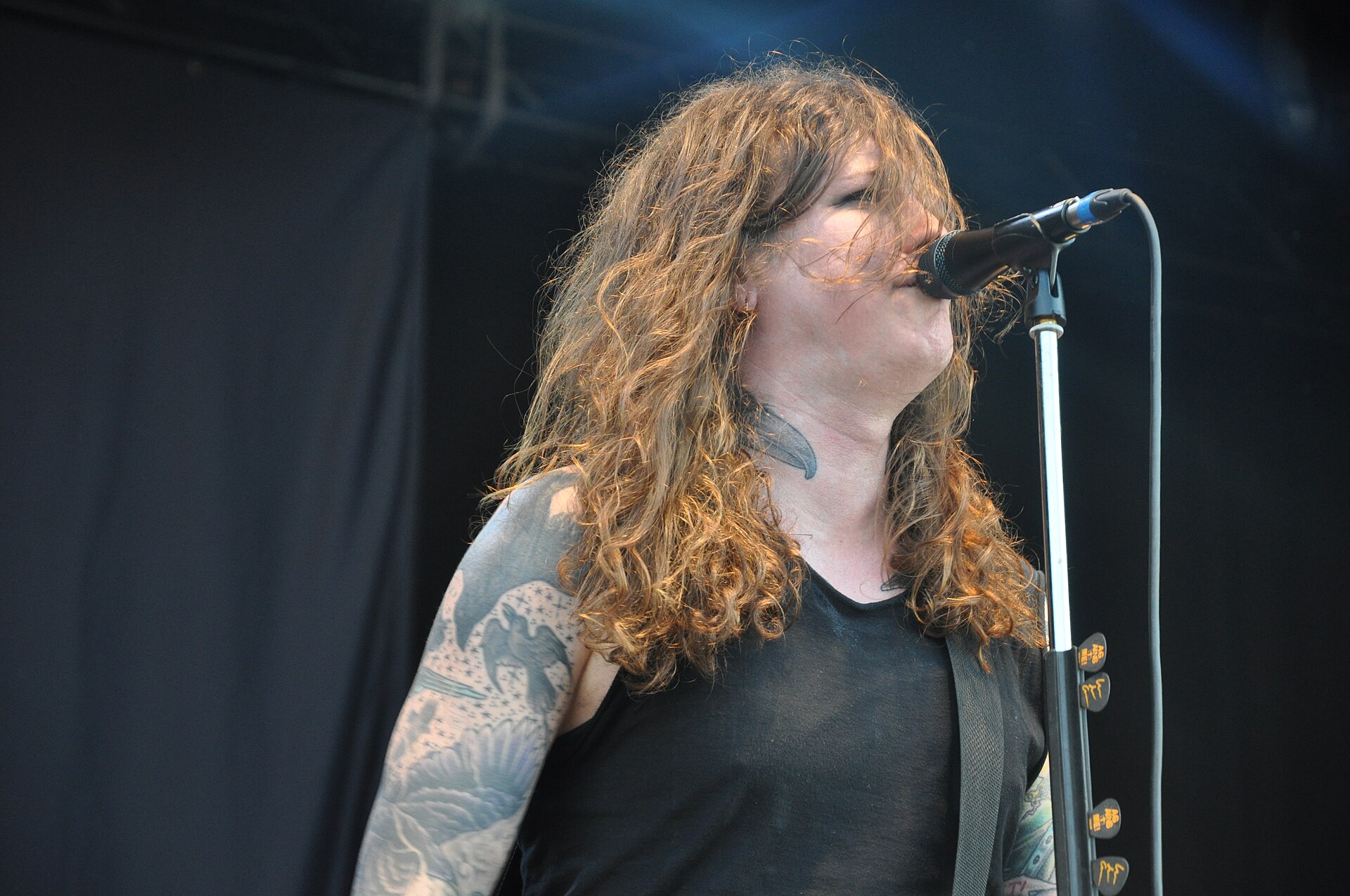
Performance photos show large illustrative shapes and grey shading on Grace’s upper arm, with smaller marks, lettering and darker sections toward the forearm and wrist. The pieces vary in age and condition; it is not a uniformly packed sleeve.
Grace has described tattooing as a way to take control of her body and change her self-image. Her sleeves also show how later work can alter the balance of older tattoos: a piece may remain visible, sit beside new work or be covered by blackwork.
The arm tattoos mix old illustrations with Japanese-influenced blackwork
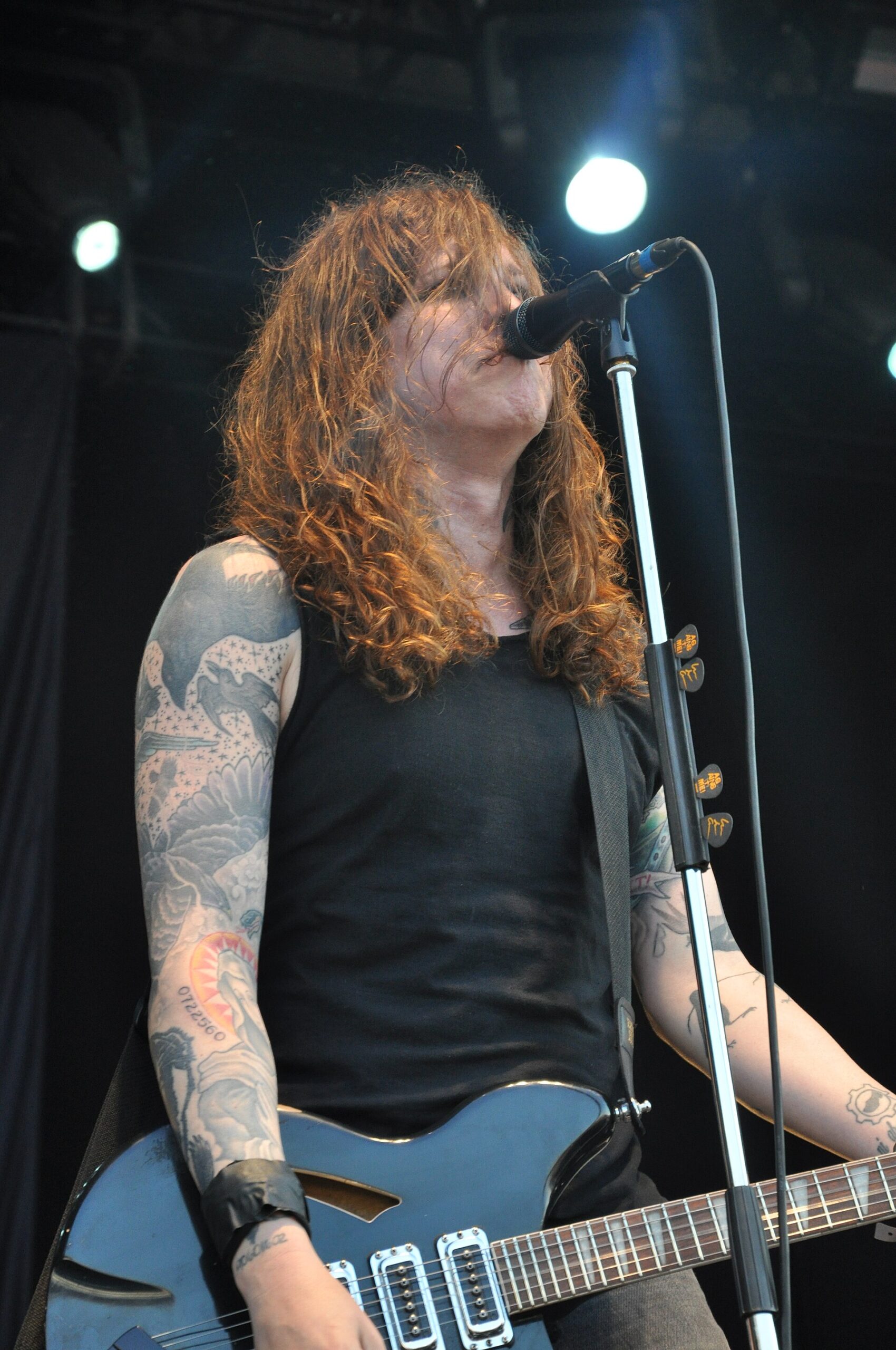
Grace’s later work is associated with Japanese tattoo artists Gakkin and Kenji Alucky. Her official biography describes years of black-heavy bodywork by both artists, and Grace has discussed working with Gakkin on her hands and on a blackout cover-up.
Her hands extend the dark work beyond the sleeves, alongside older lines and lettering that are not all clear in photographs. The mix is not a traditional full bodysuit; it leaves room for personal designs and changes made over time.
Her chest tattoos carry the most personal-looking revisions

Grace has discussed an older tattoo connected to Béatrice Mireille Martin. Rolling Stone Canada reported that, after the relationship ended, Grace drew a black line through the piece. The mark remains part of the image, but the revision is visible too.
Performance photos also show dark tattoos along the side and front of her neck. They connect the chest and arms visually, though a microphone, collar or angle can hide part of them. The photographs show fragments rather than a complete inventory.
The arm blackout is not just a trend piece
In an interview with Out, Grace said that changing how her arms looked changed her self-image. She also described the blacked-out right arm as part of her transition. That is her account of the decision, not an interpretation drawn from the photograph.
In a later interview, Grace spoke about disliking an older Virgin Mary tattoo and wanting it covered. She discussed the shop environment, the trust involved in giving an artist a broad idea and the long sessions needed for large areas of blackwork. Cover-up work has to account for old pigment, skin tone, the new design and how the skin heals.
The blackout gives the arm a clear dark silhouette, while older illustrations remain visible elsewhere. Grace’s arm is a cover-up built on an existing tattoo history, not simply a new black panel chosen for effect.
Live photos show Laura Jane Grace in motion
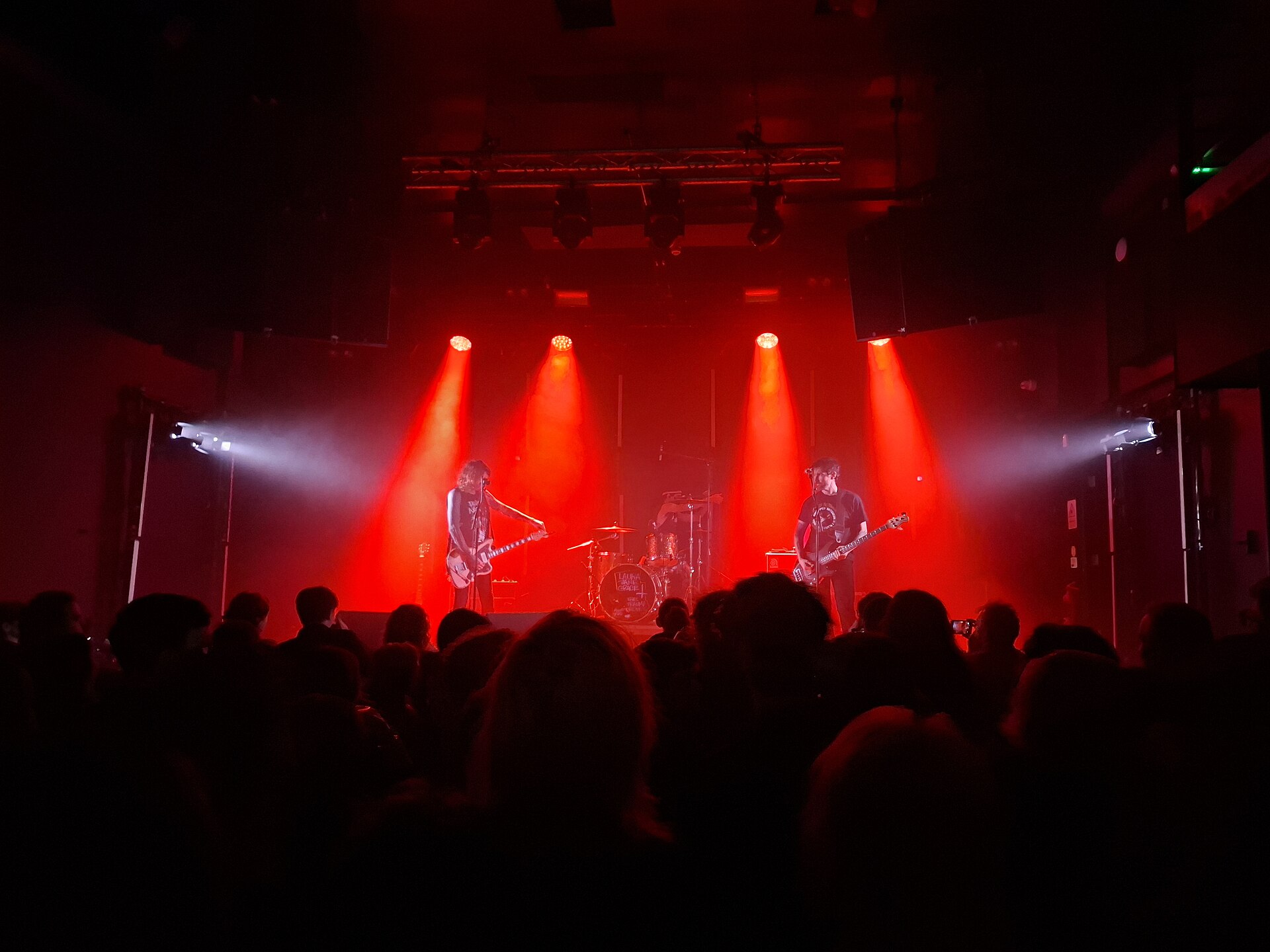
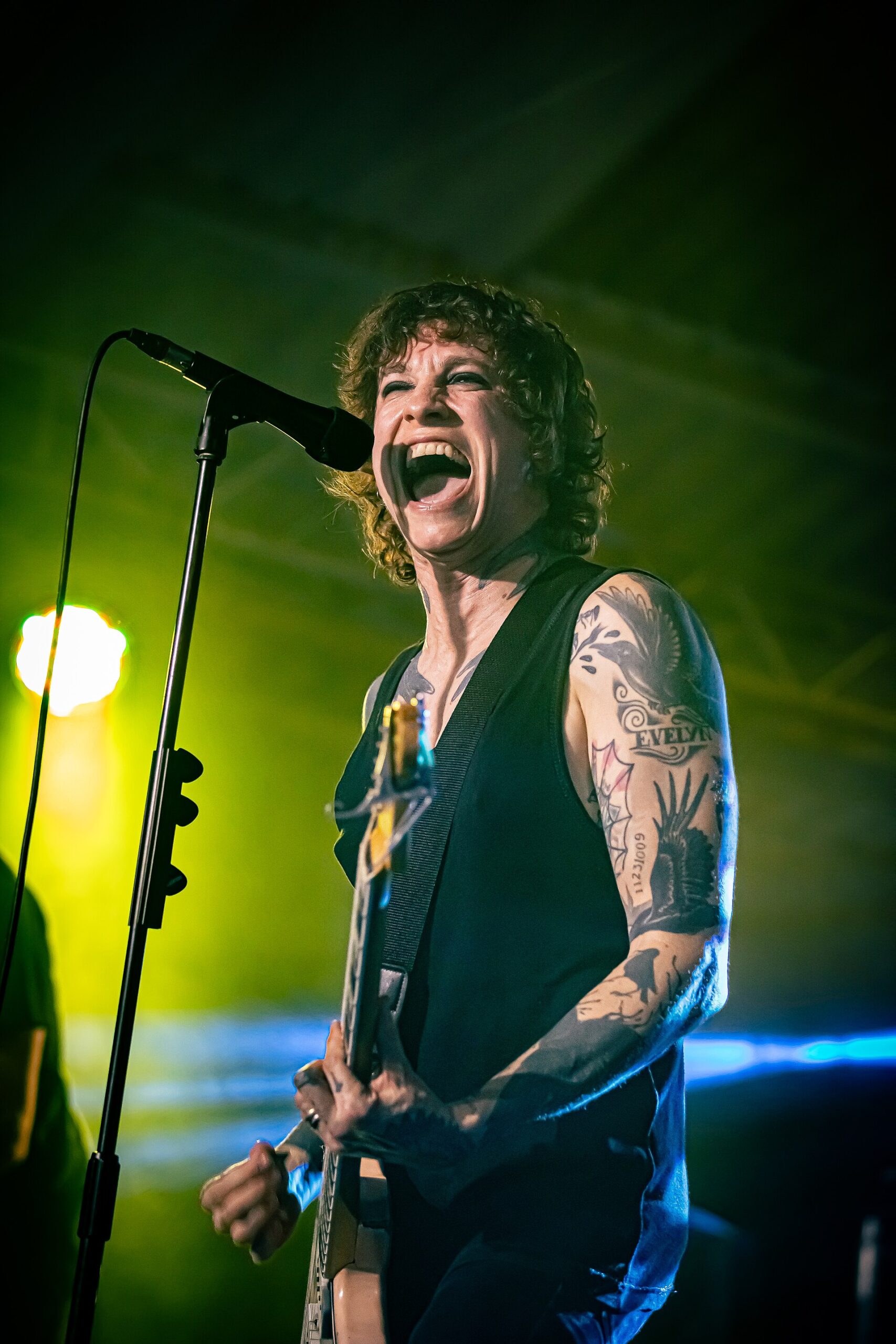
Many photographs catch Grace singing or playing guitar rather than posing to show her tattoos. Her elbow bends, her shoulder turns and a guitar strap crosses her chest, so the visible designs shift with the performance.
Stage lighting, motion and clothing can also make details hard to read. Blackwork may look blue or green under coloured lights, while a microphone or shirt can hide parts of the neck and chest. A single image is not a full record of the collection; comparing photos across years gives a clearer view of what changed.
Why this collection is worth studying
Grace’s tattoos show a collection that has been revised rather than kept fixed. Some designs remain, some were covered, and one was marked through. The older work and later blackwork sit together as visible records of those choices.
The useful detail is not a template to copy. It is how the collection makes room for change while keeping earlier marks in view. Grace has spoken about the decisions herself; where the photographs or reporting do not identify a piece, its meaning should stay open.