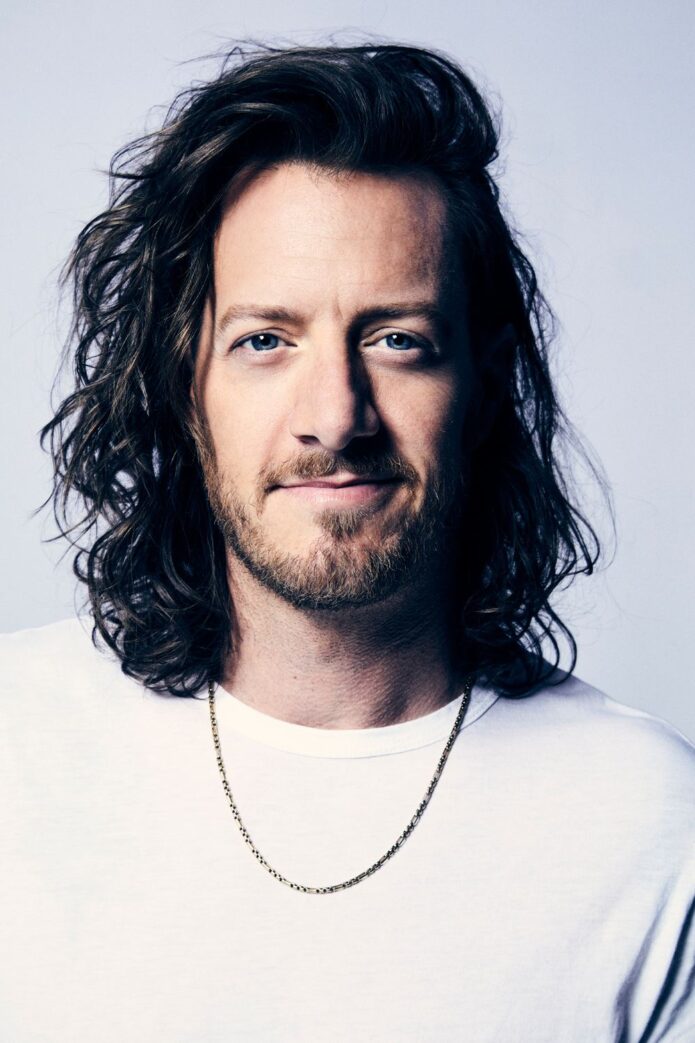
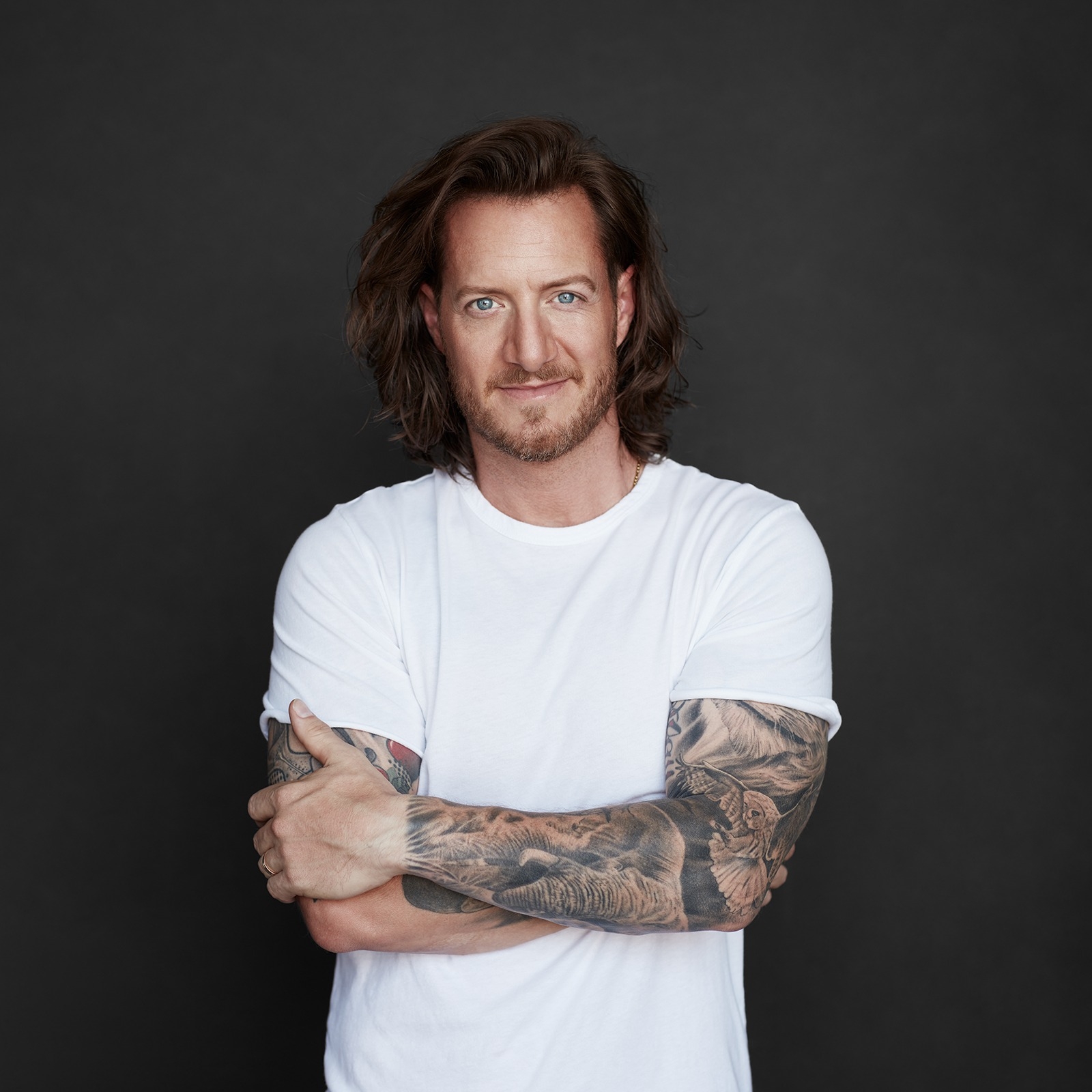
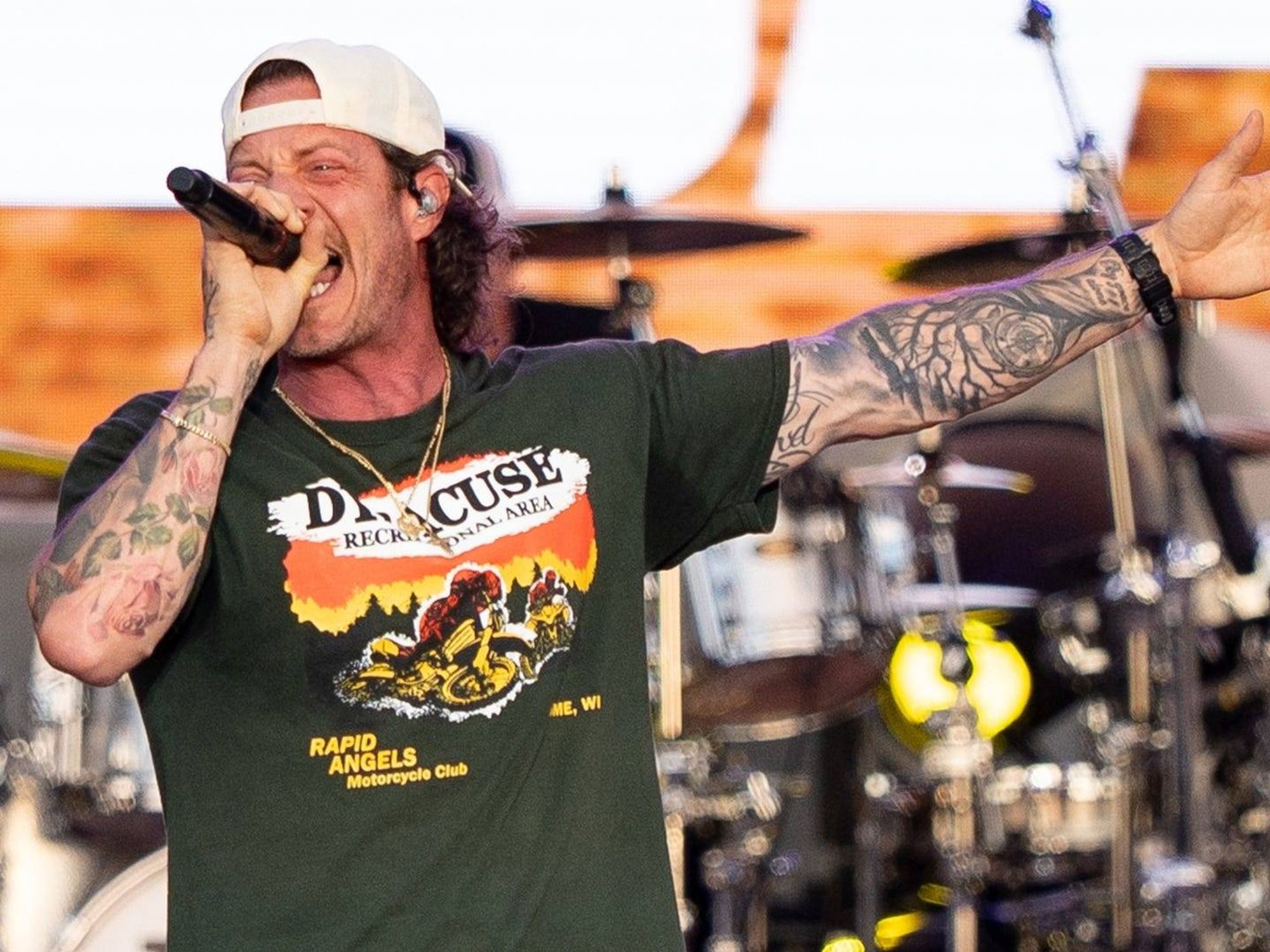
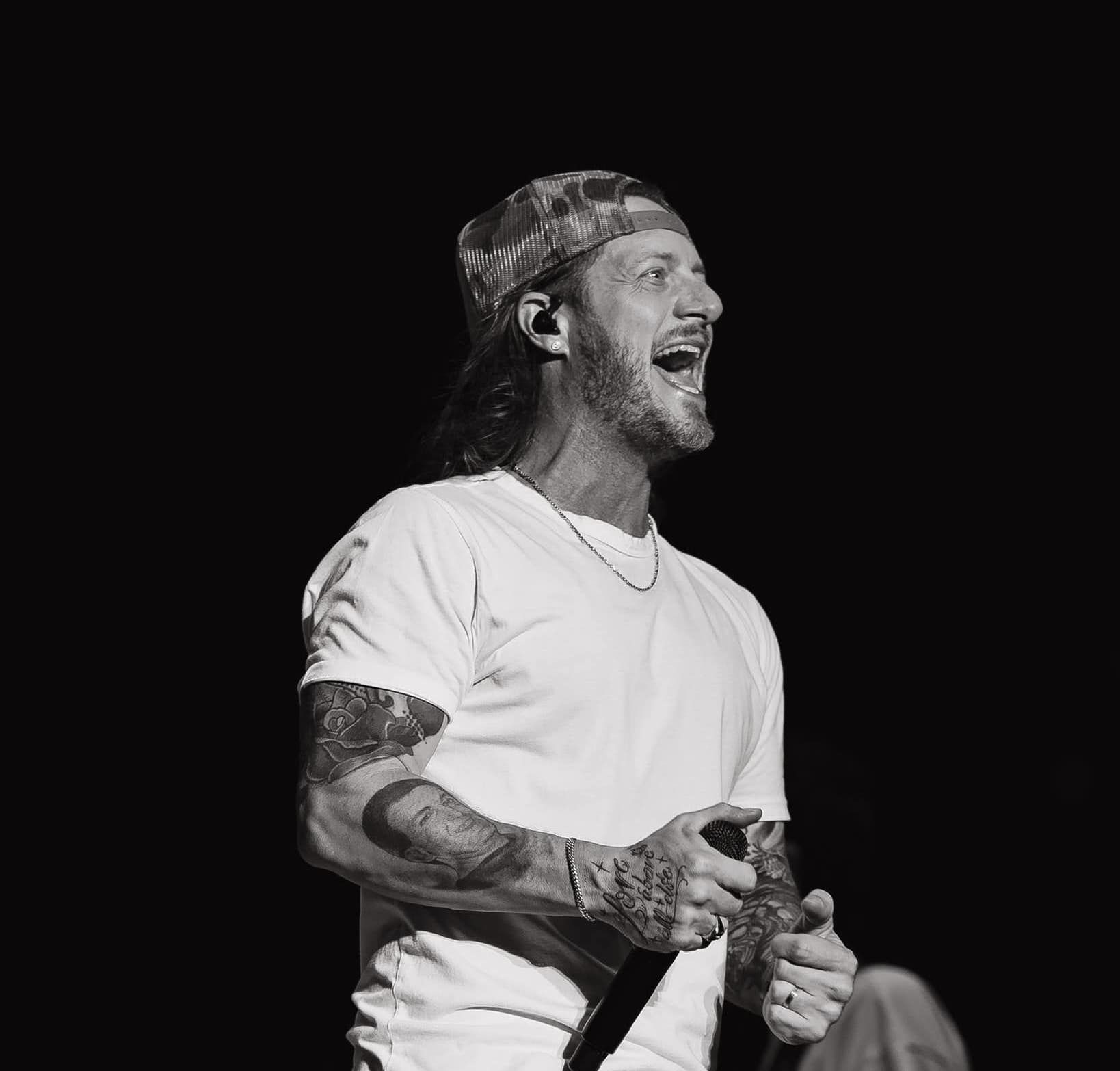
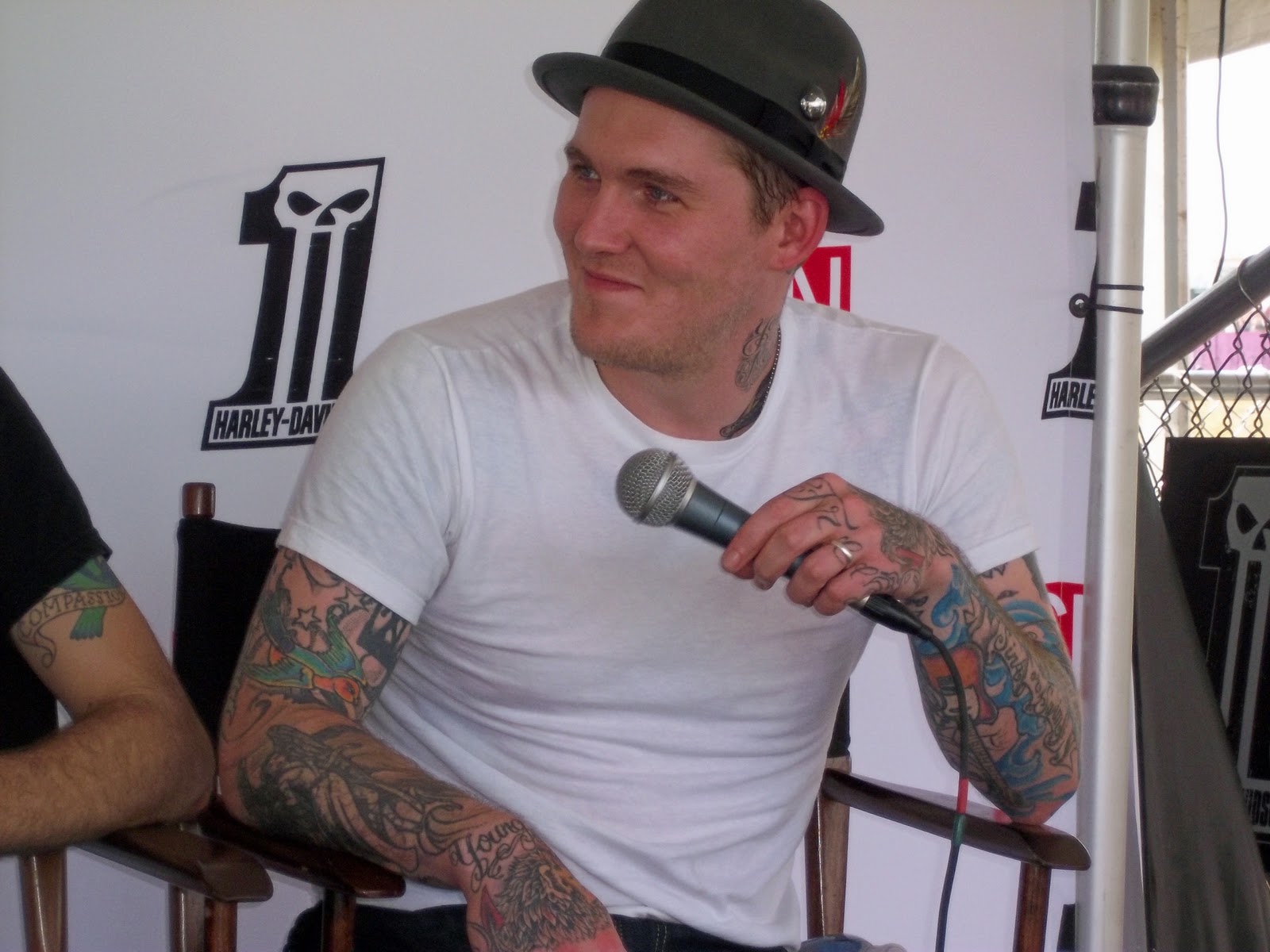
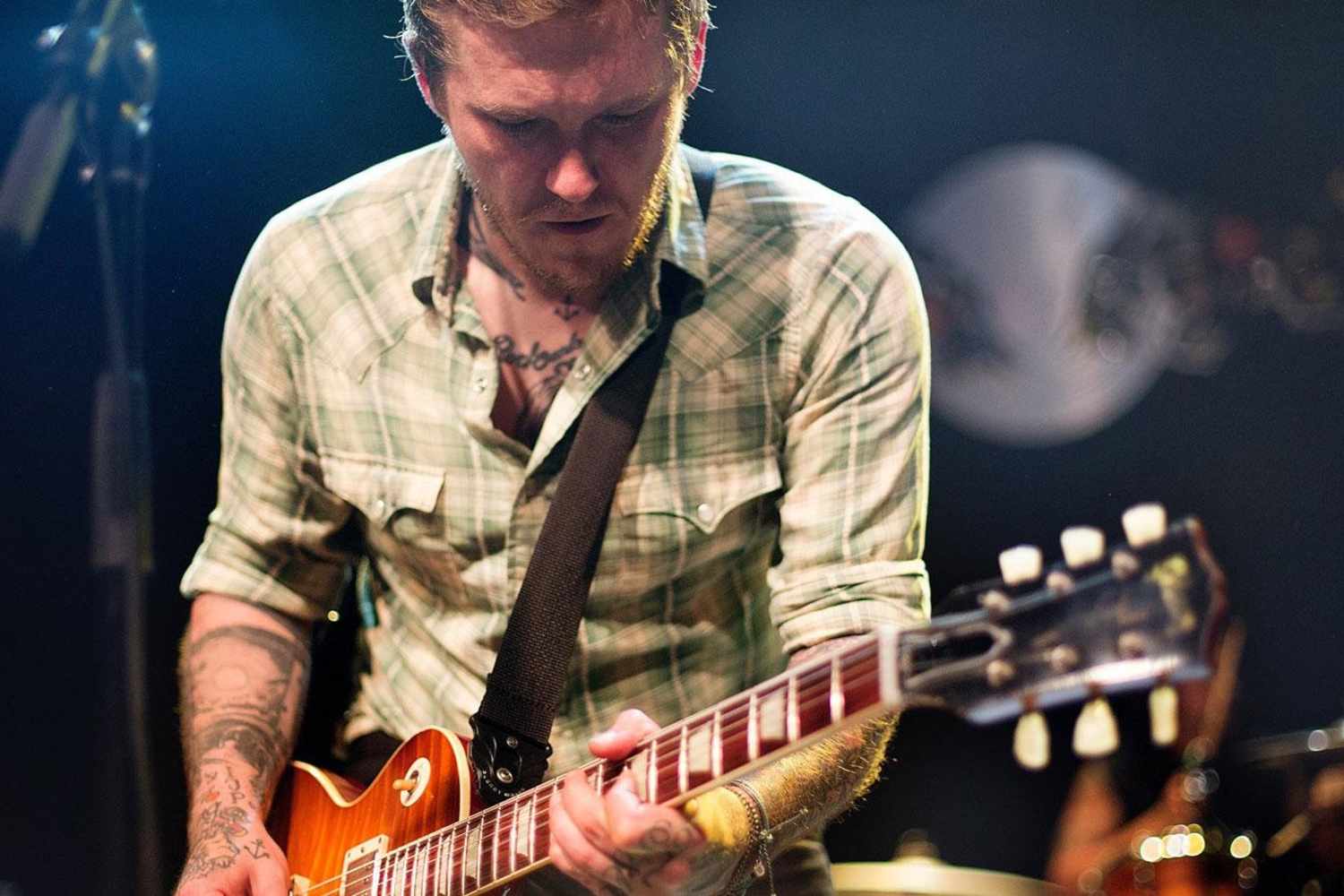
Tyler Hubbard’s tattoos cover both arms and the back of his left hand. The collection mixes shaded figures, lettering and smaller symbols, with pieces tied to family, travel and his interest in motorcycles.
Some stories come from Hubbard; others have been reported by entertainment outlets. Photos show the designs and where they sit, but they do not explain every mark.
Tyler Hubbard’s arm tattoos and the collection’s overall shape
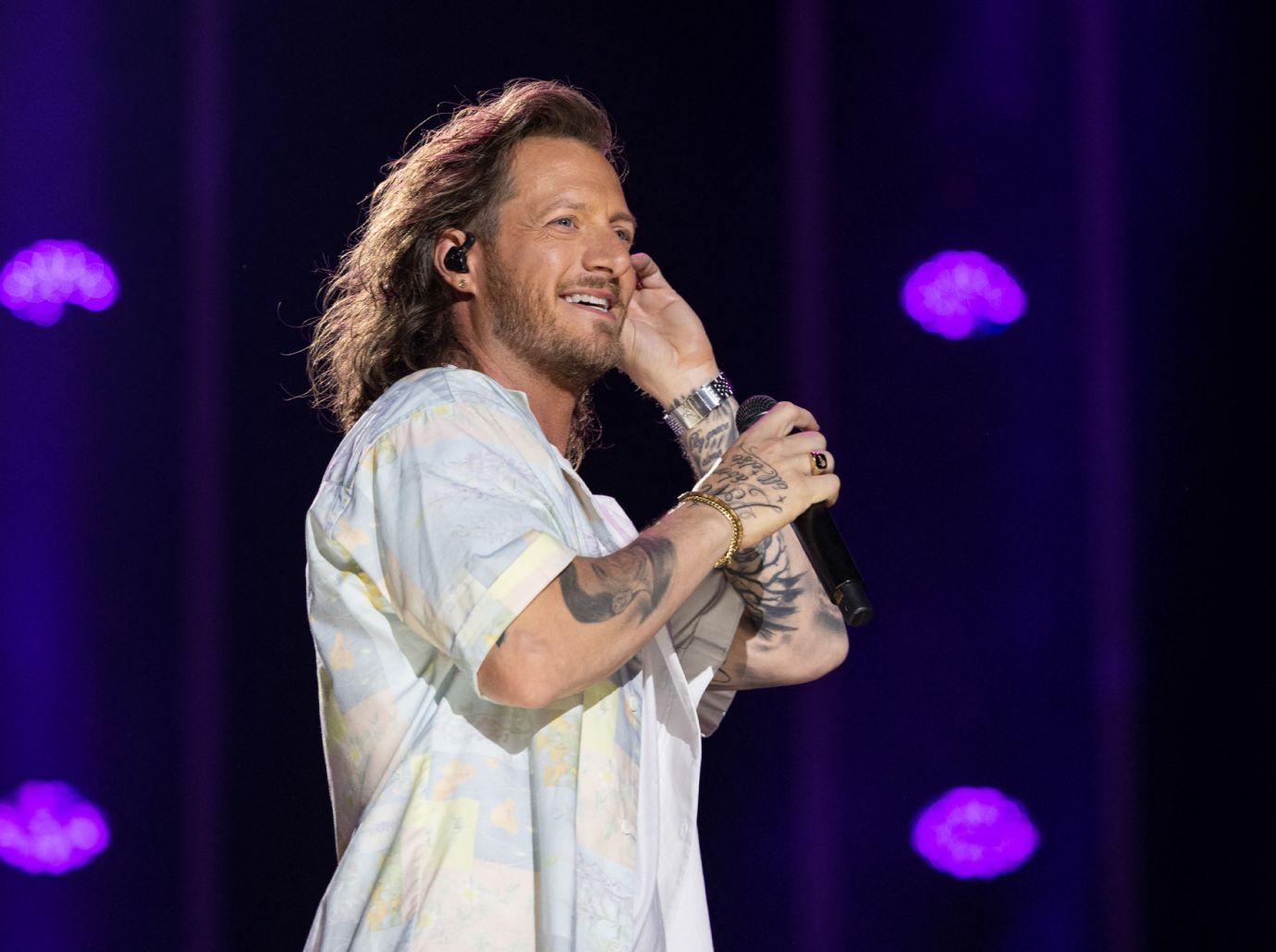
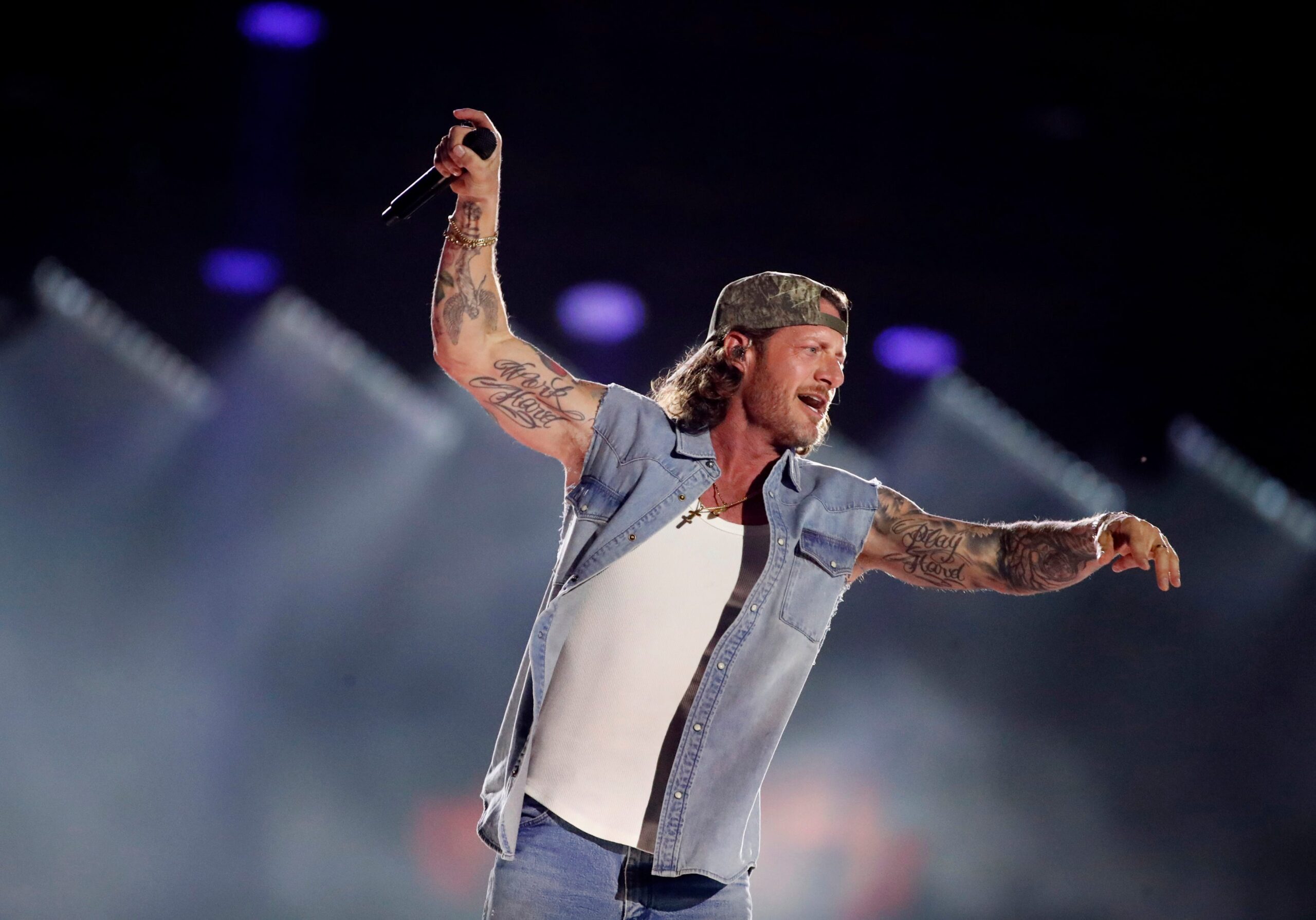
Photos from Hubbard’s solo era show substantial work on both arms, with bare skin visible between designs. Shaded figures, lettering and smaller symbols sit at different scales, so the arms read as a layered collection rather than one uninterrupted sleeve.
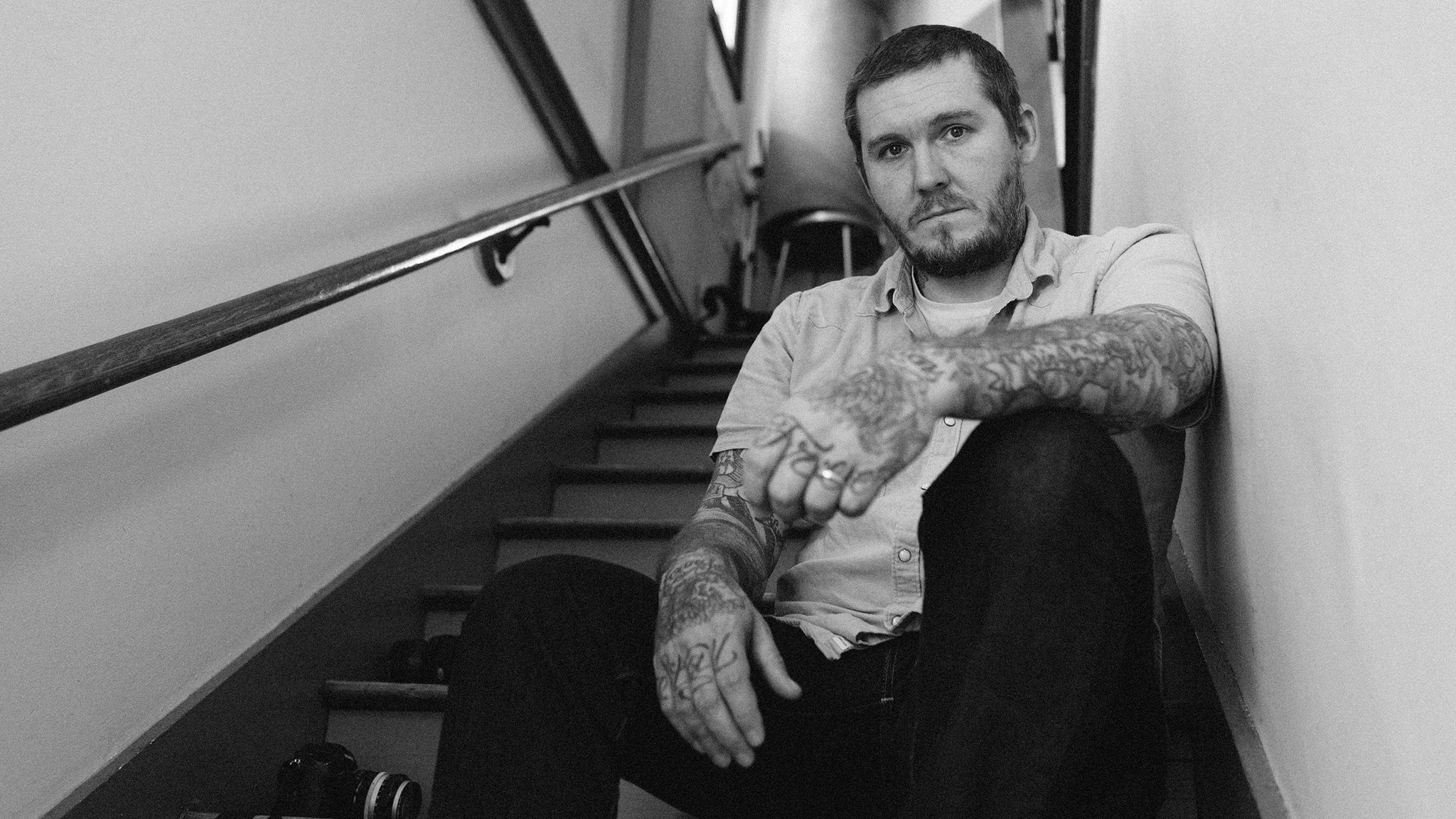
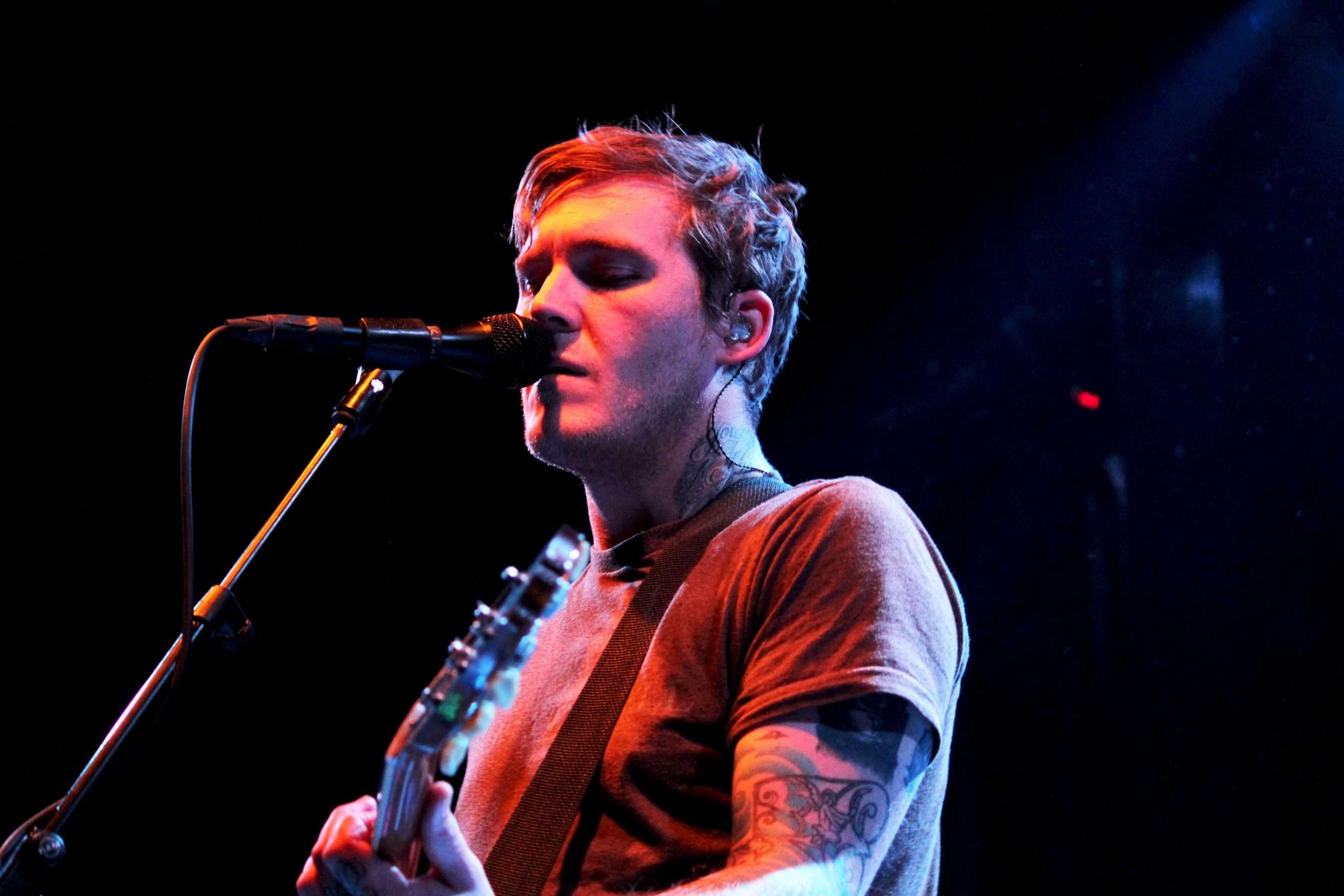
His short sleeves leave the upper arms visible, while lower pieces can disappear as he moves or turns. A portrait gives a steadier view than a concert shot, where stage light can obscure smaller details.
The motorcycle skeleton tattoo on Hubbard’s upper arm
In a 2024 Inked tattoo tour, Hubbard described an upper-arm design of a skeleton riding a motorcycle out of a grave. He linked it to his interest in motorcycles and called it his “least inspirational” tattoo. The grim image and his joking description sit side by side, with no deeper meaning stated.
The father portrait on Tyler Hubbard’s forearm
Taste of Country reported in 2014 that Kat Von D tattooed a realistic portrait of Hubbard’s late father, Roy, on his forearm. The outlet also identified “Play Hard” on his left bicep as a phrase associated with Roy.
The portrait is built around facial detail and shading; the short phrase carries the family reference in words. The forearm piece comes into view when Hubbard holds a microphone or reaches across a guitar.
The elephant tattoo linked to Hubbard’s Africa trip
Taste of Country linked the large elephant on Hubbard’s lower left arm to a 2018 trip to Africa and reported that it took about 12 hours to complete. Its size makes it one of the major arm pieces, though stage photos catch its shading differently as his wrist turns and the light changes.
The lion, owl, and layered black-and-gray work
Audacy reported a new black-and-gray tattoo on Hubbard’s left bicep: a lion above an owl with outstretched wings. Hubbard captioned the reveal, “New tat who dis?” The report identifies the animals and placement but does not explain a further meaning.
A family detail in the photographs
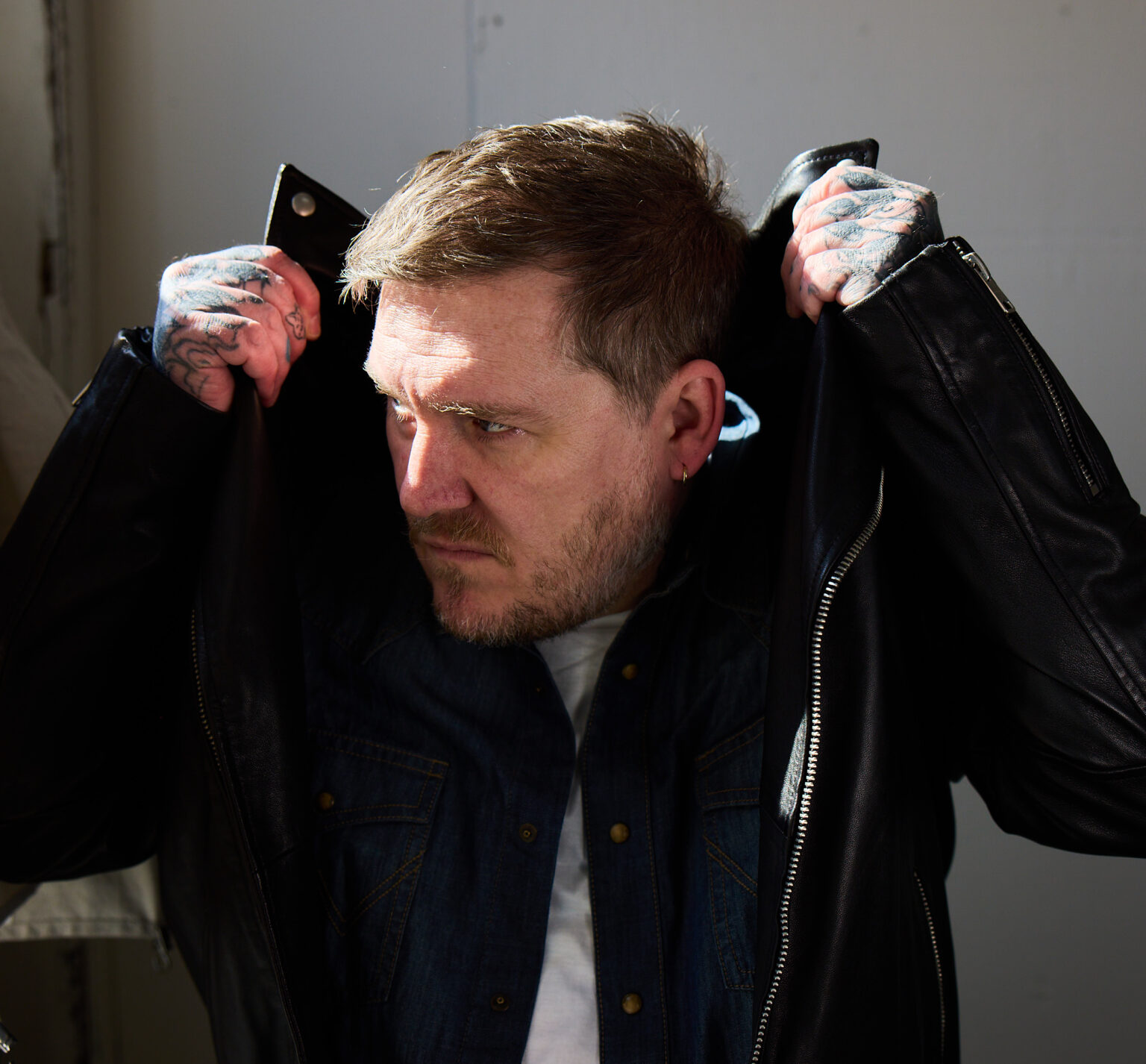
Entertainment Tonight reported that the five butterflies on the back of Hubbard’s left hand represent his family of five. Later coverage connected the tattoo with a period of new life and change. The hand placement makes the design visible when he holds a microphone, waves or plays an instrument.
What the photographs leave clear about Hubbard’s collection
The published accounts identify several designs and give context for some of them, but they do not provide a full inventory. The lion-and-owl report, for example, describes the image and its placement without assigning it a personal meaning.
Tyler Hubbard’s visual record in sequence
Hubbard has described the lettering on his ribs as his first tattoo. The later accounts give different stories for individual pieces, but do not turn the whole collection into one message.
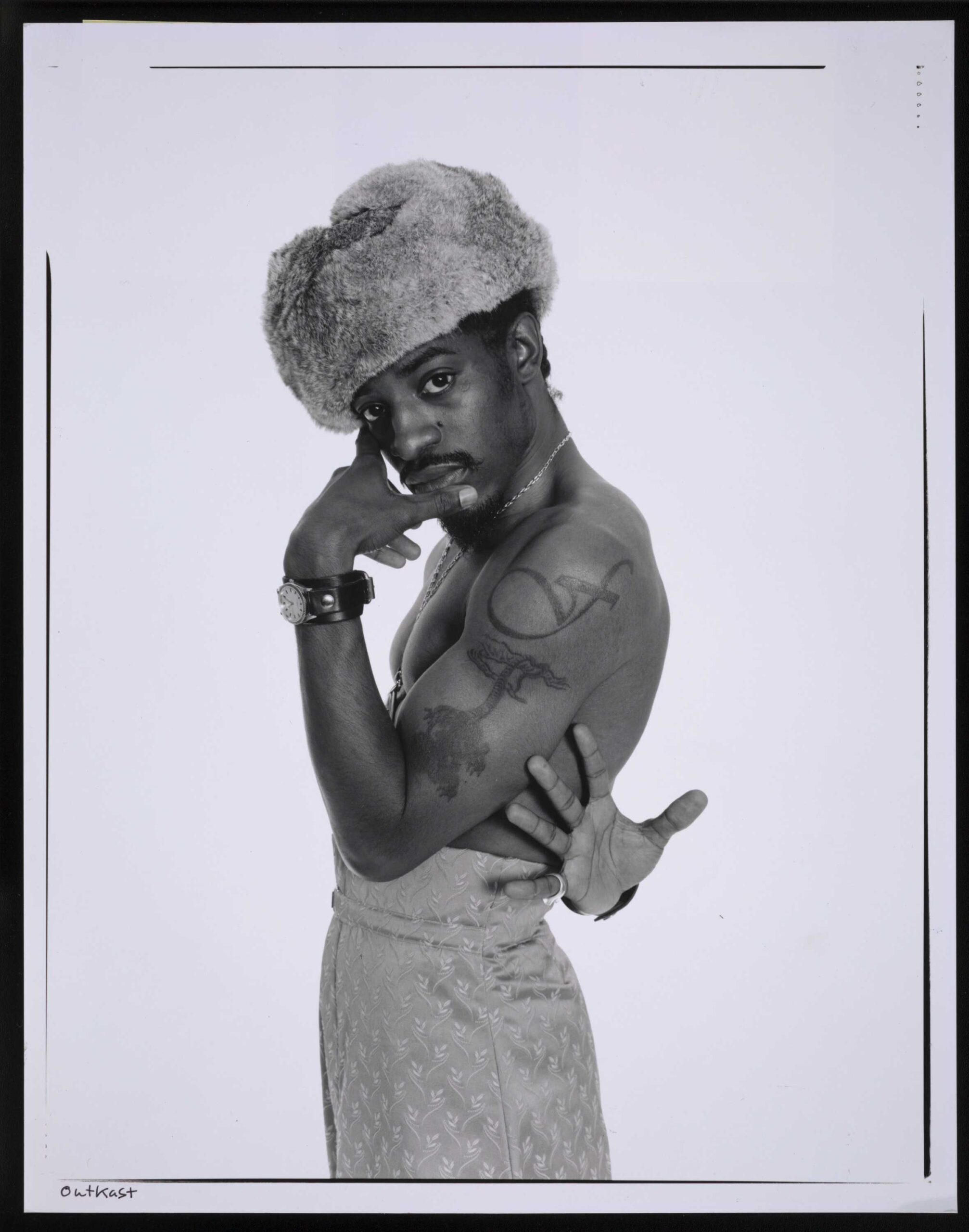
Photographs from André 3000’s OutKast years show a large seven on his chest and tattoos across his upper arms and forearms. The images establish placement and appearance; they do not settle a complete count or the meaning of every design.
André 3000’s tattoos are documented across chest and arms
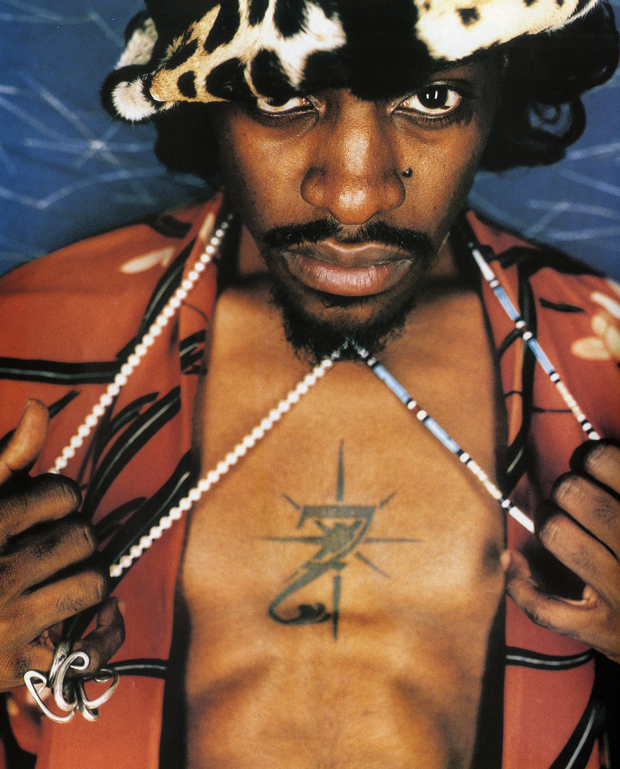
A Stankonia-era portrait published by The FADER shows André opening his shirt to reveal a large, dark seven at the centre of his chest. The number is clear in the photograph, but the source does not give a verified explanation of its meaning.
The chest seven is the clearest early tattoo
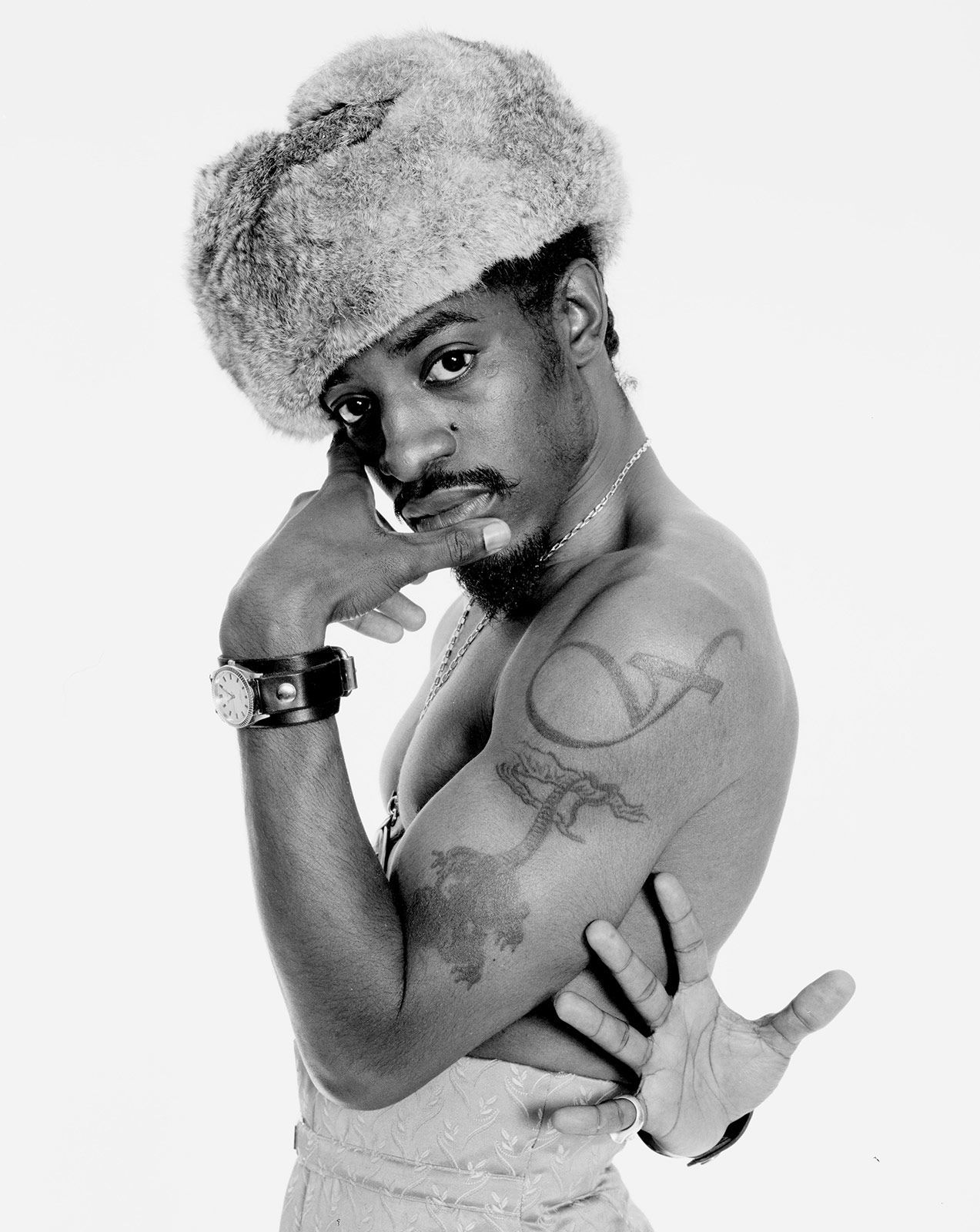
A 2003 photograph by Janette Beckman, preserved by the Smithsonian’s National Museum of African American History and Culture, shows two large tattoos on André’s upper arm. Beside the FADER portrait, it confirms that the chest seven was not his only prominent early tattoo.
The studio portraits show two large upper-arm tattoos
Foam’s closer reproduction of Beckman’s photograph shows a rounded mark high on the arm and a more irregular, dragon-like design below it, with open skin between. Some descriptions offer labels for the shapes, but the records do not provide official names or meanings.
A live image confirms the tattoos were part of his stage-era appearance
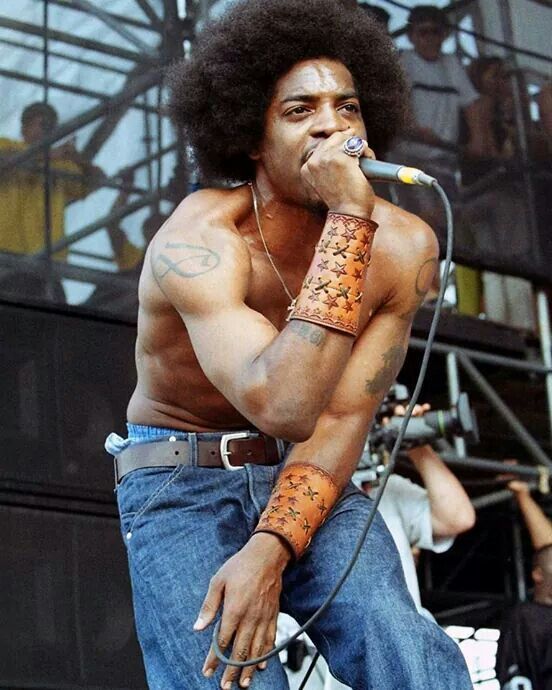
A performance photograph shows André shirtless at a microphone, with his shoulder, upper arm and forearm exposed. The image confirms the tattoos appeared onstage; distance and lighting make some of the smaller forms hard to identify.
The arm imagery is visible in archival photographs
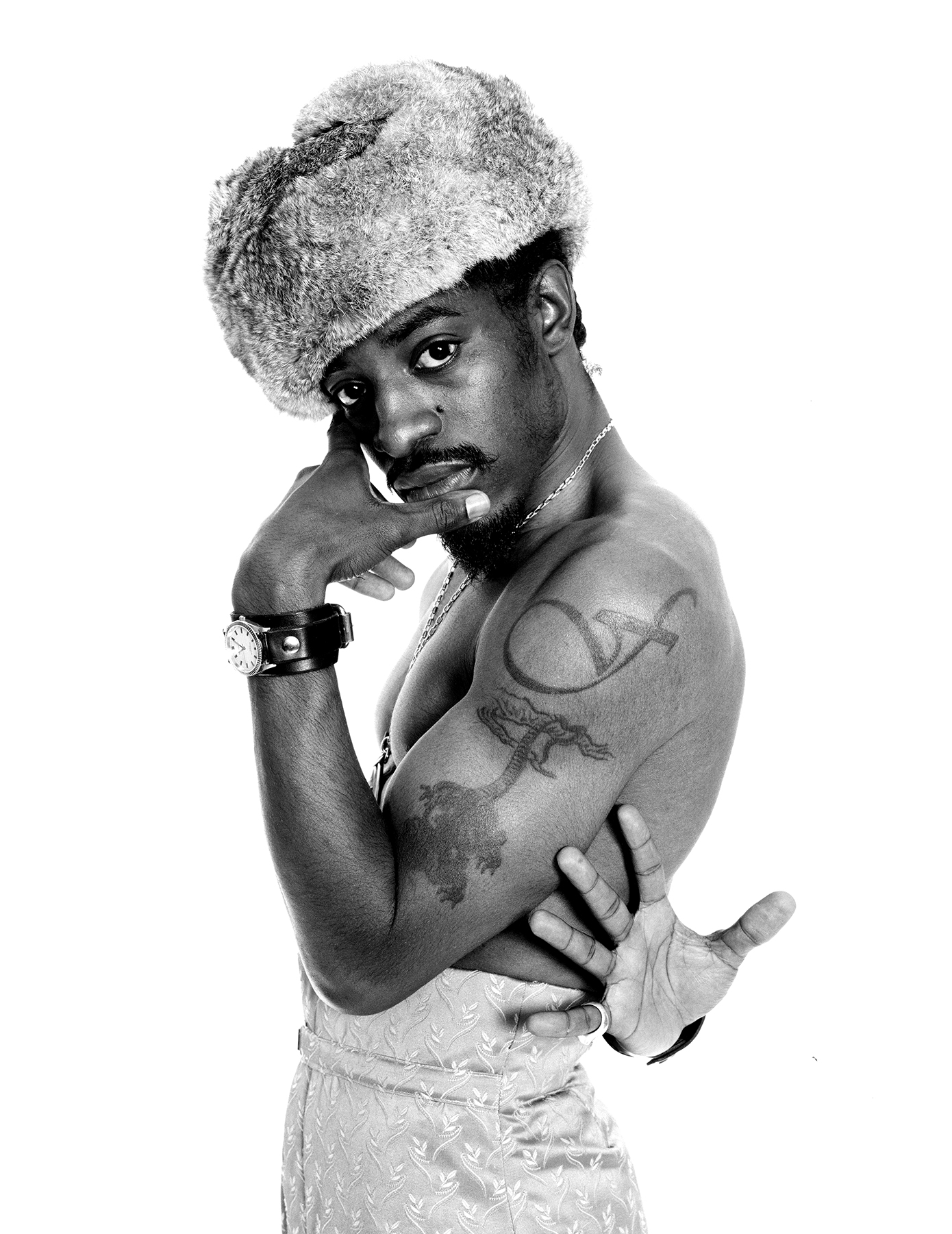
The Pilgrm published a high-resolution Janette Beckman portrait from a 2003 New York session. It gives a clear view of the looping upper-arm mark and the dragon-like design below, including the space between them.
What the photographed record can establish
The photographs show a chest seven, two substantial upper-arm designs and additional forearm marks. One online summary gives a count of six tattoos, while a general body-facts page says André has none; both claims sit uneasily beside the dated images. The photographs are stronger evidence for the tattoos’ existence and placement than for an exact total.
The 2000s archive contains different views
The FADER portrait documents the chest mark during the Stankonia era. Beckman’s 2003 portraits show the arm tattoos in a studio, while the live image records them during a performance. Each setting reveals a different part of the collection.
Meaning should stay close to the images
Neither the photographs nor the published descriptions confirm that the chest seven represents a particular person, album or belief. The sources also leave the exact meaning of the arm designs open. A visual description is supported; a personal explanation is not.
Why the collection resists a single label
The chest seven is a clear graphic mark, while the upper-arm pieces are larger and more illustrative. The photographs show separate designs and open skin between them, not one continuous sleeve. Angle and lighting change how much of the forearm work is visible.
The documented record remains deliberately incomplete
The record comes from a small set of named editorial, museum and performance photographs. They establish substantial tattoos across the chest and arms, but do not amount to a complete inventory. The remaining uncertainty belongs in the account.
A concise visual summary of the documented record
OutKast-era and 2003 images document the chest seven, two upper-arm pieces and additional forearm marks. They leave the exact count and personal meanings unsettled.
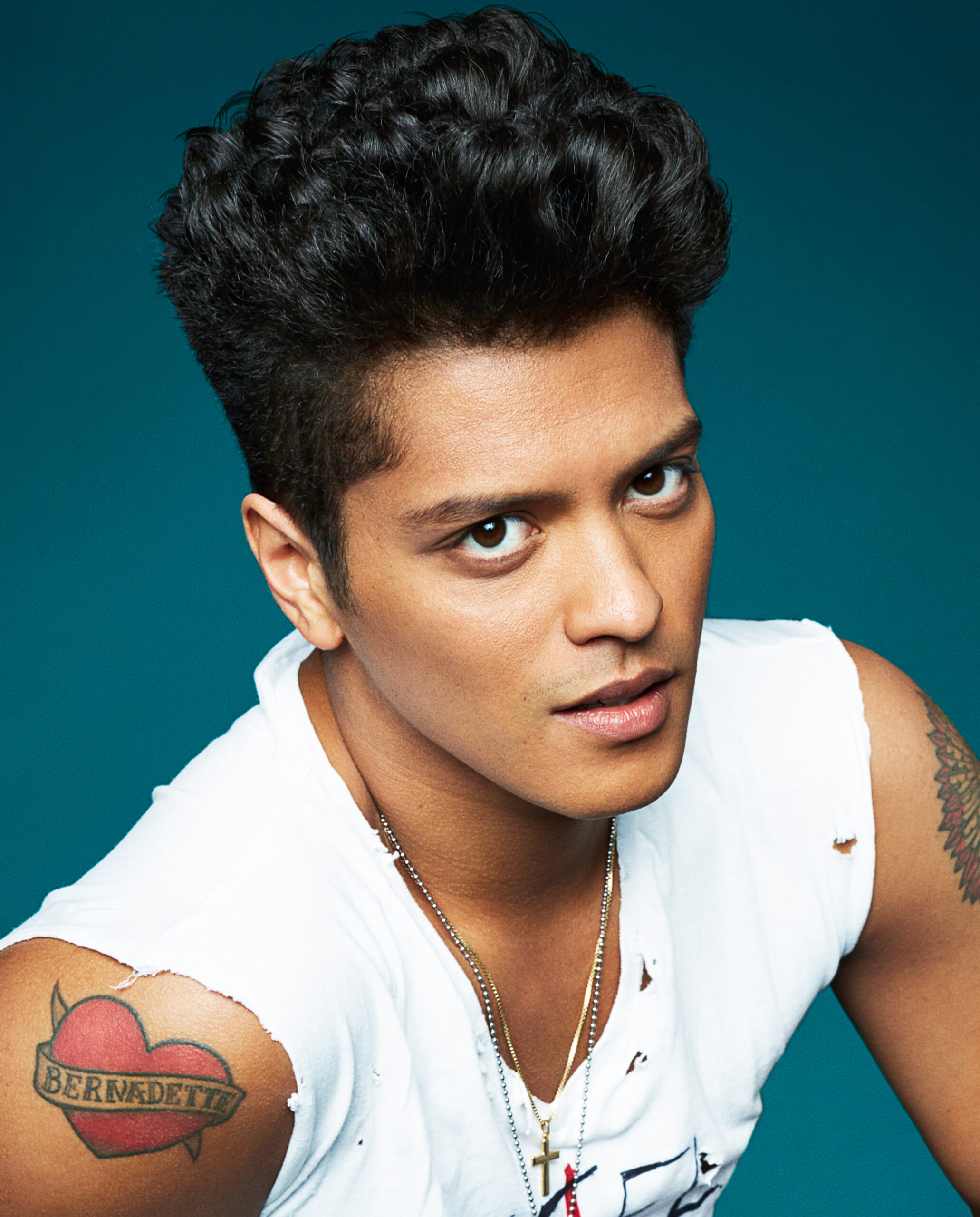
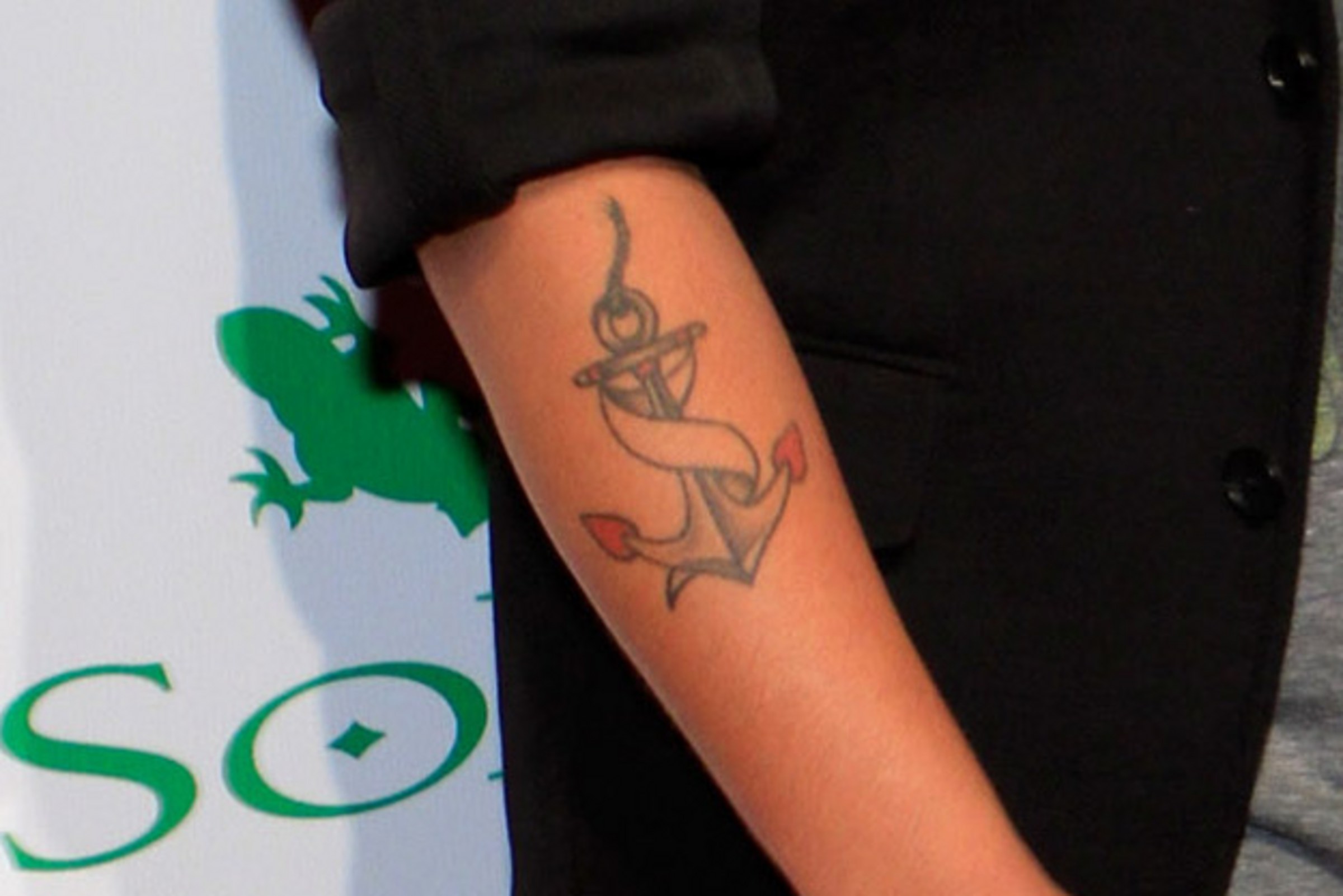
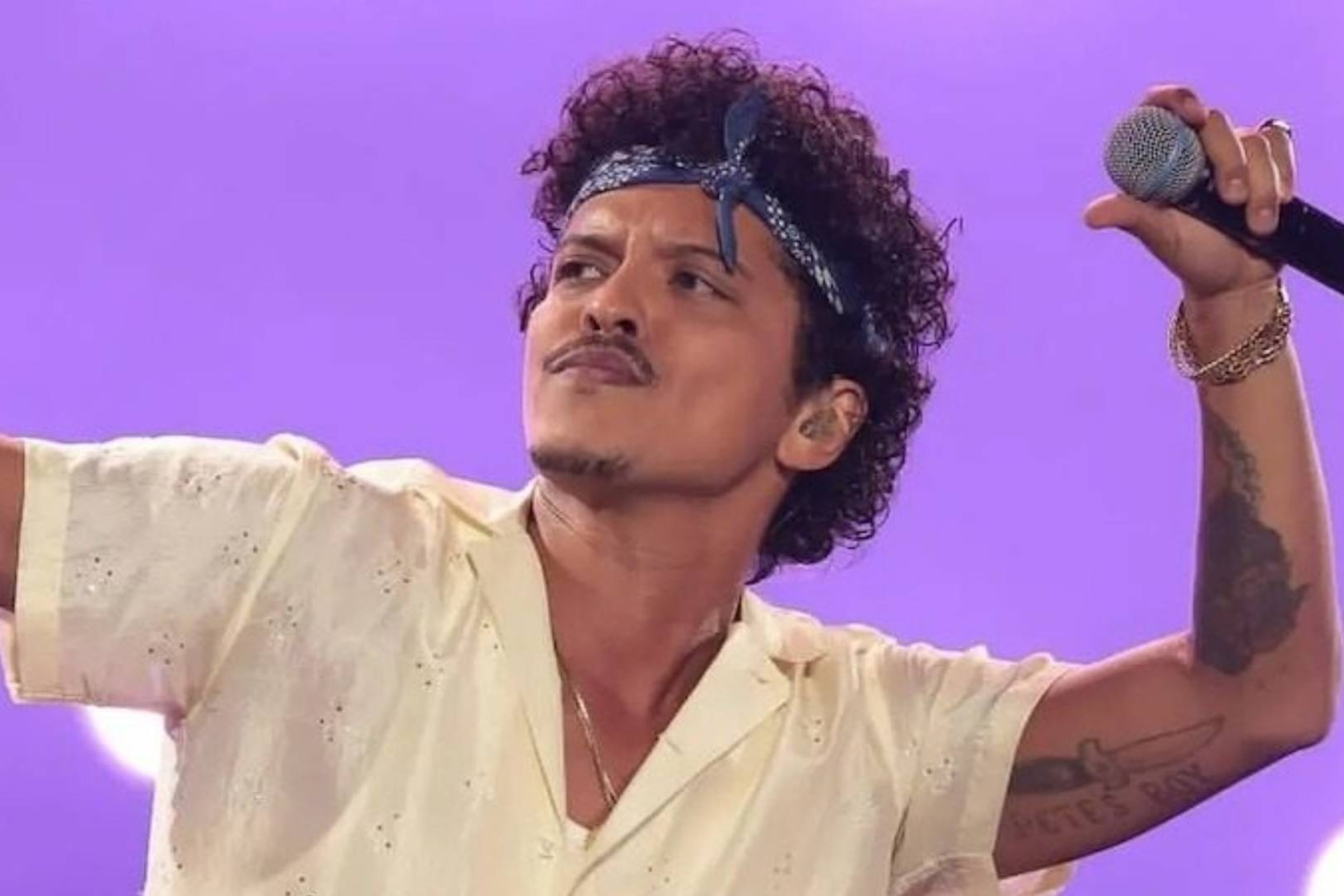
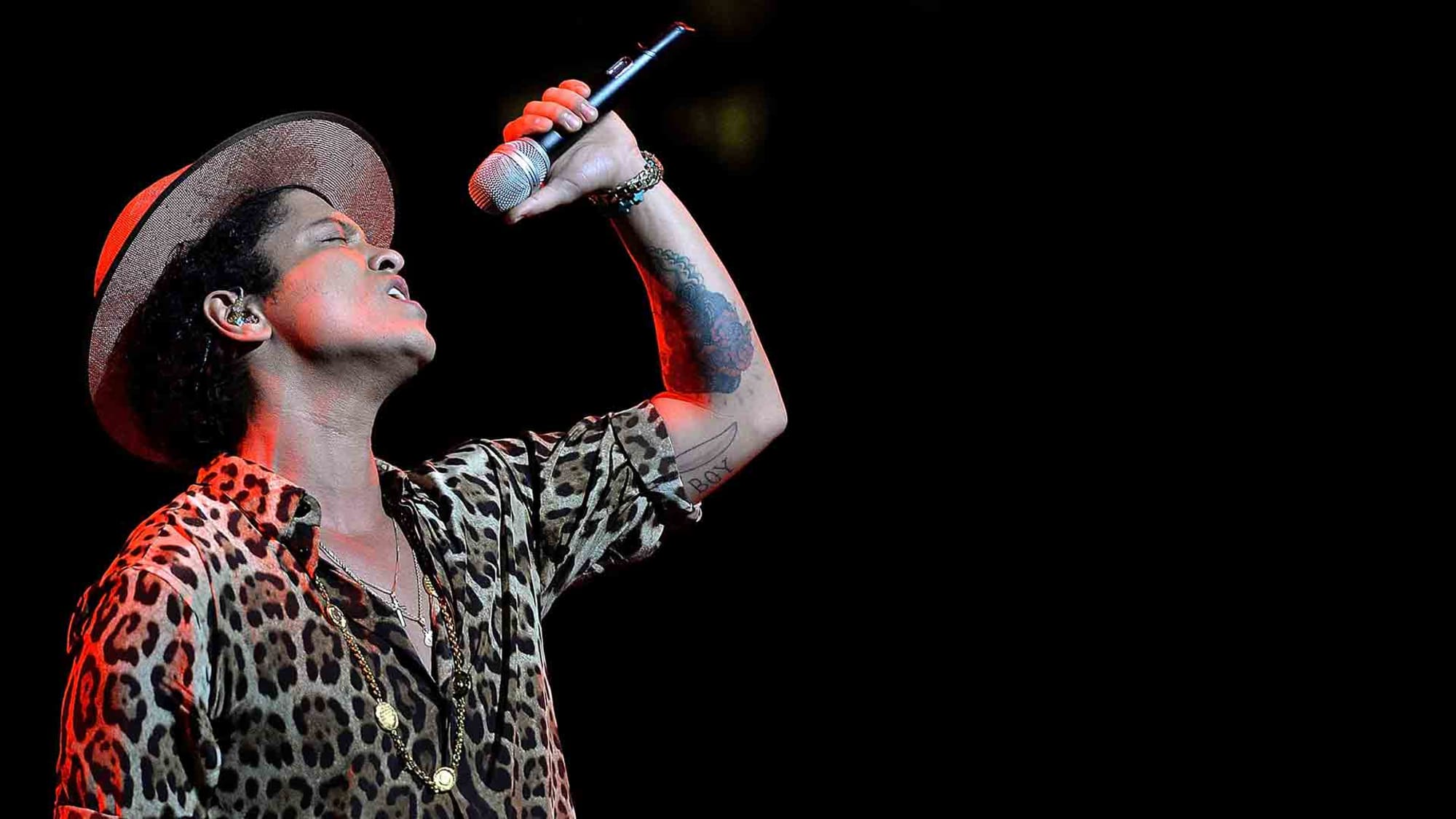
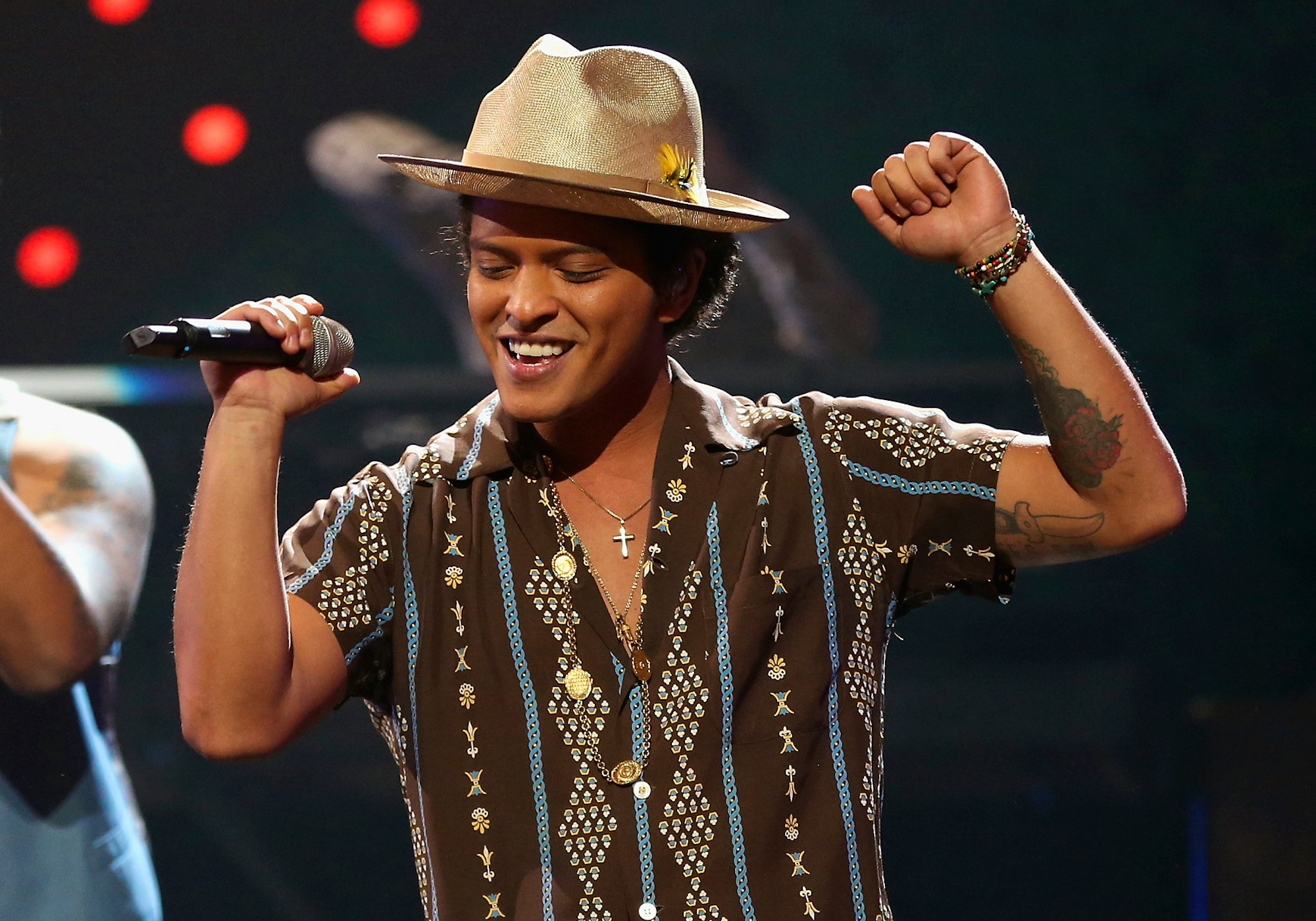
Bruno Mars’s best-documented tattoos are traditional designs tied to family, including a heart with his mother’s name, an anchor connected in published accounts to his grandfather, and a knife marked “Pete’s Boy.” Older photographs also show a gypsy-woman portrait; later reporting adds a Cristo Redentor chest tattoo.
His tattoo history includes a sacred-heart design he later covered after deciding the result was wrong. The visible collection has changed over time, but the older pieces remain easy to recognize in photographs and interviews.
Bernadette is written across the heart on Bruno Mars’s upper arm
A red heart and banner carrying “Bernadette” sit high on Mars’s upper arm. Bernadette was his mother. The large lettering and bold outline make the name readable in portraits, while the open skin around it keeps the heart distinct from the other arm tattoos.
Mars has described this as the last tattoo he received during an earlier phase of his collection. The design uses a familiar heart-and-banner form for a specific family tribute.
The anchor on Bruno Mars’s forearm uses classic rope and color
The forearm anchor is drawn in gray with rope around it and red accents at the flukes. Its rounded top and heavy outline give it the look of traditional flash rather than a realistic object.
Published tattoo profiles connect the anchor to Mars’s grandfather and his maritime service. The form is familiar, but the reported family link gives this tattoo a more specific context.
The “Pete’s Boy” knife links Bruno Mars’s arm to his father
The knife tattoo carries the words “Pete’s Boy.” Published accounts connect the phrase to Mars’s father and to his birth name, Peter Gene Hernandez. In photographs, the long blade follows the upper arm, while the lettering turns it into a family reference.
The images support the knife and wording, but do not establish extra meanings for every nearby mark.
Mars’s visible forearm collection carries the traditional color language
A gypsy-woman portrait appears on Mars’s forearm, with dark hair, a rose and ornamental details around the face and neck. Sources identify the design as the work of tattoo artist Kyle Gibson. Its saturated color and bold outline distinguish it from the gray anchor and the red heart.
The portrait adds a figure to a collection otherwise built around clear symbols and lettering. The sources identify the tattoo but do not give it a separate personal explanation.
Bruno Mars’s later arm images show the tattoos in performance
Performance photographs show the arm tattoos while Mars raises a microphone or moves under stage lights. Clothing and lighting can hide details or make separate pieces look like one dark field. The images confirm that the known designs stayed visible across different performances, but they are not a reliable basis for adding unverified tattoos to the inventory.
The first chapter did not remain unchanged
Mars has said an earlier sacred-heart tattoo, made when he was nineteen, came out wrong. He later covered it rather than keep it as a visible centerpiece. The episode explains why older accounts may mention a sacred heart that does not appear in photographs of his current collection.
It also shows that the collection was not fixed from the start: some designs were added, while others were changed or covered.
Later reporting adds another chapter
Brazilian reports in 2024 described Mars receiving a Cristo Redentor tattoo on his chest from a Brazilian artist. That report adds a later chapter to a history more often documented through the older arm pieces. The subject and reported artist context are clear; finer details should stay within what the published images show.
Why the collection stays immediately recognizable
The clearest record combines readable images with reported family context: Bernadette’s name in a heart, the anchor’s connection to his grandfather, and “Pete’s Boy” for his father. The gypsy portrait and later Cristo Redentor report widen the collection beyond those family references.
Mars also discusses his tattoos and tattoo artist Adam Daniel in the interview clip below.
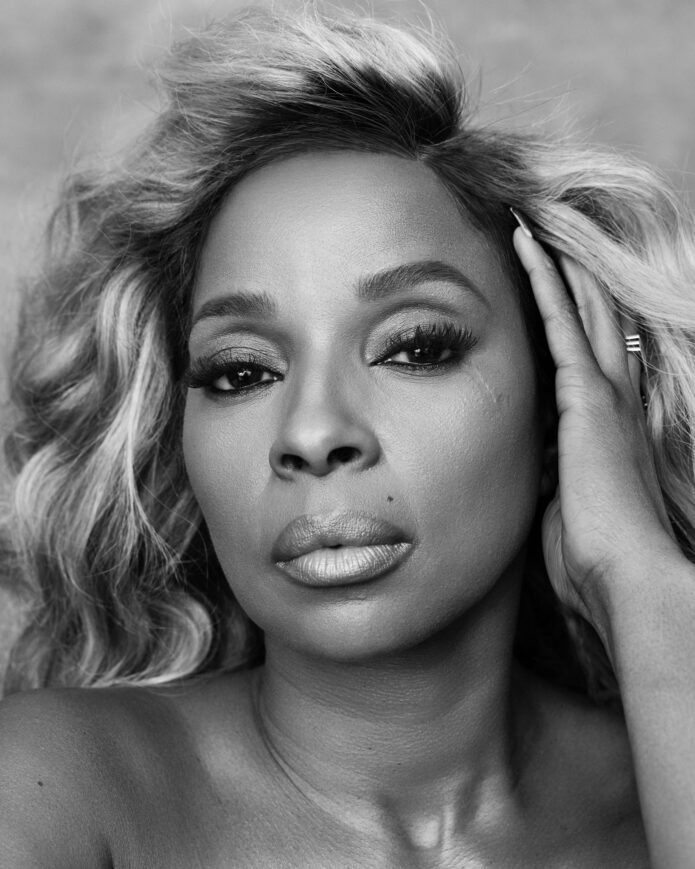
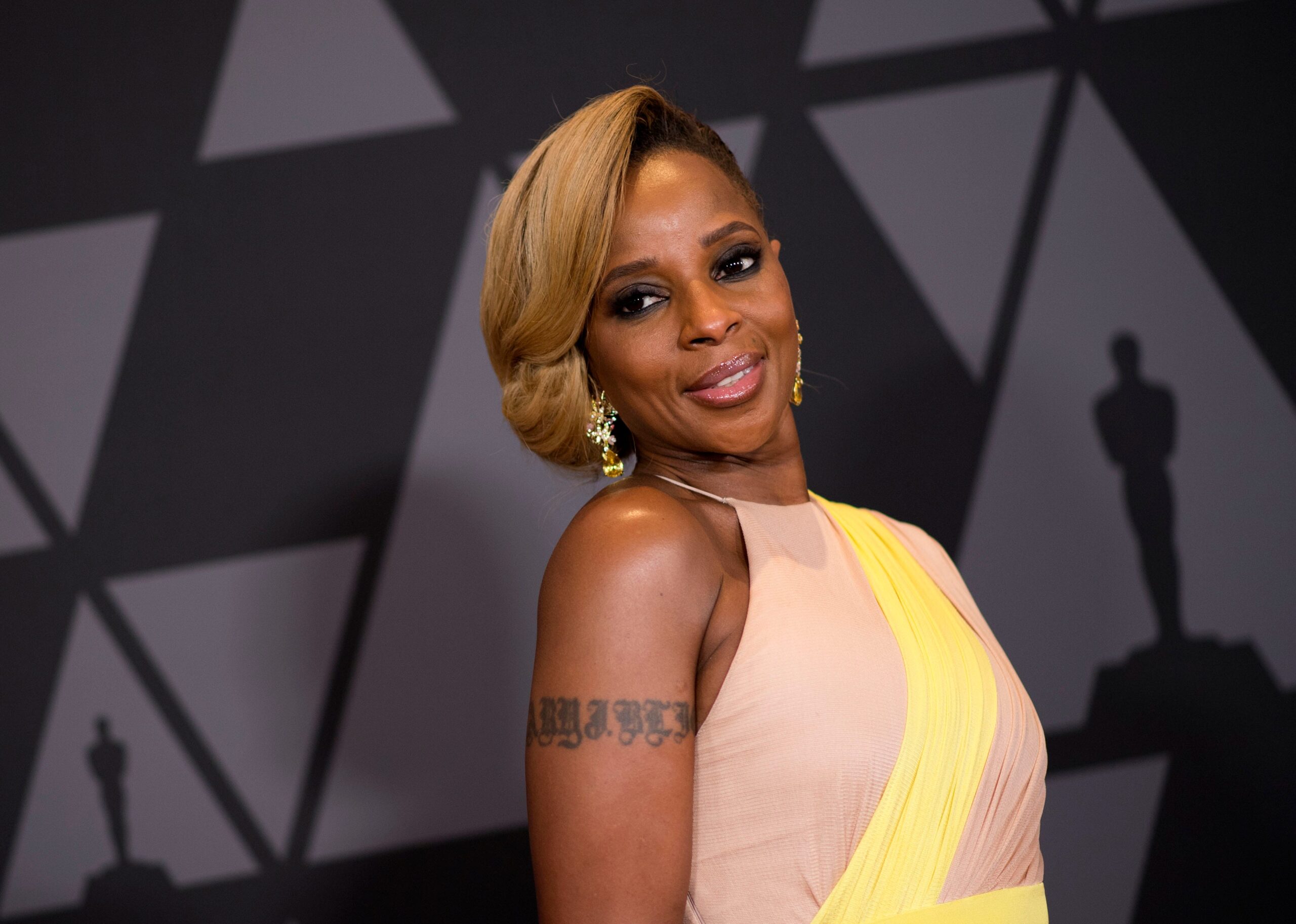
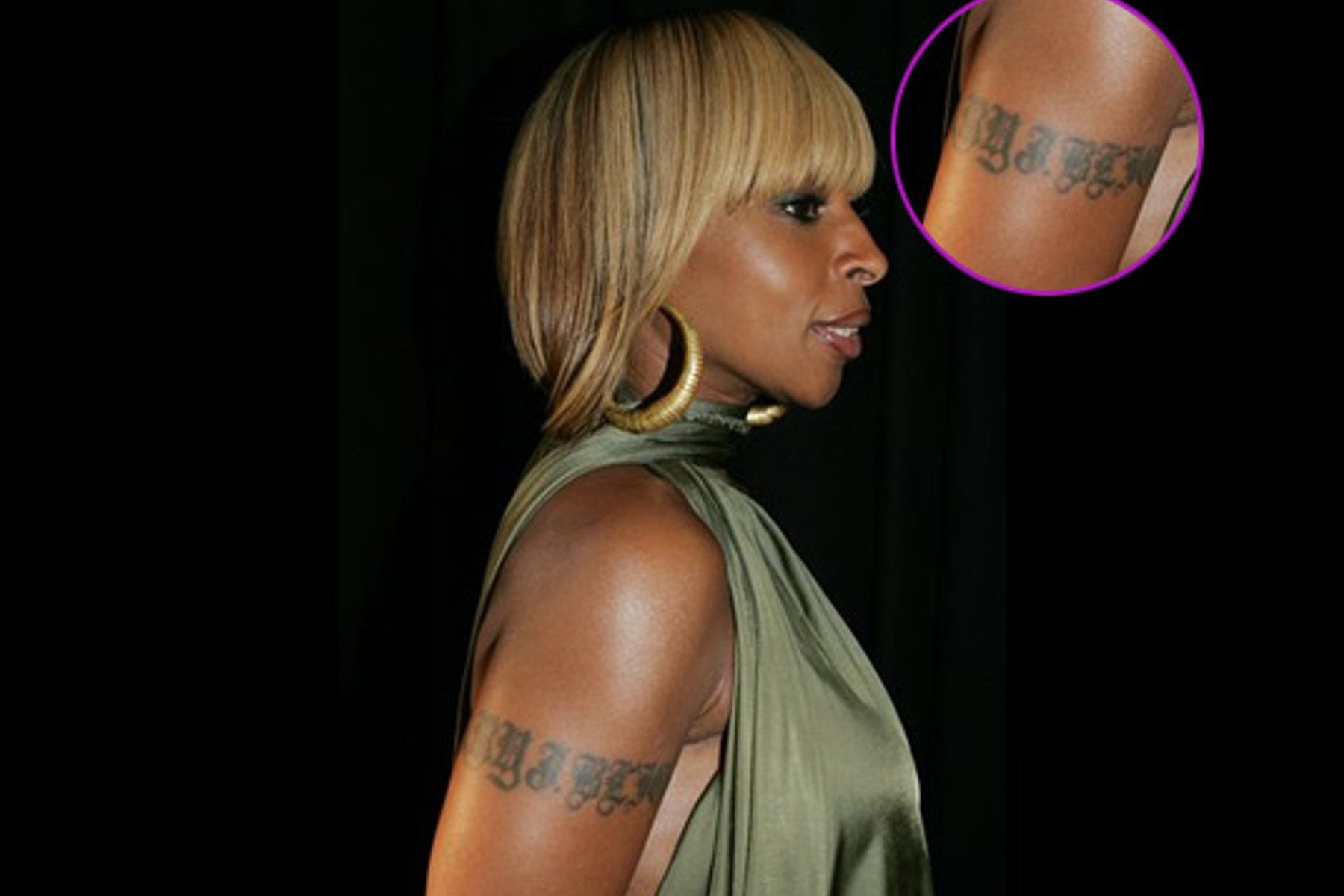
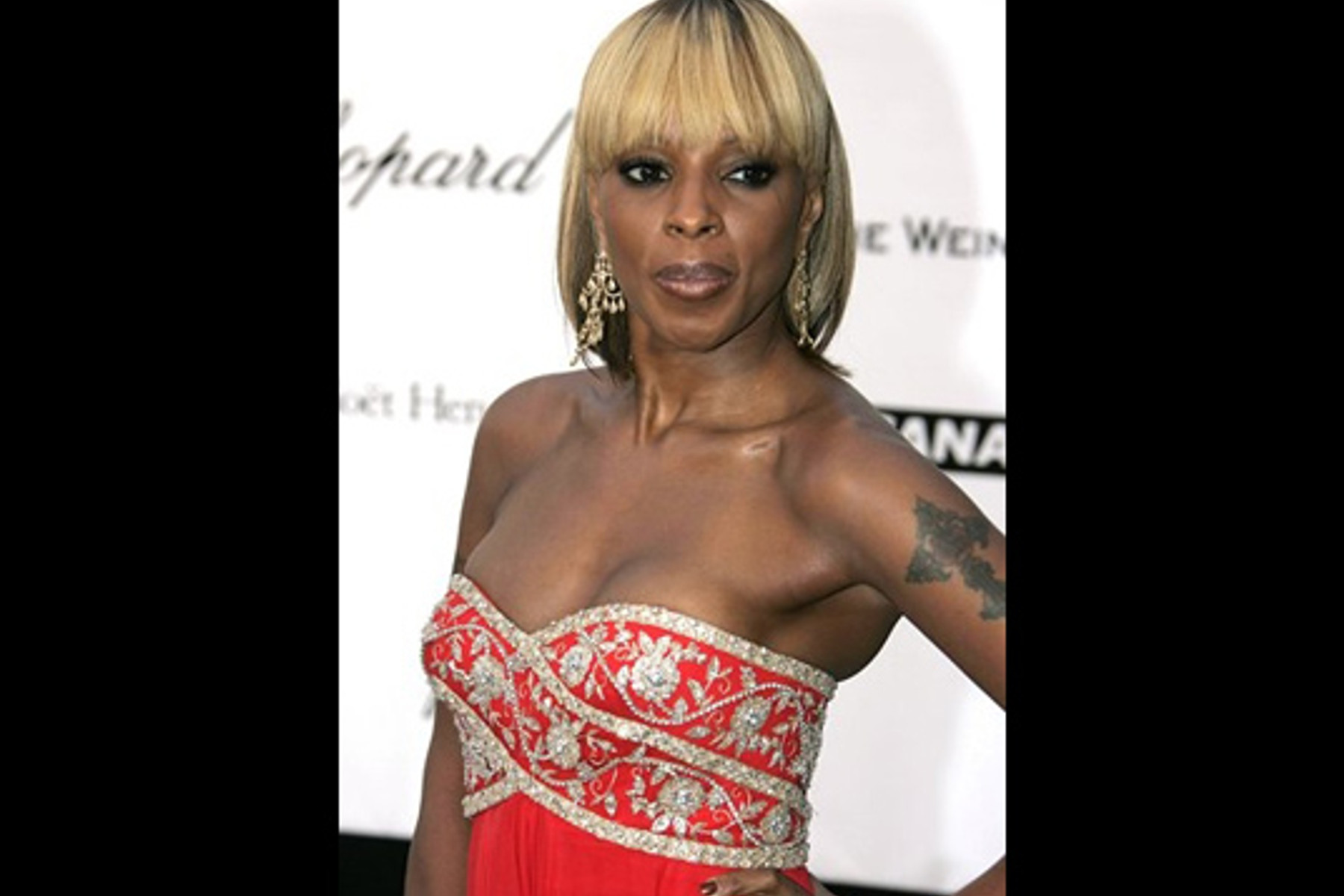
Mary J. Blige’s tattoos are documented across red-carpet, portrait and performance photographs, but the sources do not offer one official inventory. They repeatedly show a gothic name band, a cross, a thigh flower, a shoulder butterfly and a small symbol on her hand. The clearest evidence is a repeated set of placements across portraits, red carpets and performances, though not every small detail is equally clear.
Mary J. Blige’s documented tattoo collection
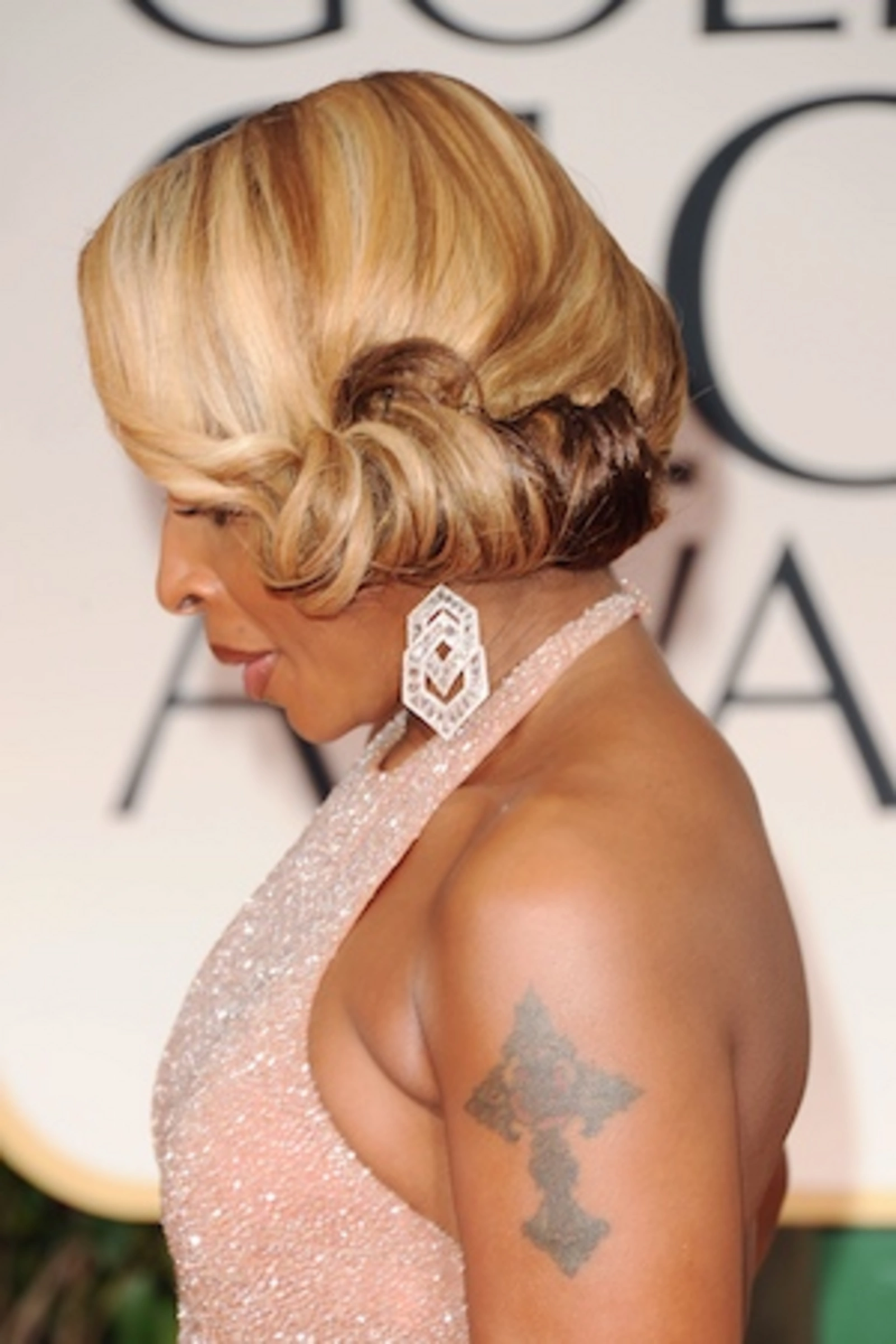
Oprah Daily identifies a butterfly near Blige’s shoulder, a thigh flower, a hand symbol, a cross on her upper left arm and gothic lettering with her name on her upper right arm. Body Art Guru lists the same core designs and adds an unidentified mark on the other hand.
Photographs expose different pieces depending on clothing and pose, which helps explain why catalogs vary in their count. Some meanings come from Blige’s own comments; others are descriptions attached to images.
The gothic name tattoo wrapped around her upper arm
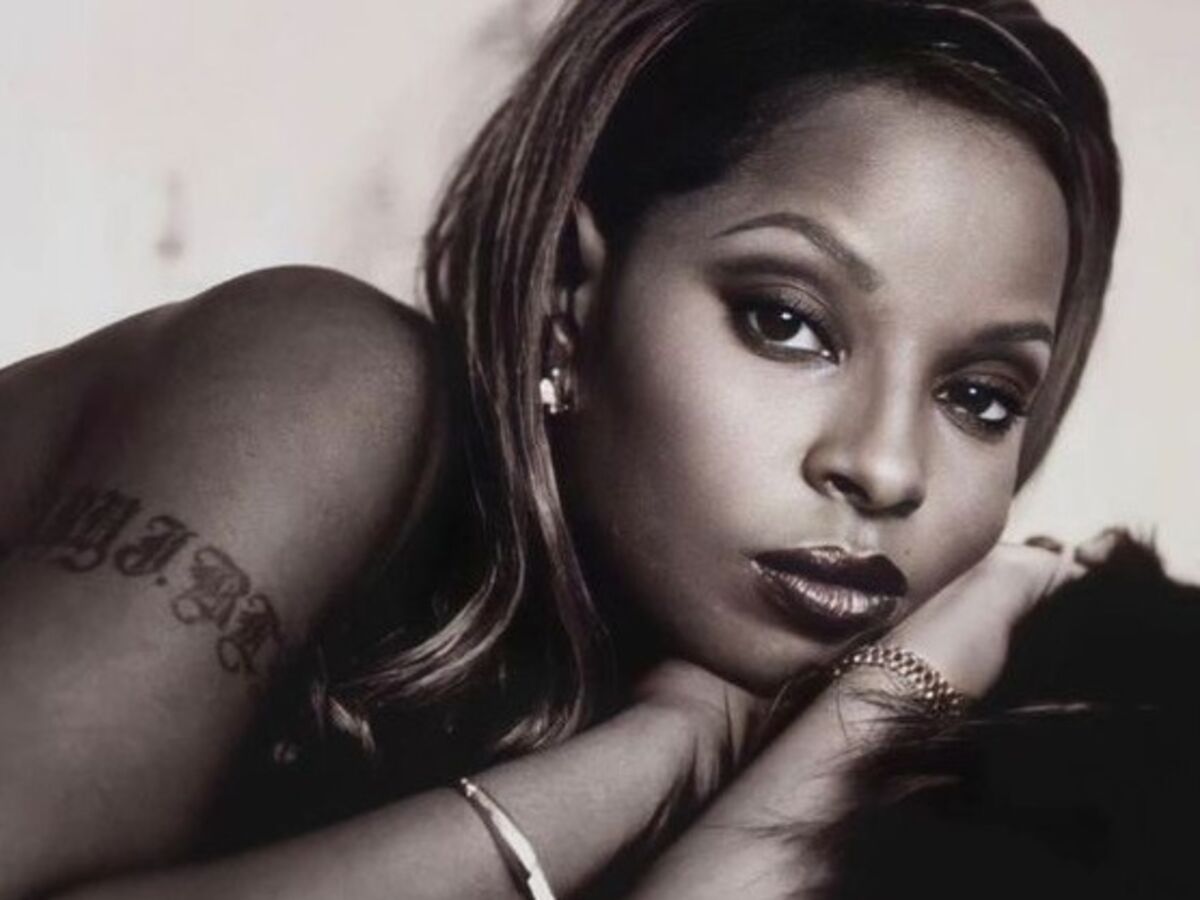
The name tattoo wraps around Blige’s upper right arm in heavy gothic lettering. BET’s “Tatt’d Up Spotlight” identifies it as “MJ.G.B.” The letters follow the arm’s circumference, so a single photograph may show only part of the sequence.
Portraits confirm the text and placement. The reviewed sources do not establish when each letter was added or provide a separate explanation for the initials.
The cross on Mary J. Blige’s upper left arm
A small cross sits on Blige’s upper left arm. Oprah Daily identifies that placement, and BET includes the design in a religious-tattoo gallery. Body Art Guru describes red inside the cross and connects it to Blige’s public discussions of Christian faith, prayer and recovery.
The image confirms the cross; the personal meaning should remain attributed to the reporting rather than stated as a direct explanation from Blige.
The rose or long-stem flower on her thigh
A flower or long-stem rose is documented on Blige’s right upper thigh. Photographs show a vertical design with a darker floral head and a stem extending down the leg. The exact botanical details are less clear than its placement and overall form.
It appears only in images where a slit or short outfit exposes the thigh. Secondary catalogs sometimes assign it a personal meaning, but the sources reviewed do not provide a firm statement from Blige about its origin.
Shoulder-level photographs and the softer tattoo details
Oprah Daily and Body Art Guru both list a butterfly near Blige’s shoulder. It is a smaller, lighter motif than the name band or cross, and it can disappear beneath hair, straps or a neckline.
The sources identify the shape and location but do not give a confirmed explanation from Blige. Calling it a butterfly is better supported than assigning it a fixed symbolism.
The collection’s smaller details
Hair, jewelry and clothing also obscure the smaller marks. A portrait may show only the upper-arm lettering or the edge of the cross; another may reveal the butterfly or hand symbol. The photos provide separate views rather than one complete map.
The meaning attached to one mark
The compact “strength” symbol on her hand
Steal Her Style and an earlier interview profile identify the hand tattoo as a Japanese or Chinese character for “strength.” The earlier profile says Blige and her sister La Tonya had Japanese tattoos on their hands and reports that Blige chose the word “Strength.” The translation and sister connection come from that reporting; the photograph itself shows only the compact black character.
It can be hard to see beside rings, nails or a microphone, but it appears when Blige turns her hand toward the camera.
A consistent pattern in the images
The article’s image record draws on red-carpet photographs, close portraits and stage shots. Close-ups show lettering and line details; wider images establish where a design sits; live photographs show how arm ink appears in motion.
Each type of source has a limit. A photograph can establish placement and appearance, while a catalog or interview supplies labels and history; those records are strongest when kept distinct.
The hand and upper-arm tattoos in performance photography
A 2009 concert photograph shows a dark tattoo on Blige’s upper arm as she moves a hand and forearm around the microphone. It does not reveal a new design, but it records how the existing ink looks outside a posed portrait. The close-ups show more detail; stage lighting and movement make the hand symbol harder to isolate.
How later photographs preserve the same record
Later performance photographs show the same arm, shoulder and hand locations described in the tattoo references. Distance changes how much detail is visible, but the images do not establish a different set of designs.
The history behind the public count
The count depends on when the source recorded Blige’s tattoos and which smaller marks it included. The Drop reported a seven-tattoo count from a 2011 red-carpet interview. Blige said, “I have seven. I will never get another one.” Later catalogs give shorter lists because they group the recurring designs by placement. The photographs support the placements, while the meaning of each mark is only as certain as the attached reporting.
An interview clip about Blige’s tattoos appears below.
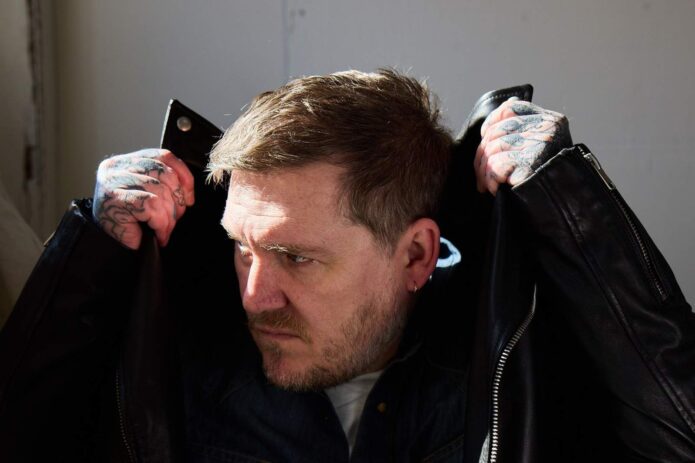
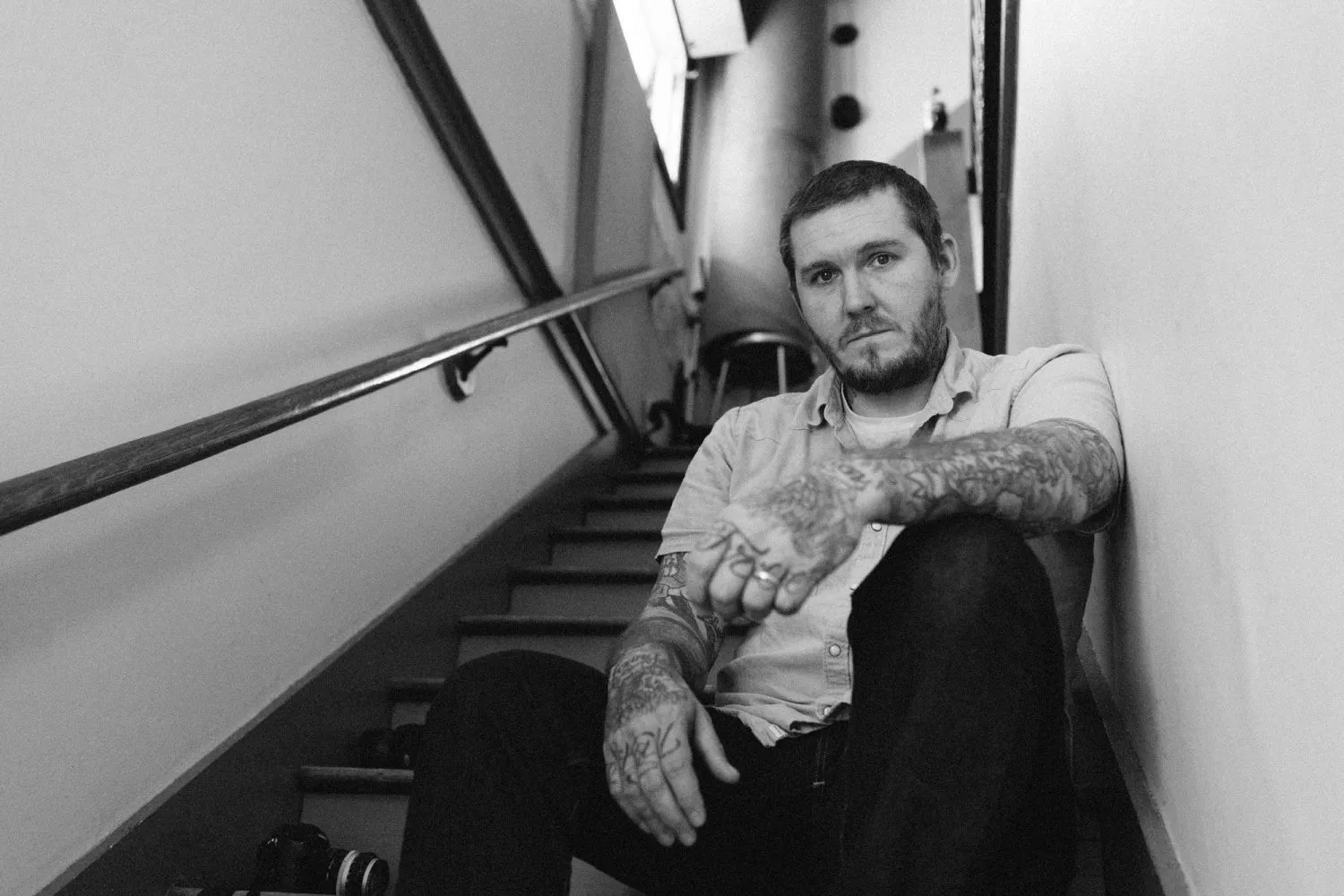
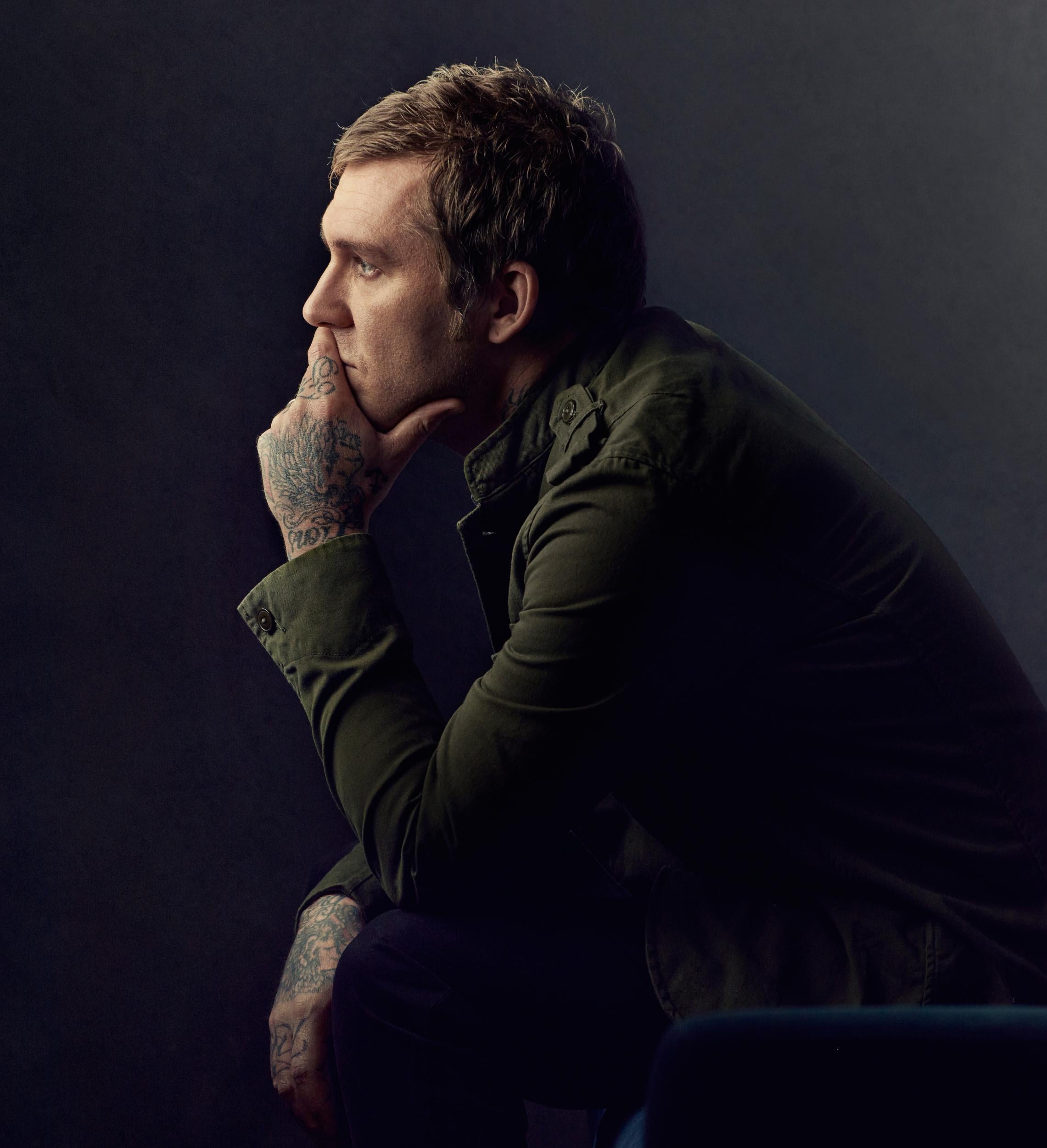
Brian Fallon’s tattoos cover his hands, arms, neck, feet, chest, side, ribs and legs. In a 2020 Inked interview, he described music as the strongest theme, alongside family and the New Jersey shore. He also named several designs himself, including a teenage Bouncing Souls logo, a Derek Jeter number and a Tinker Bell tattoo for one of his children.
Photographs show extensive black-and-grey and color work, but not every smaller mark can be identified. Fallon’s comments provide the clearest context for the pieces he has discussed.
Brian Fallon’s first tattoo was a Bouncing Souls logo
Fallon told Inked his first tattoo was a Bouncing Souls logo on his upper arm when he was about sixteen. The New Jersey band mattered because its music showed him that a group from nearby could be as important as bands from England.
He described the logo as more than a graphic choice: it marked a moment when music began to feel possible as a life. The upper-arm placement also let him keep the tattoo covered when he wanted.
The collection expanded from one upper-arm logo to full coverage
Fallon said there was a long gap before he added more tattoos. Seeing Mike Ness covered in ink helped change his view, and the collection later spread across his hands, arms, neck, feet, chest, side, ribs and above his knees.
Different artists and friends contributed over time. The result is extensive but not one uniform sleeve or a complete public catalog of individually named designs.
Music is the strongest theme in Brian Fallon’s ink
When Inked asked whether his tattoos were mostly about music, family or regret, Fallon said most were music-related. The references include the local punk scene and lyrics that stayed with him.
Vice documented an Eric Clapton line on his neck: “Bell bottom blues, you made me cry.” The same report notes a small anchor at the base of his throat. The text is a clear musical reference; the anchor is visible but its personal meaning is not fully explained in the available reporting.
A Derek Jeter number two sits on Fallon’s shin
In the Inked interview, Fallon confirmed a Derek Jeter number two tattoo on his shin. Jeter was his favorite baseball player, and the number refers to the Yankees captain’s jersey.
It is a compact sports tribute, separate from the larger music and family themes across Fallon’s upper body.
Tinker Bell is a tattoo for one of his children
Fallon told Inked that he has tattoos for each of his children and identified Tinker Bell as one of them. At the time of the interview, it was his most recent tattoo and the one he called most personal.
He did not give its exact placement or describe the full design, so the supported account is the character reference and the family connection.
Family, ocean imagery and the New Jersey shoreline
Fallon also named ocean imagery as a recurring subject and connected it to growing up near the New Jersey shore. Family tattoos sit alongside those references, including the individual pieces he said he has for his children.
The interviews establish those themes, but do not provide a full list of every shoreline or family design.
The hands and neck make the tattoos part of his stage identity
Close portraits bring the hand lettering and neck tattoos into view; stage photographs show the arm work as Fallon holds a microphone or gestures. The Eric Clapton lyric and small anchor sit at the throat, while the hands and sleeves create a larger, more varied field below.
Different camera angles show different fragments. No single image serves as a complete map of the collection.
What the published record can identify with confidence
The clearest confirmed details come from Fallon’s interviews: the Bouncing Souls logo from his teens, the Jeter number two, tattoos for his children and his description of music, family and ocean imagery as recurring subjects. Vice identified the neck lyric and anchor.
Photographs establish the broad coverage across his body, but smaller symbols that are partly hidden or indistinct should not be given names without supporting evidence.
Brian Fallon’s tattoos read like a personal archive
The collection grew from a local punk logo into a broader record of music, family, baseball and the New Jersey coast. Its pieces vary in scale and style, from a lyric and a number to dense arm coverage, but Fallon’s interviews connect them to people and places in his life.
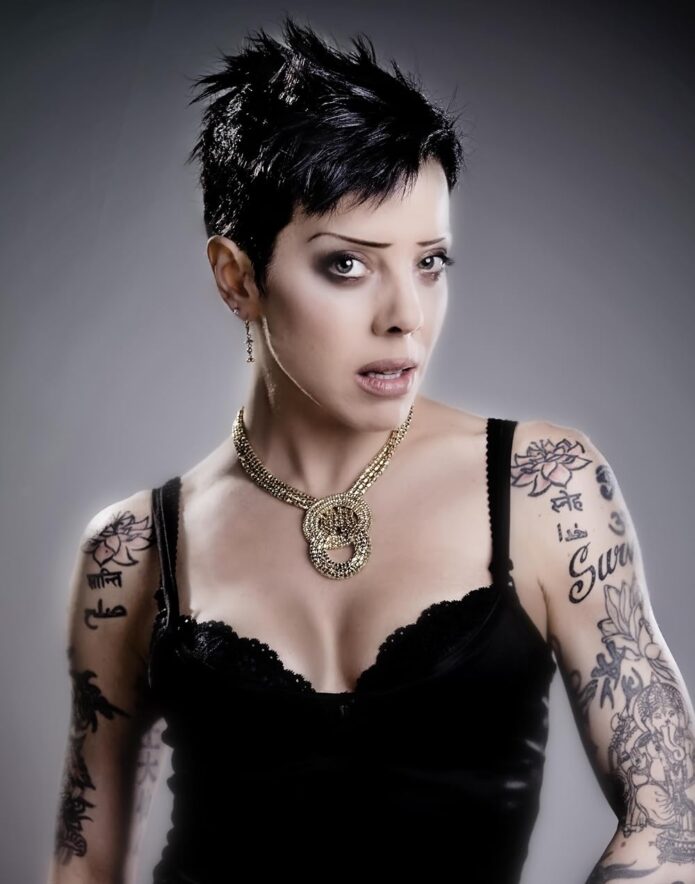
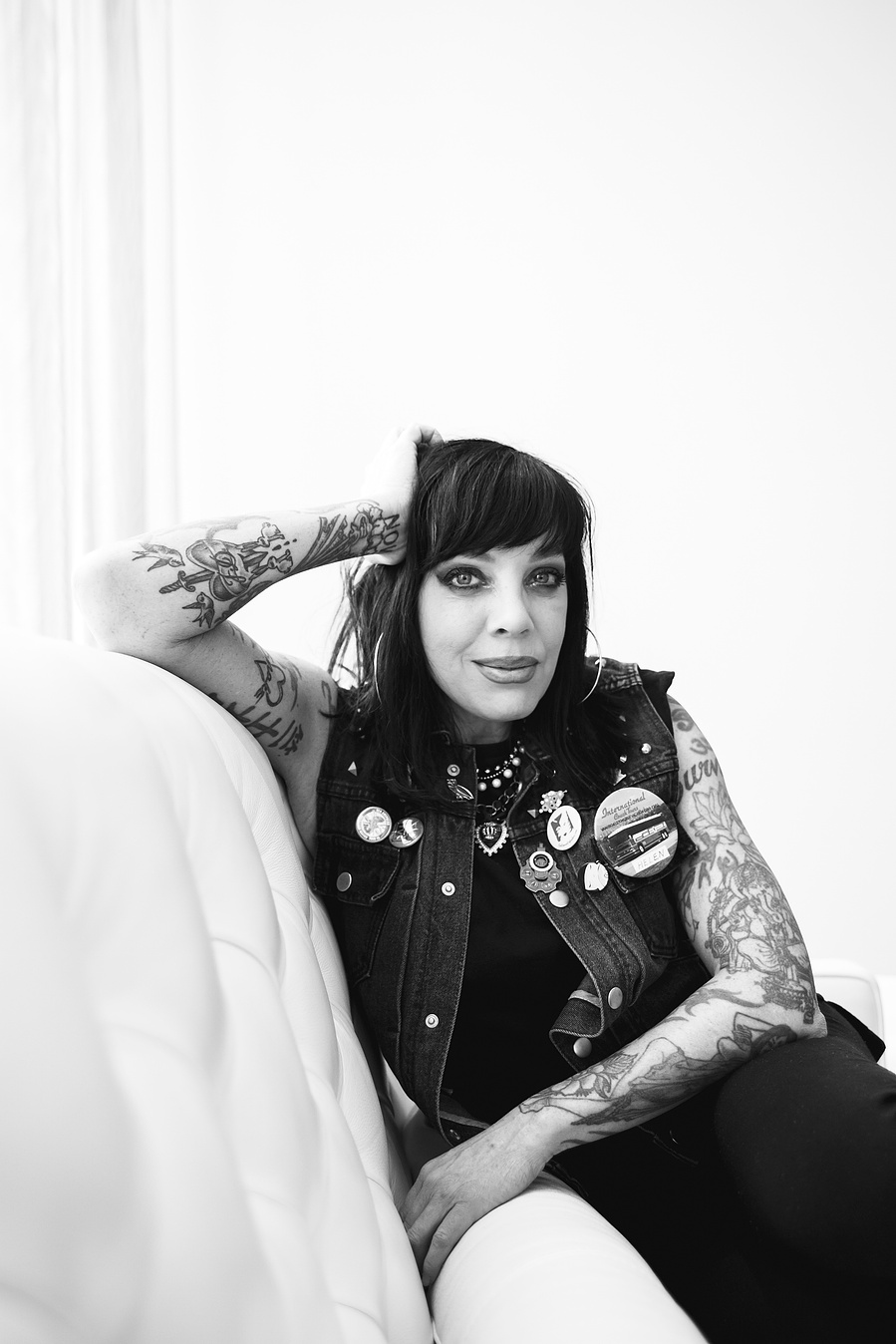
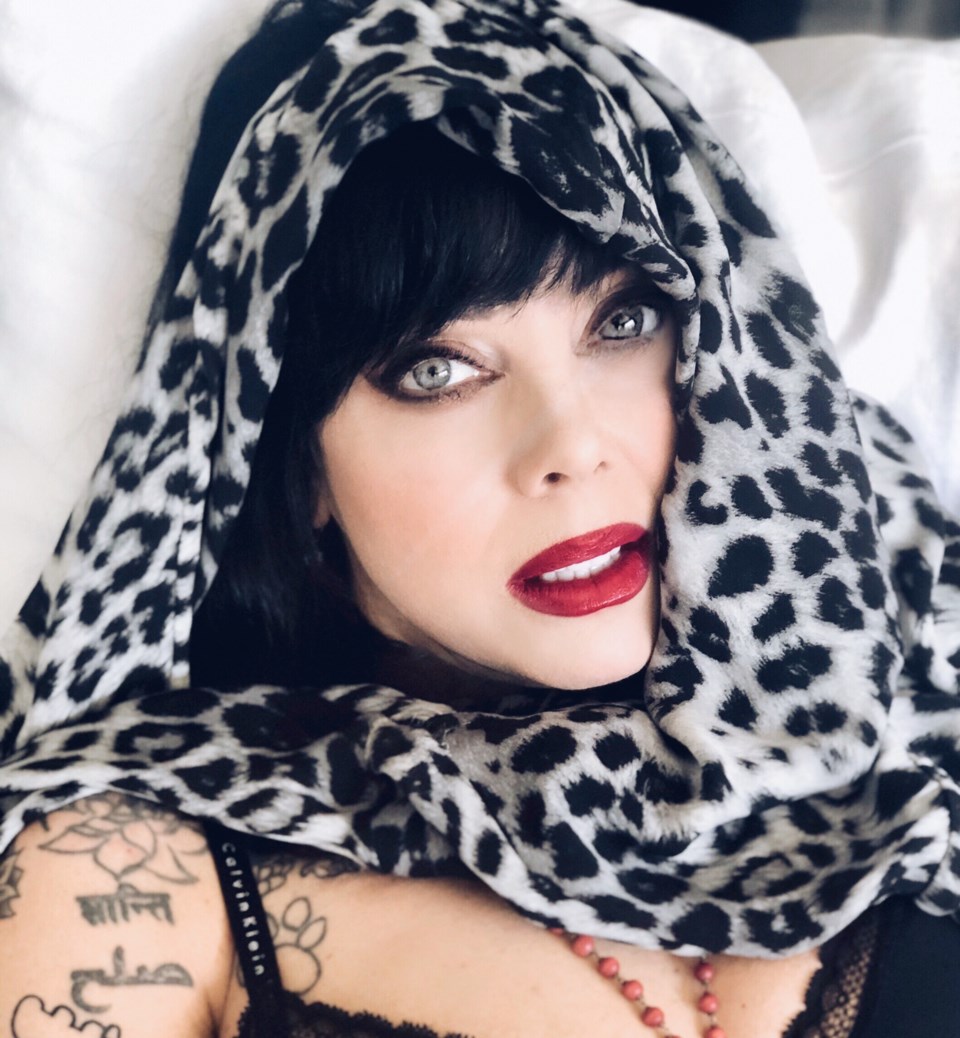
Bif Naked’s tattoos range from spiritual symbols and lettering to flowers, figures and dense arm work. In interviews, she has spoken about her first tattoo, the ideas behind older pieces, and how the collection has changed over decades. Photographs show the designs at different ages, so some details remain clearer than others.
Her account gives context for several pieces without assigning a story to every visible mark.
Bif Naked’s Eye of Horus tattoo
Bif has identified the Eye of Horus as her first tattoo. In an interview with Punk Globe, she described it as an all-seeing eye and a sign of protection. She got it more than 25 years before that conversation, when protection felt like something she needed close.
The symbol’s outline remains recognizable in photographs, though Bif has also talked about the way older tattoos soften with age.
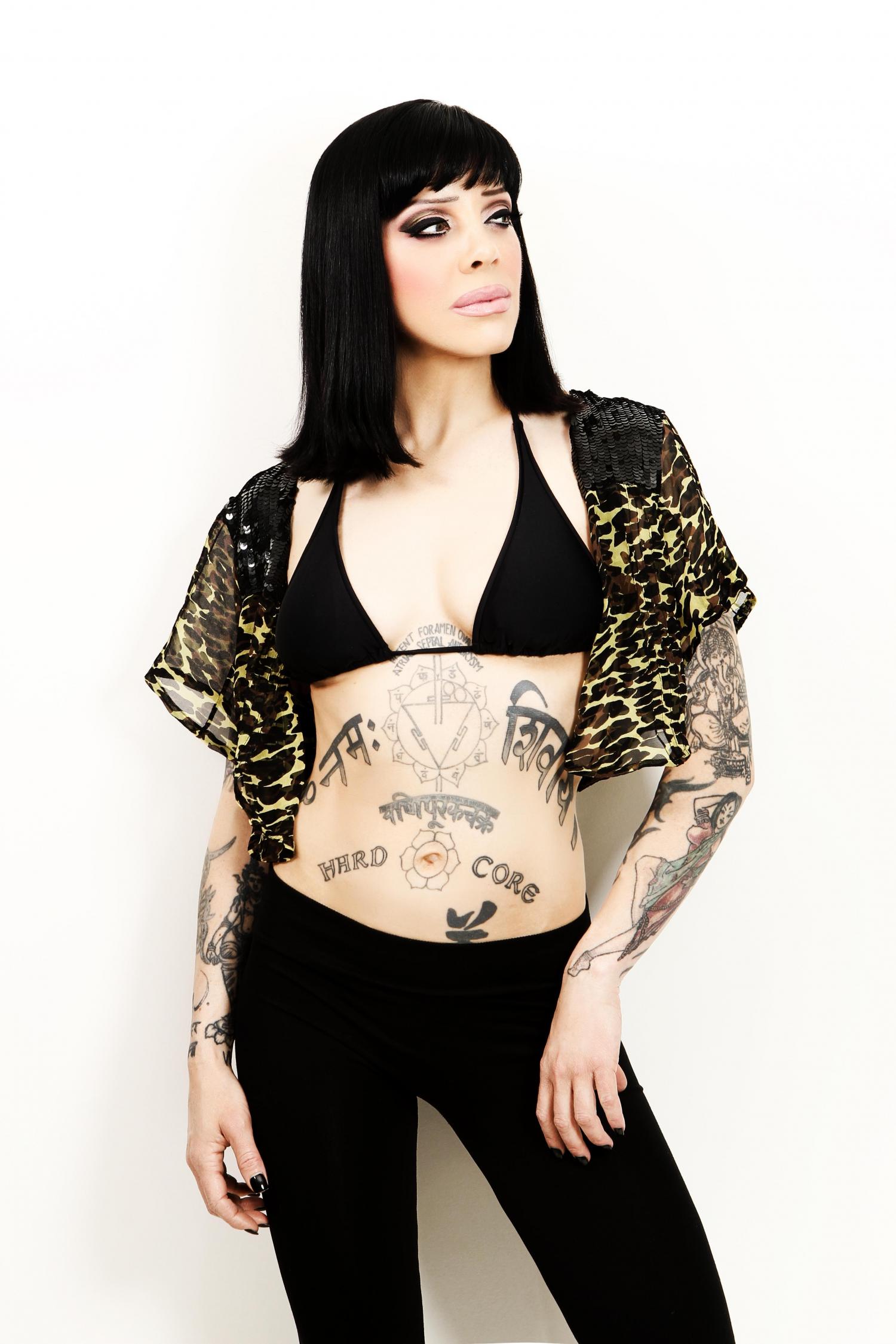
The Ganesha tattoo on her left arm
Bif has described the Ganesha tattoo on her left arm as one of the pieces that matters most to her. In The Seeker, she said Ganesha represented removing obstacles and bringing good luck; she got the tattoo when that idea felt important in her life.
She has also described tattoos as a kind of armour and as a way to carry emotional history. The Ganesha’s significance comes from that personal account, not just from the figure’s appearance.
Lettering, script, and the “Hard Core” tattoo
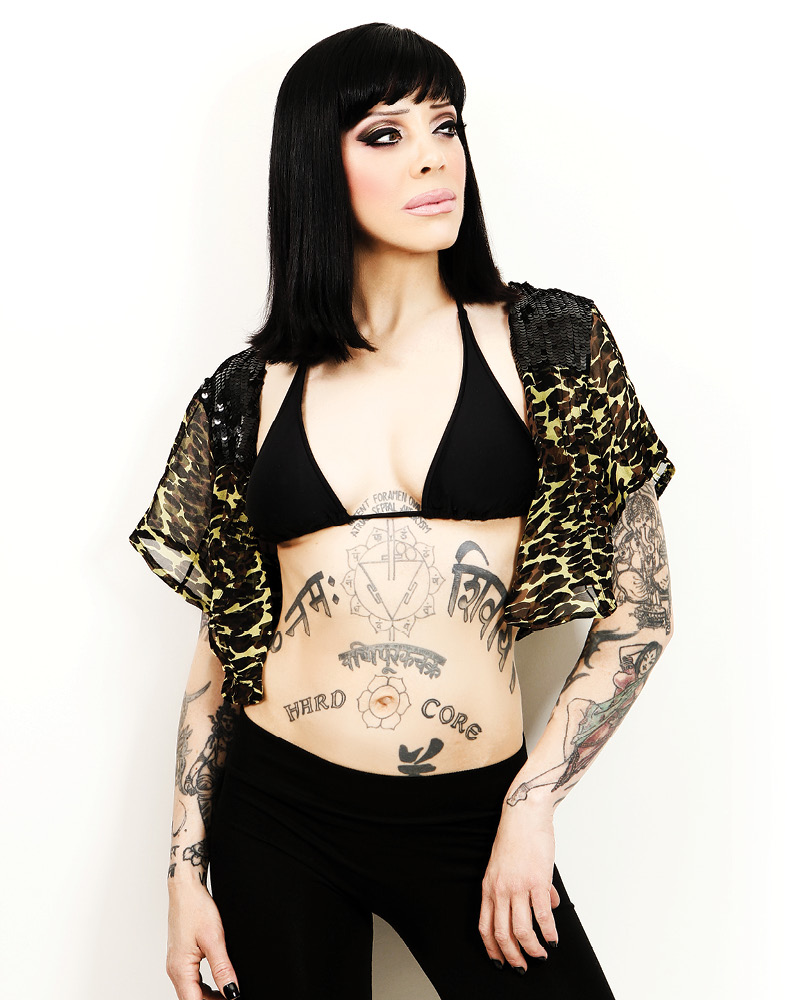
Words and short passages of script sit among the symbols and drawings. “Hard Core” across Bif’s stomach is one of the easiest phrases to read. Other lettering varies in size, placement and style rather than following a single font or plan.
The older pieces show different line weights and degrees of fading. Some words remain bold; finer marks take a closer look.
Flowers, figures, and dense arm coverage
Photographs show flowers, figures and smaller symbols across Bif’s arms. From a distance the work reads as dense coverage; closer views separate the pieces, with gaps, overlaps and different line weights visible between them.
The images do not identify every motif, so the unconfirmed shapes remain visual details rather than named designs.
Body tattoos and the meaning of “Naked”
Torso tattoos include larger lettering and symbols, while other pieces follow the ribs, stomach and lower back. “Naked” across Bif’s lower back plays directly on her stage name. She has said she got it because she wanted to.
That straightforward answer sits beside the more layered accounts of protection and spirituality. Not every tattoo came with a long explanation.
The collection keeps changing
Bif has spoken about adding her dog’s name and crossing out the names of former husbands. Those changes record revisions as well as additions: some tattoos were altered when the story attached to them changed.
In a 2009 interview, she joked that little blank skin remained and said chemotherapy had changed how she thought about getting more tattoos for a time. She described a pause and later additions, rather than one fixed final version of the collection.
Why this collection still works
The collection holds spiritual symbols, direct lettering, flowers, figures and personal revisions. The styles do not all match, but interviews connect several pieces to specific ideas and events, while photographs show how the ink has aged and accumulated.
Some pieces are easy to explain from Bif’s own comments; others are simply part of the map. That difference is part of the record.
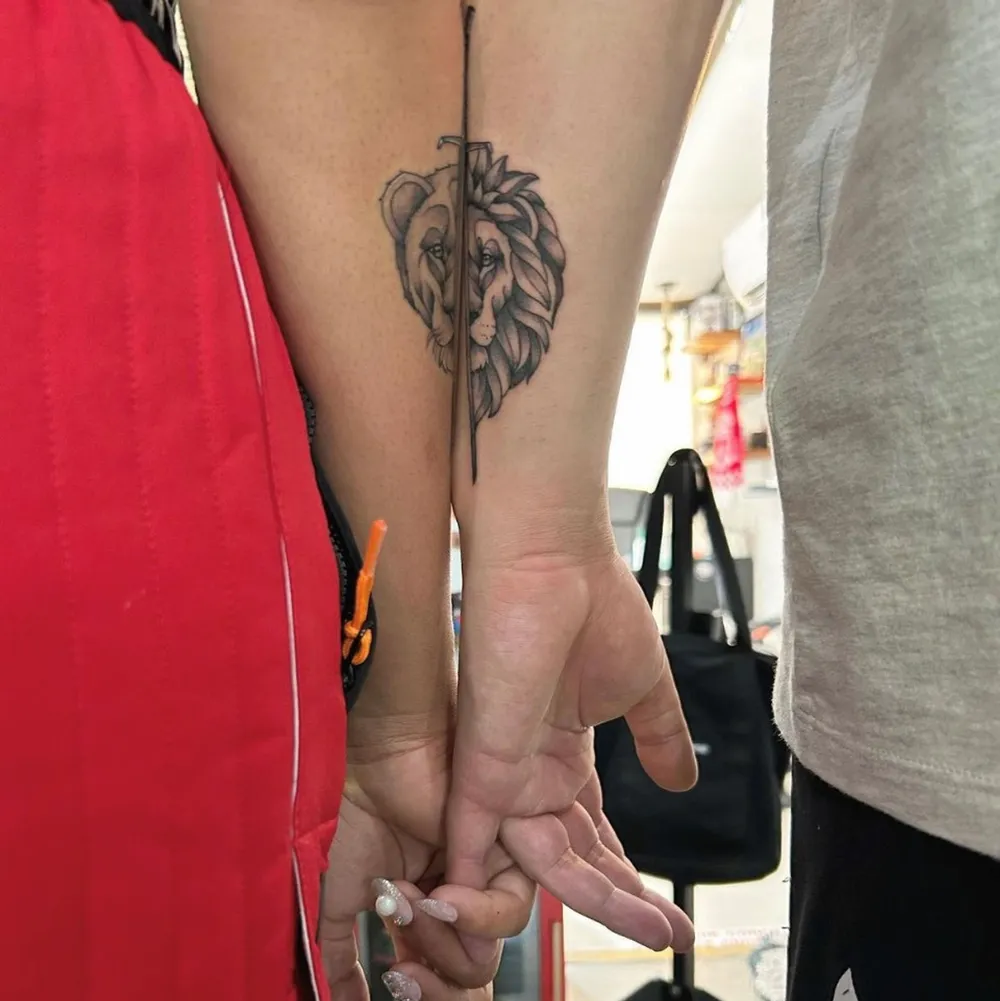
Nadia Nakai’s tattoos have never felt like random decoration. Her ink tends to sit in the middle of her style: bold enough to show when she’s performing or posing, but personal enough that the meaning matters as much as the artwork. The clearest example is the matching lioness tattoo she got with AKA in 2022. Her half of the design sits on her right arm, while AKA wore the matching lion on his left. Put their arms together and the two halves were meant to read as one image.
There is a newer piece in the conversation too. In August 2026, Nakai showed fans a fresh tattoo in a TikTok video and answered questions about numbing cream in the comments. The post gave people a look at her latest session, but it didn’t spell out every design detail. That distinction matters. Her older matching tattoo has a documented description and several public images. The newer tattoo is real, but the available reporting doesn’t give us enough information to invent a name, symbol, or exact placement.
The clearest way to read Nadia Nakai’s tattoos is to separate what the photos clearly show from what fans may be guessing. The lioness tattoo is the main documented piece. The rest of her visible body art is easier to discuss as a collection of markings and style references unless Nakai herself explains the design.
The lioness design on Nadia Nakai’s right arm
The tattoo that gets the most attention is the half-face lioness on Nakai’s right arm. It was done at Royal Ink in Johannesburg, with tattoo artist Brad credited in the couple’s posts. AKA had the other half: a male lion on his left arm. When they placed their forearms beside each other, the faces met and formed a complete lion image.
The design wasn’t just two similar animal tattoos. The placement did the real work. Each person wore one side of the face, so the image only became whole when they stood close together. That makes it a classic matching tattoo idea with a clever visual trick built into it. You can wear your half on its own, but the full meaning appears when the two arms line up.
Reports also described a sword between the lion and lioness imagery, with AKA comparing the concept to Excalibur and the lion king and queen. The exact lines aren’t equally visible in every photograph, so it’s better to keep the description broad than pretend a blurry social-media frame shows every detail. The consistent points are Nakai’s lioness half, the right-arm placement, the matching lion on AKA’s left arm, and the way the two pieces were designed to connect.
The matching halves in the photographs
The visual strength of the piece comes from its shared composition. The tattoos are not identical stamps: one person has a lion and the other a lioness, while the scale, placement, and visual direction keep the artwork balanced. The relationship between the two halves is what gives the matching set its identity.
Why the lion and lioness idea works
Animal tattoos already carry plenty of familiar symbolism, so the personal part of Nakai’s piece comes from the pairing. A lioness can suggest strength, protection, independence, or family. A lion can land in a similar place. But the two halves facing each other make the design feel less like a generic “power animal” tattoo and more like a deliberate pair.
The pairing gives the lioness tattoo a strong individual identity while preserving the larger image created with AKA’s lion. The two designs were reported as a relationship between images rather than a single repeated symbol, so the individual halves and their combined composition both matter.
Nakai and AKA also chose a placement that made the connection easy to see in photos. Forearm tattoos can be turned toward the camera, compared side by side, or hidden under a sleeve when the wearer wants more privacy. The skin gives the artwork enough room for a portrait-style animal face without forcing the artist into a tiny, cramped version.
Everyday photo context
Her style in everyday photos
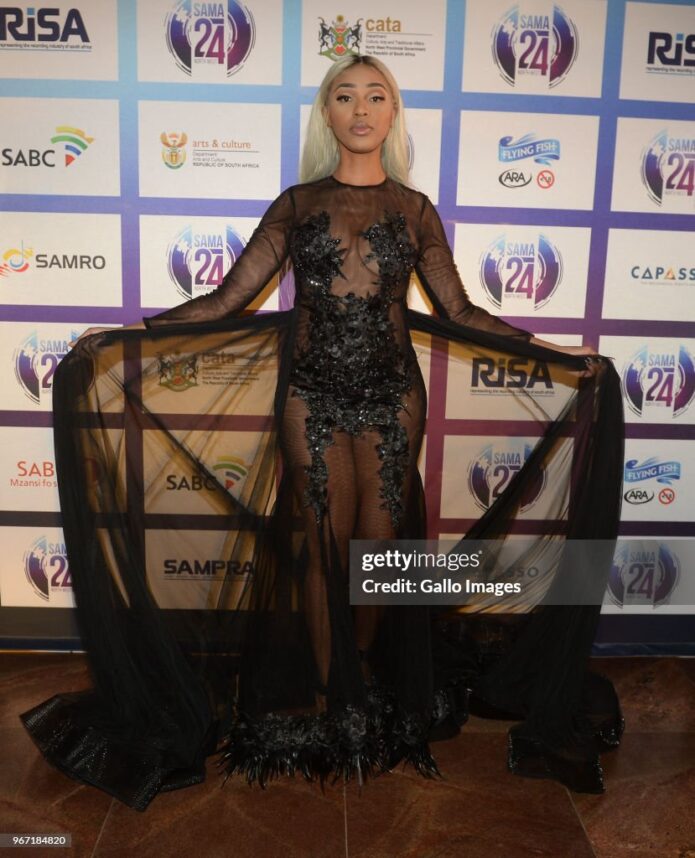
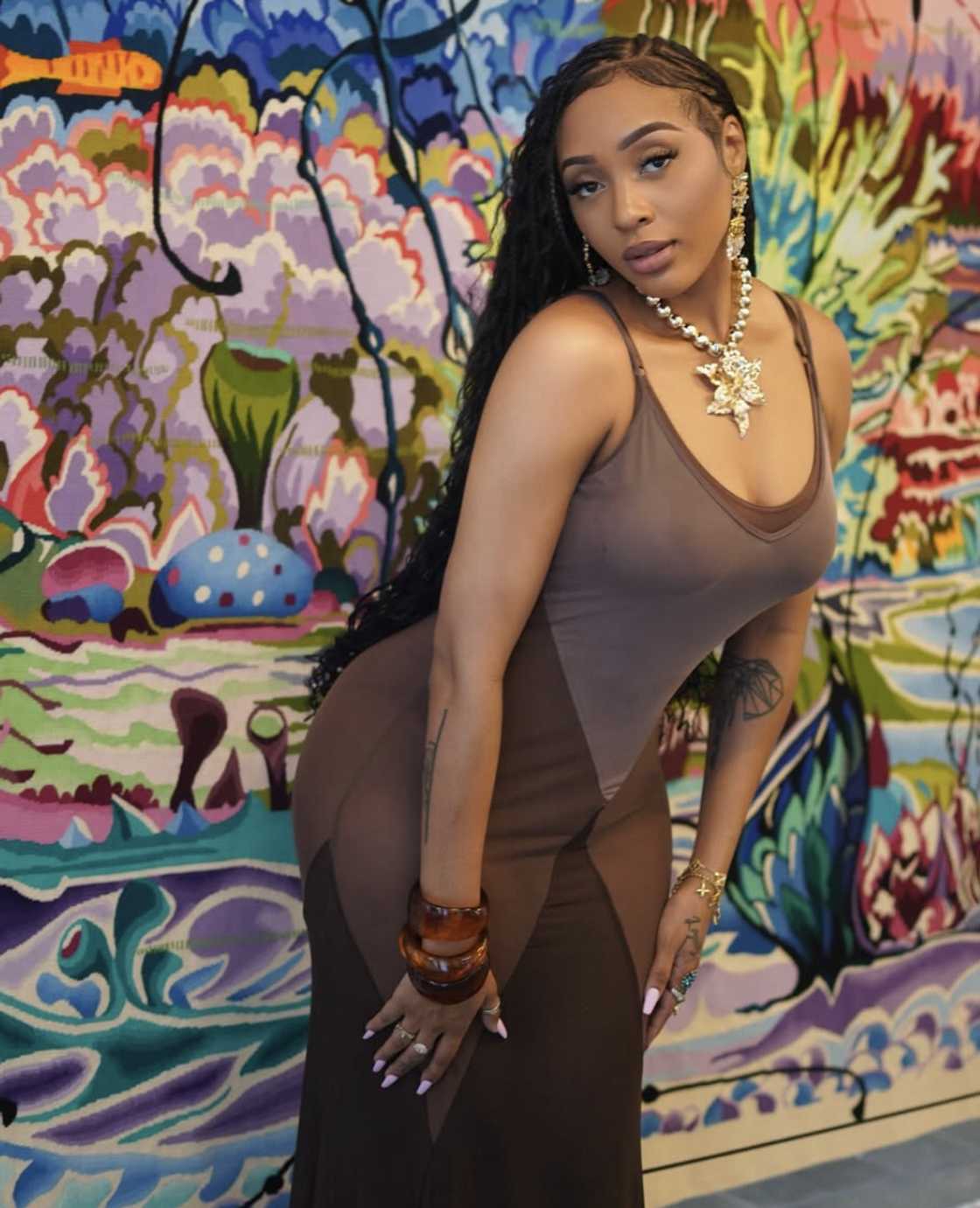
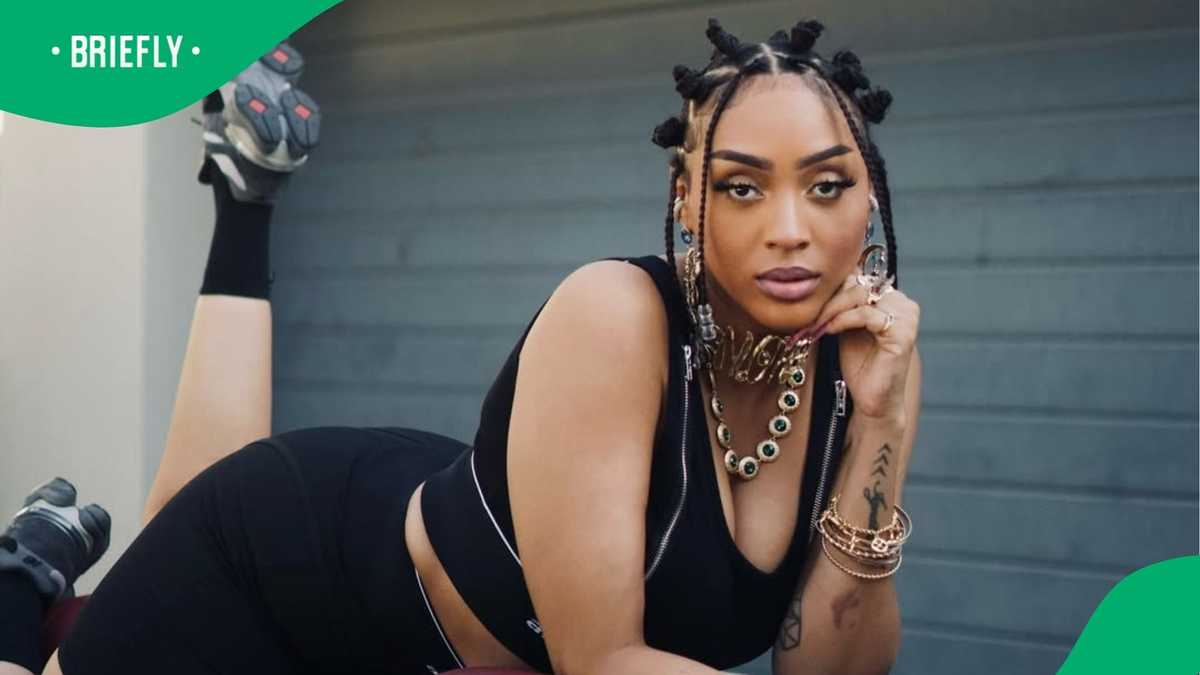
Public photos of Nakai in everyday and fashion settings show how her body art sits alongside her clothes, jewelry, and posing style. Those photographs are useful context, but they aren’t a replacement for the close-up that documents the matching lioness design.
They still have limits. The image may be compressed, the arm may be angled away, or clothing may cover part of the design. A tattoo photo can prove that ink is present without proving every tiny line, shade, or symbol. That is why the close-up evidence remains more useful for describing the lioness than a distant fashion photograph.
The matching tattoo reads as a design system rather than a single picture. Nakai’s lioness half makes sense on her right arm by itself, while its direction and height connect it visually with the lion on AKA’s other arm. The connection is visible in the composition, not only in the story reported around it.
Styling context
Bold, high-contrast styling
Outside the documented lioness piece, Nakai is often photographed with other markings visible along her arms and legs. Those images show that she likes body art that can hold its own beside strong makeup, jewelry, stage clothing, and bright styling. The tattoos don’t need to be the only thing happening in a photo. They work as part of a bigger look.
The arm is a good canvas for that kind of collection. It can carry a single focal tattoo, several smaller marks, or a mix of linework and darker shaded pieces. It also moves naturally when a person gestures, performs, or poses. On Nakai, that movement keeps the ink from looking flat. A forearm tattoo can read one way when the arm is straight and another when the wrist turns.
Still, a contextual photo shouldn’t be treated as proof of a specific design. A marking that looks like a flower in one frame might be part of a larger piece, a bracelet might cover the lower edge, and a shadow can change the shape completely. The safest descriptions stay with what the image actually supports: Nadia is visible, body art is visible, and the photo gives a sense of placement and scale. It doesn’t automatically reveal the tattoo’s name or meaning.
Context for the 2026 post
The 2026 update
In August 2026, Nakai posted a short video showing off a latest tattoo. The clip drew attention because it was casual and direct: she was showing fans the new work rather than appearing in a polished editorial shoot. A fan asked about numbing cream and Nakai replied that it had made a difference for her, recommending that it be applied well before a session.
That exchange is more useful than a lot of speculative tattoo captions. It tells us something about her experience of getting tattooed, but it doesn’t provide a confirmed explanation for the new design. The report doesn’t identify a symbol, quote Nakai giving the tattoo a meaning, or establish an exact placement that can be described confidently. So the honest takeaway is simple: she has a newly shown tattoo, and the public post focuses more on the session and her advice than on a formal design breakdown.
The numbing-cream detail belongs to the history of Nakai’s 2026 post, but it does not explain the design. Her personal comment documents part of the session experience; it should not be expanded into a general tattoo procedure or a claim about the artwork’s meaning.
Placement in motion
How the designs move with the body
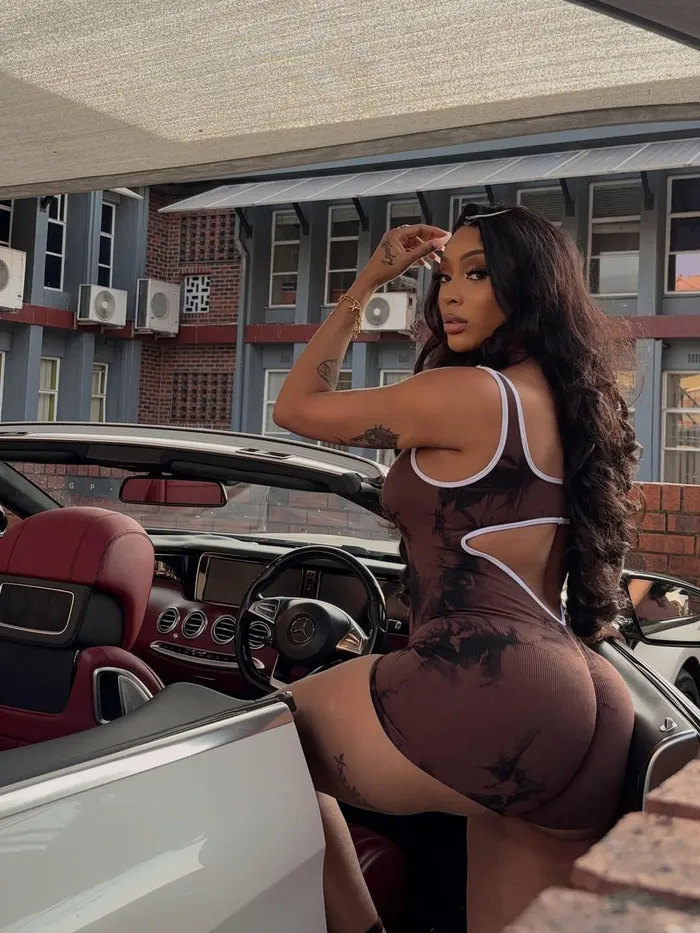
Photos of Nakai in a car, at a salon, or in a fashion setting show how visible body art sits while her arm is bent, her hand is lifted, or her body is turned away from the camera. That is a different kind of evidence from a tattoo close-up, but it adds context about how her ink appears in motion.
The body changes the way a tattoo is seen. A flat arm, a bent elbow, a turned wrist, and a lifted hand present different angles. In Nakai’s photographs, the changing position affects how much of the visible ink can be identified, which is why the close-up lioness photograph carries more descriptive weight than a distant pose.
Nakai’s public styling also shows how scale changes the visual balance of body art. A compact mark can disappear under a sleeve or become an accent beside rings and bracelets. The matching lioness has enough space to read as a face without becoming a full sleeve, keeping the animal image visible alongside her clothes and accessories.
What the split composition establishes
The split composition
The split composition gives each person a distinct image while allowing the two arms to form a larger picture. Nakai’s lioness and AKA’s lion remain recognizable separately, while the combined reveal adds a second reading to the pair.
The placement has a clear relationship: Nakai’s right arm and AKA’s left arm were reported as the positions that allowed the tattoos to meet naturally. In photographs, the shoulders, wrists, and elbows determine how the two halves align, making the body position part of the image’s meaning.
Nakai’s ink appears alongside stage looks and casual outfits rather than being locked to one aesthetic. The photographs place the lioness within a changing wardrobe and public life, so the tattoo reads as part of her ongoing visual identity rather than as a detail tied to one outfit.
Finally, don’t force a meaning that the wearer hasn’t given. The lioness tattoo has a clear public explanation because the matching design was reported and discussed by the couple. The newer tattoo has less detail available. That doesn’t make it less interesting. It just means the responsible description stops at the evidence instead of turning a glimpse into a made-up story.
Publicly documented moments
Nakai’s tattoo history is clearest when the image, the placement, and the reporting point to the same design. The matching lioness meets that standard through the couple’s photographs and the accounts of the Royal Ink session. The newer 2026 post establishes that fresh ink was shown, while leaving the symbol and exact placement undocumented.
The best-known design is about connection
Nadia Nakai’s documented matching lioness tattoo stands out because the artwork was built around connection. Her right-arm lioness was designed to meet AKA’s left-arm lion, with the two pieces forming a larger image when their arms came together. That’s a more thoughtful approach than simply getting identical tattoos in different places.
Her newer tattoo adds another chapter, even though the public details are still limited. What we can say is that Nakai showed the fresh ink, answered a practical question about numbing cream, and kept the tone relaxed. The available photos of her other body art add visual context, but they shouldn’t be used to claim meanings that haven’t been confirmed.
Nadia Nakai’s documented tattoo story is defined by the balance between bold artwork and personal intent. The lioness is a clear focal image, the right-arm placement is part of the composition, and the meaning comes from the two people whose tattoos were designed to meet. The idea is visible in the way the arms were meant to align.
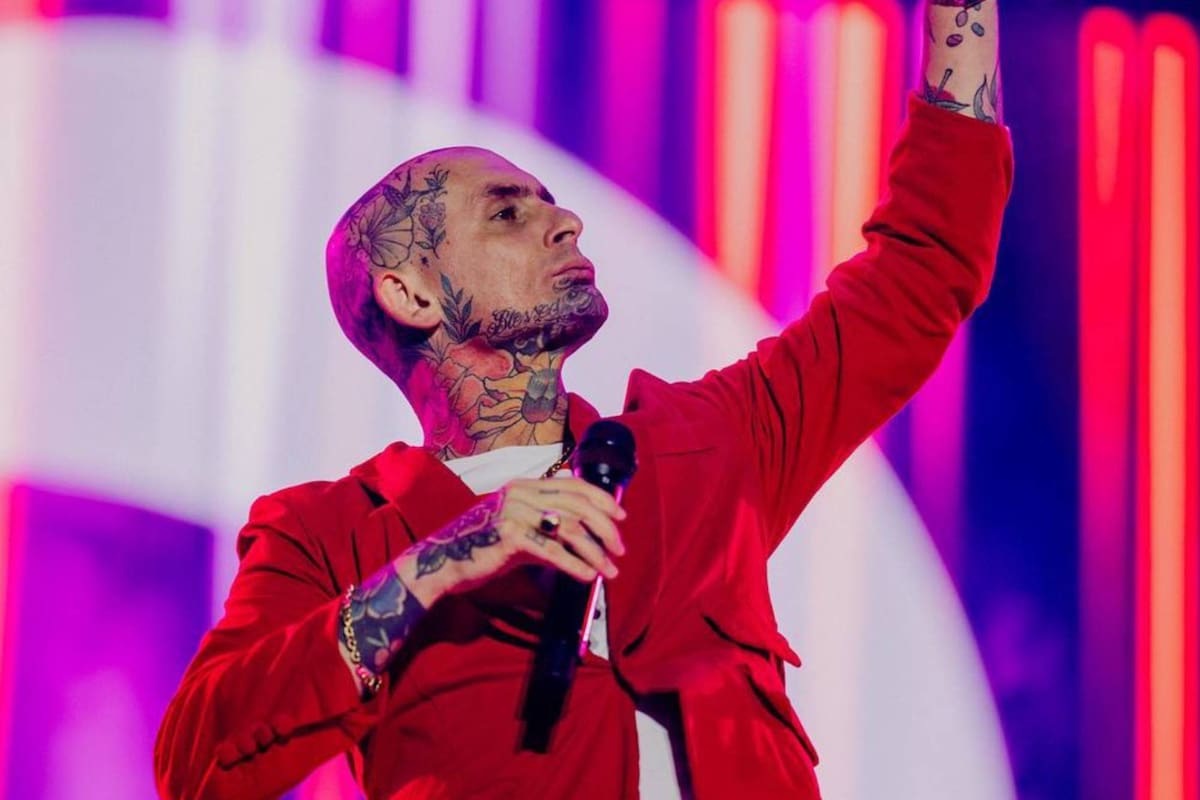
Emanuel Noir’s tattoos are impossible to miss, but they’re more interesting than a quick look at the full coverage might suggest. The Ke Personajes singer has built up ink across his head, face, neck, hands, and body, yet the collection doesn’t read like one perfectly planned sleeve. It feels layered. Some pieces are colorful and botanical, some are words, and some sit so close together that the skin starts to look like a moving sketchbook.
That history matters because Noir has talked about tattoos as something connected to different moments in his life. He also said his first tattoo happened when he was just 11, made with neighborhood friends and the same homemade machine. That detail gives the later work a different context. The tattoos aren’t only part of his stage image; they grew alongside him, with older marks sitting underneath newer ideas. Time is part of the design.
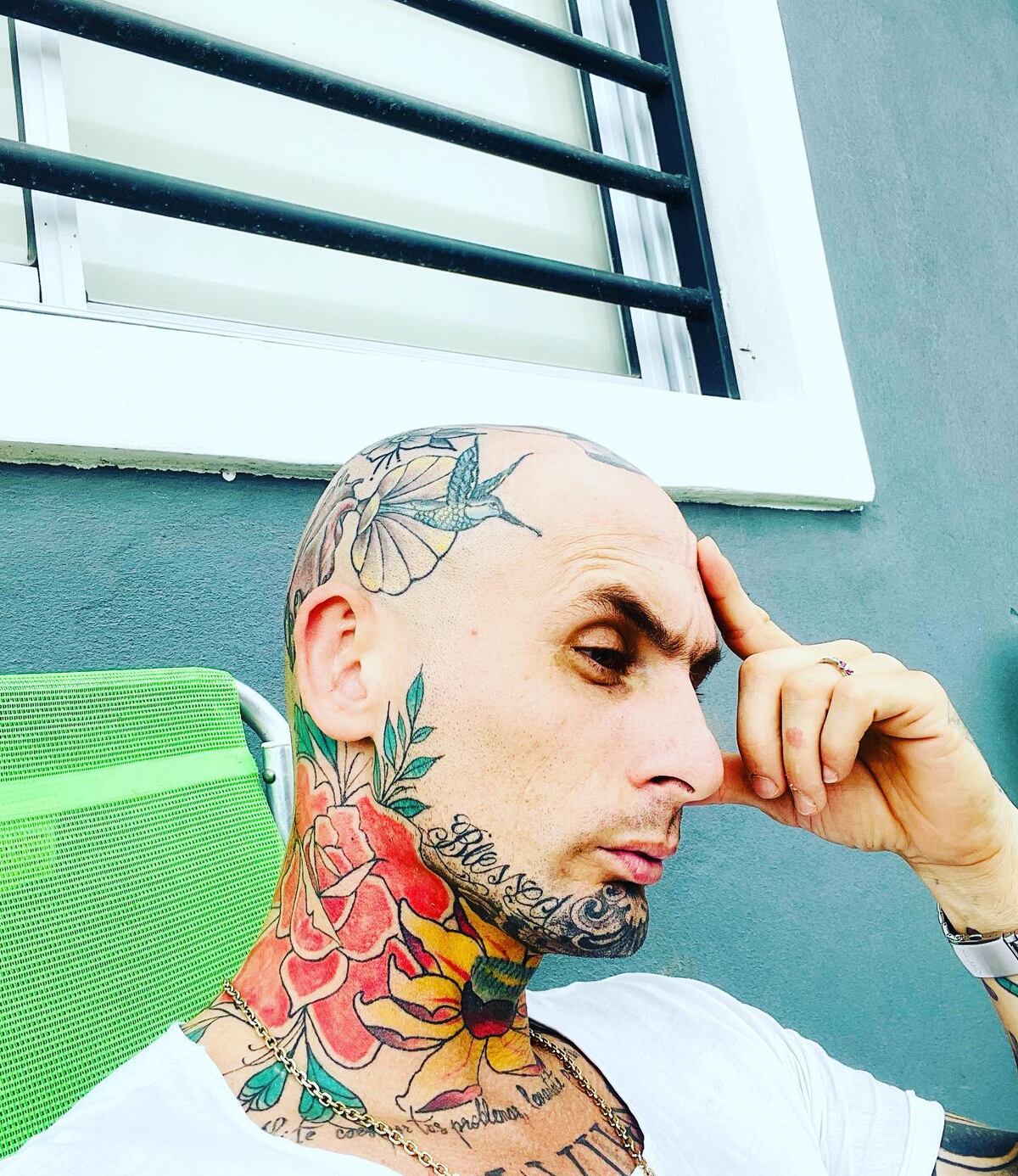
The clearest public reports point to a few designs that can be described with confidence: floral and hummingbird work on the head, “Blessed” and “By God” lettering, the word “Incrollabile” above his left eyebrow, and a flower across the throat. Other parts of the collection are visible in photographs but haven’t been explained in a way that supports a firm meaning. The useful approach is to separate what the camera shows from what people might be tempted to guess.
Emanuel Noir’s face tattoos
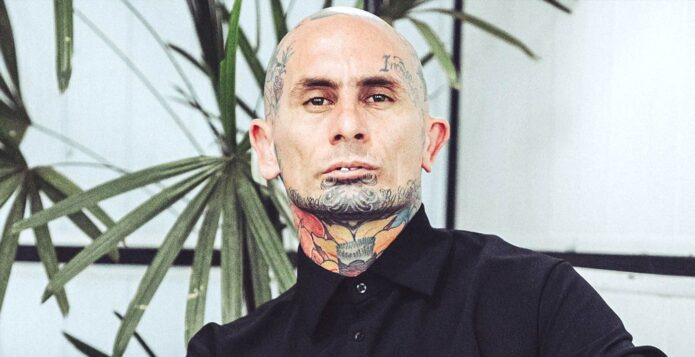
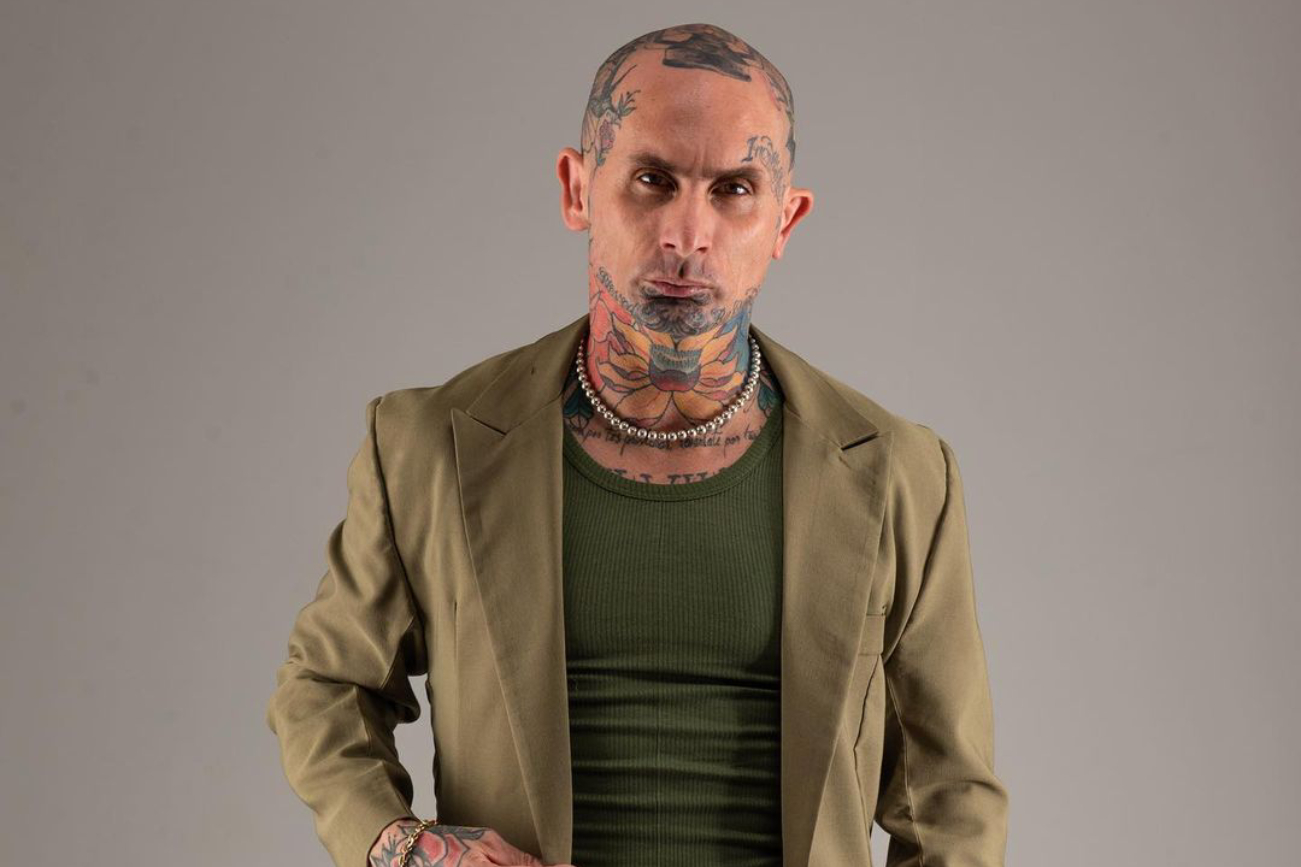
The face tattoos are the first thing most people notice. In the clearest close view, fine lettering runs across the lower face while the sides of the head carry a mix of leaves, flowers, and smaller linework. The placement is dense without being completely blacked out. There’s still skin between the designs, which lets the individual shapes remain readable even when they sit close together.
On the left side of his face, “Incrollabile” is placed above the eyebrow. The Italian word means unbreakable, and it has become one of the easiest pieces to identify in photographs. It’s a strong example of how Noir mixes text with illustrative work. The word is compact and horizontal, while the botanical designs around it move in softer directions. That contrast keeps the upper face from looking like one flat block of ink.
The head work has a looser feel. A hummingbird and floral shapes have been reported around the scalp, with leaves and petals extending toward the ear and neck. Because the designs follow the curve of the skull, they change shape depending on the angle of the photograph. A front-facing portrait makes the eyebrow lettering stand out. A profile brings the bird and flowers into view.
The photographed angles document why head and face placement changes with movement. A design can look balanced in one frame and behave differently when Noir turns, talks, or changes expression. His work is a clear example of tattoos placed on a living, moving surface rather than a flat page.
The tattoos around his jaw and throat
The area under Noir’s jaw and across his throat carries some of the collection’s most recognizable color. A large flower sits at the front of the neck, with warm reds and oranges that stand apart from the darker lettering around his chin. The shape spreads across the throat instead of staying in one small central emblem, so it becomes part of his silhouette whenever he wears an open collar.
Noir has described the throat tattoo as a flower, which is one of the few direct explanations attached to a specific design. The image supports that description: broad petals and layered color create the main form, while darker lines help separate it from the surrounding work. It isn’t a tiny symbol hidden under the jaw. It’s a deliberate focal point.
The jaw area also shows how older and newer tattoos can overlap. Lettering, shading, and floral edges meet around the chin, and the lines don’t all have the same age or weight. That makes the collection feel more personal than a matching set of flash pieces. The throat flower works as an anchor, giving the busy lower face a shape that the eye can recognize quickly.
Neck tattoos are visible in almost every outfit, and Noir’s throat flower works with the movement of the jaw and the curve of the collar. Its position keeps the color central to his silhouette without separating it from the darker lettering around the chin.
Incrollabile and the ideas behind the ink
Words are a major part of Noir’s tattoo language. “Incrollabile” is the clearest example, but the reported “Blessed” and “By God” lettering adds another layer. These aren’t decorative marks chosen only for their shape. They introduce a direct voice into a collection that otherwise leans heavily on flowers, birds, and color.
It’s tempting to turn each word into a complete biography, but the public reporting doesn’t give every piece a full explanation. The safer reading is that the lettering reflects ideas Noir wants close to him: resilience, faith, and a sense of being protected or guided. That interpretation fits the words themselves, but it should still be described as a reading rather than a confirmed statement about every tattoo.
Lettering also behaves differently from pictures as the body changes. A flower can be expanded, shaded, or connected to another shape. A word has to keep its proportions and remain legible. That makes the placement above the eyebrow especially striking. There isn’t much room for the letters, yet the word is large enough to register in a portrait.
The lettering section of Noir’s collection stays visually restrained. A short word in a meaningful script can occupy the forearm, ribs, chest, or neck, but the documented pieces keep the emphasis on language rather than decoration. The best-known lettering tattoos are simple on purpose and do not need extra ornament to make their point.
Color in the photographed collection
Noir’s tattoos aren’t limited to black ink. The neck flower brings reds, oranges, and yellows into the center of the look, while the head and face pieces include softer greens and shaded outlines. The color gives the work a slightly old-school feeling, even when the subject matter is arranged in a more crowded, contemporary way.
Color also helps the tattoos stay readable when several designs overlap. A dark script line can disappear beside another dark line, but a warm petal or green leaf gives the eye a clear stopping point. In photographs, that matters even more under stage lighting. Red and blue lights can flatten skin, so strong color blocks help the shapes survive the distance between the performer and the crowd.
The color is part of the collection’s chronology. Noir’s pieces appear to have accumulated gradually, so the colors do not form one uniform palette. That unevenness gives the photographed work a lived-in quality rather than the appearance of a single afternoon’s design.
How Ke Personajes built a live identity
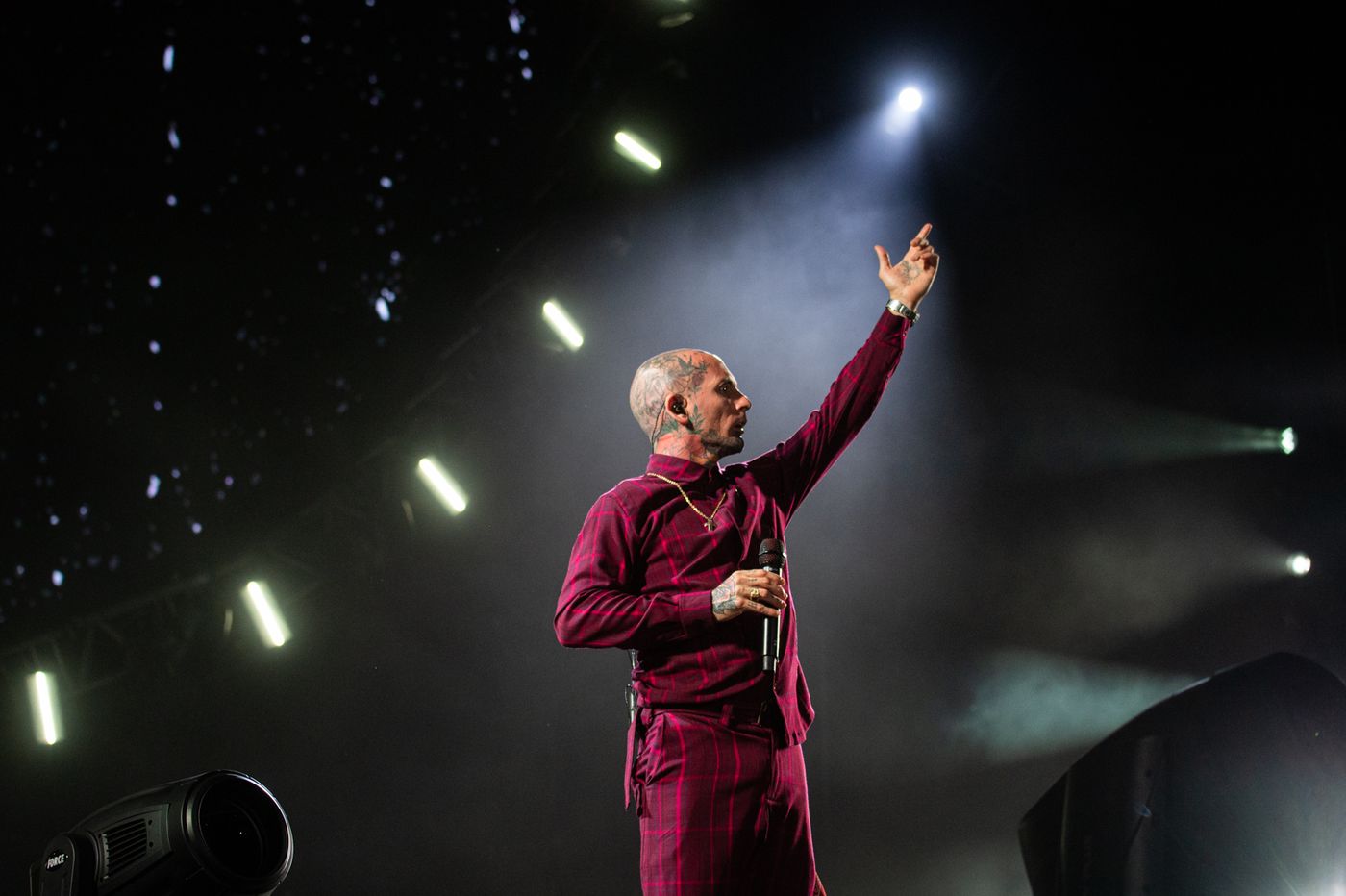
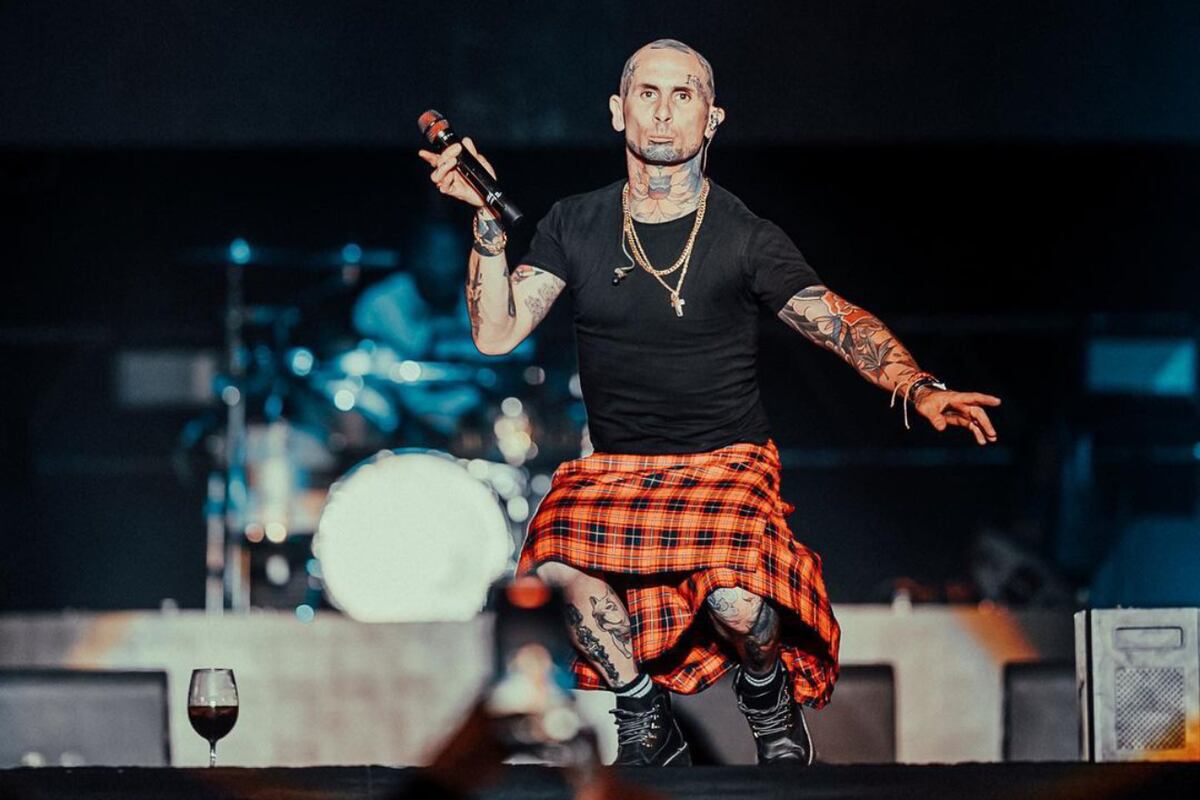
When Noir is performing with Ke Personajes, the tattoos become part of a much bigger visual language. The shaved head, bold clothing, jewelry, and intense stage presence all work with the ink. A live photograph doesn’t show every design clearly, but it shows how the tattoos change the outline of the performer from a distance.
The wide stage view is useful for that reason. The head and neck pieces read as part of a silhouette rather than as one word or flower in isolation. The hand tattoos appear when he raises the microphone, and the side of the head catches light when he turns. The audience reads the collection in flashes, alongside costume and gesture.
That doesn’t mean the tattoos were created as branding. The timeline is more complicated. Noir has described an early, improvised start and later spoken about ink as cathartic. A personal tattoo collection can become part of a public identity without having been planned as marketing. The stage simply makes the private history visible.
The road from a neighborhood machine to a full collection
Noir’s story about his first tattoo is one of the most revealing details in the reporting. He said he was around 11 and that a group of friends used the same homemade machine. He also recalled buying temporary tattoo sheets before eventually making some of those ideas real. That childhood fascination helps explain why tattoos seem to occupy such a large place in his adult identity.
There’s a huge difference between an improvised neighborhood tattoo and professional work on the face, throat, or scalp. The early experience wasn’t safe or polished by modern studio standards, and it shouldn’t be treated as advice. What it does show is how long the interest has been there. By the time Noir became known for Ke Personajes, tattooing wasn’t a sudden styling decision. It was already part of his history.
The older-first, newer-later pattern also explains why the collection has so much movement. Designs don’t all share one line weight or one subject. Some may have been covered, layered, or expanded as his taste changed. That kind of evolution is normal when someone keeps getting tattooed for years. A full-body collection often says as much about time as it does about style.
How the photographed angles frame the subject
Noir uses the most visible areas of the body with confidence. The eyebrow, cheek, jaw, throat, and head all sit in the frame of a portrait. They’re not places chosen for a discreet first experiment. At the same time, the designs don’t all compete for attention. The eyebrow lettering is compact, the neck flower is broad, and the head work fills the spaces between them.
The spacing between Noir’s visible pieces is part of the composition. His face tattoo does not cover every available inch: compact eyebrow lettering, a broad neck flower, and head work occupy separate visual zones, leaving small gaps that keep the individual shapes readable.
Placement also changes the emotional temperature of a tattoo. “Incrollabile” feels direct because it sits above the eye. A flower on the throat feels more dramatic because it moves with the voice and breath. A small design on the hand enters conversations when the wearer gestures. The same image would feel different on the calf or upper arm.
The photographed style in context
The collection’s visual identity comes from contrast: short lettering, botanical shapes, and areas of saturated color. The face placement and throat flower are specific to Noir’s documented appearance, while the photographed pieces interact through scale, line weight, and the movement of the body.
The lettering also carries meaning inside Noir’s biography. “Incrollabile” is presented as part of his visible identity, and the religious phrases reported alongside it are tied to the language and imagery that recur through his public performances. The collection is therefore read through both its visual arrangement and its stated personal context.
The documented photographs do not establish every date, tattooist, or private reason behind the pieces. They do establish a body of work that combines lettering, flowers, birds, and color across the face, throat, head, hands, and torso.
Why the photographs vary
Photographs of Noir can make the collection look different from one day to the next. A portrait may capture the face and throat in full. A concert image may catch only the side of the head and a tattooed hand. A shirt collar can hide the flower, while stage light can make the color look more intense than it does in daylight.
That is why the close photographs matter. They document the actual shape, color, and placement. Wider images remain useful because they reveal how the ink works with his clothes and performance style, but they cannot establish details the camera has not captured.
The result is a collection that feels active rather than finished. It carries early memories, personal words, flowers, birds, and a public life that keeps moving between small rooms and huge stages. “The tattoo is for me,” is the kind of idea that sits behind the whole look, even when the ink is visible to thousands of people.
Emanuel Noir’s tattoos are most legible when the photographs are read together. The placement, contrast between lettering and flowers, color around the throat, and changing silhouette all belong to the documented collection and its public history.
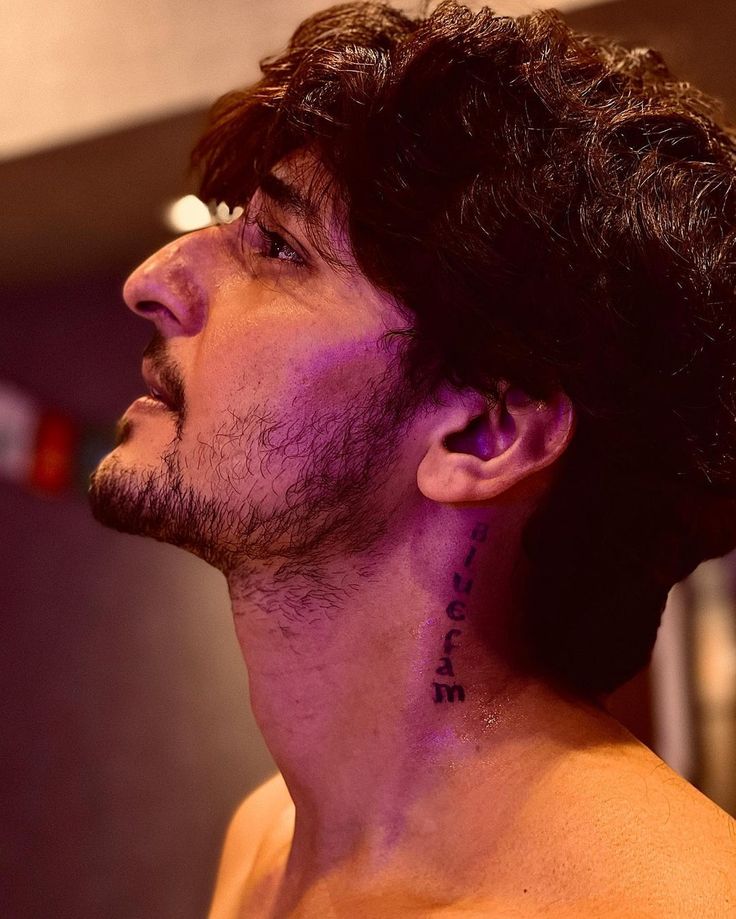
Darshan Raval’s documented tattoos are concentrated around dates, identity and the visual language of his Blue Family. The public photographs reveal a vertical neck inscription, a set of dates across the upper back and a second date collage associated with the singer’s first tattoo. An interview published by Sekhon Family Office records Raval saying that one date marked the point when his reality-show experience ended, while the photographs provide the visible placement and scale. The strongest account stays with what the sources identify and what the images actually show, rather than turning every shadow or accessory into a new design.
Darshan Raval’s documented tattoo record
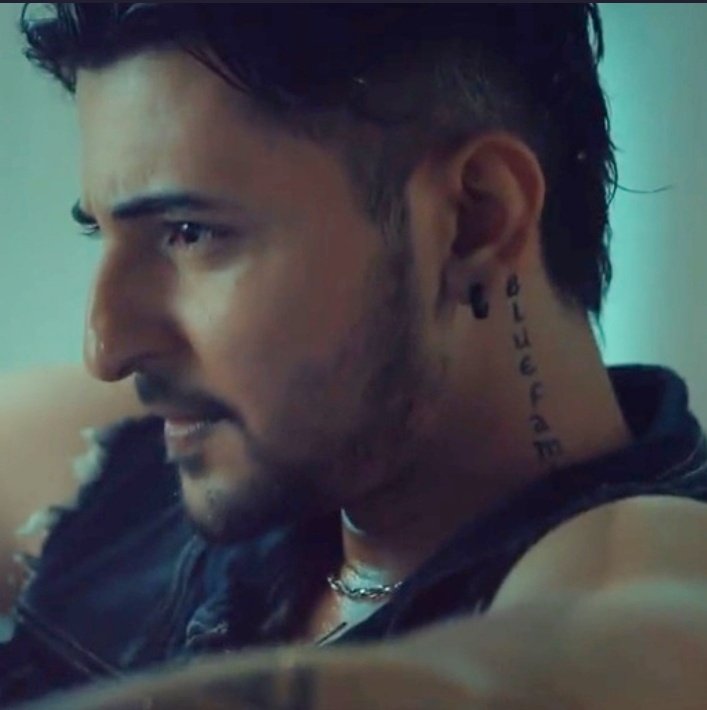
The clearest close photograph shows Raval in side profile with a vertical line of lettering running down the side of his neck. The letters are dark and separated enough to read as a deliberate inscription rather than a decorative blur. The image places the tattoo below the ear and along the neck, where the line remains visible when his head turns. It is a narrow design, but the position gives it a strong presence because it follows the length of the neck instead of spreading across a broad area.
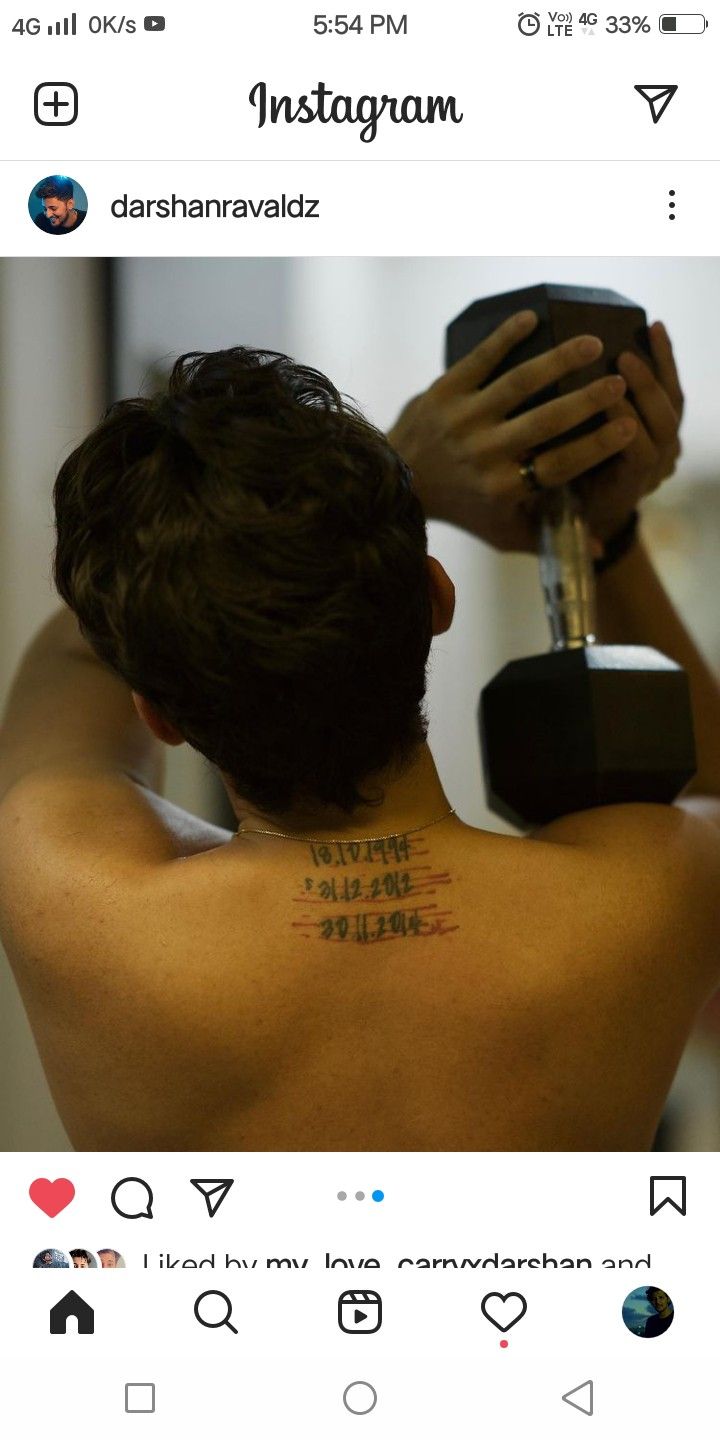
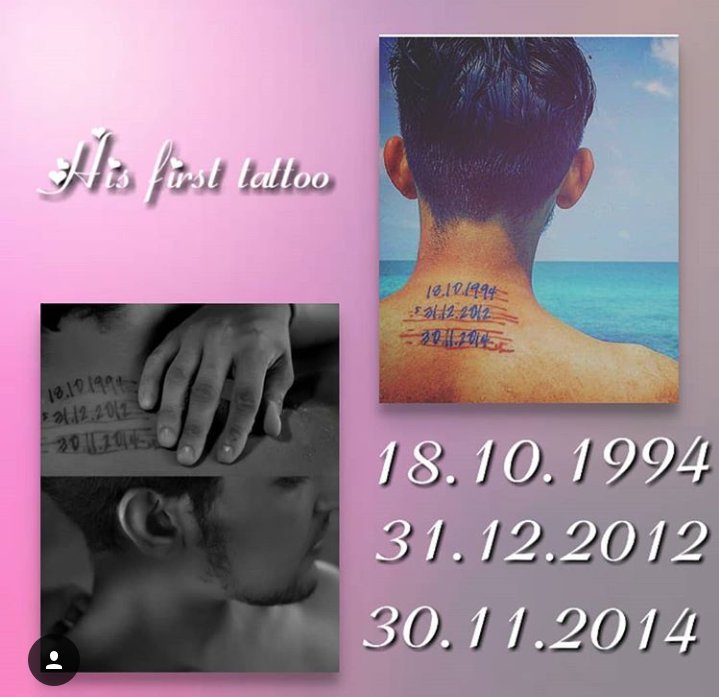
Other photographs reveal the larger record from different angles. The back image reveals three dates arranged horizontally across the upper back, each marked with colored lines. A separate collage presents another view of dated ink and identifies it as Raval’s first tattoo. The dates appear repeatedly in public fan-circulated photographs, while the interview source gives one of them a career connection. The collection is therefore best described as a small group of documented inscriptions and date marks, not as an inventory of every tattoo Raval may have added later.
The vertical neck tattoo and the Blue Family identity
The neck tattoo is the most immediately recognizable piece in the public photographs. It runs vertically behind the ear, with a short line of letters that fan photographs identify as “Bluefam.” The placement connects the design to Raval’s long-running Blue Family identity, the name used for the community around his music. The visible letters are the important fact; a photograph cannot establish every private reason behind the choice, so the description remains close to the inscription and its public association.
Visually, the tattoo has a handwritten or narrow-block quality rather than the heavy shading of a large illustrative piece. Its position makes it easy to miss in a straight-on portrait and obvious in profile. That changing visibility is part of its character. In the purple-lit image, the skin turns toward the camera and the letters become the dominant detail beneath the ear. In the cooler close-up, the same vertical structure is easier to isolate from the hair and jawline. The design works through placement as much as through the word itself.
The three-date tattoo across the upper back
A second documented design sits across the upper back. The photograph shows three date lines placed one beneath another, with colored strokes underlining or separating the numbers. The image circulated from Raval’s own Instagram account and shows the tattoo while he is lifting a dumbbell. That setting is useful because the back is exposed plainly, making the date arrangement and its horizontal spread easier to see than they would be under a shirt.
An interview source records Raval explaining that he has a tattoo of the date when the reality show ended. That statement gives a public meaning to at least one date in the broader group. The photograph itself cannot identify which date carries that explanation without a matching caption, so the article keeps the source-backed career connection separate from the visual description. The three lines remain a clear example of Raval using numbers as a personal timeline rather than as abstract decoration.
The first-tattoo date collage
A separate collage shared by a Darshan Raval fan account labels a dated design as his first tattoo. The panels reveal the upper-back or neck area from several stages and angles, including a close view of the number lines and a profile view of the placement. The exact dates differ in how they are transcribed across fan posts, which makes the safest claim about the image its repeated date format and its identification as an early tattoo, not an overconfident reading of every numeral. The collage documents an early date-based piece without proving every numeral’s private meaning.
This distinction matters because the available evidence is not a single archive. One interview discusses the date connected to the end of the show, while fan photographs preserve additional views and captions. The design language stays consistent: dates are written in compact lines and treated as milestones. The collage also makes the scale clear. The tattoo is not a full-back image or a large portrait; it is a narrow band of numbers that follows the upper back and becomes visible when Raval turns away from the camera.
Darshan Raval in public appearances
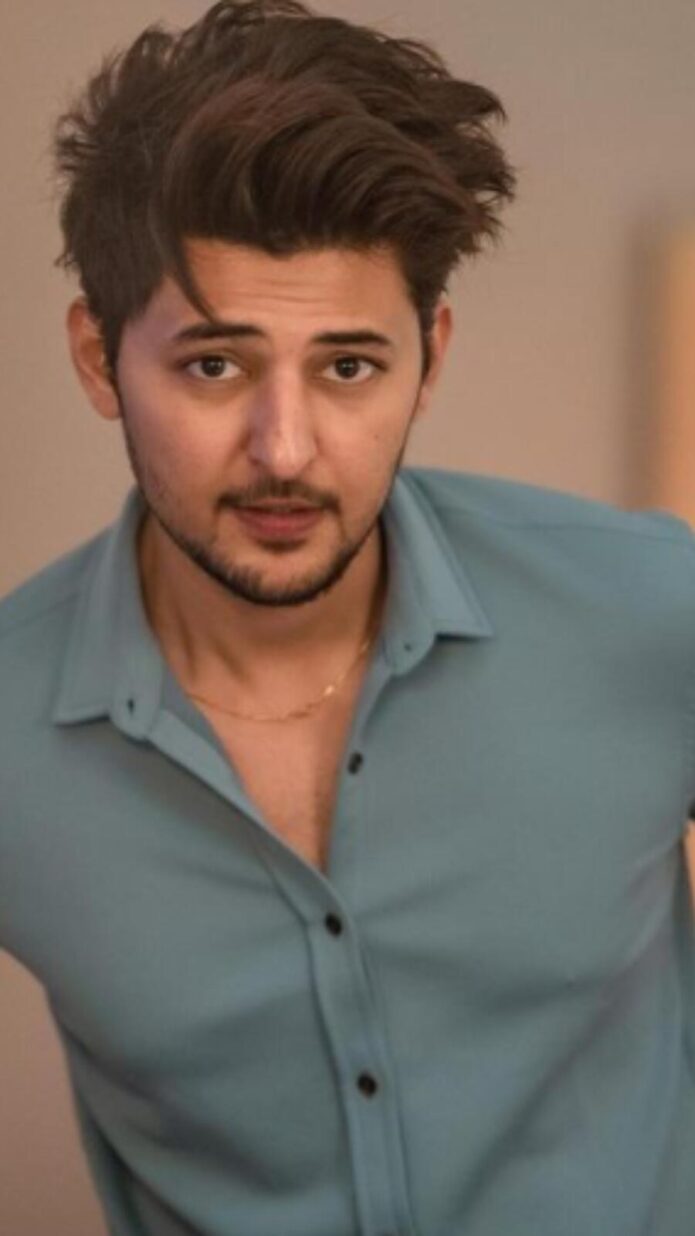
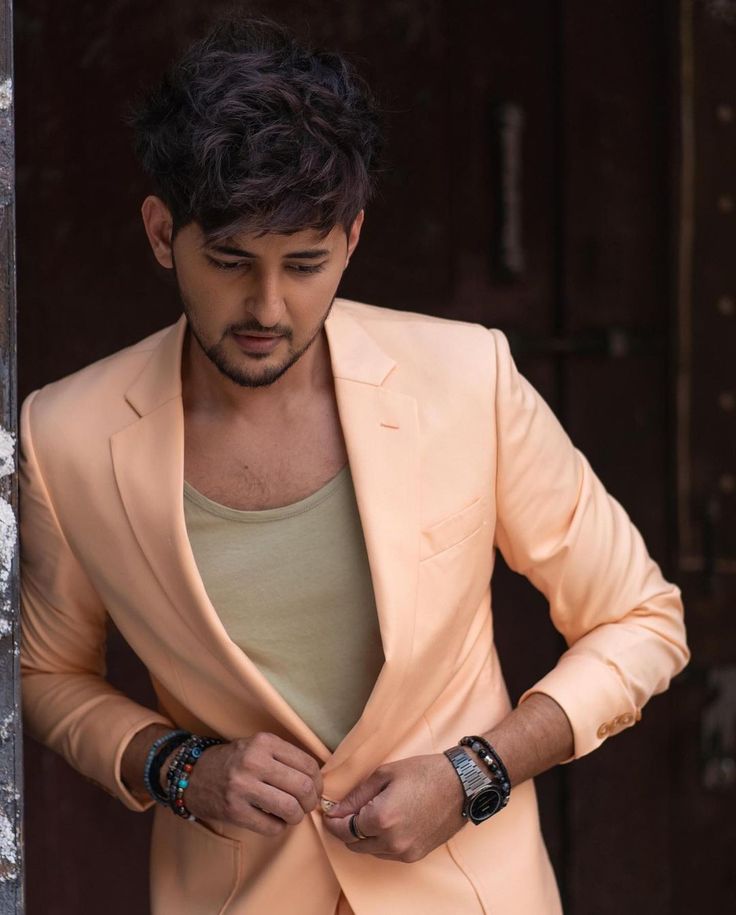
Published portraits place the tattoos inside Raval’s broader visual identity as a singer. A formal portrait in a peach jacket shows the face, hair and styling without exposing the dated back work. That image is contextual rather than tattoo evidence, but it helps distinguish a separate identity portrait from the close photographs used to document ink. The difference is important: a clean portrait can establish who appears in a post, while the neck and back photographs establish where the tattoos sit.
Raval’s public image changes from performance lighting to fashion portraiture to casual social posts. The tattoos do not appear equally in each setting. The neck inscription emerges in side profile, while the date designs require a turned back or an image captured during exercise. This variation explains why a single generic portrait cannot stand in for tattoo evidence. The designs need the angles that reveal them, and the public meanings need sources that identify the dates rather than guessing from their appearance.
The contextual portrait therefore has a limited but useful role. It keeps the article anchored to the correct person and shows how different the presentation becomes when the camera is not looking for ink. The peach jacket, hair and direct pose belong to Raval’s public style record, while the close neck and back photographs belong to the tattoo record. Keeping those functions separate prevents the identity image from being mistaken for proof of a design that it does not show.
What the photographs do and do not establish
The close images establish three useful facts. First, Raval has a vertical neck inscription visible behind the ear. Second, the upper back carries multiple date lines arranged in a compact group. Third, the first-tattoo collage presents a related dated design as an early piece in his tattoo history. The images also establish that the tattoos are relatively fine and text-led, with color accents visible beneath the back dates. The documented collection is text-led rather than illustration-heavy, with the back dates carrying the strongest visual pattern.
They do not establish a complete count, a complete list of meanings or the private significance of every number. The interview confirms one career milestone, and public fan captions connect the neck lettering with Blue Family identity, but other readings remain uncertain. That restraint is part of an accurate tattoo article. Raval’s tattoos are interesting because the visible marks are specific enough to study while the personal timeline behind them remains partly his own.
The difference between the close views is also useful for understanding the collection’s scale. The neck photograph makes one word-like inscription fill the frame, but the back photograph shows how much more restrained the dated group is when it is seen on the whole body. The color accents beneath the numbers add emphasis without turning the design into a large illustration. The date collage then brings the viewer closer again, preserving the documentary quality of the image while showing the edges of the ink more clearly. Placement changes the emphasis: the neck mark reads as identity lettering, while the back dates read as a compact timeline.
That sequence creates a reliable visual order. First comes the profile view, where the neck identity mark is legible. Then comes the back view, where the numerical group spans the upper back. Finally, the collage supplies a historical frame for the early tattoo record. The public sources do not answer every question, but they do provide enough evidence to describe the placement, shape and repeated role of dates in Raval’s tattoo history without filling the gaps with speculation.
The public meaning of the collection
Across the documented record, dates function as anchors. They turn a career transition into a mark on the back, preserve an early milestone and allow the neck inscription to carry a community identity. The designs are small in physical area but large in narrative use. A date can point to a television chapter, while a short word can point to the fans and music community that followed Raval after that chapter.
The photographs make the collection readable without making it look uniform. The neck piece is vertical and close to the face. The back group is horizontal and numerical. The collage is documentary, showing how the same area looks from different positions. Together, the images support a measured description of Darshan Raval’s documented tattoos: inscriptions and dates tied to public identity, career memory and the early stages of his story as a singer. The visual record is strongest when those confirmed details remain the focus.
KiDi’s tattoos are easy to notice because they sit right in the middle of his public image. The Ghanaian singer has never treated his ink like random decoration. His chest carries personal references, his arms hold family and faith-related pieces, and a cluster of small symbols connects his stage life to the emotions he brings into a room. Put together, the collection feels more like a private scrapbook drawn across his body than one fixed tattoo style.
What makes KiDi’s ink especially interesting is how clearly he has explained it. He has spoken about the crucifix on his arm, the tattoo connected to his son Zane, his mother Beatrice Thompson’s name, the words “Breathe, it is well,” and the five chest emojis that represent different moods he can bring to a concert. The designs are visible, but the stories behind them give the tattoos their shape.
KiDi’s Chest Tattoos and Their Personal Details
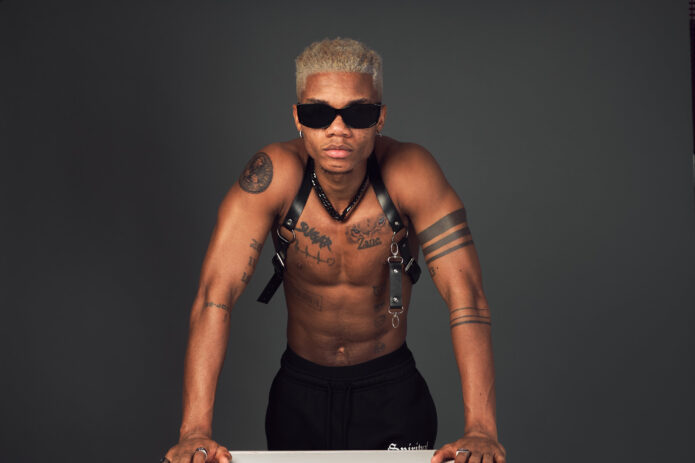
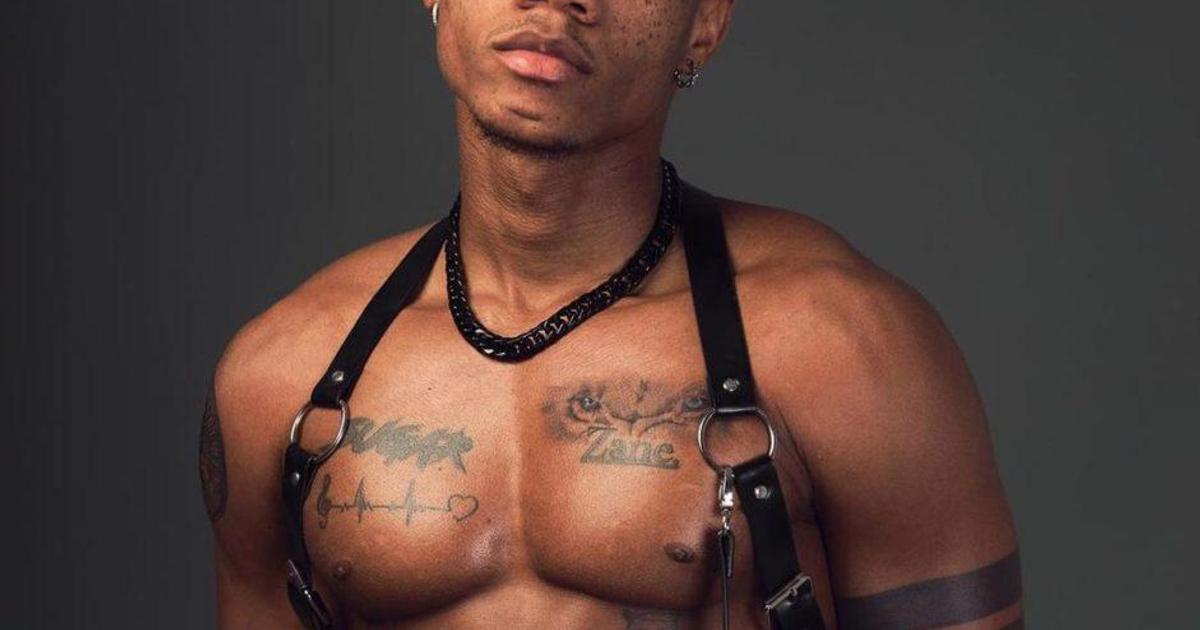
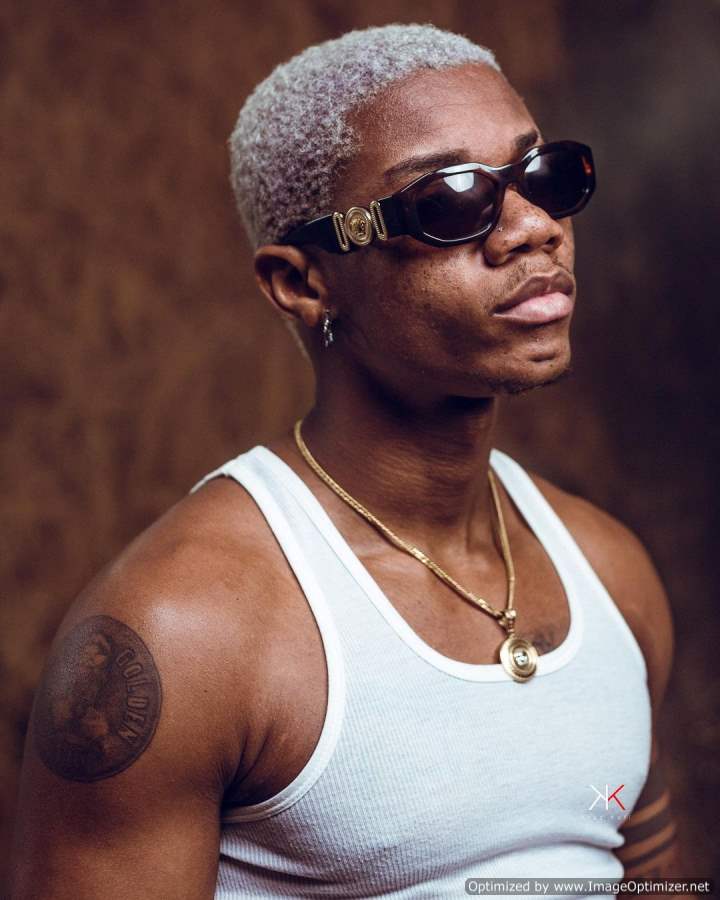
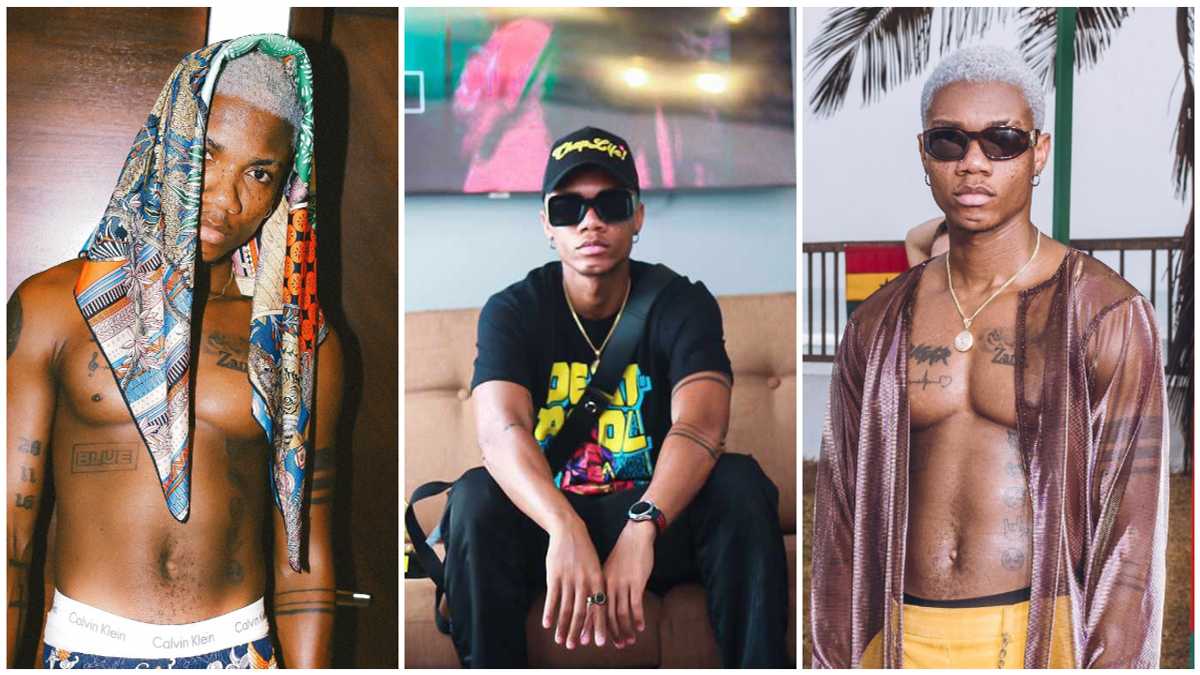
The clearest view of KiDi’s upper body shows several different ideas sharing the same space. On the left side of his chest, a heartbeat line runs into a small heart. Close by, dark lettering crosses the chest, while the right side carries the name Zane with a date-based design tied to his son. His upper arms add another layer: thick bands, script and larger illustrated work break up the chest pieces and give the whole collection a lived-in look.
There is no single visual language across all of these tattoos. Some are heavy and shaded, some are fine enough to read as lettering, and some are simple symbols. That mix suits KiDi’s explanation of the collection. The tattoos mark people, beliefs and feelings rather than following one fashionable theme. Even the placement feels personal: the chest pieces stay close to the heart, while the arms make the more visible statements when he performs or wears sleeveless clothes.
The Arm Tattoos That Build KiDi’s Sleeves
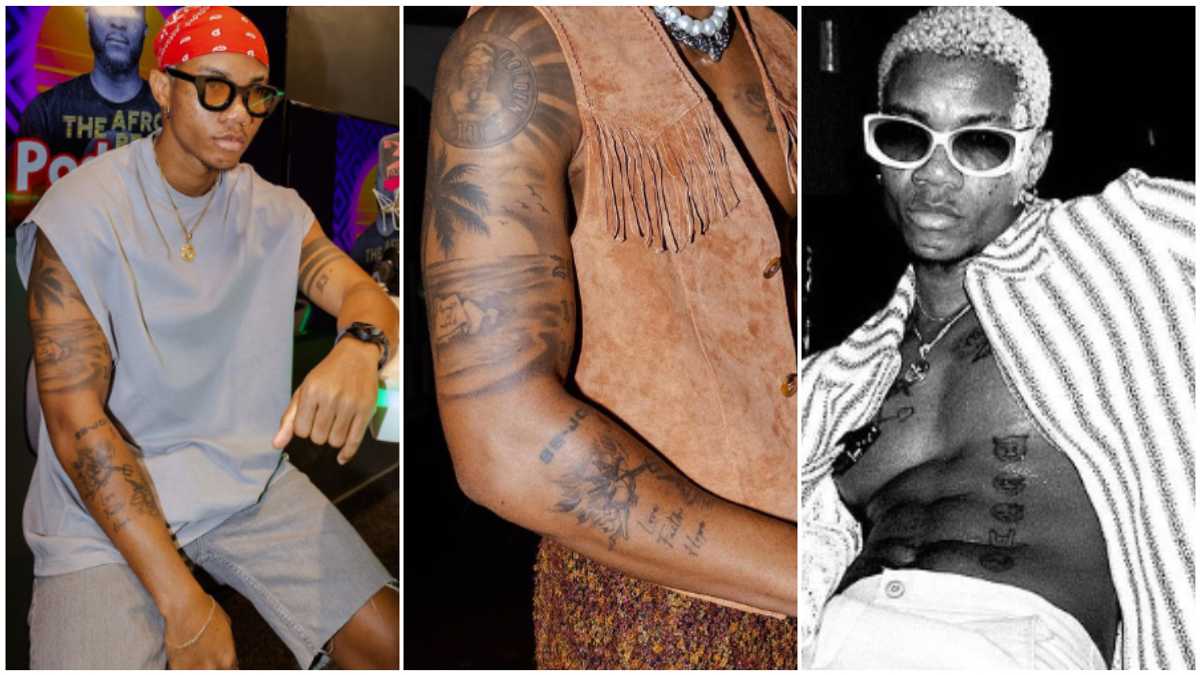
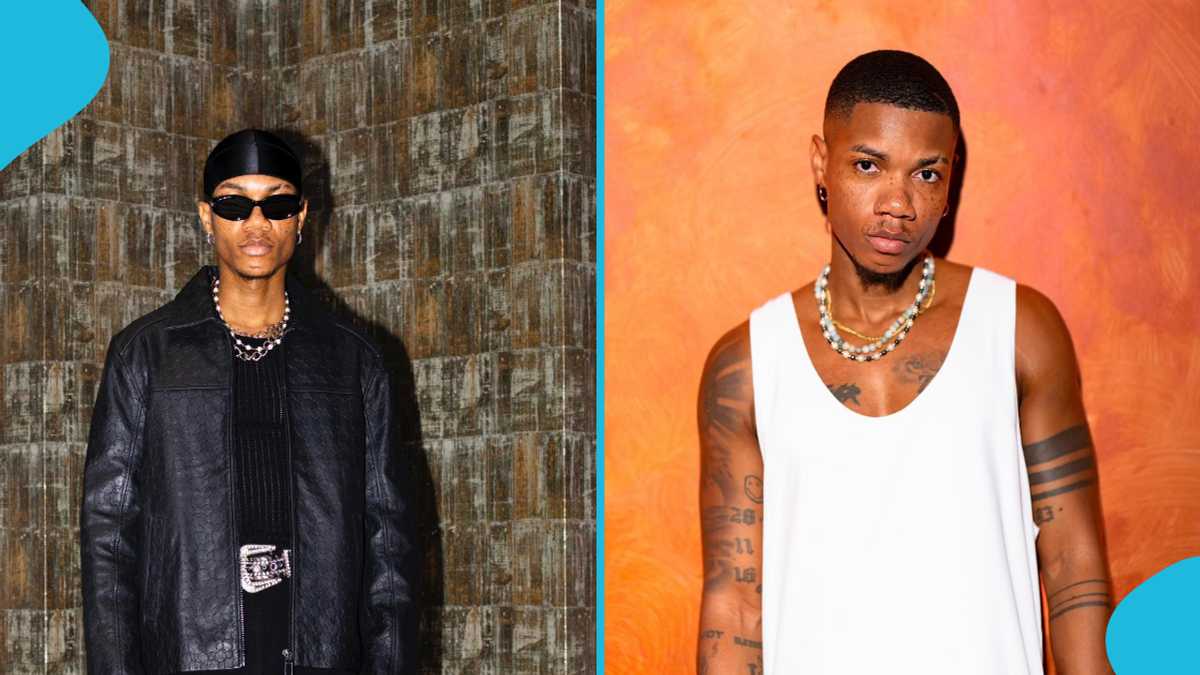
KiDi’s arm tattoos are the busiest part of the collection. A wider photo shows ink running from the shoulders down toward the forearms, with bands, script and darker graphic shapes appearing at different points. The pieces don’t read as a perfectly uniform sleeve. Instead, there are gaps, changes in scale and separate designs that have accumulated over time. The result is a personal record built in layers.
One arm carries the name of his mother, Beatrice Thompson. That detail gives the arm work a family centre, even though the surrounding tattoos have different shapes and weights. The name is not presented as a vague tribute; KiDi has specifically identified it as his mother’s name. In the middle of a larger sleeve, that kind of lettering can be easy to miss, but it is one of the most direct family tributes in his tattoo collection.
The arm images also show why KiDi’s tattoos look different from one photo to the next. A T-shirt can hide the upper portion, a jacket can cover nearly everything, and a stage outfit can make the ink appear bolder than it does in a close portrait. The visible lines shift with his posture, too. A forearm mark can look compact when his arm is bent and much longer when he reaches for a microphone.
KiDi’s Most Personal Details
The chest pieces carry the most obvious family and emotional references. KiDi has described the tattoo for his son, Zane Dwamena, as a record of Zane’s birthday. In photographs, the name stands out in large lettering on the right side of his chest. It is one of the first details people notice because the letters are broad and the placement leaves them open to the camera.
Across the other side, the heartbeat line finishes in a small heart. The line gives the chest a sense of movement, especially beside the heavier script. It also makes a visual bridge between the more literal name tattoo and the smaller symbols scattered over his body. The tattoo is simple enough to read immediately, but its position makes it feel connected to the personal pieces around it.
KiDi’s chest script is harder to read in every photograph, which is part of what makes the imagery useful. One view catches the lettering under strong studio light; another shows how the ink sits beneath clothing and harness straps. The exact visual impression changes with the angle, but the design remains recognisable as bold, dark chest lettering rather than a tiny hidden mark.
Faith, Family and the Details KiDi Has Explained
KiDi has also explained a crucifix tattoo as a reference to his Christian faith. He connects the three nails with the crucifixion, so the piece is not just a generic religious symbol in his account. It carries a specific meaning that ties the image to his beliefs and to the way he understands that part of his identity. It is one of the clearest links between faith and family in the collection’s wider history.
The crucifix belongs to the same collection as the family names and mood symbols, but it has a different tone. The Zane tattoo records a relationship inside his family. The crucifix points outward to faith. Seen together on his arms and chest, they show how KiDi uses tattoos to keep important parts of his life close, even while the designs remain visible as part of his stage style.
In photos, the religious piece can be less immediately obvious than the large chest lettering because it sits among other marks. That is typical of KiDi’s overall tattoo layout: the body is not divided into one symbol per area. Several ideas share the same visual field, and the meaning of one piece becomes clearer when his own explanation is added to the photograph.
The Five Moods Behind His Stage Persona
The five emoji tattoos on KiDi’s chest are probably the most playful part of his ink. He has said they represent five moods connected to his concerts: demon, bubbly, emotional, shy and celebrity. That list gives the symbols a clear link to performance. They are not just five small faces chosen because they looked good; they stand for the different versions of KiDi that can come out onstage. Together, they mark five concert moods in a compact visual set.
He has also explained the idea through the way people communicate now. Emojis can make a feeling obvious without a long explanation, and the five symbols let him place those shifts directly across his chest. Their small scale contrasts with the larger name and script tattoos around them. The result is a set of tiny marks that carries a surprisingly large amount of information.
Visually, the emojis help break up the heavier work. KiDi’s chest includes dark lettering, the heartbeat line and the Zane tattoo, so the smaller icons create pockets of space between those stronger shapes. They also add a little humour to an otherwise serious group of tattoos centred on family, faith and emotional wellbeing.
KiDi’s Arm Bands, Script and Lower-Torso Ink
Below the chest, KiDi has smaller tattoos that appear in flashes depending on the photograph. A blocky mark sits across the upper abdomen, while other small symbols and lettering run down toward the waist. The arm bands are more consistent visually: dark horizontal lines wrap around the upper arms and create a strong contrast with the looser script nearby.
Those bands give the collection a graphic edge. They are straightforward shapes, but they change how the more personal tattoos read. The chest names and heartbeat line feel intimate; the bands make the silhouette sharper. This balance is part of why the tattoos work so well with KiDi’s fashion. A sleeveless top reveals the family lettering and the bands at once, while a jacket can reduce the look to only a few glimpses of ink.
The lower-torso tattoos are not always clear enough to describe confidently, so the strongest reading comes from the pieces KiDi has actually explained. The photographs can document where the smaller marks sit, but they do not automatically tell us what every symbol means. His stated explanations matter more than guesses based on a cropped image.
A Short Phrase About Anxiety
Among KiDi’s most direct messages is the phrase “Breathe, it is well.” He has connected it with anxiety, which gives the lettering a different kind of weight from the more celebratory chest emojis. It reads like a reminder kept close to the body, but the important point is the meaning he has attached to it: the phrase reflects his experience of dealing with anxious feelings.
The wording is calm and short, and that simplicity helps it sit naturally beside the more detailed tattoos. A heartbeat line already brings the idea of breath, nerves and emotion into KiDi’s tattoo layout. The phrase adds language to that same emotional territory. Together, they make the chest and arm work feel less like a collection of disconnected graphics and more like a record of how he thinks about himself.
The Visual Mix in KiDi’s Tattoo Collection
KiDi’s tattoos now sit comfortably alongside the platinum hair, sunglasses, jewellery and leather-heavy styling that have become familiar parts of his image. The clothes change, but the ink keeps the look connected. A bare chest brings out the personal details. A tank top makes the arms and bands more prominent. A jacket leaves only partial glimpses, which can make the tattoos feel like details hidden inside the outfit rather than the whole point of it.
That flexibility is useful when looking at photographs from different stages of his career. Some images emphasise the chest and the name Zane. Others focus on the arms, where the bands, script and larger pieces create a stronger sleeve effect. None of those views cancels out the others. They are different windows onto the same collection, and each one makes a different part of the tattoo history easier to see.
The most reliable way to understand KiDi’s ink is to keep the visual evidence and his own explanations together. The photos show the placement and the changing scale of the designs. His comments explain the crucifix, the family names, the anxiety phrase and the five concert moods. Without that second layer, it would be easy to mistake a personal symbol for a random graphic or to assign a meaning that KiDi has never given it.
KiDi’s tattoo collection feels personal without being precious. There are serious pieces, playful ones, bold bands, small marks and lettering that stays close to the chest. They cover the parts of his life he has spoken about most clearly: faith, family, performance and mental wellbeing. That combination is why the tattoos stand out. They are visible in a photo, but they become memorable because each important piece is tied to a real part of KiDi’s life.
How KiDi’s Tattoo Collection Has Become Part of His Look
Album-era portraits make the overall pattern easier to see. The tattoos don’t sit apart from KiDi’s clothes, hair or jewellery; they move with all of it. The same collection can look sharp and graphic under a leather harness, softer in a close studio portrait, or more casual when the arms are partly covered. The ink changes the balance of each photograph without needing to be the only thing in frame.