
Zico tattoos form a visual vocabulary built around family, language and the history of the body that carries them. The Korean rapper and producer is photographed with a large portrait of his mother over the left side of his chest, a King Sejong design on the inner arm and lettering that turns Korean writing into part of the collection. Other photographs show dense black-and-grey work across the arms, chest and shoulders. The strongest account is therefore not a simple list of symbols; it is a map of recurring ideas.
The published record is also uneven, and that is worth stating at the beginning. Creatrip publishes image-backed descriptions of the King Sejong and mother tattoos, while Aju Daily and Koreaboo report the family context around the chest portrait. The retained photographs show additional designs, but they do not prove a private meaning for every line. A careful Zico tattoo guide separates what the source explains from what the image merely makes visible.
The mother portrait sits over the heart
The most emotionally legible piece in Zico’s collection is the portrait of his mother across the left chest. Creatrip identifies the image as a tattoo of his mother, and Koreaboo also describes it as one of the collection’s meaningful designs. Aju Daily’s Korean-language report adds an important visual detail: the portrait is based on a photograph of his mother when she was young and reaches from the collarbone toward the chest.
The placement gives the design a clear body landmark. A report about Zico’s appearance on Video Star says his brother explained that the portrait was placed over the heart because their mother is as important to him as the heart itself. That is a reported family explanation, not a guess from the picture. The photograph shows the portrait and lettering; the interview coverage supplies the reason for the location. Meaning enters the record through the combination of image and testimony.
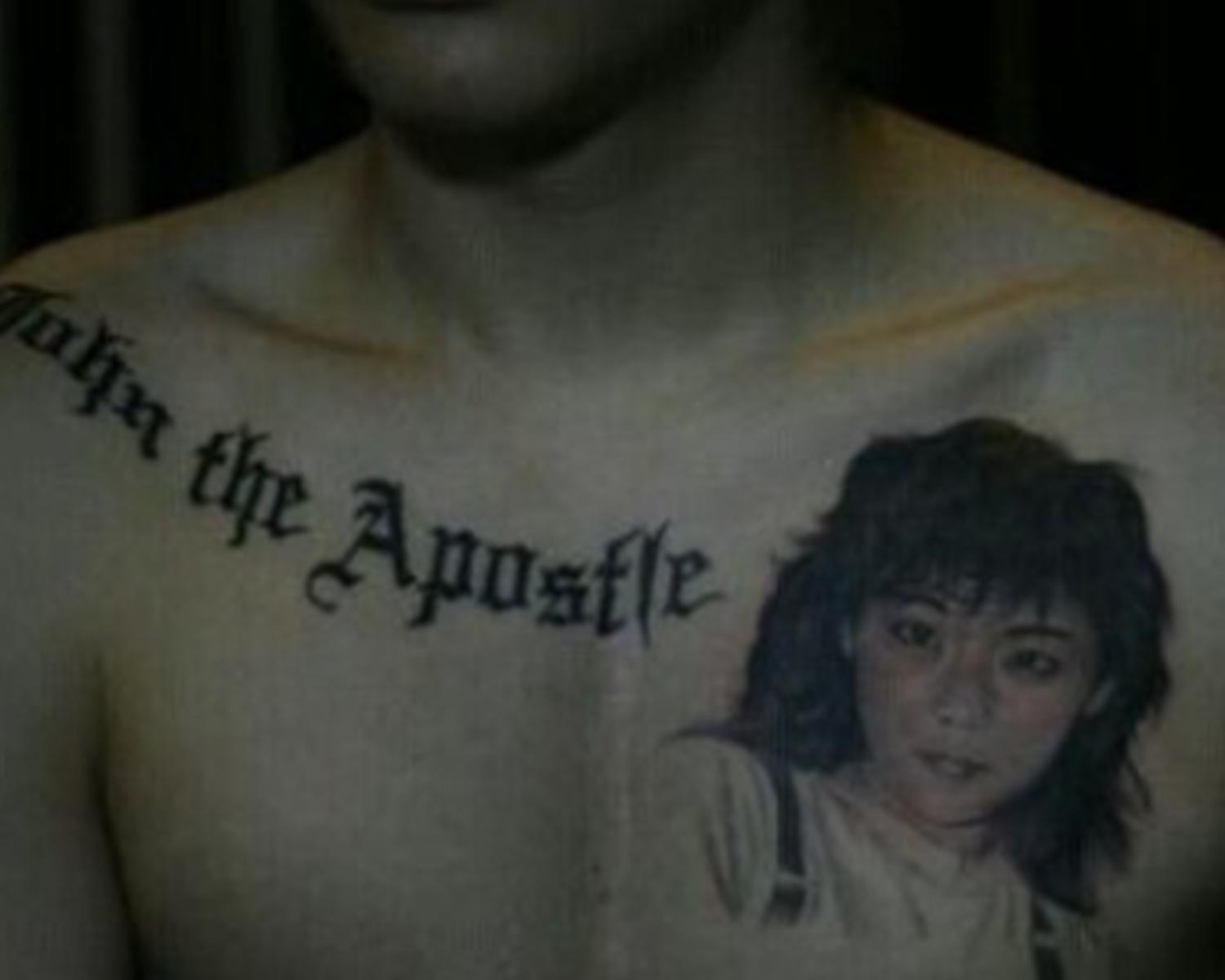
The mother portrait sits over the heart keeps the source boundary visible. A photograph can establish placement, while a reported explanation establishes meaning; the two should not be quietly merged.
King Sejong turns language into an arm tattoo
Creatrip documents a portrait of King Sejong on the inside of Zico’s arm. The article connects the design to his respect for the Joseon ruler associated with the creation of Hangul, the Korean alphabet. For a songwriter who works in Korean, that link makes the tattoo part of a larger relationship with language rather than a decorative historical reference alone.
The retained Creatrip image is a composite: one panel shows the King Sejong tattoo in close detail and the other shows Zico performing with the upper-arm design visible. That pairing is editorially useful because the detail panel establishes the subject, while the performance panel places the design on the living body. The tattoo is both an object of study and something that moves with him on stage.
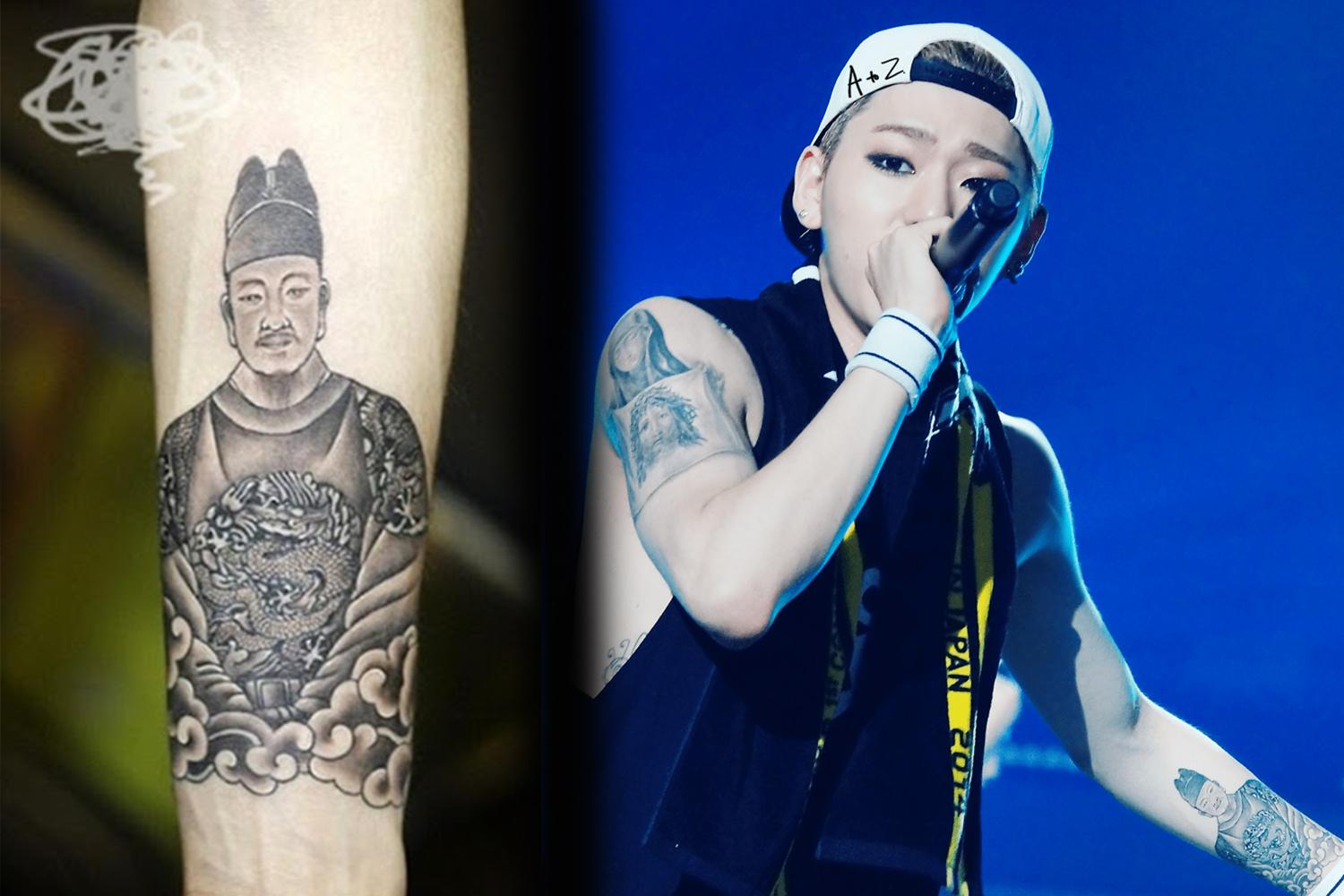
King Sejong turns language into an arm tattoo keeps the source boundary visible. A photograph can establish placement, while a reported explanation establishes meaning; the two should not be quietly merged.
The chest lettering carries its own visual rhythm
A separate Koreaboo photograph shows Zico in a music-video setting with large black lettering running across his upper chest. The frame is not a reliable catalogue of every mark, but it gives the viewer a distinct look at the typographic side of his collection. Letterforms, spacing and the relationship between text and collarbone become more important than any unsupported symbolic reading.
The large chest design also explains why his tattoos can look different from one photograph to the next. A shirt, a microphone, stage lighting or a change in posture can hide or reveal different sections. The same body does not present itself as a flat diagram. Placement and movement are part of the visual evidence. The image should therefore be used to describe the visible lettering, while the documented family meaning remains attached specifically to the portrait over the heart.
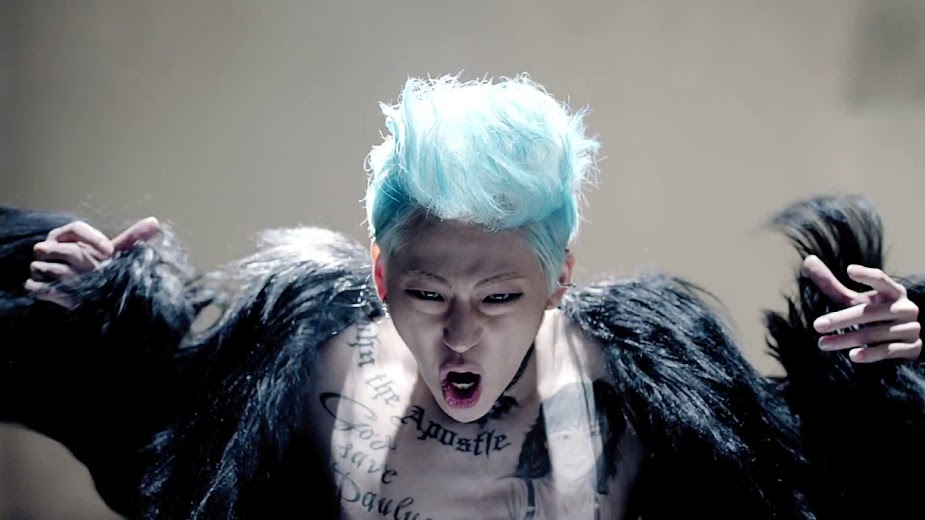
The chest lettering carries its own visual rhythm keeps the source boundary visible. A photograph can establish placement, while a reported explanation establishes meaning; the two should not be quietly merged.
The arms hold the densest part of the collection
Concert and portrait photographs show that Zico’s arms carry multiple layers of work. A high-resolution performance frame presents a sleeve-like arrangement with a portrait figure, circular forms and dense black-and-grey shading on the exposed arm. A separate casual photograph shows another angle, with additional designs running down the forearm and wrist.
These are genuine tattoo-bearing images, but neither one should be treated as a complete inventory. They are useful because they record different viewing conditions: one is a stage photograph with the arm raised, and the other is a closer offstage frame where the forearm bends toward the camera. A later angle can confirm continuity without proving that every visible shape was inked at the same time.
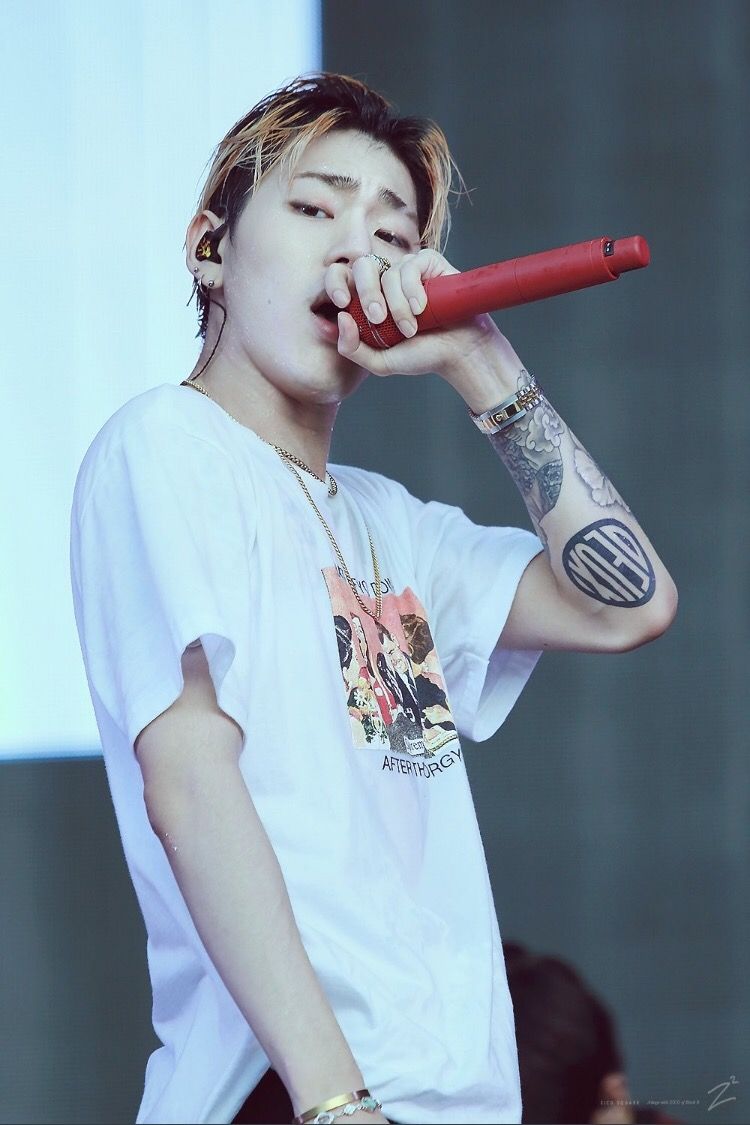
The arms hold the densest part of the collection keeps the source boundary visible. A photograph can establish placement, while a reported explanation establishes meaning; the two should not be quietly merged.
How family and language meet in the visual record
Creatrip’s account places Hangul and the act of writing near the center of Zico’s tattoo story. The King Sejong portrait is the clearest example, but the broader visual record includes lettering, short phrases and marks that sit close to the chest and arms. The collection reflects an artist who treats language as both a working material and a cultural inheritance.
It would be too broad to assign the same explanation to every tattoo. The published source directly connects King Sejong to respect for the creator of Hangul, while other designs remain visually documented but less clearly explained. That difference is part of the story. When an image shows a line of script, the responsible description is to identify its placement and form unless a source supplies the translation or meaning. Uncertainty is more useful than a fluent but invented interpretation.
How family and language meet in the visual record keeps the source boundary visible. A photograph can establish placement, while a reported explanation establishes meaning; the two should not be quietly merged.
The record moves between private and public settings
Zico’s tattoos appear in very different kinds of photographs: a close image of the mother portrait, a visual essay about Hangul, a music-video frame, a performance photograph and casual portraits. Each setting changes what can be seen. The stage reveals the arm in motion; the chest image turns a private family reference into a public document; the stylistic portrait shows how tattoo visibility can be managed through clothing and pose.
That variety is why source-page image variants matter. A single repost may flatten the collection into one crop, while the broader search finds distinct frames from different dates and contexts. The goal is not to gather more pictures for their own sake; it is to preserve the difference between them. A useful image earns its place by adding a new angle, a new placement or a new layer of source-backed context.
The record moves between private and public settings keeps the source boundary visible. A photograph can establish placement, while a reported explanation establishes meaning; the two should not be quietly merged.
What the sources can and cannot prove
The most secure claims are the ones repeated across independent routes. The mother portrait appears in Creatrip and Koreaboo, with Aju Daily providing additional reporting about the source photograph. The King Sejong tattoo is described by Creatrip and shown in a high-resolution image pair. Koreaboo’s performance and music-video frames document other visible work without requiring a symbolic explanation for each mark.
The weaker claims are complete-body inventories and exact dates for every addition. Public photographs show only what clothing, lighting and angle permit. That is why this dossier uses “visible in the frame” as a meaningful editorial category. It keeps the article honest while still giving readers a detailed visual guide to the collection that can actually be inspected.
What the sources can and cannot prove keeps the source boundary visible. A photograph can establish placement, while a reported explanation establishes meaning; the two should not be quietly merged.
The forearm tattoo record reads as an evolving archive
Taken together, Zico tattoos suggest an archive assembled through relationships and language. The mother portrait anchors the chest in family memory. King Sejong connects an arm to the history of Korean writing. The lettering and layered sleeve work extend those ideas into a broader visual identity without reducing every design to one theme.
The photographs also show a public artist choosing how much of that archive to reveal. A performance sleeve can be prominent, while a chest portrait may be partially hidden by a shirt. A close crop can make one design legible, but a wider frame is needed to understand its position. The collection becomes more coherent when the images are read as time-stamped viewpoints rather than as a single definitive portrait.
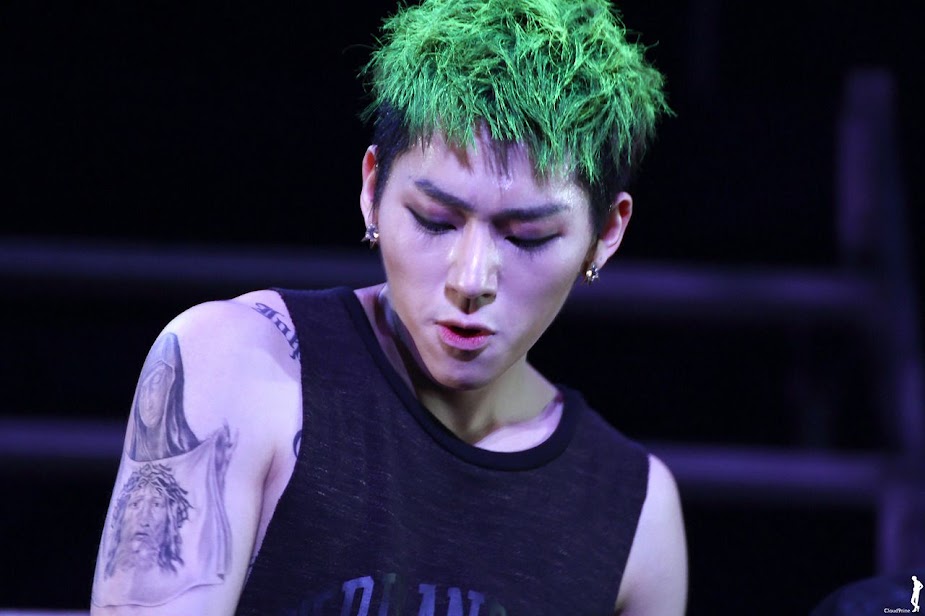
The forearm tattoo record reads as an evolving archive keeps the source boundary visible. A photograph can establish placement, while a reported explanation establishes meaning; the two should not be quietly merged.
The clearest reading of Zico’s collection is therefore personal but not overinterpreted. The portrait of his mother has a reported connection to the heart and to the importance of family. The King Sejong tattoo has a documented connection to Hangul and the language of his music. The remaining arm and chest designs are richly visible in photographs, yet their private stories should remain open when the sources do not name them.
Zico tattoos are most compelling when they are treated as an evolving archive of people, words and public performance. The collection is not interesting because every mark can be decoded. It is interesting because the available evidence shows several ways an artist can use skin: to remember a parent, to honor a writing system, to carry an image through a concert and to let the camera reveal only one part of a larger record.