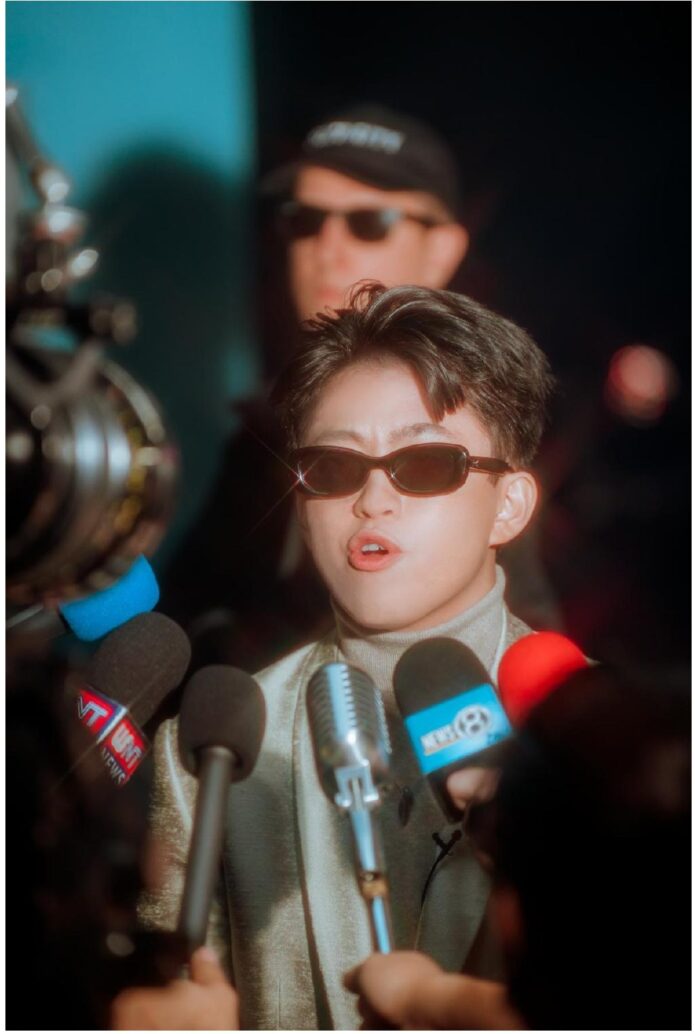
Rich Brian tattoos are easier to understand when the public photographs are paired with his own explanations. The best-known example is the trio of circles inked on his left arm, a design he linked to the unusual way his hair formed when he was a baby. A 2020 NME interview adds another piece of the story: the upside-down word manifest on his chest was designed so that he could read it in a mirror. Those details turn two simple-looking marks into a small personal archive.
The record is not a complete catalogue of every mark on Brian Imanuel s body. It is a carefully bounded account of designs that can be tied to published reporting, direct statements or clearly inspected photographs. That boundary matters because tattoo coverage often encourages confident guesses. The most useful reading stays close to what the image shows and what the source actually says.
The three circles tattoo began with a family story
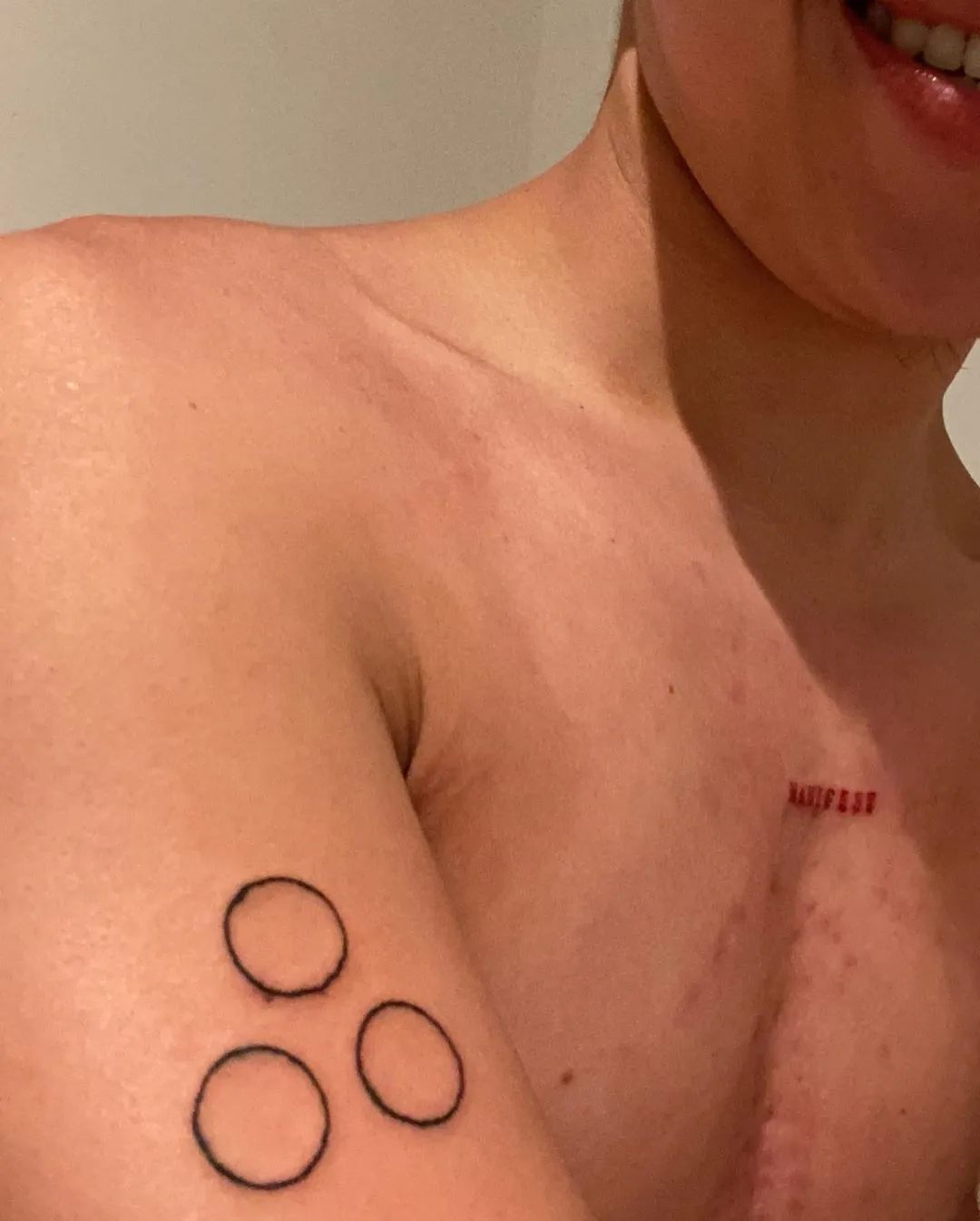
Brian told NME that the three circles were his first tattoo. His parents had shown him a childhood photograph in which his hair appeared to grow in three circular whorls. He said the image stayed with him, even though he worried that people in Indonesia might react strangely to it. The design therefore works as a translation of a private family memory into a spare graphic form.
The Kapanlagi report documents the same explanation and identifies the circles on his left arm. In the close frame, the three outlines are clean and legible; in the wider mirror photograph they sit as a compact group on the upper arm. The visual simplicity is part of the meaning rather than a lack of meaning. Three empty circles carry a story about infancy, family memory and the decision to keep an unusual detail visible.
The three circles tattoo began with a family story keeps the source trail visible. The image and the published explanation should be read together, with any detail not supported by both treated as unconfirmed.
The manifest chest tattoo is intentionally private
The second design documented in the Kapanlagi coverage is the word manifest across the chest. Brian explained that the lettering is upside down so that he can read it in a mirror. That turns a familiar motivational word into a private prompt. It is visible to cameras, but its intended reading direction belongs to the person wearing it.
The full mirror photograph makes the relationship between the arm circles and the chest lettering clear. The marks are not presented as one large composition. They occupy different spaces and become legible at different distances. Manifest is readable once the viewer knows where to look, while the circles remain the more immediately recognisable image. Together they show Brian using placement to control how much of a tattoo is public at first glance.

The manifest chest tattoo is intentionally private keeps the source trail visible. The image and the published explanation should be read together, with any detail not supported by both treated as unconfirmed.
Rich Brian s live arm record
A later live photograph from Nopality shows Brian performing with visible work on his upper arm. It does not provide a reliable name or meaning for every line in that image, so it should not be treated as a substitute for a tattoo inventory. What it does provide is a distinct date and setting: the collection appears in a concert environment rather than a private mirror post or an interview portrait.
That change of setting is important. The same body can look intimate in a close-up and public on a stage. Lighting, clothing and movement conceal some details while revealing others. The photograph is valuable precisely because it documents visibility without pretending to explain every design. It adds a separate visual route to the article and keeps the dossier honest about what is known.

Rich Brian s live arm record keeps the source trail visible. The image and the published explanation should be read together, with any detail not supported by both treated as unconfirmed.
The chest lettering connects image and explanation
The NME press photograph is a distinct editorial frame in which Brian s face is visible and the chest lettering can still be seen above the shirt line. It is not the same image as the Kapanlagi mirror photographs, and it does not carry the same private-room feeling. The clothing and outdoor setting place the word inside the public image of the artist rather than outside it.
Because the chest design is partly visible, the photograph should be read as supporting evidence rather than a close study of the lettering. Its strength is contextual. It shows how the tattoo travels with Brian through press appearances and how the mark can remain part of his visual identity even when the frame is not built around the body. Different photographs answer different questions.

The chest lettering connects image and explanation keeps the source trail visible. The image and the published explanation should be read together, with any detail not supported by both treated as unconfirmed.
The published record
The strongest source trail starts with Brian s own words as reported by NME and with the image-backed description published by Kapanlagi. The NME interview names the first tattoo and asks directly about the three circles. Kapanlagi repeats the childhood-hair explanation and records the upside-down chest lettering. Those sources are not identical, but they converge on the same two designs and give the article a defensible base.
The distinction between source types is useful. A first-person explanation can establish meaning, while a photograph can establish that a design is visible in a particular frame. When both are present, the result is stronger than either alone. When only an image is available, the correct response is to describe the visible placement without inventing a story for it.
The published record keeps the source trail visible. The image and the published explanation should be read together, with any detail not supported by both treated as unconfirmed.
Why the collection matters
Brian s tattoo story is compelling because it stays small enough to be specific. The circles do not need a grand symbolism added to them; their documented origin in a childhood photograph is already unusual. The chest word does not need a broad claim about motivation; its mirrored orientation already says something about privacy and self-address. The later live frame adds time and movement without overclaiming a new meaning.
Together, these pieces suggest a collection built through personal references rather than a single public brand. The designs can be seen in music coverage, portraits and performances, but they continue to point back to private decisions. The public image is the setting, not the whole explanation. That is why a careful article keeps the published record visible and lets the photographs do the rest of the work.
Why the collection matters keeps the source trail visible. The image and the published explanation should be read together, with any detail not supported by both treated as unconfirmed.
The public frame matters
The separate Wikimedia portrait is useful as supplemental context because it shows Brian in a face-visible, fully identifiable frame without being used as tattoo evidence. It gives the reader a visual pause after the tattoo-bearing images and keeps the article from implying that every photograph has the same documentary purpose. The portrait is not mapped to a tattoo-specific section and does not replace the close views of the circles or chest lettering.
This separation also protects the editorial order of the piece. Tattoo-bearing photographs come first, because they carry the main evidence. A general portrait appears only after that search has been exhausted, and its alt text describes the person rather than claiming a tattoo detail that the clothing does not show. Context is most useful when it is labelled as context.

The public frame matters keeps the source trail visible. The image and the published explanation should be read together, with any detail not supported by both treated as unconfirmed.
The clearest conclusion is that Rich Brian s tattoos function as compact personal records. The three circles preserve a family story about his earliest appearance. The mirrored manifest lettering turns a public word into a private instruction. The arm work seen in performance shows how the collection enters a larger public life, even when its individual designs are not all named. Each image adds a different kind of evidence.
That combination makes the collection more interesting than a list of symbols. Meaning comes from the relationship between placement, memory and the moment in which a photograph was made. Rich Brian tattoos are best read as an evolving archive rather than a finished logo system. The known pieces are specific, the unknown pieces remain open and the source trail gives readers a reliable way to tell the difference. It also gives future coverage a sensible standard: a new claim should come with a new photograph, an attributable statement or both. That discipline keeps the article useful even as Brian adds new work.