Bang Yong Guk’s tattoos appear across his upper arm, chest and back. The arm lettering is visible in an official X photograph, while Edaily and Vanity Teen show different portions of the chest design. Published reports also give two versions of a quote said to run across his back. Other pieces are mentioned in coverage, though the selected photographs do not show a complete inventory.
The photos make the placement easier to compare. In the official arm shot, dark lettering and denser shaded work cover much of the visible upper arm. The earlier Makestar photobook image catches a narrow, text-led section of chest ink beneath an open collar. A later Vanity Teen portrait shows more of the upper torso: horizontal lettering framed by dark curves and flourishes. The ink reads as dark in these frames; lighting and clothing affect how much detail can be seen.
Yong Guk is a South Korean rapper, songwriter and producer, and the former leader and main rapper of B.A.P. In interviews, he has connected tattooing with major experiences and feelings such as change, sadness, rage and memory. He has also described a new tattoo as a possible new start. Those comments give personal context to the body art, without assigning a story to every visible line.
Bang Yong Guk’s arm lettering and exposed sleeve work
The clearest arm view shows Yong Guk in a sleeveless black top, with one arm turned toward the camera. Dark lettering and larger shaded areas cover much of the upper arm, running from near the shoulder toward the elbow. The work has a broad footprint in the frame, rather than appearing as a small isolated mark. From this angle, the lettering sits alongside denser shapes that give the visible section a layered look.
The photograph shows mostly dark ink. The lettering is the most readable element, though the image does not make every character clear enough to transcribe. The crop also cuts off the arm before its full length is visible, so it cannot establish exactly where each part begins or ends. The safe description is a substantial upper-arm composition with lettering and shaded work.
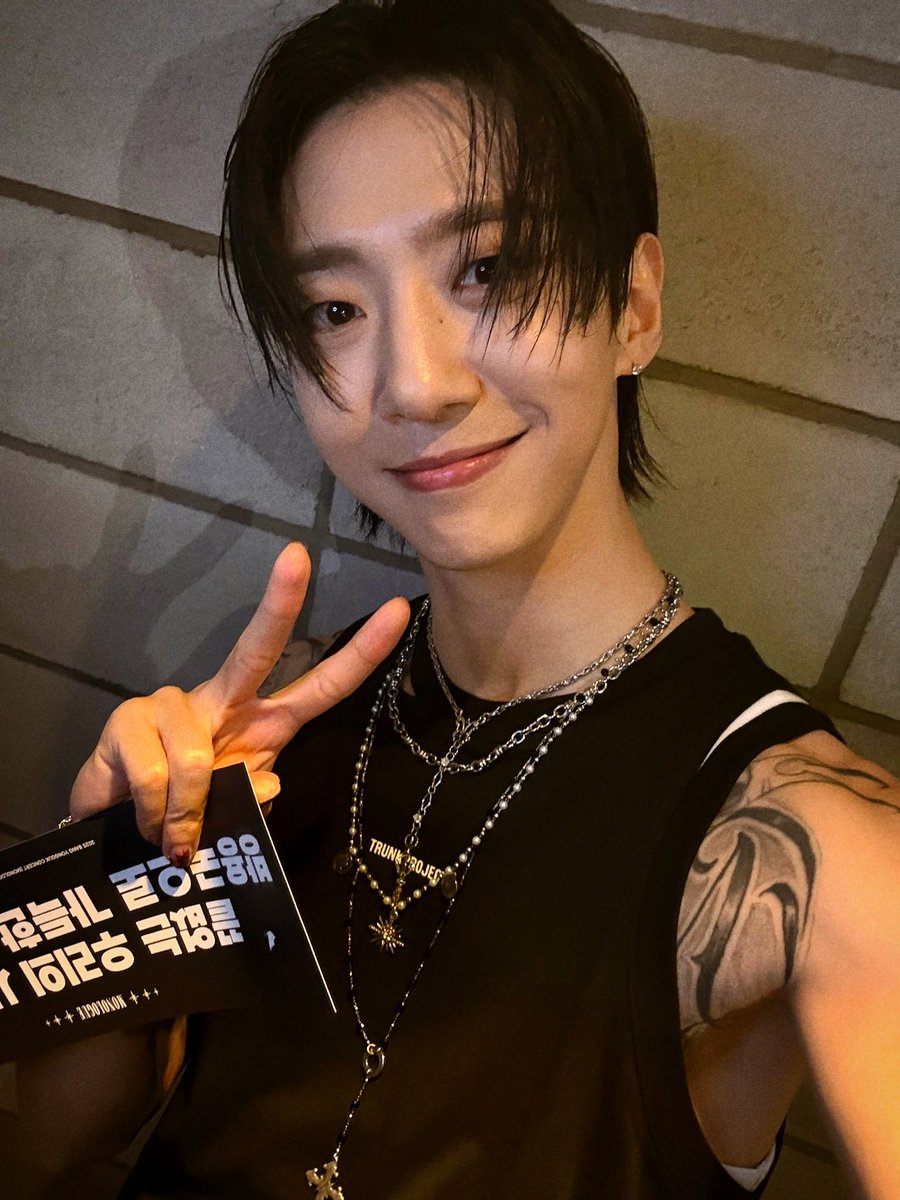
The image comes from Yong Guk’s official X account and places the tattoo in a current promotional setting. His face, jewellery and the card in his hand help identify him in the photograph. They do not explain the design. The photograph documents the arm directly, while the account and surrounding image context establish who is pictured.
The angle also affects what can be said about the ink. A bent arm and the sleeveless top expose a wide area, but the lighting and crop leave some edges indistinct. The visible shapes may form a larger connected piece, though the image alone does not settle how the separate lines fit together. No full wording, date or meaning is confirmed in this frame.
The chest tattoo in the Makestar photobook frame
An Edaily photograph from the B.A.P-era Makestar photobook shows Yong Guk reclining on a graffiti-covered couch. He wears a loose white shirt and black suspenders, with the collar open enough to reveal part of his chest tattoo. Red lighting gives the scene a warm cast and changes the apparent shade of the ink. The photograph supplies a glimpse of the design within its original editorial setting.
The visible area sits just below the neckline and appears text-led, with dark lettering across the upper chest. The shirt covers most of the composition, and the red light makes the exposed lines harder to distinguish. The image does not give a complete reading of the words or show how the design continues across the torso. It confirms the placement while leaving those details open.
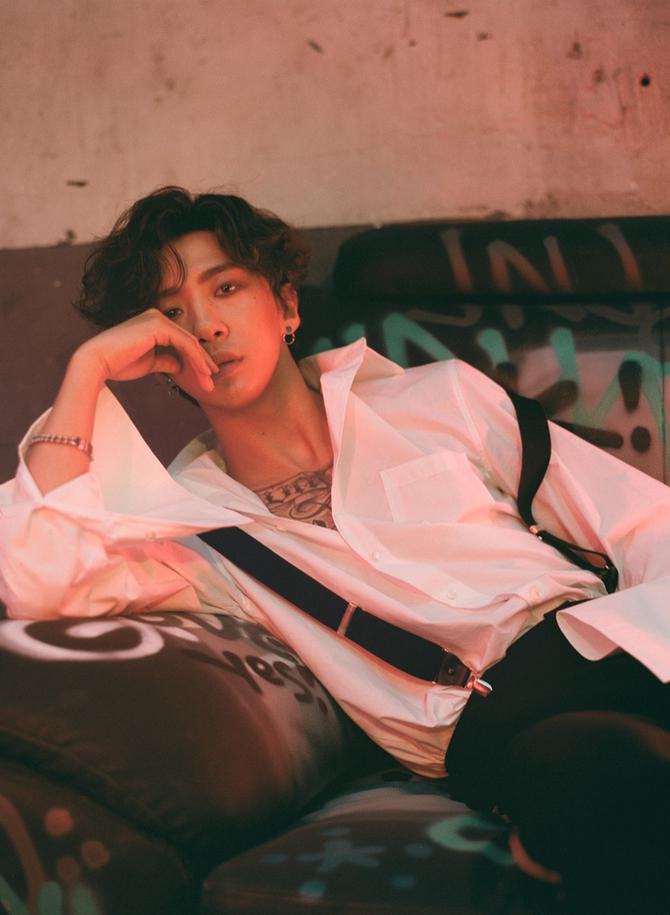
The seated pose gives a narrower view than the later Vanity Teen portrait. The white shirt and suspenders frame only the section left open at the collar, while the later image exposes more of the upper torso. The Makestar photograph still helps place the chest ink in an earlier point in Yong Guk’s public career and links it to the photobook coverage, rather than to an unattributed repost.
It is useful to keep the older image and later close view separate. They show the tattoo under different lighting and clothing, and the visible portions do not line up enough to read as a complete map. Describing the first frame as a partial chest view avoids claiming that it shows the whole composition or the exact wording.
Bang Yong Guk’s later chest tattoo composition
Vanity Teen’s later portrait shows Yong Guk seated in a black jacket over an open shirt, with chains across his chest. More of the upper-torso tattoo is visible here. Lettering runs horizontally across the chest, with darker curves and flourishes around it. The work spreads across a wider area than the narrow glimpse in the older photobook image.
The chains cross the skin, but the central lettering and surrounding lines remain visible. The curves follow the breadth of the chest and frame the text; denser dark areas give the composition weight. In this photograph the design reads as black or very dark ink. The source does not identify pigments, so color beyond that visible impression should not be assumed.
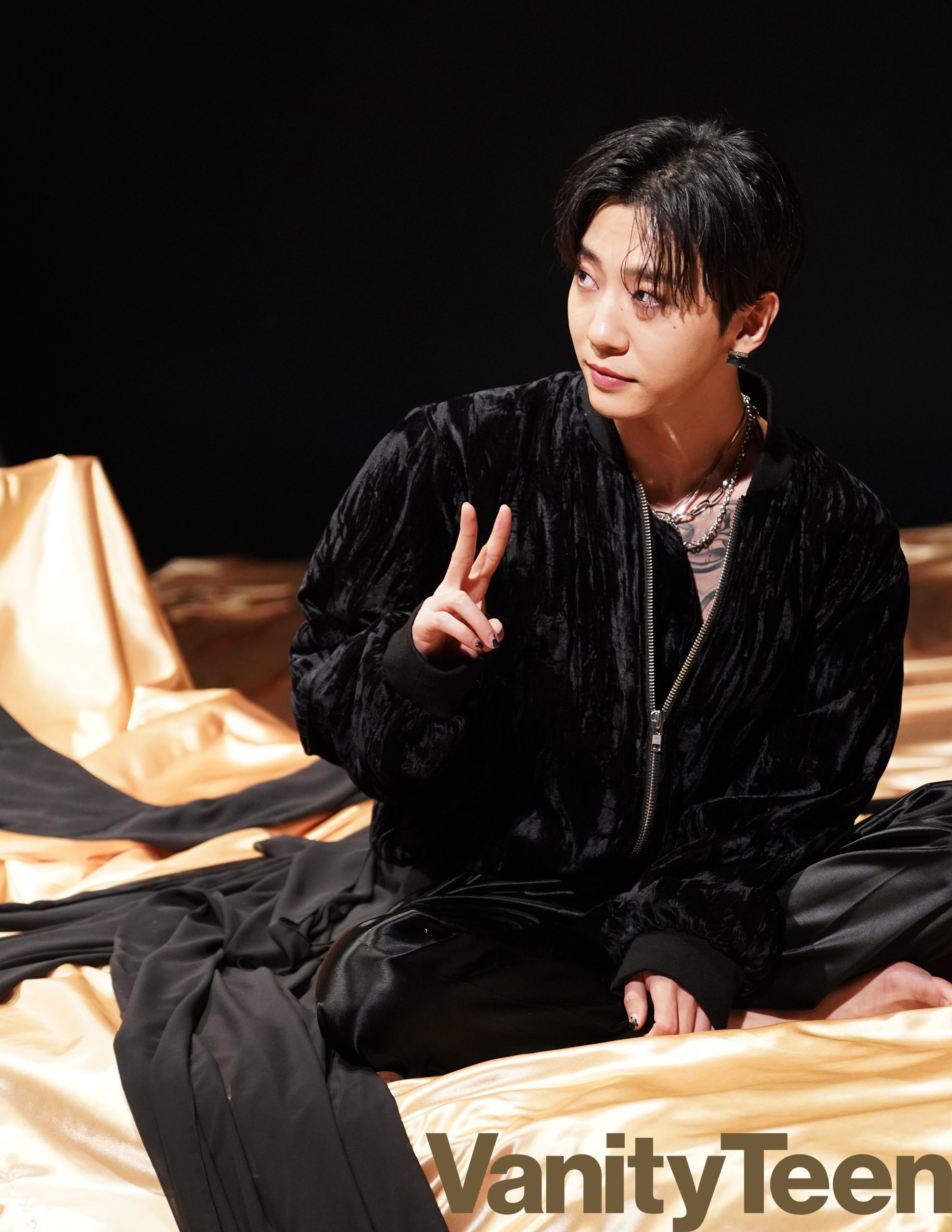
The portrait gives a better sense of scale and placement than the earlier red-lit frame. It shows the lettering and flourishes together, but it does not establish when each part was added, who tattooed him or whether the visible marks were completed in one sitting. Clothing and chains cover portions of the skin, so some of the outer edges remain out of view.
In a KCrush interview, Yong Guk said a major experience can lead him to leave a mark on his body. Vanity Teen records him describing tattoos as an outlet for feelings tied to change, sadness, rage and memory; he also described a new tattoo as a possible new start. These comments explain why he has spoken about tattoos as personal records, but he has not tied each line in the chest design to a specific event.
The chest composition is one of the clearest visible parts of his collection. Its scale and dark lettering can be described from the photograph, while its private meaning remains with Yong Guk. The interviews offer context for his approach to tattooing; they do not decode the individual marks.
Bang Yong Guk beyond the visual record
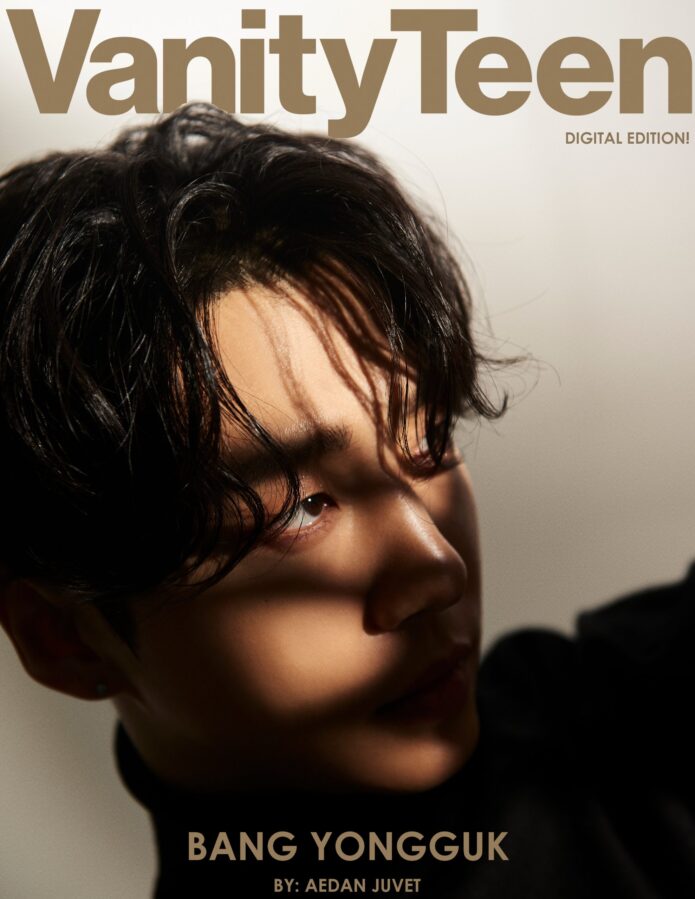
A separate Vanity Teen portrait keeps Yong Guk’s face visible, with clothing covering most of his body. It serves as an identity image alongside the tattoo photographs. The chest, back and arm ink are better seen in the other frames, so this portrait should not be counted as evidence for another design.

Yong Guk became known as B.A.P’s leader and main rapper before building solo work as a songwriter and producer. His public work has also included photography and visual direction. That background helps place the editorial portraits alongside the interviews, though the images do not show that a particular tattoo represents his music or creative work.
The portrait’s role is simple: it gives readers a clear view of the person discussed in the article. It does not show the tattoo placement and should not be used to infer a symbol or meaning. Keeping the identity photograph distinct from the tattoo-bearing frames lets each image do its own job.
How the source trail frames Bang Yong Guk
A second Vanity Teen portrait shows Yong Guk seated against a dark background, his face turned toward the light and most of his chest hidden by black clothing. It is another identity portrait, not an additional tattoo view. The image gives a different editorial pose while leaving the arm and torso ink out of sight.

Published coverage gives two forms of the quote reported across Yong Guk’s back. One commonly repeated version reads, “Do what u like and luv What u do.” Cosmo gives a related wording: “Do what you like and love what you do.” The versions differ in spelling and capitalization. The photographs selected here do not show the back lettering clearly enough to confirm which wording appears on his skin, so both remain attributed to the reports.
Other coverage mentions additional body art, but these sources do not supply a full list of every design. The photographs here support visible lettering on the upper arm and a wide chest arrangement with text and flourishes. They do not identify all the symbols, a tattoo artist or the dates when each piece was added. The distinctions between the reports and the photographed details keep the description grounded.
The images come from three different settings: an official social post, an earlier Makestar photobook and a later Vanity Teen feature. The official frame gives the clearest view of the upper arm. The Edaily photograph catches part of the chest below an open collar, and the later portrait exposes more of the torso composition. The two face-visible portraits identify Yong Guk and show the editorial setting, but add no tattoo details.
Bang Yong Guk’s music and visual language
Yong Guk’s public work spans music, photography, visual direction and personal writing. The tattoo photographs also come from different kinds of settings: a social post, an earlier photobook and an editorial portrait. Each image uses clothing, pose and lighting differently, which changes how much ink is visible. The arm shot leaves skin open around the upper-arm work; the photobook frame narrows the view to the collar; the later portrait gives more space to the chest.
The later chest image is composed around the open jacket, chains and horizontal lettering. The Makestar scene uses the shirt and suspenders to reveal only a small part of the chest, while the official post directs attention to the arm. These visual choices shape the photographs, but they do not establish a link between a tattoo and a specific part of Yong Guk’s creative work.
A careful reading of the photographic record
The clearest visual details are dark lettering and shaded work across the upper arm, plus text and curved flourishes across the chest. The back quote appears in published reports with two different wordings. Interviews add Yong Guk’s comments about major experiences, emotional release, memory and change. Photographs show placement and appearance; the interviews give his own broader account of why he gets tattooed.
The available sources do not provide a complete tattoo inventory, identify the artist or date every piece, or settle the exact lettering across his back. The photographs show the visible design under different conditions: the arm in an official image, an earlier chest glimpse under red lighting, and a later wider torso view. The confirmed details can be described without assigning a private story to each mark.