
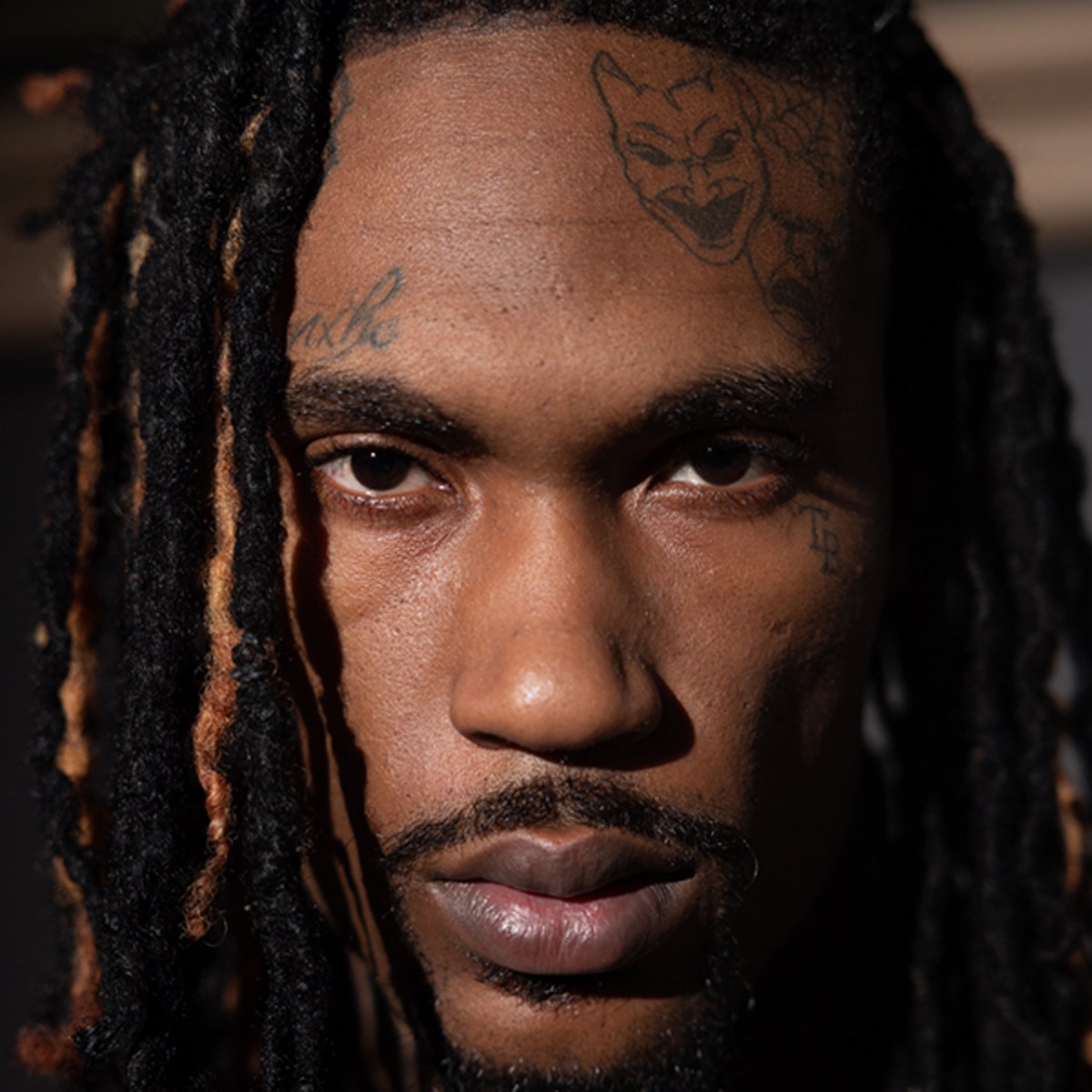
Hunxho’s tattoos cover his face, neck, chest, stomach and arms. In photos, the collection reads as dense, layered coverage rather than a few isolated pieces. Some designs are clear; others depend on the angle, lighting or whether his hair is in the way.
A portrait shows only part of the collection. Shirtless and side views reveal more of the torso and how it meets the arms. These are different views of the same tattoos, not evidence that every crop shows a new piece.
The overall look of Hunxho’s tattoos
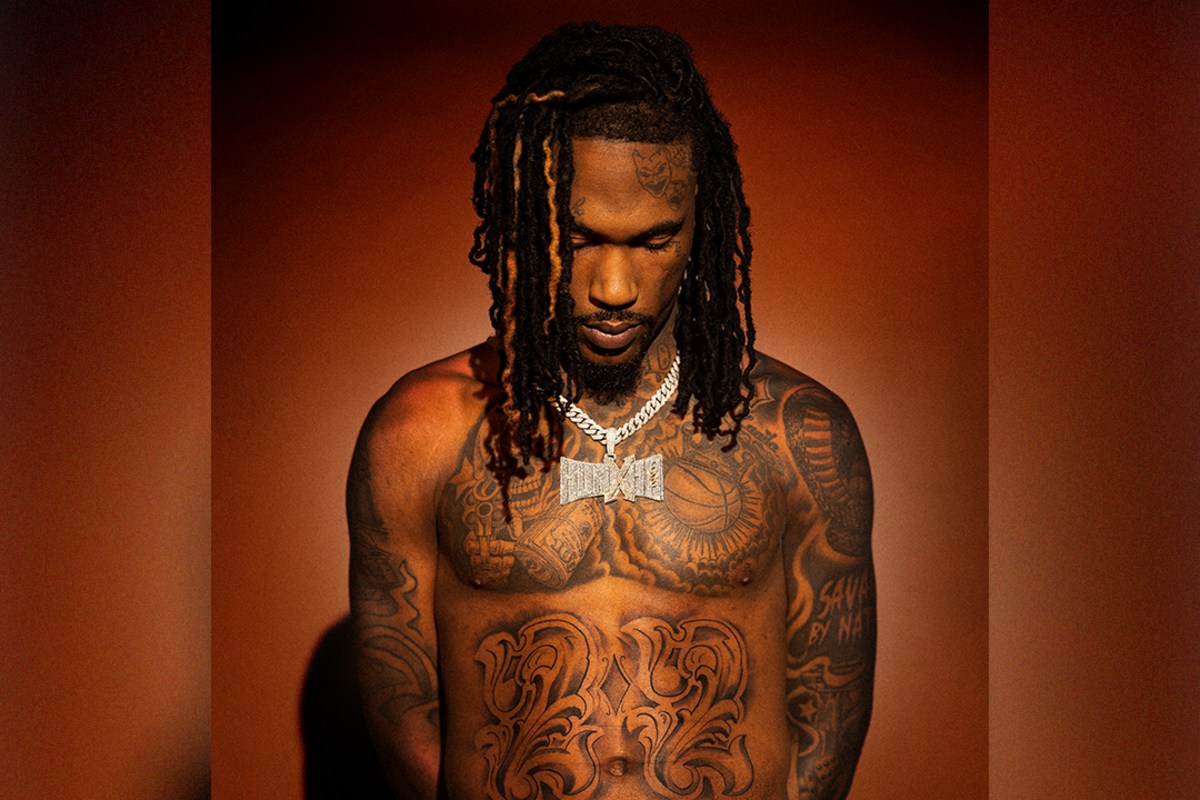
The broadest coverage is across Hunxho’s chest and stomach, where large shapes and shaded sections sit beside smaller designs on both arms. The pieces overlap visually, giving the upper body a compact, layered look.
The face tattoos change a portrait more immediately than the larger work hidden by a shirt. The contrast between those small marks and the broader body coverage is one of the collection’s clearest visual features.
Chains and pendants appear in several photos and help show the scale of the work. The tattoos continue below the necklace line, down the sternum and onto the stomach.
The chest and stomach pieces
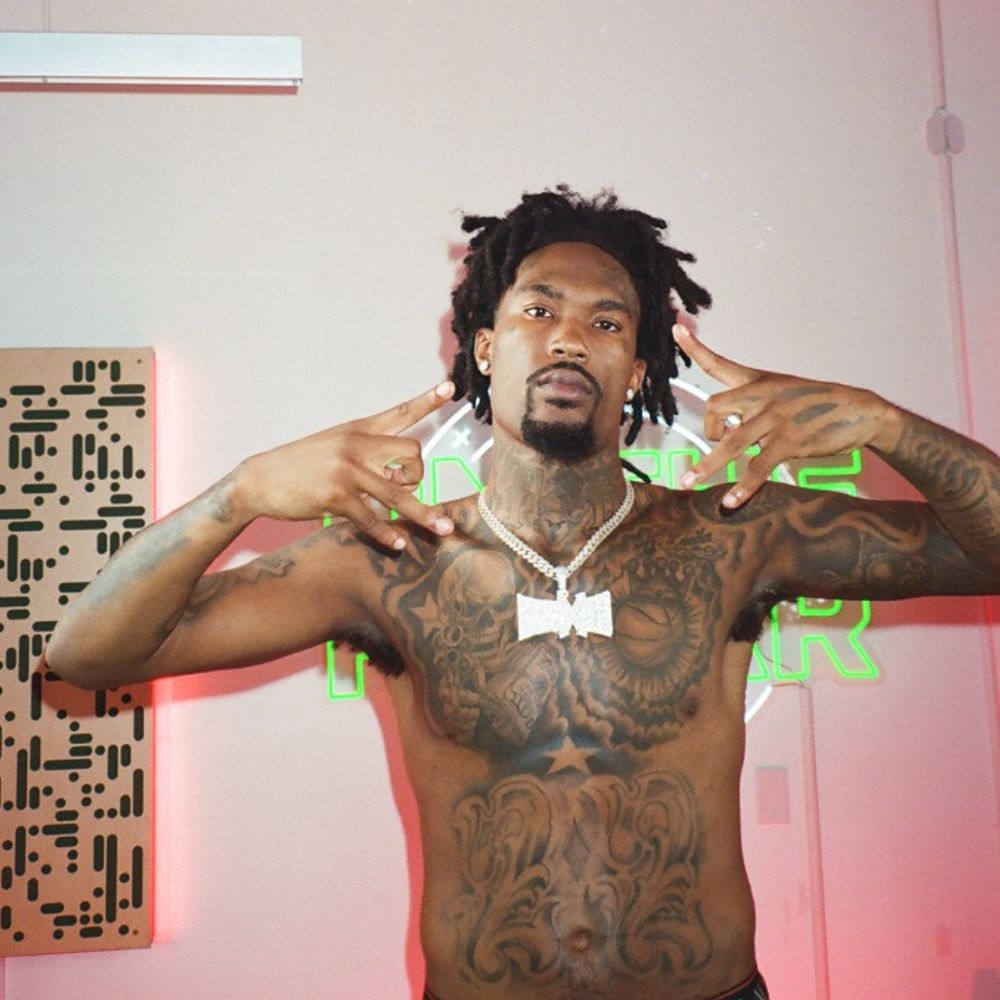
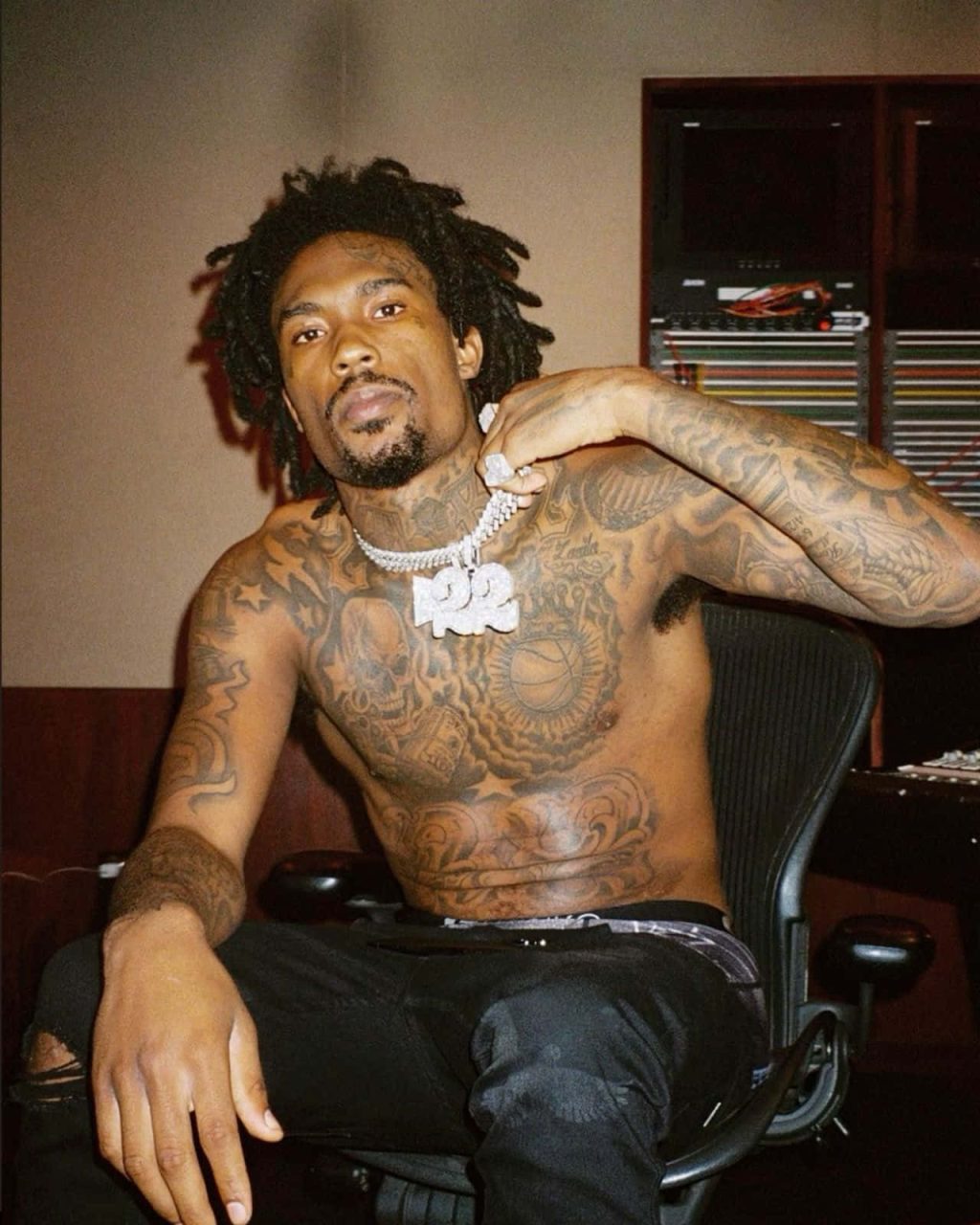
The chest combines curved forms, shaded panels and lettering around a central area. The designs continue toward the stomach, where the linework looks more ornamental and tightly packed.
From a distance the chest can read as one dark piece. Close photos separate the heavy outlines from lighter grey shading; there is little open skin, but the area isn’t one solid block.
A straight-on shirtless photo shows the central symmetry and density. A three-quarter view shows the work wrapping toward the shoulders and joining the arm coverage. Neither angle shows everything.
Hunxho hasn’t publicly explained every shape. The photos support a description of extensive black-and-grey work across the torso, added in separate sections; they don’t confirm a meaning for each line.
The facial tattoos and the healed heart
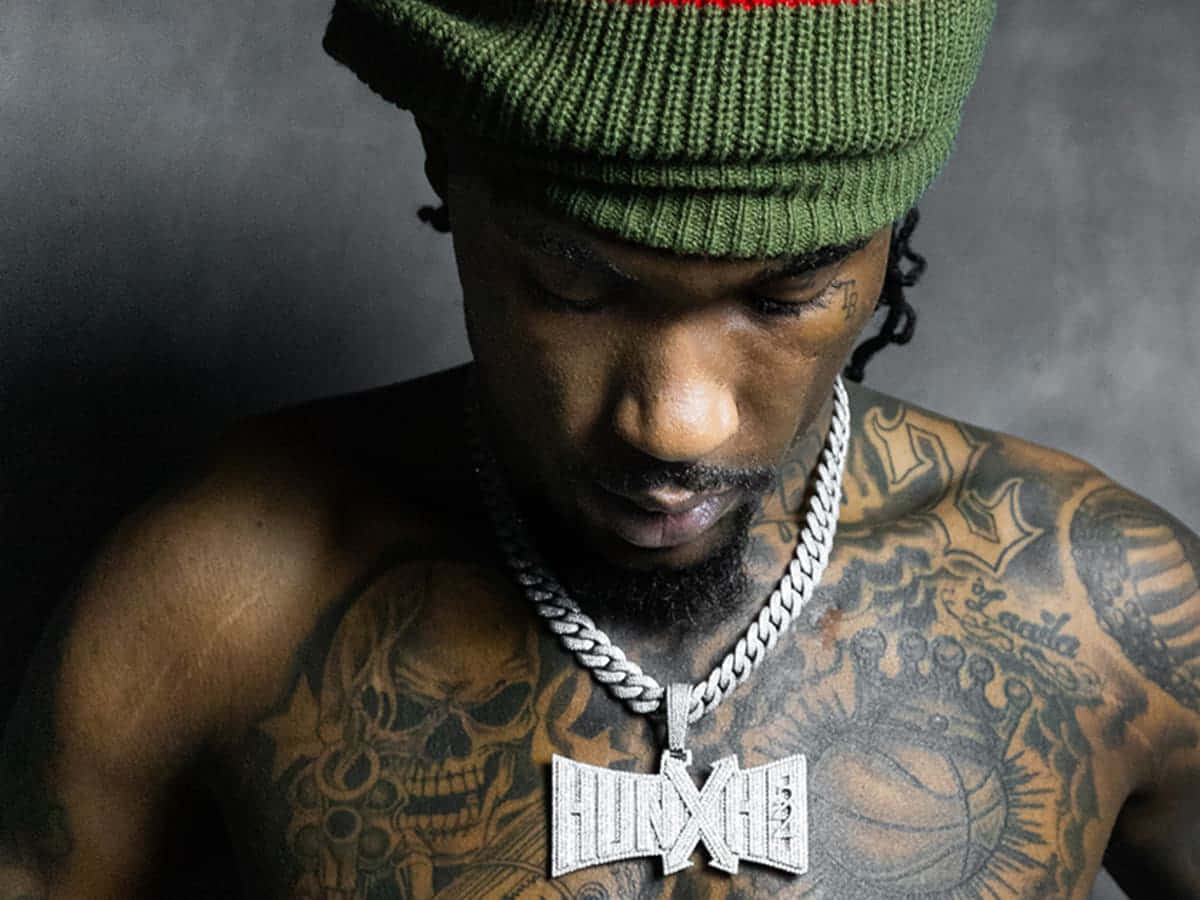
The marks on Hunxho’s forehead and around his eyes are small compared with the torso work, but their position makes them prominent. The close-up also shows the tattoos continuing down his neck.
Photos have shown a shattered-heart design on his forehead, followed by a version that appears healed or reworked. The images document a visible change, though they don’t establish exactly how it was made.
Fine marks near the brow and cheek are easier to see in a sharp close-up. Hair, lighting and image compression can blur lines, so a single unclear photo isn’t enough to identify another tattoo.
The neck work and the upper-arm lettering
The neck work sits beneath the jaw and along the sides, then meets the upper chest. In profile, the smaller marks near his head give way to broader shading toward the shoulder.
The word “SAVAGE” is visible high on Hunxho’s upper arm in several photos, including a darker portrait with a rose. Its size and repeated appearance make it one of the easier details to confirm.
The lettering can look compressed when his arm is flexed and more spread out when it’s relaxed. A change in how it reads across photos doesn’t necessarily mean the tattoo itself changed.
The arm coverage
Both arms carry heavy outlines, shading and smaller designs between larger forms. Some details show from the outside of the arm; others appear when he turns toward the camera.
The arms aren’t mirror images in the photos. Their balance comes from the amount of ink, while the lettering and shaded sections differ from one side to the other.
A performance photo with both arms raised makes the inner sections easier to see and follows the coverage from shoulder toward forearm. It still can’t serve as a map of every tattoo.
Why the photos look so different
Lighting changes how the ink reads. Studio portraits soften the shading, bright stage lights can flatten it, and a tight crop can make facial marks look darker than they do in a wider shot.
Clothing and posture matter too. A shirtless image shows the chest and shoulders; a dressed portrait may reveal only the neck and upper arm. Twisting the torso can also change how wide a design appears.
The clearest repeated details are the forehead heart, the upper-arm lettering, the broad chest coverage and the neck placement. Those provide useful reference points without requiring a guess about every blurred area.
What Hunxho’s style says about placement
Placement gives the collection different visual effects: the face is always in view, the chest carries a wider composition, and arm designs shift as he moves.
The photos show lighter shading and small gaps between some designs. A large area doesn’t have to be filled with the darkest ink everywhere to read as a complete composition.
Hunxho’s look is built around extensive upper-body coverage, strong outlines and the contrast between small face marks and larger torso work. Planning how separate pieces meet is especially important across the chest, stomach and neck.
How to use these references without copying the collection
The useful reference is the mix of scale: a small face detail, a larger chest arrangement and arm lettering. You can study that layout without reproducing his specific designs.
Face and neck tattoos stay visible in portraits and are difficult to cover. The chest and upper arm allow more room and can be hidden by clothing. The right placement depends on how visible you want your own design to be.
Bring your artist clear reference photos and separate what’s confirmed from what you simply like. Hunxho’s pictures show how light and posture affect a tattoo; an artist can adapt a layout to your body rather than copy his exact one.
The clearest features are the forehead heart, neck work, “SAVAGE” lettering and broad torso coverage. The photos show where the ink sits; where Hunxho hasn’t explained a symbol, its story can remain open.