
Logic’s tattoos read like a record of his music, books, films and personal reminders. The collection mixes hand lettering, album symbols, Japanese characters and character art rather than following one sleeve design.
Several pieces have explanations because he discussed them in GQ’s Tattoo Tour. Those comments help distinguish a confirmed story from a guess based on how a mark looks.
The left-hand phrase “Happy Wife, Happy Life” was Logic’s first tattoo, which he got before he married. He described it as a reminder that success means less if there’s no one to share it with.
His first tattoos are the hand-lettered reminders
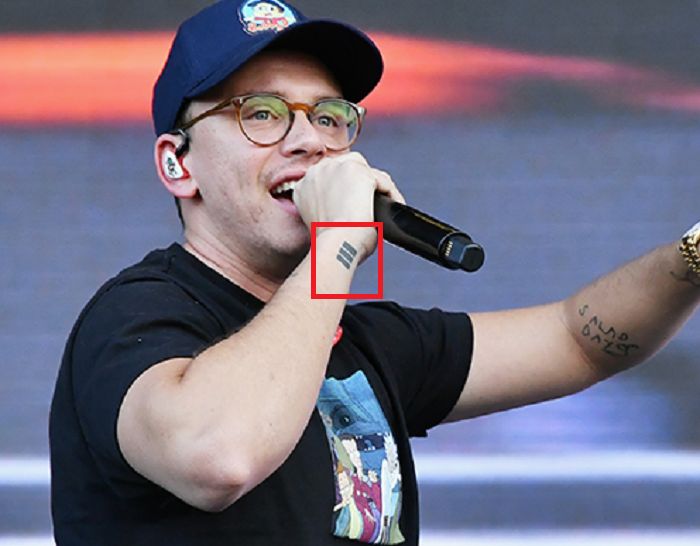
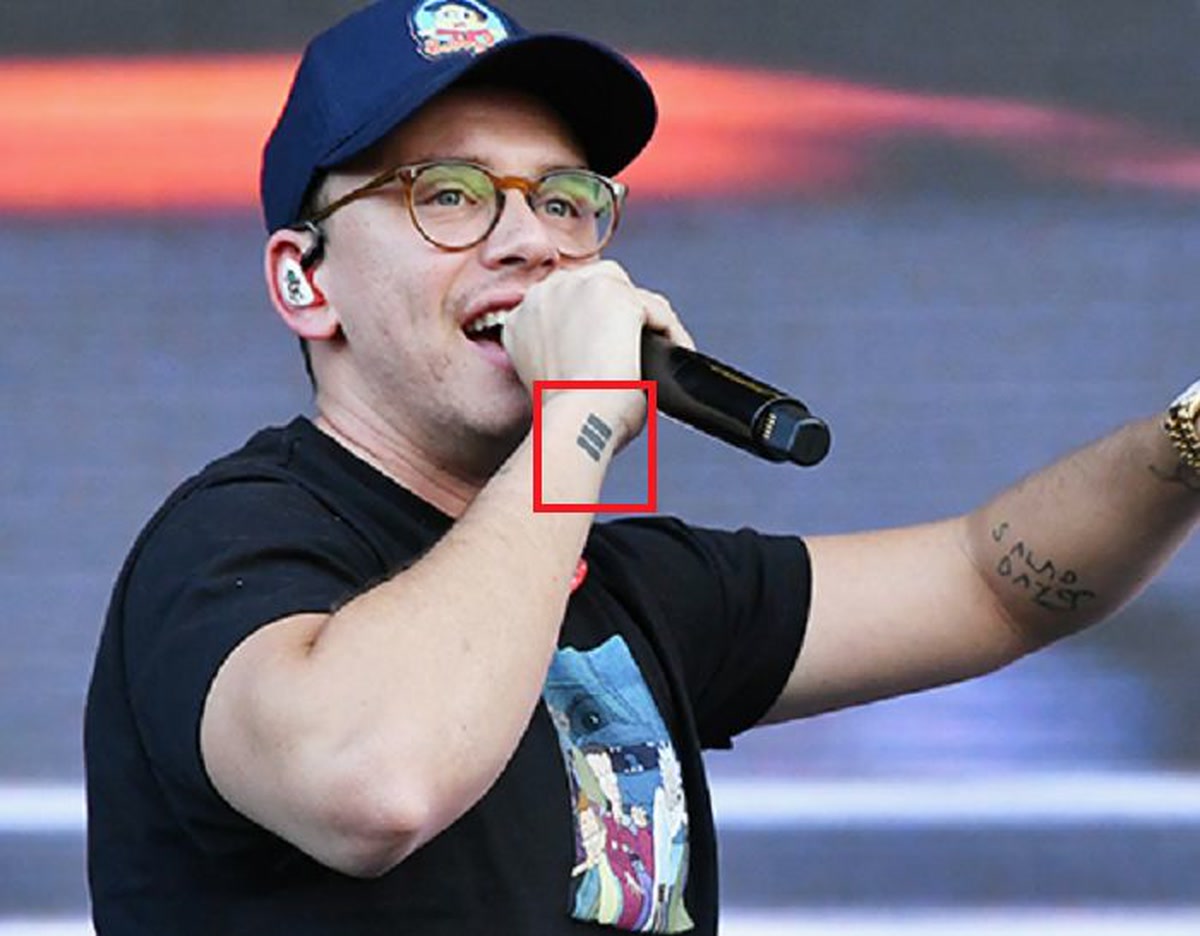
“Balance Yourself” is on the other hand. Logic has said he can take on too many projects; he treats the phrase as a prompt to slow down before work takes over.
The useful idea is to choose a short line that matters in your own life. The point is the reminder, not the exact wording or its appearance in a reference photo.
Logic explained that the emblem associated with his album Everybody can read as an E; turned sideways, it resembles the Roman numeral three. The compact shape works as both a graphic and an album reference.
The album reference
An emblem can point to an album without spelling out its title. Logic’s example keeps the connection specific while letting the mark stand on its own.
The design is small compared with a portrait or album-cover tattoo. If you’re adapting the idea, choose one detail from a record—a number, icon or piece of lettering—and make it work as a tattoo, not just merchandise.
The Japanese characters on Logic’s wrist are connected to Kill Bill. He has called Quentin Tarantino a favorite writer and director and linked the film to discovering hip-hop through RZA’s score.
The Kill Bill kanji is tied to a favourite film
In his account, Kill Bill led him to RZA, then Wu-Tang Clan and a wider world of rap. The tattoo marks that chain of interests, not only a favorite movie.
If you choose lettering in a language you don’t read, check it with a qualified speaker and an artist who can reproduce the script accurately. A personal reference still needs to be correct.
Another Japanese-character tattoo on Logic’s wrist refers to Ultra 85. He said he got it in Japan while he was working toward the project, so it records an album in progress rather than only a finished release.
Ultra 85 keeps a future goal close
A tattoo about a goal can keep the work in view. Plans can change, though; a symbol for the idea may last better than a title or date tied to one particular outcome.
Several pieces in Logic’s collection relate to projects he was making or ideas he wanted to keep close. The stories he has shared give those designs context without assigning a meaning to every mark.
Photos show additional forearm references: Supermarket, the title of his novel; What For?, linked to Toro y Moi’s album; Salad Days, associated with Mac DeMarco; and Bobby Boy imagery connected to Logic’s creative identity.
His forearm tattoos bring music, books, and inside references together
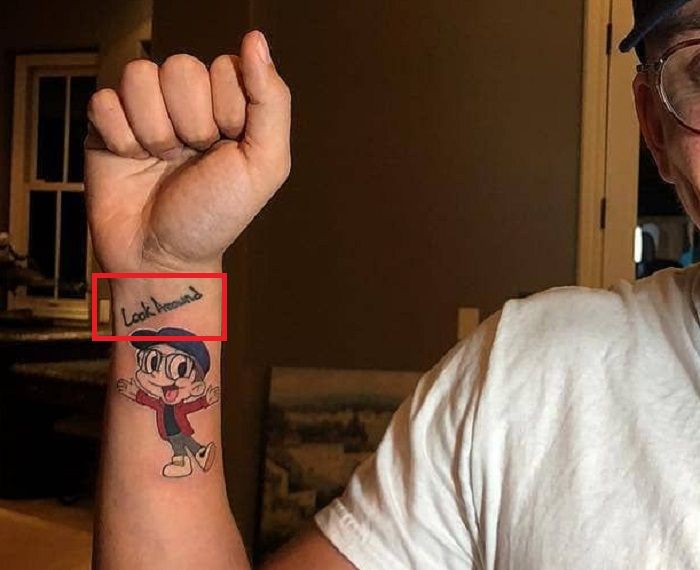
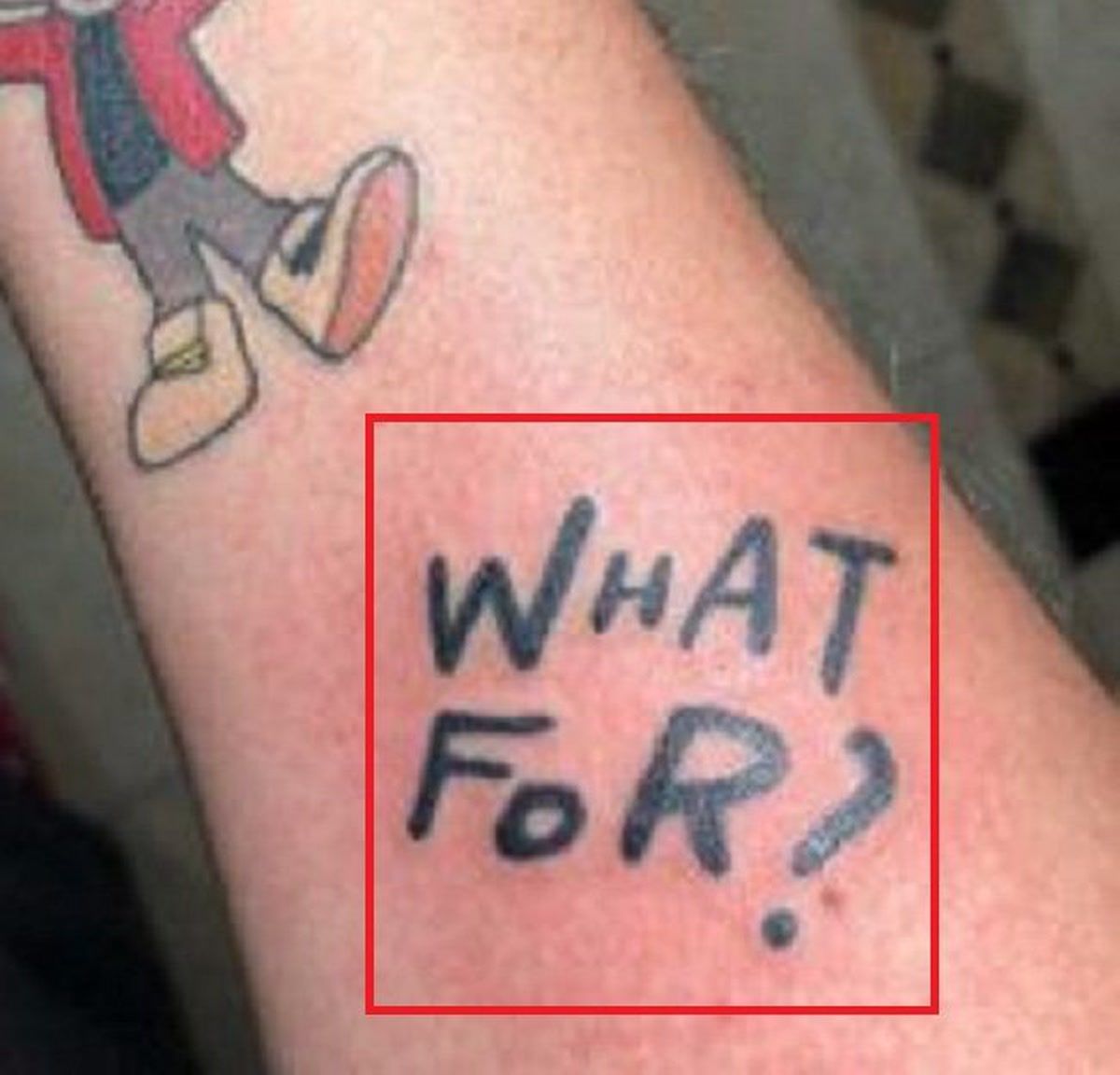
Together they read like a record of what he was writing, hearing and building: a book, other artists’ records, and the identity around his own music.
Lettering can be personal without being generic. A title can stay recognizable while the artist gives it character through placement, scale or line weight. Decide whether you want the reference to read immediately or remain more private.
The colored Bobby Boy design stands apart from the mostly black hand and arm tattoos. It shows the animated version of Logic and connects the ink to the character world around his music.
The Bobby Boy tattoo adds a bit of colour
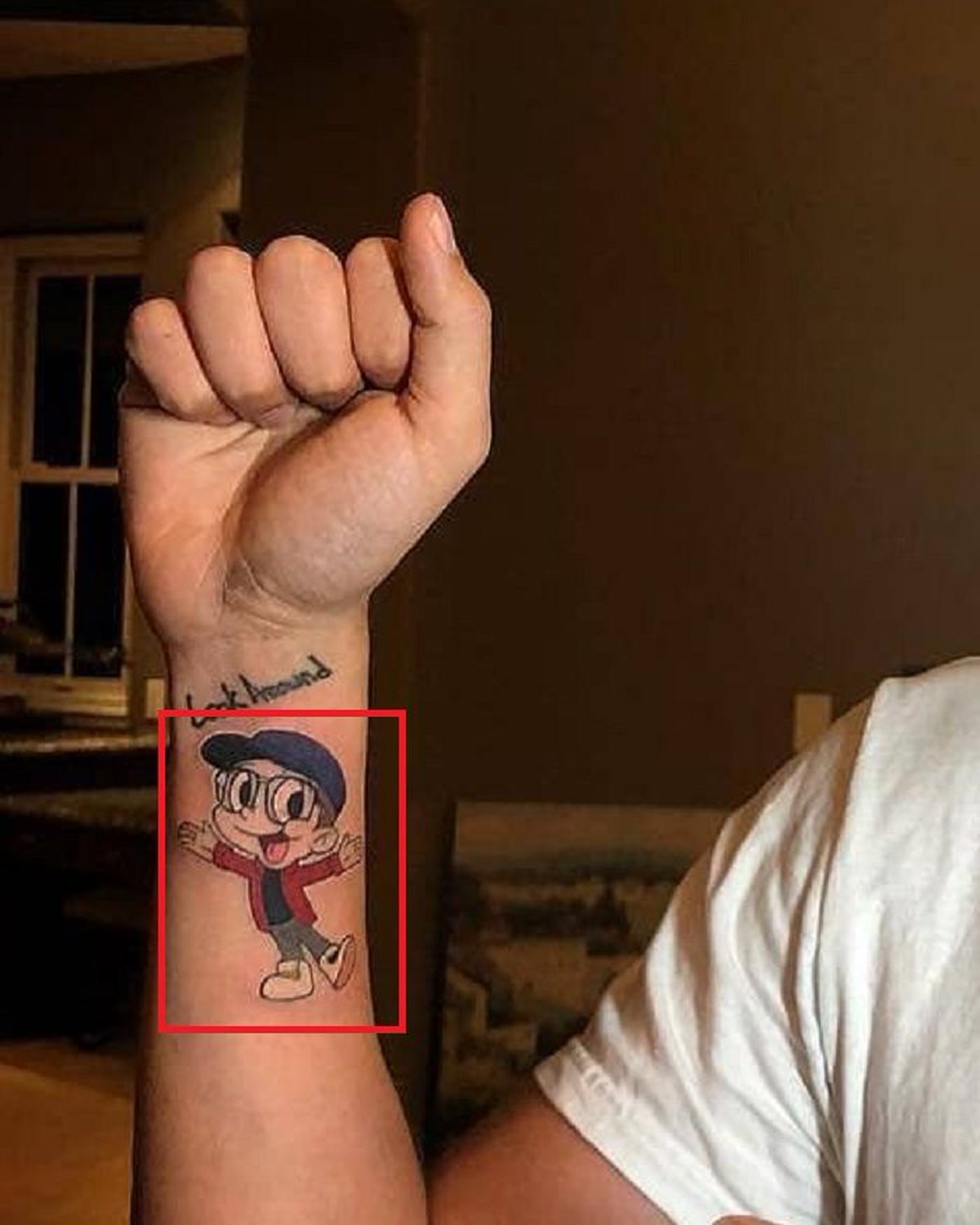
Character work needs enough room for its lines and colors to remain clear. If you choose a mascot, let it carry the design instead of crowding it with tiny text.
Logic has explained several pieces: the hand phrases are reminders, the album emblem marks Everybody, and the film reference ties to music that shaped his listening. Other work points to books, records and Bobby Boy.
Why Logic’s collection feels personal instead of random
Not every tattoo has a public explanation. A photo can show placement, but it can’t confirm a private meaning Logic hasn’t discussed. It’s better to leave those details open than invent a story.
The collection doesn’t rely on one style to hold together. Lettering, kanji, an album symbol, character art and forearm text connect through relationships, creative work and culture that mattered to him.
Borrow the thinking rather than the exact art: choose a phrase you want to remember, turn a book or album reference into a symbol, or connect a film to a personal memory. Verify any foreign-language script and give character designs room.
A few lessons from the collection
Hand tattoos stay visible, which suits a reminder you want in front of you. Wrists and forearms offer more cover and room for detail. Match the placement to how often you want to see the piece.
Logic’s tattoos keep track of people, ideas, films, records and goals. They don’t need to form one perfect image; their connection comes from the stories he has shared about them.
The GQ Tattoo Tour below is where Logic explains several of these designs.