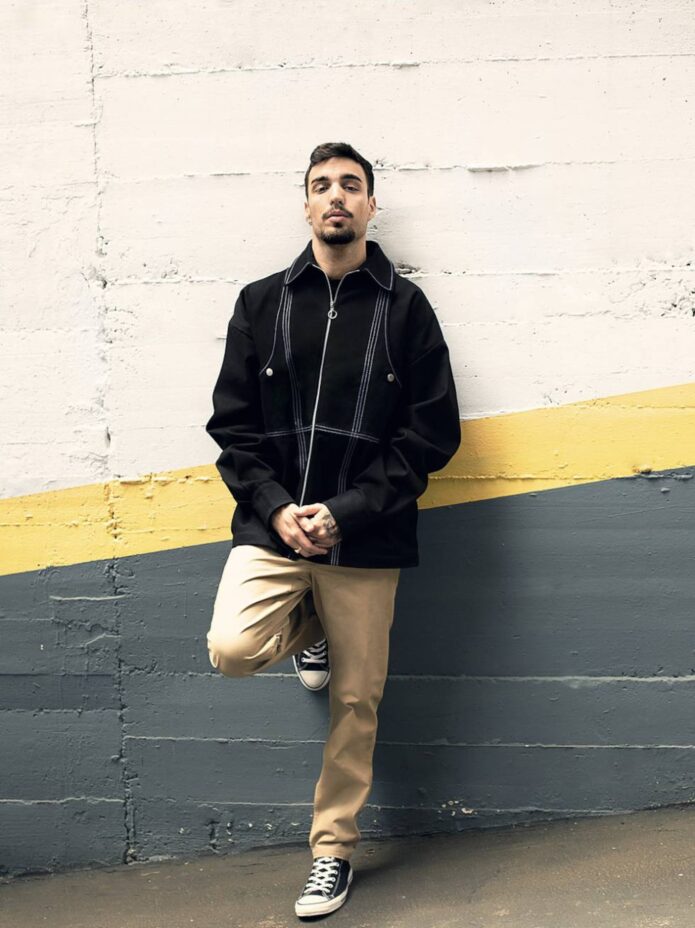
Rels B (Daniel Heredia), a rapper from Mallorca, has black-and-grey tattoos across both hands and arms. The work ranges from small marks on the fingers to denser shading on the forearms and upper arms.
El País photographed him at different points in his career, while GQ’s later portraits show more of the designs from several angles. The photographs document placement; interviews offer only partial explanations of what the tattoos mean.
Rels B’s tattoo collection is built around the hands and arms
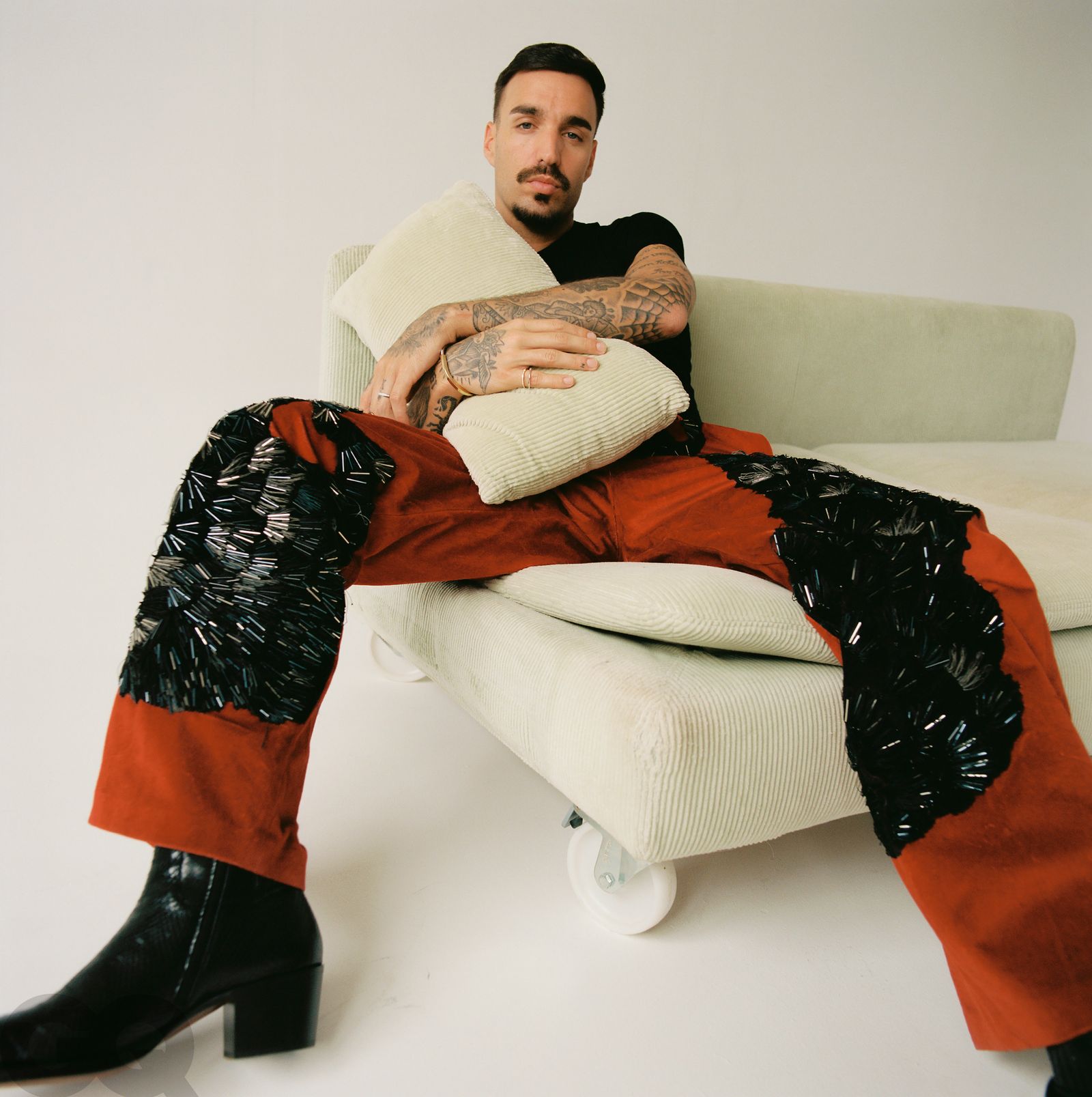
The tattoos run from fingers and palms up through the wrists and forearms to the upper arms. Some areas are dense; others leave skin between separate pieces, and the layout isn’t mirrored exactly.
A front-facing portrait can make the forearms look like dark bands. Side views show the designs wrap around the arms; GQ’s portraits include the inner forearms, backs of the hands and outer upper arms.
The palm and wrist tattoos stand out in close-up

One GQ close-up shows him holding a hand toward the camera. A rounded outline with a few dark marks sits in the palm, beside fine-line work running from wrist to lower forearm.
Other small marks appear on fingers and knuckles, but the photographs don’t resolve every detail. Their placement is clear; a name or symbol for each one isn’t.
Near the wrist, a narrow band of lettering and shapes continues toward the forearm. The angle softens some details, but the palm design remains distinct from the larger arm work.
The middle of the collection carries the most detail
In a seated GQ portrait, both forearms are uncovered and folded across a cushion. The nearer arm has overlapping black-and-grey imagery from wrist toward elbow; the other shows a different mix of linework and filled sections.
The design changes as he turns his arm: heavier shading stands out on the outer forearm, while finer outlines and small lettering show from the inside. The photos don’t suggest a matched pair.
The ink stays mostly monochrome, with dark outlines, soft grey shading and small areas of solid black.
The upper-arm pieces connect the separate designs

A closer GQ image shows floral-looking outlines, shaded panels and a larger piece wrapping around the upper arm and shoulder. The exact subjects aren’t identified; the placement links that section to the forearm.
Another sofa photo makes the outer arm easier to see: a long dark-lined design runs along the forearm, with a separate pattern nearer the elbow. Both fine outlines and broader shaded areas are visible.
Small hand tattoos keep the collection from feeling like one solid block
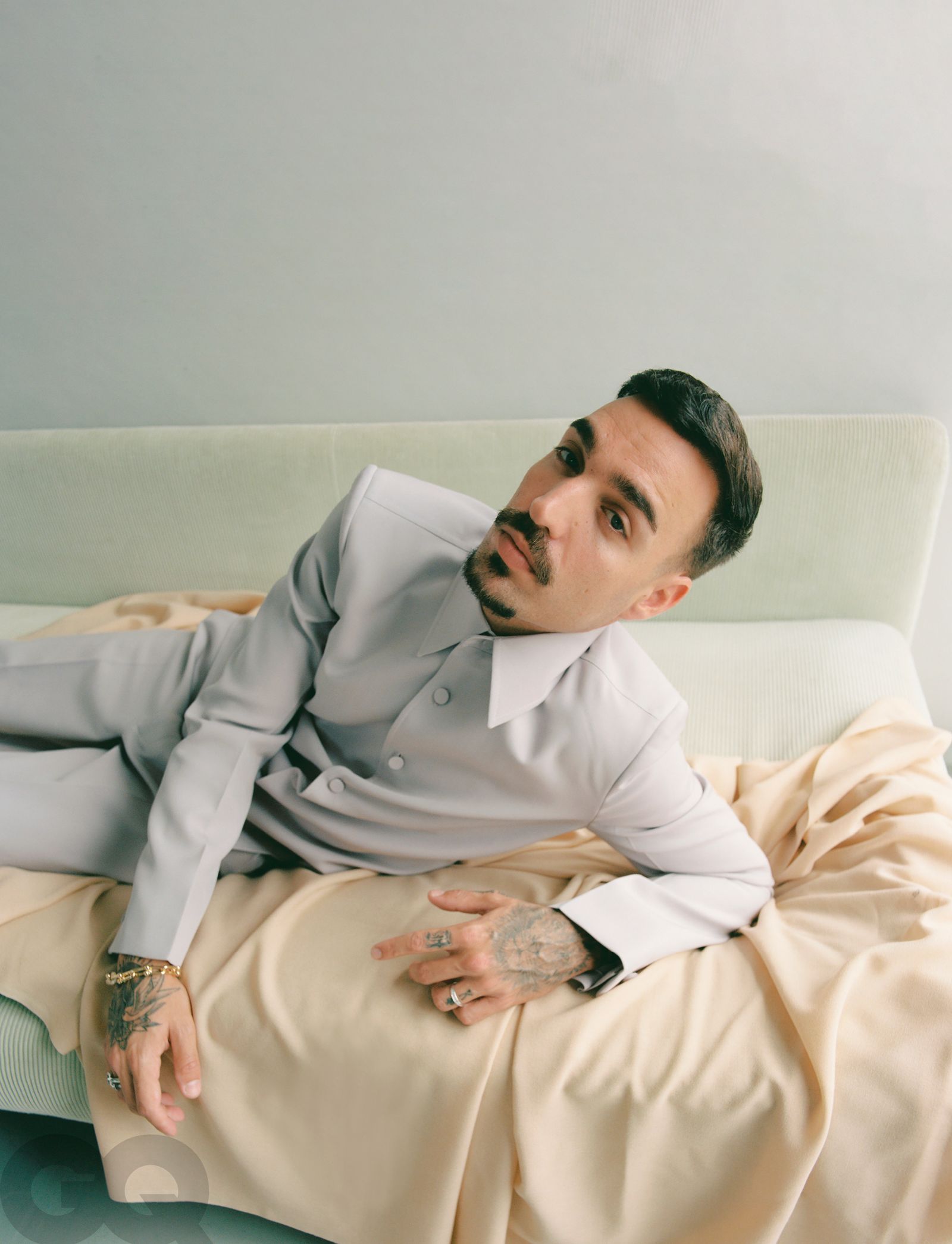
A GQ close-up shows compact shapes and lettering across the back of one hand and the fingers. They break up the larger arm work, though some details appear in only one frame.
The images don’t explain every mark, so it’s safer to describe placement and linework than assign a meaning. Together, the hand tattoos carry the design past the wrist into the forearm.
The meaning stays tied to the people closest to him
A GQ interview mentions tattoos with names connected to people close to Rels B. It points to personal tributes, but doesn’t identify every name or give a full account of what each piece means.
Antena 3 called him a tattoo enthusiast and built a tattoo-themed segment around him on El Hormiguero. The segment included imitation tattoos, not a full inventory of his own work.
How the tattoos have appeared in Rels B’s public style

Earlier El País portraits show his hands and face, but often only part of his tattooed arms. Later fashion photos show more of both arms. The collection looks fuller in recent coverage, though the images don’t show exactly when each piece was added.
Stage clothes can hide the ink. A long-sleeved black tour top covers most of the arms, while shorts and rolled sleeves reveal parts of his arms and legs; a Madrid concert photo catches the tattoos as he moves onstage but is too wide to identify specific designs.
GQ’s close sofa portraits are more useful for fine detail: exposed arms, closer framing and several positions show the lines and overlaps.
The collection is still partly undocumented
There’s no authoritative public count of every tattoo. Photos show both arms, wrists and hands, but clothing and cropping hide parts of the collection; older and newer images don’t always identify when a piece was added.
Several photographs fill in the missing angles
The close portraits make placement easier to follow than stage photos do. They show how the hand and forearm work connect, while concert images provide context for when the tattoos are visible.