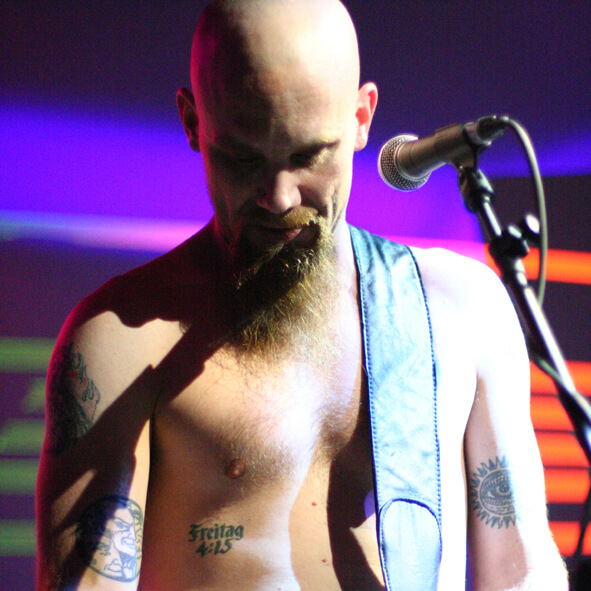
Nick Oliveri’s tattoos are documented in a mix of studio portraits, interviews and live photographs. The visible ink reaches across his arms and chest, with a neck mark appearing in closer portraits. “Freitag 4:15” is the clearest lettering in the set; some of the other designs can be seen, but the photographs don’t make every detail legible.
Oliveri told Tattoo Life he was drawn to tattoos as a child and remembers getting a small tattoo on his hand. MusicRadar, eonmusic, Loudwire and Louder offer views of the collection at different times and in different settings. The interview gives his recollection; the photographs show where the ink sits.
Nick Oliveri’s tattoos in plain view
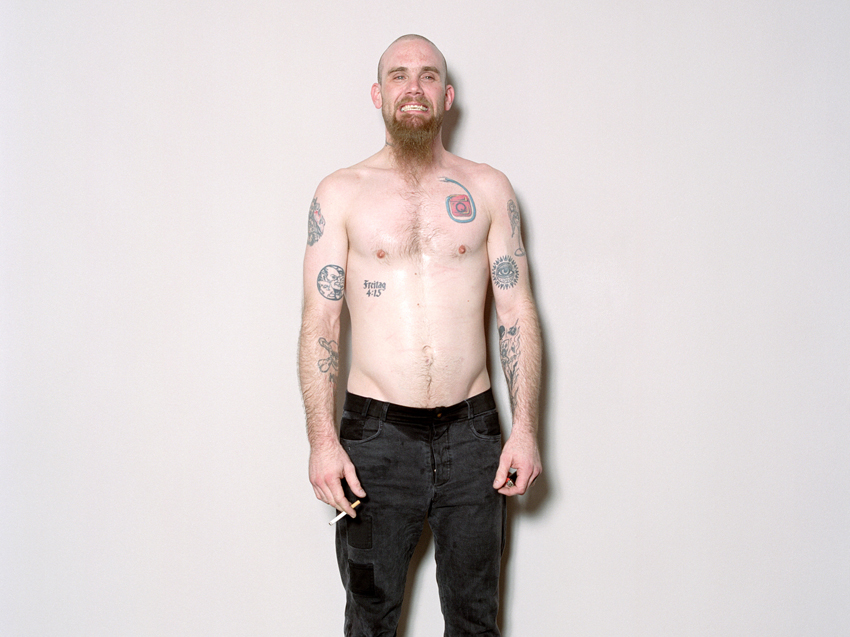
MusicRadar’s shirtless portrait is the best place to take in the breadth of Oliveri’s ink. He stands against a pale background with his face and torso visible, so the chest and arm placements are easy to distinguish. The line “Freitag 4:15” can be read on his chest. Other marks sit across both arms and around it, though the image doesn’t identify their subjects or origins.
The tattoos look like separate pieces accumulated over time, rather than one continuous sleeve with a single theme. The lettering has a compact, horizontal shape; the larger arm designs have more area and visual weight. The photo is clear enough to compare placement and scale, but not to name every image or assign a meaning to it.
A second MusicRadar photograph catches Oliveri playing guitar under stage lighting. His forearms are still visible, but the instrument and movement make the small details harder to read. The contrast with the posed portrait is useful: one image gives a broad view of the work, while the other shows the tattoos as part of a performance.
Arm tattoos in a working life
Tattoo Life is where Oliveri describes his early interest in ink. He recalls a small hand tattoo from when he was young, then talks about tattoos as part of a life spent playing music. That is his own recollection, distinct from what a later photograph can establish about the size or content of a design.
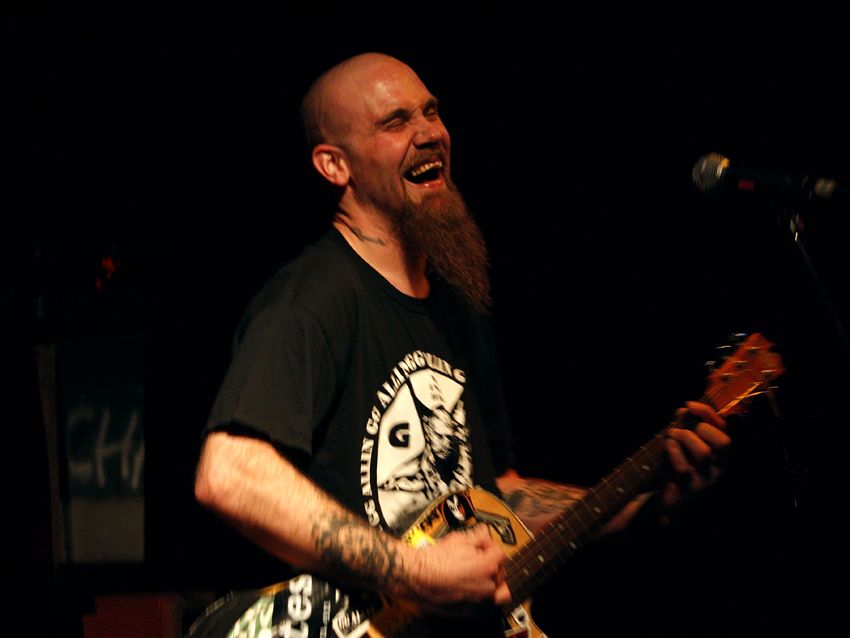
In the live guitar shot, the visible arm ink sits below a rolled sleeve. The angle shows how much of the forearm is covered, but not every outline clearly; the guitar and his playing position partly interrupt the view. The shirtless portrait remains the stronger source for comparing both arms and the chest.
“Freitag 4:15” stands out because it is readable, while the surrounding designs are not all sharp enough to identify. A cautious description can still say something useful about them: the pieces vary in size and placement, and they do not read as one uninterrupted panel. The photographs don’t give a reliable date for each tattoo.
An arm tattoo also changes how it appears from one setting to another. In a portrait, the skin is still and the viewer can follow the shapes. Onstage, sleeves, instruments and movement cover parts of the arm. The two kinds of photograph document the same collection from different distances, not a complete inventory.
The face he presents onstage
An eonmusic portrait brings the camera closer to Oliveri’s face. He wears a black shirt against a blue background, and a neck tattoo is visible beside his beard. This is the clearest view of that placement in the material reviewed here. The photograph doesn’t explain the design, so its shape should not be given a story the source doesn’t provide.
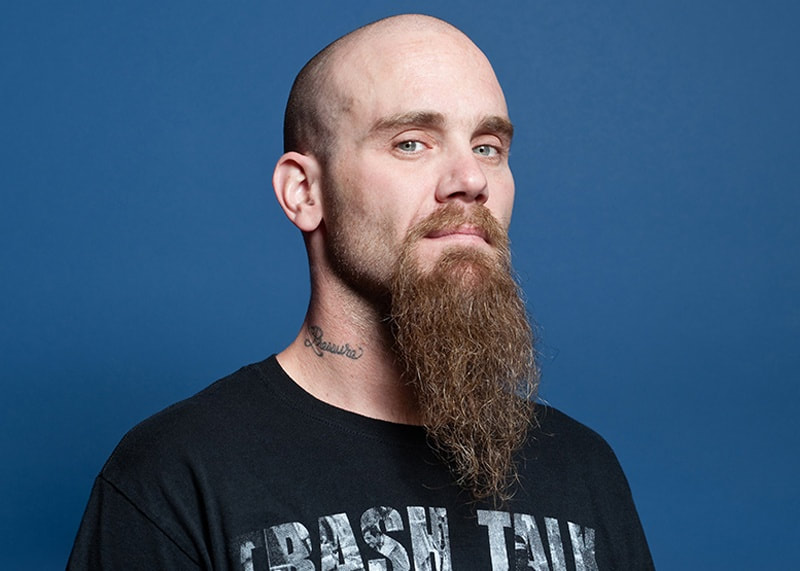
The calm portrait makes it easier to see where the mark sits than a busy concert frame would. Neck ink stays near the face and can remain visible in interviews or everyday photographs; an upper-arm design may disappear under a sleeve. Here, the tattoo is part of the image without taking over Oliveri’s expression or turning into a claim about its private meaning.
In live pictures, his appearance shifts with the setting: sometimes he is smiling, sometimes focused on the instrument, and sometimes singing into a microphone. His beard and shaved head are familiar parts of the look, while the neck mark is a smaller detail. Those differences give the photographs more character than a broad statement that tattoos define his style.
Live tattoos across the band years
A Loudwire concert photograph shows Oliveri playing bass, with ink visible on his forearm beneath the rolled sleeve. The shot puts the tattoo in the middle of the work: instrument in hand, body turned toward the performance and venue around him. It confirms that the arm ink appears in live settings, even if the stage angle hides finer details.
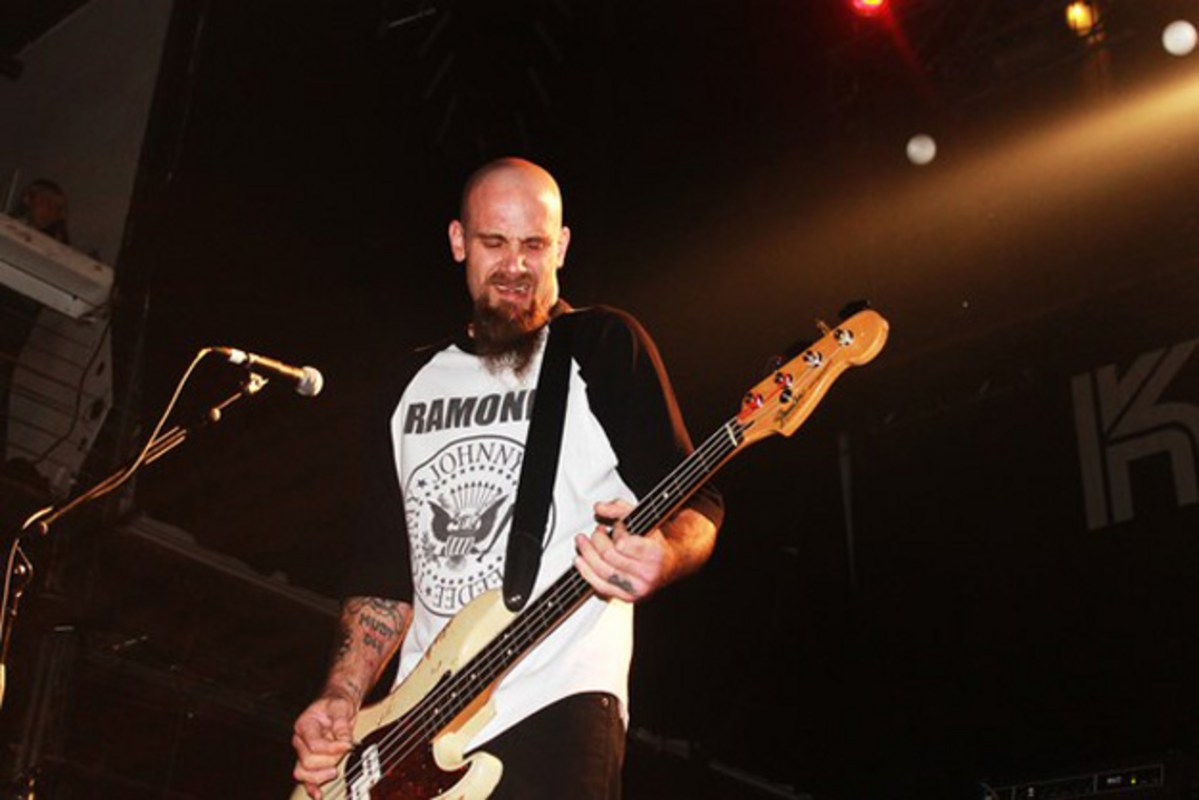
Oliveri’s career includes Kyuss, Queens of the Stone Age, the Dwarves, Mondo Generator and Stöner. The photos span different musical settings, but they don’t supply a date for each piece of ink. His band history gives the reader context for the performance images; it should not be used to invent a tattoo timeline.
The same arm can look different depending on the instrument, sleeve and lighting. The Loudwire frame shows forearm coverage during a bass performance, while the earlier guitar image catches him from another angle. Neither is as useful as the studio portrait for reading “Freitag 4:15,” and neither claims to show every mark.
Tattoo details across the years
Louder’s close performance photograph brings Oliveri’s face, beard and microphone into the foreground. A small neck tattoo can be seen under the stage light. It is a different frame from the eonmusic portrait: one is a blue-background editorial image, the other catches him singing. The difference in setting changes the view, not what can be said about the tattoo’s meaning.
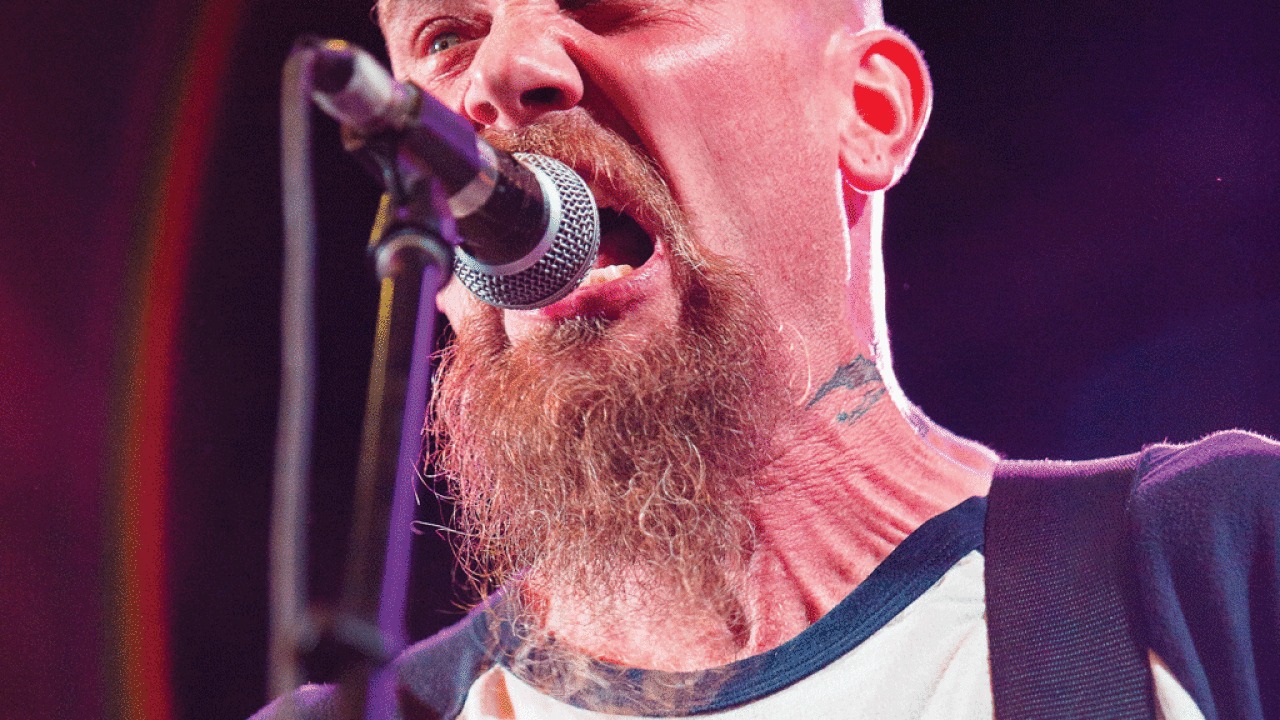
The inline images are separate photographs: the MusicRadar portrait, two live instrument shots, the eonmusic portrait and Louder’s close performance image. That gives readers more than a repeated crop, while still leaving the featured Equipboard portrait as a separate image for identifying Oliveri.
Not every tattoo can be named from these frames. Some lines are clear, some designs are partly covered, and stage light can make dark work harder to inspect. Oliveri’s account in Tattoo Life adds personal history; the still photographs add visible placement. Keeping those sources distinct is more useful than treating a blurred shape as a confirmed symbol.
Why the marks matter
The strongest account starts with what each source can actually show. MusicRadar gives a broad, well-lit look at the chest and arms. Tattoo Life records Oliveri’s recollection of getting tattooed. eonmusic, Loudwire and Louder add neck and forearm views from portraits and performances. Together, they establish a long-running relationship with ink without claiming to decode every design.
The placement changes the way the collection is seen. Chest lettering is easiest to read in a shirtless portrait; the forearm ink comes into view when a sleeve is rolled or an instrument lifts the arm; the neck mark stays close to his face. In a different photo, any of those details could be hidden. That is why the varied settings matter.
Oliveri’s tattoos don’t need a single theme to make sense as a collection. The photographs show pieces of different sizes across several areas of the body, and his interview gives a personal starting point. Beyond that, the available sources leave the stories, artists and dates for many individual designs unstated.
The 2026 performance video adds musical context rather than a sharper tattoo view. It shows Oliveri playing “Auto Pilot” with Queens of the Stone Age in Joshua Tree; the still photos remain the evidence for the placements described here. The two kinds of media do different jobs.
A life that keeps moving
Oliveri’s record is less a labelled catalogue than a set of views from a life in music: a clear studio portrait, interview context and live photographs. The readable chest line, multiple arm designs and a neck mark give the page concrete details. His first-hand account adds the childhood memory, while the images show how the ink appears at work.
The older pieces’ meanings and dates are not fully documented in these sources. What can be said plainly is that the tattoos span his arms, chest and neck, and that “Freitag 4:15” is legible in the MusicRadar portrait. The rest is best described by placement and visible form, with room left for what Oliveri has not publicly explained.