admin

What Do Selena Gomez’s Tattoos Mean?

Selena Gomez has a mix of small lettering, family tributes, religious images and tattoos she got with friends. The list has grown over the years, and older counts cannot account for every new piece or cover-up. Dated photos and the explanations she has shared give the clearest picture.

How many tattoos does Selena Gomez have?
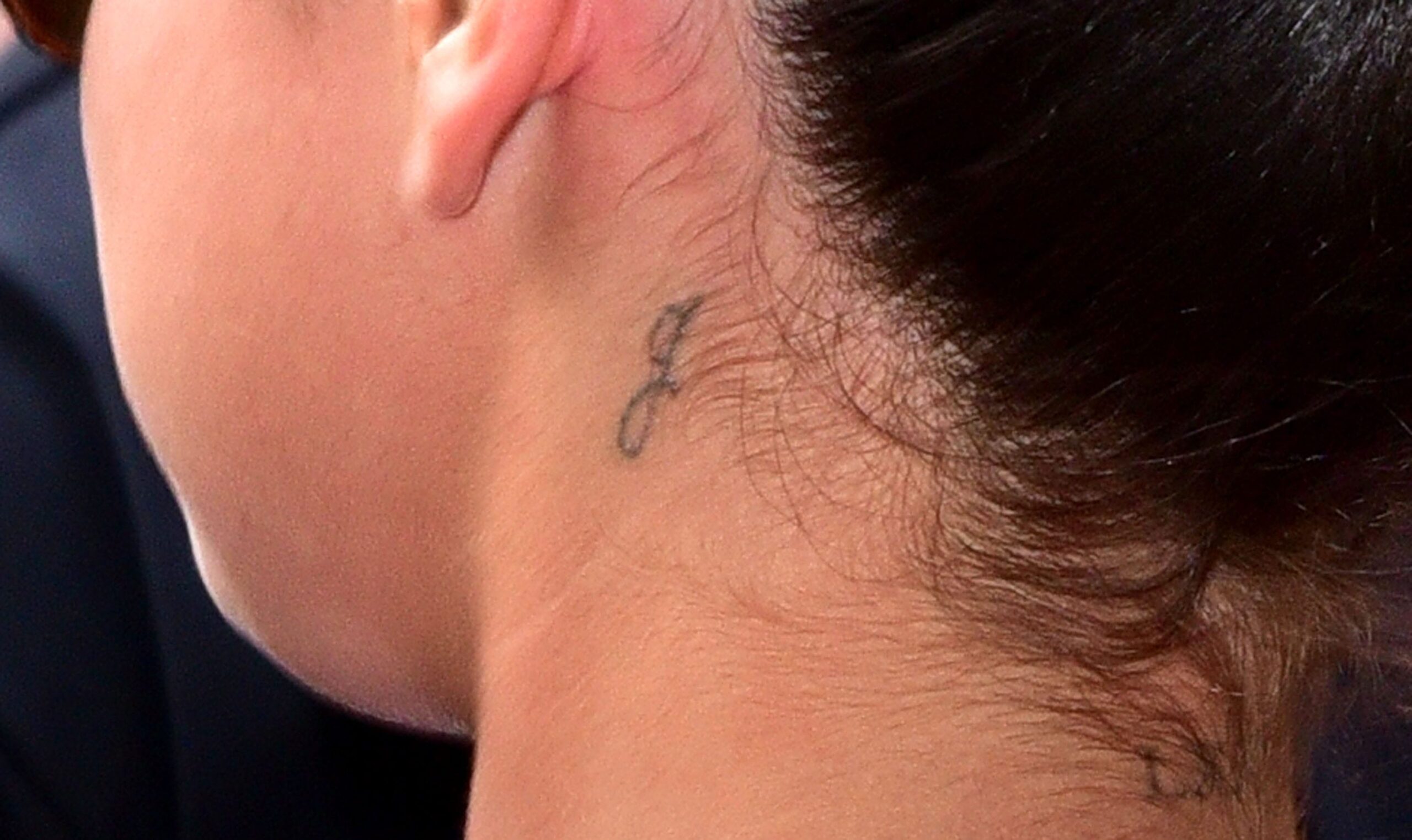
Selena Gomez tattoo at the nape of her neck

Published roundups have counted 16 or 18 tattoos, depending on when they were written. Women’s Health and Business Insider each put together broad galleries; neither number is an official total. Gomez has added work since then, and some smaller pieces are hard to distinguish in photos. Those counts are snapshots, not a final tally.

Several tattoos have a well-documented story: LXXVI at the nape of her neck, the rose across her back, the semicolon and the Rare lettering. Other designs show clearly but come with little explanation. I stick to what Gomez or a reliable report has said.

The LXXVI Roman numeral tattoo
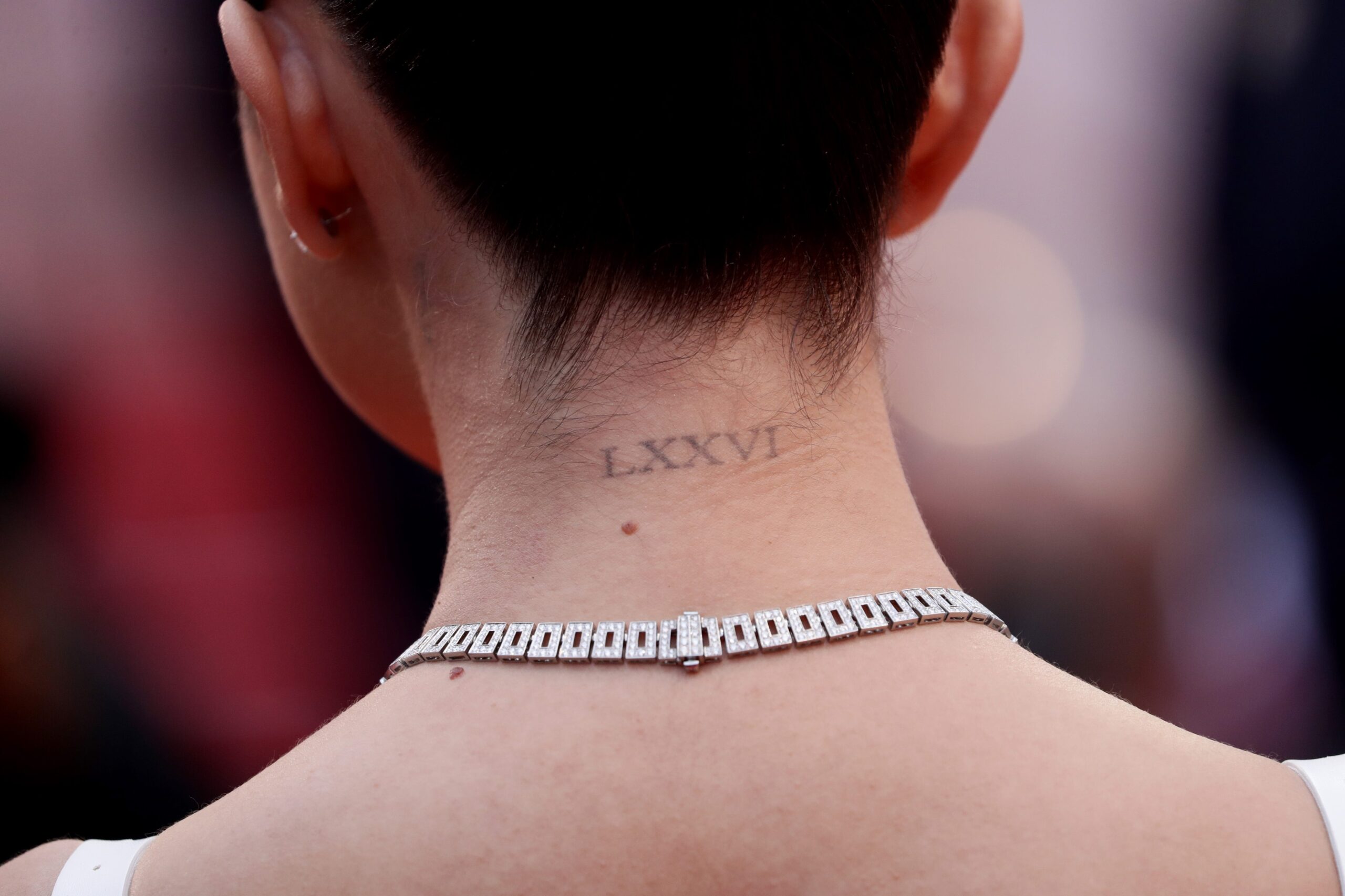
Selena Gomez’s LXXVI Roman numeral tattoo at the nape of her neck

LXXVI, the Roman numeral for 76, sits at the nape of Gomez’s neck. Business Insider’s report linked it to her mother Mandy Teefey’s birth year, 1976, and named tattoo artist Keith “Bang Bang” McCurdy. The small numbers show when Gomez wears her hair up; when it is down, they disappear.

Here, the details line up: 76 is tied to Teefey’s birth year, the artist is named and the placement is known. Gomez has not described a broader story beyond that family connection. The reported meaning is specific enough on its own.

The large rose on her back
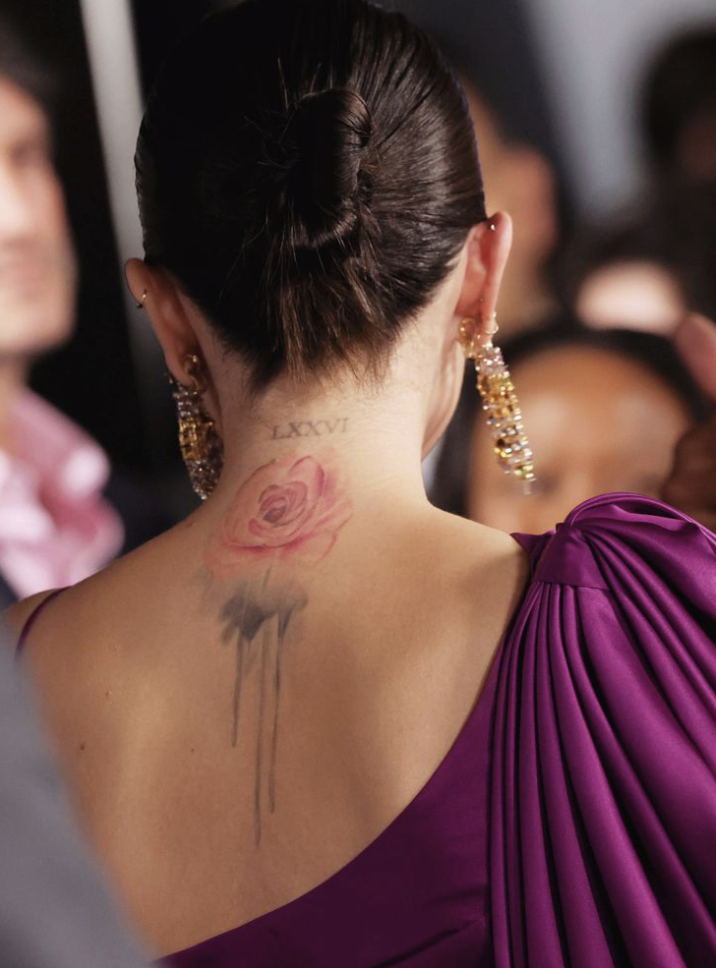
Selena Gomez’s pink rose tattoo across her upper back

A large pink rose tattoo spans Gomez’s upper back and runs toward her spine. Women’s Health and other coverage describe it as a collaboration with her friend Julia Michaels. Photos of the pair’s matching or coordinated tattoos brought the design wider attention.

Some reports call the rose watercolor, referring to its soft pink shading and drip-like edges. That describes its appearance; it does not confirm the tattooist’s technique. The flower is easy to identify, but any deeper meaning should come from Gomez rather than from the usual symbolism attached to roses.

The semicolon tattoo
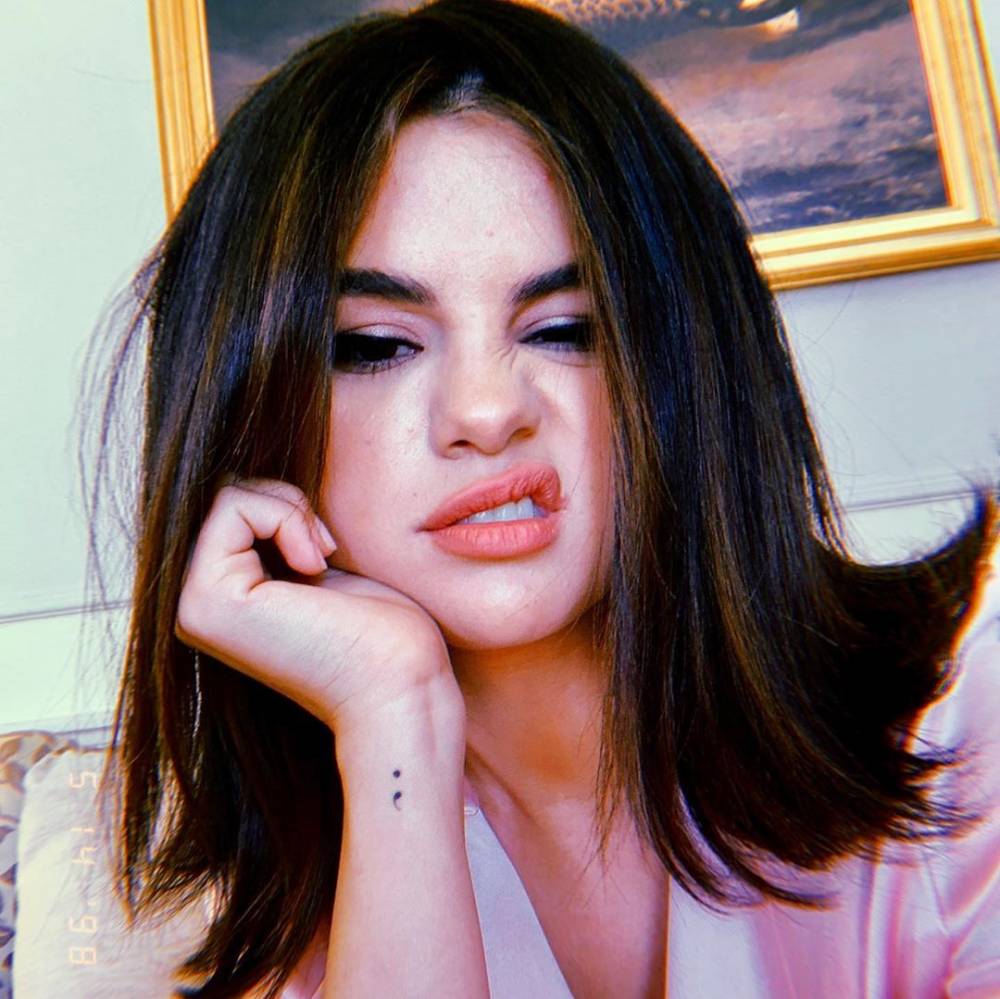
Selena Gomez semicolon wrist tattoo

Gomez has a small semicolon tattoo linked to Netflix’s 13 Reasons Why. E! News reported that she got it with cast member Alisha Boe and executive producer Tommy Dorfman. The semicolon has become a sign of continuing a sentence after a pause and is used in mental-health advocacy. In Gomez’s case, the reporting connects it to the show and its wider conversation.

The punctuation is easy to miss in photos. A tattoo can reference a public project or a broader idea, but it does not tell us anything private about someone’s health.

Rare lettering behind the ear
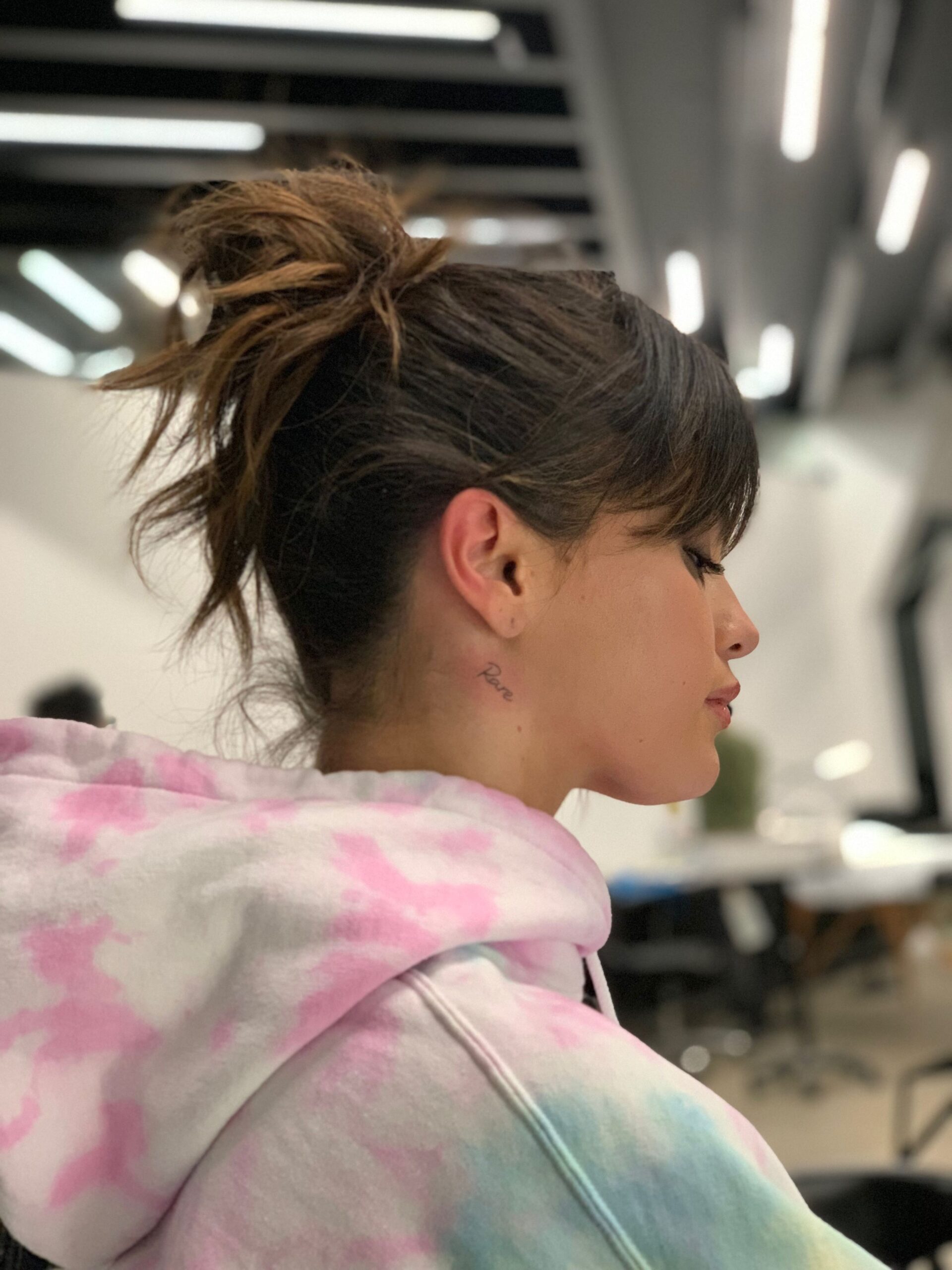
Selena Gomez Rare tattoo behind her ear

Gomez got a small Rare tattoo near the side of her neck around the album’s release. Reports at the time connected the lettering with the record, and photos place it beneath or behind her ear. The timing makes this one of the clearer links between her music and her tattoos.

Some galleries place it on the left, others on the right. Unless a clear photo settles the question, calling it a small neck tattoo from the Rare era is more accurate.

Arabic lettering and other small designs
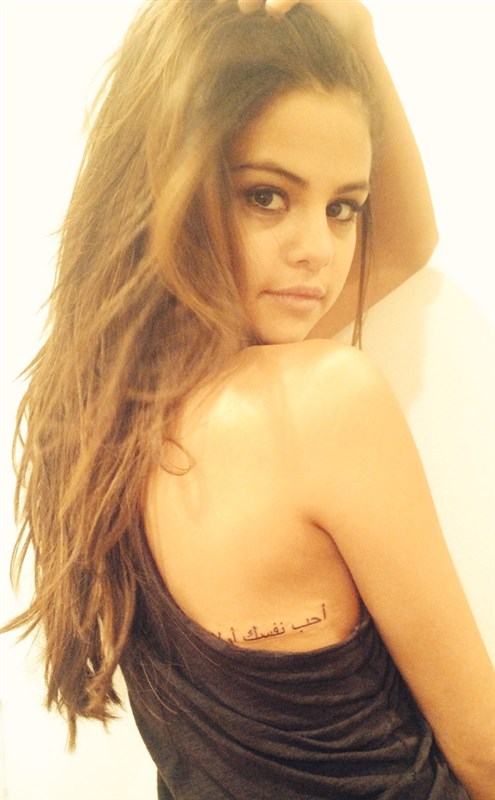
Selena Gomez’s Arabic script tattoo along her back and side

Gomez has also been photographed with Arabic script along her back or side, most often translated in coverage as “love yourself first.” That translation is widely repeated, but stylized lettering can be read differently. It is safer to call it the published translation than a meaning Gomez has personally confirmed.

Other designs listed in the major galleries include a music note, a cross, Sunshine in her grandmother’s handwriting and small marks tied to family or friends. A few have a named artist or direct story; for others, the photos show the design but not its private meaning.

Artists connected with Selena Gomez tattoos

Keith McCurdy, known as Bang Bang, is the artist most often linked to Gomez’s Roman numeral neck tattoo. Coverage also lists her among his clients. Other pieces came from different artists or collaborative sessions, so the whole collection cannot be credited to one studio.

An artist’s style alone cannot confirm who did a tattoo. Fine lettering near the neck, a large rose on the back and a tiny semicolon show how different Gomez’s pieces are, but the artist needs to be named by a reliable source.

How her tattoo style has developed
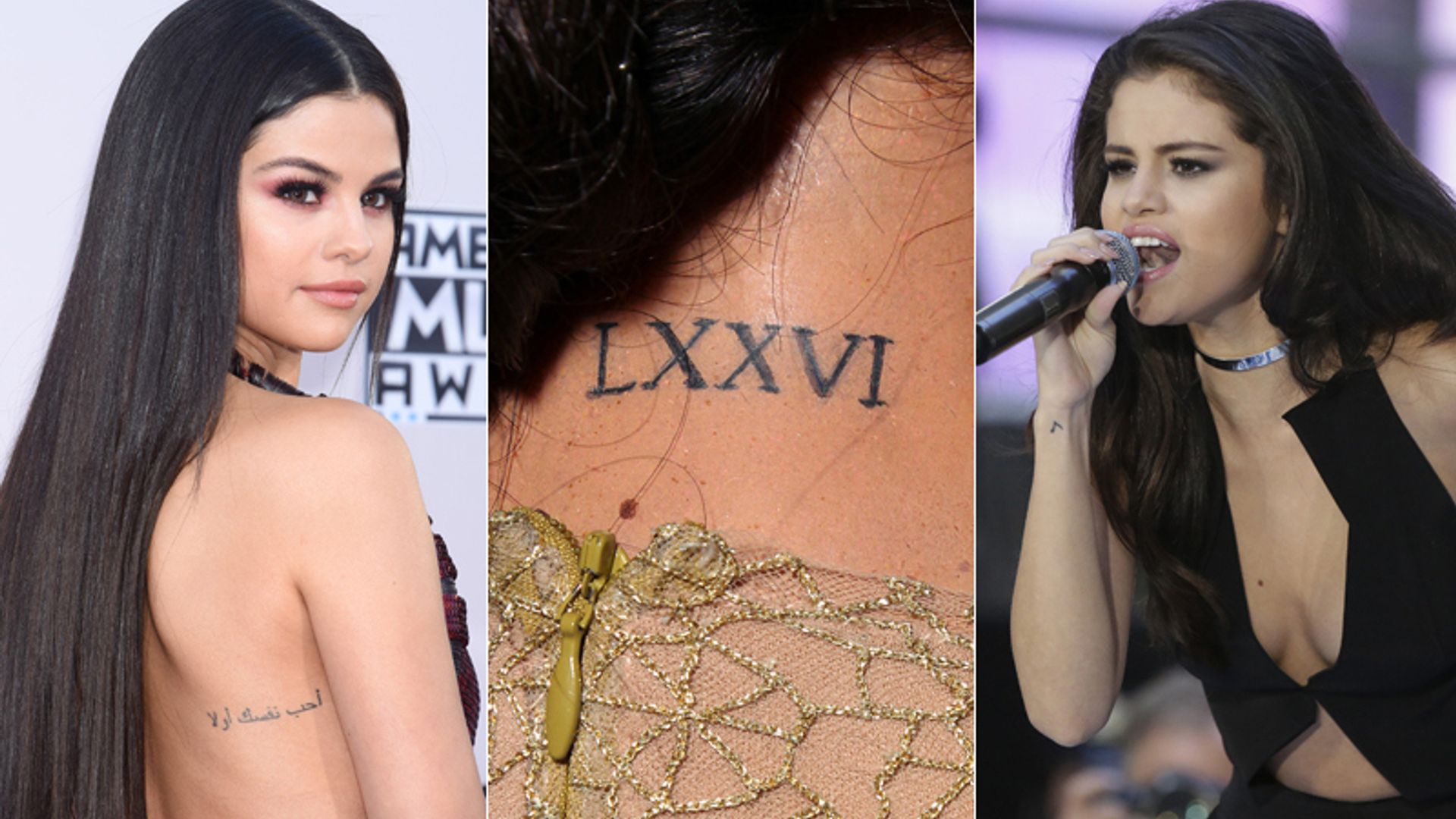
Selena Gomez small tattoo collection

Gomez’s tattoos range from tiny marks to larger illustrative pieces. The neck numerals and Rare script are subtle; the rose across her back takes up much more space. Family dates and handwriting sit alongside music references and designs linked to public projects. No single style describes the whole collection.

Photos need dates too. A red-carpet shot might show her neck and hide her back, while performance clothes can cover other tattoos. Ink softens over time, and newer work may cover an older piece. A dated photo with its original caption says more than an undated repost.

Frequently asked questions

What does Selena Gomez’s LXXVI tattoo mean?
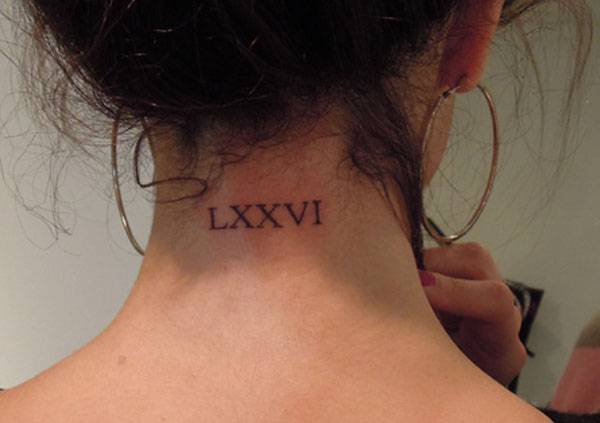
Close-up of Selena Gomez’s LXXVI Roman numeral tattoo at the nape of her neck

Published coverage identifies LXXVI as a reference to 1976, her mother Mandy Teefey’s birth year. The tattoo sits at the nape of Gomez’s neck and has been associated with Bang Bang.

Who did Selena Gomez’s rose tattoo?
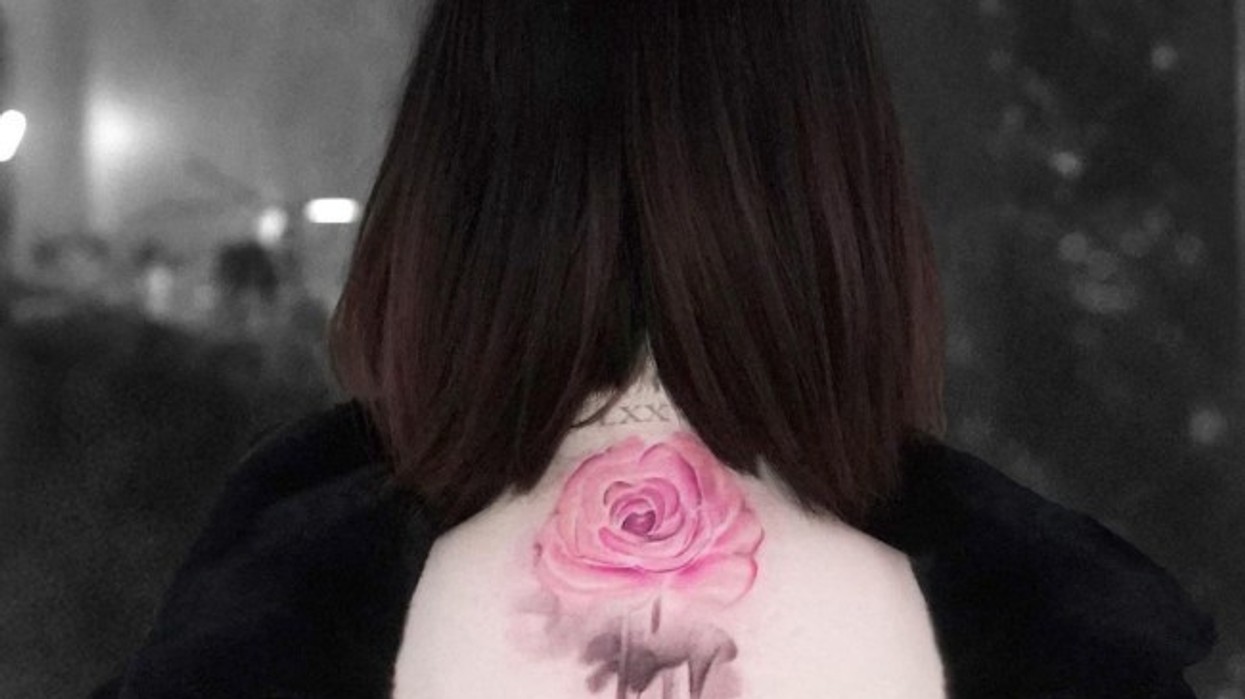
Close view of Selena Gomez’s pink rose tattoo on her upper back

Reports connect the large rose on Gomez’s back with a tattoo session involving Julia Michaels. They are described as coordinated tattoos, but the exact division of design work has not been reported clearly.

What does Selena Gomez’s semicolon tattoo represent?

The semicolon was linked to 13 Reasons Why and done with people connected to the show. It is often discussed alongside mental-health advocacy, but the tattoo does not reveal Gomez’s private health details.

Does Selena Gomez have a Rare tattoo?

Yes. She has a small Rare tattoo near or behind her ear, associated with the album. Sources differ on the exact side, so the broader placement is safer.

Taken together, Gomez’s tattoos touch on family, music, friendship and moments from her public life. Some stories are specific: the year her mother was born, a rose shared with a friend, a semicolon linked to a television project. The rest can stay less certain.
John Mayer Tattoos: Japanese Sleeve, 77 and What Is Confirmed

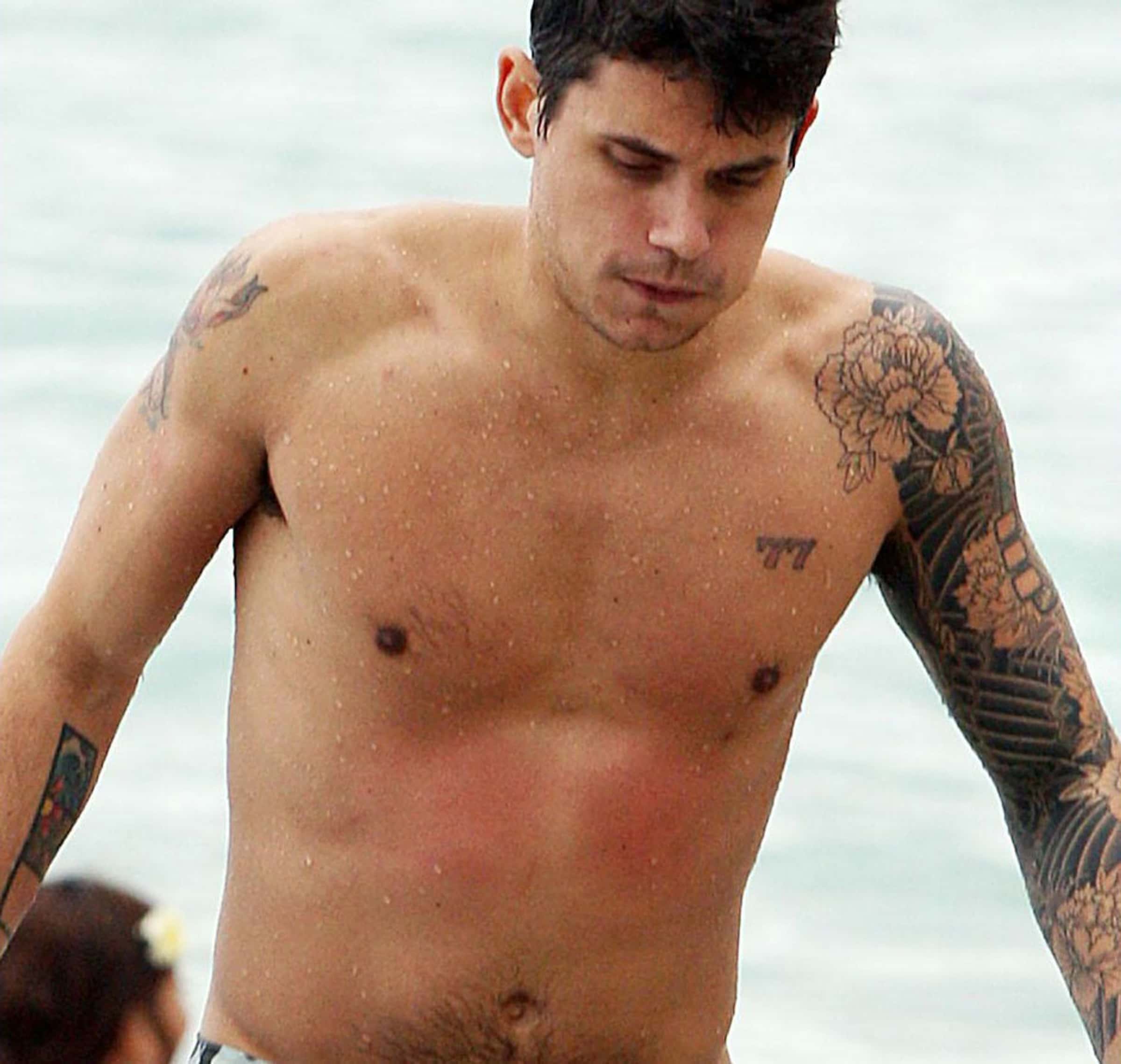
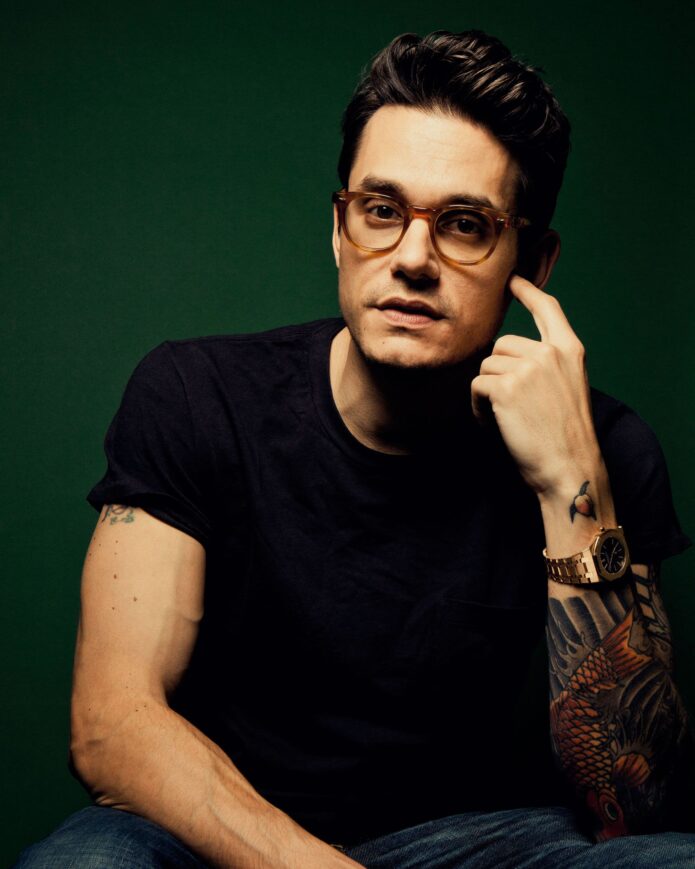
John Mayer’s sleeve gets most of the attention: a Japanese-influenced mix of flowers, geometric shapes and traditional imagery. He also has a 77 on his chest, an SRV tribute and smaller tattoos tied to music and earlier points in his life.

The Japanese-style sleeve

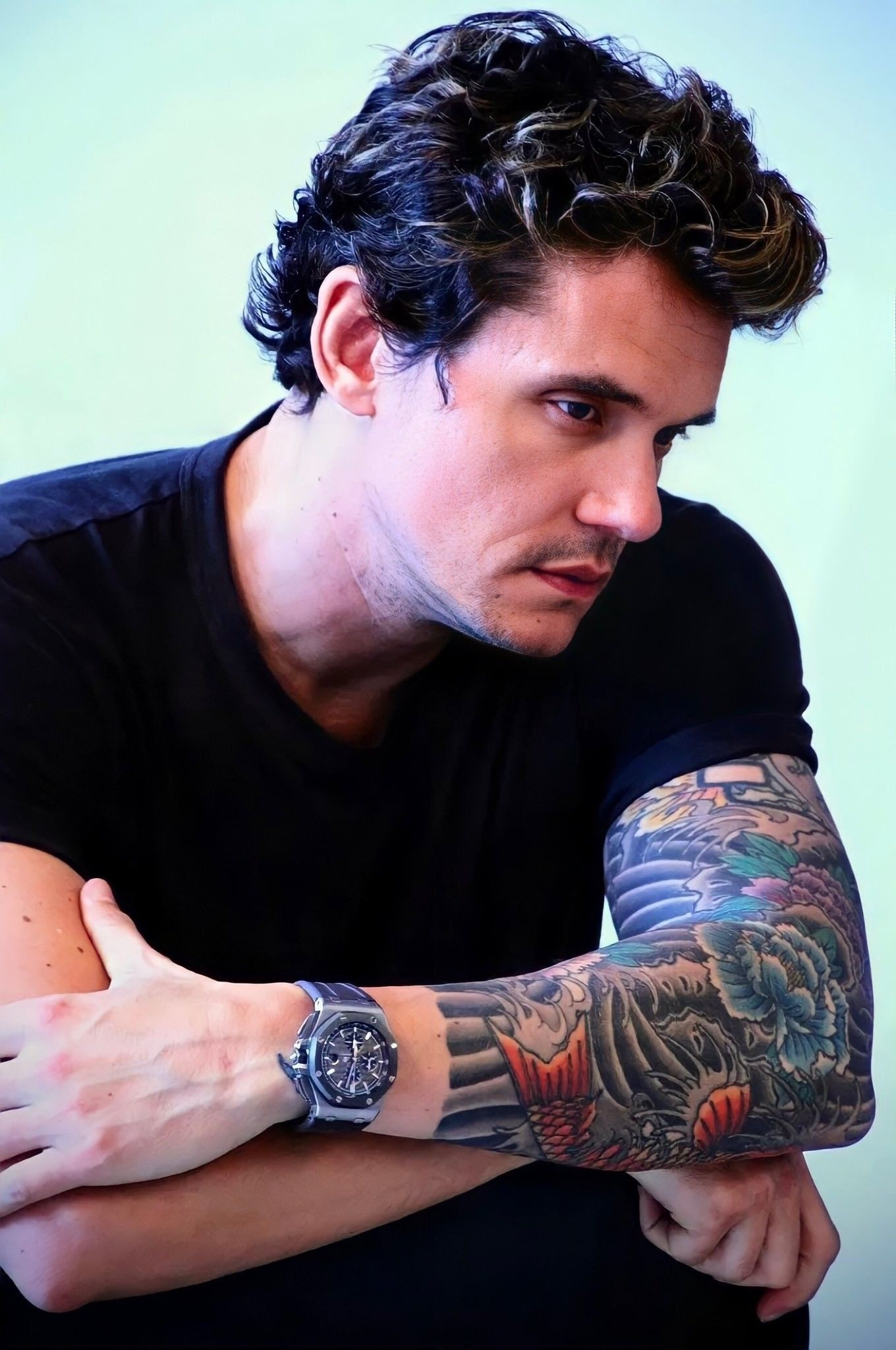
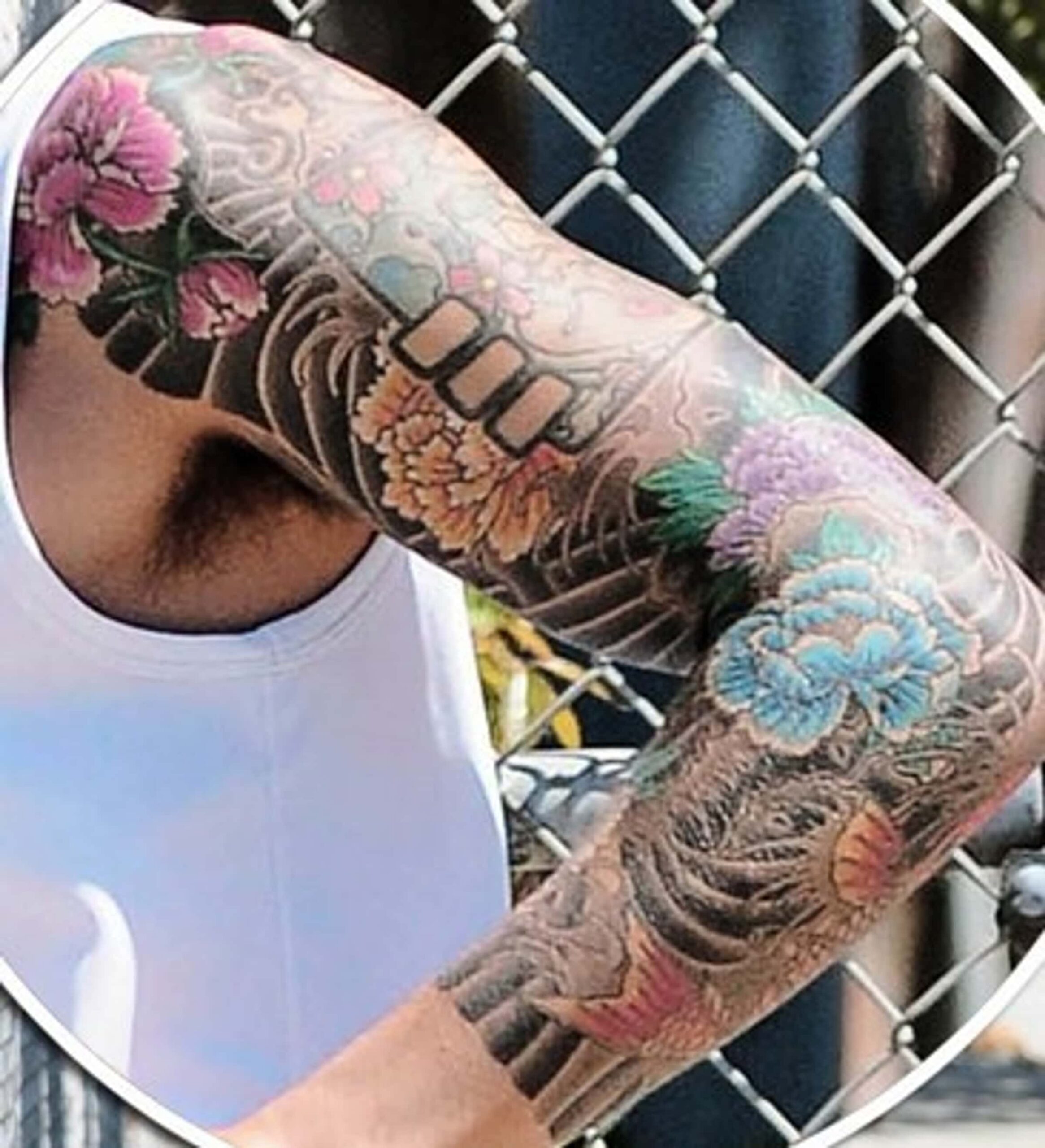
John Mayer’s floral and dragon-like left-arm sleeve tattoo

Mayer’s most visible tattoo work covers much of one arm in a Japanese-style composition. Specialist coverage describes a sleeve of flowers, traditional imagery and geometric shapes. Late-2000s performance photos show how prominent it became when he wore sleeveless shirts.

Japanese-style is a fair description of the overall look, but the photos do not establish that every motif follows a specific tradition. Specialist sources offer more detail than the images alone.

The 77 chest tattoo

John Mayer’s 77 chest tattoo, visible between the shoulders

The number 77 is visible on Mayer’s chest. Design Indaba and other tattoo references link it to his birth year, 1977. It is easy to spot when his shirt is open or off, but usually hidden in everyday appearances.

The 1977 reading comes from published coverage, not from the number alone. Numbers can mean anything; in this case, sources connect it to his birth year. That is the explanation worth using.

The SRV tribute

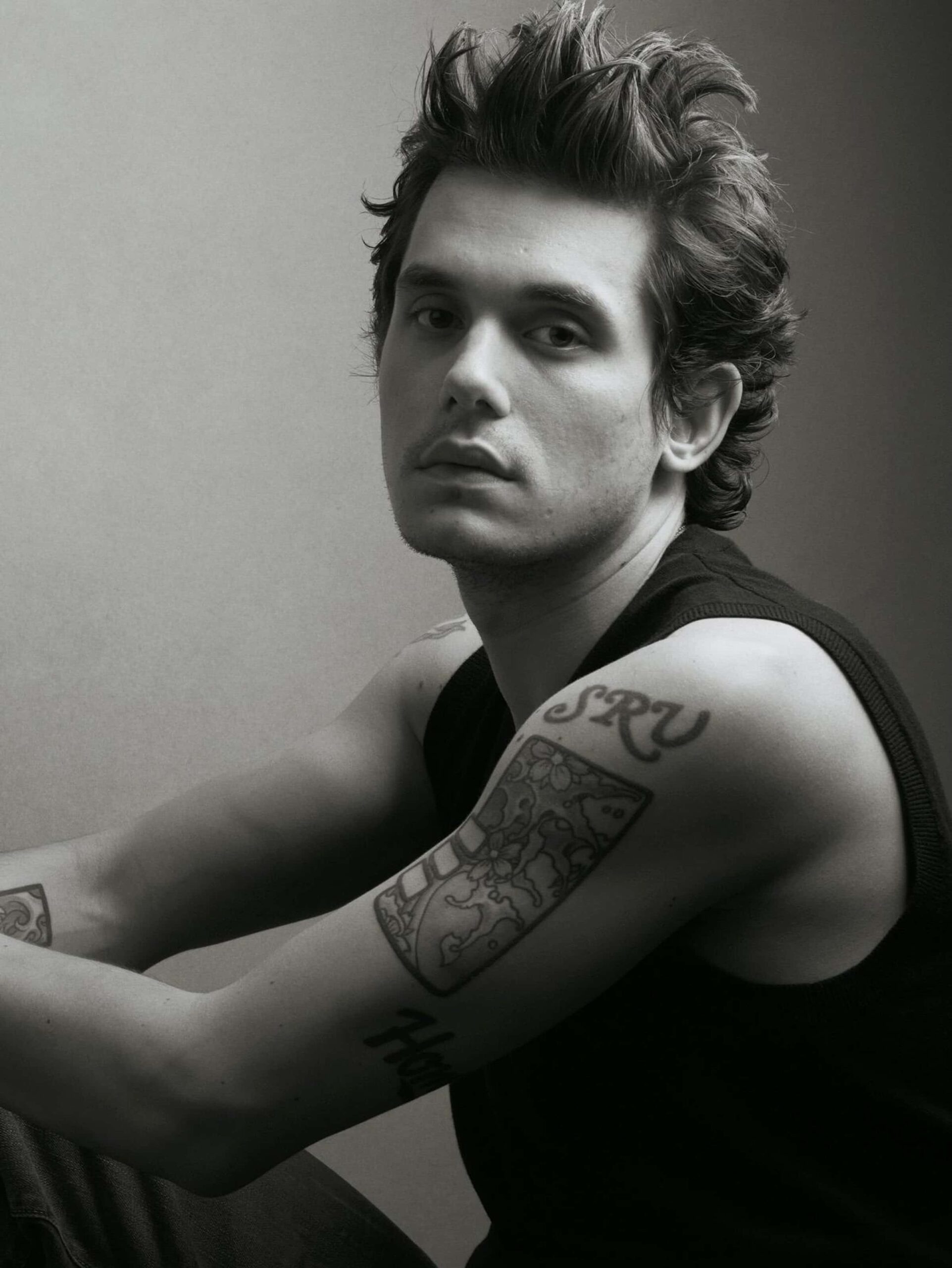
John Mayer’s SRV tattoo honoring guitarist Stevie Ray Vaughan

Another prominent mark is SRV, the initials of blues guitarist Stevie Ray Vaughan. Mayer has often spoken about Vaughan’s influence on his guitar playing. Tattoo coverage describes the initials as a tribute, and a separate SRV tattoo feature traces the connection. It is a direct nod to a guitar hero, with no need to read it as a key to the whole sleeve.

Initials can be hard to read in a busy sleeve. A photograph may catch them at an angle or lose them among the colors, so a clear image and a source naming the tribute are more useful than a context-free crop.

The original three squares on his forearm

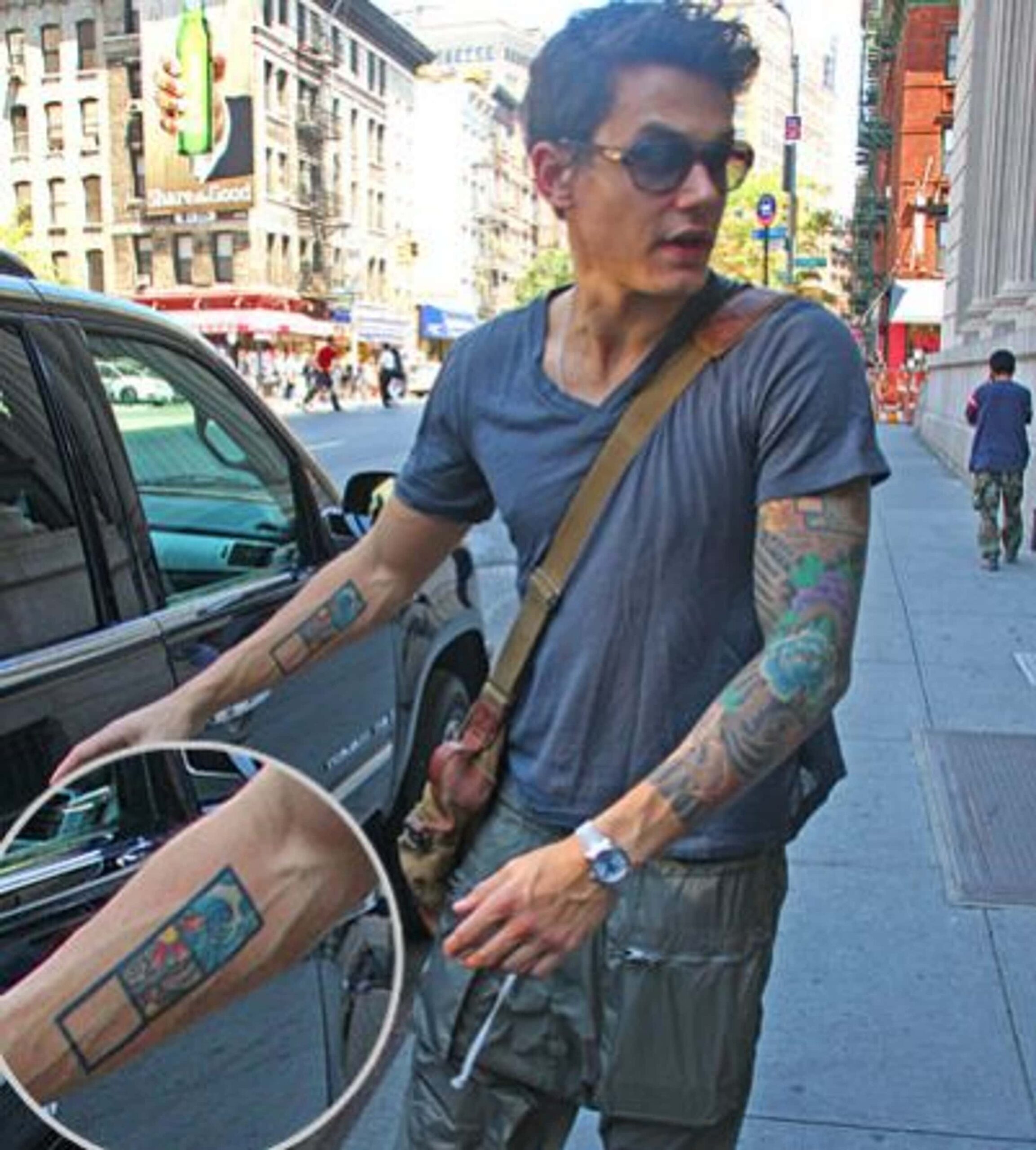
John Mayer’s original three-square tattoo on his forearm, shown in a close-up inset

Ranker dates the three squares on Mayer’s right forearm to 2003. The list says he later started filling them with color and additional imagery; the inset here shows the original outlines.

Early koi and Japanese influences

John Mayer koi-like fish and Japanese-influenced sleeve tattoos

Design Indaba reports that Mayer got an early koi tattoo during a visit to Japan at 18. The article also follows the arm work as it grew and discusses the artist credits attached to it.

A tattoo timeline shows the sleeve taking shape over time rather than appearing at once. The 2008 Wikimedia Commons event pictures show only what was visible that night; they help date the work, but not every later change.

Artists linked with John Mayer’s tattoos

Reports name Horimitsu or Horitomo among the artists connected with Mayer’s Japanese-style work, though summaries disagree about who did which sections. Without an original interview or studio record, it is safer to credit only the parts a source specifically identifies.

A sleeve this large can involve several artists and sessions. Someone who worked on one section should not automatically be credited with the entire design.

How the collection appears in performance photographs

The sleeve shows best in concert and event photos where Mayer’s right arm is bare. Sleeveless shirts reveal it; holding a guitar can turn it away from the camera. Stage lights also change how the colors look.

When the date or event is known, it belongs in the caption. A dated photo helps show placement and scale, but not what the ink looks like today. The 2008 images record that performance, not everything Mayer added later.

What the tattoos mean

Two explanations have solid support: 77 for Mayer’s birth year and SRV for Vaughan. Coverage ties the early koi and later sleeve to his interest in Japanese tattooing. Flowers, waves and dragons may carry familiar meanings in tattoo art, but Mayer has not given each one a personal story.

The sleeve’s Japanese influence and the musical tributes are easy to describe. Generic flower or dragon symbolism is a different matter; it should not be presented as Mayer’s own explanation.

Frequently asked questions

What is the 77 tattoo on John Mayer’s chest?

Tattoo references connect the chest number 77 with Mayer’s birth year, 1977.

What does SRV mean on John Mayer’s arm?

SRV is widely reported as a tribute to blues guitarist Stevie Ray Vaughan, whose playing influenced Mayer.

Does John Mayer have a Japanese tattoo sleeve?

Yes. His most visible work is a large Japanese-influenced sleeve, shown in concert and event photos and described in specialist tattoo coverage.

Who tattooed John Mayer?

Published summaries name Horimitsu or Horitomo in connection with parts of the work. The full artist history remains unclear because the reports do not agree.

The clearest parts of Mayer’s collection are the 77 on his chest, the SRV initials and a Japanese-influenced sleeve that grew over time. Those designs have some public context; the rest is less neatly documented.

What the available record can establish about Japanese-style sleeve

Photos show where the sleeve sits and what it looks like. On their own, they cannot say when each section was finished, who tattooed it or what Mayer meant by it. Those details need a dated source or Mayer’s own words.

Clothes and camera angles hide parts of the arm, and the sleeve changed between appearances. Dated photos can help track additions or cover-ups, but they do not provide a complete count.

Online lists often copy one another, so repeated wording is not new confirmation. A photo can identify a shape without revealing its meaning. The clearest account is simple: describe what is visible, attribute what reports actually say and leave the rest open.

More musician tattoo guides

A Closer Look at Harry Styles’ Tattoos

Harry Styles has tattoos across his chest, arms, hands and legs. He has explained a few himself, and artists or publications have identified others. For many of the smaller pieces, photographs show what is there but not why he got it.

Chest and torso tattoos

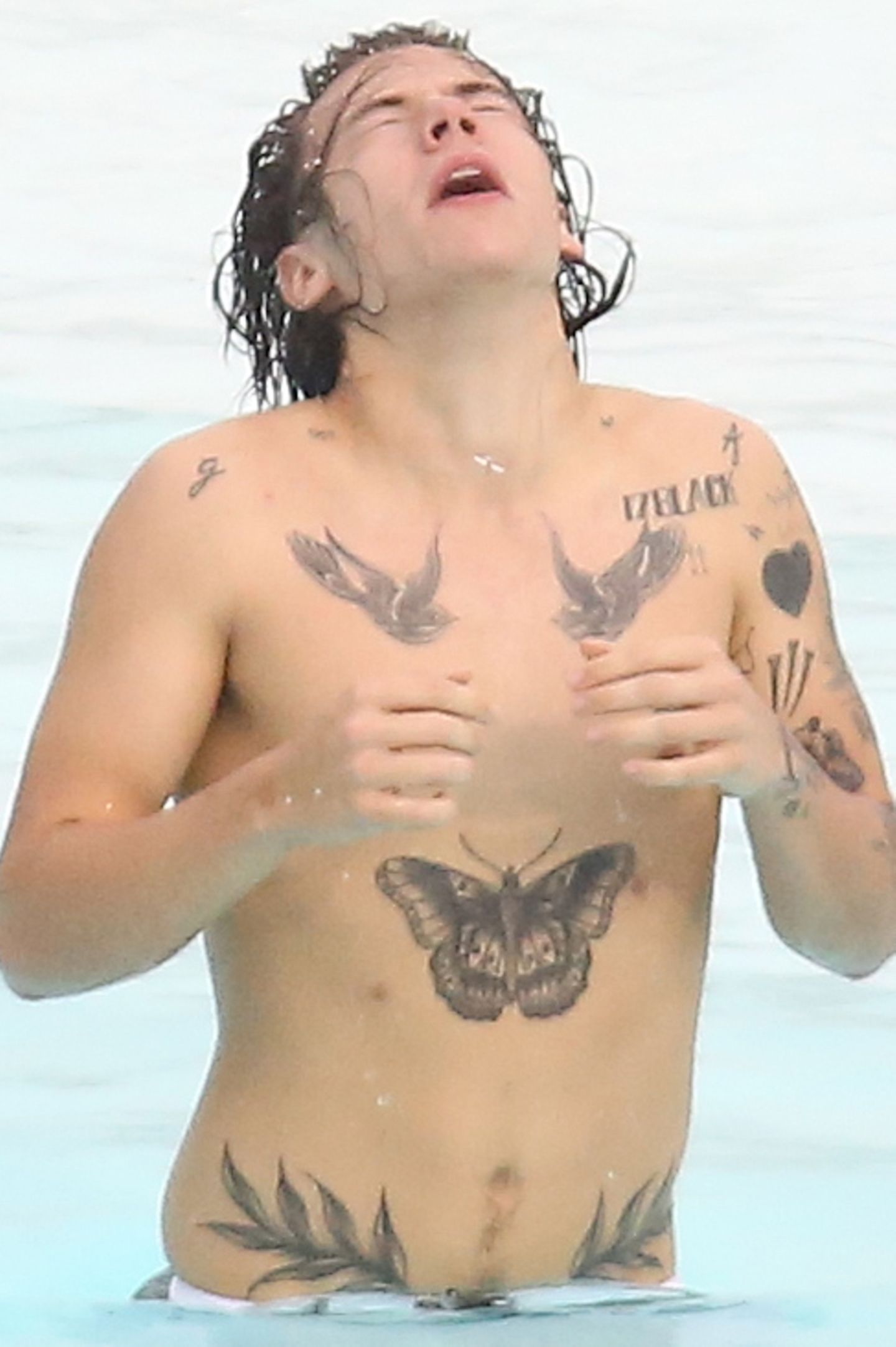
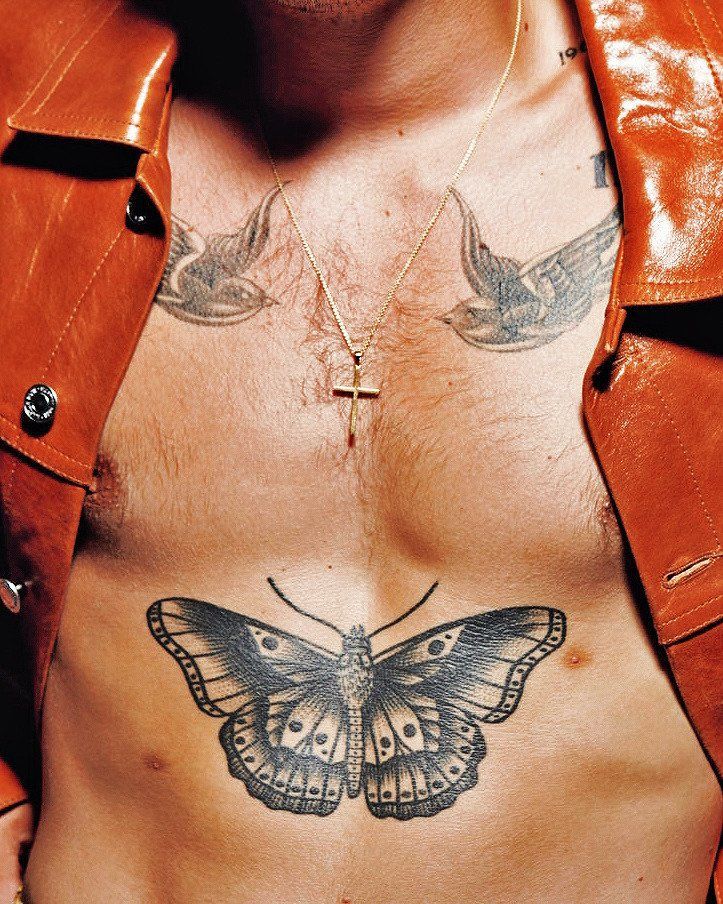
Harry Styles’s chest birds and butterfly tattoos shown clearly in a high-resolution portrait

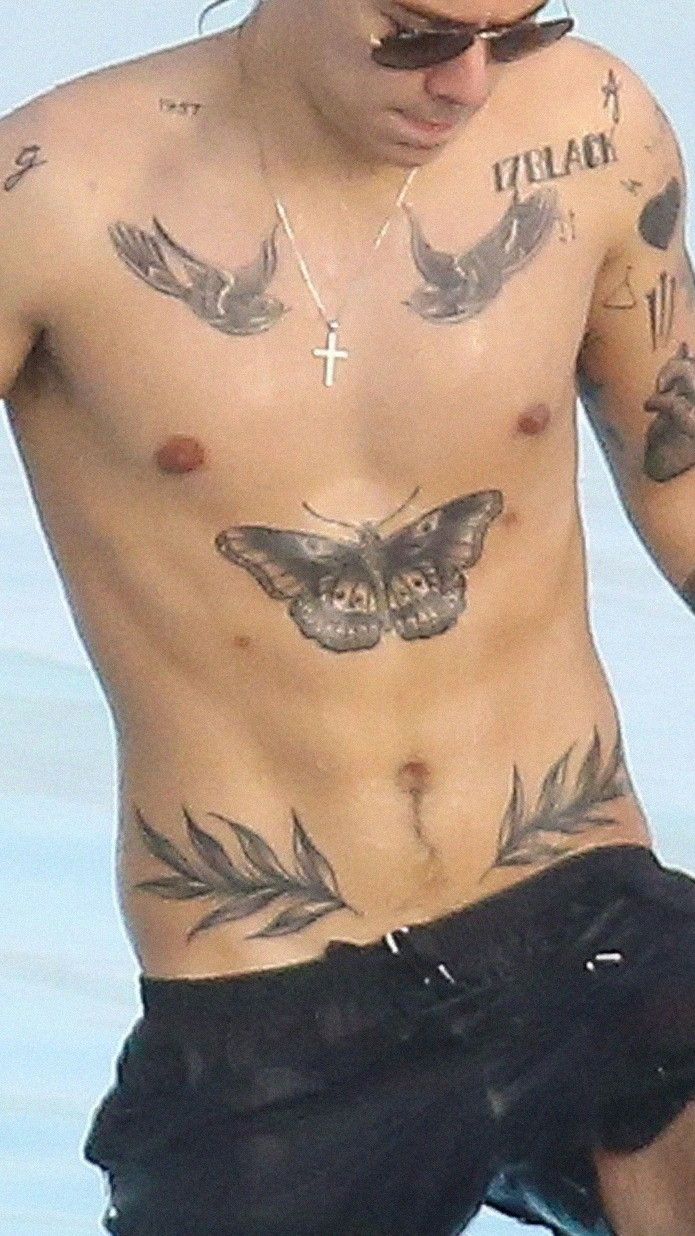
Photos show birds, lettering, a butterfly and other designs across Styles’ chest. Stories connecting individual pieces to relationships or private events often come from fan accounts, rather than from a statement Styles has made.

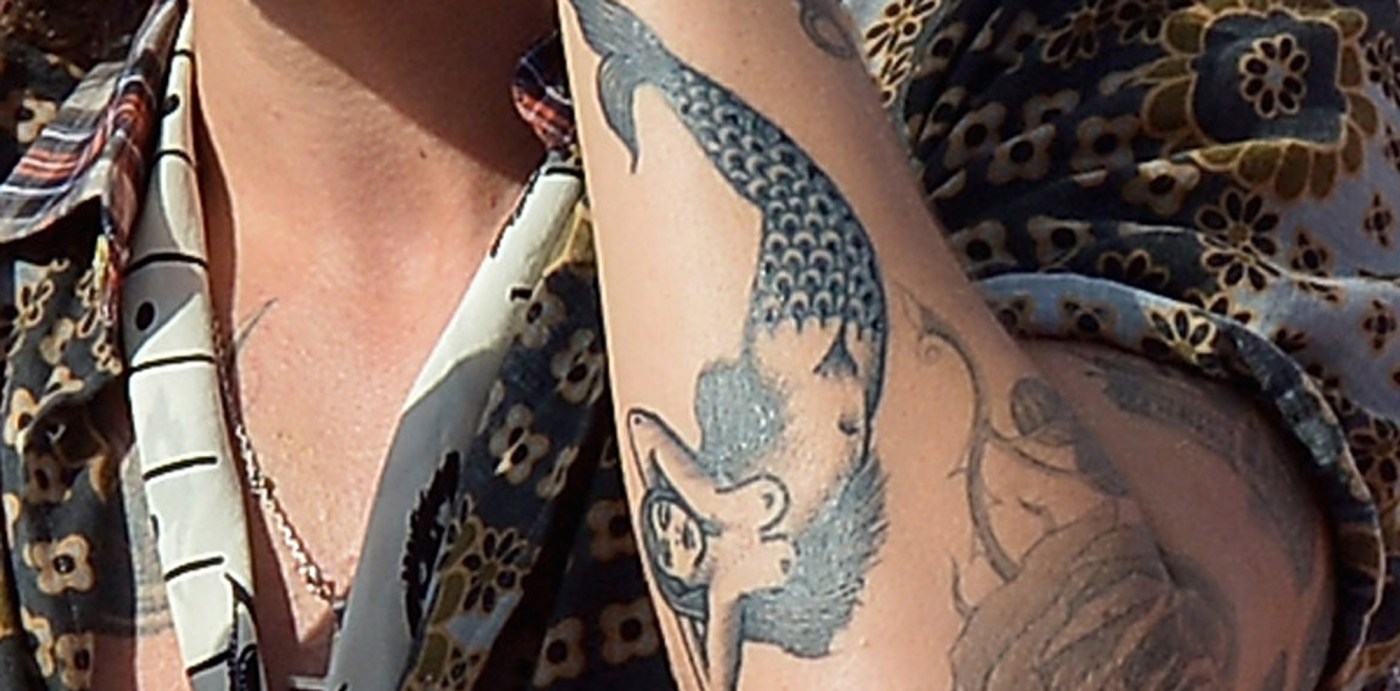
The mermaid tattoo

Harry Styles mermaid tattoo

Asked about the mermaid tattoo, Styles replied, “I am a mermaid.” The joke is the only explanation he has given.

Arms, hands and smaller designs

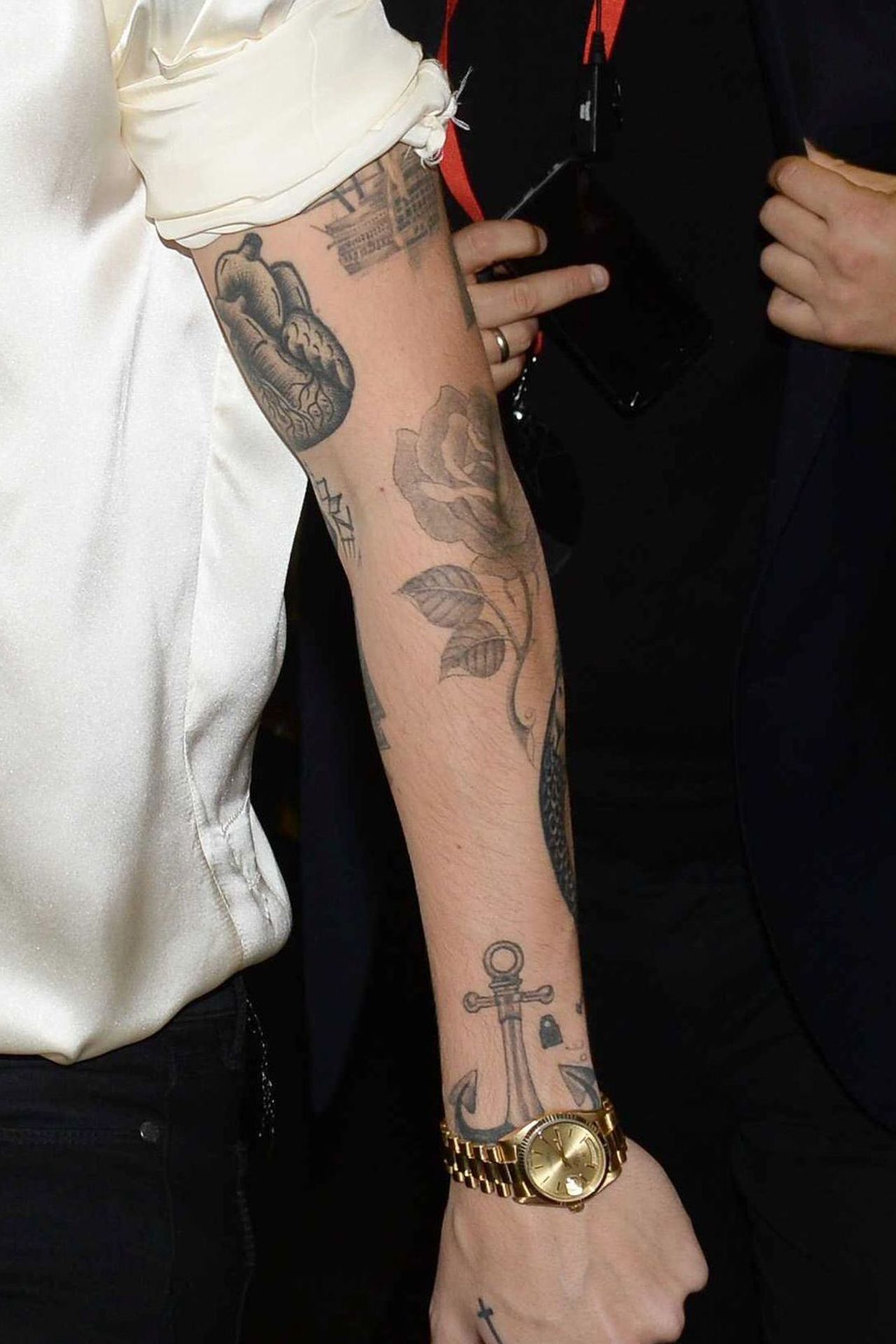
Harry Styles’s left arm tattoos in a close GQ photograph

Styles has lettering and small symbols on his arms and hands. Photos show where some sit, but the meaning of each design is known only when he has explained it.

Styles got his first tattoo at 18, and much of his early work is on the left arm. “NY, LA, LDN” marks cities tied to his life and work. The Hebrew lettering includes his sister Gemma’s name and the phrase “Can I Stay.” Other designs include a small guitar, a pirate ship, an anatomical heart, a black heart and the Green Bay Packers logo.

The first tattoo he got at 18 was an outlined star on his upper arm; he later filled it in. The arm also has “Hi,” “Silver Spoon,” “You Booze You Lose,” a liquor bottle and a small “A” associated with his mother, Anne. Teen Vogue documents the designs, though Styles has not confirmed every explanation attached to them.

Recent reporting

A 2026 entertainment report linked Styles and Zoë Kravitz to a possible matching “Let It Rip” tattoo. Neither has explained it publicly, so for now it is a reported design without a confirmed meaning.

Family and named tattoos

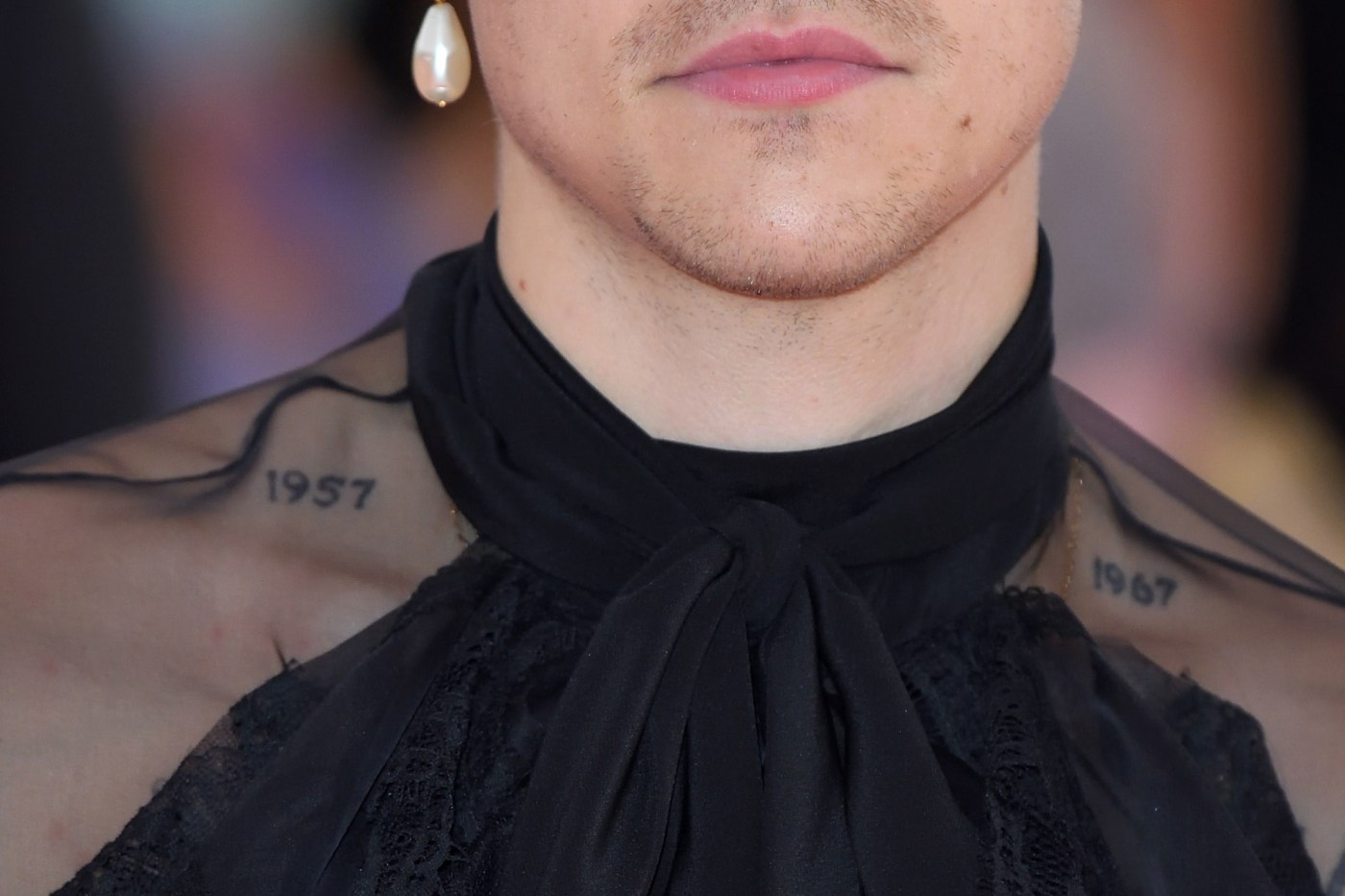
Harry Styles’s 1957 and 1967 collarbone tattoos, reported as his parents’ birth years

Several small tattoos point to family: a “g” on his chest for Gemma, an “A” for his mother Anne, and “1957” and “1967,” reported as his parents’ birth years. “Mary” on his right arm is widely identified as a tribute to his grandmother.

“Jackson” and “Arlo” appear in tattoo lists, but their connection to Styles has not been clearly explained. The empty bird cage and theater masks near his ribs are also visible designs; their meanings have not been publicly established.

Chest and torso designs

Harry Styles’s butterfly and swallow chest tattoos

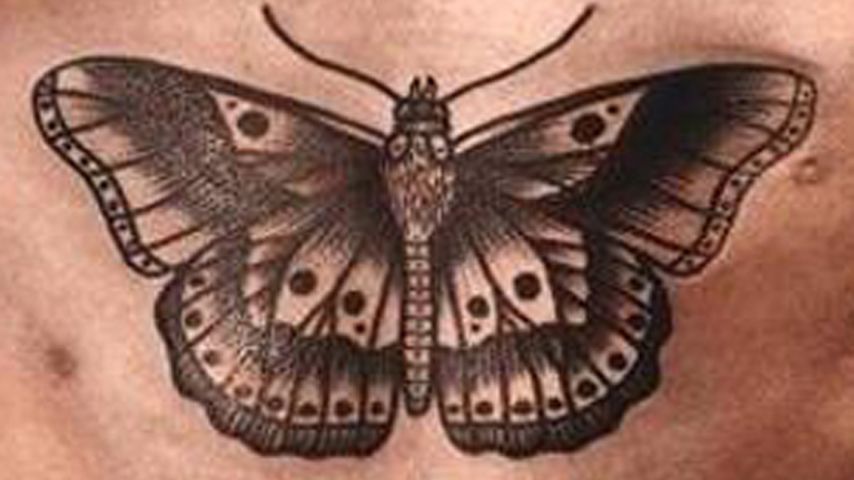
The large butterfly sits on Styles’ sternum. Styles’ tattoo artist Liam Sparkes says it was inspired by an old French prison tattoo and the film Papillon. The two swallows on his upper chest are among the pieces fans recognize most easily. Swallows are often linked with travel, but Styles has not given a personal explanation for every nautical image.

Below the chest tattoos is “17 Black,” which GQ connected to money Styles lost betting on 17 black in Australia during the One Direction years. “SNCL” is commonly expanded as “Smile Now, Cry Later.” The family-related dates “1957” and “1967” sit among the other chest lettering.

Cover-ups and older designs

Styles has covered or changed several designs. An anchor covers an earlier “I can’t change” tattoo, and a fern leaf has been reported as covering “Might as well.” The large eagle on his left arm is also said to cover older lettering, though reports differ on the details.

The naked mermaid is on Styles’ right arm too. Asked about it, he gave the same answer: “I am a mermaid.” The arm also has a padlock tattooed by Ed Sheeran and Pingu, the children’s TV penguin, which is usually described as a matching design with Sheeran.

Legs, feet and ankles

Close view of Harry Styles’s tiger-head thigh tattoo
Harry Styles’s two ankle tattoos reading Never Gonna and Dance Again

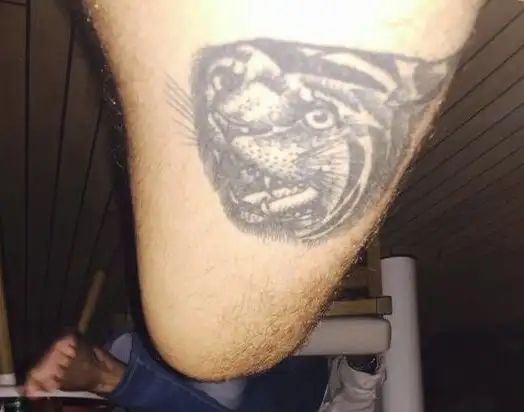
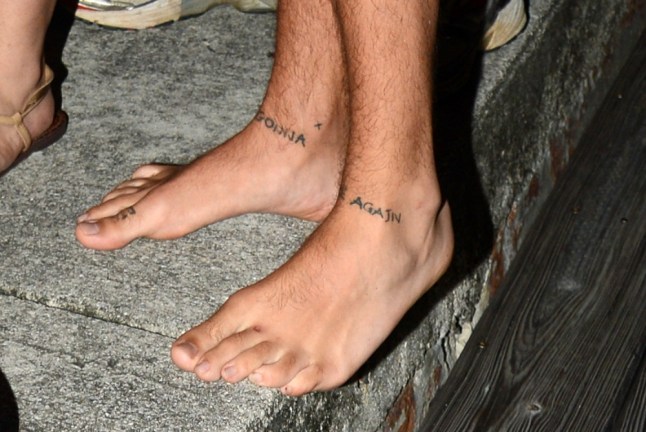
His lower-body tattoos include a tiger or lion head on the right thigh, “Never Gonna Dance Again” split across his ankles, and three screws on his right big toe. “Yes” and “No” appear above and below the knees in different languages. The smaller pieces are easy to miss in concert photos.

What is confirmed and what is not

Styles’ tattoos include names, dates, lettering, family tributes, album art, the Packers logo, cover-ups and designs connected with friends. The tattoos are easier to confirm than their meanings. Fan lists attach stories to “Jackson,” “Arlo,” the bird cage and other small designs without a direct statement from Styles.

Descriptions work best when they stay close to the photos and interviews: say what is visible, credit an explanation when he or a reliable source has given one, and leave the rest open. Cover-ups and new work also make a single count unreliable.

Frequently asked questions

How many tattoos does Harry Styles have?

Harry Styles’s butterfly and swallow chest tattoos

There is no official count. New tattoos and cover-ups change the number, so older totals are only snapshots.

Are all the meanings known?

Harry Styles showing his butterfly and swallow tattoos

No. Styles has explained some designs, but many have not been publicly confirmed.

Other visible pieces include the Dark Side of the Moon prism, a skeleton in a tuxedo, shaking hands, the pirate ship, a rose and the “Late Late” tattoo he got during a television tattoo game. He has used small gaps around larger pieces instead of keeping everything to one sleeve.

Some of the smaller tattoos show up only in close photographs, so it helps to keep the date of each image in view.

Demi Lovato Tattoos: Birds, Stay Strong and What They Mean

Demi Lovato’s tattoos touch on music, faith, family, recovery and the turning points in her life. She has explained several of them in interviews; others are best described by what the photographs show. The collection keeps changing, so any count is only a snapshot.

How many tattoos does Demi Lovato have?

Teen Vogue counted nearly 30 tattoos in a 2016 interview; later galleries have listed more than 20. Neither figure is an official total. New work appears, old designs get covered or changed, and a photo rarely shows everything.

Her own tattoo stories are the best place to start. In an iHeart interview, Lovato explained the rib lyrics, Stay Strong on her wrists, Roman numeral III, the Africa tattoo and the flock of birds. Teen Vogue also covered the Buddy memorial and her father’s connection to Dale Earnhardt. Other pieces are visible, even when their meanings have not been shared.

The 12 birds by Kat Von D

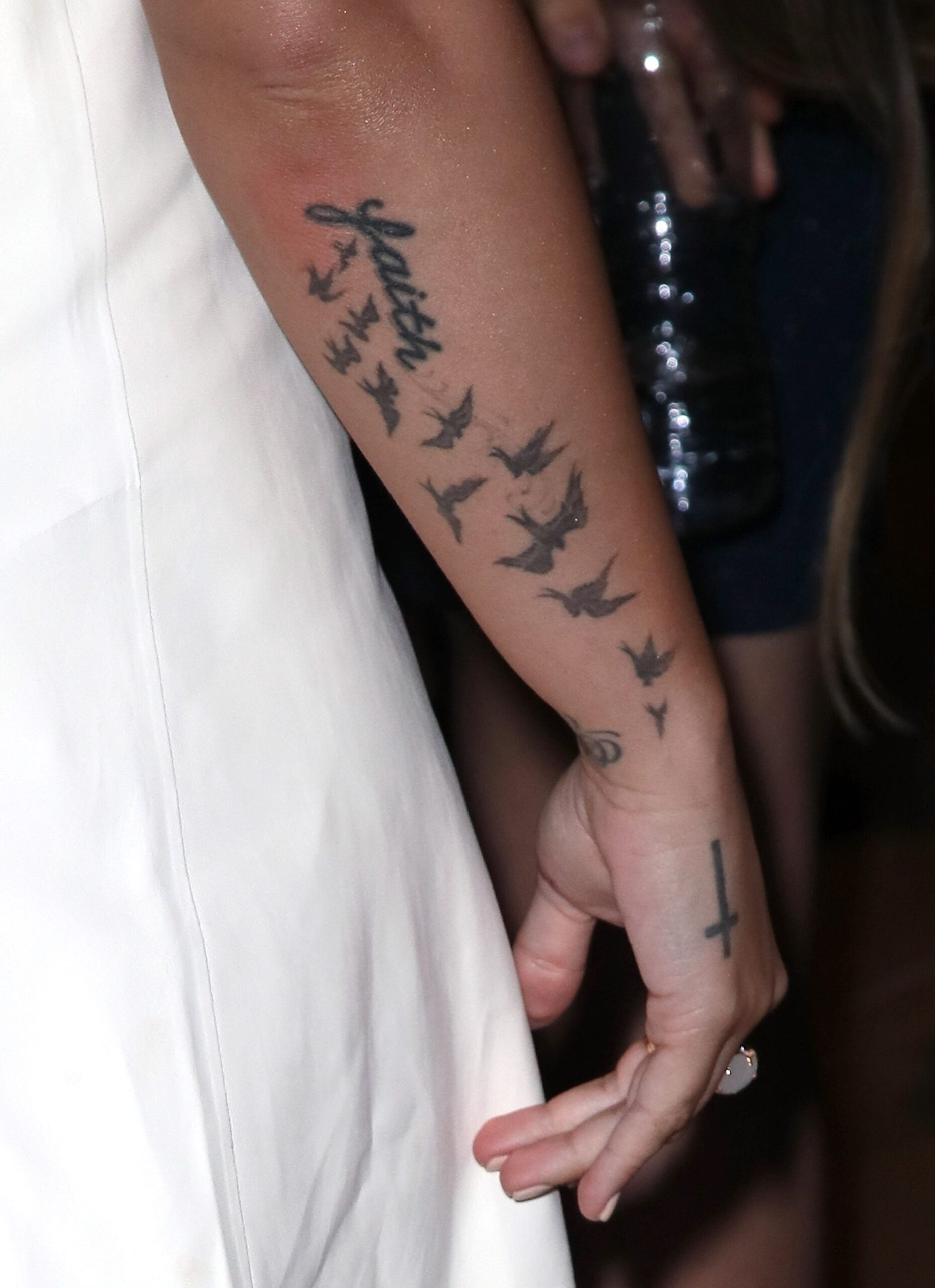
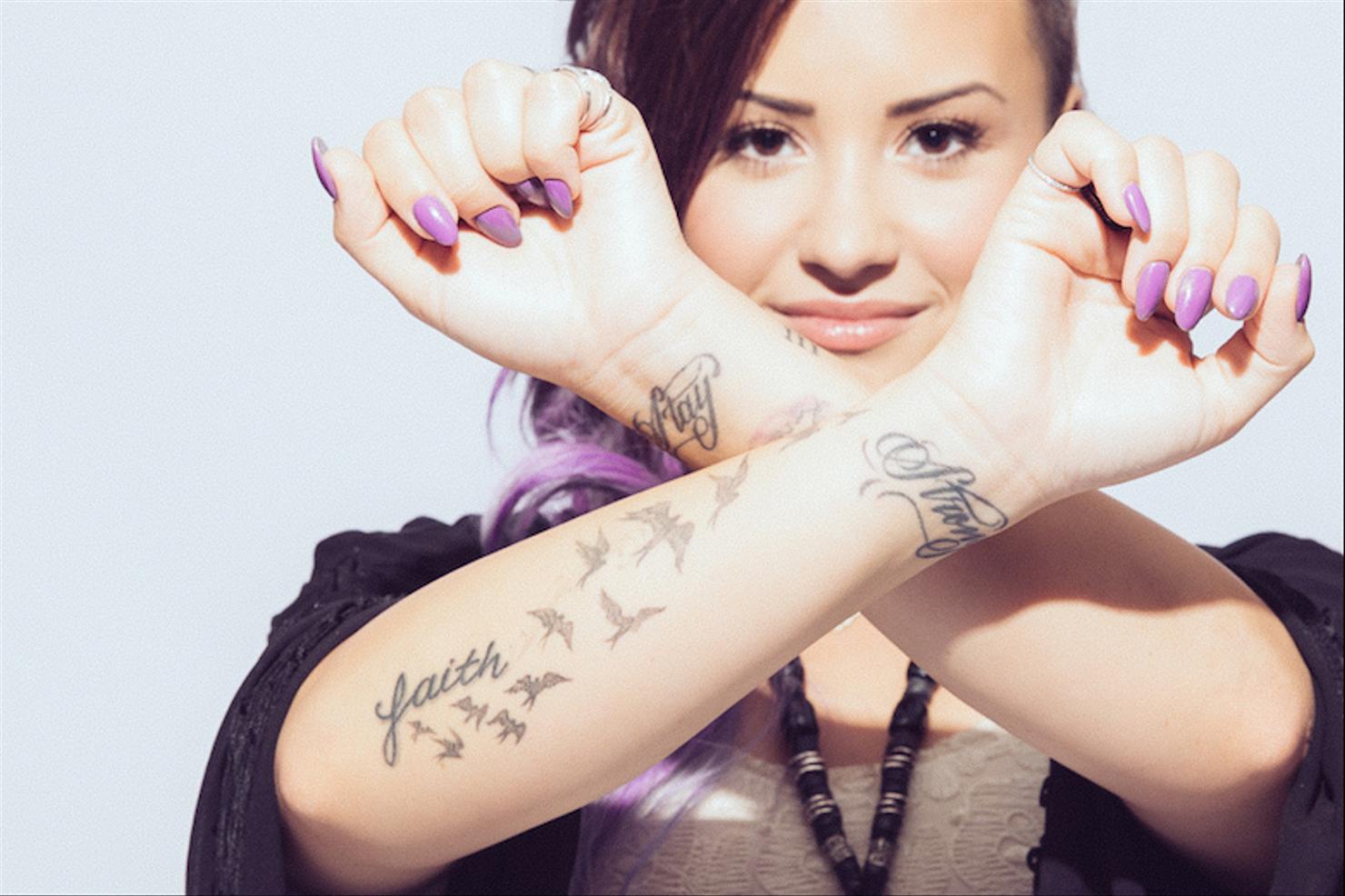
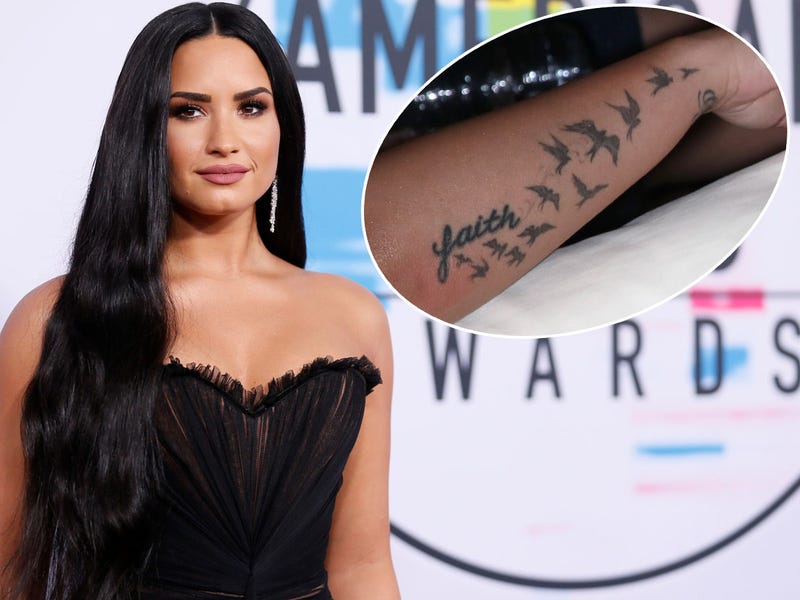
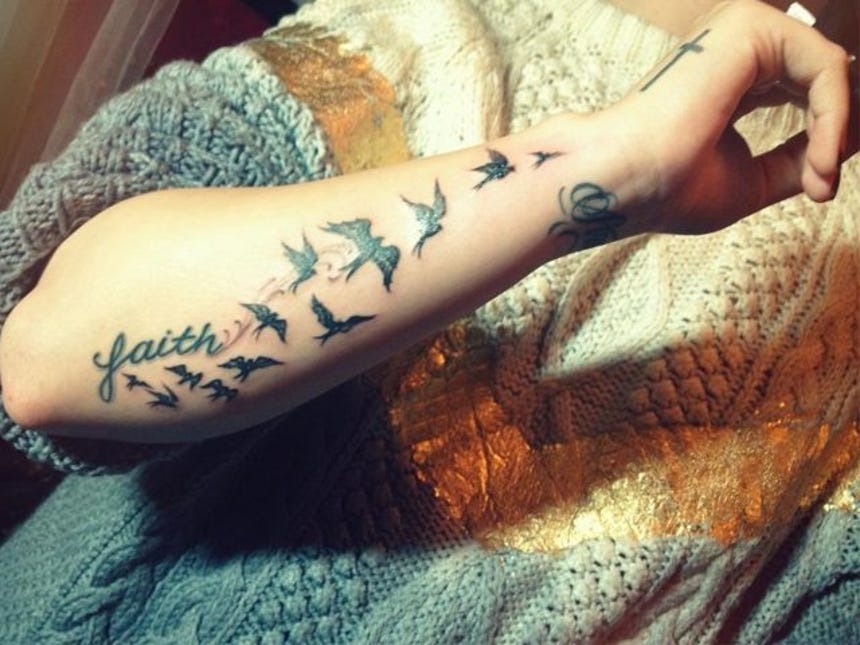
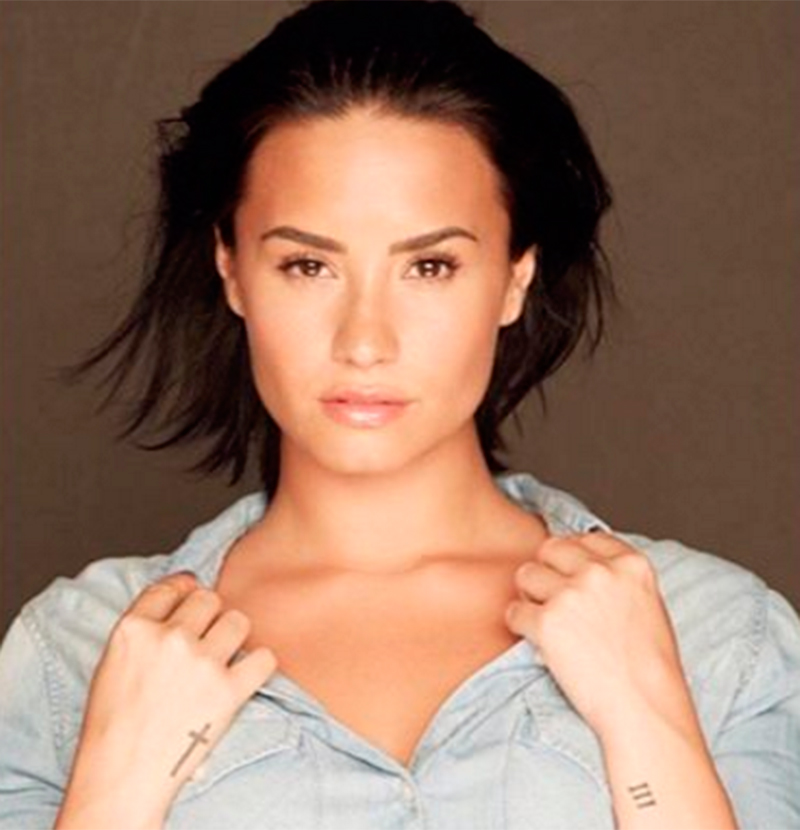
Demi Lovato’s twelve bird forearm tattoo and the cross near her wrist

Lovato told iHeart that Kat Von D tattooed the birds on her forearm. She wanted them because she liked the sense of freedom they suggested; she had not planned on a specific number. Later, while living in a sober-living home, she counted 12 and connected them with the 12 steps of recovery.

The number came after the design: Lovato chose birds for their association with freedom, then noticed there were 12. She has said that realization tied the flock to recovery. They remain among her best-known tattoos because they form a moving line along her arm and show clearly in performance photos.

Stay Strong on the wrists

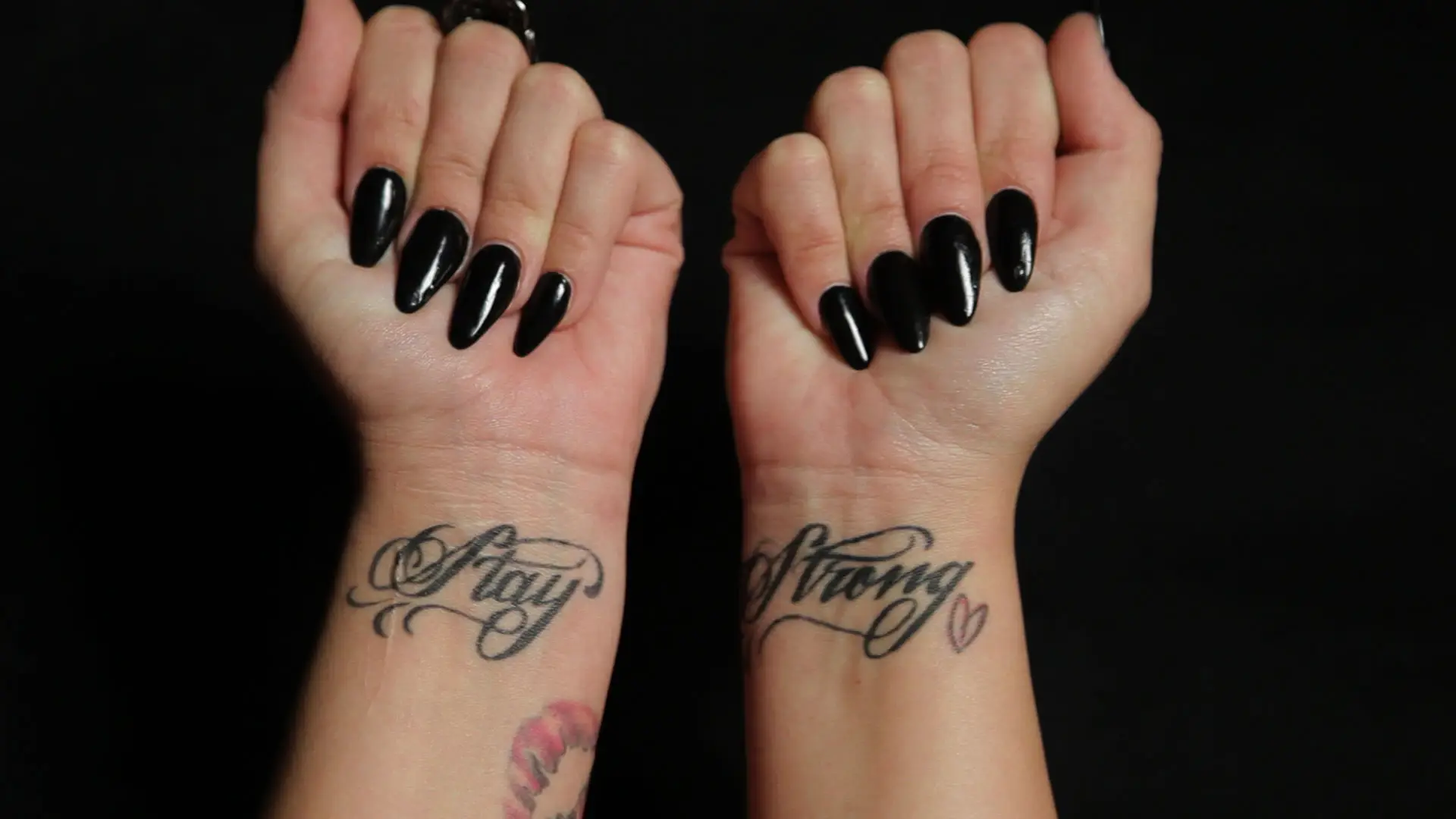
Demi Lovato shows the Stay Strong wrist lettering with her crossed forearms

“Stay Strong” is written across Lovato’s wrists. She told iHeart it was among her first tattoos and that she got it after leaving rehab. Fans had used the phrase to encourage her, and she said she would look down at the words during hard moments.

The words are easy for her to see even when other tattoos are covered. Photos show them when her wrists face the camera; bracelets, sleeves and stage clothes can hide them. A single picture cannot show whether the lettering has been touched up.

Her first tattoo: You Make Me Beautiful

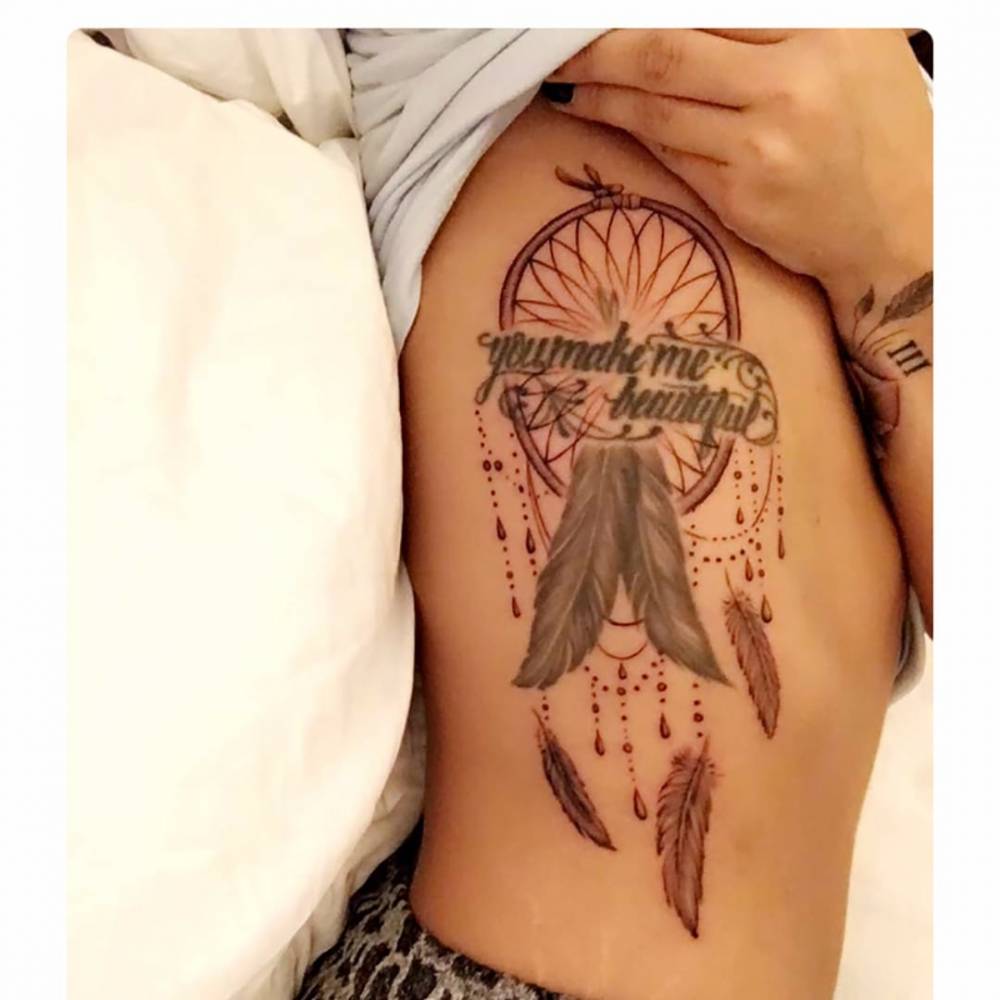
Demi Lovato’s rib tattoo with the words You Make Me Beautiful and its later dreamcatcher design
Demi Lovato; image source: Mbulla; CC BY-SA 4.0.

Lovato told iHeart her first tattoo was “You Make Me Beautiful” lyrics on her ribs. She called it a Christian song and said the words connected her to God. She was 16 and later described getting it in a tattoo artist’s apartment in Los Angeles.

Teen Vogue linked the lyrics to Bethany Dillon’s song “Beautiful.” The rib tattoo is less often visible than the pieces on Lovato’s wrist or forearm. It was the first tattoo in her collection, though recent photos do not always show it clearly.

The Roman numeral III

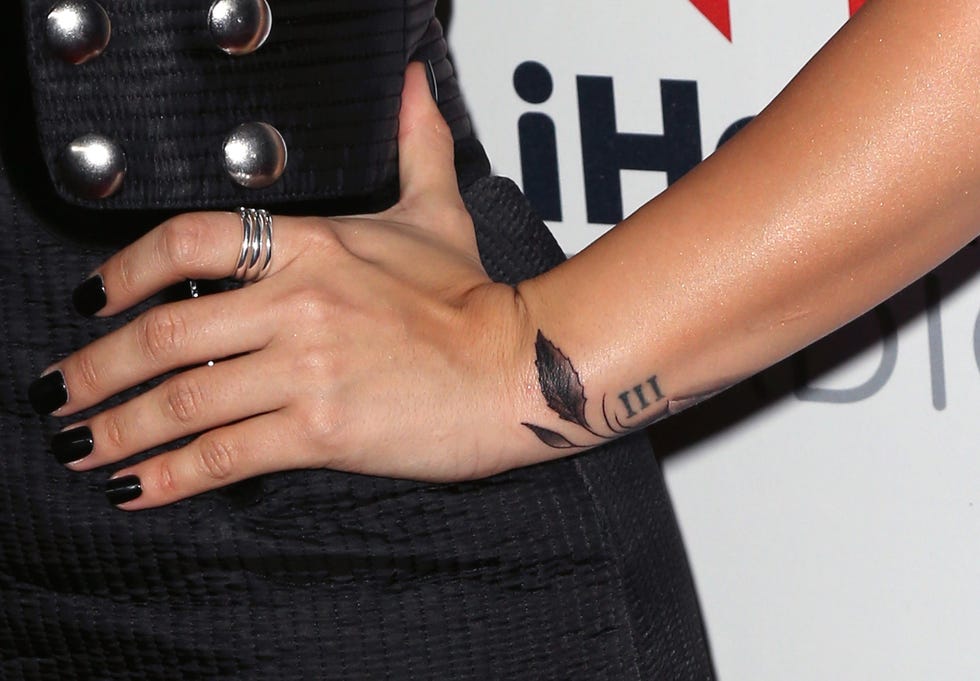
Demi Lovato’s Roman numeral III wrist tattoo beside a leaf design

Lovato wears the Roman numeral III on her wrist. She told iHeart it refers to her birth father, who loved NASCAR driver Dale Earnhardt. After her father died, she got the number as a reminder of him and because she liked Earnhardt too.

For Lovato, III brings her father and his favorite driver together in one small tattoo. That is the meaning she has shared.

Africa and the travel milestone

Demi Lovato Africa tattoo from her Kenya trip

In a 2014 iHeart interview, Lovato said Africa was one of her newer tattoos. She had visited Kenya for her 21st birthday, a trip she said changed her. She chose the word “Africa” instead of “Kenya” because more people would recognize it.

The tattoo marks that trip and the milestone birthday. Lovato also explained why she chose the larger place name; the interview does not give further detail about the lettering itself.

Buddy memorial and family tributes

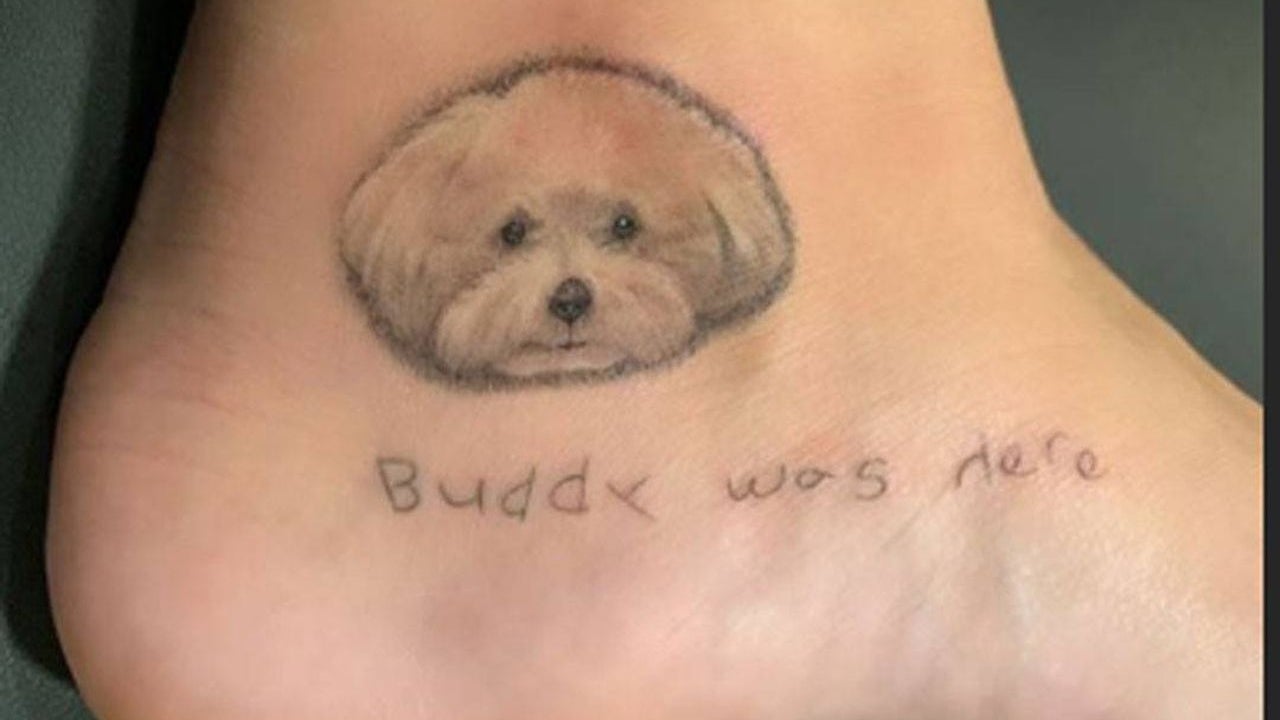
Demi Lovato’s Buddy memorial tattoo: a portrait of her dog with Buddy was here lettering
Demi Lovato; image source: Justin Higuchi; CC BY 2.0.

Teen Vogue reported that Lovato got a Buddy memorial after her dog died: “Buddy was here,” written in a child’s handwriting. The article also connected her father’s memory to Dale Earnhardt’s car number. Alongside III, those pieces make family an important part of her tattoo history.

The reports give the names and details of these memorials, but do not say everything Lovato felt about them. Claims about healing or closure would need her own words.

Survivor and later statement tattoos

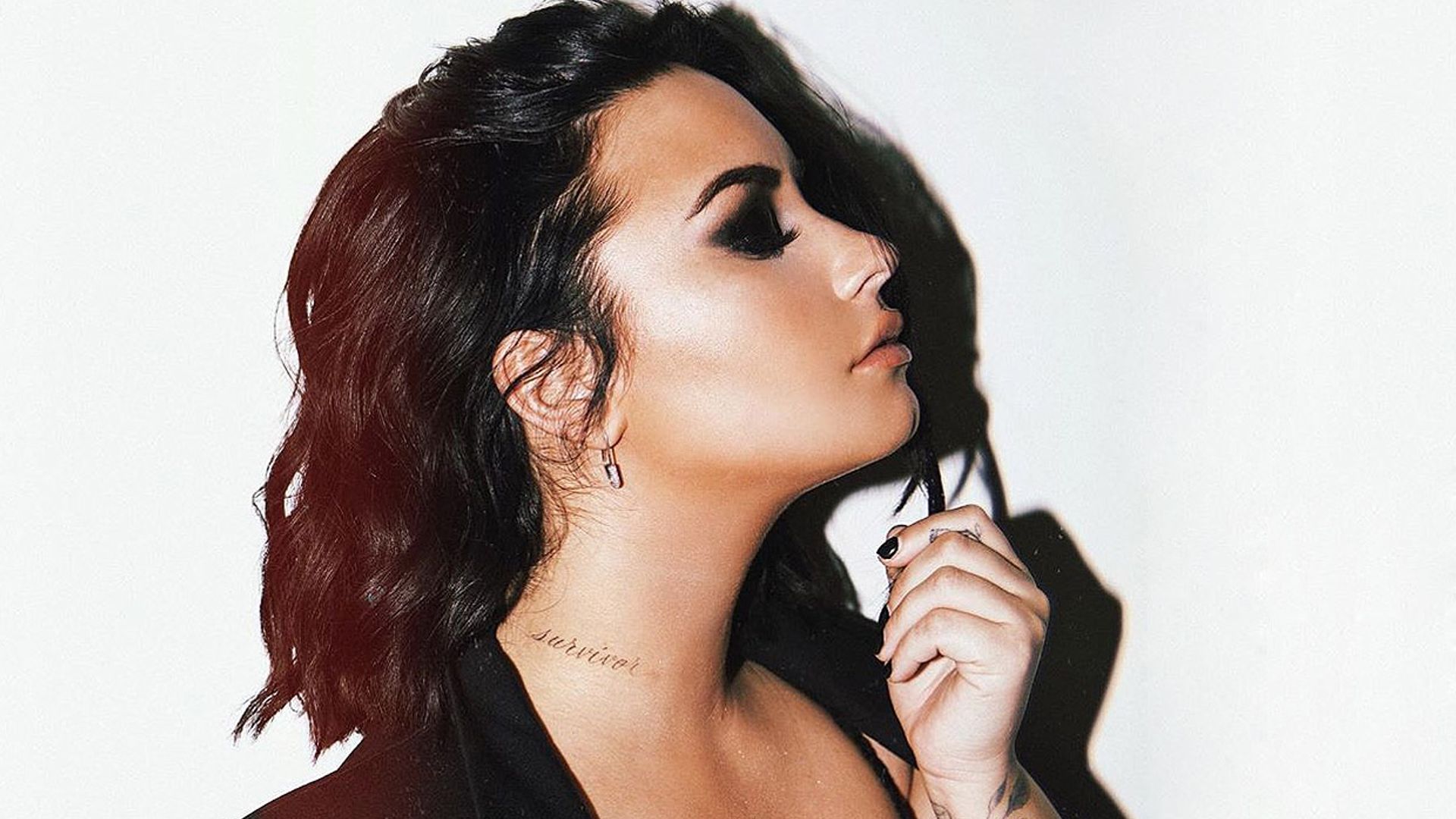
Demi Lovato’s cursive Survivor tattoo on the side of her neck

Teen Vogue reported that Lovato added “Survivor” to her neck in 2019. The short word became one of her later statement tattoos. It is a visible neck tattoo, especially when she pulls her hair back; the single word is not a full account of her life.

Later galleries show more words and symbols on her hands, arms and neck. Lovato has connected some designs with faith, self-acceptance or recovery, while others have no published explanation. Keep her statements distinct from guesses based on the style.

Who tattooed Demi Lovato?

Kat Von D is directly linked to the bird tattoo through Lovato’s own account. Other designs have been credited to different artists, so one artist should not be assigned the whole collection.

The collection moves between script, Roman numerals, silhouettes, religious text, travel lettering and a large flock of birds. Some pieces are fine and discreet; others are meant to be seen from across a room.

Frequently asked questions

What do Demi Lovato’s bird tattoos mean?

Demi Lovato’s forearm flock of bird tattoos and faith lettering

Lovato said she liked the freedom birds represent. She later counted 12 and connected them with the 12 steps of recovery.

Who tattooed Demi Lovato’s birds?

Demi Lovato’s faith lettering and flock of twelve birds tattooed by Kat Von D

Lovato told iHeart that Kat Von D tattooed the flock of birds.

What do the Stay Strong tattoos mean?

Demi Lovato’s separate Stay and Strong wrist tattoos with a small heart

She said fans encouraged her with “Stay Strong” after rehab, and that she looked to the wrist lettering during difficult moments.

What does the III tattoo mean?

Demi Lovato’s wrist showing the Roman numeral III tattoo

Lovato said III refers to Dale Earnhardt’s number and her late father’s connection to the driver.

The birds, Stay Strong, rib lyrics, Africa and III all have stories Lovato has shared. Other tattoos are still worth noting, even when she has not explained them. The guide is strongest when it leaves those designs visible without inventing a reason for them.

More musician tattoo guides

Randy Orton’s Tattoos: From Tribal Work to the RKO

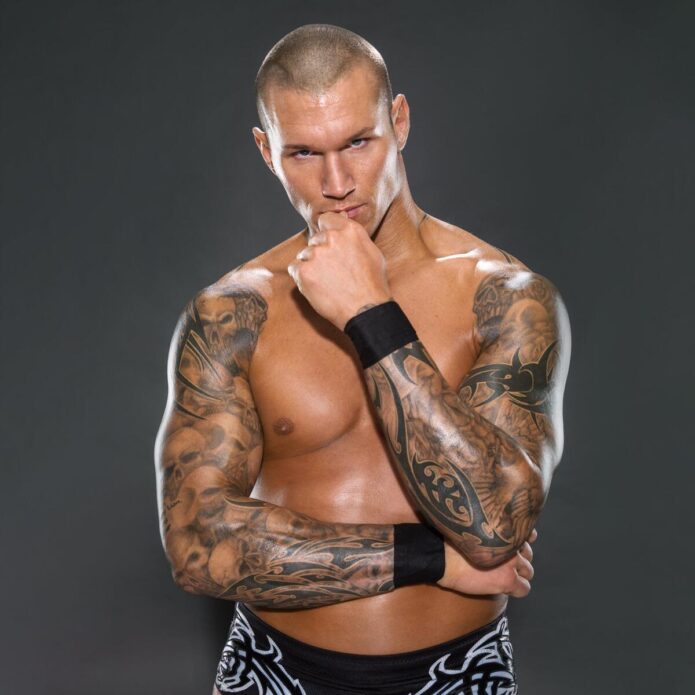
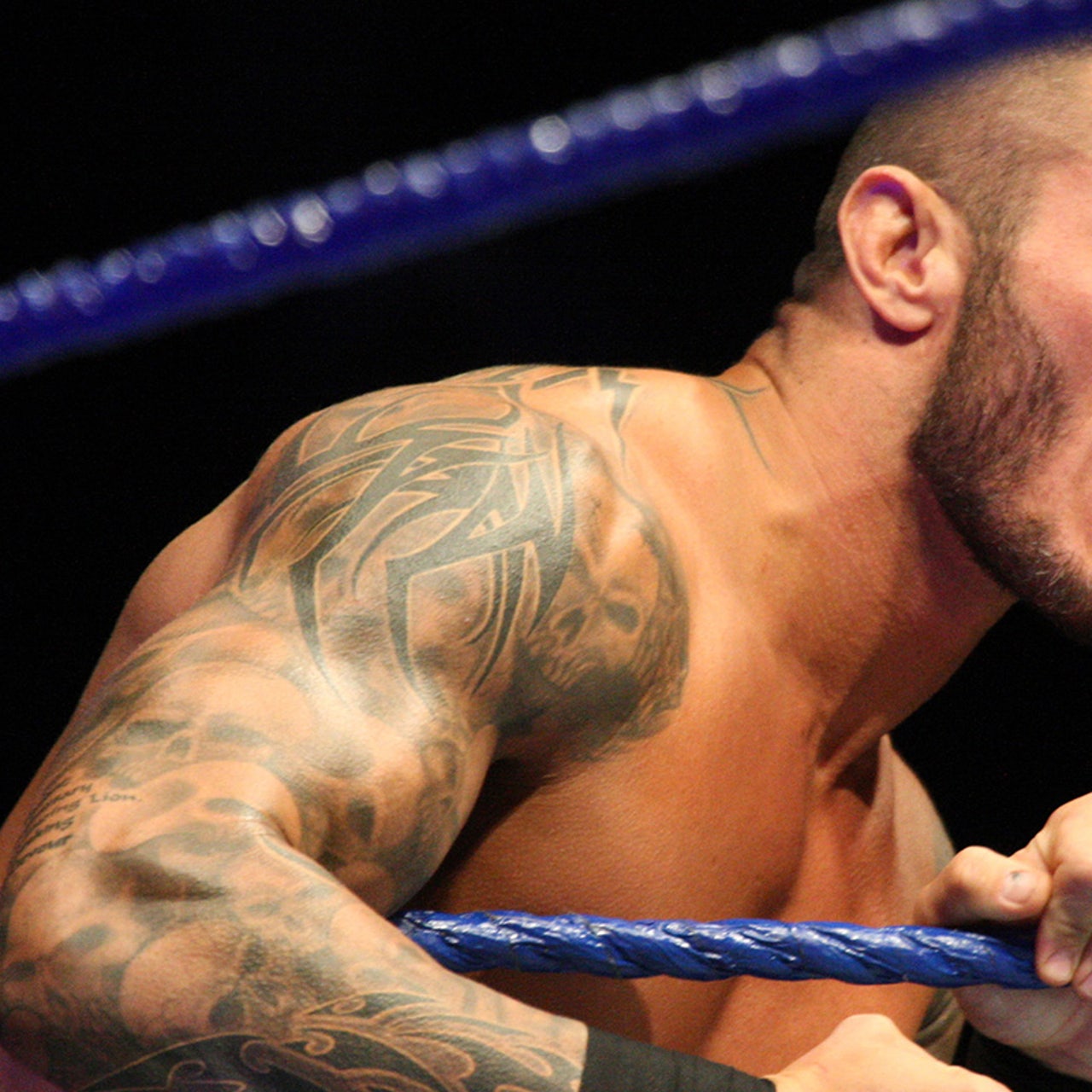
Randy Orton’s tattoos have changed as he has. He got his first pieces young, then later covered work he no longer related to. During time away from wrestling, he spent roughly 40 to 50 hours on the sleeves that became his signature: tribal lines, skulls, roses and lettering tied to family.

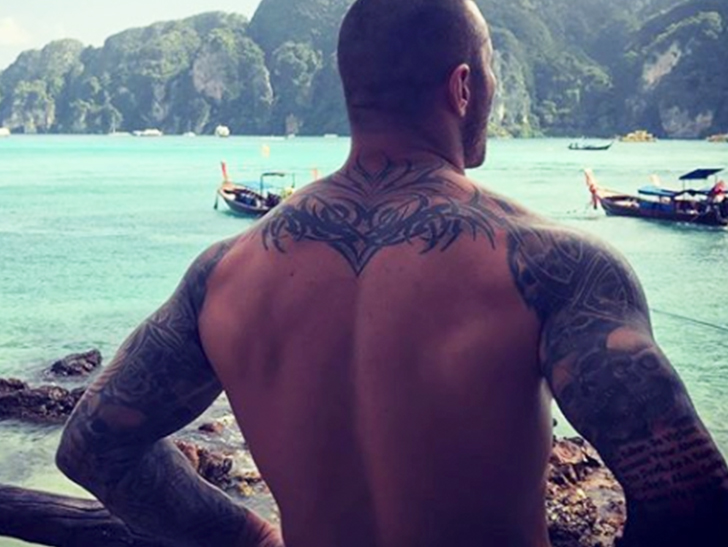
The collection can look like one giant sleeve, but the back and shoulders carry older tribal work while the arms have newer pieces. Some tattoos cover earlier designs; others connect the different parts. Orton has explained some choices, while other details have no confirmed private meaning.

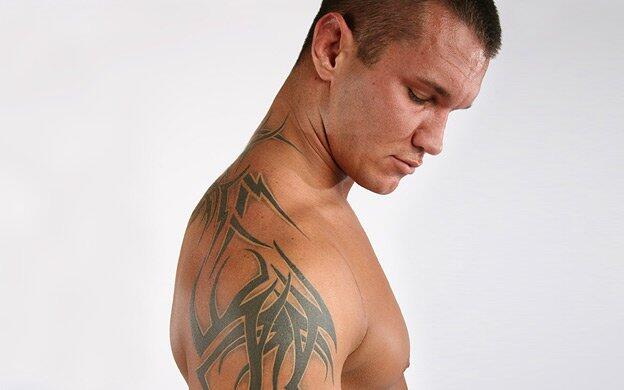
The tribal design across Orton’s back and shoulders

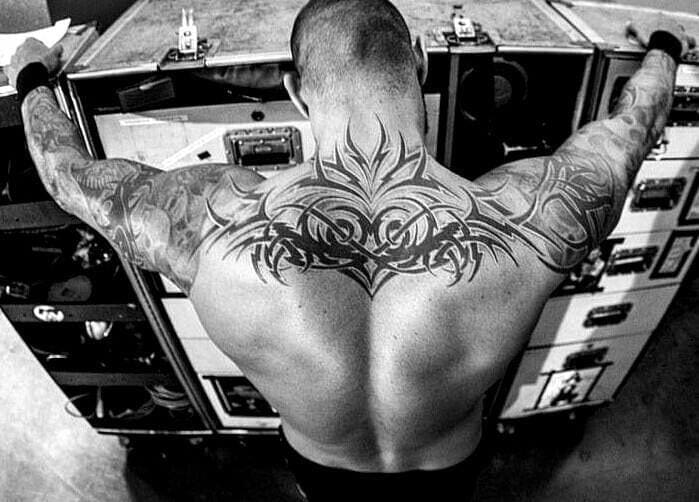
Randy Orton’s tribal back and shoulder tattoo

The tribal design across Orton’s back, shoulders and neck is one of his most recognizable pieces. Heavy black lines follow the shape of his body, wrapping over the shoulder blades and rising toward the neck. The pattern shifts when he turns or lifts his arms in the ring.

Orton has said some early tribal work had no deep story behind it. He was young, wanted tattoos, and later grew dissatisfied with parts of what he had chosen. That is why it is safer to describe the design than to assign it a symbolic meaning he never gave it.

The sleeves replaced and connected older work

Randy Orton’s tattoo sleeves and arm cover-up work

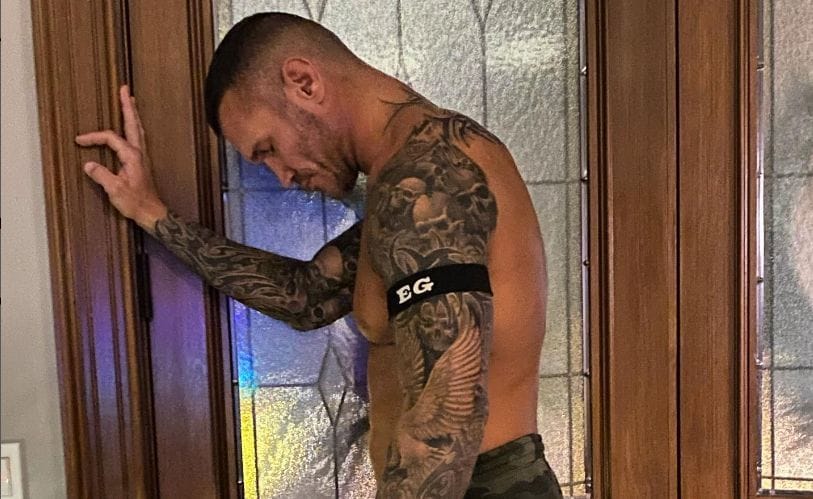
A serious injury kept Orton off the road long enough for extensive tattoo work to heal. He used the time to build the sleeves he had wanted for years. New tribal sections went around earlier designs, filling gaps and covering work he no longer wanted to show.

One of the earlier tattoos was connected to the United States Marine Corps. After his bad-conduct discharge, Orton said he covered it rather than keep displaying it. Older photos may show the original emblem; it is not fully visible in current images.

Photos from different years show the change. Before the sleeves were finished, they reveal bare patches of skin or an earlier emblem; later shots show skulls, shading and blackwork over the same areas. The tattoos developed over time.

Skulls and the Bible verse create the darker arm language

Randy Orton skull and script sleeve tattoos

Skulls appear throughout the arm work, framed by dense shading and ornamental lines. Orton has not given each skull its own meaning. They help tie older tribal patterns to the later additions and give the sleeves a darker look.

The Bible verse on the back of Orton’s right arm is more specific. It reads “Be sober, be vigilant, because your adversary the devil, as a roaring lion, walketh about seeking whom he may devour.” The passage is 1 Peter 5:8. It is a long piece of lettering, easier to read in a close photo than during a match.

The verse and skulls sit alongside each other, but Orton has not said they share one message. He has identified the Bible passage; the meaning of the other imagery is less specific.

The coloured rose is a family tribute

Randy Orton’s coloured rose tattoo

A small coloured rose stands out among the black-and-grey work. Orton has identified it as a tribute to his daughter Alanna Marie. Its colour draws the eye, and his explanation gives it a personal meaning beyond the usual associations people make with roses.

The rose mixes a family story with the bolder sleeve design. It is visible when Orton performs; only his own explanation tells us it is for Alanna.

Names, dates and the small hand tattoo

Some family names and dates are hard to make out in photographs. Tattoo lists also identify a small “Kim” with a heart on the middle finger of Orton’s left hand, connected to his wife. It is a more private-sized mark than the sleeves, and gloves or hand position can hide it.

Other family details are best described as reported family tattoos, rather than folded into an exact count. Orton’s collection grew in stages; some parts were covered, extended or blended into larger pieces. One event photo cannot show all of it.

How the collection changed during his wrestling career

Randy Orton’s back tattoo in a later wrestling-era photograph

Orton’s tattoos grew alongside his wrestling career. The early tribal pieces came first; the major sleeve sessions followed during time away from the road, when he could sit for long appointments and let the skin heal. Later photos show a more connected design, with less open space between the symbols, script and shading.

His ring gear leaves the arms, shoulders and upper back exposed, making the tattoos part of his entrance look. Arena lights flatten some of the shading, while close backstage shots bring out details that disappear in a wide television view. Each gives a different sense of the work.

What the public record can establish about Randy Orton’s tattoos

Randy Orton’s tribal back tattoo

Photos and Orton’s own comments establish the broad tribal back-and-shoulder piece, sleeves with skulls and lettering, a Bible verse, the coloured rose for Alanna Marie and smaller family marks. He has also said he covered early work he no longer liked. The meaning of every skull or filler line has not been made public.

Orton’s tattooed body has changed with age, work, family and regret. The sleeves are not a fixed design so much as a record of choices, including some he later decided to revise.

More wrestler tattoo guides

Megan Fox’s Tattoos and the Stories Behind Them

Megan Fox’s collection mixes long quotations with small symbols, portraits and tattoos she later changed or removed. She has explained some choices in interviews; photographs show other designs without telling us why she chose them. Several pieces look different now than they did when first photographed.

Strength and Shakespeare frame the upper body

Megan Fox’s Shakespeare quote tattoo on her shoulder blade

The small Chinese character at the nape of Fox’s neck is generally translated as strength. It is easy to miss beneath her hair or a collar, then clear when she turns her head or wears her hair up.

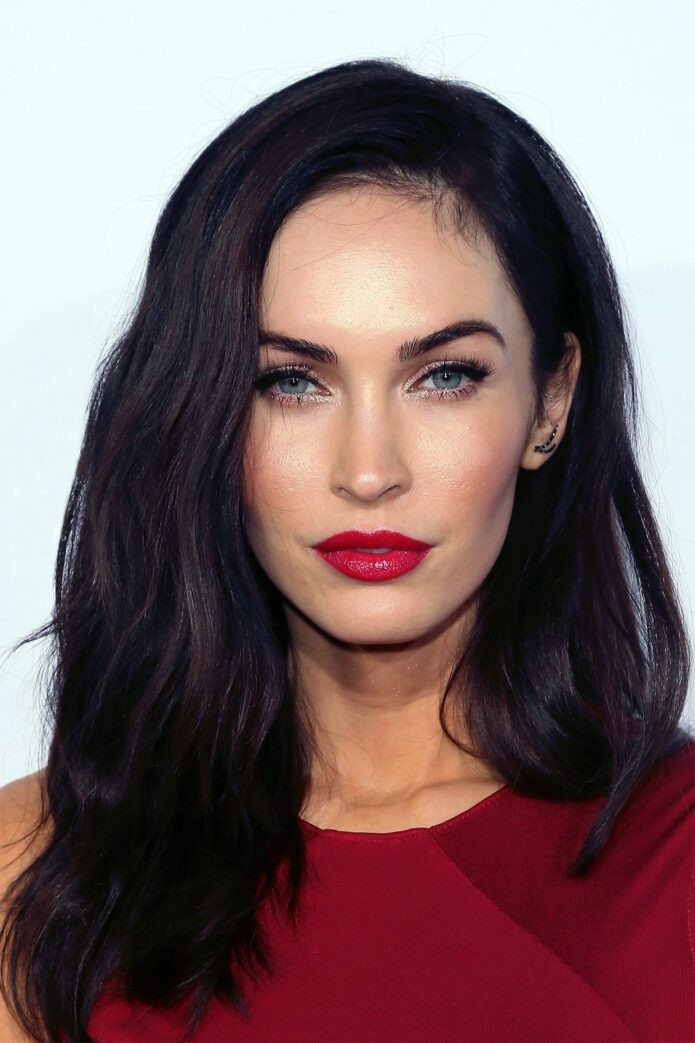
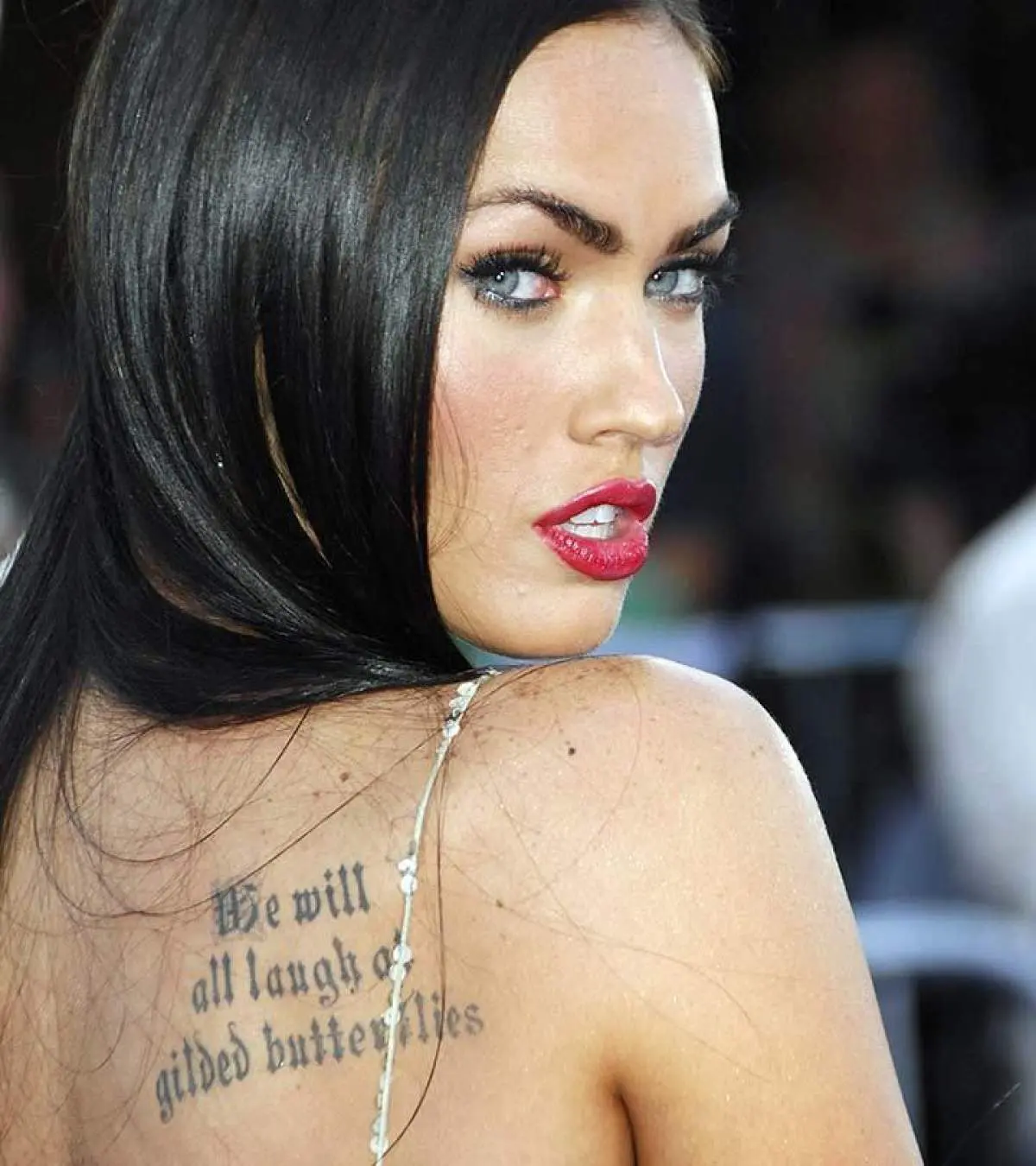
At her shoulder blade, Fox has “We will all laugh at gilded butterflies.” from Shakespeare’s King Lear. The long line and its spacing make it feel more like typography than an emblem. It is often read as a warning about appearances, though Fox has not said that is why she chose it.

The ribcage quotes are personal writing, not filler text

Megan Fox’s ribcage lettering tattoo

One rib carries the long line “And those who were seen dancing were thought to be insane by those who could not hear the music.” It is usually attributed to Nietzsche, though some early reports credited someone else. “Attributed to Nietzsche” is the most accurate description.

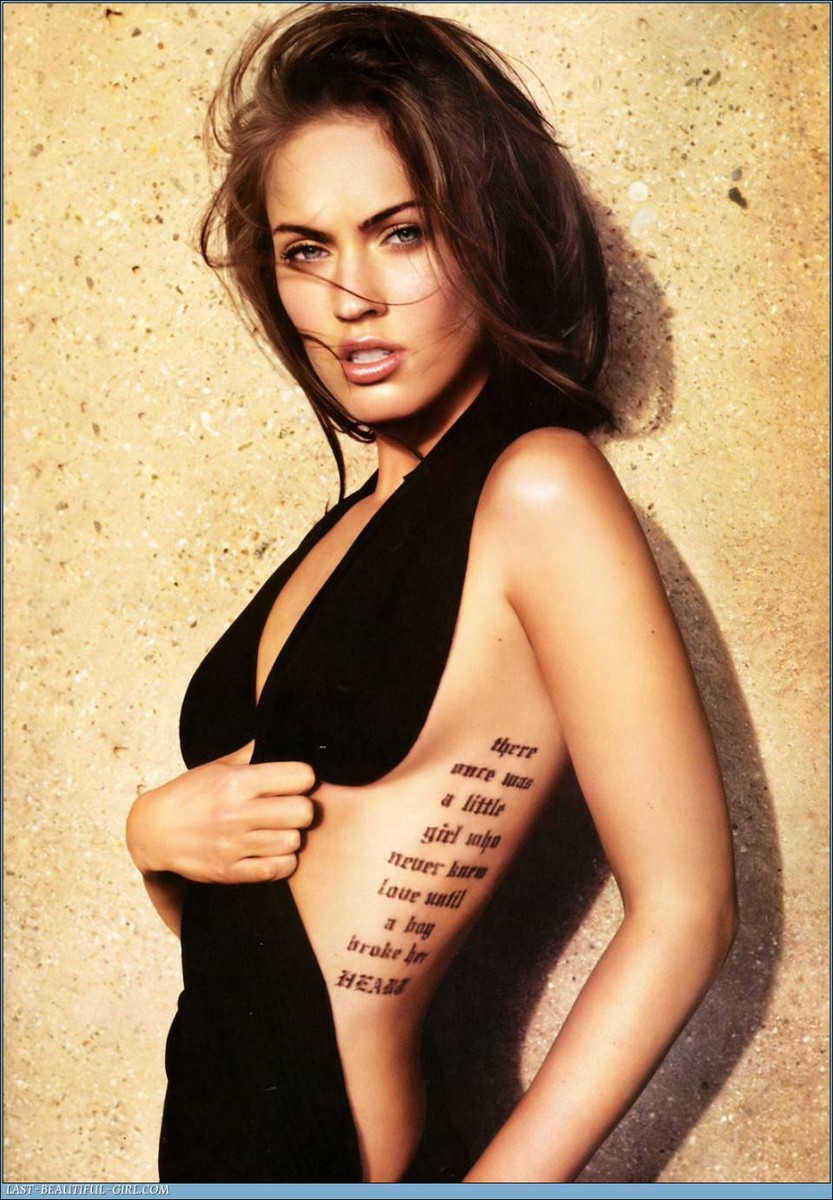
On the other side, Fox has a poem beginning “There once was a little girl who never knew love until a boy broke her heart.” Reports say she wrote it herself. The long text follows the curve of her ribs; the words are public, but the experience behind them is hers to explain.
Small symbols give the collection a different rhythm

Megan Fox’s yin-yang wrist tattoo

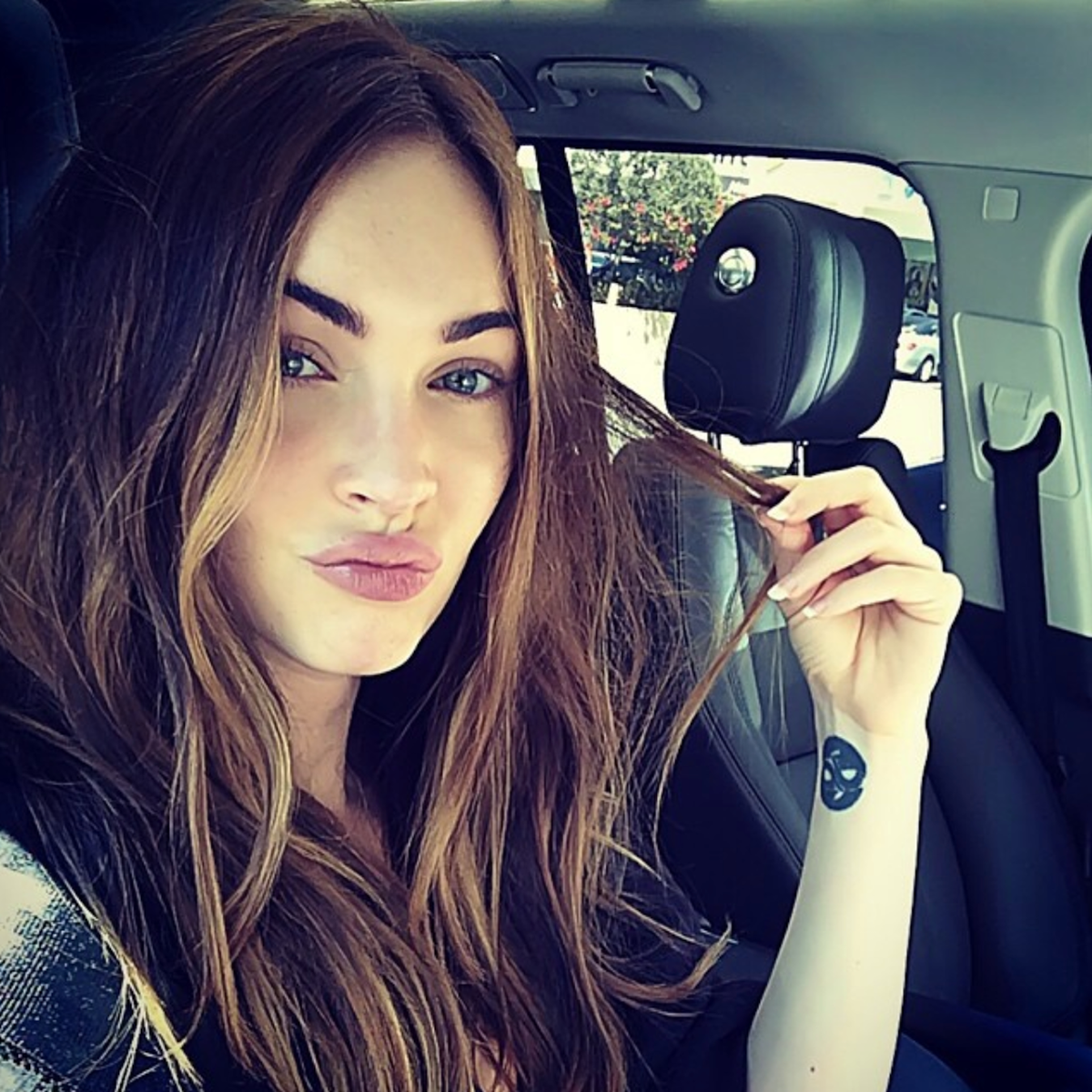
Fox has smaller designs too: a yin-yang on her inner wrist and a coloured crescent moon and star near her right ankle. The ankle tattoo was one of the few coloured pieces in her earlier collection, so it stands out beside the black lettering. Photos show its shape clearly, but its personal meaning is less documented.

Lists also mention dots and tiny finger marks, plus a cat playing piano with the words “play him off.” Sources are less consistent about where that tattoo sits or whether it is still visible.

Marilyn Monroe and the Brian tattoo changed over time

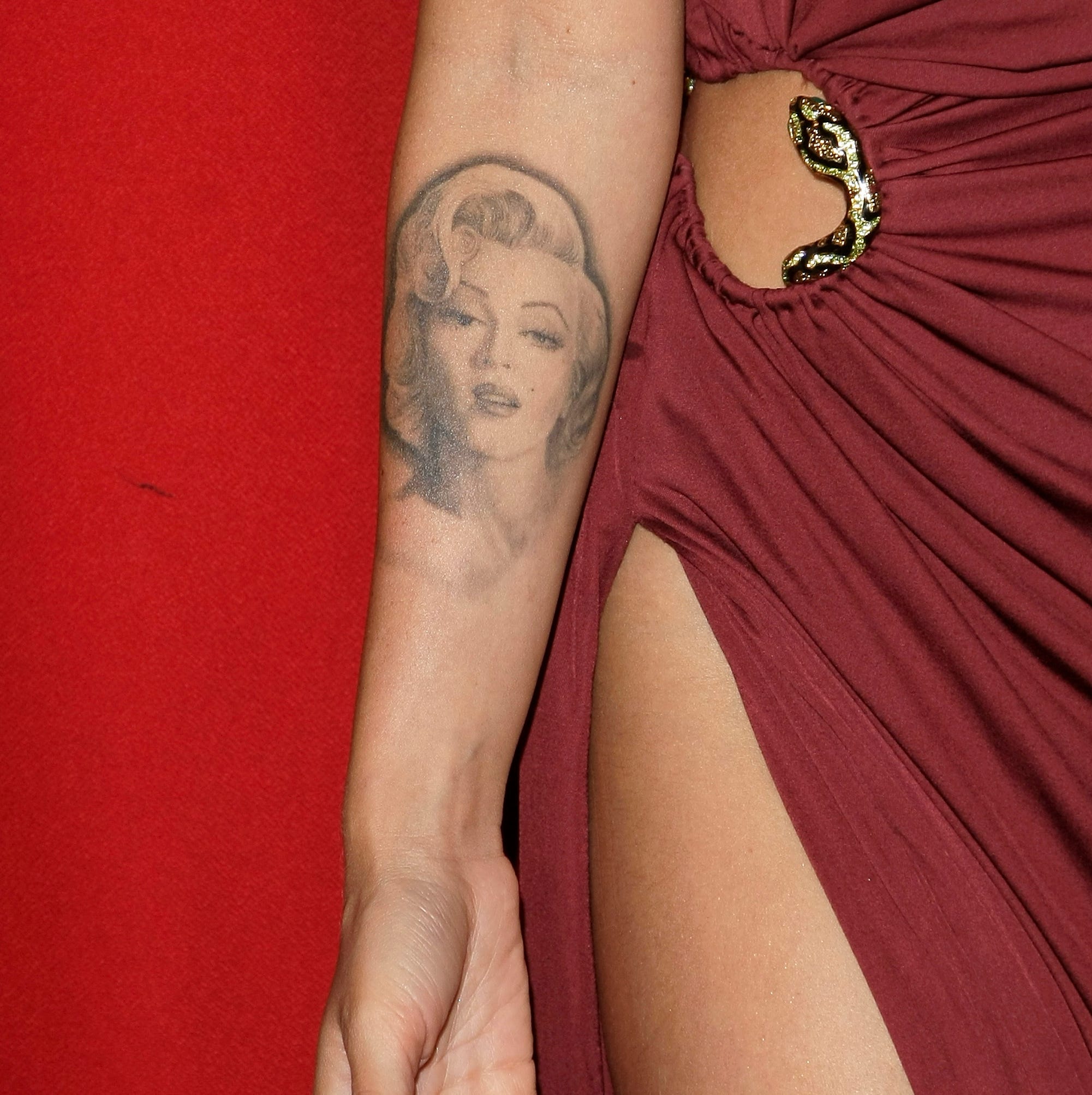
Megan Fox’s Marilyn Monroe forearm tattoo

The Marilyn Monroe portrait on Fox’s right forearm used to be one of her most recognizable tattoos. She later began laser removal, explaining that she no longer wanted to carry what she saw as Monroe’s negative energy. Older photos show the full portrait; later ones show it fading.

Fox also had Brian, the name of Brian Austin Green, tattooed near her hip during their relationship. Later coverage said she covered it. The change is part of the tattoo’s history, even though newer photos no longer show the original lettering.

“El Pistolero” belongs to the later chapter

Later photos show the Spanish phrase “El Pistolero” (“the gunman”) along Fox’s collarbone. Its timing and association with Machine Gun Kelly drew public speculation, especially after the couple discussed nickname-related tattoos in music. The visible wording and reported context are clear; more than that would be guesswork.

The designs do different things. Shakespeare and the rib poems are long passages of text; the small symbols are quieter, while the Monroe portrait and “El Pistolero” belong to different periods of Fox’s life.

What the public record can establish:

Photos and interviews identify the locations, wording and visible motifs, but they do not explain every choice. Fan lists sometimes add meanings that Fox has not shared. Her collection also changed, with some tattoos faded, covered or removed.

Fox’s tattoo collection moves between literary text, small symbols and pieces linked to people or eras in her life. The shoulder and upper-body lettering is easiest to see in close photos; the ribcage quotes are usually hidden by clothing.

The Monroe portrait and Brian’s name changed or disappeared over time. Later photos show the portrait fading and the name covered. “El Pistolero” appeared in a later period, so it belongs with newer images rather than with Fox’s earliest tattoos.

Small hearts, stars and other symbols fill the spaces around the larger words. Their shapes are visible, even when Fox has not explained what they mean.

Fox’s tattoos have not stayed in one form. Some were covered, adjusted or partly removed, and the angle of a photograph can make a mark look different. The date helps explain what a picture does—and does not—show.

The long quotations and tiny symbols have different visual weight. The lettering stretches across her ribs or shoulder, while the smaller marks show up only on closer inspection.

Megan Fox showing later arm and chest tattoos

Small symbols between the larger words:

The compact marks give Fox’s collection a different rhythm. They break up the long lines and portraits, though their personal meanings are not always public.

How the later pieces changed the map:

Fox’s later tattoos sit on top of a history that includes cover-ups and changed designs. Older and newer photos show the difference around her forearm, hip and collarbone.

The quotes and small marks also sit at different scales. A line of text can run across the ribs, while a symbol may fit on a wrist or ankle. One photograph rarely shows every part of the collection.

A tattoo that appears in an older photo may be faint or covered in a later one. That does not make the first image wrong; it records an earlier version of the design.

The ribcage quotes are easiest to read in wide, well-lit photos. Cropped portraits can cut off the words, while a tight close-up helps show the smaller symbols.

Across the collection, Fox moves between literary lines, personal writing, small motifs, a portrait and later lettering. The designs do not all carry the same kind of meaning.

The photos show what each tattoo looks like; Fox’s interviews explain only some of the stories behind them.

Placement changes how the writing reads. A line across the ribs works differently from a short phrase near the shoulder, and a crop that cuts off the first or last word can make a quote look incomplete. Fox has not given a separate personal meaning for every inscription.

A heart, star or other small mark can be clear in a photo even when its personal meaning is unknown. The shape and location are still worth recording on their own.

Cover-ups matter in an older collection. A newer design may hide an earlier one, so a current photo cannot show what was underneath. Fox’s tattoo history includes both the original pieces and the changes that followed.

More actor tattoo guides

Alan Ritchson’s Matching Tattoo, Rib Number and Forearm Work

In GQ’s tattoo tour, Alan Ritchson said he had 23 tattoos and talked through several of them. The first was a matching piece with his wife Catherine; later additions include “81” on his ribs and a large forearm project. He has also explained tattoos for his children, though not every mark has a public story.

What the GQ tattoo tour documents about Alan Ritchson’s tattoos

GQ places the first tattoo in Ritchson’s tattoo history, early in his relationship with Catherine; they got matching designs together. It was a shared decision, not a tattoo for a film role. His later work grew larger, but the matching piece still marks the start of the collection.

Reports confirm the matching origin, but do not describe every line or give a private meaning. A symbolic reading beyond what Ritchson has said would be guesswork. Photos show the size and placement; the GQ account explains why it was his first tattoo.

The matching piece began the collection. Ritchson later added larger designs, turning a shared tattoo into the first point in a much broader story.

Forearm lettering and the matching Hachiko tattoo

Alan Ritchson’s forearm lettering and cross tattoos shown during GQ Tattoo Tour.

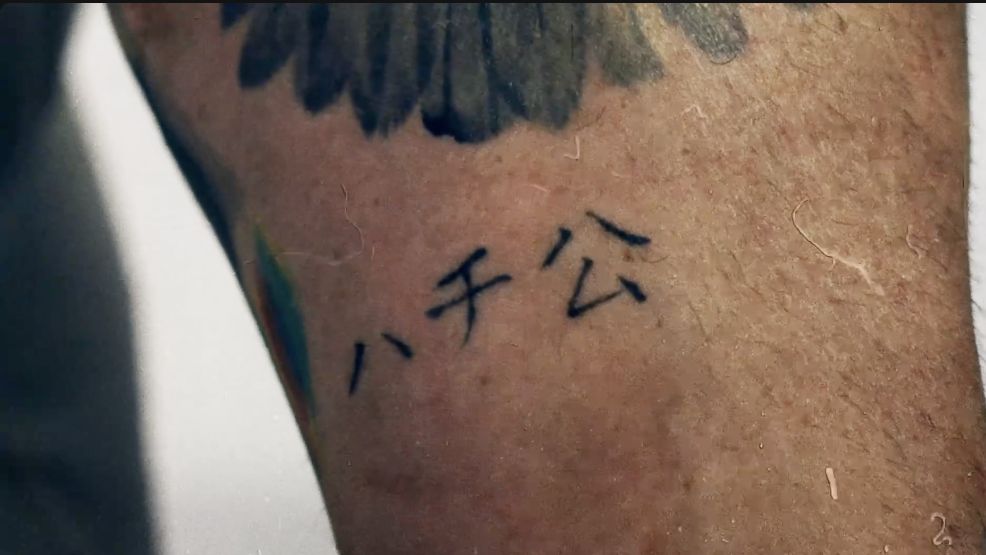
GQ identifies tiny Japanese characters as Ritchson’s first tattoo, a matching Hachiko design he shares with Catherine. He connects Hachiko with loyalty and lasting love. The tour also shows a cross and nearby handwriting, which he reads as “boundaries, devotion and winter storms.” The photo gives a close view of the lettering, though not every mark is legible.

Dove, flame and shield designs honour his sons

Close views of Alan Ritchson’s dove and sword-and-shield family tattoos, alongside a photo of the actor showing his arm.

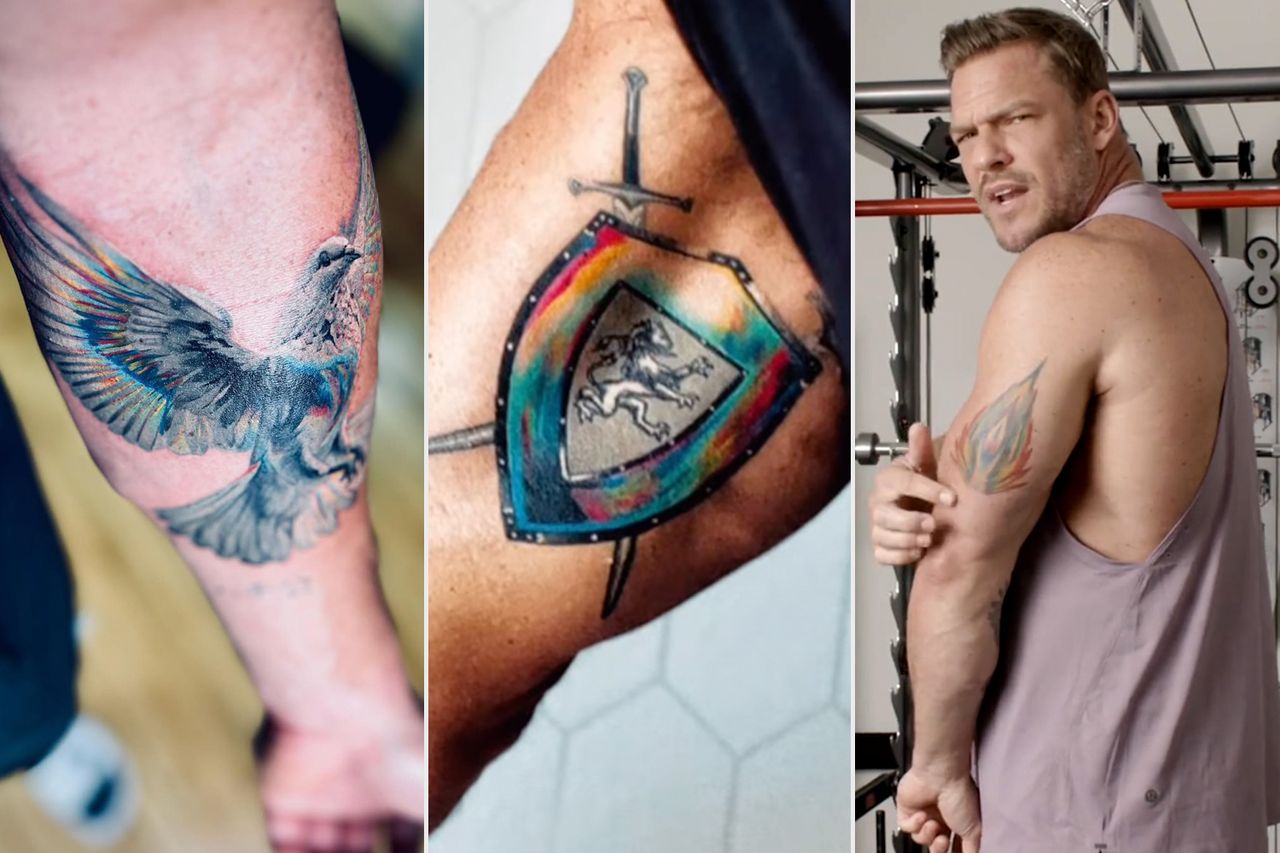
The family tattoos include a dove for his eldest son, Calem; an abstract flame for Edan; and a sword-and-shield crest for Amory. Ritchson explains the dove and flame in GQ, while People identifies the crest as a tribute to Amory. Each design has a specific connection to one of his sons.

The “81” on Ritchson’s ribs

A multi-panel view of Alan Ritchson’s tattoo work, including the 81 numerals and arm designs.

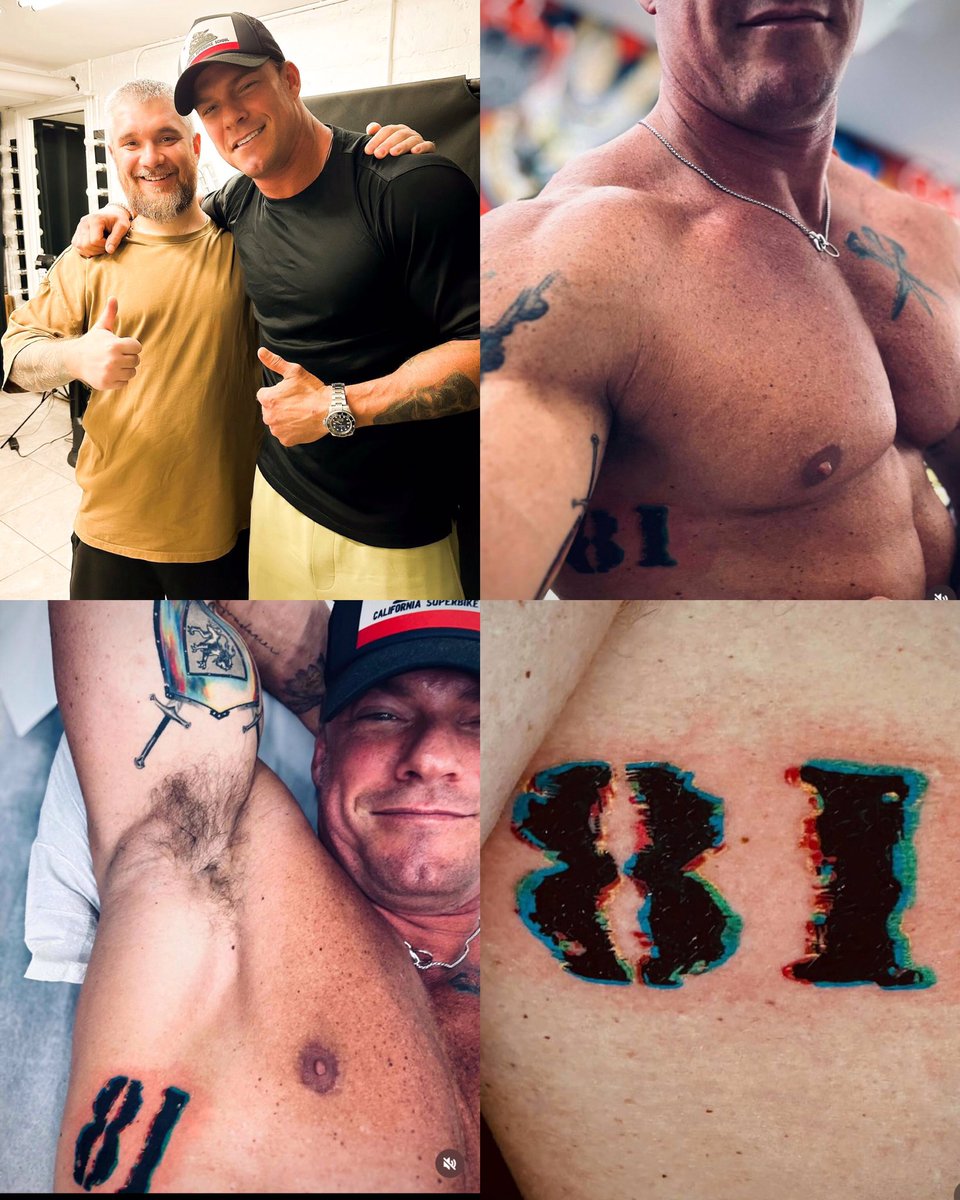
Coverage also documents a separate tattoo: “81” on Ritchson’s ribs, a piece he added after the matching design. The number appears in later discussions of his collection, though older photos often hide the ribs under clothing.

Earlier coverage identified the number and its placement without a clear explanation. Ritchson later discussed the tattoo tour and tied “81” to a film project. A close-up shows the marking, but the GQ interview supplies the context.

On its own, “81” could be a date or a private reference. Ritchson’s explanation connects it to the film War Machine and the character he played, rather than to an address or a birthday.
GQ connects the number to the making of War Machine: Ritchson says the story moved him enough to mark 81 on his ribs, and he wanted to embody the character.

The large forearm project and the tattoo-tour era

Alan Ritchson showing tattoos across both arms during GQ Tattoo Tour.

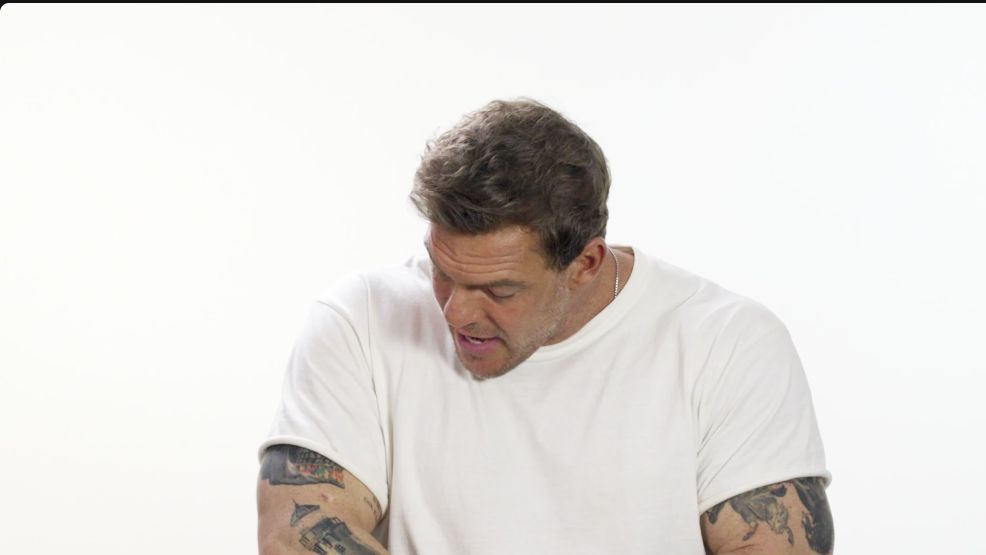
Ritchson’s forearm became the largest visible expansion of his collection. British GQ and other coverage say the artist spent about 16 hours on the work. He also had to let it heal before filming a demanding water sequence for Reacher, tying the tattoo to a particular production period.

The 16 hours describe the size and process, not a single named design. Photos show black-and-grey work and lettering across the forearm, but they do not identify who created every part or what each mark means.

Photos can show different stages of the forearm work. While it healed, wardrobe or bandages may have hidden it; later images reveal more of the finished piece. GQ gives Ritchson’s account, while production coverage explains why the timing mattered on set.
GQ points out a lighthouse on the arm and describes the unfinished forearm as Zeus throwing a lightning bolt. A mountain and horses were still to be added. The feature says Pasha Ink did most of Ritchson’s tattoos.

How the documented tattoos fit together

Alan Ritchson with tattoos visible on both forearms, showing the collection discussed across the article.

The timeline starts with the matching Hachiko tattoo, then moves to “81” and the forearm work around the Reacher filming period. That sequence helps make sense of photographs taken at different stages.

Ritchson’s total of 23 comes from his own tattoo-tour conversation. The feature does not identify every one with the same precision: some are small or private, and others disappear in event photos. The number is his estimate, not a complete visual inventory.

The dates help separate the designs. The matching tattoo belongs to the early part of his relationship with Catherine; the rib number and large forearm project came later. A recent close-up should not be mistaken for proof that every part was present in earlier photos.

A count and a design-by-design list are different things. Ritchson gave a total, but only some tattoos have a clear name, location and explanation. The documented pieces make a useful record without filling in what the interviews leave out.

What remains unconfirmed

The reports do not identify every meaning, artist or location in Ritchson’s collection. A dark shape in a distant photograph is not automatically a named tattoo. The clearest entries are the matching Hachiko, the “81” rib tattoo and the forearm project; a future interview or sharper image may add more.

More actor tattoo guides

Inside Zac Efron’s Tattoo Collection

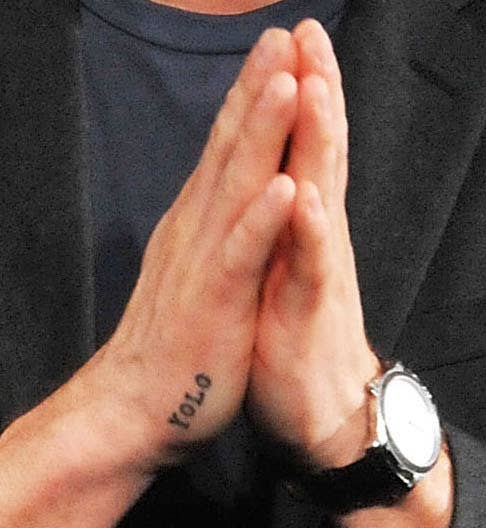
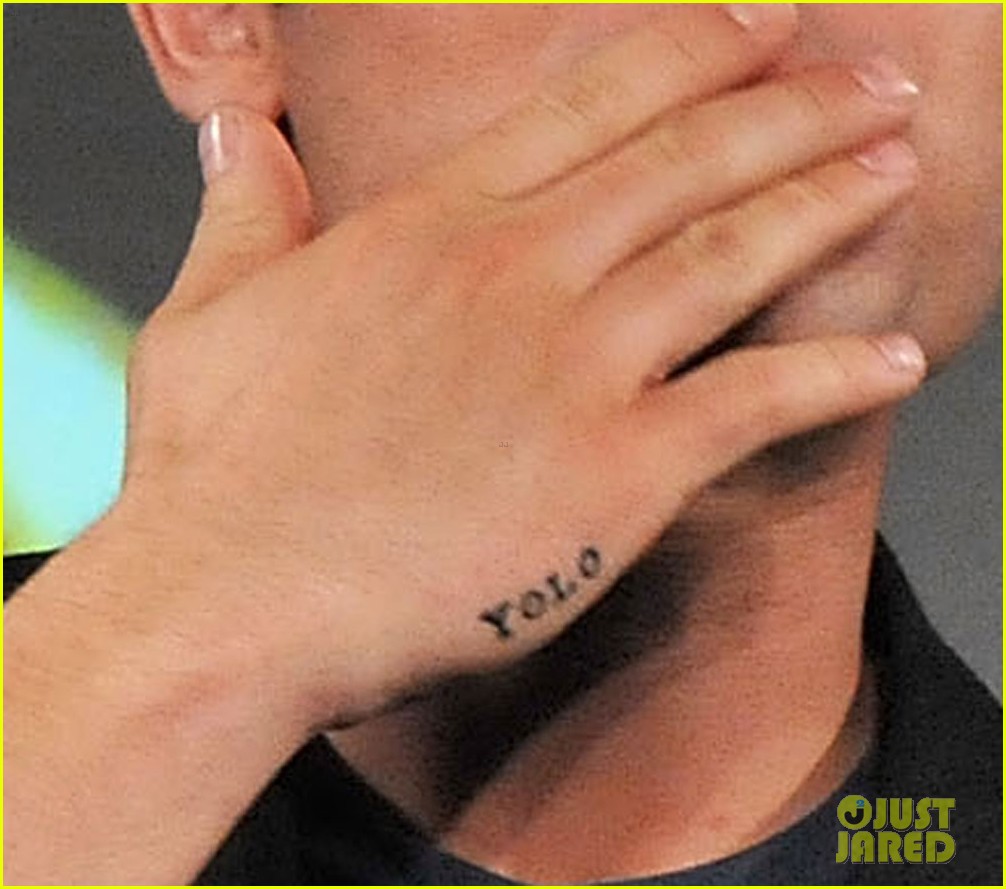
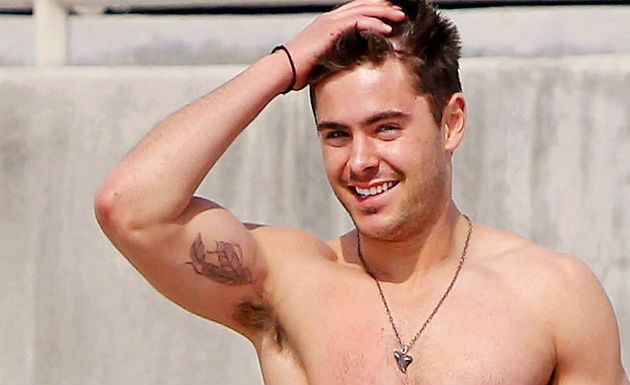
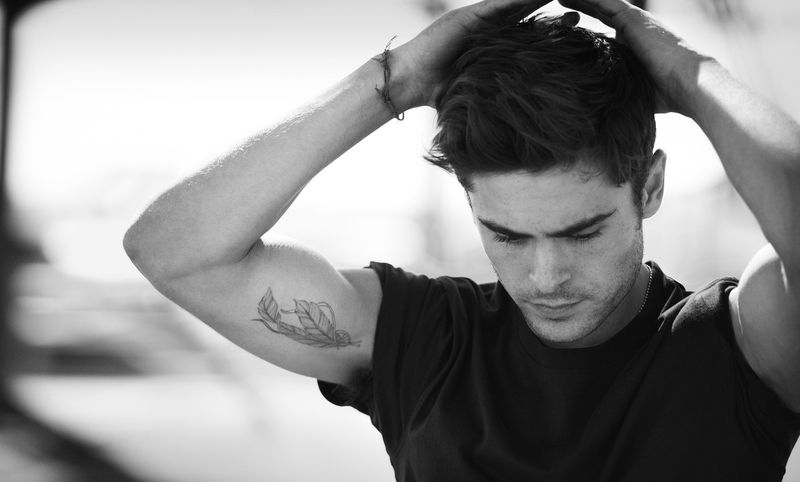
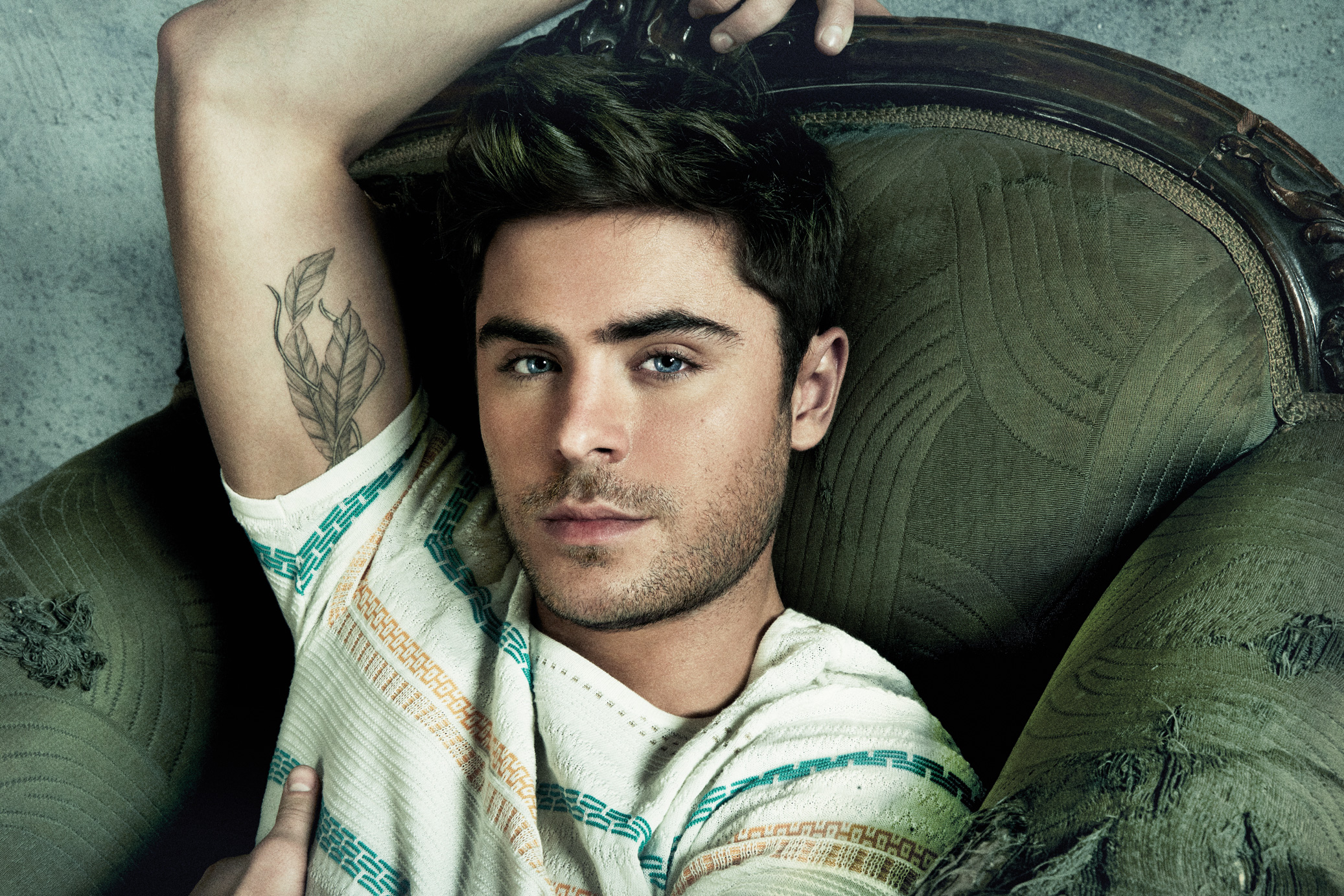
Zac Efron’s tattoo collection is small: the word YOLO on his right hand and a pair of feathers on his inner right bicep are the two designs most consistently documented. Both have appeared in public photos, though the explanations behind them are limited. Efron has reportedly said he wanted the YOLO lettering, while the feather tattoo’s meaning has not been confirmed.

How many tattoos does Zac Efron have?

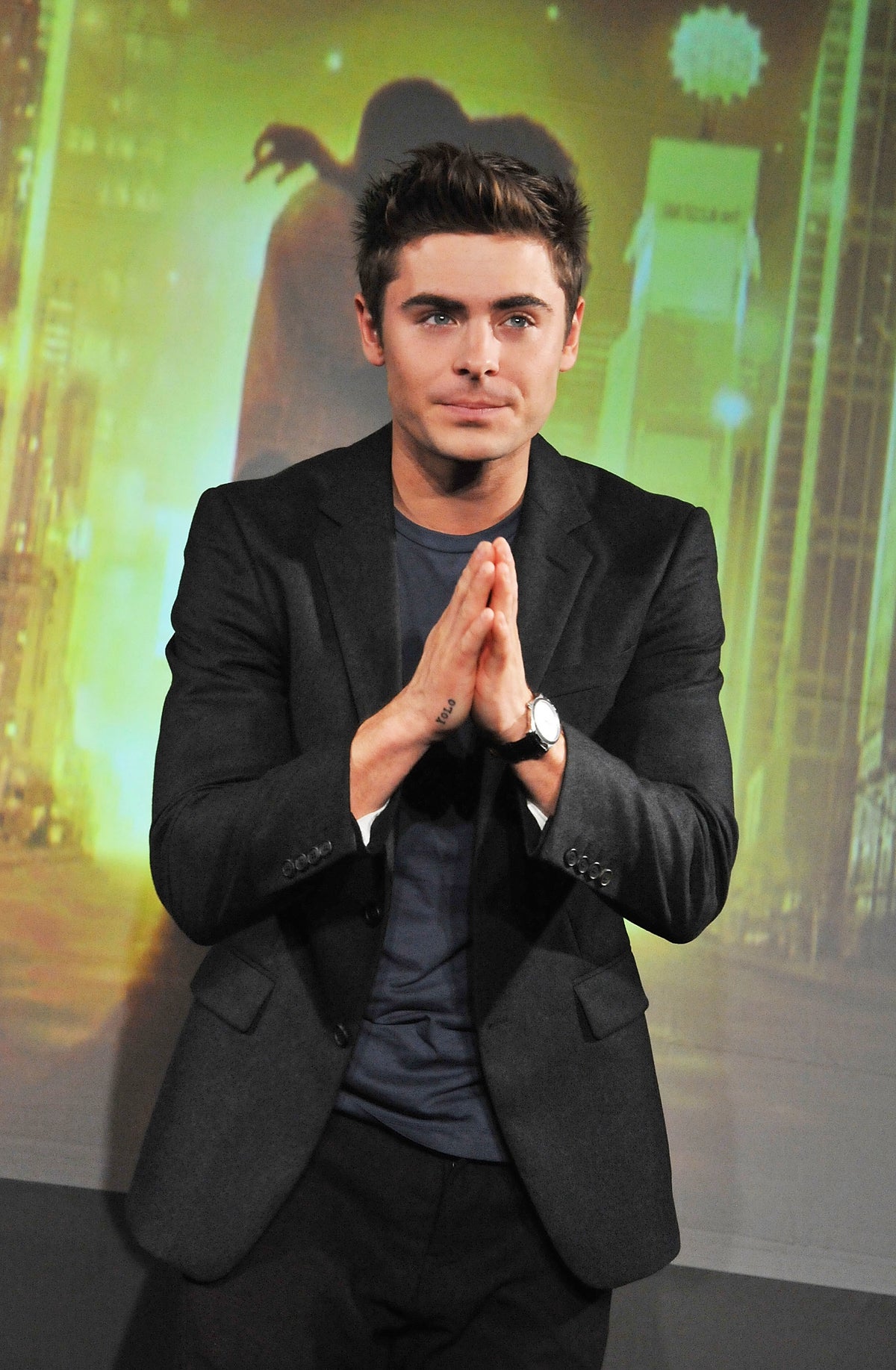
Zac Efron’s YOLO tattoo on his right hand

Efron has not published an official count of his tattoos. Body Art Guru lists two permanent designs and separates them from temporary ink he has worn for appearances or film roles. That distinction matters: makeup and promotional styling can make a temporary mark look permanent in a photo.

Those two designs have the clearest record. Some online lists add marks on his neck, wrist or arm, but without a dated photo or a direct source it is hard to tell what they show. A picture can confirm that a mark was visible on one day; it cannot tell us when it was done, whether it later changed or what Efron intended it to mean.

The YOLO hand tattoo

Close view of Zac Efron’s YOLO tattoo on his right hand

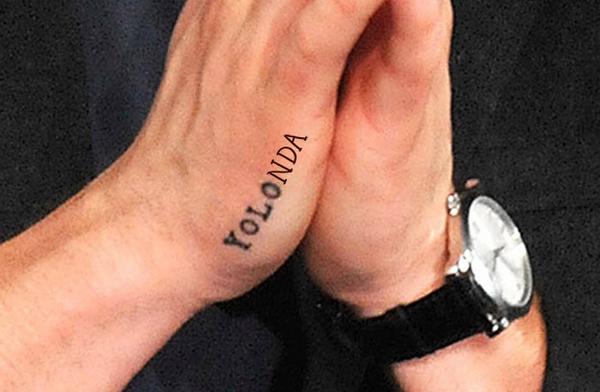
Efron’s best-known tattoo is “YOLO”—short for “you only live once”—on his right hand. Body Art Guru says he revealed the tattoo while promoting New Year’s Eve in 2011 and wanted the words without giving them a deeper meaning. The phrase invites big interpretations, but his reported explanation was straightforward: he liked the lettering.

The hand placement makes even a small tattoo easy to spot in interviews, photographs and red-carpet appearances. Its plain lettering also makes it easy to recognize in pictures from around 2011. There is no clear close-up that establishes a particular font, so “simple lettering” is the safest description.

Later entertainment stories have raised questions about whether the hand tattoo was covered, changed or recreated temporarily. They do not provide a full account of any treatment. In public photos, its appearance has varied; without a direct explanation from Efron or a tattoo professional, the reason is unclear.

The double-feather bicep tattoo

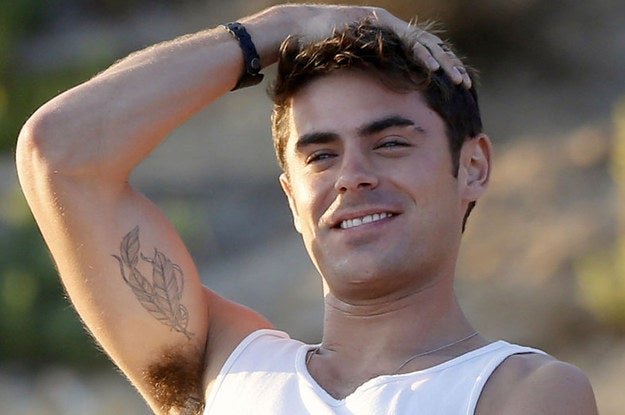
Zac Efron’s double-feather tattoo on the inside of his right bicep

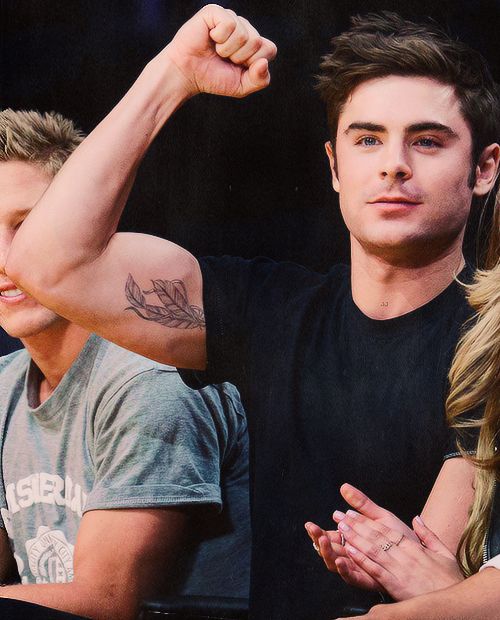
The other consistently documented design is a pair of feathers on the inside of Efron’s right bicep. Body Art Guru says it was first seen on the cover of Men’s Health in 2012. The placement helps explain why it appears in some photos and not others: a short sleeve can cover it, while a raised arm reveals it.

Feathers are often associated with freedom or travel, but Efron has not confirmed either as the tattoo’s meaning. The reference says he has not publicly discussed the tattoo’s meaning, so its subject and placement are known while his reason for choosing it remains private.

Some photos show only part of the feather design. An arm turned away from the camera, a tight crop or poor lighting can hide the rest. A clear view of the inner right bicep is more useful than a distant red-carpet shot where the tattoo is only suggested by a dark mark.

What the 2012 photographs show

Zac Efron raising his arm with the feather tattoo visible

Some of the clearest public views of the bicep tattoo date from 2012. Licensed event photos from that period show its placement and approximate size, but they cannot tell us who did the work or how it was planned. They document what was visible at the event.

The date matters. A photo labeled 2012 shows how the tattoo looked then, not necessarily how it looks now. Ink can soften over time, and a single image may not show a later change or cover-up.

Are there other Zac Efron tattoos?

Online searches turn up other supposed tattoos, but some marks may be temporary, part of a film’s makeup or too blurry to identify. Efron has appeared in productions that use body makeup and character styling, so an on-screen mark is not automatically a personal tattoo.

In some photos, necklaces, shadows, clothing seams or body hair can look like small symbols. Without a reliable source, they should not be counted as confirmed tattoos. The hand lettering is linked to his 2011 New Year’s Eve promotion, and the feathers were photographed around his 2012 Men’s Health cover.

Who tattooed Zac Efron?

The sources used here do not name the tattoo artist behind either design. Artist credits appear often in celebrity coverage, but there is no reason to guess when no source connects a particular artist to Efron’s tattoos.

The visible styles are simple lettering on the hand and a feather design on the inner arm. Photos support those descriptions, but they do not show whether the two tattoos were planned together or tied to a particular tattoo tradition.

What do Zac Efron’s tattoos mean?

Zac Efron showing his feather tattoo

Body Art Guru reports that Efron wanted the YOLO phrase and did not attach special importance to it. The feathers have no confirmed public explanation. Freedom, movement and resilience are common readings of feather imagery, but they are interpretations rather than statements from Efron.

The two tattoos can be described clearly even where their personal significance is unknown. Keeping the visible details separate from guesses gives readers a more reliable picture of the designs and their placement.

Frequently asked questions

Does Zac Efron have a YOLO tattoo?

Zac Efron’s right-hand YOLO lettering in a promotional photograph

Yes. The widely documented design is YOLO on his right hand. It came to public attention around 2011, during promotion for New Year’s Eve.

Where is Zac Efron’s feather tattoo?

Zac Efron displaying the feather tattoo on his inner right bicep

The double-feather tattoo is on the inside of his right bicep. It was widely seen around his 2012 Men’s Health cover appearance.

What does the feather tattoo mean?

Close photograph of Zac Efron’s feather tattoo

Efron has not publicly explained the feather tattoo in the sources reviewed. Freedom is a common interpretation, but it has not been confirmed by him.

Does Zac Efron have temporary tattoos?

Zac Efron’s hand tattoo in close view

He has appeared with temporary or role-related body designs. Without separate evidence, those marks should not be counted as permanent personal tattoos.

Efron’s documented collection centers on two designs: YOLO on his right hand and a pair of feathers on his inner right bicep. Dated photos and repeated descriptions support both. Other marks are harder to verify, so the public record remains a short one.

More actor tattoo guides

Machine Gun Kelly’s tattoos, before and after the blackout

Machine Gun Kelly’s tattoos are easiest to follow as a timeline. Before the blackout, they included record references, drawings, jokes, a surrealist backpiece and designs he discussed in interviews. In 2024, tattoo artist ROXX covered much of his chest, stomach and arms in black. Since then, Baker has added smaller pieces in places that remain visible. The earlier work still tells part of the story, but it belongs to the collection he had before the blackout, not a complete picture of what can be seen today.

Baker has explained some pieces himself, and other designs are documented in interviews with artists or in established coverage. With so much ink and a major cover-up, older photos can be mistaken for current views.

The blackout covered a chaotic patchwork, not a blank canvas

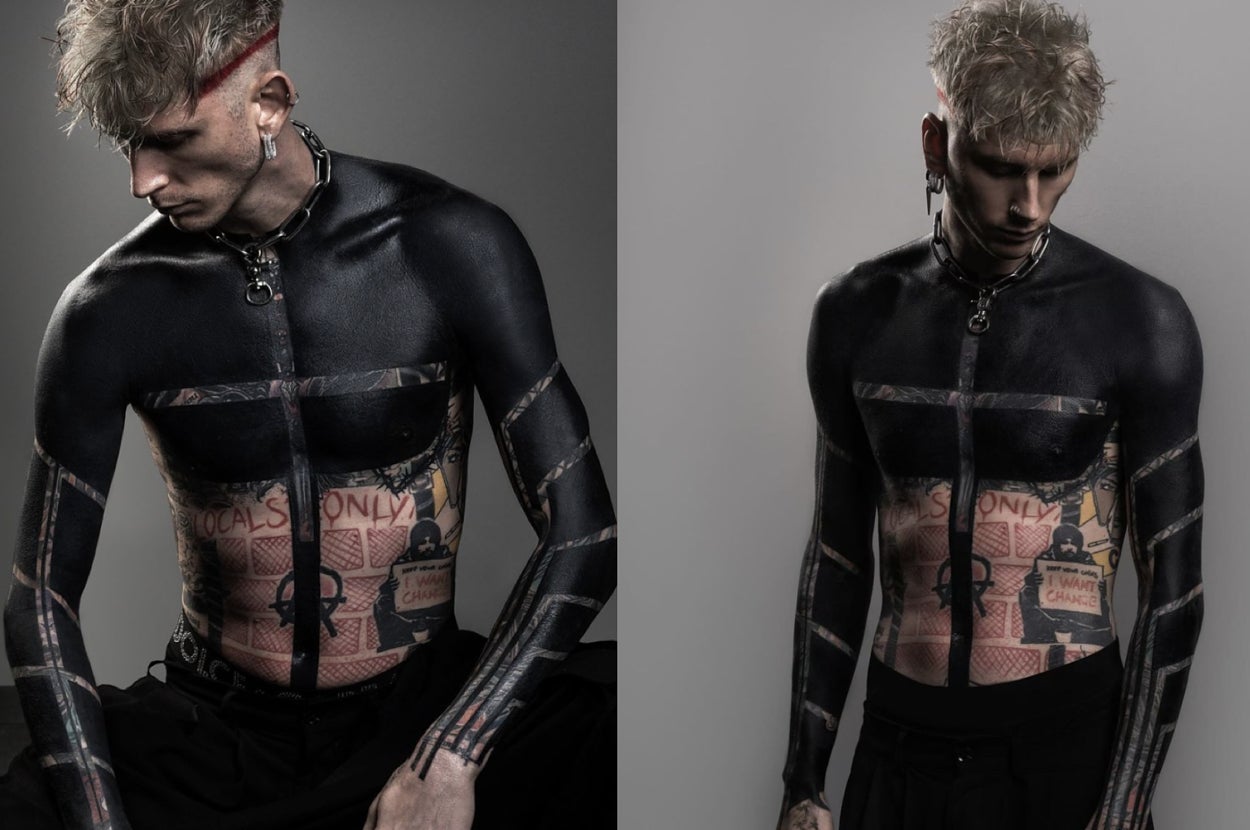
Machine Gun Kelly showing ROXX's 2024 blackout work, with the cross-shaped negative space and older lettering still visible

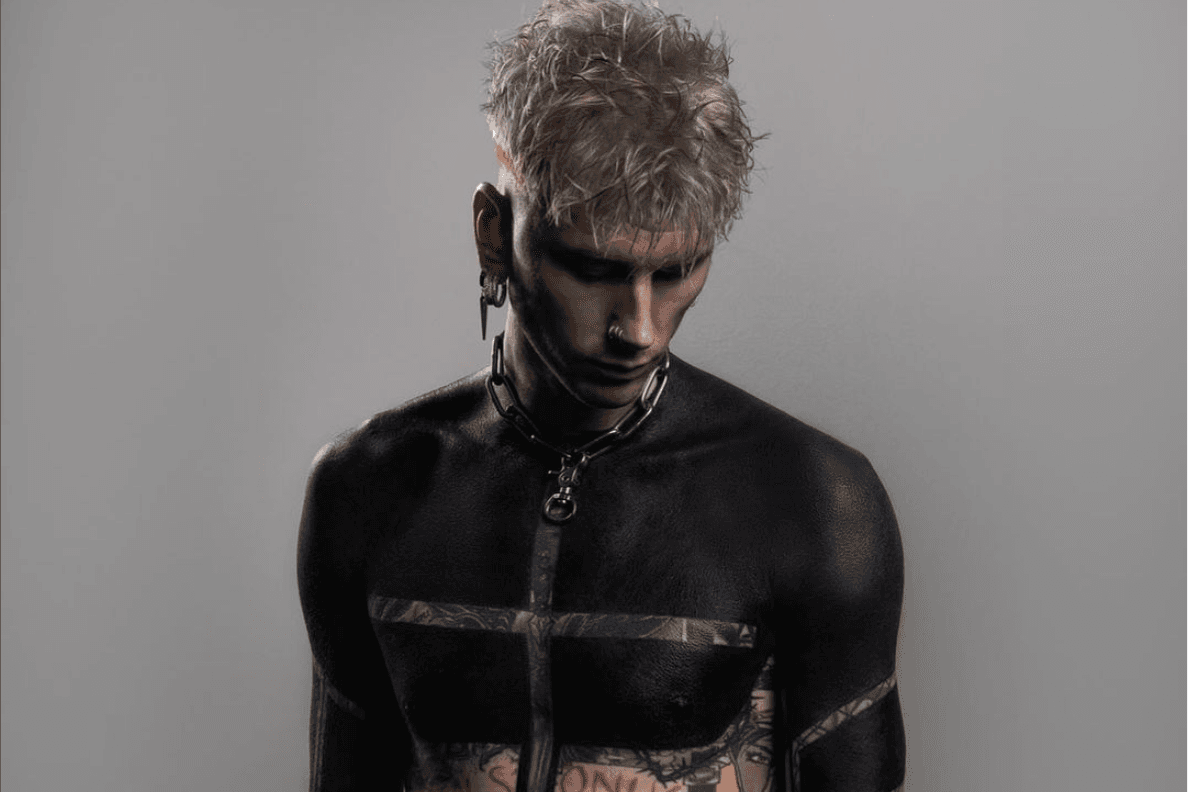
In February 2024, Baker revealed a broad blackwork cover-up by Los Angeles artist ROXX. The ink covers much of his upper body, including his arms, chest and stomach. Rather than place a new picture over each old tattoo, ROXX created a geometric blackout. An untouched cross-shaped area cuts through the chest, while narrow gaps and panels leave some earlier letters and symbols visible.

Baker captioned the project “for spiritual purposes only.” Early coverage said the full motivation was unclear. He later explained that he wanted to rethink how skin could look, in a 2025 interview, and told Billboard Canada in 2026 that older layers had come to represent periods he no longer wanted to carry. ROXX had proposed a project that might take about two years; Baker pushed to finish it in roughly two months. He said he became very ill during the process, describing yellowing skin, swelling or other changes around his lymph nodes, and difficulty moving parts of his upper body.

Early reports gave a more exact schedule: ROXX told TMZ that the sessions began in December 2023 and involved 13 appointments of six hours each. Baker’s 2026 interview helps explain why the compressed timetable was so punishing. The blackout was a sweeping change across his body, built from geometric work and cut-throughs of bare skin rather than a quick dark cover over a few designs.

His arms carried music, hometown pride and spontaneous ideas

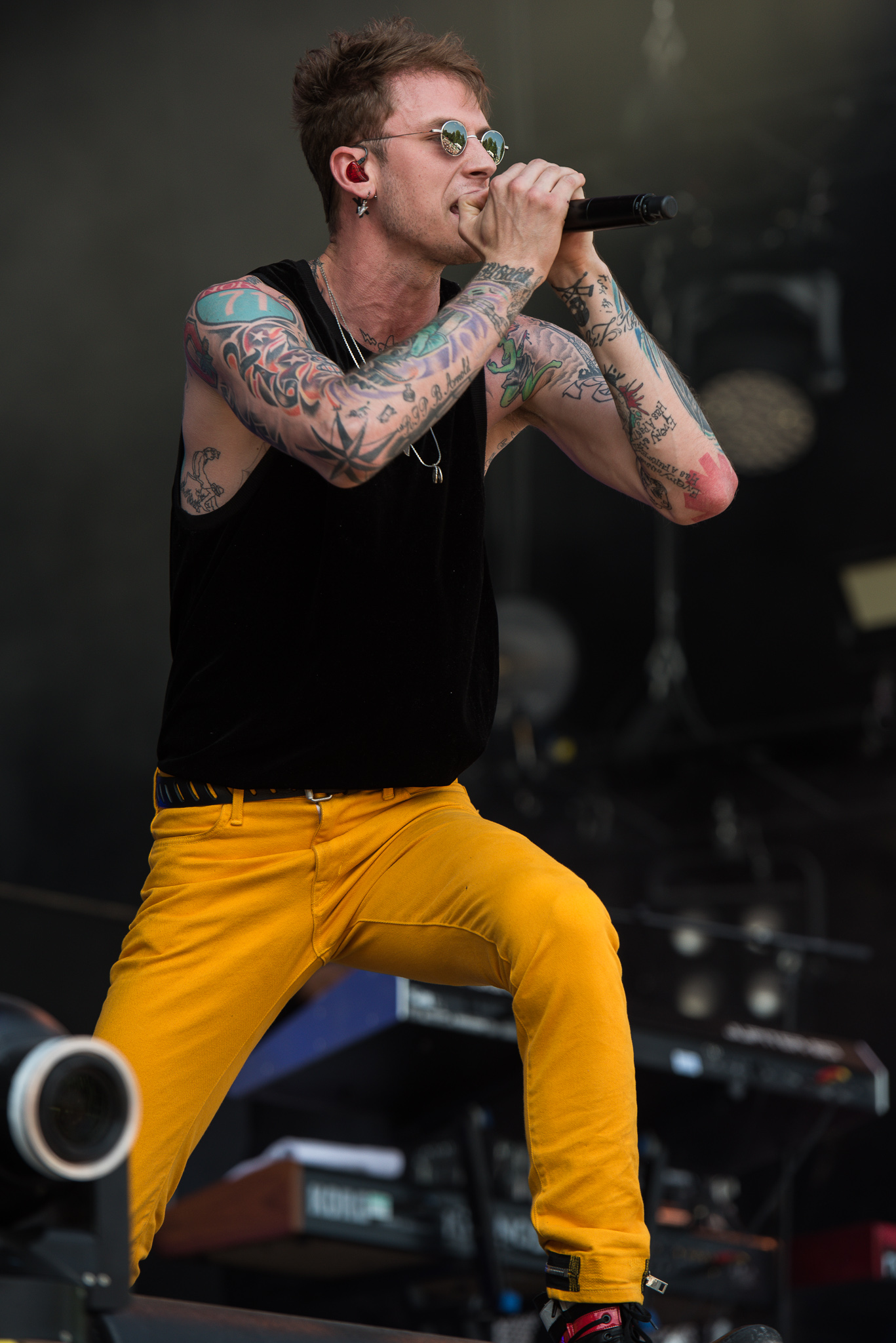
Machine Gun Kelly performing in 2017 with several pre-blackout tattoos visible across both arms

His arms were among the most densely tattooed parts of the earlier collection. Photos show overlapping text, symbols and small illustrations, but the clearest accounts come from Baker describing individual pieces himself.

In a 2013 interview with The Untitled Magazine, Baker said “Lace Up” appears twice. It was the title of his mixtape and debut album, but he also used the phrase for being ready to face a challenge. He said it was a greeting he shared with fans at shows. On his body, it worked both as a personal motto and a call-and-response with the crowd.

In the same interview, he pointed out a Tommy Lee “Mayhem” tattoo on his wrist. It is a clear Mötley Crüe reference; Baker said he was a fan of the band.

Baker told The Untitled Magazine that reading Anthony Kiedis’s memoir Scar Tissue helped him during a difficult period. His Red Hot Chili Peppers tattoo links the band he admired with a book he said mattered to him at the time.

Baker and Travis Barker shared a matching “Born with Horns” tattoo, named for the album title they were using then. The project name changed, but the tattoos were already on their arms. After the blackout, later photos cannot show which letters were covered, partly left open or altered; the earlier pictures record how the tattoos looked at that point.

In GQ’s 2016 Tattoo Tour, Baker described a tattoo tied to being hit by a double-decker bus in Manchester. He told the story with deadpan humor and called the tattoo one of his favorites, though the transcript does not reliably give its placement or full design. He also showed a blunt profanity tattoo that he said came from a late-night session. Both feel more like souvenirs of specific moments than parts of a planned motif.

Baker called Jessica Rabbit on the inside of his right upper arm his fantasy woman. In an iHeart interview, he said the most painful spot was near his armpit, where the artist worked. He remembered both the image and how much that spot hurt.

Near his inner elbow, Baker described the words “Kiss the Sky” beside a drawing by a friend. The phrase comes from a song on Bloom. He said it was about searching without knowing exactly what you are looking for, then letting something find you. He also connected it with nostalgia and a feeling close to nirvana.

In the same conversation, Baker discussed a rosebud and open rose he got around the release of Bloom. One stage showed a rosebud; another showed the bloom above it. The growth echoes the album title rather than being an interpretation added by a tattoo list. The interview does not establish the exact location of each design.

The chest mixed belief, heartbreak and a very large guardian angel

Machine Gun Kelly performing in 2018 with his pre-blackout chest and neck tattoos visible

Baker said he got a guardian angel at about 16, when he had begun believing in God. Later interviews described it as one of the tattoos fans copied when dressing up as him. The piece belongs to that earlier period: the later chest blackout changed how it looks, so old portraits show the angel as it was then.

In a 2017 iHeart interview, Baker described a gash over his heart, with blood drawn from the wound. Asked where the idea came from, he answered, “Somebody ripped my heart out.” The tattoo pairs a literal image with a heartbreak line. He did not name a person or event, so the quote does not tell us more than that.

GQ’s Tattoo Tour also shows a black heart that Baker called a “stone cold heart.” He described it as armor he built in the music industry: after years of working in public, he felt he had to harden himself and let fewer people in. The interview preserves both the design and his explanation.
The anarchy “A” on his stomach became another instantly recognizable mark. In the iHeart interview, Baker named it among the tattoos fans copied when dressing up as him. Its visual impact is clear, but he did not give the symbol a separate personal backstory.
Older neck and face pieces are best read in dated photos

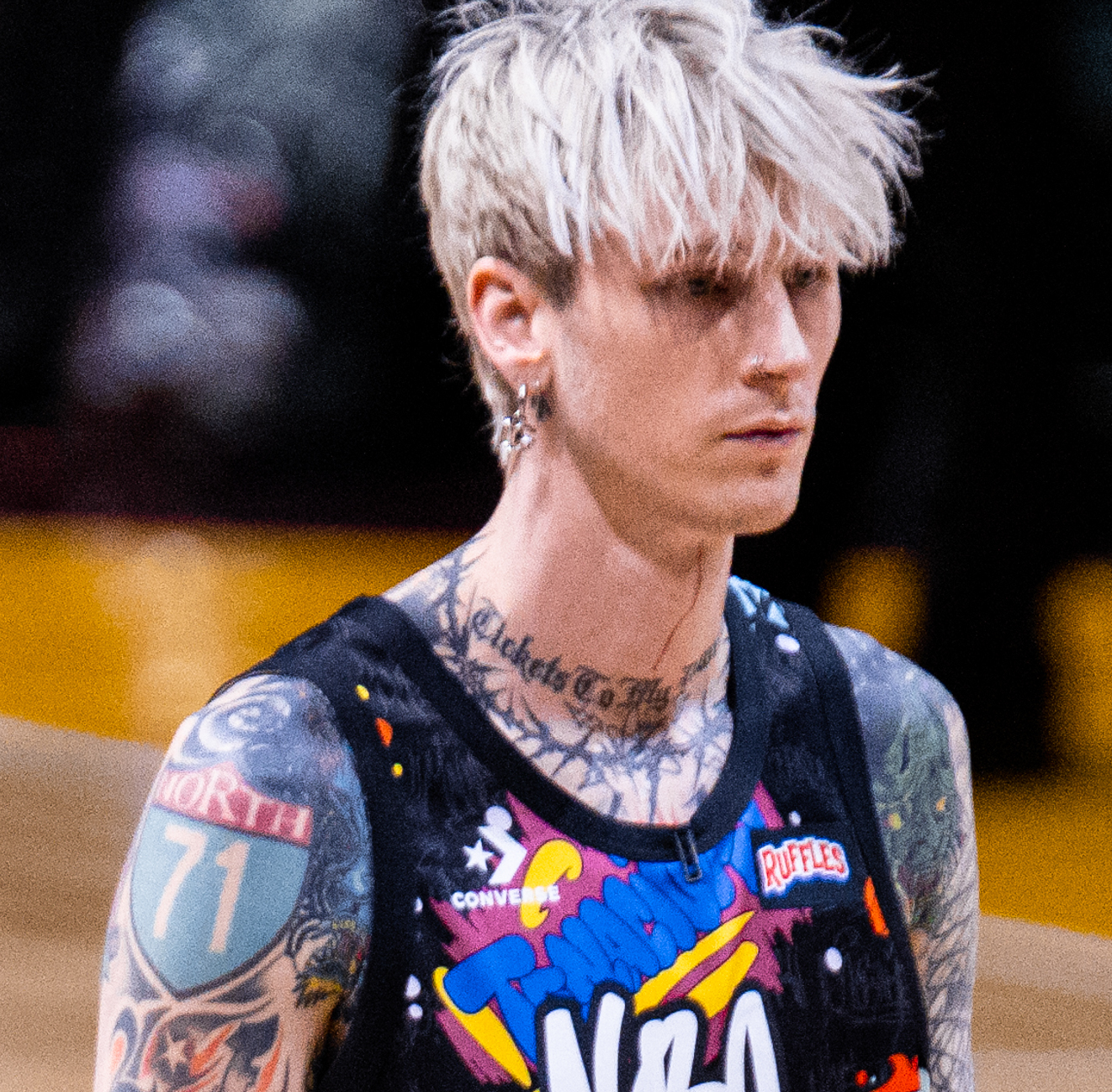
Machine Gun Kelly in 2022 with the lettering and layered designs on his neck visible

A 2022 photo captures the ink across Baker’s jaw, collarbones and chest before the blackout. Lines and lettering overlap, and not every word is legible. The image shows the density and placement at the time, but it cannot identify each symbol. Later stories sometimes name blurry marks without showing the close-up or explaining where the identification came from.

Dates help keep the face and neck tattoos straight. Later photos show newer work around both ears; those pieces should not be confused with the older neck lettering in this photograph.

A Dalí-inspired backpiece took the most time

Archival close view of Machine Gun Kelly's colorful Salvador Dalí-inspired backpiece, with surrealist figures and architecture

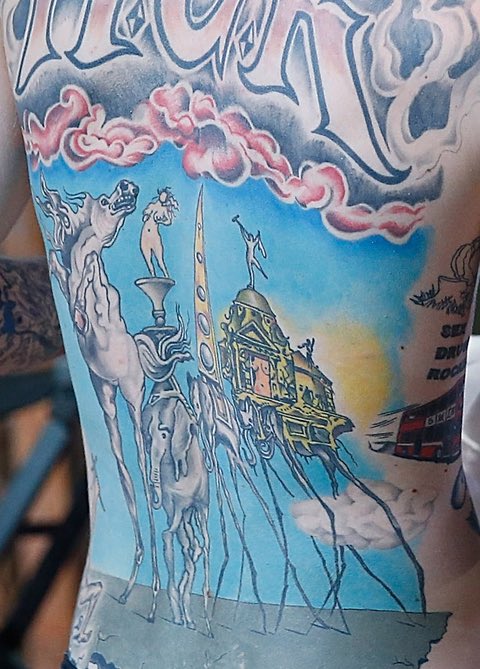
Baker called his back an “iconic piece” and told iHeart it took about 50 to 60 hours. GQ’s Tattoo Tour identifies a Salvador Dalí piece there: a colorful surrealist scene with elongated figures and architectural forms. Baker’s description supports calling it Dalí-inspired, but the interview does not identify one particular painting as its source.

Baker also told GQ about a session in Redding, Pennsylvania, when he stepped away to use the bathroom and found the bathtub in his hotel room full of urine. It is a strange detour in the story, but the backpiece itself is what he remembered: a near-full-back design he liked after dozens of hours of work.

Neck and ear designs kept changing after the blackout reveal

Machine Gun Kelly at the 2026 pre-Grammys event with new ink visible around his ears and the side of his face

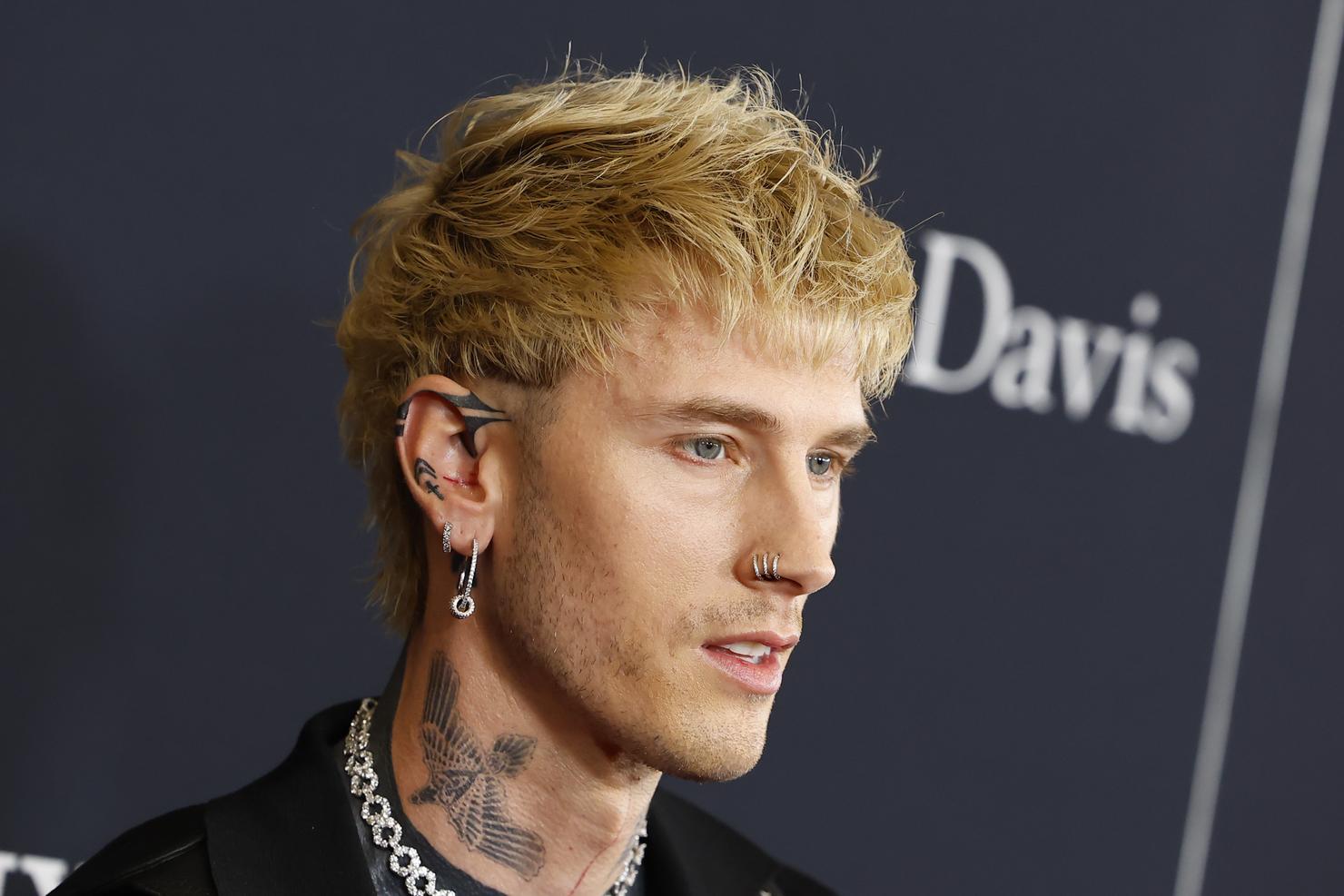
The neck forms a tight border between Baker’s face, chest and hairline. Older portraits show layered lettering and small marks; photos before the 2026 Grammys reveal new work around his ears. iHeart identified a red heart and the word “ether” on the flat of his left ear, a bass-clef mark along the edge of his face, and additional abstract lines on both ears. Hair and jewelry can hide the small designs in wide red-carpet shots, but the ear work changes the outline of his profile.

Older sources mention neck and face tattoos, but often leave the wording or exact placement unclear. A close photo of the ears supports the newer descriptions; a distant concert shot is not enough to identify every shadow as a confirmed symbol.

His newest family tattoo is “SAGA” on the right hand

Machine Gun Kelly's right hand showing the new SAGA lettering tattoo near the edge of his blackout ink

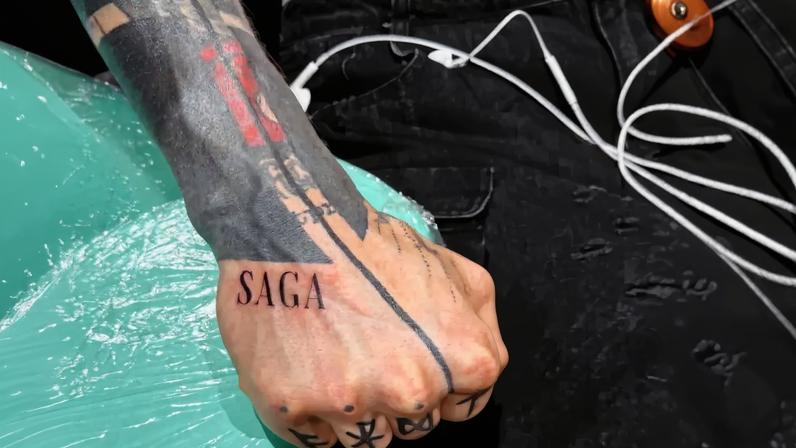
In early 2026, Baker had “SAGA” tattooed in capital letters on the back of his right hand for his youngest daughter, Saga Blade. Berlin tattoo artist Zsofi Csepai shared photos from a tour stop shortly before Saga’s first birthday. The lettering sits at the edge of the blackout, where untouched skin leaves enough contrast for the word to stand out.

In a 2025 interview about the blackout, Baker said he kept a small tattoo his older daughter Casie had done on him. He did not identify its design or placement. It is separate from the new SAGA tribute: one was made by Casie and kept, while the other spells his youngest daughter’s name. The two are not the same tattoo or a single design for both girls.

In April 2026, Inked reported that Baker showed “look” on the top of his left foot and “up” on the top of his right in an Instagram Story filmed in Perth. Together, the words read across his feet. The article’s photo is a stage shot rather than a close-up, so the written report gives a clearer account of the lettering than the image.

What the old tattoo lists get wrong

Machine Gun Kelly’s blackout body tattoo

Roundups count Baker’s tattoos differently: some list each small mark, while others call an entire sleeve one tattoo. Cover-ups make the total harder to check. A 2017 photograph shows what was visible then, not what remained after later sessions and the blackout. Baker has said he began getting tattooed in his early teens, though his accounts give his starting age as either 13 or 14. There is no single official count.

The designs discussed most clearly include Lace Up twice, the Tommy Lee Mayhem reference, the Red Hot Chili Peppers tribute, the Bloom rose imagery, Kiss the Sky, Jessica Rabbit, the gash and black-heart designs, the guardian angel, the Dalí-inspired backpiece, the anarchy A, the Born with Horns matching tattoo, the 2024 blackout, Saga’s name, the ear marks, and the new words on his feet. That is already a detailed map without guessing at a total.

Some tattoos point to music Baker admired; others came from heartbreak, a strange night or an impulsive choice. The blackout changed how that history looks, but it does not mean the old work was unimportant to him. Dated photos and Baker’s own explanations show how the collection shifted over time.

Mike Tyson’s Tattoos: The Warrior Face Mark and the Portraits Behind It

Mike Tyson is often identified by the black tribal-style tattoo around his eye, but it is only one part of his collection. Photos also show portraits of Mao Zedong, Che Guevara and Arthur Ashe, a tiger, a portrait linked to Monica Turner and a later memorial portrait of his daughter Exodus. The designs come from different periods, so dates help show which pieces were visible when.

Tyson has explained some choices in interviews and documentary footage. Other tattoos are known mainly through photographs and contemporaneous reporting. Those sources do not carry the same weight: his own comments tell us what he has said, while a photo shows what was visible at the time.

Tyson’s tribal face tattoo became his warrior mark

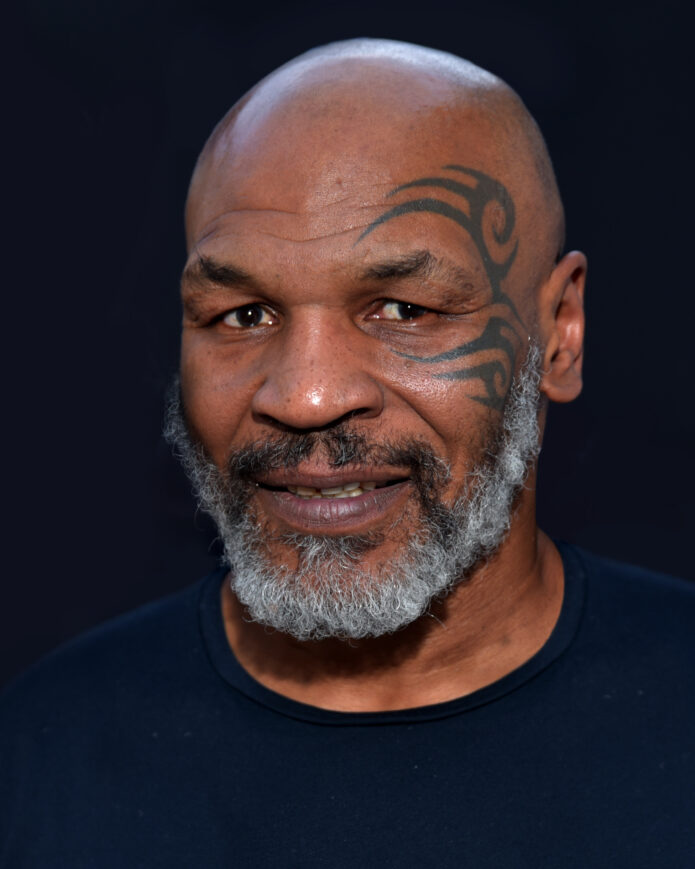
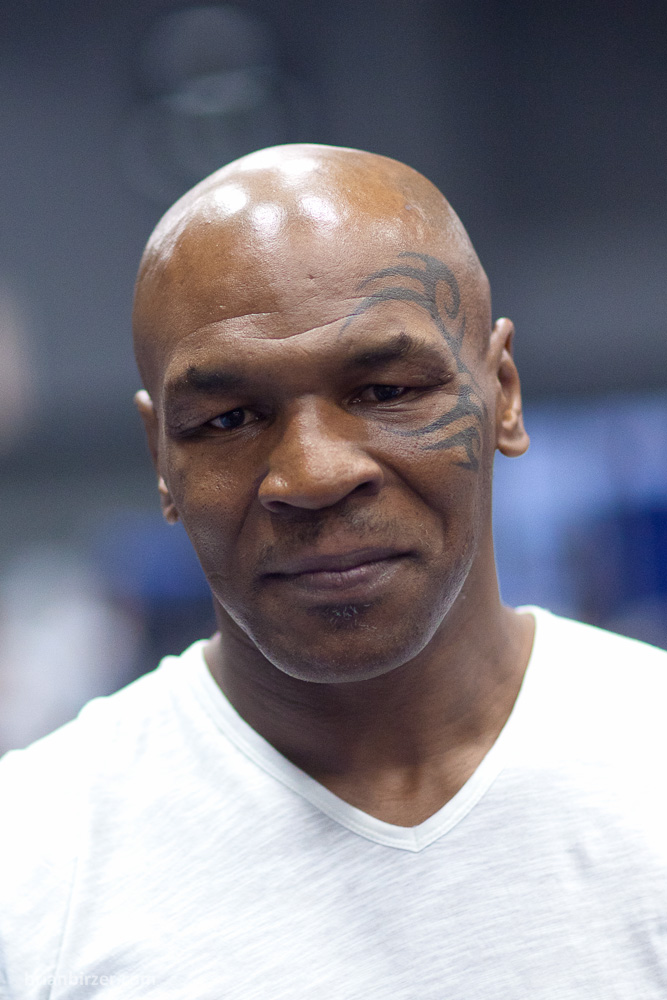
Mike Tyson’s tribal face tattoo, clearly visible around his left eye

The black curves sit close to Tyson’s eye and temple, so the design stays clear in both profile and front-facing photos. That visibility helped make it a familiar part of his public image. It does not, on its own, explain where the tattoo came from.

Whitmill’s authorship matters to this specific piece. His role later became part of a court dispute over reproducing the artwork in a film; that case did not make every photograph of Tyson free to reuse. For the tattoo’s history, the clearest details are its artist, 2003 date, shape and warrior association.

The tattoo that defines Tyson’s public image is a large tribal-style design around the left side of his face, crossing the temple and framing the eye. S. Victor Whitmill created it in 2003. Contemporary descriptions call the sweeping curves and pointed tendrils a face tattoo with a warrior association, rather than a portrait or a copy of a historical symbol.

Tyson has said he connects the design with being a warrior. Some accounts describe an influence from tā moko, but they do not establish that he received a specific traditional moko. A custom tribal-style face tattoo with a personal warrior association is more precise than calling it simply Māori or assigning it one universal translation.

The design has a documented artist history: Whitmill’s authorship was central to the court dispute over the tattoo’s reproduction in The Hangover Part II. The case concerned copying the artwork, not a right to reuse every photo of Tyson. A tattoo history can document what he wore without implying that the artwork belongs to the photographer.

The Mao Zedong portrait reflects Tyson’s prison-era iconography

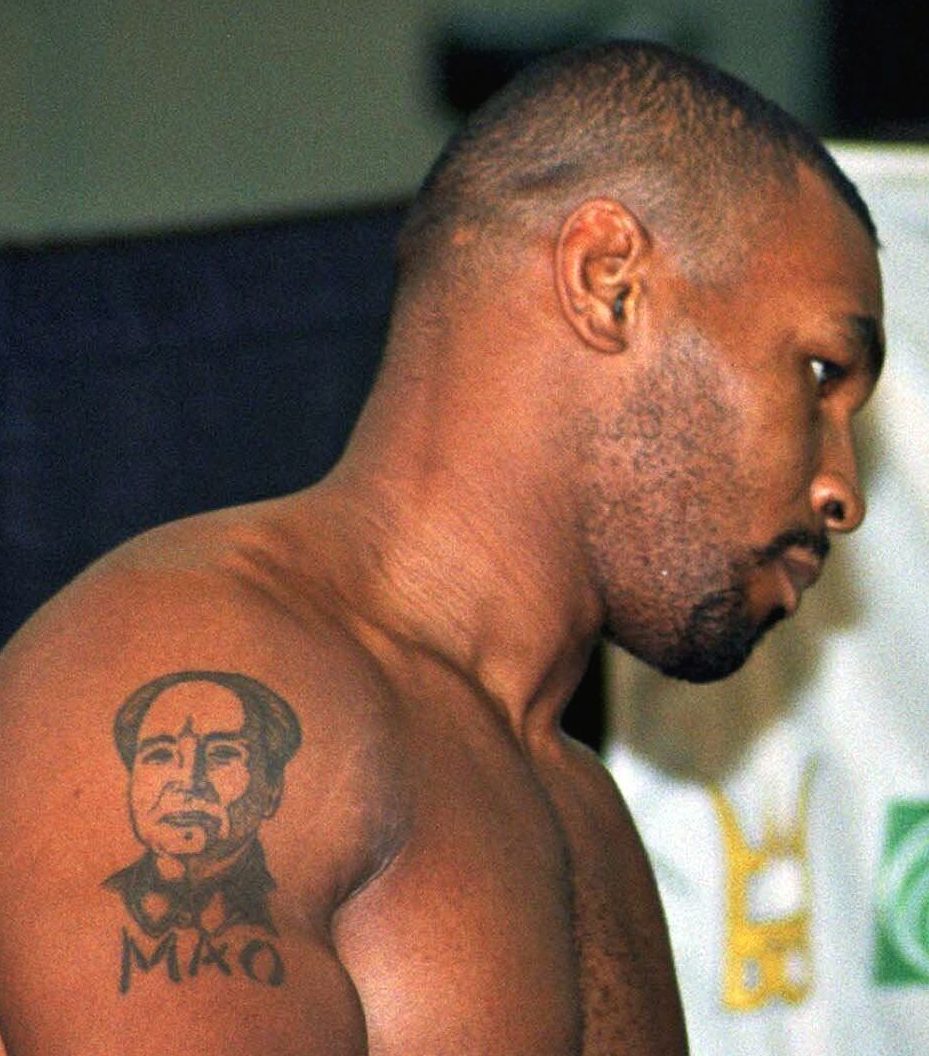
Mao Zedong portrait and MAO lettering on Mike Tyson’s upper-arm tattoo

In sleeveless photos, the Mao portrait is easiest to see on Tyson’s upper arm. The lettering below the face can be clearer than the surrounding shading, so it is better to follow what a particular image actually shows than to repeat a caption from an old list.

Tyson’s comments place the portrait in his prison years and give his stated reason for it: anger at society. They provide useful context, but they do not spell out every part of his response to Mao. Admiration, provocation and biography may all be in play; the sources do not reduce them to one settled explanation.

One of Tyson’s named portraits is Mao Zedong’s, on his upper arm. Biographical accounts connect it to his prison years, when he said he was angry with society and government. That background is documented, though it does not establish a separate meaning for every detail in the portrait.

Tyson’s interest in Mao also appears in later public comments and in his visit to the Chairman Mao Memorial Hall. That makes the tattoo look deliberate rather than random, but it is not a complete political statement. The reported details are its subject, placement and the context Tyson has shared.

Che Guevara’s abdomen portrait is clearly documented

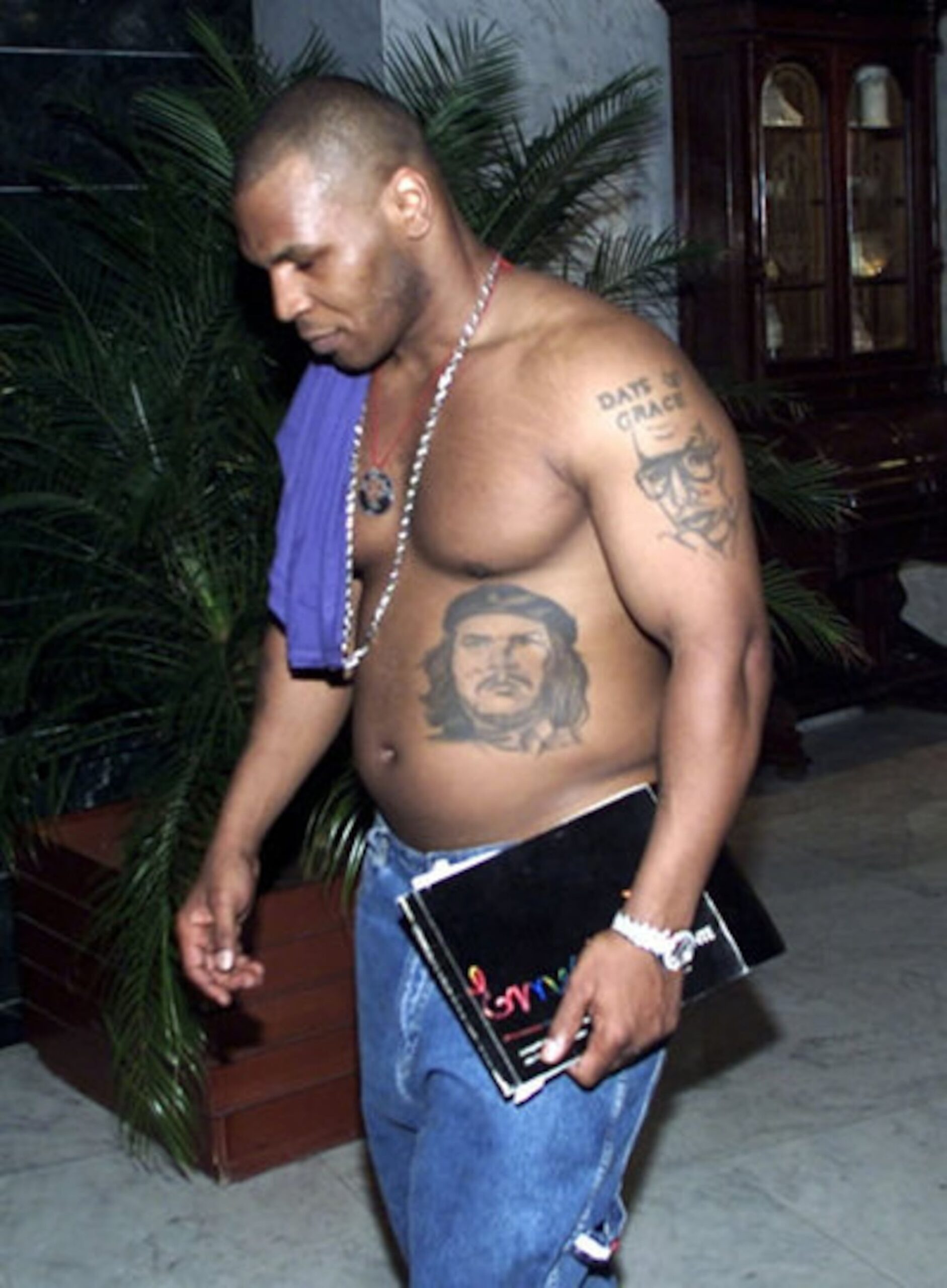
Mike Tyson showing the Che Guevara portrait design on his abdomen

The Che portrait sits on Tyson’s abdomen, so photos show different amounts of it. A shirtless image may reveal the features and shading, while a cropped interview frame can show only the upper edge. Older photos with uneven lighting make small details harder to read.

The portrait belongs to a particular period in Tyson’s life. It can be identified and placed broadly, with his prison-era comments providing context. The sources do not give a complete account of what the image meant to him over time.

Che Guevara is another portrait linked to Tyson’s prison-era collection, usually placed on the left side of his abdomen. Tyson has spoken positively about Guevara’s willingness to sacrifice for others, giving the tattoo some documented context. His full personal interpretation is not on record.

A dated photograph shows the Guevara portrait as an image on Tyson’s body, not just a name repeated in a list. Lighting, clothing and image quality affect what can be seen, and a cropped frame cannot establish details outside the area it shows.

Tyson also has other portraits and family-related tattoos, including the Arthur Ashe, Monica Turner and Exodus pieces mentioned earlier. They are separate designs with their own histories; the Che portrait is easier to describe alongside a photograph that shows it clearly.

Reading the record

The public record is uneven. Interviews explain some tattoos, while others are documented mainly in photos and contemporary reports. Exact dates, changes in the linework and a complete count are not consistently available.

The face tattoo is the clearest identifier in photos. Smaller pieces on Tyson’s arms and torso can be hidden by clothing, camera angle or poor image quality. A dated, clear picture helps separate what is visible from guesses about a blurred shape.

There is no official catalogue of every tattoo. Future interviews, artist credits or clearer photos may fill in some gaps; until then, a precise description is more useful than a list that only looks complete.

More athlete tattoo guides