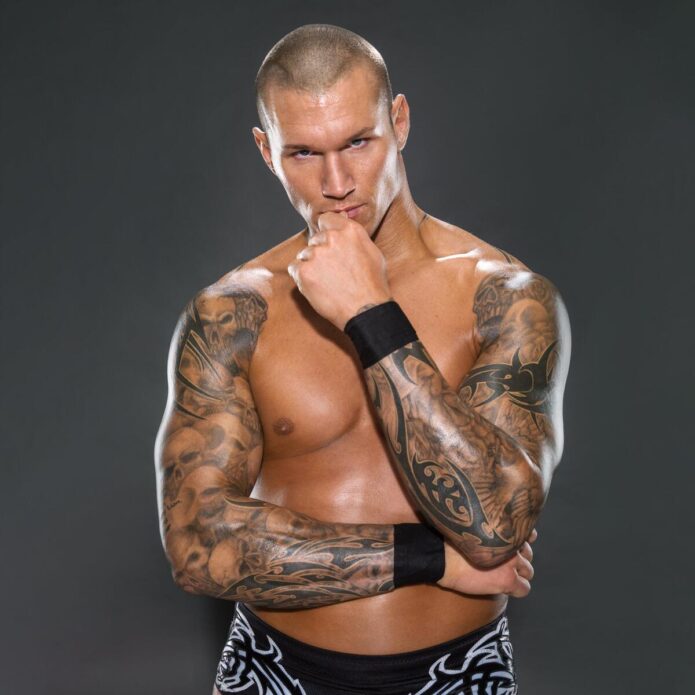
Randy Orton’s tattoos have changed as he has. He got his first pieces young, then later covered work he no longer related to. During time away from wrestling, he spent roughly 40 to 50 hours on the sleeves that became his signature: tribal lines, skulls, roses and lettering tied to family.
The collection can look like one giant sleeve, but the back and shoulders carry older tribal work while the arms have newer pieces. Some tattoos cover earlier designs; others connect the different parts. Orton has explained some choices, while other details have no confirmed private meaning.
The tribal design across Orton’s back and shoulders
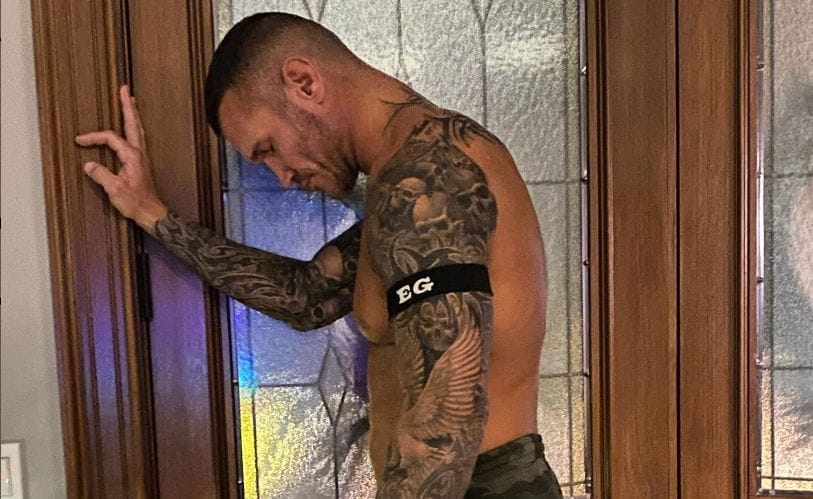
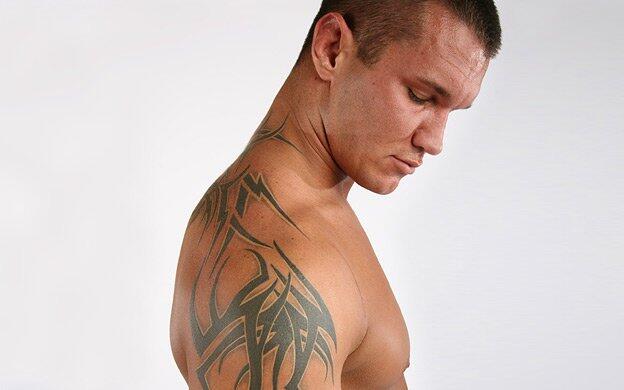
The tribal design across Orton’s back, shoulders and neck is one of his most recognizable pieces. Heavy black lines follow the shape of his body, wrapping over the shoulder blades and rising toward the neck. The pattern shifts when he turns or lifts his arms in the ring.
Orton has said some early tribal work had no deep story behind it. He was young, wanted tattoos, and later grew dissatisfied with parts of what he had chosen. That is why it is safer to describe the design than to assign it a symbolic meaning he never gave it.
The sleeves replaced and connected older work
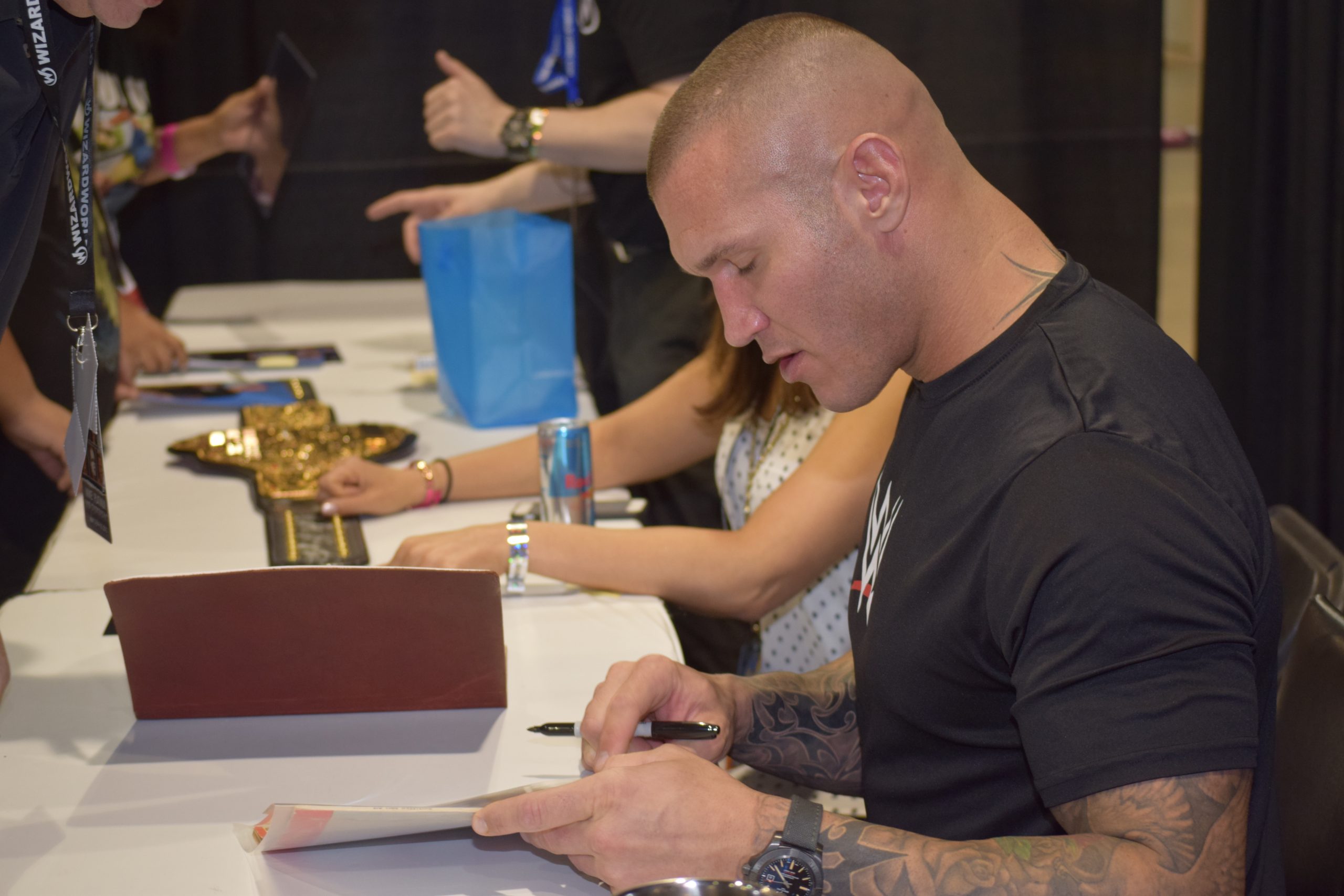
A serious injury kept Orton off the road long enough for extensive tattoo work to heal. He used the time to build the sleeves he had wanted for years. New tribal sections went around earlier designs, filling gaps and covering work he no longer wanted to show.
One of the earlier tattoos was connected to the United States Marine Corps. After his bad-conduct discharge, Orton said he covered it rather than keep displaying it. Older photos may show the original emblem; it is not fully visible in current images.
Photos from different years show the change. Before the sleeves were finished, they reveal bare patches of skin or an earlier emblem; later shots show skulls, shading and blackwork over the same areas. The tattoos developed over time.
Skulls and the Bible verse create the darker arm language
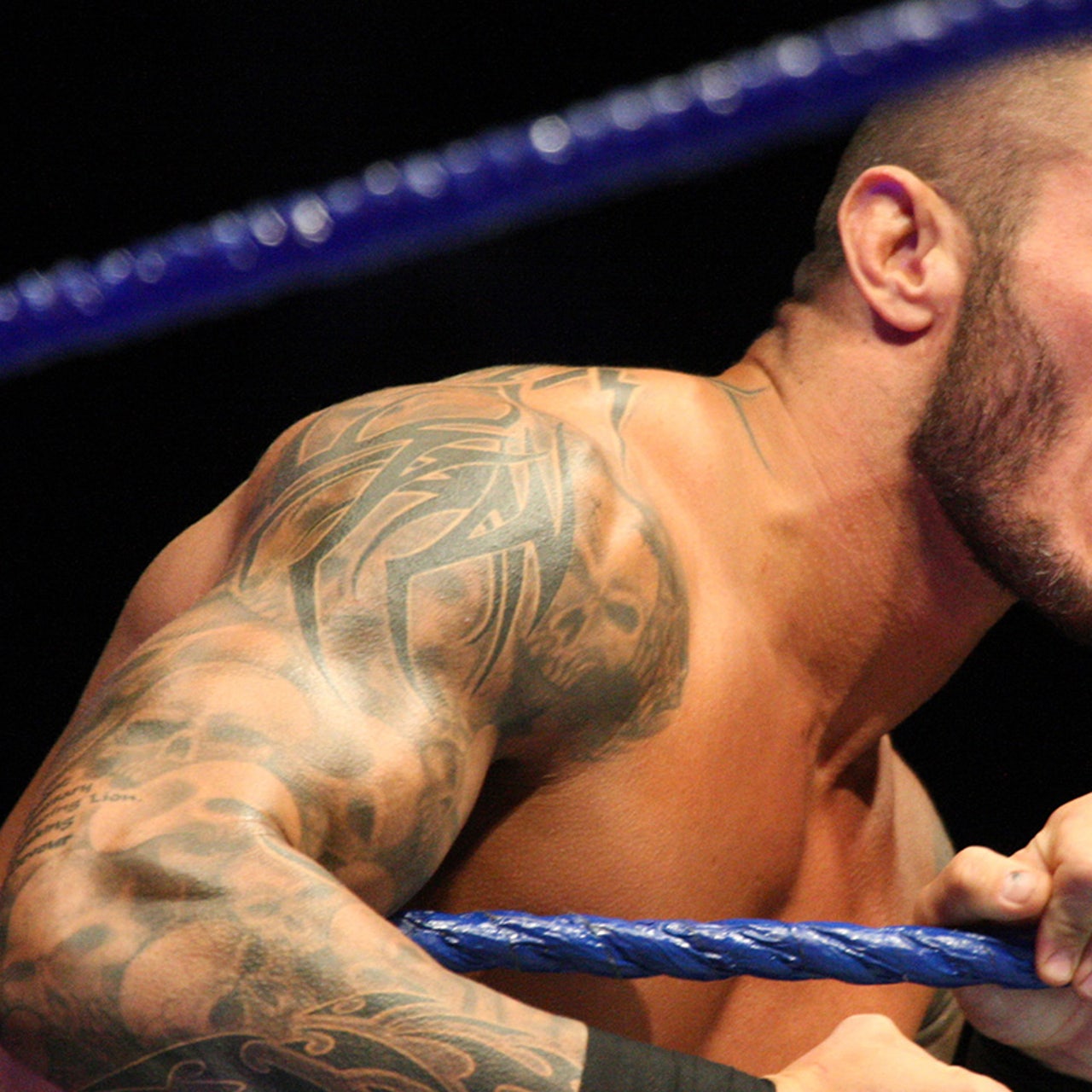
Skulls appear throughout the arm work, framed by dense shading and ornamental lines. Orton has not given each skull its own meaning. They help tie older tribal patterns to the later additions and give the sleeves a darker look.
The Bible verse on the back of Orton’s right arm is more specific. It reads “Be sober, be vigilant, because your adversary the devil, as a roaring lion, walketh about seeking whom he may devour.” The passage is 1 Peter 5:8. It is a long piece of lettering, easier to read in a close photo than during a match.
The verse and skulls sit alongside each other, but Orton has not said they share one message. He has identified the Bible passage; the meaning of the other imagery is less specific.
The coloured rose is a family tribute
A small coloured rose stands out among the black-and-grey work. Orton has identified it as a tribute to his daughter Alanna Marie. Its colour draws the eye, and his explanation gives it a personal meaning beyond the usual associations people make with roses.
The rose mixes a family story with the bolder sleeve design. It is visible when Orton performs; only his own explanation tells us it is for Alanna.
Names, dates and the small hand tattoo
Some family names and dates are hard to make out in photographs. Tattoo lists also identify a small “Kim” with a heart on the middle finger of Orton’s left hand, connected to his wife. It is a more private-sized mark than the sleeves, and gloves or hand position can hide it.
Other family details are best described as reported family tattoos, rather than folded into an exact count. Orton’s collection grew in stages; some parts were covered, extended or blended into larger pieces. One event photo cannot show all of it.
How the collection changed during his wrestling career
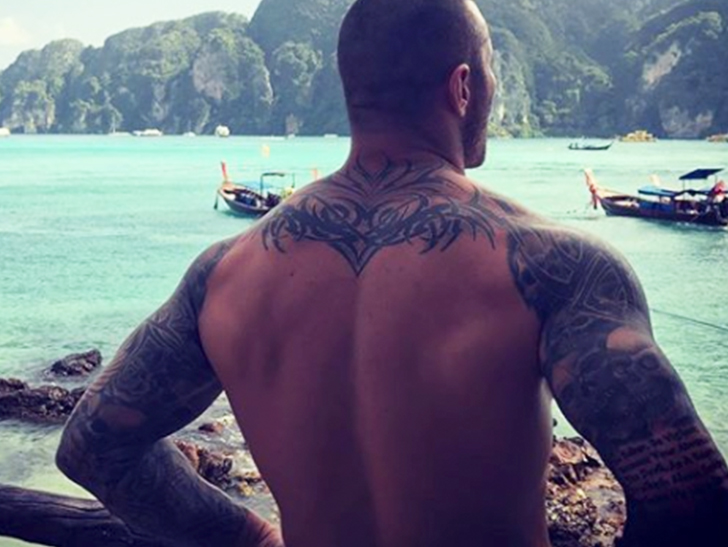
Orton’s tattoos grew alongside his wrestling career. The early tribal pieces came first; the major sleeve sessions followed during time away from the road, when he could sit for long appointments and let the skin heal. Later photos show a more connected design, with less open space between the symbols, script and shading.
His ring gear leaves the arms, shoulders and upper back exposed, making the tattoos part of his entrance look. Arena lights flatten some of the shading, while close backstage shots bring out details that disappear in a wide television view. Each gives a different sense of the work.
What the public record can establish about Randy Orton’s tattoos
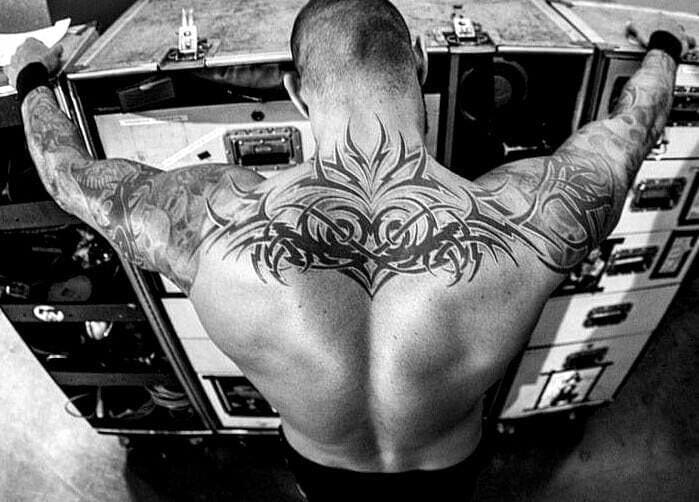
Photos and Orton’s own comments establish the broad tribal back-and-shoulder piece, sleeves with skulls and lettering, a Bible verse, the coloured rose for Alanna Marie and smaller family marks. He has also said he covered early work he no longer liked. The meaning of every skull or filler line has not been made public.
Orton’s tattooed body has changed with age, work, family and regret. The sleeves are not a fixed design so much as a record of choices, including some he later decided to revise.
5 thoughts on “Randy Orton’s Tattoos: From Tribal Work to the RKO”