admin

Chappell Roan’s tattoos turn princess energy into something personal

Chappell Roan’s tattoos don’t all tell the same kind of story. Some feel playful and straightforward, others have a soft, storybook quality, and one made headlines after Roan called it a small act of rebellion. The best-documented pieces so far are her “Princess” lower-back tattoo, a swan on her arm, and floral or decorative ink that has appeared in recent photos.

There’s an important wrinkle in Roan’s tattoo history: she also uses theatrical body art. At the 2026 Grammys, she wore a dramatic Mugler look with large faux tattoos printed across her back and torso. They were part of the styling, not new permanent pieces. Telling costume ink apart from real tattoos is key to getting her collection right.
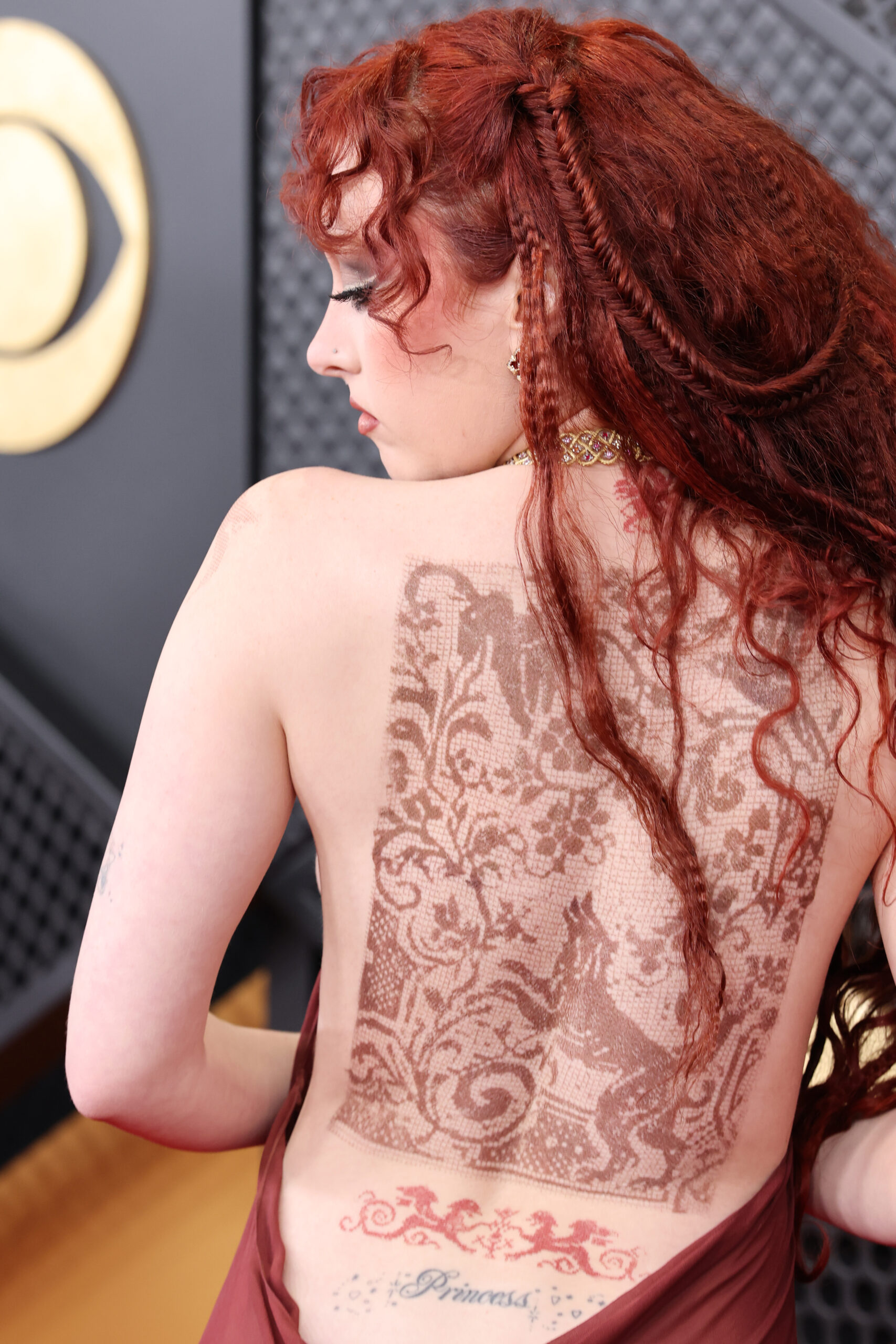
Chappell Roan Grammy tattoos

The Princess tattoo was Chappell Roan’s first

Roan has spoken openly about her first tattoo. In a 2023 Associated Press interview, she laughed: “I have a ‘princess’ tramp stamp, that was my first tattoo.” She said the choice came in part from growing up with conservative Christian ideas about modesty. As she put it, it was a kind of “f– you” to that pressure.

That background gives the lower-back placement more weight than a throwback Y2K joke. The location is cheeky, but Roan’s explanation makes the tattoo a pointed response to rules about how she should look and act. “Princess” isn’t just a pageant word that later attached itself to her stage persona; she chose it for herself after feeling constrained by other people’s expectations.

The tattoo is usually described as lettering across her lower back, or a “tramp stamp.” Some online photos appear to show decorative details around the word, but the word and placement are the most certain parts of the record. The font, artist and appointment date have not been consistently documented, so it’s best to leave those details open.
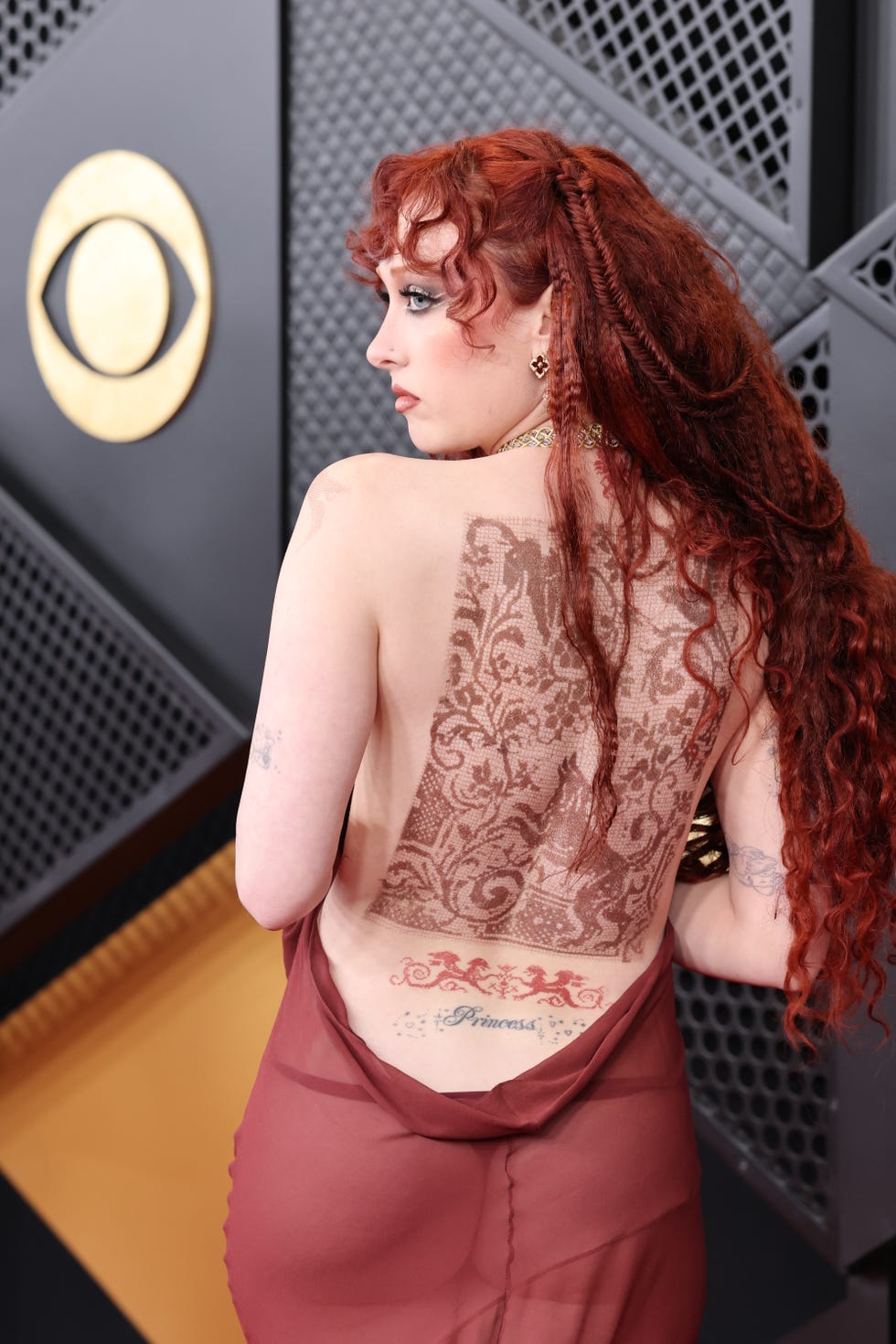
Chappell Roan Princess tattoo

What the Princess tattoo means to Roan

Roan is one of the few celebrities whose tattoo meaning comes with her own explanation. She linked the design to the “modesty is hottest” attitude she grew up around. Calling it only a “tramp stamp” misses that context: the nickname describes where it is, while Roan has explained what she was pushing back against.

There’s a natural connection between the tattoo and the character she built onstage. Chappell Roan’s public world includes pageants, crowns, camp, glamour and heightened femininity. The lower-back “Princess” tattoo fits that vocabulary, but it began as a personal choice. Her stage persona didn’t create the word; it gave a bigger performance language to something she already carried on her body.

That doesn’t mean every later costume or lyric refers directly to the tattoo. The connection is more about the tension they share. Depending on who uses it, “Princess” can sound sweet, bratty, theatrical or rebellious. Roan has made room for all those readings.

It’s a small tattoo with a surprisingly bold point: the person wearing it gets to decide what femininity means, where it belongs and who gets to judge it.

The swan tattoo on her arm

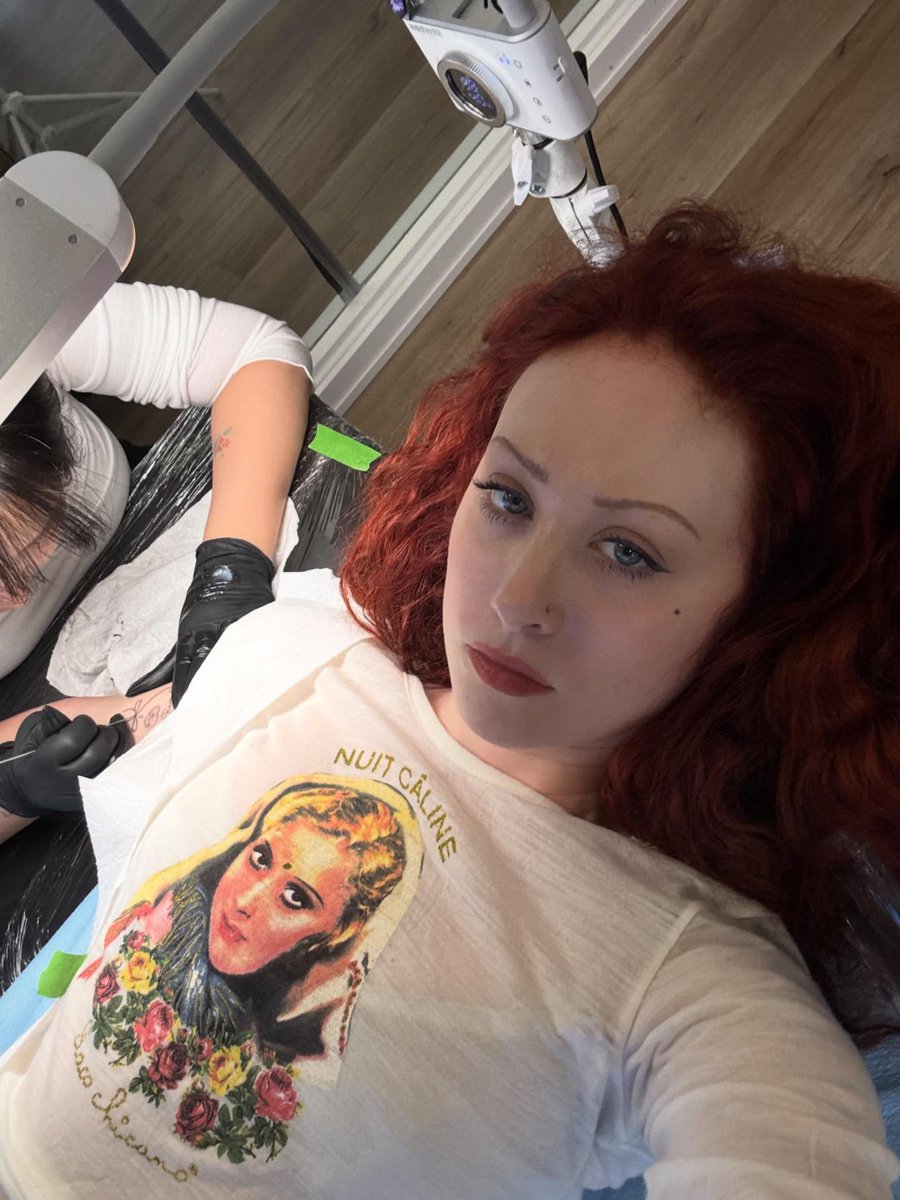
A more whimsical design entered the documented record in late 2025: a swan tattoo on Roan’s arm. Photos from the session show her reclining as a tattooist works on the piece. They’re useful because they show the tattoo in progress, rather than leaving us to rely on a distant red-carpet shot.

The swan suits Roan’s visual world. She often plays with fairy tales, pageants, transformation and the contrast between elegance and something stranger underneath. But a design that fits her look doesn’t automatically come with a confirmed meaning. Roan hasn’t publicly explained why she chose this particular swan, so “whimsical” or “theatrical” is safer than assigning it a private story.

The session photos place it on her arm and show nearby linework and decorative elements. Some accounts also mention celestial or floral details. Since the tattoo was photographed fresh and partly covered by protective film, it’s easier to describe the overall design than to map every small detail.

Flowers and decorative arm ink

Roan’s arm tattoos also include floral or ornamental details. Coverage of her 2026 Grammy look described several permanent designs, including a swan and flowers on her arm. It’s easy to mix those pieces up with the printed tattoos used for the Grammy styling, so the clearest description is that she has permanent arm ink with floral elements—not a definitive catalogue of every petal and leaf.

Photo quality makes a difference here. From a distance, one tattoo can look like a single large medieval composition; a closer view may reveal several separate motifs. Roan’s collection appears to have grown through individual choices rather than one full-sleeve reveal. The pieces may share a visual language, but there isn’t yet a complete map in the public record.

It’s sensible to be cautious with labels like “full sleeve” or “huge back piece,” which can make tattoo coverage sound more dramatic. What the available evidence supports is a permanent “Princess” tattoo on her lower back and arm designs that include the swan and flowers. It doesn’t establish a full count or a hidden meaning for every decorative detail.
Chappell Roan floral arm tattoo

The 2026 Grammy tattoos were mostly costume

Roan’s Grammy appearance is an easy place to go wrong when counting her tattoos. Her backless burgundy outfit revealed a lace-like design across her upper back, with faux ink worked into the medieval styling. Reports described the body art as part of the look, alongside prosthetic nipple jewelry and other theatrical details.

Those designs don’t belong on a list of her permanent tattoos. They were part of the costume and beauty concept, even though they looked convincing in red-carpet photos. That distinction matters because transformation is central to Roan’s fashion work; temporary ink is one of the ways she builds a character for an evening.

The styling also echoed her real “Princess” tattoo, which appeared beneath the temporary design. The overlap made the look feel like a conversation between permanent identity and one-night performance. The lower-back tattoo was still Roan’s; the larger medieval pattern was a visual layer that came and went with the event.

How the tattoos fit the Midwest Princess persona

Roan’s tattoos connect with her music without reading like simple album merchandise. “Princess” is the clearest link, while the swan and flowers add fairy-tale softness, transformation and decorative drama—the same ingredients found in her clothes, choreography and performances.

The word “Midwest” is part of the joke and the point. Roan’s persona isn’t a traditional princess waiting for approval; it’s a pageant title with a wink, glamorous and ridiculous at once. The story behind the lower-back tattoo gives that persona a personal starting point. Roan took a word weighed down with expectations and made it her own.

Still, it would be too tidy to claim every tattoo came from one master plan. People choose tattoos at different times and for different reasons. The first might be defiant, the next simply beautiful, and another just fun. A useful inventory leaves room for all of that instead of forcing one explanation onto the whole collection.

What is confirmed and what remains unknown

The confirmed list is shorter than many social posts suggest. Roan has said that “Princess” was her first tattoo. Recent coverage has documented a swan and floral details on her arm. The extensive faux tattoos at the 2026 Grammys belong to the styling, not her permanent collection.

We don’t yet know the exact number of her permanent tattoos, the complete healed layout of her arm, all the artists involved or the date of every appointment. Photos captured the swan session in late 2025, but that doesn’t establish when each nearby design was added. It’s also unsafe to assume that every tattoo seen in a fashion shoot is permanent.

A partial record is fine. Roan’s public image is theatrical, but some parts of her tattoo story remain private. The “Princess” piece has a clear explanation; the swan and flowers are visible and documented. The rest can stay open unless Roan decides to show or explain more.

Chappell Roan tattoo checklist

  • Lower back: “Princess,” the first tattoo Roan has publicly described. She connected it to pushing back against a conservative culture focused on modesty.
  • Arm: a swan tattoo shown during a session in late 2025.
  • Arm: permanent floral and decorative ink reported alongside the swan.
  • 2026 Grammy look: large faux tattoos used for styling; they are not part of her permanent collection.
  • Exact total: not publicly confirmed beyond the documented designs above.

Roan’s tattoos bring together personal rebellion and theatrical imagination. The “Princess” mark shows where she pushed back; the swan and flowers fold fantasy into her visual language. Her Grammy look, meanwhile, shows how she uses body art as both a lasting choice and a costume. That distinction is the key to reading her ink accurately.

A Chappell Roan interview to watch

This profile offers useful background on Roan’s public persona and the ideas around her music, style and “Midwest Princess” identity.
More musician tattoo guides

Jonathan Davis wears his darkest ideas where everyone can see them

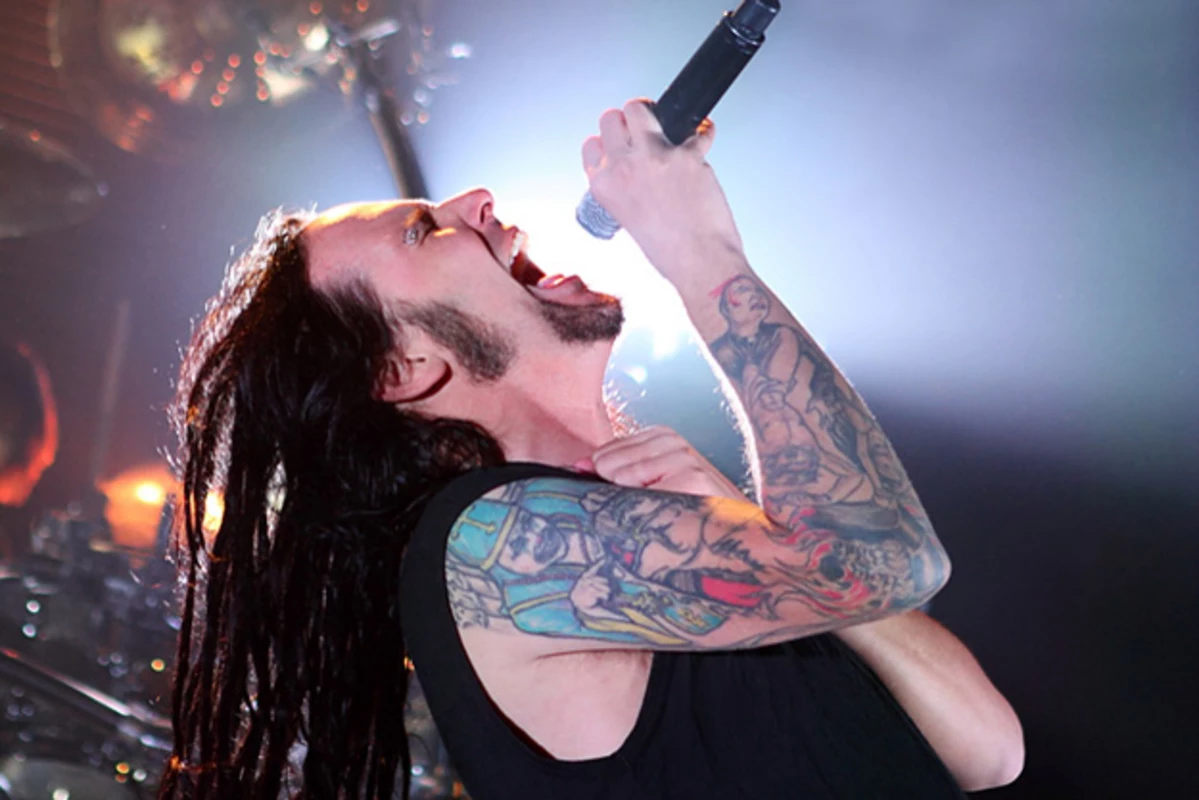
Jonathan Davis’ tattoos share Korn’s darker instincts: religious imagery, confrontation and deeply personal subjects all sit side by side. Davis has said he is drawn to religious art, while some designs address what he sees as religion’s atrocities. The images carry an argument as much as they decorate his skin.

Jonathan Davis tattoos

The best-documented design shows a bishop tearing open his own skin to reveal Christ beneath. Davis has described it as a response to the harm and hypocrisy he associates with organized religion. The image is striking because its central figure is religious, yet the tattoo is also critical of religion. It uses the visual language of faith to ask difficult questions.

Jonathan Davis tattoos

Another much-discussed tattoo reads HIV. Interviews and music coverage have connected it to a painful personal story and to Davis’ use of tattoos to keep difficult memories close. The lettering is plain, almost clinical, which gives it a different impact from the elaborate bishop scene. One speaks in allegory; the other leaves the word stark and exposed.

Jonathan Davis sleeve tattoos

Davis has also said he has other religious tattoos because he appreciates the art. That distinction matters. He can be fascinated by images of saints, Christ, bishops and religious symbols without calling himself conventionally devout. The collection returns to the images people create around belief—and the harm those images can conceal.

That combination makes his tattoos feel at home in Korn’s world. The band has long set beauty beside the grotesque: a vulnerable melody can sit inside punishing sound. Davis’ ink follows a similar pattern. A religious figure may be drawn with care even when the idea behind it is angry, doubtful or wounded. The tension is part of the message.

Jonathan Davis HIV tattoo

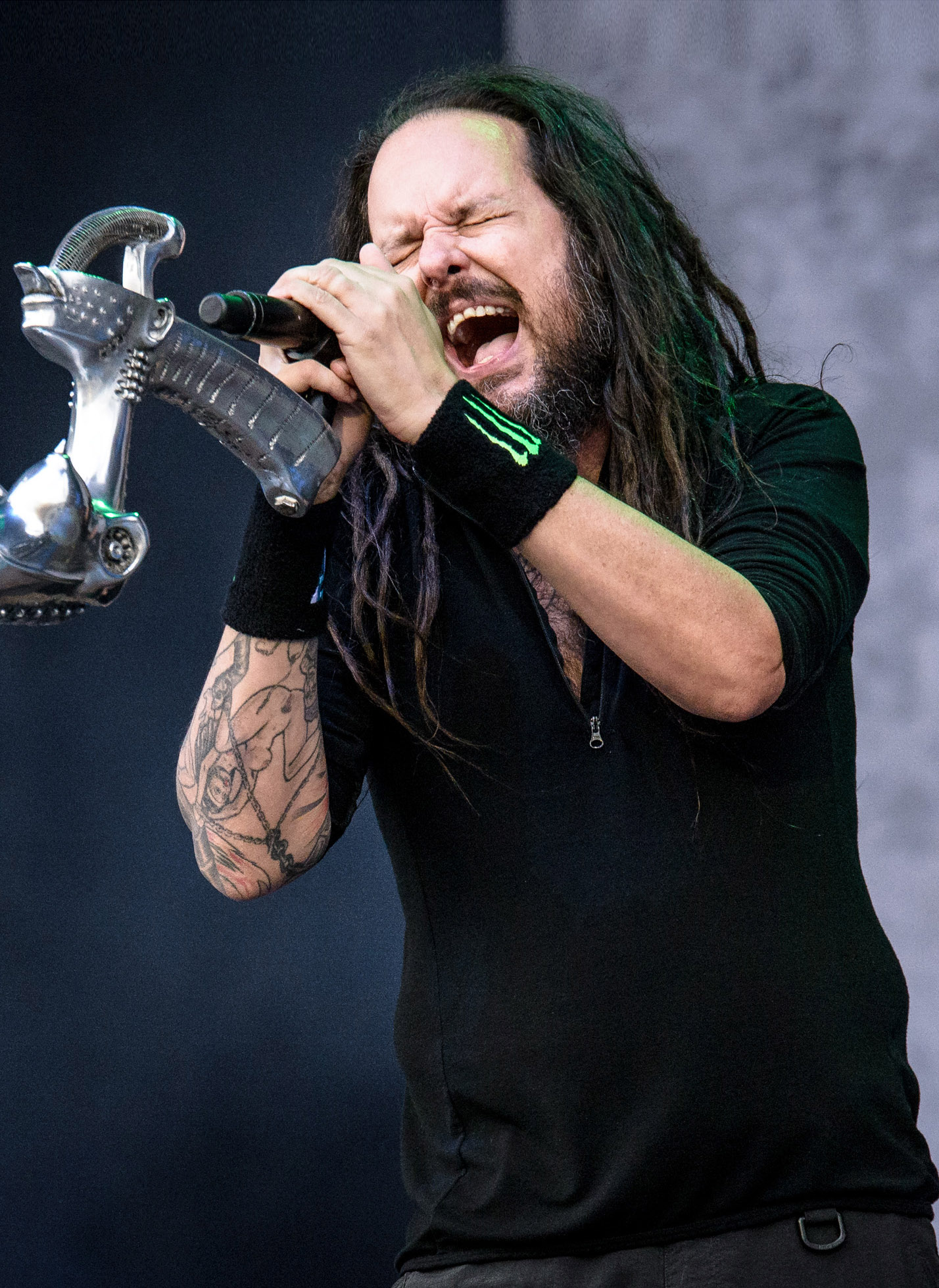
Photos from Korn shows catch the tattoos in motion. A sleeve flashes when Davis reaches for the microphone; a symbol appears as he turns. Stage clothes hide one design and expose another, so the public record is made up of glimpses rather than a complete diagram. Any careful inventory has to account for that.

Fans naturally want to know what each tattoo says, but the details aren’t equally clear. The HIV lettering has a documented story, as does the bishop and Christ image. Other religious designs can be seen in photos and fan discussions, but don’t have a reliable explanation. It’s better to describe them as visible or reported than to fill in a meaning by guesswork.

Davis’ interest in religious art also complicates a simple anti-religion reading. He hasn’t abandoned the imagery; he keeps coming back to it because it carries weight. The symbols already have a history before he uses them, and that adds emotional force to the designs. He can value the image while challenging the institution behind it.

The tattoos on his hands and arms take on another quality in everyday gestures. In a still photo they may seem fixed, but onstage they move as he grips the microphone, points to the crowd or wipes his face. His body becomes part of the performance, and the audience sees the ink alongside the voice, clothing and sound.

The collection also has a timeline. Older tattoos belong to earlier Korn years, while newer photos show how everything sits together after years of touring. A person can change without a tattoo losing its original meaning; the mark simply becomes one layer among others. Davis’ body holds the old idea as new experiences gather around it.

That layering keeps the collection personal. A bishop, a Christ figure and blunt lettering may all touch on pain, but each has its own character. Some designs are theatrical, some direct, and others may be images Davis simply wanted to keep close. The collection is held together by its intensity, not by one subject.

The tattoos have also become part of Korn’s visual identity. The band has changed over the years, but its emotional vocabulary still includes shame, rage, vulnerability, faith and the fear of what people do to one another. Davis’ tattoos give those themes a physical presence without turning them into a lyric sheet.
There’s a difference between a tattoo that depicts violence and one that records it. The bishop design is an allegory: a constructed scene meant to express an idea. The HIV lettering sits closer to a real wound and doesn’t make the story comfortable to look at. Both can be honest, but they do it in different ways.

The collection rewards a closer look. A concert photo may show a symbol for only a moment; an interview might explain one tattoo and leave others unnamed. Older coverage may describe a design without showing how it looks now. The record is incomplete, but the confirmed details still make a useful guide.

Jonathan Davis religious tattoos

It’s also fair to leave room for the story to change. Tattoos can be covered, extended or altered, and someone’s relationship with a symbol may shift over time. Davis’ comments make clear that the images matter to him, but they don’t mean every design has one fixed interpretation. The mark stays while the person keeps thinking about it.

Taken together, the tattoos feel like an argument without a final paragraph. Religious art is admired, questioned and put to new use. Personal pain is named without being made neat. Davis carries those ideas onto the stage, where fans can recognize them without claiming to own their meaning.

In interviews, Davis has been willing to talk about the art without pretending every symbol has a simple answer. He likes the forms, their history and the charge they carry. That can be enough. A tattoo can matter because it leaves a question open.

The HIV tattoo is the clearest example. The lettering is spare, but the story behind it is heavy. It turns a medical term into a marker of survival, grief and memory without needing elaborate shading. Its plainness is part of why it stays with you.

The bishop tattoo works in the opposite way. It’s dense with narrative: a religious figure, the act of tearing, the image beneath the skin and the anger behind the scene. It can be studied as an illustration even before its personal message is clear. The composition gives the idea a body.

Davis’ other religious tattoos fall somewhere between those two. Some symbols may be recognizable; others are hard to make out under stage lights. Often the broad description is the most accurate one: religious imagery, dark symbolism and designs connected to subjects he has discussed. That’s better than naming every shadow.

His tattoos also show how musicians can become living visual archives. Album art, years on tour, collaborators and private losses may all leave their mark. Fans encounter that archive in photos, while the wearer experiences it as one continuous body. The image around an old tattoo may change as the music changes, even when the tattoo itself stays put.

That’s the quiet strength of the collection: it keeps the past in view without pretending the past is over. The symbols remain, but their meaning may deepen, darken or soften over time.

The designs don’t feel accidental, even if a particular tattoo began with a passing emotion. Again and again, they return to art, harm, faith and survival.

That’s why Davis’ tattoos still feel alive after years of touring and change.

A documented inventory of Jonathan Davis’ tattoos

The clearest public record includes the bishop tearing open his skin to reveal Christ, the HIV lettering linked to a painful personal story, and other religious or symbolic tattoos Davis has discussed or that are clearly visible in photos. The names and meanings of smaller pieces haven’t all been made public. A careful inventory should mark those as visible or reported instead of inventing a private explanation.

Why the religious imagery stays unsettled

Davis’ tattoos don’t ask viewers to choose between devotion and rejection. They show a fascination with religious art alongside distrust of the harm done in religion’s name. That tension gives the images their force. They draw you in with their beauty, then leave you questioning why.

Watch Jonathan Davis discuss his HIV tattoo

The short interview below focuses on the story behind one of Davis’ most discussed tattoos, making it a useful video companion.

More musician tattoo guides

Chino Moreno’s tattoos lean into religious art and darker symbols

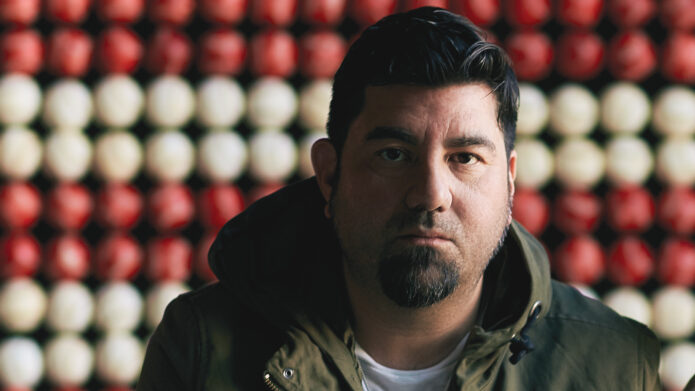
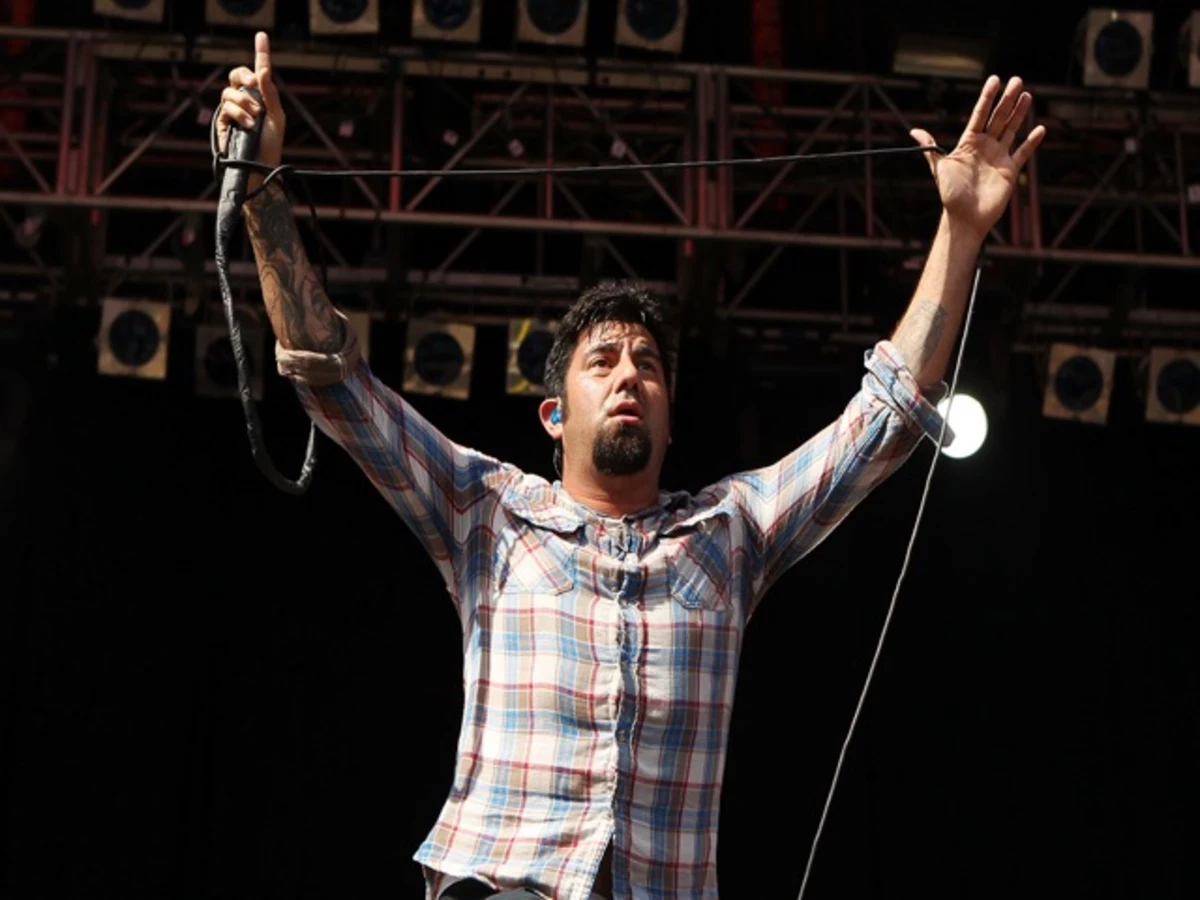
Chino Moreno’s tattoos fit the mood he has carried through Deftones for decades: heavy, romantic, strange and open to more than one reading. He has talked about religious art without presenting himself as conventionally religious, which helps make sense of the ink. He is drawn to sacred and forbidden imagery for its visual force, even when theology isn’t the point.

Chino Moreno tattoos

The best-documented piece is the Baphomet tattoo he discussed in Loudwire’s Tattoo Reveal series. Moreno said he wanted a Baphomet, a figure often shown with a horned goat’s head and layers of occult symbolism. It fits his interest in religious art, though he didn’t describe it as a statement of faith. The image can appeal to him as art before it becomes an argument about belief.

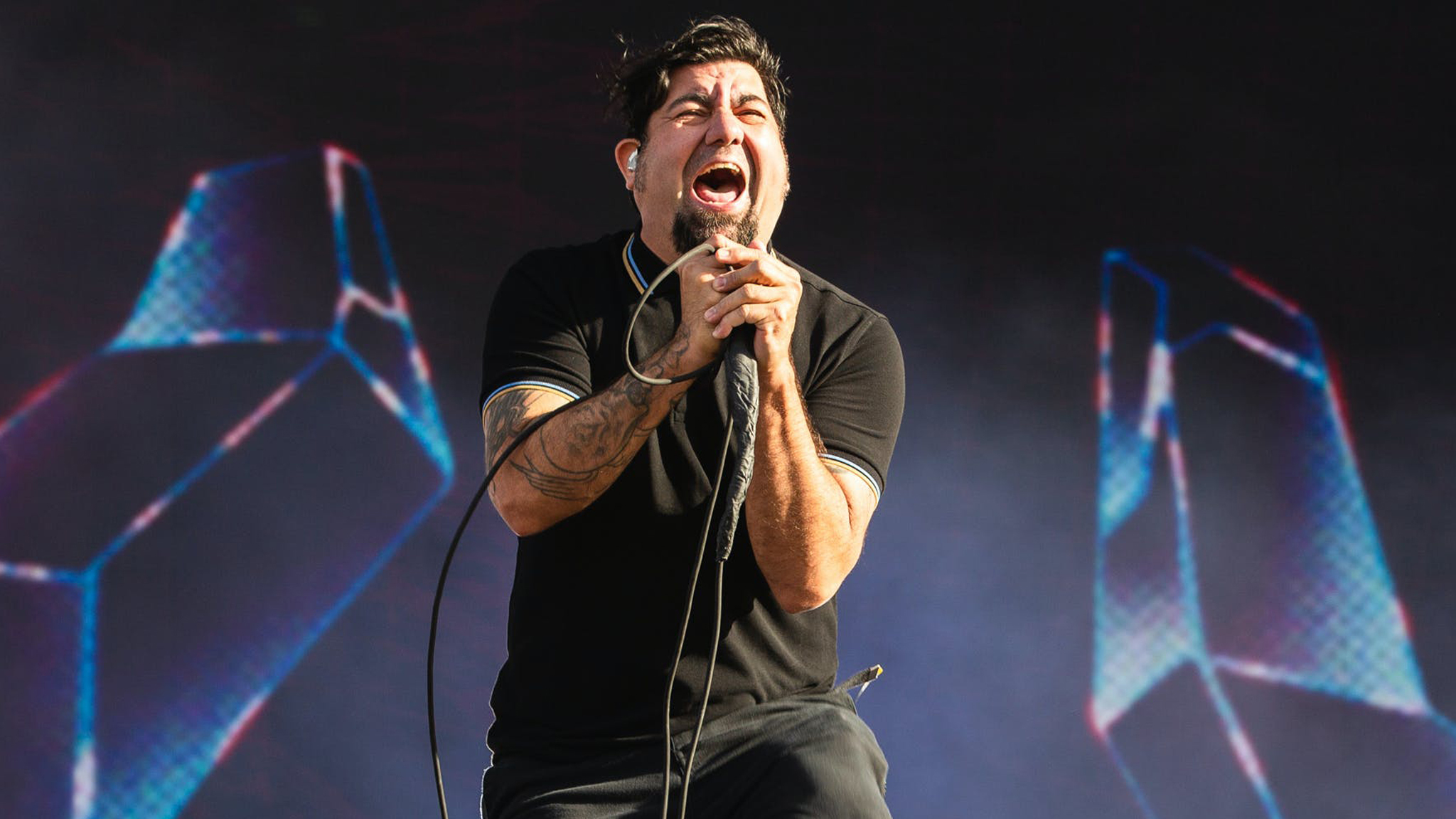
Chino Moreno tattoos

That context matters because Baphomet is often reduced to a simple shock symbol. Moreno’s explanation is more easygoing: he likes how religious imagery is drawn, staged and remembered, without adopting every interpretation attached to it. The tattoo sits somewhere between fascination, theatre and personal taste.

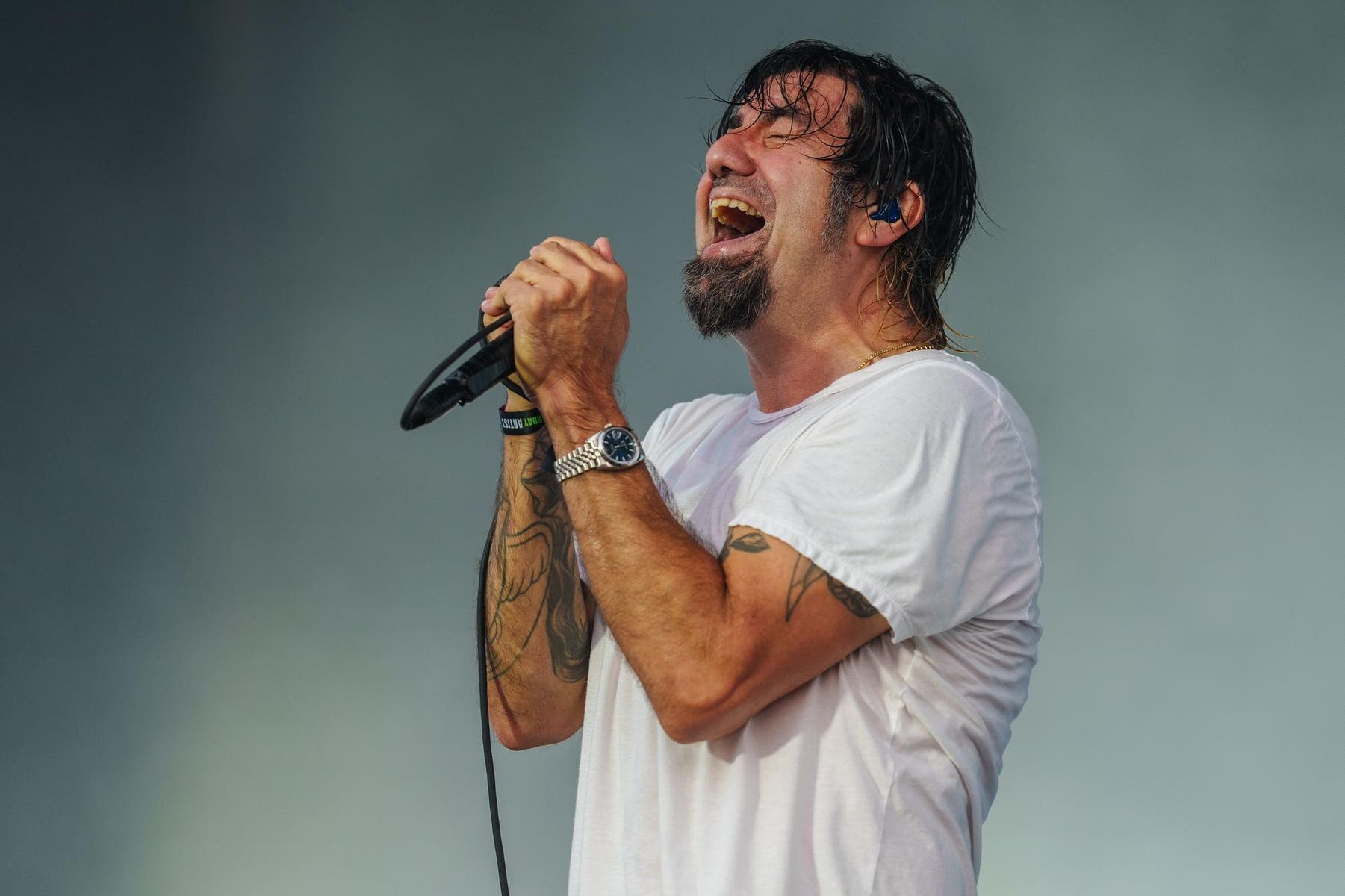
Chino Moreno tattoos

Older interviews fill in a little more about the collection. In a discussion about Deftones, Moreno said he has other religious tattoos and enjoys the art, though the religious meaning itself isn’t especially important to him. That keeps the inventory grounded in his own words. The images matter to him without requiring a literal creed.

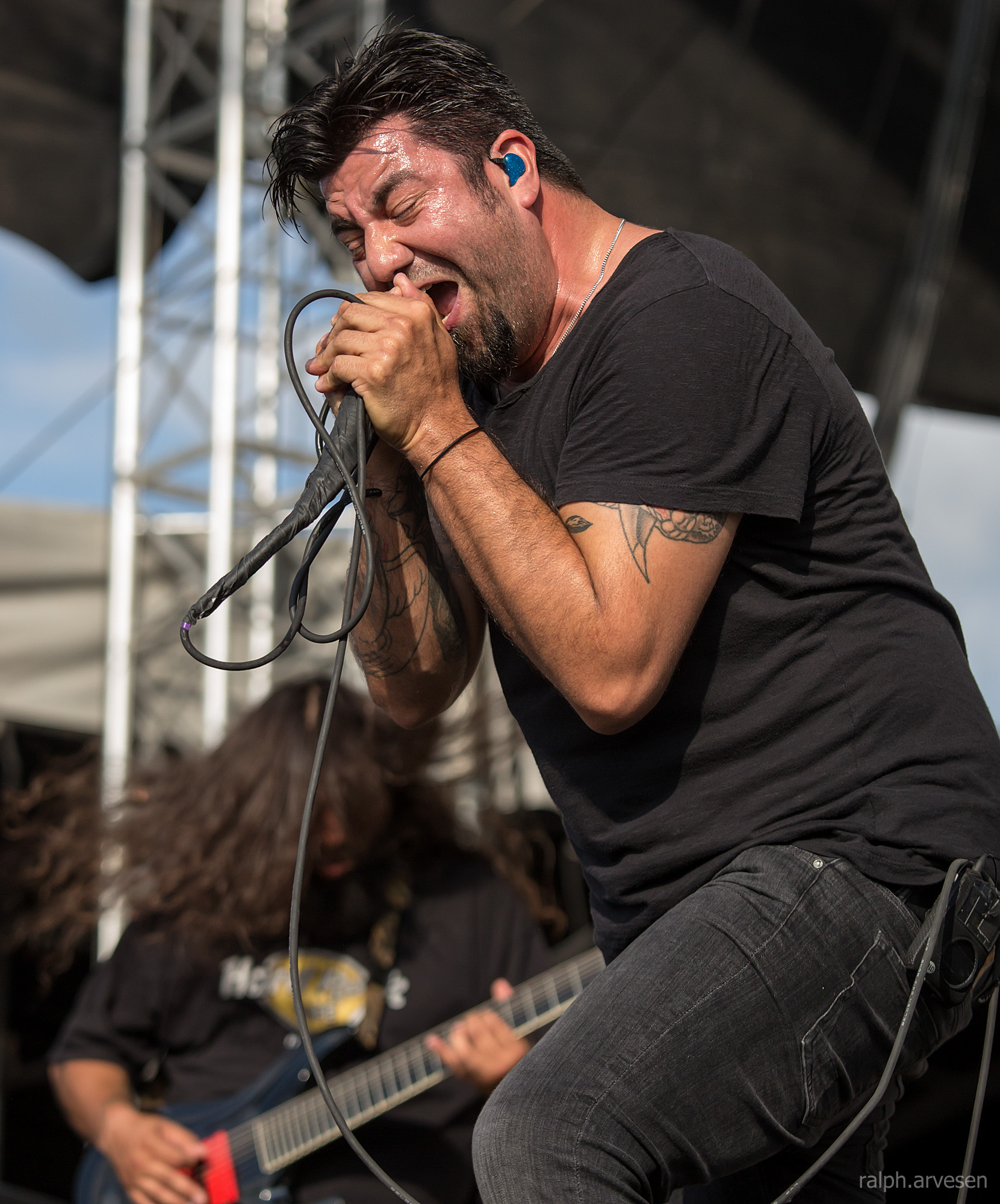
Chino Moreno tattoos

It can be hard to catalogue Moreno’s ink from performance photos. Stage lights flatten fine lines, microphones and clothes obscure his arms, and he’s rarely still long enough for a clear tattoo portrait. A festival shot may confirm a design is there without telling us its exact placement or when he got it. It takes several views to be sure of a detail.

Chino Moreno sleeve tattoos

The tattoos also look different across Deftones’ eras. A photo from the 2000s has a different feel from a recent festival portrait, but the ink remains part of the same silhouette. It fits the band because it isn’t too polished: religious figures, dark shapes and illustrative marks can seem tender in one light and menacing in another. That ambiguity is what ties them together.

Fans have pieced together detailed lists from live shots and close-up posts. Some identifications may be right, but the public record doesn’t always name a tattoo, its artist or its story. It’s useful to keep confirmed pieces separate from work that is visible but undocumented. Interviews support the Baphomet and Moreno’s interest in religious art; smaller designs should remain tentative until he or an artist identifies them.

A tattoo’s subject and its meaning to the wearer aren’t necessarily the same. A horned figure may draw on a broad artistic tradition, while its owner may simply love the drawing. A cross or saint might connect to family, art history or a place. Moreno’s comments are a reminder not to force one explanation onto every religious image. The collection can feel spiritually charged without making a doctrinal statement.

That openness connects the tattoos with Deftones’ wider visual world, where beauty and menace often share the same space. Soft vocals can float over crushing guitars; a romantic lyric can sit beside violent imagery. Moreno’s ink follows a similar pattern: it draws the eye with its beauty, then unsettles you.

Mood and evidence make the soundest guide to the collection. Start with the Baphomet he has named, add the religious tattoos he has acknowledged and the importance he places on the artwork, then use photos to note what’s visible. There’s no need to assign meanings that haven’t been made public. This leaves room for the tattoos to stay personal.

Religious imagery also carries a history of its own. A symbol arrives with centuries of associations before the wearer adds anything private. Moreno seems interested in that meeting point: he can use a familiar figure, shift its emotional tone and leave the audience to wonder what comes from the tradition and what comes from him.

Baphomet is especially open to different readings. Depending on the drawing, it can seem threatening, theatrical or almost elegant. That range echoes Deftones’ movement between intimacy and force. The tattoo doesn’t explain the music, but it belongs to the same emotional weather.

There are practical reasons to be cautious with detailed tattoo maps. Performers are often photographed from a distance, and pictures online may be cropped, mirrored or heavily edited. A line that looks like lettering in one shot may be a shadow in another; a sleeve can cover part of a design. The careful record may be less dramatic than a fan theory, but it holds up better.

Moreno hasn’t tried to reduce the tattoos to a slogan. They carry taste, memory and atmosphere, and some may remain undocumented. Still, the confirmed stories give us a glimpse of a musician who likes religious art, darker symbols and the freedom for an image to mean more than one thing.

That art-first approach fits Moreno’s public style. He hasn’t needed every visual choice to serve as autobiography. Sometimes a shape is appealing because it looks right, belongs to a tradition he’s been exploring or gives him a different energy onstage. A tattoo can be personal without being a confession.

That’s why the collection doesn’t settle into a neat religious identity. The images work as references and textures as much as statements of belief. A horned figure can sit beside another sacred image without forming a tidy system. The contradictions are part of what make the tattoos feel like Moreno’s rather than a themed flash sheet.
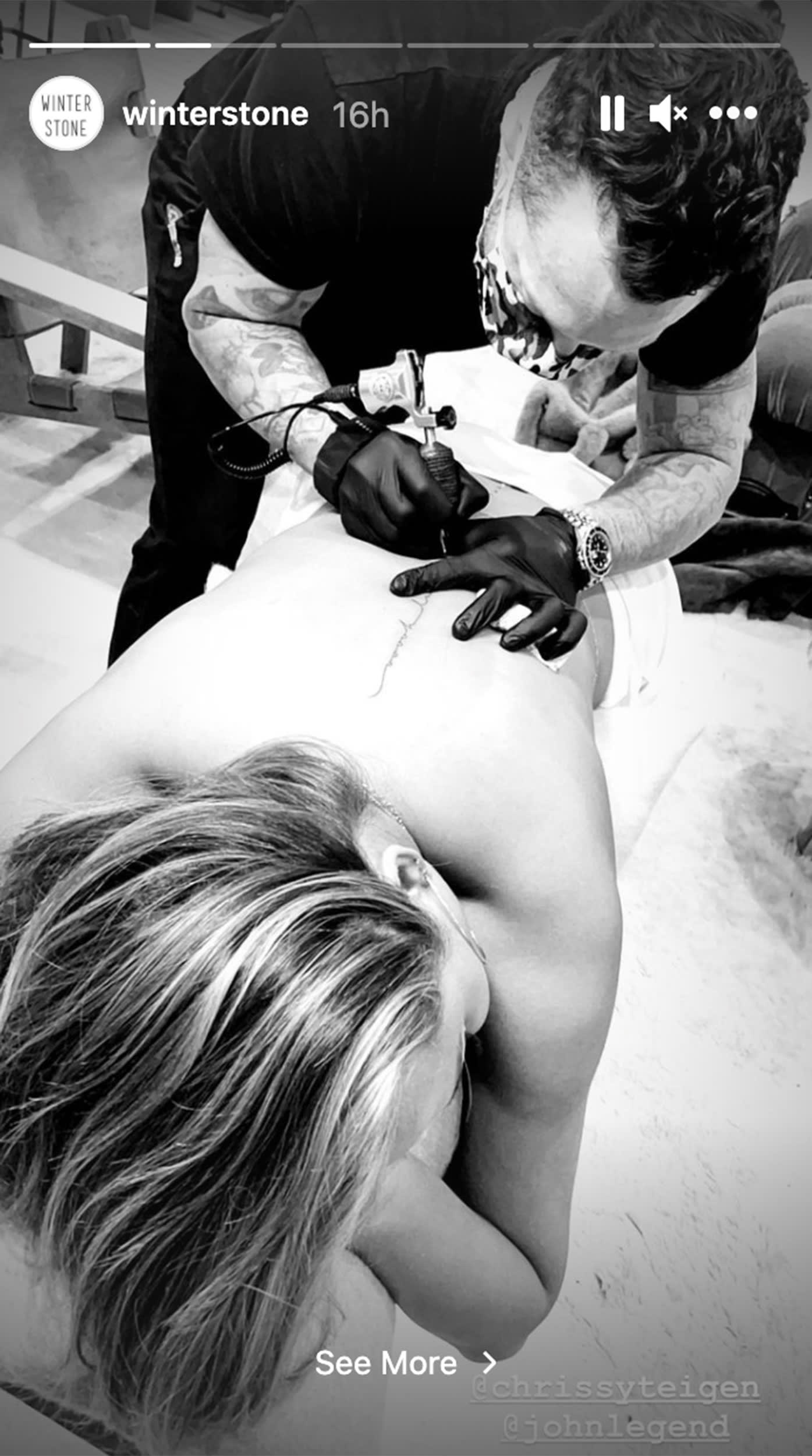
Fans also see how the ink moves during a performance. When Moreno leans into a microphone, his neck and arms catch the light. Behind a keyboard or drums, a different piece may come into view. The audience gets fragments because his body is always moving. Those glimpses build atmosphere before they build a catalogue.

Deftones’ long history adds another layer. A tattoo in an old photograph may belong to a very different period of Moreno’s life than one seen in a current interview. Without dates, it’s easy to project today’s meaning backward. A good account leaves the timeline a little open.

That uncertainty gives Moreno room to keep parts of the collection to himself while still offering fans a few clear starting points. The Baphomet has a story he has shared; his appreciation for religious art is documented. The other designs can be appreciated as visible work without claiming them as public property. A tattoo doesn’t need a caption to carry weight.

That balance may be the most Deftones-like quality of the collection. The tattoos are heavy without being blunt, beautiful without feeling safe, and personal without being fully explained. Baphomet is the clearest anchor, while the surrounding religious imagery creates a wider emotional field. They reward a second look.

In the end, Moreno’s ink offers invitations rather than a rulebook. The symbols invite curiosity, the artwork invites interpretation and the interviews call for some restraint. That’s enough for a useful tattoo guide: clear facts where they exist, with unanswered questions left as part of the atmosphere.

The collection rewards attention over quick conclusions. It’s dark, artistic and deliberately unresolved.

Even the confirmed Baphomet story leaves room for parts of the rest of his skin to remain private.

A documented inventory of Chino Moreno’s tattoos

The strongest public record includes the Baphomet tattoo discussed with Loudwire, other religious imagery Moreno has mentioned in interviews, and dark or illustrative designs visible in Deftones performance photos. The names, dates and meanings of many smaller pieces aren’t consistently documented. A careful inventory should mark those as visible rather than inventing a private explanation.

Why the religious imagery is more complicated than shock value

Moreno’s comments make the collection less literal. He appreciates religious art and the look of its symbols, but hasn’t described himself as deeply committed to the beliefs behind each one. That tension gives the tattoos their depth. They can be beautiful, eerie and meaningful without serving as a manifesto.

Watch a Chino Moreno interview

The interview below is a useful companion, placing Moreno’s tattoo discussion alongside the wider story of his music and visual identity.
More musician tattoo guides

FKA twigs turns body art into a language of protection

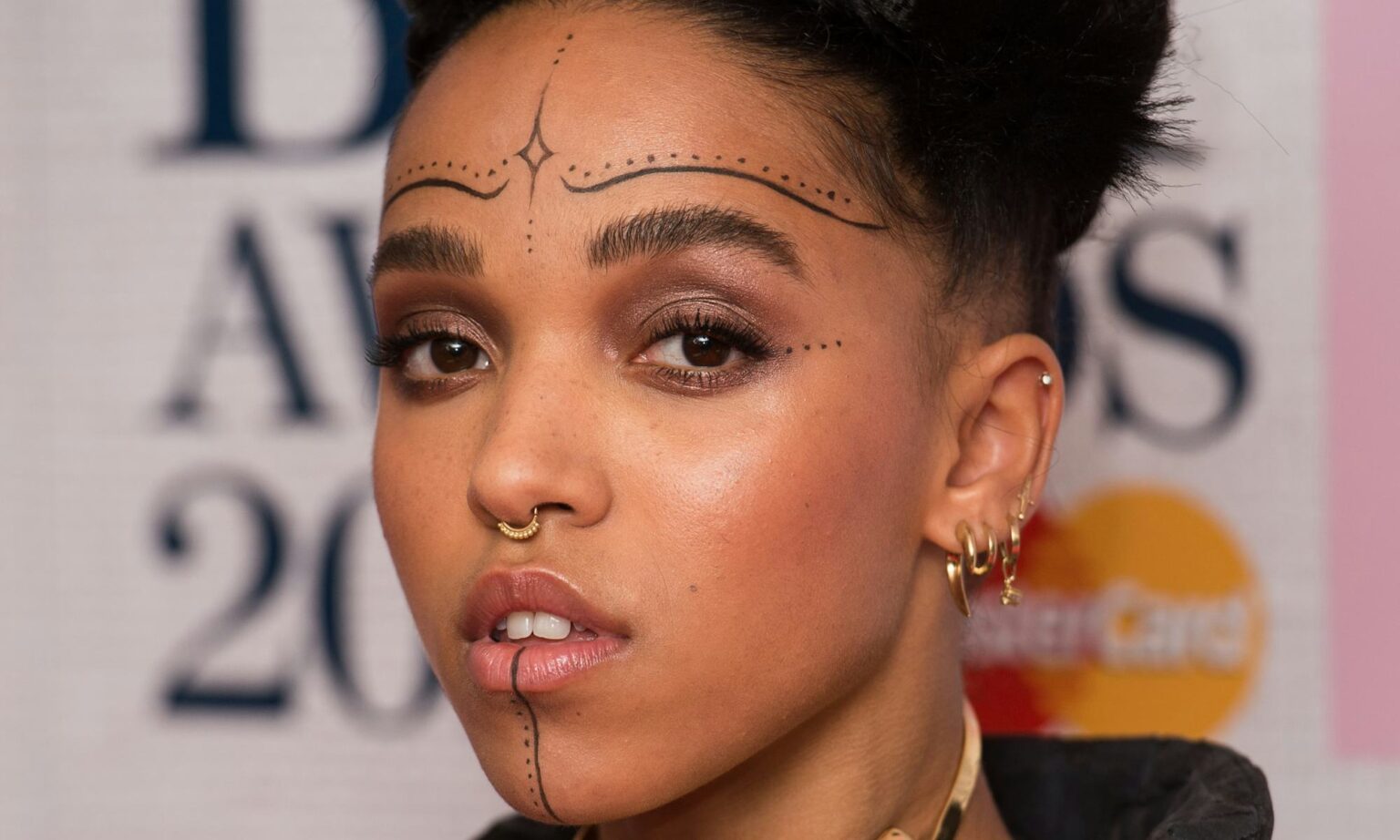
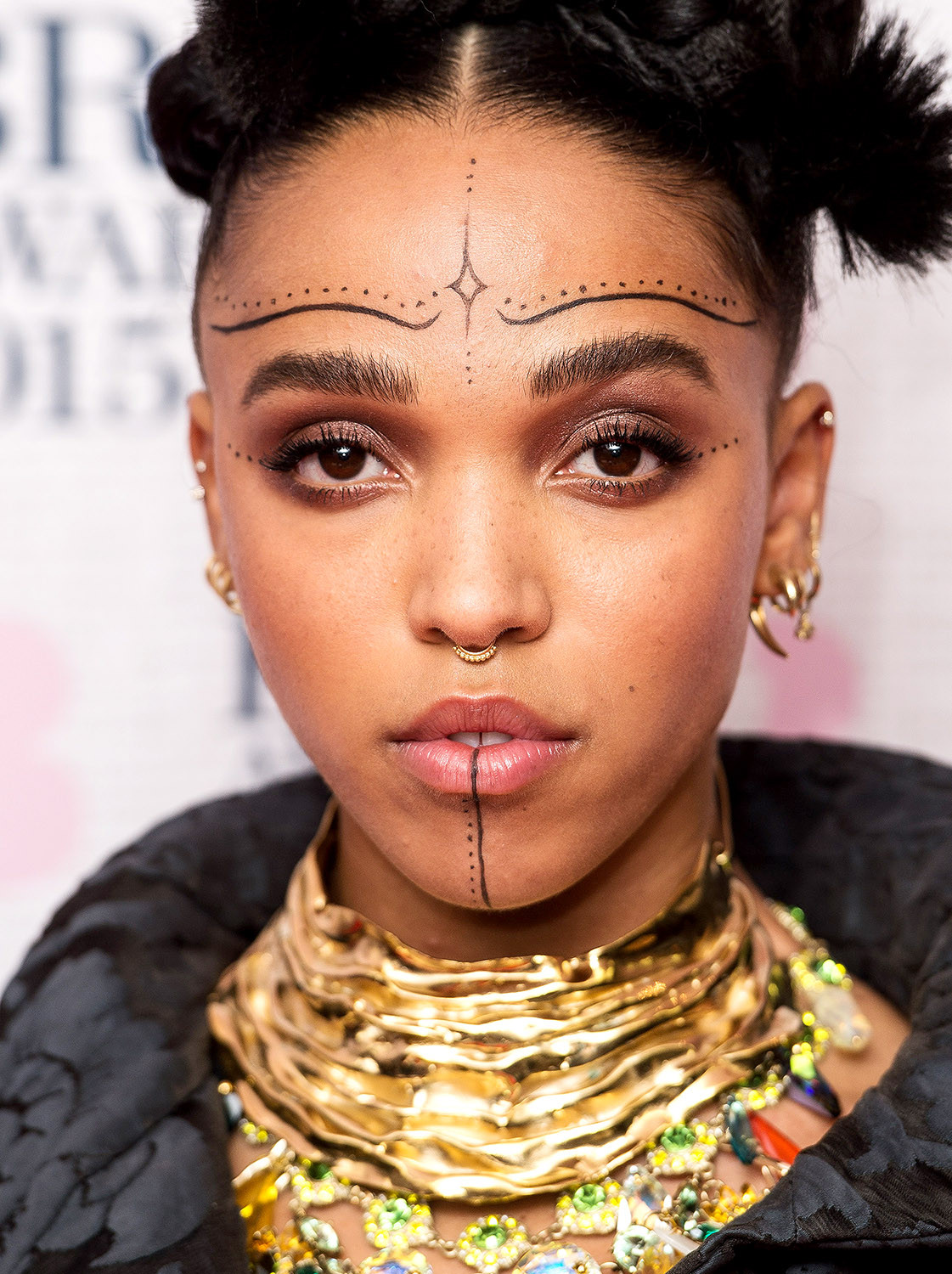
FKA twigs has long treated the body as part of the artwork, which makes her relationship with tattoos different from the usual celebrity ink story. Many designs shared widely in connection with her are temporary, made for a performance or red-carpet appearance rather than meant to last. Body art can carry meaning even when it isn’t permanent.

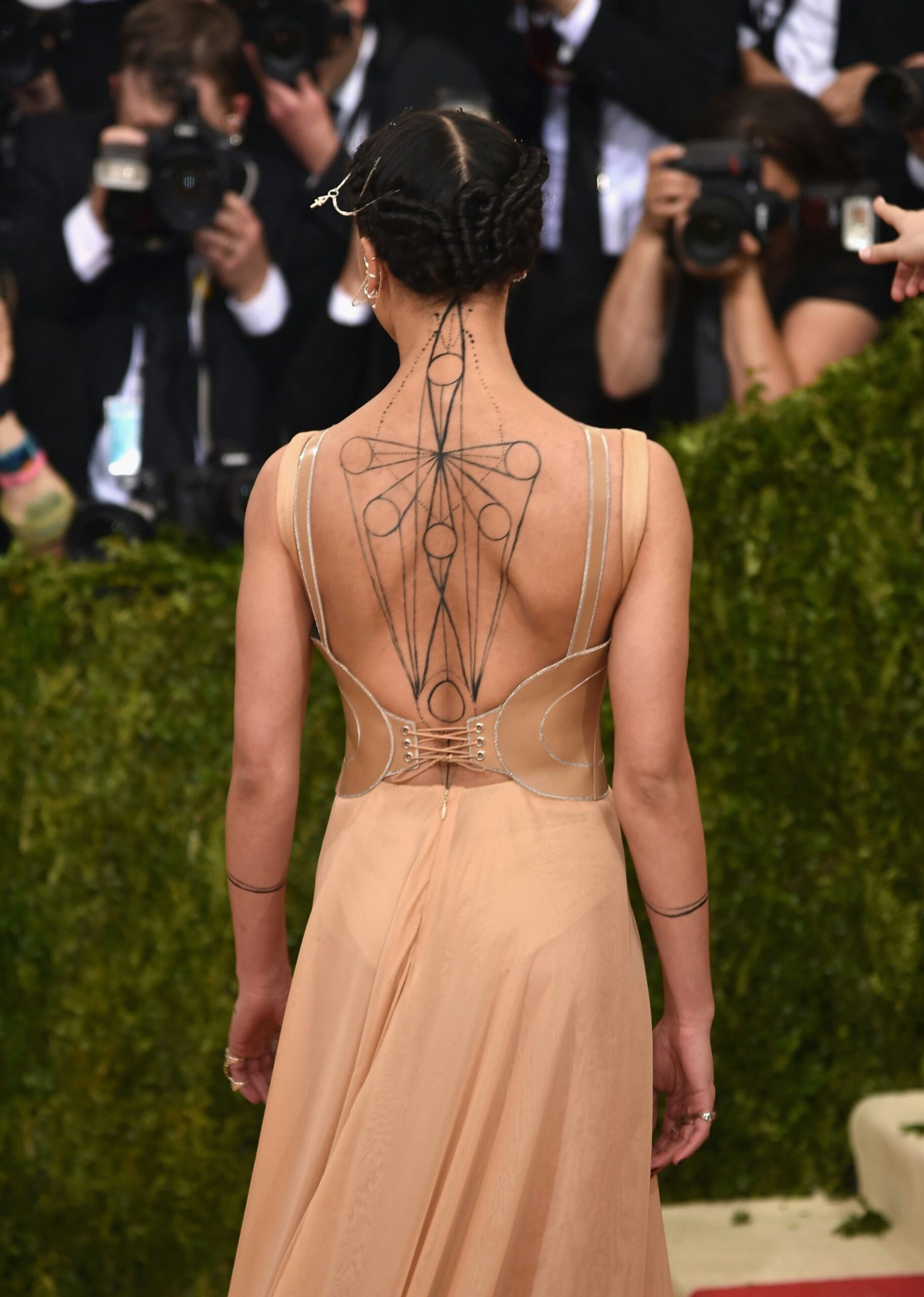
FKA twigs geometric back tattoo

The clearest example is the dramatic design across her back around the 2016 Met Gala. Nylon reported that celebrity makeup artist Anastasia Durasova drew the pattern using TEMPTU. It was based on mental geometry and inspired by protection, ideas that fit the visual worlds twigs builds around movement, ritual and transformation. It looked like a tattoo, but it was temporary artwork made for the event.

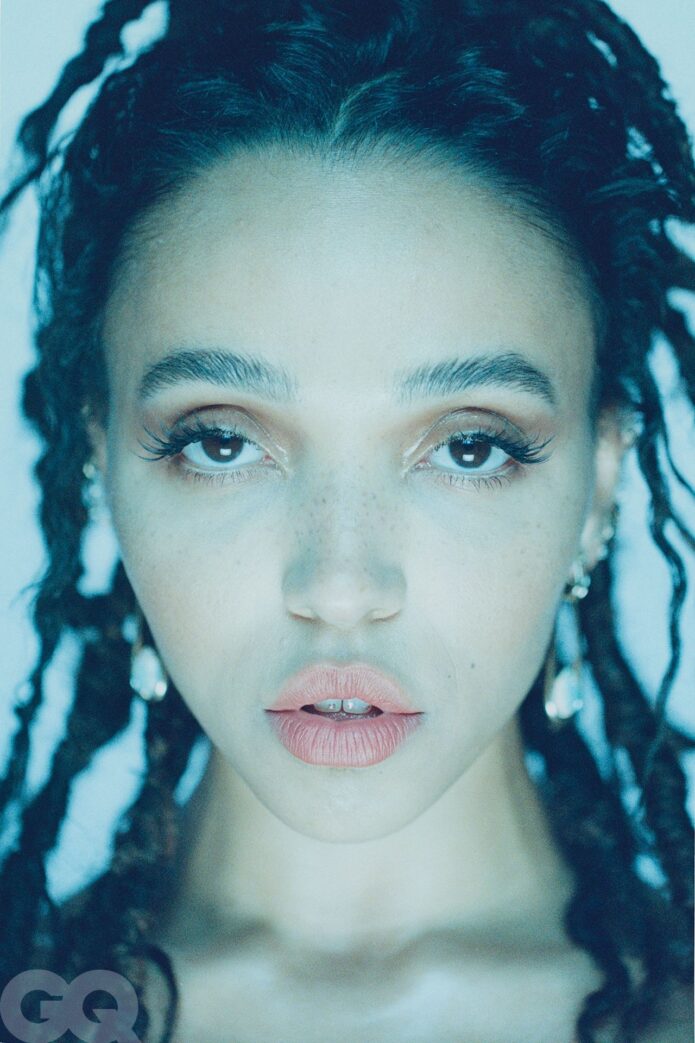
FKA twigs temporary face tattoos

That back design deserves to be considered on its own terms. Rather than a familiar symbol that can be named in a word, its lines formed a map across the skin. Geometry gave it structure; protection gave it an emotional direction. It was less a keepsake from the past than a temporary boundary around the performer in that moment.

FKA twigs temporary face tattoos

Her interest in mental geometry also echoes the rest of her creative work. Videos, stage shows and fashion appearances often make the body seem to move through a diagram. Lines might suggest energy, architecture, control or escape. The temporary back design carried those ideas without turning into a permanent biography.

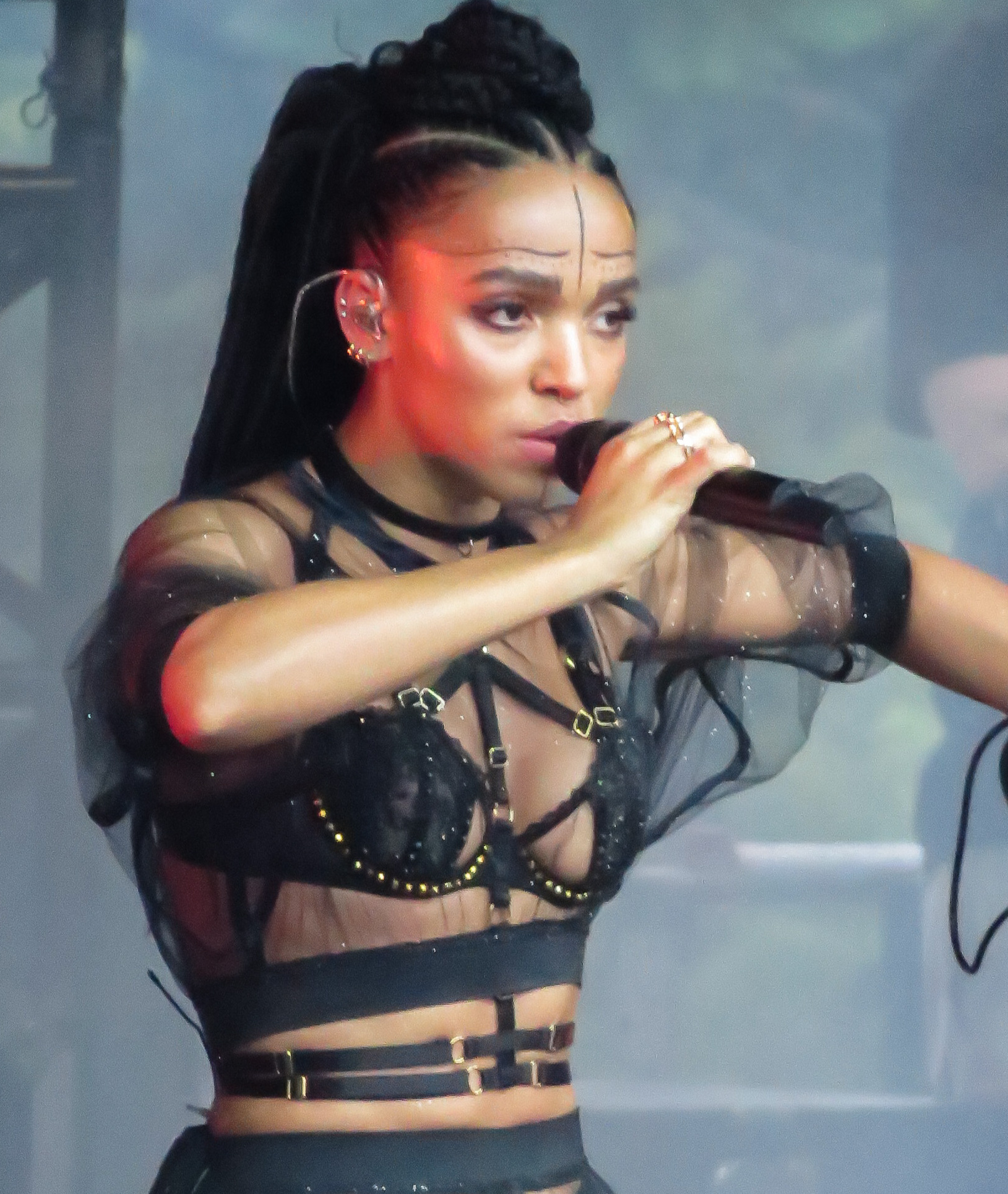
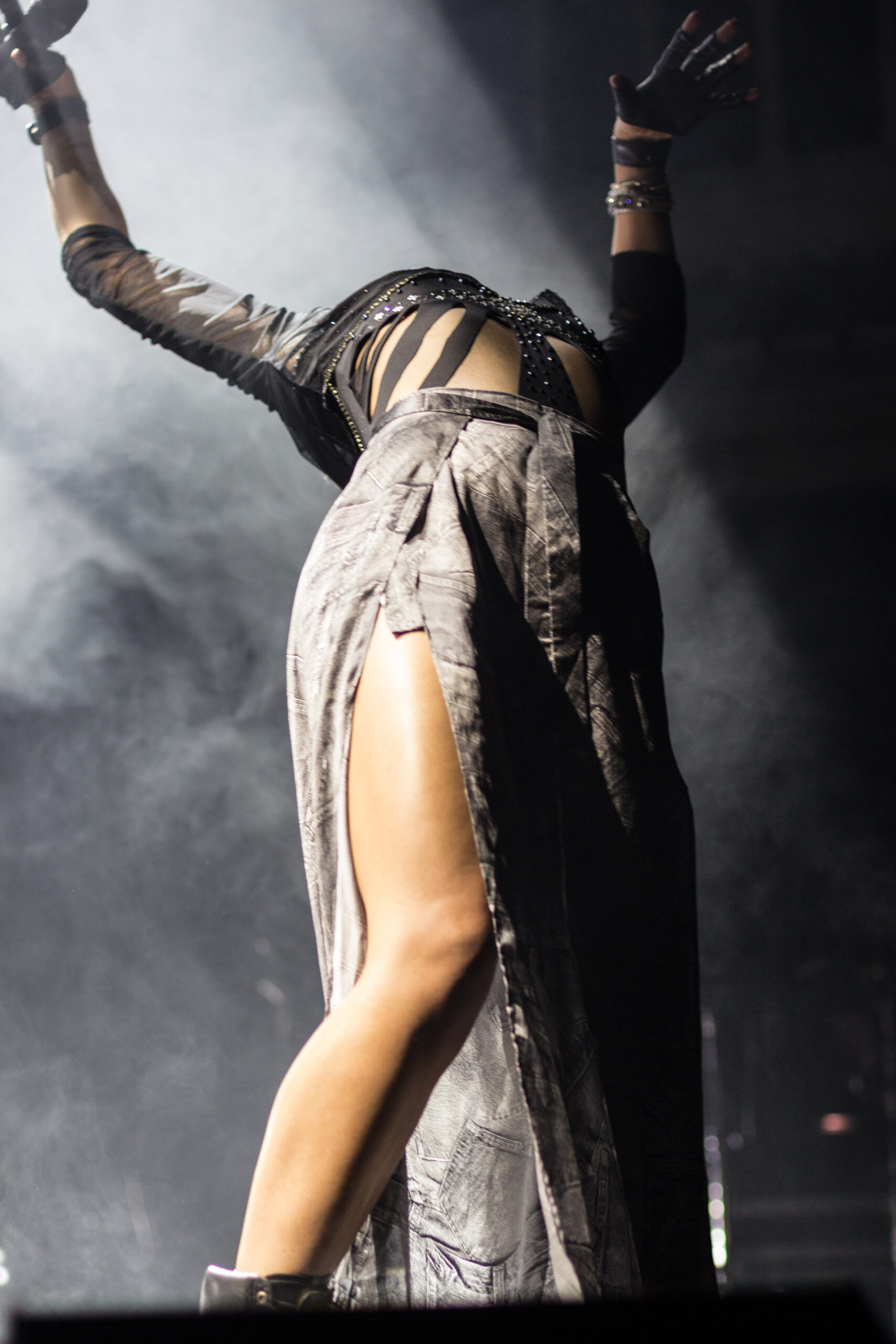
FKA twigs performance body art

Photos of twigs performing show how well the design worked. A black pattern across the back can disappear beneath clothing, then fill the frame when she turns her shoulders toward the camera. It’s theatrical, but not empty decoration. The artwork changes how the body reads. Stillness feels deliberate; movement feels choreographed.

Searches also bring up later fashion appearances with temporary face tattoos and other special-effects designs. These shouldn’t be counted as permanent ink. Vogue coverage described intricate face work applied by FX artist Mathilda Mace, while other reports identified fake face and thigh tattoos made for a particular look. They belong in a timeline of body art, not a list of designs she definitely still carries.

That distinction matters especially with twigs because her visual effects can look remarkably real. Makeup, prosthetics, transfers and ink may be hard to tell apart in a still image. A useful account should stick to what its source establishes. If a design was made for a shoot, performance or fashion-week appearance, that context is part of the story.

There are fewer widely documented permanent tattoos to list than an image search might suggest. That’s not a hole in the story; it tells us something about her approach. Twigs can use her body as a canvas without turning every design into a permanent record. A temporary piece can be redrawn, changed or removed when the performance is over. Its short life can be part of its meaning.

FKA twigs live body art

Her work also pushes against the idea that tattoo coverage has to be a catalogue of named symbols. Sometimes the more revealing details are the process: geometric lines, a protective motif, a collaboration with a makeup artist or a design made for a single night. That says more about the image than a vague caption calling it a tattoo.

The photos here come from different appearances, so they help show how her body-art language shifts. A concert shot catches her in motion, a portrait brings the face and neck forward, and an editorial image may show the styling from behind. None proves that every mark in view is permanent.

That’s why her body art feels closer to costume, choreography and set design than to a traditional sleeve. The designs still touch on protection, identity and transformation, but they’re allowed to disappear. Vanishing isn’t a lack of commitment; it’s part of the idea.

This approach also means she doesn’t have to explain every image forever. Permanent ink becomes part of a biography strangers can revisit. Temporary art can belong to one night and then give way to something else. That leaves twigs room to experiment with different symbols, textures and scale. Her body stays central, but it can still surprise.

People often want a yes-or-no answer to whether she has tattoos. The honest answer depends on what they mean by “tattoo.” She has worn designs made to look like tattoos and used body markings in performance and fashion. The public evidence doesn’t support inventing an extensive catalogue of permanent ink. Being precise makes the story more interesting.

The Met Gala design is the clearest case. We know the artist, the method and the stated inspiration—details that are rare enough to matter. Rather than guessing at hidden symbols, we can look at the geometry across her back, the idea of protection and the way it changed how photographs framed her body.

The temporary face designs work in a similar way. A pattern around the eyes or forehead can immediately shift the mood of an image, making a familiar face look ceremonial, unfamiliar or newly constructed. Once the design is removed, the performance is over, but photographs remain as a record of that choice.

There’s a difference between body art that records something from a life and body art that creates a world for an audience. A permanent tattoo often points back to a person, loss, friendship or decision. Twigs’ best-known temporary designs point outward: they create a space around her and give a performance a new set of rules. The idea of protection feels almost architectural—a structure that can be entered, used and then taken down.

Temporary doesn’t mean emotionally slight. A stage set can matter even though it comes down after the show; a costume can mean something even when it goes back in a wardrobe. The geometric design belonged to a moment meant to be photographed, remembered and left behind. Its brief life is part of the artwork’s honesty.

Her public record also shows why tattoo articles need clear language. “Permanent tattoo,” “temporary tattoo,” “makeup transfer” and “special-effects design” describe different processes and relationships to the body. Using the right terms lets us appreciate the work without claiming access to personal history she hasn’t shared.

Seen this way, her documented body art has a consistent feel. The patterns are often bold, the ideas geometric or protective, and the finished image changes how the body moves through a room. This isn’t about collecting symbols; it’s about making the body communicate at a particular speed, under a particular light, for a particular project.

Her body can hold several identities without getting trapped in one. Geometry can make her seem protected, a face design can make her look transformed, and a clean photo can reveal that the image was never meant to last. That movement between permanence and disappearance is one of the most revealing parts of the record. Twigs values the mark and the freedom to make a new one later.

That freedom runs through the work: the body can be a canvas, a costume, a boundary and a place to experiment.

It’s as much an artistic choice as a tattoo choice, and that difference keeps the story honest.

That distinction is worth remembering.

A careful inventory of FKA twigs’ documented body art

The clearest record includes the geometric back design created with Anastasia Durasova and TEMPTU around the 2016 Met Gala; temporary face and thigh designs reported at later fashion appearances; and markings for performances that sources identify as makeup or special effects, not permanent tattoos. A responsible list shouldn’t treat every striking photo as proof of permanent ink. The record is stronger when temporary work is named accurately.

Why temporary tattoos fit her visual world

Twigs’ creative work is built around change. Dance, styling, sound and image can shift from one appearance to the next. Temporary ink lets her place a new idea on her body without closing off the next one. The protective geometry can exist for one event and disappear, while its idea remains in memory. The design is temporary, but the visual language carries on.

Watch the tattoo interview and body-art story

The video below is a useful interview companion for understanding how twigs talks about the visual world around her work.

More musician tattoo guides

Marlon Vera Tattoos: Chito’s Panther, Back Piece and UFC Story

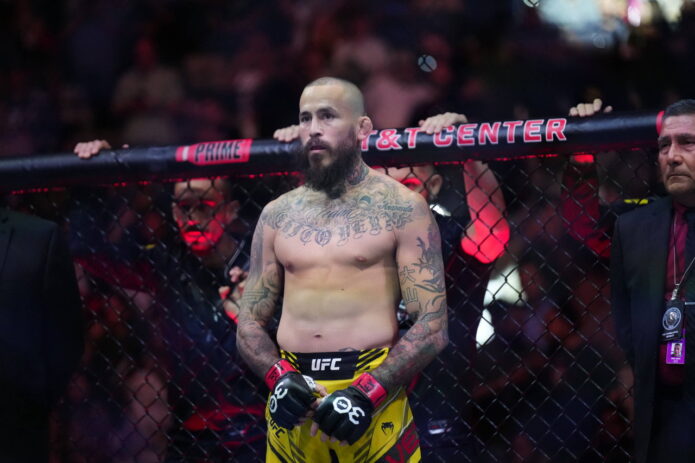
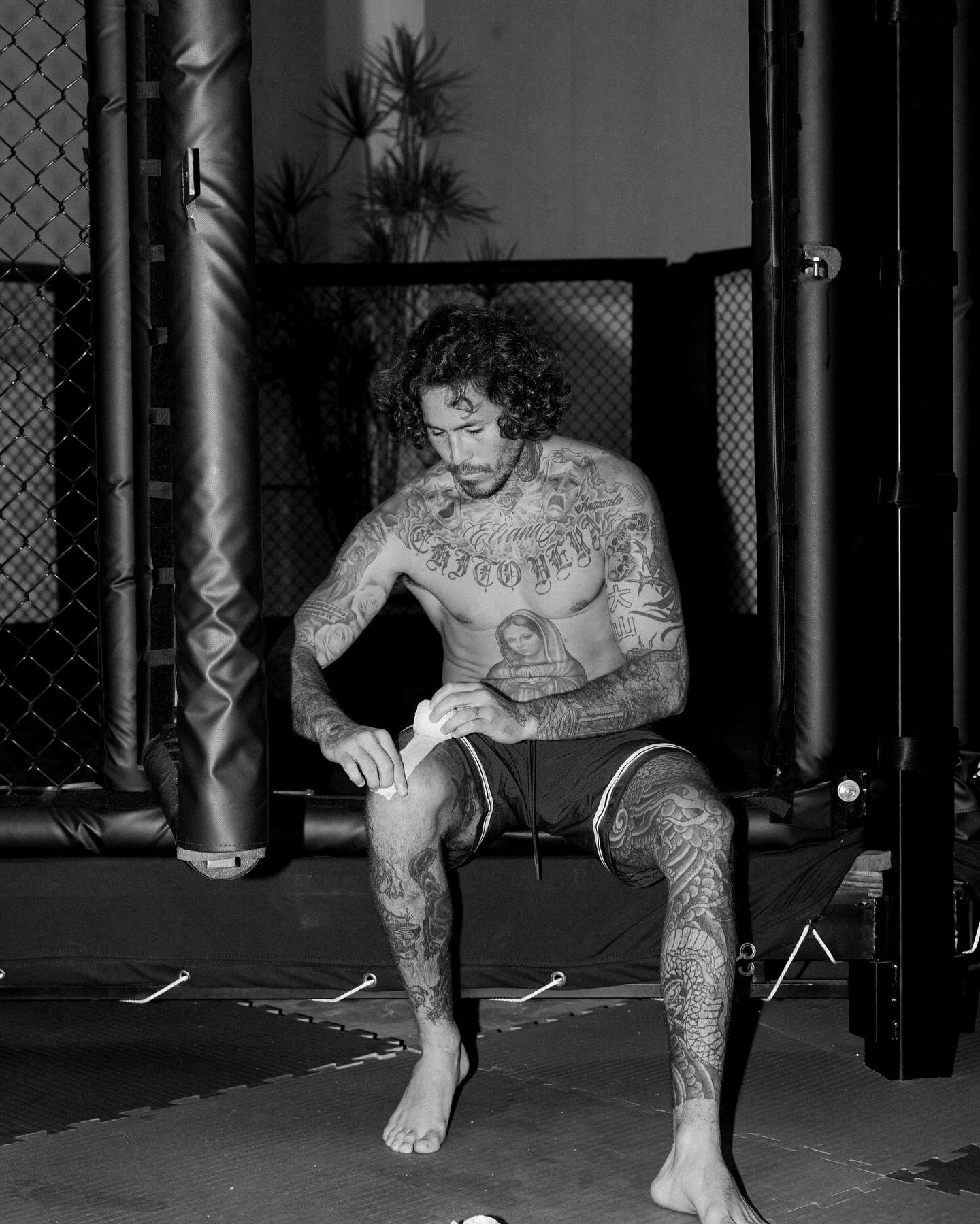
Marlon Vera’s tattoos are hard to miss when the UFC bantamweight takes off his shirt. The Ecuadorian fighter’s collection feels less like a random assortment than a scrapbook built over time: a colorful black panther on the back of his head, a huge Mister Cartoon mural tied to Chone, bold chest lettering, religious images, family names, roses, script and smaller designs across his arms and legs.

Vera hasn’t described the collection as a perfectly planned catalogue. In interviews, he has talked about trusting the people around him and letting the tattoo artist shape an idea. That easygoing approach is part of the appeal. Some pieces clearly connect to family or his hometown; others are images he liked enough to wear. Together, they show a fighter comfortable with putting his history, faith and humor on display.

Here’s a closer look at the pieces people recognize most and the stories Vera has shared.

Marlon Vera’s panther head tattoo is impossible to miss

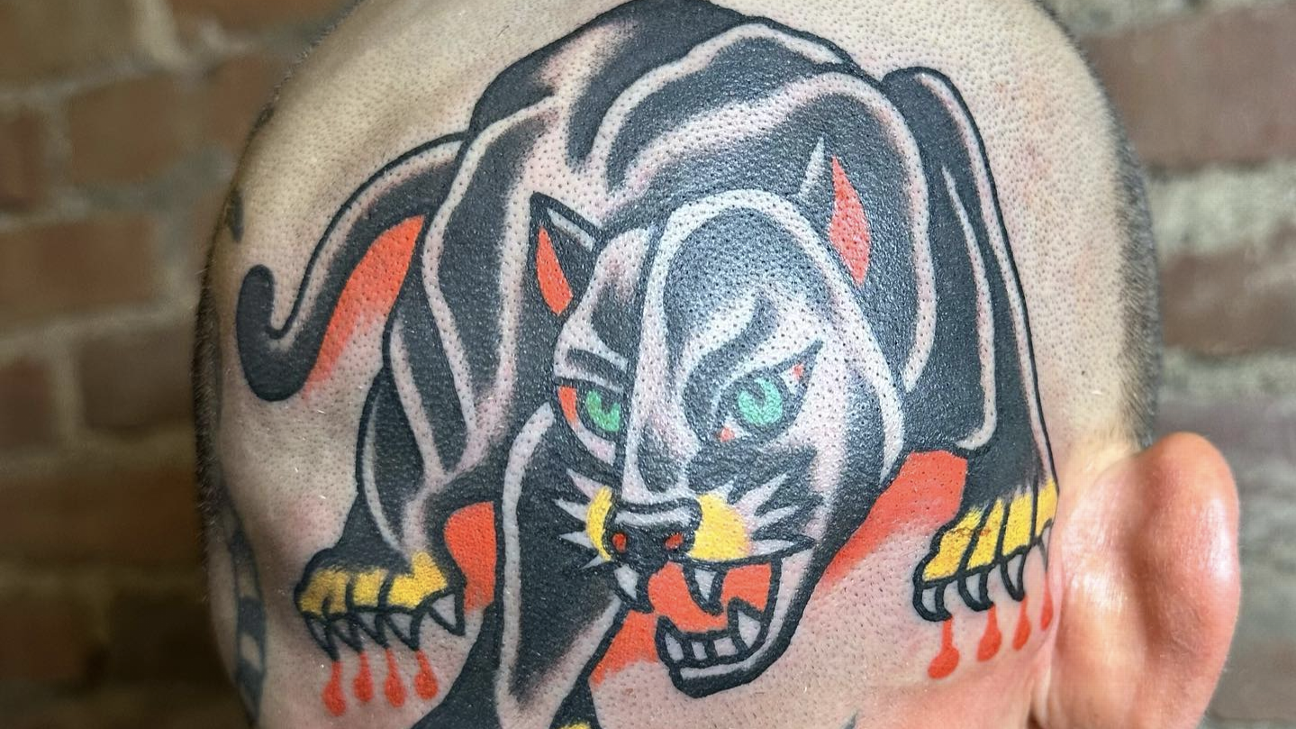
Marlon Vera black panther head tattoo with green eyes and yellow claws

The most striking tattoo sits across the back of Vera’s shaved head: a black panther with vivid green eyes, yellow claws and red accents like drops of blood. The design follows the curve of his skull, so it shifts as he moves. From afar it reads as a dark animal; up close, the eyes, teeth, claws and sharp blocks of color give it an almost comic-book quality.

Vera has said he didn’t arrive at the shop with a finished drawing in mind. He knew he wanted a head tattoo, then trusted his friends and the artist with the final panther design. That’s helpful context for fans looking for a deep meaning behind each piece: Vera has said there wasn’t one single explanation for this one, even if it says plenty about his taste. It’s aggressive and loud, with a playful edge that suits his public fighting persona.

The placement is part of what makes it memorable. Unless Vera wears a hat, the tattoo is visible at fight camp, weigh-ins and interviews. It has become part of his recognizable outline, alongside his beard and scars. It’s also one of the few designs viewers can identify without knowing much about his personal story.

The Mister Cartoon back piece starts with Chone

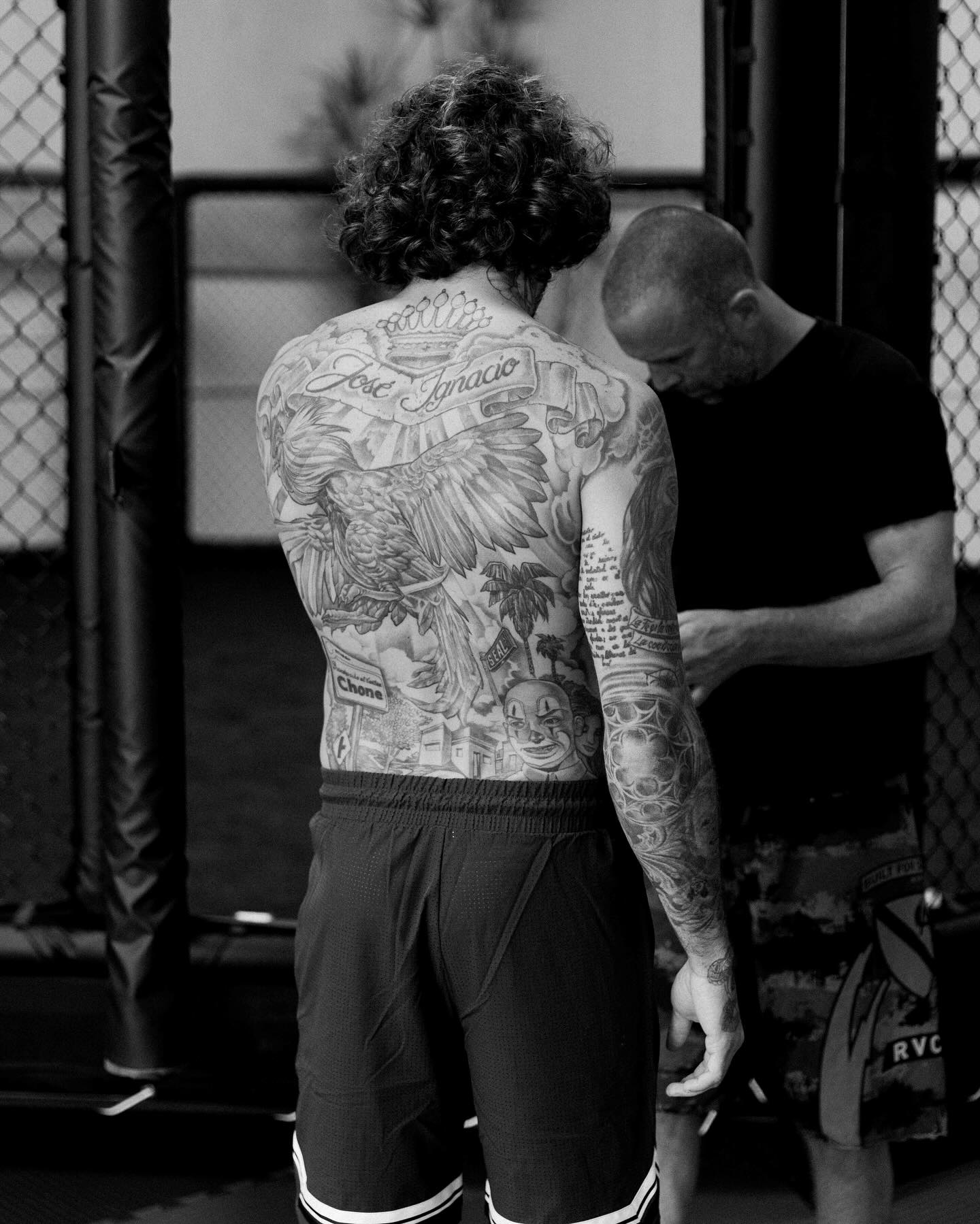
Marlon Vera showing his large back tattoo with Chone lettering and a rooster

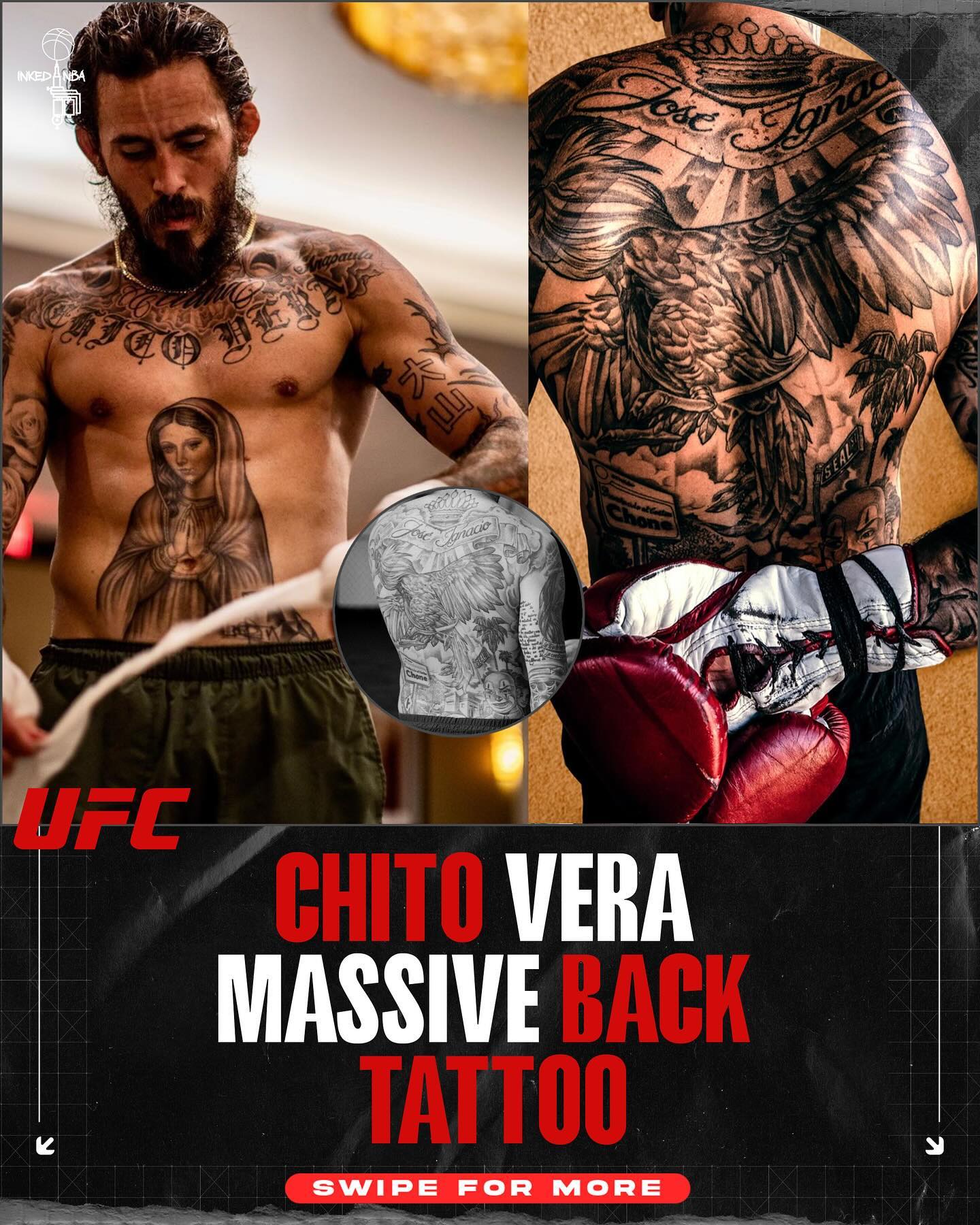
A huge tattoo by Los Angeles artist Mister Cartoon covers Vera’s back from the shoulders toward the waist. The scene brings together a banner, a crowned bird, palm trees, clouds, buildings and character details. “Jose Ignacio” appears in script near the top, while signs lower down refer to Chone, the Ecuadorian city tied to Vera’s childhood.

There’s a lot in the design, but it doesn’t feel haphazard. Mister Cartoon is known for narrative scenes in black and grey, and that gives Vera’s back a strong sense of place. The eye can move from the lettering to the wings and down through the palms and signs. The details are varied in scale, so they don’t all compete for attention at once.

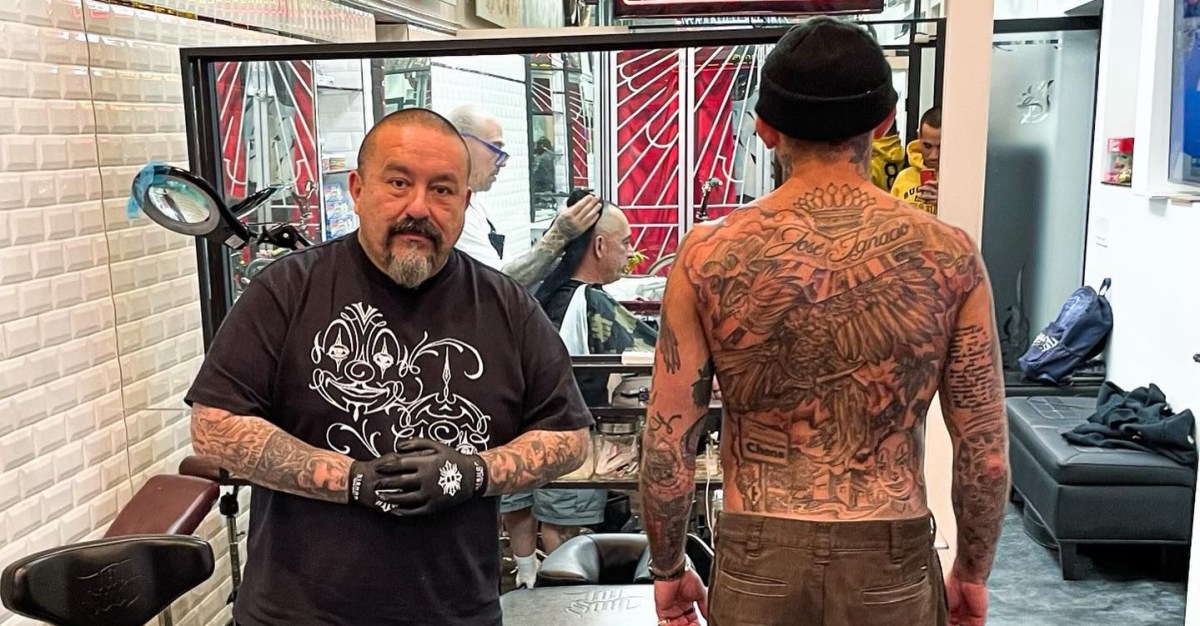
Vera has spoken with real excitement about Mister Cartoon’s reputation and the well-known people he has tattooed. That admiration is part of the story: he wanted more than technical skill; he chose an artist whose visual style already has a place in tattoo culture. The finished piece brings Vera’s memories together with Cartoon’s way of building a scene.

The rooster connects the tattoo to Vera’s childhood

Marlon Vera back tattoo photographed with tattoo artist Mister Cartoon

The rooster at the center gives the back piece its emotional focus. Vera has connected it to childhood memories of cockfighting and to the fighting spirit that took him from Ecuador to the UFC. It isn’t a simple team logo or mascot. The bird sits within a larger landscape of home references and the tattoo’s rough, theatrical energy.

That mix makes it more personal than a generic animal design. The rooster can suggest a fighter, but it also points back to the world Vera knew before international arenas and pay-per-view events. “Welcome to Chone” gives the mural a specific place. This is more than a dramatic back tattoo; it’s a map of where Vera comes from.

Other details create contrast. A clown mask and a woman appear in the scene, alongside clouds and light that keep the composition moving. The clown imagery adds a mischievous edge, while the buildings and palms ground the piece. Heavy shading brings all the elements together as one mural instead of a group of unrelated flash designs.

Roses, lettering and family names fill the front

Marlon Vera front tattoos showing chest lettering, Virgin Mary and arm designs

Vera’s chest and torso have a different feel from the mural on his back. Large, stylized “CHITO VERA” lettering sits across his chest, surrounded by roses, leaves and theatrical masks. “Anapaula” is also visible near the upper chest. These designs are easy to see at face-offs, just below the neckline of a fight kit.

Farther down his torso is a portrait of the Virgin Mary, one of the clearest signs of the collection’s religious side. It creates a calmer focal point beneath the bolder lettering. His arms add further details: a rose and Chinese characters on the left, a spiderweb at the left elbow, and bands of script and shading around the forearms.

The designs pull in different directions. The chest lettering is direct, almost like a ring name on a poster; the Virgin Mary feels softer and more devotional. Roses connect the two, while the masks and heavy script keep the overall look grounded in tattoo culture. Vera’s ink isn’t one single style—it brings together family, faith, identity and images he likes seeing on his body.

The smaller tattoos show the collection is still growing

Marlon Vera during a tattoo session showing leg and lower-body ink

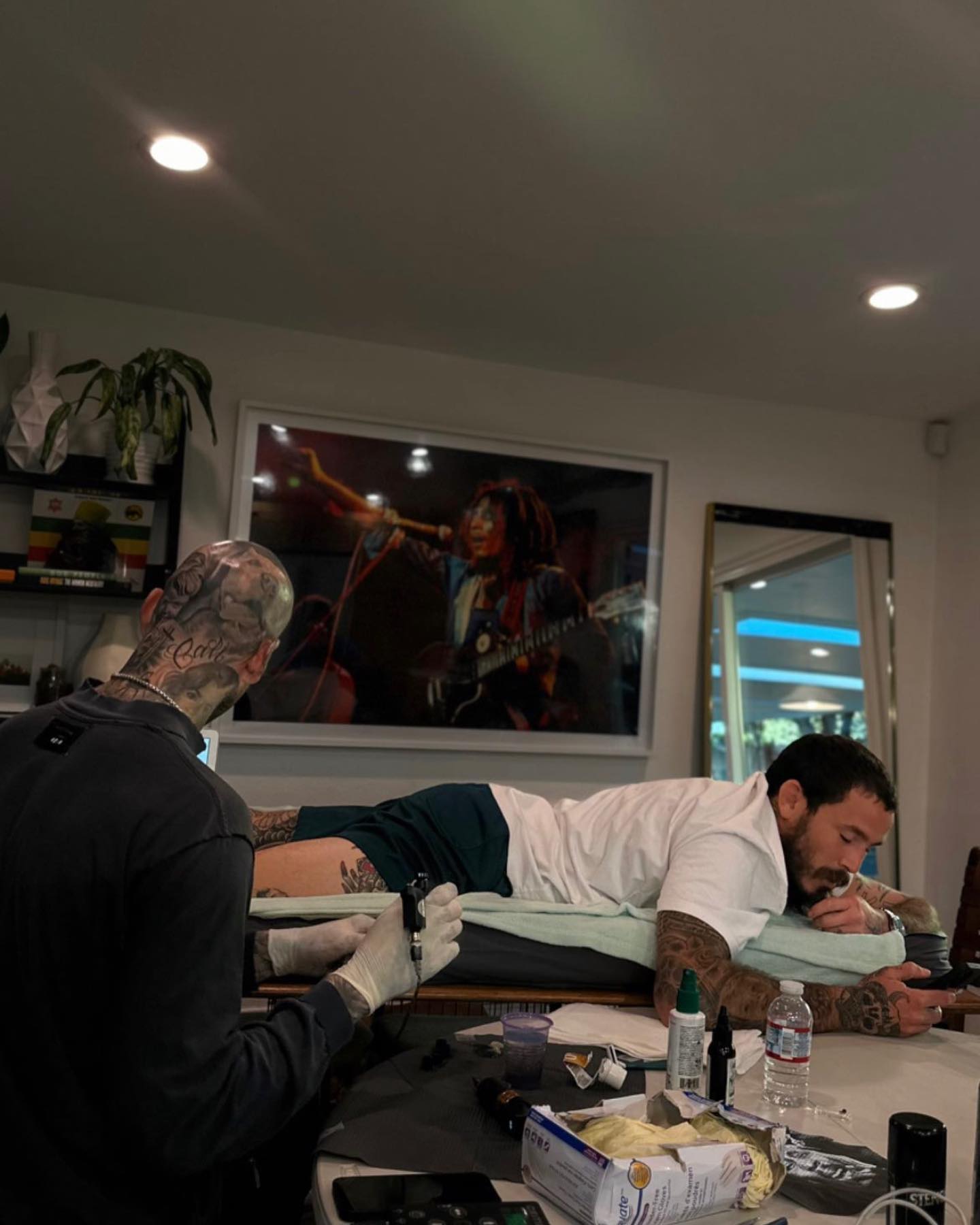
The head and back pieces draw the most attention, but the smaller tattoos count too. Vera has ink on his legs, wrists, forearms and around his elbows. A photo from a tattoo session shows how much of his lower body is covered already, and how comfortably he moves between large projects and smaller additions.

One of the leg tattoos people talk about most is a Bob Marley design near the back of his knee. It fits the variety in Vera’s collection: a musician, a religious portrait, hometown lettering and a fighting animal can all belong to the same visual story. The common thread isn’t a single theme; each piece offers another clue about what Vera values or remembers.

Smaller tattoos also change how the larger work sits. They fill spaces around the main pieces, give the eye somewhere to pause and make the collection feel lived in rather than assembled for a photo shoot. Vera’s body art looks like something he’s added over time, not a one-off branding exercise.

Why Vera’s tattoo collection works as a visual history

Marlon Vera tattoo collection collage showing chest and full back designs

Together, the tattoos tell a visual story about Vera’s career and personality. The panther is the immediate statement piece. The back mural points to Chone, family and childhood. The chest lettering carries the name he made in combat sports; the Virgin Mary adds faith, while roses, masks, script and leg tattoos fill out the picture.

Vera’s relaxed approach to tattooing is as interesting as the finished designs. He has talked about trusting friends and artists, and he seems willing to leave room for surprise. Not every tattoo needs a long explanation. Some matter because of the person involved, the place where it was done or the moment he chose it. Others may simply appeal to him and help the collection feel like his own.

That mix is on display during UFC fight weeks. The tattoos aren’t just background details in a weigh-in photo; they give fans something to read before the bell. Ecuador, family, religion, music, humor and fight culture all show up on the same body.

For another athlete whose tattoos work like a visual history, see our Odell Beckham Jr. tattoos guide. Beckham’s collection is more colorful, but the same idea applies: a good tattoo story shows how individual pieces become a personal archive.

Vera’s collection is still growing. The next addition might reference family, come from an artist he trusts or appear without warning. That unpredictability is part of the appeal. He’s already shown he’ll make bold choices, and there’s no sign this is the final chapter.

Watch Vera talk about an awkward tattoo experience and getting tattooed by Mister Cartoon below.

More athlete tattoo guides

Chrissy Teigen Tattoos: Family Names, Butterfly, Elephant and More

Chrissy Teigen’s tattoos are small and personal, so they can be easy to miss until you know where to look. She hasn’t treated ink as a collection of random decorations. Most of the designs we can see point back to her family, her life with John Legend or a moment she wanted to hold onto. That gives the collection a warm thread, even though the tattoos themselves look quite different.

Her best-known pieces include family names on her forearm, a tiny heart on her finger, a butterfly drawn by Luna, a blue elephant and the words Ooh Laa down her spine. She also has a wrist tattoo honoring her late son Jack. Some are so delicate they disappear in red-carpet photos; others show up clearly in close-ups shared by Teigen, her tattoo artist and entertainment outlets.

Here’s what’s known about the main designs, where they sit and why they matter.

The John, Luna and Miles tattoo keeps her family on her arm

Chrissy Teigen family tattoos on her forearm

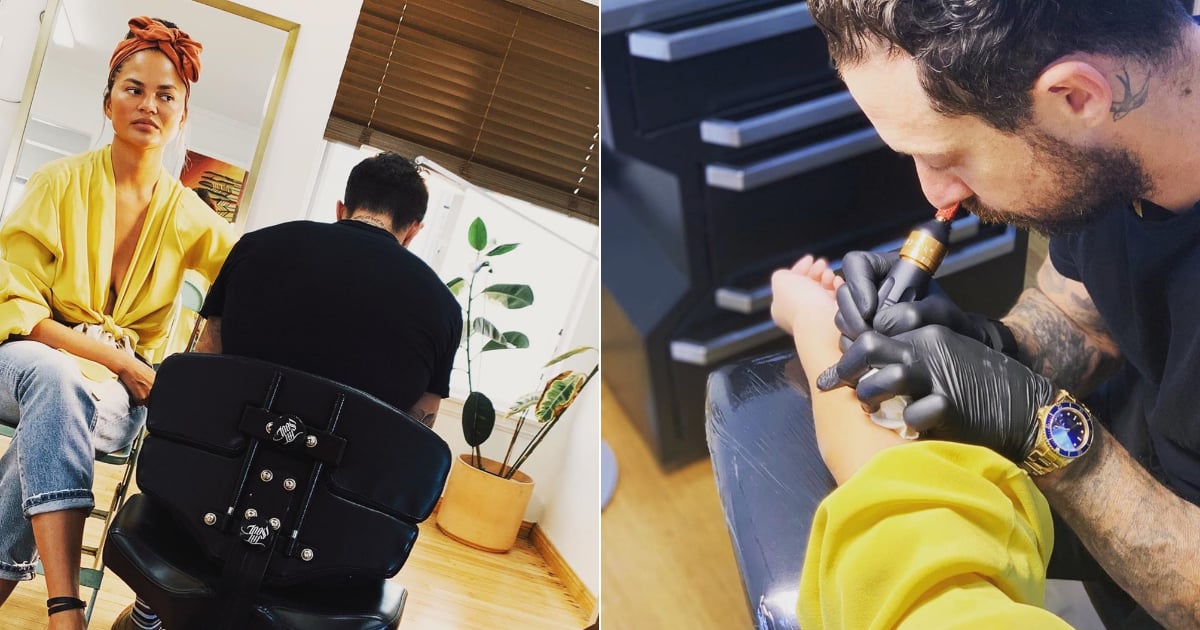
One of Teigen’s most recognizable tattoos is the fine script on her forearm: John, Luna and Miles. The names honor her husband and two of their children. Los Angeles tattoo artist Daniel Winter, known as Winter Stone, did the lettering. John Legend got a matching piece with Teigen’s name in place of his own, making the appointment a shared family marker.

The design is deliberately simple, with no heavy shading or frame around the words. It looks almost like a handwritten note, which suits Teigen’s preference for ink that feels intimate before it feels showy. The inner forearm is also easy to cover for work and easy to reveal by rolling up a sleeve.

Photos from the appointment show the clean, single-needle lines. Each letter has room to breathe, and the names sit in a neat row instead of crowding one another. It’s a good reminder that a small tattoo can carry a lot of emotional weight. The design is quiet, but its message is clear: the people closest to her stay with her.

Teigen later added more family-related ink nearby, turning the forearm into an ongoing record rather than one finished statement. The tattoos have grown along with her family, and that timeline is part of their appeal.

Her Jack wrist tattoo is a private tribute made visible

Chrissy Teigen Jack wrist tattoo

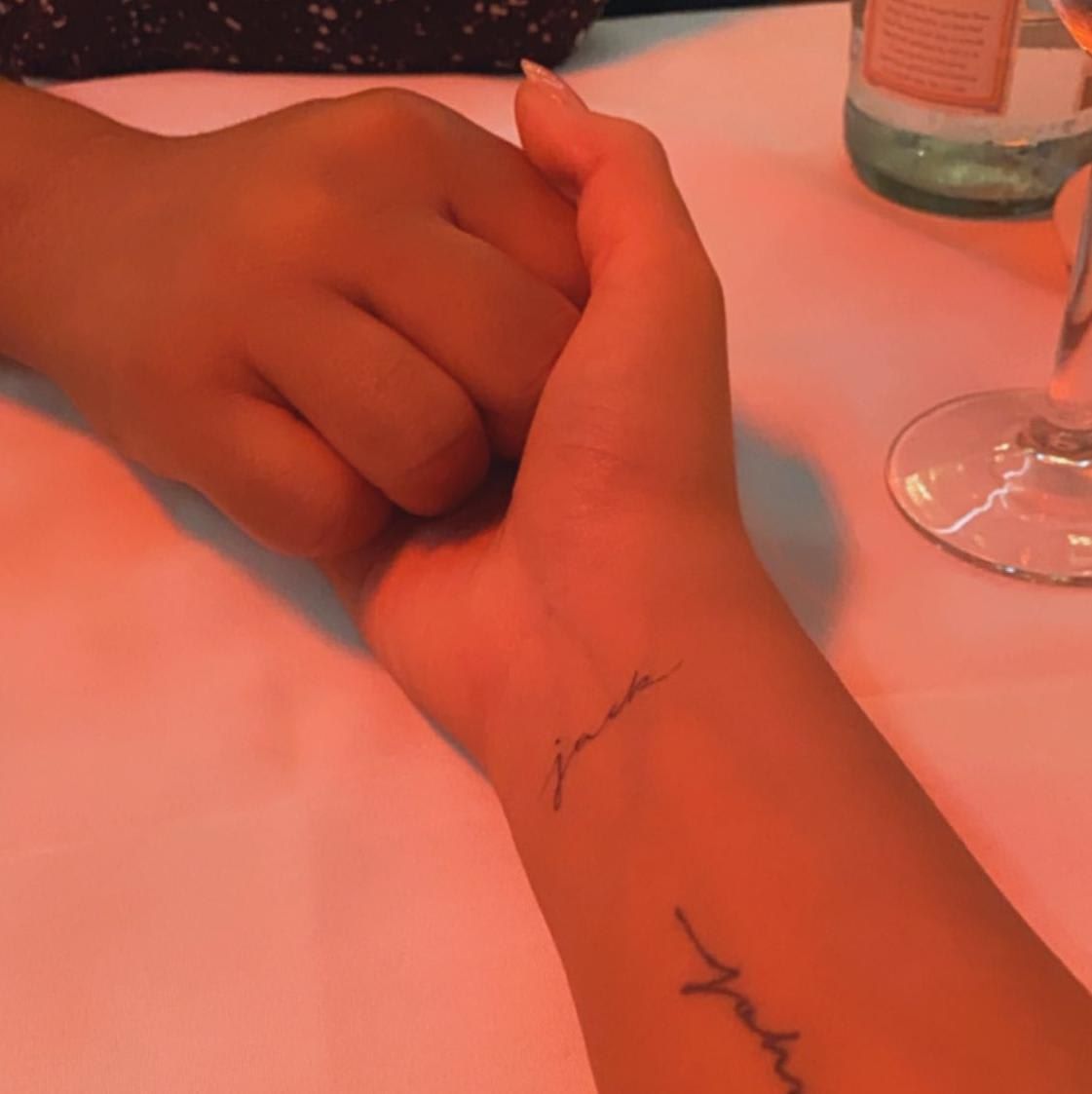
After the loss of their son Jack in 2020, Teigen chose a small script tattoo on her wrist as a memorial. His name sits near the existing family lettering, alongside John, Luna and Miles. It’s a tender choice, and the placement makes the connection easy to see.

The design doesn’t dominate her arm. Its fine lettering looks more like a signature than a bold memorial plaque. That restraint matters: Teigen has spoken publicly about grief, but the tattoo doesn’t turn it into a spectacle. It gives Jack’s name a lasting place while keeping the design close to her body.

Close-up photos show how the new script sits with the older tattoos. The lines are delicate, and the words fit naturally into the forearm collection. It’s also a reminder that the meaning of tattoos can grow as life changes. What began as family names has become a fuller record of the people Teigen carries with her.

A wrist is a fitting place for this kind of tribute: she can see it throughout the day, but it’s easy to cover when she wants. That balance appears often in Teigen’s choices. She picks placements that feel personal first and lets the camera catch them when she chooses.

Luna’s butterfly drawing became a real tattoo

Chrissy Teigen butterfly tattoo drawn by Luna

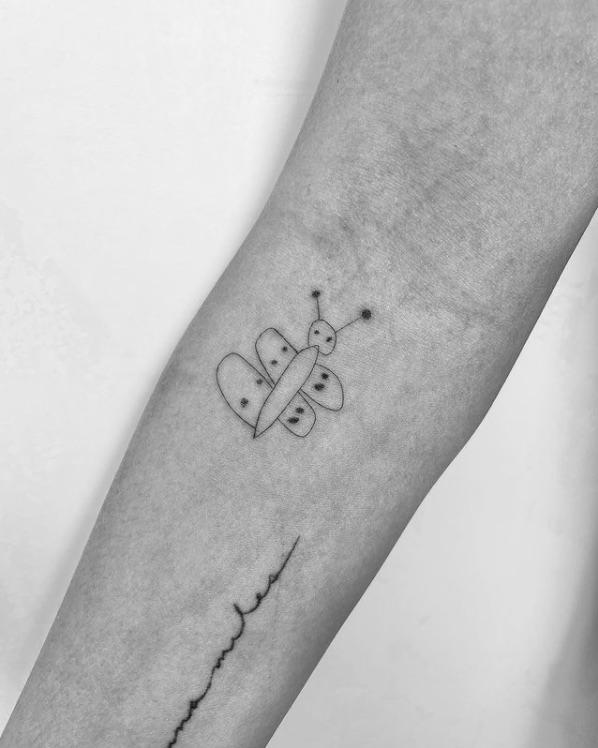
The butterfly is one of the sweetest tattoos in Teigen’s collection because it began as a drawing by her daughter Luna. The shape is intentionally childlike, with uneven wings and tiny antennae instead of polished realism. After Luna’s preschool graduation, Teigen had Winter Stone ink the drawing on her inner forearm.

The finished tattoo keeps the charm of the original sketch. It doesn’t correct the proportions or turn the butterfly into a standard flash design. The imperfect lines are the point: the tattoo preserves Luna’s drawing and gives the little insect more personality than a conventional butterfly might have.

Teigen has called the image close to her heart, and its placement fits. The inner forearm already holds family tattoos, so the butterfly joins the same story. In close-up, you can make out the rounded wings, simple body and dots that make it feel lifted from a child’s notebook.

The design also shows why Teigen’s collection doesn’t need to be large to be memorable. It isn’t technically complicated; its value comes from who drew it and what the moment meant. For anyone thinking about family tattoos, a personal sketch can be more powerful than a perfect symbol when the story behind it is real.

The blue elephant adds a brighter note to her tattoo collection

Chrissy Teigen blue elephant tattoo

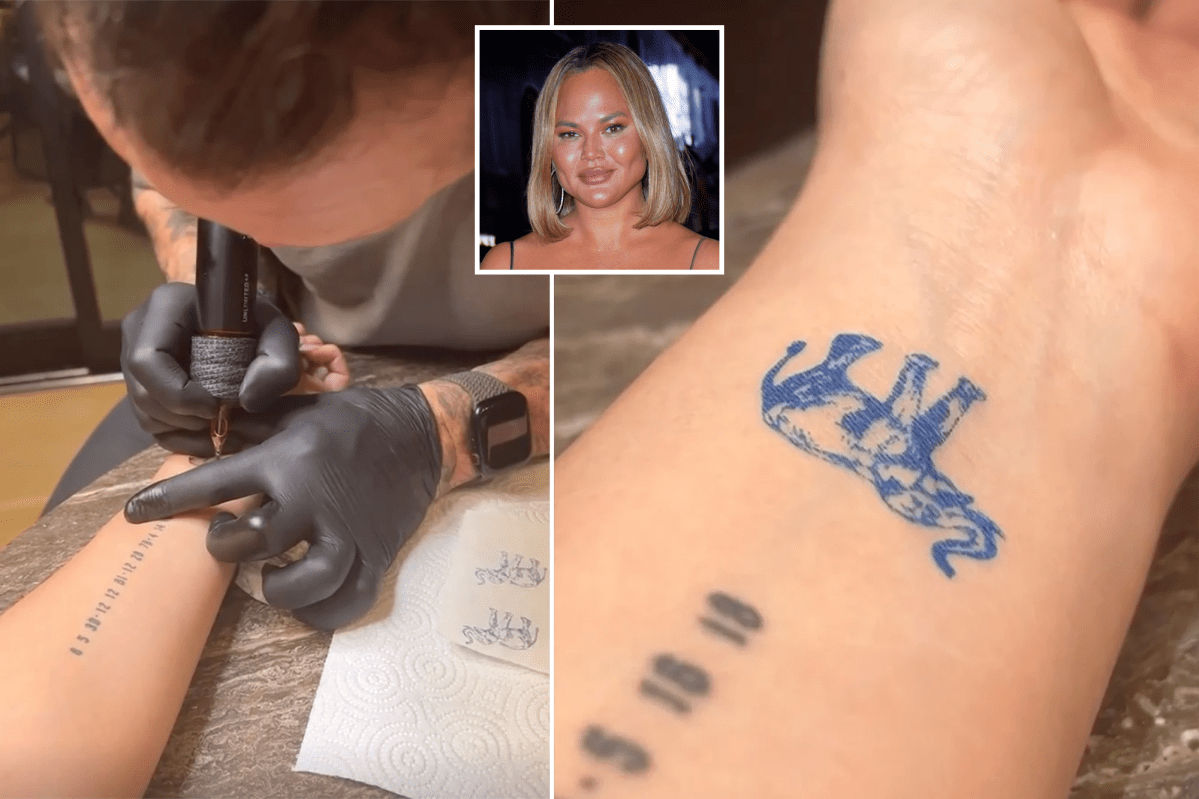
In 2022, Teigen showed a new blue elephant tattoo by Winter Stone. It stands apart from her other well-known pieces, which tend to use black or gray fine-line work. The blue gives the elephant a softer, playful feel, and the drawing is loose rather than realistic.

It sits around her wrist and lower forearm, close to the other family designs. In the photo, the blue ink is vivid against her skin and gives the elephant its own character. It feels less like another line of text and more like a small figure joining the collection.

Teigen joked with the artist about the elephant’s details during the session, which matches the relaxed spirit of the tattoo. It feels meaningful without looking solemn. The design also suits the wrist: it can peek out from under a sleeve without taking over her arm.

The elephant makes a nice counterpoint to the butterfly. Both are personal, simple drawings, but they have different moods. Luna’s artwork inspired the butterfly, while the elephant is a colorful standalone image. Together, they show Teigen moving between sentimental family pieces and tattoos that simply make her smile.

Ooh Laa runs down her spine as a John Legend tribute

Chrissy Teigen Ooh Laa spine tattoo

Teigen’s spine tattoo has a more romantic feel. Ooh Laa runs down her back in delicate script, referencing a John Legend song from his album Bigger Love. Winter Stone shared the finished design, and Teigen posted parts of the appointment while Legend stayed close beside her.

The vertical placement makes it different from the family names on her forearm. Instead of reading across her skin like a label, the phrase follows her spine. It can stay hidden under everyday clothes, which makes it feel like a special reveal when she wears an open-back look or shares a photo from behind.

The piece also shows how Teigen and Legend’s tattoos play off their relationship. Their matching family names are direct and practical; the spine design is more private and flirtatious, built around a song with a personal connection to their marriage. It’s like wearing a lyric as a small piece of jewelry on her back.

Clear lighting helps with a fine script tattoo like this. The letters are narrow and light, so they can disappear in a distant red-carpet shot. In close-up, the spacing and placement are easy to see, and the work looks clean without being overdone.

Look across the collection and a pattern emerges: most of Teigen’s tattoos are about people, memories and small expressions of affection. Even the nonverbal designs have personal origins. Luna drew the butterfly; the blue elephant brings color and humor; the spine tattoo points back to Legend’s music. The names and Jack tribute make the family story even more direct.

She also tends to favor fine lines and placements she can show or cover. That makes the tattoos easy to live with and lets each new piece find its place. None looks like it was added just to fill space. The strongest examples are tattoos that would still matter even if nobody else saw them.

For readers looking for celebrity tattoo ideas, Teigen’s collection offers approachable examples. You don’t need a full sleeve to build a meaningful group of tattoos. A handwritten name, a child’s drawing or a lyric can be enough. The key is choosing something that still feels true after its trend has passed.

That family-first approach is why the collection keeps evolving. New ink doesn’t erase what came before; it adds another chapter. If you like tattoo stories rooted in personal history, read our feature on Marlon Vera’s meaningful tattoos for a very different kind of story told through ink.

In short, Teigen’s tattoos combine fine script, small illustrations and tributes to her relationships. The designs are delicate, but the stories behind them aren’t. Each piece has a reason to be there.

Watch the video below for more about Teigen’s butterfly tattoo and the family story behind it.

Gabbriette Tattoos: Stars, Butterflies, Arms and More

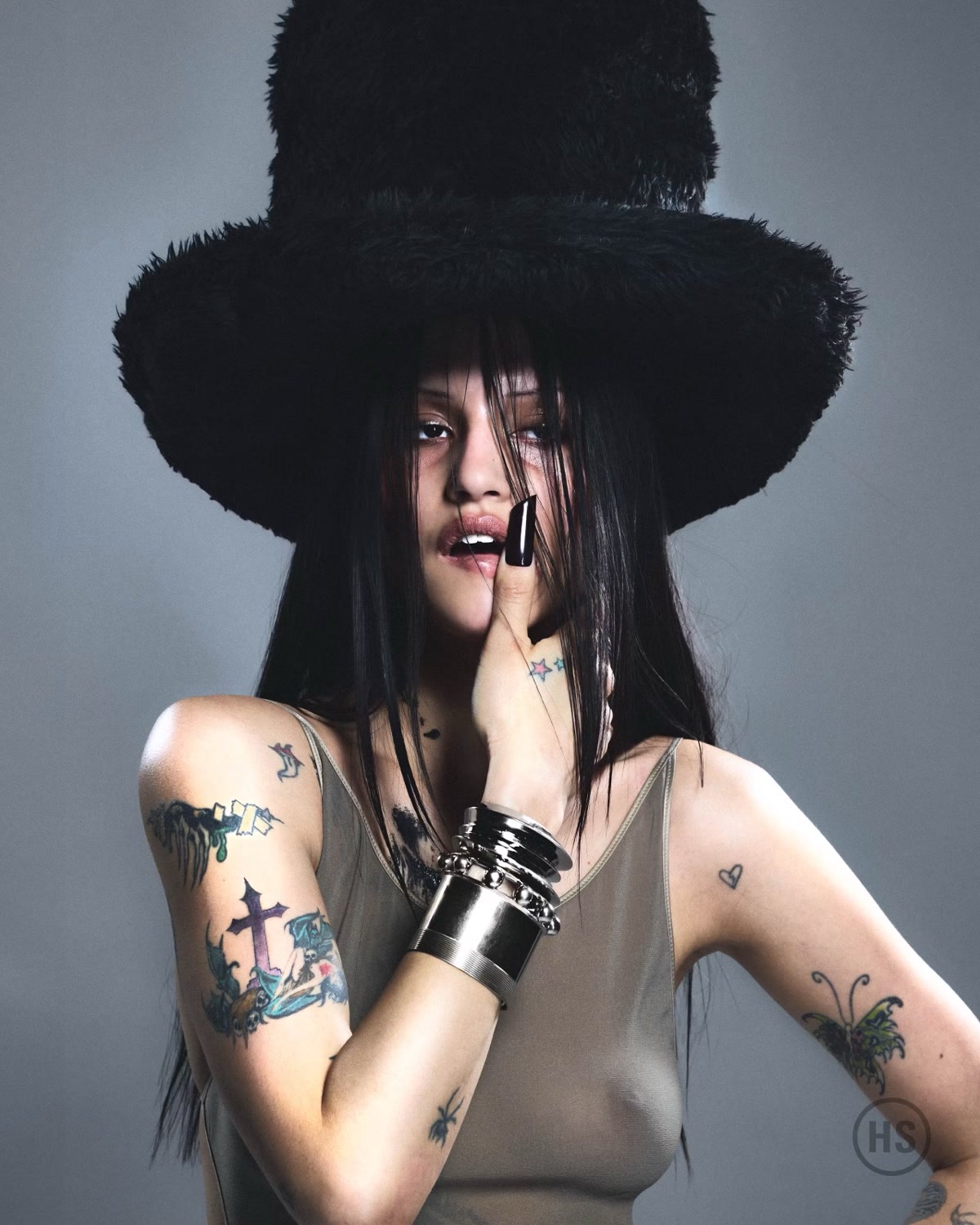
Gabbriette Bechtel’s tattoos feel inseparable from her style. The model and internet personality often wears black and favors dramatic silhouettes, and her ink is just as individual: bright stars, tiny hearts, bold arm designs, hand tattoos and larger pieces that make her skin part of the outfit. Some look carefully planned; others feel spontaneous, playful or a little rough around the edges.

That variety is what makes the collection fun to look at. It isn’t one tidy sleeve or a single theme, but more like a visual diary that has grown with her life, work and taste. Gabbriette has also talked about the tattoo artists and models who inspired her, especially Jane Moseley, whose hand-poked work helped shape her early ideas. Here’s a closer look at the pieces that are clear in photos, what she has discussed and what’s best left as visual detail rather than fact.

Gabbriette’s tattoo collection is built around small symbols

A good place to start is with the smaller marks. Gabbriette’s arms have little stars, hearts, insects and fine-line details that work like punctuation. They break up the larger designs and keep the overall look from feeling too heavy. A tiny tattoo can contribute as much to the mood as a large one, especially beside a bare shoulder or a simple black dress.

Gabbriette Bechtel showing arm and hand tattoos in a feathered dress

In close-up, the small designs sit at different angles, giving the collection a sense of having grown over time instead of being applied all at once. That’s a useful idea for anyone planning several tattoos: repeating one exact style can look polished, but different line weights and shapes often make a personal collection feel more alive.

The hand tattoos follow the same approach. A few marks show around her fingers and the back of her hand, where even a tiny symbol changes the look of jewellery, nails and sleeves. They don’t need a long explanation to register; their placement already does a lot.

The stars and heart tattoos add a softer side

Gabbriette’s stars are among the most recognizable details in the collection. They appear in clusters and different sizes, with a loose, almost sticker-like feel. Stars can be sentimental or decorative, and sometimes both. On her, they suit the contrasts in her look: sweet shapes against dark clothes, fine marks beside bolder blackwork, and playful details in serious fashion images.

Gabbriette Bechtel with colorful arm and hand tattoos

This portrait makes the variety across her arms easy to see. A heart sits apart from the heavier pieces, while stars and darker shapes make the lower section feel busier. There’s some color, but the collection still hangs together because the placement feels considered. Rather than covering her skin with one large design, Gabbriette uses smaller motifs to create movement from shoulder to forearm.

That’s also why the tattoos photograph so well. They’re visible when her arms are bare without taking over the whole image. A design may peek out from a strap, sit against a white top or become part of an all-black look. The collection feels playful without seeming random, and the mix of tiny symbols and larger shaded work gives it a recognizable rhythm.

There’s a practical side to this approach, too. A small heart or star can be a good first tattoo and still leave room to add something larger nearby later. The early design can become part of a composition rather than getting in its way.

Her arm tattoos are where the collection gets bolder

The small symbols set the tone, but Gabbriette’s arms carry much of the visual weight. Some pieces are darker and more illustrative, with a rough-sketch quality; others bring in flashes of green, blue or red. The mix makes the collection feel more like a scrapbook than a traditional sleeve.

Gabbriette Bechtel showing colorful sleeve and chest tattoos

This portrait shows how the arm tattoos became part of her public image. The designs span the upper arm toward the elbow, with separate pieces close enough to feel connected. Her chest and hands have smaller marks as well, so the eye moves around instead of stopping at one isolated tattoo.

Gabbriette has described getting tattoos as part of finding her own style. That helps explain why the collection doesn’t seem designed to please everyone. Some lines are rough, outlines are strong and a few motifs feel unusual. The appeal is personal. Her tattoos look chosen for attitude as much as for decoration.

What she wears changes how the arm pieces read. A sleeveless top makes them the main accessory; a long sleeve can hide most of the collection and leave one small symbol showing. That flexibility likely works well with her modelling career. The ink doesn’t compete with the clothes, but it gives each look a point of view.

Shoulder, collarbone, and upper-body pieces fill the gaps

Not all of Gabbriette’s tattoos are on her arms. Fashion photos show designs around her shoulders, collarbone and upper torso. A jacket or high-neck top can hide them, while a strappy outfit makes them easier to see. Shoulder tattoos also shift with the viewing angle, so the same piece can look different in a front-facing portrait and a side view.

Gabbriette Bechtel showing shoulder and upper arm tattoos

The shoulder design in this image looks softer and more faded than the darker pieces on her arms. That variety is part of the appeal. It suggests tattoos from different times, artists and moods; they don’t all have to match to feel like they belong together.

Small marks around her fingers and hand echo the symbols on her arms. Across the whole collection, those details link separate areas. The eye can travel from shoulder down the arm and toward the hand without needing one continuous sleeve.

Upper-body tattoos also show how placement can work with clothing. A small collarbone design can sit like a pendant; a shoulder motif can frame a bare neckline; a darker piece under sheer fabric becomes part of the texture. Those are styling effects as well as tattoo choices, whether or not each design was planned for a photo shoot.

The meaning is personal, and not every design needs a fixed explanation

Gabbriette’s public image makes people curious about every tattoo and what it means. Some details have been discussed, but many are best described with care. We can identify a star, heart, butterfly or hand-poked shape without claiming to know the private story behind it.

Gabbriette Bechtel standing with visible arm and hand tattoos

This wider photo shows how much the collection depends on placement. The tattoos run across her arms, shoulders and hands while leaving plenty of open skin. That balance works with delicate clothes and gives bolder looks an edge. It also shows why a single close-up can’t tell the whole story.

Gabbriette has described tattoos as self-expression and linked her style to the artists and people who influenced her. That’s a more grounded way to understand the collection than fitting every symbol into one neat story. A tattoo might be a memory, a joke, a design she loved or simply an image that felt right at the time.

Tattoos also change with their wearer. People add cover-ups, let old lines fade or decide a once-important image no longer represents them. Gabbriette’s collection looks open to that kind of evolution. Some designs are crisp and colorful, while others seem older and softer. Together, they show someone comfortable letting her skin keep a record of different eras.

If you like celebrity collections that combine personal symbols with a strong visual identity, compare her layered approach with Halsey’s tattoos. The styles are different, but both show how ink can become part of a musician or model’s image without becoming the whole story.

Why her collection stands out:

The tattoos don’t look overly managed. Fashion photos may be polished, but the ink still feels lived in: tiny stars next to larger colorful work, a delicate heart beside a darker illustration, hand tattoos among rings, long nails and sleeves. That friction gives the collection its personality.

The tattoos also work a bit like a wardrobe. A black dress makes the ink look graphic; a pale dress brings out the color. A close-up can make one small mark the focus, while a full-length photo shows how the designs fit together. The tattoos stay the same, but their role changes with the setting.

For anyone planning a similar collection, the lesson isn’t to copy one design. Think about spacing and scale, and how later work might fit around the first few pieces. Start with images that matter to you, leave some breathing room and don’t worry if every tattoo comes from the same visual style. Gabbriette’s collection works because it feels accumulated, not manufactured.

There’s no need to invent a meaning for every mark. Sometimes a tattoo is simply one that makes you feel more like yourself. Gabbriette’s stars, hearts, arm pieces and upper-body designs create that impression: expressive, occasionally messy and closely tied to how she presents herself. That’s why people keep noticing them, even when the outfit is doing most of the talking.

Watch: Gabbriette spends a day in London in this Vogue video.

Canelo Alvarez Tattoos: Family Portraits, Boxing Ink and the Meaning Behind His Numbers

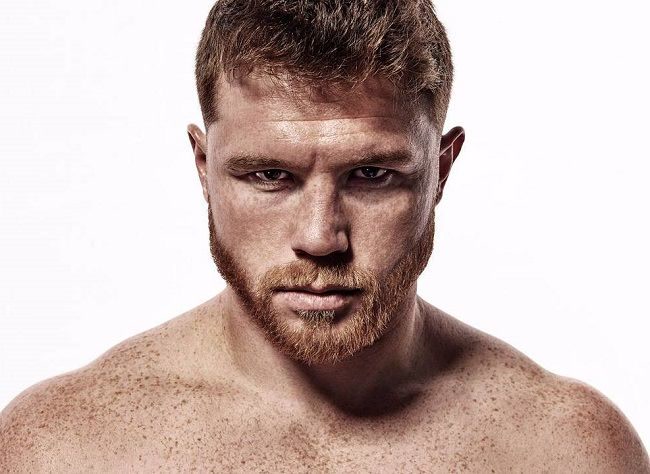
Canelo Alvarez’s tattoos aren’t random decoration. Much of the ink on his arms, neck and back connects to family, boxing, faith or a moment he wanted to keep close. Some designs are easy to read; others make more sense with a little context about his life outside the ring.

This guide focuses on tattoos that are clear in published photos and coverage, while separating what’s visible from what’s only guessed at online. It’s a closer look at Canelo Alvarez tattoos, including family portraits, boxing phrases, dates, eyes, crowns and the word Perseverancia that fans often ask about.

Canelo Alvarez’s first tattoo story starts with boxing

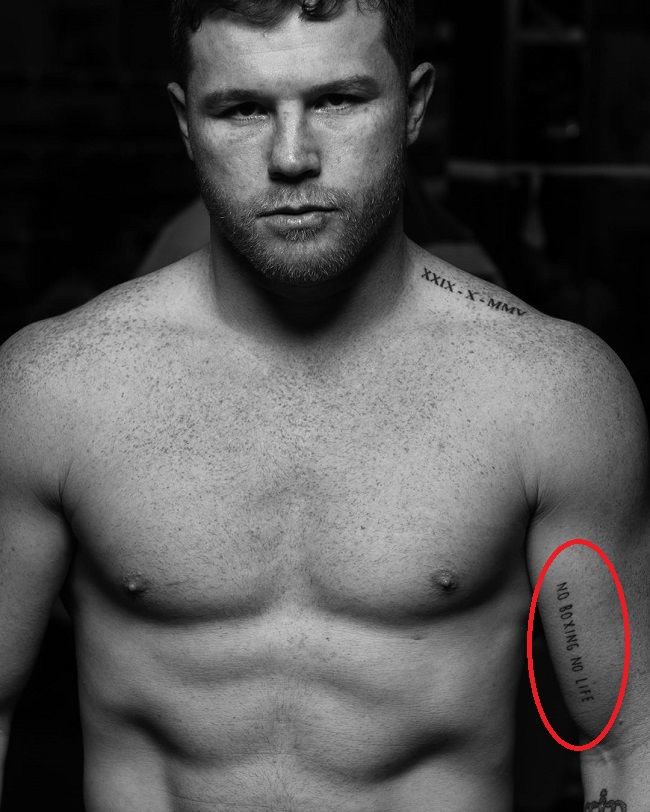
Canelo Alvarez No Boxing No Life tattoo on his arm

One of the easiest pieces to identify is No Boxing No Life on Canelo’s arm. For someone who has spent much of his life in gyms, the words read like more than a fighter’s slogan. Boxing is his profession, but it’s also the routine that shaped his discipline, confidence and public identity.
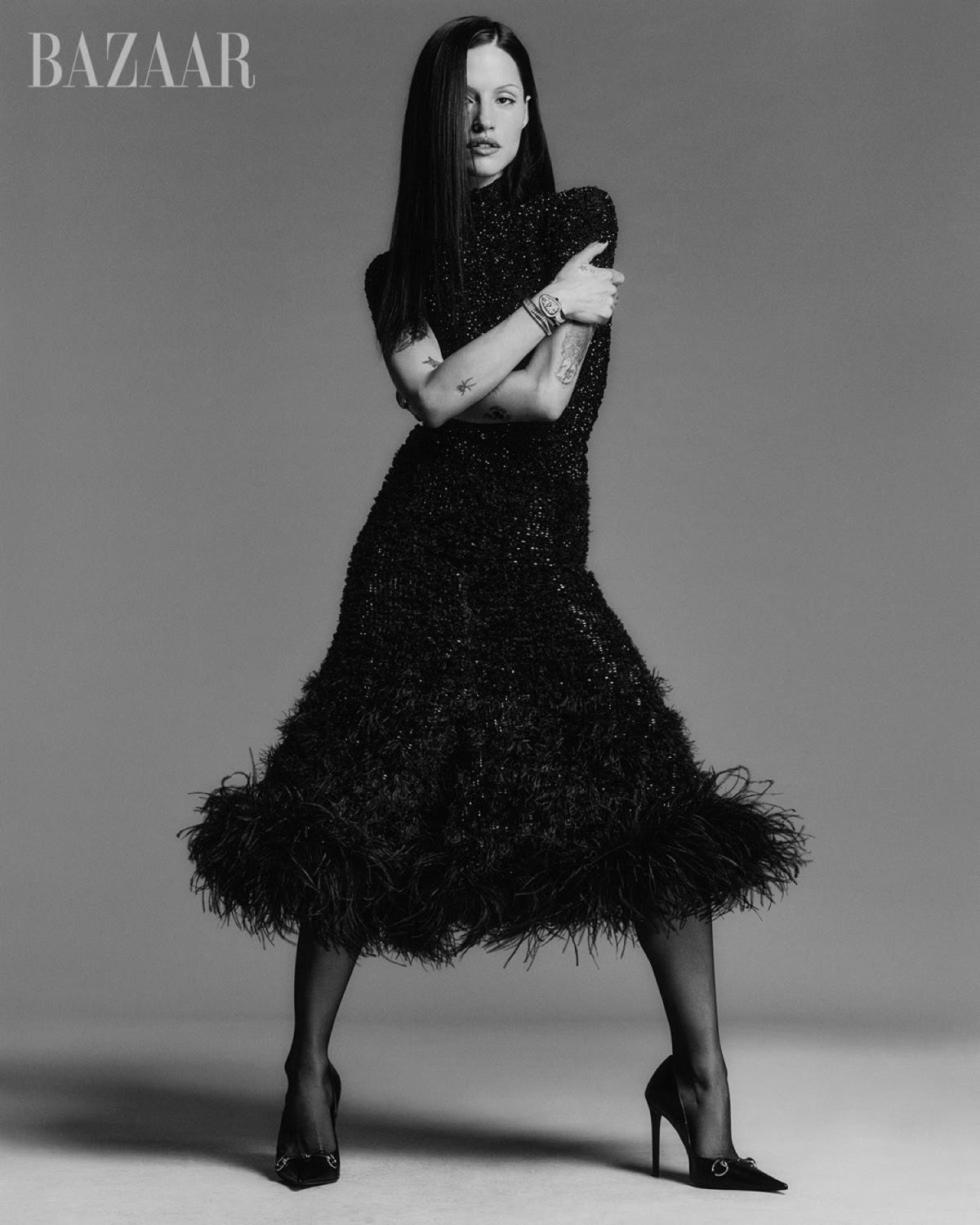
The lettering stands out in ringside photos, making it one of his most recognizable tattoos. It also fits the way Canelo talks about training. He doesn’t describe boxing as a shortcut to fame; he talks about repetition, sacrifice and the hours that happen when no cameras are around. The short phrase puts that outlook on his skin.

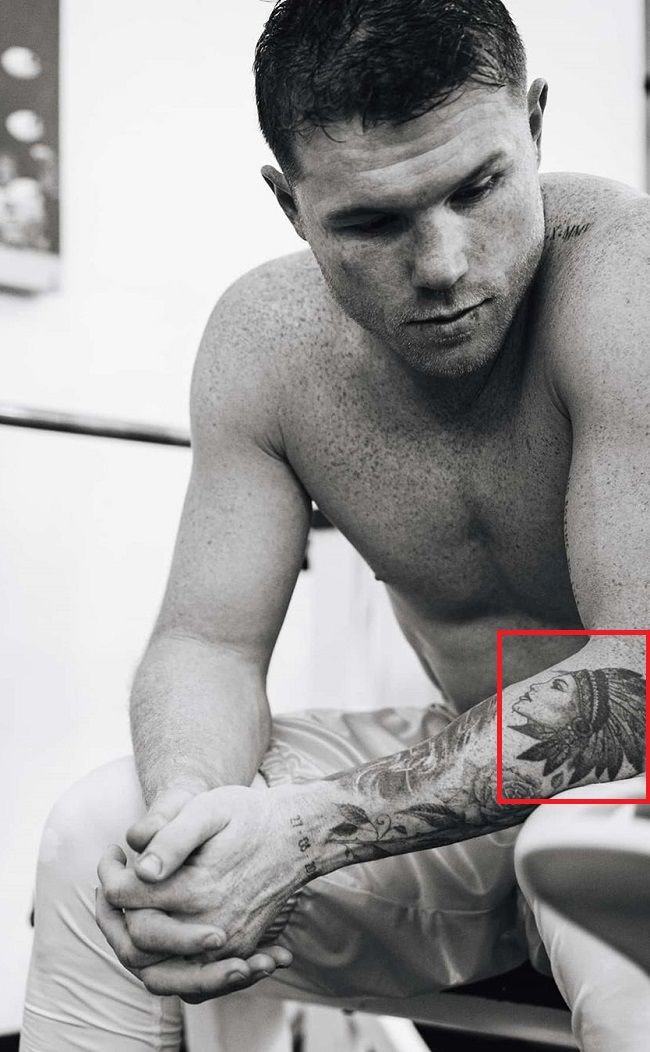
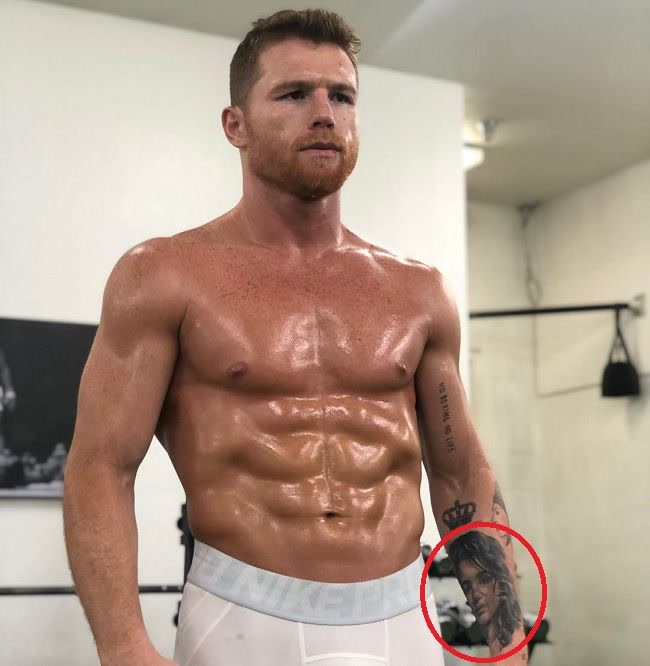
Canelo Alvarez lady with plume tattoo on his forearm

Another arm tattoo shows a woman wearing what looks like a plume or feathered headpiece. It’s a more detailed image, easier to study in a close-up than during fight week. Next to the direct boxing motto, it feels like a portrait from a story or a memory.

Together, the two pieces show the range of Canelo’s taste. He has short words that work like a motto alongside large illustrations that invite a closer look. That mix keeps his ink from feeling like one repeated theme.

Family portraits make his arm tattoos personal

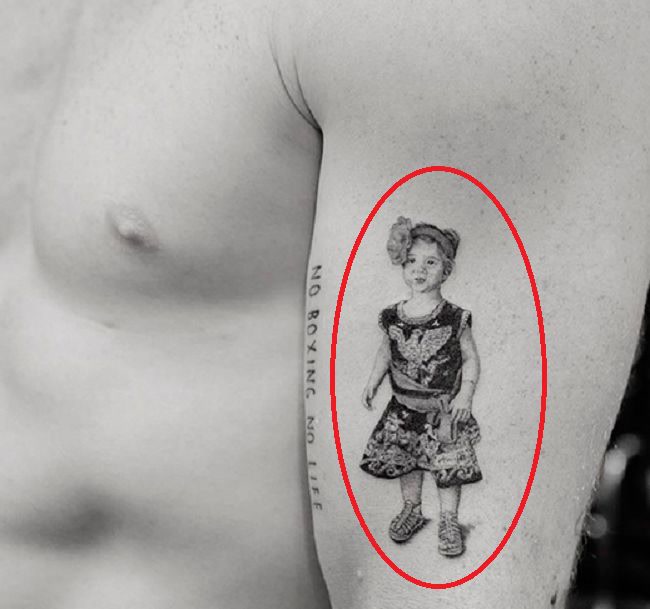
Canelo Alvarez daughter Maria portrait tattoo

The collection’s most personal images are the portraits connected to his children. Tattoo coverage identifies one prominent arm portrait as his daughter Maria. A child’s portrait captures one moment in family life, but the reason for the tattoo reaches beyond the date of the photo the artist used.

Portrait tattoos take careful work: a small change around the eyes, mouth or face shape can throw off the likeness. Canelo’s portrait sits where it appears in plenty of short-sleeve photos, whether he’s training, celebrating or talking with reporters. It makes the family connection visible rather than hidden.

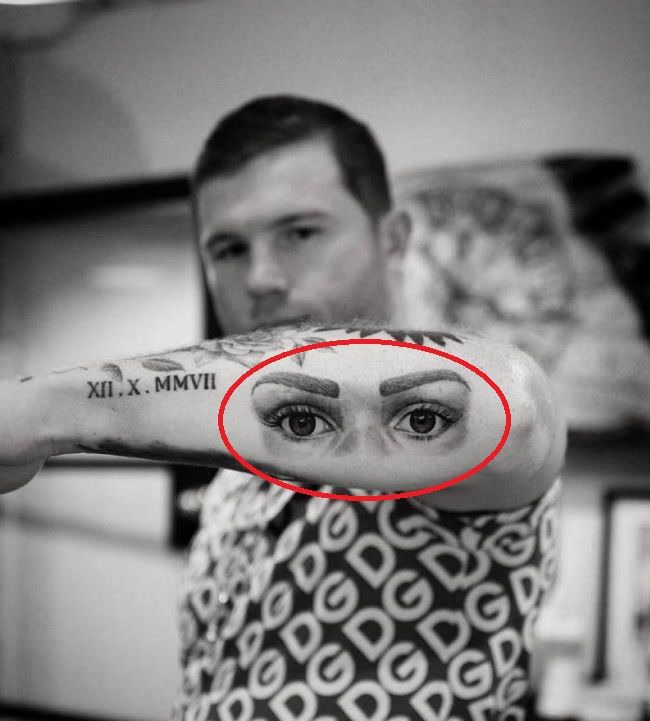
Canelo Alvarez eyes tattoo close-up

Canelo also has a striking pair of eyes on his forearm. Fans sometimes read eyes as protection or a sign of being watched over, but he hasn’t publicly confirmed one explanation for every detail. The image feels intimate and watchful, rather than just filling space between larger pieces.

That distinction matters with celebrity tattoos. A photo can show what’s on someone’s skin, while its meaning remains private. Canelo’s family portraits are documented visually, but the emotions behind them belong to him. Their placement and subject suggest their importance, even without an exact quote from the boxer.

The eyes, crowns and dates mark private chapters

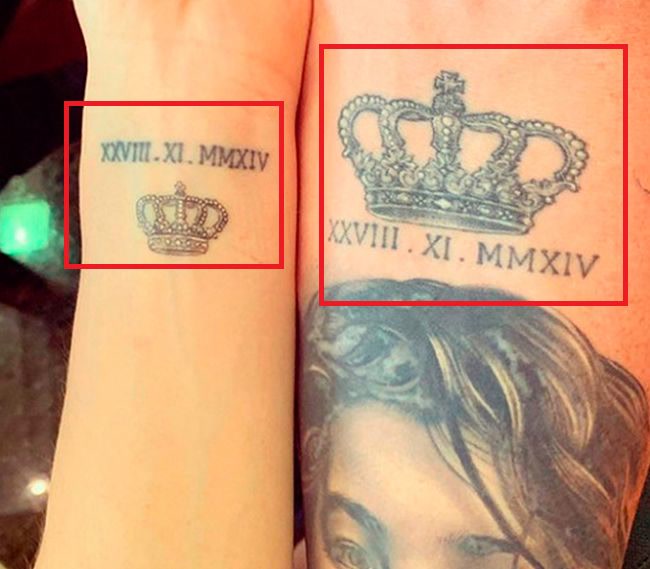
Canelo Alvarez matching crown and date tattoos

Some of Canelo’s smaller designs carry plenty of visual weight. A matching piece combines crowns with Roman numerals or dates, giving his arm a sense of occasion. Crowns are common in boxing, where champions are often described in royal terms, but they can also represent family, a relationship or a private milestone.

The numbers are difficult to interpret without his explanation. They might mark a birthday, anniversary or another important date. Rather than guess, it’s safer to describe what the tattoo conveys: the date matters enough to keep, and the crown gives it a sense of value.

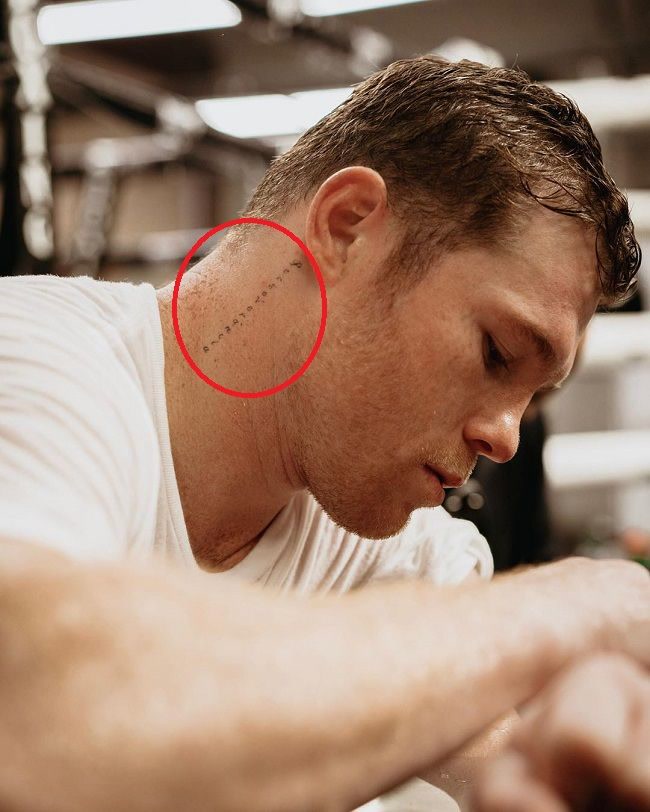
Canelo Alvarez Perseverancia neck tattoo

The word Perseverancia, or “perseverance,” is visible on Canelo’s neck. Its message is hard to miss. It sums up a part of his story fans know well: a long career shaped by difficult training camps, setbacks, comebacks and the expectation that he’ll win.

A neck tattoo is a confident choice because a shirt collar can’t always hide it, especially in training clips or public appearances. Putting “perseverance” there makes it a daily reminder, not just a message for the audience. It’s close whenever he looks in the mirror or gets ready for another demanding session.

Alongside the crowns and eyes, the neck piece gives the collection an emotional thread of ambition, memory and endurance. The tattoos don’t need to come from the same artist or year to feel connected. They mark separate chapters that now share the same body.

A back quote turns perseverance into a daily reminder

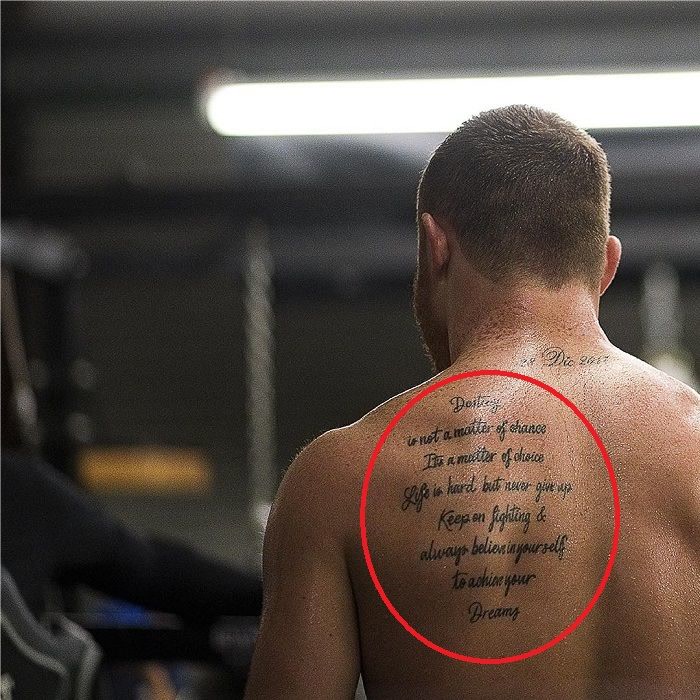
Canelo Alvarez quote tattoo across his back

Canelo’s back carries a larger quote that’s easier to take in through a full-back photo than a cropped social media image. Text tattoos can look simple from a distance, but scale changes their effect. There’s space for the lettering to breathe, so it reads as a statement across his back rather than a small personal note.

The quote is often discussed alongside No Boxing No Life and Perseverancia because it reinforces similar ideas. The exact wording matters, but language itself is a recurring part of his collection. Canelo uses words when he wants a message to stay direct; portraits and symbols give other tattoos more atmosphere.

The back piece isn’t always on display. His arms appear in public constantly, but the quote usually needs a shirtless photo, weigh-in or training setting to be seen. That gives it a different quality from the arm designs: it can be personal first and public second.

For anyone considering a meaningful quote tattoo, the lesson is straightforward. Words work best when they connect to a real habit or experience. Canelo’s motivational phrases feel grounded because they fit the life people see in the ring and at camp.

What Canelo Alvarez tattoos say about his life

Canelo Alvarez daughter Emily portrait tattoo on his forearm

Taken together, Canelo’s tattoos look less like one planned sleeve and more like an archive. The family portraits honor important relationships; the boxing phrases point to the sport that shaped him. Eyes and crowns leave room for symbolism, while the words on his neck and back tie perseverance to his public image.

The designs draw attention partly because Canelo often wears athletic clothes that leave his arms visible. A fresh detail or portrait can spark questions after just one photo. That doesn’t mean he chose every tattoo for publicity; it means fans often see the ink in the same moments they’re already watching him.

A useful guide to Canelo Alvarez tattoos starts with what the images show and leaves some space around the meaning. A daughter’s portrait can be identified. A phrase can be translated. A crown or date can be described without claiming to know a private story. That keeps the account accurate and lets the tattoos remain personal.

For another athlete’s tattoo style, compare his collection with Halsey’s tattoos. The look is very different, but the same principle applies: the strongest celebrity tattoo collections combine public identity with details only the wearer can fully explain.

In the end, Canelo’s ink suits the fighter people see. It’s direct where it needs to be, detailed when a memory deserves room and centered on people and principles he wants to carry with him. That’s why fans still notice the tattoos long after a fight is over.

Watch a Canelo Alvarez tattoo interview:

Dove Cameron Tattoos: Hidden Meanings, Family Tributes and Tiny Ink

Dove Cameron’s tattoos aren’t random decoration. Her collection includes short phrases, private symbols, matching designs and a few pieces tied to much heavier memories. Some are easy to spot on her hands and arms; others only show in a red-carpet pose or close-up photo.

What makes Dove Cameron’s tattoos feel personal is how they trace friendships, family, grief and love, alongside the slightly gothic mood in her music and style. She has said she got her first tattoo at 14. Here’s a closer look at the designs that have been documented and what each one is understood to mean.

Dove Cameron’s first tattoos started with hidden symbols

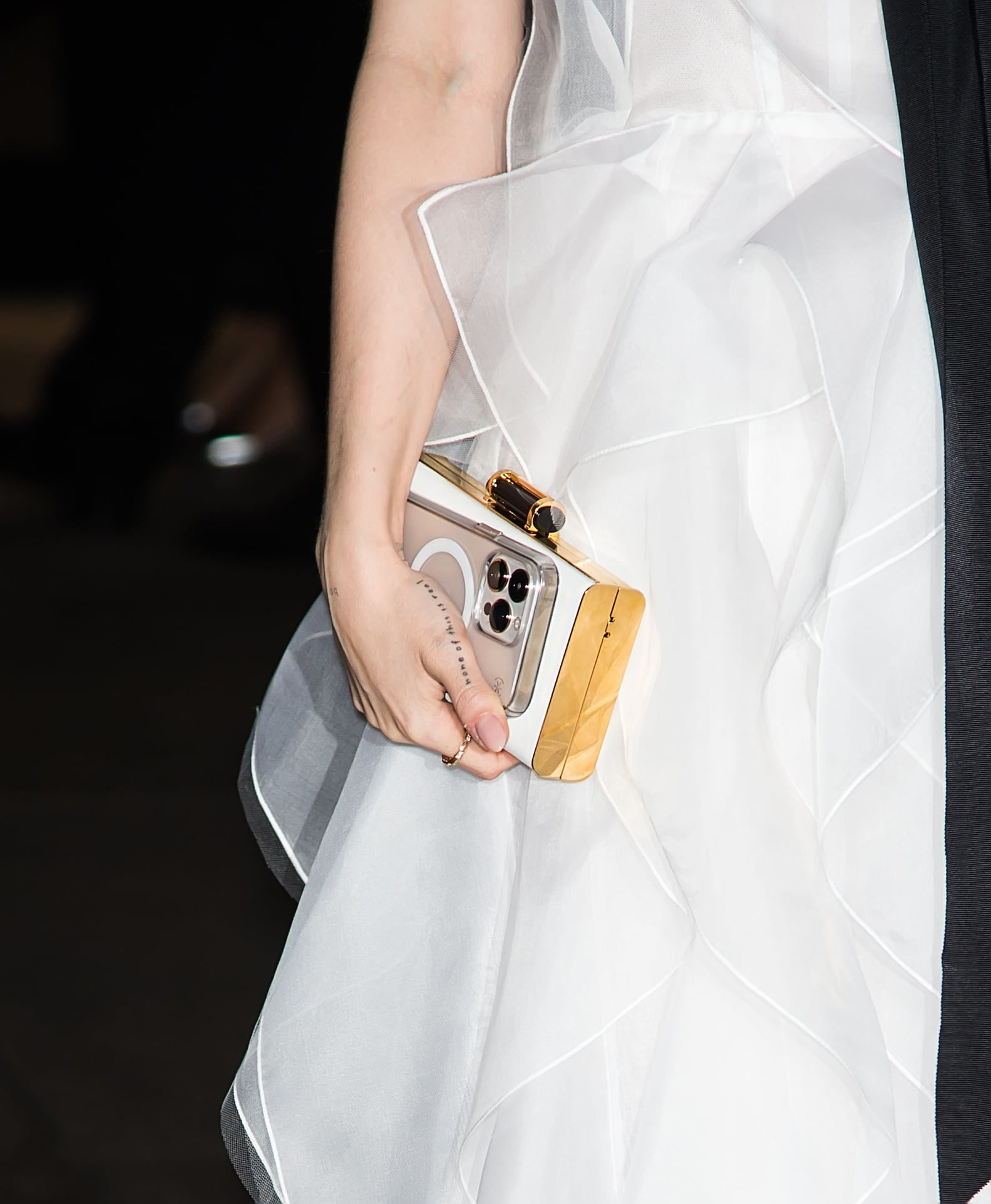
Dove Cameron None of This Is Real thumb tattoo

Cameron has said her first tattoo came when she was 14, before she was legally old enough and without asking her parents. That early choice hints at her approach to body art: hers isn’t one planned sleeve, but a collection that has grown over the years as certain phrases, relationships and feelings stayed with her.

One of the most memorable pieces is None of This Is Real, written across her thumb. It’s tiny, but the words are hard to miss when she moves her hand. They might serve as a reminder not to take fame, fear or a difficult moment too literally. The phrase also fits the dreamy, surreal quality that appears in her creative work.

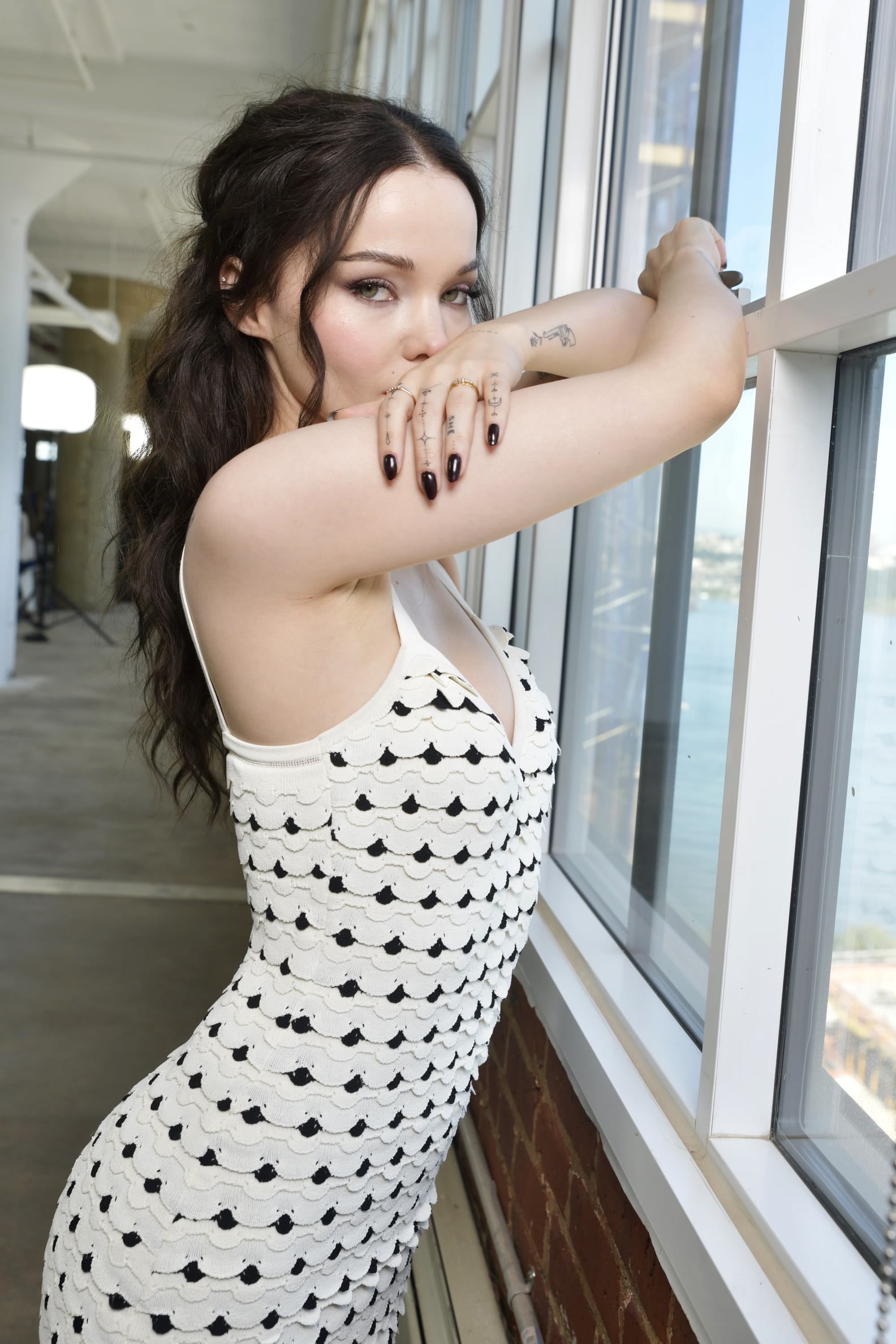
Her hands hold plenty of other fine-line details: small marks on her fingers and wrists, along with script that almost looks handwritten. They can disappear in a full-body photo, which is part of their appeal. Cameron often lets a tattoo show up naturally instead of making it the headline.

The Cameron Boyce tribute mixes a gun and a rose

Dove Cameron gun and rose tribute tattoo

The collection’s most emotional piece is the gun and rose on Cameron’s forearm. She got it in memory of her Descendants co-star and close friend Cameron Boyce, who died at 20 after an epilepsy-related seizure. The design is tied to Wielding Peace, an initiative that used art and photography to push back against gun violence.

A gun is a blunt image on its own; the rose changes its tone. The flower suggests tenderness, life and remembrance, while the weapon refers to an issue Boyce cared about. Cameron has said the tattoo helps her hold on to his values and memory. Even at a glance, it’s clear this isn’t casual flash art.

Describing it only as a gun tattoo would miss the story behind it. It’s a tribute that brings grief together with a public message. That’s a recurring quality in Cameron’s collection: a small image can hold several layers at once.

Family and friendship live in her matching tattoos

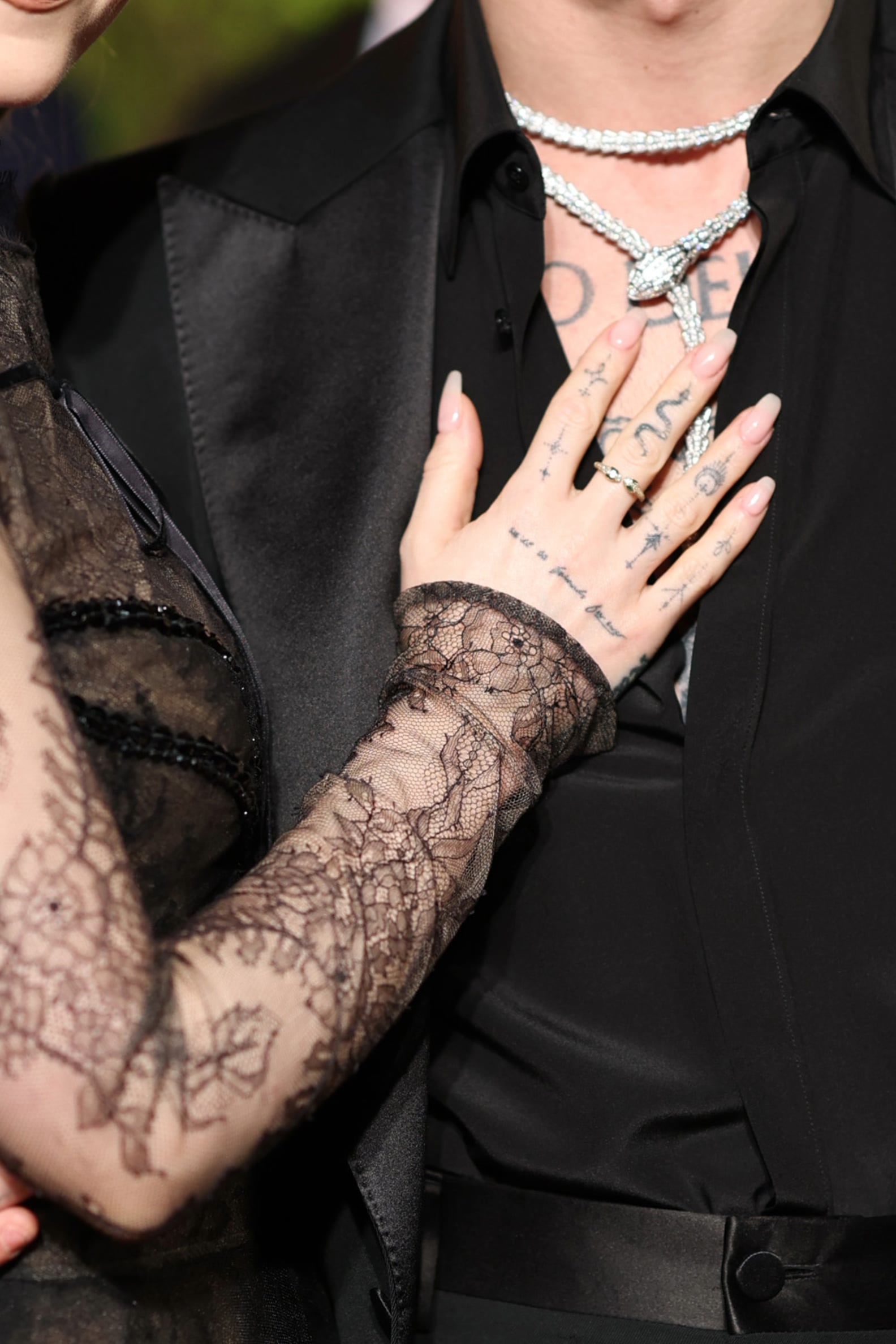
Dove Cameron We'll Be Friends Forever hand tattoo

The phrase We’ll Be Friends Forever appears in another personal piece. Cameron has described it as a tribute to her late father, who died when she was 15. The short sentence is placed on her hand, where it reads like a message she carries each day. It’s also typical of her preference for direct words over symbols whose meaning is hidden.

Her matching tattoos tell a more layered story. Cameron has mentioned designs shared with her mother and sister, as well as matching pieces from past relationships. A small sunshine between her fingers was reportedly a shared idea with former boyfriend Thomas Doherty. A tattoo like that can preserve a moment even after a relationship changes, making it more complicated than a typical friendship design.
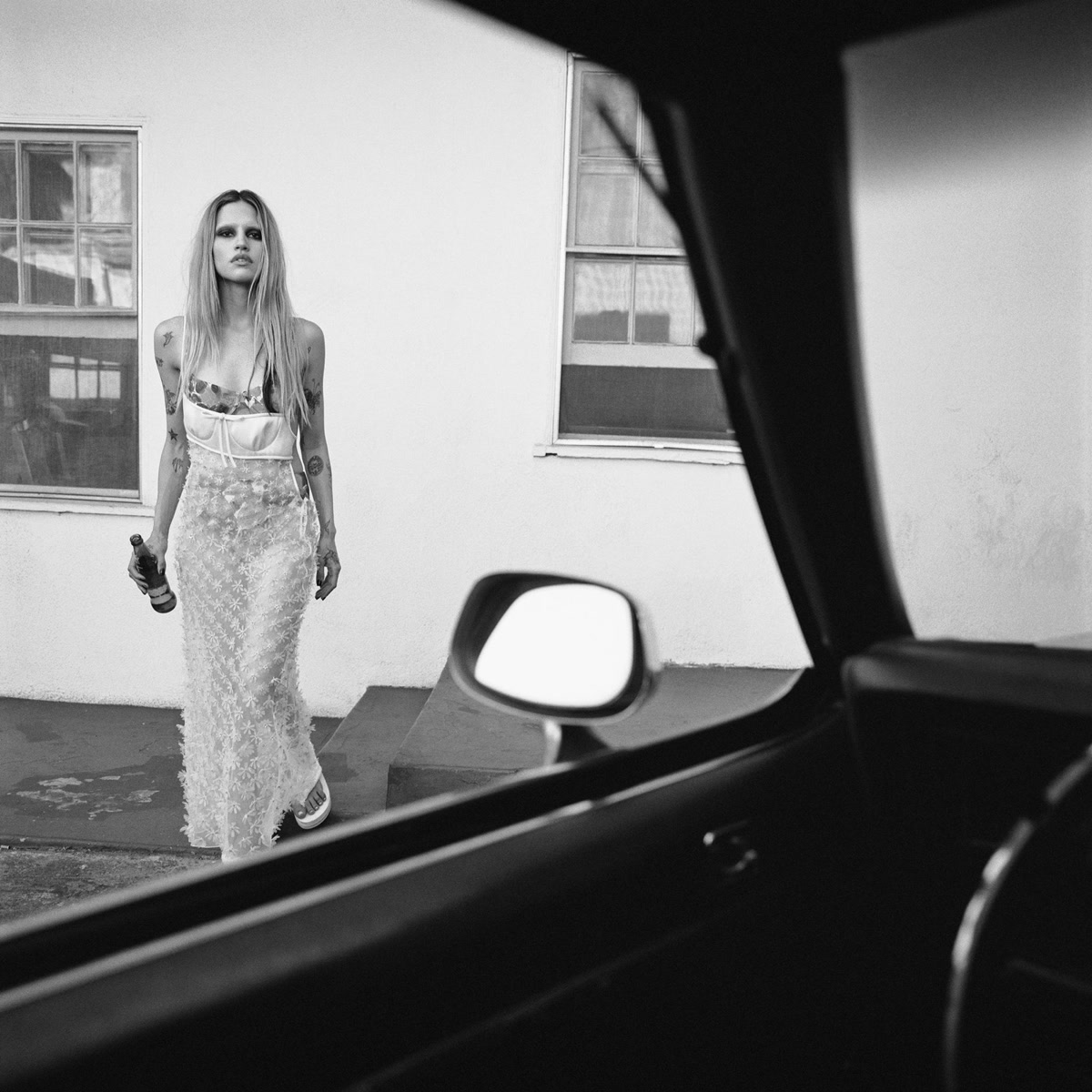
Another family-linked piece is Matière D’étoiles, French for “star stuff,” inked on her ankle and shared with family. The lettering is delicate, but the idea is expansive: it suggests a shared origin and a bond beyond one event. It’s a quiet design that helps the collection feel intimate rather than staged.
Immortal, À Naître and other words carry private weight

Dove Cameron Immortal wrist tattoo

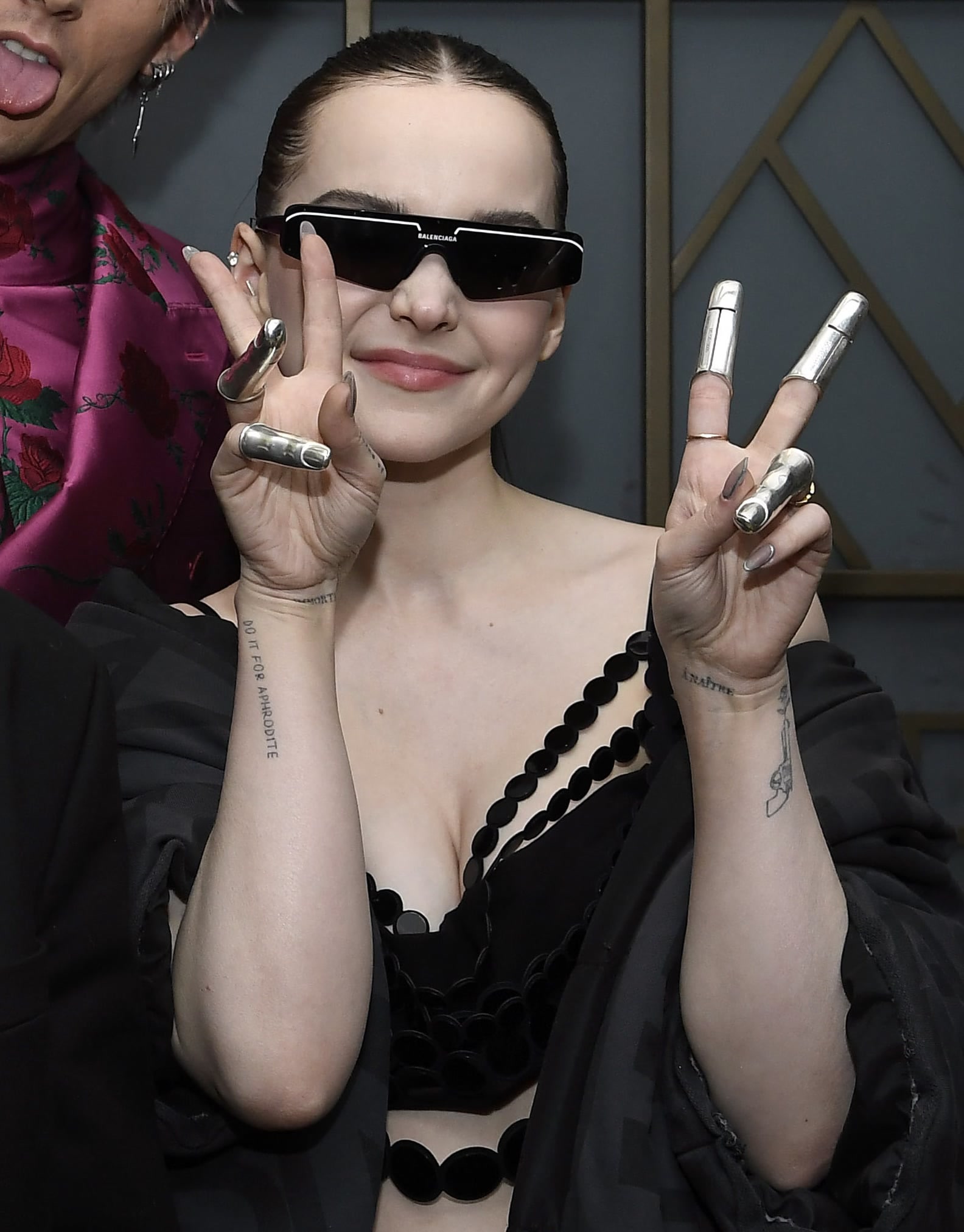
Several of Cameron’s tattoos use brief words or phrases in different languages. Immortal is on her wrist, and À Naître appears elsewhere. Both invite interpretation without pointing to one fixed answer. “Immortal” might refer to memory, art or a feeling that lasts; À Naître translates roughly as “to be born,” suggesting a new chapter or something still taking shape.

She also has Do It For Aphrodite along her forearm. The phrase brings together beauty, desire, mythology and a little theatrical drama. It takes up a long line on a narrow part of her arm, so it becomes part of the arm’s shape rather than a tiny hidden mark. In photos, the vertical script can be easier to see than the small tattoos on her fingers.

Other designs are documented less consistently, including a Capricorn symbol on one hip and Gemini on the other. Cameron has talked about astrology and being a Capricorn, which puts those signs in context. Hidden tattoos can be hard to verify in every photo, but the repeated references place them within the reported collection.

The gothic script and snake tattoo add a darker edge

Dove Cameron Alchemical shoulder tattoo

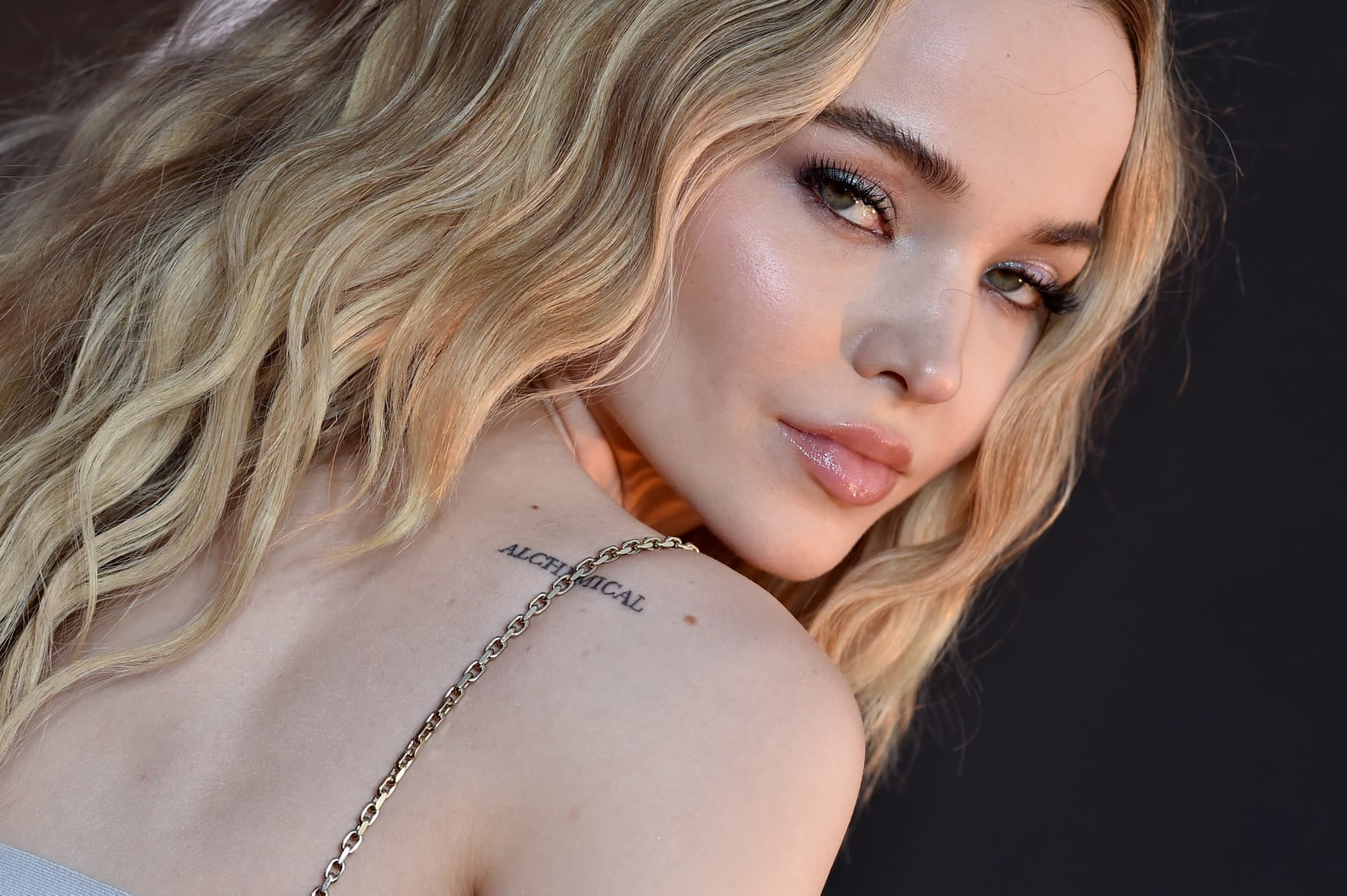
Cameron’s collection isn’t all sentimental lettering. Some of the imagery and script has a more mysterious feel. The word Alchemical is written across her shoulder in gothic lettering. It looks bold in close-up because it stretches across the skin, yet it fits the fine-line, handwritten quality of many of her smaller tattoos.

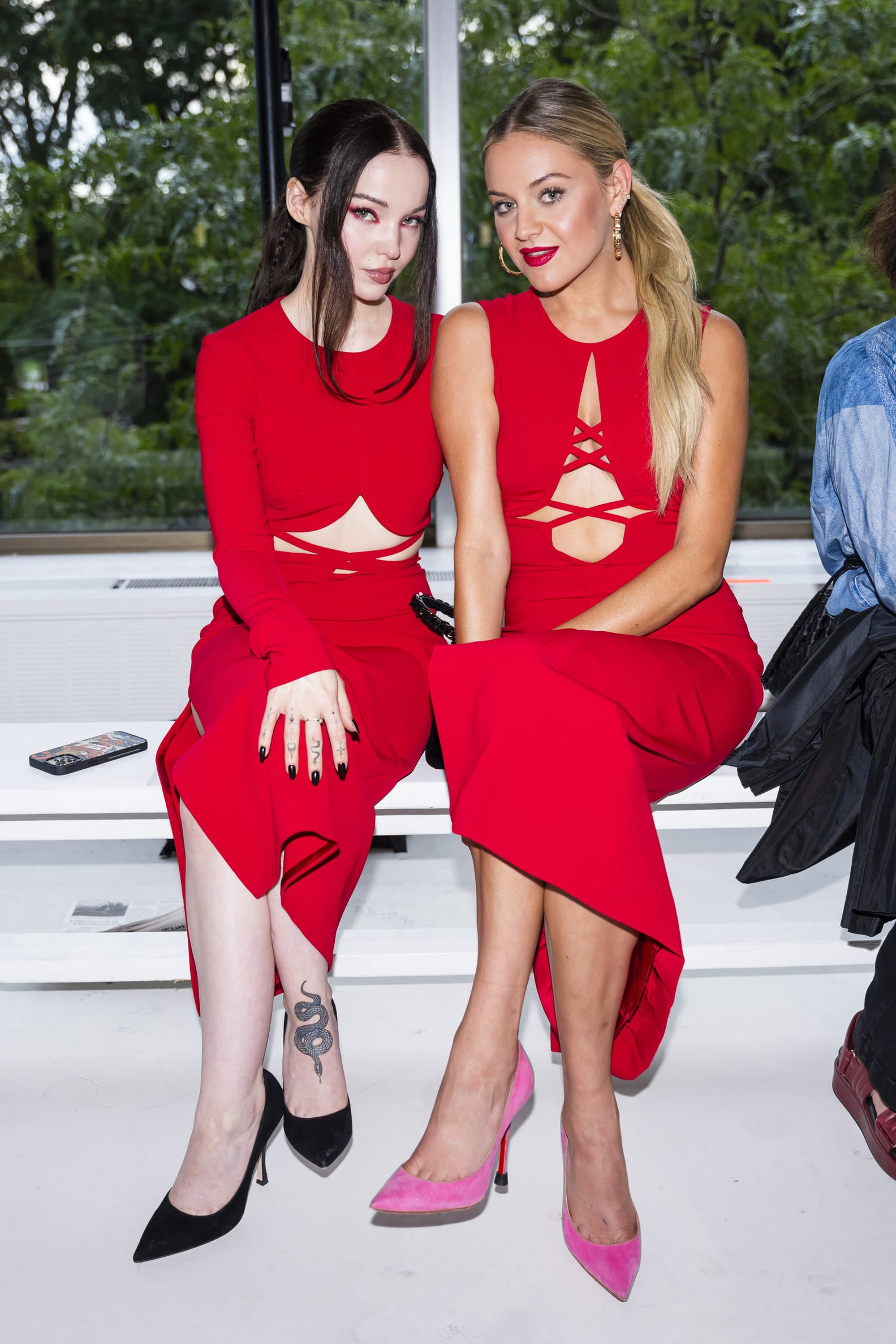
A snake on her lower leg is another standout. Snakes can suggest transformation, danger, rebirth or temptation, but Cameron hasn’t given this one a single, simple meaning. Visually, it creates a stronger silhouette than her tiny finger marks and balances the softer tributes with something more dramatic.

Cameron has also told at least one tattoo story that moved Dax Shepard to tears. That detail hints at how much can sit beneath the surface. Someone glancing at the small black designs might assume they’re mostly aesthetic; the stories suggest they also act as anchors for memories she wants to keep.

What Dove Cameron’s tattoo collection says about her

Dove Cameron snake foot tattoo

Together, the tattoos feel like a diary written in fragments. The hand pieces are visible and playful, the phrases make room for reflection and the tribute designs carry grief. Matching tattoos, astrology, mythology and more private marks all have a place. That mix makes the collection more compelling than a simple count.

Celebrity tattoos can change in visibility over time: clothing hides them, ink fades or a new photo shows a different angle. Cameron has explained some meanings herself; other readings come from the image and coverage around it. The clearest account separates what she has said from what remains interpretation.

If you enjoy tattoo stories that connect the artwork with real events, see our guide to Halsey’s tattoos. Cameron’s collection is smaller and more delicate, but both artists use body art to mark identity, memory and change.

For a closer look at Cameron discussing one of her tattoos, watch the PopBuzz interview below. It offers context for how she thinks about designs that began as personal choices and later became part of her public image.

Julia Fox Tattoos: The Stories Behind Her Best-Known Ink

Julia Fox’s tattoos feel like a scrapbook of people, places and ideas she has carried with her. Some show up in red-carpet photos; others only appear when she turns a shoulder, raises a hand or wears a low-backed dress. That variety is part of the appeal. The collection is personal, a little mysterious and tied to the way Fox draws on her own life for art.

Tattoo coverage can shift over time, too. Fox has talked about removing some small pieces, and older photos show ink that can be hard to spot now. This guide sticks to the designs that are clearly documented and marks what remains uncertain. These are the Julia Fox tattoos with the strongest public evidence behind them.

Julia Fox’s back tattoos look like music notation

The most unusual design in Fox’s collection stretches across her upper back. It looks less like a conventional picture and more like a pair of oversized music symbols. The shapes are often described as the f-holes of a cello, violin or viola—the curved openings built into a string instrument’s body. Fox hasn’t given a full public explanation confirming the exact instrument, so that’s best treated as an informed description rather than a direct quote.

Even without a formal explanation, the placement suits Fox. The design is graphic and easy to recognize when her back is exposed. From a distance, the marks can look like abstract wings or elegant black brackets; up close, the string-instrument shape becomes clearer. It may be her boldest large-scale tattoo without being the loudest.

Julia Fox back tattoos shaped like string instrument f-holes

SANCTI SPIRITUS gives her shoulders a striking frame

Fox has “SANCTI SPIRITUS” tattooed across the tops of her shoulders. The Latin phrase means Holy Ghost or Holy Spirit, and the placement frames the base of her neck. Its red lettering is easy to pick out in photos. It breaks through the softness of a dress or bare shoulders with a slightly theatrical edge.

The words can be read as spiritual, but Fox hasn’t given them one settled meaning. They might be a religious reference, a private reminder or simply a phrase she liked. What’s clear is how the tattoo works with her clothes: a strapless outfit shows the full line, while a tank top may reveal only part of it.

It’s one of the clearest examples of Fox choosing lettering for impact. The phrase is readable, the color stands out and the placement makes it part of her silhouette instead of a mark hidden underneath her clothes.

Julia Fox SANCTI SPIRITUS shoulder tattoos

The Gianna rib tattoo is her clearest memorial piece

The name “Gianna” appears in script beneath Fox’s left breast and along her ribs. It honors her friend Gianna Valdes, who died in 2019. Fox has described the ink as a tribute, giving it a different emotional quality from the more mysterious designs in her collection. Its purpose isn’t mainly visual; it keeps a particular person close.

Rib tattoos can be painful because the skin sits close to bone and moves with the body. Fox’s design is simple, but its placement makes it feel intimate. Everyday clothes usually cover it, and it appears in carefully framed photos or more revealing outfits. That privacy fits the purpose: a memorial doesn’t need to be visible all the time to matter.

The small script carries a more direct meaning than the larger designs around it. It also shows how Fox’s tattoos move between public image and private memory. The name can be photographed, but the person it honors belongs to Fox’s own history.

Julia Fox Gianna memorial rib tattoo

Maria and the hand tattoos stay more private

Fox has a script tattoo reading “Maria” on the side of her neck. It shows in profile photos, but the interviews and tattoo roundups that document it don’t clearly explain the name. It’s tempting to guess, since names can carry so much meaning, but the honest answer is that the reference hasn’t been confirmed.

She also has several smaller tattoos on her hands. A capital R has been photographed on her right hand; the left has a cross and another tiny mark that’s difficult to identify in event photos. Fox has talked about older hand designs linked to an ex. Reports from 2021 said she had begun removing a B, a heart and an Aquarius symbol. Those changes are a reminder that even a documented tattoo list captures only one point in time.

Her hand tattoos are where the collection looks most changeable. They’re small enough to cover, alter or remove, and they sit in places that are constantly moving in photos. The neck lettering looks more settled; the hand ink shows her willingness to edit the past.

Julia Fox Maria neck tattoo

What Julia Fox’s tattoo collection says about change

Fox is often discussed through fashion, film and performance, but the tattoos add another layer. She seems comfortable with symbols that don’t explain themselves at a glance. A Latin phrase, a friend’s name, a possible instrument shape and small hand marks don’t form one tidy theme; together, they record different eras.

That’s why changes to the tattoos matter, too. Removing an old name or symbol doesn’t mean a moment never happened. It can simply mean the body gets to keep moving. Fox’s style shifts quickly, and her ink seems to follow: some pieces look bold and lasting, while others are quieter, harder to read or already being revised.

The collection feels more like a work in progress than a finished sleeve. Even the uncertain stories leave Fox room to decide what she wants to explain. If a new tattoo appears or an old one fades, the overall picture may keep changing.

Julia Fox left hand tattoos and cross

Final thoughts on her collection

Fox’s best-known tattoos mix visible statements with private reminders. The SANCTI SPIRITUS lettering across her shoulders is easiest to recognize, while the Gianna rib tattoo has the clearest memorial story. The back design has an artistic, almost musical shape, the Maria neck tattoo leaves a question mark, and the hand pieces show signs of change.

There isn’t one tattoo style that ties everything together. Each design feels connected to a particular chapter; some stay on the skin, while others get edited. That makes Fox’s collection worth revisiting when she shares a new look or talks more about the stories behind it.

For more celebrity tattoo stories, see our guide to Halsey’s tattoos.