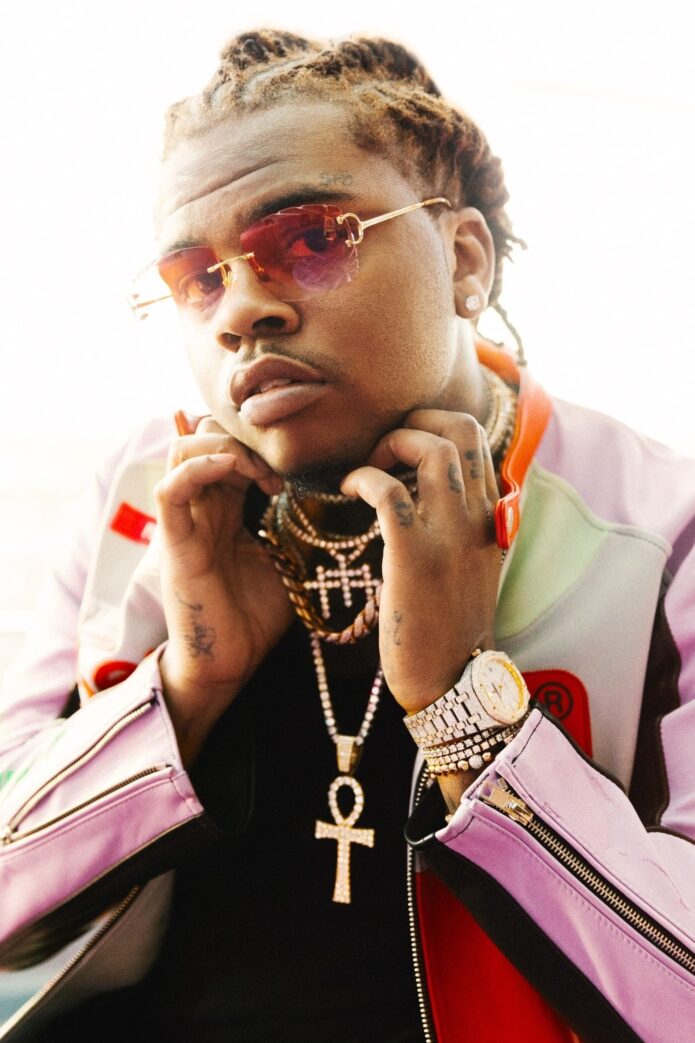
In a shirtless stage photo, Gunna’s chest tattoos are part of the outfit, alongside the chains, shades and clothes. The chest draws the eye first, the arms carry more ink, and smaller marks around the neck and hands show up in closer portraits. What you can see changes with the photo and what he is wearing.
The collection mixes lettering, shaded designs, religious imagery and small symbols. It does not read as one uniform style, and some pieces are only visible from the right angle. Stage shots show the ink in motion; relaxed portraits give a clearer look at the chest and arms.
Gunna’s winged chest tattoo
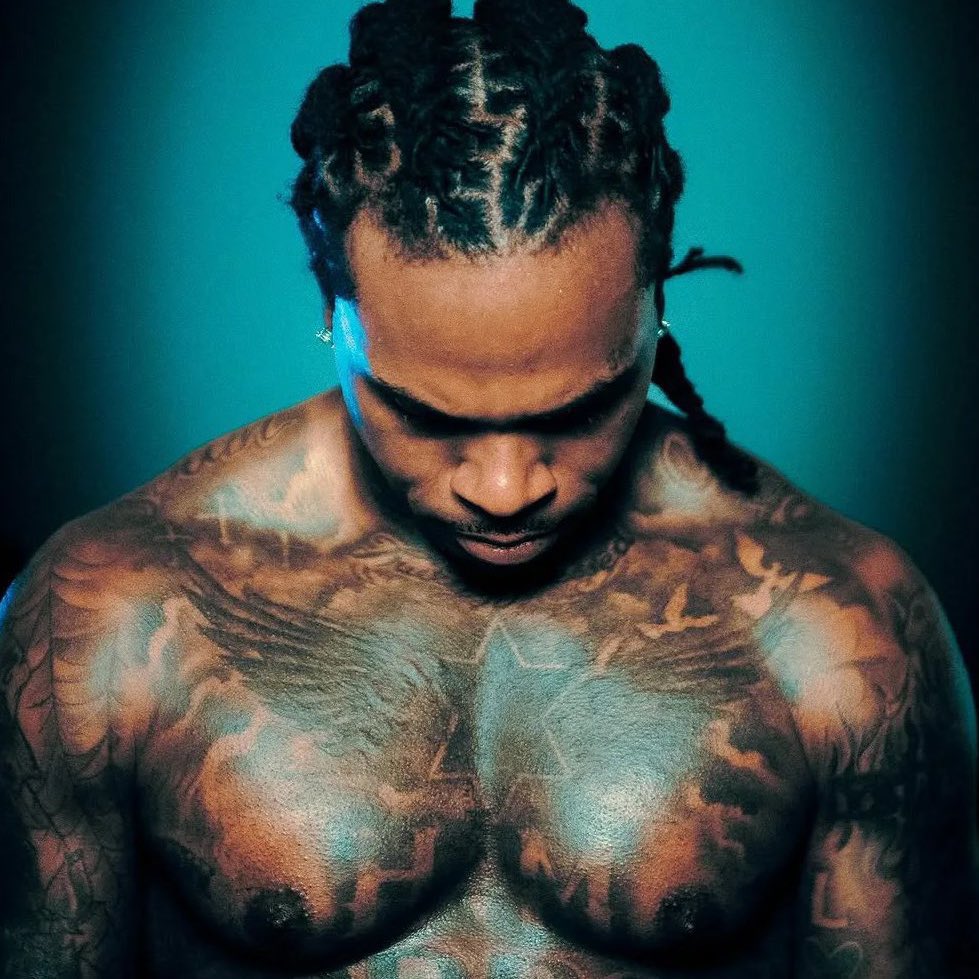
The large chest design is the first thing that stands out in the clearest shirtless photos. A pair of dark wings spreads across his upper chest and shoulders. The shading gives the shapes weight from a distance, while sharper photos show the lines inside them. The wide placement makes the design move across the torso rather than sit as a small detail in the middle.
More lettering and imagery continue down his stomach. The pieces reach beyond one neat rectangle, so the front of his body looks different depending on the crop and light. In a cool-toned portrait the wings look crisp; under warmer concert lighting, the darker areas become more prominent.
The clothes change how much of the design is visible. A low tank top leaves the wings exposed, while a sheer shirt puts the tattoo work behind the fabric. The effect comes from the size and placement of the design as much as from its individual shapes.
Gunna’s layered arm and shoulder tattoos

His arms look different from the broad chest piece. In tank-top photos, lettering, shaded shapes and smaller marks are grouped across the shoulders, upper arms and biceps. Jewelry sits close to the ink, which is one reason the arms stand out in portraits.
The angle changes what you can make out. A straight-on photo shows the pattern across the shoulder; a performance shot catches the forearm as he raises a microphone or reaches toward the crowd. Moving hands and chains shift the composition, but the tattoo coverage remains visible.
His arm tattoos look built up in layers, with open spaces, darker groups and lettering sitting near other designs. They do not look like one perfectly matched sleeve. That unevenness gives the arms the feel of separate choices collected over time.
Gunna’s neck and hand tattoos
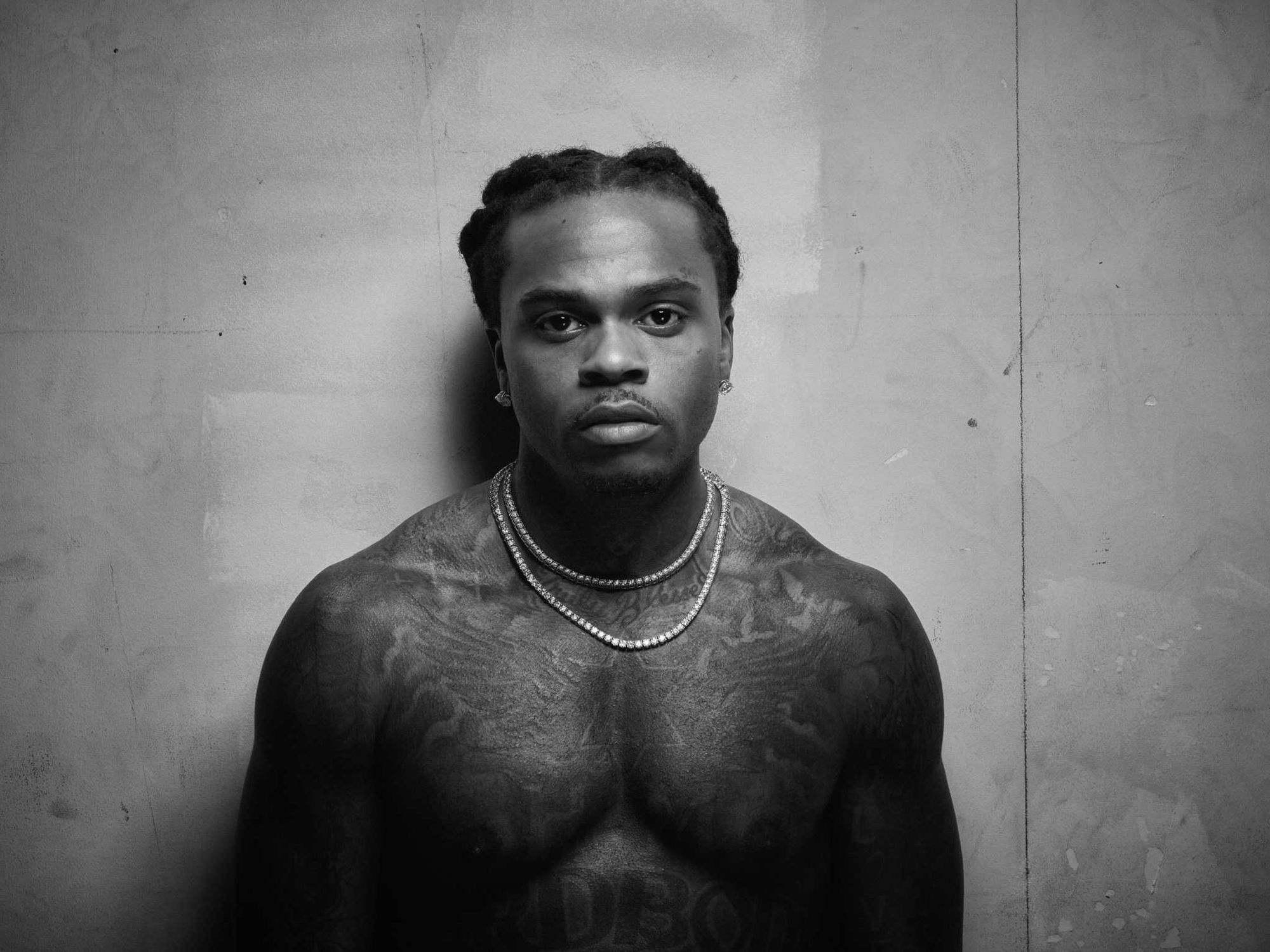
Close portraits bring the neck and throat tattoos into view. They can be easier to see when his head is turned or the chains sit low on his collar. Those marks fill the space between the larger chest work and his face.
The smaller designs on his hands and fingers are easy to miss in a wide stage photo. In fashion portraits, they sit next to rings, watches and bracelets. They do not need to be large to show up: hands are in motion when he talks, poses or performs.
The neck ink stays visible with many outfits. A jacket or sleeves can cover much of the chest and arms, while the neck and hands remain exposed. In that way, the tattoos can still read as part of the look even when most of the body work is hidden.
Gunna’s black-and-white tattoo portraits
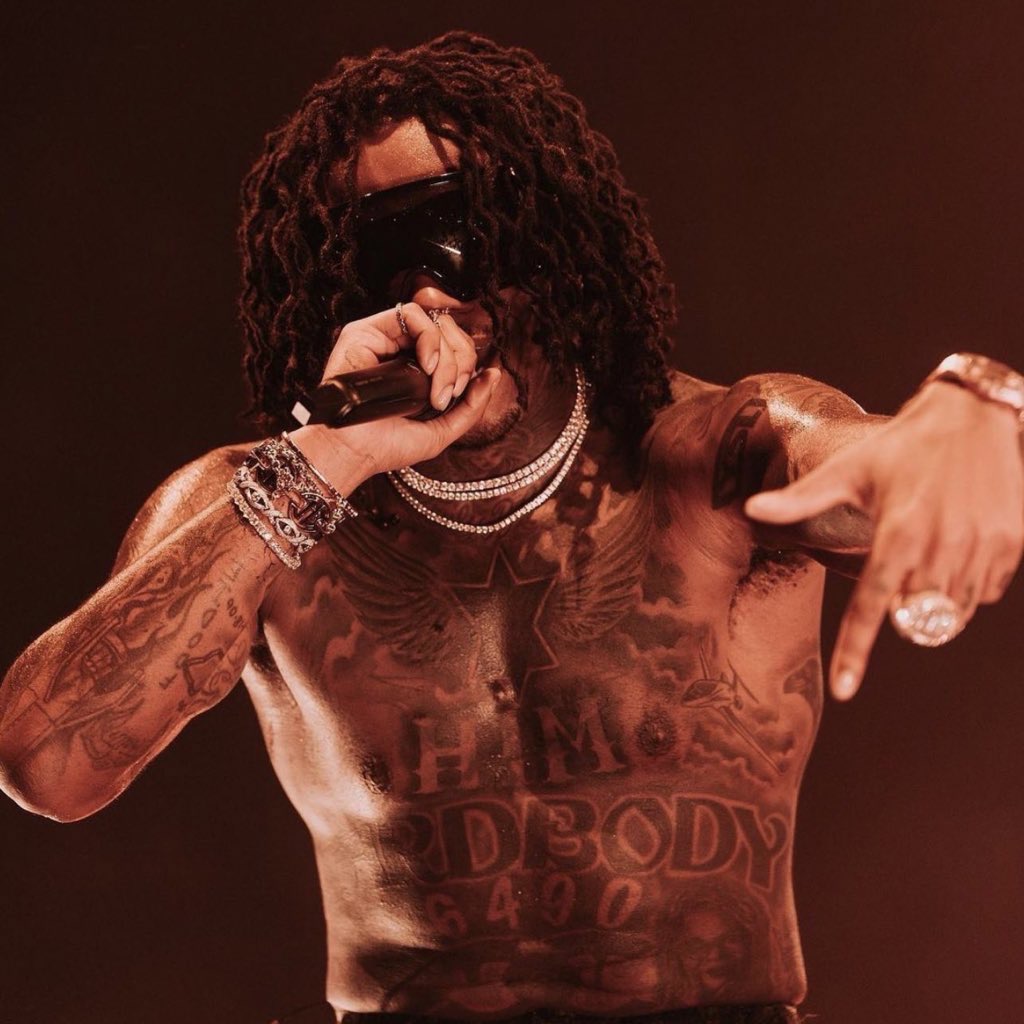
Black-and-white performance photos make the contrast between ink and skin easier to see. Across the chest and arms, lettering, shaded shapes and religious imagery sit close together, but the differences in outline help separate them.
Hard stage lighting can flatten some details and bring out others. In these photos, the darker shading and outlines remain visible as he moves. The images show how the larger shapes read from the crowd, though they are not always sharp enough to identify every small design.
There is a relaxed quality to the way he wears the tattoos in these shots. He might be holding a mic, looking down or leaning into a pose, while the ink stays in view. The strongest references show both the tattoos and the setting around them, rather than cropping away the performance.
Gunna’s religious chest and torso imagery
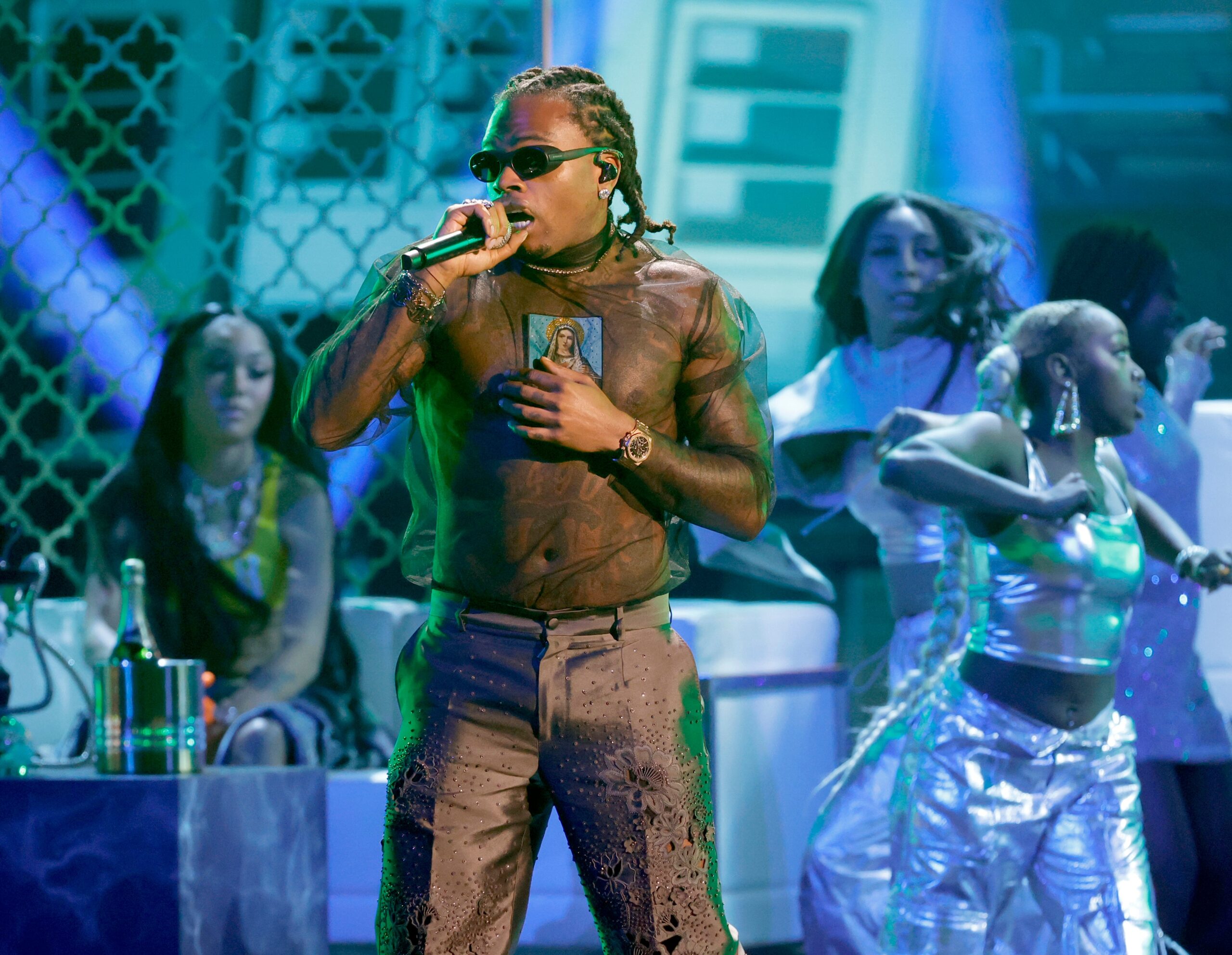
Several performance photos show religious imagery across his torso. In one high-resolution concert image, a central figure is visible through a sheer top. Other photos show the same general area without fabric over it. The placement gives the image a strong center, with lettering and shading continuing toward the ribs and stomach.
The photos do not explain why he chose the designs, so their personal meaning is hard to state with confidence. What is visible is their central placement and how they sit among the lettering, symbols and portrait-like forms elsewhere on his body.
Sheer and sleeveless clothing changes the way the torso work reads. Through fabric, the outlines soften; under stage lights, the darkest areas come forward. In a shirtless photo, the same tattoos look more direct. The designs stay the same while the presentation shifts.
How Gunna’s clothes frame the collection
Gunna’s clothes move between clean tailoring, oversized streetwear, bright accessories and high-shine jewelry. The tattoos add another texture. A plain tank top leaves the chest and arms uncovered; a sheer shirt puts the ink behind fabric; a jacket can hide most of the body work and leave the neck and hands visible.
That makes the collection work with different outfits. It can appear under pearls and sunglasses, beside a watch, or take focus when he performs shirtless. A photo does not need to show every tattoo for the ink to shape the look; a partial view can be enough.
If you are gathering references for a similar layout, look at placement before copying a symbol. Notice how the chest spreads wide, how the arms frame it, and how smaller designs fill the neck and hands. Consider how a shirt, tank top or jacket would cover each part. The full silhouette matters as much as any one tattoo.
The overall look in one frame
The chest and torso carry the largest shapes; the arms add more layers; the neck and hands keep the ink visible when the rest is covered. Lettering, religious imagery and shaded forms give the collection a strong black-ink base, while clothes and lighting change how it comes across.
The different areas have different weights. Some pieces can be seen from a distance; others only show up in close portraits. That range lets the tattoos sit alongside his music and fashion without every image looking the same.
The official video for “WUNNA” gives another look at the styling, jewelry and performance setting around the tattoos.