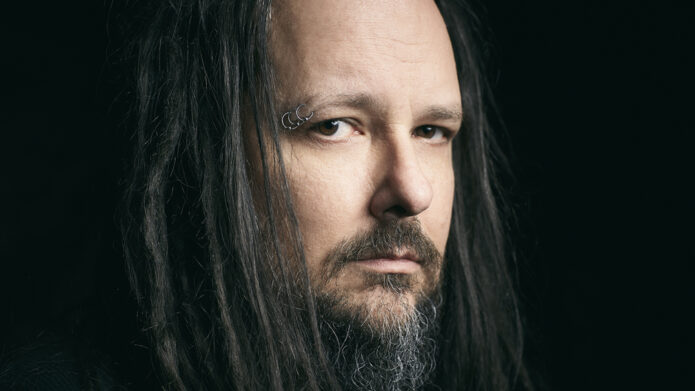
Jonathan Davis’ tattoos share Korn’s darker instincts: religious imagery, confrontation and deeply personal subjects all sit side by side. Davis has said he is drawn to religious art, while some designs address what he sees as religion’s atrocities. The images carry an argument as much as they decorate his skin.
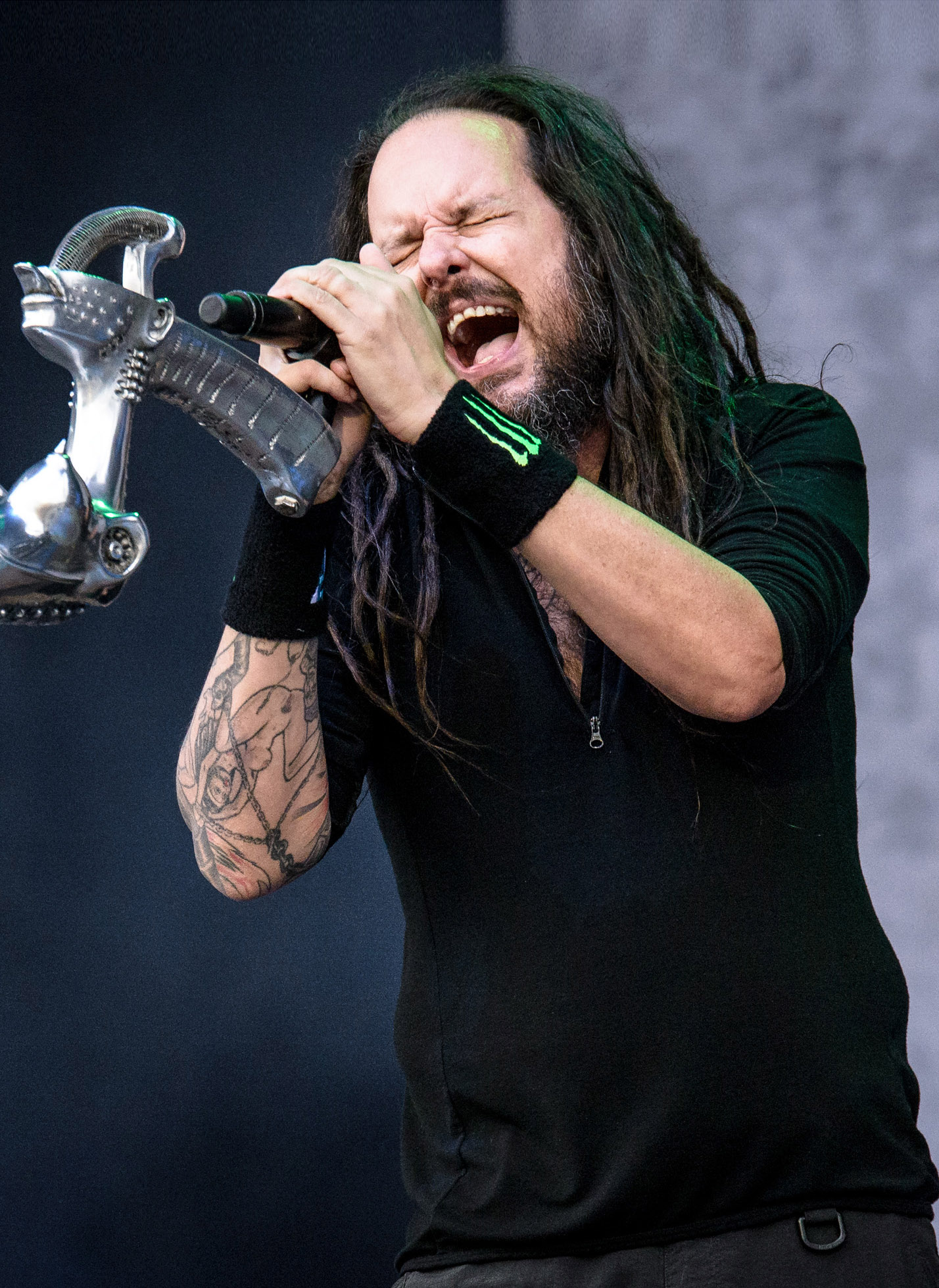
The best-documented design shows a bishop tearing open his own skin to reveal Christ beneath. Davis has described it as a response to the harm and hypocrisy he associates with organized religion. The image is striking because its central figure is religious, yet the tattoo is also critical of religion. It uses the visual language of faith to ask difficult questions.

Another much-discussed tattoo reads HIV. Interviews and music coverage have connected it to a painful personal story and to Davis’ use of tattoos to keep difficult memories close. The lettering is plain, almost clinical, which gives it a different impact from the elaborate bishop scene. One speaks in allegory; the other leaves the word stark and exposed.
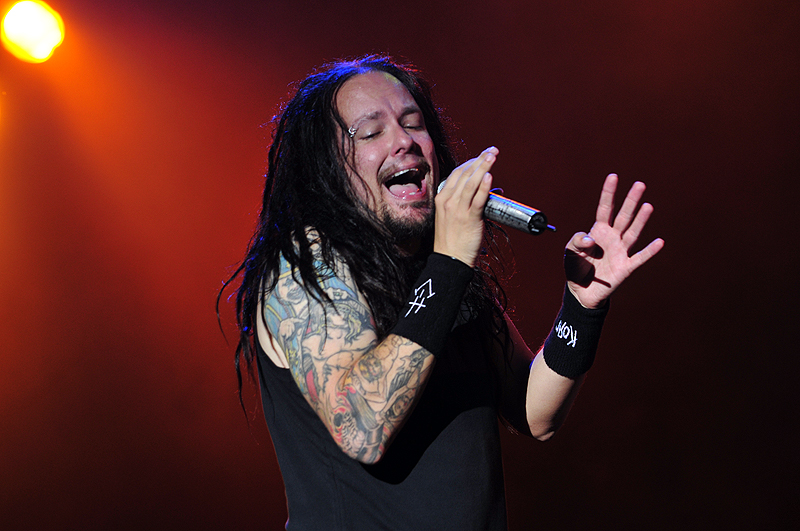
Davis has also said he has other religious tattoos because he appreciates the art. That distinction matters. He can be fascinated by images of saints, Christ, bishops and religious symbols without calling himself conventionally devout. The collection returns to the images people create around belief—and the harm those images can conceal.
That combination makes his tattoos feel at home in Korn’s world. The band has long set beauty beside the grotesque: a vulnerable melody can sit inside punishing sound. Davis’ ink follows a similar pattern. A religious figure may be drawn with care even when the idea behind it is angry, doubtful or wounded. The tension is part of the message.

Photos from Korn shows catch the tattoos in motion. A sleeve flashes when Davis reaches for the microphone; a symbol appears as he turns. Stage clothes hide one design and expose another, so the public record is made up of glimpses rather than a complete diagram. Any careful inventory has to account for that.
Fans naturally want to know what each tattoo says, but the details aren’t equally clear. The HIV lettering has a documented story, as does the bishop and Christ image. Other religious designs can be seen in photos and fan discussions, but don’t have a reliable explanation. It’s better to describe them as visible or reported than to fill in a meaning by guesswork.
Davis’ interest in religious art also complicates a simple anti-religion reading. He hasn’t abandoned the imagery; he keeps coming back to it because it carries weight. The symbols already have a history before he uses them, and that adds emotional force to the designs. He can value the image while challenging the institution behind it.
The tattoos on his hands and arms take on another quality in everyday gestures. In a still photo they may seem fixed, but onstage they move as he grips the microphone, points to the crowd or wipes his face. His body becomes part of the performance, and the audience sees the ink alongside the voice, clothing and sound.
The collection also has a timeline. Older tattoos belong to earlier Korn years, while newer photos show how everything sits together after years of touring. A person can change without a tattoo losing its original meaning; the mark simply becomes one layer among others. Davis’ body holds the old idea as new experiences gather around it.
That layering keeps the collection personal. A bishop, a Christ figure and blunt lettering may all touch on pain, but each has its own character. Some designs are theatrical, some direct, and others may be images Davis simply wanted to keep close. The collection is held together by its intensity, not by one subject.
The tattoos have also become part of Korn’s visual identity. The band has changed over the years, but its emotional vocabulary still includes shame, rage, vulnerability, faith and the fear of what people do to one another. Davis’ tattoos give those themes a physical presence without turning them into a lyric sheet.
There’s a difference between a tattoo that depicts violence and one that records it. The bishop design is an allegory: a constructed scene meant to express an idea. The HIV lettering sits closer to a real wound and doesn’t make the story comfortable to look at. Both can be honest, but they do it in different ways.
The collection rewards a closer look. A concert photo may show a symbol for only a moment; an interview might explain one tattoo and leave others unnamed. Older coverage may describe a design without showing how it looks now. The record is incomplete, but the confirmed details still make a useful guide.
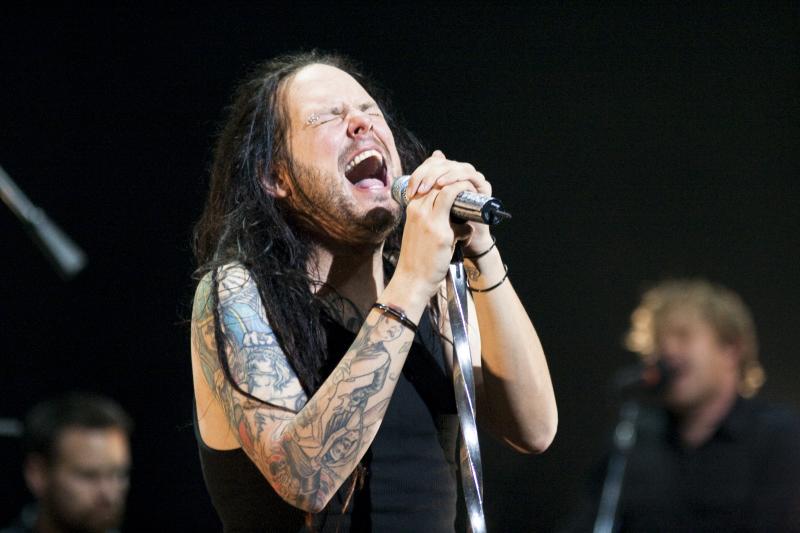
It’s also fair to leave room for the story to change. Tattoos can be covered, extended or altered, and someone’s relationship with a symbol may shift over time. Davis’ comments make clear that the images matter to him, but they don’t mean every design has one fixed interpretation. The mark stays while the person keeps thinking about it.
Taken together, the tattoos feel like an argument without a final paragraph. Religious art is admired, questioned and put to new use. Personal pain is named without being made neat. Davis carries those ideas onto the stage, where fans can recognize them without claiming to own their meaning.
In interviews, Davis has been willing to talk about the art without pretending every symbol has a simple answer. He likes the forms, their history and the charge they carry. That can be enough. A tattoo can matter because it leaves a question open.
The HIV tattoo is the clearest example. The lettering is spare, but the story behind it is heavy. It turns a medical term into a marker of survival, grief and memory without needing elaborate shading. Its plainness is part of why it stays with you.
The bishop tattoo works in the opposite way. It’s dense with narrative: a religious figure, the act of tearing, the image beneath the skin and the anger behind the scene. It can be studied as an illustration even before its personal message is clear. The composition gives the idea a body.
Davis’ other religious tattoos fall somewhere between those two. Some symbols may be recognizable; others are hard to make out under stage lights. Often the broad description is the most accurate one: religious imagery, dark symbolism and designs connected to subjects he has discussed. That’s better than naming every shadow.
His tattoos also show how musicians can become living visual archives. Album art, years on tour, collaborators and private losses may all leave their mark. Fans encounter that archive in photos, while the wearer experiences it as one continuous body. The image around an old tattoo may change as the music changes, even when the tattoo itself stays put.
That’s the quiet strength of the collection: it keeps the past in view without pretending the past is over. The symbols remain, but their meaning may deepen, darken or soften over time.
The designs don’t feel accidental, even if a particular tattoo began with a passing emotion. Again and again, they return to art, harm, faith and survival.
That’s why Davis’ tattoos still feel alive after years of touring and change.
A documented inventory of Jonathan Davis’ tattoos
The clearest public record includes the bishop tearing open his skin to reveal Christ, the HIV lettering linked to a painful personal story, and other religious or symbolic tattoos Davis has discussed or that are clearly visible in photos. The names and meanings of smaller pieces haven’t all been made public. A careful inventory should mark those as visible or reported instead of inventing a private explanation.
Why the religious imagery stays unsettled
Davis’ tattoos don’t ask viewers to choose between devotion and rejection. They show a fascination with religious art alongside distrust of the harm done in religion’s name. That tension gives the images their force. They draw you in with their beauty, then leave you questioning why.
Watch Jonathan Davis discuss his HIV tattoo
The short interview below focuses on the story behind one of Davis’ most discussed tattoos, making it a useful video companion.
2 thoughts on “Jonathan Davis wears his darkest ideas where everyone can see them”