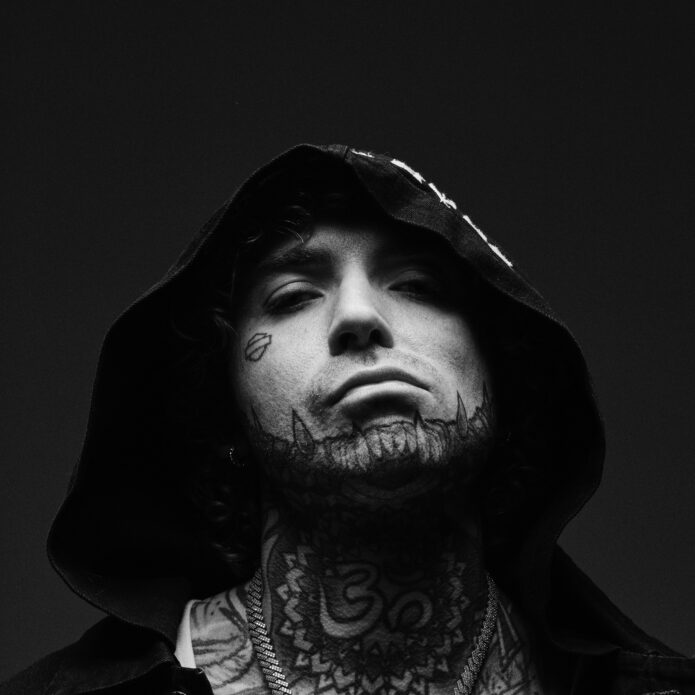
Caskey’s tattoos cover his head, face, neck, chest, arms, hands and back. The mix includes large portraits, religious imagery, lettering, skull-like shapes and smaller details that show up in close photos. The ink is dark and extensive, but it isn’t one unbroken block of black.
His brother Ryan K. Severe designed and tattooed much of the work. That includes the head piece drawn from the animal-jaw imagery in Apocalypto. Caskey has said he wants to keep building toward a full bodysuit, so the tattoos have grown over time instead of arriving as one matched set.
Black-and-grey shading, spiritual imagery and bold placement run through the collection. Caskey also uses areas many people leave alone, including his face, neck and hands. The chest carries the larger portraits; the face, neck and hands keep the details close to view.
Caskey’s chest and torso tattoos carry the biggest pieces
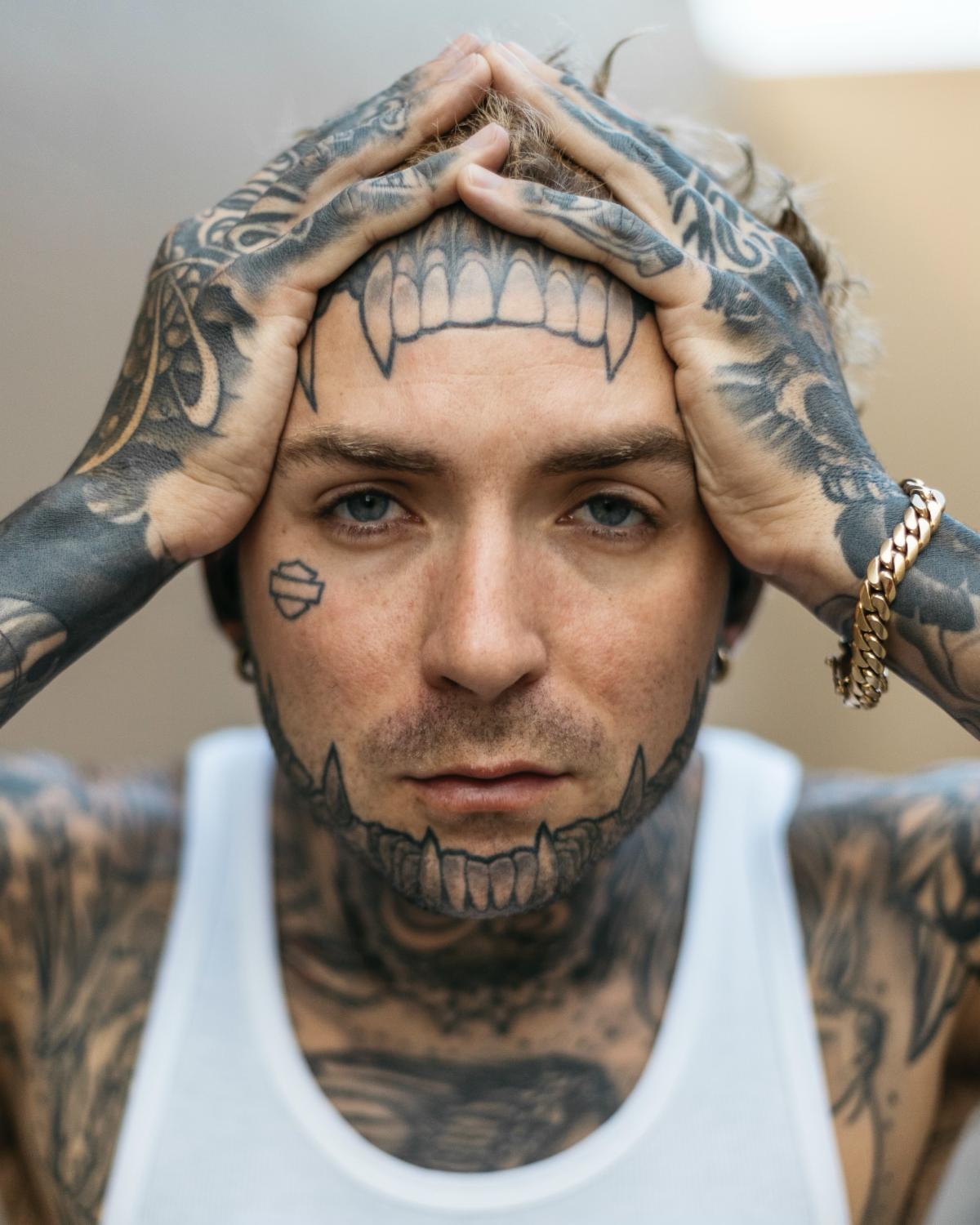
The chest holds some of Caskey’s largest work. A Native American portrait sits across the upper torso, with tattoos filling the shoulders and continuing toward the stomach. In a shirtless photo, the open skin around the portrait helps it read clearly beside his heavily inked arms.
Lettering runs across the lower torso beneath the portrait. Its lines give the area a different texture from the shaded image above. That change in scale keeps the chest from becoming one flat field: the portrait, script and geometric borders each have room to show.
The portrait also follows the curve of the chest. It has to read when Caskey is standing, bending or turning, and it doesn’t look like a rectangle laid over the skin. The design spreads across the torso while leaving the arms space for their own pieces.
If you’re planning a large chest tattoo, choose the main image first and build around it. Smaller details can fill gaps later. Caskey’s torso shows how a portrait, lettering and patterned borders can sit together without all competing for the same attention.
His arm tattoos mix heavy shading with softer detail
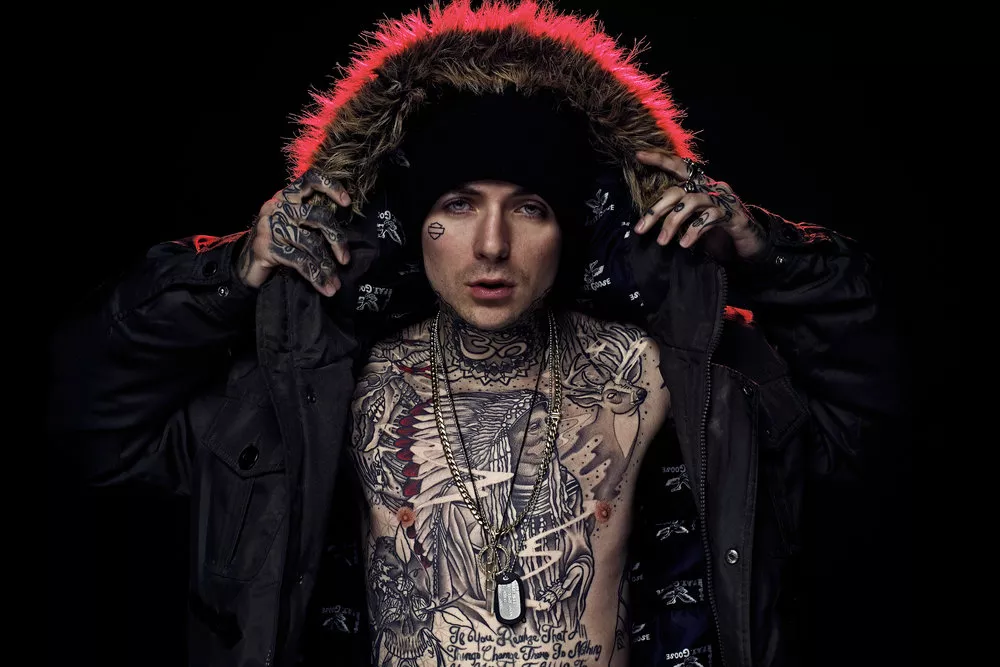
Caskey’s arms are densely tattooed, but the images still read as separate pieces. Larger shaded work covers the upper arms; patterns and smaller marks continue toward the wrists. The designs follow the muscles, so they change with the arm instead of reading like a flat sleeve.
The black-and-grey shading is easy to see on the forearms. Dark areas give the larger images weight, while lighter shading keeps fine lines visible. In performance photos, the stage light catches different parts of the ink as his arms move.
The shoulder tattoos meet the chest work, and the forearm pieces draw the eye toward the hands. Those connections make the separate tattoos feel considered without requiring every image to match. Scale, direction and open skin do much of that work.
Let the shape of your arm guide the strongest lines. A long image may sit well on the forearm, while a rounder design can fit the shoulder. Caskey’s tattoos show how much a piece changes when it wraps around a part of the body that is always moving.
The Caskey face tattoos make the whole collection recognizable
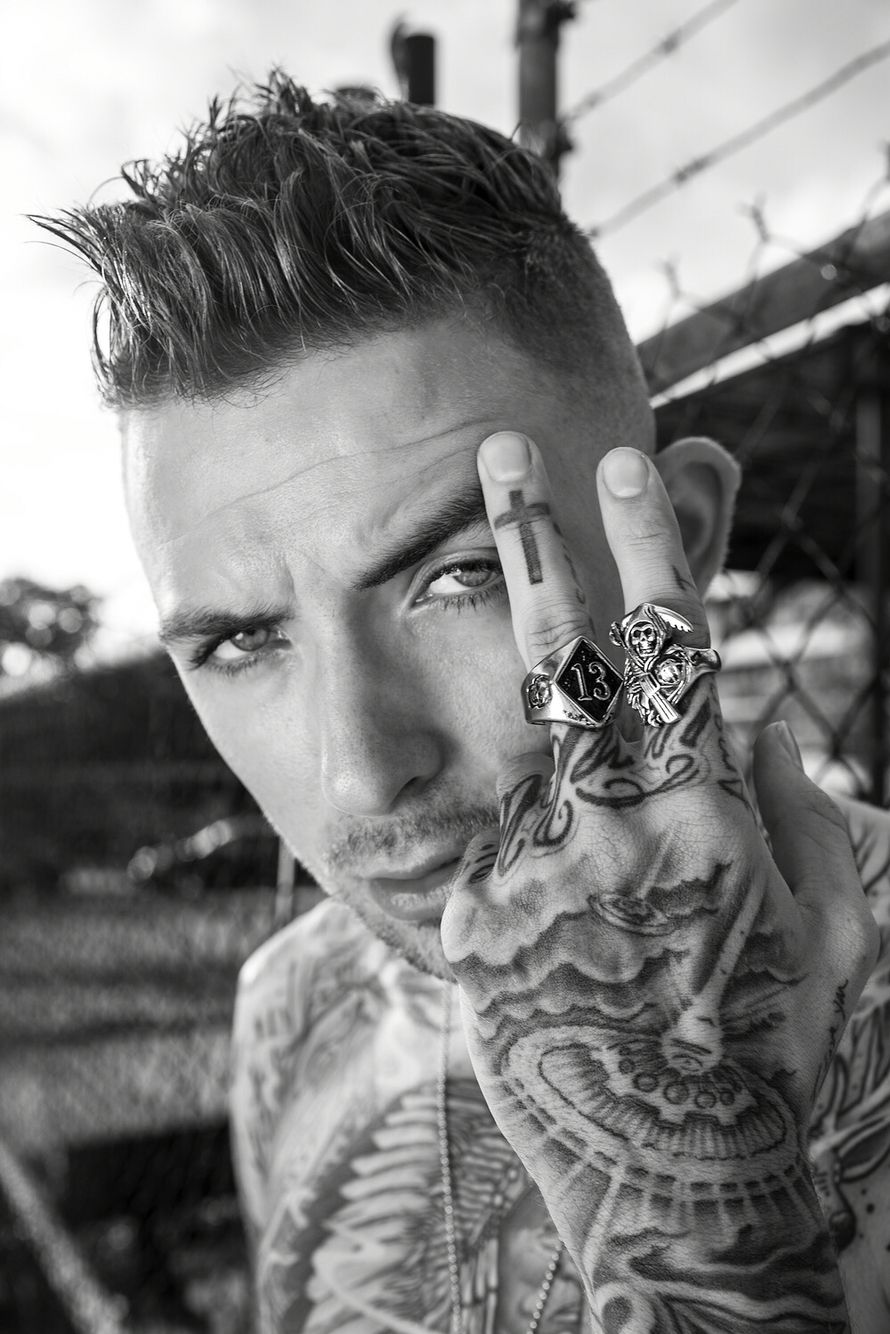
The face tattoos are often the first part of Caskey’s look people notice. A jaw-like design crosses his forehead and cheeks, giving the face a skeletal outline. Smaller marks around the eyes and temples fill the spaces between the larger shapes, and the design looks different in profile.
Caskey has said the head piece was inspired by an animal jaw in Apocalypto. He and Ryan K. Severe worked on the idea over time, using shots of his head to plan how it would look from different angles. The finished lines wrap over the top and sides rather than reading as a front-facing image alone.
Face tattoos have to account for the curves of the forehead, temples and jaw, and they’re always visible. Caskey’s repeated teeth and firm outlines help the jaw shape remain clear when he turns his head.
For face tattoo ideas, look at how a design follows the skull as well as the symbols it uses. A drawing that works straight on may not hold up from the side. The whole shape should make sense as the wearer moves.
Neck and hand tattoos pull the details into close view
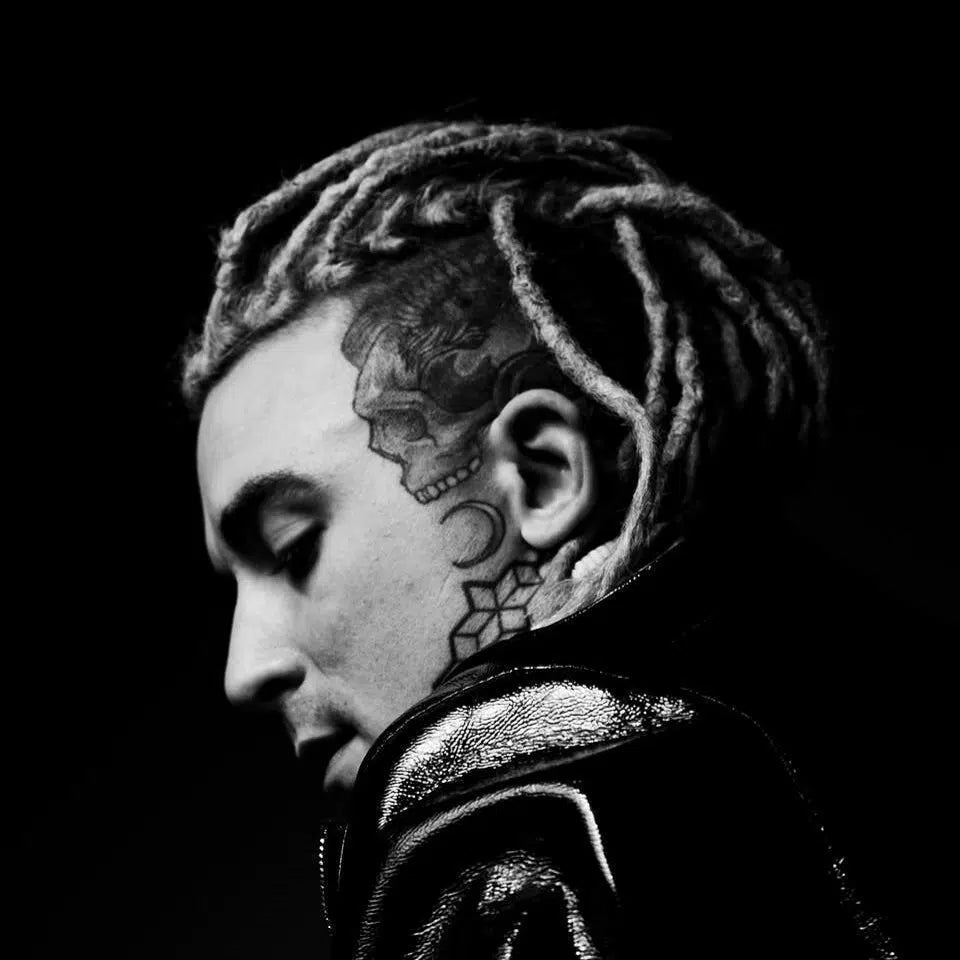
A large symbol sits at the center of Caskey’s throat. Lines around it reach toward the jaw and down to the collar, making the neck a distinct piece in a close portrait and a link between the head and chest in wider shots.
Caskey has also placed meaningful lettering and spiritual imagery on his neck. The subjects vary, but the dark shading and strong outlines give the pieces a shared look.
Lettering across the hands, including “Be Humble,” is easy to see when Caskey holds a microphone or raises his fingers near his face. Hand tattoos take up less space than chest pieces, but the hands appear in so many photos and gestures that the ink is hard to miss.
Short lettering has more room to stay legible on the fingers, where joints bend and the skin gets regular wear. The words on Caskey’s hands are brief and direct, with little extra decoration around them.
Caskey’s tattoo style is built around contrast and placement
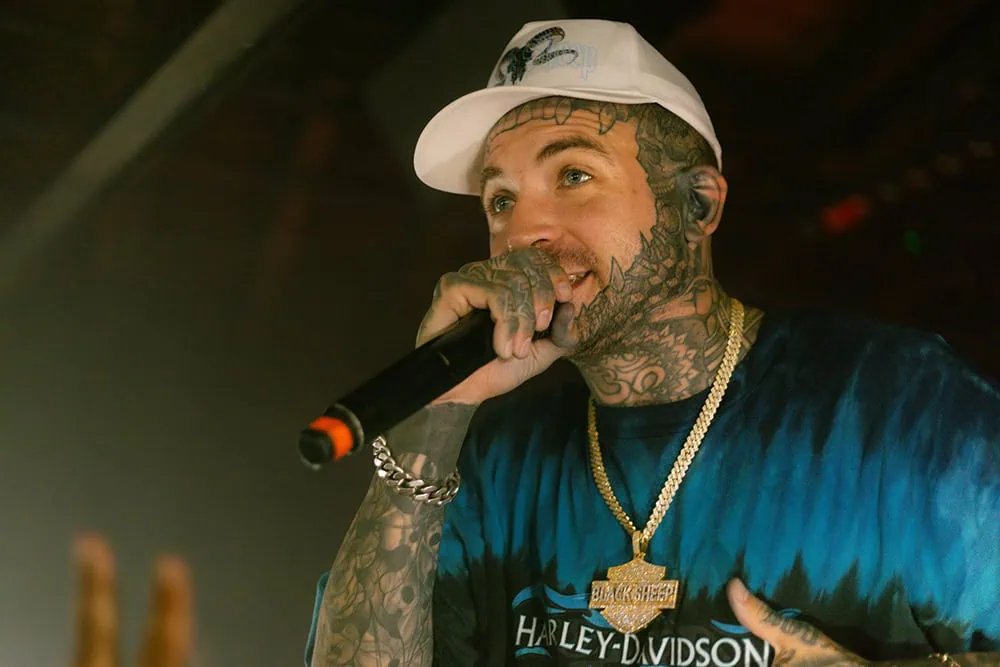
Contrast does much of the work in Caskey’s tattoo style. Black outlines, grey shading and patches of open skin keep the designs readable in close portraits and performance photos. The head and neck are the darkest focal points; the chest and arms carry the larger images, while smaller details draw attention back to his face and hands.
Spiritual imagery is another thread. Caskey has discussed religion-inspired tattoos, including a Lord Shiva piece on his back, alongside the Native American portrait on his chest. The subjects differ, and both designs take up substantial space.
Planning by body area helps explain how the pieces fit. A face tattoo changes how the neck is seen; a chest portrait shapes the space around the shoulders; and hand tattoos appear with every gesture. The images don’t need to match, but their placement affects one another.
You can take cues from the way Caskey’s tattoos are arranged without copying the artwork. Choose a main area, decide what should draw the eye first, then let smaller details support it. Leave open skin where a design needs room, and use symbols that mean something to you.
Caskey’s tattoos feel personal, but their placement also looks planned. The head and face catch the eye first; the chest and back hold the larger images; and the neck, arms and hands carry the work into everyday photos. The pieces are bold, yet the way they connect matters just as much.
If you’re using Caskey’s tattoos for reference, start with placement. Consider how a design looks when you turn your head, lift an arm or move your hands. What matters here is how the tattoos follow his body and keep their main shapes clear.
Here’s Caskey’s official “Tats On My Neck” video: