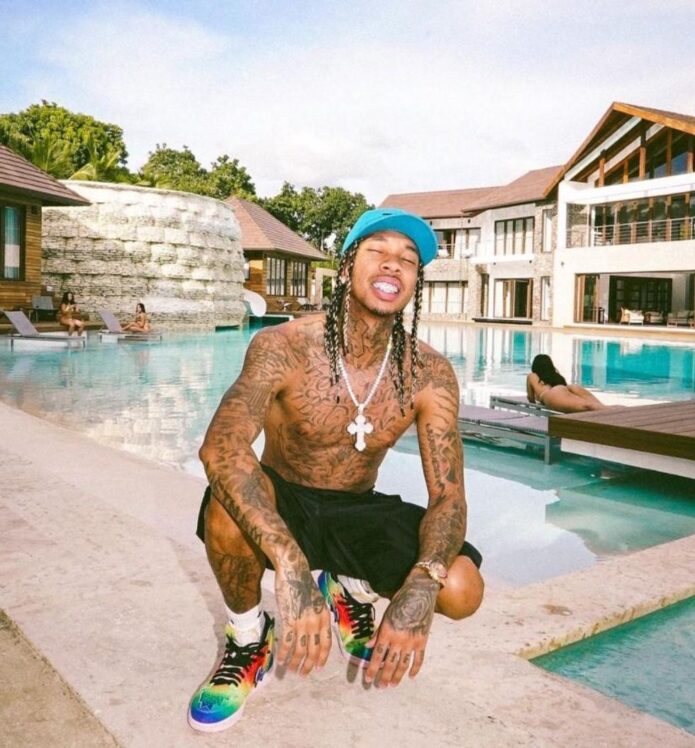
Tyga has been getting tattooed since he was a teenager, and the collection still reads like a timeline. Some pieces are carefully finished; others come from a younger, more impulsive period. His chest, arms, stomach, neck, hands, and face hold different chapters, from family and faith to his Vietnamese background and the years when he wanted as much ink as possible.
In his GQ tattoo tour, Tyga said he got his first tattoo at 14 and sometimes returned to the shop twice a week between 14 and 17. He also admits that “ghetto tattoos” sit beside more detailed work. That candour makes the collection easier to understand: it isn’t built around one perfect style, but around memories and ideas that stayed with him.
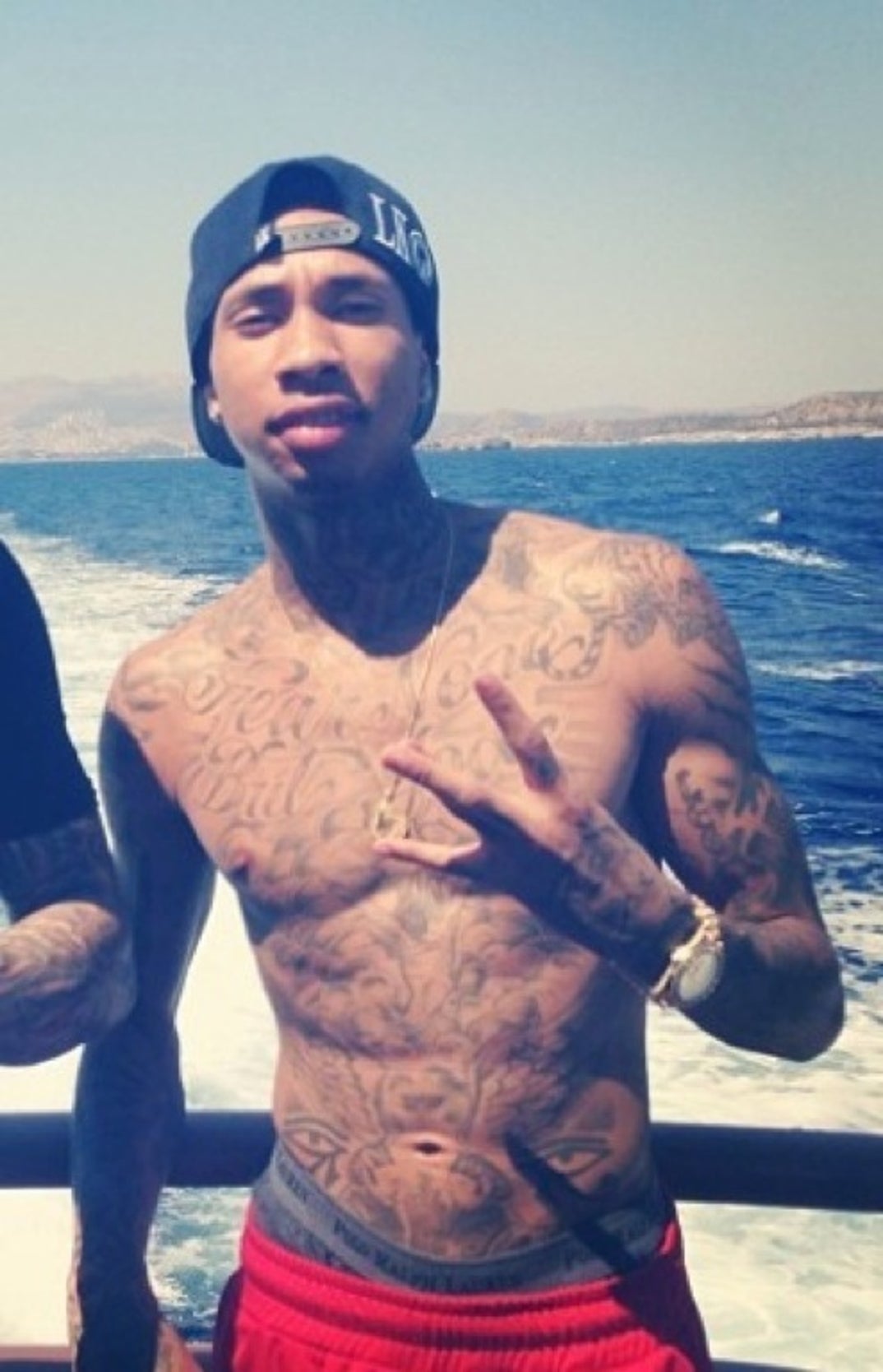
His chest is built around “Fear None But God”
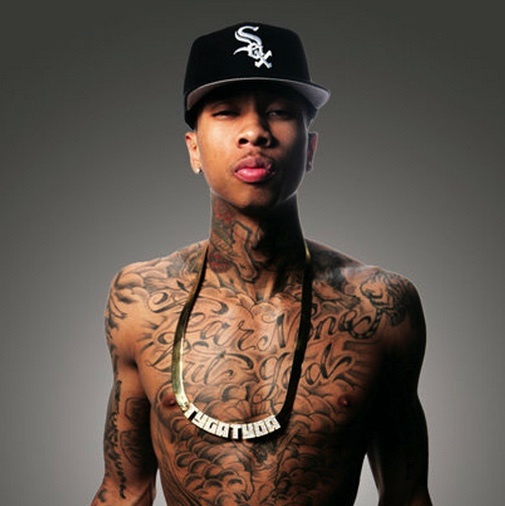
The largest piece across Tyga’s chest reads “Fear None But God.” The script stretches across his pectorals and stands out whenever he’s shirtless. Heavy shading and surrounding imagery make it feel like a full chest composition rather than a single line of text.
The religious phrase gives the chest a clear centre amid the more decorative work. It also sits alongside Jesus imagery lower on his torso and other faith references on his arms. The front of his body feels layered, not designed as one matching sleeve.
The old-school pieces show where he started
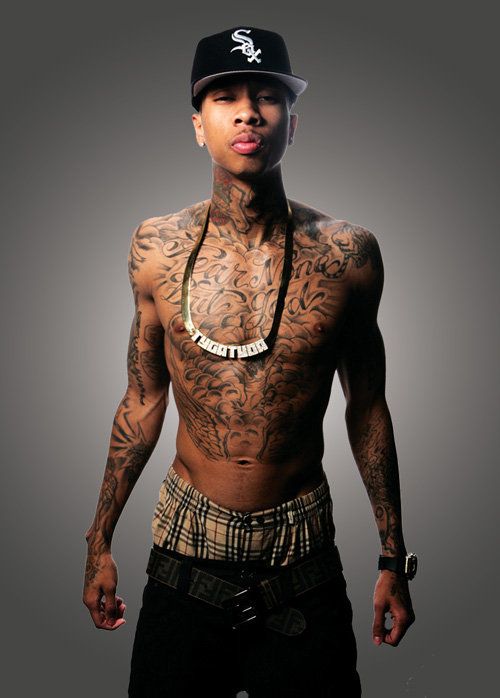
Tyga’s early work helps give the collection its lived-in feel. In the GQ tour, he points to an arm tattoo of the Lord’s Prayer with John 3:16, one of his first designs. He says he was 14 and excited to get tattooed without his parents’ permission.
He also has lettering from his teenage years tied to his crew and ambitions, including GED, which he explained as “getting every dollar, getting educated daily.” Those pieces aren’t as polished as his later work, but they show an earlier Tyga before the large chest projects, Asian-inspired imagery, and longer sessions.
Vietnam and family history shaped the later work

One of Tyga’s most personal designs is a Vietnam tattoo he discusses in the GQ video. He says it connects to his mother, who was born in Vietnam during the war, and to his own interest in his Asian background. The piece marks a shift from choosing whatever looked good that week to using tattoos to explore family and identity.
He has described later work as Asian-inspired, including a dragon and related designs. These sit beside earlier tattoos rather than replacing them, giving his torso a mixed feel: religious words, clouds, traditional imagery, and dark sections all share the space. It can look busy, but it also reflects how his interests changed.
Jesus, clouds and the eye of Horus fill out his stomach
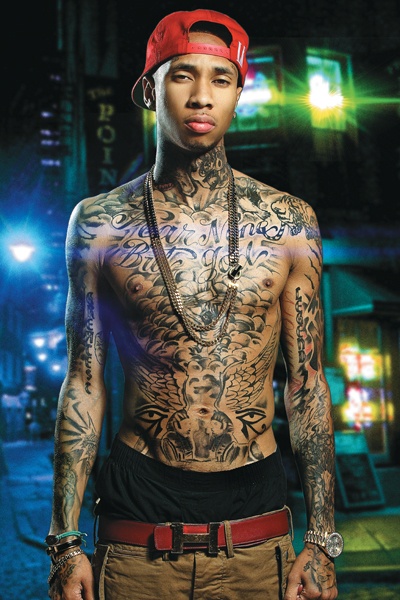
Tyga’s stomach features some of the collection’s strongest religious and Egyptian imagery. Below the chest lettering is a Jesus tattoo surrounded by clouds and a large winged design. He also points out the eye of Horus, a symbol he connects to a period when he was studying Egyptian culture.
His process helps explain the variety. Tyga has said he brings an idea to the artist, then lets them develop their own version first. He prefers a collaboration to copying a drawing exactly as he imagined it. Scripture, religious portraits, Egyptian symbols, and later Asian influences all end up sharing the same body.
Jack from The Nightmare Before Christmas is one of the fun pieces
Not every Tyga tattoo is about faith, family, or ambition. He also has Jack Skellington from The Nightmare Before Christmas, one of his favourite movies growing up. He got it when he was around 16.
There’s a funny detail to the story: after seeing the tattoo upside down for years, he’s used to it that way. It makes the piece feel more personal than an entry on a celebrity tattoo list. He liked the film, got the character tattooed, and kept it; it doesn’t need a bigger public message.
The neck, hands and face carry the loudest details
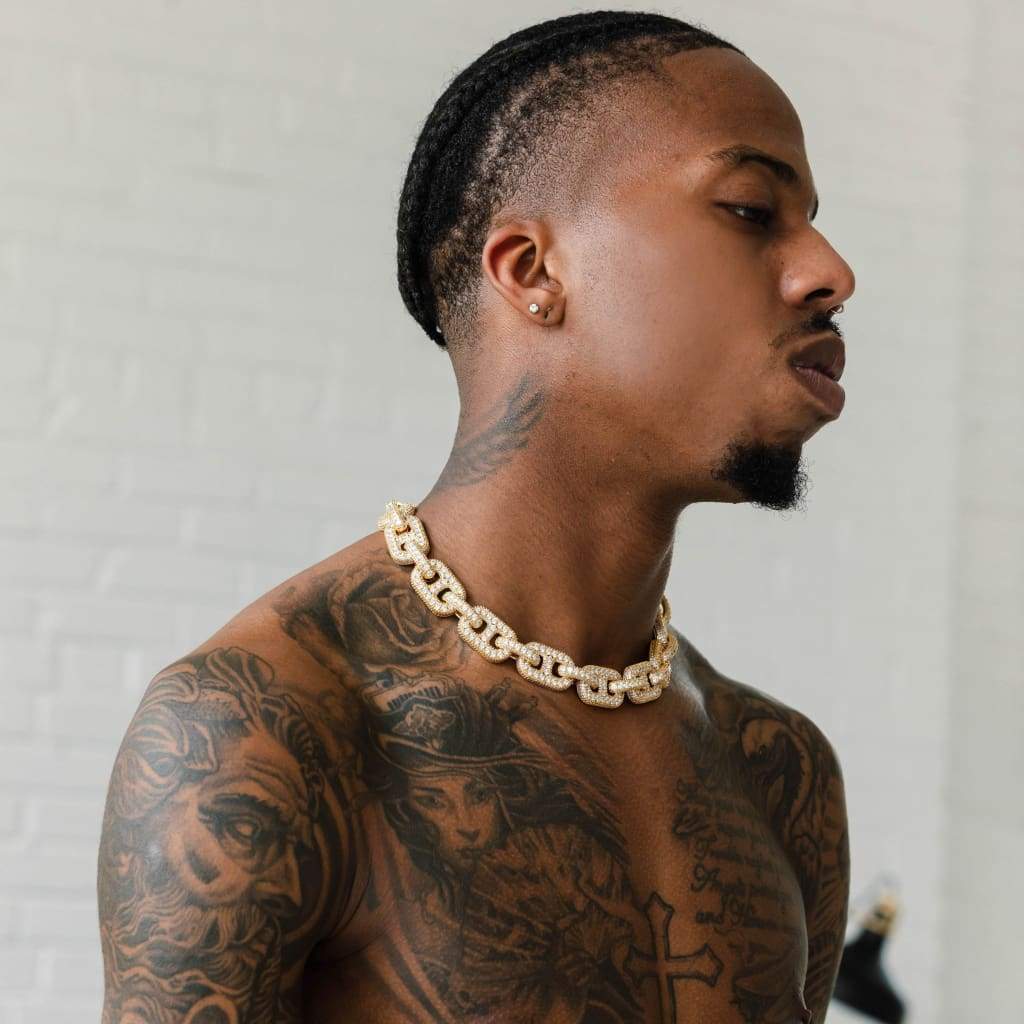
Tyga’s neck and hands are among the hardest areas to hide. He has roses on the side of his neck, lettering around it, and small face tattoos he says he barely notices now. He has also shown hand tattoos with the words “Pay Me Dollars.” These pieces make the collection feel close to full-body coverage.
He once considered a larger face tattoo but held back because he didn’t want to change his appearance too much. That restraint can be easy to miss when so much else is covered. The face tattoos stay small, while the neck, hands, and arms do most of the visual work and give his photos a familiar outline.
What Tyga’s tattoos say as a whole
Tyga’s ink makes the most sense as a timeline. He started young, got hooked on the process, and went through stretches when he was getting tattooed constantly. Some designs came from family history; others from films, religion, music, friends, or whatever he was exploring at the time.
That variety is why the work doesn’t look uniform. Early lettering sits beside large chest script, religious portraits, clouds, Egyptian symbols, roses, Asian-inspired designs, and small face tattoos. Tyga hasn’t tried to make every piece look like it came from the same artist or flash sheet. The collection feels personal more than coordinated.
He has advised people to choose something that will still mean something years later, whether that’s family, children, or an idea they care about. His own body shows both sides: thoughtful pieces beside quick choices he made as a teenager. Together, they make the tattoos feel honest.
There’s also a practical side to the placement. The ink shows in photos, onstage, and in videos, while filling gaps between larger pieces. Small marks around his face and neck connect the chest work to his jawline; the hands make even a simple outfit look heavily tattooed. A T-shirt may cover some stomach designs, but the visible neck and hand ink still shape the whole look.
The collection traces different tattoo phases. Early religious lettering is direct; later designs use more images, from clouds and dragons to roses, figures, and cultural references. The earlier tattoos haven’t stopped mattering. They remain the base layer, with newer work growing around them, so you can see the years accumulate rather than one design replacing another.
Tyga’s approach to working with artists may be one reason the styles vary. He has said he brings a rough idea and lets the tattooer create a first version. That leaves room for the artist’s line work and composition, and helps his body avoid looking like one giant sticker sheet.
You can see a related mix of personal history and changing style in Young M.A’s tattoos. Tyga’s collection is busier and more spread out, but the ink shifts as the person does.
There may not be one neat answer to what all the tattoos mean. The chest phrase gives the collection an anchor, while the Lord’s Prayer, John 3:16, Vietnam design, Jack Skellington, eye of Horus, Jesus, roses, and hand lettering each point to a different moment. Together, they read more like a scrapbook on skin than a single logo.
The variety keeps the tattoos interesting. In one photo you might notice the old scripture; in another, a small face mark, a neck rose, or the heavier work across the ribs. The collection adds chapters instead of trying to erase earlier ones.
That timeline also comes through in candid photos. The ink isn’t just one polished chest piece; it reaches into the areas people notice first, giving the collection a connected look from different angles.
The tiger on his shoulder stands out on its own
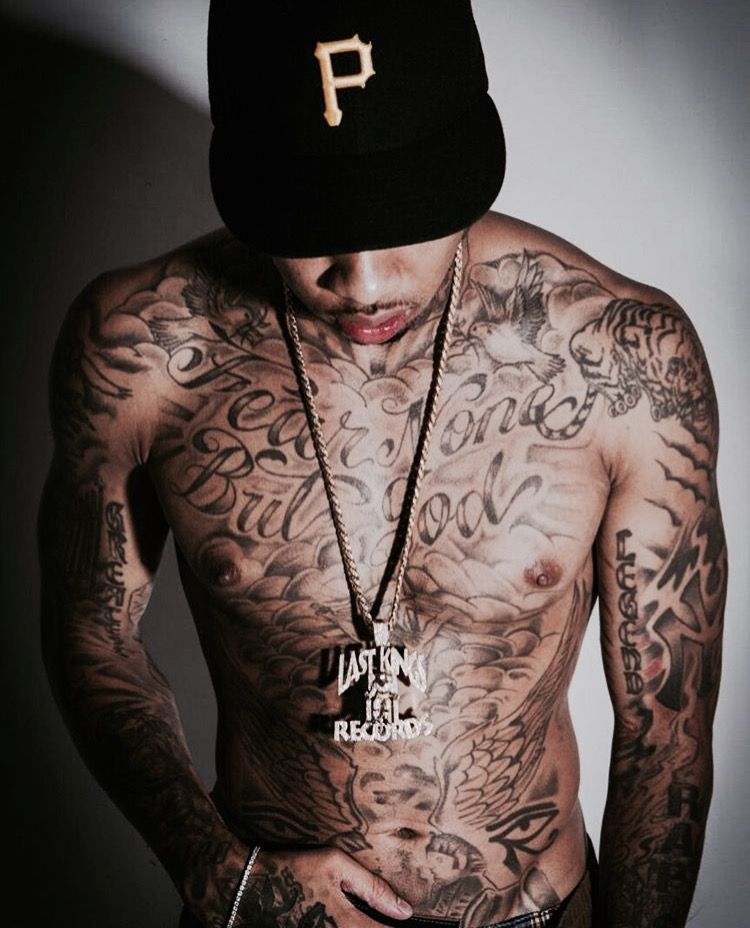
A closer look at Tyga’s shoulder brings out the tiger imagery. It sits among the darker chest and upper-arm work and gives that area a sharper focal point. Describing every tattoo as part of one huge torso design can make a piece like this easy to miss.
Roses and hand ink push the collection outward
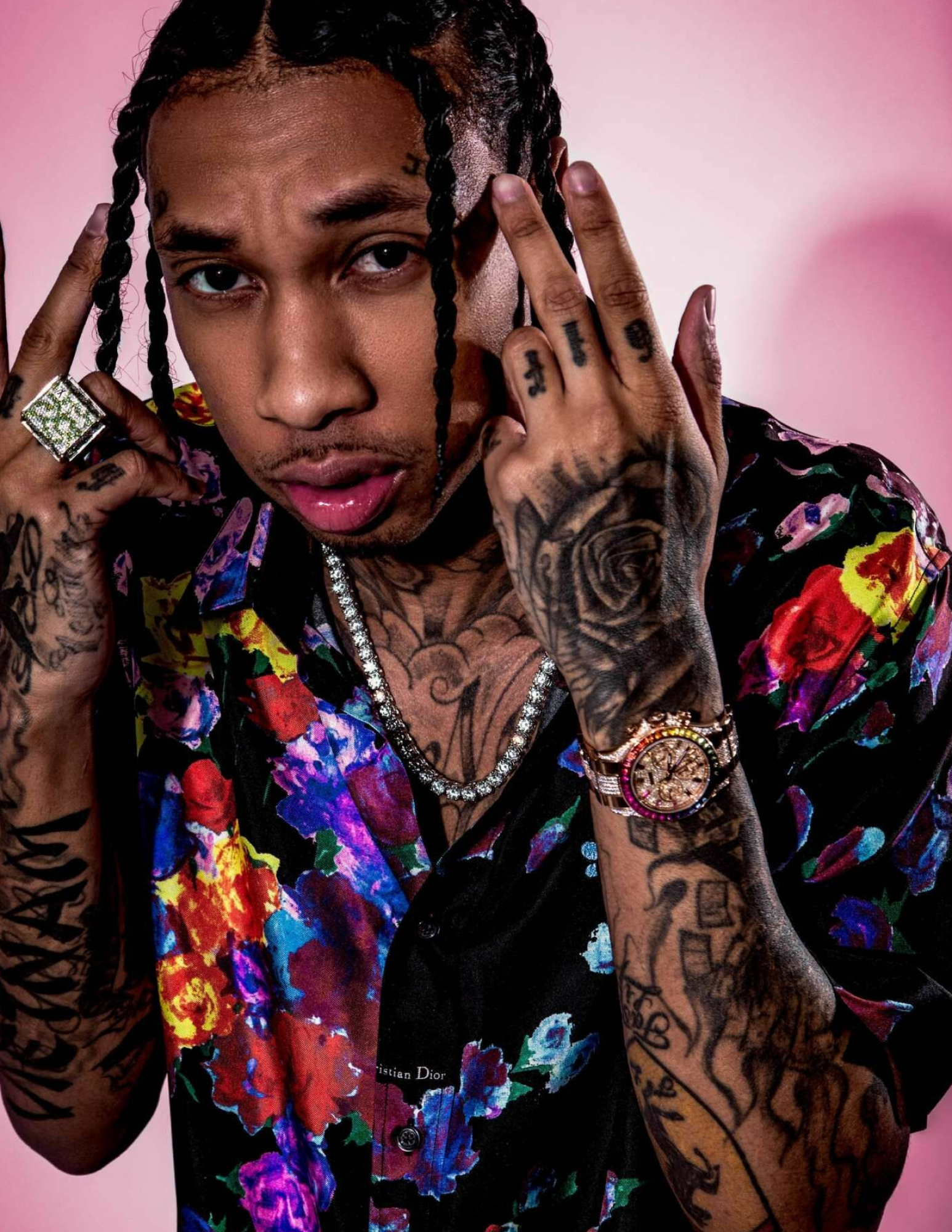
A closer portrait makes the hand and rose tattoos easier to see. They extend the story beyond the chest and stomach, keeping the ink visible when Tyga is dressed. The roses also soften some of the darker lettering and religious imagery nearby.
A poolside shot shows how much skin is covered
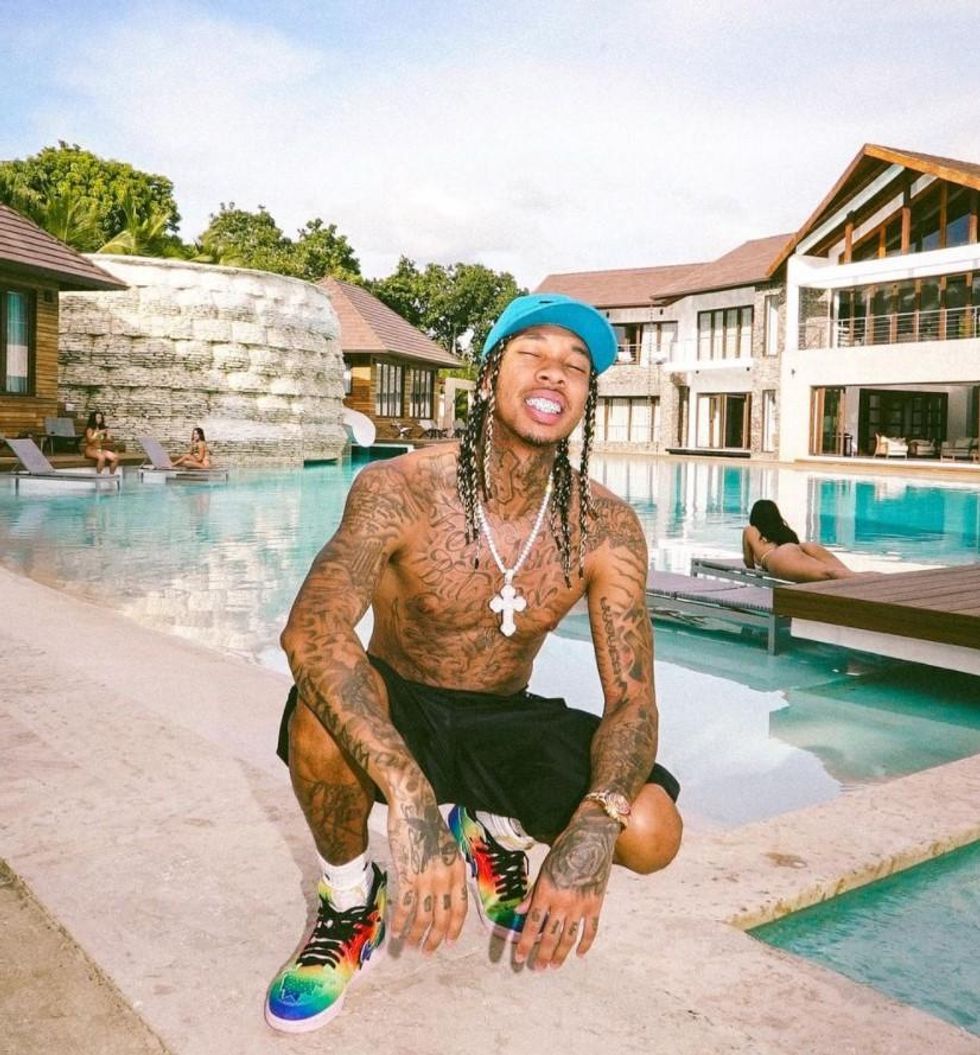
The poolside photo offers another view of the coverage. Separate designs run across Tyga’s chest, stomach, and arms, and remain visible in a casual setting. It’s a reminder that the collection reaches well beyond a few close-up pieces.
The neck and chest work read clearly in tour photos
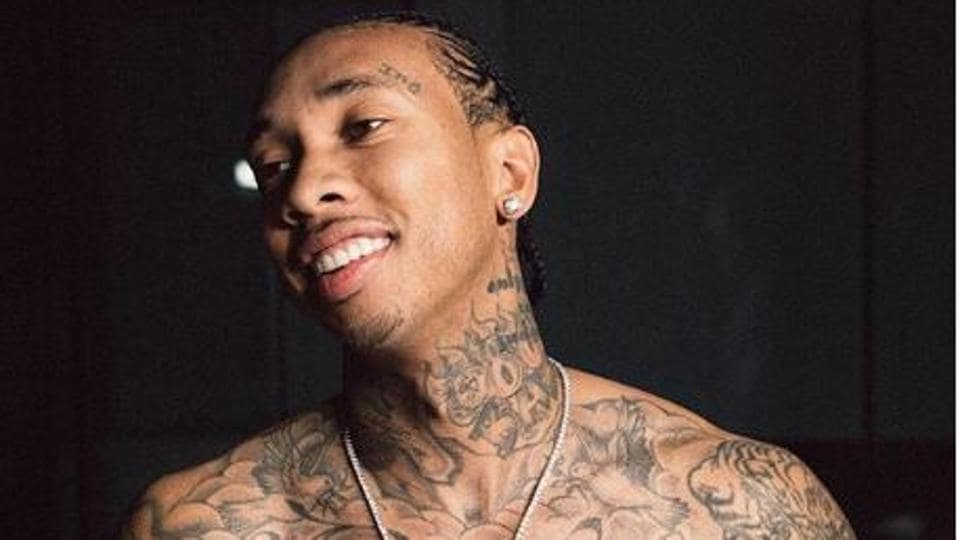
In a tour-era portrait, Tyga’s neck ink appears above his shirt, with chest lettering and shoulder designs below it. The less formal photo makes it easier to see how the placement works in everyday life.
Watch Tyga explain his tattoos
Tyga talks through his first tattoo, the Lord’s Prayer, Jack Skellington, the Vietnam design, his Egyptian influences, and the way he works with tattoo artists in this GQ tour.