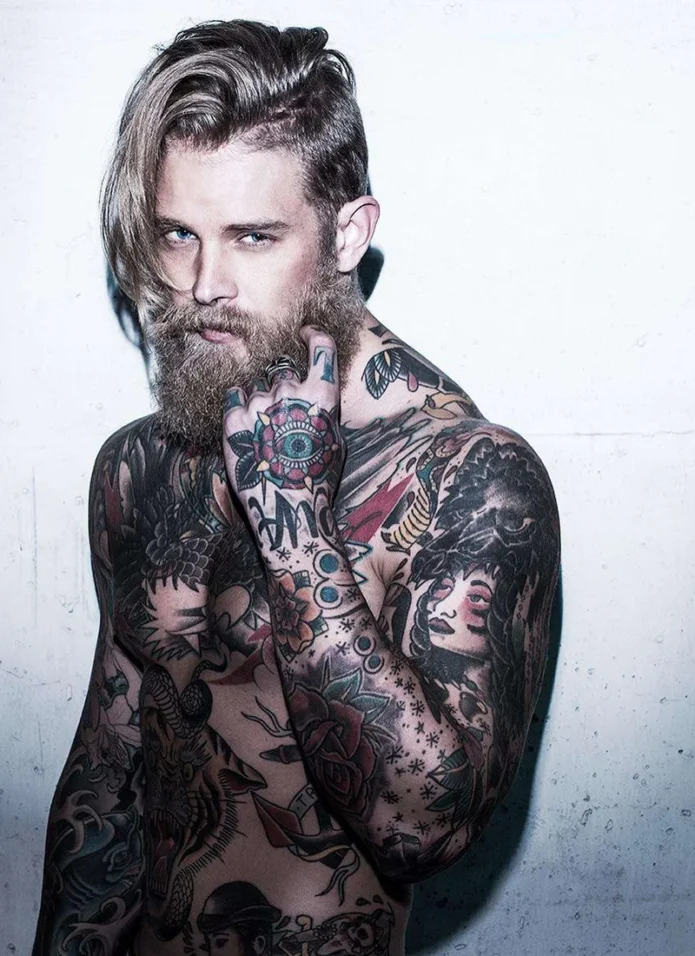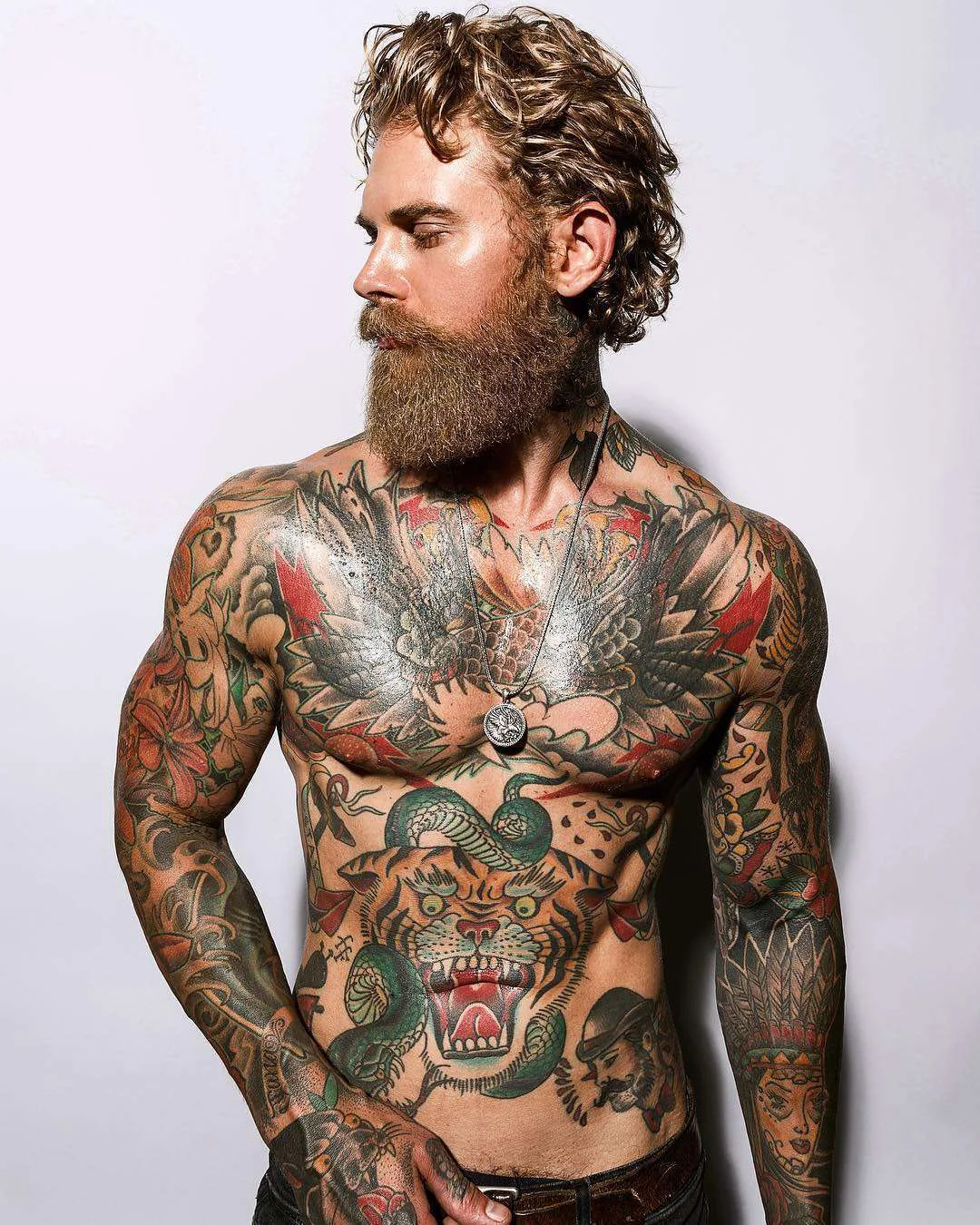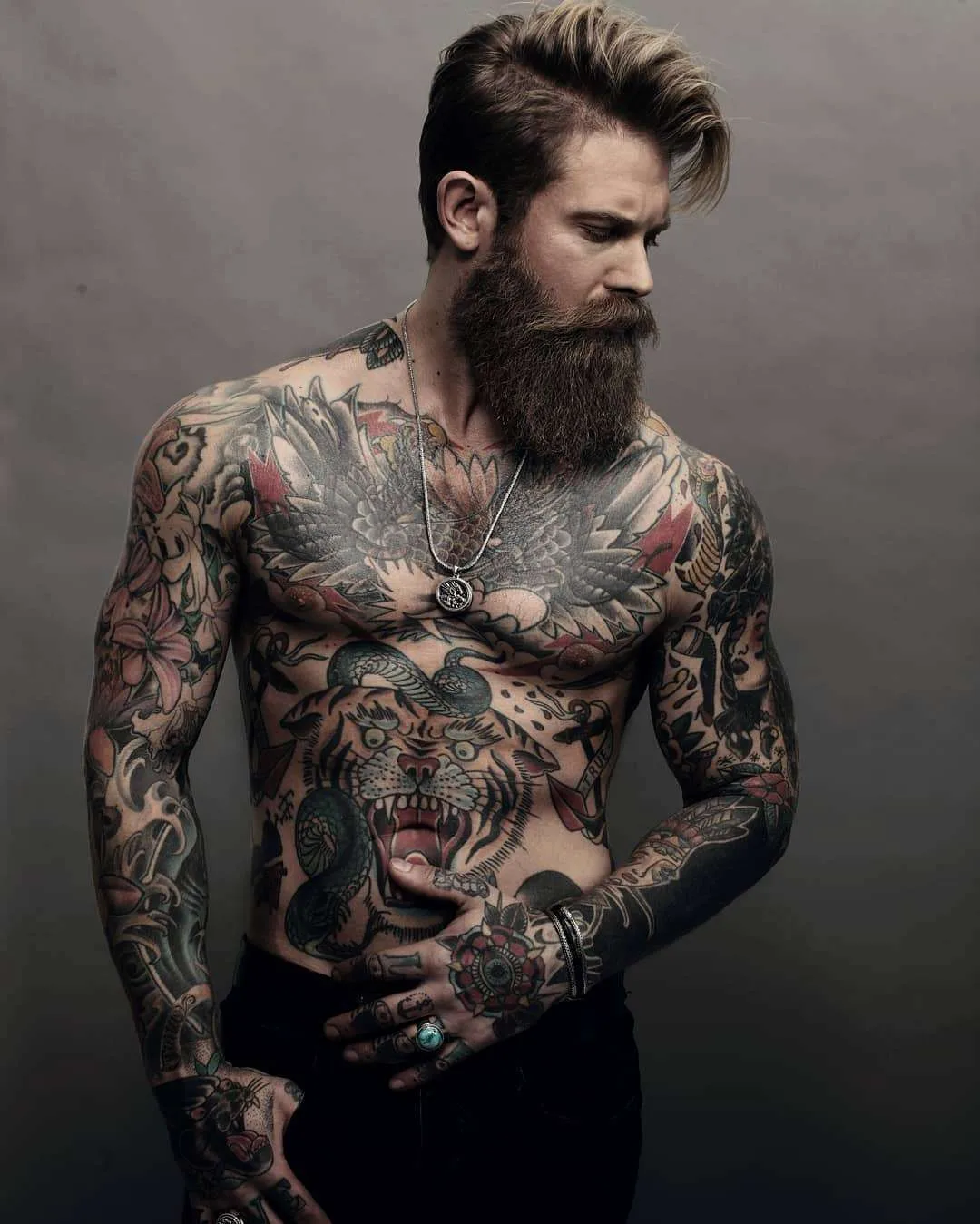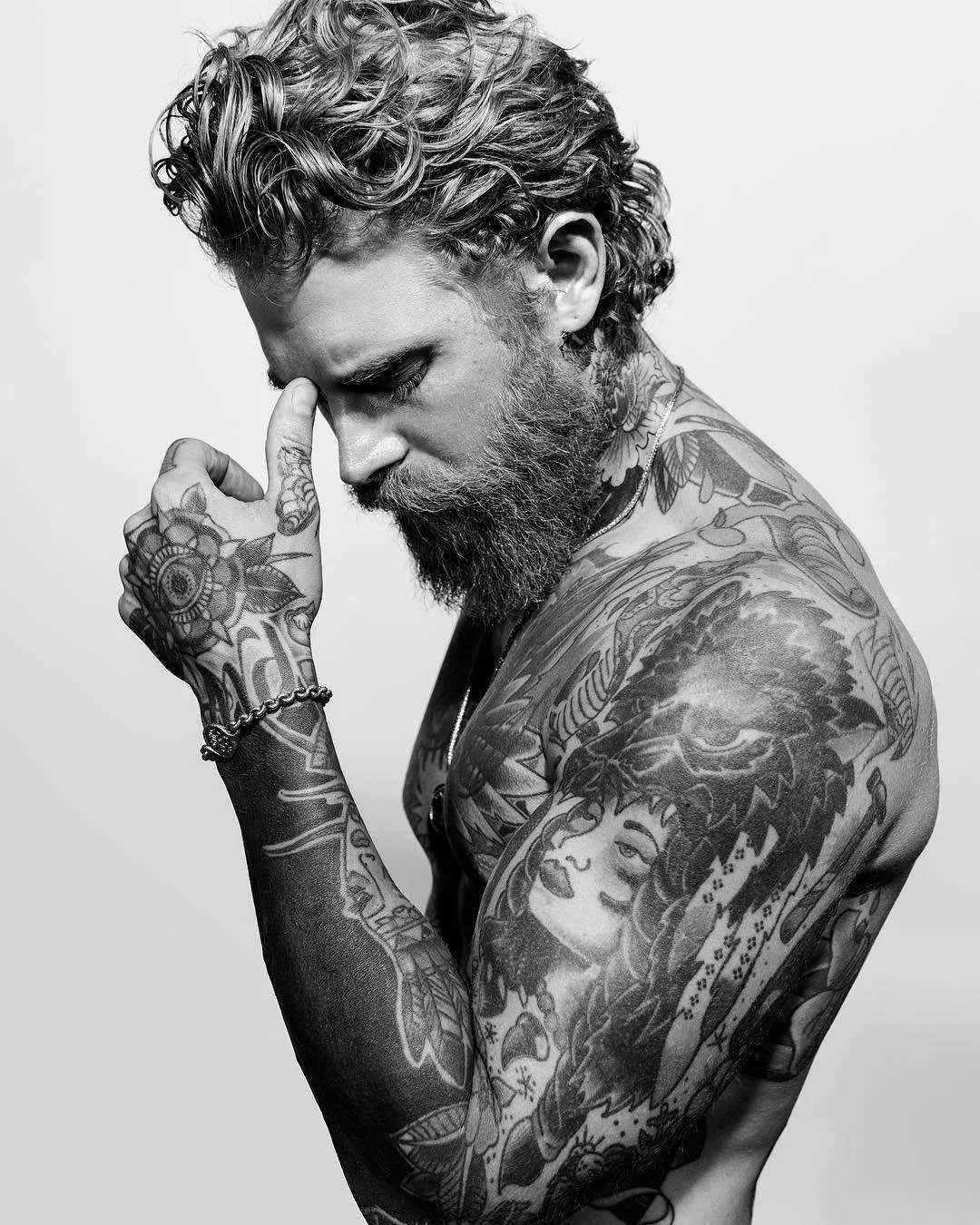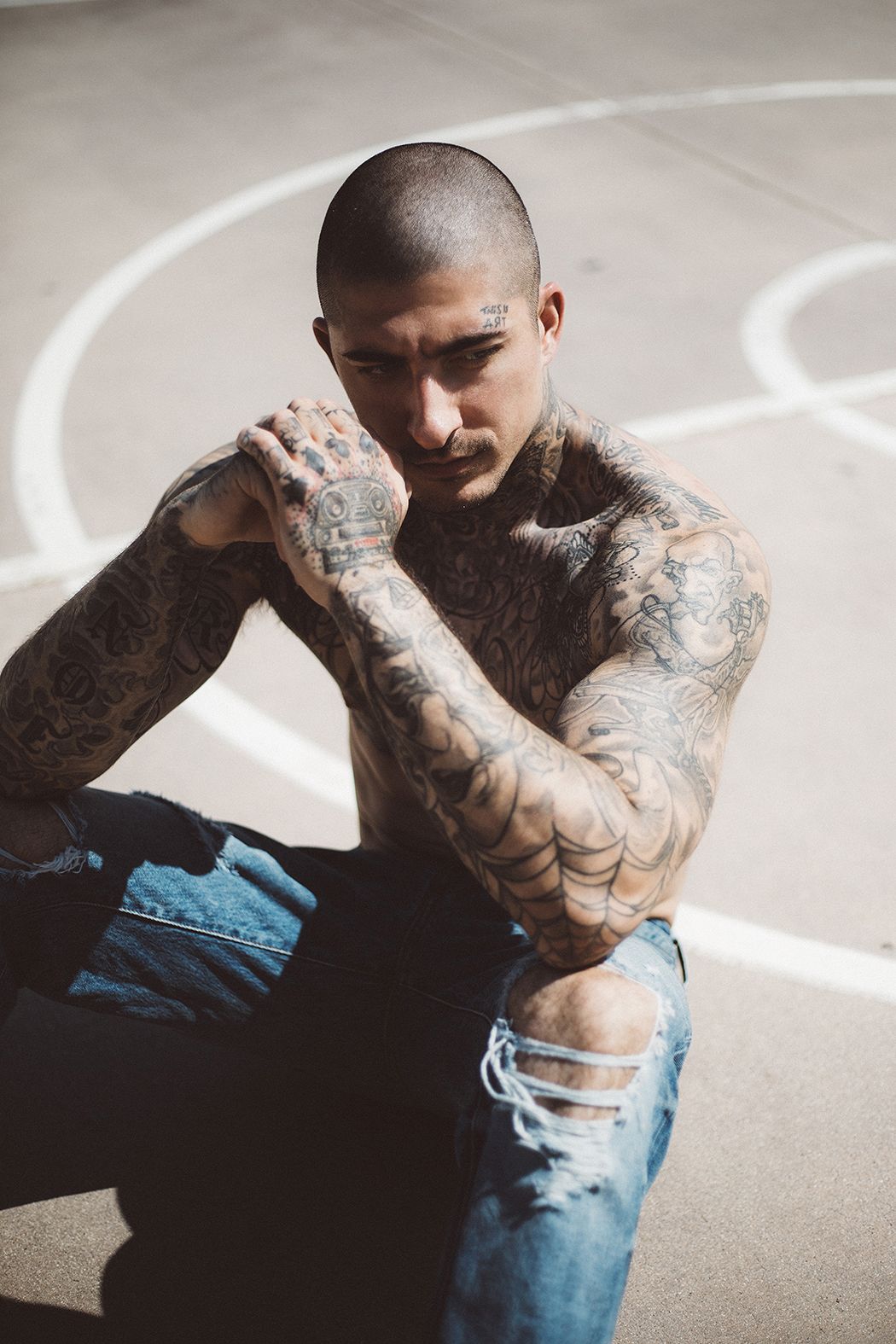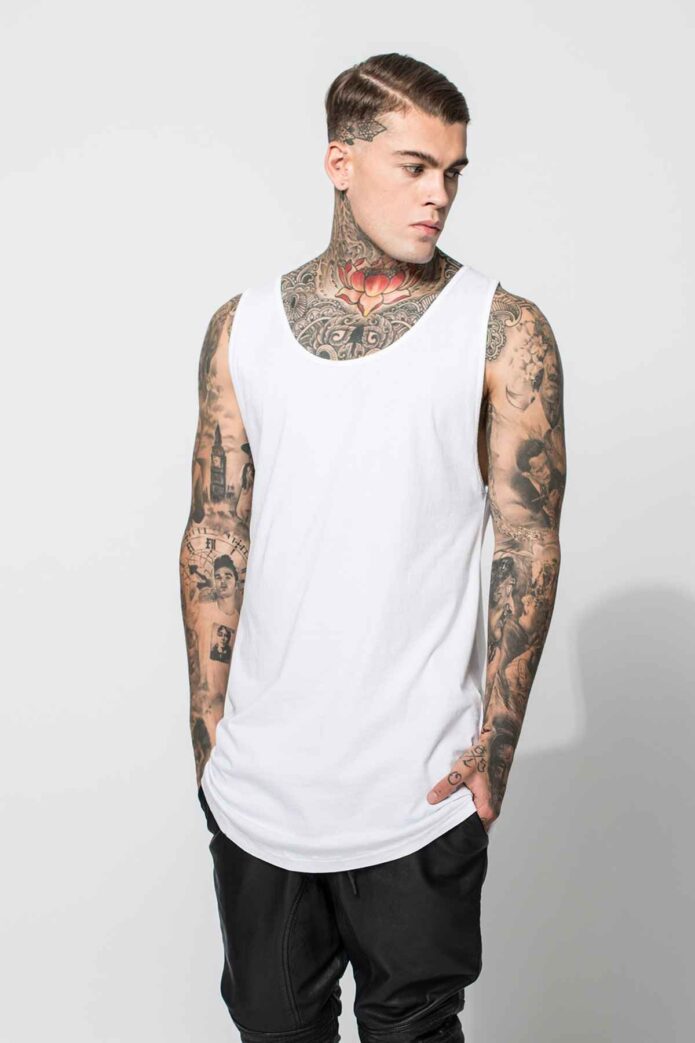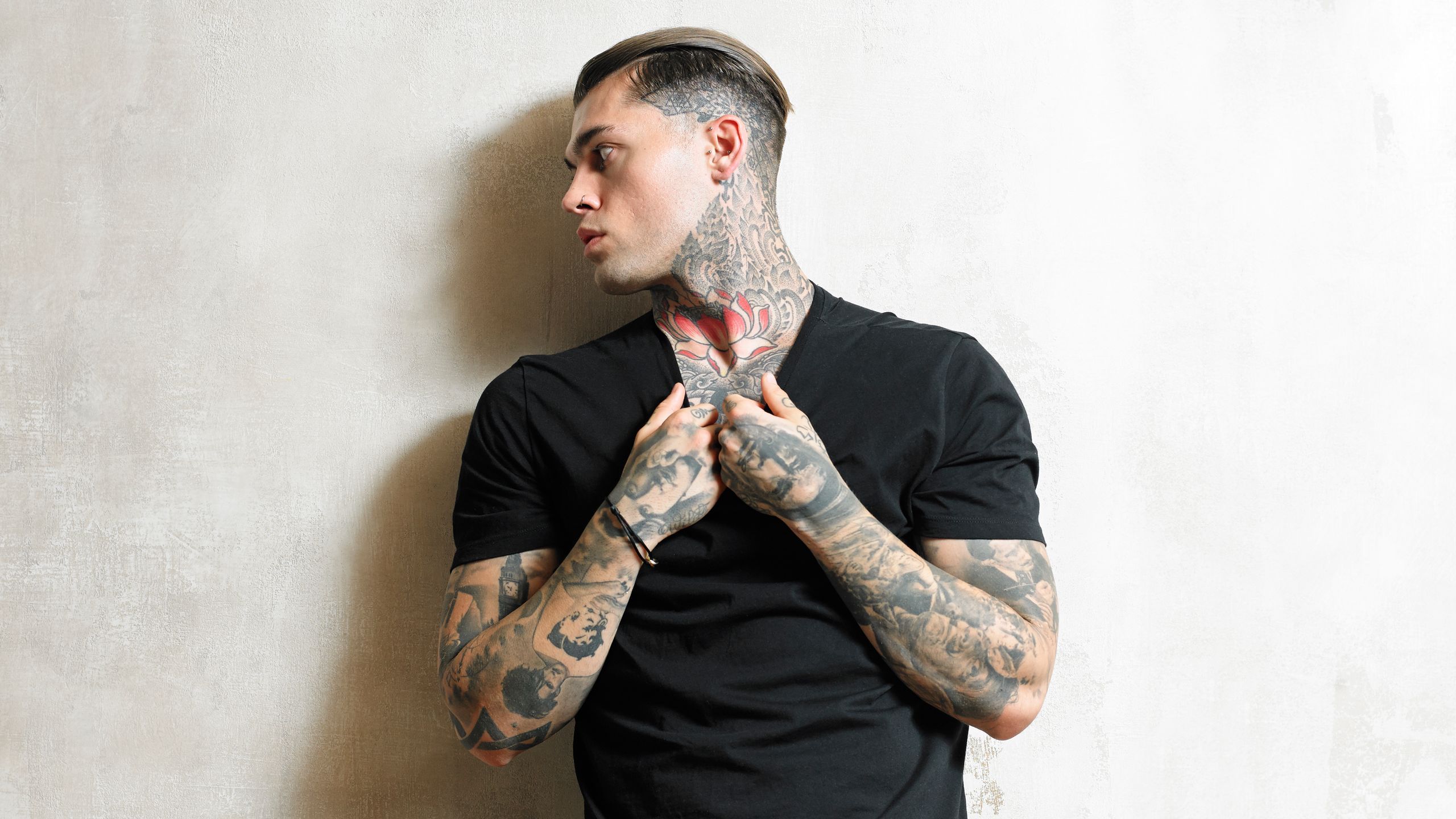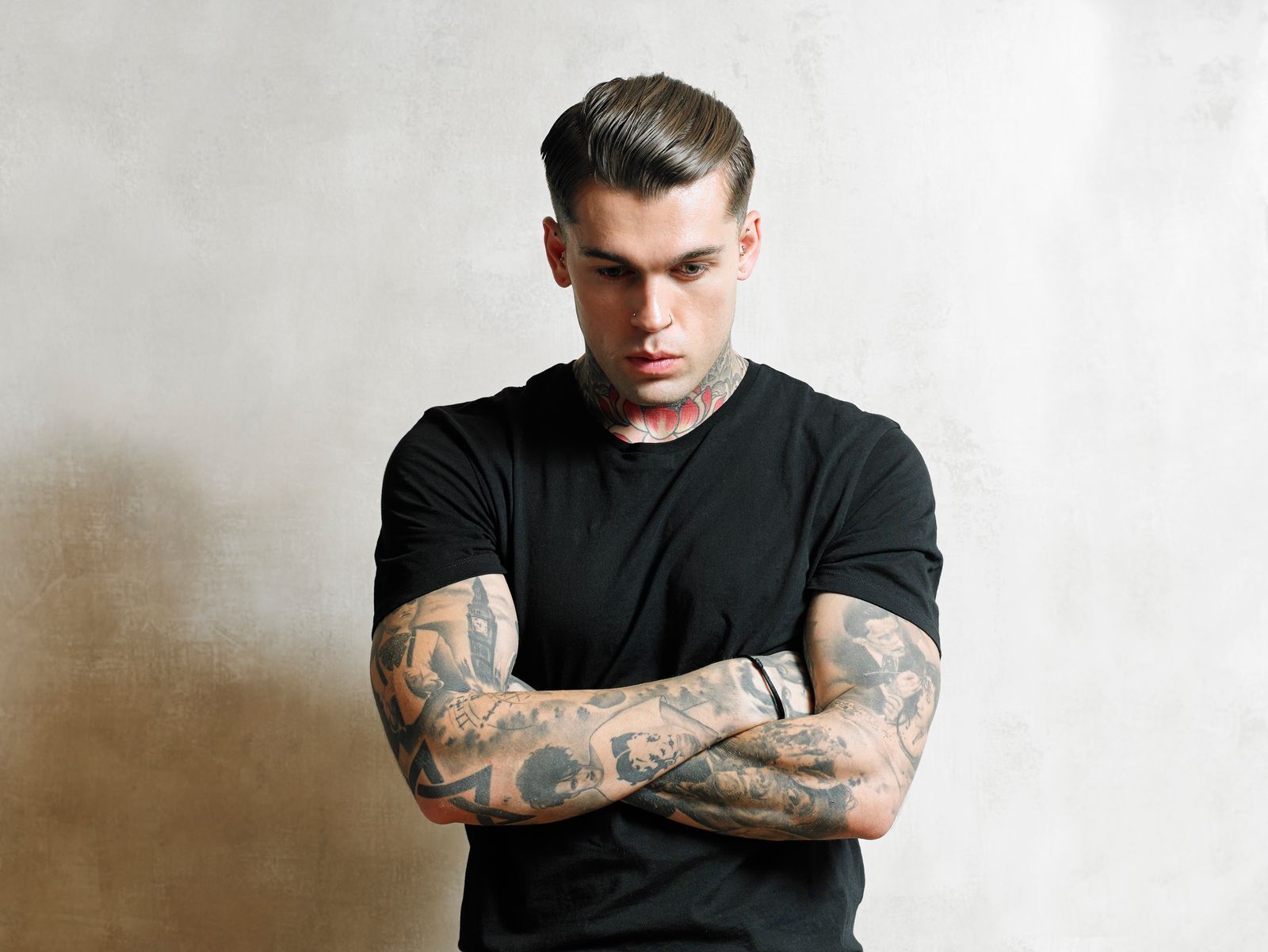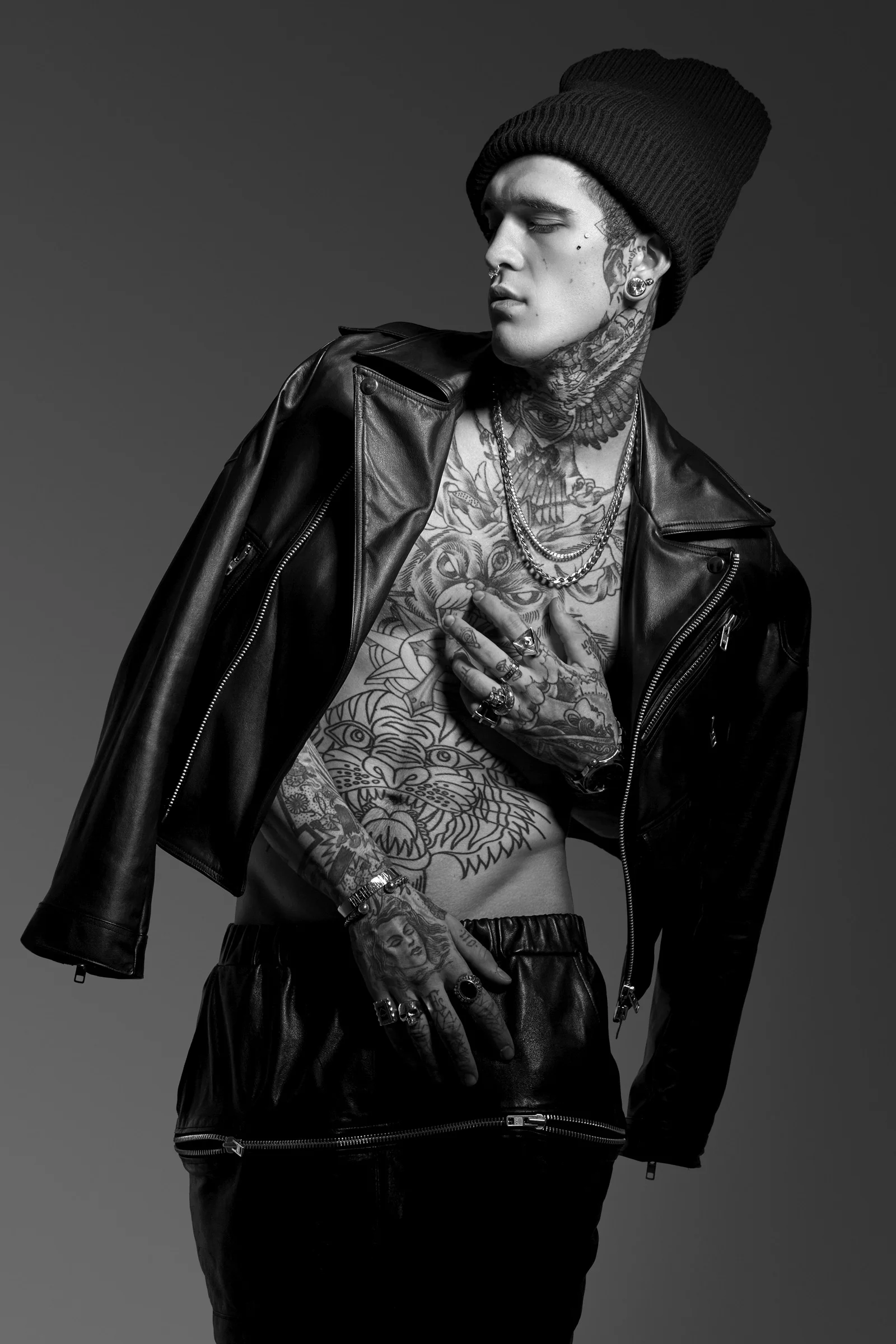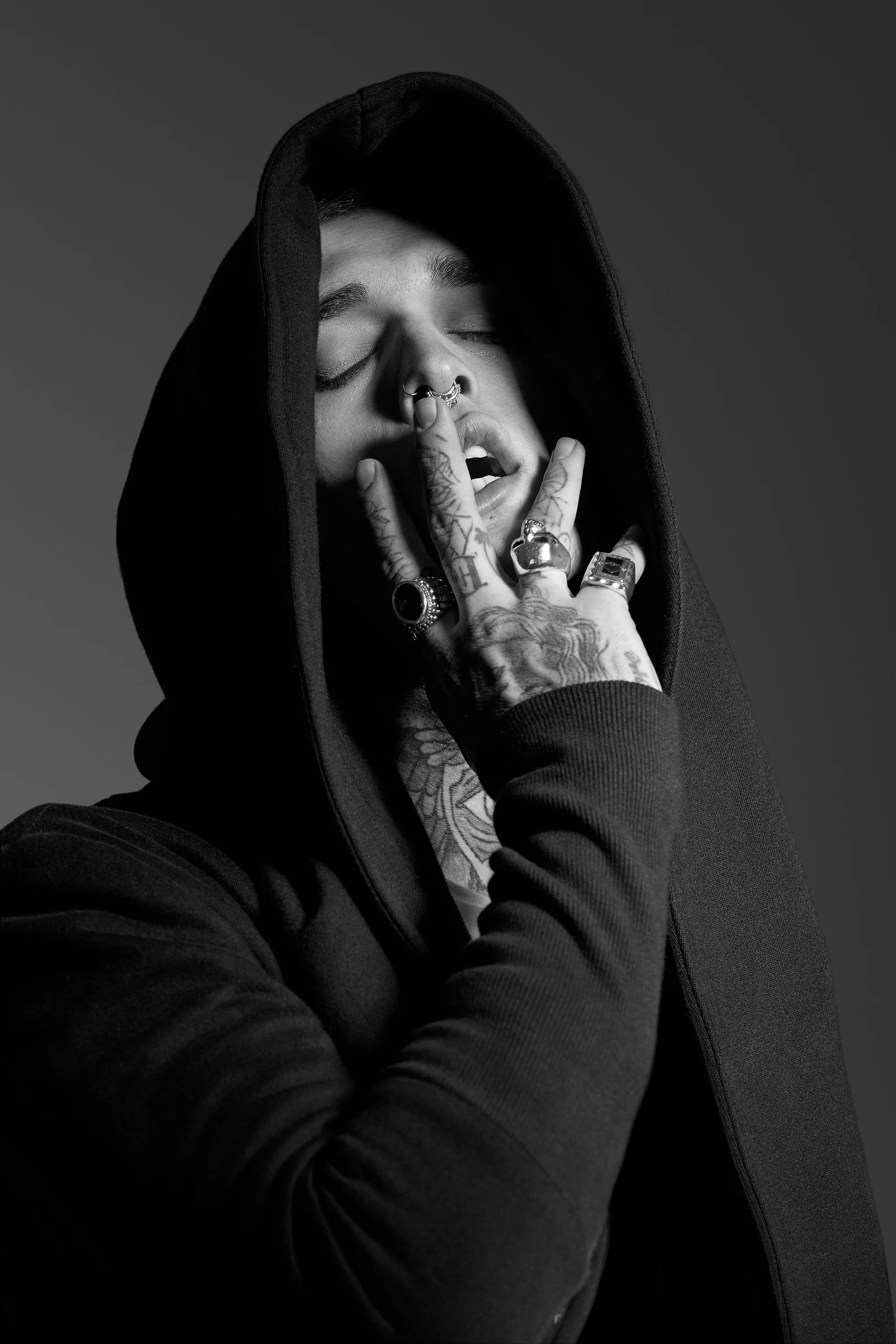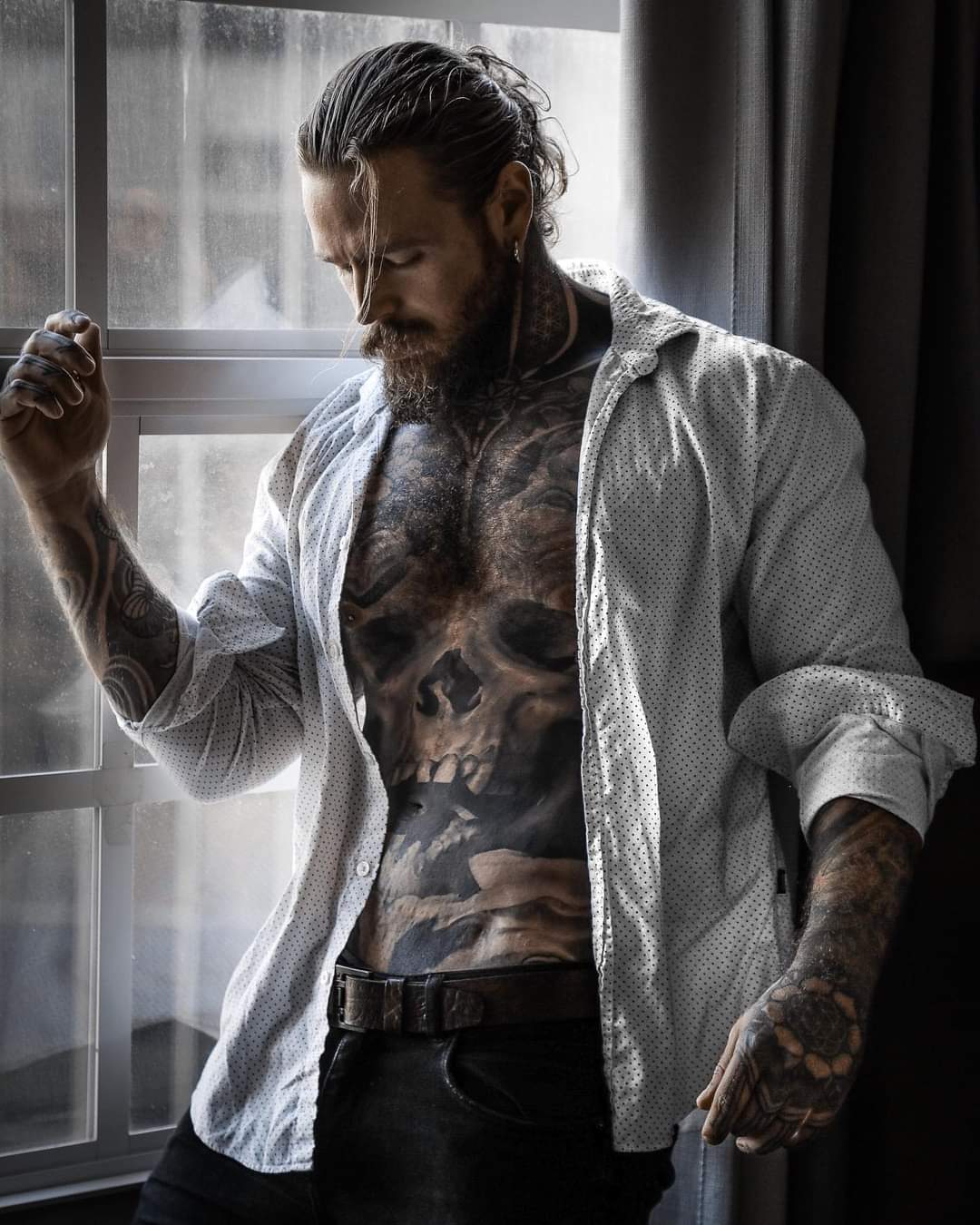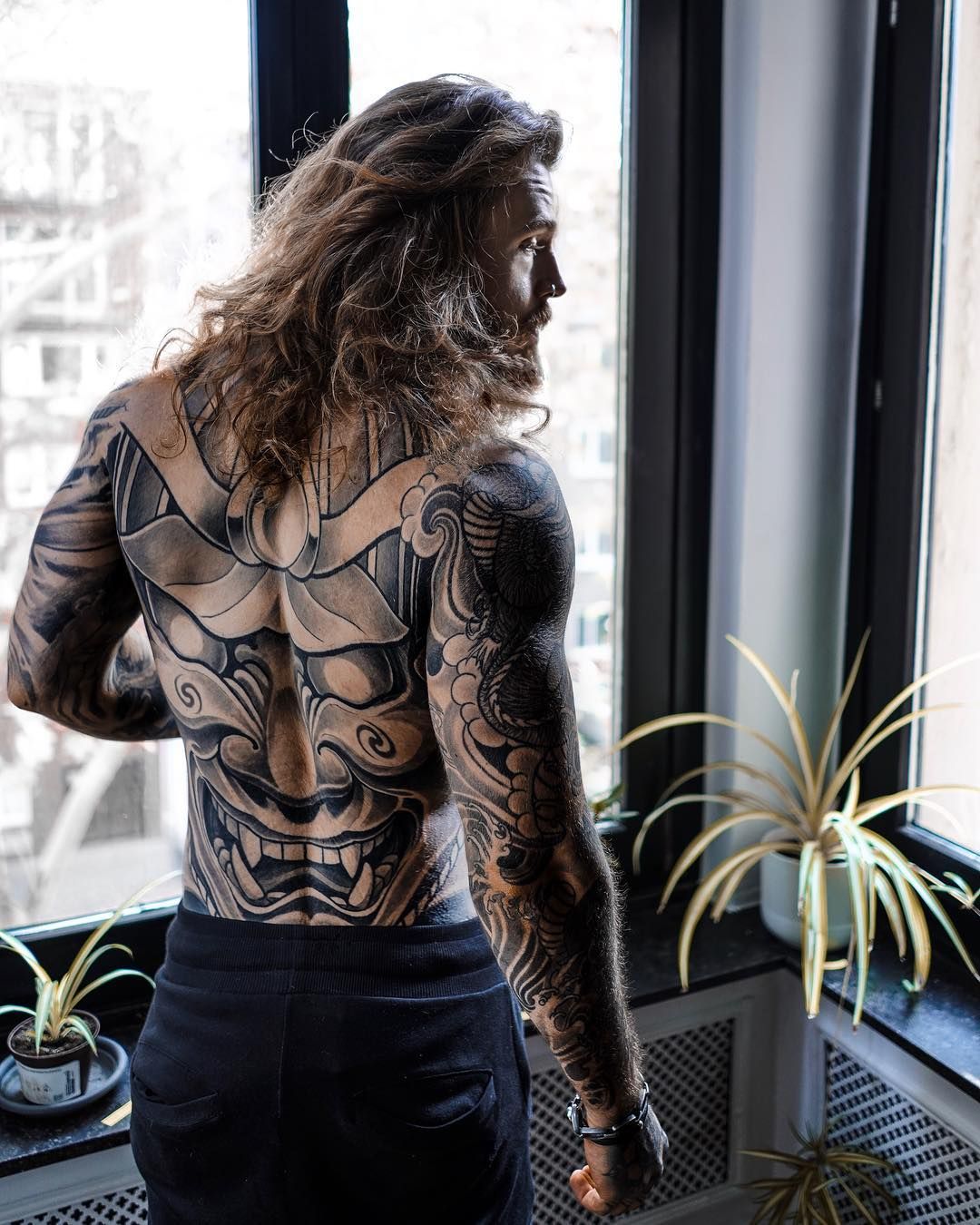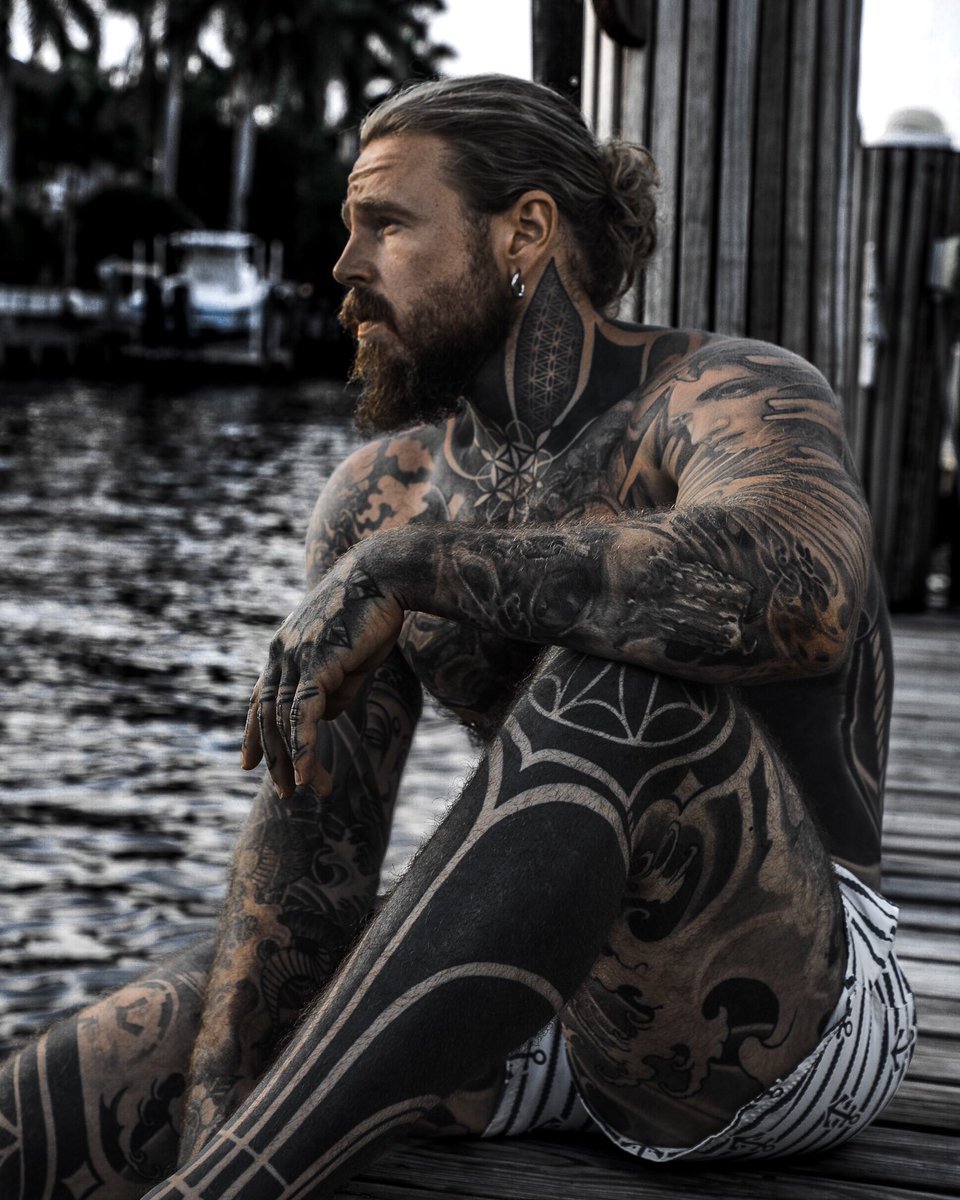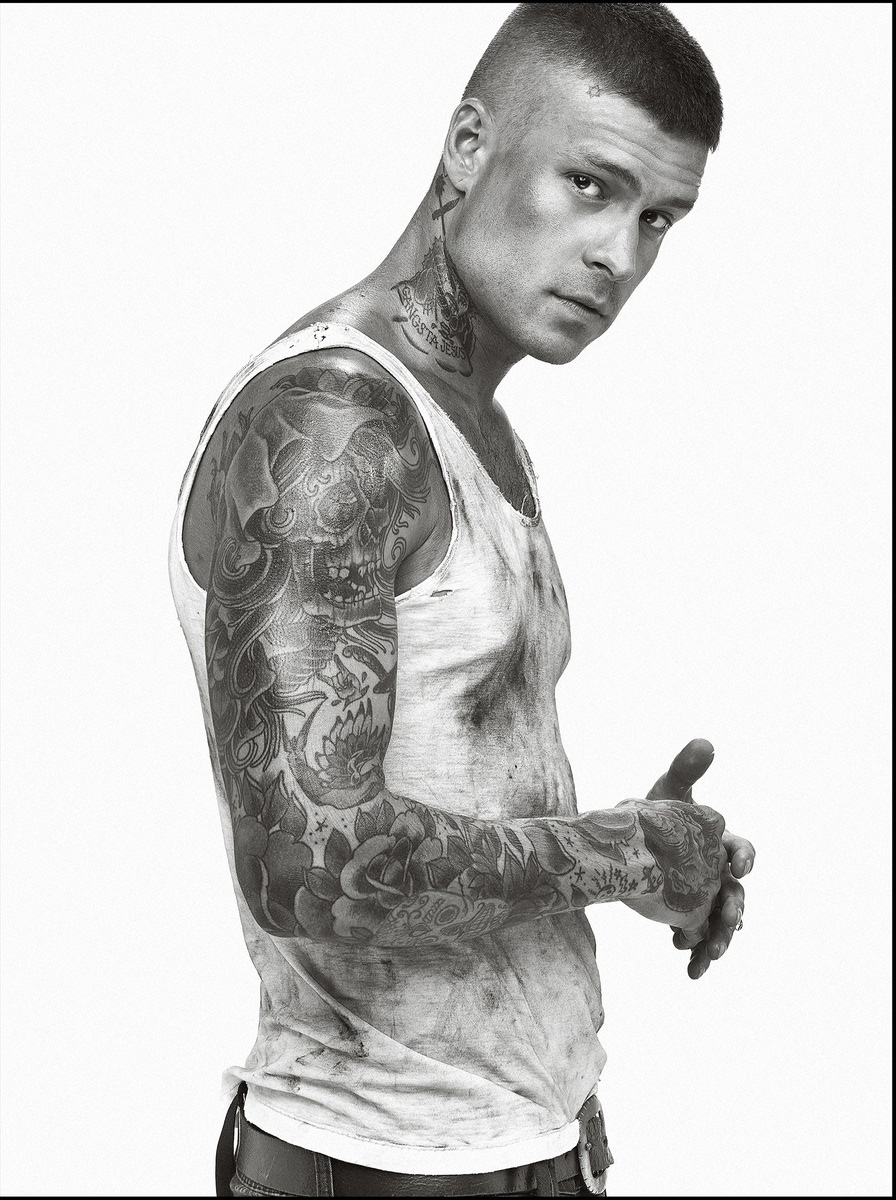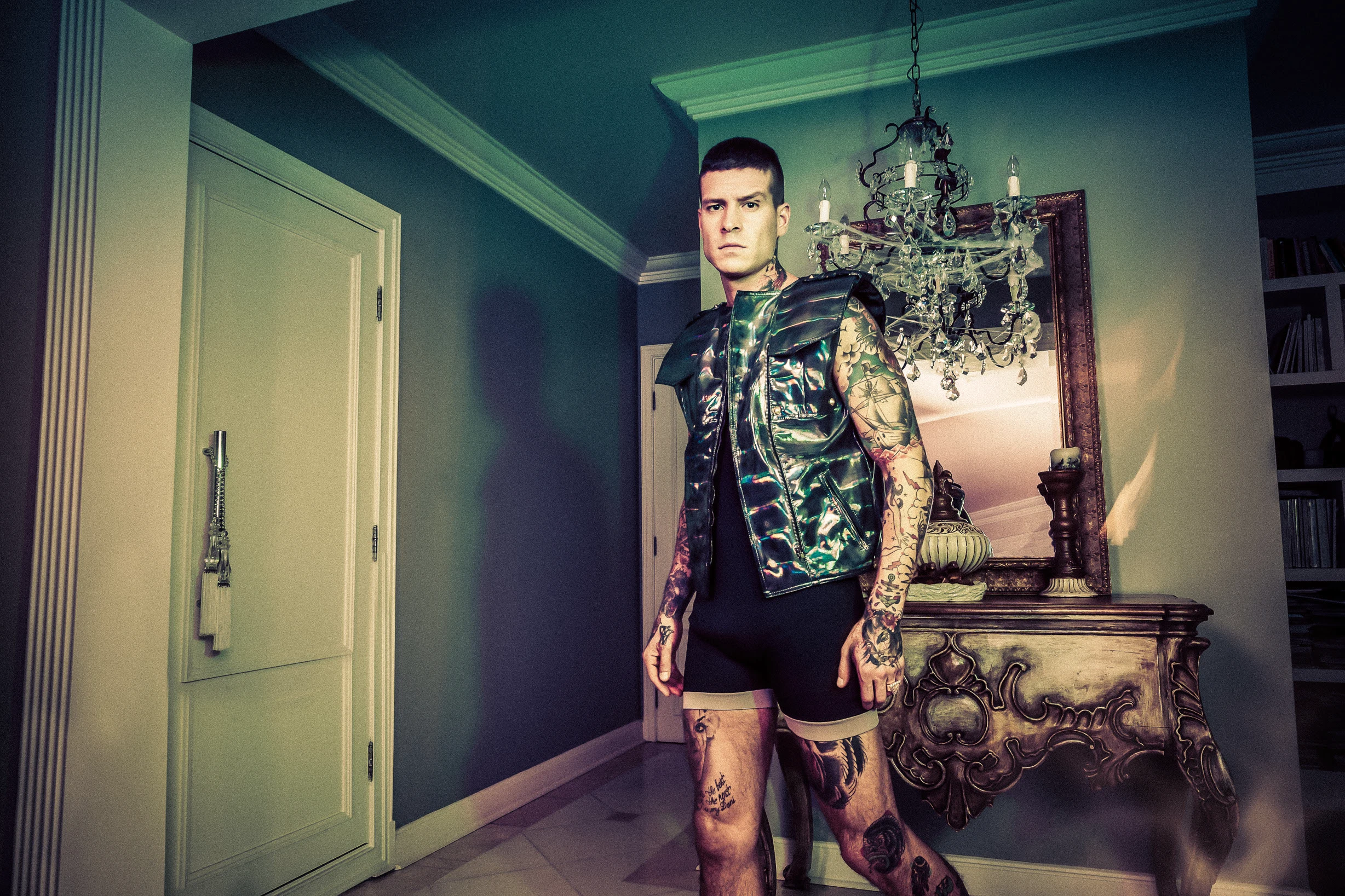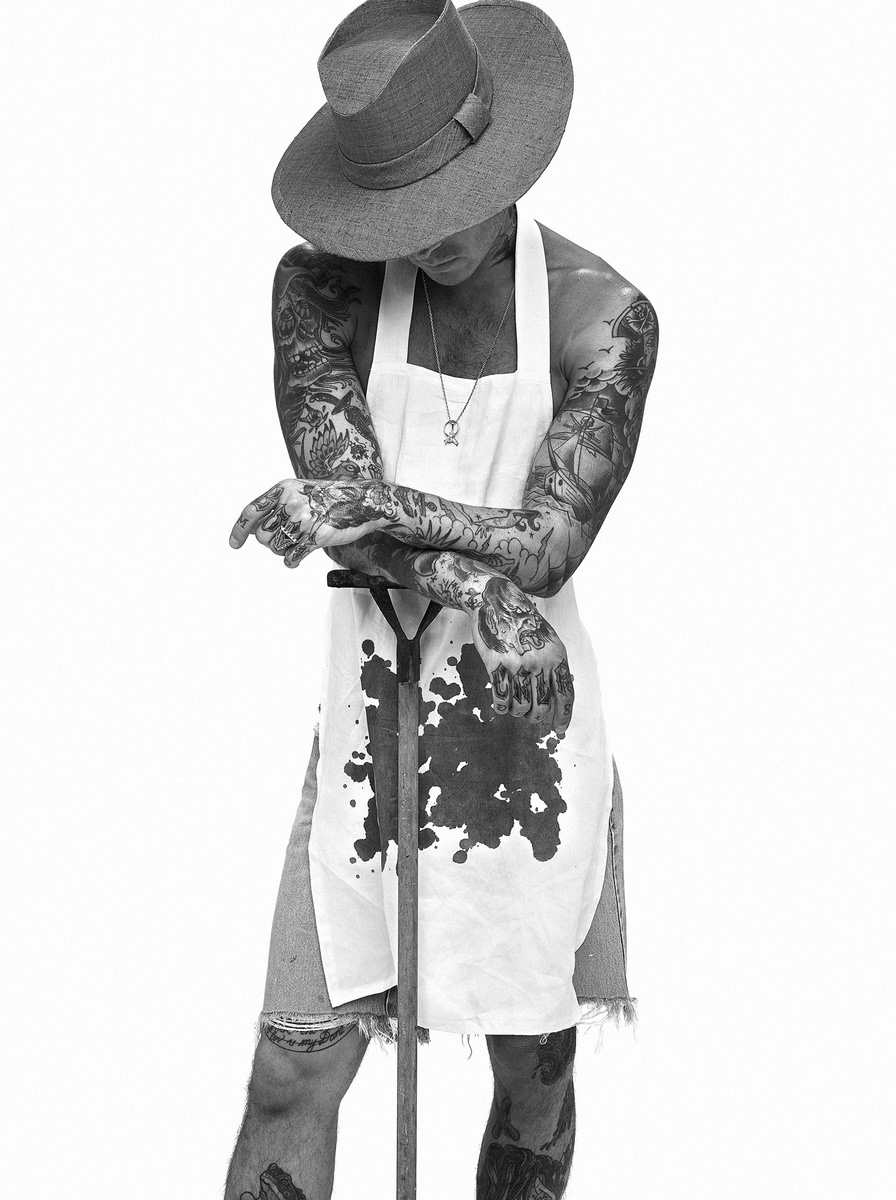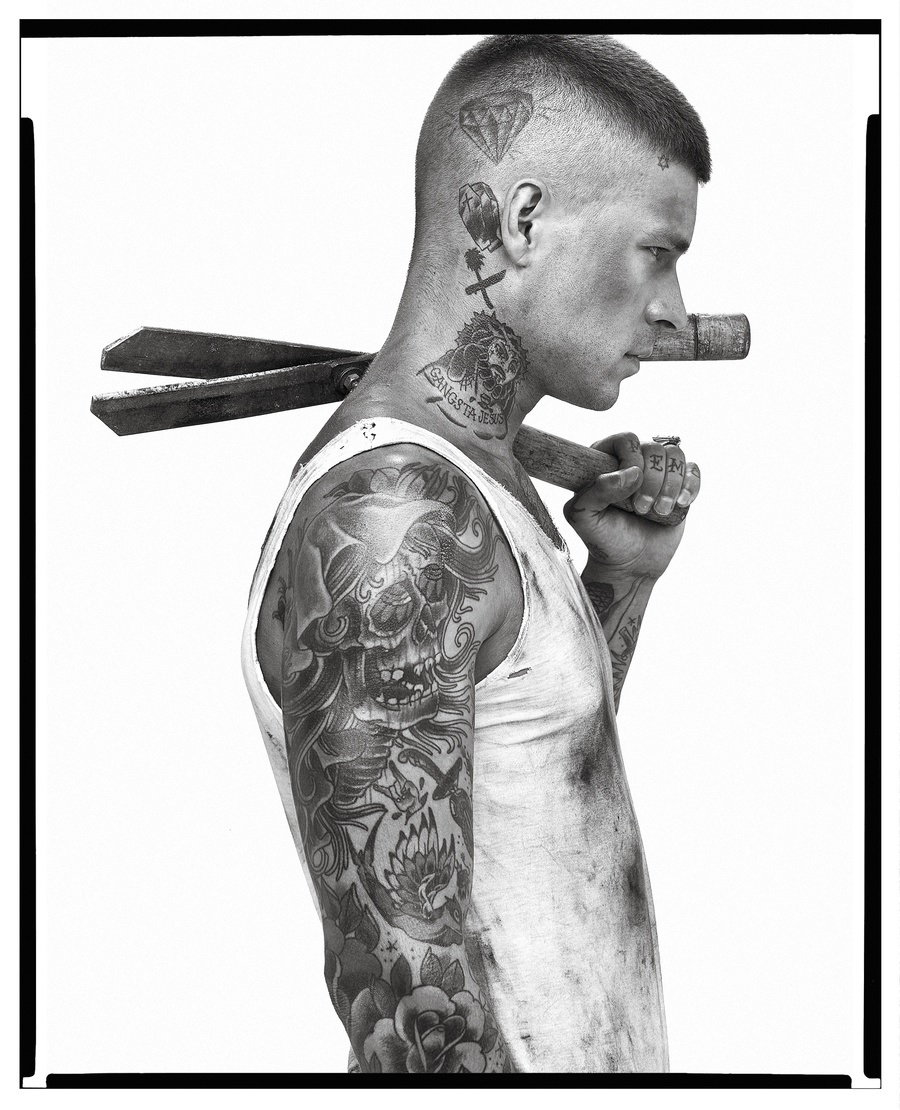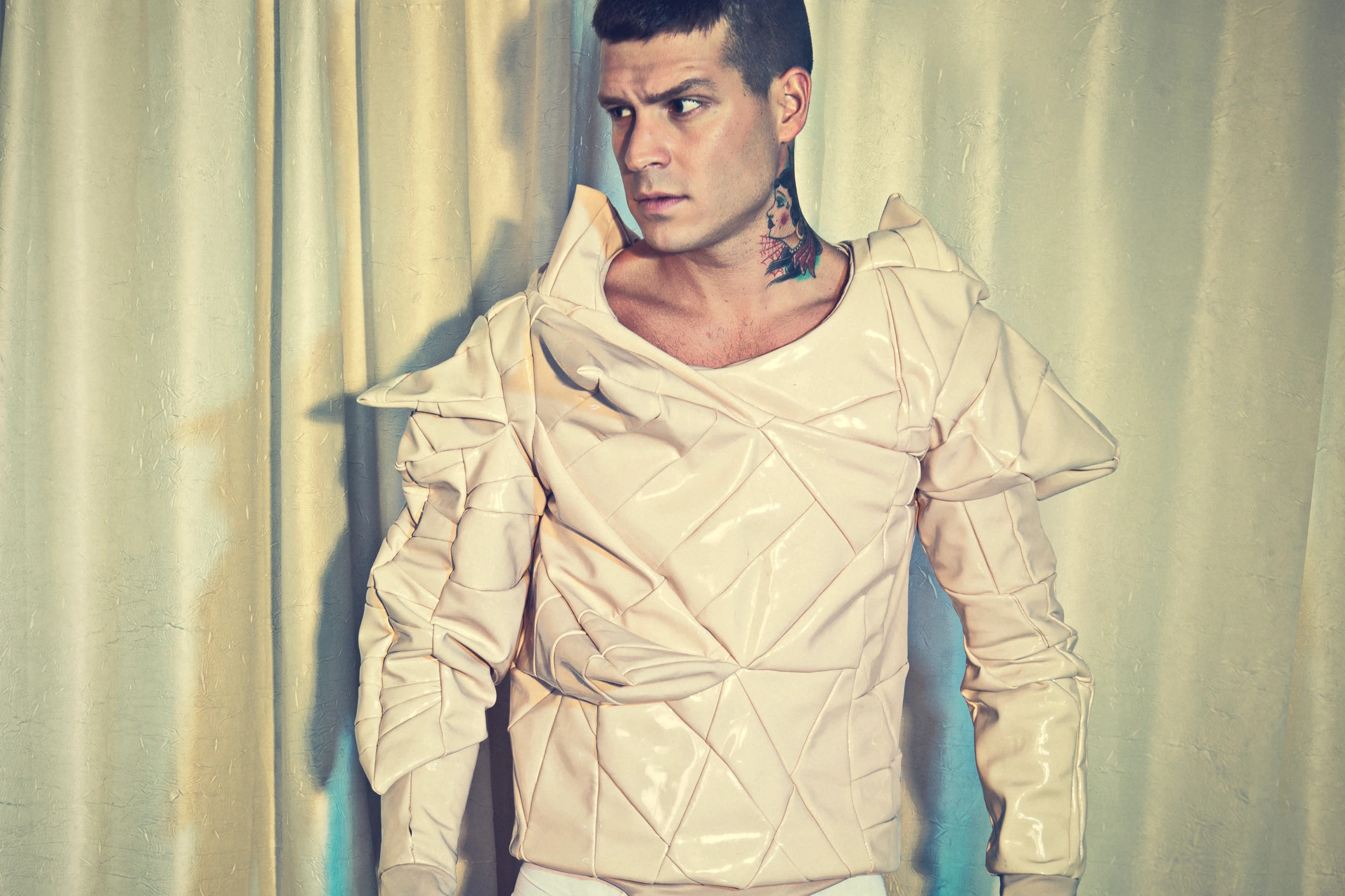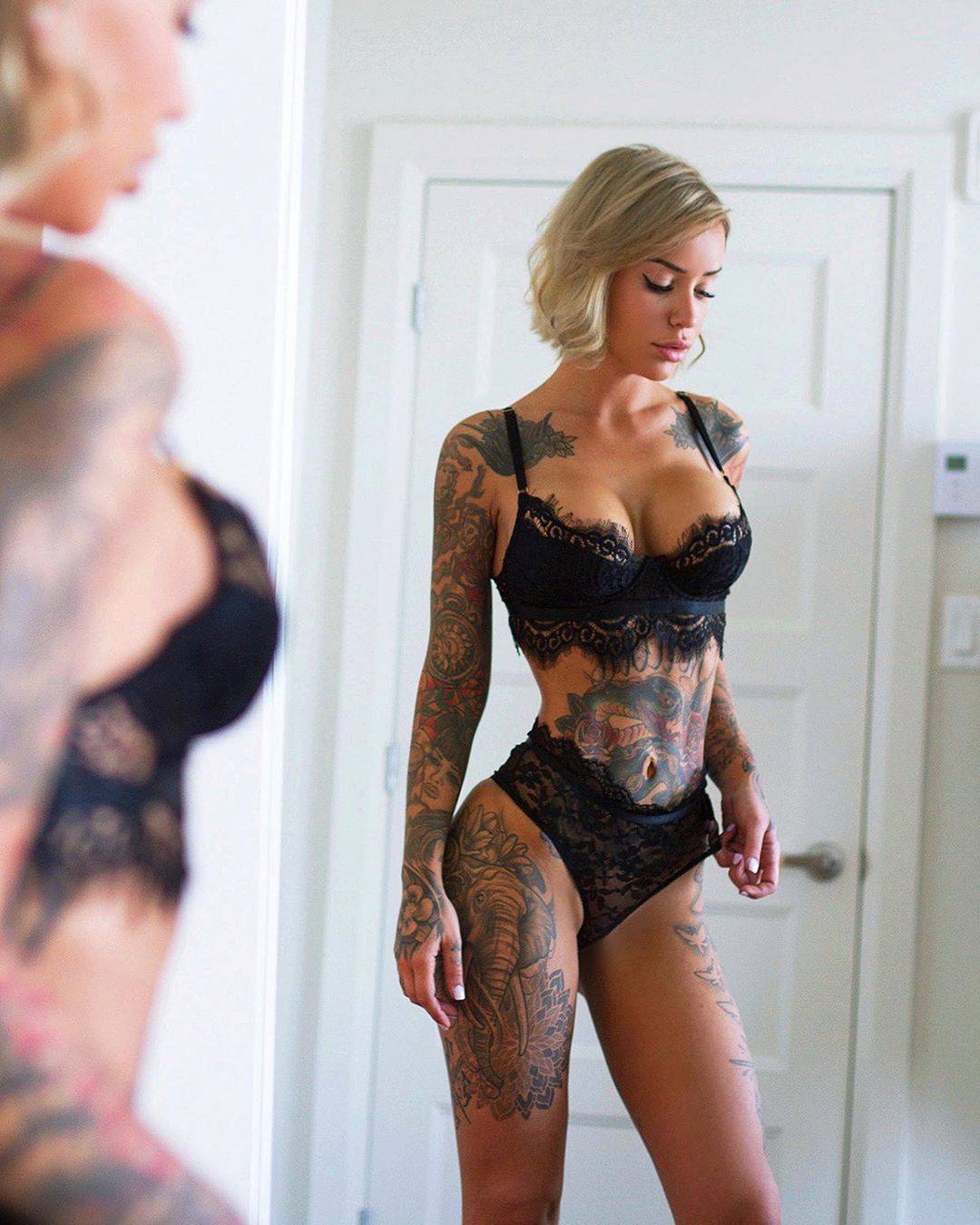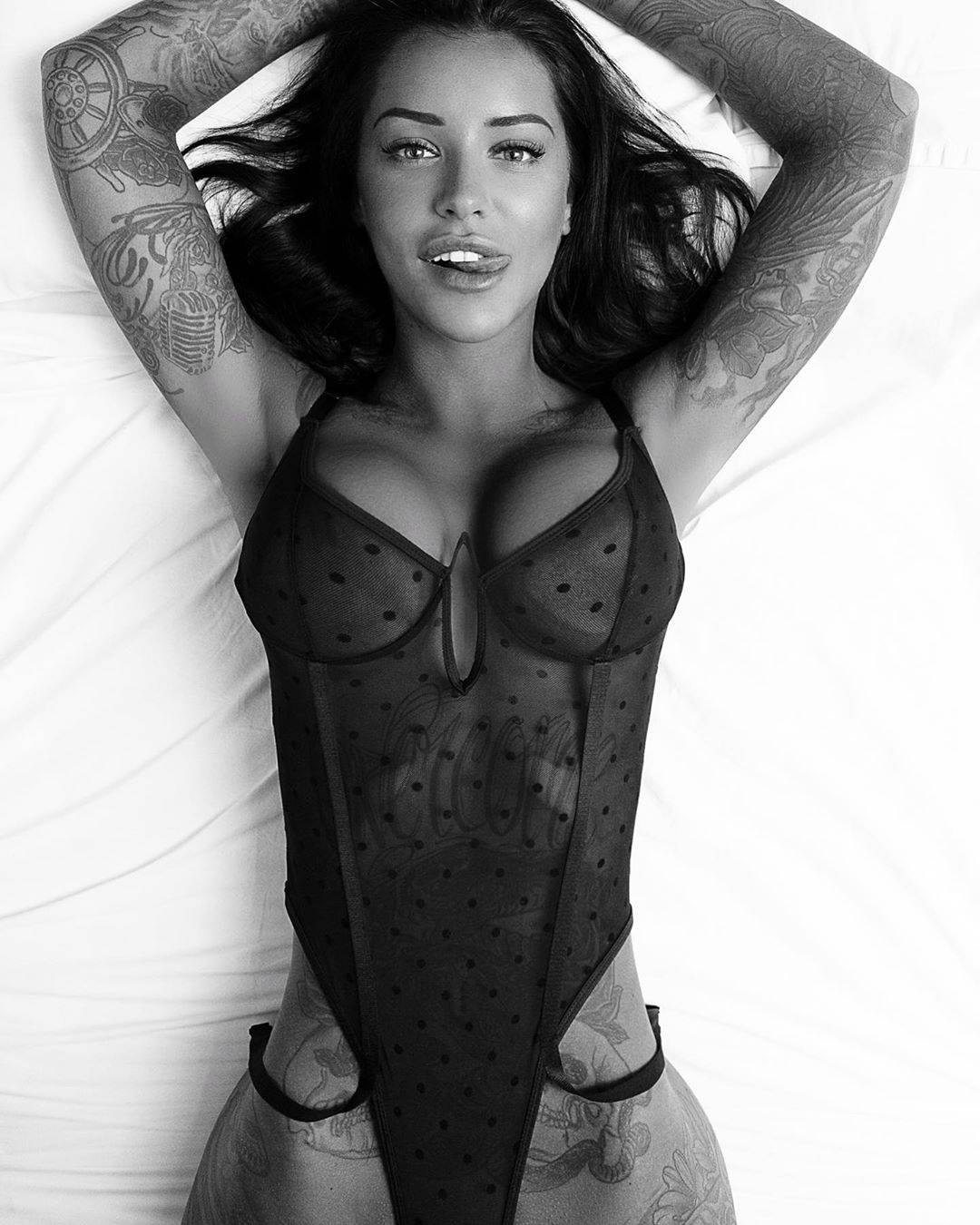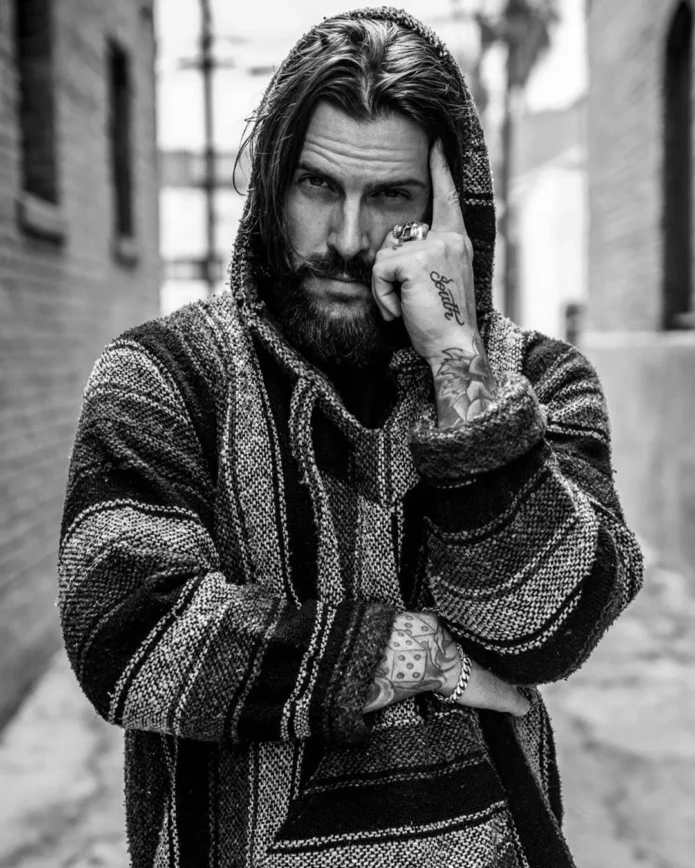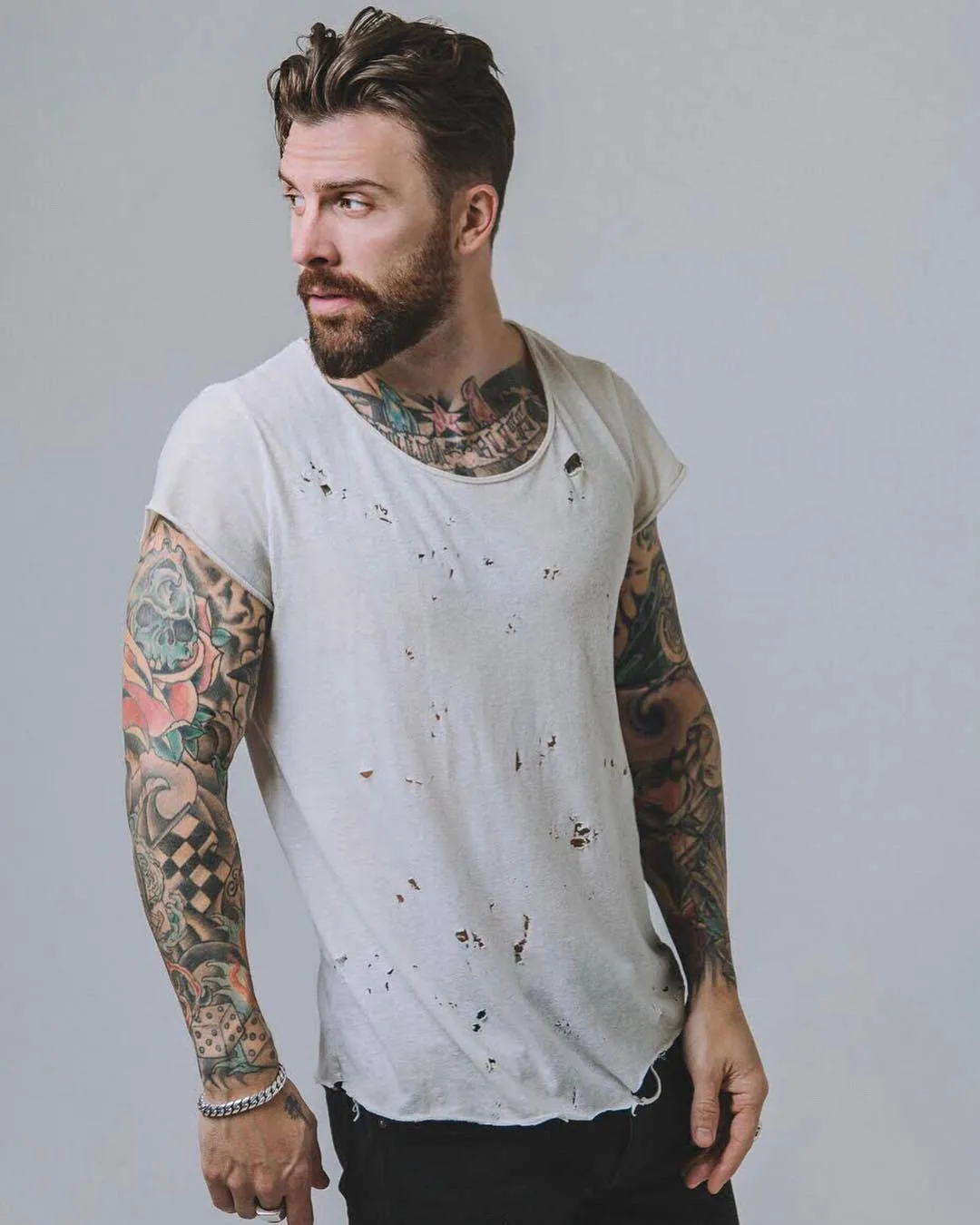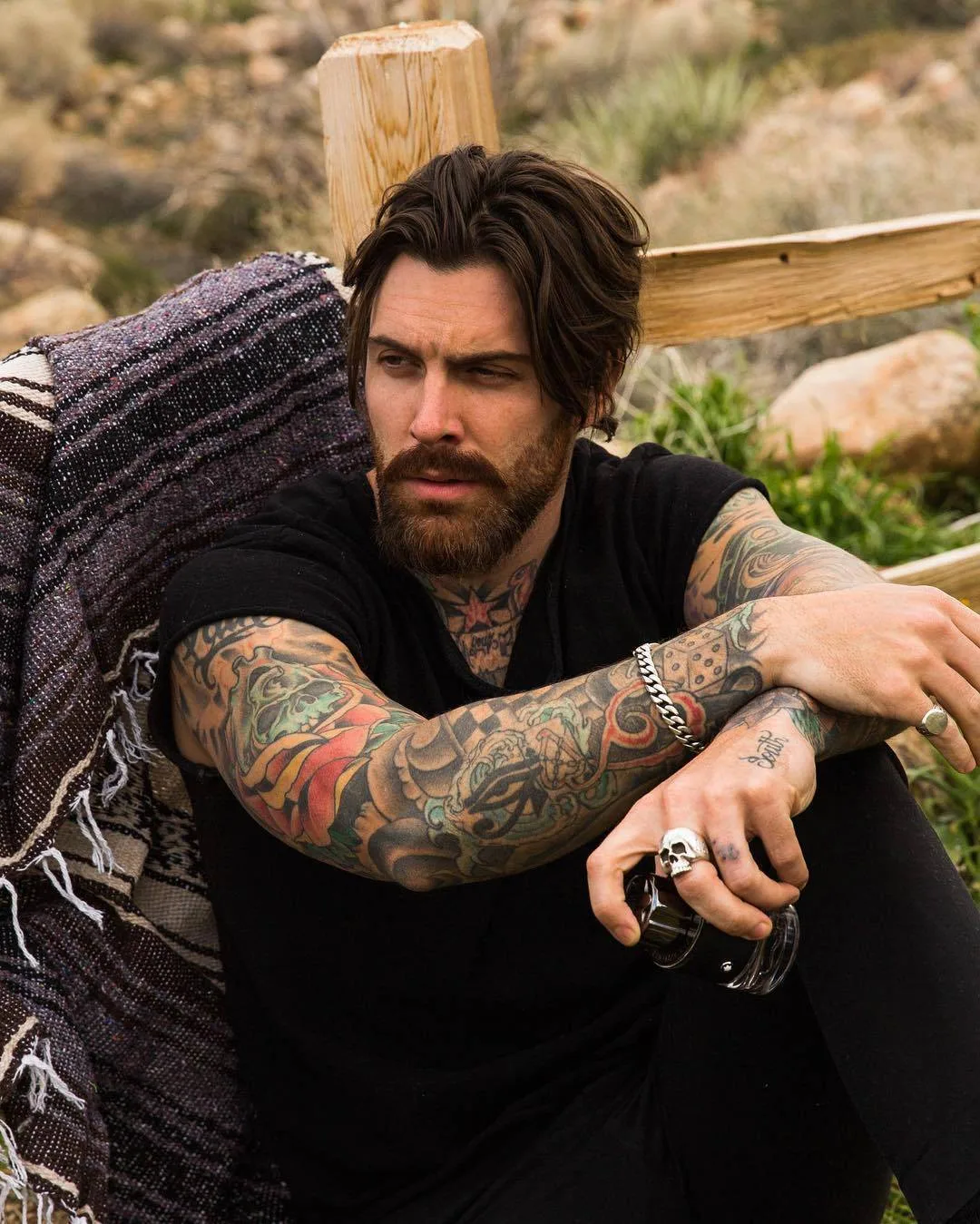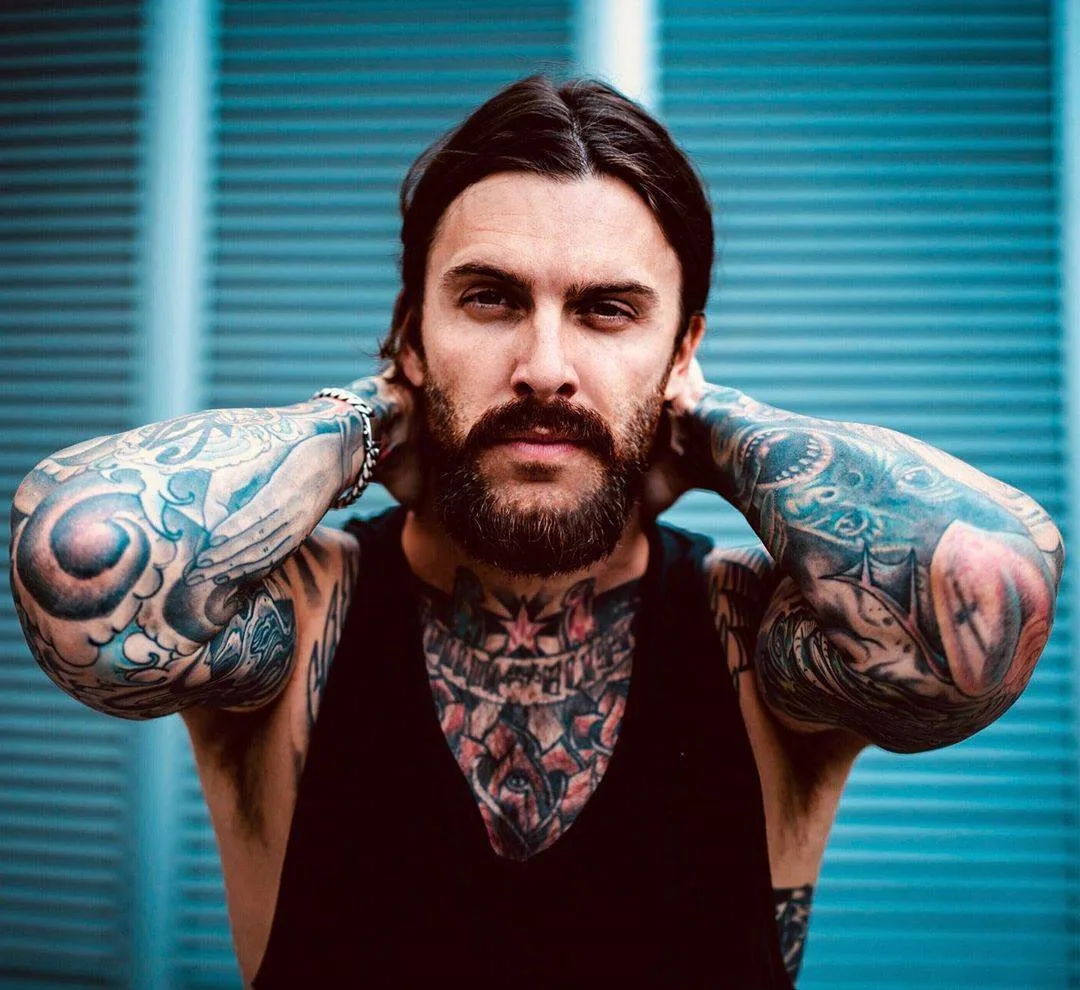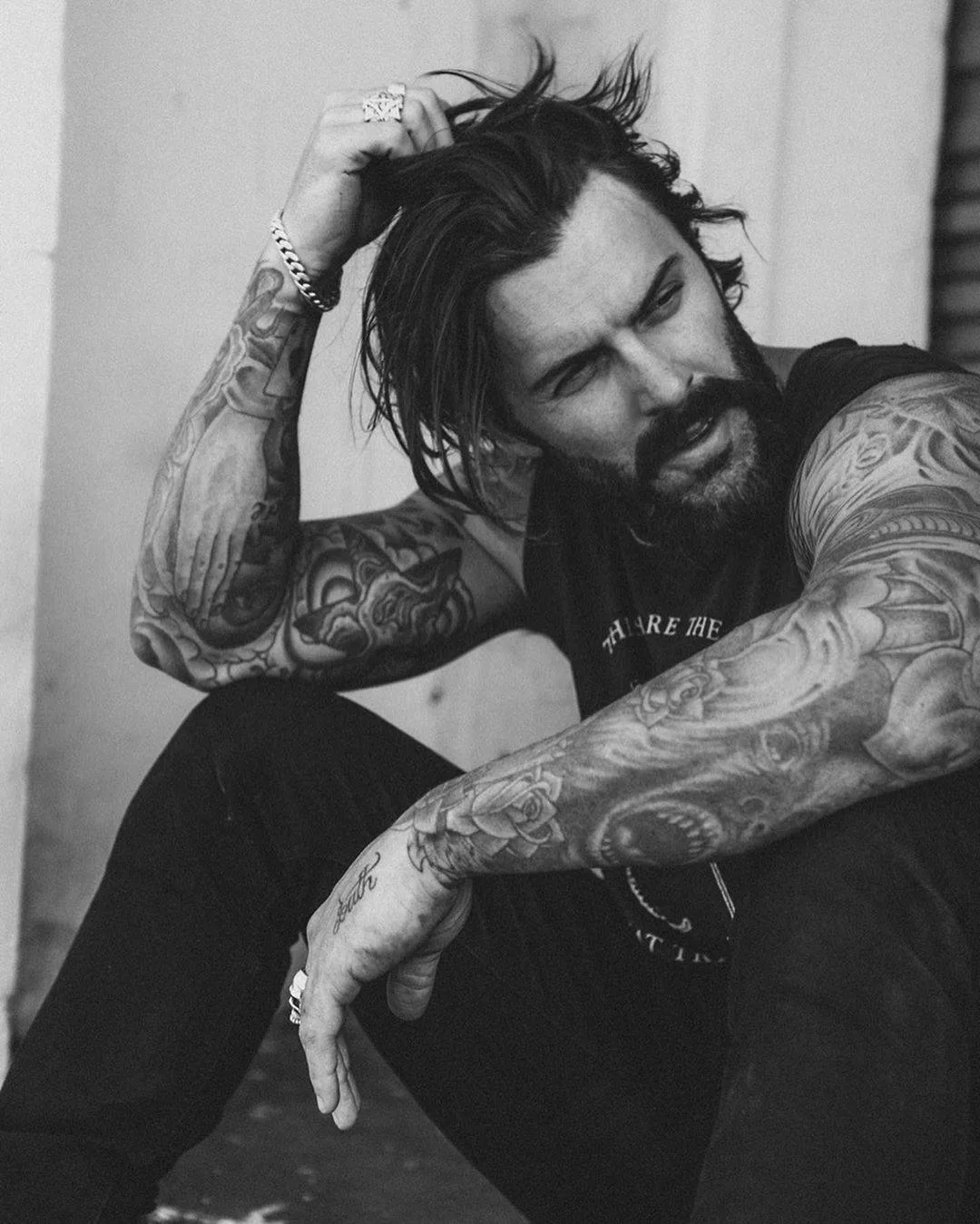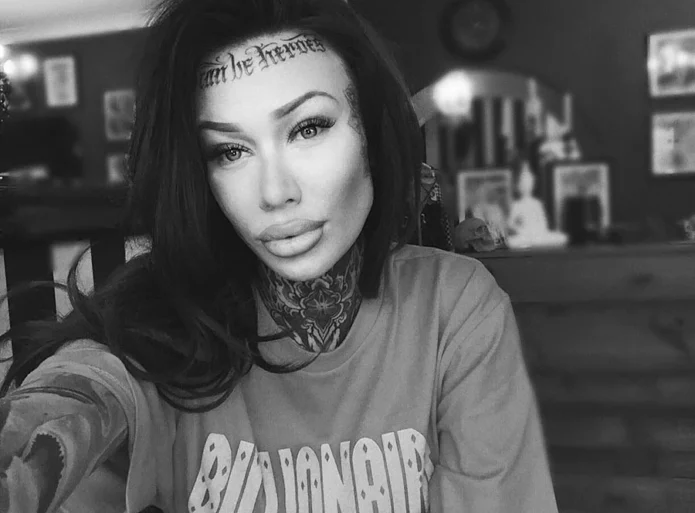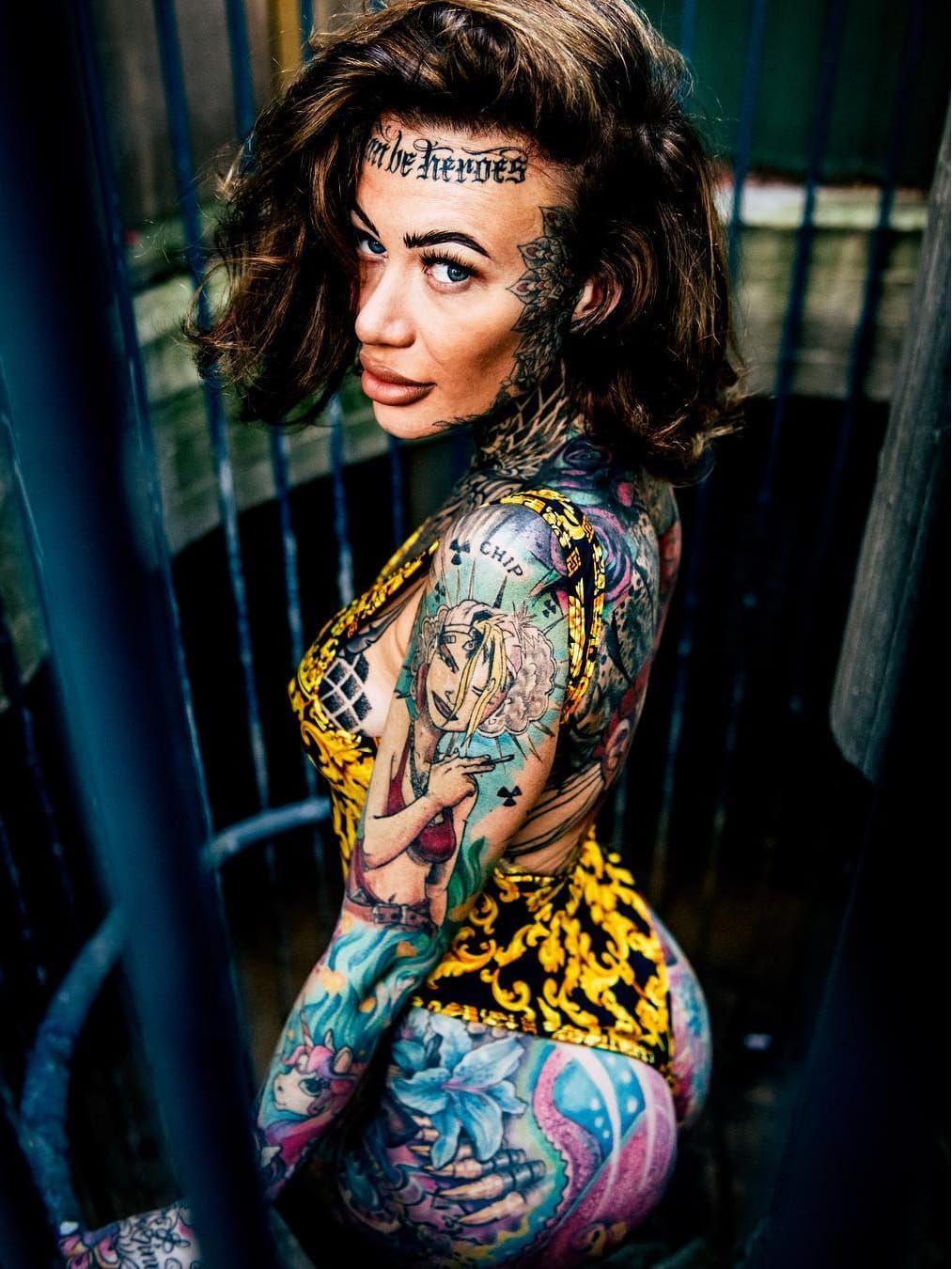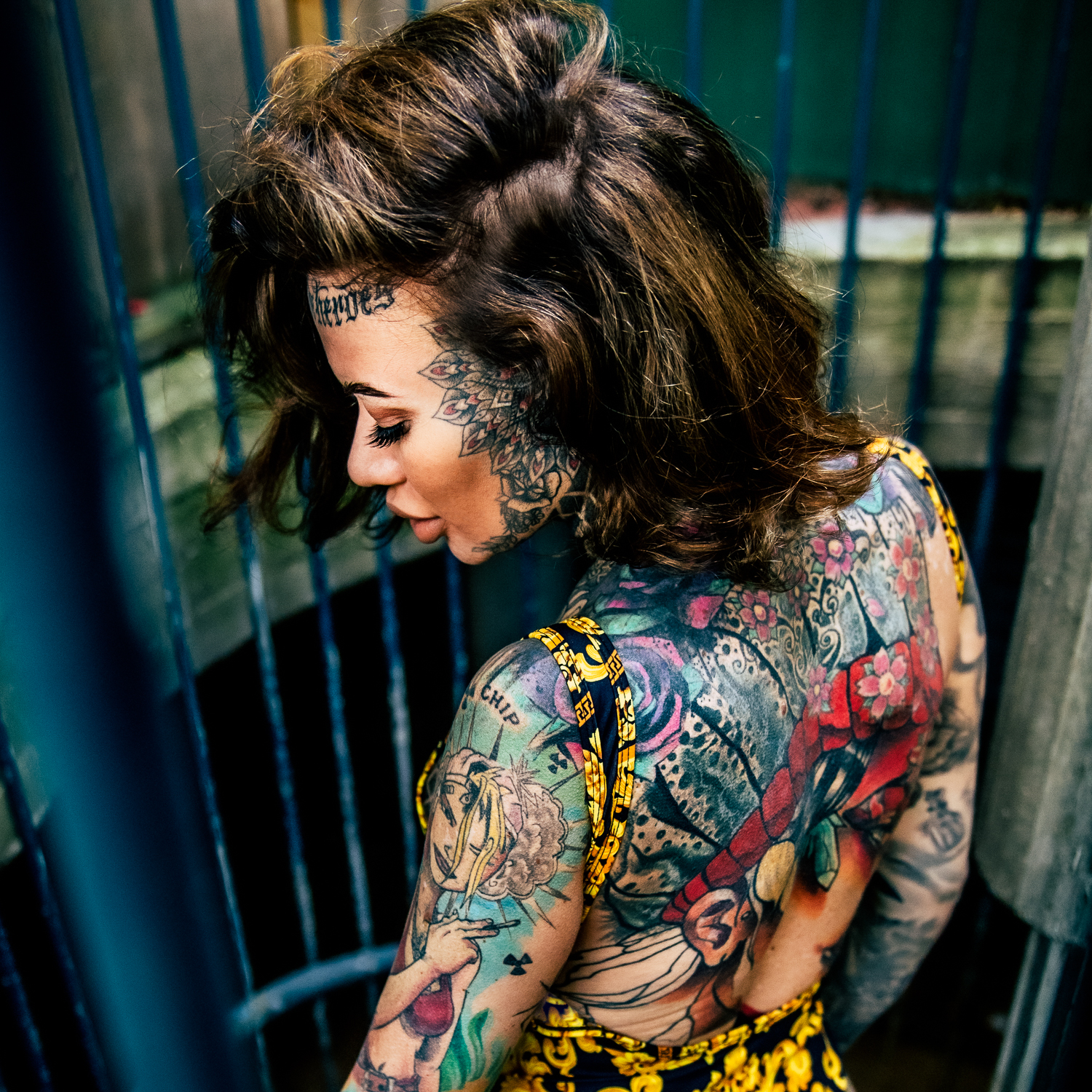
Hannah Snowdon’s tattoos move between blackwork sleeves, small hand marks, dark chest designs and a larger back piece. The collection uses both dense black areas and open skin, with each design fitted to the part of the body it covers.
Snowdon is a tattoo artist, and she has spoken about her own work, including a cover-up on her back. The photos show different parts of the collection rather than one finished, matching suit.
Hannah Snowdon’s blackwork sleeve shows how her collection starts in the arm
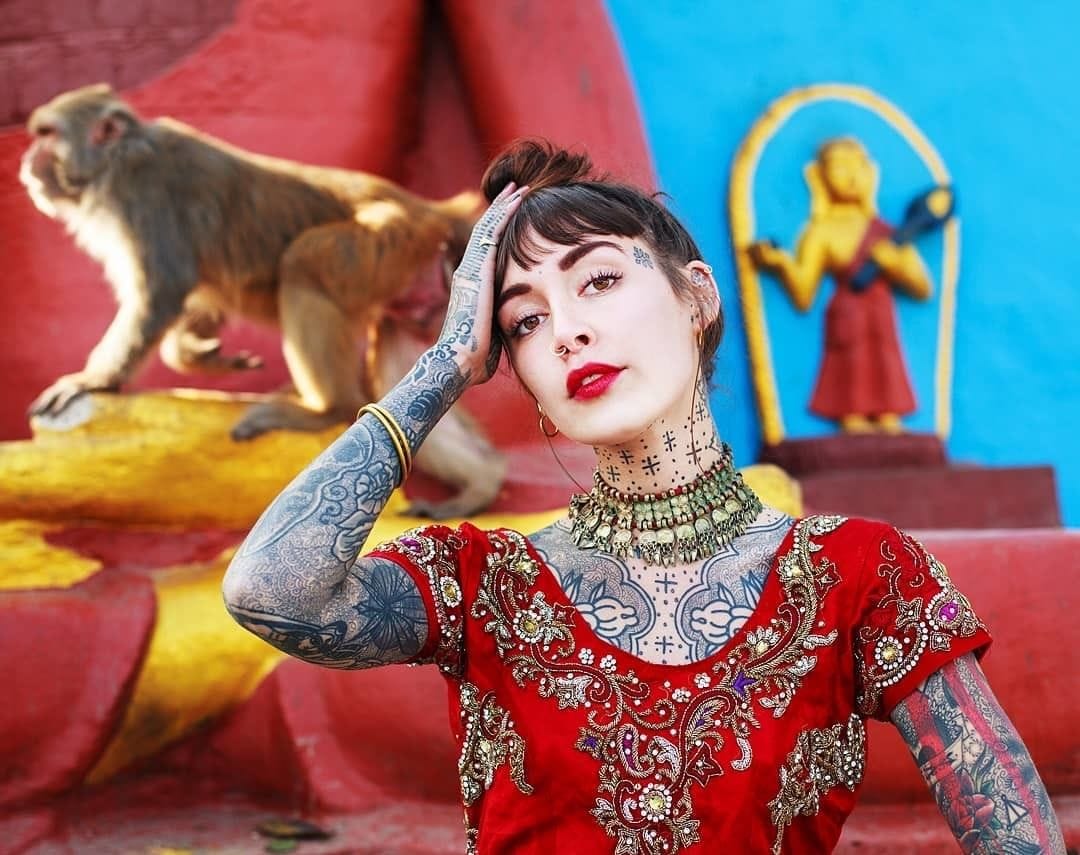
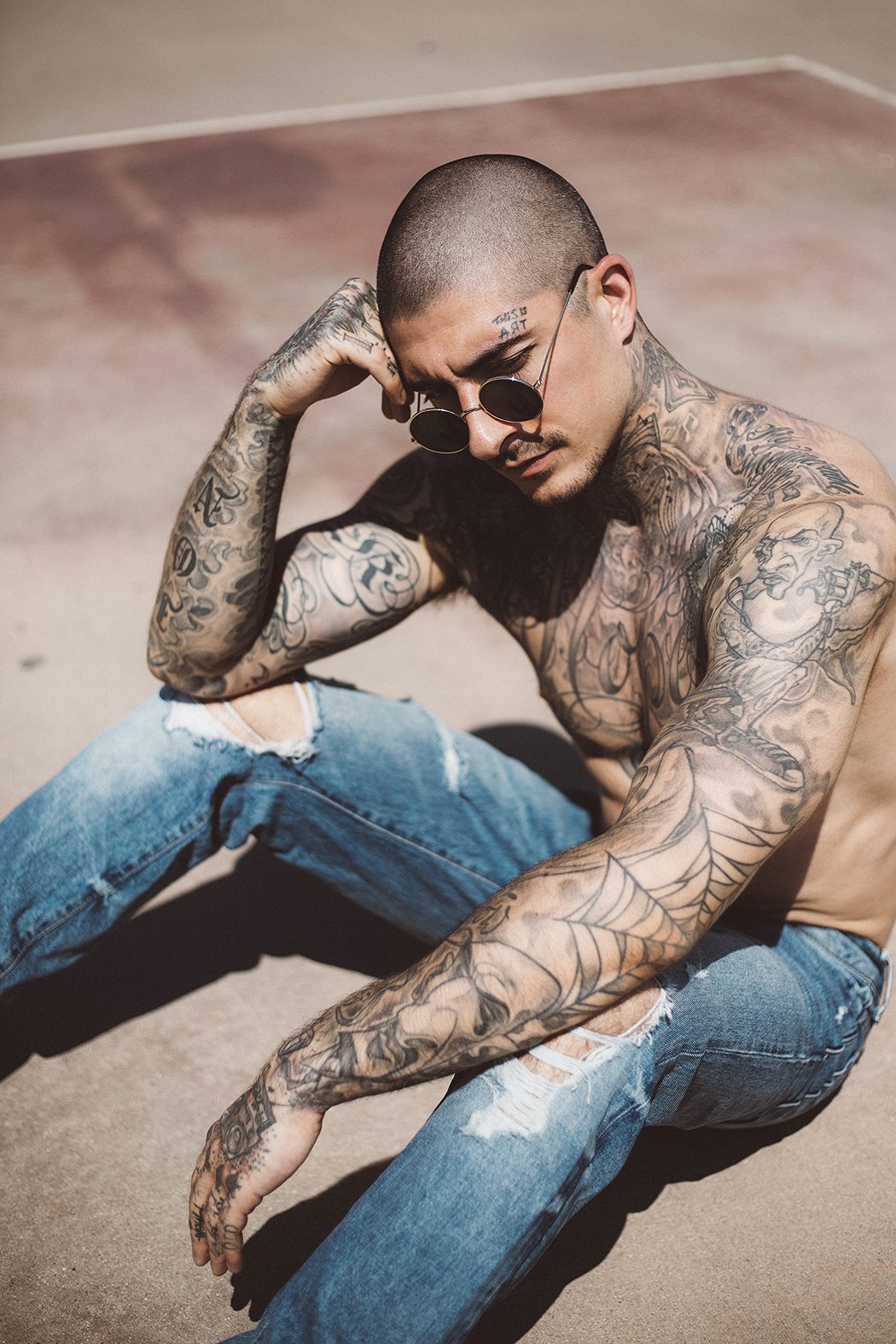
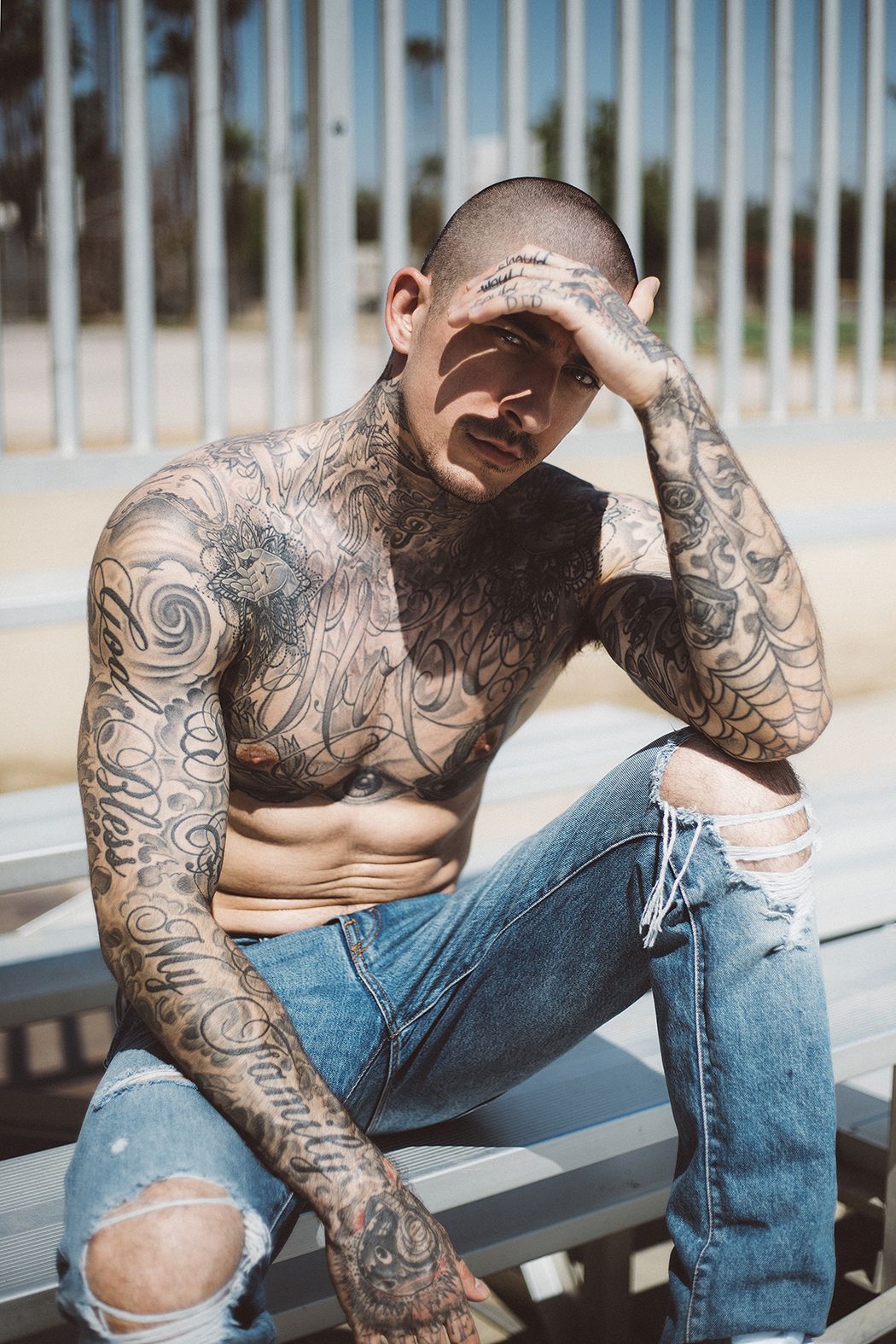
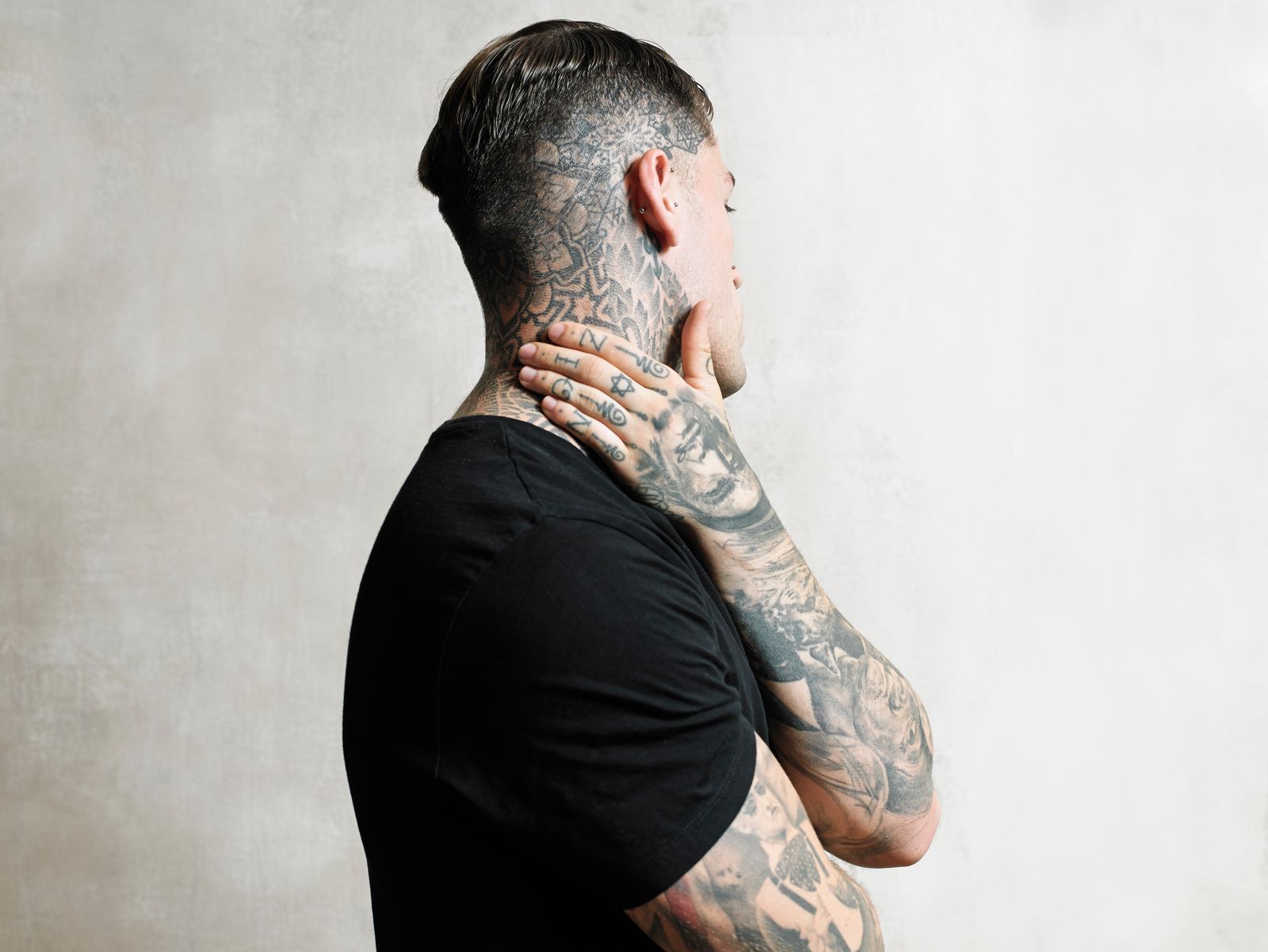
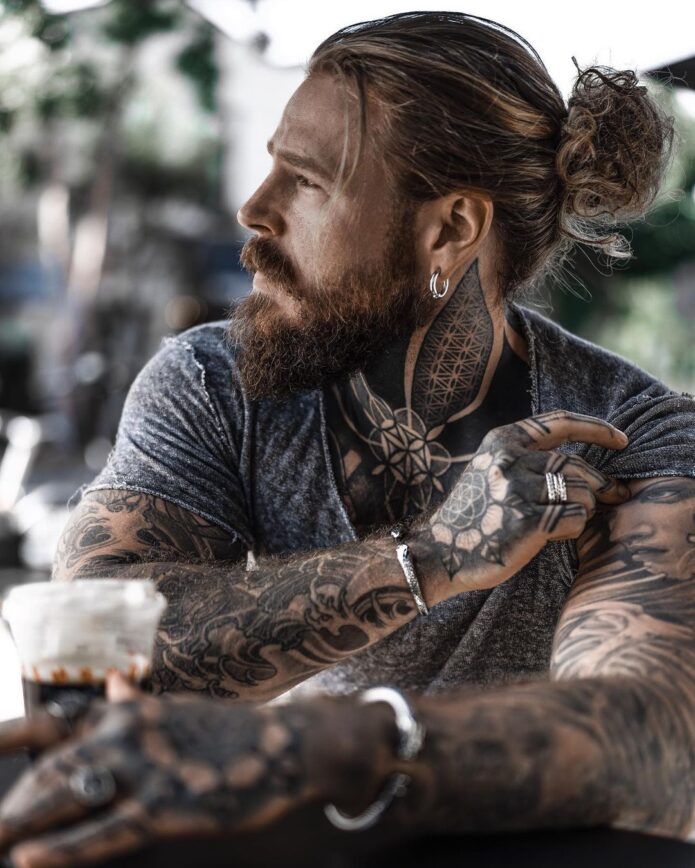
Snowdon’s arm mixes dense blackwork with smaller lines, dots and open spaces. That contrast lets separate tattoos remain visible as the sleeve grows. The pieces are easier to read from a distance; close photos show the changes in texture.
The designs don’t form one continuous picture. They share dark ink and a similar graphic weight, while gaps keep the arm from turning into a single block. The placement matters too: a shape on the outside of the arm reads differently when the arm bends or turns.
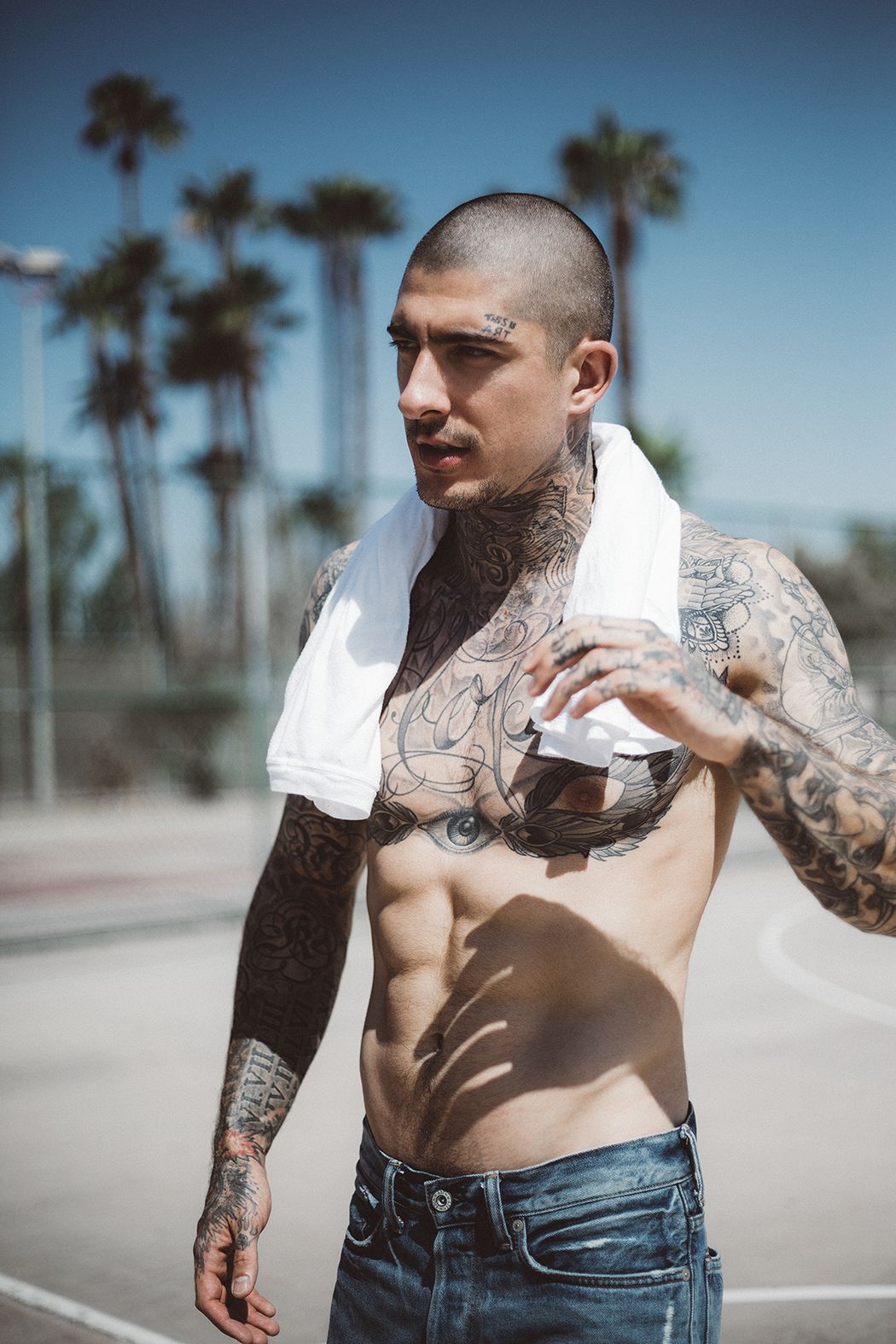
The chest and neck tattoos build a dark geometric centre

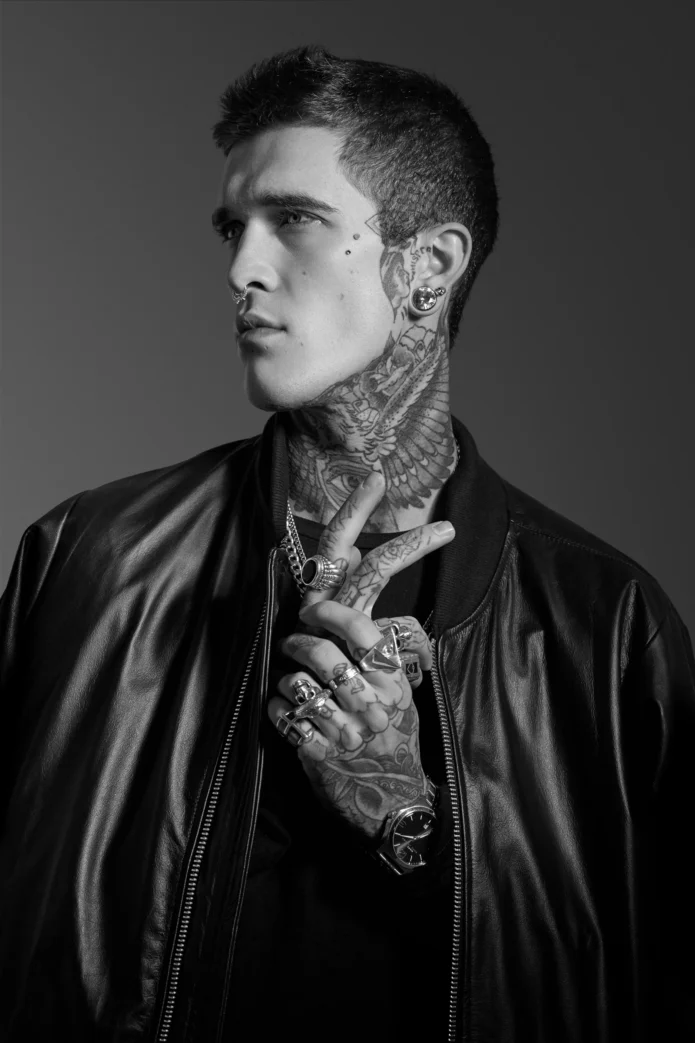
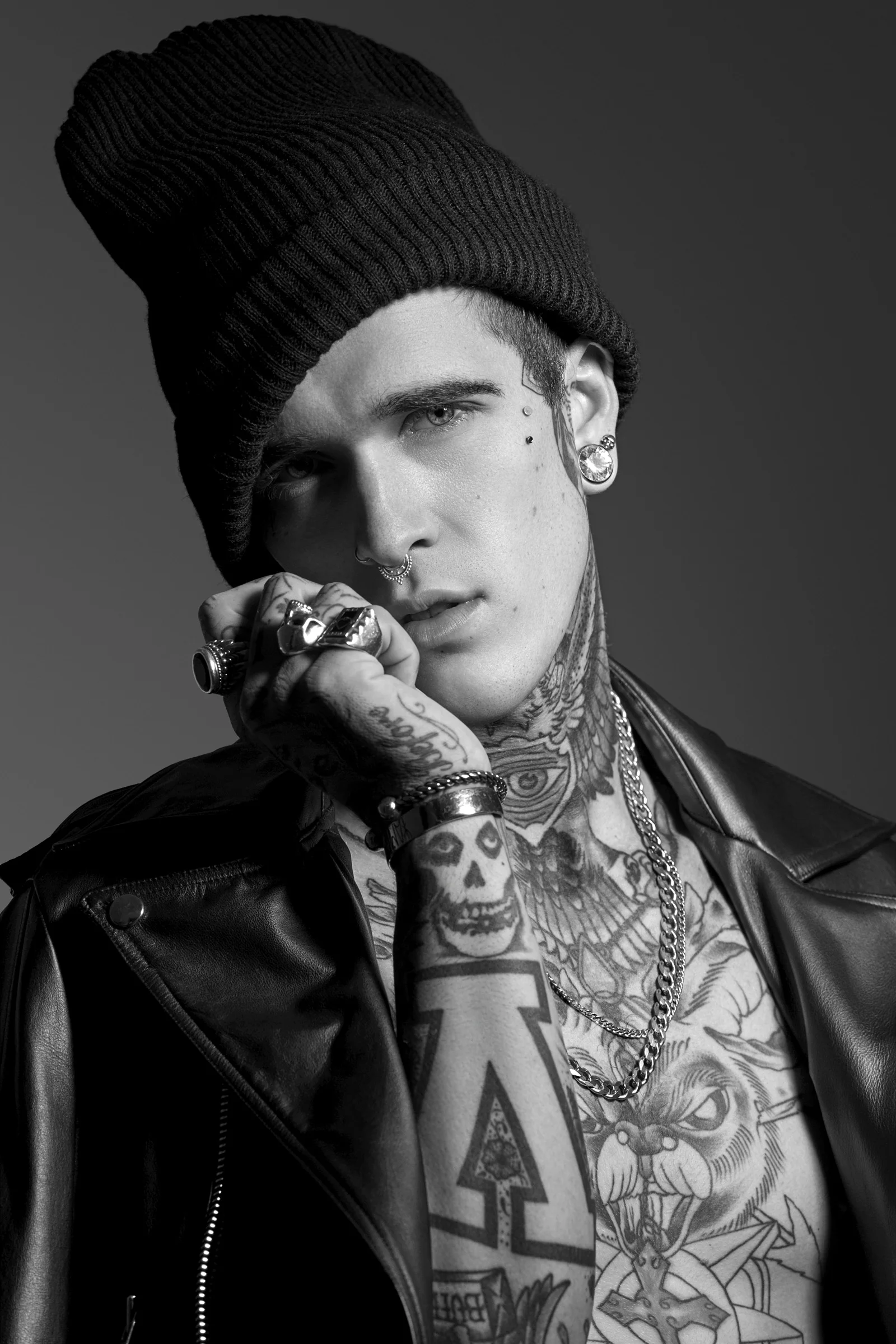
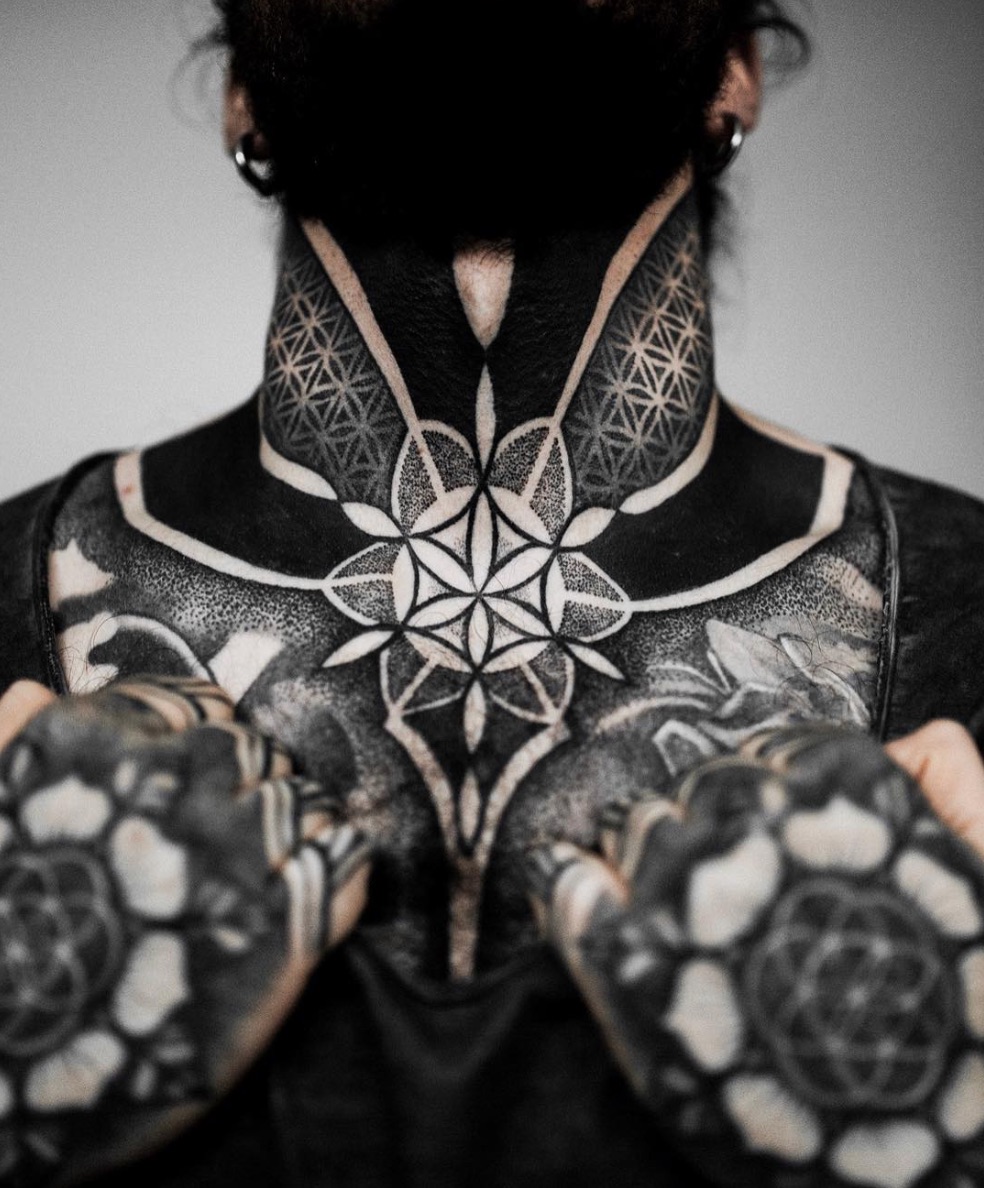
The neck and chest sit close to the face, so their outlines draw attention. Snowdon’s designs follow the collarbone, sternum and neck instead of sitting apart from the body’s shape. Dark areas are balanced by open skin around the collarbone and shoulder.
Neck tattoos are difficult to hide and show up in most close portraits. The chest allows a broader composition, from the centre of the body toward the shoulders. Taken together, the two placements give the designs a more connected look than either area would have alone.
Hannah Snowdon’s hands and fingers carry tiny high-contrast details

Small marks on Snowdon’s hands and fingers appear as she reaches or gestures. They make a different impression from the larger arm designs because the hand is moving in most photos.
Hand skin is washed, rubbed and flexed often, so fine lines can soften sooner than ink in protected areas. Snowdon’s high-contrast details rely on clear shapes and space around them; they don’t try to reproduce the sleeve at a smaller scale.
Her back piece covers the old horseshoe with a larger design

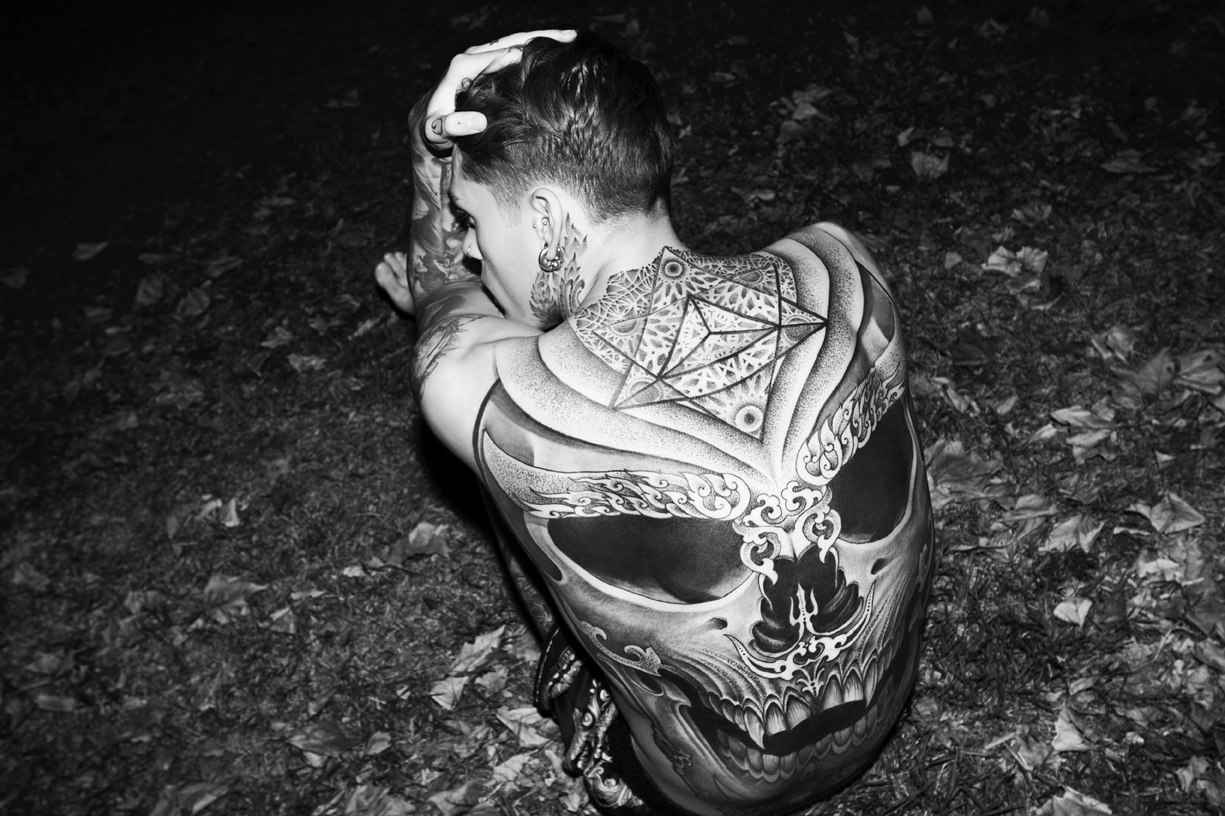
Snowdon has said she covered an early horseshoe-and-roses tattoo with a larger piece on her back. The new work turns a small older design into part of a broader composition, planned around the ink underneath.
A back piece has room for larger shapes and darker areas than a wrist or forearm. In a cover-up, the artist has to account for the darkest parts of the old tattoo; those areas can become shadow or part of the new subject. The placement also lets the design stay covered by everyday clothes when Snowdon wants it to.
Black ink, dotwork and sacred geometry tie the collection together
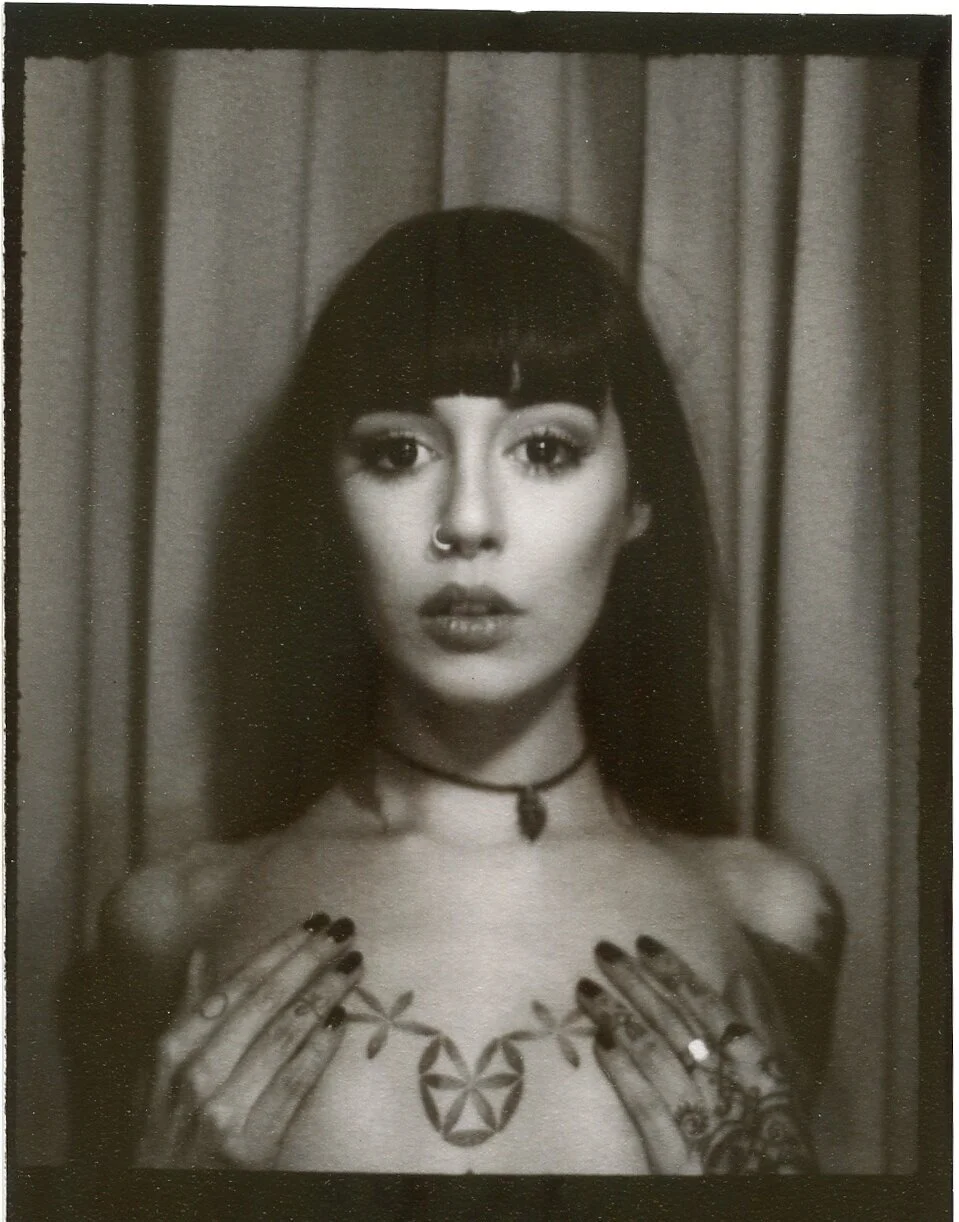
Black ink gives much of Snowdon’s work its contrast, while dotwork and finer lines change the texture inside the darker forms. Those shifts let the eye move between a solid patch, a detailed area and bare skin instead of seeing one flat mass.
Geometric and architectural shapes add repetition and balance. They can look sharp or softened with shading, depending on their placement. Across the collection, the line quality and contrast link the pieces without making every tattoo follow the same subject.
Snowdon’s arm, chest, hand and back designs each use the space differently. The collection has a visual thread, but individual pieces keep their own shape and scale. That is what makes the work feel like a group of tattoos rather than one repeated pattern.