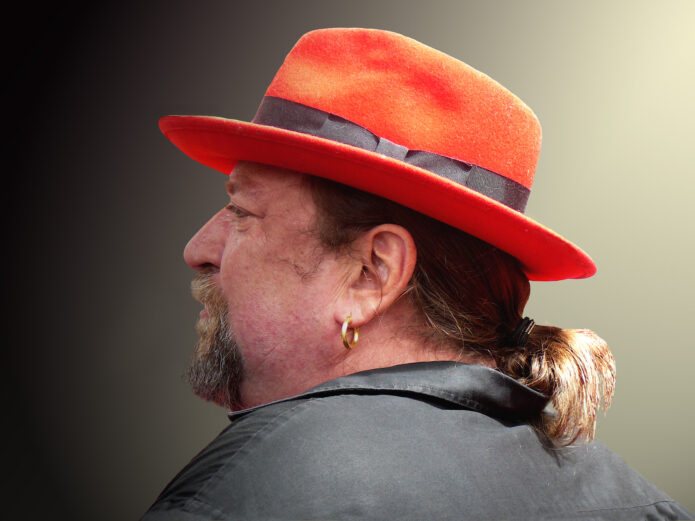
Henk Schiffmacher, known as Hanky Panky, built a career as a tattooer, collector, historian and storyteller. His tattoos cover both arms, his hands and parts of his chest, with old-school imagery, lettering, stars, portraits and black-and-grey work. Photographs taken over decades show an extensive collection, though not a complete catalogue. Schiffmacher has not published a private translation for every mark; the record is visual, shaped by the life of an artist who helped popularize tattooing.
The tattoo collection is a working archive, not a single reveal
Schiffmacher’s tattoos accumulated over decades, from small marks on his fingers to broad coverage across his upper arms and forearms. Age, stage lighting and distance can soften the ink; closer images make faces, outlines and lettering easier to see.
No single portrait shows the whole collection. A seated frame may show the arms while a shirt covers the chest; close-ups of his hands reveal details that wider shots miss. The Associated Press describes him as a respected Dutch tattoo artist and connects his work to tattoo history. The Amsterdam Tattoo Museum points to his large personal collection, while Dutch interviews describe him as an artist and keeper of tattoo history. His nickname, the tattoo king, reflects that public role.
His TEDxAmsterdam talk below gives his own public account of tattoo culture and adds context to the photographs.
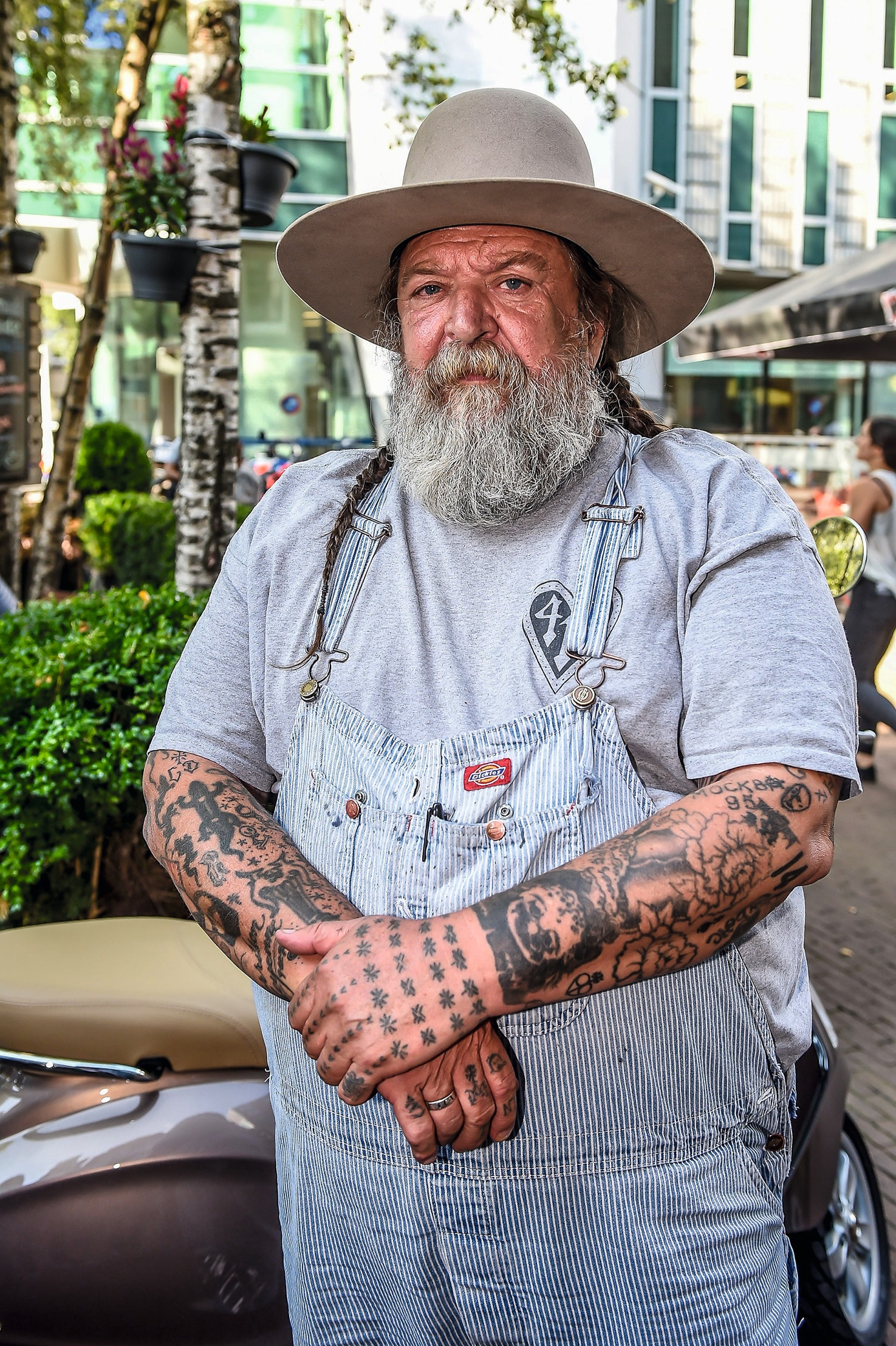
Henk Schiffmacher’s hands are among the clearest tattoo details
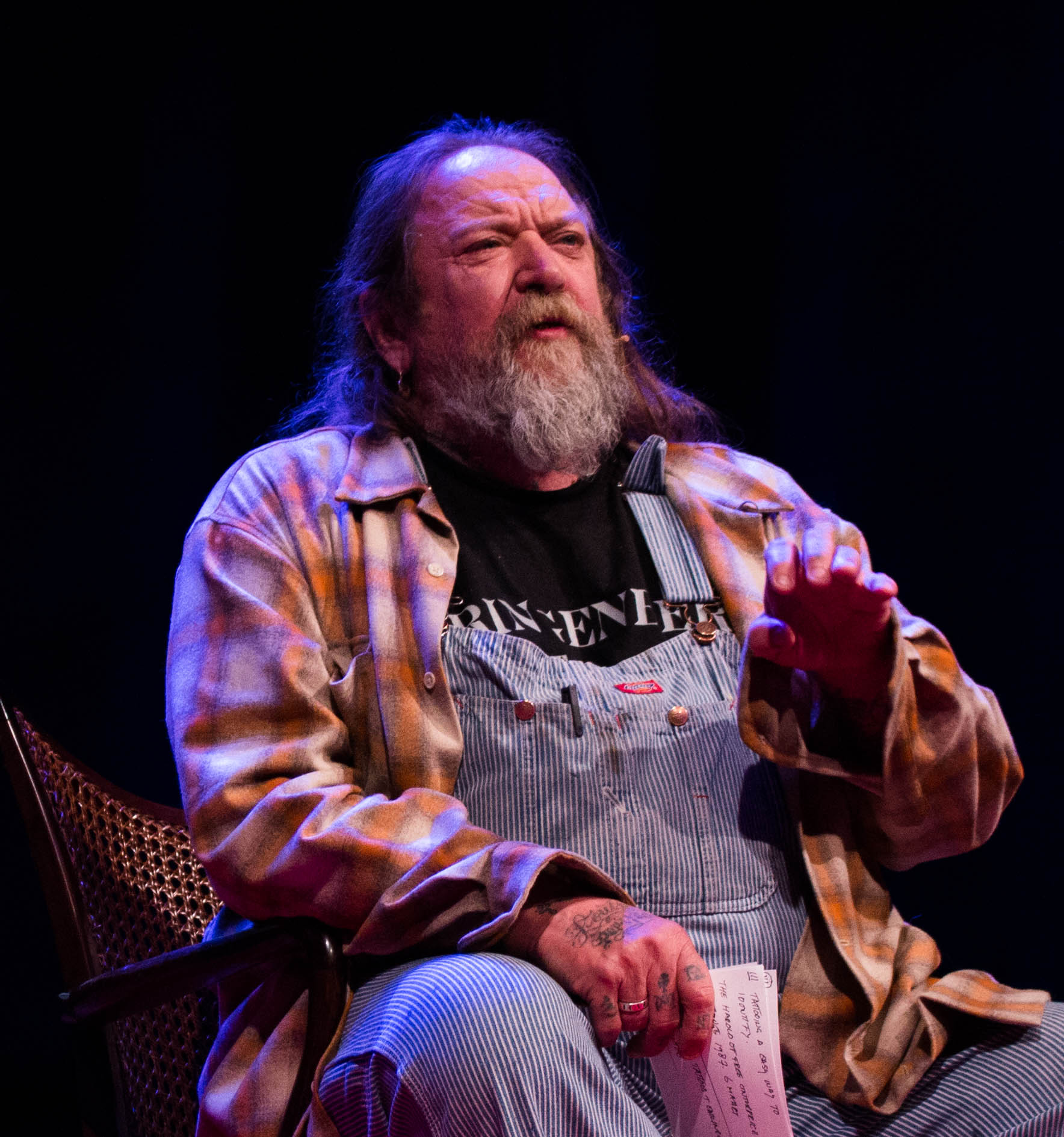
Close portraits show small stars, compact symbols, dark lettering and other marks across the fingers and backs of Schiffmacher’s hands. Their appearance shifts when he folds his hands, holds a microphone or rests his fingers against his beard.
The photographs show the ink during ordinary gestures, not just in a posed tattoo portrait. Finger tattoos have long been associated with subculture or trade; here, they are part of the hands viewers see when Schiffmacher talks about tattooing.
The available interviews do not assign a private meaning to every short word or tiny emblem. The photographs support a simpler description: small repeated motifs and lettering on the hands, with larger illustrative work on the arms.
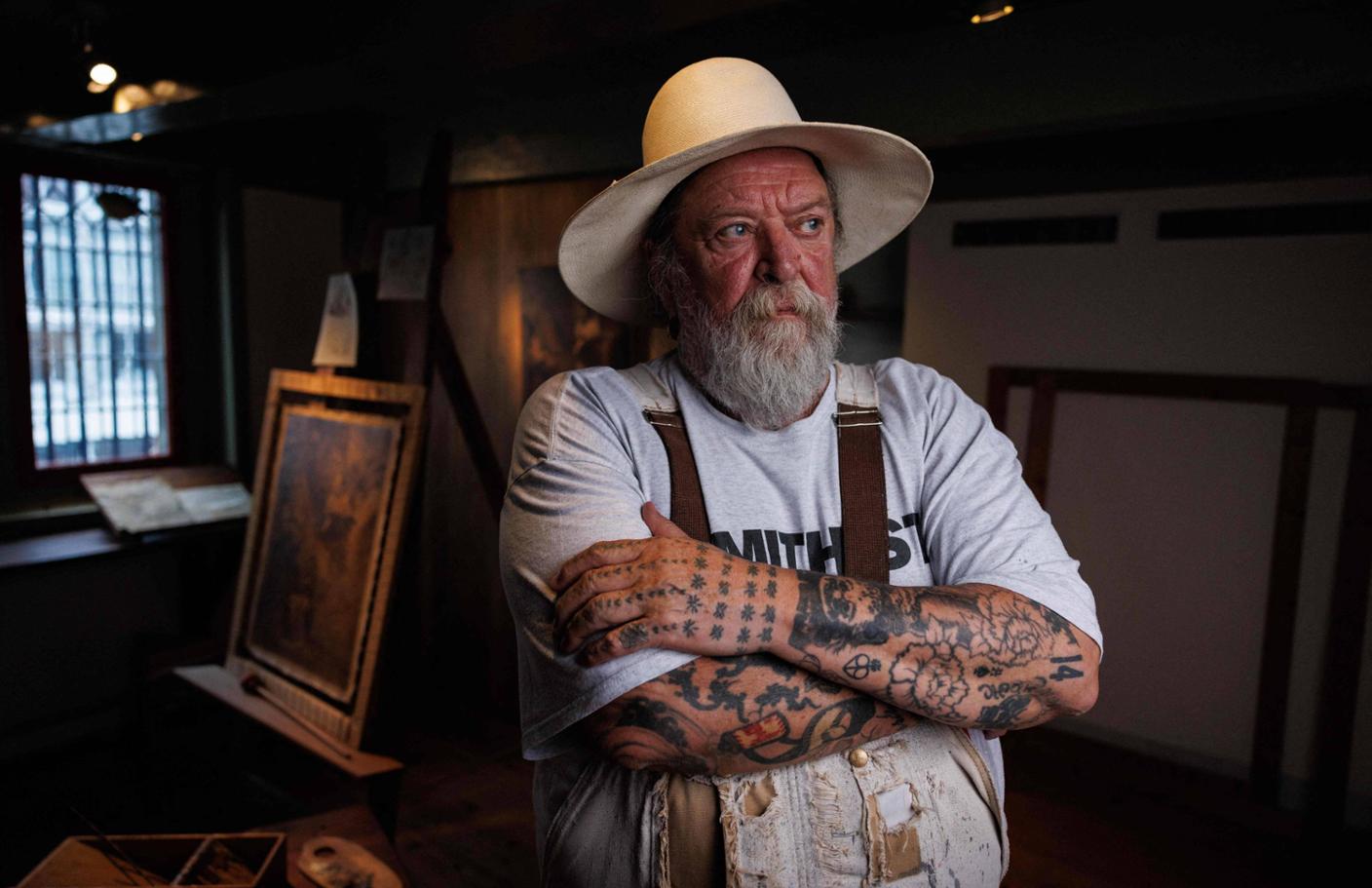
His arms combine lettering, portraits and traditional imagery
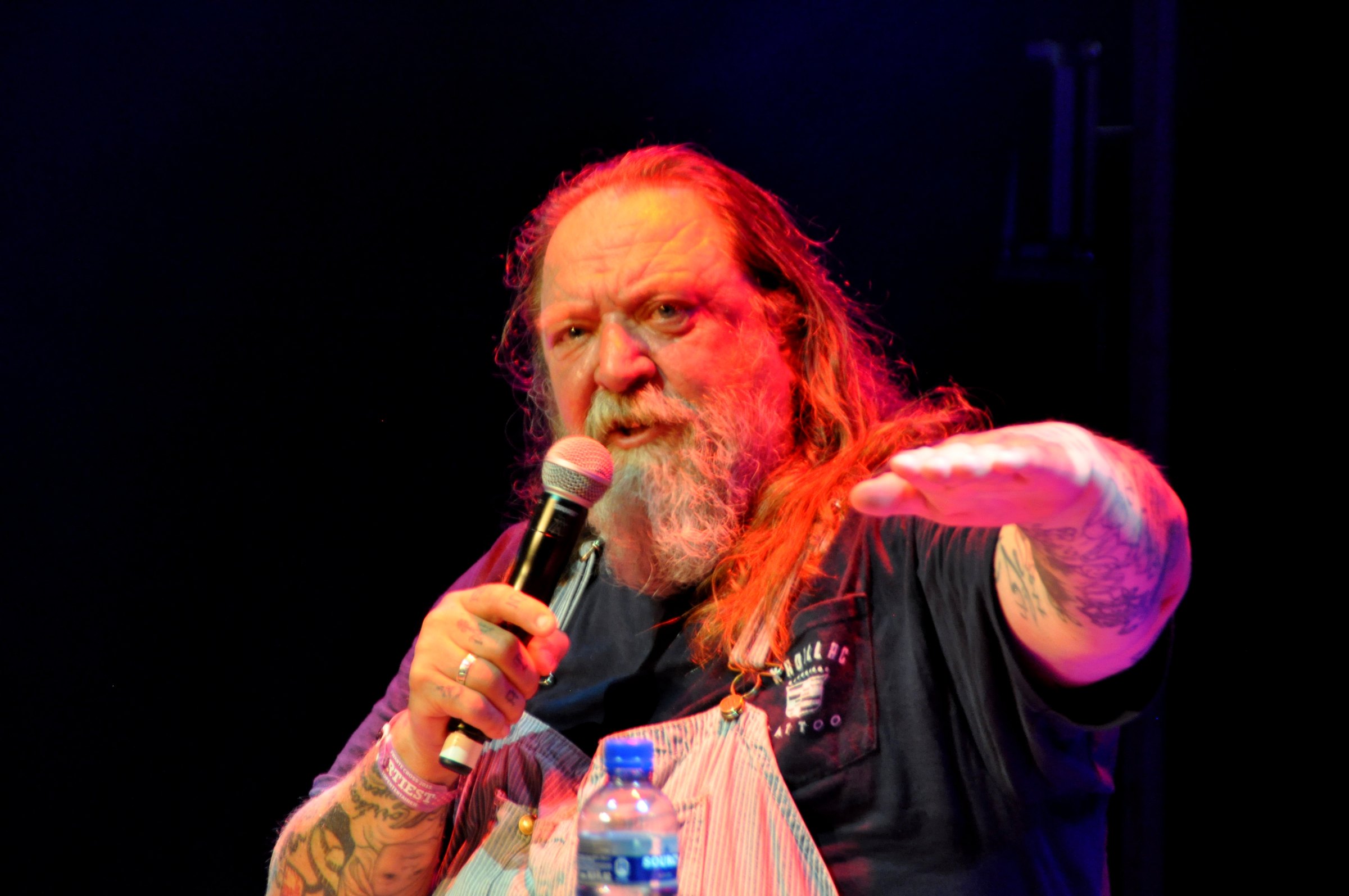
Wider photographs show separate designs rather than one continuous pattern: black-and-grey shapes, traditional figures, lettering and portrait-like faces. Some sections sit close together; others leave enough open skin for individual images to remain legible. The contrast varies, with darker lines beside softer, older-looking ink.
Schiffmacher’s public work is associated with classic tattoo imagery, rock-and-roll culture and the preservation of older designs. His decades of work as a tattoo artist also put him in contact with different traditions, though photographs alone cannot identify the source of each motif.
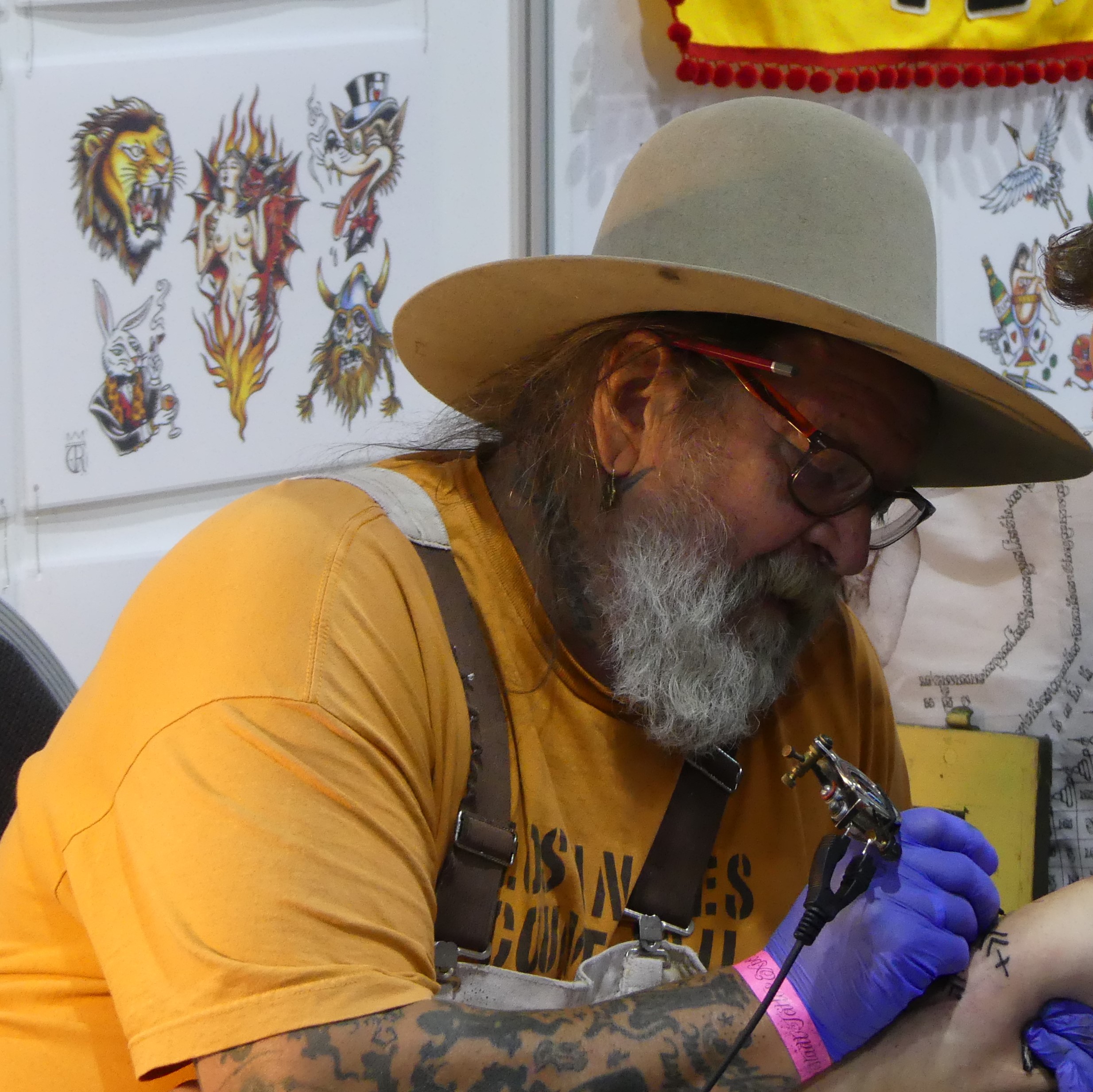
Studio and interview photos often show the tattoos alongside overalls, work shirts or aprons. The ink appears on the same body that has spent years working with clients and tattoo machines, as part of his day-to-day life as an artist.
Chest tattoos add another layer to the visual story
Vests and open work shirts reveal tattoos across Schiffmacher’s upper chest and shoulders, though clothing often hides where a design ends. Some photographs catch dark lettering or compact symbols above the neckline; others keep the focus on his arms.
Lighting changes how the ink reads. In black-and-white photographs, shading can merge into broader shapes. Color images show skin tone and faded pigment that monochrome hides.
No reliable public source provides a complete diagram of the chest tattoos or a meaning for each symbol. The photos show portions of the work, so its boundaries and private meanings should be left open.
Old-school motifs sit beside personal lettering
Across the photographs, bold outlines, stars, traditional emblems, portrait faces and shaded fields recur. That mix gives the collection an old-school feel across images from different decades; close views show the texture and variation within it.
Some lettering is readable, but other words and small finger marks are too small or partly hidden. Calling them script or block lettering is more accurate than guessing at a message.
The collection does not revolve around one logo, palette or reveal. Lettering sits beside portraits and stars, and darker sections beside softer lines. Its visual identity comes from that mix of subjects and ages.
What the published record can and cannot prove
The Associated Press, NPO Radio 1, the Amsterdam Tattoo Museum and Dutch cultural profiles describe Schiffmacher as a prominent tattoo artist, collector and advocate. Their accounts also cover his work preserving tattoo material and stories from a period when the culture was often dismissed as marginal.
The photographs establish a narrower record of his own tattoos: extensive ink on the hands and arms, and some chest work, including lettering, traditional imagery, faces, stars and shaded forms. They do not give a complete inventory, an exact order of sessions or a private meaning for every design. Photos of clients he tattooed should also be kept separate from pictures of ink on his own body.
Why Henk Schiffmacher’s visual language remains influential
Schiffmacher’s collection shows how tattoos added over many years can still share a visual thread. Here, traditional subjects, bold outlines and strong contrast connect the pieces without requiring one master plan.
His public work helped preserve tattoo history, while photographs of his own ink show the imagery he has lived with and studied. Taken together, the career and the collection explain his place in tattoo culture without turning every visible mark into a story he has not told.
One thought on “Henk Schiffmacher Tattoos: Hands, Arms and a Living Tattoo Archive”